
Farmhouse Christmas Decorations: 35 Proven Ways to Create Rustic Warmth
Farmhouse Christmas is not a store aisle; it is a material list. Farmhouse christmas decorations work when real wood, galvanized metal, burlap, cotton, and fresh greenery do the decorating, with red used like a spice instead of a sauce. This guide builds the farmhouse look room by room using pieces that feel found, made, and handed down, not manufactured last October.
As professional interior designers consistently find, rustic schemes convince when roughly 70 percent of the materials are natural or aged, ornament shine stays low, and every room carries one handmade or vintage piece with visible wear. Gather your natural materials first, set your red dosage, and build a Christmas that smells like cedar and feels like a grandmother's kitchen.
Before You Begin: 3 Foundation Steps for Farmhouse Christmas Decorations
1. Choose Natural Materials as the Base of Everything

credit: @sustainability.success
The farmhouse palette is a material palette first. Build from wood, galvanized and black metal, burlap, cotton ticking, wool, and greenery, and let color arrive through those materials: wood browns, metal greys, cotton creams. Plastic shine is the one material that breaks the spell on sight.
Sort what you already own into the material families before buying anything. Most homes find they own the bones already: wooden crates, metal trays, neutral blankets, and jars. Buy only the missing family, usually fresh-looking greenery and burlap ribbon.
2. Establish a Red Dosage of About 15 Percent

Red is farmhouse Christmas's spice. Hold red to roughly 15 percent of any display: berries in the greenery, one plaid throw, red ticking stripes, a few apples or cardinals. Above 25 percent red, the room stops reading as farmhouse and starts reading as a Christmas card.
Count red by eye from the doorway: if red is the first thing you see everywhere, halve it. Buffalo plaid counts double because its contrast shouts louder than solid red. The dosage rule is the whole secret of farmhouse restraint.
| Red Carrier | Dosage Guide |
|---|---|
| Berries in greenery | Freely, they are small |
| Plaid textiles | 1 per room |
| Solid red pieces | 2 to 3 per room |
| Red ornaments on tree | About 15 percent of total |
3. Group One Vintage or Handmade Piece Into Every Room

credit: @sustainability.success
Authenticity needs evidence. Place one genuinely old or handmade piece in each room: a grandmother's quilt, a hand-carved figure, a flea-market sled, a crock with a chip. The piece's wear licenses everything newer around it to feel honest.
If you own nothing old, buy one vintage piece per year from markets rather than a cart of reproductions. Position the storied piece where guests gather, since it starts the conversations farmhouse style exists to host. Never distress new furniture to fake age; the eye catches the lie.
| Room | Storied Piece Ideas |
|---|---|
| Living room | Quilt, sled, carved figure |
| Kitchen | Crock, scale, enamelware |
| Dining room | Grandmother's linens, old candlesticks |
| Entry | Bench with wear, vintage lantern |
Greenery and Natural Farmhouse Christmas Decorations
4. Use Real or Real-Looking Cedar and Pine Garlands

credit: @sustainability.success
Farmhouse greenery must look cut, not manufactured. Choose real cedar and pine where the house allows, or the most irregular faux garlands you can find, with varied needle lengths and brown stems showing. Perfectly uniform plastic garland is the style's fastest tell.
Fluff faux garlands by bending every third branch out of line; irregularity is the realism. Real garlands belong in cool rooms and get the bend test and swap rule by week three. Mix two species in one garland for the gathered-from-the-yard read.
5. Add Pinecones in Three Sizes as the Universal Accent
credit: @sustainability.success
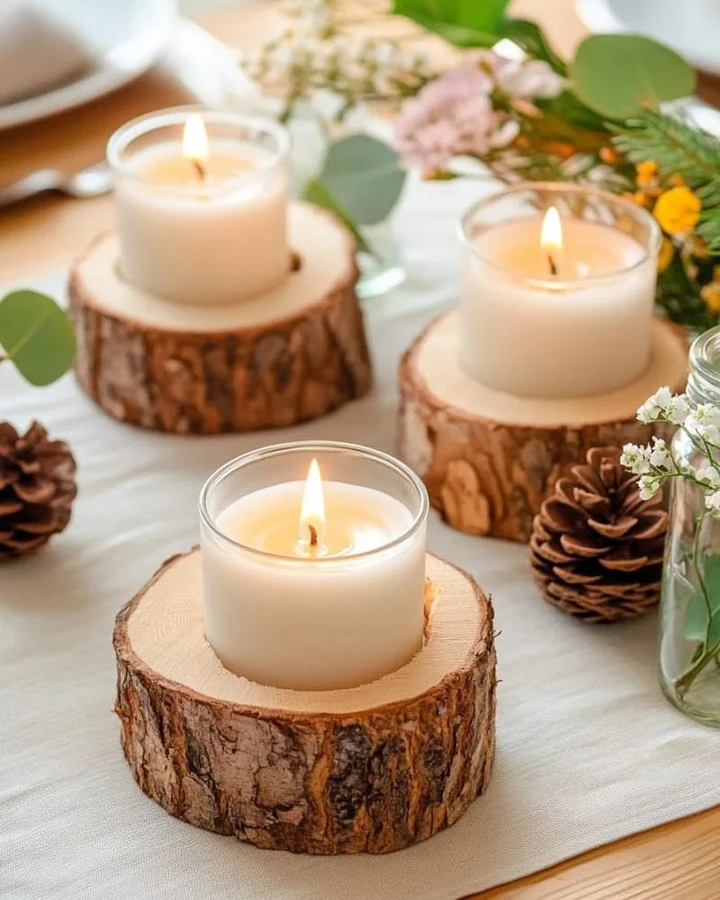
Pinecones are the farmhouse ornament that grows on trees, literally. Collect or buy pinecones in three sizes and use them everywhere: in garlands, in bowls, on wreaths, wired as tree ornaments, and lining the mantel. Their repetition across rooms is the style's quiet signature.
Bake collected cones at low heat for 30 minutes to remove sap and insects before indoor use. Leave cones natural; glittered and painted cones leave the farmhouse palette instantly. A basket of cones by the fireplace doubles as decor and kindling where fires burn.
6. Create a Magnolia or Eucalyptus Wreath for Texture Contrast

credit: @sallynugenttv
One wreath with broad leaves breaks the needle monotony. Hang a magnolia leaf wreath, glossy green over copper-brown, or a eucalyptus wreath in the entry or above the mantel. The broad-leaf wreath becomes the greenery system's statement piece.
Magnolia dries beautifully, so a fresh wreath becomes a keepsake instead of compost. Eucalyptus suits the lighter, modern-farmhouse rooms. Keep every other wreath in the house simple green so the statement wreath keeps its title.
| Wreath | Character | Best Spot |
|---|---|---|
| Magnolia | Bold, warm, Southern | Mantel, front door |
| Eucalyptus | Soft, pale, modern | Entry, bedroom |
| Plain pine or cedar | Classic base | Everywhere else |
| Berry-heavy | Red dosage carrier | One per home |
7. Place Cut Branches and Logs as Decor, Not Just Fuel

credit: @thevillagecountrystore
The woodpile is a decorating supply. Stack cut logs in a crate or basket beside the fireplace, stand birch branches in a tall crock in a corner, and lay one branch across the mantel under the garland. Wood in quantity reads as warmth before a single fire is lit.
Keep decorative wood dry and bark-checked for insects before it comes inside. Birch's white bark is the farmhouse accent that brightens dark corners without color. Restack the crate weekly so the display looks used, because it is.
8. Hang Dried Orange and Cinnamon Garland in the Kitchen

credit: @monogrammarkets
The kitchen's garland should be edible in spirit. String dried orange slices, cinnamon sticks, and bay leaves on twine and hang it along the kitchen window or open shelves. The garland scents the room every time the oven warms the air.
Dry orange slices in a low oven until they turn translucent and hard, about 3 hours. This garland is single-season by nature; compost it in January without guilt. Keep it away from direct steam so it stays crisp through Christmas.
9. Add Cotton Stems and Wheat for Pale Texture

credit: @sustainability.success
Cotton bolls and wheat sheaves bring the field indoors. Place cotton stems in crocks and pitchers on tables and mantels, and tie a small wheat sheaf to the wreath or the stair newel. Their pale tones lighten the heavy greens and browns of the farmhouse base.
Cotton stems are reusable for a decade and bend to any arrangement. Keep wheat away from candles; dry stalks are tinder with good PR. One pale texture per room is enough to lift the palette.
| Pale Texture | Job |
|---|---|
| Cotton stems | Crocks, pitchers, mantels |
| Wheat sheaf | Wreath or newel accent |
| Per room | 1 pale texture only |
| Keep away | Wheat from all candles |
For even more inspiration, explore our guide to christmas aesthetic cozy.
For more ideas in this direction, take a look at Shea McGee’s Festive Farmhouse Table: Try the Look for Less from Homes & Gardens.
Farmhouse Textiles and Fabric Christmas Decorations
10. Use Burlap Ribbon on the Tree, Wreaths, and Gifts

credit: @sustainability.success
Burlap is the farmhouse ribbon, full stop. Run wide burlap ribbon as the tree's garland or cascades, tie burlap bows on every wreath, and wrap gifts in kraft paper with burlap ties. One material repeated at three scales unifies the whole house.
Wired burlap holds bows against gravity all season. Burlap sheds fibers, so shake rolls outside before decorating day. If burlap everywhere feels heavy, alternate with cream cotton ribbon at a one-to-one ratio.
11. Add Buffalo Plaid in One Place Per Room

credit: @paper_and_pebbles
Buffalo plaid is the farmhouse pattern with the loudest voice, so it gets one stage per room. Choose the throw, or the tree skirt, or the pillow pair, or the table runner, and let every other textile stay solid or striped. One plaid per room is charm; two is a lumberjack convention.
Red-and-black plaid carries most of the room's red dosage by itself, so berry and ornament reds shrink when plaid enters. Black-and-white plaid reads more modern and spares the red budget entirely. Wash plaid pieces before storage so they return bright.
12. Choose Grain-Sack and Ticking Stripes for Table Linens

The dining table wears stripes, not prints. Run a grain-sack style runner down the table's center, add ticking-stripe napkins, and keep the cloth beneath plain linen or bare wood. These work-cloth patterns are the farmhouse table's entire decoration before a single dish lands.
Real grain sacks from markets make the most convincing runners; reproductions work when the stripe is woven, not printed. Iron linens before the holiday meals only; a soft wrinkle is farmhouse-correct the rest of the month. One red stripe in the grain sack carries the table's red dosage elegantly.
| Linen | Pattern |
|---|---|
| Runner | Grain-sack stripe |
| Napkins | Ticking stripe |
| Tablecloth, if any | Plain linen |
| Placemats | Burlap or woven, solid |
13. Hang Stockings in Linen, Burlap, or Knit

credit: @sherryklingman
Farmhouse stockings look sewn at a kitchen table. Choose linen or burlap stockings with stenciled initials, or chunky knit stockings in cream, and hang them from the mantel on wooden pegs or iron hooks. Matching sets suit farmhouse less than a family of near-matches in the same materials.
Stencil initials with fabric paint for the personalization that reads as homemade. Line burlap stockings so gifts do not snag on the weave. Hang stockings empty and relaxed; their drape is part of the look.
14. Place Quilts and Wool Throws Where People Actually Sit

credit: @justjillbauer
Textiles belong at bodies, not on display racks. Fold one quilt over the sofa's arm, throw a wool blanket across the reading chair, and keep a third in a basket by the fireplace for floor sitters. The Christmas quilt, if the family owns one, takes the sofa's place of honor.
A quilt used daily in December honors its maker more than any protected storage. Keep one light throw in every room where guests linger. Textiles carry the farmhouse promise: this house is for comfort first.
You might also enjoy simple christmas decorations, which pairs beautifully with the ideas in this section.
The Farmhouse Christmas Tree
15. Choose a Sparse or Flocked Tree That Shows Its Branches

credit: @farmhouse.homedecoration
Farmhouse trees breathe. Pick a tree with visible branch structure, a sparse alpine style or a lightly flocked fir, so ornaments hang in space instead of on a green wall. Dense perfect cones belong to other styles' showrooms.
A galvanized bucket or a wooden crate hides the stand and suits the style better than any skirt alone. Slight flocking reads as frost on a farm window, which is why it works here. Real trees suit farmhouse best of all when the household accepts the needle tax.
| Tree Type | Farmhouse Read |
|---|---|
| Sparse alpine | Best, branches visible |
| Lightly flocked fir | Frost effect, works well |
| Real cut tree | Ideal when needles accepted |
| Dense perfect cone | Belongs to other styles |
16. Use Wooden, Tin, and Fabric Ornaments Only

credit: @sustainability.success
The farmhouse tree carries no glass balls. Hang wooden cutouts, tin shapes, fabric and felt ornaments, pinecones, dried oranges, and popcorn or cranberry strings. Every ornament should look makeable at a farmhouse table, because most of them were.
Twine and jute loops replace metal caps for the consistent handmade read. Keep ornaments on the larger side; sparse trees show small pieces as afterthoughts. One ornament type per branch cluster keeps the tree curated rather than craft-fair.
17. Add Popcorn and Cranberry Strings as the Garland

The edible garland is farmhouse's oldest tree tradition. String popcorn and cranberry in alternating runs and drape them in loose swags between the burlap ribbon's lines. The garland takes an evening to make, which is part of its purpose: the making is a family event.
Day-old popcorn strings without tearing; fresh pops shatter on the needle. Make garlands after the tree stands but before ornaments, and drape them first. These garlands are single-season; birds outside get them in January, a fitting farmhouse ending.
| Garland Part | Guide |
|---|---|
| Popcorn | Day-old, plain, unsalted |
| Cranberries | Fresh, firm berries |
| Pattern | Alternating runs or sections |
| Length | About 9 feet per tree foot, loose swags |
18. Place the Tree in a Crate, Bucket, or Crock Base

credit: @lovely.harbor
The base is the farmhouse tree's foundation garment. Set the stand inside a wooden crate, a galvanized bucket, or a large stoneware crock, and fill gaps with burlap or a folded grain sack. The base should look like it was always part of the farm's equipment.
Water real trees through a funnel tube hidden behind the crate's slats. Weigh buckets with stones so a climbing cat meets physics, not disaster. The base container often becomes year-round farmhouse storage after January.
| Base | Notes |
|---|---|
| Wooden crate | Funnel tube for watering |
| Galvanized bucket | Stone-weighted for stability |
| Stoneware crock | Large trees only, check weight |
| Fill | Burlap or a folded grain sack |
19. Choose a Tin Star or a Simple Bow as Topper
credit: @arrow_girl_decor
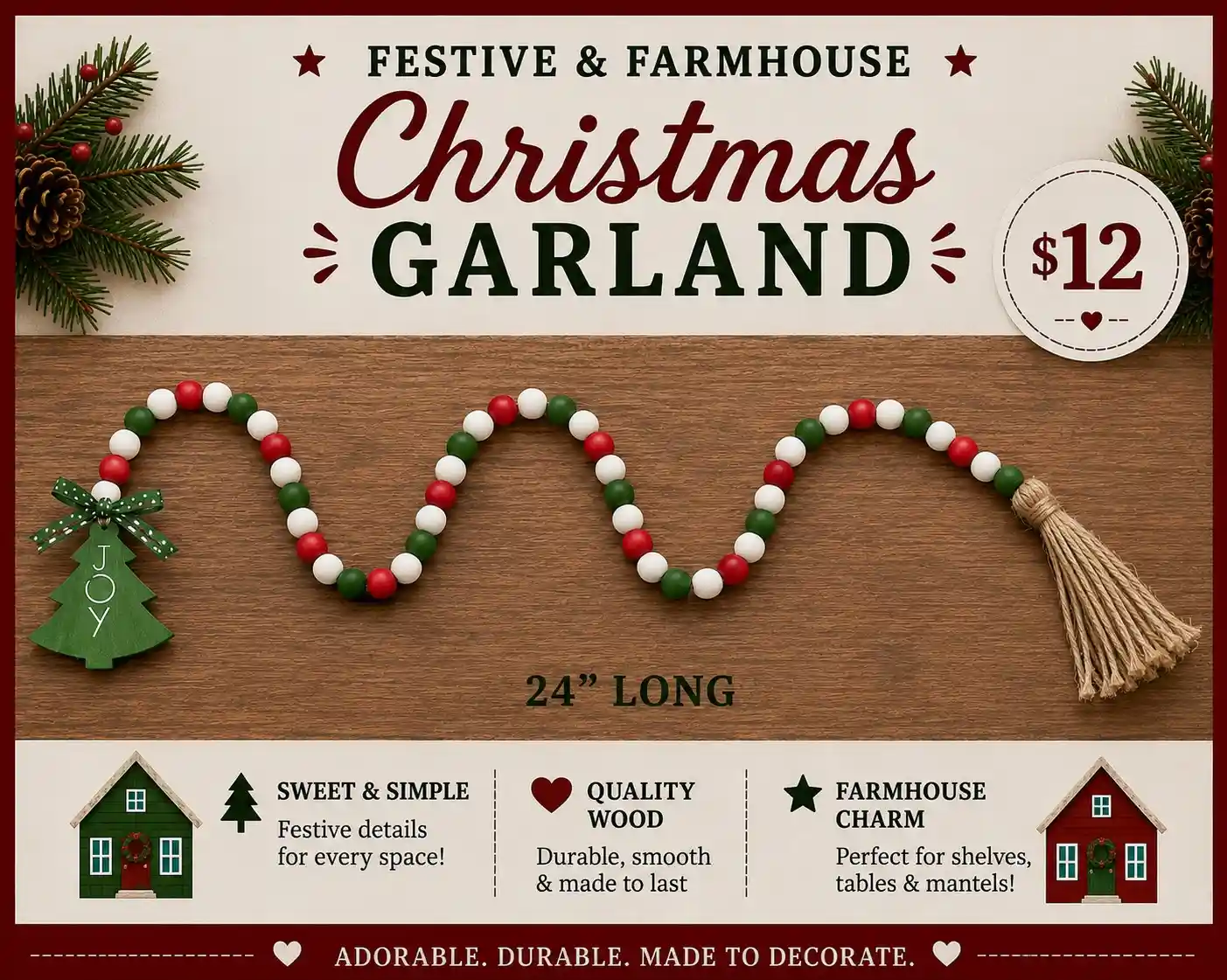
Farmhouse toppers are humble: a galvanized tin star, a wooden star, or one oversized burlap bow. Nothing on a farmhouse tree should sparkle harder than candlelight. The topper's restraint crowns the tree's whole philosophy.
A bow topper uses the same burlap as the tree's ribbon for a matched finish. Tin stars pick up a patina over years, becoming the vintage piece of the next decade. Skip anything battery-lit up top; the tree's lights end at the top branch.
20. Add Warm White Lights Deep in the Branches

credit: @sustainability.success
Farmhouse light is firelight's cousin: warm, sparse, and deep. Wind warm white lights close to the trunk at about 50 bulbs per foot, half the density of showy trees, so ornaments glow from within instead of competing with bulbs. Candlelight finishes what the strand begins.
Deep placement also hides the wire, which no farmhouse tree should display. Test the glow from the sofa; if you can count individual bulbs easily, push the strand deeper. The tree should look lit by something older than electricity.
For a related look, take a look at homemade christmas decorations and borrow the details that fit your space.
Farmhouse Christmas Decorations Room by Room
21. Style the Kitchen With Crocks, Enamelware, and Greenery
credit: @nancykiska
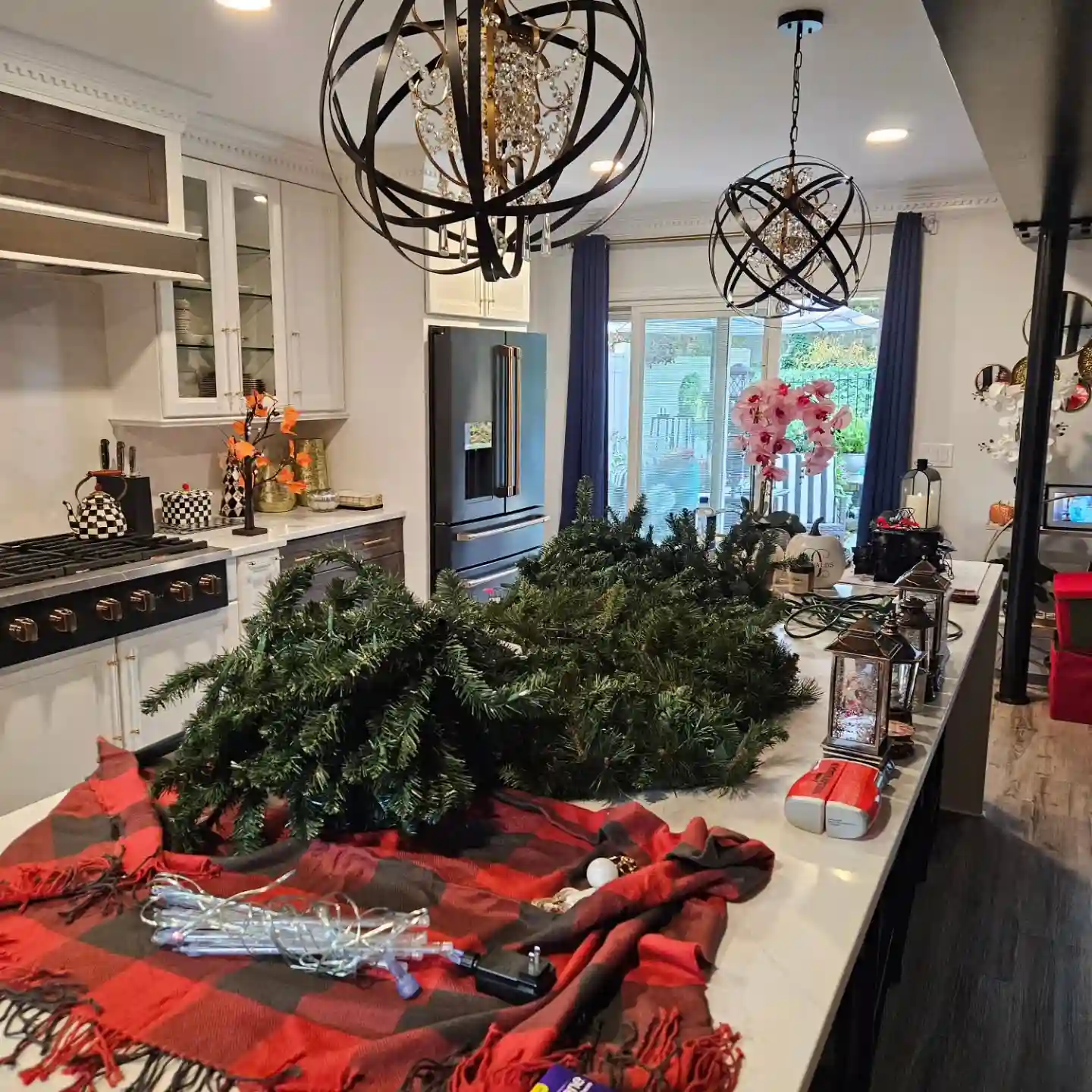
The farmhouse kitchen decorates with its own tools. Fill crocks with greenery and wooden spoons, set enamelware pitchers with cotton stems on open shelves, and hang the dried orange garland at the window. If a piece cannot work in a kitchen, it does not decorate one.
A small potted fir on the counter earns its place only if it clears the work triangle. Red appears here as apples in a bowl or the cook's own plaid towel. The kitchen's Christmas should smell like cooking and cedar, in that order.
| Kitchen Piece | Placement |
|---|---|
| Crocks with greenery | Counter corners, shelves |
| Enamelware pitcher | Open shelves |
| Orange garland | Window over the sink |
| Potted fir | Only outside the work triangle |
22. Create a Farmhouse Dining Centerpiece From a Dough Bowl

credit: @wandatuetken
The dough bowl is the centerpiece that never misses. Lay a long wooden dough bowl down the table's center filled with greenery, pinecones, oranges, and three candles in jars. The arrangement builds in ten minutes and dismantles for dinner in one lift.
Keep the bowl's height under the sight-line rule, candles included when lit. Oranges carry color without spending the red budget; a few cranberries on top spend a little. The dough bowl returns to bread duty in January, which is the farmhouse way.
| Bowl Layer | Order |
|---|---|
| Base | Greenery laid lengthwise |
| Middle | Pinecones and oranges |
| Top | Jar candles, three |
| Rule | One lift removes it all |
23. Add a Bench and Lanterns to the Entry
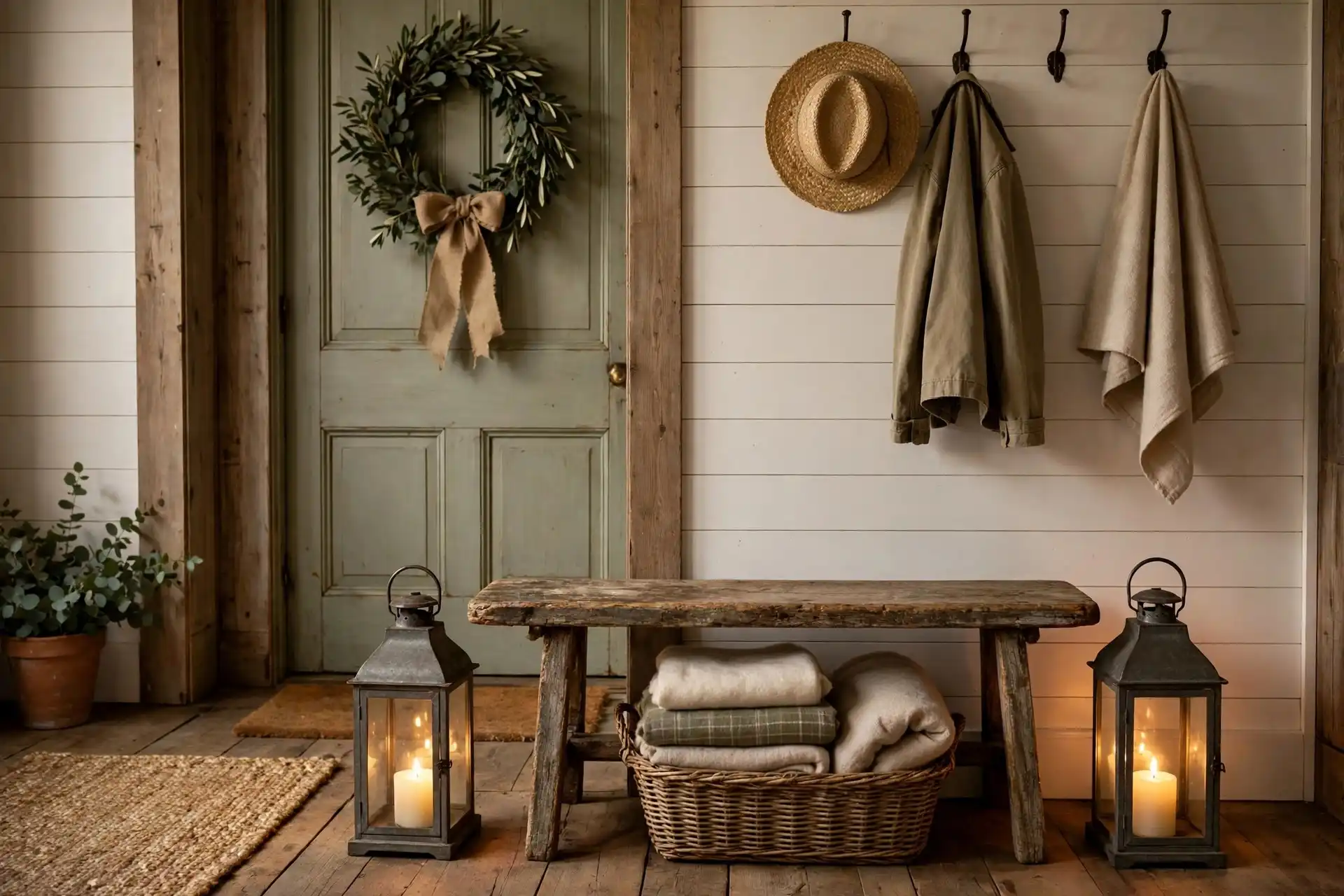
The farmhouse entry is a mudroom with manners. Place a worn wooden bench, a basket of blankets or firewood beneath it, and two lanterns with LED candles flanking the door or the bench ends. A simple green wreath with a burlap bow finishes the welcome.
Lanterns on timers greet every arrival without a switch. Keep the bench's sitting space clear; decor that evicts people betrays the style. Boots and mittens in the entry are not clutter here, they are authenticity with a job.
24. Use Mason Jars as Candle Holders and Vases Everywhere

credit: @sustainability.success
The mason jar is the farmhouse all-purpose vessel. Set LED or real tea lights in jars along the mantel and table, stand greenery sprigs in jars of water on sills, and fill a few with cranberries and a floating candle for the bathroom. One dozen jars decorate the whole house in some form.
Tie twine or a burlap strip around jar necks for the finished detail. Jars wash clean and return to canning duty in January. This is the cheapest decorating system in the guide and the most farmhouse of all.
| Jar Use | Contents |
|---|---|
| Candle holder | Tea light, LED or real |
| Vase | Greenery sprigs in water |
| Display | Cranberries plus floating candle |
| Total working set | About 12 jars house-wide |
25. Place a Small Tree in a Crock in the Kitchen or Entry

credit: @cushy_homes254_accessories
Satellite trees spread the farm without crowding the main event. Set a 2 to 3-foot tree in a stoneware crock in the kitchen corner or on the entry bench, decorated with a dozen wooden ornaments and one string of lights. Small trees carry the style into rooms the big tree never reaches.
Keep satellite trees to one per floor so they stay special. Their ornaments come from the main tree's overflow, which keeps the palette unified for free. A timer on the small tree's lights makes the entry glow on schedule.
26. Hang a Simple Green Wreath With One Bow on Every Exterior Door

credit: @upstyledbygg
Exterior doors get the uniform: one plain greenery wreath, one burlap or plaid bow at the base, nothing else. Repetition across doors reads as the farm's quiet confidence from the road. Save the ornamented statement wreath for inside, where it can be appreciated at arm's length.
Weather-rated faux or fresh wreaths both work; fresh gets the bend test weekly outdoors. A bow in the house plaid ties the porch to the living room's textile story. Replace a tired wreath mid-season without ceremony; farms replace things that wear out.
If this style appeals to you, fireplace christmas decorations offers more ways to carry the same festive mood through your home.
Another take worth browsing is 5 Ideas to Steal From Joanna Gaines’ Christmas Living Room over at Homes & Gardens.
Maintenance and Long-Term Habits for Farmhouse Decorations
27. Store Farmhouse Decor in Wooden Crates in the Dry

credit: @thevillagecountrystore
The storage should match the style and the physics. Pack ornaments and textiles in wooden crates or sturdy baskets in a dry room, with greenery faux pieces loose on top. Wooden crates breathe, which suits natural materials better than sealed plastic, except the bathroom-style damp rule applies: never store in a damp space.
Real greenery, popcorn strings, and orange garlands never store; they compost or feed birds. Cedar blocks in each crate keep moths off the quilts and wool. Photograph crate contents on the lid's underside for next year's inventory.
| Crate | Contents |
|---|---|
| Crate 1 | Tree ornaments and topper |
| Crate 2 | Textiles, stockings, quilts |
| Crate 3 | Mantel and table pieces |
| Crate 4 | Wreaths, faux garlands on top |
28. Remove Dust From Wood and Metal With a Dry Cloth

credit: @flutterflycraftcreations
Farmhouse surfaces are honest about dust. Wipe wooden ornaments, tin pieces, and crates weekly with a dry cloth, and shake textiles outside every two weeks. The style forgives wear, but dust reads as neglect in every style ever invented.
Never wet-wipe raw wood ornaments; moisture raises the grain and clouds finishes. Tin takes a barely damp cloth only when a spot demands it, dried immediately. Weekly dusting is five minutes because farmhouse pieces are large and few, not small and many.
29. Replace Fresh Greenery Sections as They Dry
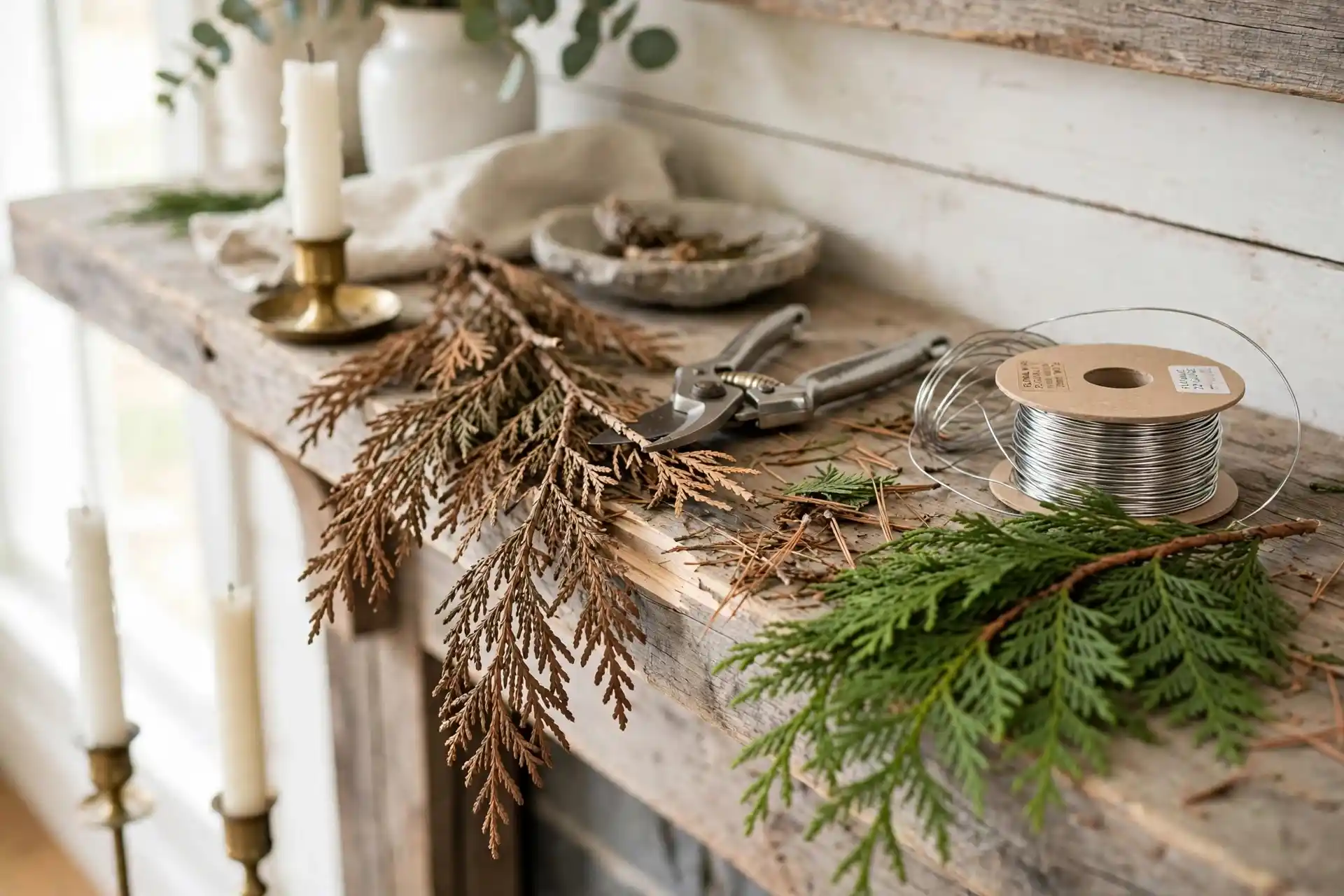
Mixed displays age unevenly. When one section of a real garland or arrangement dries and shatters at the bend test, cut that section out and wire in a fresh or faux replacement the same day. The display keeps its line, and the fire-risk section leaves immediately.
Keep a spare faux garland in storage as the universal donor for these repairs. Mark the calendar: fresh greenery installed December 1 gets its full review on December 20. Mending, not replacing, is the farmhouse maintenance philosophy in one act.
30. Add One Handmade Piece Each Year
credit: @1871farmhouse
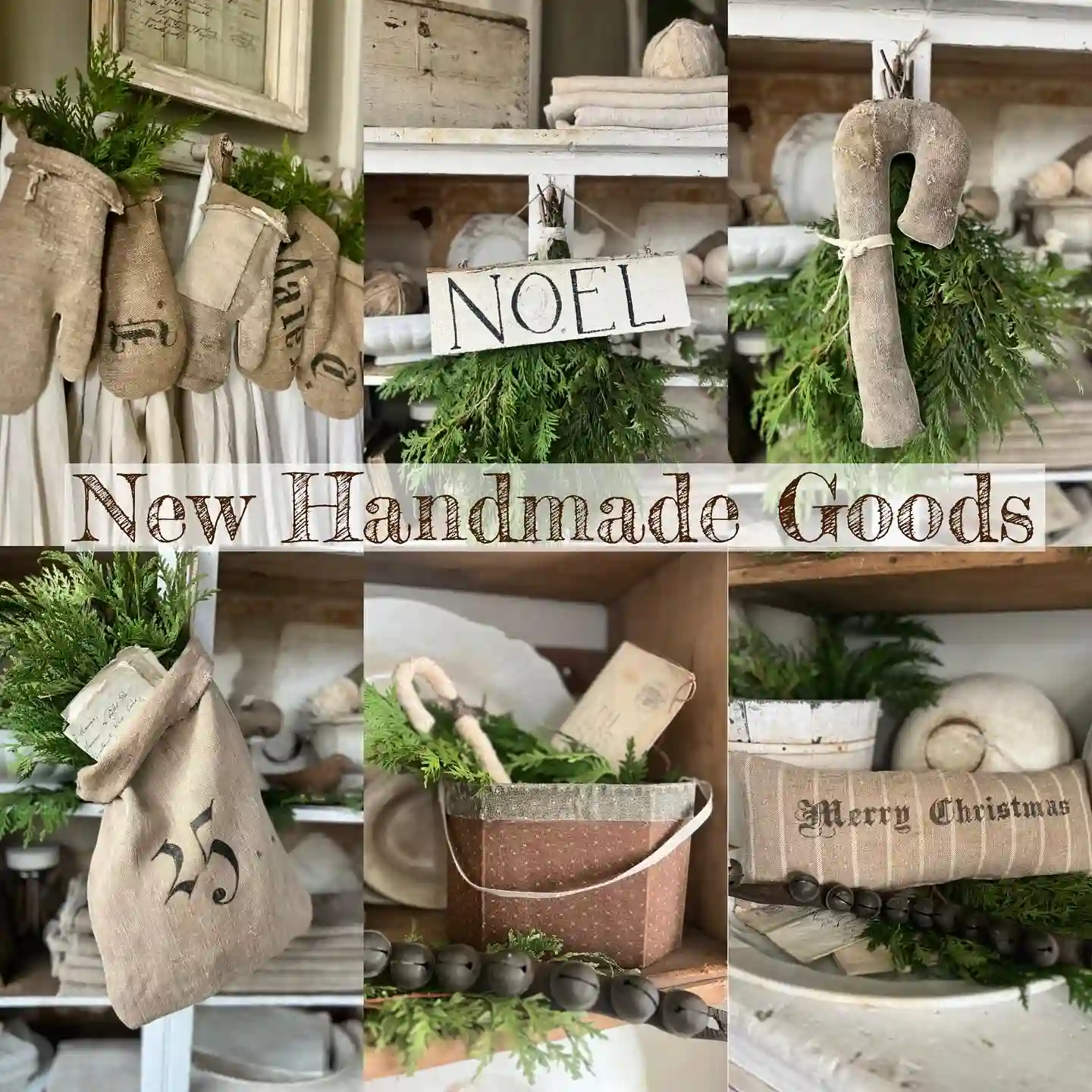
The collection's soul grows by annual making. Add one handmade piece every December: a carved ornament, a stitched stocking, a child's painted sign, a wreath you wired yourself. Date it on the back, because in ten years these dated pieces will be the vintage heart of the whole display.
Choose the year's project from the room that lacks its storied piece. Imperfection is the entry requirement; a flawless handmade piece is just slow manufacturing. The dated backs turn teardown into a walk through family history.
| Rule | Detail |
|---|---|
| Frequency | 1 handmade piece per year |
| Date it | Year written on the back |
| Choose by | The room missing its storied piece |
| Standard | Imperfection expected |
31. Rotate Vintage Pieces Between Rooms Yearly
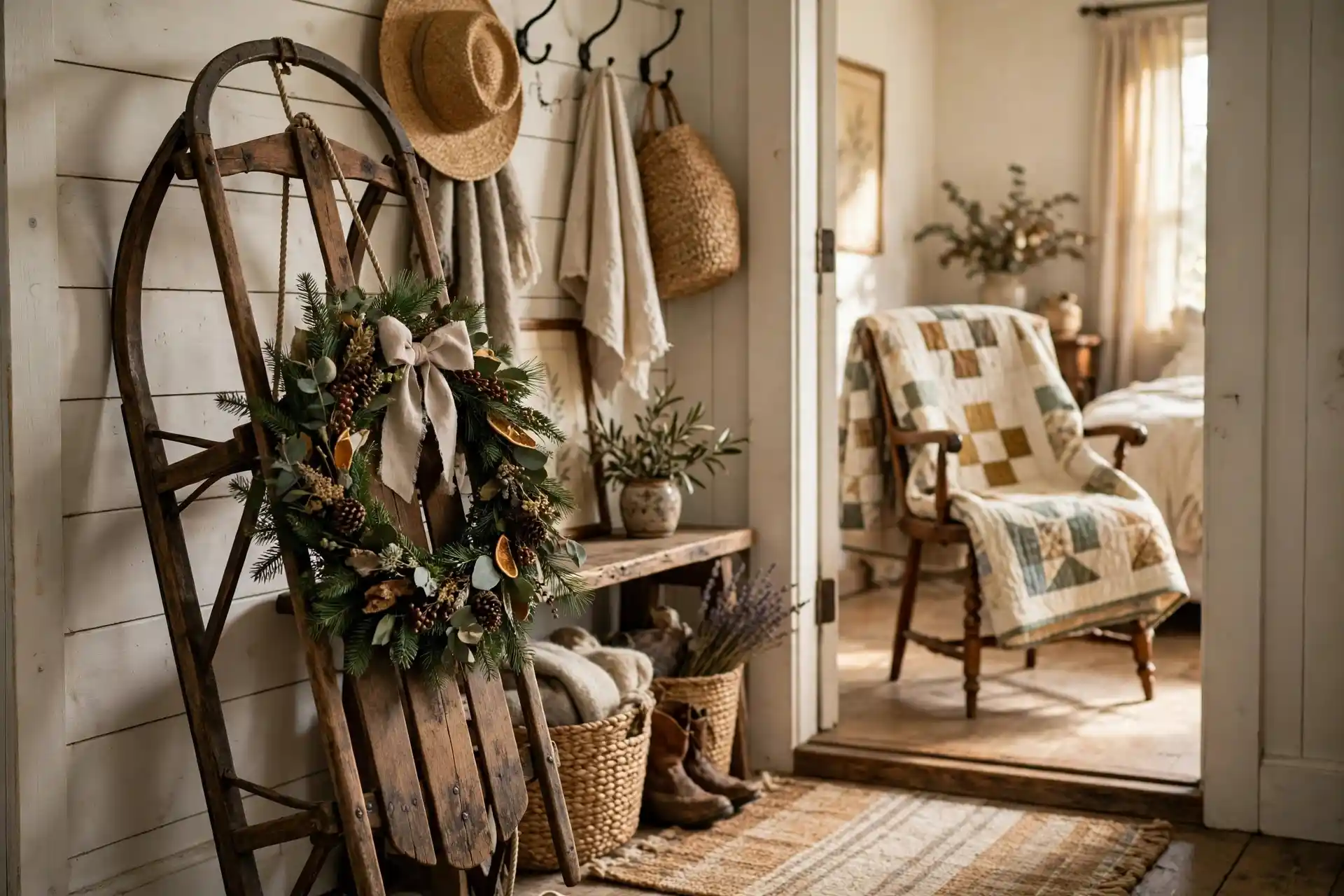
Storied pieces deserve new audiences. Move each room's vintage anchor to a different room next season: the sled to the entry, the quilt to the guest room, the crock to the dining table. Rotation keeps the collection feeling discovered rather than installed.
Note each piece's new room on the crate labels at teardown. Fragile pieces rotate on a longer cycle, every two or three years, carried by hand between rooms. The house feels redecorated annually at zero cost, which is the farm's oldest trick.
32. Remove Farmhouse Decor Gradually After Christmas
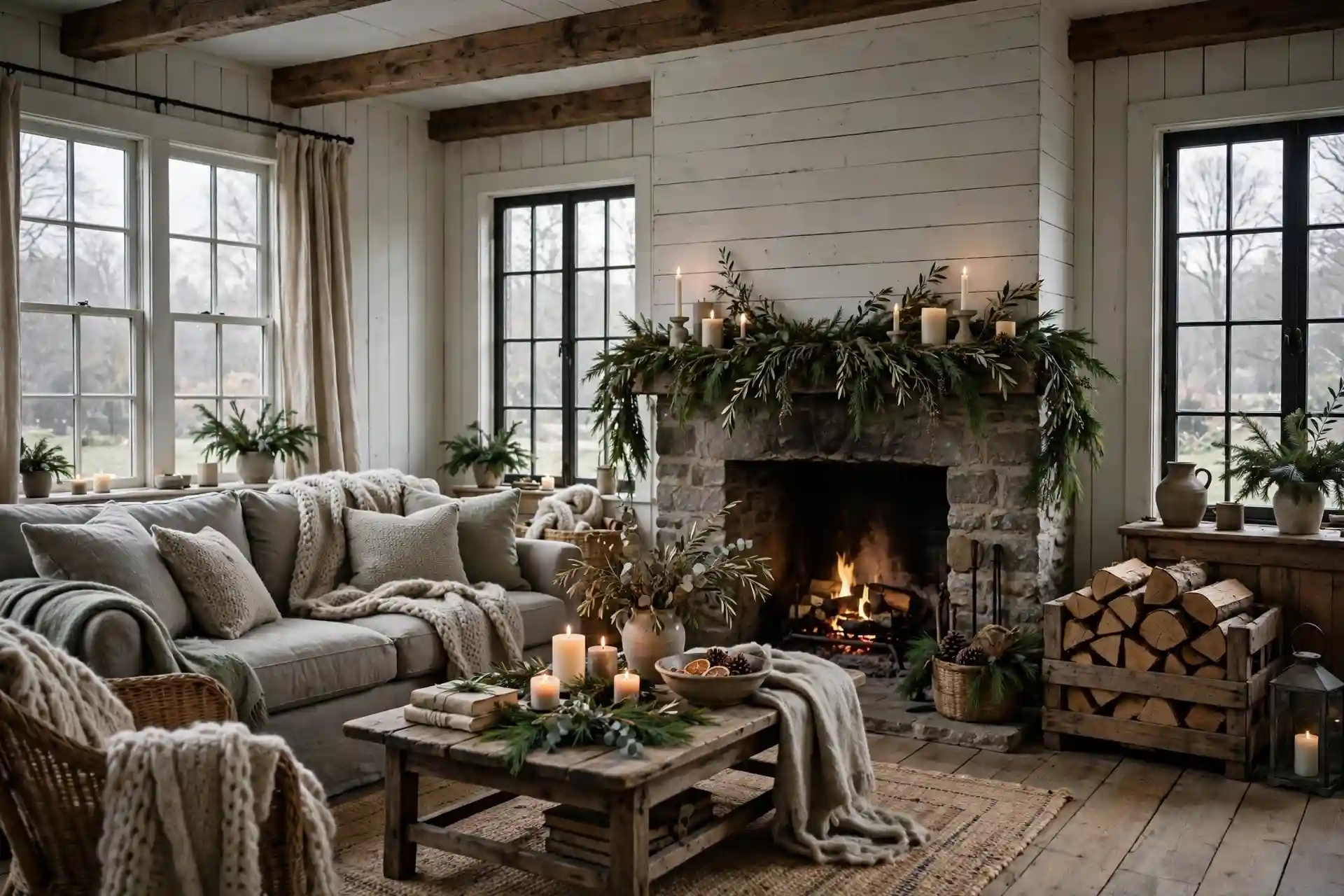
Farm teardown follows the season, not a deadline. Take the explicitly Christmas pieces, stockings, tree, cards, in the week after Christmas, but let greenery, candles, logs, and textiles fade out through January as winter decor. The house never suffers the stripped-bare shock of a one-day teardown.
Winter greenery without ornaments reads as January, not leftover December. Keep the woodpile and lanterns until spring; they were never only Christmas. This gradual exit is why farmhouse homes feel calm in January while others feel raided.
| Week | Removal |
|---|---|
| Christmas week | Tree, stockings, cards |
| Early January | Ornaments off greenery |
| Mid January | Greenery out, candles stay |
| Late January | Winter textiles rotate to regular |
Another helpful next step is our roundup of blue christmas decorations.
Styling Finishes for Farmhouse Christmas Decorations
33. Balance Every Room With One Modern Clean Line
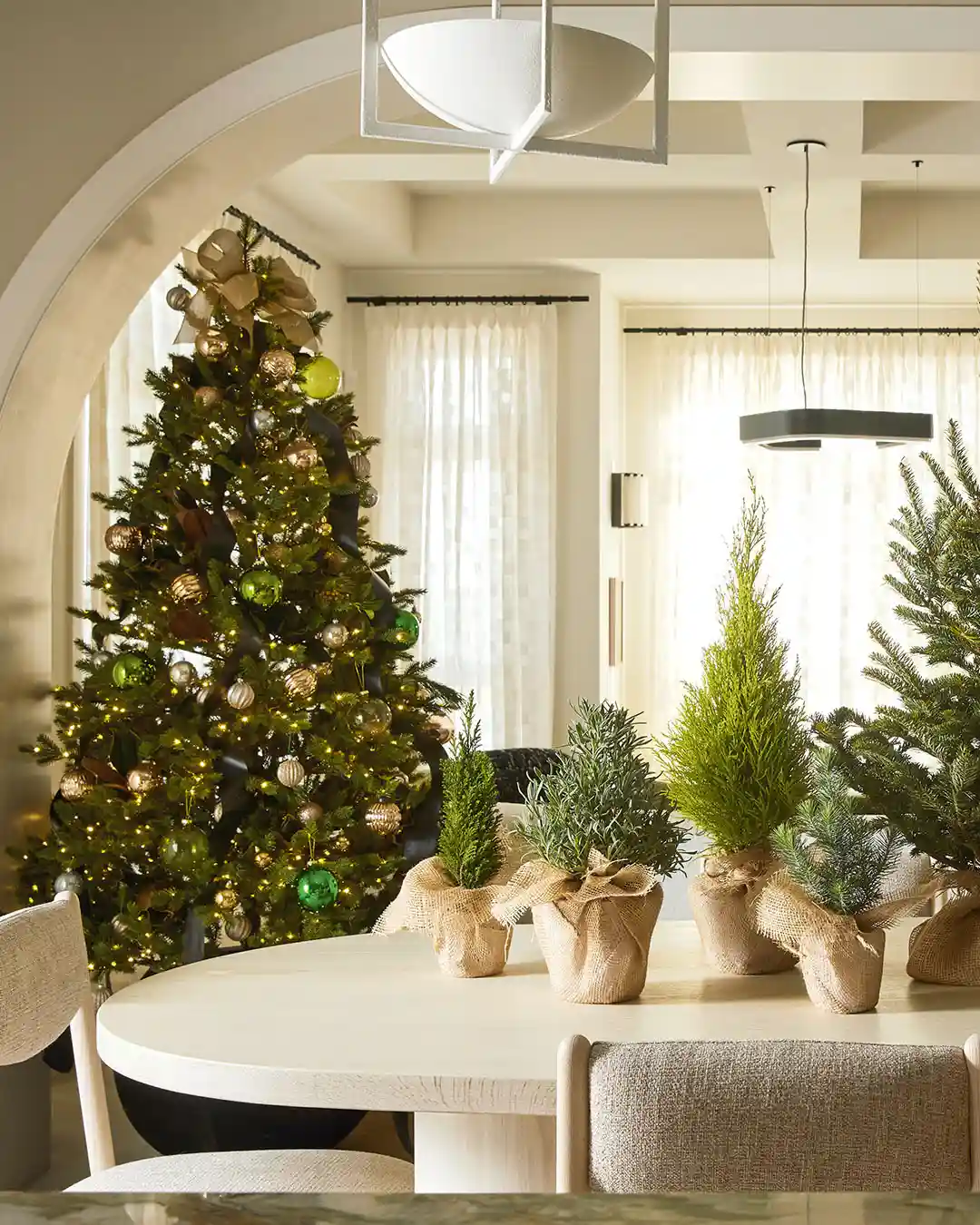
credit: @houseandhomemag
A single modern note keeps farmhouse from becoming a museum. Let one clean-lined piece stand in each room: a simple black frame, a plain white pitcher, an unadorned mirror. The contrast proves the rustic pieces were chosen, not inherited by default.
The modern piece should be useful, not decorative, so it never competes with the storied pieces. One per room is the ceiling; two start a different style's conversation. Young households especially need this line to keep the farmhouse their own.
| Point | Rule |
|---|---|
| Modern pieces per room | 1 maximum |
| Type | Useful, clean-lined |
| Job | Contrast that proves curation |
| Examples | Black frame, plain pitcher, bare mirror |
34. Photograph the Rooms at Dusk When Farmhouse Glows

Farmhouse style performs at lamp-lighting time. Photograph each room at dusk with candles and tree lights on, and audit the photos for dark corners that need a lantern or jar candle. Daylight decorating with a dusk audit is the sequence that makes farmhouse feel like the pictures.
Cold spots in the photo get light, not more objects. Warm spots get photographed again for the family album, because dusk farmhouse is the keepsake image. Share the dusk photo, and expect the questions about how the room feels so warm.
35. Add Scent With Simmer Pots and Cedar Instead of Sprays

Farmhouse scent comes from the stove and the woodpile. Keep a simmer pot of orange, cinnamon, and clove on low during gatherings, and place cedar blocks and fresh branches where air moves. Artificial sprays contradict everything the material palette just proved.
Refill the simmer pot's water hourly during gatherings so it never cooks dry. Cedar in closets scents the stored textiles, returning the favor in December. A farmhouse that smells manufactured fails its own test, even if it photographs perfectly.
| Scent Source | Placement |
|---|---|
| Simmer pot | Stove, during gatherings |
| Cedar blocks | Crates, closets, near entry |
| Fresh branches | Crocks where air moves |
| Sprays and plug-ins | Never |
To keep building on this theme, see how minimalist christmas decorations handles a similar look in a different way.
Common Farmhouse Christmas Decorating Mistakes That Break the Spell
| Mistake | Why It Fails | Do This Instead |
|---|---|---|
| Plastic shiny ornaments everywhere | Manufactured shine contradicts every natural material | Wood, tin, fabric, and nature ornaments only |
| Red in every display | The spice becomes the meal and farmhouse turns theme park | 15 percent red dosage, counted from the door |
| Buffalo plaid in three places per room | Pattern shouting replaces rustic calm | One plaid stage per room |
| Faking age on new furniture | Distressing lies and the eye catches it | One real vintage piece per room |
| Uniform perfect garlands | Symmetry reads as factory, not farm | Irregular, mixed-species, hand-fluffed greenery |
| Decor that blocks living | Pieces evict people from benches and chairs | Every seat stays sittable, always |
Farmhouse Christmas Decorations by Situation and Home
Modern Farmhouse Homes With Clean Lines
Lean on the black metal, white textiles, and eucalyptus side of the palette, with greenery doing most of the Christmas work. Keep vintage pieces sculptural: one sled, one scale, no clutter collections. The modern clean line from Tip 33 becomes two lines here, and the rustic pieces get correspondingly bolder.
Small Country Cottages and Cabins
Scale down, not out: the small crock tree, one garland, quilts on every seat, and the woodpile as a main display. Cottages reach farmhouse saturation fast, so the red dosage drops to 10 percent. Every piece must work, store, or warm somebody.
Suburban Homes Chasing the Look
Start with the tree system and the mantel, the two displays that carry the style's reputation, and add rooms yearly through the handmade rule. Shop markets and thrift stores before decor aisles; the vintage piece per room cannot be bought new. Your neighbors will ask which store, and the answer is the good part.
Families With Young Children
Choose the unbreakable subset: fabric and wood ornaments, popcorn strings made together, quilts at blanket-fort readiness, and LED jar candles instead of real flames at child height. Farmhouse is the most child-compatible style in existence because its treasures are sturdy and its rules are comfort.
Frequently Asked Questions
How do I get the farmhouse Christmas look without it feeling fake?
Build from real materials, wood, metal, burlap, cotton, greenery, hold red to about 15 percent, and put one genuinely old or handmade piece in every room. Fakeness comes from plastic shine and repetition of store-bought sets. One storied piece licenses everything around it.
What should you not do when decorating farmhouse style for Christmas?
Never use shiny plastic ornaments as the main tree decor, stack buffalo plaid in multiple places per room, or fake age with distressing kits. Each move breaks the material honesty the style is built on. Also keep decor off seats; farmhouse is for living in.
How can I do farmhouse Christmas decorations on a budget?
Nature is free: pinecones, branches, logs, and greenery cuttings cost nothing but the walk. Mason jars, burlap ribbon, and popcorn strings cover the tree and mantel for about $20. Spend the savings on one vintage piece per year from a market.
How do farmhouse decorations work in a modern home?
Keep the material palette and add the clean-line balance: black metal, white ceramics, eucalyptus, and simpler greenery. Modern farmhouse runs lighter and less cluttered, with vintage pieces chosen like sculpture. The red dosage and natural materials stay identical.
Which is better for a farmhouse tree, real or artificial?
A real tree suits the style's honesty and scent, and a sparse alpine shape suits it best. A quality sparse faux tree with irregular branches is the practical equal and stores for a decade. Either way, the crate or bucket base and natural ornaments matter more than the tree's origin.
How often should farmhouse Christmas decorations be maintained?
Dust wood and metal weekly with a dry cloth, bend-test fresh greenery weekly, and shake textiles outside every two weeks. Replace dried greenery sections the day they fail the test. Farmhouse maintenance is mending, done in minutes across the season.
Do farmhouse Christmas decorations really work in a city apartment?
Yes, at cottage scale: a crock tree, one garland, quilts on the sofa, and jars with candles on the sill. The material palette matters more than the postcode. One vintage market piece gives the apartment the storied anchor the style needs.
How much do farmhouse Christmas decorations cost in total?
About $20 covers the natural basics, jars, burlap, and stringing supplies, based on the projects in this guide, with collected nature free. A sparse tree and crates are the larger one-time buys. The collection then grows by one handmade or vintage piece per year.
How long do farmhouse Christmas decorations last, and how should they be stored?
Wood, tin, and fabric pieces last decades stored dry in crates with cedar blocks. Fresh greenery, popcorn, and orange garlands are single-season by design and feed birds or compost in January. Quilts and wool store folded with cedar, away from damp.
Conclusion
Farmhouse christmas decorations ask only for honesty: real materials, red in spice quantities, one storied piece per room, and decor that never evicts a person from a chair. Gather your materials this week, set the tree in its crate first, and let the house dress itself from the woodpile outward. By the first dusk audit, your home will glow the way farmhouses have glowed for a hundred Decembers.


4 Comments