
Christmas Ceiling Decorations: 31 Proven Ways to Decorate Overhead
The ceiling is the one surface every room offers and almost nobody decorates. Christmas ceiling decorations work when everything overhead is lightweight, fixed by tested methods, and planned so nothing hangs over beds, flames, or walkways at head height. This guide covers hanging ornaments, ceiling garlands, stars, and snow effects with the safety rules that make overhead decor a delight instead of a hazard.
As professional interior designers consistently find, overhead displays succeed on three checks: weight per fixing point kept under the rated limit with margin, total clearance of at least 7 feet over walking areas, and one focal zone per room instead of a whole-ceiling scatter. Weigh your pieces, choose your zones, and the ceiling becomes the most magical surface in the house.
Before You Begin: 3 Foundation Steps for Christmas Ceiling Decorations
1. Choose Tested Fixing Methods for Your Ceiling Type

credit: @shining_starz_online
Overhead fixing is a materials question. Smooth ceilings take adhesive hooks and suction-style mounts poorly at angles, so the reliable standards are screw-in hooks into joists for anything with weight, adhesive hooks only for pieces under 100 grams, and magnetic or tension systems where metal frames or beams exist. Test every method with double the piece's weight for 24 hours before the real hang.
Mark joist lines with a stud finder and pencil before decorating day; guessing overhead is how ceilings get scars. Renters use adhesive and tension options only, within the apartment guide's no-damage rules. Keep a written list of which fixing holds which piece for teardown and next year.
2. Establish Weight Limits and the 7-Foot Clearance Rule

Physics runs this article. Set a hard rule: no single hanging piece over 500 grams without a joist fixing, clusters counted as one piece for weight, and nothing hanging lower than 7 feet above any floor where people walk. Seated and table zones may dip to 6 feet above the floor only where heads never pass beneath.
Measure the tallest household member plus a raised arm against doorways on the hanging route. Fans, heaters, and sprinklers get exclusion zones in the plan, drawn before any decor goes up. Write the limits on the storage box; December enthusiasm forgets numbers that November wrote down.
| Rule | Limit |
|---|---|
| Single piece, adhesive fixing | Under 100 g |
| Single piece, joist hook | Up to 500 g with margin |
| Walking clearance | 7 feet minimum |
| Table and seating dip | 6 feet, no head passage |
3. Group the Ceiling Into One Focal Zone Per Room

credit: @leoortizofficial
Overhead restraint reads as magic; overhead sprawl reads as a party store. Choose one focal zone per room, above the dining table, the living room's center, the entry, or the tree corner, and decorate only there. The rest of the ceiling stays clean sky, which is what makes the focal zone feel like weather instead of wallpaper.
Mark each zone's corners with painter's tape during setup so placement stays disciplined. Zones over seating and tables outperform zones over walkways visually and legally, per the clearance rule. One zone per room also caps the budget and the teardown time in the same stroke.
| Room | Best Focal Zone |
|---|---|
| Living room | Center or tree corner |
| Dining room | Above the table |
| Entry | Above the entry area |
| Bedroom | Foot of the bed, never above pillows |
Hanging Ornaments and Baubles From the Ceiling
4. Hang Ornaments at Varied Heights Over the Dining Table

credit: @nemin_home
The classic overhead display is a constellation over the meal. Hang lightweight ornaments from the ceiling above the dining table on near-invisible clear line at varied heights, lowest at 6 feet above the floor, well clear of standing heads and serving hands. The arrangement floats like a mobile for grown-ups and photographs beautifully against candlelight.
Use shatterproof or paper ornaments over any eating surface, without exception. Vary heights in gentle steps rather than random jumps; the eye reads a rhythm, not a scatter. Keep ornaments out of the candle heat column directly above flames.
5. Use Clear Fishing Line for the Invisible Suspension

credit: @ivyframe12
Suspension should disappear. Hang pieces on clear monofilament line, which vanishes against most ceilings and carries surprising weight for its gauge. Tie with a loop at the top fixing so pieces can rotate slowly in the air, which is the movement that makes overhead decor feel alive.
Keep a small spool and scissors in the room during setup; overhead work consumes line faster than planned. Double-knot every tie and tug-test before releasing the piece. Label each line's length with tape at the top so next year's heights are pre-measured.
6. Create a Hanging Ornament Cluster Over the Tree Corner

credit: @estellemanor
Echo the tree overhead. Hang a loose cluster of the tree's palette ornaments from the ceiling in the corner above or beside the tree, at high heights, extending the tree's presence to the ceiling line. The cluster makes the corner feel like the season's source.
Count cluster weight as one piece against the fixing rule. Keep the cluster's lowest piece above 7 feet since corners are walked around, not sat under. Use the tree's leftover ornaments so the cluster costs nothing and matches perfectly.
| Cluster Rule | Guide |
|---|---|
| Pieces | 7 to 15, counted as one weight |
| Heights | High, 7 feet plus clearance |
| Palette | The tree's own ornaments |
| Fixing | Joist hook preferred |
7. Add Hanging Glass Baubles Only Over Furniture Zones

credit: @johnderiancompany
Glass belongs where nobody walks. Hang glass baubles overhead only above furniture, sofas, sideboards, display tables, where a theoretical fall lands on upholstery or decor, never on a path or a head. The rule is absolute and costs the display nothing, since furniture zones are the natural focal zones anyway.
Check each glass piece's cap and tie twice; overhead glass gets the heirloom-level inspection. Shatterproof lookalikes serve every other zone without anxiety. When in doubt about a zone's traffic, treat it as a walkway.
8. Use Ribbons as Hangers for a Decorative Drop
credit: @treslucin
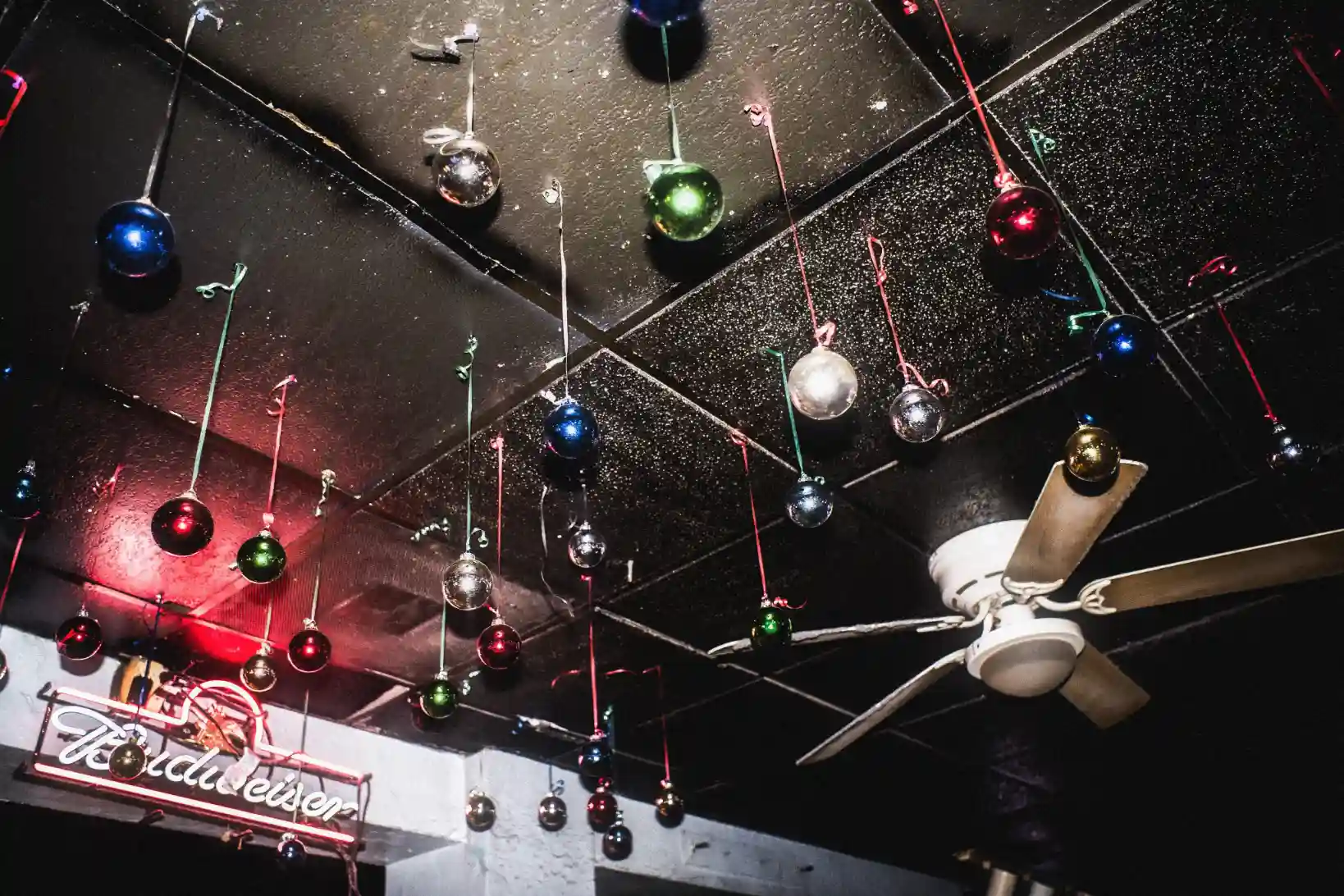
Sometimes the hanger should show. Hang ornaments and stars on satin or velvet ribbons in the palette, with the ribbon's length becoming part of the design, long elegant drops over tables and sideboards. Ribbon drops suit classic and romantic palettes where clear line's invisibility would waste a styling opportunity.
Tie ribbons with a bow at the top fixing so removal is one pull. Keep ribbon drops out of candle heat and fan airflow, since ribbon swings more than line. A ribbon set in one color reads as design; mixed colors read as leftovers.
For a related look, take a look at christmas window decorations and borrow the details that fit your space.
If you want to dig deeper into this look, DIY Influencers Are Decorating Ceilings for Christmas from Apartment Therapy is a good next read.
Garlands, Swags, and Stars Overhead
9. Swag a Lightweight Garland Across the Ceiling Zone

credit: @jameliapedrosa
A ceiling garland turns a zone into a canopy. Swag a lightweight faux greenery or tinsel garland across the focal zone in two or three even drops, fixed at corners and center points rated for its distributed weight. Keep swag bottoms above the clearance line and away from light fittings' heat.
Faux garlands only overhead: real greenery drops needles downward all season. Weave battery fairy lights before hanging, since ladder work should happen once per swag. Test the full swag's weight in your arms first; if it feels heavy, it is, so split it into two lighter runs.
| Swag Rule | Guide |
|---|---|
| Material | Faux only, lightweight |
| Drops per zone | 2 to 3, even |
| Lights | Battery, woven before hanging |
| Weight test | In arms before the ladder |
10. Add Paper Stars and Snowflakes as the Signature Ceiling Piece

credit: @lakelandinteriordesign
Paper is the ceiling's best friend: beautiful, cheap, and nearly weightless. Hang paper stars and snowflakes in the focal zone as the primary display, in one or two sizes and the palette's whites and metallics. A dozen paper pieces create the overhead effect that glass could never safely attempt.
Flat-pack spares store in an envelope and rescue any piece that tears at setup. Keep paper away from steamy kitchen zones, where it wilts by week two. This display is the one renters and parents of toddlers can run at full scale without a single compromise.
11. Create a Falling-Snow Effect With Cotton and Line

credit: @merryglow.official
Simulated snow is a ceiling specialty. Hang small tufts of white cotton or fiber on clear lines at many heights across the zone, denser at the edges, so the room feels mid-flurry. The effect delights children beyond all proportion to its cost, which is nearly zero.
Keep tufts small and high, since large low tufts read as cobwebs by daylight, which is the effect's one failure mode. Test in daylight before committing to the full flurry. Cotton stores compressed in a bag and refluffs yearly for several seasons.
| Snow Rule | Guide |
|---|---|
| Tuft size | Small, 1 to 2 inches |
| Density | More at zone edges |
| Daylight test | Mandatory before full hang |
| Failure mode | Low large tufts read as cobwebs |
12. Hang a Ceiling Wreath or Ring Above the Table

credit: @roman_and_williams_
A horizontal wreath is a chandelier without wiring. Suspend a greenery wreath or decorated metal ring flat above the dining table or entry at 7 feet or higher, with candles or ornaments on its rim or hanging from its center. The ring anchors the zone like a crown and frees the table's center entirely.
Suspend rings from three or four lines to a joist-rated hook so the wreath hangs level and cannot spin into a tilt. Weigh the complete dressed ring before hanging; greenery and ornaments add up honestly. LED candles only on overhead rings, without exception.
| Ring Rule | Guide |
|---|---|
| Suspension | 3 to 4 lines, joist hook |
| Height | 7 feet minimum |
| Weigh | Fully dressed, before hanging |
| Candles | LED only, no exceptions |
13. Use the Light Fitting as the Decorative Anchor

credit: @justjillbauer
Existing fittings offer ready-made structure. Dress a chandelier or pendant with greenery wired to its frame, ornaments on its arms' ends, and ribbon, keeping every item clear of bulbs and heat by the manufacturer's margins. A dressed fitting turns the room's brightest point into its most decorated one.
Switch the fitting off and cool before dressing or undressing it. Never hang weight from a fitting that was not designed for it; dress the frame, do not load the drop rod. Battery candles in a chandelier's candle sleeves sidestep heat rules elegantly where the design allows.
14. Add Hanging Mistletoe and Greenery Drops at Doorways

credit: @calmwhispers01
Doorway tops are natural suspension points. Hang one mistletoe ball or a greenery drop at the center top of the main interior doorway, fixed to the frame rather than the ceiling, at a height that brushes no heads. The doorway kiss is a tradition the ceiling guide happily supports at frame level.
Real mistletoe is toxic to pets and children if eaten, so faux balls serve pet homes without debate. One doorway gets the honor; mistletoe everywhere dilutes the joke and the tradition. Replace the ribbon yearly so the piece photographs fresh.
If this style appeals to you, christmas living room decor offers more ways to carry the same festive mood through your home.
You will also find plenty of inspiration in 61 Beautiful DIY Christmas Garland Ideas at The Spruce.
Ceiling Decorations Room by Room
15. Style the Entry Ceiling With a Small Star Cluster

credit: @mrchrislowell
Entries announce overhead ambitions modestly. Hang a small cluster of three to five paper stars or one lit star lantern above the entry area, clear of the door's swing and any coat-stand traffic. The entry cluster promises guests the ceiling has more to say inside.
Entries are walkways by definition, so the 7-foot rule applies at full strictness. A lit star on a timer becomes the home's evening beacon for arrivals. Keep the cluster small; entry ceilings are usually the home's lowest.
| Entry Rule | Guide |
|---|---|
| Cluster size | 3 to 5 paper stars, or 1 lantern |
| Clearance | Full 7-foot rule |
| Door swing | Cluster clear of it |
| Timer | Evening beacon setting |
16. Add a Snowfall Zone Above the Children's Beds' Foot

Children's rooms take the ceiling's most magical treatment with the strictest placement. Hang the cotton snowfall or paper snowflakes above the foot half of the bed and the room's play area, never above pillows where a fall could land on a sleeping face. Everything in a child's room is paper or fabric, light enough to fail harmlessly.
Fixings in children's rooms get a weekly tug test, since small hands investigate everything within reach of a bounce. Glow-in-the-dark stars may join the paper snow as the room's night layer. The morning a child wakes to snow overhead is a core memory under construction.
| Child Zone | Rule |
|---|---|
| Above pillows | Nothing, ever |
| Above bed foot and play area | Paper and cotton only |
| Fixings | Weekly tug test |
| Night layer | Glow stars permitted |
17. Use Kitchen Ceiling Space Sparingly and Steam-Safe
credit: @windowsof.soul
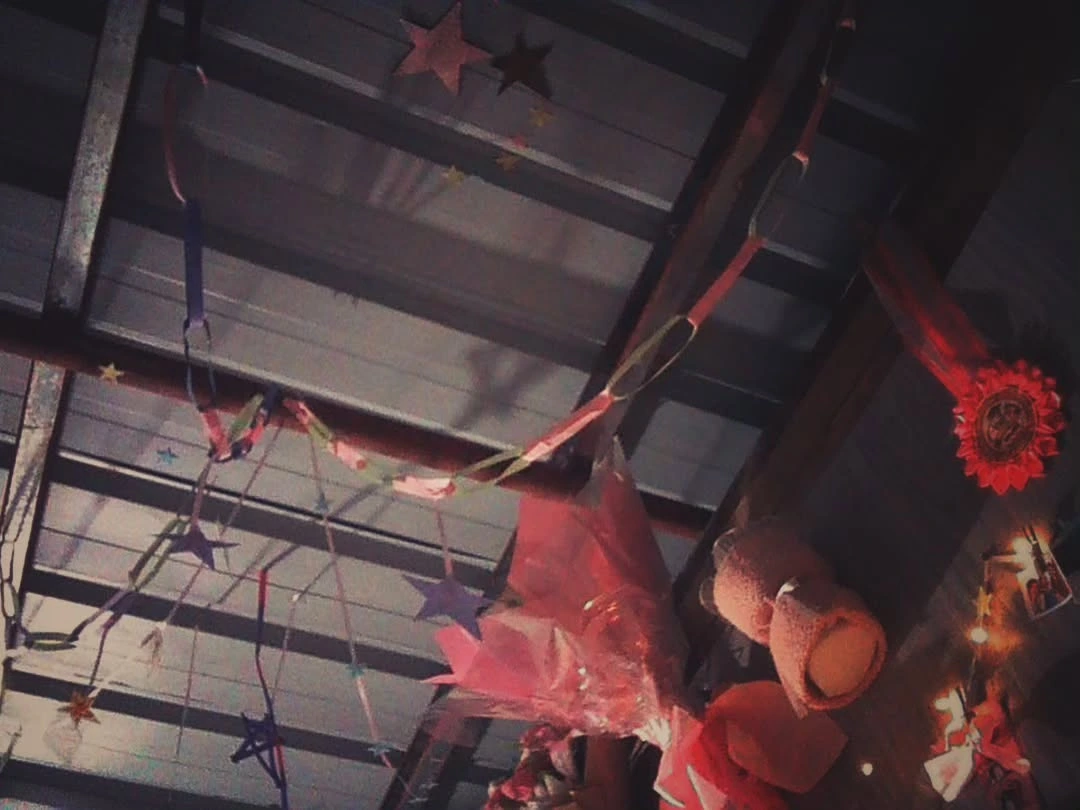
Kitchens are the ceiling's hardest room: steam, grease, and heat rule most materials out. Limit kitchen overhead decor to one steam-proof item, a metal star or a washable garland on the far side from the stove, or skip the kitchen ceiling entirely and let the window carry the room. Restraint here is correctness, not failure.
Never hang anything above the stove or within its heat and steam column. Paper and cotton are banned from kitchen ceilings by physics. A metal piece wipes clean in January and stores for a decade.
18. Place One Lit Star or Lantern as the Bedroom Ceiling Focus
credit: @emsnissen
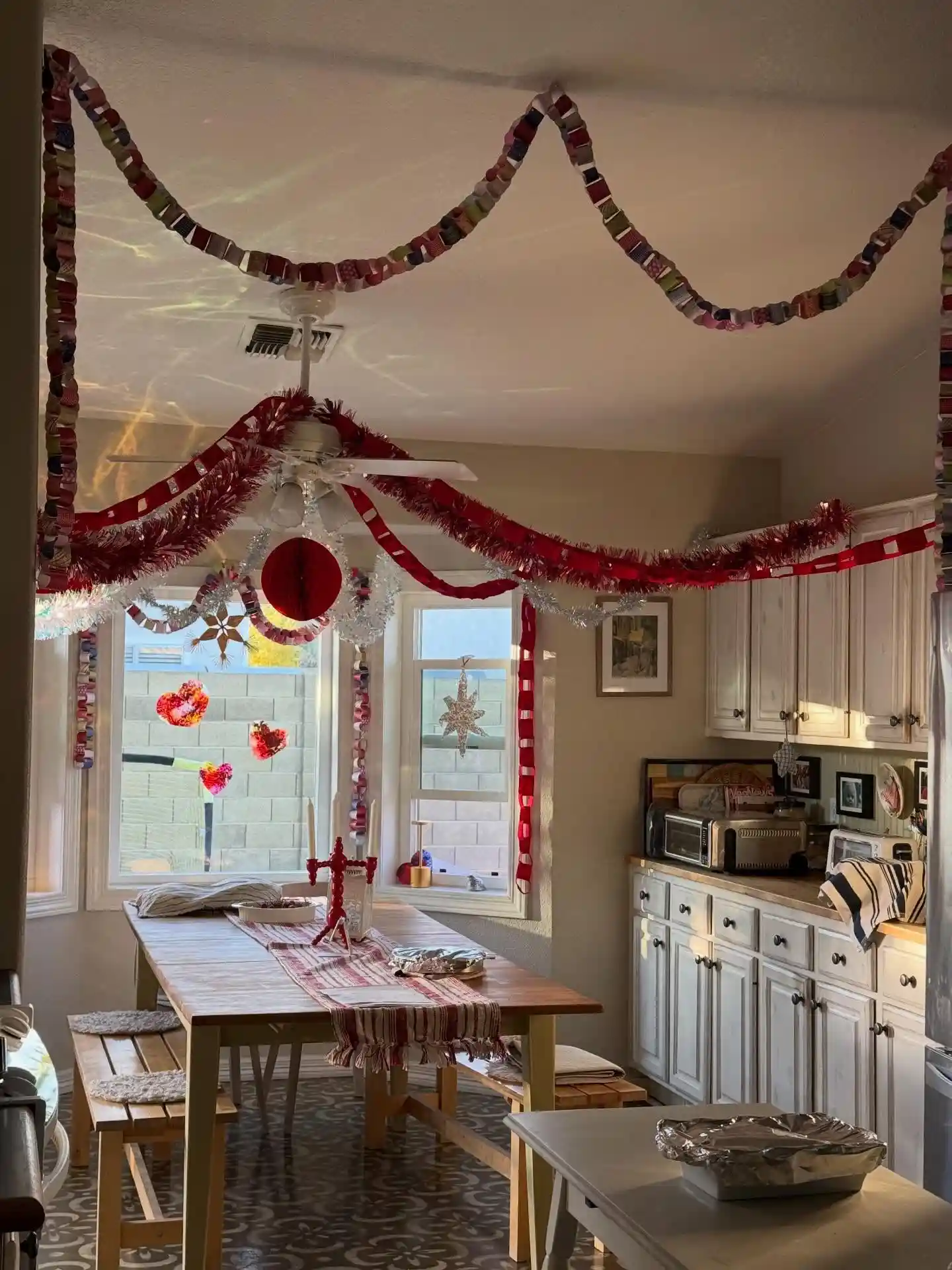
Adult bedrooms take one serene overhead point: a single paper star lantern or a small cluster of snowflakes above the foot of the bed, on a timer that fades the room into sleep. Position everything away from the pillow zone by the same rule that protects children; adults deserve the same engineering.
Warm, dim light only in the bedroom; bright overhead decor fights the room's purpose. A star lantern's glow replaces the bedside lamp for December evenings in many homes. Keep the pull cord or remote reachable so the focus never becomes an annoyance.
| Bedroom Rule | Guide |
|---|---|
| Focus | 1 star lantern or snow cluster |
| Position | Above bed foot, never pillows |
| Light | Warm and dim, on a timer |
| Controls | Reachable from the bed |
You might also enjoy christmas living room, which pairs beautifully with the ideas in this section.
For even more inspiration, explore our guide to christmas decor ideas for living room.
Safety, Maintenance, and Long-Term Habits Overhead
19. Keep All Decor Clear of Fans, Heaters, and Sprinklers

credit: @hallmarkkeepsakeornaments
Exclusion zones are non-negotiable overhead. Nothing hangs within the sweep of a ceiling fan, the heat column of any heater or vent, or the spray pattern of sprinklers and smoke detectors' faces. Map these zones in November with the tape measure and build the display around the map.
Fans stay off in rooms with overhead decor, or the decor stays out of the fan's room; the household chooses once and posts the rule. Heat dries, melts, and ignites at ceiling level faster than anywhere. A decorated ceiling that respects its exclusions is a safe ceiling, full stop.
20. Use a Proper Ladder and a Second Person for Every Hang
credit: @leslie.writes.words
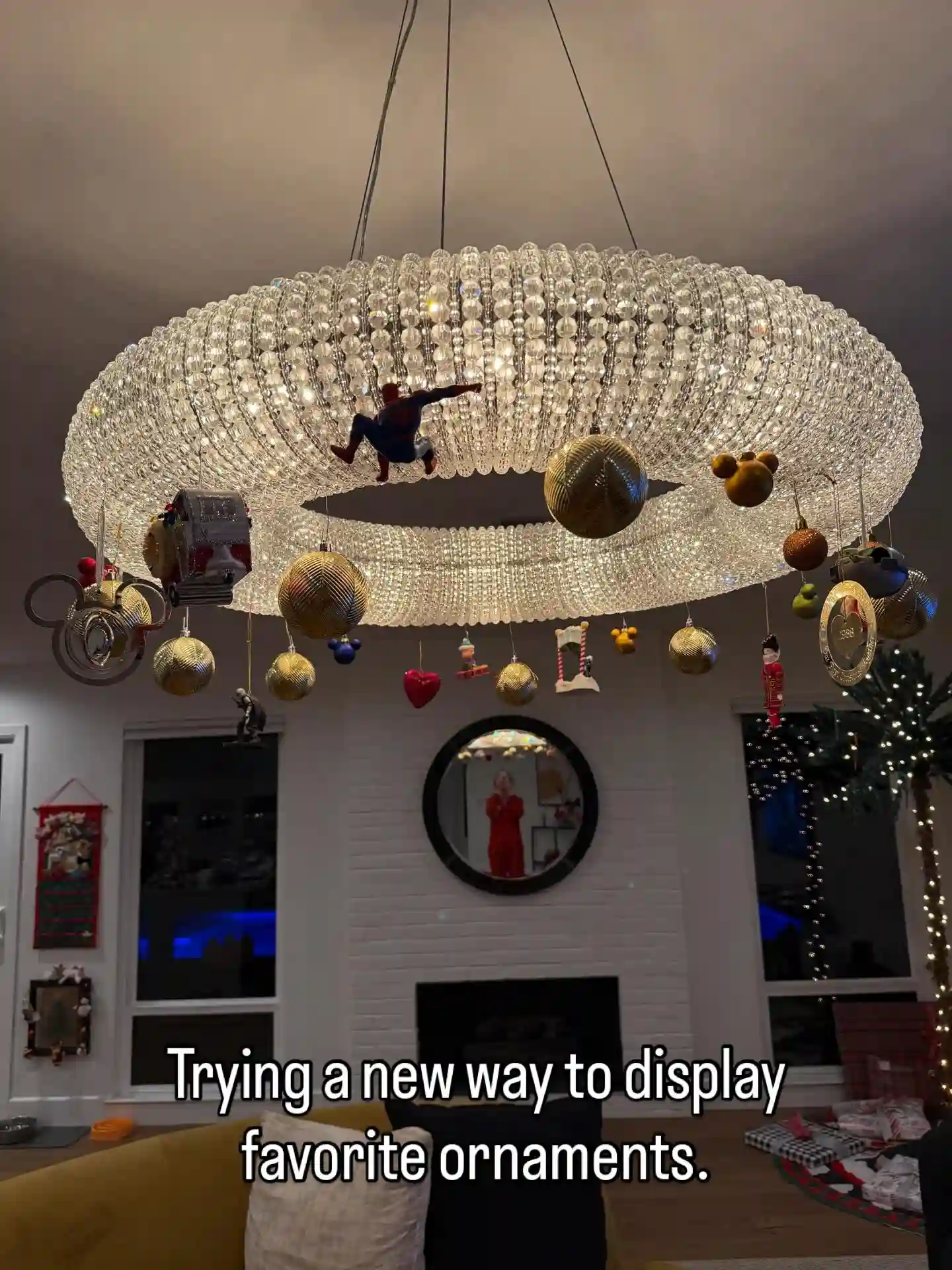
Overhead work is ladder work, and ladder work has rules. Use a stable step ladder rated for the user plus tools, keep three points of contact, and station a second person to pass pieces and watch the ladder. No chairs, no table edges, no reaching beyond the ladder's safe arc.
Hang the full zone in one session so the ladder comes out once. Pieces are prepared on the ground, lines pre-tied and labeled, so ladder time is pure placement. Tired arms overhead are the accident's best friend; take breaks before they are needed.
21. Inspect Fixings Weekly With a Tug Test Circuit

Overhead displays get a weekly inspection, because gravity negotiates daily. Walk the zones each week and tug-test every adhesive fixing, check lines for wear at their tie points, and reseat anything that has crept. The circuit takes five minutes per room and is the entire difference between charm and incident.
Warm rooms loosen adhesives faster, so kitchen-adjacent and sunny zones get twice-weekly checks. Replace any suspect hook rather than re-sticking it; new hooks are pennies. Log falls, if any, on the storage list so next year's method changes accordingly.
| Check | Frequency |
|---|---|
| Adhesive fixings | Weekly tug test |
| Lines at tie points | Weekly visual |
| Warm and sunny zones | Twice weekly |
| Suspect hooks | Replace, never re-stick |
22. Remove Dust From Overhead Pieces With an Extension Duster

Ceiling decor collects the room's rising dust. Pass an extension duster gently over hanging pieces every two weeks, working from a step stool rather than the ladder. Paper pieces get air from a hand fan or a cool hairdryer at distance rather than contact.
Dust before guests, since overhead pieces sit in the light at eye-catching heights. Cotton snow that greys gets replaced from the spare bag rather than cleaned. Two-week cycles keep the flurry white through New Year.
23. Store Lines Labeled by Zone and Length for Next Year
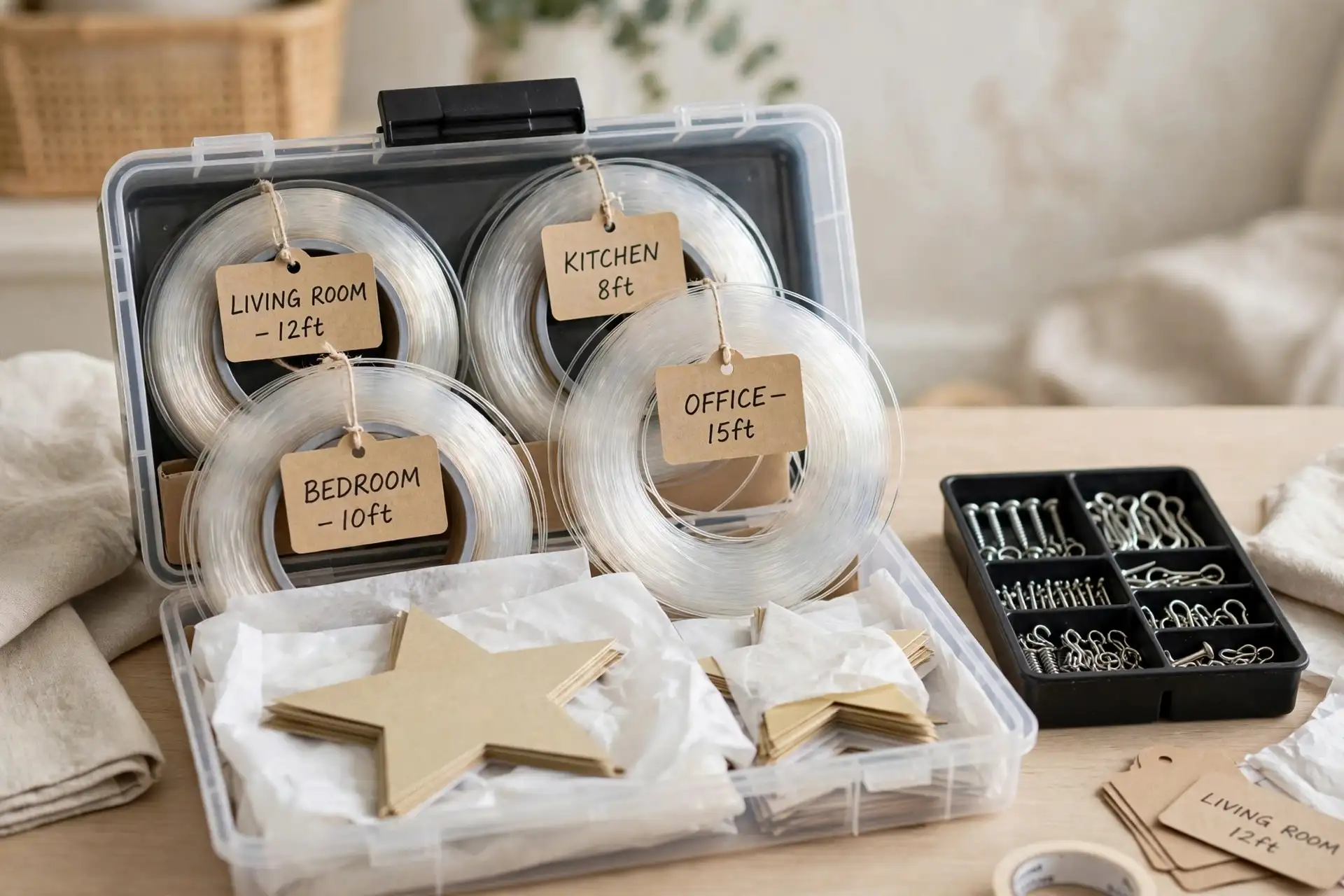
Overhead setups repeat beautifully when the rigging survives. Coil and label each zone's lines by room and length, store paper pieces flat or in their shapes with tissue, and keep hooks sorted by type in the same box. Next year's ceiling then rises in half the time from pre-measured parts.
Photograph each finished zone and file the photos with the lines they used. Discard any line showing wear at a tie point; fresh line is the cheapest safety in the guide. The box lid lists zones, counts, and fixing types as the permanent rigging plan.
24. Remove Ceiling Decor First at Teardown for Safety

Teardown order inverts for overhead work: the ceiling comes down first, while the room below is still clear of boxes and sorters. Work the ladder with the second person again, coil lines as they come down, and only then start the tree and surfaces. Ceiling-first teardown means nothing overhead ever hangs above a cluttered work floor.
Count paper pieces back against the setup list; strays hide above curtain rails and light fittings. Check adhesive spots on the ceiling the same day, while the ladder is out, for any paint or finish damage to address. The ceiling returns to sky, and the room feels taller for a week, which is January's small reward.
| Teardown Order | Reason |
|---|---|
| Ceiling first | Clear floor, safe ladder work |
| Then tree | Reverse ornament system |
| Then surfaces | Trays and textiles |
| Ceiling spots checked | Same day, ladder still out |
25. Add One New Ceiling Zone Per Year Instead of Expanding All

credit: @bhs_uk
Overhead ambition grows by zones, not by sprawl. Master one room's ceiling this year, add a second room next year, and let each zone's rigging and photographs become the template for the next. Homes that decorate every ceiling in year one usually decorate none by year three.
The dining room or living room is the recommended first zone for its furniture-based safety and guest impact. Keep each year's additions inside the palette and weight rules already established. Growth by discipline is this article's whole philosophy in one habit.
Another helpful next step is our roundup of christmas kitchen decor ideas.
Styling Finishes for Christmas Ceiling Decorations
26. Photograph From the Sofa and the Doorway to Audit Heights

Overhead balance is judged from where people sit and enter. Photograph each zone from the sofa's seat level and from the doorway, checking that heights step gracefully, nothing dips into sight lines awkwardly, and the zone's edges end cleanly. Adjust lines by an inch at a time; small corrections transform overhead compositions.
The most common fix is raising the lowest piece, which had crept into the conversation zone. Check the night view too, since shadows from ceiling decor dance on walls after dark in ways daylight hides. A zone that photographs well from both seats is done.
27. Balance the Ceiling Display With the Room Below It

credit: @jeffybynature
Overhead decor must agree with its room. Match the ceiling zone's palette and density to the display beneath it: a lush tree takes a fuller cluster, a minimalist room takes three stars and silence. The ceiling is the room's echo, pitched slightly quieter than the voice below.
If the ceiling outshines the room, remove pieces until the eye settles downward again. If the room overwhelms the ceiling, the answer is usually fewer, larger overhead pieces rather than more. Echo, never competition, is the governing word.
| Balance Check | Fix |
|---|---|
| Ceiling outshines room | Remove pieces |
| Room overwhelms ceiling | Fewer, larger pieces |
| Palette | Echo the room below |
| Density | One step quieter overhead |
28. Add Gentle Movement With One Slow Mobile Element

Stillness is safe; a whisper of motion is magic. Include one element designed to move slowly, a light paper mobile, a hanging spiral, or ornaments on varied line lengths that turn in the room's natural air. Place moving pieces away from doorways' drafts so motion stays a drift, never a swing.
Test motion with doors opening and heating cycling; any piece that swings widely gets rehung on a shorter line. Movement near candles is banned outright by the heat rule. One moving element per room is the ceiling's heartbeat; two is weather.
| Motion Rule | Guide |
|---|---|
| Moving elements per room | 1 |
| Speed | Slow drift, never swinging |
| Placement | Away from doorway drafts |
| Near candles | Banned |
29. Use Warm Light From Below to Make the Ceiling Glow

credit: @beliani.espana
Ceilings are lit by their rooms. Aim the room's warm light upward indirectly, table lamps, the tree, candle glow, so hanging pieces catch light from below and cast soft shadows on the ceiling. Direct ceiling spotlights flatten overhead decor; borrowed light makes it float.
Test the zone with overhead lights off; that is the evening view guests receive. Battery fairy lights woven into a swag add the one permitted direct light, kept dim and warm. The glow check belongs in the final audit before the display is declared finished.
30. Switch One Ceiling Element Mid-Season for Freshness

A small change renews the whole sky. Swap one element at mid-season, paper stars to snowflakes, or add the snowfall layer over the existing cluster for Christmas week itself. The refresh takes twenty minutes and makes the home's second half of December feel newly decorated.
Plan the swap at setup by storing the second element with the rigging box. Christmas week is the traditional moment, when the house deserves its fullest sky. The swapped-out pieces rest in the box and return as next year's opening display.
| Swap | Guide |
|---|---|
| Elements changed | 1 per zone |
| Timing | Mid-season, Christmas week |
| Time needed | About 20 minutes |
| Storage | Second element in rigging box |
31. Remove One Piece From Every Zone Before Calling It Done

The final overhead edit is subtraction. Stand under each zone, find its weakest or lowest-hanging distraction, and remove one piece per zone before declaring the ceiling finished. Overhead displays are edited by removal more successfully than any other surface in the house.
Removed pieces join the tree or return to storage without shame; editing is not rejection. Photograph the final zones for the rigging plan. The ceiling that results, light, balanced, and safe, is the one guests will describe to others, which is the highest praise overhead decor can earn.
| Final Edit | Action |
|---|---|
| Per zone | Remove 1 weakest piece |
| Judge from | Sofa and doorway photos |
| Removed pieces go | Tree, or storage |
| Then | Photograph for the rigging plan |
To keep building on this theme, see how christmas kitchen decor handles a similar look in a different way.
Common Christmas Ceiling Decorating Mistakes That Risk Damage and Falls
| Mistake | Why It Fails | Do This Instead |
|---|---|---|
| Heavy pieces on adhesive hooks | Gravity wins quietly at night | Joist hooks for weight, adhesive under 100 g only |
| Decor over beds' pillow zones | Falls land on sleeping faces | Foot-of-bed and play zones only |
| Hanging over walkways too low | Heads meet decor at speed | 7-foot clearance, measured |
| Pieces near fans and heaters | Motion and heat destroy and endanger | Mapped exclusion zones, fans off |
| Real greenery overhead | Needles rain down all season | Faux garlands and paper overhead |
| Whole-ceiling scatter | The party-store effect, huge teardown | One focal zone per room |
Christmas Ceiling Decorations by Home and Ceiling Type
High and Vaulted Ceilings
Height is permission and distance in one: use longer drops, larger paper stars, and fuller clusters, since the clearance rule gifts you feet to spare. Rigging lines run long, so pre-measuring and labeling matter even more. The drama of a vaulted ceiling display justifies the bigger ladder budget.
Low Ceilings Under 8 Feet
Decorate flatter: ceiling-hugging swags, stars hung short, and zones strictly over furniture where the 7-foot rule concentrates the effect. Skip long drops entirely. Low ceilings also suit the window and door frames doing the overhead-adjacent work instead.
Rentals With No-Drill Rules
Adhesive hooks under 100 grams, tension systems, and frame-mounted hangs carry the whole rental ceiling: paper, cotton, and ribbon drops only. Test fixings double-weight in November and inspect weekly. The rental ceiling is a paper ceiling, and paper is this guide's favorite material anyway.
Homes With Ceiling Fans in Main Rooms
Choose: fan rooms get frame and fitting dressing away from the sweep, or the fan stays off all season with decor in the clear center. The exclusion map decides before anything hangs. Many households move the main display to the dining room, where fittings replace fans.
Frequently Asked Questions
How do I hang Christmas decorations from the ceiling safely?
Use fixings tested at double the piece's weight, joist hooks for anything over 100 grams, clear lines double-knotted and tug-tested, and the 7-foot clearance rule over walkways. Inspect weekly and keep everything clear of fans, heaters, and sprinklers. Safety in overhead decor is a system, not a hope.
What should you not hang from a ceiling at Christmas?
Never hang heavy glass over walkways or beds, real greenery that sheds needles downward, or anything within a fan's sweep or a heater's column. Also never load a light fitting's drop rod with weight it was not designed for. Paper, cotton, and shatterproof pieces are the ceiling's approved materials.
How can I do Christmas ceiling decorations on a budget?
Paper stars, paper snowflakes, and cotton snow cost about $5 to $10 for a whole room's zone, and clear line is pennies per piece. The dining-table constellation can borrow the tree's leftover ornaments for free. Ceiling decor is among the cheapest high-impact decorating in this entire series.
How do ceiling decorations work in a rental without drilling?
Run the paper ceiling: adhesive hooks rated and tested for pieces under 100 grams, tension rods in window and door frames, and over-frame hangs at doorways. Everything removes clean in January. Keep the fixing test records; they are your deposit's best friend.
Which is better for ceilings, clear line or ribbon hangers?
Clear line when the piece should float invisibly, which suits modern and minimalist rooms. Ribbon when the drop itself is part of the design, which suits classic and romantic palettes. Both must be double-knotted, and ribbon needs extra clearance from heat since it swings more.
How often should Christmas ceiling decorations be checked?
Tug-test adhesive fixings weekly, twice weekly in warm or sunny zones, and dust overhead pieces every two weeks with an extension duster. Any fall gets logged and its method changed the same day. The five-minute circuit is the price of sleeping safely under your own sky.
Do Christmas ceiling decorations really work in small rooms?
Yes, and they shine there, because the ceiling is the small room's only unused surface. One tight zone over the table or seating adds a whole dimension without touching floor or wall space. Keep counts low and pieces light, and the room feels taller, not smaller.
How much do Christmas ceiling decorations cost in total?
About $5 to $10 covers a paper-and-cotton zone per room, based on the materials in this guide. Ribbon drops and a suspended wreath ring raise a dining room's total to roughly $20. The rigging, lines and hooks, is a one-time few dollars that serves for years.
How long do Christmas ceiling decorations last, and how should they be stored?
Paper pieces last 2 to 4 seasons stored flat with tissue; cotton snow refluffs for several years. Lines and hooks last indefinitely when stored labeled by zone and length. Replace any line worn at its tie points, since fresh line is the cheapest safety in the system.
Conclusion
Christmas ceiling decorations ask for engineering in service of wonder: tested fixings, honest weights, clear exclusions, and one focal zone per room floating at graceful heights. Choose your first zone above the dining table this week, hang paper before glass, and audit the result from the sofa. Your guests will look up sometime during dinner, and the room will gain a whole new dimension in that moment.





2 Comments