
A whimsy goth bedroom transforms a flat, generic room into a moody, romantic retreat. This style permanently blends gothic drama with fairytale softness, creating a space that feels curated instead of costume-like. This guide delivers 22 tested strategies for color, furniture, lighting, textiles, and long-term upkeep. Start with the wall color before buying a single accessory.
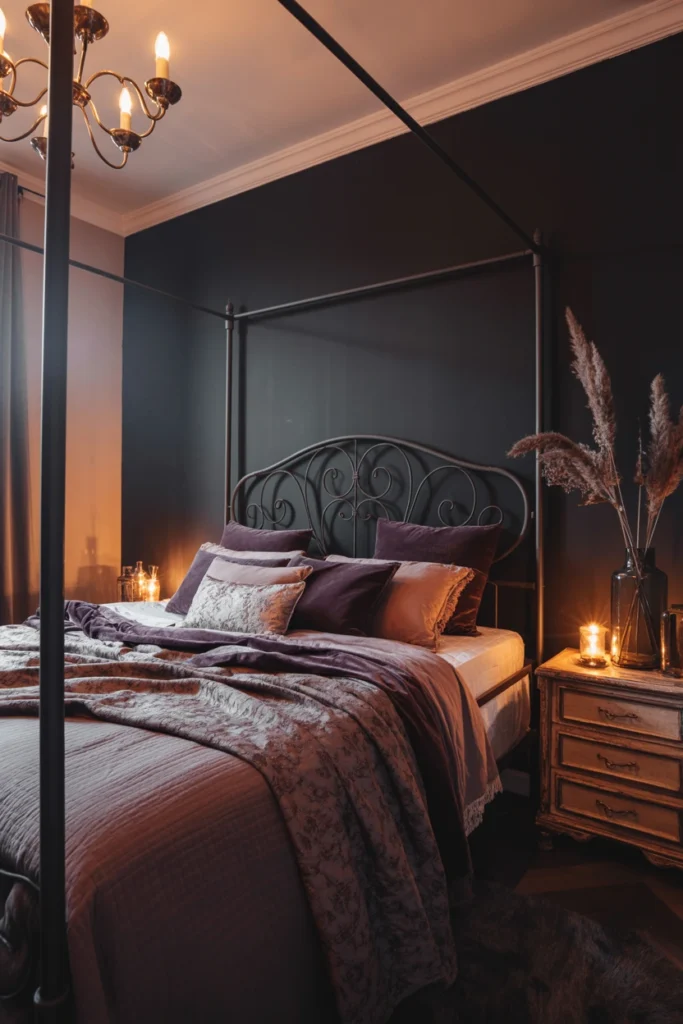
Before You Begin: 4 Foundation Steps for a Whimsy Goth Bedroom
These four steps prevent the single most common whimsy goth mistake: buying decor before establishing a direction. Skipping this stage almost always results in a room that reads as cluttered rather than intentional.
1. Choose Your Core Whimsy Goth Color Story
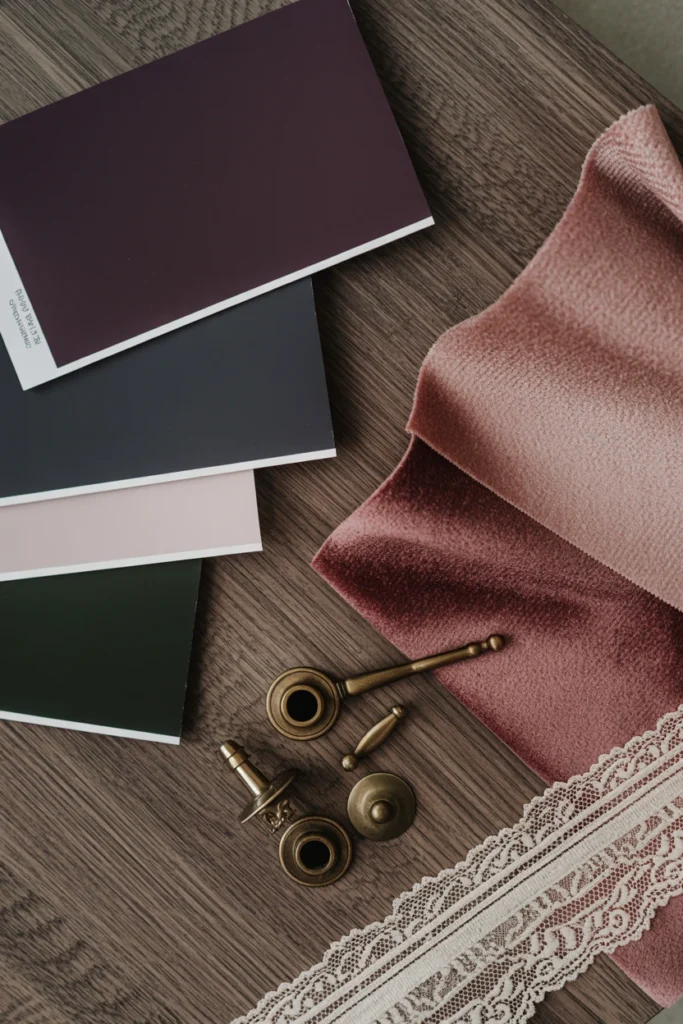
A whimsy goth bedroom without a locked color story reads as chaotic within a week. Buying pieces before choosing a palette wastes money on items that clash rather than layer. A defined story instantly makes every future purchase easier to evaluate.
Start by selecting one dominant dark hue: charcoal, deep plum, forest green, or black. Pair it with exactly one warm metallic (antique brass or copper) and one soft accent (dusty rose, cream, or sage). This 1-1-1 ratio prevents the room from tipping fully gothic or fully pastel.
| Dominant Hue | Best Whimsy Accent |
| Charcoal black | Dusty rose or blush |
| Deep plum | Antique gold + cream |
| Forest green | Copper + ivory lace |
| Aubergine | Sage green + brass |
Locking this palette early eliminates decision fatigue on every future purchase.
2. Define the Ratio Between Whimsical and Gothic Elements
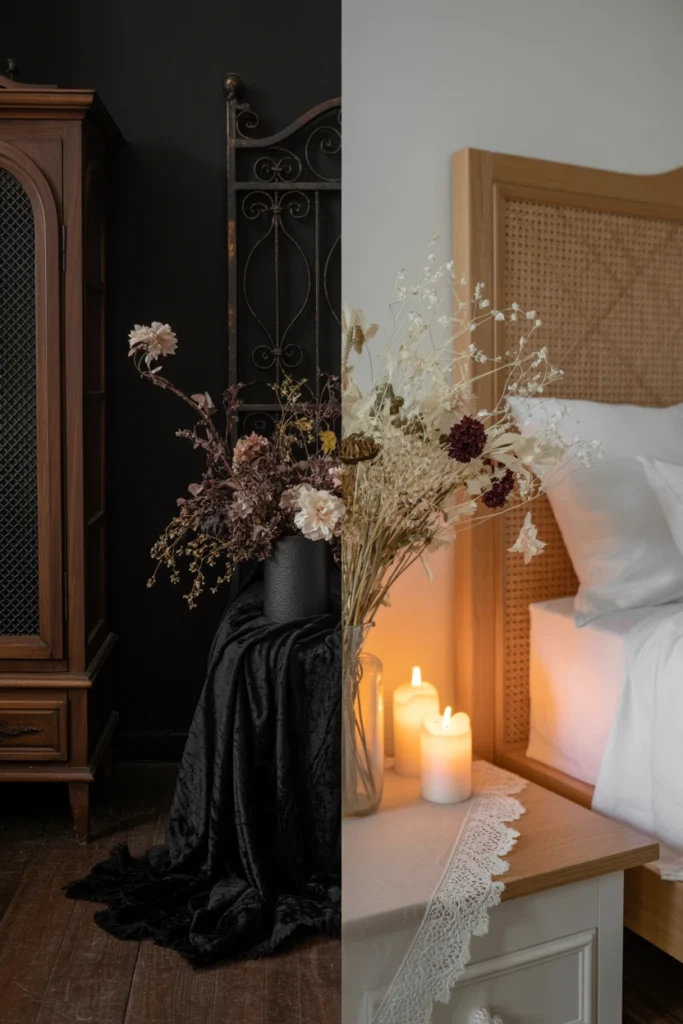
Rooms that lean 100% gothic feel cold; rooms that lean 100% whimsical lose the drama entirely. Readers who skip this step tend to overbuy either heavy dark furniture or delicate florals, unbalancing the whole space. A defined ratio keeps the aesthetic cohesive room by room.
Aim for a 60/40 split: 60% gothic structure (dark wood, iron, velvet) and 40% whimsical softness (lace, dried flowers, candlelight). Write this ratio down before shopping and check every new item against it. This single rule prevents the “haunted house” overcorrection that ruins the style for most first-time decorators.
| Element Type | Target Share |
| Dark furniture and hardware | 40% |
| Soft textiles (lace, velvet, fur) | 25% |
| Botanical or vintage accents | 20% |
| Metallic and glass details | 15% |
3. Assess Your Room’s Natural Light Before Committing to Dark Walls
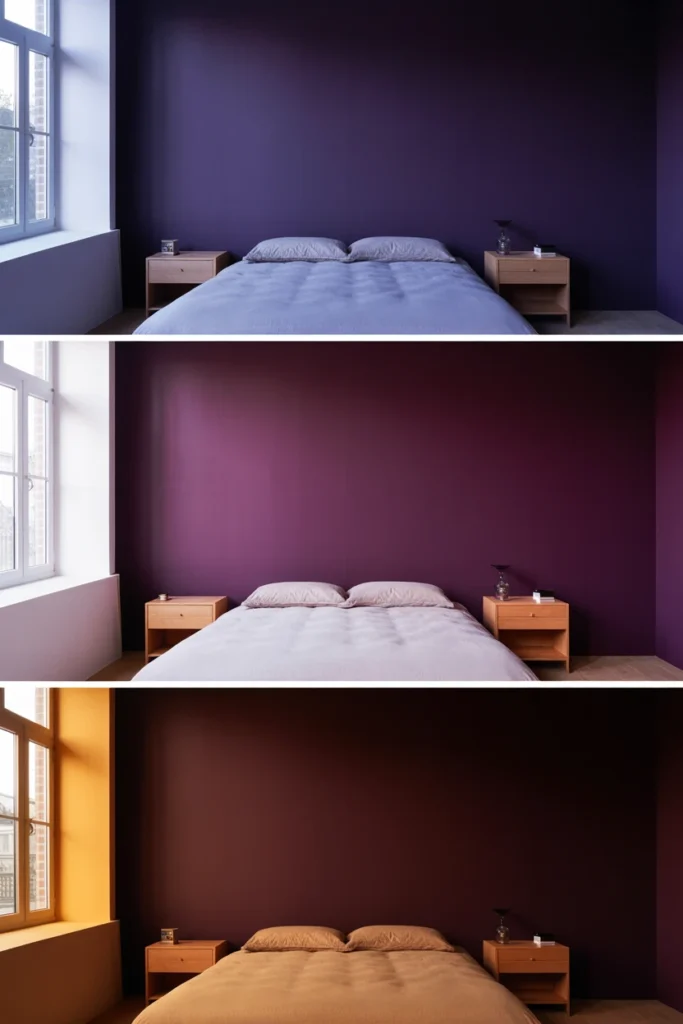
A north-facing bedroom with limited windows absorbs dark paint differently than a south-facing room flooded with light. Painting walls charcoal or black in a low-light room without adjusting your lighting plan makes the space feel cramped rather than cozy. Testing this first prevents an expensive repaint.
Hold a swatch on each wall at 9 a.m., 1 p.m., and 7 p.m. to see how the color shifts. Rooms under 100 square feet with fewer than two windows do better with a deep plum or forest green rather than true black. Getting this right the first time means your lighting plan in Tip 12 works with the wall color instead of fighting it.
| Room Light Level | Recommended Wall Depth | <br>|—|—| | 2+ windows, south-facing | True black or charcoal | | 1 window, east/west-facing | Deep plum or aubergine | | 1 window, north-facing | Forest green or espresso brown | | No direct window | Charcoal with matte, not black |
4. Set a Realistic Budget Across Five Style Categories

Whimsy goth bedrooms fail most often from overspending on one category and neglecting the rest. A bed frame alone will not create the aesthetic without matching lighting and textiles. Splitting your budget across categories guarantees a finished, cohesive room instead of one showpiece in an empty space.
Divide your total budget: 35% furniture, 25% lighting, 20% textiles, 15% decor accents, 5% paint and hardware. A $1,000 budget breaks down to roughly $350 furniture, $250 lighting, $200 textiles, $150 accents, and $50 paint. This structure keeps every category visible instead of one dominating the room.
| Budget Category | Share of Total |
| Furniture | 35% |
| Lighting | 25% |
| Textiles | 20% |
| Decor accents | 15% |
| Paint and hardware | 5% |
Build a Moody Whimsy Goth Color Palette
The wall and trim colors define whether the room reads as gothic drama or whimsical softness. Getting this balance right sets up every later tip to layer correctly.
5. Paint Walls in a Deep Charcoal, Plum, or Forest Base
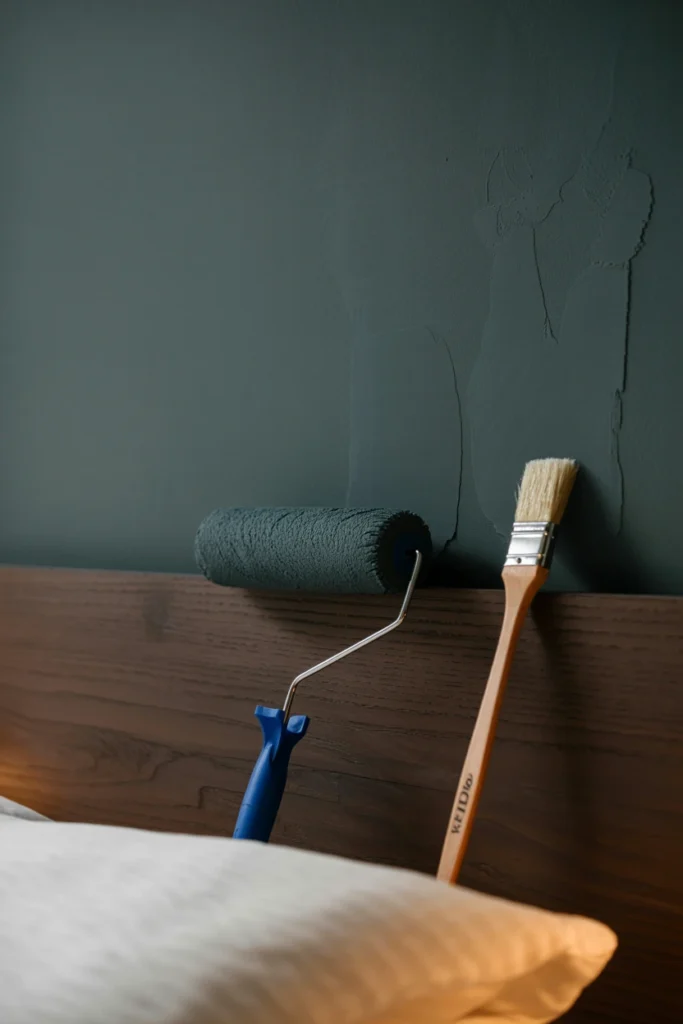
Standard off-white walls flatten a whimsy goth room before it starts. Light walls force every piece of furniture to work twice as hard to create mood. A dark base wall instantly deepens the entire palette and makes gold and brass accents visually pop.
Start by painting one accent wall behind the headboard in a matte or eggshell finish. Use Benjamin Moore Onyx, Farrow & Ball Studio Green, or a deep aubergine at minimum 2 coats for even coverage. Matte finishes absorb light softly, which keeps candle glow from Tip 14 looking warm instead of harsh.
| Finish Type | Best Use |
| Matte | Accent wall, low-traffic areas |
| Eggshell | Full room, easy to wipe |
| Satin | Trim and doors only |
| High-gloss | Avoid — reflects too harshly |
6. Layer Two Accent Colors Against the Dark Base
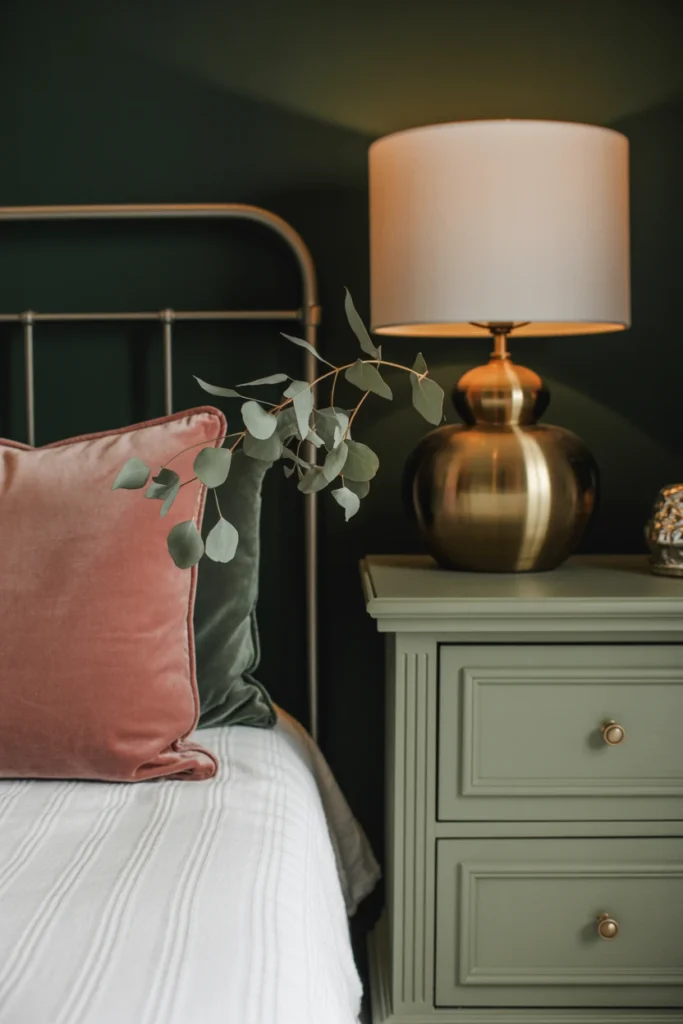
A single dark wall color without secondary accents reads as flat and one-dimensional. Rooms painted in only one shade lose depth the moment overhead lighting turns on. Two accent colors create the layered, collected look that separates whimsy goth from generic dark academia.
Choose one warm metallic (antique brass, copper, or aged gold) and one soft botanical tone (sage, dusty rose, or cream) to repeat throughout the room. Apply the metallic through hardware, frames, and lighting; apply the soft tone through textiles and dried florals. This repetition across at least three surfaces creates visual rhythm the eye reads as intentional.
| Accent Pairing | Where to Repeat It |
| Antique brass + dusty rose | Hardware, lamp base, throw pillow |
| Copper + sage green | Mirror frame, plant pot, blanket |
| Aged gold + cream lace | Picture frames, curtains, bedding trim |
7. Balance Dark Walls with Warm Metallic Trim

Dark walls paired with cool silver or chrome trim create a cold, sterile gothic look rather than a warm whimsical one. Cool metals fight against candlelight and read as clinical instead of romantic. Warm metallic trim corrects this instantly.
Swap any silver or chrome hardware — door handles, light switch plates, curtain rods — for antique brass or aged bronze. A can of Rub ‘n Buff in Antique Gold covers existing hardware without a full replacement for under $10 per piece. This single swap warms the entire color temperature of the room without touching the walls.
| Hardware Type | Warm Metal Swap |
| Door handles | Aged bronze |
| Curtain rods | Antique brass |
| Light switch plates | Oil-rubbed bronze |
| Cabinet pulls | Antique gold |
Choose Furniture and Layout for Gothic Romance
Furniture carries the structural weight of the gothic half of this aesthetic. These four tips anchor the room before softer textiles and accents are added.
8. Anchor the Room with a Dark Wood or Wrought Iron Bed Frame
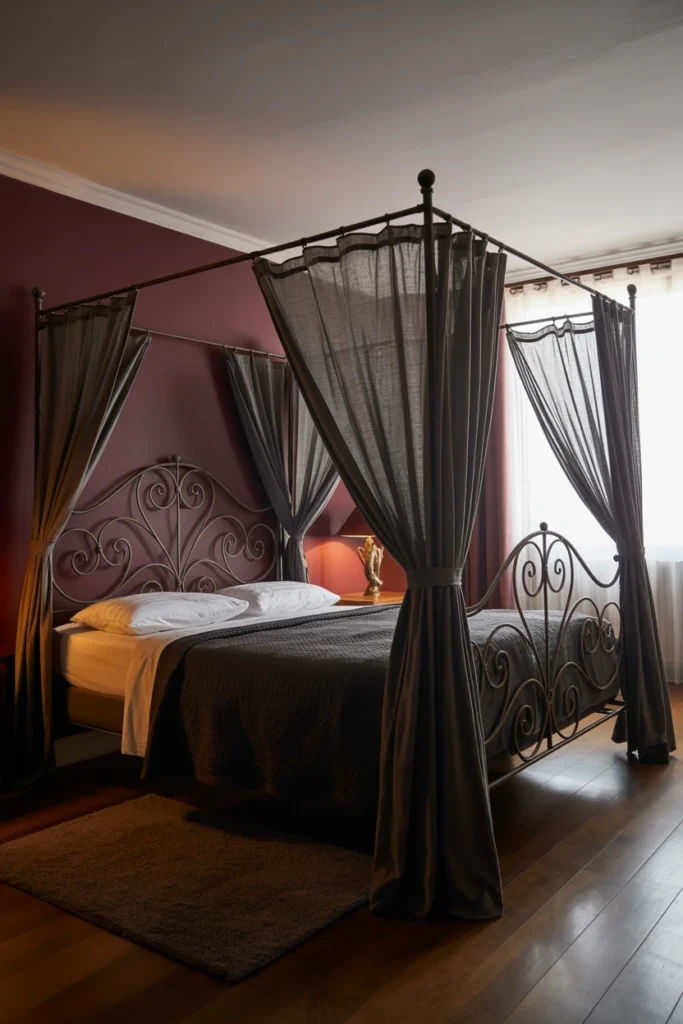
A plain platform bed leaves a whimsy goth room without a visual anchor. Every other piece in the room takes its cue from the bed frame’s silhouette and material. A dramatic frame instantly establishes the gothic half of the aesthetic before anything else is added.
Choose a dark mahogany, ebony-stained oak, or wrought iron frame with a sleigh, canopy, or scrollwork headboard. Frames priced between $400 and $900 typically offer solid wood or true iron rather than veneer over particleboard. A canopy frame specifically allows sheer curtains from Tip 15 to soften the iron’s heaviness.
| Frame Style | Best Room Size |
| Wrought iron scrollwork | Any size, adds height |
| Dark wood sleigh | Rooms 120+ sq ft |
| Canopy frame | Rooms 140+ sq ft with 8ft ceilings |
| Upholstered velvet | Small rooms under 100 sq ft |
9. Add a Vintage Vanity as a Secondary Focal Point
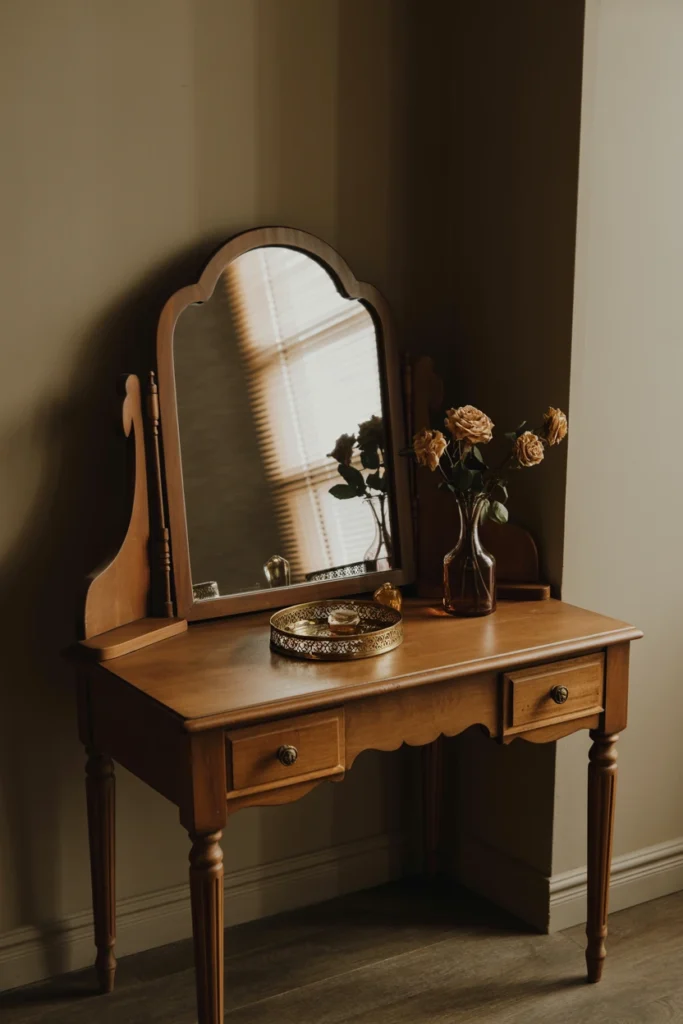
A bedroom with only a bed and a dresser feels incomplete for the whimsy goth aesthetic. Without a secondary focal point, the eye has nowhere else to land and the room reads as generic. A vintage vanity adds both function and a second layer of visual interest.
Source a vanity with a curved mirror and turned wood legs from estate sales, Facebook Marketplace, or antique shops for 80–200. Place it against the wall opposite the bed or angled into an unused corner. Styling the vanity top with Tip 18’s apothecary jars ties this focal point directly into the rest of the room.
| Vanity Source | Typical Price Range |
| Estate sale | 50–150 |
| Facebook Marketplace | 80–200 |
| Antique shop | 150–400 |
| Unfinished wood + paint | 100–180 |
10. Arrange Furniture to Create an Intimate, Asymmetrical Layout
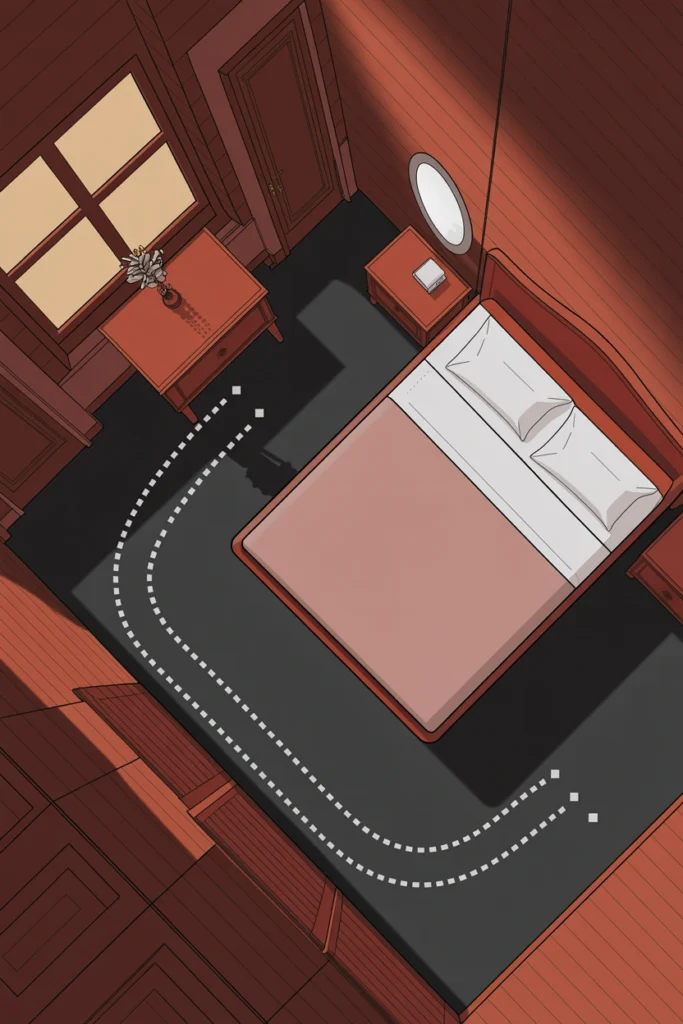
Furniture centered perfectly on each wall creates a formal, showroom feel that contradicts the whimsy goth mood. Perfect symmetry reads as staged rather than collected over time. An asymmetrical layout creates the intimate, lived-in atmosphere the style depends on.
Push the bed frame slightly off-center on its wall and angle the vanity 15–20 degrees into its corner rather than flush against it. Leave at least 24 inches of walking space between furniture pieces to avoid a cramped feel. This deliberate imperfection is what separates a curated room from a matched furniture set.
| Furniture Piece | Placement Rule |
| Bed | Off-center by 6–12 inches |
| Vanity | Angled 15–20 degrees |
| Nightstands | Asymmetrical heights |
| Reading chair | Diagonal corner placement |
11. Mix Antique and Modern Pieces to Avoid a Costume Look
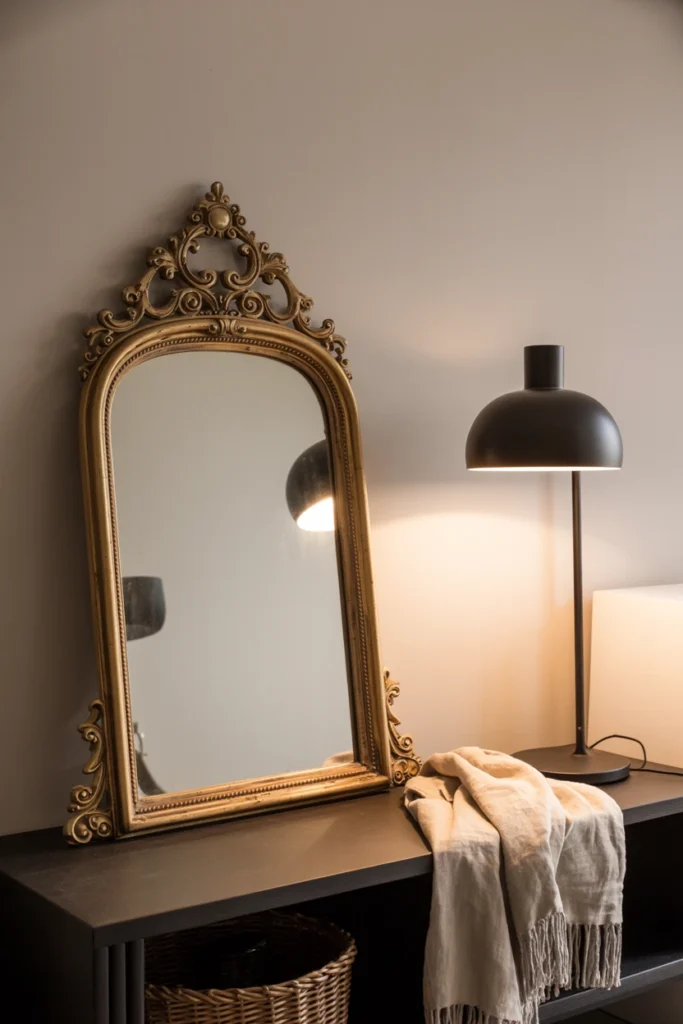
An all-antique bedroom risks looking like a movie set rather than a lived-in home. Every single piece dating from the same era removes the layered, collected quality that defines good whimsy goth design. Mixing eras instantly makes the room feel personal instead of themed.
For every antique or vintage piece, add one clean modern item — a simple black metal shelf, a minimal reading lamp, or a plain linen throw. Aim for a 70/30 split favoring antique pieces over modern ones. This ratio keeps the drama intact while preventing the “costume shop” effect that undermines the aesthetic.
| Piece Type | Era Mix Target |
| Bed frame, vanity | Antique/vintage |
| Reading lamp, shelving | Modern, minimal |
| Textiles | Mixed — vintage lace, modern velvet |
| Overall ratio | 70% antique, 30% modern |
Layer Lighting for Whimsy Goth Ambiance
Lighting does more to establish mood in this style than any other category. These four tips build a layered system rather than relying on one overhead fixture.
12. Install a Dimmer Switch for Layered Mood Lighting

A single bright overhead light eliminates every bit of atmosphere a whimsy goth bedroom depends on. Full brightness flattens shadows and washes out the depth created by dark walls. A dimmer switch gives you control over mood at any hour.
Install a 15–25 dimmer switch compatible with your existing fixture, or use plug-in dimmer adapters for lamps if rewiring isn’t an option. Set your baseline evening level at 20–30% brightness, reserving full brightness only for cleaning or getting dressed. This one change makes every other lighting tip in this section actually functional.
| Dimmer Type | Best For |
| Hardwired wall dimmer | Overhead fixtures |
| Plug-in lamp dimmer | Rental-friendly, no rewiring |
| Smart bulb with app dimming | Full remote control |
| Rotary dial dimmer | Chandeliers and sconces |
13. Hang a Wrought Iron or Candelabra-Style Chandelier
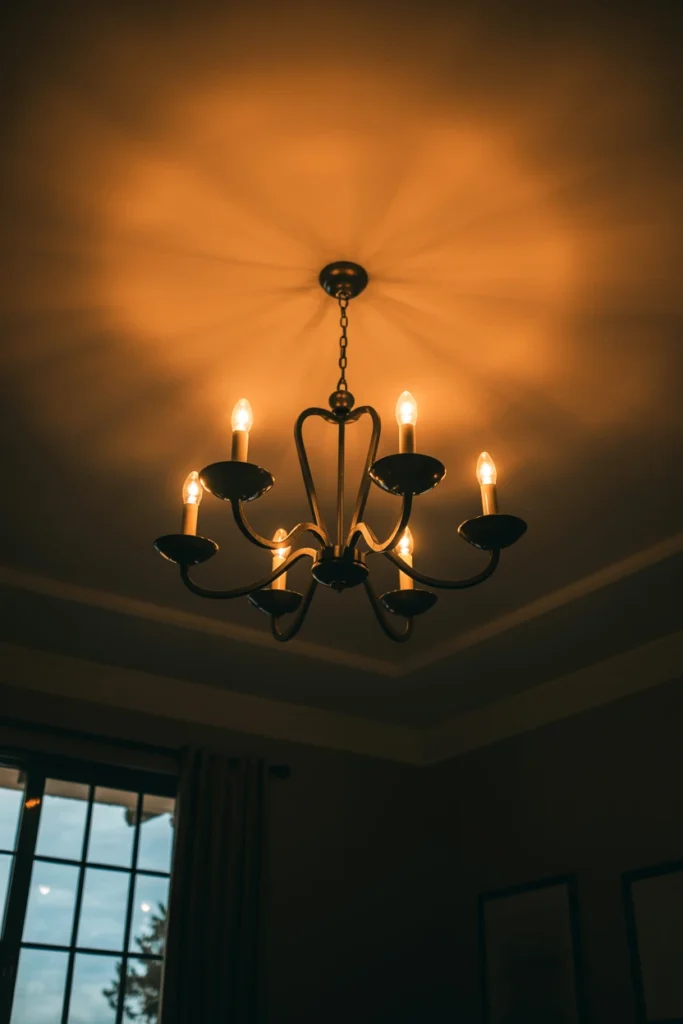
A standard flush-mount ceiling light contributes nothing to the gothic half of this aesthetic. Builder-grade fixtures read as generic no matter how well the rest of the room is styled. A wrought iron chandelier becomes an instant focal point the moment you walk in.
Choose a chandelier with candelabra-style bulbs (E12 base) between 18 and 30 inches in diameter for a standard 10×12 room. Hang it centered over the room, not necessarily over the bed, at least 7 feet from the floor. Pairing this fixture with warm 2200K bulbs from Tip 12’s dimmer creates flickering, candlelit warmth without an open flame.
| Room Size | Chandelier Diameter |
| Under 100 sq ft | 16–20 inches |
| 100–140 sq ft | 20–26 inches |
| 140–180 sq ft | 26–32 inches |
| Over 180 sq ft | 32+ inches |
14. Place Flame-Effect Candles Along Dressers and Shelves
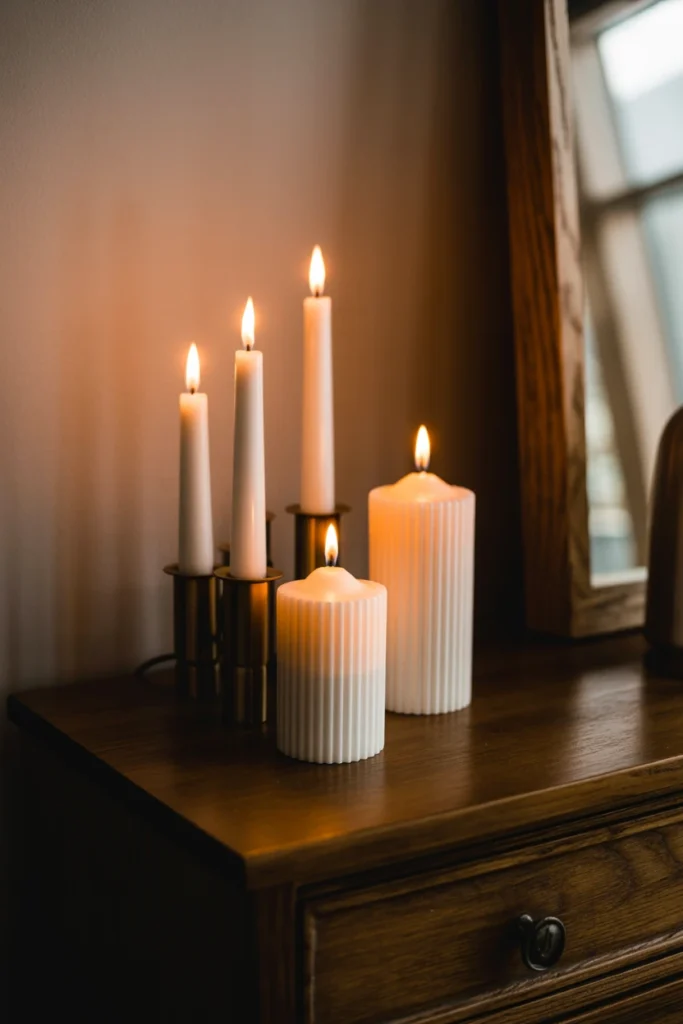
Uniform lamp lighting alone leaves the room without the flickering warmth that defines gothic romance. Static light sources never create the shifting shadows that make a room feel alive. Flame-effect candles add movement to every flat surface without fire risk.
Group 3–5 flameless LED taper or pillar candles at varying heights (4, 7, and 10 inches) on your dresser, vanity, and nightstands. Choose warm-white flicker settings rather than cool white, which reads as sterile rather than romantic. This grouping technique mirrors the odd-number rule that makes styled vignettes look intentional rather than random.
| Candle Height | Best Placement |
| 4 inches | Nightstand, vanity edge |
| 7 inches | Dresser center |
| 10 inches | Windowsill, shelf top |
| Mixed heights | Grouped in odd numbers |
15. Use String Lights to Soften Heavy Dark Furniture

Heavy dark wood or iron furniture without any soft counterpoint reads as harsh under artificial light. Too much visual weight from furniture alone tips the room fully gothic and loses the whimsy half entirely. Warm string lights immediately soften every hard edge in the room.
Drape warm-white copper or fairy string lights along the canopy frame, behind the headboard, or across the vanity mirror frame. Use battery-operated strings with a built-in timer for rental-friendly, damage-free installation. This single addition does more to balance Tip 2’s 60/40 ratio than almost any other single purchase.
| String Light Type | Best Placement |
| Copper wire fairy lights | Canopy frame, mirror frame |
| Warm-white LED strand | Behind headboard |
| Battery + timer | Rental bedrooms |
| Plug-in with dimmer | Permanent installations |
Style Textiles and Whimsical Accents
Textiles and small accents deliver the final 40% of whimsy softness this style depends on. These four tips layer texture without overwhelming the room.
16. Layer Velvet, Lace, and Faux Fur Textures on the Bed

A bed dressed in a single flat fabric contributes nothing to the layered texture this style requires. One-note bedding leaves the room’s largest surface looking unfinished no matter how styled the rest of the room is. Three-texture layering instantly makes the bed the room’s richest focal point.
Start with a deep-colored velvet duvet as your base layer, add a lace or crochet throw folded at the foot, and finish with two faux fur or velvet accent pillows. Keep the lace layer to no more than 30% coverage so it reads as an accent rather than the dominant texture. This exact ratio prevents the bed from looking either too heavy or too delicate.
| Textile Layer | Coverage Target |
| Velvet duvet (base) | 100% of bed |
| Lace or crochet throw | 25–30% (foot of bed) |
| Faux fur pillows | 2 pillows, front row |
| Extra throw pillows | 2–3, patterned or solid |
17. Hang a Vintage Tapestry Behind the Headboard
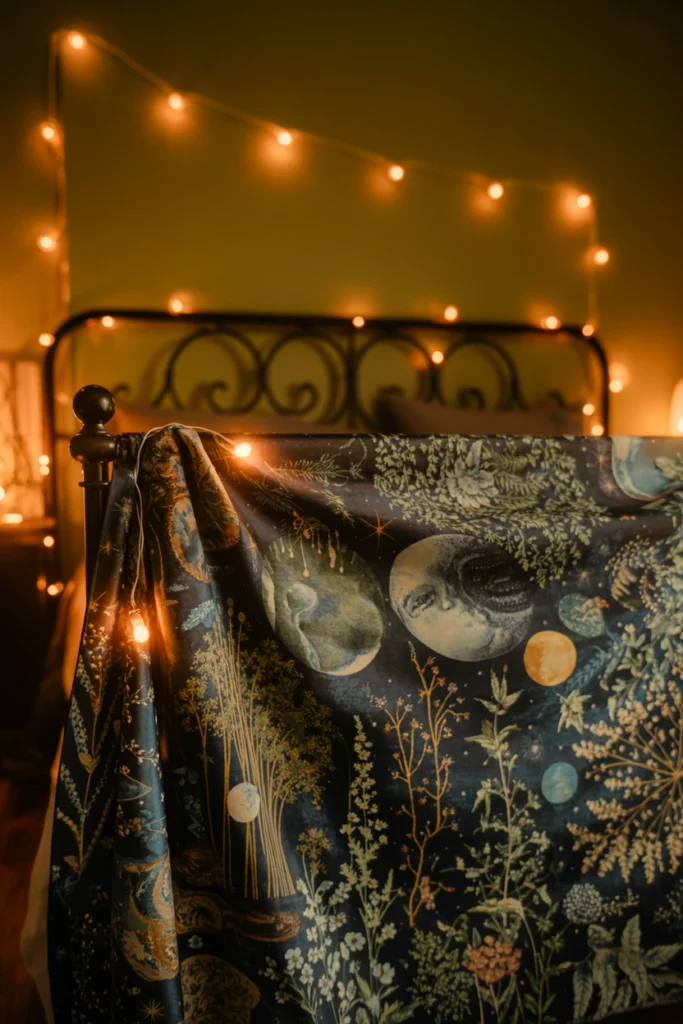
A bare wall behind the headboard leaves the room’s most visible surface undecorated. Blank space above the bed draws the eye upward with nothing to reward it. A tapestry instantly fills this space with texture and pattern without requiring nail holes.
Choose a tapestry sized to cover 70–80% of the headboard’s width, typically 60×80 inches for a queen bed, in a botanical, celestial, or damask print. Hang it using a tension rod or removable adhesive hooks rated for at least 10 pounds. This placement gives the string lights from Tip 15 a textured backdrop instead of flat drywall to drape against.
| Bed Size | Tapestry Width |
| Twin | 50–55 inches |
| Full | 55–65 inches |
| Queen | 60–80 inches |
| King | 80–90 inches |
18. Style Open Shelves with Apothecary Jars and Dried Florals
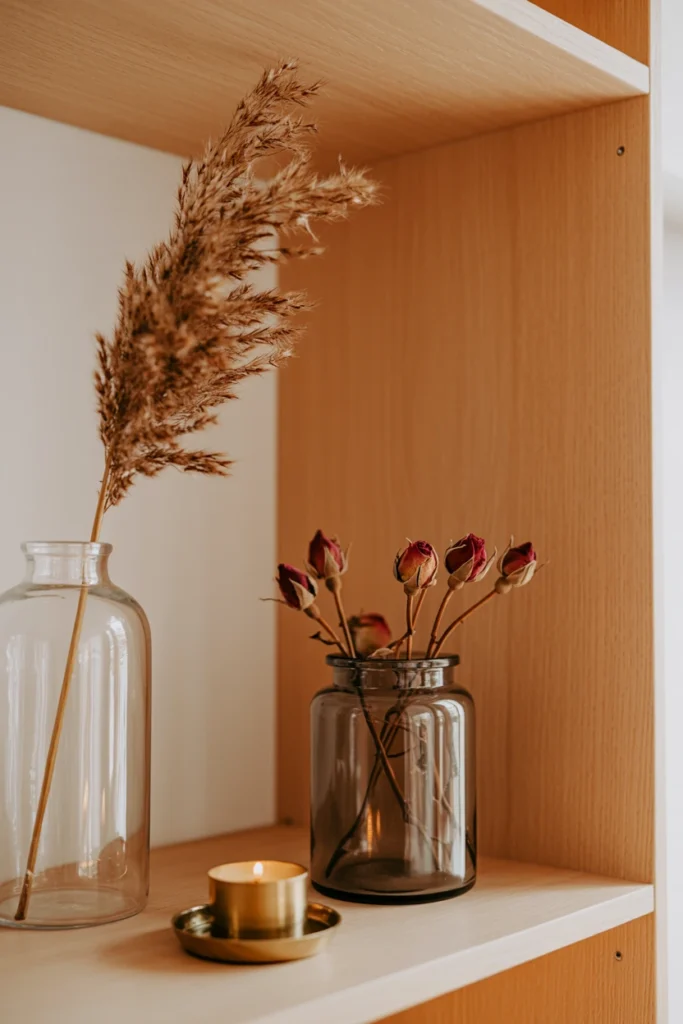
Empty shelf space or shelves crowded with mismatched items both undermine a curated look. Cluttered shelving is the single most common giveaway of an unfinished whimsy goth room. Deliberate grouping with apothecary jars and dried botanicals fixes this in under an hour.
Group items in odd numbers of three or five per shelf section, mixing height: one tall dried pampas stem, one mid-height apothecary jar filled with dried rosebuds, and one small brass candle holder. Leave at least 30% of each shelf empty to avoid visual clutter. This breathing room is what makes the grouping read as curated rather than crammed.
| Shelf Item | Height Role |
| Dried pampas or eucalyptus | Tall anchor (12–18 in) |
| Apothecary jar with botanicals | Mid-height (6–9 in) |
| Brass candle holder | Short accent (3–5 in) |
| Empty space | 30% of total shelf |
19. Group Antique Frames in an Asymmetrical Gallery Wall

A single centered piece of art leaves large gothic-styled rooms feeling under-decorated. One flat art piece can’t compete visually with a dark wall and heavy furniture. An asymmetrical gallery wall of 5–9 frames adds the collected, layered look the whole room depends on.
Mix 5–9 antique brass and dark wood frames in varying sizes (5×7 to 11×14 inches), filled with botanical prints, moth illustrations, or vintage portraits. Arrange them starting 57 inches from the floor to the visual center, with 2–3 inches between each frame. This asymmetry echoes the furniture placement rule from Tip 10, keeping the whole room’s logic consistent.
| Gallery Element | Specification |
| Frame count | 5–9 frames |
| Frame size range | 5×7 to 11×14 inches |
| Spacing between frames | 2–3 inches |
| Visual center height | 57 inches from floor |
Maintain Your Whimsy Goth Bedroom Long-Term
A styled room degrades without upkeep. These three habits keep the aesthetic sharp for years instead of fading within a season.
20. Rotate Seasonal Textiles to Keep the Palette Fresh
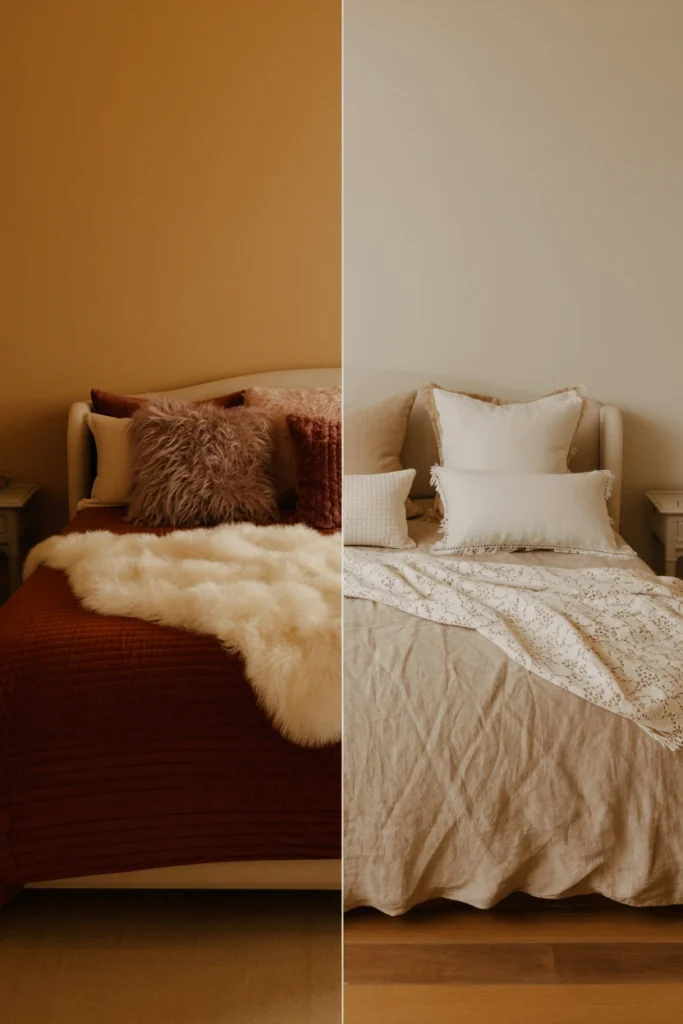
The exact same bedding and throws year-round eventually make even a well-styled room feel stagnant. Static styling stops feeling intentional and starts feeling neglected after several months. Seasonal rotation keeps the room visually fresh without buying new furniture.
Swap the faux fur pillows and heavy velvet throw for a lighter cotton-lace version in warmer months, storing the heavier pieces in a cedar-lined bin. Keep two complete textile sets — a fall/winter set and a spring/summer set — within your original palette from Tip 1. This rotation costs nothing beyond the initial purchase and doubles the room’s perceived variety.
| Season | Textile Weight |
| Fall/Winter | Velvet, faux fur, heavy wool |
| Spring/Summer | Cotton lace, linen, light throws |
| Storage method | Cedar-lined bin, sealed |
| Rotation frequency | Twice yearly |
21. Dust and Condition Wood and Metal Finishes Monthly

Dark wood and wrought iron show dust and fingerprints more visibly than lighter finishes. Neglected dark surfaces develop a dull, gray film that flattens the room’s depth within weeks. Monthly conditioning keeps every dark surface reading rich rather than dusty.
Wipe wood furniture monthly with a microfiber cloth and a small amount of feed-and-wax polish; treat iron hardware with a dry cloth and occasional light oil to prevent rust spots. Set a recurring reminder on the first of each month rather than waiting until dust becomes visible. This small habit protects the investment made in Tips 8 and 9’s furniture pieces.
| Surface | Monthly Care |
| Dark wood furniture | Feed-and-wax polish |
| Wrought iron | Dry cloth + light oil |
| Brass hardware | Soft polish cloth |
| Mirror/glass | Vinegar-water solution |
22. Edit Décor Quarterly to Prevent Clutter Creep
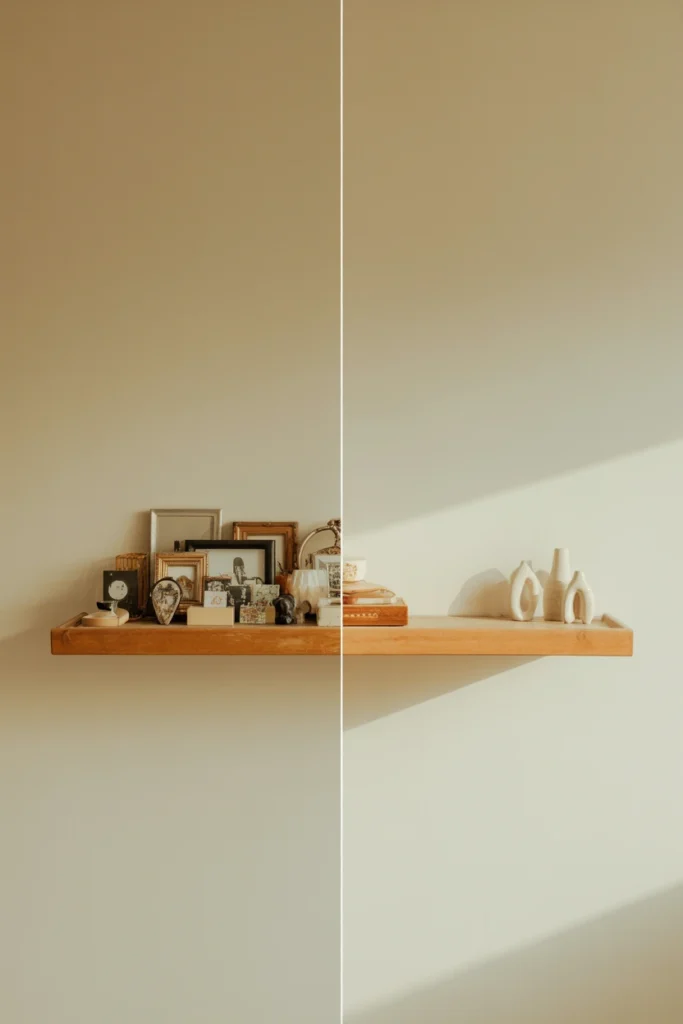
Whimsy goth rooms accumulate small trinkets faster than almost any other style, since the aesthetic rewards collecting. Unchecked accumulation eventually tips the 60/40 balance from Tip 2 into visual chaos. A quarterly edit keeps the collected look from becoming a cluttered one.
Every three months, remove one item for every two new pieces added, prioritizing anything that no longer fits your Tip 1 color story. Photograph the room before editing to compare against after, making it easier to spot what’s actually adding value. This discipline is what keeps a whimsy goth bedroom looking curated indefinitely rather than accumulating into disorder.
| Edit Interval | Action |
| Quarterly | Remove 1 item per 2 added |
| Before editing | Photograph the room |
| Priority removal | Off-palette items first |
| Goal | Maintain 60/40 gothic/whimsy ratio |
Common Whimsy Goth Bedroom Mistakes That Ruin the Aesthetic
Most whimsy goth bedrooms fail from a handful of repeated mistakes rather than any single design flaw. Avoiding these eight corrects the majority of amateur attempts at this style.
| Mistake | Why It Hurts the Space | Better Alternative |
| Painting all walls pure black | Absorbs all light, shrinks small rooms visually | Use charcoal or deep plum instead |
| Buying only Halloween decor | Reads as seasonal costume, not year-round design | Source antique and botanical pieces instead |
| Skipping the dimmer switch | Overhead light flattens all mood and shadow | Install a $15 dimmer immediately |
| Using cool-white bulbs | Creates a clinical, sterile gothic look | Switch to 2200–2700K warm bulbs |
| Symmetrical furniture placement | Reads as staged showroom, not collected home | Offset furniture 6–12 inches |
| Overcrowding open shelves | Removes breathing room, looks cluttered | Leave 30% of shelf space empty |
| Mixing cool silver with warm brass | Clashing metals read as unplanned | Commit to one warm metal tone |
| Skipping textile rotation | Room feels stagnant after a few months | Rotate textiles seasonally per Tip 20 |
Whimsy Goth Bedroom Ideas by Room Type and Budget
Small Bedroom
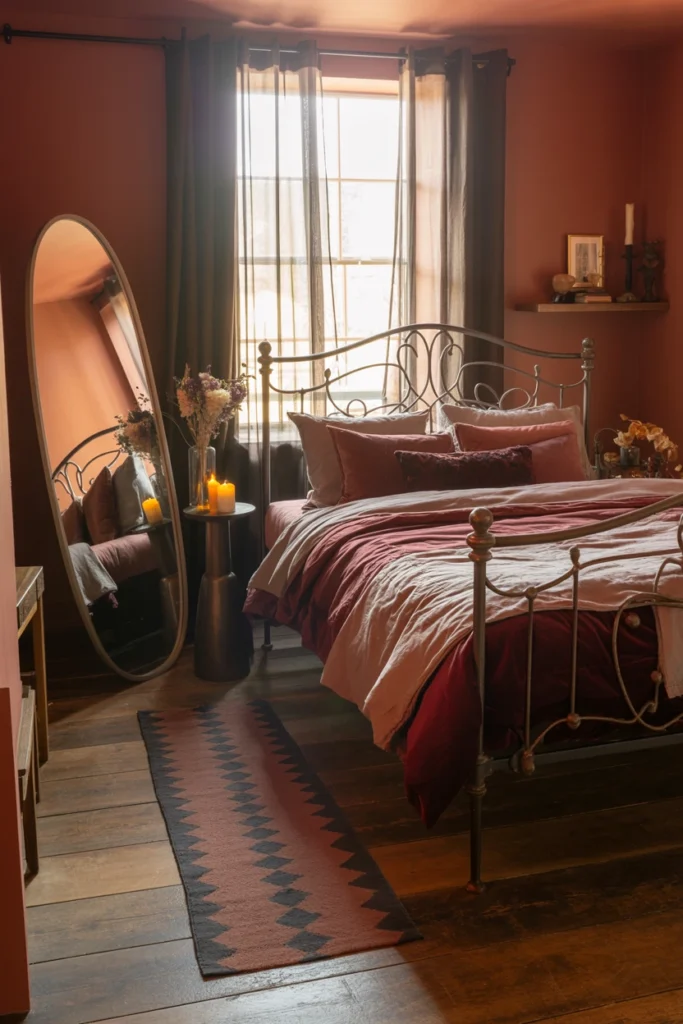
Small bedrooms under 100 square feet need every whimsy goth element scaled down without losing drama. The core constraint is avoiding a cramped, overcrowded feel while keeping the gothic mood intact.
Key strategies for small bedrooms:
- Choose a wrought iron frame instead of a canopy bed to preserve visual height
- Mount a single oversized mirror instead of a full vanity to save floor space
- Limit the gallery wall to 5 frames instead of 9
- Use wall-mounted sconces instead of floor or table lamps
- Paint only one accent wall rather than all four
- Choose a runner rug instead of a full area rug to keep floor space open
Rental-Friendly
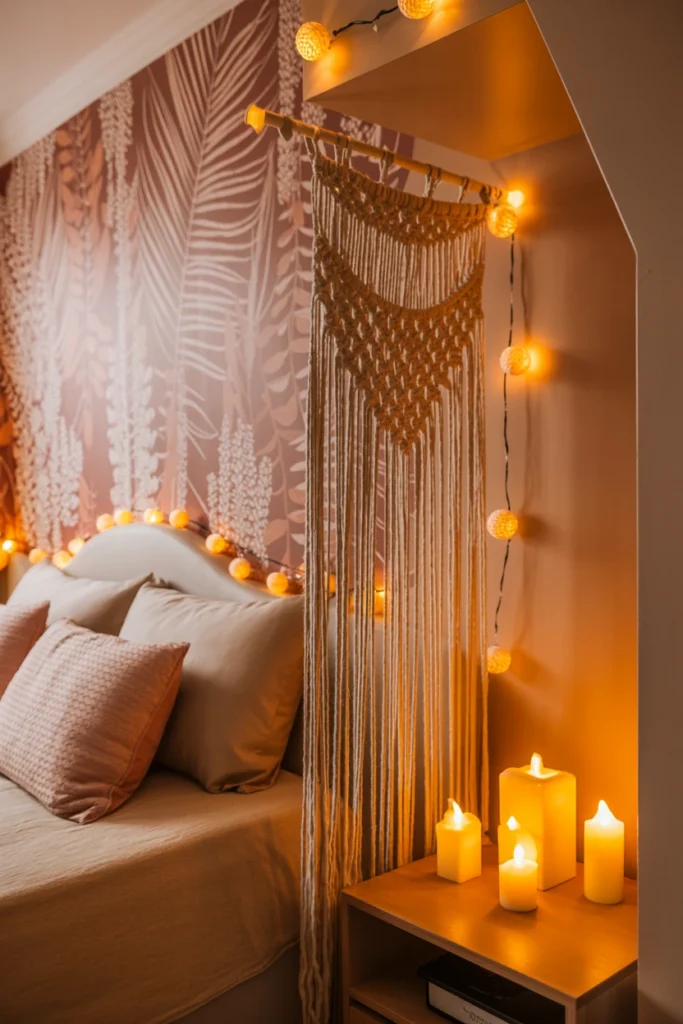
Renters need every technique to be fully removable without damaging walls or losing a security deposit. The core constraint is achieving drama without paint, drilling, or permanent fixtures.
Key strategies for rentals:
- Use removable wallpaper instead of paint for the accent wall
- Hang the tapestry with tension rods instead of nails
- Choose battery-operated string lights and candles over hardwired options
- Use command strips rated for 10+ pounds for frame galleries
- Bring a portable chandelier that clips onto existing fixtures
- Choose furniture over fixed installations for all lighting needs
Budget-Friendly
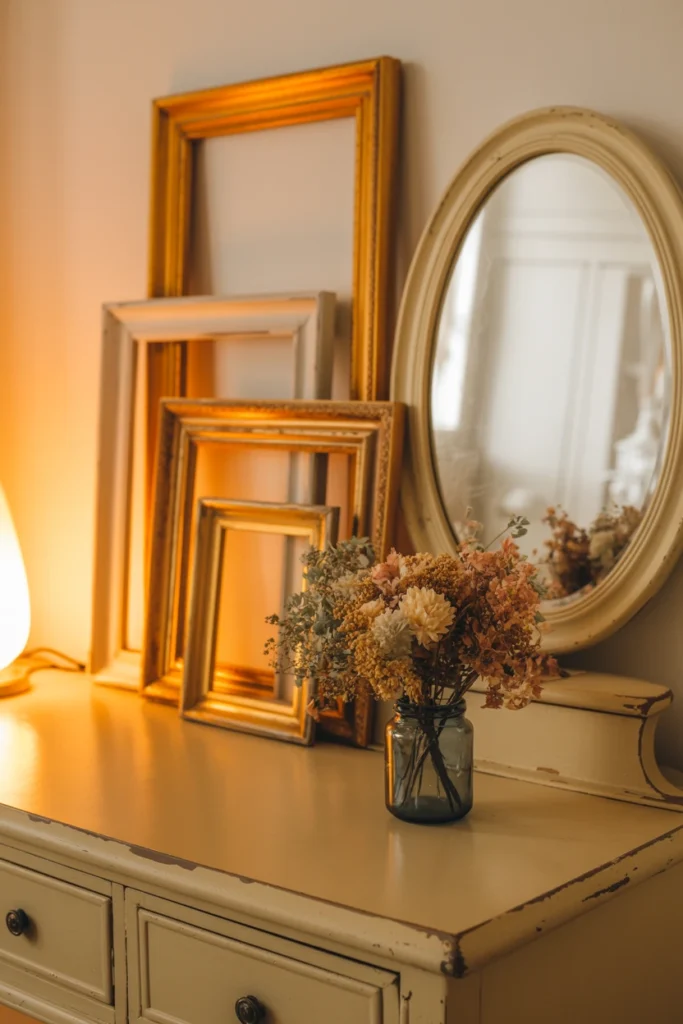
Budget-conscious decorators need to prioritize impact-per-dollar across every category. The core constraint is achieving the full aesthetic without the higher-cost antique furniture pieces.
Key strategies for budget decorating:
- Thrift the vanity and bed frame before buying new
- Use Rub ‘n Buff on existing hardware instead of replacing it
- DIY dried florals from a grocery store bouquet instead of buying arranged stems
- Choose a paint sample-sized can for a single accent wall first
- Source frames from dollar stores and spray-paint them antique gold
- Buy one quality velvet piece and layer cheaper textiles around it
Shared Bedroom
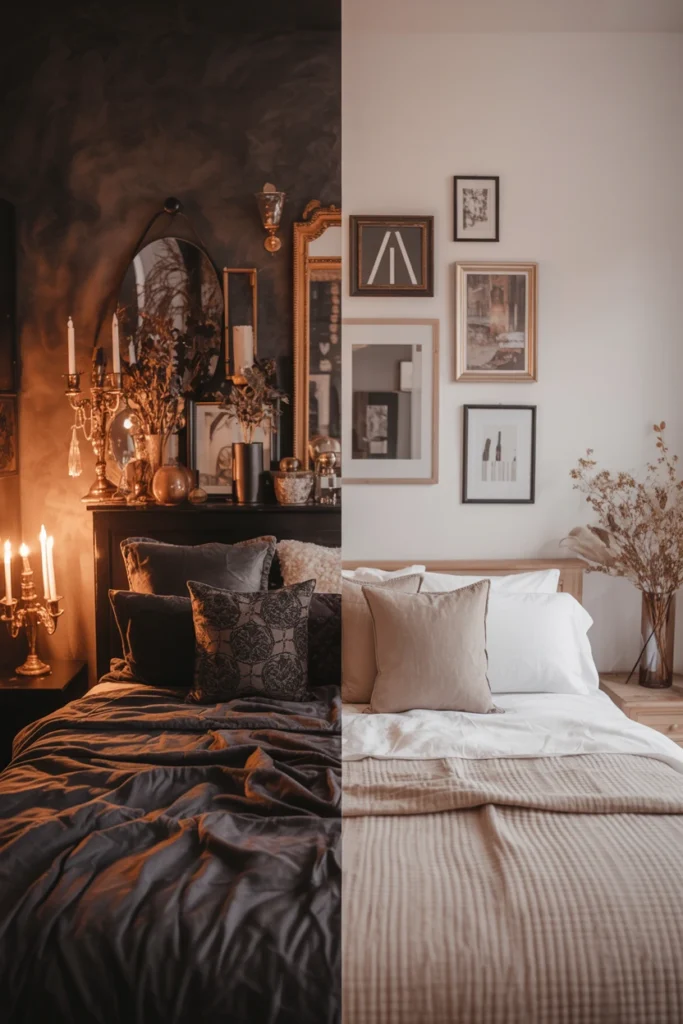
Shared bedrooms need the aesthetic to work for two people’s routines and possibly two design preferences. The core constraint is compromise without diluting the style entirely.
Key strategies for shared bedrooms:
- Apply the whimsy goth palette to one side or one wall as a defined zone
- Choose a neutral base bedding with one gothic accent layer both partners approve
- Split lighting control so each side has an independent dimmer
- Use a shared gallery wall as the compromise focal point
- Keep decorative clutter items to one shared shelf rather than scattered surfaces
- Agree on the color story from Tip 1 together before any purchases
Frequently Asked Questions
What is whimsy goth style in a bedroom?
Whimsy goth style combines dark, dramatic gothic elements — deep wall colors, wrought iron, velvet — with soft, romantic whimsical touches like lace, dried florals, and candlelight. The style follows roughly a 60/40 split favoring gothic structure over whimsical softness. It works in bedrooms of any size when the color story and furniture ratio stay consistent.
How do I decorate a gothic bedroom without it looking cheesy?
Avoid buying only seasonal Halloween decor, which reads as costume rather than design. Mix antique and modern pieces at roughly a 70/30 ratio and stick to a locked color palette. Cheesy results almost always come from too many novelty items and not enough cohesive color planning.
How do I start a whimsy goth bedroom on a budget?
Start with paint sample cans for one accent wall and thrifted furniture before buying anything new. Rub ‘n Buff can update hardware for under $10 per piece instead of full replacement. A budget whimsy goth room can be started for under $200 by prioritizing paint and textiles first.
How do I do gothic bedroom decor in a small room?
Choose a wrought iron bed frame over a canopy to preserve visual height, and limit the gallery wall to five frames instead of nine. A single oversized mirror can replace a full vanity to save floor space. Small rooms benefit most from a deep plum or forest green wall rather than true black.
How do I choose between velvet and lace for bedding?
Use velvet as the dominant base layer covering the full bed and lace as an accent covering no more than 30% of the surface, typically folded at the foot. This ratio keeps the bed looking rich rather than either too heavy or too delicate. Both fabrics together create the layered texture the style depends on.
How often should I refresh my whimsy goth decor?
Rotate seasonal textiles twice yearly and edit accumulated decor items quarterly. Monthly dusting and conditioning of wood and metal finishes keeps surfaces from dulling. This maintenance schedule keeps the room looking curated rather than static or cluttered.
Does whimsy goth work for a rental apartment?
Yes, using removable wallpaper, tension rods, command strips, and battery-operated lighting instead of paint and permanent fixtures. Every core element of the style — color, texture, lighting — has a damage-free alternative. Rental-friendly whimsy goth rooms can achieve the full aesthetic without losing a security deposit.
How much does it cost to redo a bedroom in whimsy goth style?
A full room typically ranges from $200 for a budget thrifted approach to $1,500 or more for new antique furniture and a wrought iron chandelier. Splitting the budget 35% furniture, 25% lighting, 20% textiles, 15% accents, and 5% paint keeps spending balanced. Most of the aesthetic’s impact comes from lighting and textiles rather than the most expensive furniture pieces.
How do I keep dark wood and metal finishes from looking dull?
Wipe wood furniture monthly with a microfiber cloth and feed-and-wax polish, and treat iron hardware with a dry cloth and occasional light oil. Dust and fingerprints show more visibly on dark surfaces than light ones, so monthly upkeep matters more in this style. Skipping this step is one of the fastest ways a well-styled room starts looking neglected.
Conclusion
A whimsy goth bedroom comes down to one locked color story, a 60/40 gothic-to-whimsical ratio, and layered lighting that a single overhead fixture can never deliver. Start with Tip 1 — choosing your core color palette — before buying any furniture or decor. Paint one test swatch behind your headboard this week and check it under both daylight and lamp light before committing further.
The full aesthetic depends on consistent habits, not a single weekend project. A room styled once and never maintained fades into clutter within a season, while one refreshed quarterly stays sharp indefinitely.