
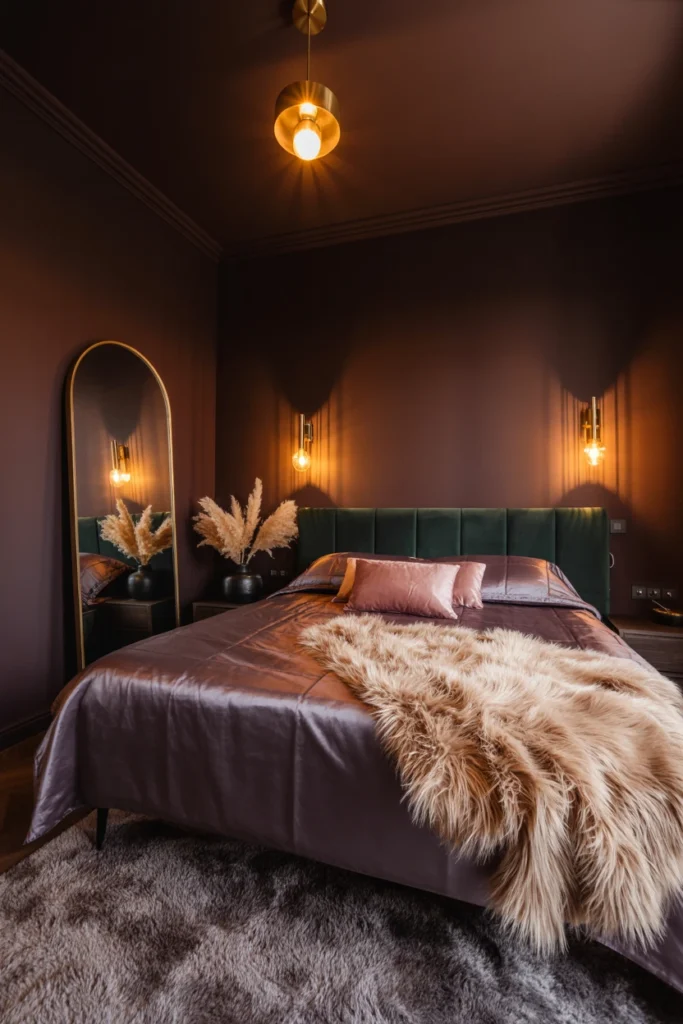
A dark feminine room works because contrast, not color alone, creates the mood. Deep wall tones paired with soft textures and warm light produce a space that reads as sensual and intentional rather than gloomy. This guide walks through 20 specific changes — color, lighting, texture, furniture, and styling — that build that look from the ground up, starting with the foundation and ending with the finishing details.
Foundation: Color and Walls
Get the base right first. Everything else in the room reads off the wall color and light level you set here.
1. Choose a true dark neutral, not black
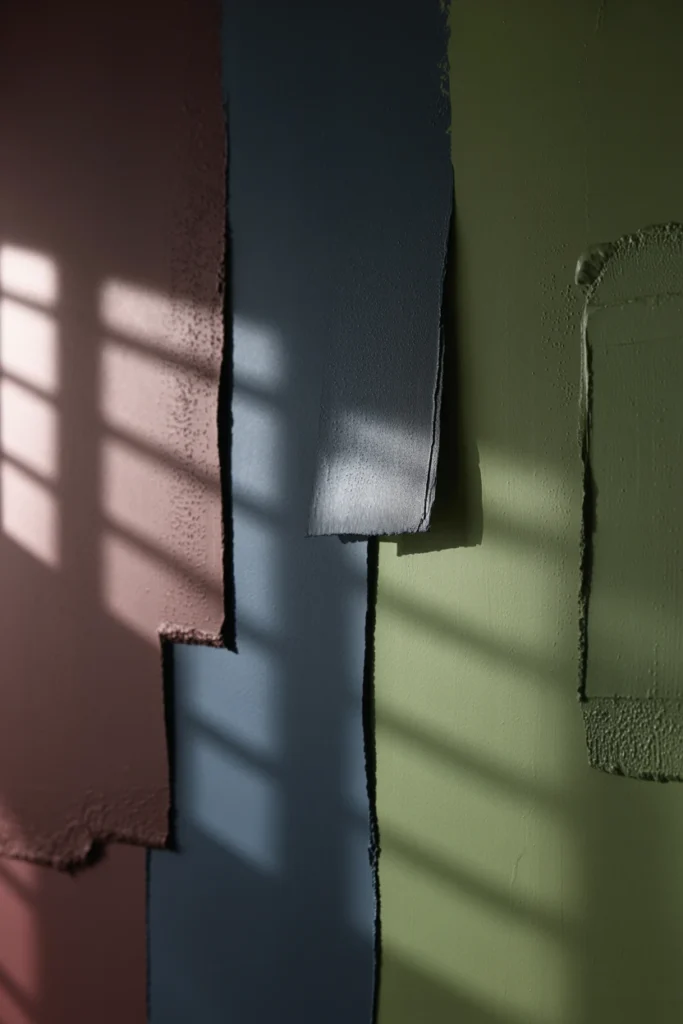
Pure black flattens a room and swallows detail. A near-black with a warm or cool undertone — deep charcoal, espresso brown, bottle green, or aubergine — keeps depth in the walls while still reading as dramatic.
| Undertone | Paint Examples | Best For |
| Warm | Espresso brown, deep terracotta-black | Rooms with warm wood floors |
| Cool | Charcoal, deep navy | Rooms with cool-toned metals (silver, chrome) |
| Neutral-green | Bottle green, forest | North-facing rooms needing warmth |
2. Paint the ceiling to match or go one shade darker
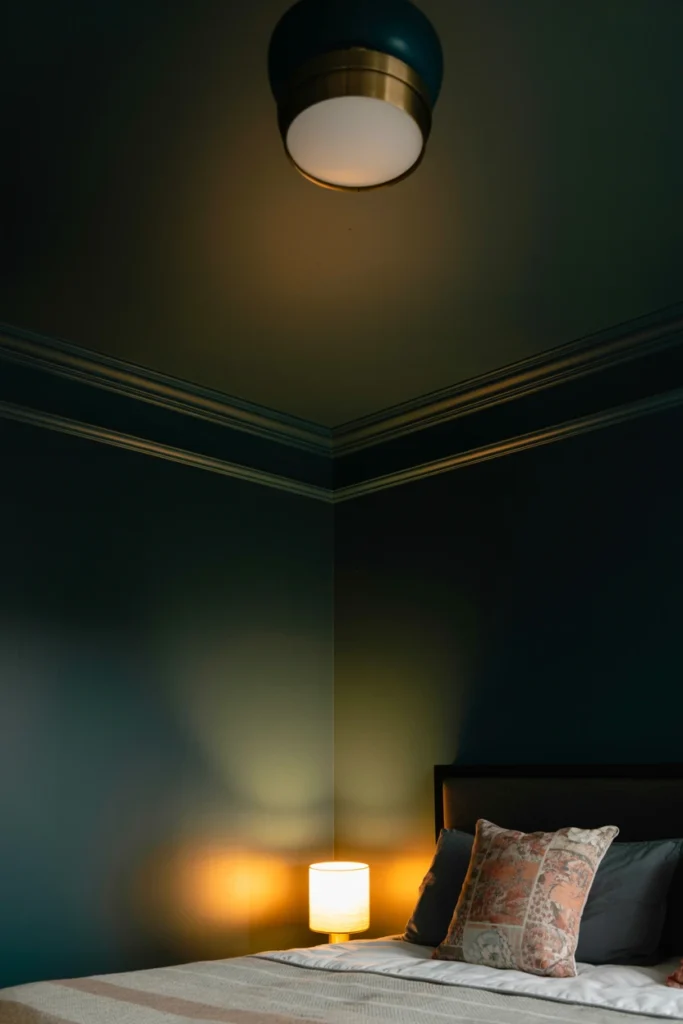
A white ceiling above dark walls breaks the effect and pulls the eye up and away. Painting the ceiling the same color, or a shade darker, wraps the room and makes it feel cocooning instead of boxed in.
3. Use matte or eggshell finish, not satin or gloss
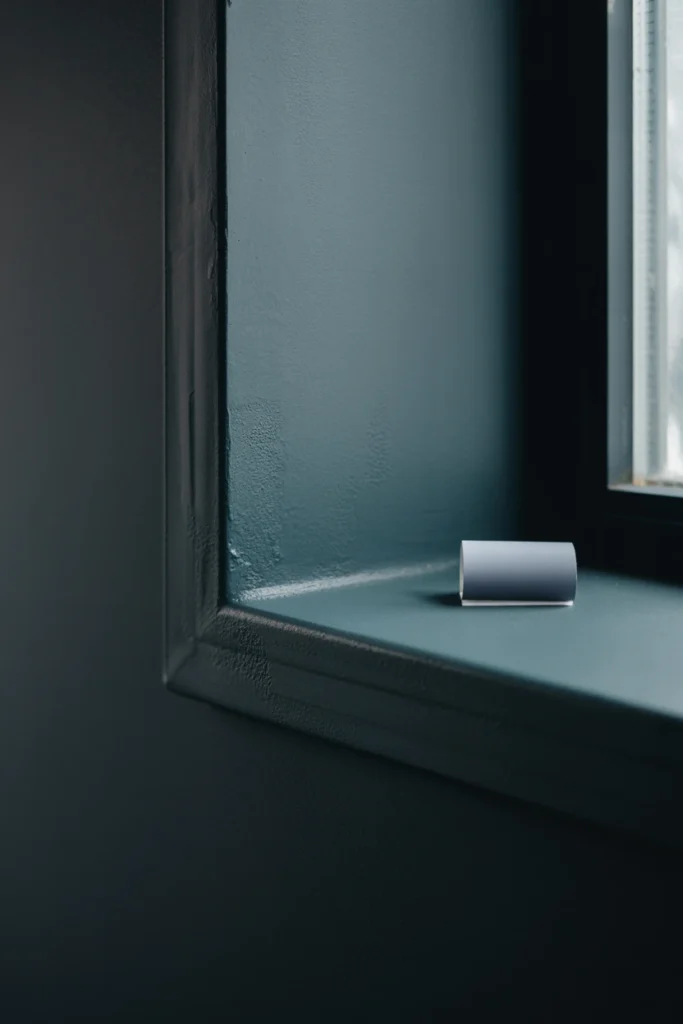
Sheen on dark paint shows every roller mark and reflects light in a way that looks cheap under lamps. Matte and eggshell absorb light instead, which is what gives dark rooms their soft, velvety look.
4. Add one accent wall in a jewel tone if full-room dark feels like too much
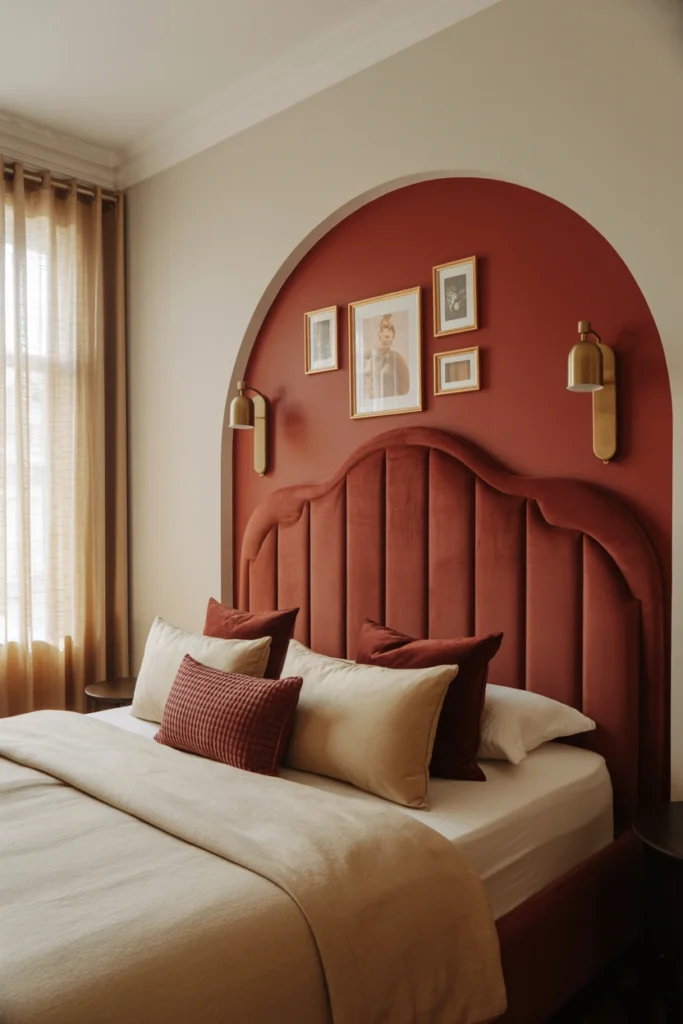
Deep plum, wine red, or emerald on the wall behind the bed or a statement piece of furniture gives you the mood without repainting the whole room. Keep the remaining walls a warm off-white or soft grey so the accent wall still reads as intentional, not accidental.
Lighting: The Part That Makes or Breaks the Look
Dark walls absorb light. Without the right lighting plan, the room goes flat and heavy instead of moody and rich.
5. Skip the overhead light as your primary source
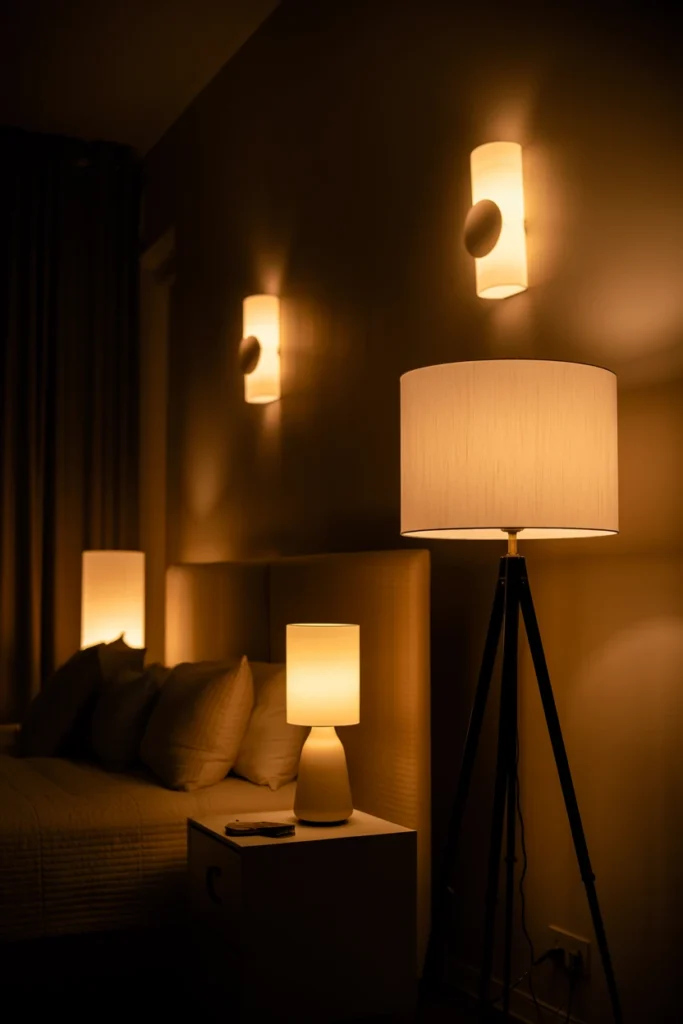
A single ceiling fixture on dark walls creates harsh pools of light and deep shadow everywhere else. Layer in lamps and sconces instead so light comes from multiple heights around the room.
6. Use warm bulbs only — 2700K or lower
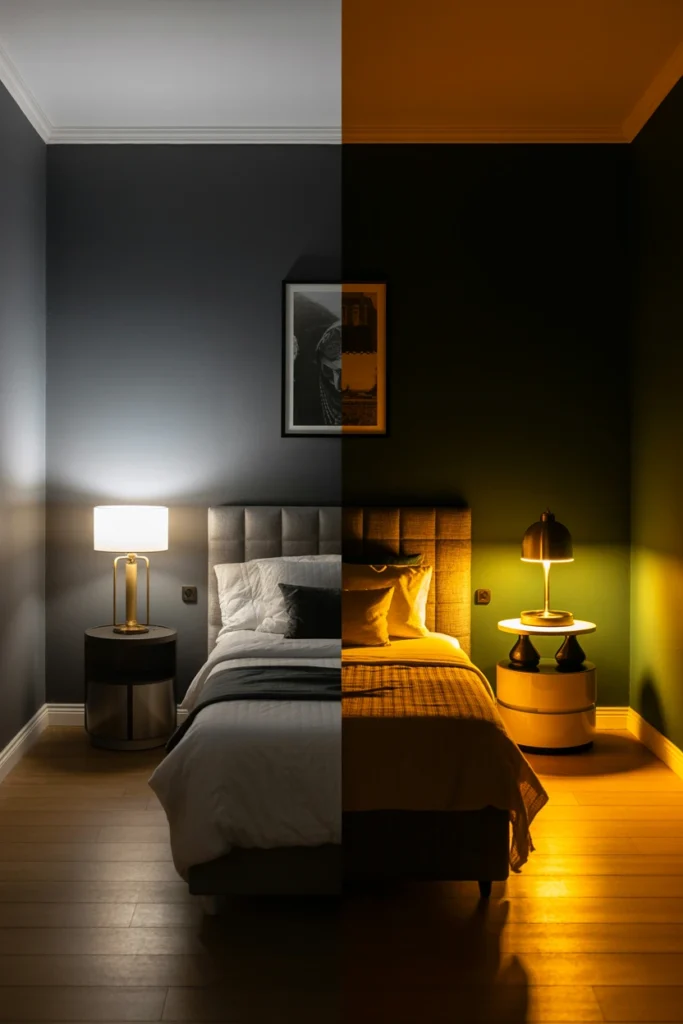
Cool white or daylight bulbs (4000K+) make dark paint look dirty and grey instead of rich. Warm bulbs bring out the undertone in the paint and give skin tones a flattering glow, which matters in a room built around feeling good in it.
7. Add at least one dimmer switch
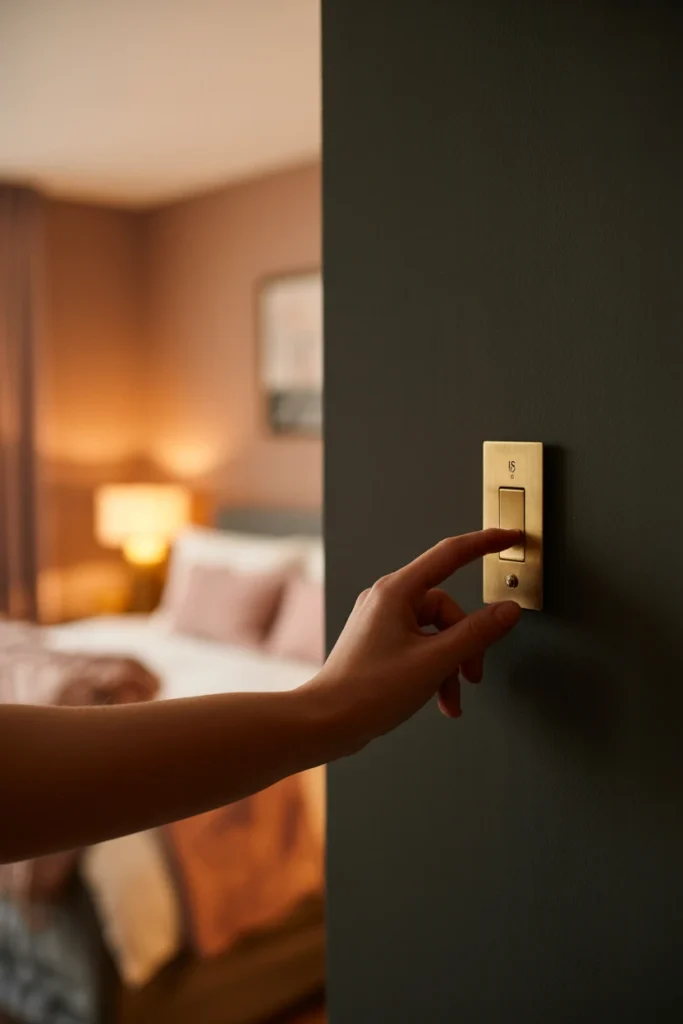
A dark room needs to shift between bright enough to get dressed in and low enough to feel intimate at night. A dimmer gives you both without buying separate fixtures.
8. Bring in candlelight or flame-effect lighting
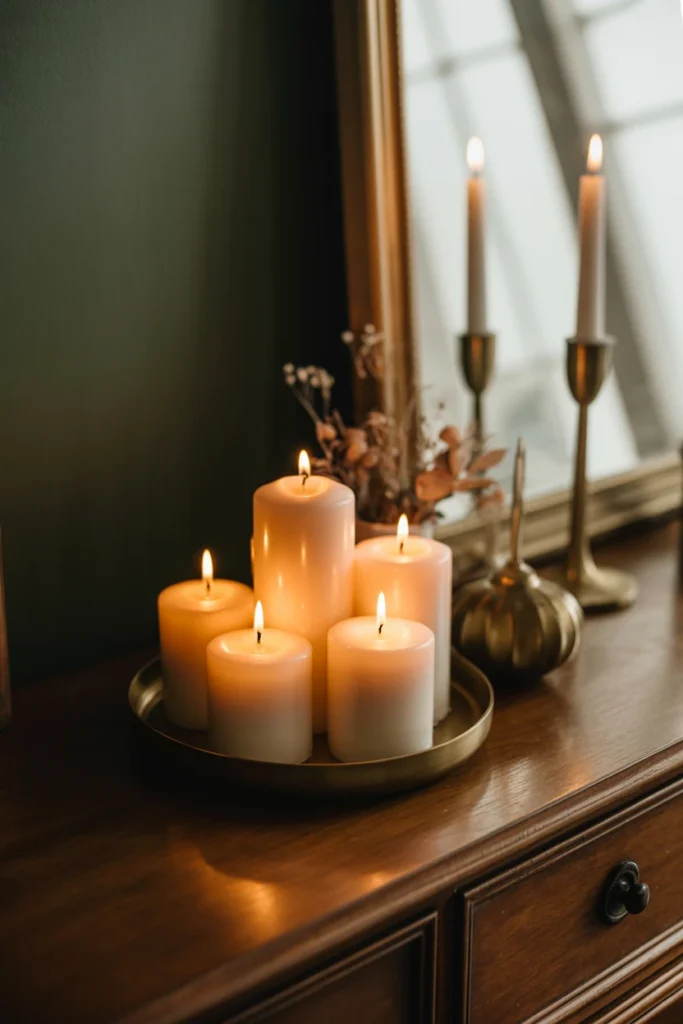
Real or flameless candles add movement and warmth that fixed bulbs can’t replicate. Cluster a few at varying heights on a dresser or nightstand rather than lining them up in a row.
Texture and Fabric: Where the “Feminine” Comes From
Dark color alone reads masculine or gothic. Texture and softness are what shift it toward feminine and sensual.
9. Layer at least three fabric textures in one room
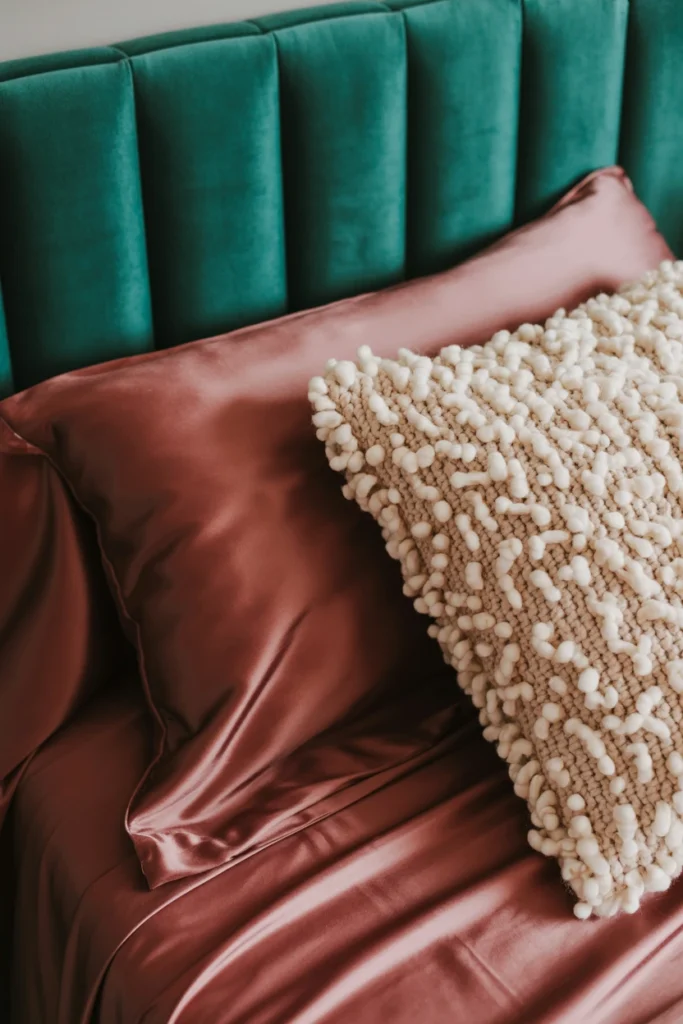
Velvet, silk or satin, and a nubby textured throw (bouclé, chenille, faux fur) together do more work than any single “statement” fabric. The contrast between smooth and textured surfaces is what reads as luxurious under low light.
10. Choose velvet for the largest upholstered piece
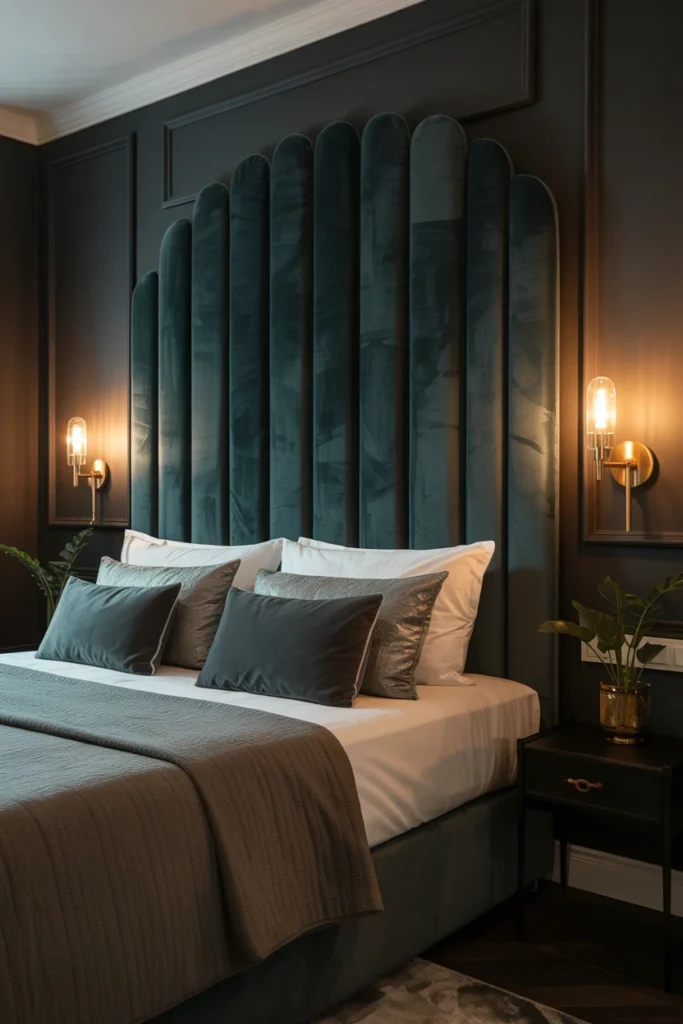
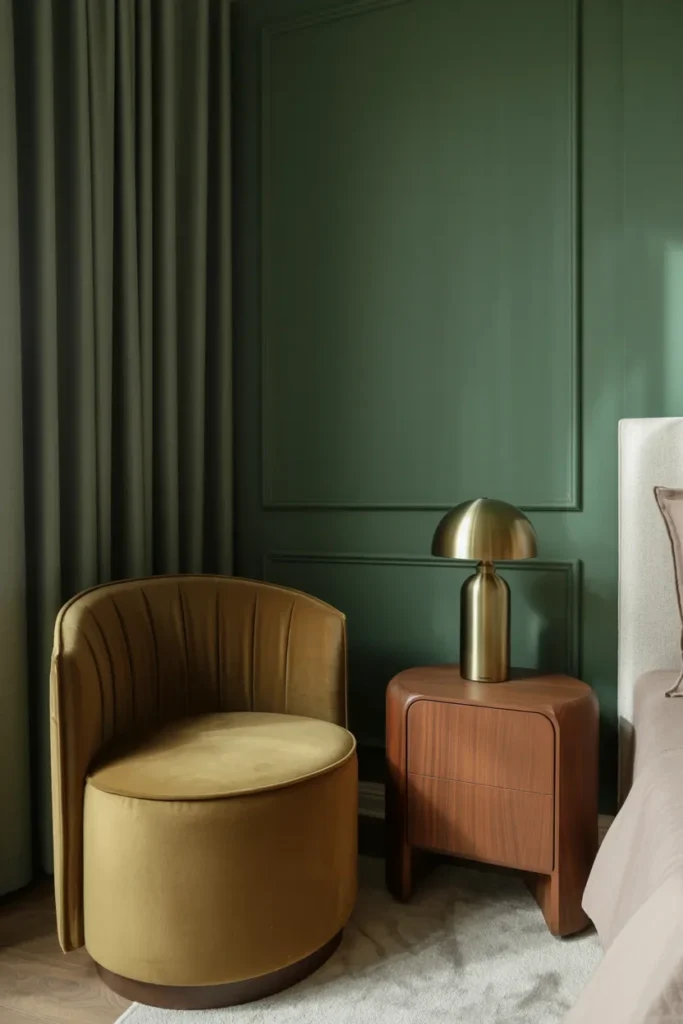
A velvet headboard, sofa, or accent chair catches and holds light in a way flat cotton or linen doesn’t. On dark furniture especially, velvet keeps the piece from disappearing into the wall color.
11. Add sheer curtains behind heavier drapes
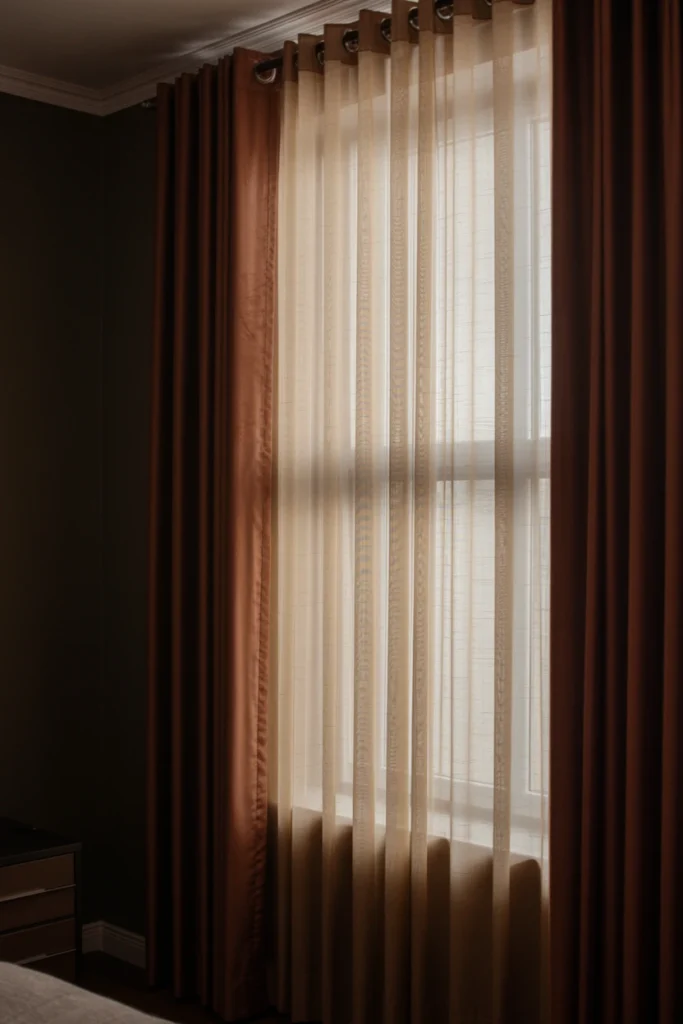
A single heavy curtain on dark walls can make the window feel like a void. Layering a sheer panel underneath softens the light coming through during the day and adds movement without brightening the whole room.
12. Bring in a faux fur or shag accent rug

A soft rug underfoot is one of the fastest ways to shift a room from “dark and stark” to “dark and cozy.” Place it where skin actually touches it — beside the bed or under a reading chair — rather than only under furniture.
13. Use satin or silk bedding over cotton

Cotton bedding on a dark bed frame flattens the look. Satin or silk sheets catch light and shift tone slightly as you move, which keeps the whole bed from reading as one solid dark block.
Furniture and Shape
The shapes in the room matter as much as the colors — curves soften a dark palette that could otherwise feel severe.
14. Choose furniture with curved lines over sharp angles
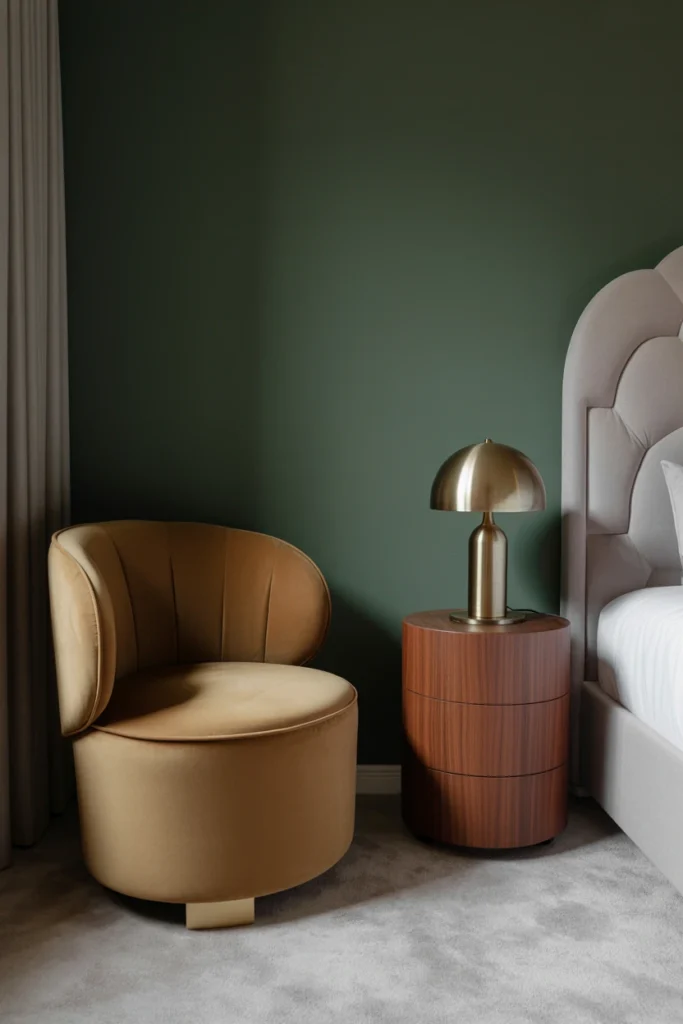
Rounded nightstands, an arched mirror, or a curved-back chair break up the straight edges that dark, boxy furniture tends to have. Curves read as soft and feminine even in black or espresso finishes.
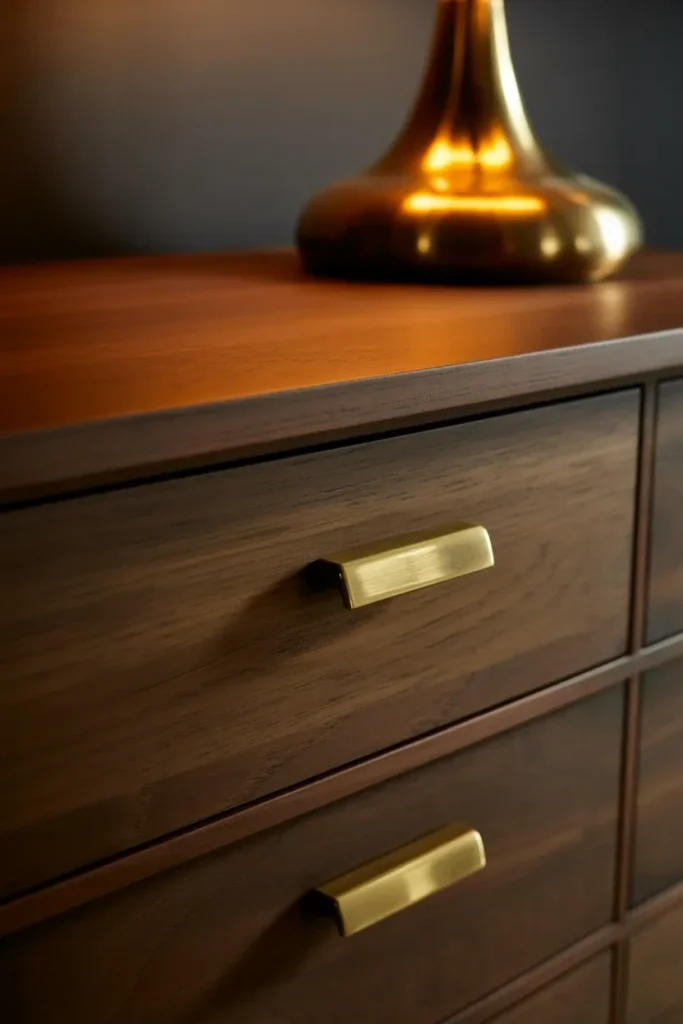
15. Pick metal accents in warm tones — brass, gold, or aged bronze
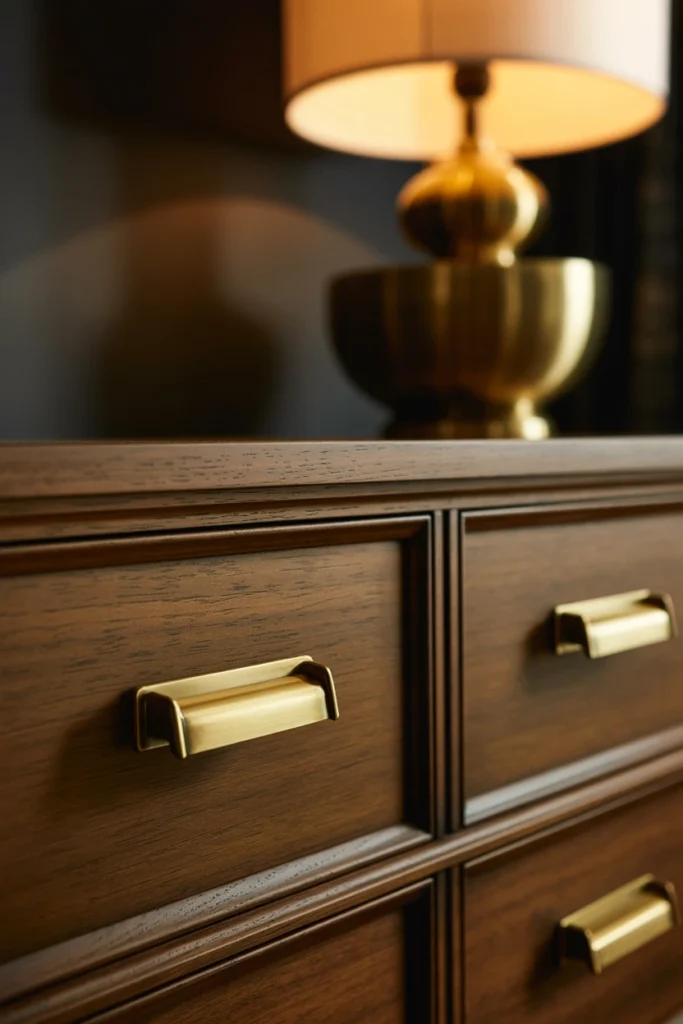
Silver and chrome hardware against dark walls can feel cold and industrial. Warm metals pick up lamp light and add a glow that cool metals don’t.
16. Anchor the room with one statement mirror
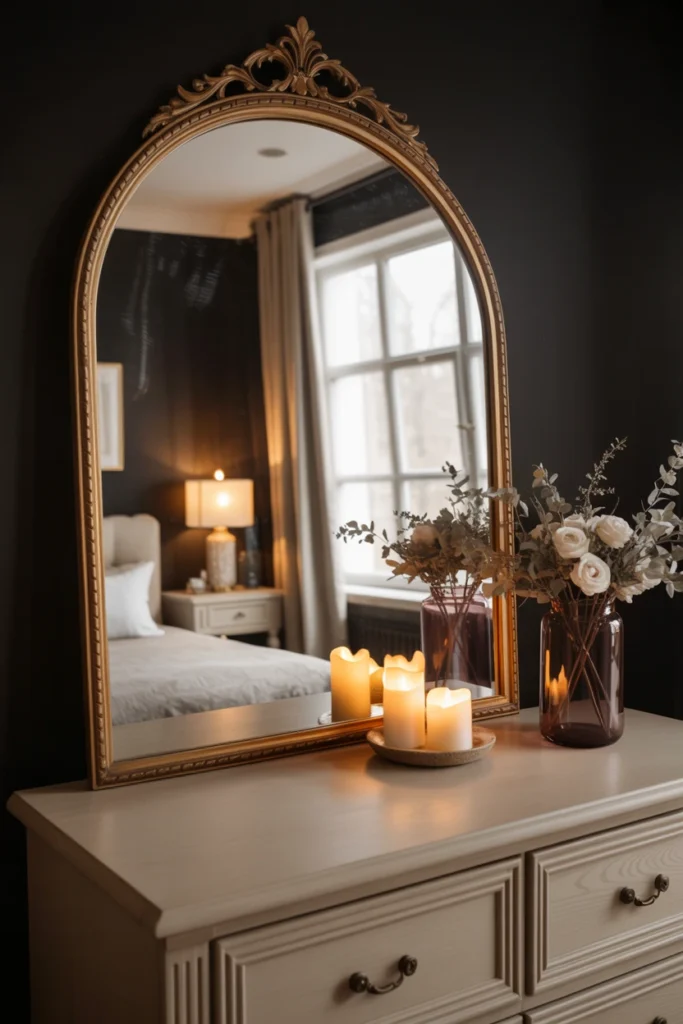
A large mirror with an ornate or curved frame reflects your lighting layers back into the room, which keeps a dark space from feeling smaller than it is. Position it to reflect a lamp or window, not a blank wall.
| Mirror Placement | Effect |
| Opposite a window | Reflects daylight deeper into the room |
| Opposite a lamp | Doubles the warm glow in the evening |
| Behind a vanity | Adds practical light for getting ready |
Accessories and Styling
This is where the room stops looking like a paint color and starts looking like a lived-in, curated space.
17. Group florals or greenery in dark vases
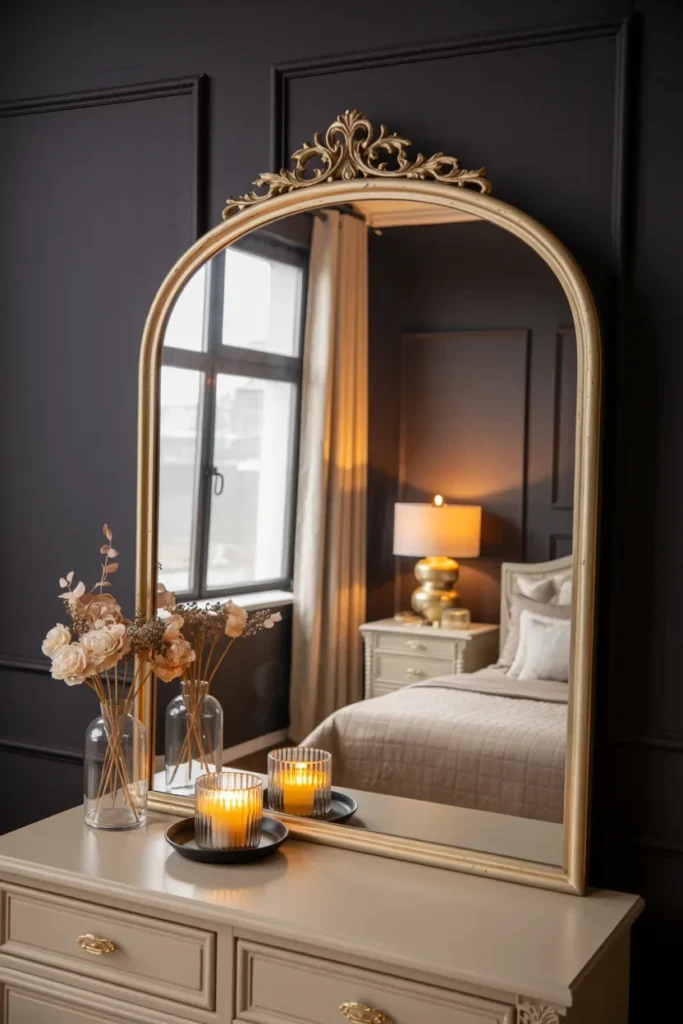
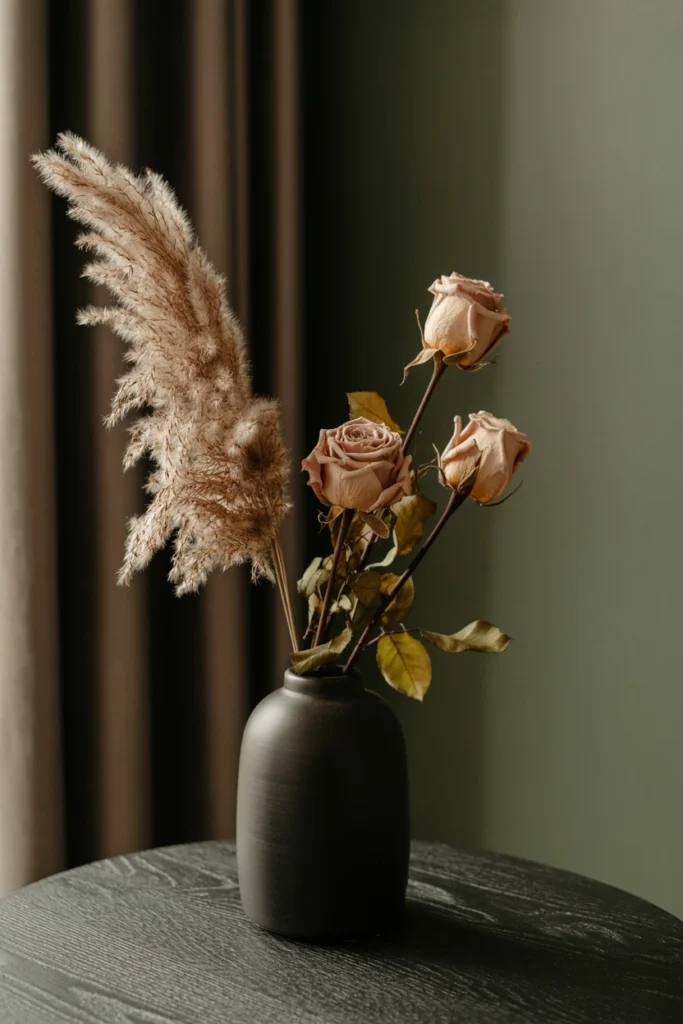
Fresh or dried florals in deep-colored ceramic or glass vases stand out more against dark walls than they do against white ones. Dried pampas grass, dried roses, or eucalyptus hold up longer and suit the moodier palette.
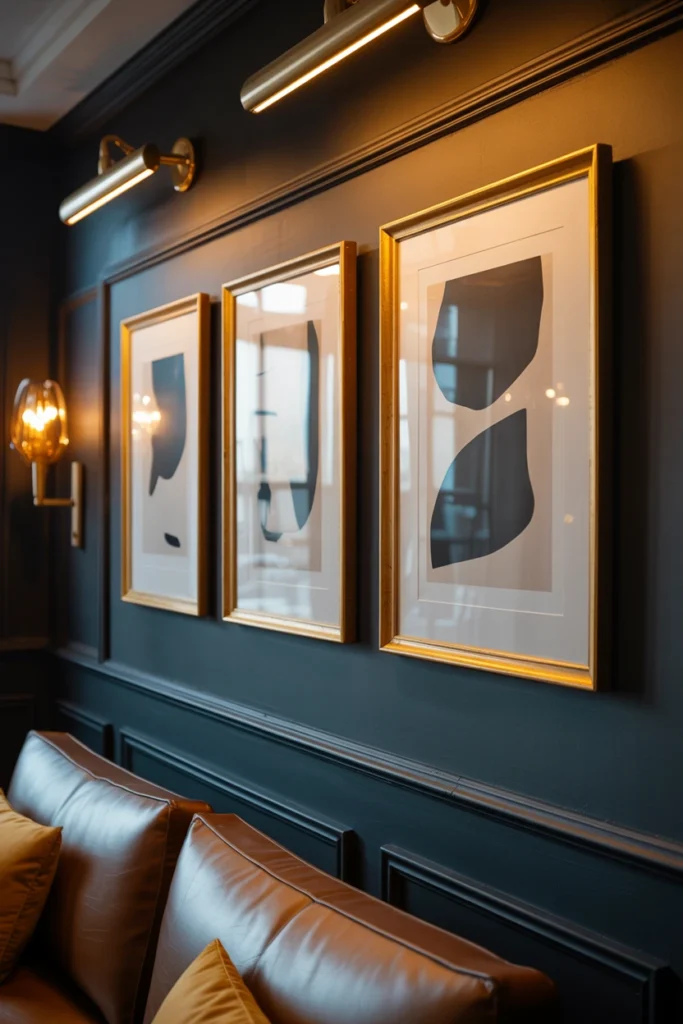
18. Hang art with gold or warm-toned frames
A black-framed print on a dark wall disappears. A gold, brass, or warm wood frame creates the contrast needed for the art to actually register as a focal point.
19. Add a vanity or dressing area with its own light source
A small vanity with its own warm-lit mirror gives the room a distinct “feminine ritual” zone — somewhere for skincare, makeup, or getting ready — separate from the bed or seating area.
Long-Term Habits
20. Rotate soft accessories seasonally
Swap the throw pillows, blanket, and any florals every few months — heavier velvet and faux fur in colder months, lighter satin and fresh florals in warmer ones. This keeps a dark room from feeling static or stale year-round, since the wall color itself never changes.
Mistakes to Avoid
| Mistake | Why It Hurts the Space | Better Alternative |
| Using only one light source | Creates harsh shadows and a flat, heavy feel | Layer lamps, sconces, and dimmable overhead light |
| Cool-toned white ceiling | Breaks the cocooning effect of dark walls | Paint the ceiling to match or go one shade darker |
| All cotton or linen fabrics | Reads plain instead of feminine or luxe | Mix in velvet, satin, and faux fur |
| Chrome or silver hardware everywhere | Feels cold against dark, warm palettes | Swap in brass, gold, or aged bronze |
| Black-framed art on dark walls | Art disappears into the background | Use gold or warm wood frames for contrast |
| Skipping a rug | Room feels stark and cold underfoot | Add a soft, textured rug in a warm or dark tone |
| No dimmer switch | Room can’t shift between daytime and evening moods | Install a dimmer on at least one fixture |
| Overcrowding with dark furniture only | Loses depth and starts to feel like a cave | Break up dark pieces with lighter wood or warm metal accents |
Frequently Asked Questions
What colors work best for a dark feminine room?
Deep, warm-undertone neutrals like espresso, charcoal, aubergine, or bottle green work best because they hold richness without going flat black. Pair the wall color with warm gold or brass accents and soft fabrics to keep the “feminine” side of the look balanced against the dark palette.
How do I make a small room feel dark and feminine without it feeling cramped?
Layered lighting and a large mirror opposite a window or lamp are the two biggest factors — dark walls only feel small when the room is under-lit. Keep the ceiling and floor slightly lighter than the walls if the room is very small, and stick to one dark accent wall instead of four.
Is dark feminine decor okay for a rental?
Yes, using removable wallpaper, string lights or plug-in sconces, and layered textiles instead of paint. Faux fur throws, velvet pillow covers, and a large freestanding mirror get most of the look without touching the walls.
How often should I refresh the styling in a dark feminine room?
Swap soft accessories — pillows, throws, and florals — every few months to match the season, but the wall color and major furniture can stay as-is for years. The dark base is meant to be a stable foundation that light styling changes sit on top of.
Does this style work with a modern or minimalist home?
Yes, by keeping the palette to two or three tones and choosing fewer, more deliberate pieces rather than heavy layering. A modern take leans on one bold dark wall, clean-lined curved furniture, and warm metal accents rather than maximalist textile layering.
Conclusion
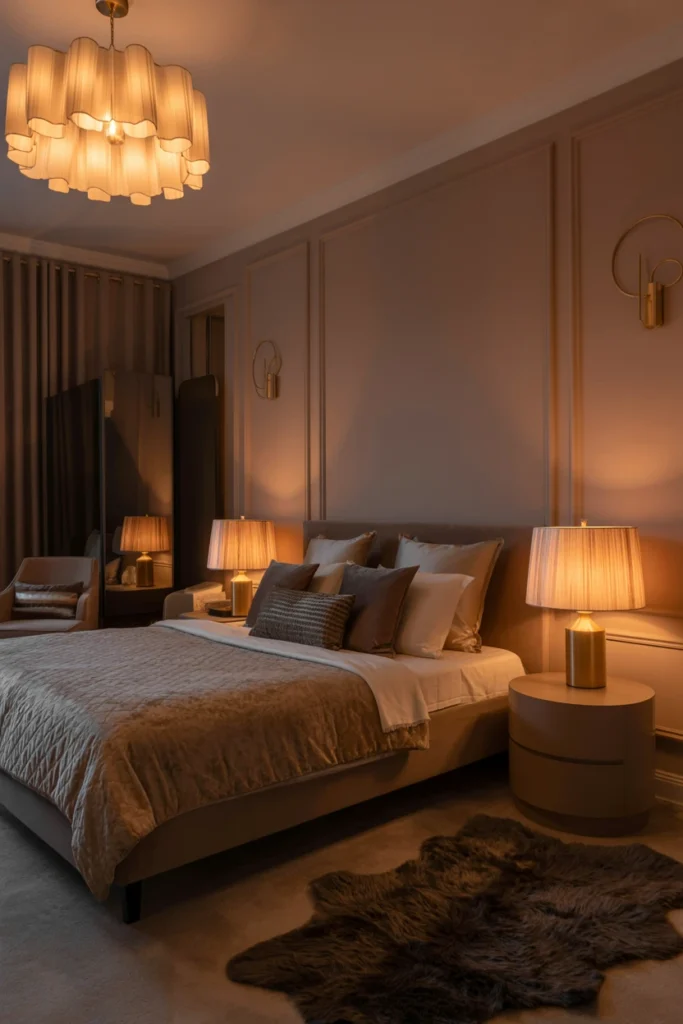
A dark feminine room comes down to getting the wall color and lighting layers right first, then building softness on top with velvet, satin, and warm metal accents. Start with the paint — a true dark neutral in eggshell or matte — and add at least one dimmable, warm-toned light source before buying any decor. The look holds up over time because the dark base stays constant while pillows, throws, and florals shift with the seasons on top of it.