
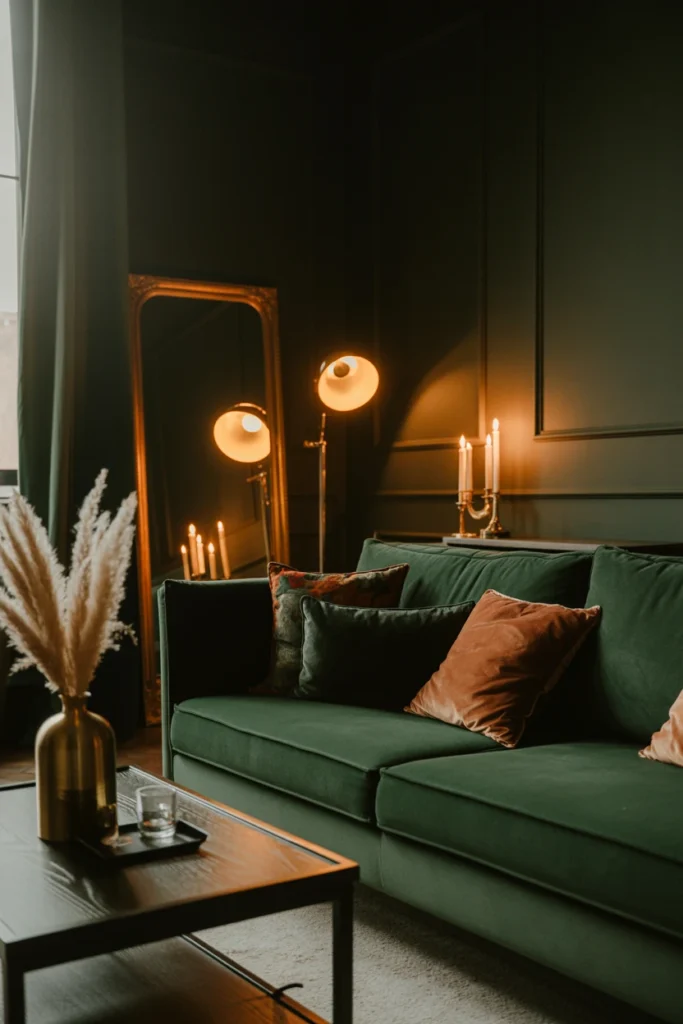
A whimsy goth living room turns deep, moody color into a warm, lived-in space instead of a cold one. Brass hardware, velvet texture, and layered candlelight create a room that feels romantic rather than heavy. This guide delivers 24 specific changes covering color, furniture, accents, lighting, and long-term upkeep. Start with the wall color before touching a single accessory.
Before You Begin: 3 Foundation Steps for a Whimsy Goth Living Room
Every whimsy goth room fails or succeeds based on three decisions made before shopping starts. These foundation steps prevent the two most common outcomes: a room that reads as a costume shop, or one that reads as a plain dark box.
1. Choose a Base Color Palette Anchor
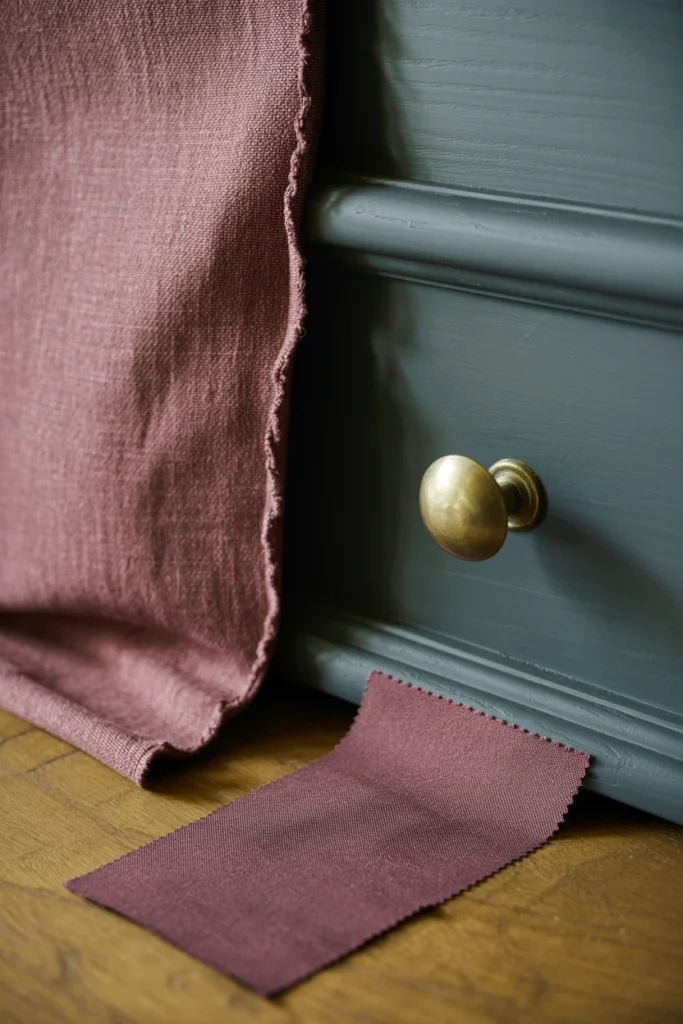
A living room without one dominant dark anchor color reads as scattered, not moody. Readers who mix charcoal, black, and navy in equal amounts end up with a muddy, undefined palette instead of a cohesive gothic base. Choosing one anchor color for 60% of the room creates the visual consistency that makes every other accent color read as intentional.
Start by picking a single anchor: charcoal gray, aubergine, or deep forest green. Apply this anchor to walls or the largest upholstered piece, covering roughly 60% of visible surface area. Doing this first means every whimsical accent color added later — mustard, dusty rose, emerald — has a stable base to sit against instead of competing for dominance.
| Anchor Color | Best Paired Accent |
| Charcoal gray | Brass, mustard yellow |
| Deep aubergine | Antique gold, dusty rose |
| Forest green | Copper, cream |
| Ink black | Silver, blush pink |
2. Establish Your Goth-Whimsy Ratio
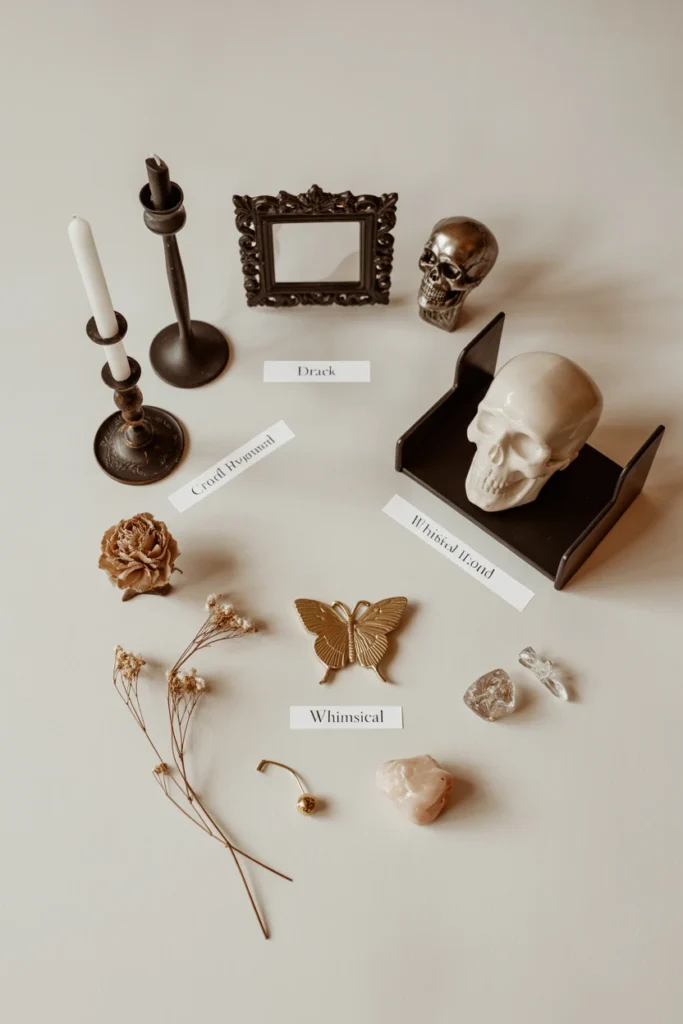
Rooms without a fixed ratio between gothic and whimsical elements tip too far into either heavy or costume-like. A living room at 90% gothic reads as a haunted house, while one at 90% whimsical loses the moodiness entirely. Fixing a 70/30 gothic-to-whimsical ratio keeps the space dramatic without becoming a theme room.
Start by listing every planned item and marking each as gothic (dark, ornate, structural) or whimsical (playful, curious, soft). Aim for roughly 7 gothic items for every 3 whimsical ones — this 70/30 split is the ratio most design-forward gothic interiors use. Sticking to this ratio prevents the single most common mistake: over-decorating with novelty items until the room loses its atmosphere.
| Item Type | Target Ratio |
| Gothic (dark, ornate) | 70% of decor items |
| Whimsical (playful, curious) | 30% of decor items |
| Neutral/functional | Counted separately |
| Novelty items | Max 2 per room |
3. Map Lighting Layers Before Decorating
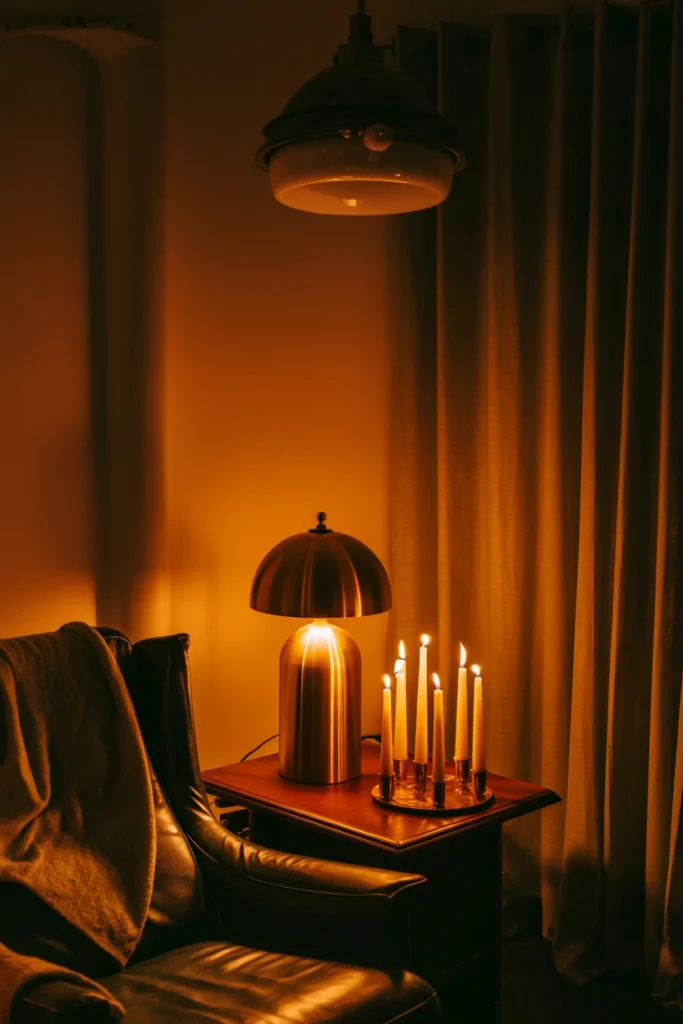
A gothic room lit by one overhead fixture immediately flattens every texture and color chosen. This single lighting mistake makes velvet look dull, brass look dead, and the entire room feel two-dimensional instead of layered. Mapping three separate light sources before decorating guarantees the finished room has depth after dark.
Start by sketching your room’s layout and marking three zones: ambient, task, and accent lighting. Plan one overhead or ambient source, one table or floor lamp for task light, and one candle or string-light accent per seating cluster. This three-layer plan means the room looks intentional at every hour, not just when natural light is strongest.
| Light Layer | Fixture Type | Placement |
| Ambient | Wrought iron chandelier or flush mount | Room center |
| Task | Brass floor lamp | Beside reading chair |
| Accent | Taper candles or LED votives | Mantel, shelves |
| Zone accent | String lights (warm amber) | Behind sofa or shelving |
Layer Dark, Romantic Color and Texture
This section covers the wall, upholstery, and surface treatments that give a whimsy goth room its signature depth. Color and texture decisions made here affect every accent chosen afterward.
4. Paint Walls in Deep Charcoal or Aubergine
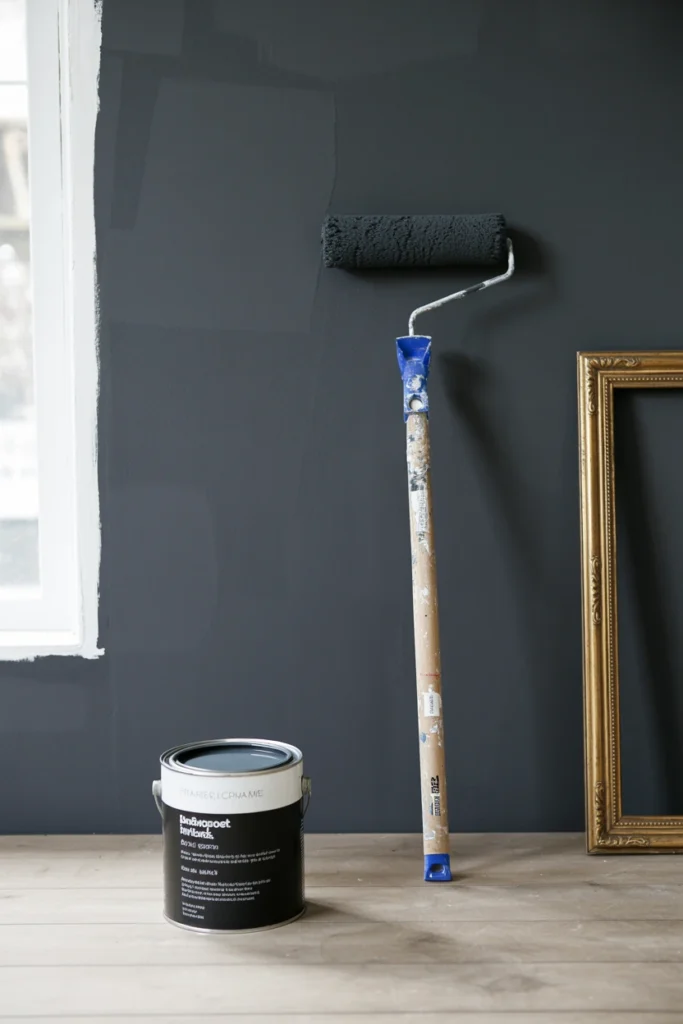
White or light gray walls actively work against a whimsy goth aesthetic. This mismatch forces every dark furniture piece to fight the wall color instead of blending into a cohesive scene. Painting walls in a saturated dark tone eliminates that fight and makes the entire room feel enveloping rather than sparse.
Start by painting one accent wall first in a matte charcoal, aubergine, or bottle-green shade to test the effect. Use a paint with a matte or eggshell finish rather than satin — matte finishes absorb light the way gothic interiors require, at roughly $45–65 per gallon for quality paint. This single wall change makes every brass fixture in the room appear to glow rather than sit flat against a bright backdrop.
| Wall Finish | Effect in Low Light |
| Matte | Absorbs light, deepens shadow |
| Eggshell | Soft glow, slight sheen |
| Satin | Reflects too much, breaks mood |
| Gloss | Not recommended for walls |
5. Add Velvet Upholstery for Tactile Drama
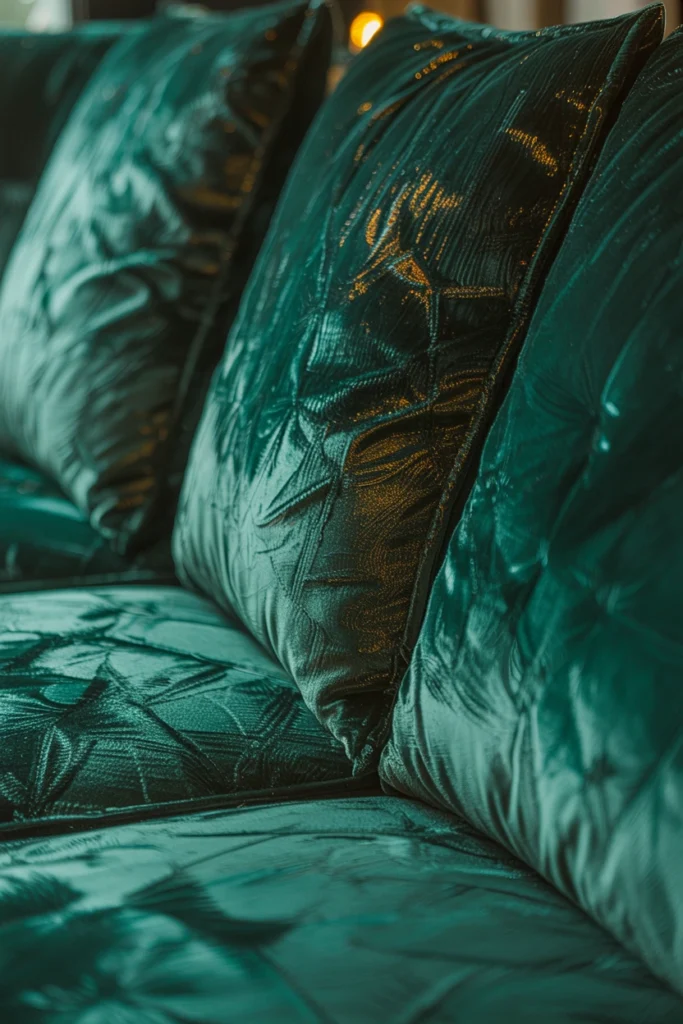
Flat cotton or linen upholstery leaves a gothic room looking staged rather than sensory. The lack of texture removes the tactile richness that separates a genuinely gothic room from one that is simply painted dark. Velvet upholstery on at least one major seating piece instantly restores that missing tactile layer.
Start by reupholstering or slipcovering your sofa or an accent chair in a jewel-toned velvet — emerald, wine, or sapphire. Choose a crushed or cotton-blend velvet in the 250,000+ double-rub durability range for daily living-room use. The unexpected bonus: velvet catches candlelight differently than any other fabric, so your lighting plan from Step 3 becomes dramatically more effective.
| Velvet Color | Room Mood Created |
| Emerald green | Rich, botanical goth |
| Wine red | Romantic, warm |
| Sapphire blue | Cool, dramatic |
| Ink black | Minimal, austere |
6. Layer Jewel-Toned Throw Pillows
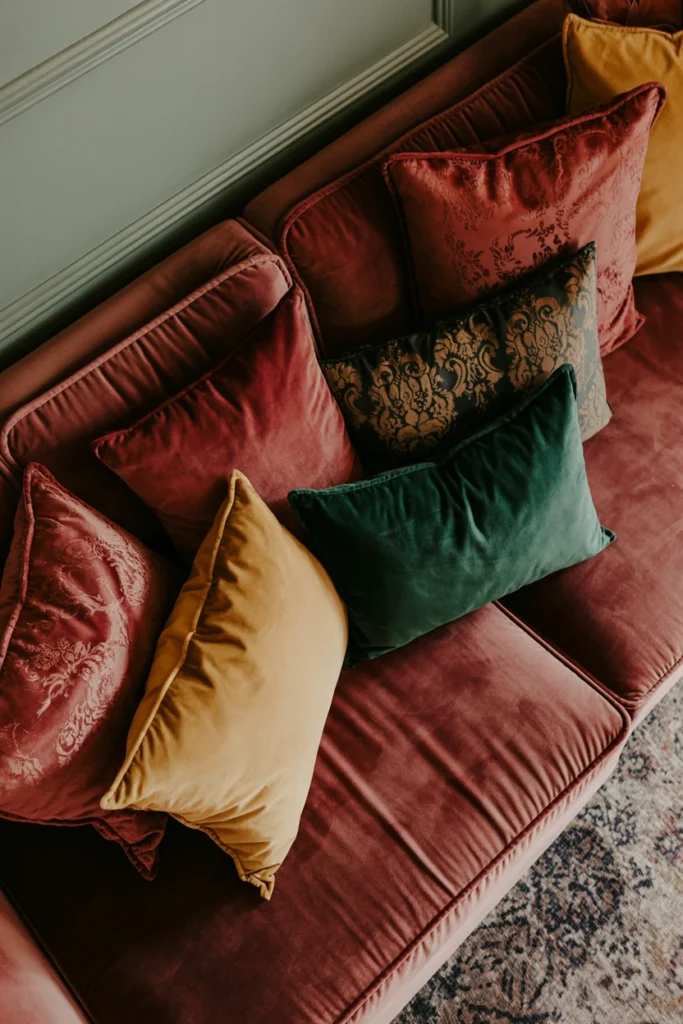
A single-color sofa without contrasting pillows reads as unfinished, not minimalist. This gap leaves the seating area looking like a showroom display rather than a curated whimsy goth space. Layering 4–6 pillows in contrasting jewel tones and textures fills that gap immediately.
Start by choosing 4 to 6 pillows in two or three colors — pair your velvet sofa’s base tone with one metallic accent (gold or copper) and one pattern (botanical or damask). Mix sizes: two 20×20 inch squares, two 18×18 inch squares, and one 12×20 inch lumbar. Instead of a flat single-tone sofa, the seating area now reads as intentionally collected over time.
| Pillow Size | Placement |
| 20×20 in | Back corners of sofa |
| 18×18 in | Front layer, angled |
| 12×20 in lumbar | Center, for support |
| 16×16 in accent | Single armchair |
7. Introduce a Tapestry or Ornate Area Rug
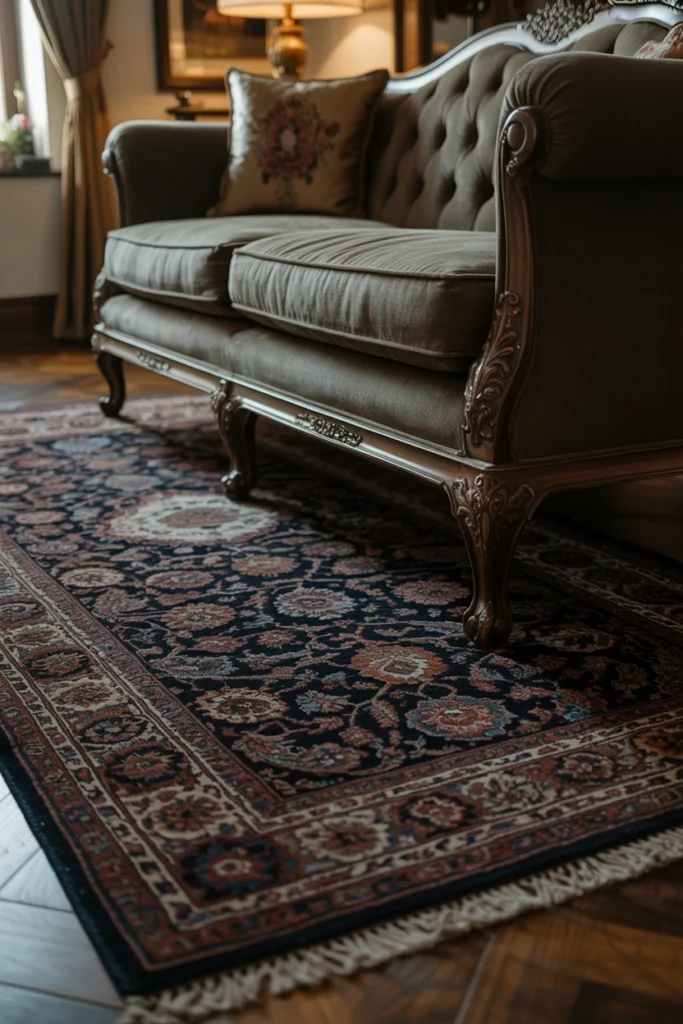
Bare hardwood floors in a gothic room absorb sound and leave the space feeling unfinished at ground level. Without a rug, the eye has nowhere to land beneath the seating area, breaking the room’s overall cohesion. An ornate, dark-toned area rug anchors the entire seating arrangement instantly.
Start by measuring your seating group and buying a rug that extends at least 12 inches beyond the front legs of your sofa. Choose a Persian-style, damask, or botanical-print rug in the 8×10 foot range for a standard living room. This single addition instead of an empty floor gap makes the whole seating area feel grounded and permanent rather than temporary.
| Rug Size | Room It Fits |
| 5×8 ft | Small seating nook |
| 8×10 ft | Standard living room |
| 9×12 ft | Large living room |
| Runner 2×8 ft | Entry to living room |
8. Mix Matte and Glossy Black Finishes
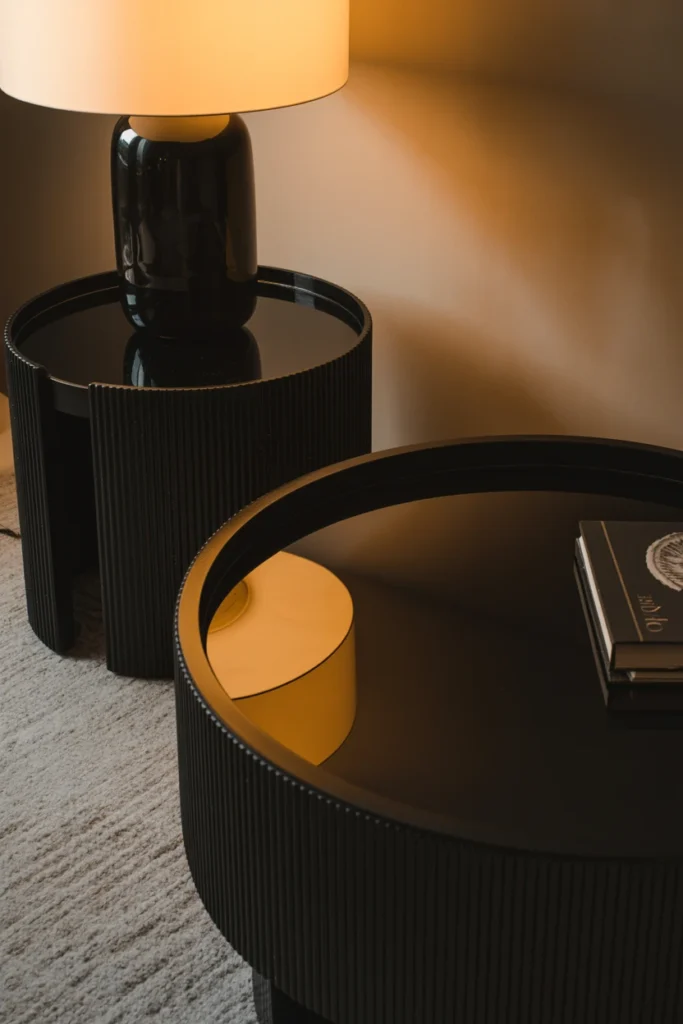
An all-matte or all-glossy room falls flat because every surface reflects light the same way. This uniformity is the reason many dark rooms feel heavy instead of dynamic. Mixing matte black furniture with glossy black accents creates the light variation gothic interiors need.
Start by choosing one matte-black piece (a coffee table or console) and one glossy-black piece (a lacquered side table or picture frame) for the same room. Keep the ratio close to 70% matte surfaces and 30% glossy for balance. Instead of one flat black tone throughout, the room now has genuine depth as light moves across different finishes.
| Finish Type | Best Use |
| Matte black | Large furniture, walls |
| Glossy black | Small accents, frames |
| Brushed black metal | Lighting fixtures |
| Black lacquer | Side tables, trays |
Choose Gothic-Whimsical Furniture Pieces
This section covers the structural furniture choices that define a whimsy goth living room’s silhouette. These pieces carry more visual weight than any accessory.
9. Anchor the Room With a Claw-Foot Sofa
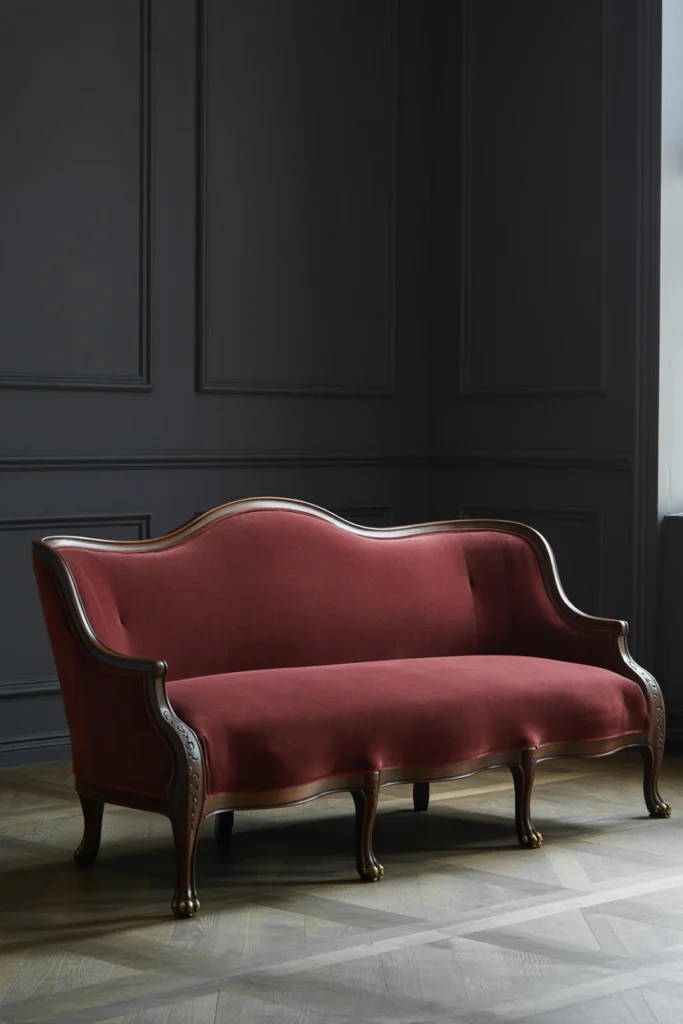
A boxy, modern sofa undercuts every other gothic detail in the room. The straight, unadorned silhouette works against the ornate curves that define this style. A claw-foot or roll-arm sofa restores the ornate silhouette the whole room is built around.
Start by measuring your space and shopping for a roll-arm or camelback sofa with visible wood or brass claw feet, sized under 84 inches for a standard 12×15 foot room. Choose a frame in dark walnut or ebony-stained wood to match your other furniture tones. This anchor piece becomes the single reference point every other furniture decision gets measured against.
| Sofa Style | Room Size Fit |
| Camelback, 84 in | 12×15 ft standard |
| Roll-arm, 72 in | Smaller living rooms |
| Chesterfield, 90 in | Large open-plan spaces |
| Loveseat, 60 in | Studio apartments |
10. Install a Vintage Brass Bar Cart
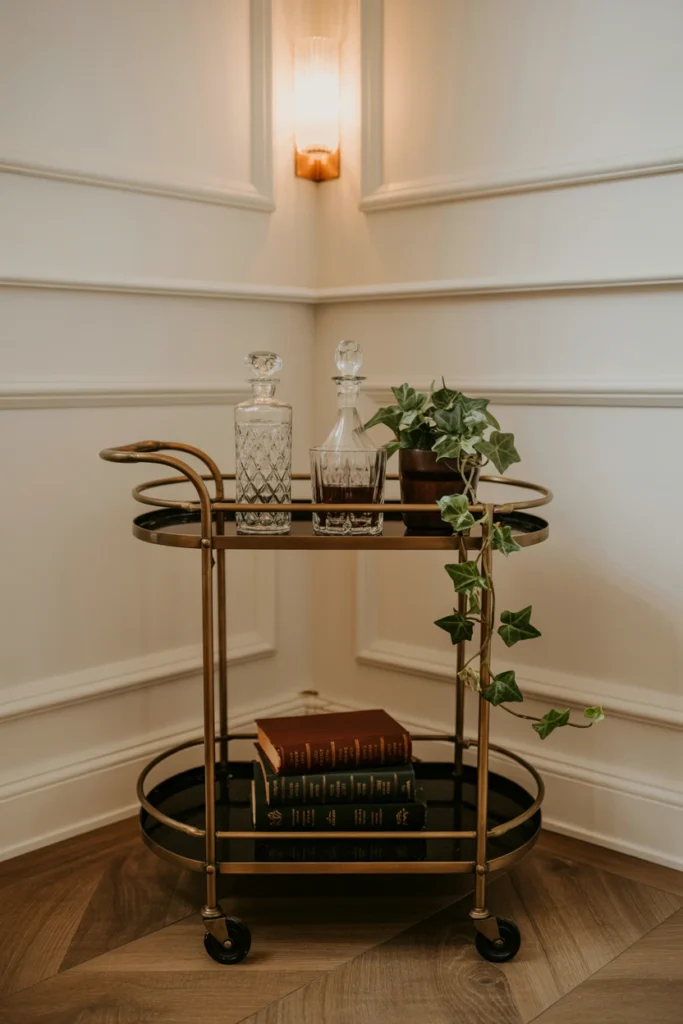
An empty corner in a whimsy goth living room reads as unfinished square footage. Left bare, that corner does nothing to support the room’s overall storytelling. A vintage brass bar cart fills that corner with both function and visual interest.
Start by placing a two-tier brass or gold-toned bar cart in an underused corner, roughly 30×18 inches in footprint. Style the top tier with 3–4 glass decanters and the bottom with 2 stacked books plus one trailing plant. This unexpected bonus: the brass tone on the cart repeats the metal finish from your lighting, tying the whole room together.
| Bar Cart Size | Best Corner Fit |
| 30×18 in, 2-tier | Standard living room corner |
| 24×16 in, 2-tier | Small apartment |
| 34×20 in, 3-tier | Open-plan or larger space |
| Round 20 in, 1-tier | Tight studio corner |
11. Place an Antique Wingback Chair
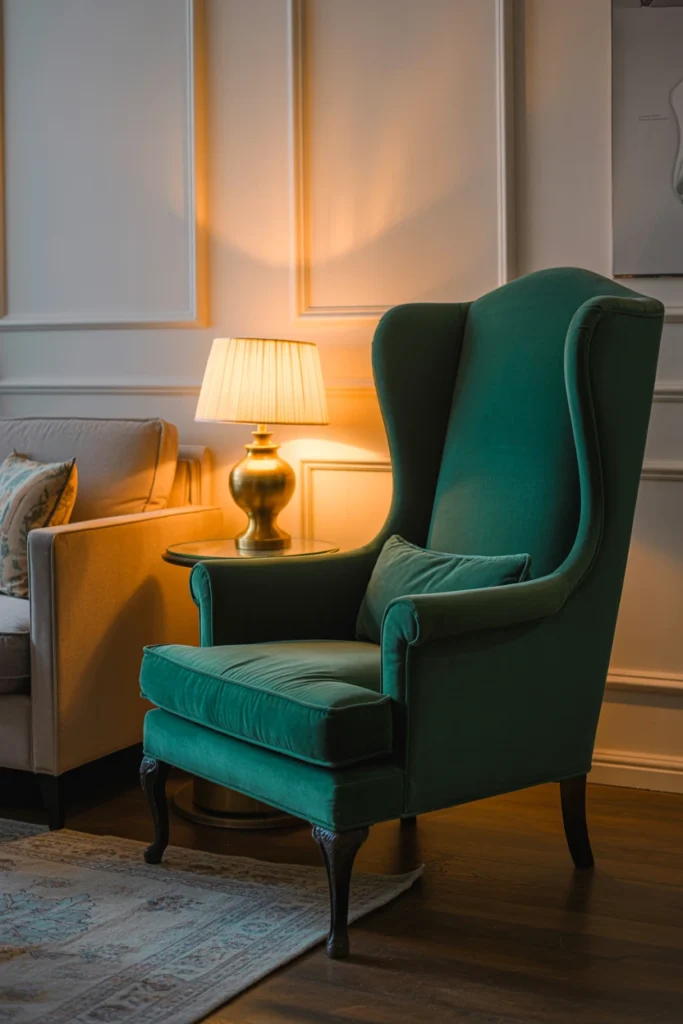
A living room with only a sofa lacks the layered seating gothic interiors depend on. Single-seating rooms feel underfurnished no matter how well the sofa is styled. Adding one antique or antique-style wingback chair creates the layered seating this style needs.
Start by sourcing a wingback chair with a tall, curved back — ideally 45+ inches in height — in a contrasting jewel-tone fabric from your sofa. Position it at a slight angle to the sofa, roughly 36 inches away, rather than facing it straight on. Instead of a flat, showroom-style seating arrangement, the angled placement instantly creates a reading-nook feel.
| Chair Height | Visual Effect |
| 45+ in wingback | Dramatic, formal |
| 38–44 in armchair | Balanced, casual |
| Under 38 in | Reads as too low for the style |
| Chaise, 30 in | Adds a lounging element |
12. Build a Gallery-Style Bookshelf Wall
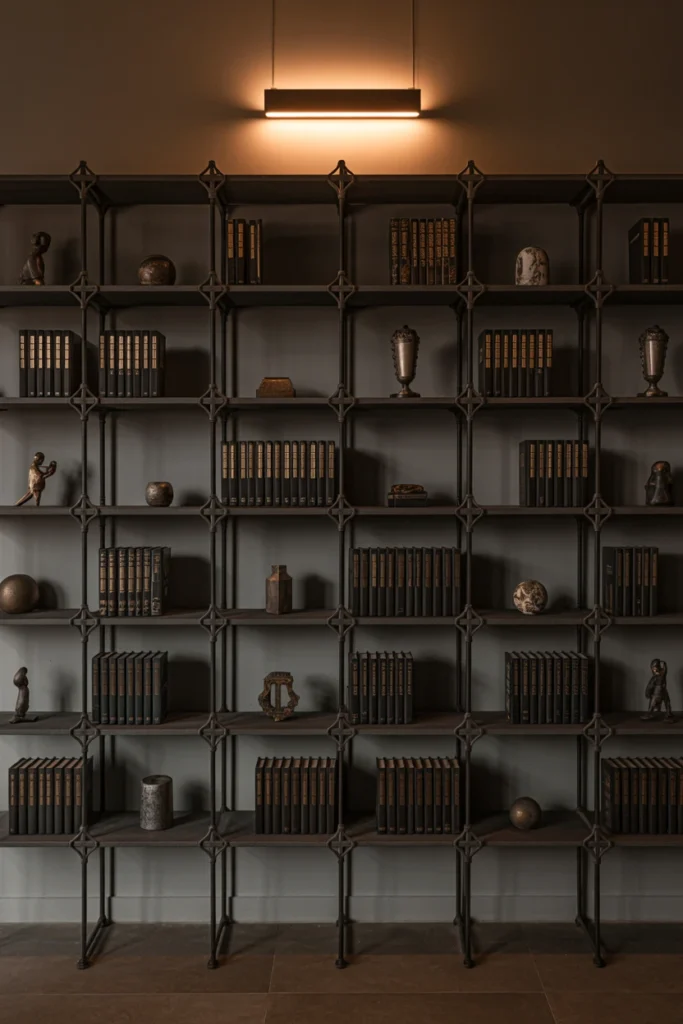
A single small bookshelf cannot support a whimsy goth room’s need for collected, layered detail. One shelf leaves too much wall space empty and the room’s storytelling incomplete. A full gallery-style shelf wall gives the room the density this aesthetic depends on.
Start by installing 2–3 dark wood or black metal shelving units side by side, floor to near-ceiling, along one full wall. Fill shelves at a 60% books, 40% object ratio, leaving small gaps of negative space rather than packing every inch. This unexpected bonus: the varied heights and gaps create built-in visual rhythm without a single decorative object added elsewhere.
| Shelf Fill Ratio | Visual Result |
| 60% books, 40% objects | Balanced, collected |
| 80% books, 20% objects | Reads as a library |
| 40% books, 60% objects | Reads as a curio display |
| 100% books | Too dense, no breathing room |
Style Ornate and Curious Accents
This section covers the small, ornate objects that supply a whimsy goth room’s personality. These accents carry the “whimsy” half of the aesthetic and should stay within the 30% ratio set in Step 2.
13. Hang an Ornate Gilded Mirror
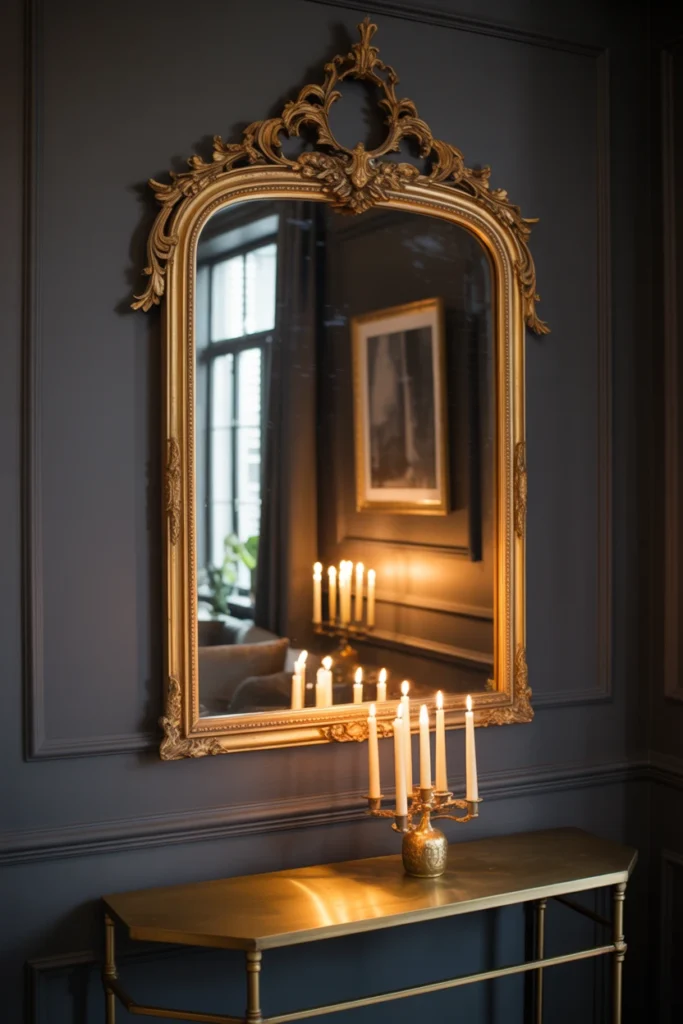
A plain or missing mirror leaves a dark living room feeling smaller and dimmer than it is. Without reflected light, every candle and lamp added earlier works only half as hard. An ornate gilded mirror hung opposite your main light source doubles the perceived brightness and depth immediately.
Start by hanging a gold or antique-brass framed mirror, 30 inches or larger, directly across from your window or main light fixture. Mount the bottom edge at roughly 60 inches from the floor, matching standard eye-level height. This single change makes the room read as visually larger without moving a single piece of furniture.
| Mirror Size | Best Placement |
| 24 in round | Above console table |
| 30–36 in ornate | Opposite main light source |
| 40+ in floor mirror | Empty corner, full room |
| Cluster of 3 small | Gallery wall accent |
14. Display Dried Botanical Arrangements
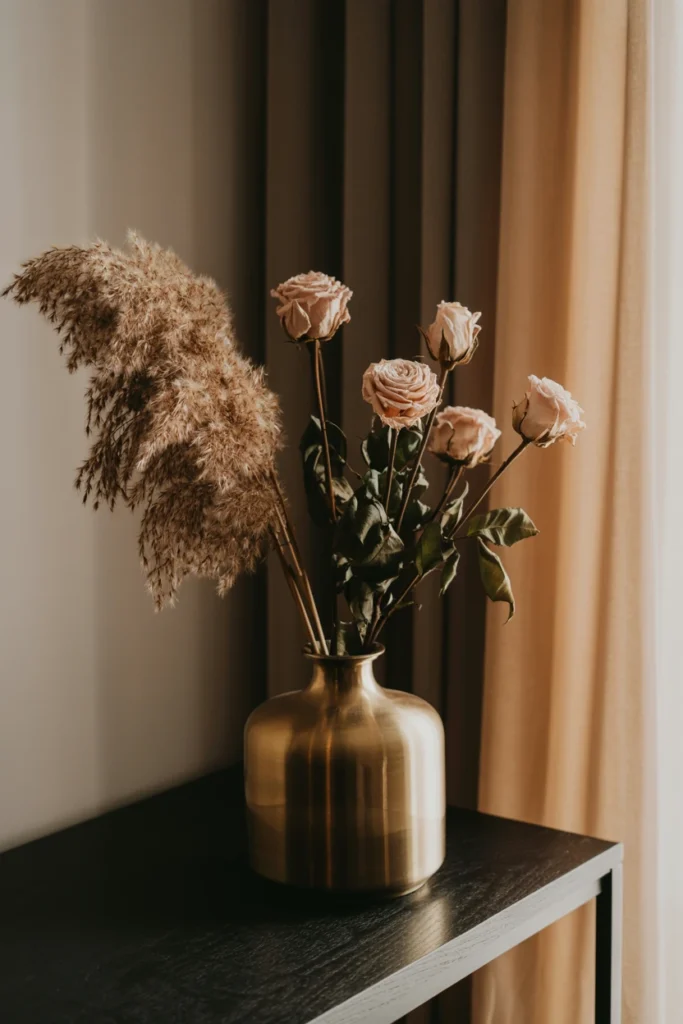
Fresh flowers in a whimsy goth room require constant replacement and clash with the aesthetic’s permanence. This upkeep burden pulls attention away from the room’s intended low-maintenance drama. Dried botanical arrangements deliver the same organic softness without any recurring cost.
Start by filling one ceramic or brass vase with dried pampas grass, eucalyptus, or dried roses, sized to roughly two-thirds the height of the vase itself. Place it on your console table, mantel, or bar cart from Step 10. Instead of wilting within a week, this arrangement lasts 12+ months and only needs dusting.
| Dried Botanical | Height Guide |
| Pampas grass | 24–36 in stems |
| Dried eucalyptus | 12–18 in stems |
| Dried roses | 8–12 in stems |
| Bunny tail grass | 10–14 in stems |
15. Group Vintage Candlesticks in Odd Numbers
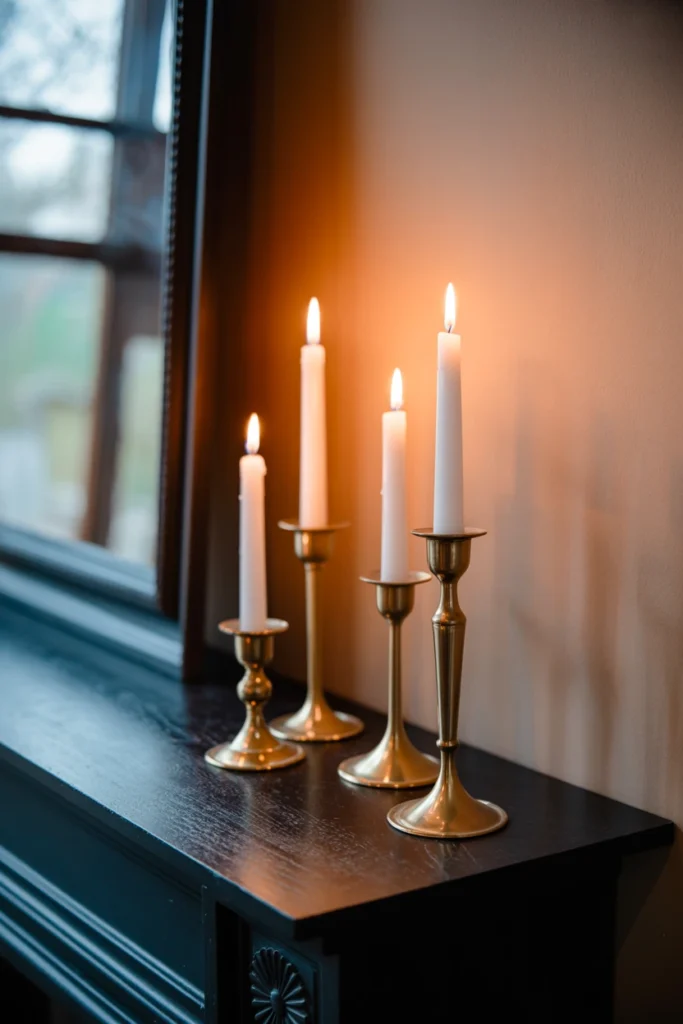
A single candlestick or an even-numbered pair on a mantel reads as staged rather than collected. Even groupings create a symmetry that fights the eclectic, gathered-over-time feeling this style depends on. Grouping candlesticks in sets of 3 or 5 solves this immediately.
Start by placing 3 brass or pewter candlesticks of varying heights — 6, 9, and 12 inches — along your mantel or shelf. Vary the diameter as well as the height so no two candlesticks match exactly. This feels counterintuitive until you see how the uneven grouping reads as genuinely collected rather than purchased as a matched set.
| Candlestick Count | Height Range |
| 3 (small grouping) | 6–12 in varied |
| 5 (large mantel) | 6–18 in varied |
| 2 (avoid) | Reads as staged |
| 7+ (avoid) | Reads as cluttered |
16. Arrange Taxidermy-Inspired Art Pieces
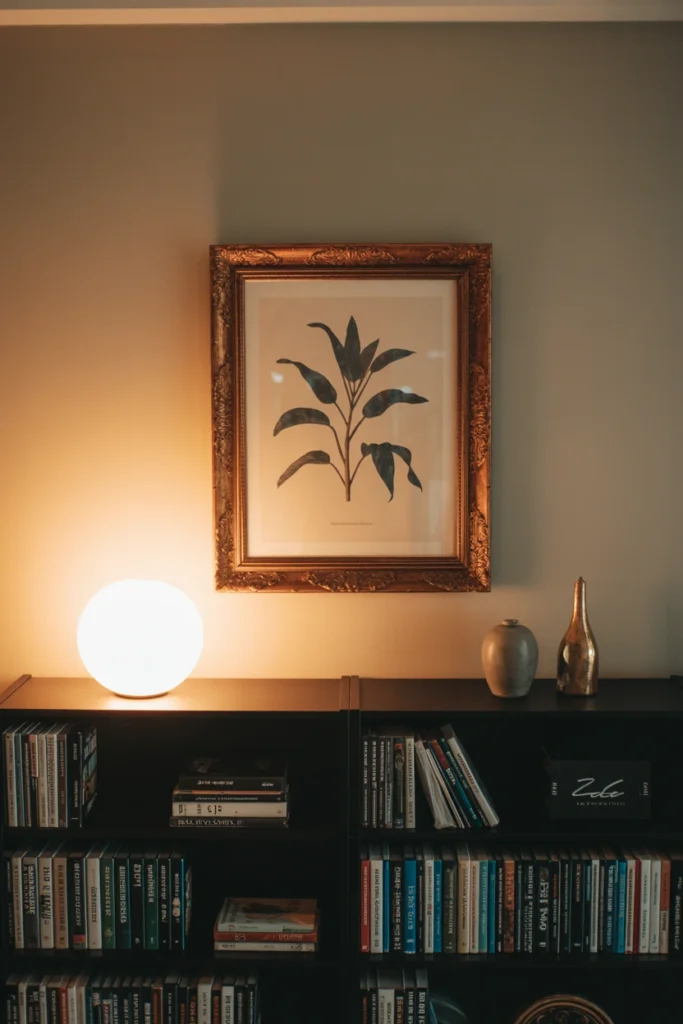
A whimsy goth living room without any curious or unusual object loses the “whimsy” half of its identity entirely. Without this element, the room can slide into generic dark academia rather than true whimsy goth. A single taxidermy-inspired art piece or faux specimen restores the necessary sense of curiosity.
Start by selecting one framed faux-taxidermy print, resin specimen piece, or botanical illustration in an ornate frame, sized 16×20 inches or similar. Place it as a single statement piece rather than part of a matched set, ideally near the bookshelf wall from Step 12. This unexpected bonus: one curious object does more to define the room’s personality than five generic decorative pieces combined.
| Curious Object Type | Placement |
| Faux taxidermy print | Above bookshelf, framed |
| Resin insect specimen | Shadow box on shelf |
| Anatomical illustration | Gallery wall centerpiece |
| Vintage apothecary bottle | Bar cart or mantel |
17. Style a Curio Cabinet of Curiosities
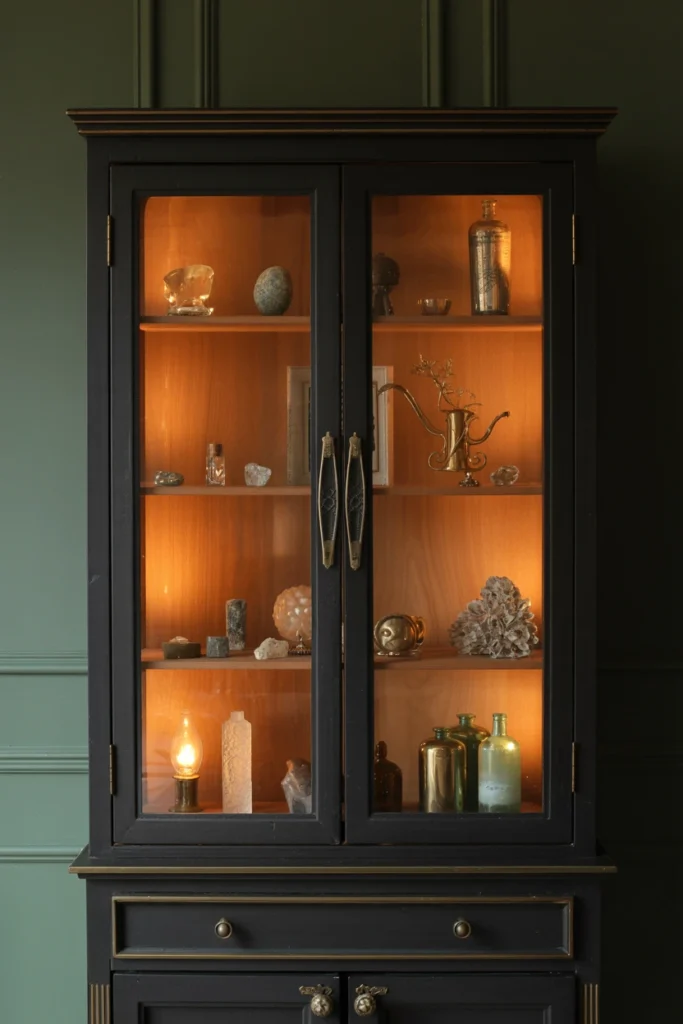
Open shelving alone cannot hold small, delicate collected objects without looking cluttered. Tiny items placed directly on open shelves get visually lost or create a messy, disorganized look. A small curio cabinet with glass doors solves both problems at once.
Start by placing a black or dark-wood curio cabinet, roughly 24×36 inches, in an underused corner or beside your bookshelf wall. Fill it with 8–12 small objects — crystals, miniature skulls, vintage jewelry boxes — grouped by color rather than by type. Instead of a cluttered open shelf, this glass-enclosed display reads as a deliberate collection rather than random accumulation.
| Cabinet Size | Object Count |
| 24×36 in | 8–12 small objects |
| 18×30 in (compact) | 5–8 small objects |
| 30×48 in (large) | 15–20 small objects |
| Wall-mounted 12×18 in | 4–6 objects |
Set the Mood With Gothic Lighting
This section covers the specific fixtures and bulb choices that execute the three-layer lighting plan from Step 3.
18. Layer Three Light Sources per Zone
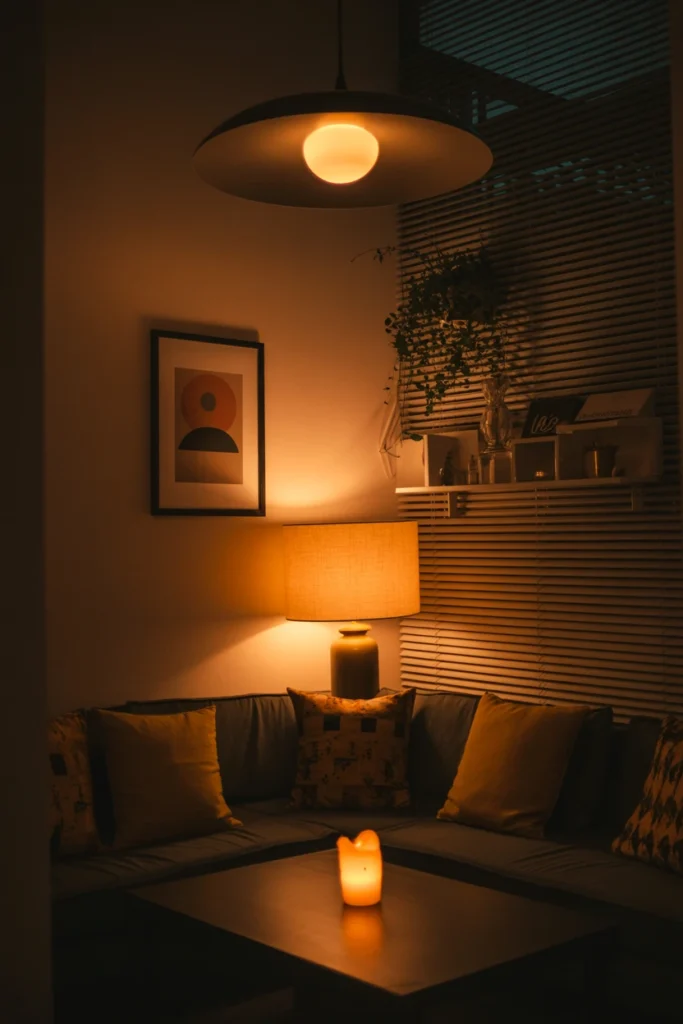
A single overhead light source per seating zone leaves the room flat once the sun sets. This single-source lighting is the most common reason a gothic room photographs well but feels wrong to sit in at night. Layering three separate light sources in every seating zone eliminates that flatness completely.
Start by identifying each seating cluster in your room and adding one overhead, one table-height, and one low-level light to each. Space the table and floor lamps roughly 6–8 feet apart so no single light source dominates. Instead of one harsh overhead glow, the room now has the layered shadow depth gothic interiors require.
| Zone | Light Sources Needed |
| Sofa seating | Overhead + floor lamp + candle |
| Reading chair | Table lamp + accent light |
| Bar cart corner | Sconce or string light |
| Bookshelf wall | Picture light or LED strip |
19. Switch to Warm Amber Bulbs

Cool white or daylight-toned bulbs work directly against a whimsy goth room’s warmth. This bulb temperature mismatch makes every velvet and brass surface chosen so far look sterile instead of romantic. Switching every bulb in the room to a warm amber tone corrects this instantly.
Start by replacing all bulbs with 2200K–2700K warm-toned LEDs, specifically labeled “amber” or “candle-glow” rather than standard “soft white.” Keep this temperature consistent across every fixture in the room — no mixing warm and cool bulbs in the same space. This single swap makes brass fixtures glow instead of looking flat gray under harsher light.
| Bulb Temperature | Effect |
| 2200K (amber/candle) | Warmest, most romantic |
| 2700K (soft white) | Warm, versatile |
| 3000K (warm white) | Slightly cooler, still workable |
| 4000K+ (daylight) | Avoid — too clinical |
20. Hang a Wrought Iron Chandelier
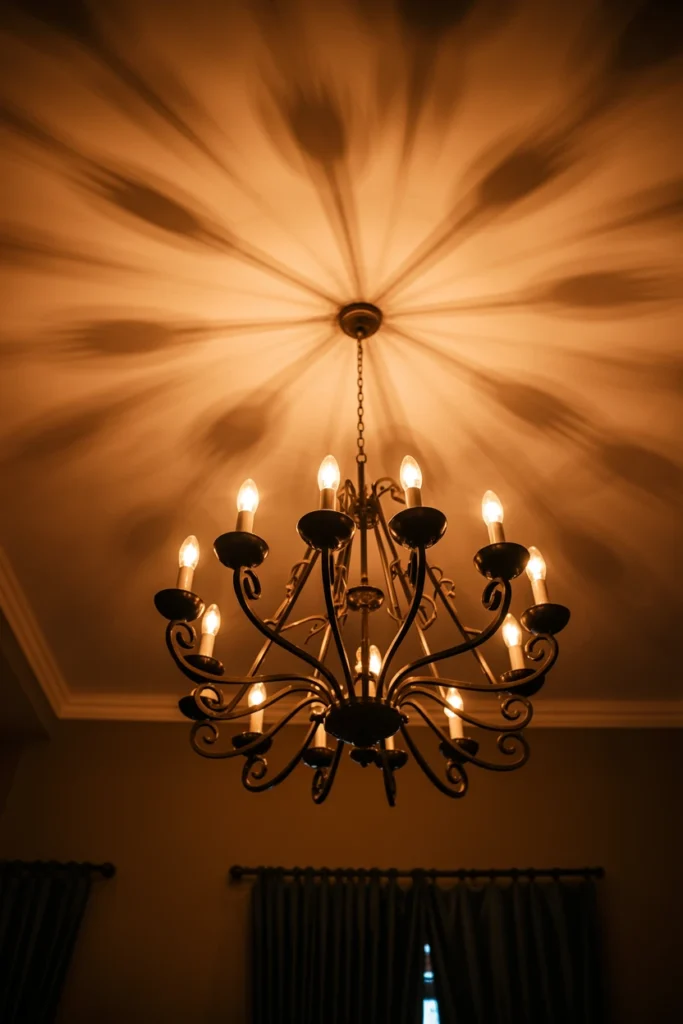
A standard flush-mount ceiling fixture undercuts the ornate silhouette built by your furniture and mirror choices. This mismatch between an ornate room and a plain ceiling fixture breaks the room’s visual consistency at its highest point. A wrought iron chandelier restores that missing ornate silhouette overhead.
Start by measuring your ceiling height and hanging a wrought iron or candelabra-style chandelier 30–36 inches above your primary seating cluster. Choose a fixture sized to roughly one-third the width of your seating area for correct scale. This unexpected bonus: the iron silhouette casts patterned shadows on the ceiling after dark, adding texture no flat fixture could create.
| Ceiling Height | Chandelier Drop |
| 8 ft standard | 24–30 in drop |
| 9 ft | 30–36 in drop |
| 10+ ft | 36–42 in drop |
| Vaulted ceiling | 42+ in, adjustable chain |
21. Place Flameless Candles for Ambiance

Real flame candles create a safety concern in a living room with velvet upholstery, pets, or children nearby. This risk means many households skip candlelight entirely and lose a key ambiance layer. Flameless LED candles deliver the identical flicker effect with none of the fire risk.
Start by placing 3–5 flameless LED taper or pillar candles across your mantel, bookshelf, and bar cart, choosing ones with a genuine flicker function rather than solid glow. Set them on a timer for 5–6 hours nightly so the effect runs automatically. Instead of managing real flames every evening, this setup runs the room’s ambiance layer on autopilot.
| Candle Type | Best Location |
| LED taper, flicker | Candlesticks, mantel |
| LED pillar | Bookshelf, curio cabinet |
| LED votive | Bar cart, coffee table |
| Real taper (supervised only) | Dining or formal occasions |
Whimsy Goth Styling and Finishing Touches
This section covers the final adjustments that separate a collected room from a cluttered one.
22. Balance Whimsy With Negative Space
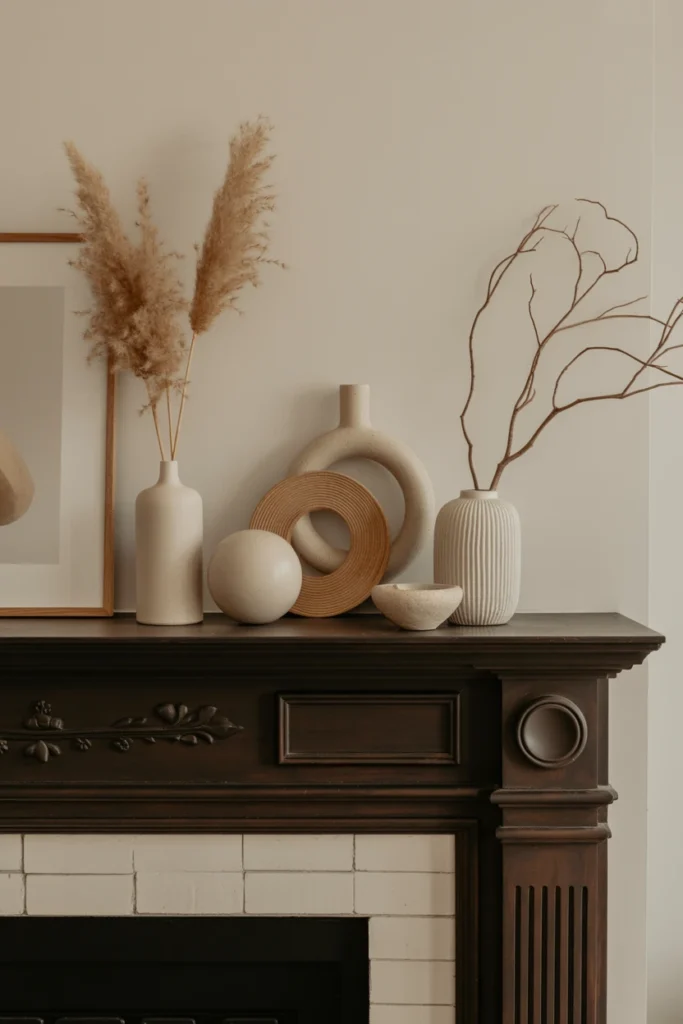
A shelf or surface filled edge to edge with objects reads as cluttered rather than curated, no matter how beautiful each individual piece is. This lack of breathing room is the single biggest reason whimsy goth rooms tip into “too much” territory. Leaving 20–30% of every surface empty restores the visual balance the style depends on.
Start by reviewing every styled surface in the room — mantel, bookshelf, curio cabinet — and physically removing items until roughly a quarter of each surface remains bare. Group remaining objects into clusters of 3–5 rather than spreading them evenly across the entire surface. This feels counterintuitive until you see how the empty space makes the remaining objects look more valuable and intentional.
| Surface Fill Level | Visual Read |
| 70–80% filled | Balanced, curated |
| 90%+ filled | Cluttered |
| Under 50% filled | Sparse, incomplete |
| 100% filled | Always avoid |
23. Repeat Metal Tones Throughout the Room
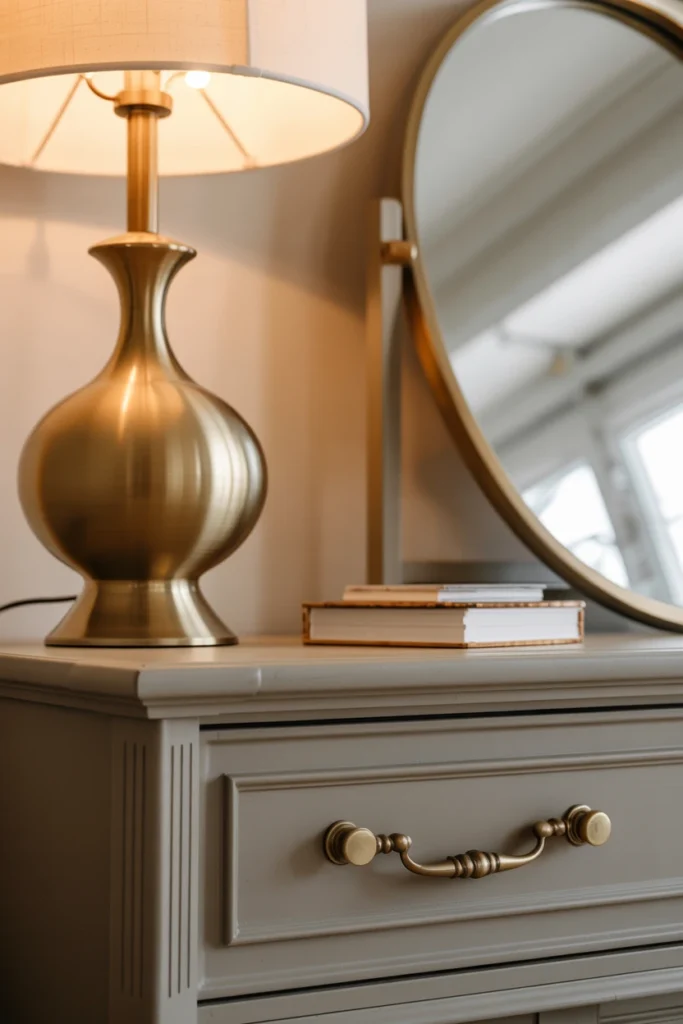
Mixing brass, silver, gold, and black nickel hardware within the same room creates visual noise rather than cohesion. This inconsistency undercuts every carefully chosen piece by making the room feel unplanned. Repeating a single metal tone across all fixtures and hardware ties the entire room together instantly.
Start by auditing every metal surface in the room — light fixtures, curtain rods, picture frames, cabinet hardware — and standardizing on one finish, ideally aged or antique brass. Replace mismatched hardware pieces gradually, prioritizing the most visible fixtures first: the chandelier, mirror frame, and bar cart. Instead of a scattered mix of finishes, the consistent metal tone reads as one deliberate design decision rather than years of unrelated purchases.
| Metal Finish | Pairs Best With |
| Antique brass | Charcoal, aubergine, forest green |
| Matte black | Ink black, deep navy |
| Aged bronze | Wine red, burgundy |
| Pewter | Cool grays, sapphire |
Maintain Your Whimsy Goth Living Room Long-Term
This section covers the ongoing habit that keeps a whimsy goth room from going stale after the initial setup.
24. Rotate Seasonal Accents Quarterly
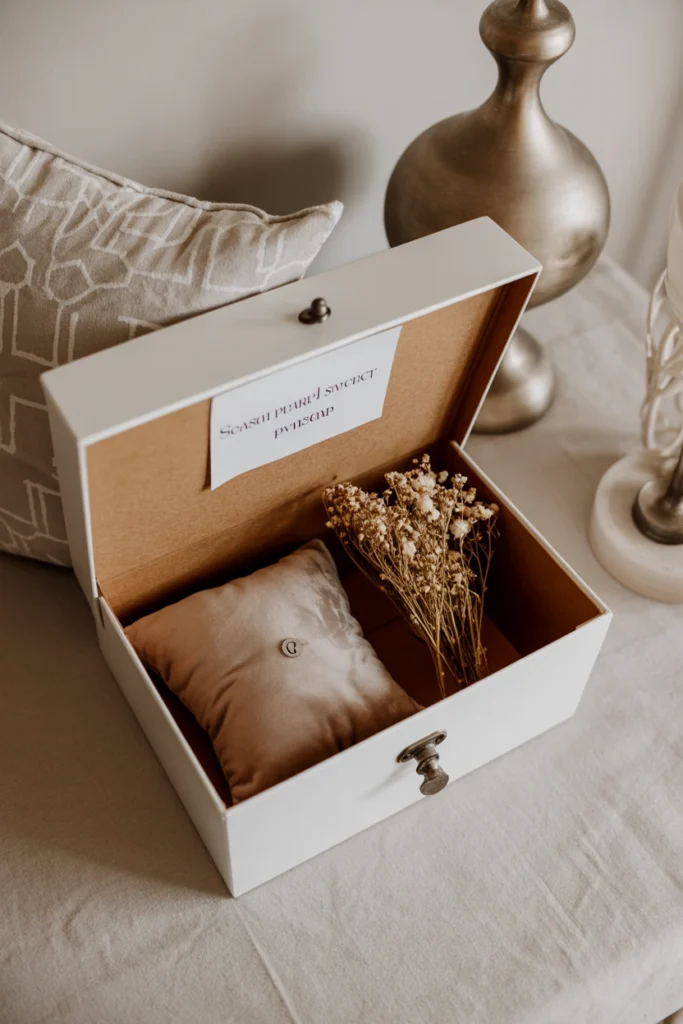
A whimsy goth room that never changes its small accents starts to feel static after a few months, even with strong foundational choices. This staleness happens even when the furniture and color palette remain objectively correct. Rotating a small set of accents every three months keeps the room feeling collected rather than frozen.
Start by setting a recurring quarterly reminder to swap 3–5 small items — dried florals, curio objects, throw pillow covers — while leaving furniture and wall color untouched. Store the off-season items in a labeled box so rotation takes under 30 minutes each time. This unexpected bonus: quarterly rotation means you rarely need to buy new large pieces, since small swaps keep the room feeling current.
| Season | Suggested Accent Swap |
| Fall/Winter | Deep reds, dried florals, more candles |
| Spring | Lighter botanicals, fewer candles |
| Summer | Brass left bare, minimal textiles |
| Year-round base | Furniture, rug, wall color |
Common Whimsy Goth Decor Mistakes That Ruin the Look
These eight mistakes appear most often in living rooms attempting this style, and each one has a specific, correctable fix.
| Mistake | Why It Hurts the Space | Better Alternative |
| Using only black with no jewel tones | Reads as flat and generic goth, not whimsy goth | Add emerald, wine, or mustard accents |
| Skipping warm lighting layers | Room feels cold and uninviting after dark | Add 3 light layers per zone (Step 18) |
| Overcrowding every shelf | Looks cluttered instead of curated | Leave 20–30% negative space (Step 22) |
| Mixing 4+ metal finishes | Creates visual noise and disunity | Standardize on one metal tone (Step 23) |
| Choosing a boxy modern sofa | Undercuts the ornate gothic silhouette | Choose a roll-arm or claw-foot sofa |
| Using only cool-white bulbs | Makes brass and velvet look sterile | Switch to 2200K–2700K amber bulbs |
| Buying matched decor sets | Reads as staged, not collected | Group odd numbers, varied heights |
| Leaving walls plain white | Forces furniture to fight the backdrop | Paint one wall charcoal or aubergine |
Whimsy Goth Living Room Ideas by Space Type
Small Living Room
A small living room needs every gothic element scaled down without losing the room’s dramatic identity. The core constraint here is floor space, not style — dark colors still work in tight rooms when furniture is chosen correctly.
Key strategies for small living rooms:
- Choose a loveseat under 60 inches instead of a full camelback sofa
- Hang the ornate mirror on the wall facing the entry to expand perceived depth
- Use a wall-mounted curio cabinet instead of a floor-standing one
- Limit the bookshelf wall to a single unit rather than a full gallery run
- Keep the rug at 5×8 feet to leave walking space around furniture
- Choose 2 candlestick groupings instead of layering across multiple surfaces
Rental or Apartment
Renters need every gothic element to be reversible without damaging walls or fixtures. The core constraint is landlord restrictions on paint and permanent fixtures.
Key strategies for rentals:
- Use removable dark wallpaper or a large tapestry instead of painting
- Choose a plug-in wrought iron chandelier that hangs from an existing fixture
- Rely on floor and table lamps rather than any hardwired lighting change
- Add a large area rug to cover existing flooring you cannot change
- Use command-strip mounted mirrors and art instead of nail holes
- Bring a rolling bar cart instead of a built-in bar setup
Open-Concept Space
Open-concept living rooms need clear visual boundaries since walls cannot separate the gothic zone from adjacent areas. The core constraint is preventing the style from bleeding awkwardly into a kitchen or dining space.
Key strategies for open-concept spaces:
- Use the area rug’s edge as the defined boundary of the gothic zone
- Choose a tall bookshelf wall as a visual divider between zones
- Keep the chandelier centered specifically over the seating cluster
- Repeat the anchor color in at least one adjacent-zone accent for flow
- Anchor the seating group with furniture legs facing inward, away from open walkways
- Install directional lighting so the gothic zone reads darker than the rest of the space
Studio Apartment
A studio apartment needs the whimsy goth living area to coexist visually with a sleeping or dining zone in the same room. The core constraint is keeping one aesthetic language across every function within a single space.
Key strategies for studio apartments:
- Choose a loveseat that doubles as the room’s main seating and visual anchor
- Use one consistent metal tone across kitchen, sleeping, and living zones
- Limit the curio cabinet to a single small unit near the entry
- Rely on 2–3 flameless candle groupings instead of a full chandelier
- Choose a rug that extends into the sleeping zone to unify the flooring
- Keep the “before you begin” ratio at 70/30 across the entire studio, not per zone
Frequently Asked Questions
What is a whimsy goth living room?
A whimsy goth living room combines dark, moody gothic color and furniture with playful, curious accents like dried botanicals and ornate curios. The style stays roughly 70% gothic and 30% whimsical to avoid feeling like a costume theme. Deep charcoal or aubergine walls, velvet upholstery, and brass lighting form the core of the look.
What colors go with whimsy goth decor?
Charcoal gray, deep aubergine, and forest green work as base anchor colors for whimsy goth rooms. Jewel tones like emerald, wine red, and sapphire blue pair well as accent colors against these darker bases. Antique brass or aged gold hardware ties the palette together across furniture and lighting.
How do I decorate whimsy goth on a budget?
Start with paint, since one accent wall in charcoal or aubergine costs under $65 and creates the biggest visual shift. Add secondhand brass candlesticks and a thrifted wingback chair before buying new furniture. Rotating small accents quarterly, as in Step 24, means large purchases stay rare after the initial setup.
How do I do whimsy goth decor in a rental?
Use removable wallpaper or a large tapestry instead of paint to establish your dark anchor color. Rely on plug-in chandeliers, floor lamps, and command-strip mounted mirrors rather than any hardwired or drilled fixture. A large area rug and rolling bar cart complete the look without altering the unit permanently.
Velvet or leather for a gothic living room?
Velvet suits whimsy goth better than leather because it catches candlelight and adds the soft texture the style depends on. Leather reads as more masculine and traditional gothic, without the tactile richness whimsy goth requires. Choose velvet for sofas and accent chairs, reserving leather for smaller pieces like ottomans if desired.
How often should I refresh gothic decor accents?
Rotate small accents like dried florals, pillow covers, and curio objects every three months, as outlined in Step 24. Large furniture, wall color, and lighting fixtures should stay fixed year-round as the room’s foundation. This quarterly rotation keeps the room current without requiring new large purchases.
Does whimsy goth work in a small living room?
Whimsy goth works in small living rooms when furniture is scaled down and dark colors are used strategically rather than avoided. A loveseat under 60 inches, a single wall-mounted curio cabinet, and a 5×8 foot rug keep the style intact without overwhelming the space. Dark walls in small rooms create depth rather than making them feel smaller when lighting is layered correctly.
How much does it cost to decorate a whimsy goth living room?
A full room refresh using new furniture typically runs 2,500–5,000, covering a sofa, chair, lighting, and accents. A budget-conscious version using paint, secondhand furniture, and thrifted brass accents can come in under $800. Cost scales primarily with the sofa and chandelier, which are the two highest-ticket items in this style.
How do I keep gothic decor from looking dusty or worn?
Dust brass and glass surfaces weekly with a microfiber cloth, since dark rooms show dust more visibly than light ones. Vacuum velvet upholstery every two weeks with an upholstery attachment to prevent flattening and buildup. Rotating accents quarterly, per Step 24, also naturally catches wear before it becomes visible.
Conclusion
A whimsy goth living room comes down to one anchor color, one ratio of gothic to whimsical elements, and three layers of warm light. Start with a single charcoal or aubergine accent wall before purchasing any furniture or accessories. Add one velvet seating piece next, since texture does more to establish the mood than any single decorative object.
Results in this style come from consistent upkeep, not a single weekend of shopping. A whimsy goth living room built on the right foundation only improves with each quarterly rotation.