A cozy vintage apartment feels lived-in, layered, and warm the moment you walk through the door. This look comes from patina, texture, and intentional imperfection — not from matching furniture sets or big-box decor. This guide delivers 26 specific, actionable ways to build that warmth room by room. Start with your color story before you buy a single object.
Before You Begin: 4 Foundation Steps for a Cozy Vintage Apartment
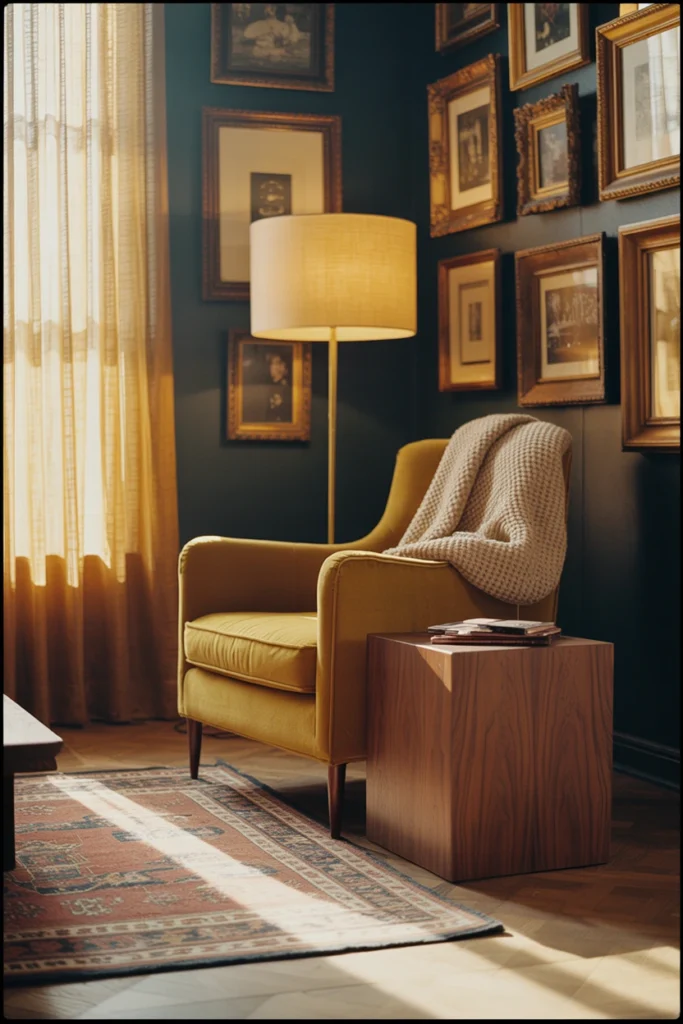
Every cozy vintage apartment starts with three foundational decisions, made before any shopping happens. Skipping this stage is the single most common reason a vintage-style room ends up looking cluttered instead of curated.
1. Establish a Warm Color Story Foundation
Cold, high-contrast color palettes read as modern, not vintage. A gray-and-white apartment cannot achieve genuine coziness no matter how much furniture you layer in. This mismatch between wall color and object warmth is why so many vintage-inspired rooms feel disconnected.
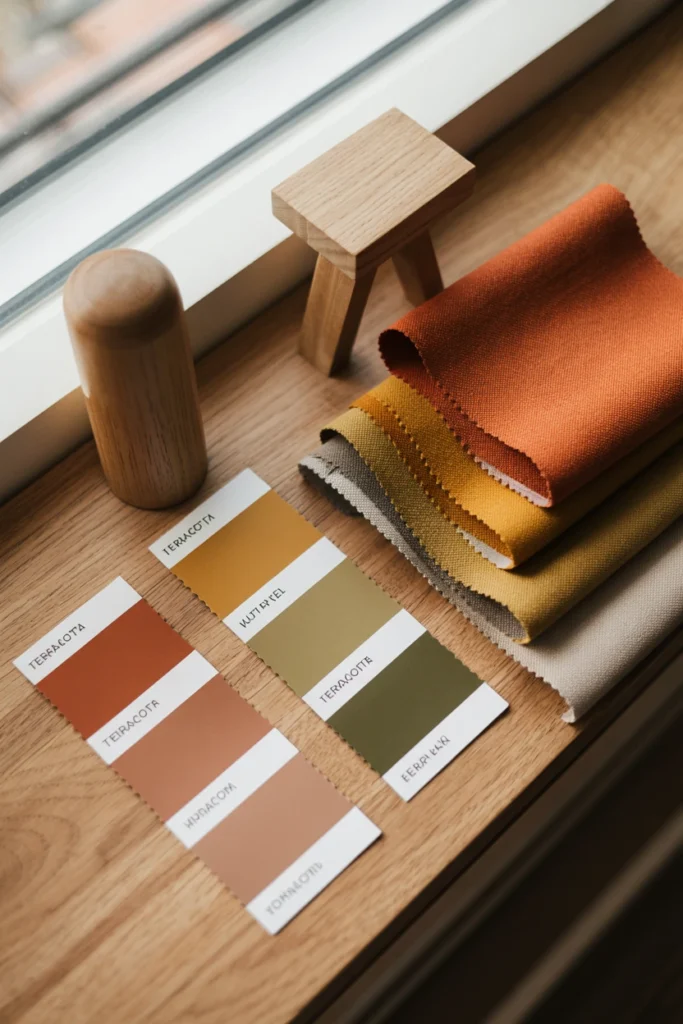
Start by choosing three to five colors pulled from a single decade’s palette — think mustard, rust, and olive for a 1970s foundation. Paint at least one wall or a large surface in a warm neutral like terracotta, cream, or deep clay before adding furniture. This constraint forces every future purchase to work with the space instead of against it.
| Color Story | Best Paired Decade |
| Mustard, rust, olive | 1970s |
| Dusty rose, sage, cream | 1950s |
| Burgundy, forest green, brass | Victorian/Edwardian |
| Ochre, chocolate brown, orange | Mid-century |
2. Choose a Dominant Vintage Era to Anchor the Space
Mixing five decades of furniture without a dominant reference point reads as a thrift-store dumping ground, not curated eclecticism. Readers who skip this step end up with rooms that feel chaotic instead of collected, no matter how nice each individual piece is.
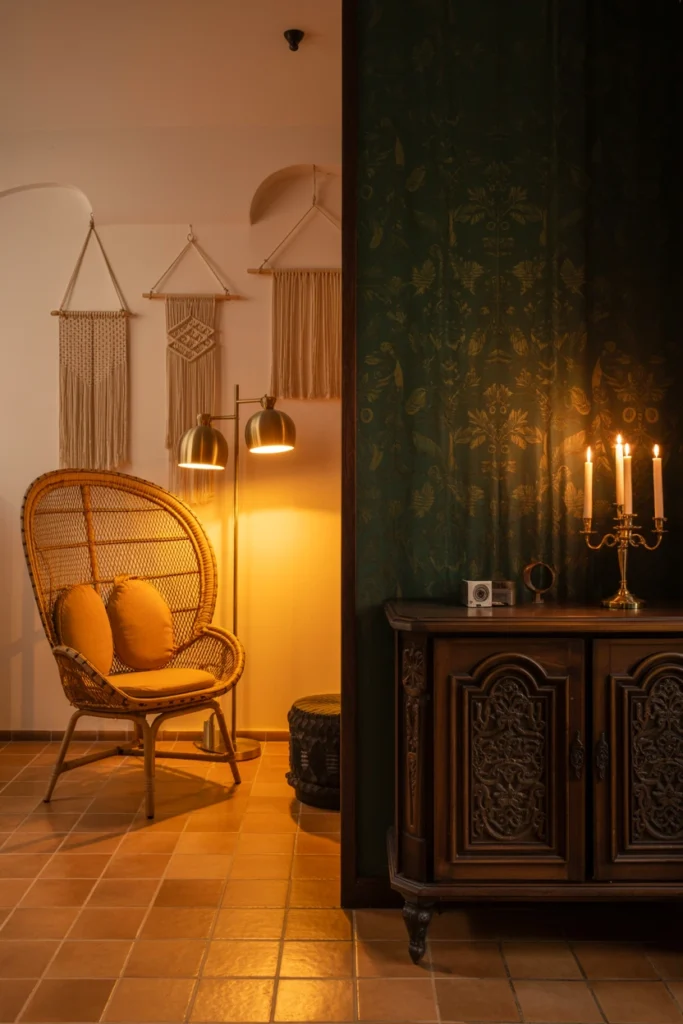
Pick one decade — 1960s, 1970s, or Victorian, for example — to make up roughly 60% of your furniture and decor. Allow the remaining 40% to come from adjacent decades or genuinely modern pieces that complement the anchor era. This single decision does more to create cohesion than any individual object you buy.
| Dominant Era | Supporting Mix |
| 1960s mid-century | 1970s brass, modern textiles |
| 1970s bohemian | 1960s wood, Victorian brass |
| Victorian | Art Deco mirrors, modern lighting |
| Art Deco | 1950s furniture, brass fixtures |
3. Audit and Edit Your Existing Furniture First
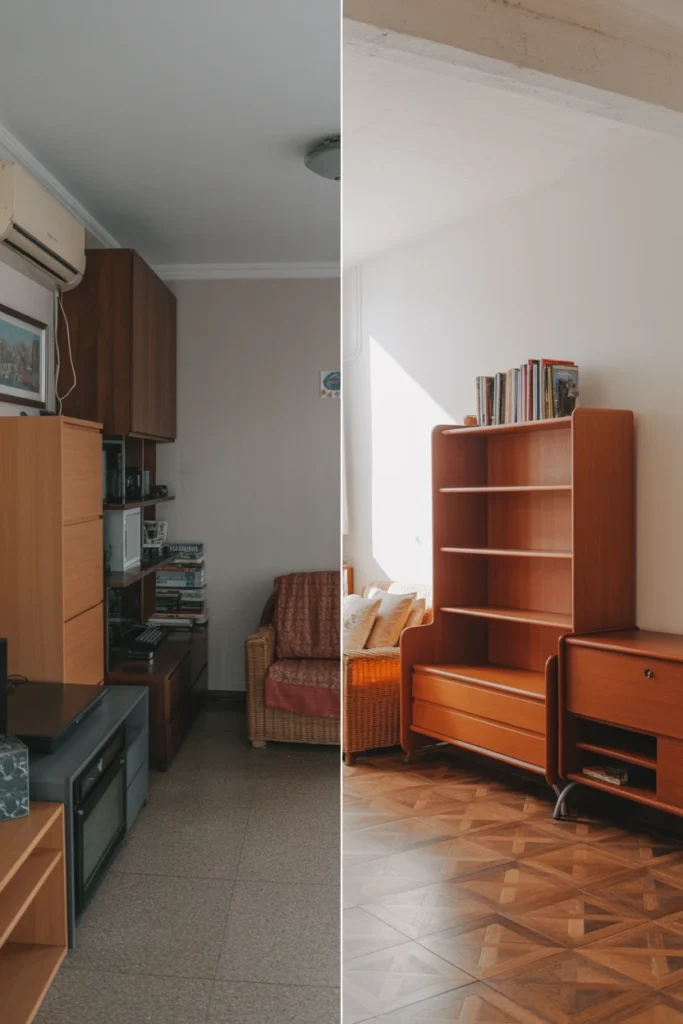
Buying new vintage pieces before editing what you already own guarantees an overcrowded room. This is the most expensive mistake in vintage decorating because it means paying for storage or a return on pieces that never should have entered the space.
Remove every piece of furniture from the room and reintroduce only what earns its place back. Keep anything with real wood, natural materials, or an interesting silhouette; donate anything mass-produced in glossy laminate or plastic. This edit alone often solves 30% of a room’s clutter problem before you spend a dollar.
| Keep | Donate or Replace |
| Solid wood, any condition | Laminate particleboard |
| Turned or hairpin legs | Straight chrome legs |
| Natural fiber upholstery | Glossy synthetic upholstery |
| Brass, ceramic, glass | Plastic accent pieces |
4. Set a Lighting Temperature Baseline
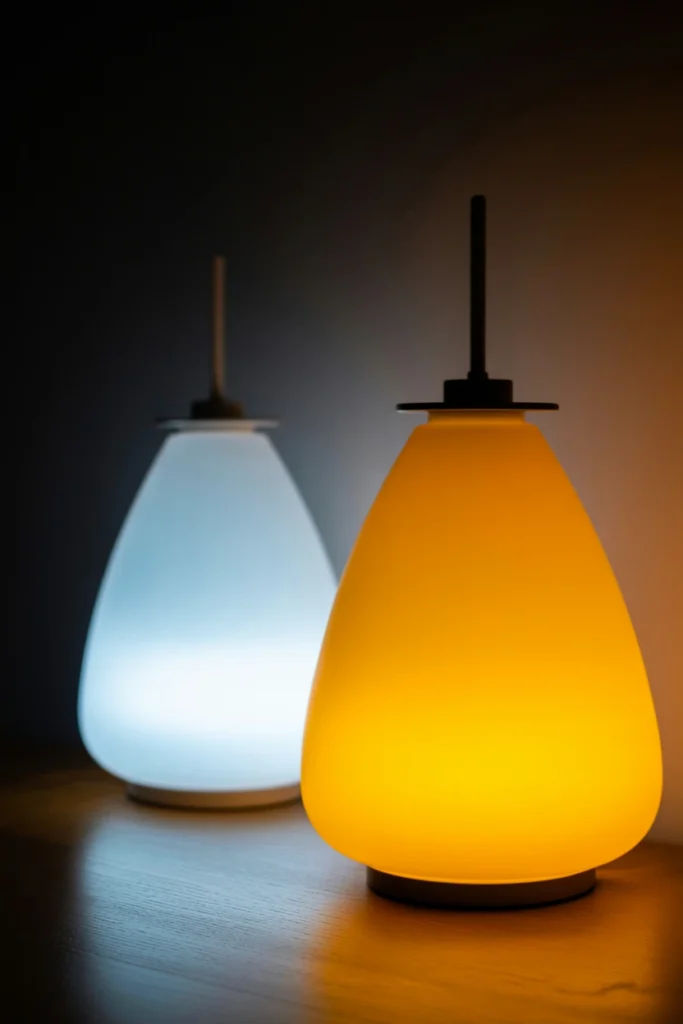
Cool white bulbs (4000K and above) flatten a room and cancel out every warm color and material you introduce. This single detail undermines an otherwise perfectly styled vintage room more often than any furniture choice does.
Replace every bulb in the apartment with warm white or soft white bulbs rated between 2200K and 2700K before styling anything else. Standardize this temperature across lamps, overheads, and accent lighting so no single fixture throws off the room’s tone. Getting this right first means every other change you make will read warmer automatically.
| Bulb Temperature | Effect |
| 2200K–2400K | Amber, candlelight-like |
| 2500K–2700K | Warm white, cozy standard |
| 3000K–3500K | Neutral, less vintage |
| 4000K+ | Cool white, avoid entirely |
Layer Vintage Textiles That Instantly Add Warmth
Textiles do more to create instant coziness than any other category of object, and they require no permanent changes. This section covers rugs, throws, pillows, and curtains specific to a vintage aesthetic.
5. Layer a Vintage or Vintage-Style Area Rug
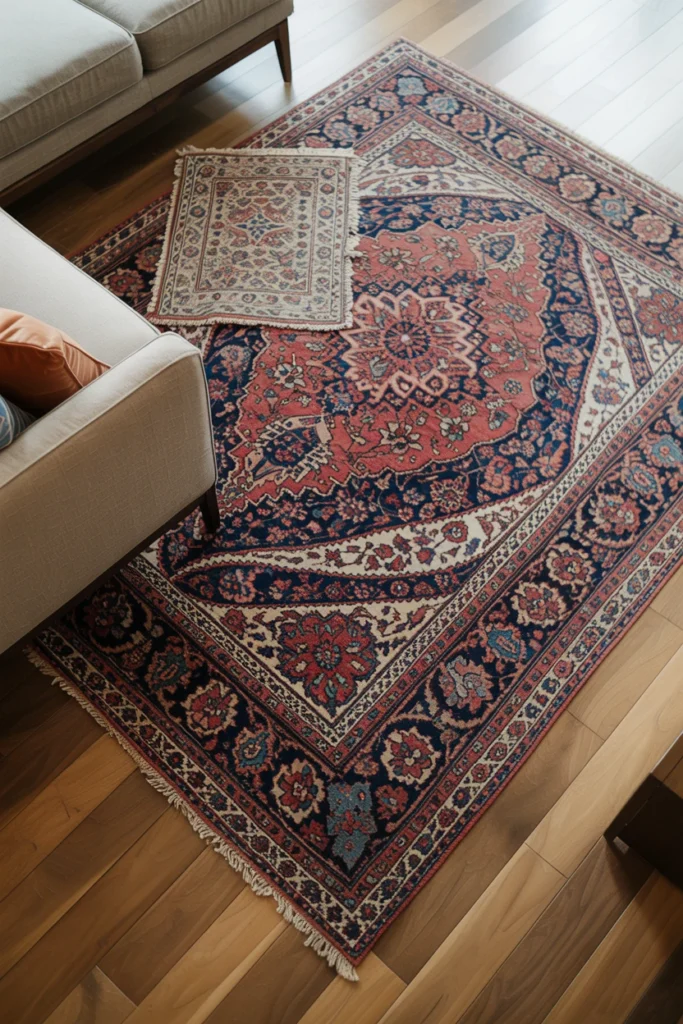
A bare floor in an apartment always reads as unfinished, no matter how good the furniture is. This single missing layer is why many otherwise well-decorated rentals still feel cold underfoot and visually incomplete.
Choose a Persian, Turkish, or Moroccan-style rug at least 5×7 feet for a living room, sized to fit under the front legs of your main seating. Layer a smaller flatweave rug on top at an angle for genuine vintage flea-market styling. This layered approach adds visual depth that a single rug alone never achieves.
| Room Size | Recommended Rug Size |
| Studio living area | 5×7 feet |
| Standard living room | 8×10 feet |
| Bedroom, under bed | 6×9 feet |
| Entryway/hallway | 2×6 feet runner |
6. Add a Chunky Knit or Crochet Throw
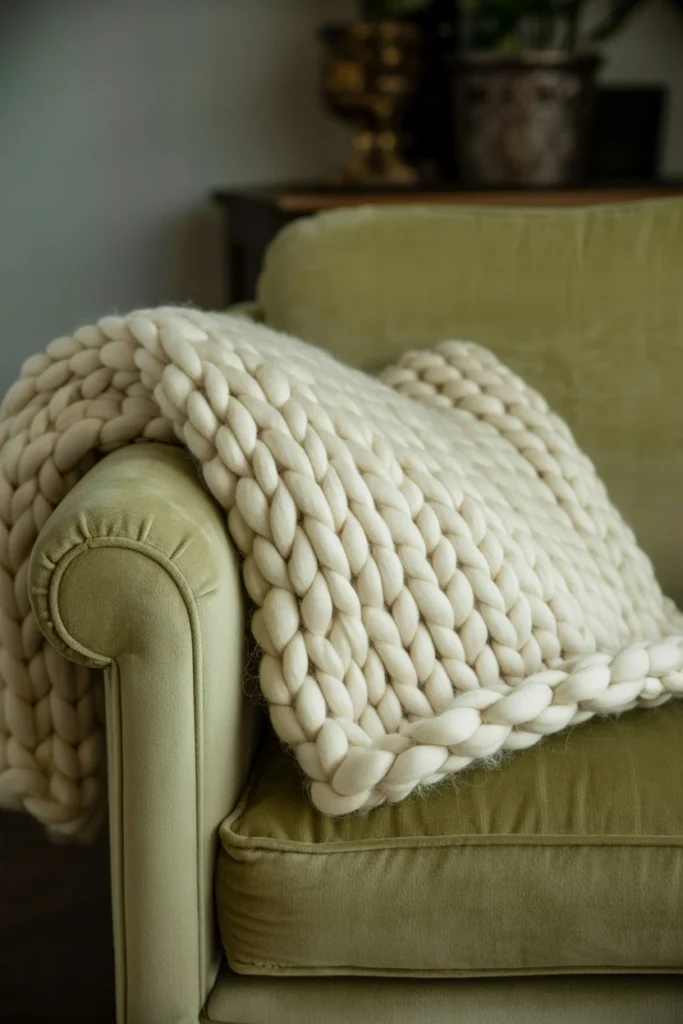
A smooth, thin throw blanket photographs fine but does nothing for the tactile warmth a vintage room needs. Rooms without textural variation feel flat even when the color palette is correct.
Drape a chunky wool or crochet throw across the arm of your sofa or the foot of your bed, folded into thirds rather than perfectly flat. Choose a color one shade warmer or cooler than your sofa upholstery to create contrast instead of matching exactly. This small mismatch is what separates a styled room from a showroom.
| Material | Cozy Rating |
| Chunky wool knit | Highest |
| Crochet cotton | High |
| Faux fur | Medium-high |
| Smooth acrylic fleece | Low |
7. Mix Vintage-Inspired Throw Pillow Covers
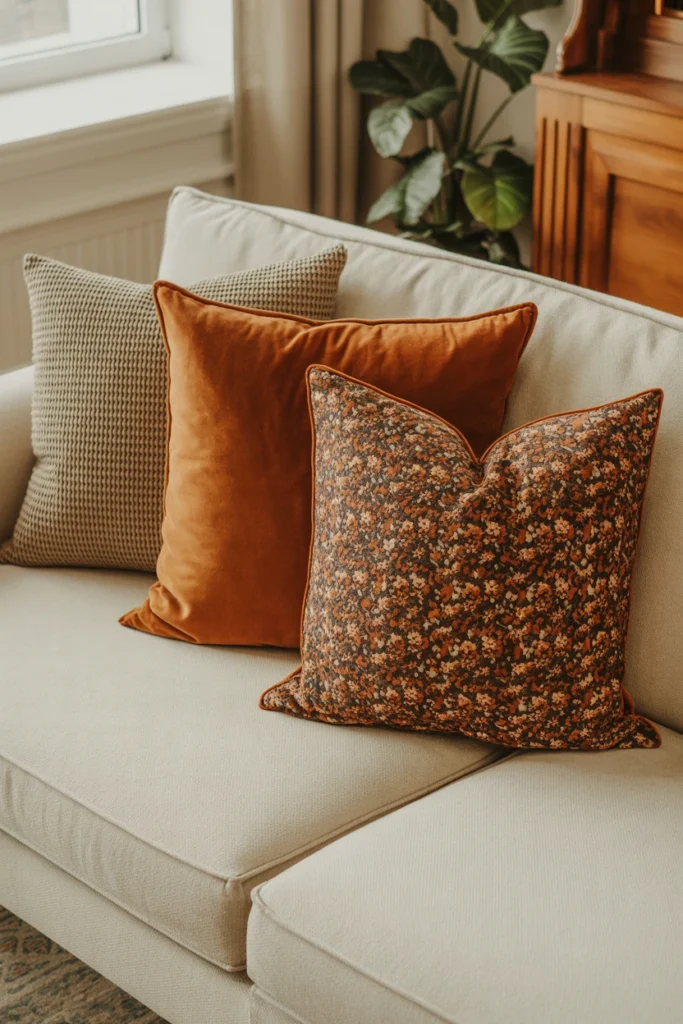
Matching pillow sets from a single retailer are the fastest way to signal a non-vintage room. Uniformity in pillows eliminates the collected-over-time feeling that defines this style.
Combine three to five pillow covers in different but complementary patterns — a solid velvet, a small floral, and a geometric weave. Vary sizes between 18 and 22 inches instead of using identical dimensions across every cushion. This deliberate variation reads as gathered rather than purchased in one trip.
| Pillow Mix | Count |
| Solid velvet or corduroy | 1–2 |
| Small-scale pattern | 1 |
| Textured knit or macrame | 1 |
| Total pillows on a sofa | 3–5 |
8. Hang Heavy Curtains in a Rich Fabric
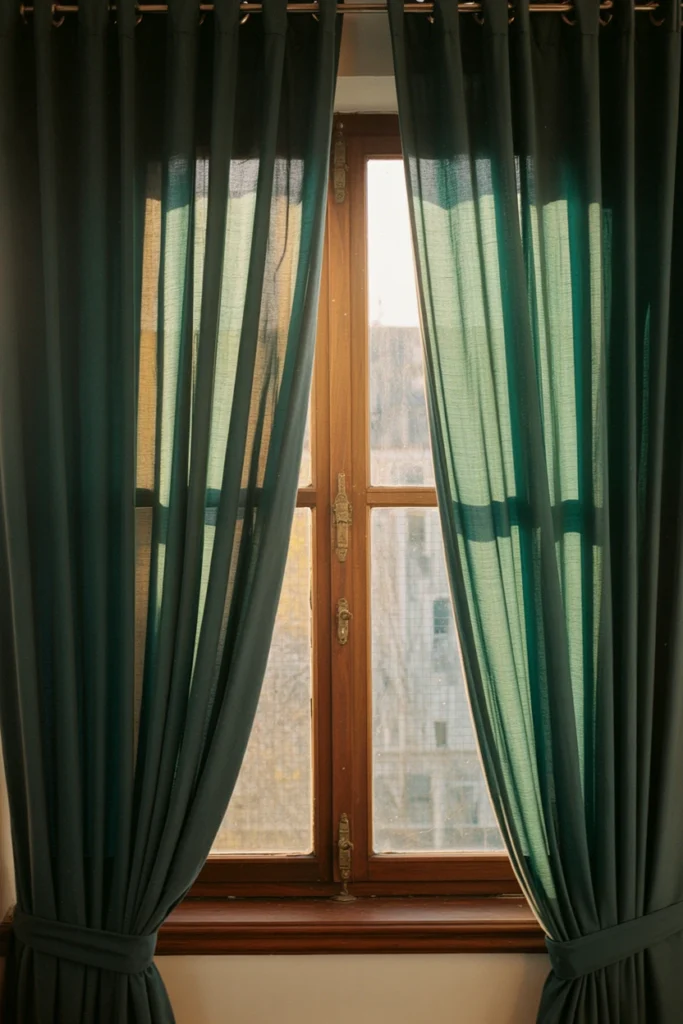
Thin, sheer curtains let in cold light and add no warmth to a room’s silhouette. Windows dressed this way undercut every other cozy element you’ve introduced.
Hang floor-length curtains in velvet, chenille, or a heavy cotton blend at least two inches above the window frame and extending to the floor. Choose a color that echoes your wall or upholstery tone rather than stark white. The added drape and shadow this creates softens hard architectural lines instantly.
| Fabric | Warmth Level |
| Velvet | Highest |
| Chenille | High |
| Heavy cotton | Medium |
| Sheer linen | Low (layer only, not alone) |
Choose Furniture With Genuine Vintage Character
Furniture carries the most visual weight in any room, which makes it the category most likely to break or make a vintage look. This section covers sourcing and mixing furniture with authentic character.
9. Anchor the Room with One Genuine Vintage Statement Piece
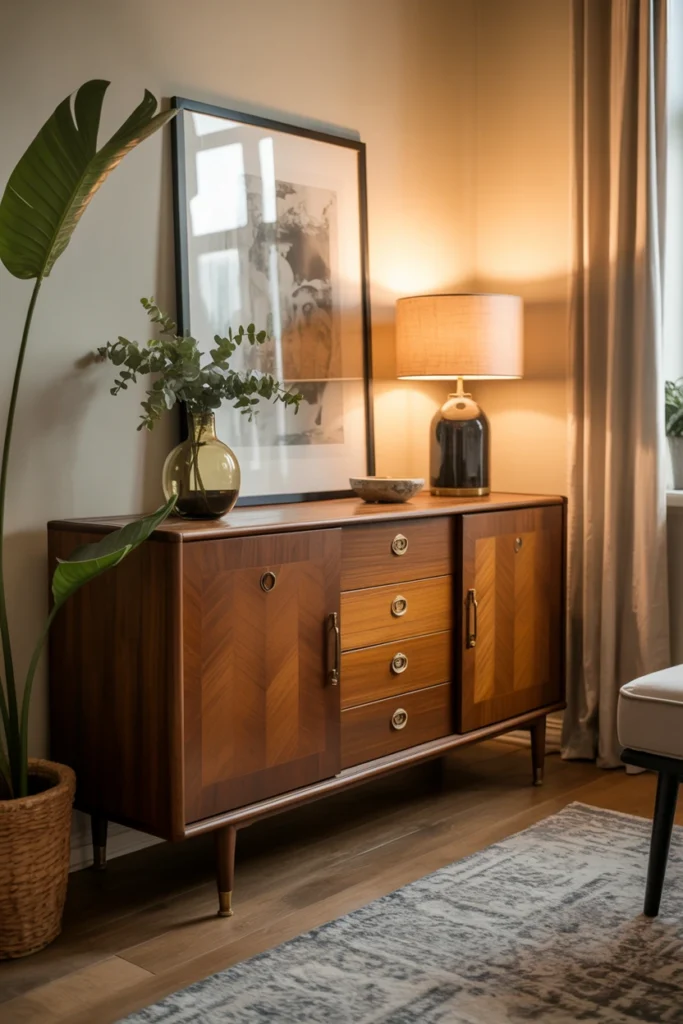
A room built entirely from vintage-style reproductions never reads as authentically vintage, no matter how many pieces you add. Reproduction furniture lacks the wear patterns and construction details that signal genuine age.
Source one real vintage piece — a credenza, a bar cart, or a wingback chair — from an estate sale, thrift store, or resale marketplace before buying anything new. Place this piece in the most visible sightline from your main entry point. One authentic anchor does more work than ten reproduction accessories.
| Source | Typical Price Range |
| Estate sale | 20–150 |
| Thrift store | 15–100 |
| Online resale marketplace | 50–400 |
| Vintage dealer/shop | 150–800+ |
10. Choose a Worn Leather or Velvet Armchair
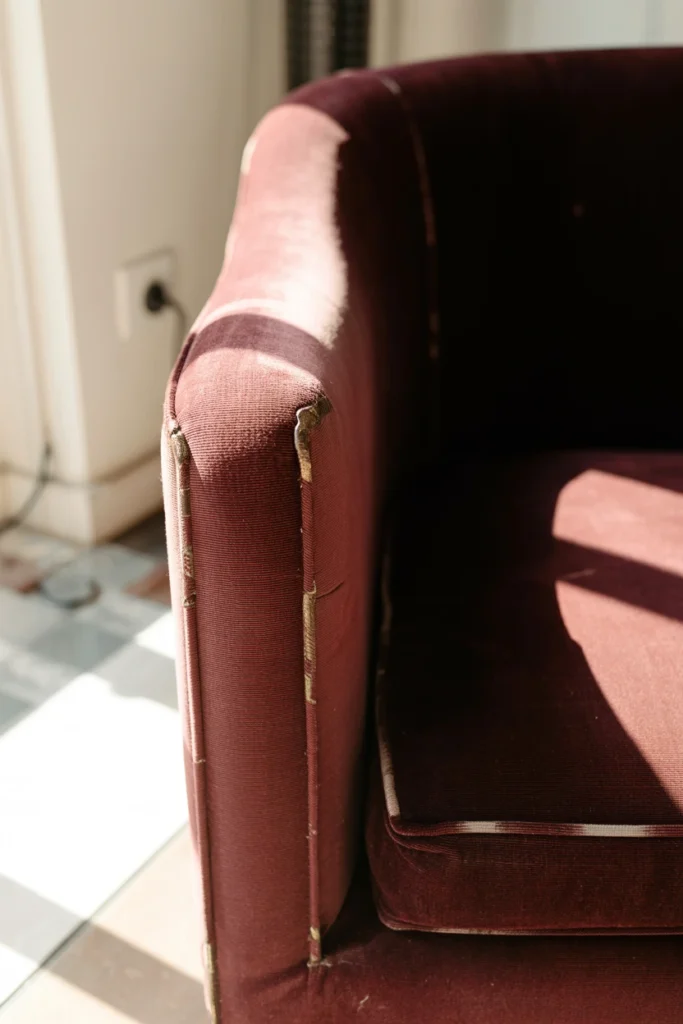
New, unblemished upholstery in a saturated jewel tone photographs well but reads as staged rather than collected. A single flawless piece in an otherwise imperfect room breaks the illusion.
Look for a leather or velvet armchair with visible creasing, a slightly faded arm, or brass tacks with light tarnish. Position it at a slight angle to your main seating rather than squared off symmetrically. The asymmetry mimics how furniture actually accumulates in a real, lived-in home.
| Upholstery | Vintage Signal |
| Cracked or creased leather | Strong |
| Velvet with slight sheen wear | Strong |
| Brand-new leather | Weak |
| Synthetic pleather | Weakest |
11. Mix Wood Tones Intentionally Instead of Matching Sets
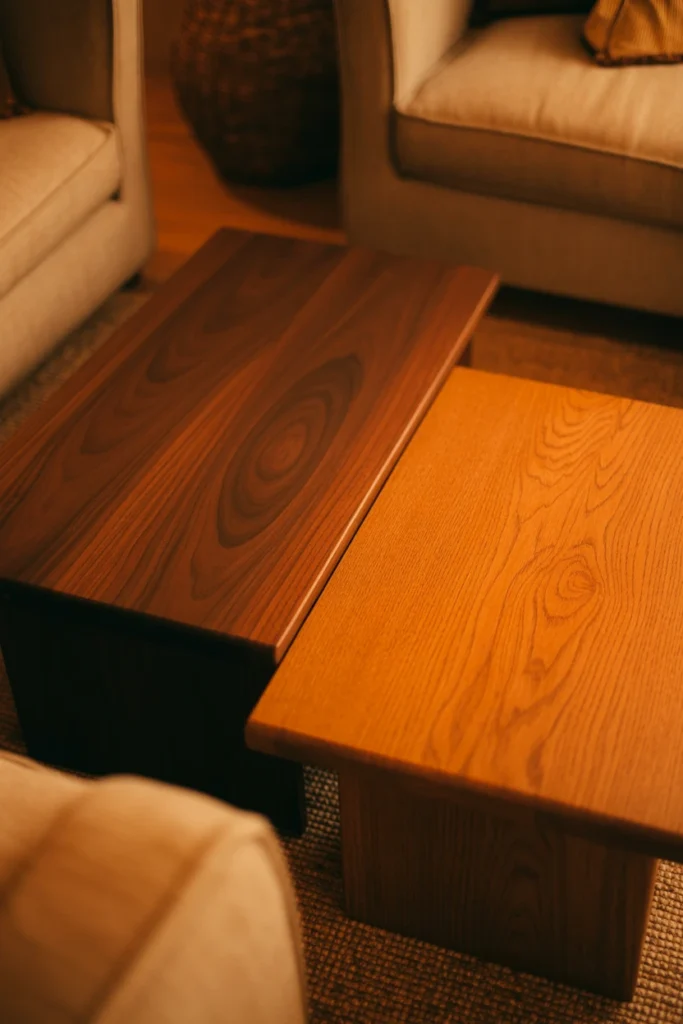
A matched wood furniture set — same finish on every table, chair, and shelf — is a modern retail convention, not a vintage one. This uniformity is one of the fastest ways to flatten an otherwise well-chosen room.
Combine at least two distinct wood tones in every room: a warm walnut piece alongside a lighter oak or pine piece. Keep a consistent undertone (warm or cool) across both so the mix reads as intentional rather than accidental. Real collected homes never have matching wood everywhere, and yours shouldn’t either.
| Wood Tone Pairing | Result |
| Walnut + oak | Warm, classic |
| Mahogany + pine | Rich, layered |
| Teak + walnut | Mid-century cohesive |
| Cherry + maple | Traditional warm |
12. Source Furniture with Hairpin or Turned Wood Legs
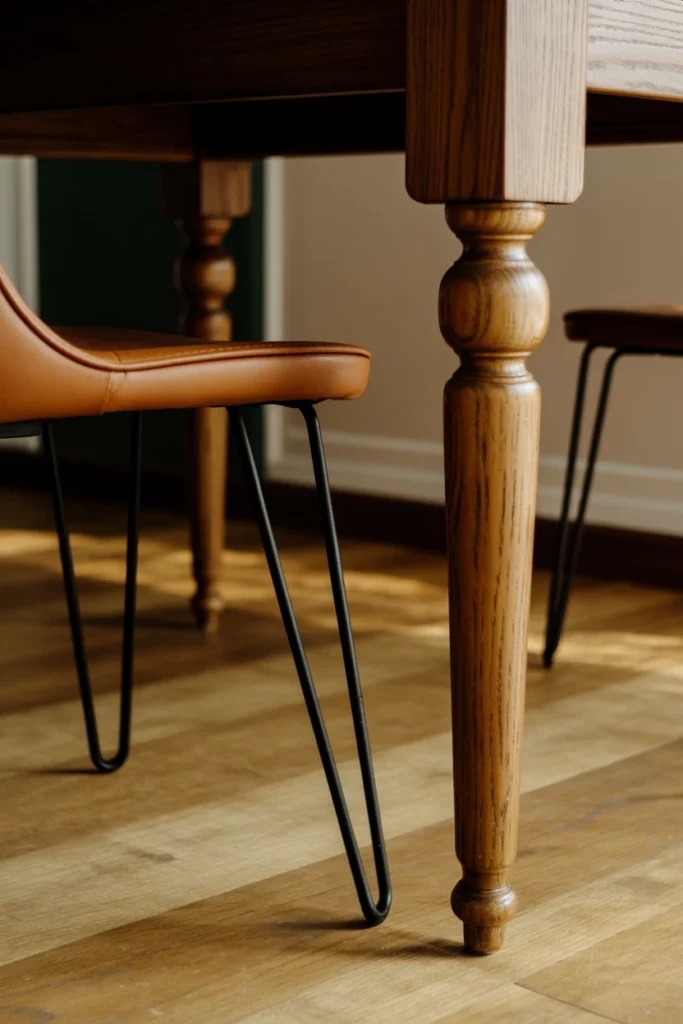
Boxy furniture with flush, hidden legs is a hallmark of contemporary flat-pack design, not vintage style. This detail is small but instantly recognizable to anyone assessing whether a room reads as genuinely vintage.
Prioritize chairs, sofas, and tables with visible hairpin steel legs or turned, tapered wood legs raised at least four inches off the floor. This exposed-leg silhouette lets light pass underneath furniture, which makes even a small apartment feel less cramped. The visual lift this creates is disproportionate to how small the detail actually is.
| Leg Style | Era Association |
| Hairpin steel | 1950s–60s |
| Turned tapered wood | 1960s–70s |
| Cabriole curved | Victorian |
| Straight flush (avoid) | Contemporary |
Curate Vintage Decor and Collectibles Without Clutter
Decor objects and collectibles are where a vintage apartment risks tipping into clutter fastest. This section covers curation methods that keep the look intentional rather than accumulated.
13. Build a Curated Gallery Wall of Vintage Art and Mirrors
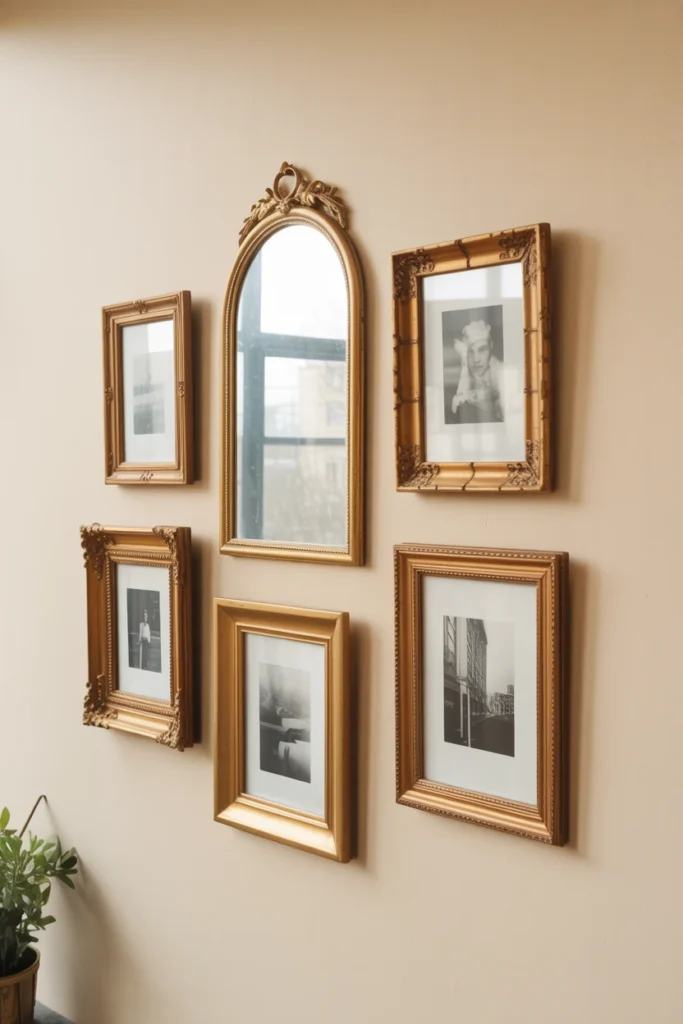
A single piece of art on a large wall leaves the space feeling under-decorated and cold. Empty wall space is one of the most common complaints in otherwise well-furnished vintage apartments.
Arrange 5 to 9 frames of varying sizes and finishes — including at least one vintage mirror — within a rectangular zone no more than 6 inches apart between frames. Mix gilt, wood, and brass frames rather than matching frame finishes across the wall. This mixed-frame approach is what separates a gallery wall from a mass-produced frame set.
| Gallery Wall Element | Recommended Count |
| Total frames | 5–9 |
| Mirrors included | 1–2 |
| Frame finishes mixed | 2–3 |
| Spacing between frames | 2–6 inches |
14. Display Collectibles in Grouped Vignettes of Three
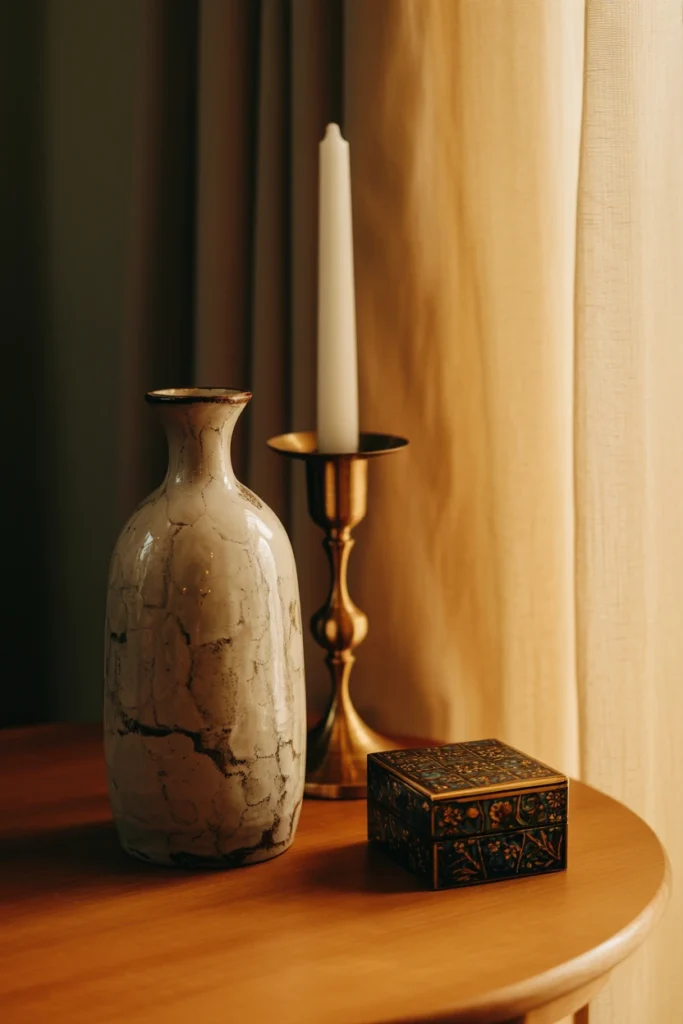
Scattering individual objects around a room — one vase here, one figurine there — reads as random rather than collected. Isolated objects lose visual impact because nothing anchors them to a story.
Group collectibles in clusters of three on shelves or tabletops, varying height by pairing one tall item, one medium item, and one low item. Anchor each vignette with a single dominant object, like a large vase, and let the smaller two support it. Odd-numbered groupings consistently photograph and read better than even pairs.
| Vignette Position | Object Height |
| Anchor (back) | Tallest |
| Support (middle) | Medium |
| Foreground | Shortest |
| Group size | 3 objects |
15. Add a Vintage Brass or Ceramic Accent
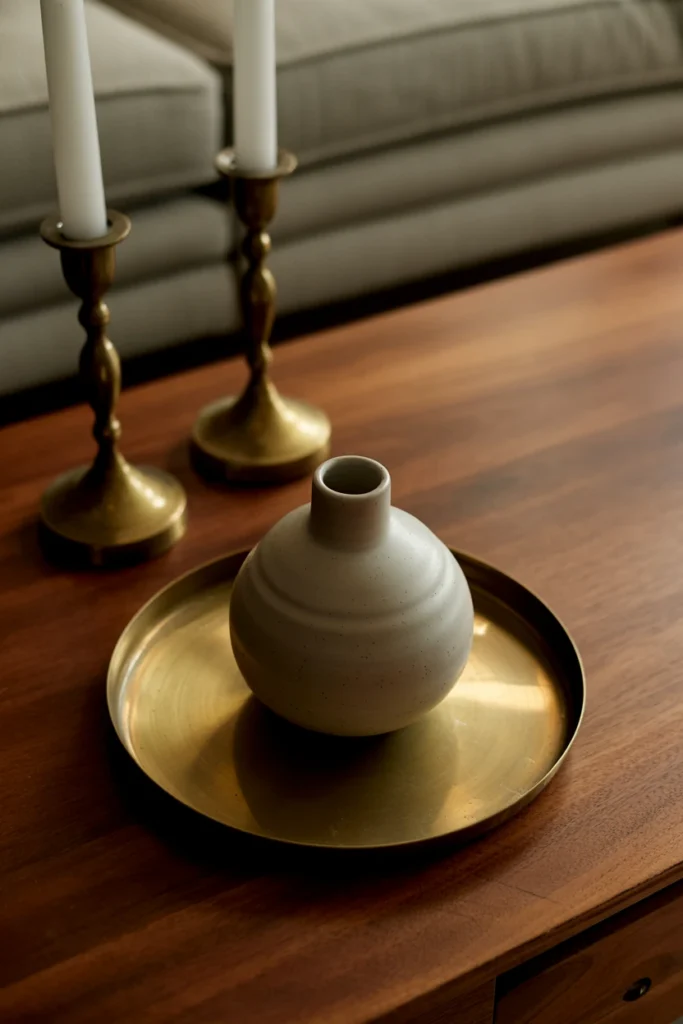
Rooms built entirely from wood and fabric miss the reflective warmth that metal accents provide. Without any metallic element, a vintage room can start to feel muddy and one-dimensional.
Introduce one to two brass, copper, or ceramic accent pieces per room — a small brass tray, a ceramic lamp base, or a set of vintage candlesticks. Choose pieces with visible patina or tarnish rather than polished new brass. The slight discoloration is what reads as genuinely aged instead of freshly manufactured.
| Metal Accent | Placement |
| Brass tray | Coffee table |
| Ceramic lamp base | Side table |
| Candlesticks | Mantel or shelf |
| Small brass bowl | Entryway |
16. Style Open Shelves with a Mix of Books and Objects
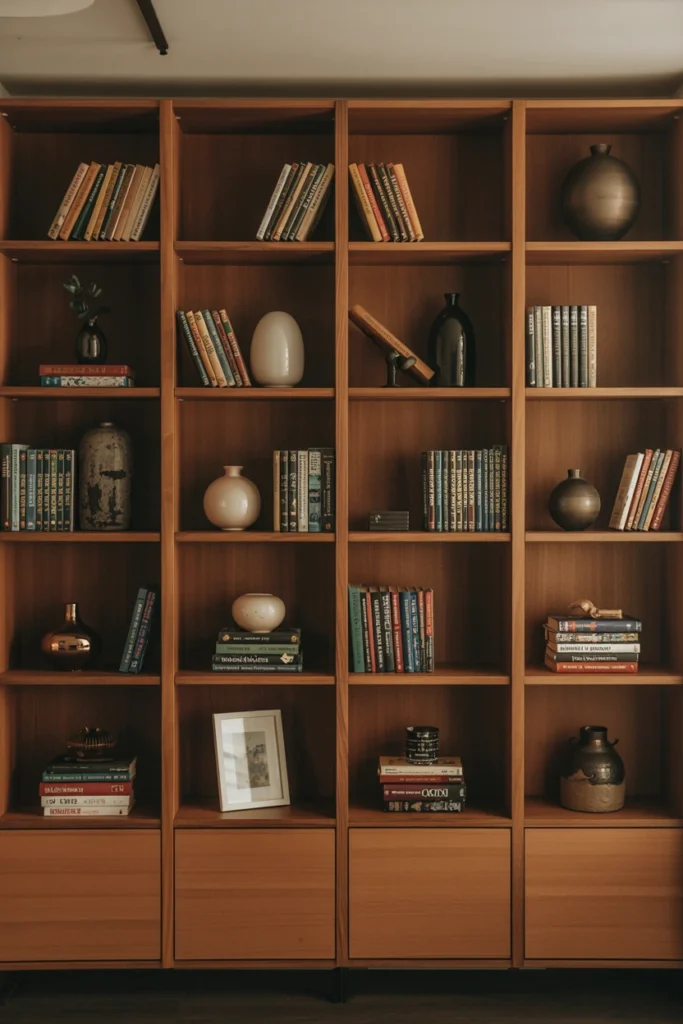
Shelves filled entirely with books, or entirely with objects, read as either a library or a display case — not a lived-in home. Neither extreme achieves the collected warmth vintage styling is aiming for.
Fill open shelves with a 60/40 ratio of books to objects, stacking some books horizontally and shelving others vertically with a bookend. Lean one framed piece of art against the back of the shelf instead of hanging it. This mix of orientations and object types is what makes shelves photograph as curated rather than organized.
| Shelf Content | Ratio |
| Books (mixed orientation) | 60% |
| Decor objects | 40% |
| Vertical stacks | 2–3 per shelf |
| Horizontal stacks | 1–2 per shelf |
Master Warm, Ambient Lighting for a Vintage Apartment
Lighting does more to set the emotional tone of a vintage apartment than any single piece of furniture. This section covers layering multiple light sources for genuine ambient warmth.
17. Replace Overhead Lighting with Warm-Temperature Bulbs
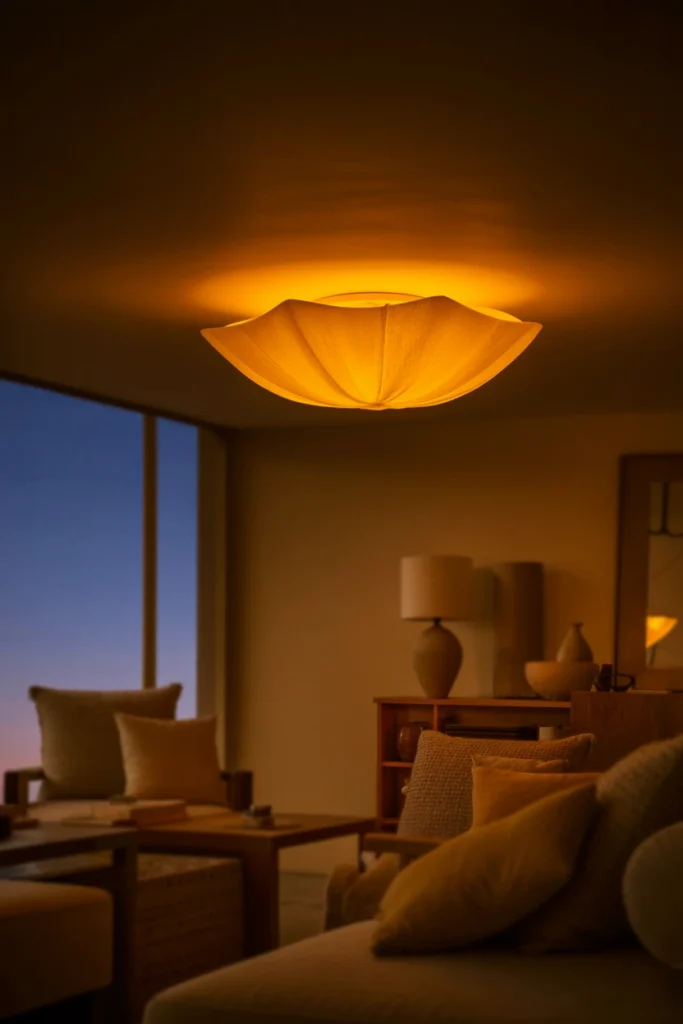
A single bright overhead fixture as the only light source creates flat, clinical lighting incompatible with a cozy vintage feel. Overhead-only lighting is the single most common lighting mistake in rental apartments.
Swap every overhead bulb for a 2700K warm white bulb rated no higher than 60 watts equivalent brightness. Use the overhead fixture only as a secondary light source, never the primary one after 5 p.m. This single swap changes the emotional temperature of a room more than any furniture purchase.
| Light Source | Recommended Wattage |
| Overhead (secondary use) | 40–60W equivalent |
| Table lamp | 40–60W equivalent |
| Floor lamp | 60–75W equivalent |
| Accent/string lighting | 15–25W equivalent |
18. Add at Least Three Layered Light Sources per Room
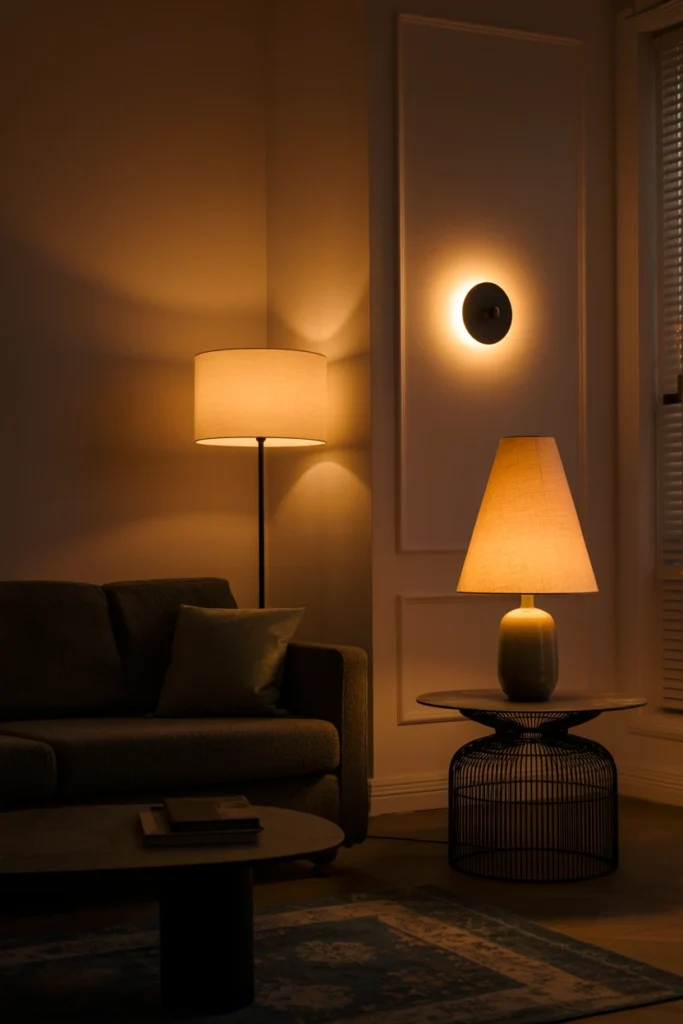
A single lamp cannot create the depth of shadow and glow that defines cozy vintage lighting. One light source produces flat illumination regardless of how warm the bulb temperature is.
Place a minimum of three light sources per room at different heights: one floor lamp, one table lamp, and one accent light such as a sconce or string lights. Position them in different corners rather than clustering them on one side. This triangulated layout eliminates harsh shadows while keeping the room glowing rather than glaring.
| Light Layer | Height |
| Floor lamp | Low-to-mid |
| Table lamp | Mid |
| Wall sconce | High |
| String or accent lighting | Varies |
19. Install a Vintage-Style Pendant or Sconce
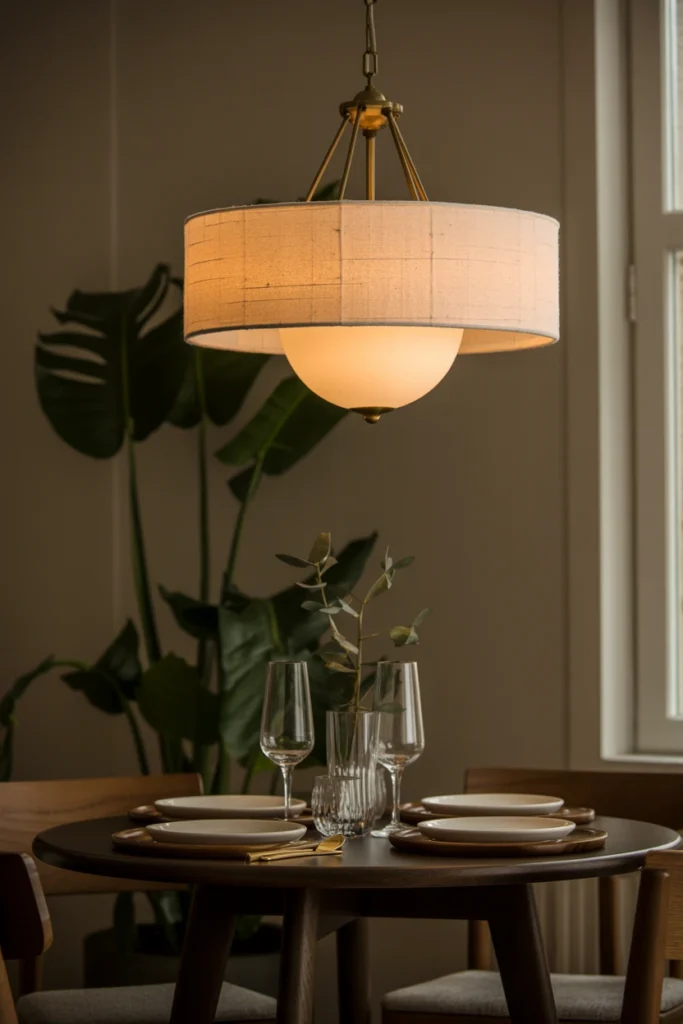
Modern flush-mount ceiling fixtures are one of the clearest visual giveaways that undercuts an otherwise vintage room. This single fixture is often the first thing that reads as out of place.
Swap a flush-mount fixture for a hanging pendant with a fabric shade, milk glass globe, or brass detailing, hung at least 30 inches above a dining table if applicable. In rentals, use a plug-in swag pendant that requires no rewiring. This single fixture swap is one of the highest-impact, lowest-cost changes on this entire list.
| Fixture Type | Rental-Friendly |
| Plug-in swag pendant | Yes |
| Battery sconce | Yes |
| Hardwired pendant | No (owned units only) |
| Flush mount (avoid) | N/A |
20. Use a Dimmer Switch on Your Main Light Source
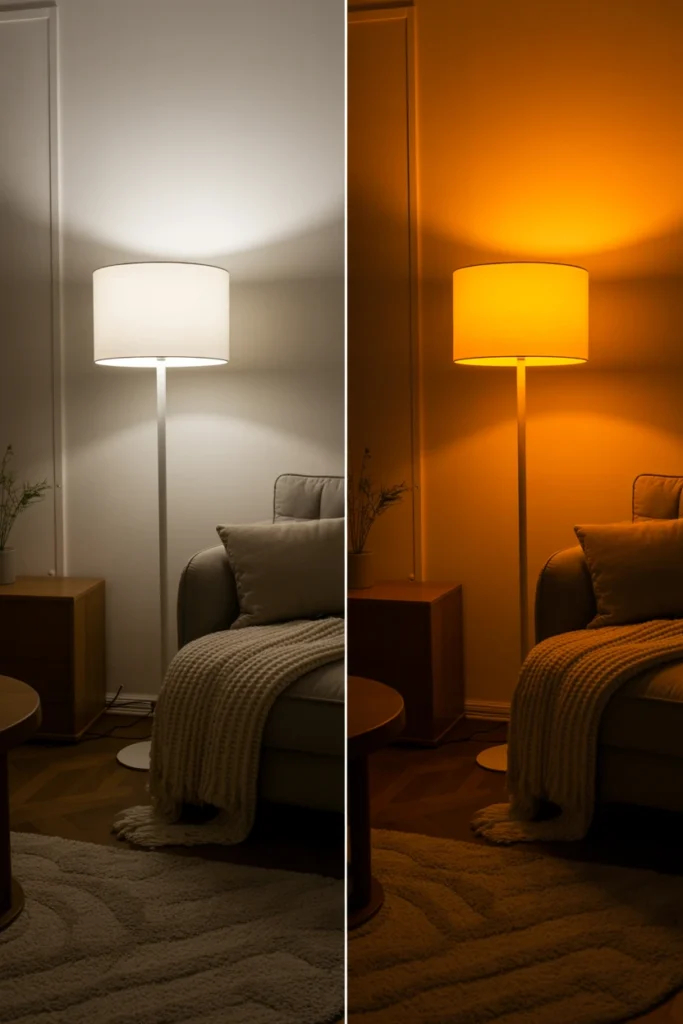
Full-brightness lighting in the evening works against every warm material and color choice made earlier in this guide. Fixed-brightness lighting removes your ability to shift the room’s mood by time of day.
Install a plug-in dimmer switch on at least one lamp in your main living space, or use smart bulbs with app-based dimming if rewiring isn’t possible. Set your evening baseline to roughly 40% brightness. This single control point lets one room serve both daytime function and nighttime coziness.
| Dimming Method | Rental-Friendly |
| Plug-in lamp dimmer | Yes |
| Smart bulb (app-controlled) | Yes |
| Hardwired wall dimmer | No |
| Fixed-brightness bulb (avoid) | N/A |
Styling and Finishing Touches
Finishing touches are what push a room from well-furnished to genuinely inviting. This section covers the small, low-cost details that complete a cozy vintage apartment.
21. Add Greenery in Vintage-Style Planters
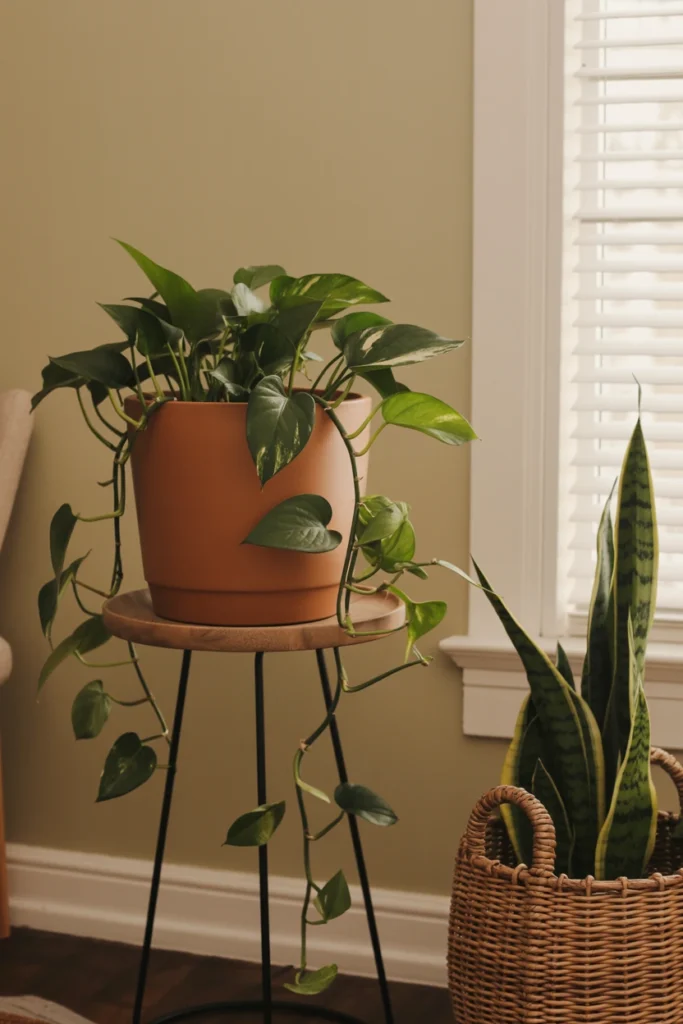
An apartment with no plant life reads as static and unfinished, no matter how well the furniture is arranged. Greenery is one of the only elements that adds movement and life to a room.
Place two to four plants around the main living space in ceramic, terra cotta, or woven planters instead of plastic nursery pots. Vary heights using a plant stand for at least one pot rather than lining all plants along the floor. This height variation prevents the greenery from reading as an afterthought.
| Plant Type | Light Requirement |
| Pothos | Low-medium |
| Snake plant | Low |
| Fiddle leaf fig | Bright indirect |
| Trailing ivy | Medium |
22. Layer Scent Through Candles in Vintage Holders
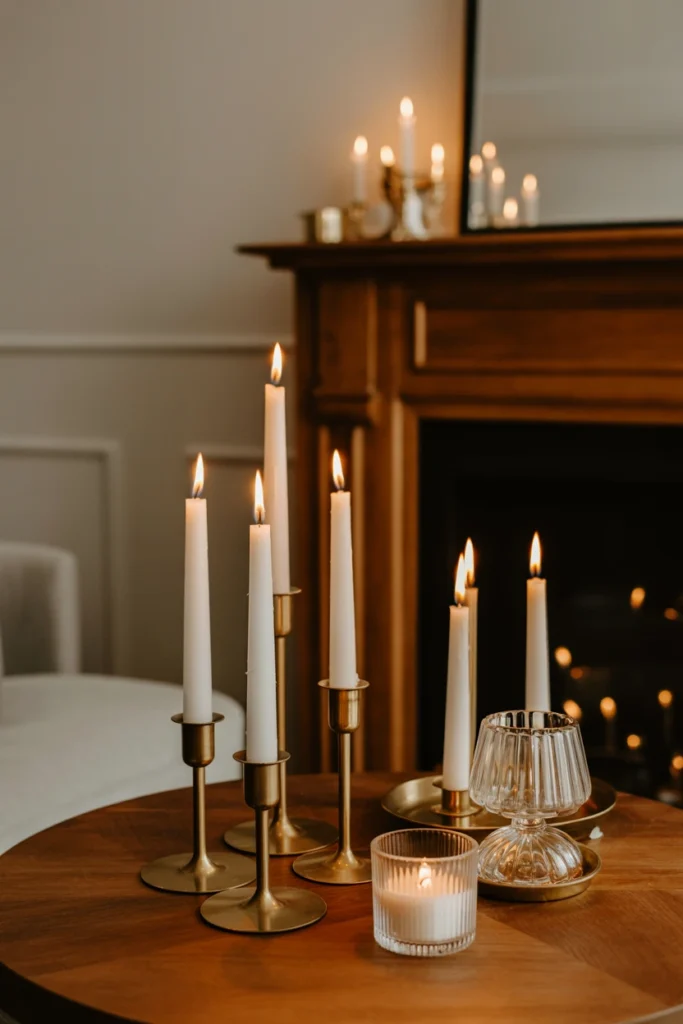
Coziness is a multi-sensory experience, and a room with no scent element leaves that sense entirely unaddressed. Visual coziness alone doesn’t complete the feeling this style is aiming for.
Place candles in brass, glass, or ceramic vintage-style holders on at least two surfaces — a coffee table and a mantel or shelf. Choose warm scent profiles like amber, sandalwood, or vanilla rather than fresh or citrus notes. This scent layer reinforces the warmth every other element in the room is already building.
| Scent Profile | Vintage Association |
| Amber/sandalwood | Strong |
| Vanilla/tobacco | Strong |
| Fresh linen | Weak |
| Citrus | Weak |
23. Use Vintage Books as Styling Props
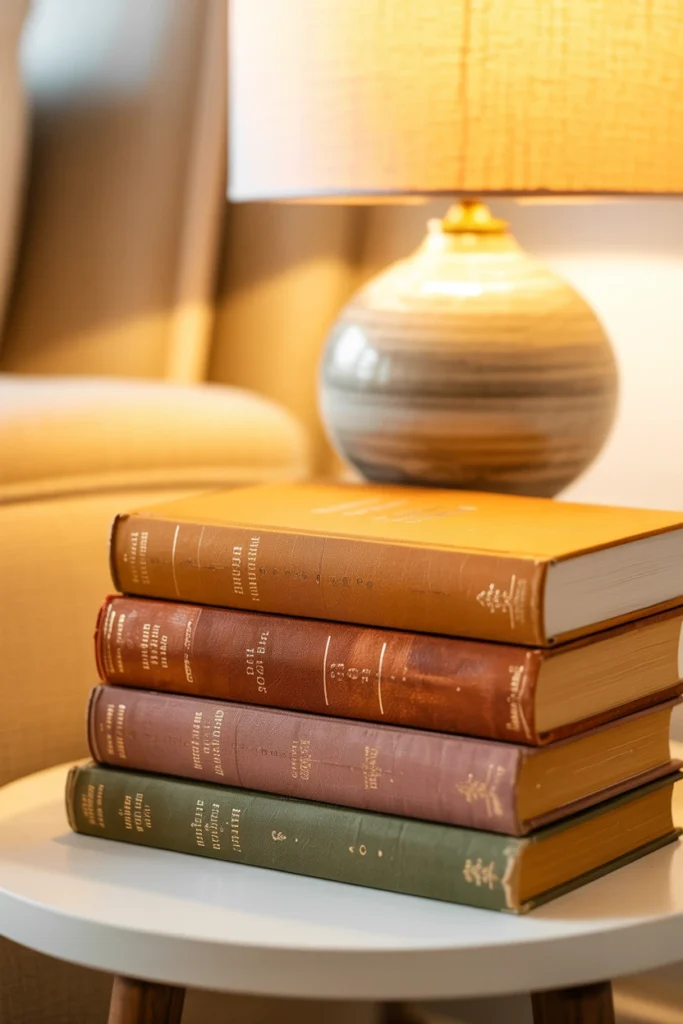
Modern paperbacks with bright, glossy covers disrupt the color story a vintage room has carefully built. A stack of contemporary book spines can undo the visual cohesion of an otherwise well-styled shelf.
Source hardcover vintage books with cloth or leather spines from thrift stores, often priced under two dollars each, and stack them by spine color rather than by genre. Use a stack of three to five as a riser under a lamp or small object. This coloring technique turns ordinary books into a styling tool rather than clutter.
| Book Use | Placement |
| Riser under lamp | Side table |
| Horizontal stack | Shelf |
| Vertical row with bookend | Shelf |
| Coffee table stack | Living room |
Maintain Your Cozy Vintage Look Long-Term
A cozy vintage apartment requires ongoing habits, not a single decorating weekend. This section covers keeping the look intentional as your space evolves.
24. Rotate Decor Seasonally to Keep the Space Feeling Curated
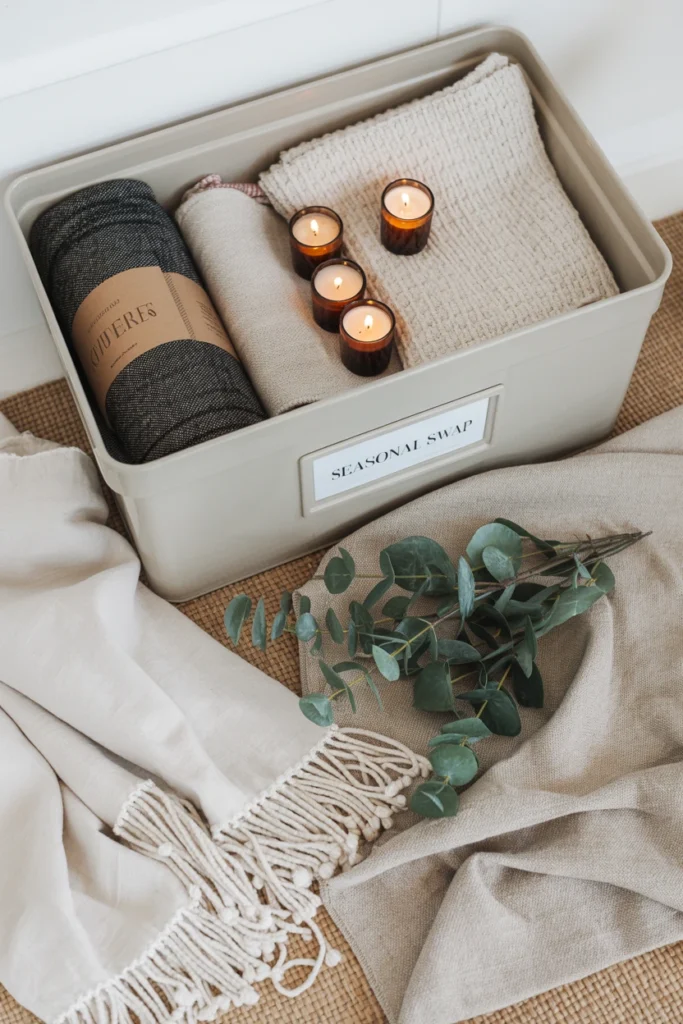
A room styled once and never adjusted starts to feel stale within a few months, regardless of how good the original styling was. Static decor stops registering to anyone who lives in the space daily.
Swap 15% to 20% of your visible decor objects each season — rotate in warmer textiles for fall and winter, lighter ceramics and greenery for spring and summer. Store the off-season items in a labeled bin rather than discarding them. This rotation keeps the apartment feeling actively curated rather than frozen in place.
| Season | Rotate In |
| Fall/Winter | Wool throws, amber candles |
| Spring/Summer | Linen textiles, fresh greenery |
| Rotation percentage | 15–20% of decor |
| Storage method | Labeled bins |
25. Establish a Light Dusting and Polishing Routine for Brass and Wood
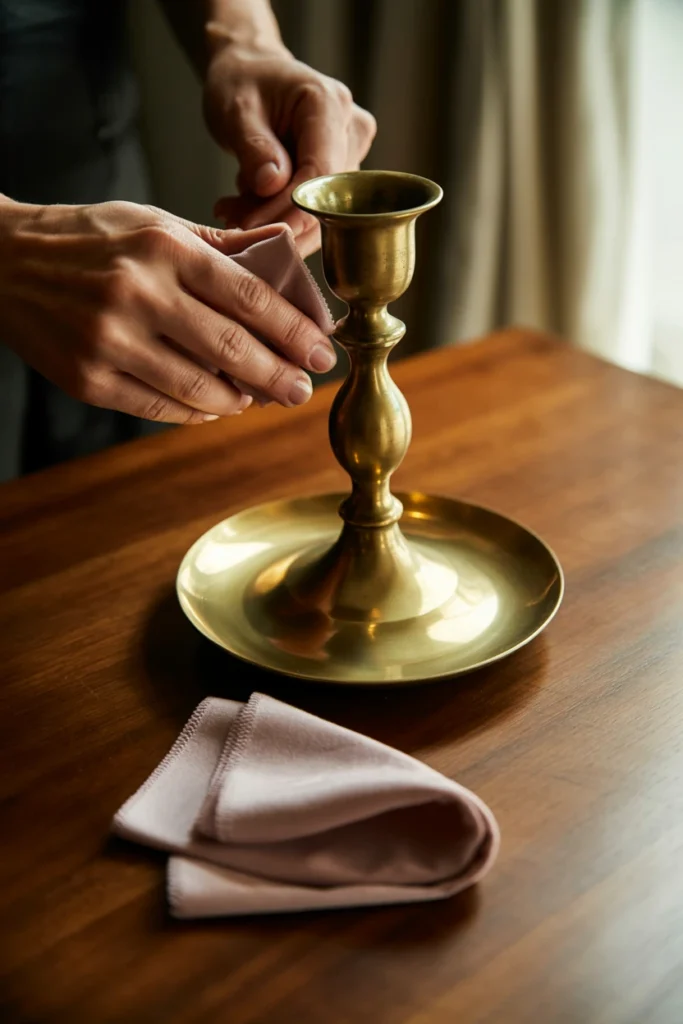
Unmaintained vintage materials accumulate dust and tarnish in ways that read as neglected rather than charmingly aged. There’s a real difference between intentional patina and simple grime.
Dust wood and brass surfaces weekly with a microfiber cloth, and polish brass pieces every one to two months with a brass-safe cleaner to control tarnish without eliminating it completely. Condition wood furniture with oil every three to four months to prevent cracking. This light maintenance schedule preserves character instead of erasing it.
| Material | Maintenance Frequency |
| Brass polishing | Every 1–2 months |
| Wood dusting | Weekly |
| Wood conditioning oil | Every 3–4 months |
| Upholstery vacuuming | Every 2 weeks |
26. Reassess and Edit Your Collection Every 6 Months
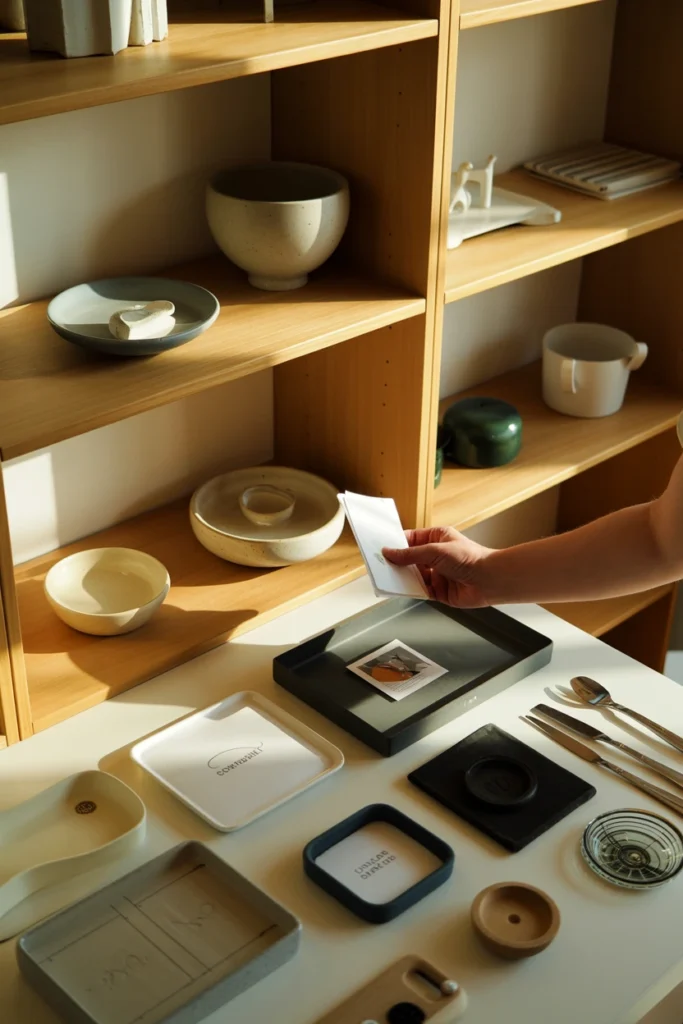
Continuous acquisition without periodic editing is how a curated vintage apartment slowly becomes a cluttered one. This drift happens gradually enough that most people don’t notice until the room already feels overcrowded.
Every six months, remove every collectible and decor object from your shelves and reintroduce only the pieces that still feel meaningful or visually necessary. Sell or donate anything you hesitate on for more than a few seconds. This recurring edit is what keeps a vintage apartment feeling intentional years into living there.
| Edit Frequency | Action |
| Every 6 months | Full shelf reassessment |
| Hesitation rule | Donate if unsure |
| Target object count | Same or fewer than prior edit |
| Storage overflow | Sell via resale marketplace |
Cozy Vintage Apartment Mistakes That Kill the Look
These eight mistakes are the most common reasons a vintage-inspired apartment fails to feel cozy despite real effort and money spent.
| Mistake | Why It Hurts the Space | Better Alternative |
| Using all-matching furniture sets | Reads as retail, not collected | Mix eras and finishes intentionally |
| Cool-white overhead lighting | Flattens warm colors and materials | Switch to 2700K warm bulbs |
| Overcrowding every surface | Clutter reads as chaotic, not curated | Group in vignettes of three, edit often |
| Skipping a rug entirely | Floor reads unfinished and cold | Add a rug at least 5×7 feet |
| Buying only reproduction pieces | Lacks authentic wear and patina | Anchor with one genuine vintage piece |
| Matching wood tones throughout | Removes collected-over-time feeling | Mix two distinct wood tones |
| Hanging sheer curtains alone | Adds no warmth or drape | Layer heavy fabric curtains |
| Never rotating or editing decor | Space feels static and stale | Rotate 15–20% of decor seasonally |
Cozy Vintage Apartment Ideas by Space Type
Studio Apartment
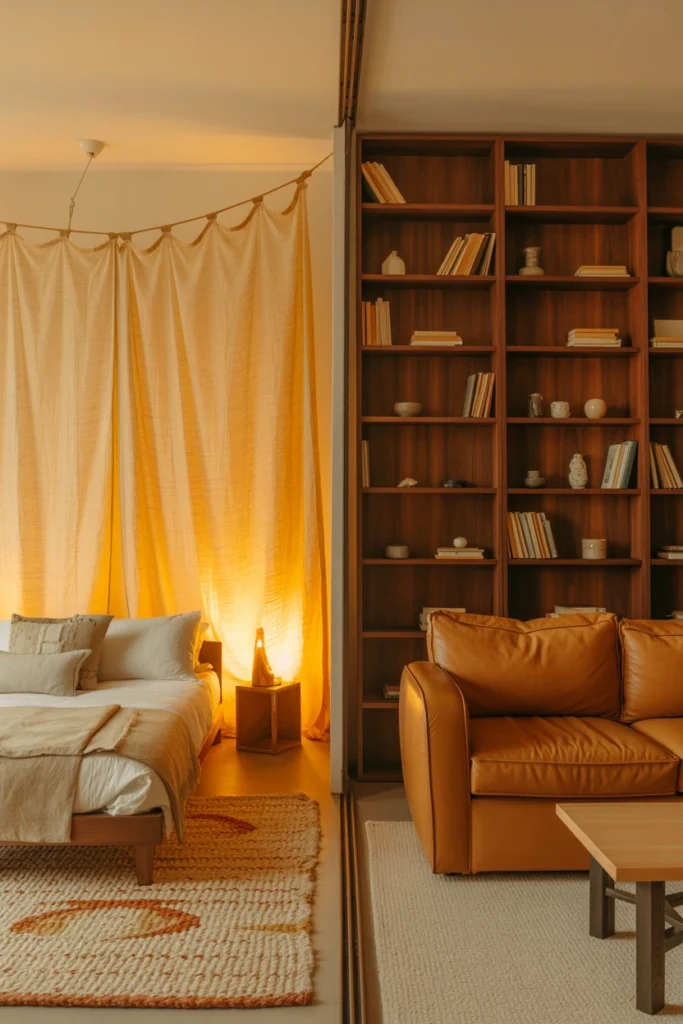
A studio apartment has to visually separate a living zone from a sleeping zone without walls, which is its core constraint. The techniques below help a vintage look read as intentional rather than cramped.
Key strategies for studio apartments:
- Anchor the sleep zone with a vintage rug placed at a distinct angle from the living zone rug.
- Use a tall bookshelf as a soft room divider rather than a solid partition.
- Choose a daybed or vintage sofa that visually reads as seating during the day.
- Keep the color story identical across both zones to prevent visual fragmentation.
- Hang curtains from ceiling to floor around the sleep zone for a canopy effect.
- Limit large furniture to pieces under 30 inches deep to preserve walking space.
Small Bedroom
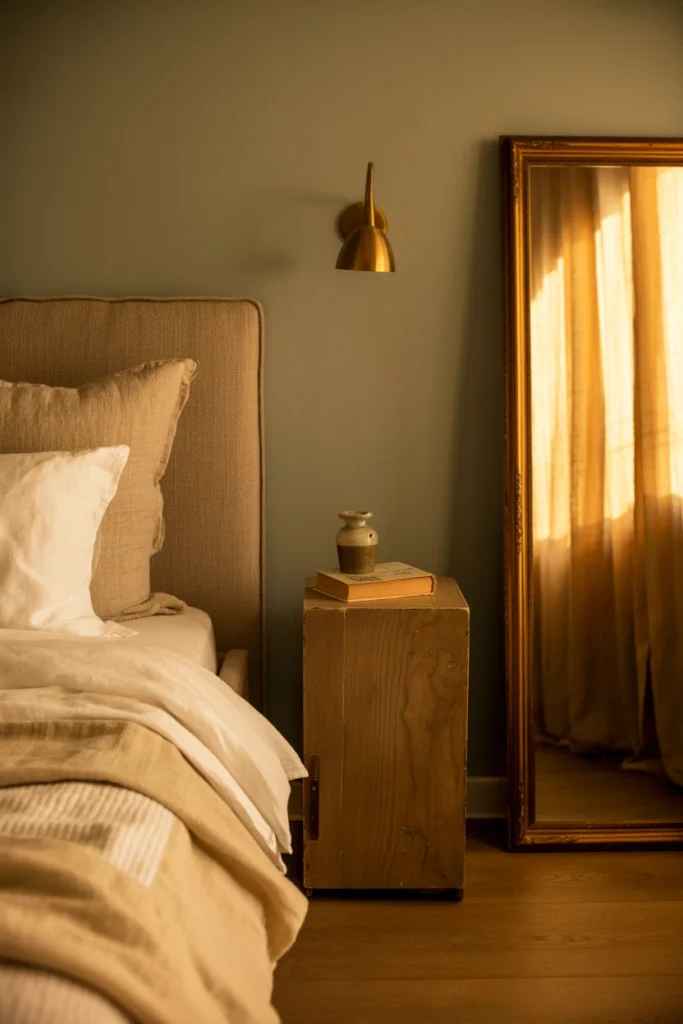
A small bedroom has limited floor space, which means every vintage element has to be chosen for proportion first. The constraint here is scale, not style.
Key strategies for small bedrooms:
- Choose a nightstand no wider than 18 inches to preserve walking clearance.
- Mount a vintage sconce beside the bed instead of using a table lamp.
- Use a vintage trunk at the foot of the bed for storage and texture together.
- Hang a single large mirror to double the room’s perceived depth.
- Keep the color palette to three tones maximum to avoid visual heaviness.
- Choose a headboard with a low profile to keep sightlines open.
Rental (No Permanent Changes Allowed)
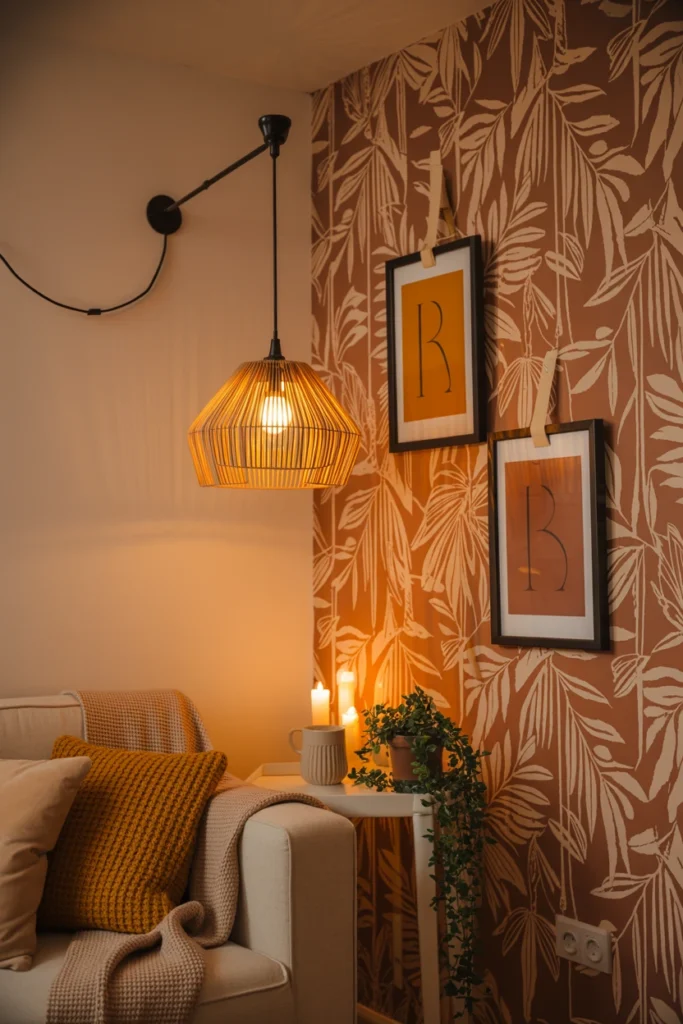
Rentals restrict paint, drilling, and any structural change, which means every technique has to be fully reversible. This constraint shapes nearly every choice in a rental-friendly vintage apartment.
Key strategies for rentals:
- Use removable wallpaper on one accent wall instead of paint.
- Choose plug-in swag pendants over hardwired fixtures for lighting upgrades.
- Apply peel-and-stick tile over a rental’s existing backsplash or floor accents.
- Use command strips rated for at least five pounds to hang framed art.
- Bring in freestanding shelving instead of built-ins for open storage.
- Keep large furniture on furniture sliders to protect flooring from scuffs.
Open-Plan Living Room
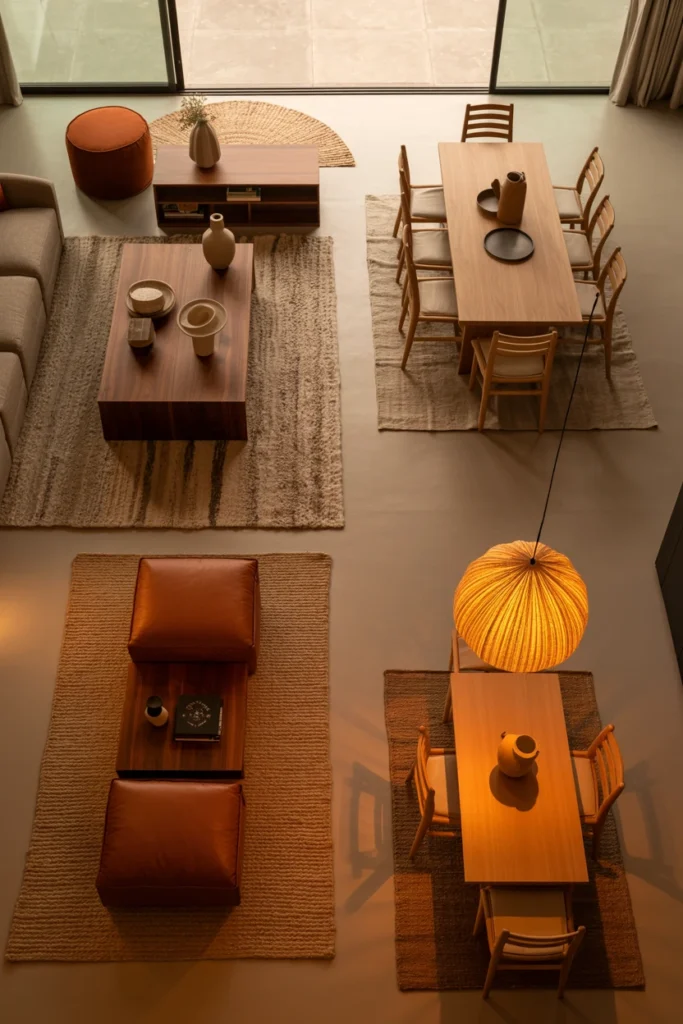
An open-plan living room has to define multiple functional zones — living, dining, sometimes working — without any walls. The constraint is zoning, not square footage.
Key strategies for open-plan living rooms:
- Use a large area rug to define the boundary of each functional zone.
- Choose a different but complementary wood tone for each zone’s furniture.
- Hang a pendant light directly over the dining zone to visually anchor it.
- Position a bookshelf perpendicular to a wall to create a soft divider.
- Repeat one accent color across all zones to unify the open layout.
- Group seating to face inward rather than toward the room’s longest wall.
Frequently Asked Questions
How do I make my apartment look cozy and vintage?
Start with warm-temperature lighting, layer textiles like rugs and throws, and mix at least two wood tones across your furniture. A cozy vintage apartment layers texture, warm color, and genuine or aged materials rather than relying on any single statement piece. Focus on the foundation steps — color story, era, lighting temperature — before shopping for decor.
What are common mistakes when decorating a vintage apartment?
The most common mistake is buying matching furniture sets, which reads as retail rather than collected over time. Cool-white lighting and skipping a rug are close behind, both of which flatten the warmth other elements are trying to create. Mixing eras and wood tones intentionally avoids this problem entirely.
How do I start a cozy vintage apartment on a budget?
Begin with lighting, since swapping bulbs to warm white costs under twenty dollars and changes the room’s entire feel. Thrift one genuine vintage anchor piece before buying anything new, since secondhand pieces are usually a fraction of retail price. Layer in textiles like a throw and pillow covers next, since these require no tools or permanent changes.
How do I get a cozy vintage look in a rental?
Use plug-in pendant lights, removable wallpaper, and command strips instead of anything that requires drilling or paint. Freestanding furniture like bookshelves and trunks can create the zoning and storage a built-in would otherwise provide. Every technique in this guide’s rental section is fully reversible at move-out.
How do I choose which vintage era to decorate around?
Pick the decade whose color palette and furniture silhouettes you’re naturally drawn to, then commit to it as roughly 60% of your room. Mixing five eras with no anchor decade is what makes a room feel chaotic rather than eclectic. A single dominant era gives every other purchase a clear reference point.
How often should I update or refresh a vintage-styled room?
Rotate 15% to 20% of visible decor seasonally to keep the room feeling current rather than static. A deeper edit of your full collection every six months prevents slow clutter accumulation. Neither refresh requires replacing furniture, only reassessing what’s currently on display.
Does a cozy vintage look work in a small studio apartment?
Yes, and rugs placed at distinct angles are the fastest way to visually separate a studio’s sleeping and living zones without walls. Keeping the color story identical across both zones prevents the small space from feeling fragmented. Scale matters more than style in a studio, so prioritize furniture under 30 inches deep.
How much does it cost to decorate an apartment in a cozy vintage style?
A meaningful transformation is achievable for under 300 dollars if you prioritize lighting, one thrifted anchor piece, and textiles first. Genuine vintage furniture from estate sales or thrift stores typically costs 15 to 150 dollars per piece. The biggest cost driver is how many new, non-thrifted pieces you choose to buy.
How do I keep brass and wood vintage pieces looking good over time?
Dust wood and brass weekly with a microfiber cloth, and polish brass every one to two months with a brass-safe cleaner. Condition wood furniture with oil every three to four months to prevent cracking or drying out. This routine preserves natural patina instead of letting it turn into neglect.
Conclusion
A cozy vintage apartment comes from layered textiles, mixed wood tones, and warm lighting working together, not from any single purchase. Start with your lighting temperature and one genuine vintage anchor piece before touching anything else in the room. Swap your bulbs to 2700K warm white this week and notice how much of the room’s tone shifts from that change alone.
This look holds up only with the seasonal rotation and biannual editing habits covered above, not from a single weekend of decorating. A cozy vintage apartment is a maintained result, not a finished project.