
A dark academia living room turns a plain box into a moody, book-filled retreat that feels collected over decades. This style creates genuine warmth through deep color, aged materials, and layered lighting instead of bright, sterile surfaces. This guide delivers 18 specific, sequential moves that transform any living room into a cohesive dark academia space. Start with the wall color first — everything else in the room is built to react against it.
Before You Begin: 3 Foundation Steps for a Dark Academia Living Room
These three steps set the structural base every other tip depends on. Skip them and the rest of the room will fight against a foundation that is too bright or too flat.
1. Paint Walls in Deep Charcoal or Forest Green
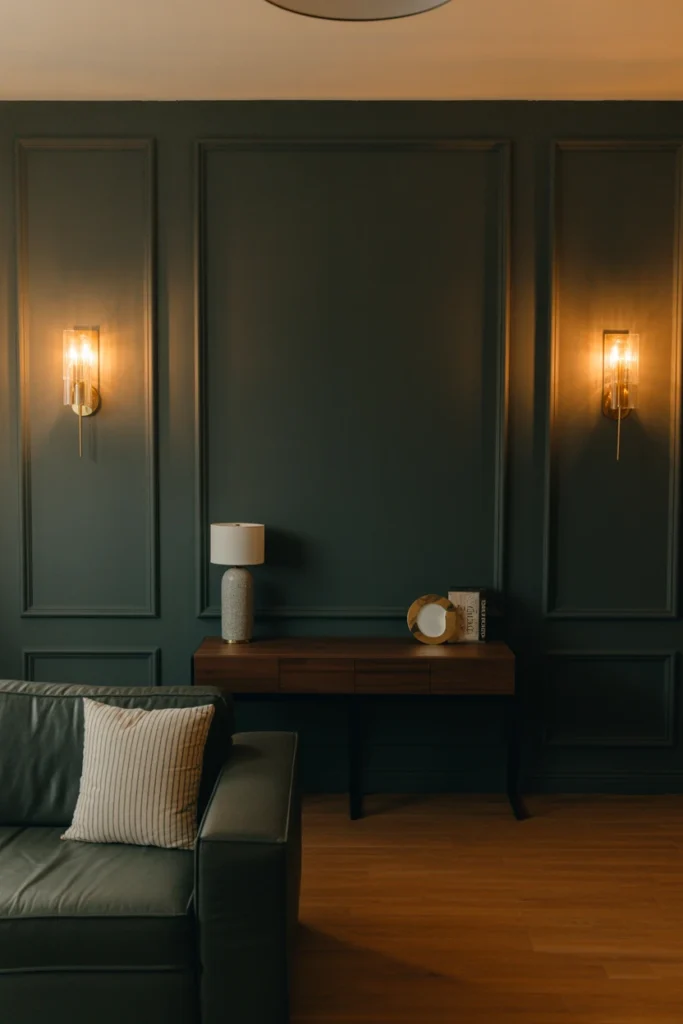
A pale wall color is the single most common reason a dark academia room reads as generic instead of intentional. Bright white or light gray walls reflect too much light and flatten the moody depth this style depends on, forcing every other element to work twice as hard. This mismatch wastes money on furniture and accessories that never quite achieve the atmosphere the room needs.
Start by painting the main wall in a matte or eggshell charcoal, such as Benjamin Moore’s Kendall Charcoal or a deep forest green like Hunter Green. Use a matte or eggshell finish rather than satin or gloss — matte finishes absorb light and deepen the color, while shine flattens the effect and reads as modern rather than academic. This single change makes the room read as noticeably more intentional the moment the first coat dries, and it makes every brass fixture and wood tone that follows look richer by contrast.
| Wall Color Option | Best Paired With |
| Kendall Charcoal (Benjamin Moore) | Brass fixtures, oxblood leather |
| Hunter Green | Cognac leather, mahogany wood |
| Van Deusen Blue | Brass, gold-framed art |
| Caviar Black (Sherwin-Williams) | Warm wood tones, velvet textiles |
2. Install Warm Layered Lighting With Brass Fixtures
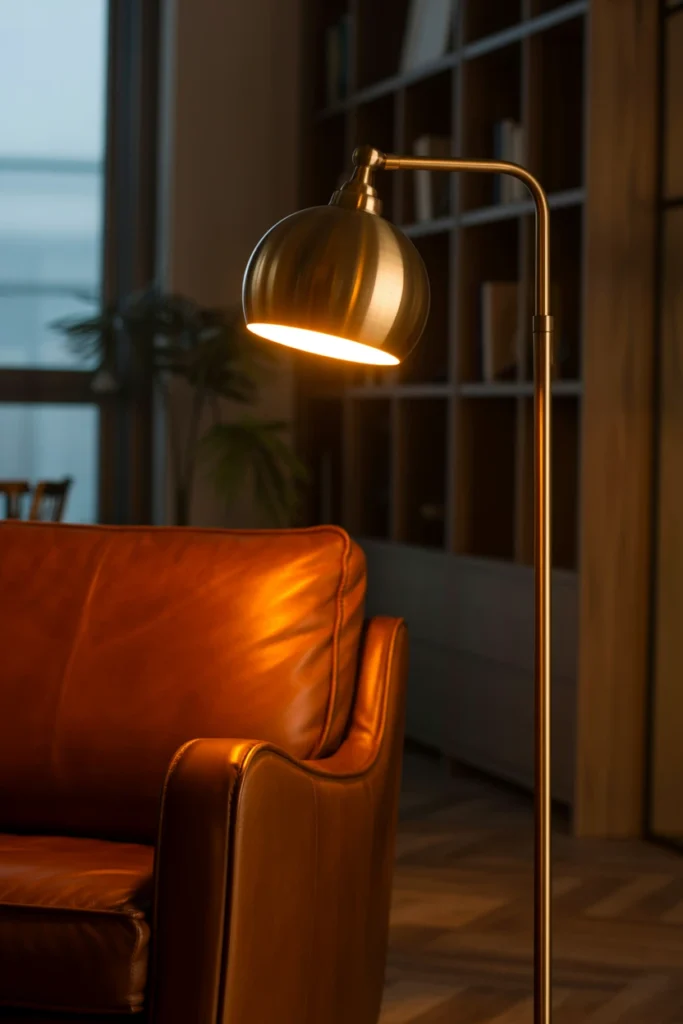
Overhead lighting alone flattens a dark academia room and erases the shadow and depth the style depends on. A single ceiling fixture creates flat, even light across the whole room, which eliminates the pockets of warmth and contrast that define this aesthetic. Rooms lit this way look staged under a showroom light rather than lived-in under a reading lamp.
Add at least three separate light sources at different heights: a floor lamp, a table lamp, and a picture light or sconce. Use bulbs rated between 2200K and 2700K — anything above 3000K reads too cool and clinical for this style. This layered approach creates the effect of firelight moving across the room, and it also means the space still feels inviting after sunset, when overhead lighting alone would flatten it completely.
| Light Source | Placement | Bulb Temperature |
| Floor lamp | Beside reading chair | 2200K–2400K |
| Table lamp | On side table or bookshelf | 2400K–2700K |
| Picture light | Above artwork or bookshelf | 2700K |
| Wall sconce | Flanking a mirror or doorway | 2200K–2500K |
3. Anchor the Room With a Dark Wood Furniture Piece
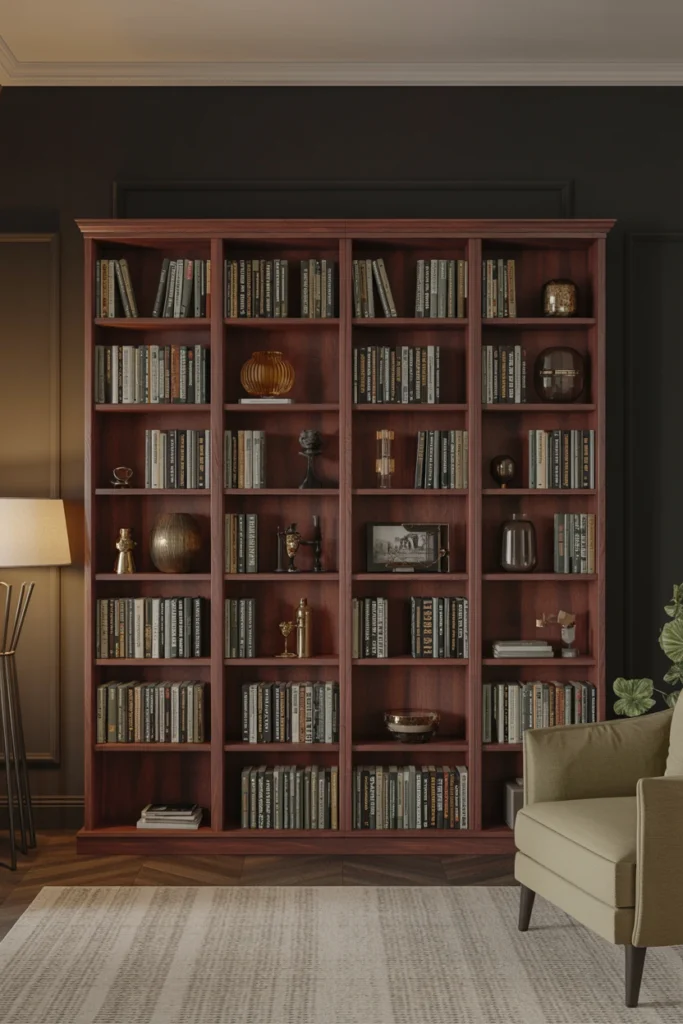
A room without one dominant dark wood anchor piece feels scattered rather than curated, no matter how many smaller accents get added. Without this anchor, the eye has nowhere to land, and the room reads as a collection of unrelated objects rather than a single cohesive scene. This mistake often shows up when decorators buy accessories before securing the main furniture piece.
Choose one large piece — a mahogany bookshelf, a walnut coffee table, or a dark oak console — and place it as the room’s visual center before adding anything else. This piece should occupy at least 15% of the room’s visible floor or wall space to register as an anchor rather than an afterthought. Building outward from this single piece prevents the scattered look, and it also gives every future purchase a clear reference point for wood tone and scale.
| Anchor Piece Type | Recommended Minimum Size |
| Bookshelf | 6 feet tall, 3 feet wide |
| Coffee table | 48 inches long |
| Console table | 60 inches long |
| Writing desk | 42 inches wide |
Layer Moody Textures and Materials Into Your Dark Academia Palette
This section covers the surface materials that carry the dark academia decor identity through touch as much as sight. Getting the material mix right prevents the room from reading as flat paint and furniture alone.
4. Add Wood Paneling to One Accent Wall
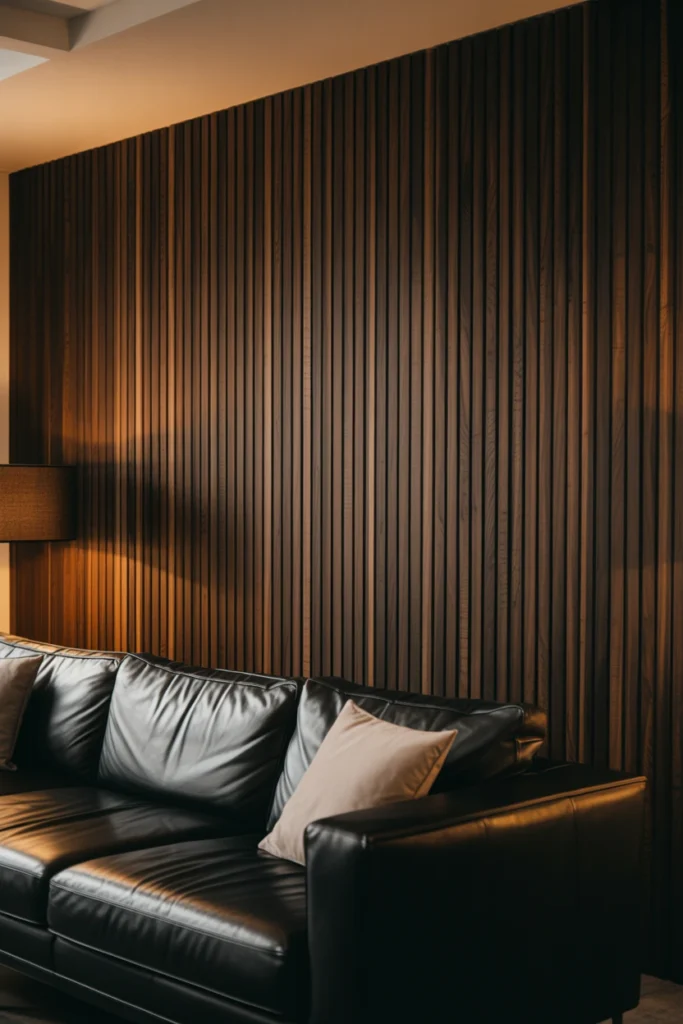
A room with only painted walls and no textural break reads as unfinished, even after the charcoal or forest green base coat goes on. Flat paint alone lacks the dimensional depth that wood grain and shadow lines provide, leaving the room visually thinner than intended. This gap is most noticeable on the wall directly behind the main seating area.
Install tongue-and-groove or shiplap paneling on one wall only, stained in a dark walnut or espresso finish, rather than painting it the same color as the rest of the room. Keep the panel width between 4 and 6 inches for a traditional academic look — wider boards read as modern farmhouse instead. This single wall completely eliminates the flatness, and it creates a natural backdrop for hanging framed prints or a large mirror later.
| Panel Width | Style Result |
| 2–3 inches | Fine, formal library look |
| 4–6 inches | Traditional academic paneling |
| 7+ inches | Reads as modern farmhouse |
5. Layer Velvet Upholstery on Your Seating
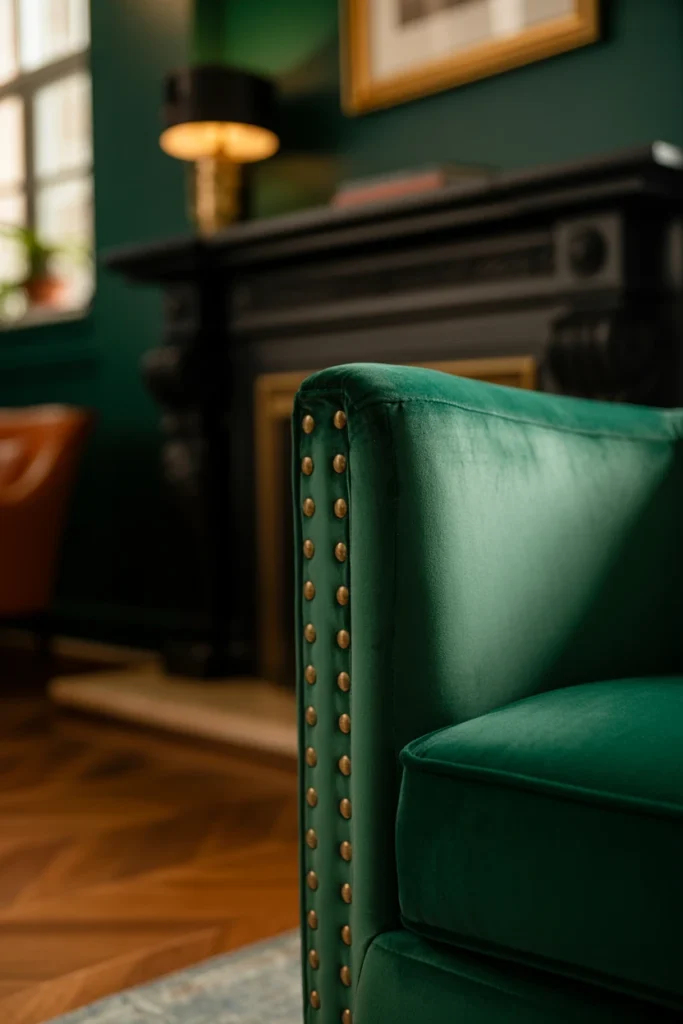
Cotton or linen upholstery in a dark academia room absorbs light without giving anything back, leaving seating that looks dull under warm lamp light. This directly undercuts the layered lighting from Tip 2, since flat fabric fails to catch and reflect the light the way pile fabrics do. The seating ends up looking heavy and lifeless instead of rich.
Replace at least one major seating piece with velvet upholstery in emerald, burgundy, or deep navy, choosing a cotton-blend velvet over polyester for a more authentic sheen. Velvet with a pile height around 3mm catches light at the edges and creates visible depth variation across a single cushion. This swap alone changes how the entire seating area photographs, and it also makes the room feel noticeably warmer to sit in during colder months.
| Velvet Color | Pairs Best With |
| Emerald green | Charcoal or black walls |
| Burgundy | Forest green walls |
| Deep navy | Brass and gold accents |
| Mustard | Cognac leather furniture |
6. Choose Leather Furniture in Oxblood or Cognac
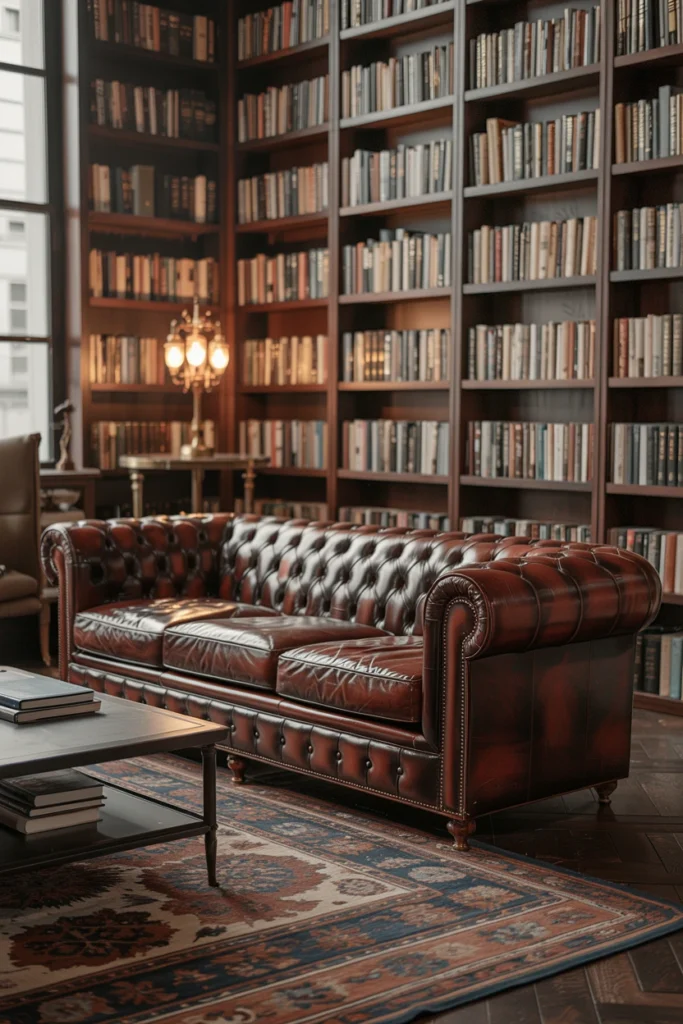
Black or gray leather furniture, while common in modern interiors, reads as corporate rather than scholarly in a dark academia living room. These cool leather tones lack the aged patina and warmth this aesthetic is built around, creating a visual clash with the wood and brass elements from earlier tips. The room ends up looking like two different design styles competing for attention.
Select leather in oxblood, cognac, or chestnut brown, prioritizing full-grain or top-grain leather that develops a visible patina over 2–3 years of use. A chesterfield-style sofa with deep button tufting and rolled arms reinforces the traditional library silhouette most effectively. Leather that ages this way genuinely improves with wear instead of looking dated, and it means the sofa becomes a more convincing centerpiece the longer you own it.
| Leather Tone | Patina Development |
| Oxblood | Deepens to near-black over years |
| Cognac | Lightens slightly, gains sheen |
| Chestnut brown | Darkens at contact points |
| Chocolate | Minimal visible change |
7. Mix Textured Wallpaper With a Subtle Damask Print
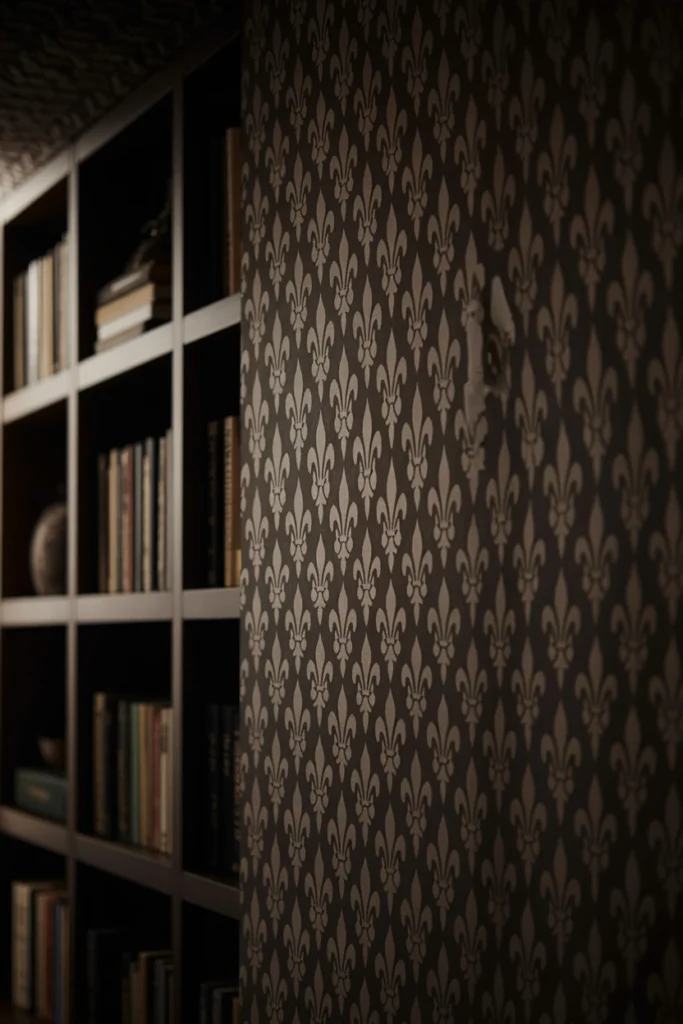
A single uninterrupted paint color across every wall, including the accent wall from Tip 4, removes the pattern variety that keeps a dark academia room visually interesting. Without any printed texture, the room relies entirely on furniture to create visual complexity, which puts more pressure on every other purchase. Small living rooms feel this flatness most acutely.
Apply a subtle tone-on-tone damask or fleur-de-lis wallpaper to one wall not already covered in wood paneling, choosing a pattern with less than 15% contrast between the background and motif. Low-contrast patterns read as texture from across the room rather than as a busy print up close. This restraint keeps the pattern from overwhelming the space, and it adds a layer of formality that plain paint alone cannot achieve.
| Contrast Level | Visual Effect at 6+ Feet |
| Under 10% | Reads as subtle texture only |
| 10–20% | Reads as pattern, still calm |
| 20–35% | Pattern becomes a focal point |
| 35%+ | Overwhelms a small room |
8. Introduce Brass and Bronze Metal Accents
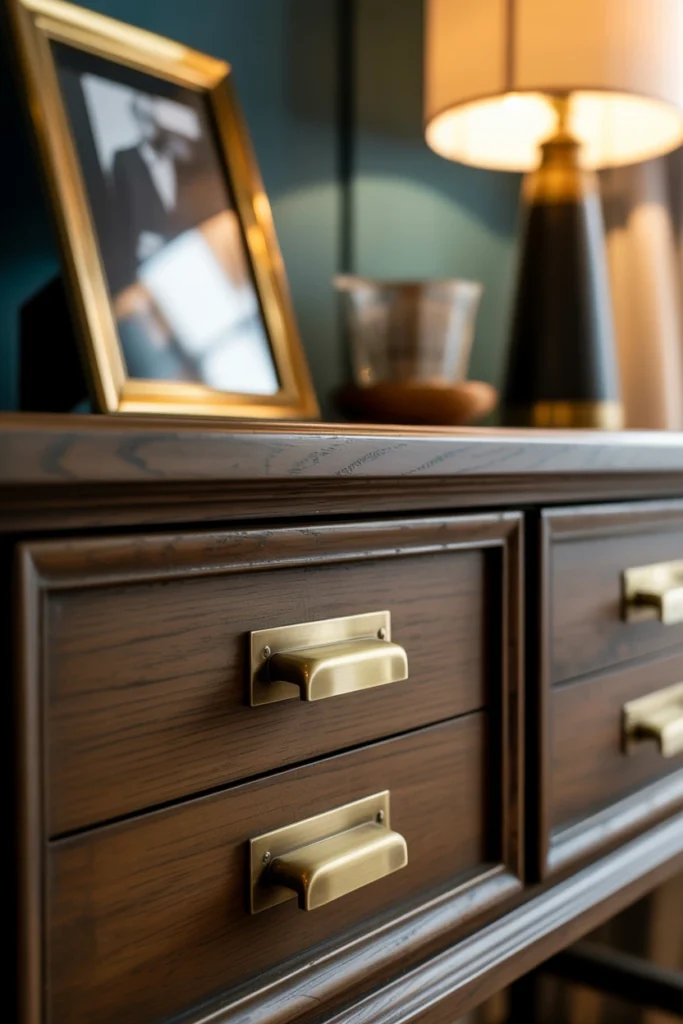
Chrome or nickel hardware, common in contemporary furniture, reflects cold and bright rather than the warm glow a dark academia room depends on. This mismatch is especially visible on drawer pulls, lamp bases, and picture frames, where the metal finish sits in direct view. Cool metals pull attention away from the warm wood and leather tones established earlier.
Replace any chrome or nickel hardware with unlacquered brass or bronze, prioritizing unlacquered finishes that develop a natural patina rather than staying permanently shiny. Aim for at least three separate brass touchpoints in the room — hardware, a lamp base, and a frame — so the metal reads as a consistent thread rather than a single accident. This swap warms the entire color temperature of the room, and unlacquered brass specifically ages into a richer, more convincing antique look within a single year.
| Brass Finish | Maintenance Level |
| Unlacquered brass | Develops patina, needs no upkeep |
| Lacquered brass | Stays shiny, needs no upkeep |
| Antiqued brass | Pre-aged, stays consistent |
| Polished brass | Requires regular polishing |
Build a Scholarly Furniture and Bookshelf Story
This section covers the furniture and display choices that turn a moody color palette into a room with a genuine library identity. These pieces carry most of the visual storytelling in a dark academia living room.
9. Install a Floor-to-Ceiling Bookshelf Wall
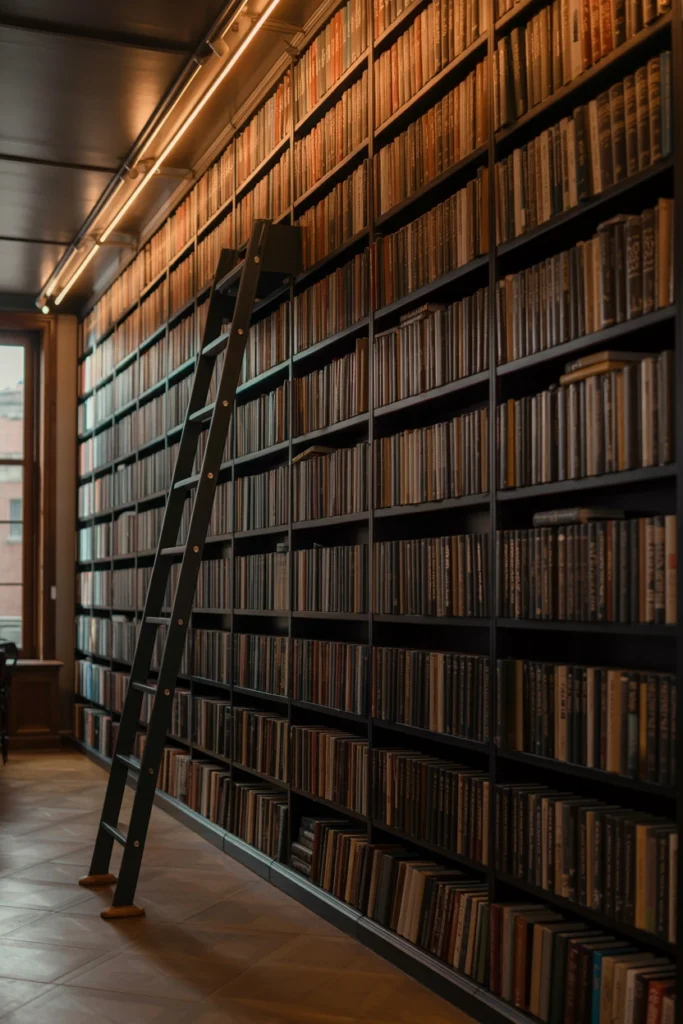
Short bookshelves under 6 feet tall leave a visible gap of empty wall above them, which breaks the enclosed, book-lined atmosphere central to this style. That gap draws the eye upward to bare wall instead of downward into the shelves, undercutting the room’s sense of scale and permanence. Rooms with shorter shelving consistently photograph as less finished.
Build or install shelving that runs from baseboard to at least 90% of ceiling height, using adjustable shelf brackets spaced no more than 32 inches apart to prevent sagging under book weight. Fill shelves to roughly 80% capacity rather than 100% — fully packed shelves look cramped, while an 80% fill leaves room for the vignettes covered in Tip 12. This height change makes the ceiling feel taller by association, and it also gives the room the enclosed, cocoon-like feeling that defines a true library space.
| Shelf Height | Visual Effect |
| Under 5 feet | Reads as a bookcase, not a library |
| 5–7 feet | Moderate library feel |
| 7 feet to ceiling | Full library, enclosed feeling |
| Floor-to-ceiling | Maximum dark academia effect |
10. Mount a Rolling Library Ladder for Access

A tall bookshelf without a visible access method looks aspirational rather than functional, which undercuts the lived-in, well-used atmosphere dark academia depends on. Ladders left out of the design entirely also waste the strongest single visual signal of this style — few objects communicate “library” as instantly as a rolling ladder. This gap is easy to miss because the shelf itself still looks correct from a distance.
Mount a rolling ladder track along the top of the bookshelf, using a wall-mounted or ceiling-mounted rail system rated for at least 250 pounds. Position the ladder itself against the shelf when not in use, rather than storing it elsewhere, so it reads as an active object rather than decoration. This single addition signals genuine library function rather than a themed room, and it gives visitors an obvious, tactile detail to notice within seconds of entering.
| Ladder Type | Weight Capacity Needed |
| Wall-mounted rail | 250+ lbs |
| Ceiling-mounted rail | 300+ lbs |
| Rolling floor ladder | 200+ lbs |
| Folding step ladder | 150+ lbs |
11. Group Vintage Leather Armchairs Near the Window
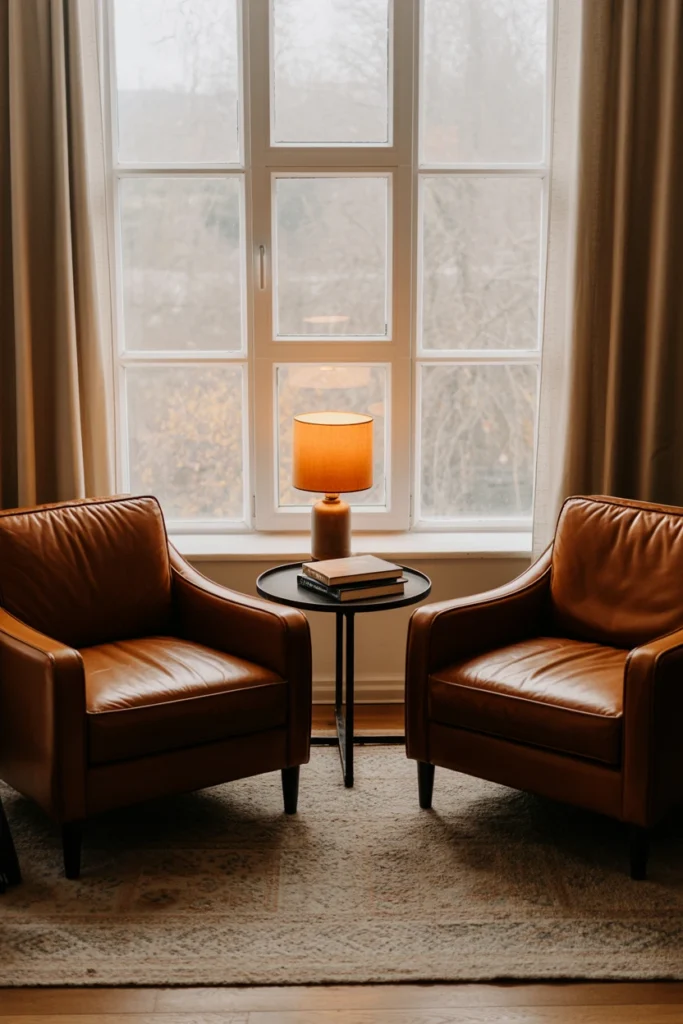
A single reading chair placed alone in a corner reads as an afterthought rather than a designed seating zone, especially in a style built around the idea of a shared study or salon. One chair also limits the room’s function to solitary reading, missing the social, conversational atmosphere dark academia interior design typically evokes. This is one of the most common layout mistakes in smaller living rooms.
Position two matching or complementary leather armchairs facing each other at a slight angle, roughly 6–8 feet apart, near the room’s largest window for natural reading light during the day. Add a small round side table between them, sized between 18 and 22 inches in diameter, to hold a lamp and a stack of books. This grouping creates an instant reading nook that functions for both solo use and conversation, and it makes the window itself a design feature rather than an unused source of daylight.
| Chair Spacing | Function |
| Under 4 feet apart | Feels cramped, avoid |
| 6–8 feet apart | Ideal conversation distance |
| 9–10 feet apart | Comfortable but less intimate |
| Facing same direction | Reads as row seating, avoid |
12. Display Globes and Scientific Instruments as Decor

Empty shelf space left over from the 80% fill rule in Tip 9 needs deliberate objects, or it reads as unfinished rather than curated. Generic decorative objects — mass-produced vases or plain candles — fail to reinforce the scholarly, exploratory identity this style depends on. Shelves filled only with books and nothing else also lack the visual variety needed to hold attention.
Add one vintage or vintage-style globe between 8 and 12 inches in diameter, plus at least two smaller instruments such as a brass compass, magnifying glass, or telescope, distributed across two or three shelves rather than clustered in one spot. Choose objects with visible age — brass with light tarnish, leather with worn corners — over anything that looks factory-new. This object layer gives the shelves a collected-over-time quality that books alone cannot achieve, and it consistently becomes the detail visitors comment on first.
| Object Type | Ideal Size Range |
| Desktop globe | 8–12 inches diameter |
| Brass compass | 3–5 inches diameter |
| Magnifying glass | 6–8 inches handle to lens |
| Telescope (decorative) | 12–18 inches length |
13. Create a Dedicated Reading Nook Corner
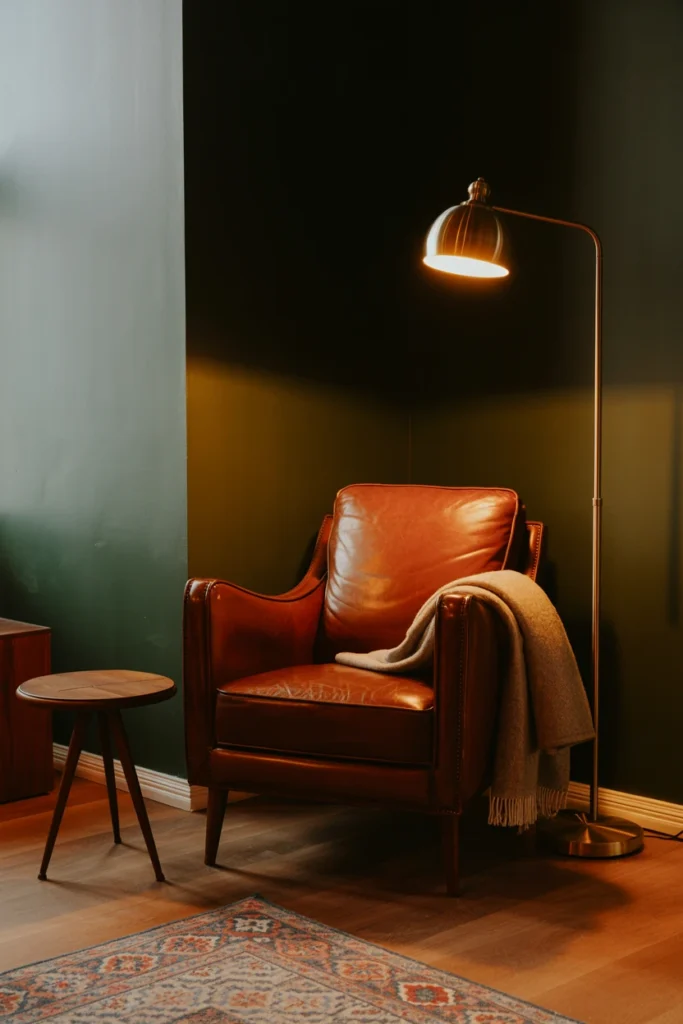
A living room built entirely around shared seating, without one clearly defined solo reading spot, misses a core function of the dark academia aesthetic. Without this dedicated corner, the armchairs from Tip 11 end up serving only social use, and the room loses the quiet, personal-study atmosphere the style is meant to provide. This gap is most common in open-plan layouts where every zone blends into the next.
Dedicate one corner, at minimum 5 feet by 5 feet, to a single armchair, a floor lamp, and a small side table, positioned at a slight angle away from the room’s main sightline. Add a wool or knit throw blanket in a solid dark tone draped over the chair arm to reinforce the corner as a distinct zone. This separation gives the room two clear moods — social and solitary — within the same footprint, and it turns an underused corner into the most photographed spot in the house.
| Nook Minimum Size | Furniture Included |
| 4×4 feet | Chair and small table only |
| 5×5 feet | Chair, table, and floor lamp |
| 6×6 feet | Chair, ottoman, table, lamp |
| 7×7 feet+ | Full nook with small shelf |
Style Your Dark Academia Living Room’s Finishing Touches
This section covers the layered textiles and surface styling that complete the room after the structural and furniture decisions are in place. These details carry most of the room’s tactile richness.
14. Layer a Persian or Oriental-Style Rug
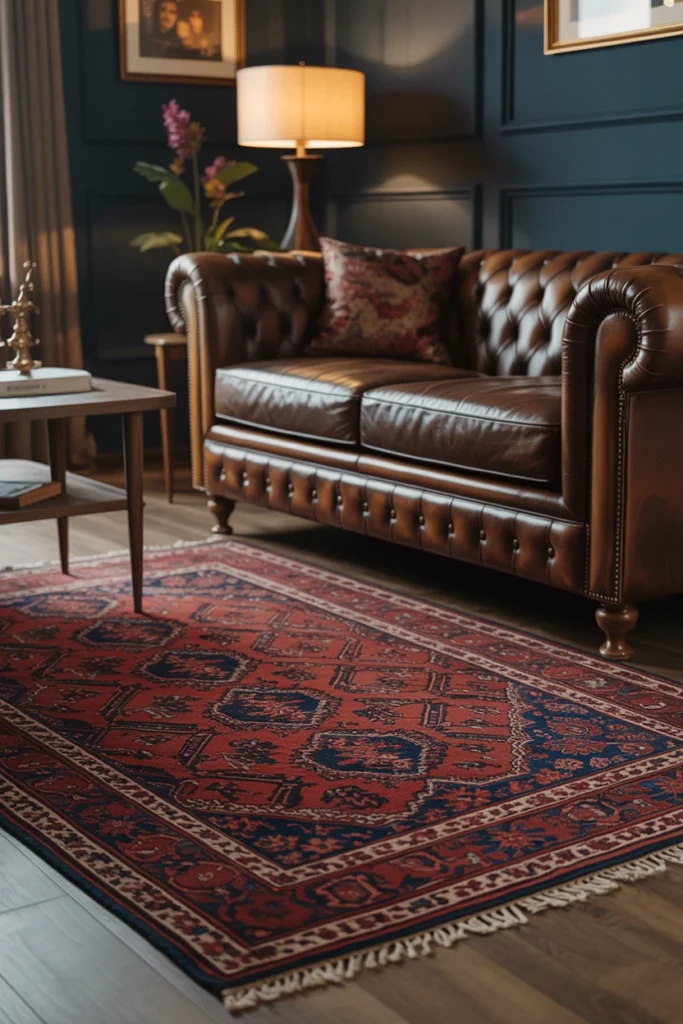
Bare wood floors or a single plain rug leave the room feeling incomplete, even after every wall and furniture decision from earlier tips is finished. Flat flooring provides no pattern or color complexity underfoot, which breaks the layered richness established everywhere else in the room. This gap is most visible directly in front of the main seating area.
Choose a Persian, Oriental, or Turkish-style rug with a predominantly red, navy, or deep gold base, sized so all four furniture legs of the main seating group sit on it. For a standard living room, this typically means a rug between 8×10 and 9×12 feet. Layering a smaller vintage-style rug at a slight angle on top of a larger neutral jute rug adds visible depth without doubling the cost of one large antique piece.
| Room Size | Recommended Rug Size |
| Small apartment living room | 6×9 feet |
| Standard living room | 8×10 feet |
| Large living room | 9×12 feet |
| Open-plan living area | 10×14 feet |
15. Hang Heavy Velvet Curtains in Deep Tones
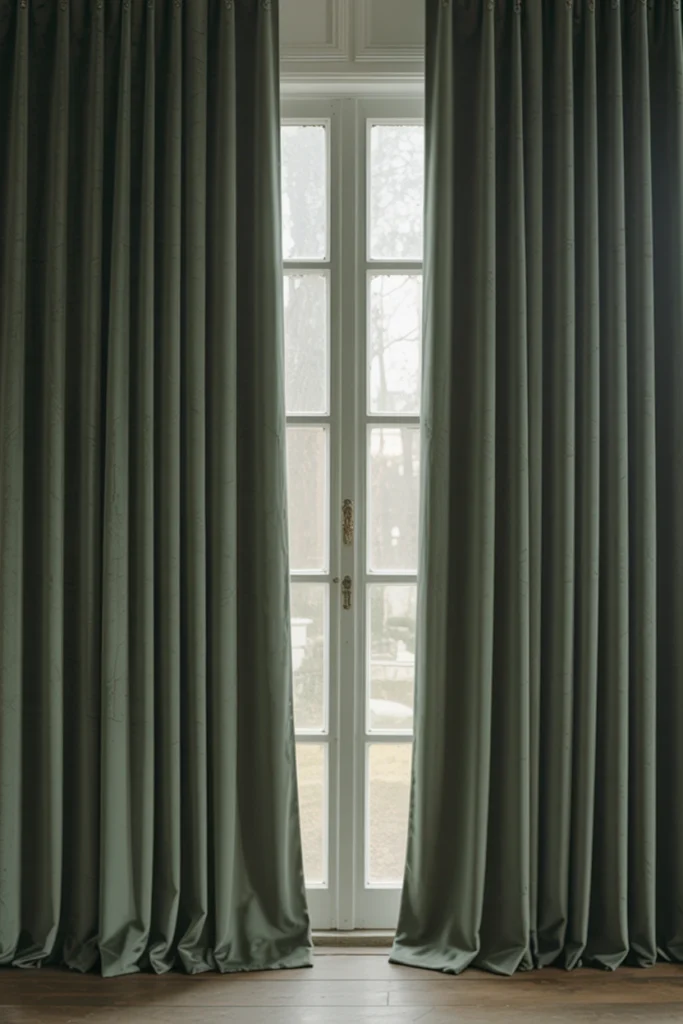
Light, sheer curtains let in flat daylight that works against the moody atmosphere every earlier tip has been building. Sheer fabric also fails to block outside light in the evening, which competes with the layered lamp lighting from Tip 2 and flattens the room’s contrast. This mismatch is especially noticeable on the room’s largest window.
Install floor-length velvet curtains in a color matching or slightly darker than the wall paint, mounted on a rod extending at least 6 inches beyond each side of the window frame. Choose curtains with a fullness ratio of at least 2 to 1 — meaning the fabric width is double the rod width — so the folds create visible shadow and texture when closed. This heavier fabric controls both light and sound, and the deep folds add another layer of the shadow and depth the entire room is designed around.
| Curtain Fullness Ratio | Visual Result |
| 1.5:1 | Flat, minimal folds |
| 2:1 | Standard fullness, visible folds |
| 2.5:1 | Rich, deep folds |
| 3:1 | Maximum drama, formal rooms |
16. Style Coffee Tables With Stacked Vintage Books

An empty or minimally styled coffee table looks unfinished next to a fully dressed bookshelf and reading nook, creating an inconsistent level of detail across the room. A single decorative tray or candle alone lacks the collected, scholarly quality every other surface in the room now carries. This inconsistency is one of the fastest ways a room reads as half-finished.
Stack 3 to 5 hardcover books with worn or leather-bound spines, arranged largest to smallest from bottom to top, and top the stack with one small object such as a brass magnifying glass or a small potted plant. Choose books with neutral or dark-toned spines — avoid bright modern dust jackets, which clash with the muted palette. This stack becomes a low-effort focal point that ties directly back to the bookshelf wall, and it gives the coffee table a sense of use rather than pure display.
| Book Stack Height | Visual Weight |
| 2 books | Too minimal, looks incomplete |
| 3–5 books | Ideal balanced stack |
| 6–8 books | Bold, works on large tables |
| 9+ books | Risks looking cluttered |
Establish Long-Term Dark Academia Maintenance Habits
This section covers the ongoing habits that keep a dark academia living room from sliding into either clutter or staleness over time. These are the tips that protect the investment made in every earlier step.
17. Rotate Seasonal Accents to Keep the Room Fresh
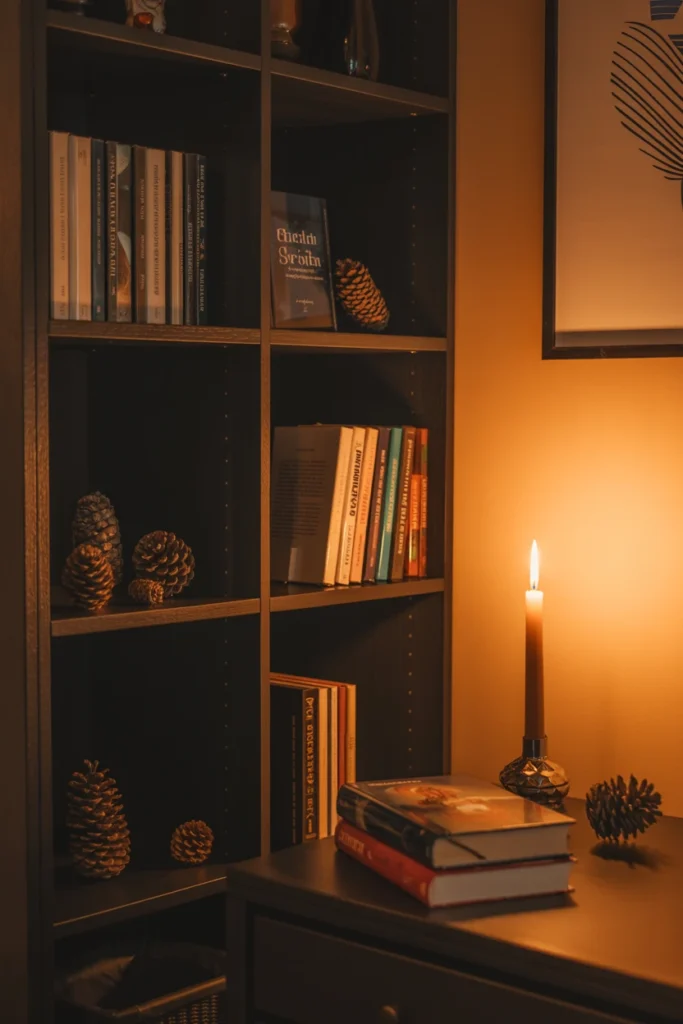
A dark academia room styled once and never touched again gradually starts to look static rather than lived-in, despite the collected aesthetic it is meant to project. Static styling contradicts the core idea that this room belongs to someone actively reading, collecting, and using the space. Visitors notice when the same three books have sat in the same position for over a year.
Swap 15–20% of displayed objects every season — rotate in seasonal candles, a different book stack, or a small potted plant depending on the time of year. Keep a small box of rotation objects in a closet so the swap takes under 15 minutes each season rather than requiring new purchases. This small, consistent habit keeps the room looking actively curated, and it also gives you a natural, low-cost reason to shop for new vintage pieces throughout the year.
| Rotation Frequency | Effort Required |
| Monthly | High effort, high freshness |
| Seasonal (4x/year) | Balanced effort and freshness |
| Twice yearly | Low effort, moderate freshness |
| Never | Room reads as static over time |
18. Limit Clutter by Curating Displayed Objects
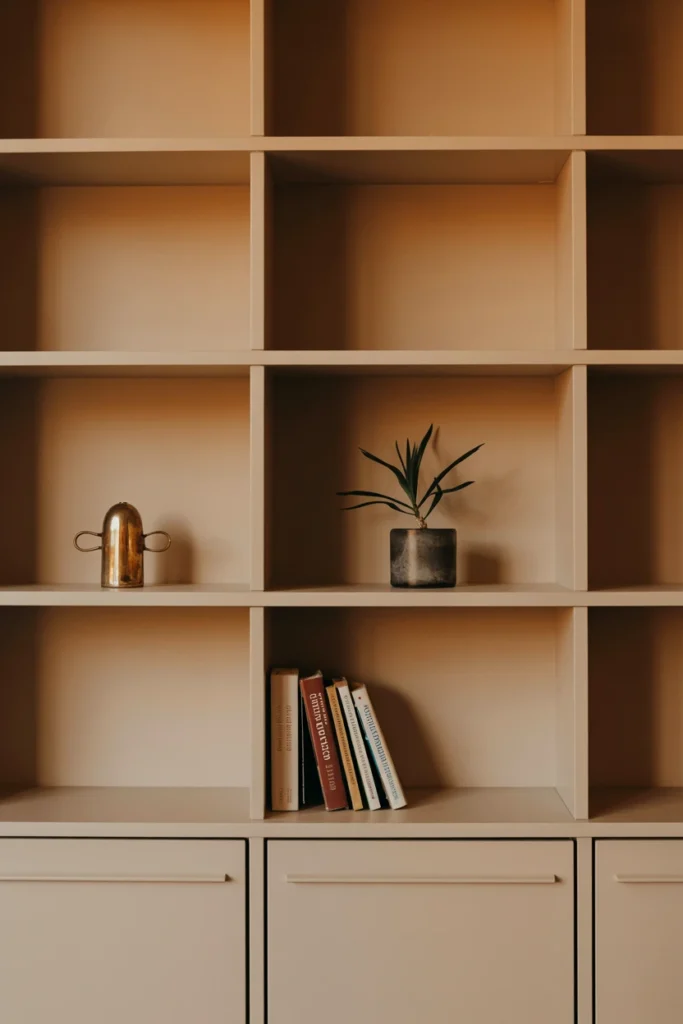
The layered, collected style of dark academia decor is often mistaken for permission to display everything at once, which pushes the room past curated and into cluttered. Too many small objects on every surface eliminate the negative space needed for the eye to rest, undoing the careful shelf-fill ratio established in Tip 9. This is the single most common mistake in dark academia rooms that have been decorated for several years.
Limit each shelf or surface to no more than 3 displayed objects grouped together, and remove one item every time a new one is added to maintain that ceiling. Walk the room once a month and remove anything that has not been touched, read, or repositioned in the past 90 days. This limit keeps every remaining object visible and intentional instead of lost in visual noise, and it makes new additions feel special rather than routine.
| Objects Per Surface | Visual Result |
| 1–2 objects | Minimal, spacious |
| 3 objects | Curated, balanced (ideal) |
| 4–5 objects | Busy, needs editing |
| 6+ objects | Cluttered, overwhelms the eye |
Common Dark Academia Living Room Mistakes That Kill the Mood
These mistakes appear consistently in rooms that have all the right pieces but still miss the intended atmosphere. Correcting them takes less effort than the original purchase mistake did.
| Mistake | Why It Hurts the Space | Better Alternative |
| Using cool white LED bulbs | Flattens warmth, reads as clinical | Switch to 2200K–2700K warm bulbs |
| Mixing chrome and brass hardware | Metals clash and read as unplanned | Commit to one metal finish throughout |
| Displaying brand-new paperback books | Bright covers break the muted palette | Use hardcover or leather-bound spines |
| Leaving walls bare above 5 feet | Loses the enclosed library feeling | Extend shelving or art to near-ceiling |
| Choosing a rug that’s too small | Furniture looks disconnected from floor | Size rug so all legs sit on it |
| Overcrowding every shelf to 100% | Looks cramped, no room for objects | Fill shelves to roughly 80% capacity |
| Using sheer or light-colored curtains | Lets in flat light, breaks the mood | Install heavy velvet in deep tones |
| Skipping a dedicated anchor piece | Room feels scattered, not curated | Choose one large dark wood piece first |
Dark Academia Living Room Ideas by Space Type
Small Apartment Living Room
A small apartment living room usually has under 200 square feet of open floor space and limited wall area for large furniture. The core constraint here is scale — every piece needs to earn its footprint twice over.
Key strategies for small apartment living rooms:
- Choose a single tall bookshelf instead of two shorter units to save floor space.
- Use a round coffee table under 36 inches to keep walking paths clear.
- Mount wall sconces instead of floor lamps to free up corner space.
- Layer one mid-size rug rather than two overlapping rugs.
- Hang a large mirror opposite the window to visually double the room’s depth.
Rental-Friendly Living Room
A rental-friendly living room requires every change to be fully removable without damaging walls, floors, or fixtures. The core constraint is reversibility, not budget.
Key strategies for rental-friendly living rooms:
- Use peel-and-stick wallpaper instead of paint for the accent wall.
- Choose freestanding bookshelves instead of built-ins.
- Add plug-in sconces with adhesive mounts instead of hardwired fixtures.
- Use tension rods for curtains instead of drilled brackets.
- Rely on furniture and rugs to carry the color palette instead of walls.
Open-Plan Living Room
An open-plan living room shares visual space with a kitchen or dining area, so the dark academia zone needs a clear boundary. The core constraint is preventing the moody palette from bleeding into or clashing with adjacent zones.
Key strategies for open-plan living rooms:
- Define the seating area with a rug that stops short of the kitchen zone.
- Use the bookshelf wall as a visual divider between zones.
- Keep adjoining zones in complementary neutral tones rather than matching darkness.
- Position the reading nook furthest from the kitchen’s brighter lighting.
- Repeat brass accents in the dining area to bridge the two zones visually.
Modern-Mixed Dark Academia Living Room
A modern-mixed living room combines existing contemporary furniture with dark academia elements rather than a full replacement. The core constraint is blending two aesthetics without either one looking out of place.
Key strategies for modern-mixed living rooms:
- Keep clean-lined modern sofas but reupholster in velvet or leather.
- Pair a modern glass coffee table with a traditional book stack on top.
- Use one dark academia accent wall while keeping other walls neutral.
- Introduce brass accents gradually through lighting before furniture.
- Limit vintage objects to two or three well-chosen pieces rather than many.
Frequently Asked Questions
What is a dark academia living room supposed to look like?
A dark academia living room looks like a moody, book-filled study with deep wall colors, dark wood furniture, and warm layered lighting. The core visual identity comes from charcoal or forest green walls paired with leather seating and floor-to-ceiling bookshelves. Brass hardware and velvet textiles round out the palette. The overall effect should resemble an old university library more than a modern apartment.
What colors should I avoid in a dark academia living room?
Bright white, pastel, and cool gray tones work against the dark academia palette and should be avoided on walls and large furniture. These colors reflect too much light and flatten the shadow and depth this style depends on. Chrome and nickel metal finishes also clash with the warm brass tones typically used throughout the room. Stick to charcoal, forest green, burgundy, and navy as your base palette.
How do I start a dark academia living room on a budget?
Start with paint, since a charcoal or forest green accent wall costs under $100 and creates the single biggest visual shift. Thrift stores and estate sales are reliable sources for leather chairs, hardcover books, and brass objects at a fraction of retail price. Swap out lighting bulbs to a warmer color temperature before buying new fixtures. These three changes alone shift a generic room noticeably toward the dark academia aesthetic.
How do I do dark academia in a small apartment?
Focus on one tall bookshelf and one accent wall rather than trying to darken every surface in a small space. Choose furniture with a smaller footprint, like a round coffee table and two compact armchairs instead of a full sectional. Wall-mounted lighting saves floor space that floor lamps would otherwise take up. A large mirror opposite the main window helps counteract the visual weight of dark walls in a tight footprint.
How do I choose between charcoal and forest green walls?
Choose charcoal for a more formal, library-like atmosphere and forest green for a warmer, more organic feel. Charcoal pairs especially well with oxblood leather and brass, while forest green pairs naturally with cognac leather and mahogany wood. Rooms with less natural light generally read better in charcoal, since forest green can appear muddy in low light. Test both colors with a large sample swatch before committing to a full wall.
How often should I refresh a dark academia living room?
Rotate 15–20% of displayed objects seasonally to keep the room from feeling static, which takes under 15 minutes each time. Major elements like paint, curtains, and furniture typically only need attention every 3–5 years in this style, since patina and wear actually improve the aesthetic. A monthly walkthrough to remove unused clutter keeps the space curated between seasonal rotations. This style ages well compared to trend-driven decor that requires frequent full updates.
Does dark academia work in a room with little natural light?
Dark academia actually performs well in low-light rooms, since the aesthetic relies on warm artificial lighting rather than bright daylight. Layered lamp lighting at 2200K to 2700K creates the intended mood regardless of window size or orientation. Rooms with little natural light should lean toward forest green being avoided in favor of charcoal, which stays richer in low light. Heavy curtains also matter less functionally here, though they still add textural value.
How much does it cost to decorate a dark academia living room?
A budget dark academia refresh using paint, thrifted furniture, and swapped lighting typically costs between $500 and $1,500. A mid-range room with one new leather chair, a rug, and curtains generally runs $2,000 to $4,000. A full room with custom built-in bookshelves and antique furniture can exceed $8,000. Most of the visual impact comes from paint and lighting, which sit at the lower end of that range.
How do I keep dark academia furniture looking good long-term?
Condition leather furniture every 6 to 12 months with a leather-specific conditioner to prevent cracking and maintain its patina. Keep velvet upholstery out of direct sunlight, which fades deep colors faster than any other fabric in the room. Dust brass accents with a soft cloth rather than polish if you want the unlacquered patina to keep developing naturally. Wood furniture benefits from a beeswax polish twice a year to maintain its depth of color.
Conclusion
A dark academia living room comes together through layered color, warm lighting, and dark wood furniture working as one system rather than isolated purchases. Start with the wall color and lighting temperature before buying a single piece of furniture. Paint one wall in charcoal or forest green this week and switch your existing bulbs to a warmer temperature to see the shift immediately.
Lasting results in this style come from consistent seasonal rotation and monthly clutter checks, not a single decorating weekend. A room built on these habits only grows richer with time, gaining the exact aged, collected character the dark academia aesthetic is designed to achieve.