
A whimsigoth living room transforms a flat, generic space into a layered world of jewel tones, antique furniture, and candlelit ambiance. This style creates a room that feels collected over years, not bought in a single weekend trip. This guide delivers 25 proven strategies for building that look from the ground up, room by room, layer by layer. Start with your color palette before you buy a single piece of furniture.
Before You Begin: 4 Foundation Steps for a Whimsigoth Living Room
Every whimsigoth room starts with structural decisions, not decorative ones. Get these four foundation steps right and every layer you add afterward reads as intentional instead of chaotic.
1. Choose Your Base Whimsigoth Color Palette First
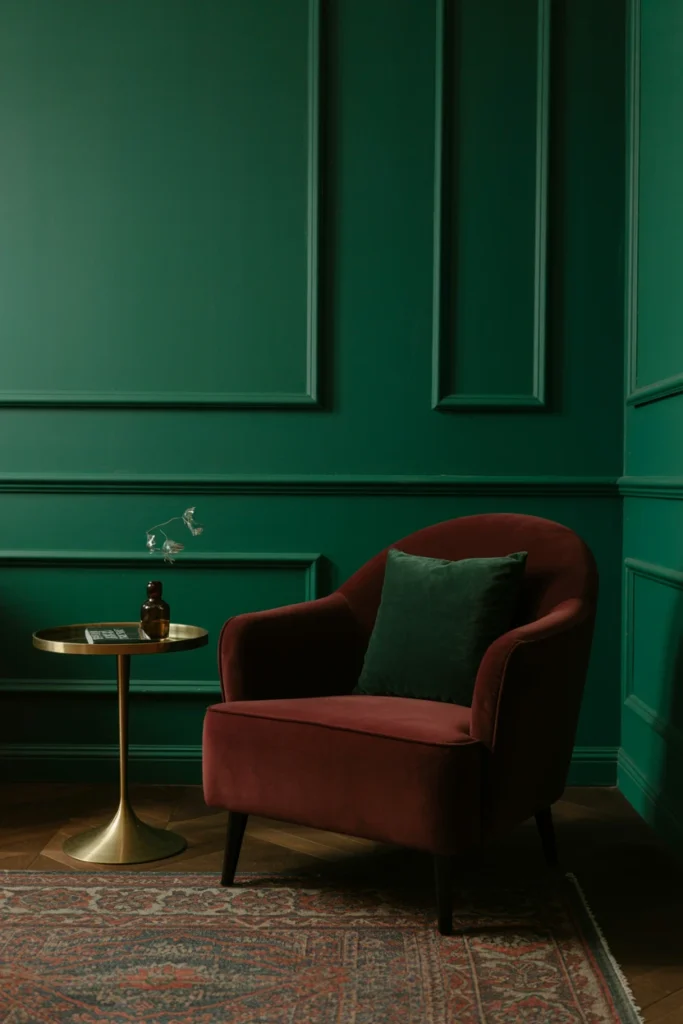
A random mix of dark colors reads as cluttered, not curated. Whimsigoth rooms fail most often because homeowners layer jewel tones without first locking in a single dominant base color, leaving the room visually competing with itself. A defined palette instantly makes every future purchase easier and keeps the room cohesive as it grows.
Start by picking one dominant jewel tone — emerald, burgundy, or plum — to cover 60% of the room. Use black and aged brass as the two supporting neutrals, applied at roughly 30% and 10% respectively. This single decision prevents the “too much at once” problem that undermines most first attempts at the style.
| Palette Role | Color and Coverage |
| Dominant | Emerald, burgundy, or plum — 60% of the room |
| Grounding neutral | Matte black — 30% of the room |
| Metallic accent | Aged brass or antique gold — 10% of the room |
| Textile lift | Cream or bone linen — used on 2–3 soft pieces |
2. Anchor the Room With One Dark Statement Wall
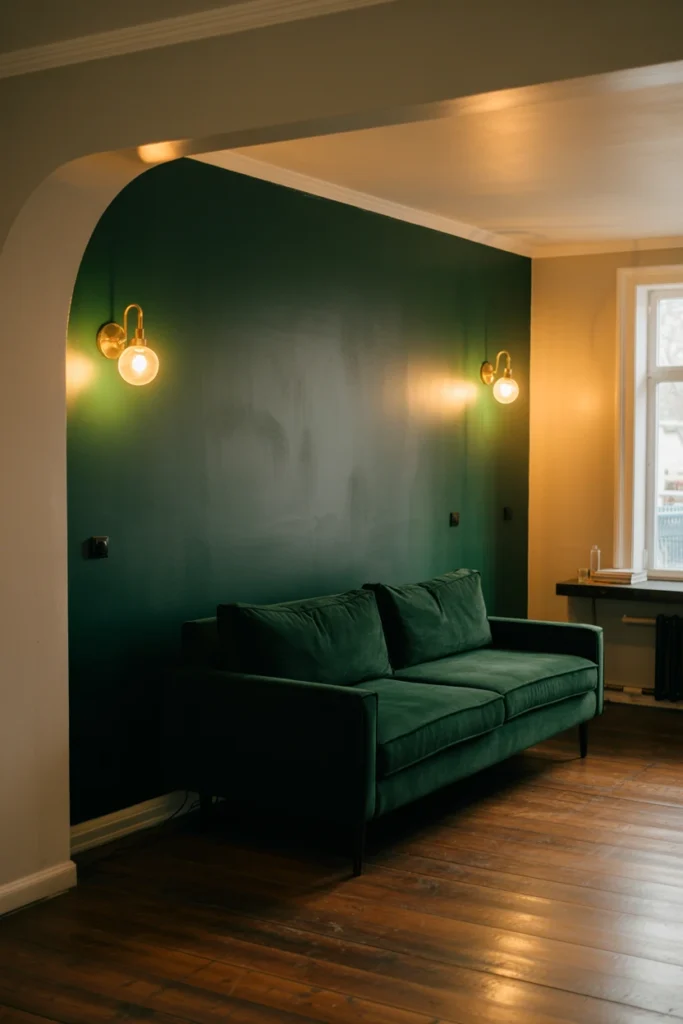
A room with no visual anchor feels flat no matter how much decor sits inside it. Without one wall committed to deep color, every jewel-toned accessory you add competes for attention instead of relating back to a shared source. One dark wall gives the entire room a single point of gravity that everything else can play off of.
Paint the wall behind your primary seating piece in a matte, deep hue like bottle green or aubergine — not the entry wall. Use a matte or eggshell finish, since gloss finishes read as modern rather than antique. This single wall becomes the backdrop that makes brass, velvet, and dark wood photograph and read as deliberate.
| Wall Finish | Effect on the Room |
| Matte | Reads as antique, absorbs light softly |
| Eggshell | Slight depth, still period-appropriate |
| Satin or gloss | Reads modern — avoid for this style |
| Chalk paint | Adds texture, ideal for plaster-look walls |
3. Map Out a Layout That Leaves Room for Layering
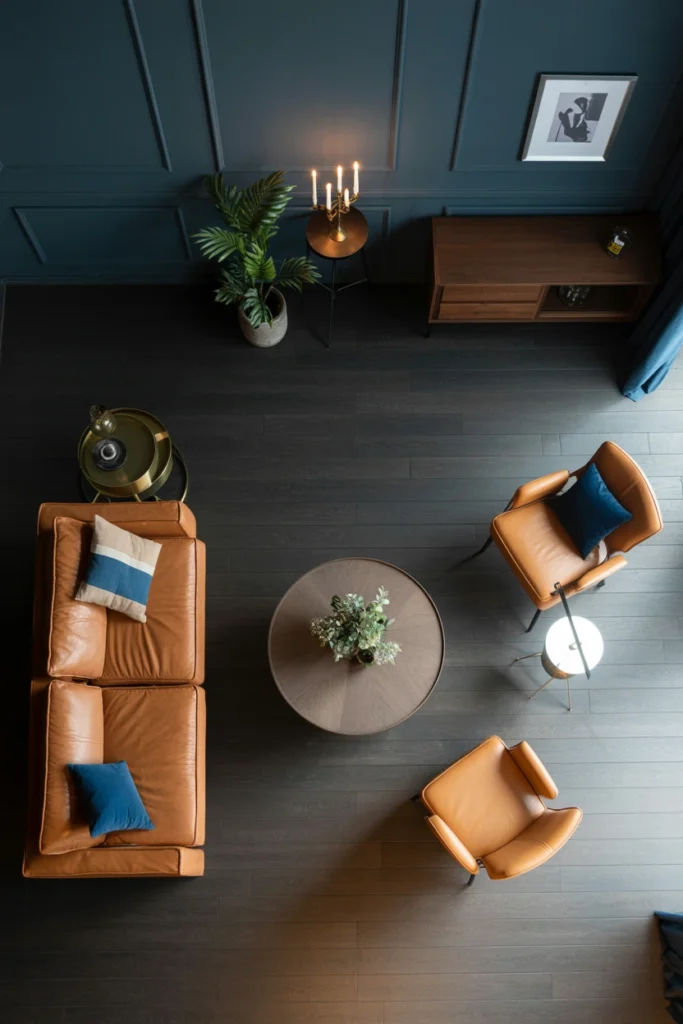
Whimsigoth rooms rely on layered surfaces, and a tightly packed layout leaves no space for that layering to happen. Furniture pushed flush against every wall eliminates the surface area needed for side tables, trays, and vignettes to breathe. Planning gaps into your layout now prevents a cramped, over-decorated result later.
Pull your sofa and chairs 4–6 inches off the wall to create shadow depth around each piece. Reserve at least one open corner, roughly 3×3 feet, for a floor-standing accent like a plant stand or candelabra. This gap becomes the exact spot where the room’s most memorable vignette usually ends up living.
| Layout Element | Minimum Space Needed |
| Sofa to wall gap | 4–6 inches |
| Open display corner | 3×3 feet |
| Coffee table to sofa | 14–18 inches |
| Walking path width | 30 inches minimum |
4. Set a Realistic Budget for Vintage Sourcing
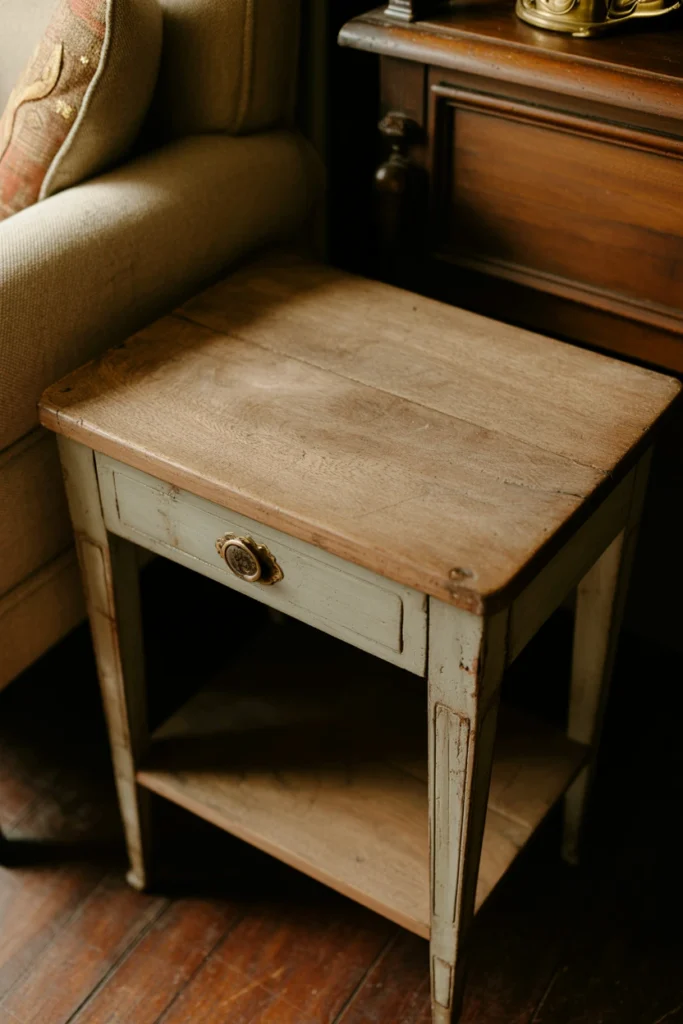
Whimsigoth decor depends on vintage and antique pieces, and new retail furniture rarely delivers the same patina. Buying everything new from a single retailer removes the mismatched, collected quality that defines this style at its core. Budgeting specifically for secondhand sourcing prevents the temptation to fill the room with matching new-furniture sets.
Allocate 40% of your total decor budget to thrifted or estate-sale furniture instead of retail purchases. Set a per-item cap of $150 for smaller antique pieces like side tables, mirrors, and lamps. This limit keeps you sourcing multiple smaller finds instead of one expensive statement piece that dominates the room.
| Budget Category | Suggested Allocation |
| Vintage furniture | 40% of total budget |
| New upholstery (sofa, chairs) | 35% of total budget |
| Lighting and hardware | 15% of total budget |
| Accessories and textiles | 10% of total budget |
Build a Moody Whimsigoth Color Palette
Color carries most of the emotional weight in a whimsigoth room. These strategies extend your foundation palette into every surface without letting the space tip into visual chaos.
5. Layer Three Jewel Tones Across the Room
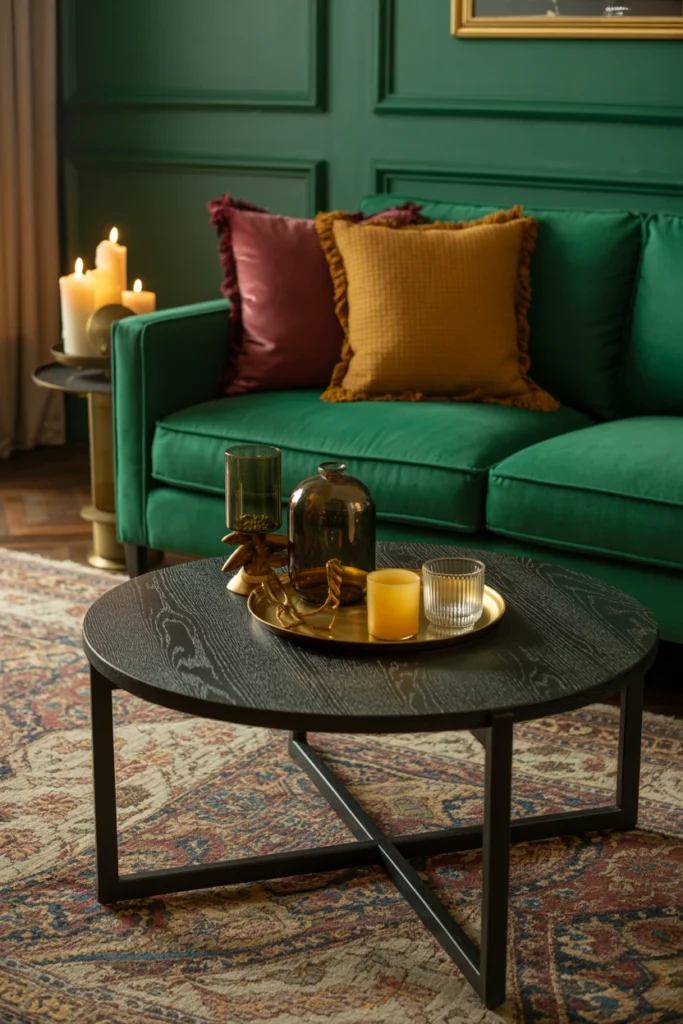
A single jewel tone applied everywhere reads as monochrome and flat. Whimsigoth rooms need contrast between saturated colors to feel layered instead of matched. Three tones, applied at different weights, create depth that a single color never achieves on its own.
Choose one dominant tone for large upholstery, a second for throw pillows and blankets, and a third for small accessories only. Keep the ratio at roughly 3:2:1 across those three tones. This structure keeps the palette rich without any single color overwhelming the others.
| Tone Role | Where It Appears |
| Dominant | Sofa, rug, or accent wall |
| Secondary | Pillows, throws, curtains |
| Accent | Vases, candle holders, book spines |
| Ratio | Roughly 3:2:1 across the room |
6. Use Black as a Grounding Neutral, Not an Accent
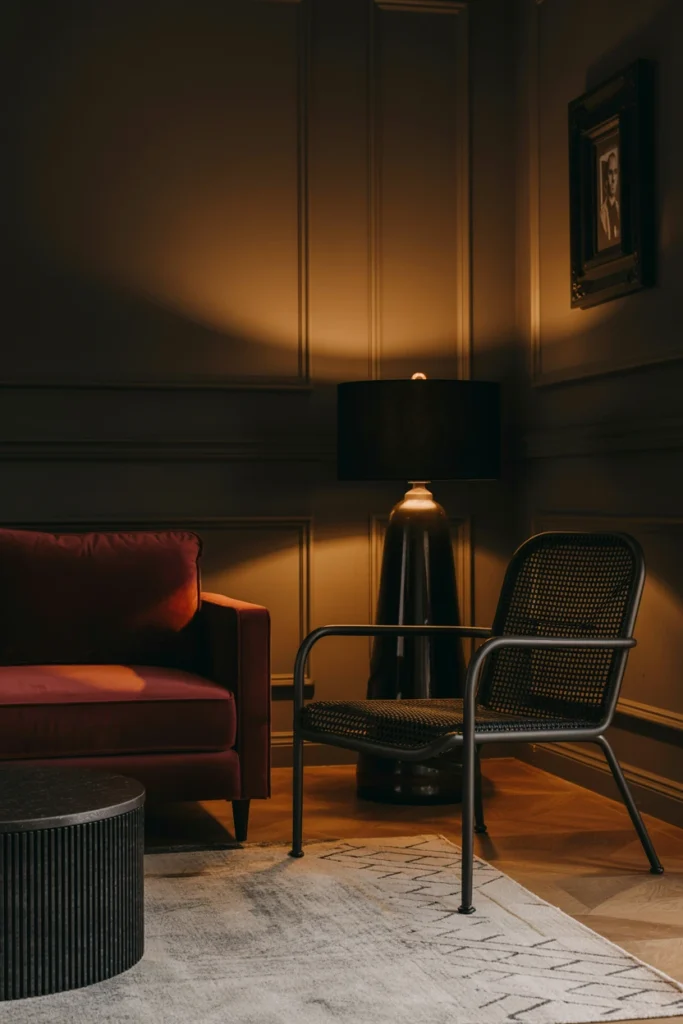
Treating black as a rare accent color leaves whimsigoth rooms feeling unfinished. Without a consistent dark neutral running through the space, jewel tones can start to feel disconnected from each other. Black used as a true structural neutral ties every colorful element back to the same visual foundation.
Apply black to at least three hard surfaces: a lamp base, a frame, and a piece of furniture hardware or legs. Use matte black finishes rather than glossy black for a period-correct, antique look. This repetition of black across unrelated objects is what makes a curated room read as cohesive at a glance.
| Black Element | Common Placement |
| Furniture legs or frames | Chairs, tables, shelving |
| Lighting fixtures | Sconces, lamp bases, chandeliers |
| Window hardware | Curtain rods, rings |
| Small accents | Picture frames, candle holders |
7. Add Brass and Aged Gold for Warmth
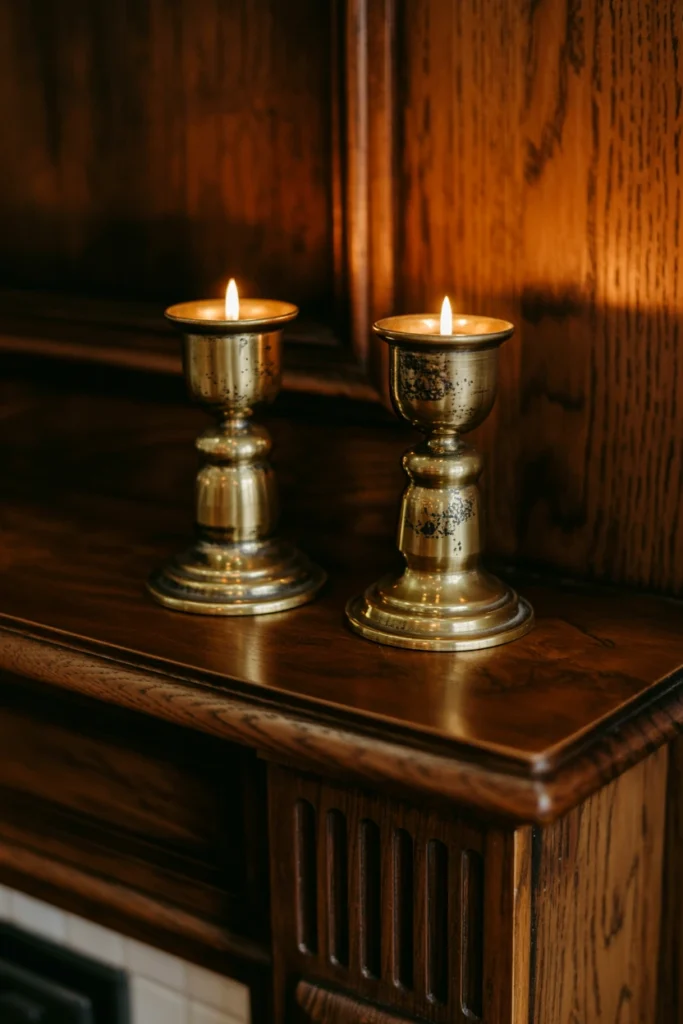
Dark palettes without a warm metallic can feel cold or heavy instead of rich. Cool-toned metals like chrome or silver clash with the antique warmth that defines whimsigoth interiors. A single consistent warm metal ties the room’s hardware together and keeps deep colors from feeling flat.
Choose aged or antique brass — not polished brass — for every visible metal fixture in the room, including lamps, frames, and hardware. Limit yourself to one metal finish across the entire space rather than mixing brass with silver. This single-metal rule is the fastest way to make a mismatched furniture collection feel intentional.
| Metal Finish | Whimsigoth Fit |
| Aged brass | Ideal — warm, antique patina |
| Antique gold | Ideal — softens dark palettes |
| Polished chrome | Avoid — reads too modern |
| Brushed nickel | Avoid — too cool-toned |
8. Balance Dark Walls With Cream Textile Accents
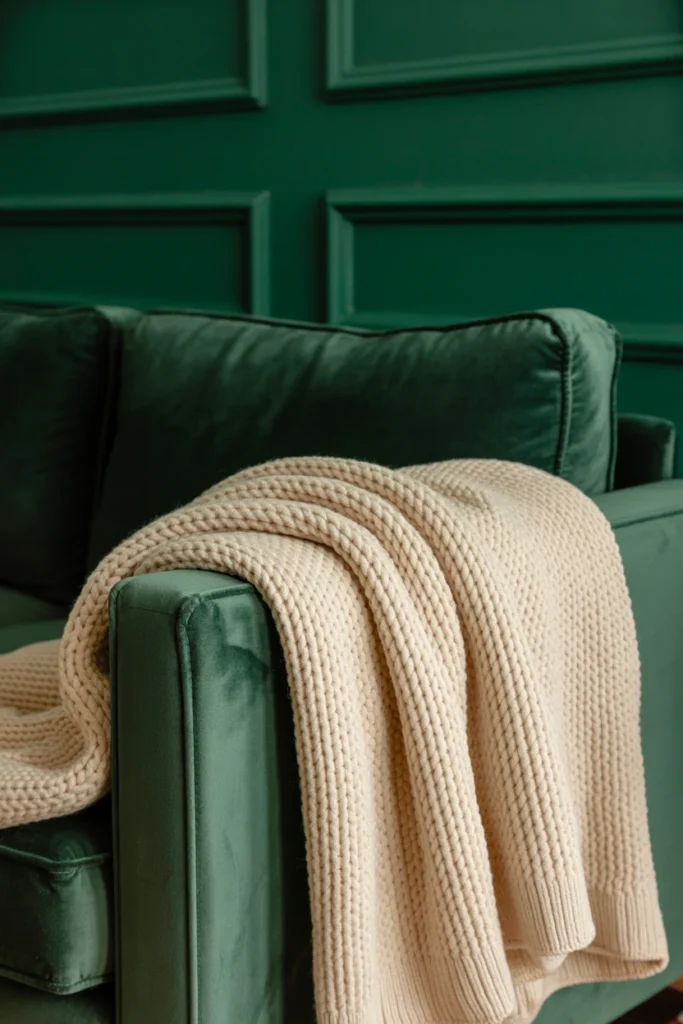
An entirely dark room without light contrast can feel heavy or cave-like rather than moody. Whimsigoth interiors rely on small pockets of lightness to keep the eye moving instead of settling into one dense block of color. Cream and bone textiles create that lift without breaking the palette’s overall depth.
Add cream or bone-colored textiles to 2–3 soft surfaces — a throw blanket, a set of pillow covers, or a rug border. Keep these light pieces to roughly 15% of the room’s total visible surface area. This small amount of contrast keeps dark walls from reading as oppressive under low lighting.
| Cream Accent | Suggested Coverage |
| Throw blanket | 1 per seating piece |
| Pillow covers | 2–3 per sofa |
| Rug with light border | Anchors the seating area |
| Total light-color coverage | Roughly 15% of room |
Layer Gothic Furniture and Vintage Finds
Furniture carries the structural gothic identity of the room. These strategies focus on shape, material, and sourcing rather than color.
9. Anchor the Room With an Antique Wood Piece
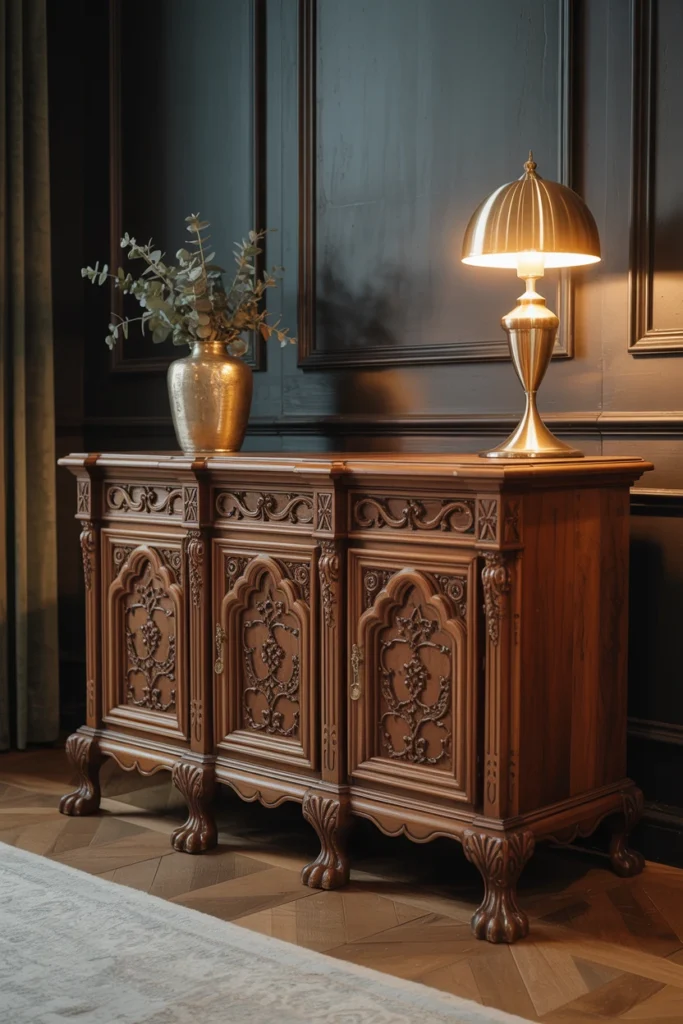
A room built entirely from new furniture lacks the age and history that whimsigoth style depends on. Without at least one genuinely old piece, the room’s other antique-styled items can start to look like obvious reproductions. One authentic antique wood piece grounds everything else in real history instead of imitation.
Source one substantial wood piece — a cabinet, sideboard, or bookcase — from an estate sale or antique shop rather than a retail furniture store. Look specifically for carved detailing or claw feet, both signature Victorian and gothic revival details. This single authentic piece raises the perceived age of every reproduction item placed near it.
| Piece Type | Where to Source |
| Carved sideboard | Estate sales, antique malls |
| Claw-foot cabinet | Auction houses, vintage shops |
| Wood bookcase | Thrift stores, online marketplaces |
| Price range | 80–400 depending on condition |
10. Choose a Velvet Sofa in a Saturated Hue
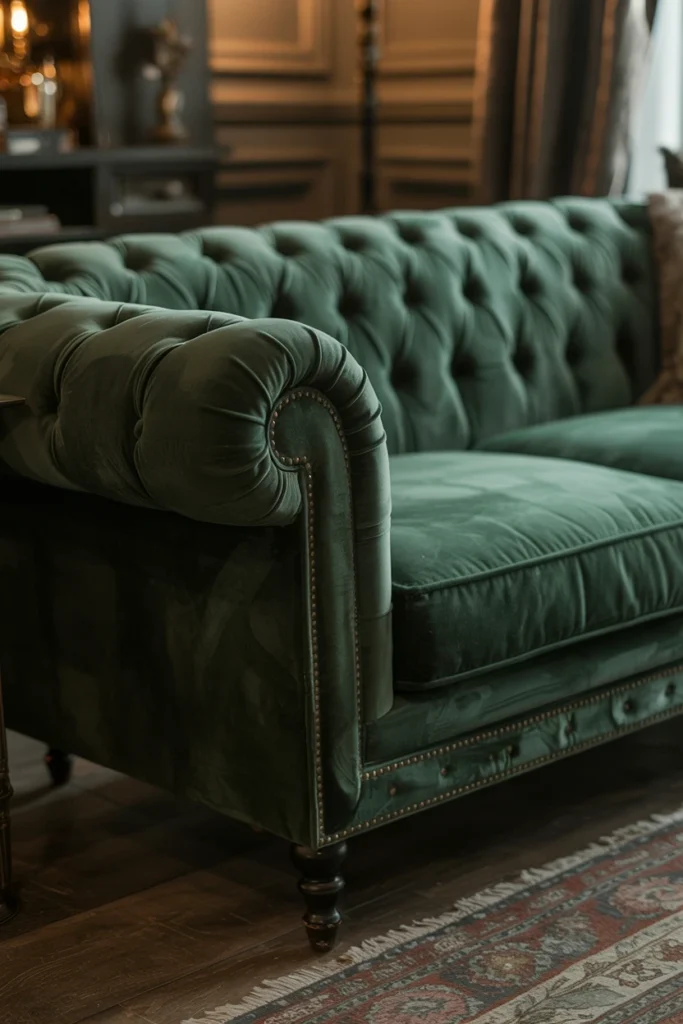
A neutral linen or cotton sofa undercuts the richness the rest of the room is built around. Fabric texture communicates just as much style as color, and flat cotton reads as casual rather than romantic or gothic. A velvet sofa in a deep, saturated hue becomes the single piece that sets the tone for the entire room.
Choose a tufted or channel-back velvet sofa in emerald, burgundy, or midnight blue as your primary seating piece. Prioritize a curved arm or rolled-arm silhouette over a straight modern frame. This shape detail alone shifts a sofa from generic to gothic-coded without changing the fabric or color at all.
| Sofa Detail | Whimsigoth Fit |
| Fabric | Velvet, saturated jewel tone |
| Arm style | Rolled or curved, not straight |
| Back style | Tufted or channel-back |
| Leg finish | Dark wood or black metal |
11. Mix Curved and Pointed Silhouettes Deliberately
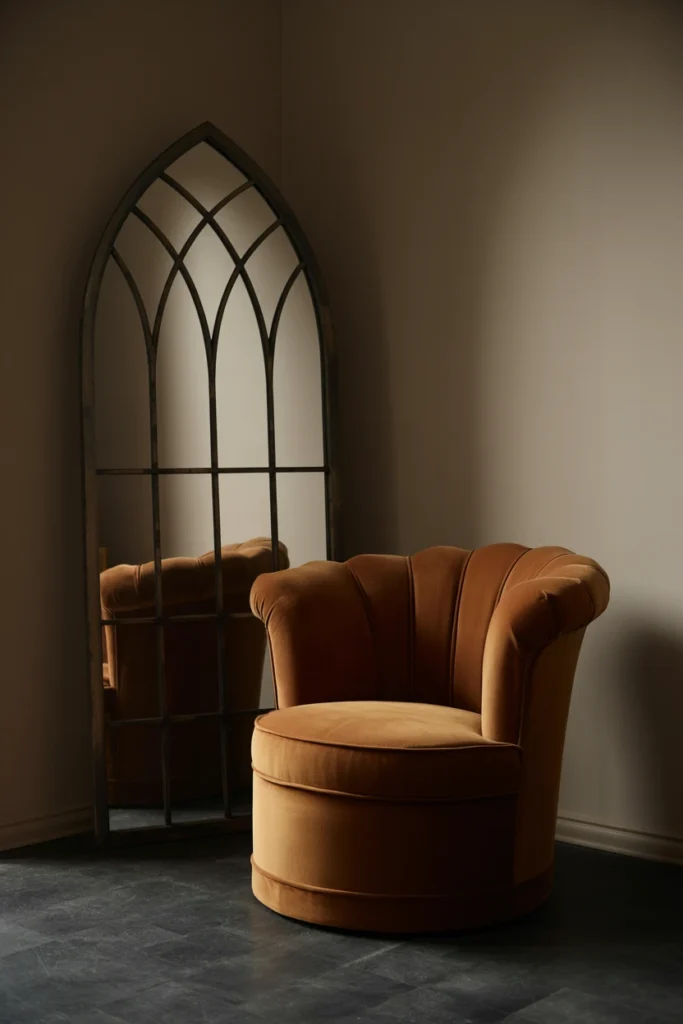
Furniture that shares one silhouette across every piece reads as a matched set, not a curated collection. Whimsigoth style depends on visual tension between soft, organic curves and sharp, gothic-arch points throughout the room. Deliberately mixing these two shape families creates the layered, collected feeling the style is known for.
Pair at least one curved piece — a rolled-arm chair or round side table — with one pointed piece, such as a gothic-arch mirror or candle sconce. Keep the ratio close to even rather than letting one silhouette dominate the room. This contrast is what separates whimsigoth from purely traditional gothic, which leans almost entirely on sharp angles.
| Silhouette Family | Example Pieces |
| Curved | Rolled-arm chairs, round tables, arched doorways |
| Pointed | Gothic mirrors, candle sconces, finials |
| Ideal ratio | Roughly 50/50 across the room |
| Avoid | An entire room of one silhouette family |
12. Source Mismatched Vintage Chairs Intentionally
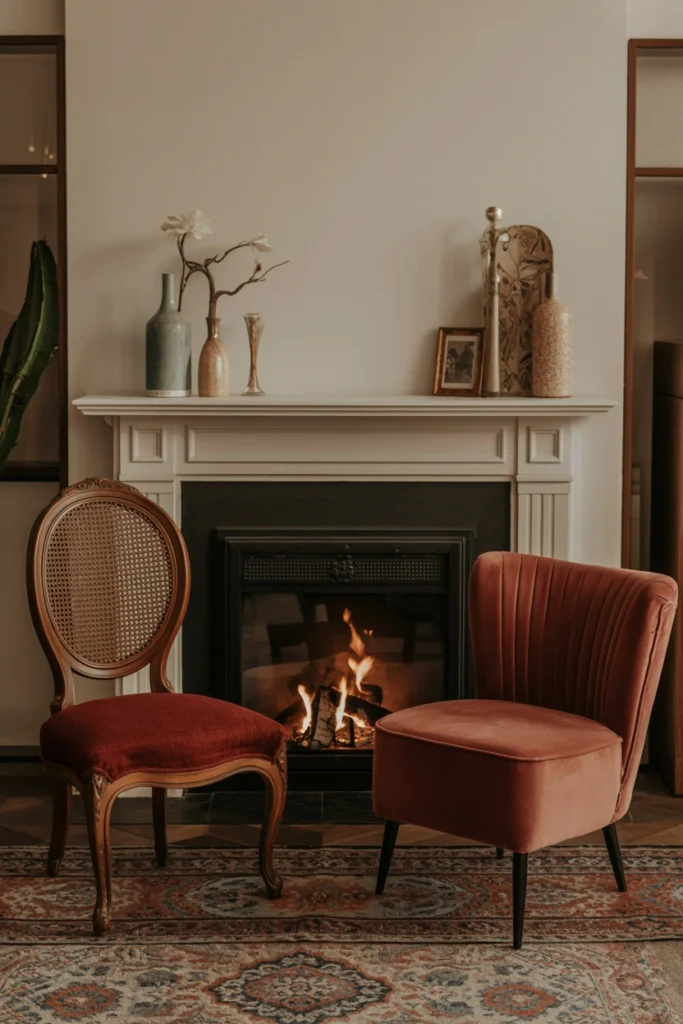
A matched dining or accent chair set immediately signals a single retail purchase rather than a collected room. Whimsigoth spaces rely on visible variety in furniture history to build the sense that the room developed over time. Sourcing chairs individually, rather than as a set, is one of the fastest ways to add that collected quality.
Buy two accent chairs from two different sources — different decades, finishes, or upholstery — rather than a matching pair. Unify them visually with a shared color family instead of a shared shape or maker. This single unifying color keeps mismatched chairs from feeling accidental instead of intentional.
| Chair Sourcing Rule | Reason |
| Buy individually, not as a set | Builds collected, layered look |
| Unify by color, not shape | Keeps mismatch intentional |
| Mix eras (e.g. Victorian + 1970s) | Adds visual history |
| Reupholster in shared fabric | Optional unifying step |
Add Witchy Textures and Botanical Accents
Texture and botanical styling give a whimsigoth room its tactile, lived-in character. These strategies focus on surfaces and small vignettes rather than furniture.
13. Layer at Least Three Distinct Textures Per Surface
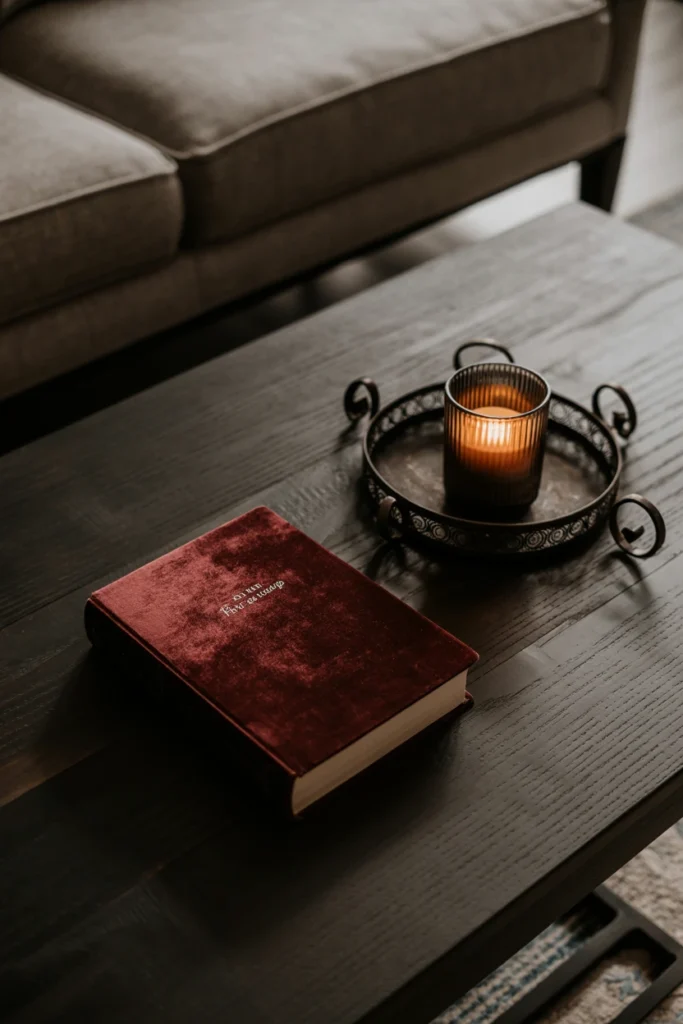
A surface with only one texture, like all-smooth glass or all-matte fabric, reads as flat and under-styled. Whimsigoth rooms depend on tactile contrast to feel rich even in photographs where texture can’t physically be touched. Layering multiple textures on every major surface is what separates a styled vignette from a cluttered one.
Combine at least three of the following on every styled surface: velvet, aged wood, cut glass, or dark metal. Avoid repeating the same texture twice within one vignette, even in a different color. This texture variety is what makes small tabletop groupings photograph as intentional rather than randomly placed.
| Texture Type | Example Materials |
| Soft | Velvet, worn leather, wool |
| Hard-smooth | Cut glass, ceramic, marble |
| Hard-rough | Aged wood, wrought iron, stone |
| Minimum per surface | 3 distinct textures |
14. Style Dried Florals Instead of Fresh Blooms
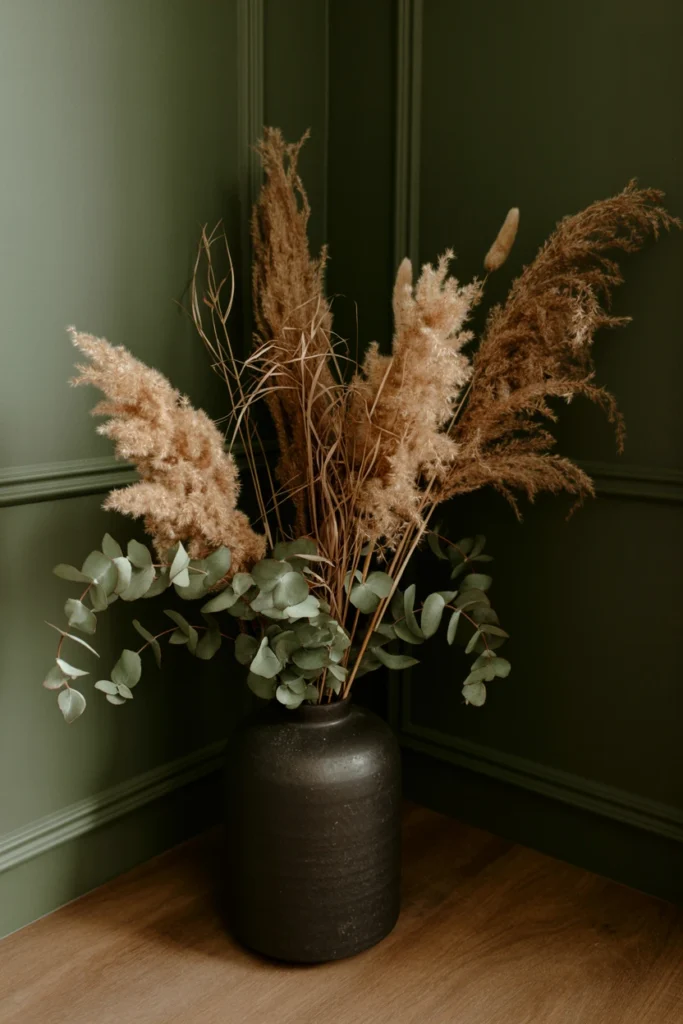
Fresh flowers wilt within a week and pull the room’s mood toward bright, cheerful, rather than moody and gothic. Bright fresh petals also clash visually with the deep, muted palette the rest of the room is built around. Dried florals hold both the color story and the aesthetic far longer than fresh arrangements ever could.
Fill one tall vase with dried pampas grass, eucalyptus, or bunny tail grass instead of a fresh bouquet. Choose stems in muted tan, rust, or deep green tones rather than bright dyed colors. This single dried arrangement can last 6–12 months without needing replacement or maintenance.
| Dried Botanical | Color Tone |
| Pampas grass | Warm tan, cream |
| Dried eucalyptus | Muted sage green |
| Bunny tail grass | Soft beige |
| Preserved roses | Deep burgundy, rust |
15. Group Apothecary Bottles on a Tray

Scattered small objects across a shelf or table read as clutter rather than a curated collection. Whimsigoth styling relies on intentional grouping to turn small, otherwise-random items into a cohesive vignette. Containing objects on a single tray instantly signals that the arrangement was chosen, not accumulated by accident.
Group 5–7 amber or dark glass apothecary bottles of varying heights on one brass or wood tray. Arrange them in a loose triangle, with the tallest bottle placed slightly off-center rather than dead center. This slight asymmetry is what keeps the grouping from reading as staged or overly formal.
| Grouping Element | Guideline |
| Bottle count | 5–7 pieces |
| Height variation | At least 3 different heights |
| Arrangement shape | Loose triangle, off-center peak |
| Tray material | Brass, dark wood, or aged metal |
16. Drape Vintage Textiles Over Furniture Edges
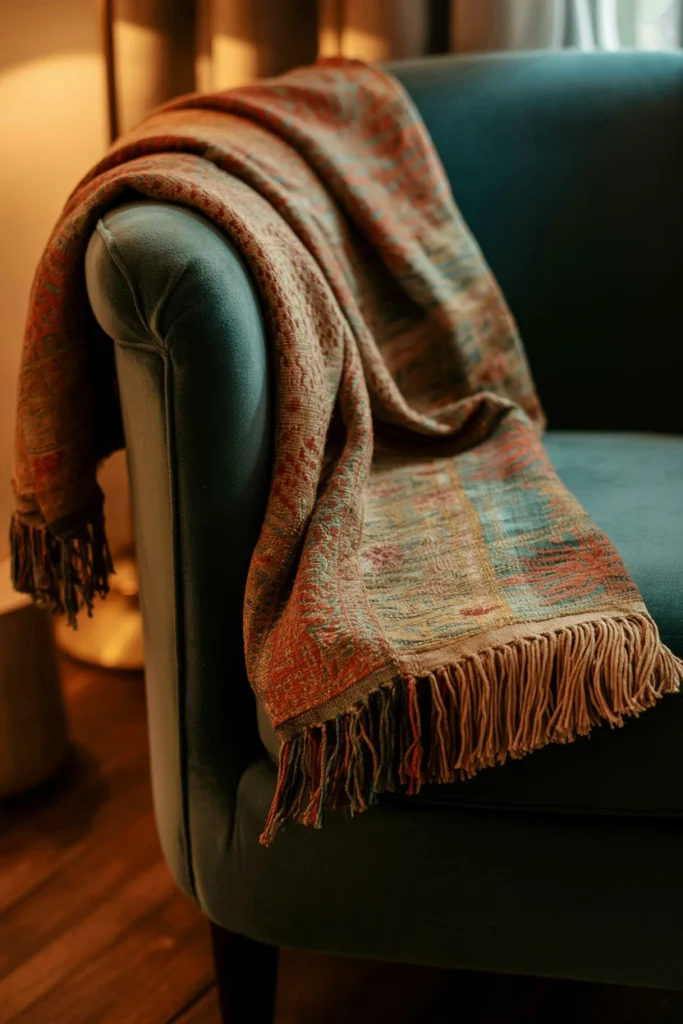
Furniture with sharp, exposed edges can feel stiff and overly new within a moody, collected room. A draped textile softens hard lines and adds the slightly imperfect, lived-in quality whimsigoth interiors depend on. This single styling move can update an otherwise plain chair or table without any additional purchase.
[IMAGE ALT: Vintage tapestry draped over the arm of a velvet chair] [credits: source]
Drape a vintage scarf, small tapestry, or fringed throw loosely over one arm of a chair or the edge of a console table. Let one corner hang slightly asymmetrically rather than folding it into a perfect rectangle. This deliberate imperfection reads as collected-over-time rather than freshly unpacked from a store.
| Drape Placement | Best Fabric Type |
| Chair arm | Fringed throw, small tapestry |
| Console table edge | Vintage scarf, table runner |
| Shelf edge | Lace or crochet trim |
| Fold style | Loose, one asymmetrical corner |
Style Whimsigoth Lighting and Ambiance
Lighting shapes the mood of a whimsigoth room more than any single furniture piece. These strategies focus on layering light sources and controlling color temperature.
17. Layer Three Light Sources at Different Heights
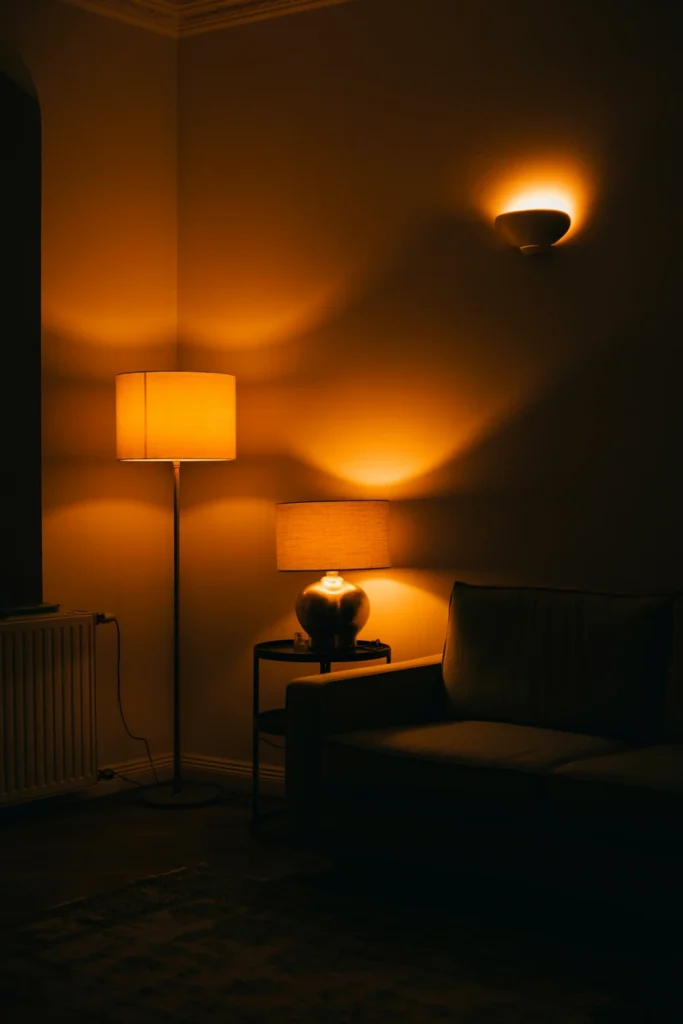
A room lit by a single overhead fixture flattens shadows and eliminates the moody depth whimsigoth style depends on. Uneven, single-source lighting is one of the most common reasons an otherwise well-decorated room still feels flat. Three light sources placed at different heights create the layered shadow and glow that defines the aesthetic.
Place one floor lamp for ambient light, one table lamp at seated eye level, and one wall sconce or candle grouping above that. Keep all three on a warm 2200K–2700K bulb temperature rather than daylight white. This layered height creates pools of light and shadow instead of one flat, evenly lit room.
| Light Source | Height Placement |
| Floor lamp | Ambient, room-filling light |
| Table lamp | Seated eye level |
| Wall sconce | Above eye level |
| Bulb temperature | 2200K–2700K, warm white |
18. Install a Wall Sconce With an Amber Bulb
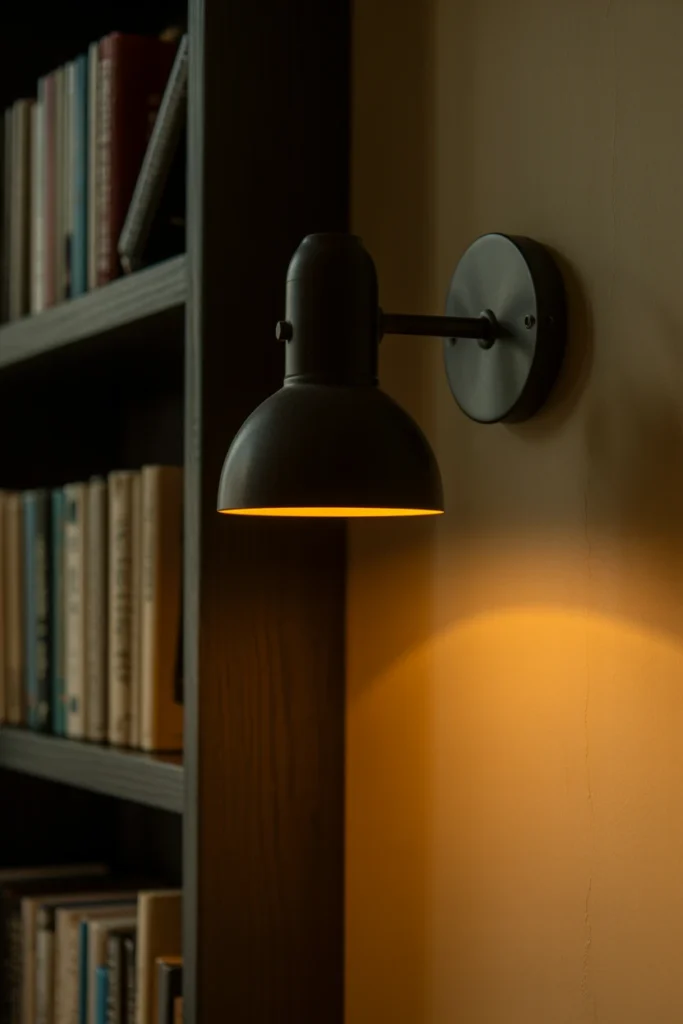
Standard white LED bulbs cast a cool, clinical tone that fights against a warm, antique color palette. This color temperature mismatch is a common reason a well-furnished room still photographs as cold instead of moody. An amber or warm-toned bulb instantly shifts the entire room’s atmosphere without touching a single piece of furniture.
Install a black or brass wall sconce beside your main seating area and fit it with a 2200K amber-toned bulb rather than standard white. Position it at roughly 60 inches from the floor, near eye level when seated. This specific height keeps the light source from glaring directly into anyone’s line of sight.
| Sconce Detail | Recommendation |
| Finish | Matte black or aged brass |
| Bulb temperature | 2200K, amber-toned |
| Mounting height | Roughly 60 inches from floor |
| Placement | Beside main seating, not overhead |
19. Replace Overhead Lighting With Warm Candlelight Alternatives
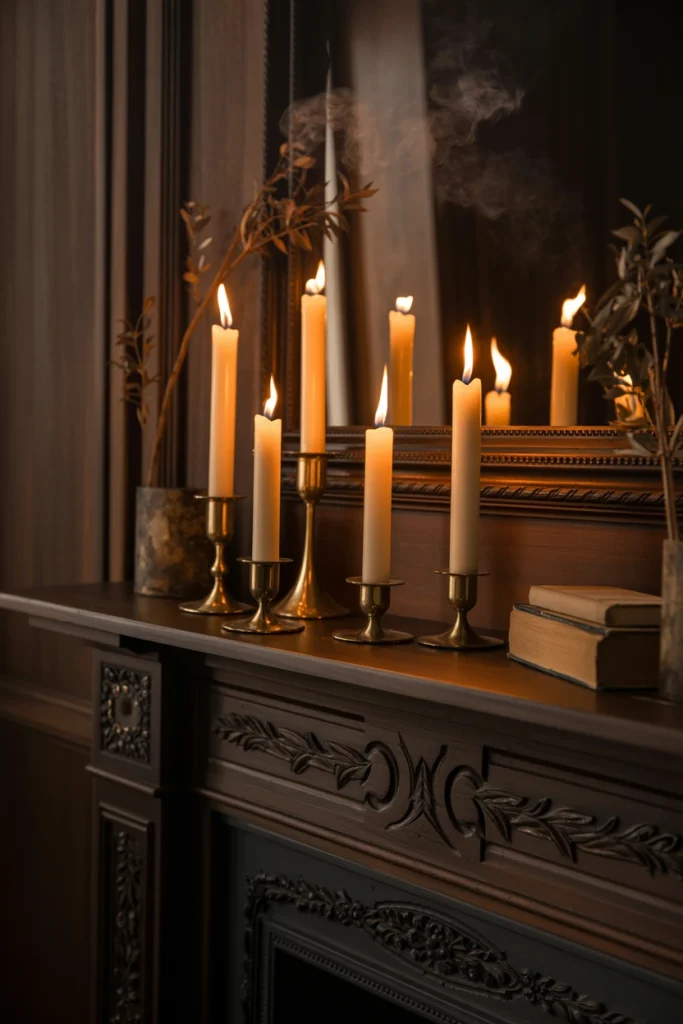
Bright overhead ceiling lights immediately erase the moody atmosphere that ambient and accent lighting works to build. A single bright ceiling fixture left on defeats every other lighting strategy in the room. Replacing that overhead source with flame-effect or dimmable warm lighting keeps the whole room’s mood consistent after dark.
Swap your main ceiling fixture for a dimmer switch capped at 30% brightness, or turn it off entirely in favor of flameless taper candles. Group 3–5 candles of varying heights on the mantel or a side table. This candle grouping alone can replace the need for a bright overhead light source most evenings.
| Overhead Alternative | Effect |
| Dimmer capped at 30% | Keeps ambient light low |
| Flameless taper candles | Safe, realistic flicker effect |
| Candle grouping of 3–5 | Replaces need for ceiling light |
| String lights, warm white | Soft background glow |
Finishing Touches: Styling Whimsigoth Details
The final layer of detail work is what separates a well-furnished room from a fully realized whimsigoth interior.
20. Build a Gallery Wall With Ornate Frames
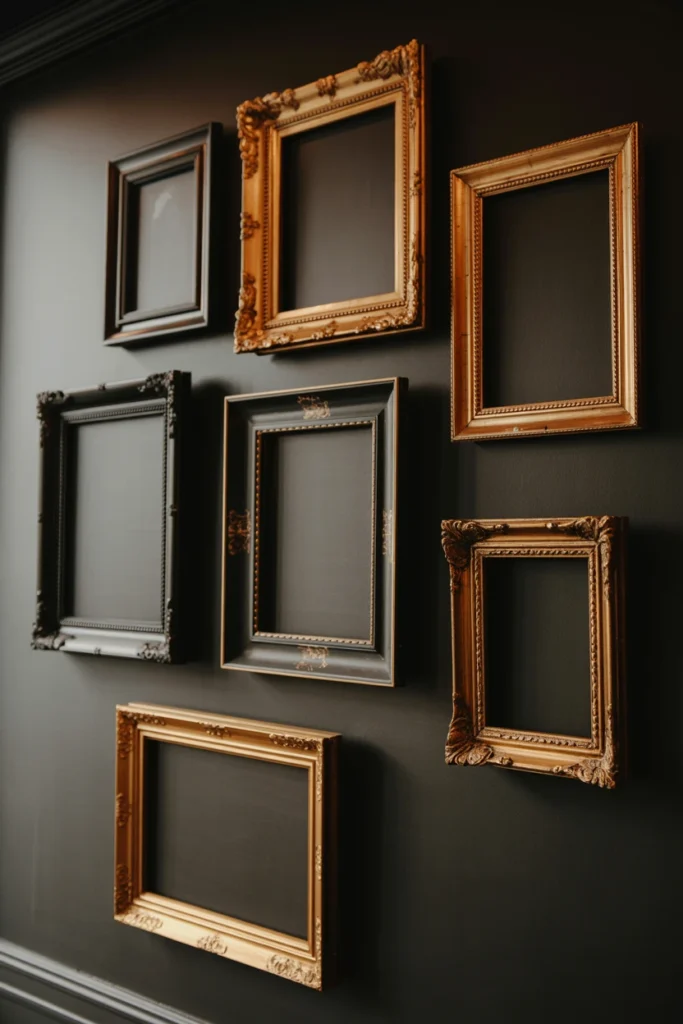
A single piece of art on a bare wall leaves large areas of the room feeling unfinished and under-decorated. Whimsigoth interiors depend on dense, layered wall styling to match the layered quality of the furniture and surfaces below. A gallery wall of ornate, mismatched frames fills that vertical space with the same collected character as the rest of the room.
Hang 6–9 frames in mismatched ornate styles, keeping frame finishes limited to black and aged gold only. Space frames 2–3 inches apart rather than in a rigid grid pattern. This tighter spacing and irregular arrangement is what gives gallery walls their collected, antique-shop quality.
| Gallery Wall Element | Guideline |
| Frame count | 6–9 pieces |
| Frame finish | Black and aged gold only |
| Spacing between frames | 2–3 inches |
| Layout | Irregular, not a rigid grid |
21. Arrange a Curated Bookshelf Vignette
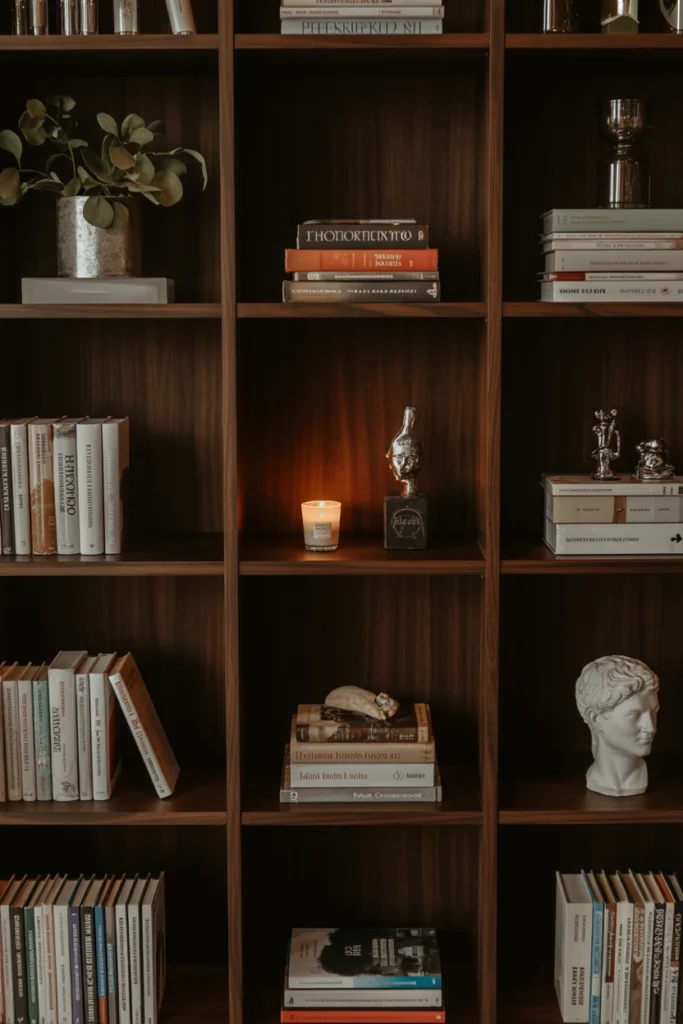
Books shelved by height alone or crammed spine-out in a straight row read as generic storage, not styling. Whimsigoth bookshelves use books as a design material, not just a functional object, and flat shelving wastes that opportunity. A curated arrangement mixing vertical and horizontal stacks turns a bookshelf into one of the room’s strongest focal points.
Arrange books in alternating groups: 4–6 upright, then one horizontal stack topped with a small object like a candle or bust. Leave one shelf roughly 30% empty for a taxidermy piece, plant, or apothecary bottle. This intentional negative space keeps the shelf from reading as overstuffed or purely functional.
| Shelf Styling Element | Guideline |
| Upright book groups | 4–6 books per group |
| Horizontal stacks | Topped with one small object |
| Empty shelf space | Roughly 30% per shelf |
| Objects per shelf | 1–2 accent pieces max |
22. Anchor the Coffee Table With a Layered Tray
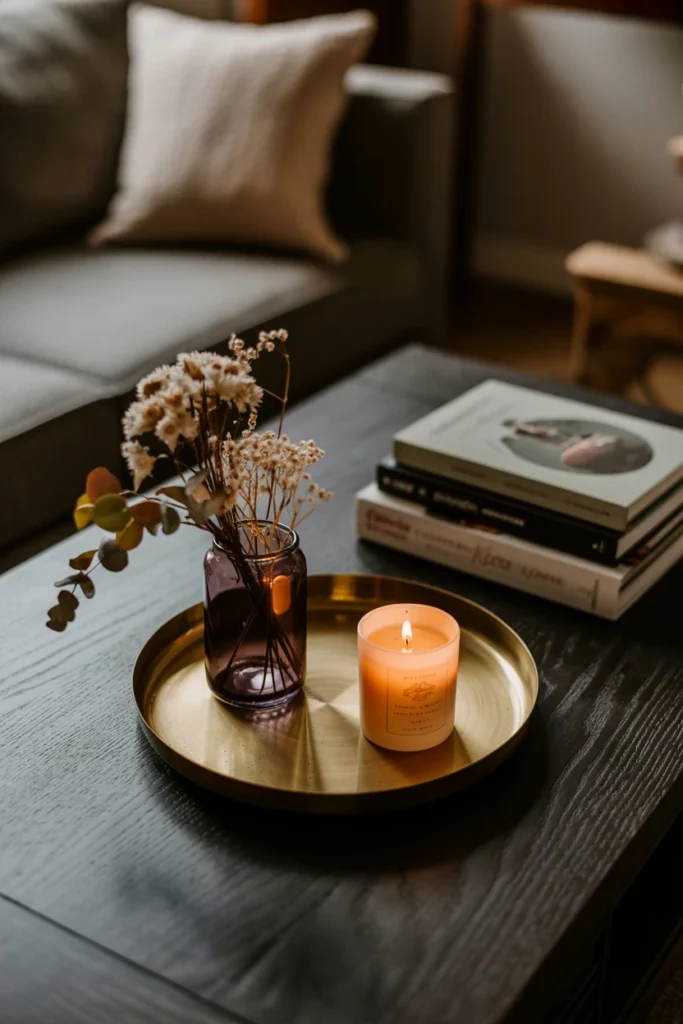
A coffee table with items scattered loosely across its surface looks unfinished no matter how well-chosen each individual object is. Whimsigoth styling relies on containment to make small objects read as one composed grouping rather than clutter. A single tray anchors everything on the table into one cohesive, photograph-ready vignette.
Place one dark wood or brass tray in the center of the coffee table and limit objects on it to three or fewer. Include one tall item, one flat item, and one textural item — for example, a candle, a book, and a small dried arrangement. This height variation within a contained tray is what makes small coffee table styling look deliberate.
| Tray Element | Guideline |
| Objects on tray | 3 or fewer |
| Height mix | Tall, flat, and textural item |
| Tray material | Dark wood or brass |
| Placement | Centered on coffee table |
Maintain Your Whimsigoth Living Room Long-Term
A whimsigoth room is never finished — it evolves through small, ongoing habits rather than one large decorating push.
23. Rotate Seasonal Accents Every Few Months
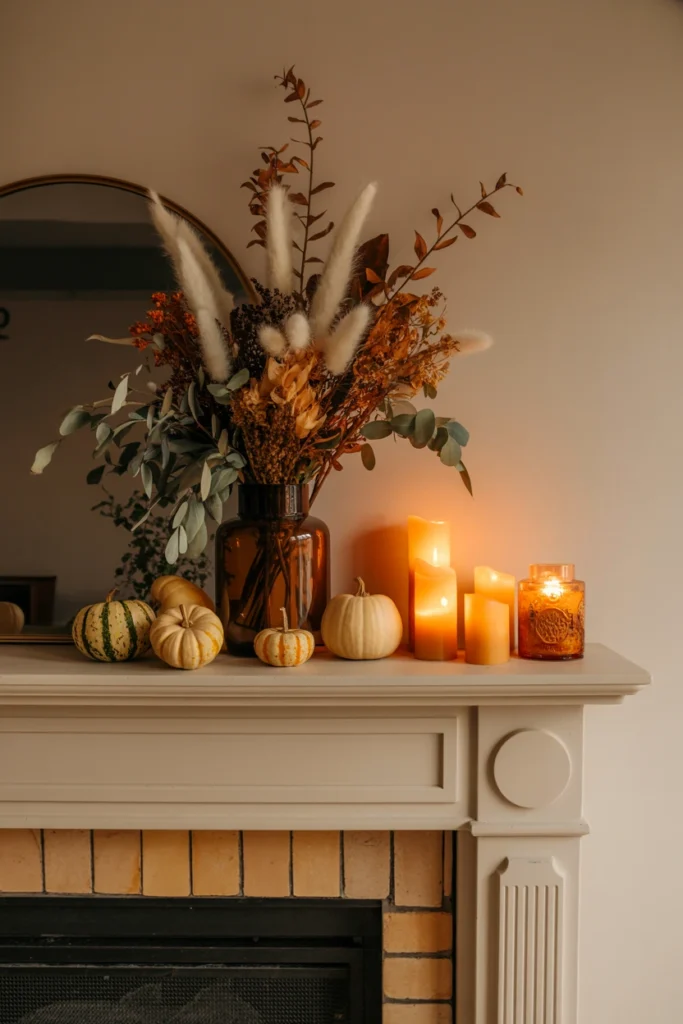
A room that never changes starts to feel static, even when the base decor is strong. Whimsigoth style draws heavily from seasonal, witchy traditions, and a room that ignores that connection loses part of its identity over time. Rotating a small set of accents keeps the room feeling current without requiring a full redecorate.
Swap 3–5 small accessories — candle scents, dried florals, or tray objects — every 8–10 weeks to match the season. Keep the core furniture and color palette completely unchanged during these swaps. This limited rotation refreshes the room’s feel without risking the cohesive palette you already built.
| Rotation Element | Frequency |
| Small accessory swap | Every 8–10 weeks |
| Items rotated | 3–5 pieces |
| Core furniture | Unchanged year-round |
| Seasonal focus | Florals, candles, textiles |
24. Establish a Dusting Routine for Ornate Surfaces
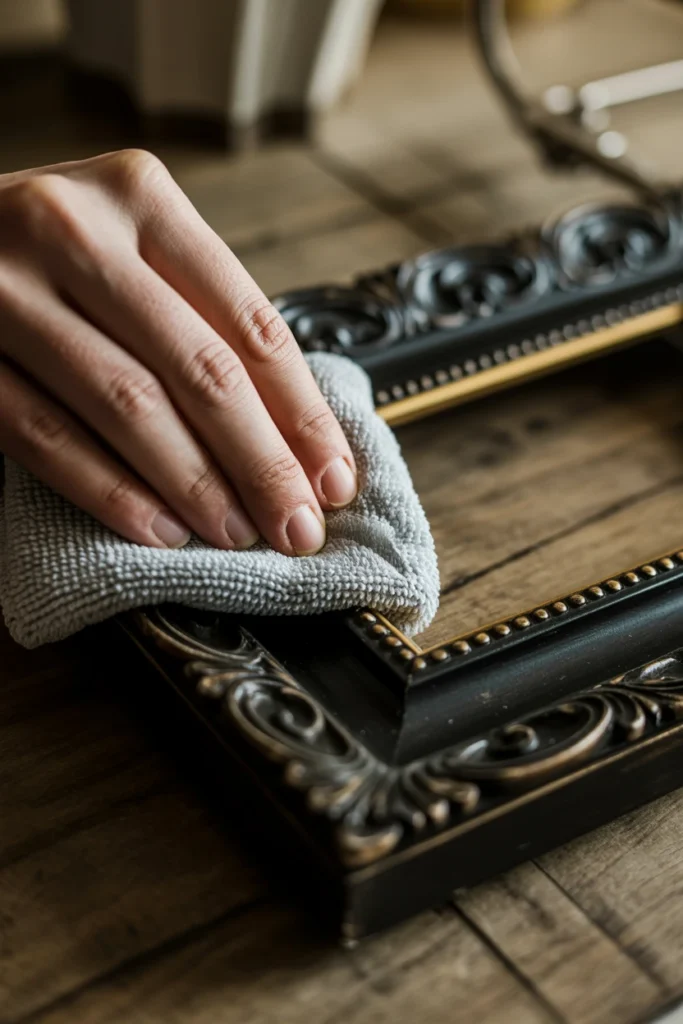
Carved wood, brass details, and dried florals all trap dust far more visibly than smooth modern surfaces do. Neglected dust buildup on ornate pieces is one of the fastest ways a well-styled room starts to look neglected instead of curated. A short, regular dusting routine keeps every intricate detail looking intentional rather than dirty.
Dust carved wood and brass surfaces weekly using a soft microfiber cloth or small paintbrush for detailed grooves. Vacuum dried florals gently with a low-suction handheld attachment once a month instead of shaking them out. This routine prevents the buildup that eventually forces you to replace pieces early.
| Surface Type | Cleaning Frequency |
| Carved wood, brass | Weekly, soft cloth |
| Dried florals | Monthly, low-suction vacuum |
| Glass and mirrors | Weekly, glass cleaner |
| Velvet upholstery | Monthly, fabric brush |
25. Edit One Piece Out Every Time You Add One
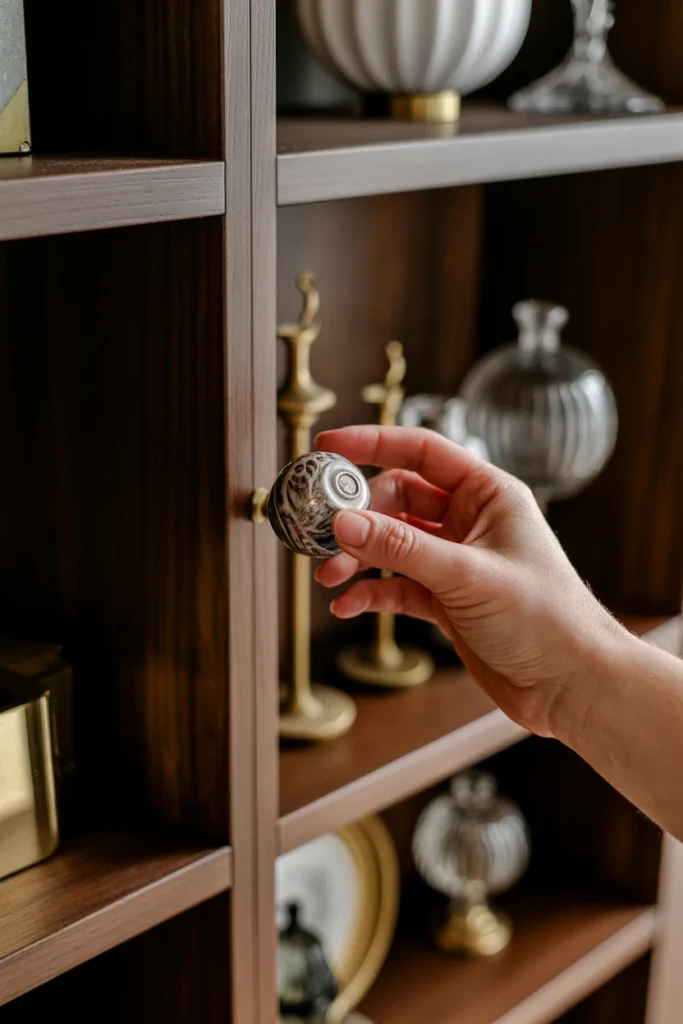
Whimsigoth rooms can tip from richly layered into genuinely cluttered without a clear limit on total object count. Continuously adding new finds without ever removing anything is the single most common reason a curated room becomes overwhelming. A strict one-in, one-out habit keeps the room’s density consistent as your collection grows.
Each time you bring home a new decor piece, remove one existing item from the same surface or shelf before placing it. Store removed pieces in a labeled box for six months before deciding whether to donate them. This single habit is what keeps a growing whimsigoth collection curated instead of accumulating into clutter.
| Editing Habit | Guideline |
| Rule | One in, one out per surface |
| Storage period before donating | 6 months |
| Review frequency | Every new purchase |
| Goal | Maintain consistent surface density |
Common Whimsigoth Living Room Mistakes That Kill the Mood
These eight mistakes appear most often in early attempts at the style, and each one has a specific, correctable fix.
| Mistake | Why It Hurts the Space | Better Alternative |
| Mixing more than 3 metal finishes | Reads as mismatched, not collected | Limit to one warm metal, like aged brass |
| Using bright white LED bulbs | Kills the warm, antique mood | Switch to 2200K–2700K amber bulbs |
| Buying an all-matching furniture set | Removes the collected, vintage feel | Source pieces individually from different eras |
| Skipping a dominant color | Leaves the palette feeling scattered | Commit one jewel tone to 60% of the room |
| Overcrowding every surface | Reads as clutter instead of curated | Follow the one-in, one-out editing rule |
| Using fresh flowers exclusively | Clashes with the muted, moody palette | Style dried or preserved botanicals instead |
| Placing furniture flush against walls | Removes shadow depth and layering room | Pull pieces 4–6 inches from the wall |
| Ignoring texture variety | Makes styled surfaces look flat | Layer at least 3 distinct textures per surface |
Whimsigoth Living Rooms by Space and Situation
Every space comes with its own constraints. These four situations cover the most common versions of this challenge.
Small Apartment Living Room
Small apartments need every whimsigoth layer scaled down without losing the moody depth the style depends on. The core constraint here is surface area — dense layering can tip into clutter fast in under 300 square feet.
Key strategies for small apartments:
- Choose a single dark accent wall instead of painting the full room.
- Use a loveseat or armchair pair instead of a full three-seat sofa.
- Hang a large ornate mirror to visually double the room’s depth.
- Limit tabletop vignettes to one per surface, not two or three.
- Stack lighting vertically with sconces instead of floor lamps that eat floor space.
Rental-Friendly Whimsigoth
Renters need the full moody effect without painting walls or installing permanent fixtures. The core constraint is reversibility — every change must remove cleanly at move-out.
Key strategies for rentals:
- Use removable dark wallpaper instead of paint for the accent wall.
- Hang art and mirrors with adhesive strips rated for at least 5 pounds.
- Bring in a large area rug to anchor the palette instead of painting the floor.
- Swap out light fixtures for plug-in sconces that require no wiring.
- Store original hardware safely to reinstall before returning the unit.
Open-Concept Living Room
Open floor plans lack the natural wall boundaries that typically contain a moody color scheme. The core constraint is definition — the whimsigoth zone needs a visual edge without a physical wall.
Key strategies for open-concept spaces:
- Define the seating area with a large rug rather than relying on walls.
- Use a tall bookshelf as a partial room divider between zones.
- Keep the dark palette contained to the seating and lighting only.
- Add a pendant light directly over the seating area to visually lower the ceiling.
- Repeat one accent color into the adjacent kitchen or dining zone for flow.
Living Room With a Fireplace
A fireplace already functions as a natural focal point, and whimsigoth styling should work with that feature, not against it. The core constraint is balance — over-styling the mantel can compete with the fireplace opening itself.
Key strategies for fireplace living rooms:
- Style the mantel with the same three-texture rule used on other surfaces.
- Flank the fireplace with matched dark bookshelves for symmetry.
- Hang one oversized ornate mirror above the mantel as the room’s anchor.
- Group candles inside the hearth itself during warmer months when unused.
- Keep mantel objects under 18 inches tall to preserve sightlines to the art above.
Frequently Asked Questions
how do you make a living room whimsigoth?
Start with a dominant jewel-toned color covering 60% of the room, then layer in velvet furniture, aged brass hardware, and warm 2200K lighting. Add vintage or antique pieces sourced individually rather than as a matching set. Dried botanicals, ornate frames, and candlelight finish the look. The whimsigoth style depends on layering these elements gradually rather than buying everything at once.
what are common whimsigoth decorating mistakes?
The most common mistake is mixing too many metal finishes, which makes a room feel mismatched rather than collected. Bright white lighting is a close second, since it kills the warm, antique mood the style depends on. Buying a matching furniture set instead of sourcing pieces individually also removes the collected, vintage character central to this look.
how do I start a whimsigoth living room on a budget?
Begin with paint, since a single dark accent wall costs far less than furniture and delivers the biggest mood shift. Source vintage furniture from estate sales and thrift stores, allocating roughly 40% of your budget there instead of retail stores. Add brass-finish accessories and dried florals last, since both are inexpensive ways to complete the palette.
can you do whimsigoth in a small apartment?
Yes, small apartments work well with whimsigoth style when the layering is scaled down to fit the space. Choose one accent wall instead of painting the entire room, and use a loveseat instead of a full sofa. Vertical lighting and a single oversized mirror help a small whimsigoth room feel intentional rather than cramped.
how do I choose between velvet and linen for whimsigoth furniture?
Velvet is the stronger choice for a primary sofa or accent chair, since its texture and sheen carry the moody, romantic quality central to this style. Linen works well only as a secondary, lighter-toned accent on 2–3 smaller pieces. Relying on linen for your main seating piece tends to read as cottagecore rather than gothic.
how often should I refresh whimsigoth decor?
Rotate 3–5 small accessories, like candle scents or dried florals, every 8–10 weeks to keep the room feeling current. Your core furniture, wall color, and lighting should stay unchanged for years, since those elements define the room’s identity. Frequent small rotations work better than infrequent full redecorates for this style.
does whimsigoth work in a rental apartment?
Yes, whimsigoth adapts well to rentals using removable wallpaper, plug-in sconces, and adhesive-mounted mirrors instead of permanent changes. A large area rug can anchor the palette in place of painted walls or floors. Every element used in a rental version of this style should be fully reversible at move-out.
how much does it cost to decorate a whimsigoth living room?
Costs vary widely, but allocating 40% of your budget to vintage furniture and 35% to new upholstery keeps spending controlled. Sourcing chairs, side tables, and mirrors secondhand, with a per-item cap around $150, keeps the biggest cost category manageable. Lighting and small accessories typically make up the remaining 25% of a realistic budget.
how do I keep a whimsigoth room from looking cluttered?
Follow a strict one-in, one-out rule, removing one existing item from a surface every time you add a new one. Limit tabletop vignettes to three or fewer objects, each with a different height and texture. Regular editing, not just careful buying, is what keeps a layered whimsigoth room from tipping into clutter over time.
Conclusion
A whimsigoth living room comes together through layered color, vintage furniture, and warm, deliberate lighting rather than any single statement purchase. Start with your dominant jewel tone and one dark accent wall before buying anything else. From there, add one antique piece and one warm light source, and the rest of the room’s palette will follow naturally.
This style rewards ongoing habit far more than a single weekend of decorating. A living room styled with these 25 strategies, maintained through regular editing and seasonal rotation, holds its moody, curated character for years.