Patio Decorating Ideas: 31 Proven Ways to Style It
Your patio decorating succeeds or fails on cohesion, not on how much decor you buy. This guide gives you 31 exact steps, each with a measurement, a material, and a result you check with your own eyes. As professional exterior stylists consistently find, decorated patios that photograph well run one theme, one palette, and decor grouped in threes at three heights. Work the sections in order and your patio decorating builds from a furnished slab to a styled outdoor room.
One number guides every purchase in this guide. Your full decorating scheme lands between $150 and $400 on an already-furnished patio, and every tip below states its cost before you buy.
Before You Begin: Five Foundation Steps for Patio Decorating
Failed patio decorating shares one cause: buying decor before the theme, palette, and focal point are set. This foundation section fixes your style, your colors, and your budget before a single purchase. Every later section builds on these five steps.
1. Pick One Decor Theme and Write It in Three Words
credit: @article
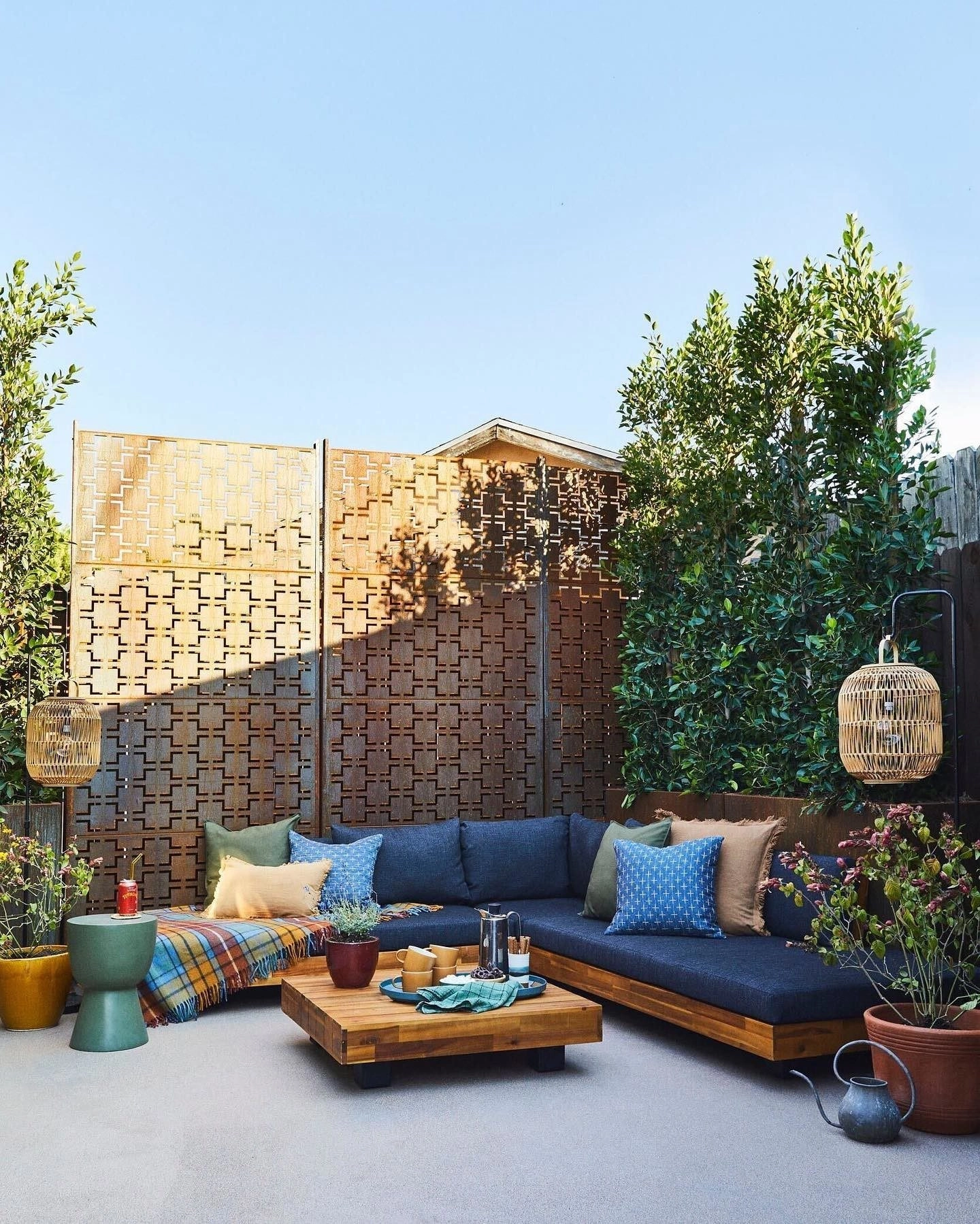
Patios that chase five styles at once read as a yard sale. One theme stated in three words, like “warm terracotta Mediterranean,” filters every later choice. The words go on your phone for shopping trips.
Choose one theme from your saved photos and write its three defining words. Every decor piece you consider must match at least two of the three words. Anything matching fewer goes back, no matter the discount or the trend.
| Theme Test | Matches Needed | Action |
|---|---|---|
| Decor piece | 2 of 3 words | Buy |
| Decor piece | 1 of 3 words | Skip |
| Decor piece | 0 of 3 words | Never |
2. Lock a 60-30-10 Palette of Cream, Terracotta, and Sage
credit: @design_hunger
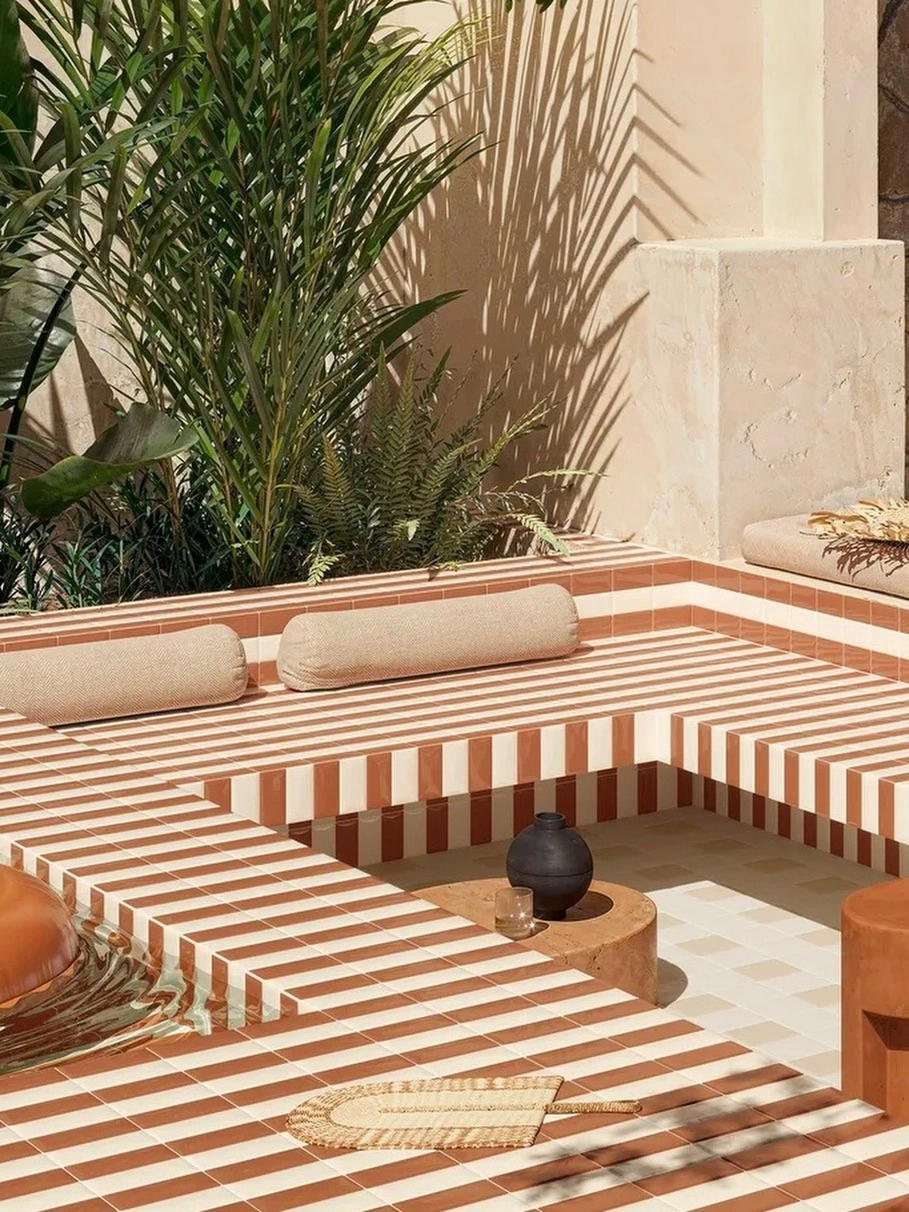
Random outdoor colors fight the house and garden at once. One locked palette makes every later purchase automatic. Cream carries the textiles, terracotta the warm lead, and sage the planted and painted accent.
Assign 60 percent of visible decor surfaces to cream, 30 percent to terracotta, and 10 percent to sage. Write the three names on one card and carry it on every shopping trip. Black metal joins as a neutral for frames and lanterns, never as a color layer.
3. Choose One Focal Point: Fire, Table, or Green Wall

credit: @collagerie
Decorated patios need one hero everything else supports. A fire feature, a dining table, or a green wall each anchor a different scheme. Every other piece in this guide arranges around your pick.
Stand at the patio’s entry and name the first thing a guest should see. Build that piece to its fullest styling before decorating anything else. Every later tip gets checked against one question: does it support the focal point or steal from it?
| Focal Pick | Scheme Around It | First Build |
|---|---|---|
| Fire feature | Seating circle | Fire styling |
| Dining table | Runner + centerpiece | Table layers |
| Green wall | Trellis + climbers | Vertical green |
4. Set a $400 Decorating Budget and Split It by Layer
credit: @georgehome
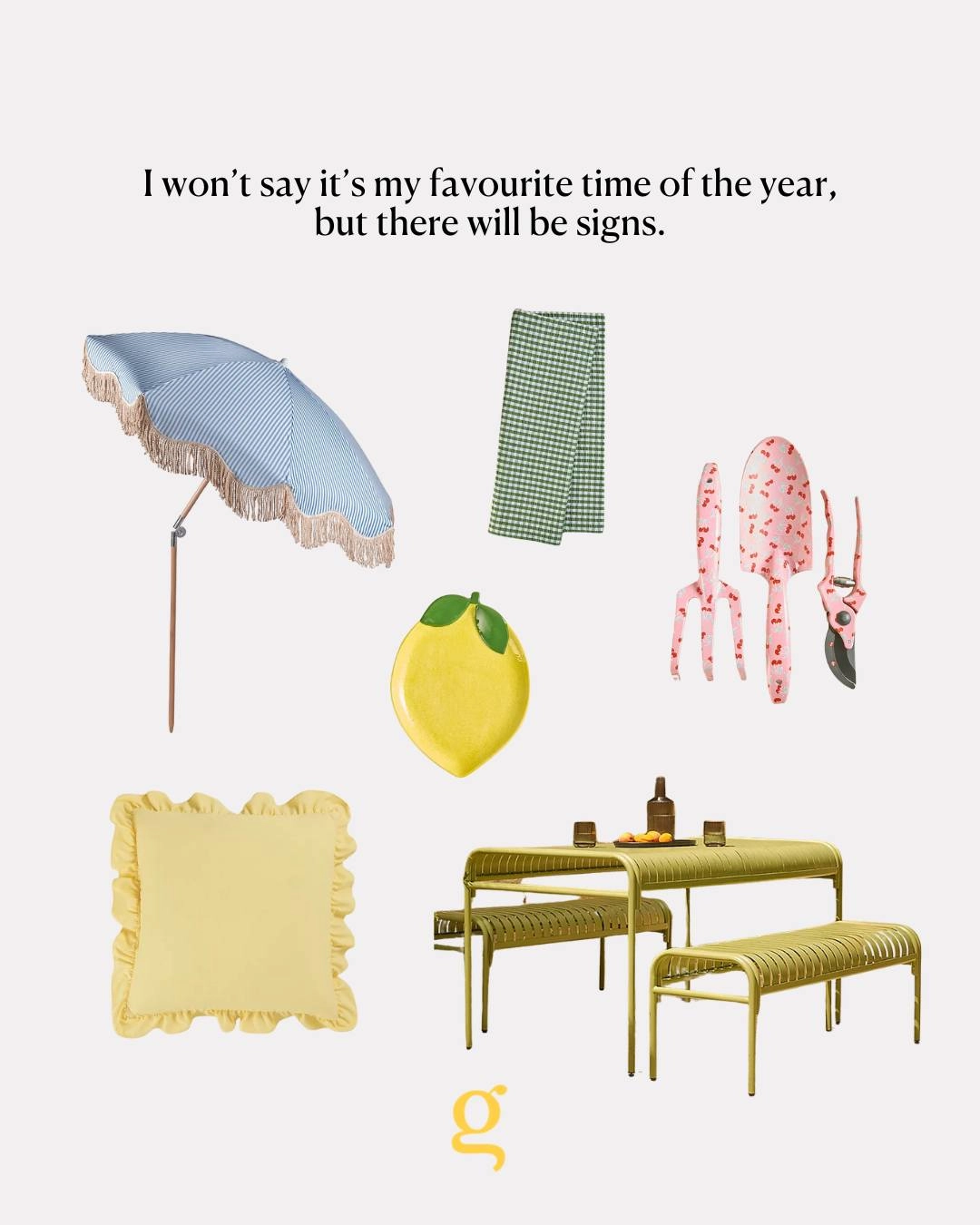
Decor costs creep through dozens of small garden-center hauls. A split budget stops the creep at the first store. Textiles take the largest share because they change the patio’s look most per dollar.
Divide $400 into $140 for textiles, $100 for planters and plants, $90 for wall and hanging decor, and $70 for table and evening pieces. Track every receipt against its column the same day. A column that hits its ceiling closes until something returns to the store.
| Layer | Ceiling | Main Buys |
|---|---|---|
| Textiles | $140 | Cushions, throws, rug |
| Planters + plants | $100 | Pots, plants, stands |
| Walls + hanging | $90 | Art, mirrors, lanterns |
| Table + evening | $70 | Centerpieces, candles |
5. Audit the Patio and Remove Everything Off-Theme First
credit: @palomacontrerasdesign
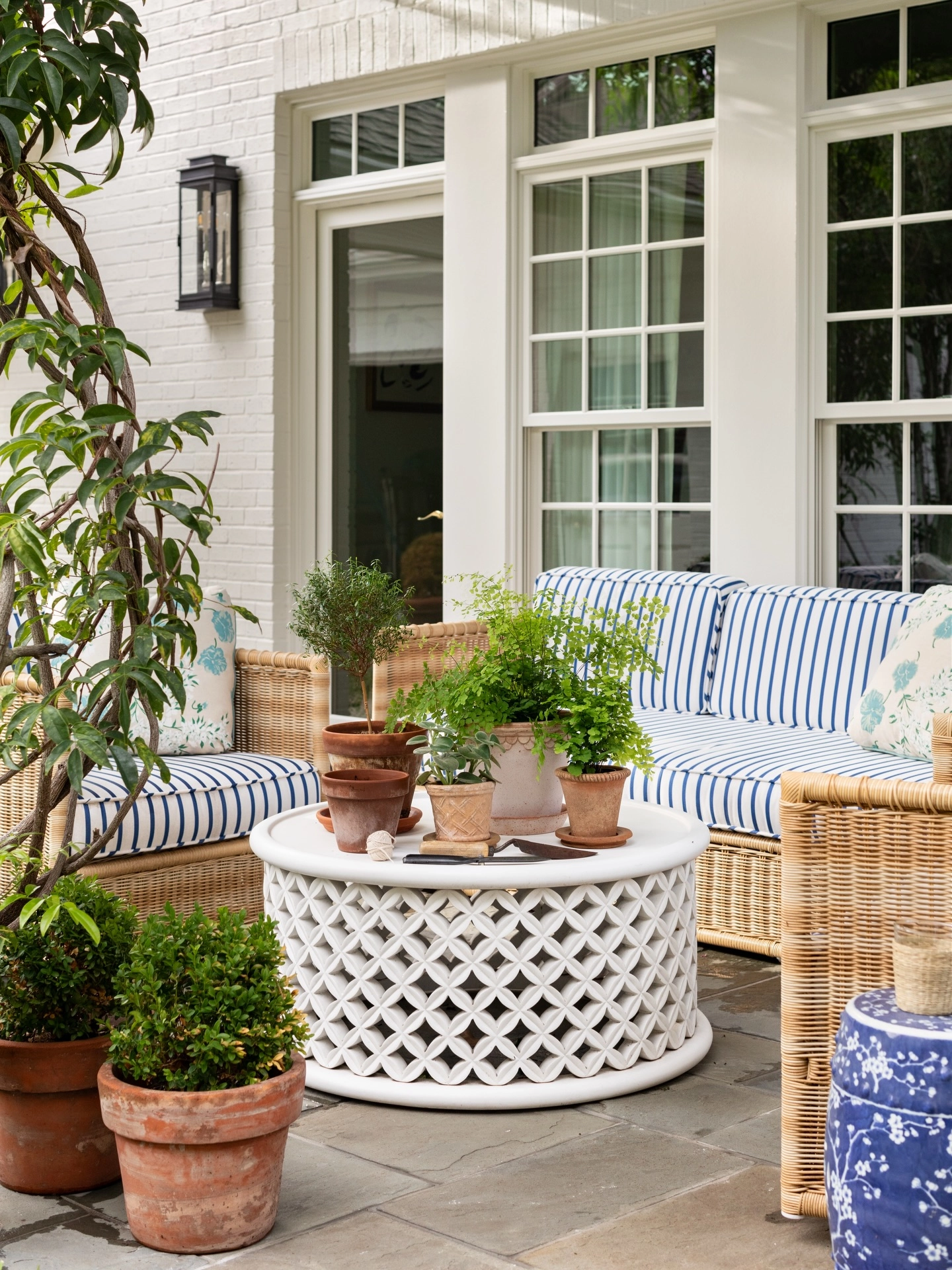
New decor layered over off-theme clutter reads as more clutter. One audit removes everything that fails the Tip 1 word test before styling starts. Removed pieces store, sell, or move to another zone.
Walk the patio with the theme card and pull every piece matching fewer than two theme words. Photograph the emptied patio from the entry. The bare photo shows exactly which decorating layers the space actually needs.
| Audit Result | Action | Home |
|---|---|---|
| On-theme | Keep in place | Patio |
| Off-theme, loved | Relocate | Another zone |
| Off-theme, tired | Store or sell | Bench box |
Patio Decorating With Textiles and Color
Textiles carry the palette onto every seat and surface. This section layers the rug, cushions, throws, and table linens in palette order. Every textile repeats the cream, terracotta, and sage from Tip 2.
6. Lay a Patterned Outdoor Rug in the Palette Under the Main Group
credit: @betsywentz
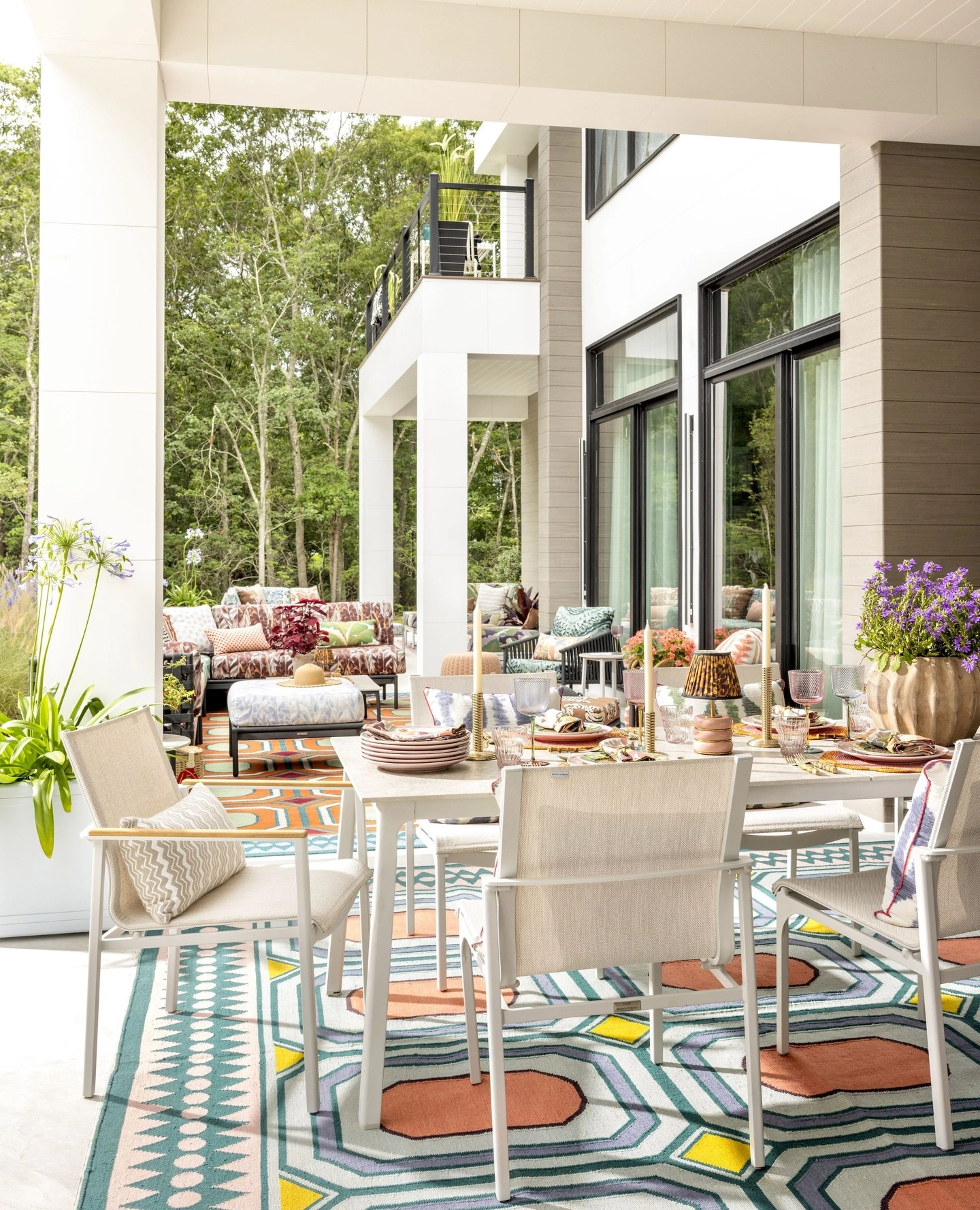
A rug is the largest single color surface a patio owns. One patterned rug in the palette anchors the main group and sets the scheme’s tone in a single move. Its pattern hides outdoor dust between sweeps.
Lay one outdoor rug, 5 by 7 feet for lounge groups or 6 by 9 for dining, in the palette’s pattern. Set every seat’s front legs on the rug by at least 6 inches. Choose a flat weave so chair legs and rockers glide without catching.
| Rug Job | Size | Group |
|---|---|---|
| Lounge anchor | 5 x 7 ft | Seats on legs |
| Dining anchor | 6 x 9 ft | Table + chairs |
| Entry strip | 2 x 6 ft | Runner |
7. Mix Cushions in Three Patterns at One Palette Ratio
credit: @dolcegabbana_casa
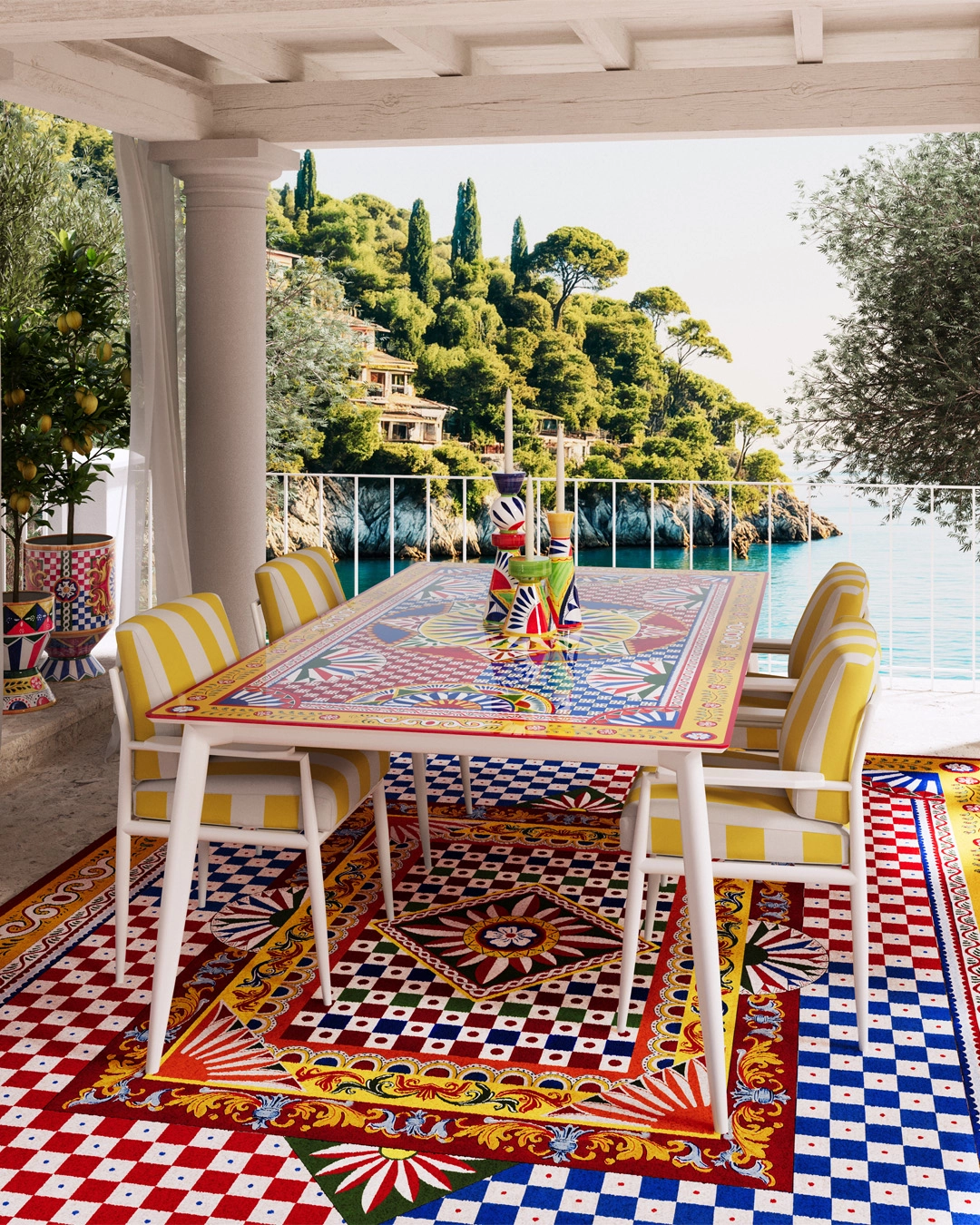
Matching cushion sets read as a showroom, not a home. Three patterns, one stripe, one solid, one motif, at the palette’s ratio read as styled. Solids carry 60 percent of the cushions, patterns split the rest.
Count the group’s cushions and assign 60 percent cream solids, 30 percent terracotta in one pattern, and 10 percent sage motifs. Keep every pattern’s colors inside the palette exactly. One cushion per seat in the lead pattern ties the group together.
| Cushion Type | Share | Color |
|---|---|---|
| Solids | 60% | Cream |
| Pattern 1 | 30% | Terracotta |
| Motif | 10% | Sage |
8. Drape One Throw Over the Main Seat’s Arm
credit: @sharmas.india
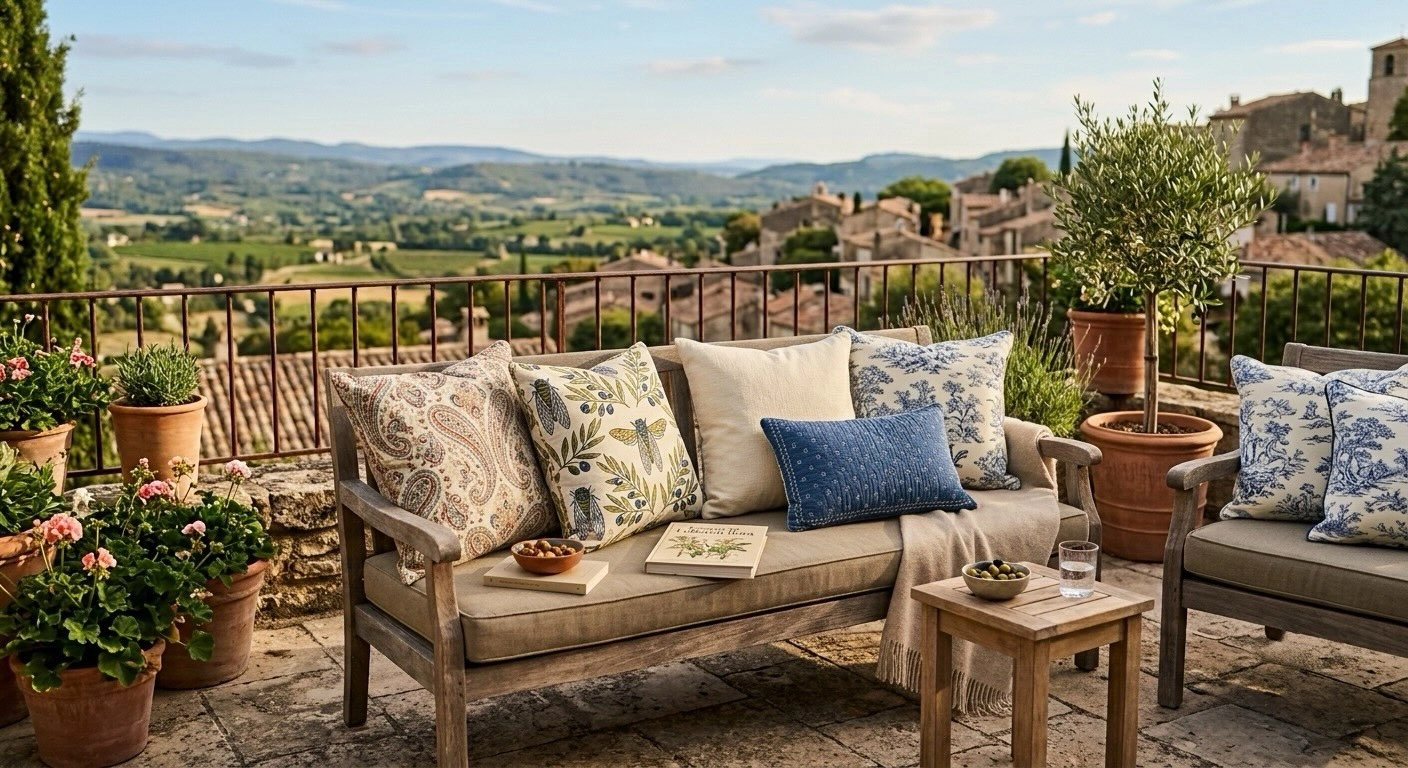
Throws soften outdoor furniture’s hard lines and wait for cool evenings. One throw on the main seat’s arm carries texture and the accent color together. Its fold shows the textile at doorway distance.
Drape one outdoor throw, 50 by 60 inches, over the main seat’s arm or back. Choose sage for the accent hit or cream for the calm scheme. Store it in the bench box on rain nights per Tip 30.
9. Dress the Table With a Runner and Cloth Napkins in Palette Colors

credit: @dolcegabbana_casa
Bare tables waste the patio’s second-largest color surface. A cream runner plus terracotta napkins carry the palette into every meal. The set launders and returns in one cycle.
Run a cream runner down the table’s center at 14 inches wide. Set one terracotta cloth napkin at every setting, folded flat over the plate. Keep one spare napkin set in the bench box for mid-meal swaps.
| Table Textile | Spec | Color |
|---|---|---|
| Runner | 14 in wide | Cream |
| Napkins | 1 per setting | Terracotta |
| Spares | 1 set | Bench box |
10. Repeat the Accent Color at Three Heights in Every Zone

credit: @themontydon
Single-height accents read as accidents. Sage at floor, seat, and eye level in every zone reads as a scheme. The three-height rule is this guide’s fastest styling upgrade.
Audit each zone for the accent at three heights: a planter at the floor, a cushion at seat level, a hanging piece at eye level. Add the missing height with the smallest piece that carries the color. Recheck from the entry after every addition.
Patio Decorating With Planters and Greenery
Plants are the patio’s living decor layer. This section groups planters, hangs greenery at eye level, and builds one green feature. Every group follows the odd-number and three-height rules.
11. Group Planters in Threes at 12, 16, and 20 Inches
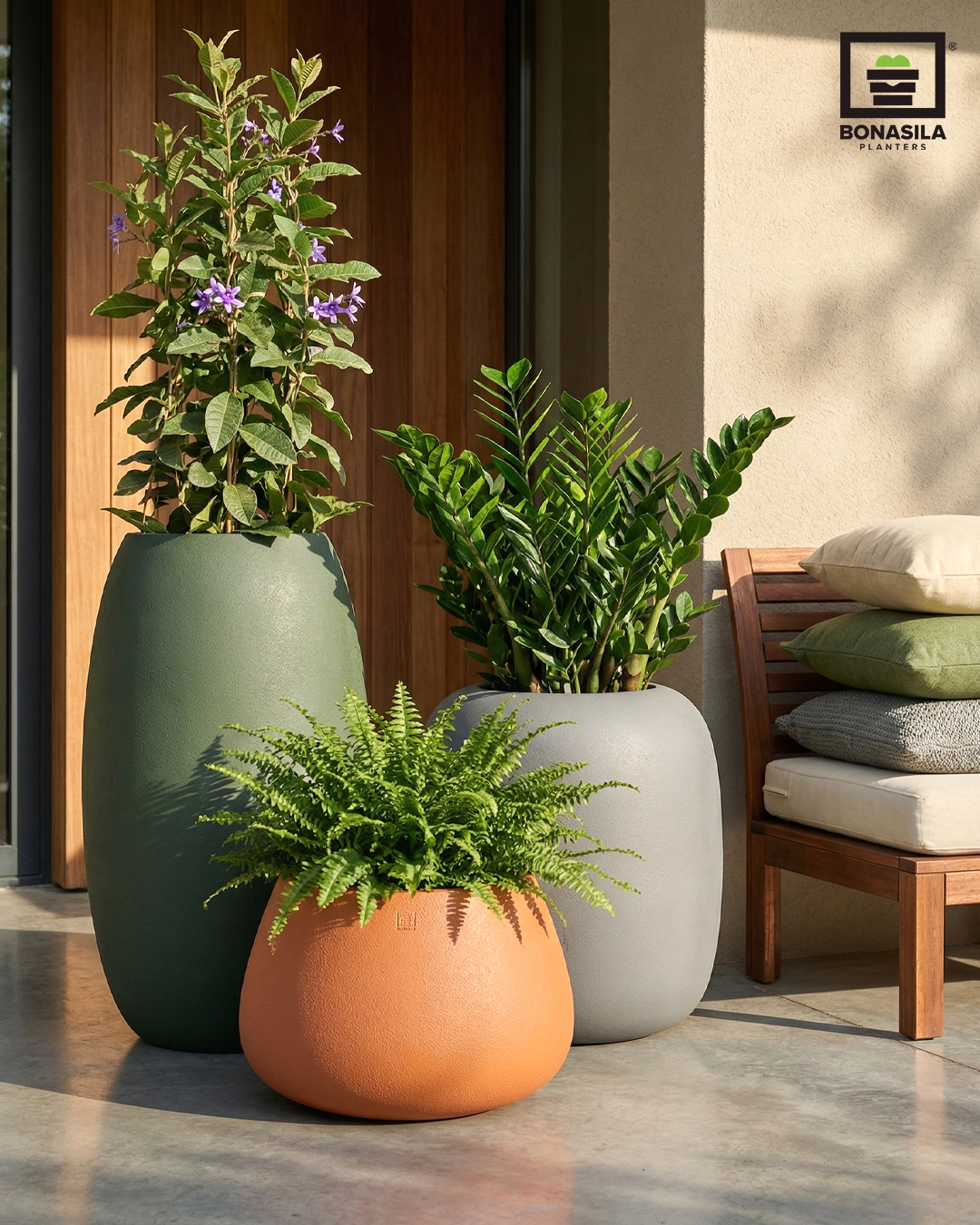
credit: @bonasilaplanters
Single pots scattered along edges read as storage. Groups of three at staggered heights read as design. One group per zone ties the whole patio together.
Set planters at 12, 16, and 20 inches together at each zone corner. Fill the tallest with a structural plant, the middle with flowers, the smallest with a trailer. Repeat the same three heights at every corner for rhythm.
12. Match Pot Materials to the Theme: Terracotta, Glazed, or Woven

credit: @homecentrestores
Mixed pot materials scatter a scheme faster than mixed colors. One material family across the patio reads as a collection. Terracotta serves Mediterranean and rustic themes; glazed serves modern ones.
Choose one pot material for at least 70 percent of the patio’s planters. Let the remaining 30 percent mix in woven baskets or black metal as neutrals. Retire or relocate every pot outside the family and the neutrals.
| Pot Family | Share | Serves |
|---|---|---|
| Main material | 70%+ | Theme |
| Woven baskets | Up to 30% | Neutral |
| Black metal | Up to 30% | Neutral |
13. Hang Two Planters at Eye Level Beside the Entry

credit: @grandinroad
Eye-level greenery greets guests before any furniture registers. Two hanging planters flanking the entry frame the patio’s first view. Their trailers soften the structure’s hard lines.
Hang two planters with their soil lines at about 5.5 feet, one on each side of the entry. Fill them with trailers that fall at least 12 inches. Keep both clear of the walkway’s head height by their pots’ full depth.
| Entry Planter | Height | Fill |
|---|---|---|
| Left | Soil at 5.5 ft | Trailer |
| Right | Soil at 5.5 ft | Trailer |
| Fall length | 12 in min | Below pot |
14. Build One Green Feature: A Trellis Panel With Climbers

credit: @cathykincaidinteriors
Every styled patio owns one vertical green moment. A trellis panel with two climbers builds it in a single season. The panel also screens the patio’s weakest view.
Set one trellis panel, about 4 feet wide and 6 feet tall, against the patio’s weakest backdrop. Plant two climbers at its base, spaced 18 inches apart. Tie new growth every 12 inches until the panel greens over.
15. Set Herb Pots at the Dining Zone’s Edge for Scent and Use
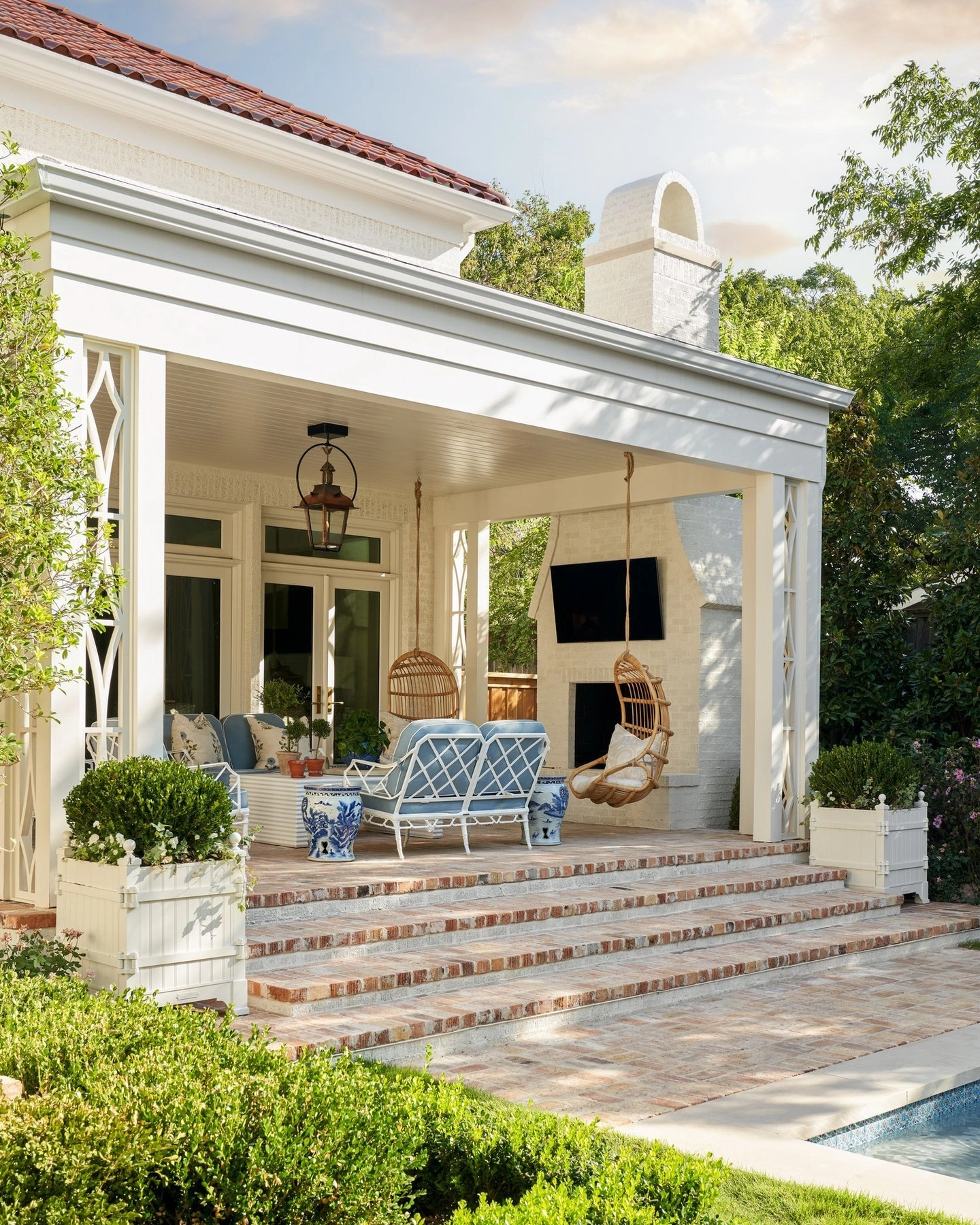
credit: @serenaandlily
Herbs decorate and serve at the same time. A row of herb pots at the dining edge perfumes the meal and supplies it. Terracotta carries the theme straight into the planting.
Line the dining zone’s sunny edge with 8-inch herb pots at 12-inch centers. Choose rosemary, basil, and mint as the base trio. Snip from the pots at the table; herbs pruned often grow bushier.
| Planter Group | Heights | Fill Rule |
|---|---|---|
| Corner trio | 12, 16, 20 in | Structure, flower, trailer |
| Entry pair | Eye level | Trailers, 12-in fall |
| Dining herbs | 8 in pots | 12-in centers |
Patio Decorating Walls, Table Styling, and Evening Decor
Bare fences and house walls are the patio’s largest wasted canvases, and the table plus evening hours carry its hosting life. This section hangs art, mirrors, and lanterns at measured heights, then styles the centerpiece, candle layers, and dusk view. Every piece is outdoor-rated or sheltered by rule, and every table piece stays clear of settings and flames.
16. Hang Outdoor Art or a Metal Piece at 58 Inches on the Main Wall

credit: @edward_blom
The wall behind the main seats takes the patio’s art moment. One large piece at gallery height anchors the whole backdrop. Its colors must come from the palette card.
Hang one outdoor-rated art piece with its center at 58 inches above the patio floor. Choose a piece at least 24 inches wide so it holds the wall alone. Smaller pieces group in threes at the same center height.
17. Mount an Outdoor Mirror to Double the Green View
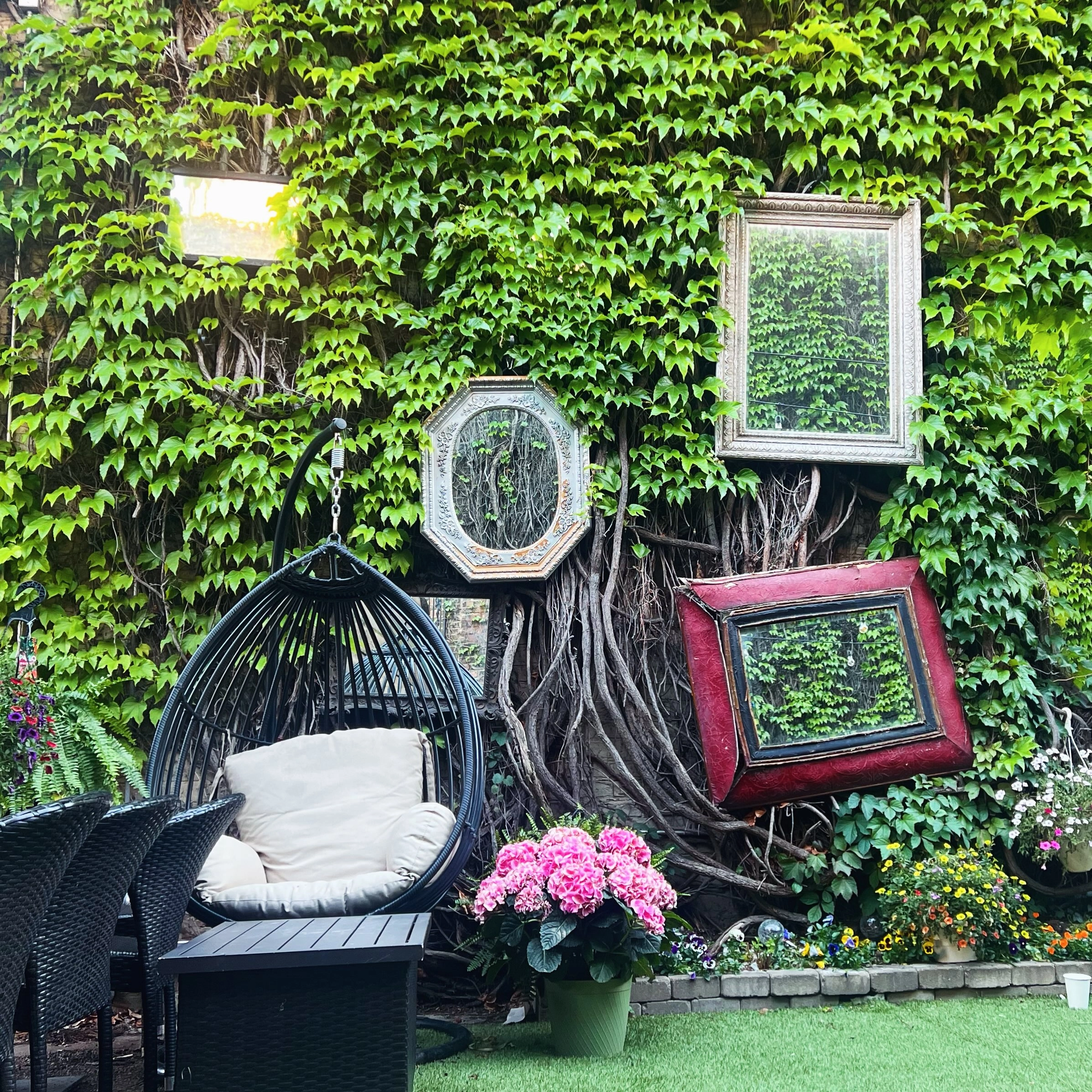
credit: @azikh
Mirrors outdoors bounce garden light and double the planting visually. One mirror angled at the greenest view earns its wall space instantly. Outdoor-rated frames only; indoor frames rot in one season.
Mount one outdoor mirror on the wall facing the patio’s greenest planting. Angle it slightly down so seated guests see plants, not sky glare. Keep its center near 58 inches, aligned with Tip 16’s art line.
18. String a Curtain or Shade Cloth Panel on the Open Side

credit: @dekhpagli
Open patio sides leak privacy and low sun. One cream curtain panel or shade cloth run softens both in the palette’s base color. The panel ties back by day and closes at the golden hour.
Mount a rod or cable along the open side at the structure’s top edge. Hang one outdoor panel per 4 feet of opening in cream. Tie panels back by day; close them against the low sun and evening views.
19. Set Lantern Clusters on the Wall Sconce Points and Steps
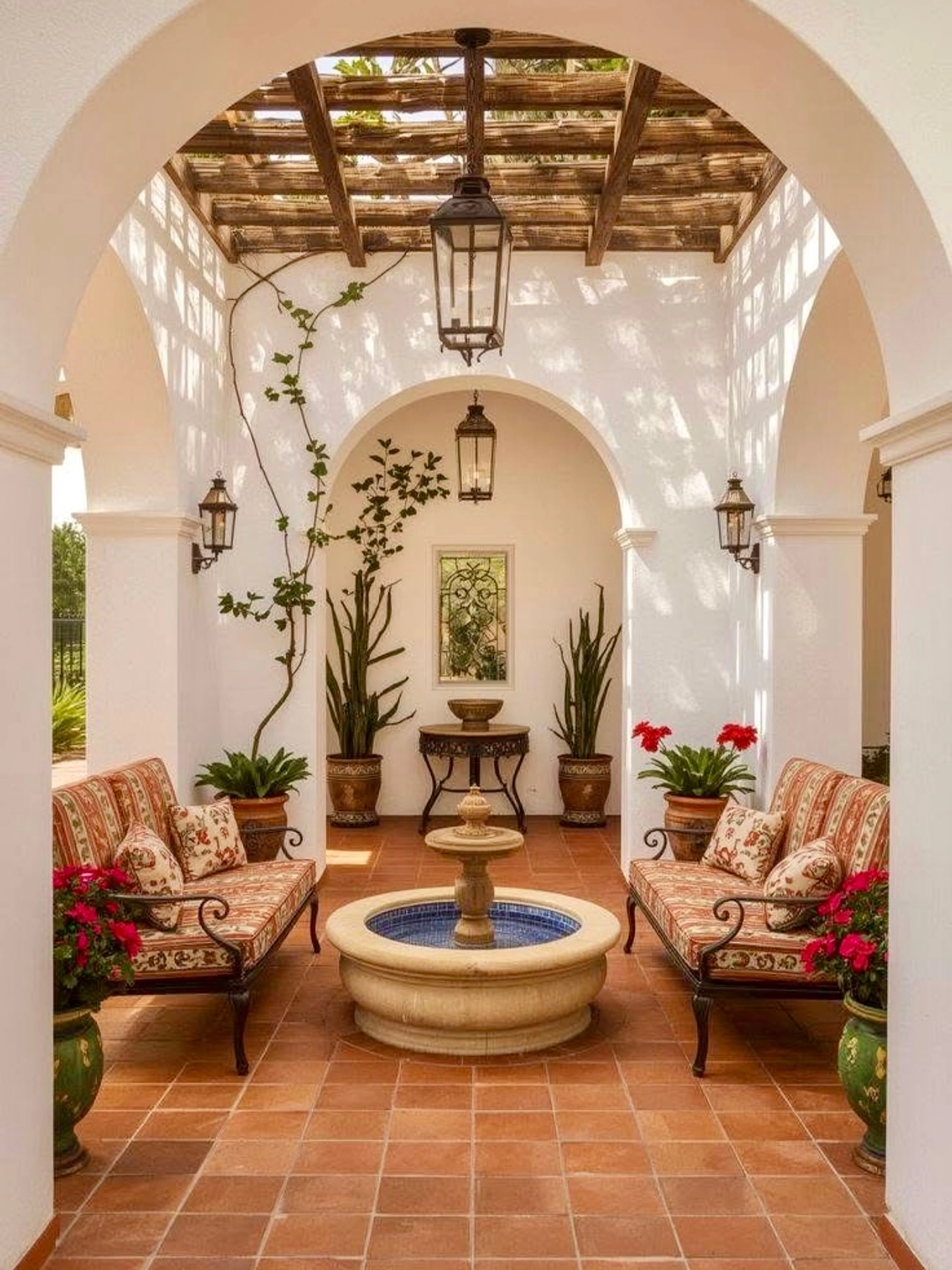
credit: @haciendadreams
Wall-level lantern light warms the backdrop the art hangs on. Two sconce points flanking the art plus step lanterns layer the wall’s glow. All flameless at 2700K for fabric safety.
Mount two lantern sconces flanking the Tip 16 art at the same 58-inch center line. Set step lanterns on alternating edges below them. Time every flameless candle to the same 6 p.m. start.
20. Paint or Stain One Fence Section in the Palette’s Deep Tone

credit: @serenaandlily
A single deep fence section grounds the whole backdrop. Walnut stain or deep sage paint behind the focal point deepens every color in front of it. One section only; full dark fences shrink the yard.
Paint or stain the fence section directly behind your Tip 3 focal point in walnut or deep sage. Keep the finish matte so it recedes behind the decor. Leave every other section its existing tone for contrast.
21. Build a Low Centerpiece of Planters and Candles at 12 Inches

credit: @timber_and_tales
Table centerpieces that block faces fail at dinner. A low run of small planters and candles under 12 inches styles without blocking. The run follows the runner from Tip 9.
Set three 6-inch herb or flower pots down the runner’s center at even spacing. Fill between them with votives in glass and one low candle cluster. Check every seated sightline across the table before guests arrive.
22. Cluster Candles at Three Heights on the Side Surfaces
credit: @bromic_heating
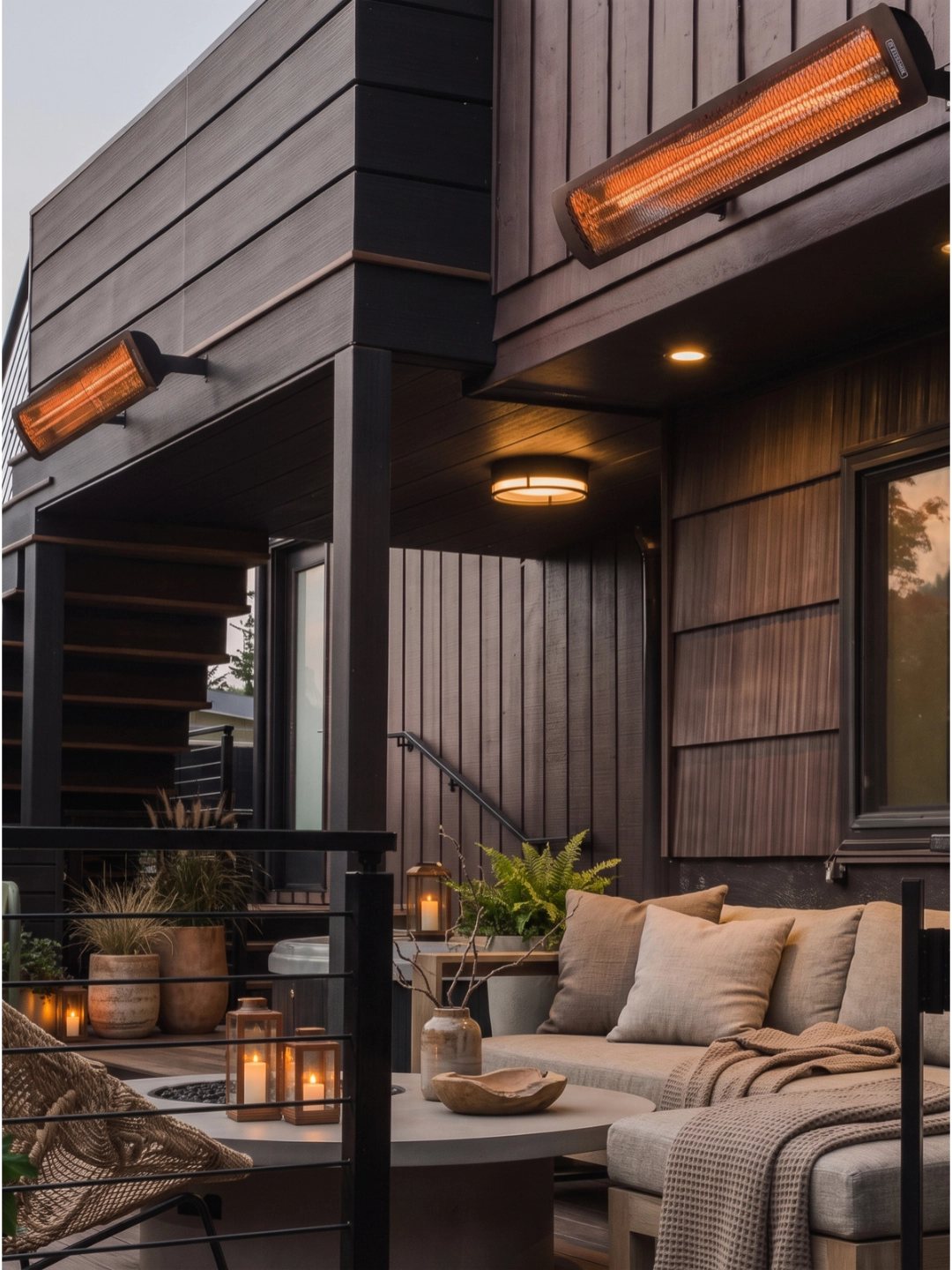
Side tables and planter edges hold the evening’s second light layer. Clusters at 4, 6, and 8 inches echo the indoor candle rule outdoors. Flameless only near cushions and throws.
Group flameless pillars at 4, 6, and 8 inches on each side table and the widest planter edge. Set their timers for 6 p.m. with the wall lanterns. Keep every cluster 6 inches clear of textiles and trailing plants.
23. Hang String Lights in Swags at 8 Feet Over the Decor

credit: @malomalo254
String lights are the decorated patio’s ceiling. Even swags at standing clearance frame every layer below them. Warm 2700K bulbs keep the palette’s evening tone.
Hang commercial-grade string lights at 8 feet, clearing the tallest guest by 12 inches. Let each swag drop 12 inches between anchors spaced 8 feet apart. Run one guide wire per line so bulbs never carry the weight.
| Light Layer | Height | Pieces |
|---|---|---|
| String lights | 8 ft swags | 1-2 runs |
| Wall lanterns | 58 in center | 2 sconces |
| Candle clusters | 4, 6, 8 in | Per side surface |
24. Set a Drinks Station on a Bar Cart at the Zone Edge

credit: @ballarddesigns
Guests crossing the patio for every refill scatter the styling. A bar cart at the zone edge serves drinks inside the scheme. Its top styles with the palette like any surface.
Set one bar cart at the lounge or dining zone’s edge, clear of the walkway. Style its top with a pitcher, glassware, one small planter, and palette napkins. Restock it before guests arrive, not during the evening.
25. Add One Seasonal Swap Piece per Zone

credit: @kathykuohome
Styled patios stay fresh through one rotating piece per zone. A wreath, a themed pillow, or a seasonal planter swaps in minutes. The swap keeps the scheme’s bones and changes its story.
Choose one swap piece per zone per season: wreath, pillow pair, or planter fill. Store off-season swaps in the bench box or one labeled bin. Photograph each swap in place for the season record, per Tip 28.
Patio Decorating Styling and Finishing Touches
Layers are in place. This short section runs the final pass: the balance count, the dusk test, and the photograph. Small moves here separate decorated patios from furnished ones.
26. Count Palette Sightings From the Entry and Fix Shortfalls
credit: @ottotiles
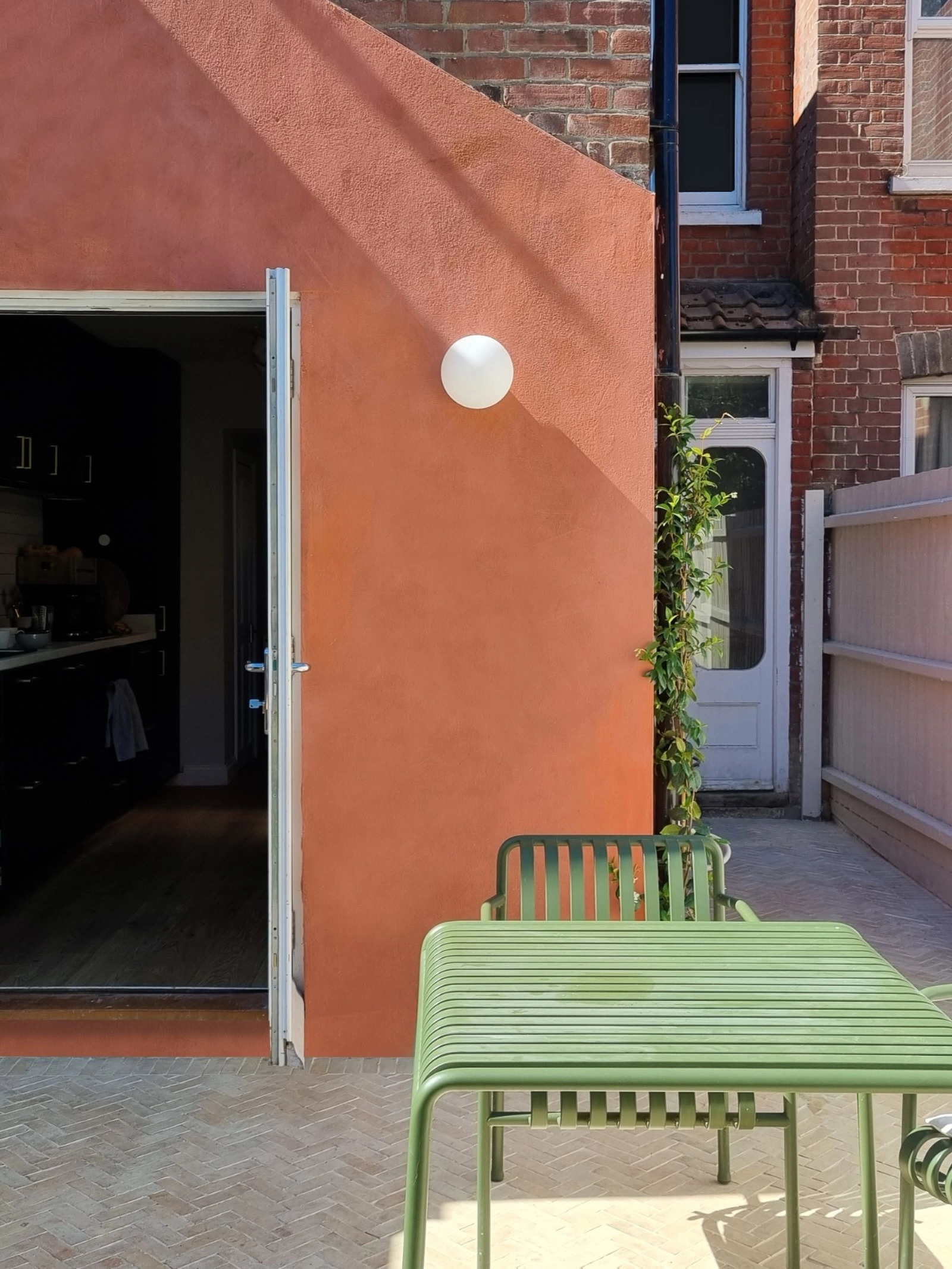
The entry view is the patio’s first impression and its styling report. Counting each color’s sightings from that one spot exposes every shortfall. One small piece fixes most counts.
Stand at the entry and count each palette color per zone. Terracotta and sage must each appear at least three times per zone, cream everywhere as the base. Add one small piece wherever a count falls short.
27. Test the Decor at Dusk From the Main Seat

credit: @chairishco
Daylight hides dark corners and glare. The dusk test from the main seat shows the patio as guests live it. Every fix below takes under two minutes.
Sit in the main seat at dusk with house lights off. Mark every dark corner bigger than a chair and every bulb glaring at eye level. Move one lantern into each dark corner and angle glare bulbs away from seats.
28. Photograph the Finished Patio at Golden Hour
credit: @wayfairprofessional
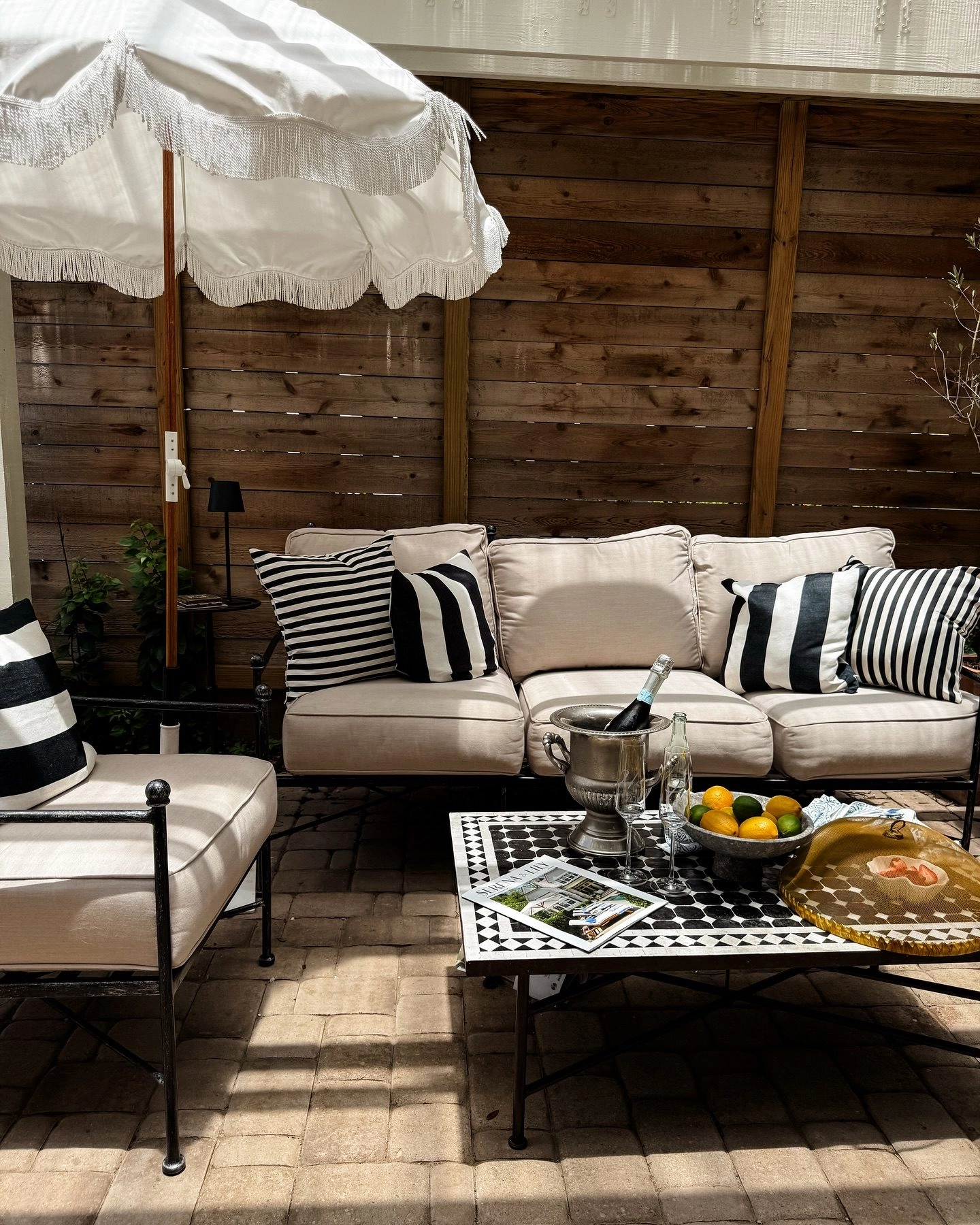
Memory flattens a scheme by next season. Golden-hour photos preserve every placement at its best. The set becomes next season’s decorating guide.
Stand at the entry at golden hour and take four photos: wide, lounge, dining, and wall. Save them in one album named with the year. Note any zone that photographed flat and plan its upgrade first next season.
Patio Decorating Maintenance and Care Habits
Outdoor decor fades, mildews, and scatters faster than indoor pieces. These habits keep textiles bright, plants tidy, and metal clean all season. Each habit takes under fifteen minutes.
29. Shake and Air Cushions and Throws Every Week
credit: @lovely.harbor
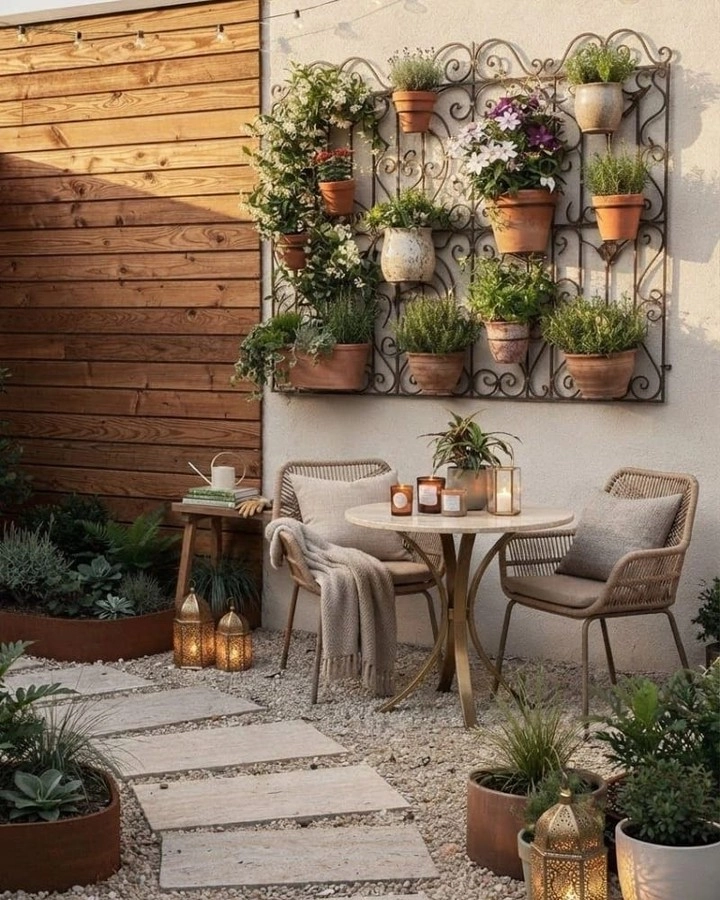
Outdoor textiles trap pollen and damp in their fibers weekly. A hard shake and an hour of sun airing keep them fresh without washing. The pass happens on the same morning as the plant check.
Shake every cushion and throw hard outdoors once a week. Air them over the railing in morning sun for one hour. Spots get a cold-water blot the same day, never a soak in heat.
30. Store Textiles in the Bench Box Every Rain Night
credit: @ecofriendlybharat
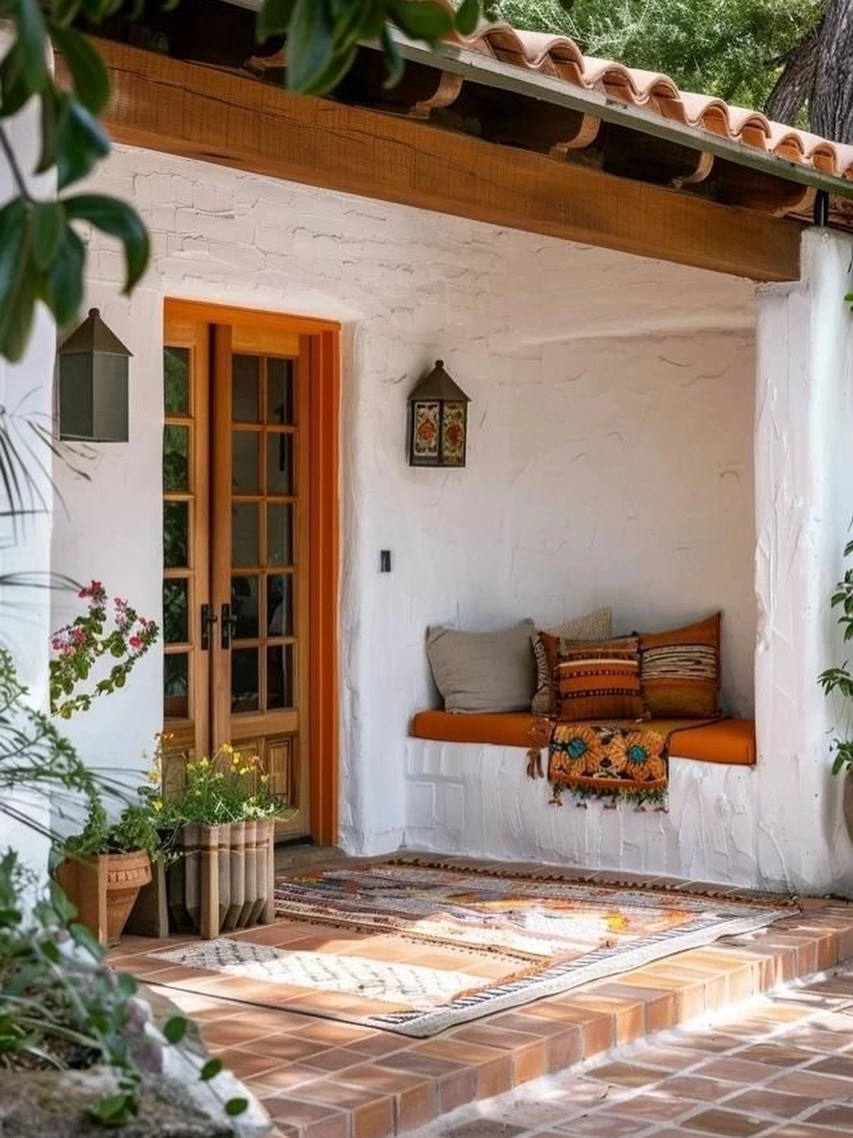
One storm soaking ruins cushion foam within weeks. A bench box habit keeps every textile dry and ready. Sixty seconds a night saves the whole textile budget column.
Load every cushion and throw into the storage bench on forecast rain nights. Leave the lid cracked one inch on dry days so air keeps the box fresh. Wash covers cold monthly before they return to the box.
31. Wipe Metal and Glass Decor Monthly and Touch Up Chips
credit: @kitengela_glass
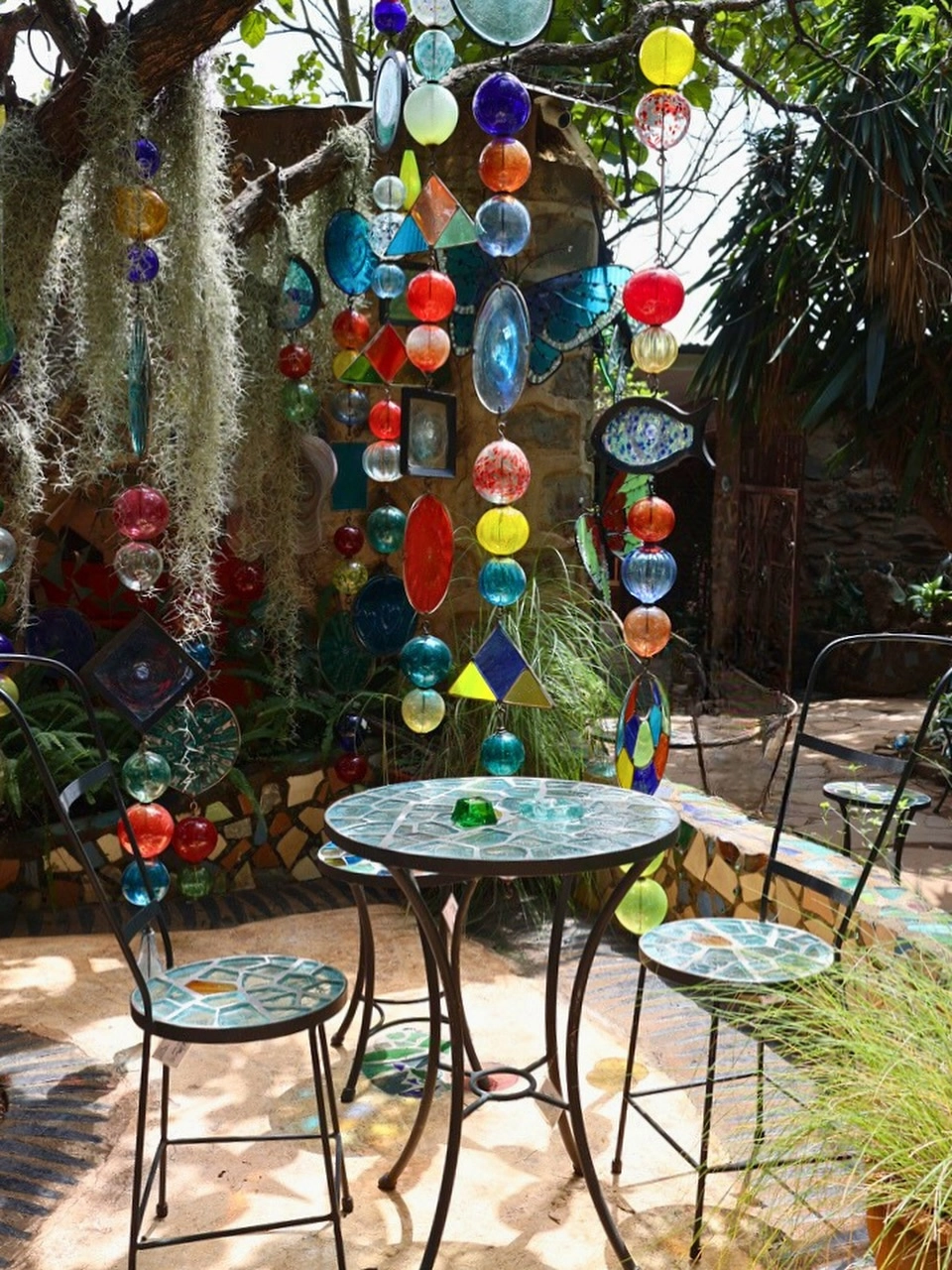
Outdoor metal rusts at every chip, and glass decor films over in a month of weather. A monthly wipe and chip pass keeps both layers photo-ready. The pass takes one cloth, one spray, and ten minutes.
Wipe every lantern, frame, and the mirror with a damp cloth monthly. Touch up paint chips on metal with matching outdoor paint before rust starts. Polish the mirror last so its reflection check closes the pass.
| Decor Layer | Care | Frequency |
|---|---|---|
| Textiles | Shake + air | Weekly |
| Textiles deep | Cold wash covers | Monthly |
| Metal + glass | Wipe + chip paint | Monthly |
Common Patio Decorating Mistakes
| Mistake | Why It Hurts | Fix |
|---|---|---|
| Decorating before choosing a theme | Pieces fight all season | Three theme words, Tip 1 |
| Mixed pot materials everywhere | The planting reads as storage | One material family, Tip 12 |
| Accents at one height only | Zones read flat | Three heights rule, Tip 10 |
| Tall centerpiece between guests | Faces vanish at dinner | Cap at 12 inches, Tip 21 |
| Textiles left out in rain | Foam mildews within weeks | Bench box nightly, Tip 30 |
| Every wall decorated | The backdrop never rests | One art moment per wall, Tip 16 |
Patio Decorating Ideas by Space and Situation
Small Patios and Balconies
Shrink counts, not layers: one planter trio, one wall piece, and the full textile ratio on the single group. The mirror earns double duty here, doubling the green. Skip the trellis; hang the two entry planters instead.
Large Patios
Repeat the planter trios and candle clusters per zone so the scheme reads at distance. String lights run in two parallel lines at the same 8-foot height. The green trellis scales to two panels joined at a corner.
Shaded Patios
Raise the cream share and add one extra lantern cluster per zone. Choose shade plants with pale leaves for the trios. The mirror angled at the brightest planting does the heaviest work here.
Rentals With No-Drill Rules
Art hangs on fence hooks, curtains on tension cables, and the trellis leans instead of mounting. Every piece in this guide lifts off clean at move-out. Keep the deposit; keep the scheme.
Frequently Asked Questions
How do I decorate my patio?
Pick one theme and palette, choose a focal point, then layer textiles, planters, wall decor, and evening light in that order. Group decor in threes at three heights. Tips 1 to 5 set the full foundation in one weekend.
What is the best color scheme for a patio?
Cream as the 60 percent base, terracotta as the 30 percent lead, and sage as the 10 percent accent suit most homes and gardens. Any warm trio works if the shares hold. Tip 2 sets the assignment rules.
How do I decorate a patio on a budget?
Sequence by impact: the rug first, cushions second, planter trios third. The three together land under $200 and carry most of the scheme. The split in Tip 4 phases the rest across the season.
How do I style patio planters?
Group planters in threes at 12, 16, and 20 inches with one pot material family across the patio. Fill tall with structure, middle with flowers, small with trailers. Tips 11 and 12 give the full system.
How do I decorate a patio wall?
Hang one outdoor art piece at 58 inches, flank it with lantern sconces, and add a mirror angled at the greenest view. One art moment per wall keeps the backdrop calm. Tips 16 to 19 set the heights.
What lighting is best for a decorated patio?
Warm 2700K string lights at 8 feet, wall lanterns at the art line, and flameless candle clusters at three heights on side surfaces. The three layers together read as a room after dark. Tips 19, 22, and 23 give the spacings.
How do I make a small patio look decorated?
Keep every layer but shrink the counts: one planter trio, one wall piece, and full textile ratios on the single seating group. The small-patio section above gives the full plan. The mirror doubles the effect free.
How do I keep patio decor looking fresh?
Shake and air textiles weekly, store them dry on rain nights, and wipe metal and glass monthly. One seasonal swap piece per zone refreshes the story without new bones. Tips 25 and 29 to 31 set the routine.
How do I decorate a patio for a party?
Finish the base scheme first, then add the swap pieces, the drinks cart, and fresh napkins in the palette. Set everything by an hour before guests and photograph it lit. Tips 24 and 25 cover the hosting layer.
Conclusion
Styled patios run on one system. Hold one theme in three words, lock a cream, terracotta, and sage palette, and group decor in threes at three heights around a single focal point. The styling pass counts colors from the entry, tests the dusk view, and photographs the result. The care habits hold textiles, plants, and metal through the whole season. Write the theme tonight, lay the rug this weekend, and let the patio do the welcoming.