DIY Wall Decor: 32 Proven Ways to Make the Walls Yourself
DIY wall decor succeeds when the projects are chosen like a curriculum rather than a shopping spree: start with paper and paint (forgiving, cheap, reversible), graduate to textiles and wood (tools enter, results endure), and save the structural projects (molding, panels, shelves) for when the earlier walls have taught your hands their trade. Every project in this guide lists its honest cost class, its skill demand, and its renter status, because a beautiful wall that eats the deposit or the weekend is not a success at any price.
As professional interior designers consistently find, handmade wall pieces hold rooms together when about 80 percent of a wall's composition follows one palette and one frame family, letting the DIY pieces vary in texture and origin without visual argument. Choose the project your skills and walls can carry, make it in the palette's discipline, and hang it at eye level like you mean it.
Before You Begin: 3 Foundation Steps for DIY Wall Decor
1. Audit Your Walls, Skills, and Landlord Before Choosing Projects

credit: @leslie.payne
List what you are working with: wall material (plaster, drywall, brick, paneling), the hanging hardware each allows, your lease's hole policy, your tools on hand, and your honest skill tier today. Projects sort themselves once the audit is honest: paper and peel projects for fragile walls and first weekends, nailed and built projects for owned walls and grown skills.
Photograph each wall you plan to decorate, bare, in daylight and lamplight; the audit album guides every later layout. Note the studs' locations now and save future measuring. Keep the lease clause about holes in the same notebook, quoted exactly, so enthusiasm never outruns evidence.
2. Set the Palette and Frame Family for Every Project

credit: @pjandthomas
DIY walls cohere when their materials obey two laws from the start: one palette for everything made or hung, and one frame family (same wood tone or metal, similar profiles) for everything framed. Within those laws, textures and subjects vary freely, which is how handmade walls look collected rather than chaotic.
Buy frames in the family whenever sales allow, before pieces exist to fill them; frames are the DIY wall's infrastructure. Paint unifies stray frames instantly, so a thrifted frame in the wrong color is a project, not a problem. The palette card rides in your phone for every craft-store decision.
| Audit Item | Decides |
|---|---|
| Wall material | Hardware and weight limits |
| Lease policy | Holes allowed or peel-only |
| Tools on hand | Project tier unlocked |
| Skill today | The honest starting rung |
3. Plan the Wall Layout on Paper and Tape Before Making Anything

credit: @taybeepboop
Draw the target wall to scale, place the planned pieces as paper templates taped at eye level, and live with the templates for two days before producing or hanging a single piece. Layout mistakes cost tape at this stage and drywall anchors later. The plan also sizes the projects: make pieces to fill measured rectangles, not hopeful ones.
Center compositions at seated or standing eye level depending on the room's life, roughly 57 inches to the center. Leave the plan's breathing room in the drawing; crowded templates mean crowded walls. Photograph the template wall and adjust on the phone's screen, where proportion lies less than it does to the hopeful eye.
| Template Rule | Reason |
|---|---|
| Center near 57 inches | Eye level in most rooms |
| Two days of living with it | Layout regret costs tape only |
| Make to measured sizes | Pieces fill real rectangles |
| Breathing room drawn in | Crowding is decided on paper |
Paper, Print, and Paint Projects
4. Build a Gallery Wall From Your Own Photographs, Printed Large
credit: @escaping_twogether
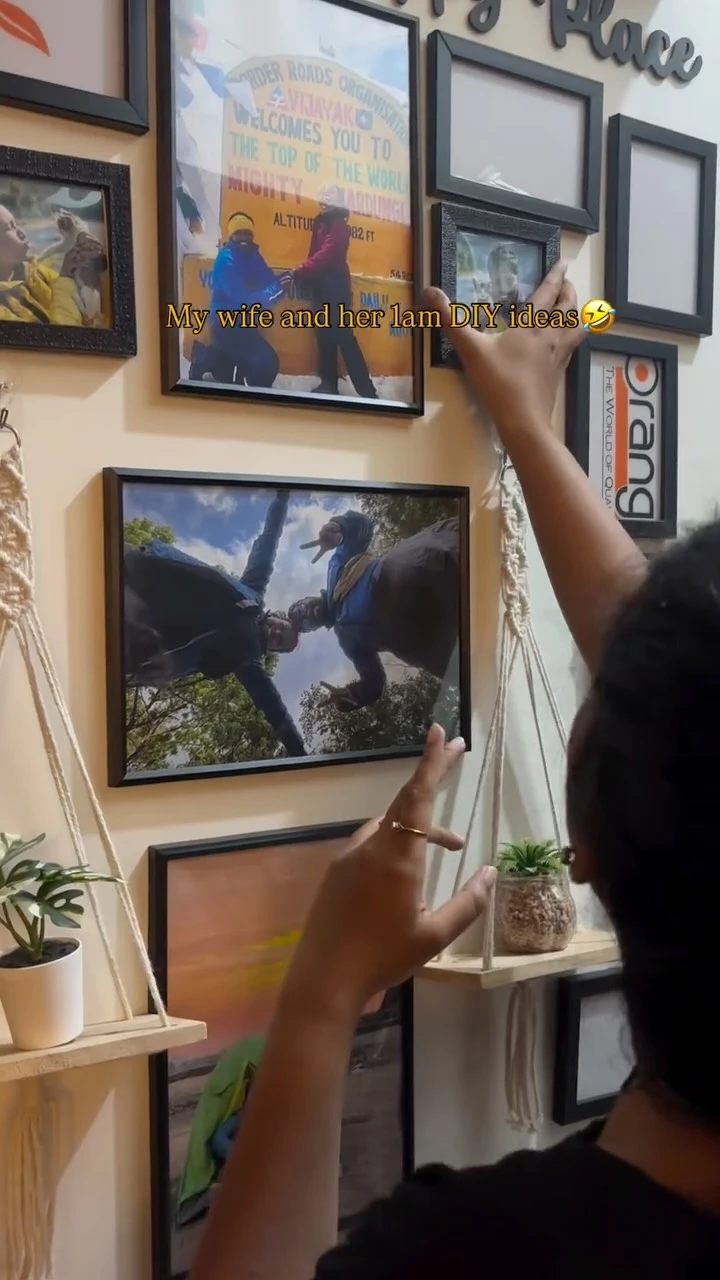
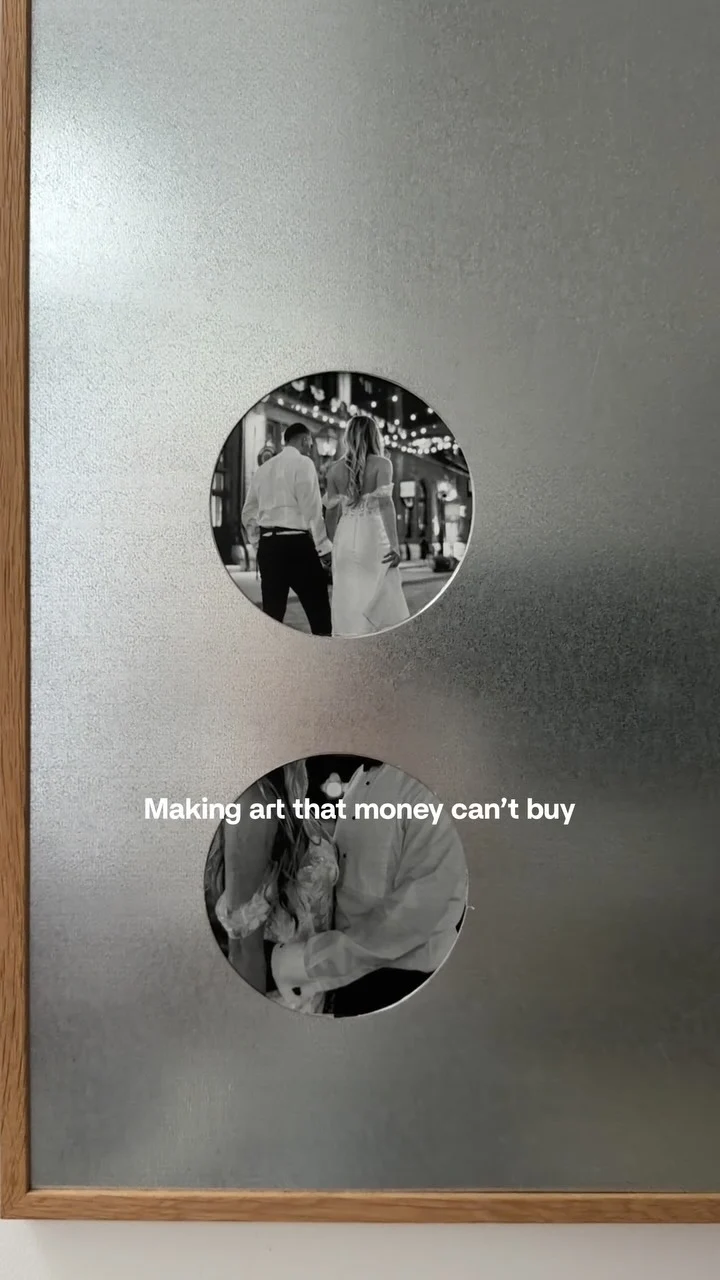
The most personal DIY wall costs a printing fee: choose a dozen of your own photographs (travel, family, the dog's biography), print them large in one finish (matte color or unified black-and-white), frame them in the family frames, and hang them in the taped plan's grid or salon arrangement. Amateur photographs printed large and framed uniformly read as art because composition and scale do the elevating.
Edit ruthlessly: the wall wants the twelve best, not the forty favorites. A single finish across the set is the discipline that makes phone photographs look curated. Leave one frame's place empty in the plan for next year's best shot, so the wall stays a living archive.
5. Press Botanicals and Frame Them as a Matched Series
credit: @nordicflowershansen_lutin
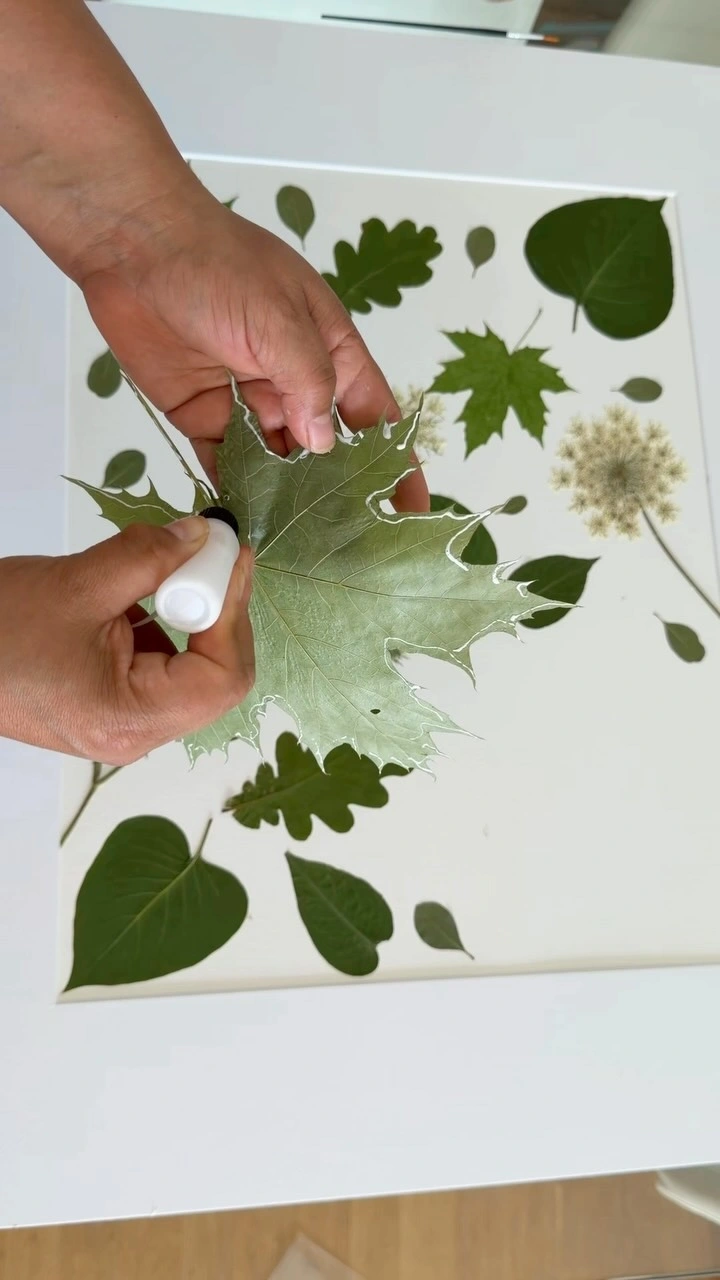
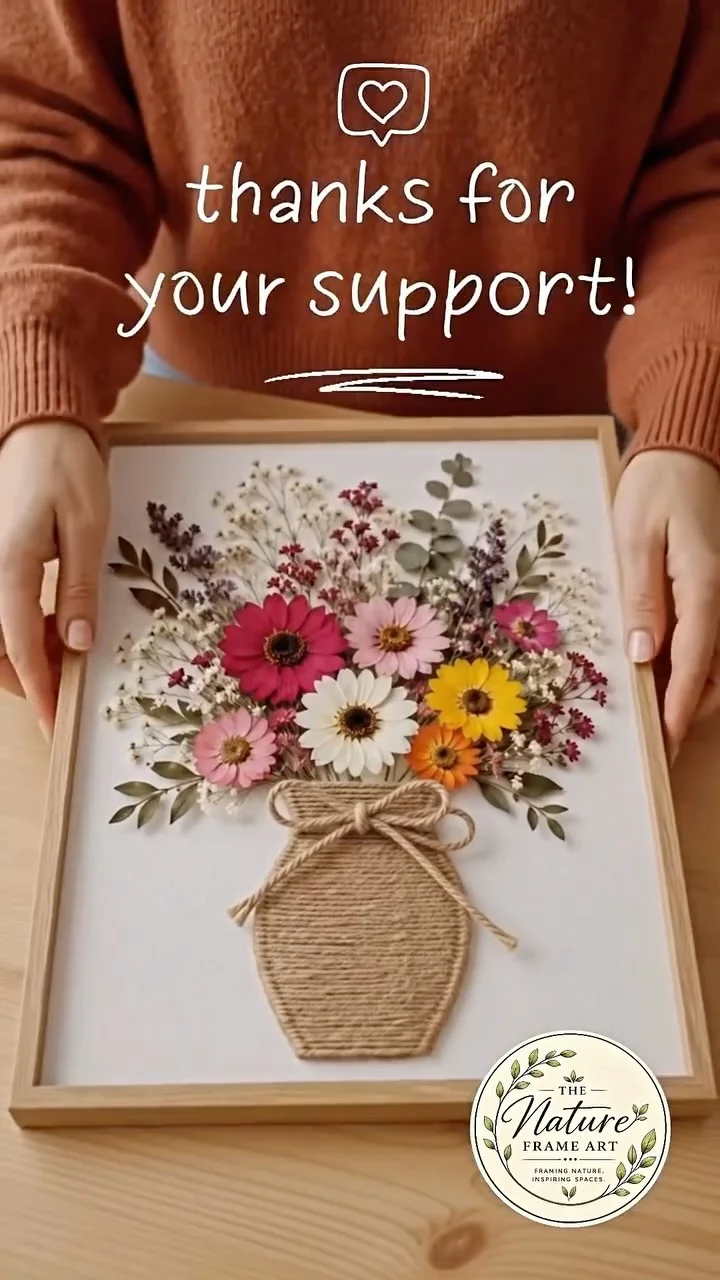
Pressed flowers and leaves between glass or on card, framed as a series of four to eight, bring the garden onto the wall at nearly zero cost. Press in books for two weeks, arrange on the palette's paper tones, and hang in a grid whose regularity contrasts the specimens' wildness. Herbs, ferns, and garden flowers all press well; thick blooms need petal separation and patience.
Label each specimen's back with its name and garden date; future you will want the data. Keep the series out of direct sun, which fades pressed color within a season. A silica-gel pressing speeds the impatient and preserves color better for fleshy specimens.
6. Paint an Abstract Canvas in the Room's Palette

credit: @annie_kunz7
One large canvas, three palette colors, and permission to be imperfect: abstract painting is the DIY wall's highest-impact beginner project. Work in large shapes, layer while wet, step back every ten minutes, and stop two strokes before you think it is done. Framed in the family frame and hung at scale, the canvas anchors a room exactly like purchased art, at a tenth of the price and with a story at dinner.
Canvas board and a thrifted frame cut the cost to pocket money. Two smaller canvases as a pair forgive proportion mistakes that one large one confesses. Sign nothing; mystery flatters beginner abstracts, and guests will ask for the artist's name with genuine interest.
| Paper Project | Cost Class |
|---|---|
| Own-photo gallery | Printing and frames |
| Pressed botanicals | Nearly free |
| Abstract canvas | Pocket money |
| Wallpaper panel art | One roll, several pieces |
7. Frame Wallpaper, Fabric, and Wrapping Paper as Instant Art

credit: @rosannafalconer
A single roll of beloved wallpaper becomes four framed panels; a yard of textile and a sheet of beautiful wrapping paper become two more. Stretch or mount flat, frame in the family, and the wall gains pattern at a scale no cushion can deliver. This is the renter's pattern weapon especially, since the paper lives in frames rather than on the landlord's walls.
Buy the roll's remnant or a single roll on clearance; the project needs pattern, not yardage. Mount on foam board for a drum-flat finish that reads expensive. A series in one pattern across different rooms stitches a home's style together cheaply.
8. Paint a Mural, Arch, or Color Block Directly on the Wall

credit: @warrilow_pds
Paint is the boldest DIY wall tool and the most reversible: an arch behind a bed or desk, a color block framing a shelf zone, a half-wall in the palette's deep tone, or a simple mural of shapes and lines for the brave. Tape edges with painter's tape sealed by the base color for crisp lines, and sample the shape at full size in tape before the first brush loads.
Arches flatter beds and desks; rectangles flatter shelves and galleries; circles flatter nothing but confidence, so use them knowingly. Renters negotiate paint with landlords more successfully than expected when the colors are palette neutrals and the exit repaint is promised in writing. Photograph the taped shape for two days before committing, the same law as templates.
9. Stencil or Stamp a Pattern Where Wallpaper Cannot Go
credit: @delancey.diy
A stencil and two paint tones pattern a wall at wallpaper's visual scale for a tenth of its cost and none of its removal grief: entry walls, the stair wall, a powder room, the strip above wainscoting. Work from the center outward, offload the brush for dry-brush softness, and accept the hand-made wobble as the finish's signature rather than its flaw.
Registration marks and a level keep rows honest; patterns drift downhill in the hands of the hopeful. Large-scale stencils read modern; small repeats read vintage; choose by the room's story. Keep leftover paint labeled, since stenciled walls touch up invisibly, one of their great virtues.
| Painted Shape | Flatters |
|---|---|
| Arch | Beds and desks |
| Rectangle block | Shelves and galleries |
| Half-wall tone | Long rooms, low ceilings' rivals |
| Circle | Confidence, used knowingly |
Another take worth browsing is Design Ideas for Wall-Mounted Floating Shelves over at HGTV.
Textile, Wood, and Dimensional Projects
10. Weave or Knot a Wall Hanging: Macramé, Weaving, or Yarn Art

credit: @lionbrandyarn
Fiber art forgives beginners like no other medium: a simple macramé hanging, a loom weaving in palette yarns, or yarn wrapped and tasseled on a branch gives the wall softness, texture, and sound absorption in one piece. Start at pillow scale, learn the three basic knots or the plain weave, and let the first piece be small, finished, and hung rather than grand and abandoned.
A branch from the garden as the hanging rod ties the piece to the house's gathered style. Fiber pieces need dusting with a hairdryer on cool, monthly in dusty homes. Scale up only after a finished small piece hangs; the curriculum rule protects both walls and morale.
11. Build Floating Shelves and Style Them as Rotating Galleries

credit: @kendallandkayleightwins
Two or three floating shelves (bought as blanks and finished by you, or built from boards and hidden brackets) convert a wall into a gallery that changes without new holes: books lying and standing, small plants, ceramics, the framed mini of the season. Shelves are DIY's gateway structural project: level, studs, and patience are the whole skill list.
Anchor into studs or use rated anchors; shelves keep promises that gravity audits nightly. Keep the shelf styling in thirds (objects, books, air) and restyle seasonally from the house's own store. A shelf's underside takes a small LED strip for the evening layer, a five-minute upgrade with a gallery's effect.
12. Make a Plate, Basket, or Hat Wall in the Gathered Style

credit: @la_princesa_rubia
Collections become wall decor when arranged with intent: woven baskets in descending sizes, ceramic plates in the palette, straw hats in a sunburst, hung on pins or small hooks in a composed cluster. Lay the arrangement on the floor first, photograph it, and transfer it to the wall piece by piece from the center outward.
The floor plan is non-negotiable; basket walls composed directly on plaster end in Swiss cheese. Thrift stores stock these collections for coins; the palette law applies at the till. Clusters read best oddly numbered and breathing, with their edges irregular like a shoreline.
| Dimensional Project | Gateway Skill |
|---|---|
| Floating shelves | Level, studs, anchors |
| Basket wall | Floor planning, light pins |
| Plate rail or hooks | Spacing and symmetry |
| Shadow boxes | Arrangement in miniature |
13. Construct Shadow Boxes for the Three-Dimensional Memories
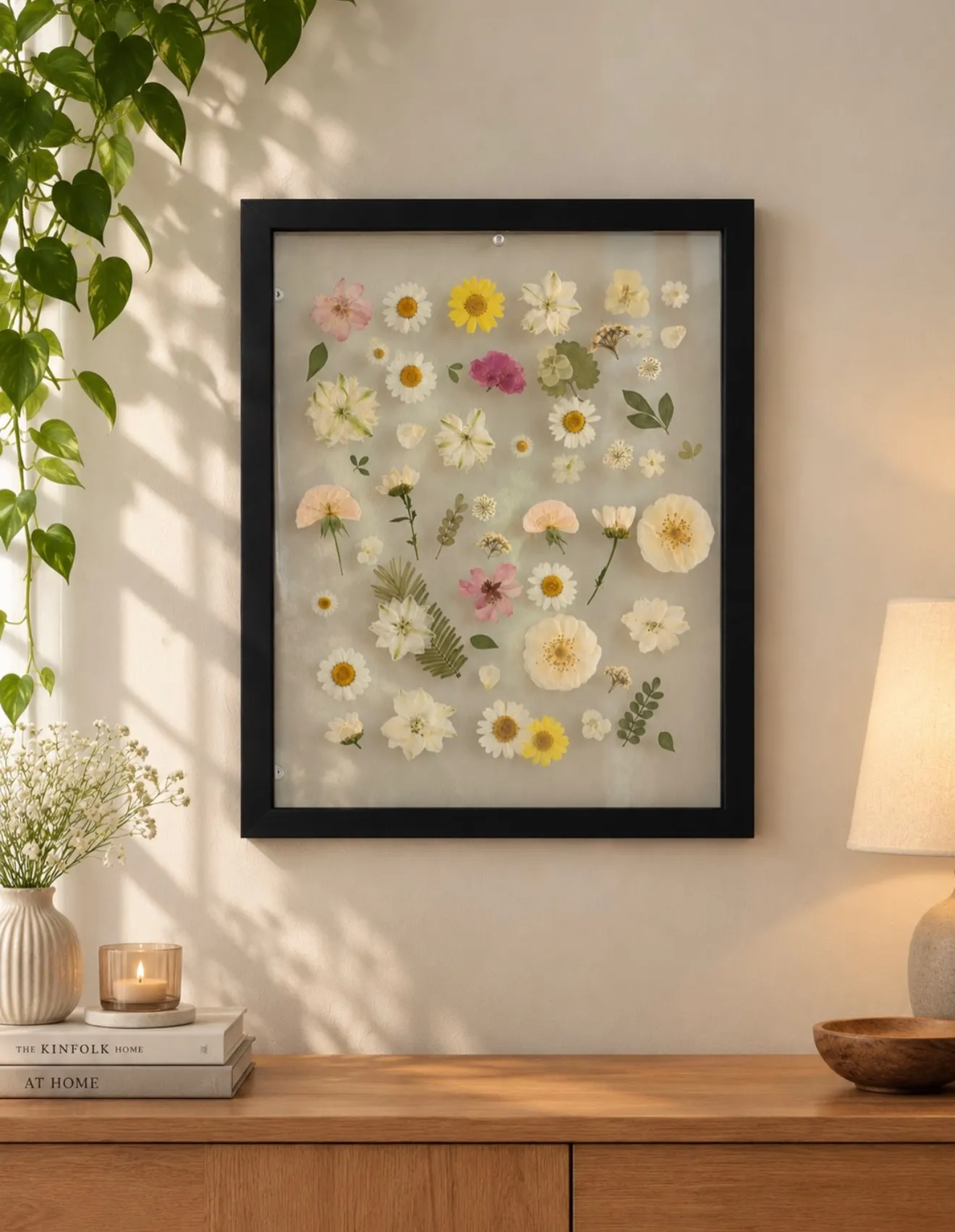
credit: @diy_with_ri
Shadow boxes frame what flat frames cannot: the grandfather's tools, the trip's collected stones and tickets, the baby's first shoes beside the photograph, sheet music, medals, the wedding bouquet's pressed survivors. Arrange on the palette's backing tones, fix with pins or archival glue, and hang the boxes where their stories get asked about.
Depth is the composition's music: vary object heights with small risers so shadows play. Glass fronts protect and glare; place boxes out of direct window opposition. These pieces become the house's most discussed decor, which is the correct destiny for its best stories.
14. Build a Pegboard or Rail System for the Working Walls
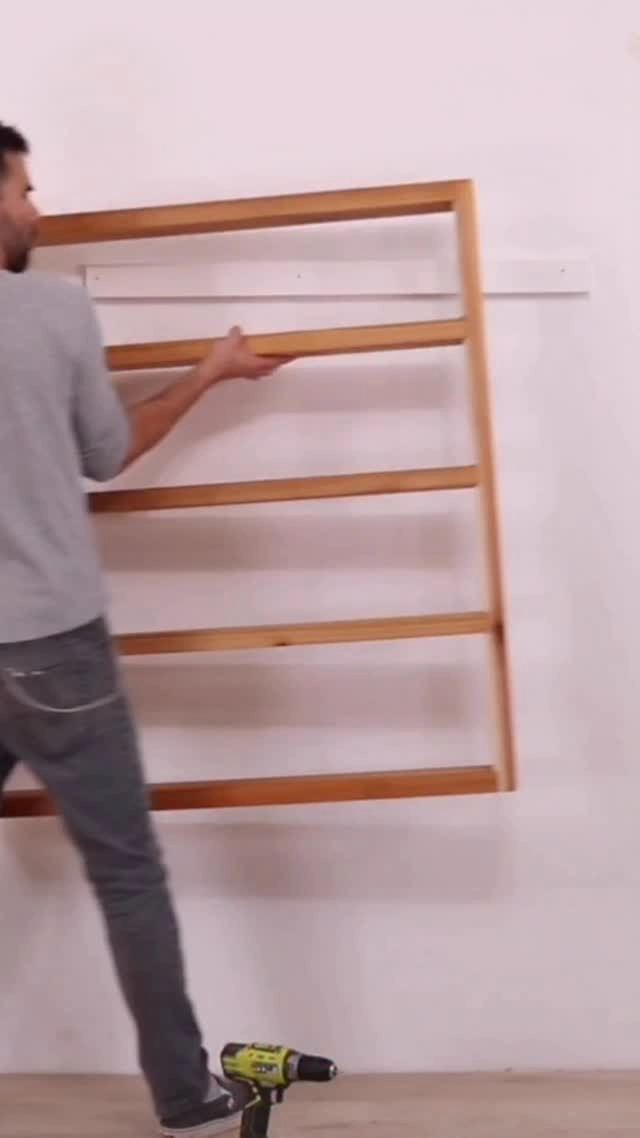
credit: @benjaminuyeda
Kitchen, craft, entry, and garage walls work for a living, and a pegboard or rail system dresses them in order: hooks, baskets, and shelves reconfigured as needs change, painted in the palette so utility reads as design. The system's beauty is its honesty: tools at hand, everything visible, nothing homeless.
Frame the pegboard's edges with trim and it graduates from workshop to furniture. Outline each tool's home in paint or tape where children or shared households need the map. Rail systems in kitchens carry the day's tools within the cook's reach and off the counter, the galley's law translated to walls.
15. Hang a Quilt, Rug, or Textile as the Wall's Soft Furniture
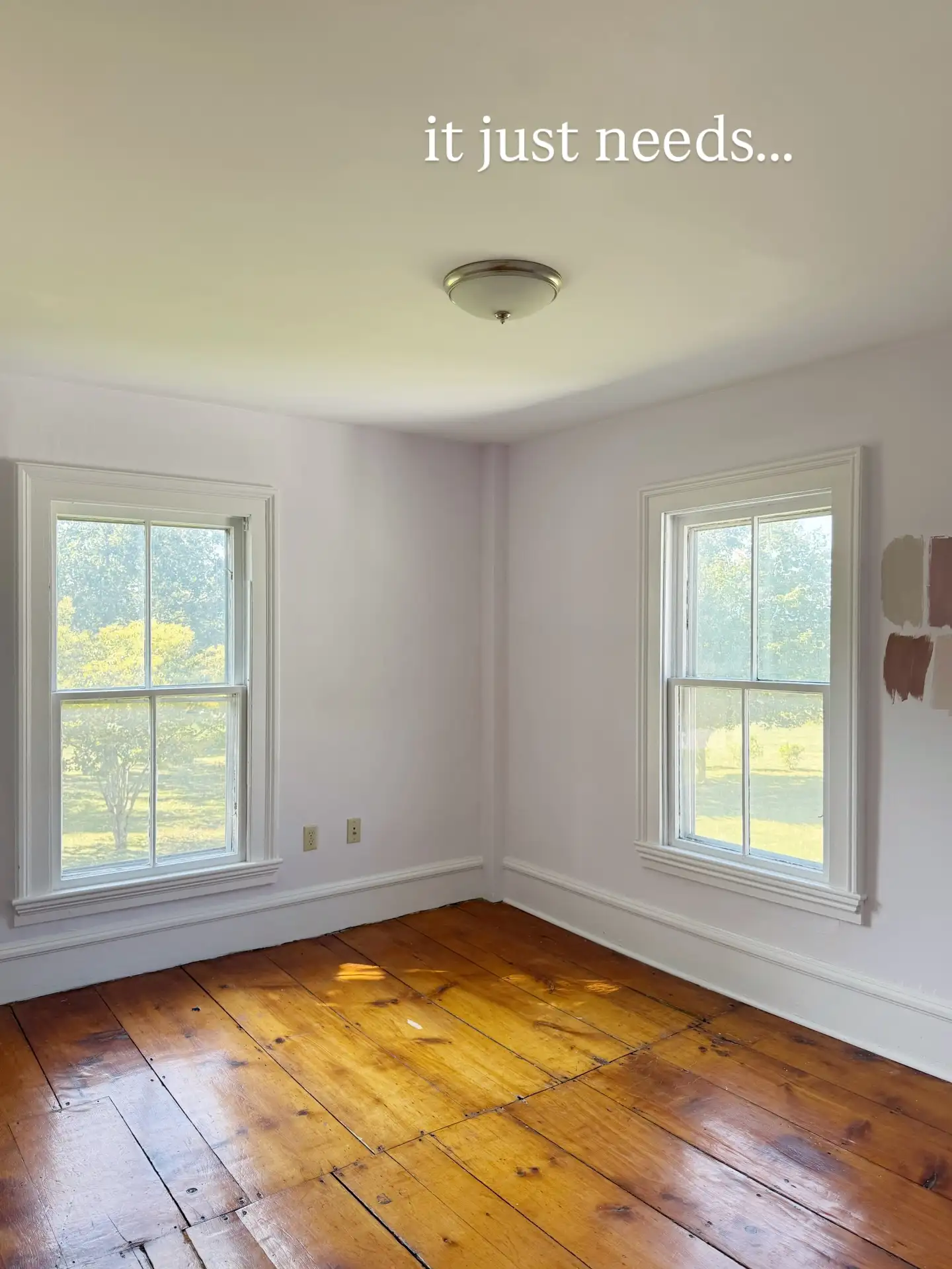
credit: @hattiekolp
A beloved quilt, a flat-weave rug, or a woven throw hung on a rod or wooden hanger becomes wall-scale textile art: color and pattern at furniture scale, sound softened, and the piece preserved better than underfoot or in a drawer. Sleeves sewn to the back or clamp hangers protect the textile's fibers from its own weight.
Rotate textiles off the wall seasonally; light and gravity both take rent. Heirloom pieces belong out of sun and away from the fireplace's soot path. A textile wall behind a bed replaces the headboard with the house's warmest silhouette, a trick worth stealing for guest rooms.
| Textile on Wall | Protection It Needs |
|---|---|
| Quilt | Sleeve hanging, rotation |
| Flat-weave rug | Clamp or rod, even weight |
| Throw or weaving | Dowel, dusting rhythm |
| Tapestry heirloom | No sun, no soot path |
Mirrors, Light, and Living Walls
16. Build a Mirror Composition That Multiplies Light
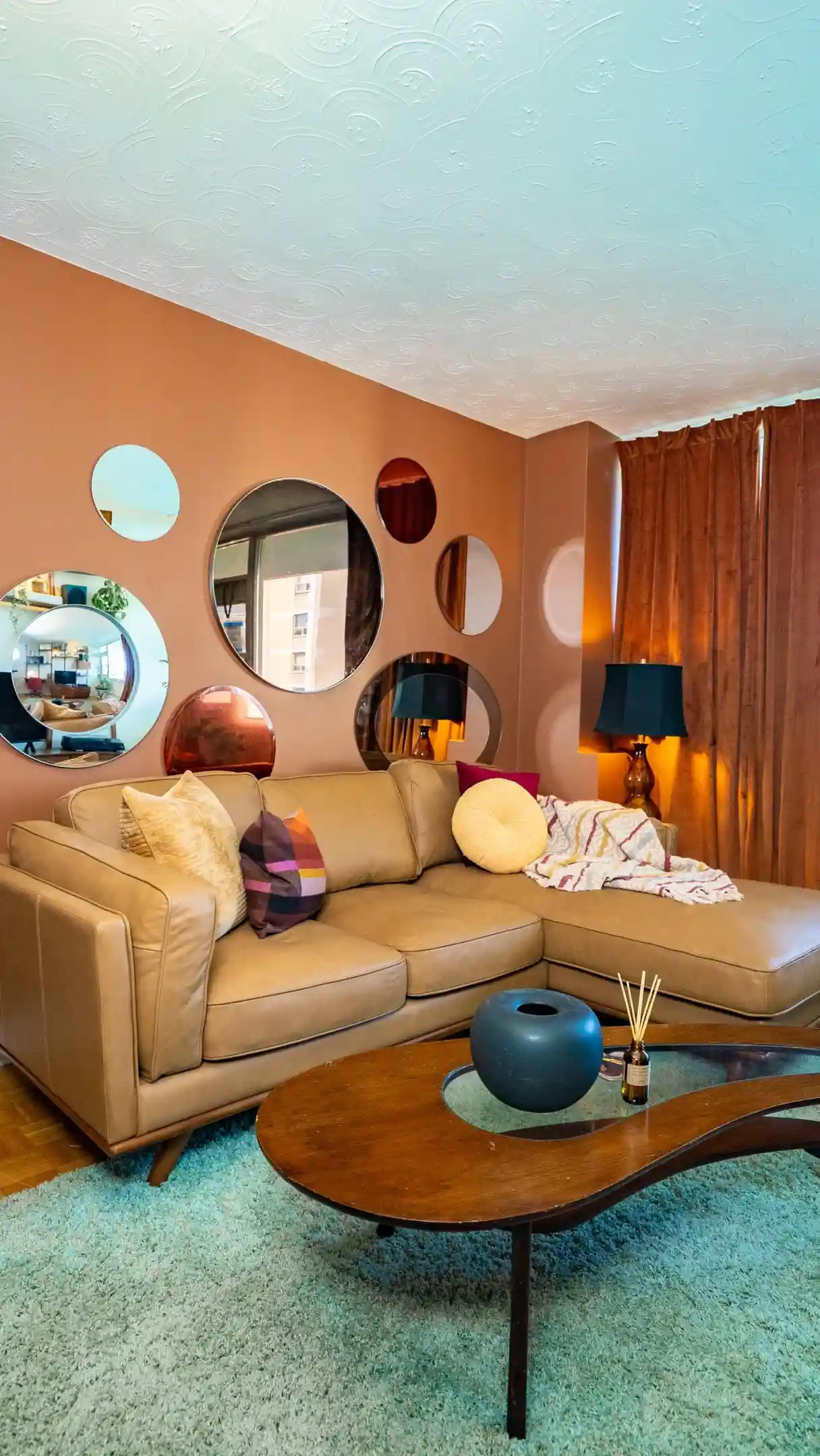
credit: @thesorrygirls
Mirrors are DIY light infrastructure: a thrifted mirror refinished in the frame family, a cluster of small mirrors as a sunburst or constellation, or one large mirror opposite the window doubling the room's daylight. Hang mirrors to reflect something worth seeing twice (the garden, the pendant, the art wall), never the clutter corner or the ceiling's plainest acre.
Safety anchors are non-negotiable above sofas and beds; mirrors are heavy glass with ambitions. Clean composition beats quantity: three mirrors composed outrank nine scattered. A mirror at a dining wall doubles candlelight at every dinner, the cheapest gala in this guide.
17. String Light as Decor: Fairy Lights, Sconces, and Picture Lights

credit: @looo_bear
Light strings and plug-in fixtures decorate walls directly: fairy lights in a jar cluster on a shelf, plug-in sconces flanking art or a bed (no electrician, renter-safe), a picture light over the gallery's hero piece. Warm temperatures only, cords channeled or clipped invisibly, timers running the evening show.
Picture lights make beginner canvases look gallery-serious for the price of a pizza. Battery sconces serve walls where cords cannot run, with a charging rhythm in the calendar. Keep every bulb in the room's warm family so the wall's light agrees with the lamps'.
18. Create a Living Wall: Hanging Plants, Propagations, and Shelves

credit: @nikkihomediy
Plants climb walls in planters, propagation jars, and shelf gardens: a rail with hanging pots by the window, glass vessels rooting cuttings as a science-art series, shelves of small pots in the palette's ceramics. The living wall changes weekly, which no purchased decor can claim, and its care rhythm becomes part of the room's life.
Water management is the design's hidden half: drip trays, a watering can that lives nearby, species chosen for the wall's actual light. Propagation jars double as the household's plant-gift factory. Start with one rail and five plants; jungles are earned by survival rates.
| Living Wall Piece | Rhythm |
|---|---|
| Hanging pots | Water weekly, rotate monthly |
| Propagation jars | Change water, gift the rooted |
| Shelf garden | Group by thirst |
| One hero plant | The wall's anchor piece |
19. Install Picture Ledges for the Zero-Commitment Gallery
credit: @the_diy_records
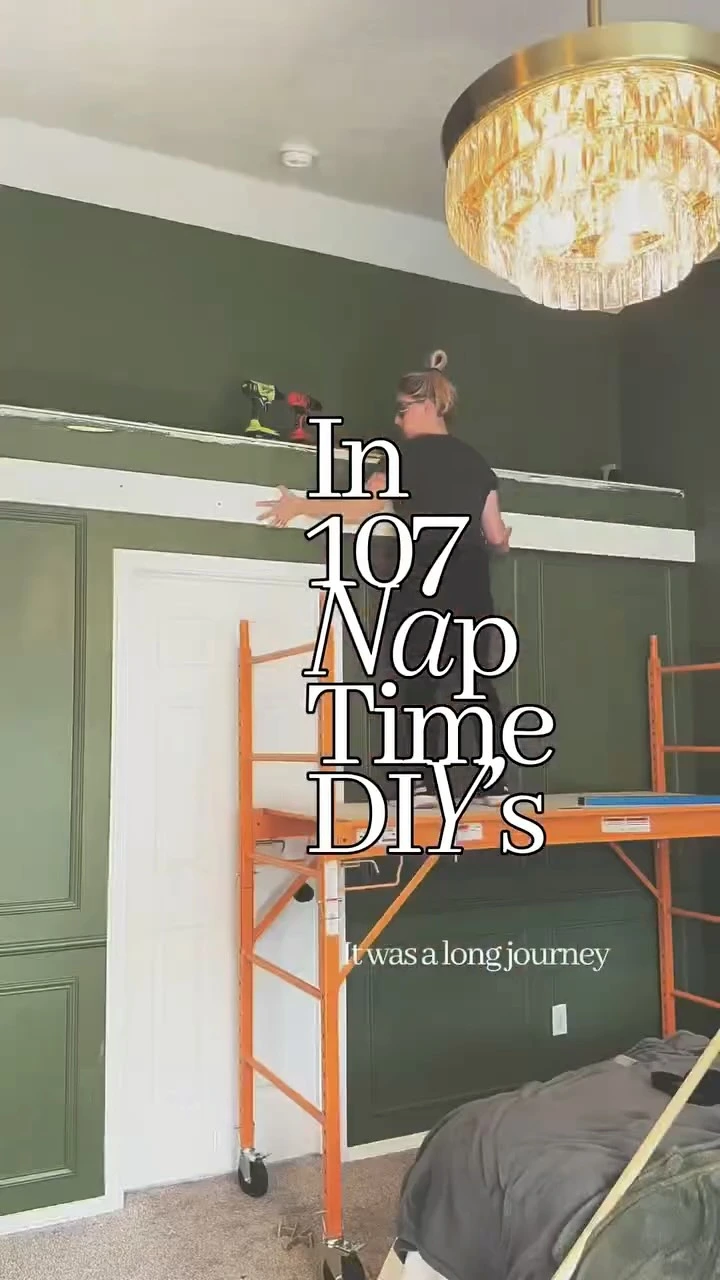
Picture ledges (shallow rails, bought or built from two boards) hold framed pieces leaning in overlapping rows that rearrange in seconds with no new holes: the indecisive decorator's perfect infrastructure and the seasonal display's best friend. Two ledges at staggered heights above a sofa or along a hall compose a gallery that evolves monthly.
Ledges hold books face-out in children's rooms, where covers are the art. A ledge's styling follows the same thirds law as shelves. Renters find ledges landlord-negotiable since their holes are few and high, and the ledges leave with the tenant as portable wealth.
Rooms, Renters, and Budgets
20. Apply Board-and-Batten, Picture Molding, or Wainscot for Architecture

credit: @heybrooklynb
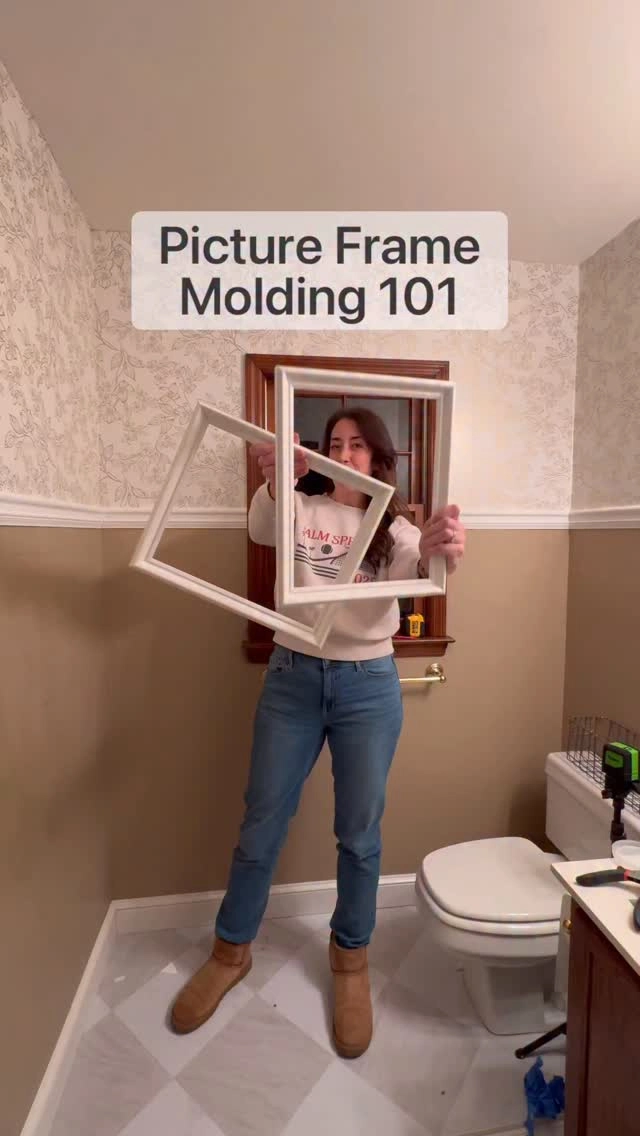
The advanced DIY wall project with the deepest payoff: molding profiles applied in grids or frames, painted wall-color or a tone deeper, giving flat rooms architecture and shadow lines. Picture-frame molding suits beginners (miters and a level), board-and-batten suits the bold, and both cost paint money relative to their transformation. Measure twice, caulk generously, and paint unifies every sin.
Renters skip this tier unless the landlord is family; the project is the wall's now. A single accent wall of molding behind the sofa or bed delivers most of the effect at a third of the work. Keep furniture silhouettes simple against molding walls, since the wall itself is now the pattern.
21. Make Kids' Art and Family Work the Honored Gallery

credit: @marykaterob
The household's own production deserves framing with full honors: children's art in the family frames on a ledge gallery (rotated by the artists), the family's photographs printed large, hand-made pieces from every generation composed together. A home that frames its own makers teaches them their work belongs in the world, which is decor's deepest function after beauty.
Rotate children's pieces on a schedule the artists control, with retired works archived in a portfolio rather than the bin. Frame quality is the honor: the same frames as the 'real' art, no lesser tier for small artists. The gallery wall of family work becomes the house's most photographed wall by guests, reliably.
| Family Work | Honor It Receives |
|---|---|
| Children's art | Family frames, ledge gallery |
| Photographs | Printed large, one finish |
| Grandparents' pieces | Composed with the new |
| Rotation | Artists control the schedule |
22. Decorate Walls as a Renter With Peel, Lean, and Tension

credit: @thepajaamahub
The renter's wall curriculum: peel-and-stick wallpaper and decals (tested first), art leaned on ledges and furniture, tapestries and textiles on tension rods or removable hooks, mirrors on rated strips, and paint promised only where landlords agree in writing. Every technique in the early tiers of this guide was chosen with this wall in mind.
Test every adhesive in an unseen corner through real seasons of steam and sun before the gallery trusts it. Keep the lease's exact words in the project notebook. Portable pieces (ledges, textiles, frames) compound across addresses, making the renter's collection richer with every move while the owner's stays nailed to one house.
| Renter Tool | Wall Risk |
|---|---|
| Peel-and-stick | Test first, peels clean |
| Leaning on ledges | Two small holes or none |
| Tension and strips | None when rated honestly |
| Textiles on rods | Light, soft, deposit-safe |
23. Build a Whole Gallery Wall for the Price of Two Dinners

credit: @thehandmadehome
Budget DIY walls run on the curriculum's economics: thrifted frames unified with paint, your own photographs printed in a batch, pressed botanicals free from the garden, one canvas painted at home, wrapping-paper panels from a single roll. The wall that results costs less than one purchased statement piece and means more at every dinner where its stories get told.
Batch the frame painting on one newspaper-covered afternoon; infrastructure first, art second. Print photographs in one order to catch bulk pricing. The budget wall's only unacceptable cost is impatience: pieces made to measured templates fit; pieces made to enthusiasm need reframing.
24. Season the Walls: Rotating Pieces for the Calendar

credit: @busybeingbecks
Walls join the seasonal rotation with the lightest pieces: the ledges and shelves restyle, wreaths and garlands visit for their festivals, the textile hanging swaps weight, and one framed piece per room trades with the stored collection. A wall system built on ledges and a frame family rotates in twenty minutes, which is why the infrastructure choices mattered.
Store off-season wall pieces flat in the under-bed bay or the wardrobe's top shelf, labeled by festival. Photograph each season's composition; next year's rotation plans itself from the album. Heavy structural pieces (molding, shelves) never rotate; their permanence is what the light pieces dance around.
| Seasonal Swap | Pieces That Move |
|---|---|
| Ledges and shelves | Restyled in minutes |
| Textile hanging | Weight follows the season |
| Wreath and garland | Festival visits |
| One framed piece | Trades with the store |
25. Fix the Failures: Patching, Color Matching, and Graceful Retirements

credit: @megank_home
DIY walls include their repair curriculum: spackle and a damp sponge for nail holes, paint matched from the can in the cupboard (label every can with its wall and date), a fallen piece's frame repaired or promoted to the shadow-box tier, and failed experiments retired without ceremony to the craft shelf for parts. A wall that has survived repairs looks lived-in at exactly the right depth.
Touch-up paint feathered with a nearly dry brush vanishes; a loaded brush leaves a scar of good intentions. Keep one wall in the house as the experiment wall, where new techniques audition before graduating. Every decorator's notebook should end with the failures' page, the most instructive one in it.
Skill Ladder and the Long Game
26. Climb the Ladder in Order: Paper, Paint, Textile, Wood, Structure

credit: @sincerelyreneze
The curriculum's sequence exists because each tier teaches the next: paper teaches layout and palette, paint teaches edges and courage, textiles teach texture and patience, wood teaches measuring and anchors, structure teaches the house itself. Skipping rungs produces the classic collapse (the molding project attempted by hands that have never taped a line). Trust the ladder; it was built from a thousand other people's weekends.
Graduation is a finished, hung piece per tier, not hours served. Photograph each tier's wall for the notebook; the progression album encourages the next climb. Households may climb at different speeds per member, and the walls will show a federation of skills, which is charming.
27. Give Each Room One DIY Hero and Let Bought Pieces Support

credit: @naylafahma.a
Composition law for mixed walls: one handmade hero per room (the big canvas, the quilt, the basket wall) with purchased or inherited pieces in supporting roles, unified by the palette and frame family. Two heroes argue; zero heroes make a showroom. The hero carries the room's story, so place it where stories get told: over the sofa, across from the door, above the mantel.
Rotate hero status seasonally among strong pieces if the house produces many makers. Children may hold hero rank in their own rooms from their first finished piece. A hero's frame and hanging hardware get the best in the house; heroes are load-bearing.
| Hero's Support | Role |
|---|---|
| Bought pieces | Quiet competence |
| Inherited pieces | Generations present |
| Frame family | The visual referee |
| Placement | Where stories get told |
28. Document the Makes: A Notebook With Dates, Costs, and Lessons
credit: @the_nature_frame_art
Keep the maker's notebook: each project's date, true cost, materials, the mistake made, and the fix found, with a photograph of the finished wall. The notebook converts scattered weekends into a curriculum with a memory, settles 'what did we use on this wall' forever, and becomes strangely moving to reread as the house fills with dated evidence of growing skill.
True cost includes the failed first attempt; honest books make honest budgets. Photograph the failures too, labeled with what they taught. The notebook lives with the tools, not with the diaries, because it is equipment.
| Notebook Entry | Fields |
|---|---|
| Project | Name and wall |
| True cost | Materials plus the failed first try |
| Lesson | The mistake and its fix |
| Photograph | Finished wall, dated |
29. Make Wall Decor With Kids at Their Own Tier

credit: @chairwhimsy
Children join the curriculum at the paper tier with full honors: their paintings framed in the family frames, paper weavings and chains as seasonal garlands on the ledges, handprint canvases that become the house's dated relics. Supervised graduations (paint, then textile) follow their patience, and their hero wall in the hall teaches the household's guests what this family values.
Frame children's work at the same quality as adults'; the honor is the lesson. Date every piece on its back in the child's own hand when they can write. Their retired pieces archive in portfolios, and the best return as gifts to grandparents, framed identically, to tears.
30. Use Maps, Music, and Words: The Sentimental Wall Materials
credit: @mynorfolknest
Some walls carry meaning in content rather than craft: a framed map of the hometown or the journey, sheet music of the song, a letter or a poem in a careful hand (yours, copied slowly, counts as art), the children's height chart transferred to a board that moves house. These pieces cost frames and honesty, and they anchor rooms emotionally like nothing purchased can.
Handwriting improves with practice sheets; the wall deserves your fifth draft, not your first. Maps of places you have not been are decoration; maps of places you have are testimony, and rooms know the difference. The height board that moves house is the strongest argument in this guide for making things yourself.
| Sentimental Material | Form |
|---|---|
| Map | Hometown or the journey |
| Sheet music | The song, framed |
| Handwritten words | Fifth draft, careful hand |
| Height board | Moves house with the family |
31. Photograph Your Walls Each Season and Edit Like a Curator

credit: @farrowandball
The maker's audit: photograph every decorated wall each season, study the images away from the room, and edit with a curator's cold eye (one piece out per crowded wall, one gap filled per empty one, one hero promoted). Walls accumulate by enthusiasm and improve by editing, and the camera is the only editor who never flatters the maker.
Compare seasons side by side to see whether the wall deepened or merely grew. The edit's removed pieces join the rotation store, not the bin; curation is circulation. Keep the audit honest by inviting one friend's eye yearly; fresh eyes catch what love defends.
32. Let the Walls Keep Growing With the Household's Hands

credit: @at_home_with__charl
The finished DIY wall system is never finished: skills climb, children graduate tiers, textiles rotate, heroes change rank, and the notebook thickens. Walls made by the household's own hands carry its biography in a way no purchased collection can imitate, and every new project starts from a higher rung than the last. That compounding is the entire promise of making the walls yourself.
Resist completing the house; a wall with one empty planned space is a household still becoming. Teach one project per year to a friend or a child outside the house, and the curriculum reproduces. When guests ask who decorated, the answer takes the evening, as it should in a boho heart and a maker's home alike.
| Growth Habit | Cadence |
|---|---|
| New project | One per season, ladder order |
| Wall audit | Photographed, edited seasonally |
| Rotation | Light pieces, twenty minutes |
| Teaching | One project shared per year |
Common Mistakes With DIY Wall Decor
DIY walls fail by impatience and by chaos: projects beyond the maker's current rung, and pieces made without the palette and frame laws that make handmade walls cohere.
| Mistake | Why It Fails | Do This Instead |
|---|---|---|
| Skipping tiers to the structural project | Skills and walls both suffer | Climb paper, paint, textile, wood, structure |
| No palette or frame discipline | Handmade reads as clutter | One palette, one frame family, enforced |
| Hanging without templates | Layout regret in anchor holes | Tape templates, live two days, then hang |
| Composing clusters on the wall directly | Swiss-cheese plaster | Floor-plan every cluster first |
| Buying pieces before infrastructure | Frames and ledges missing at hang time | Infrastructure first, art second |
DIY Wall Decor by Situation: 4 Ready-Made Plans
If You Are a Total Beginner With One Weekend
Stay at the paper tier and finish three pieces: a printed-photo trio in family frames, one pressed botanical set from the garden or a bouquet, and one wrapping-paper panel. Tape the layout for a day, hang at eye level, photograph the wall, and write the notebook's first page. A finished small wall beats an abandoned grand one at every skill level, forever.
If You Rent and Cannot Make Holes
Peel, lean, and tension everything: peel-and-stick panels (corner-tested through a steamy week), picture ledges on the fewest possible fixings or leaning galleries on furniture, textiles on tension rods, mirrors on honestly rated strips. Photograph the original walls and keep the lease clause in the notebook. Build portable wealth that compounds at the next address.
If You Own and Want Architecture
Climb to the structural tier in order: shelves first (anchors and levels), then picture-frame molding on one wall behind the sofa or bed, painted with caulk's forgiveness, then board-and-batten where the room wants weight. One wall per season is the sane pace. The house gains shadow lines and the maker gains the top rung.
If the Whole Family Makes Together
Run the federation: children at the paper tier with framed honors on the hall ledges, one parent on textiles, one on wood, and a shared hero project per year (the quilt wall, the basket cluster) planned on the floor together. Date everything, photograph every wall, and let the notebook hold all hands' lessons. The house becomes the family's collected works, which guests read like a novel.
For more ideas in this direction, take a look at Budget-Friendly DIY Wall Art Projects Anyone Can Do from HGTV.
Frequently Asked Questions About DIY Wall Decor
What is the easiest DIY wall decor for a beginner?
Paper-tier projects: your own photographs printed large and framed uniformly, pressed botanicals in a grid, and framed wallpaper or wrapping-paper panels. They need no tools beyond scissors and a level, forgive every mistake, and teach layout and palette for the higher tiers. Finish three small pieces before attempting anything with a drill.
How do I make DIY wall decor look cohesive instead of crafty?
Enforce two laws from the first piece: one palette for everything made or hung, and one frame family (same tone and profile family) for everything framed. Vary texture and subject freely inside those laws. Cohesion is discipline about color and frames, not about matching content.
How high should wall decor hang?
Center compositions near 57 inches from the floor, adjusted for the room's life: seated eye level over sofas and in dining rooms, standing eye level in halls and entries. Templates taped on the wall for two days settle arguments better than rules do. Pieces hung too high are the most common DIY wall failure and the easiest to fix.
Can I decorate walls without nails as a renter?
Yes: picture ledges (few or no fixings), leaning galleries, peel-and-stick panels tested in a corner first, textiles on tension rods, and mirrors on strips rated honestly for their weight. Photograph the original walls, keep the lease's exact wording in your notebook, and choose portable pieces that compound across addresses.
What tools do I actually need to start?
A level, a measuring tape, painter's tape, a hammer and assorted picture hooks, a drill-driver for the wood tier, a stud finder, and spackle with a putty knife for the repair kit. Everything beyond that is tier-specific and can arrive with its project. The notebook and the camera are tools too; the audit photographs steer the whole curriculum.
How much does a DIY gallery wall cost?
A disciplined one costs less than two dinners out: thrifted frames unified with paint, batch-printed photographs, free pressed botanicals, one home-painted canvas, and paper panels from a single roll. The expensive version is the impatient one, where pieces are made without templates and reframed to fit. Infrastructure (frames, ledges) bought on sale carries the savings.
How do I arrange a basket or plate wall?
Compose the entire cluster on the floor first, photograph it, mark each piece's center, and transfer to the wall from the middle outward on light pins or hooks. Odd numbers, irregular edges, and breathing room make clusters read as shorelines rather than as storage. Never compose directly on the wall; the plaster pays for improvisation.
What wall projects add the most value to a room?
Applied molding and picture ledges for architecture, a large mirror composition for light, floating shelves for rotating display, and one handmade hero piece for story. In that order they change a room's bones, light, function, and meaning. All four together cost less than one mid-range sofa and outlast it in compliments.
How do I keep DIY walls from looking dated?
Keep the infrastructure classic (frame family, palette, molding) and let the light pieces rotate seasonally from your own store of makes. Edit with seasonal photographs and a curator's cold eye: one piece out per crowded wall. Dated walls are unedited walls; the making was never the problem.
Conclusion: Walls That Tell Who Made Them
DIY wall decor succeeds as a curriculum: paper teaches layout, paint teaches courage, textiles teach texture, wood teaches measure, and structure teaches the house, all inside one palette and one frame family that make the handmade cohere. Add the notebook, the seasonal audit, and heroes with supporting casts, and the walls become the household's biography in frames. Start at your honest rung this weekend, finish one piece completely, and hang it like you mean it.
*Ready to make the walls yourself? Start with tip 1 and audit the walls first.*
—


One Comment