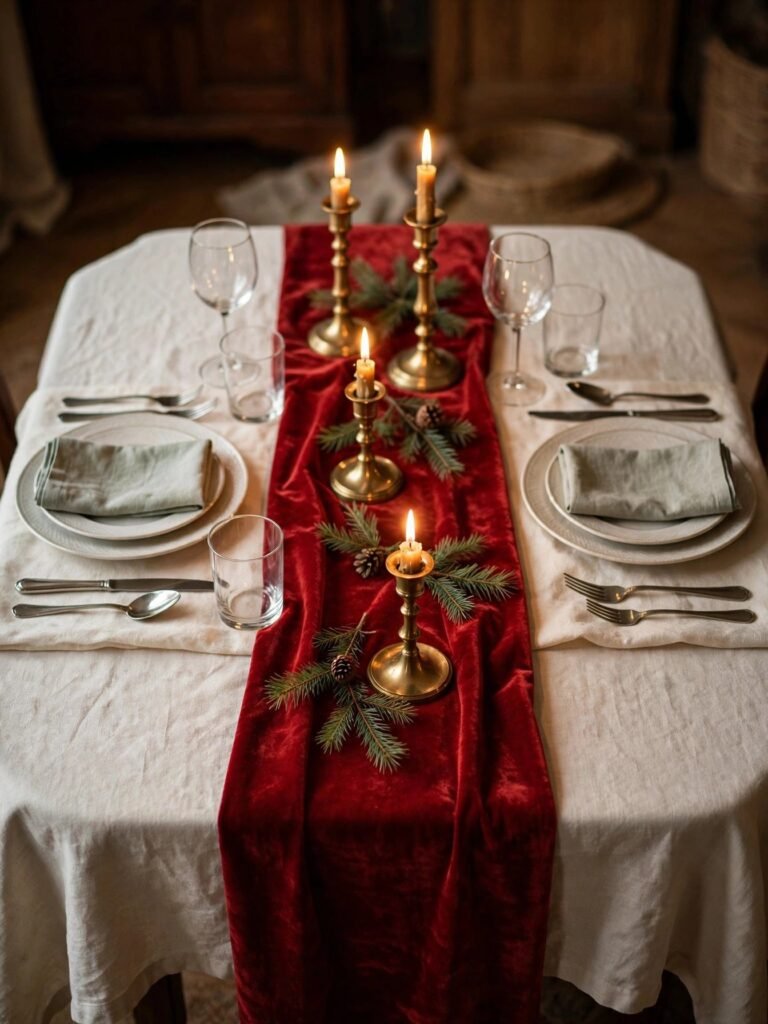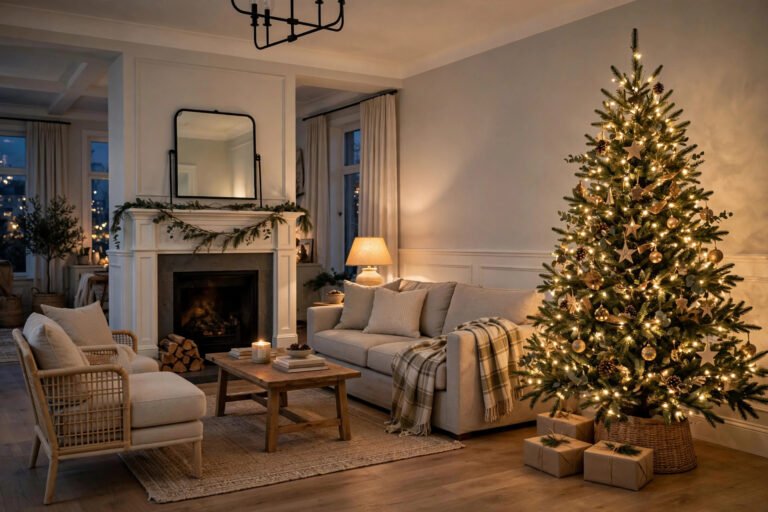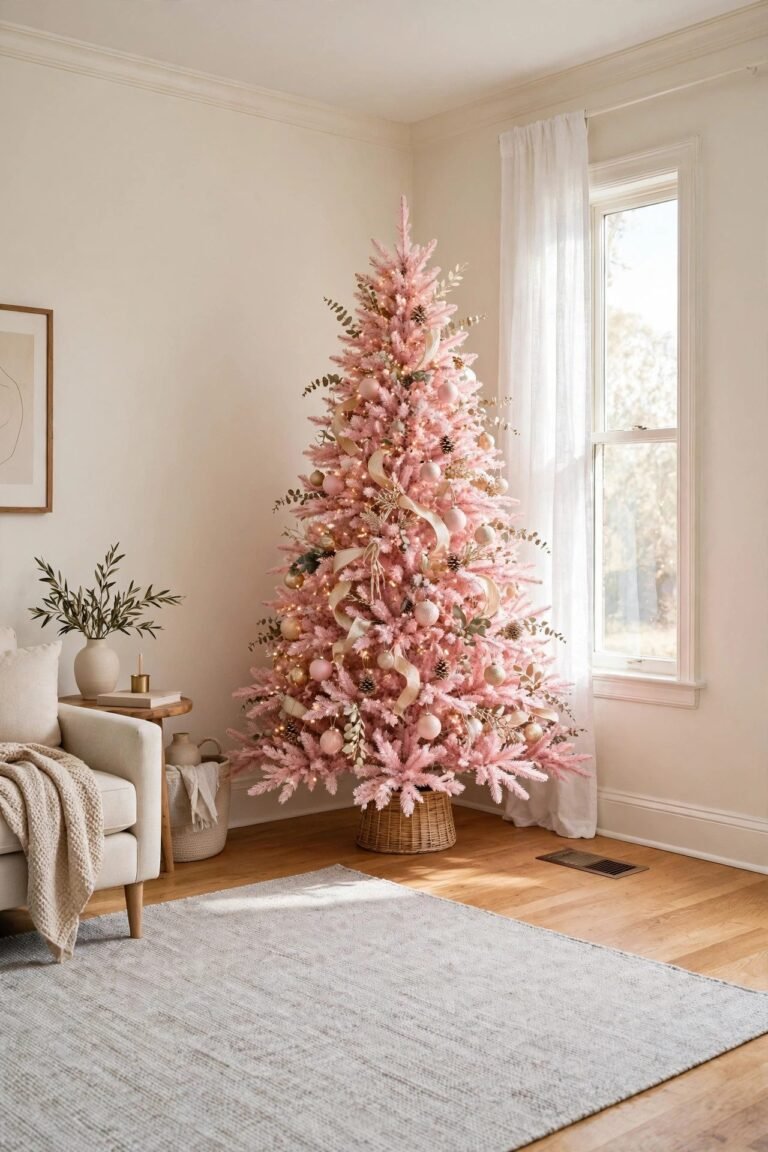
Christmas Centerpiece Ideas: 30 Proven Designs for Dining Tables
Your Christmas centerpiece ideas succeed or fail on sight lines, serving space, and flame safety, not on how lush they looked at the florist. This guide gives you 30 exact designs, each with a measurement, a method, and a result you check with your own eyes. As professional tablescape designers consistently find, centerpieces that host beautifully share three traits. They respect the sight line, under 12 inches or above 24 on a stem, so guests see faces, not foliage. They leave the table’s working territory free, because a centerpiece moved for the turkey has failed its only exam. And they are built on a base that lifts away in one motion, the table transforming from portrait to workplace in sixty seconds. Work the sections in order and your centerpieces build from a table audit to the season’s most admired square feet.
One number guides every purchase in this guide. Your full scheme lands between $10 and $500, and every tip below states its cost before you buy.
Before You Begin: Five Foundation Steps for Christmas Centerpieces
Failed centerpieces share one cause: building before the table, the meal, and the palette are understood. This foundation section measures your table, plans your menu’s space, and sets your budget before the first stem is cut. Every later section builds on these five steps.
1. Measure the Table and Mark the Centerpiece’s True Territory

credit: @mitra.artdesign
Measure the table’s length and width, then subtract the working territory: 24 inches of depth per place setting on each side and the serving zone the meal demands. What remains, usually a strip 12 to 18 inches wide down the middle, is the centerpiece’s whole kingdom. The territory is taped or chalked on the tablecloth during the build, because centerpieces grow sideways like ivy when nobody draws the border.
Round and square tables take a centered composition instead of a strip, their kingdom a circle of 18 to 24 inches. Leaves and extensions change the math, the holiday table measured in its party clothes, not its everyday size. This survey takes ten minutes and prevents the classic tragedy: the masterpiece dismantled at the door of the dining room by the turkey.
| Territory Law | Subtracted | Kingdom |
|---|---|---|
| Settings | 24 in per side | The strip |
| Serving zone | Meal’s demand | 12–18 in wide |
| Round tables | Centered circle | 18–24 in |
2. Apply the Sight-Line Law: Under 12 Inches or Above 24

credit: @theladyofthegoldrings
Every element obeys the law: arrangements sit low, under 12 inches, so eyes meet over them; or they rise on stems, stands, and candlesticks to bloom above 24 inches, so eyes meet under them. The forbidden zone between is where conversation goes to die behind a poinsettia. The law is tested by sitting in the worst seat and looking at the host’s chair, the centerpiece judged from the diners’ actual eyes.
Tall pieces are narrow at eye level, stems and glass, their volume living in the air above the table’s society. Children’s tables take everything low, their sight lines starting lower and their elbows higher. This law is the whole difference between a centerpiece and an obstacle, and it costs nothing.
| Sight Law | Zone | Eyes |
|---|---|---|
| Low | Under 12 in | Meet over it |
| Tall | Above 24 in, narrow | Meet under it |
| Forbidden | 12–24 in | Conversation dies |
3. Choose the Palette From the Table’s Own Story
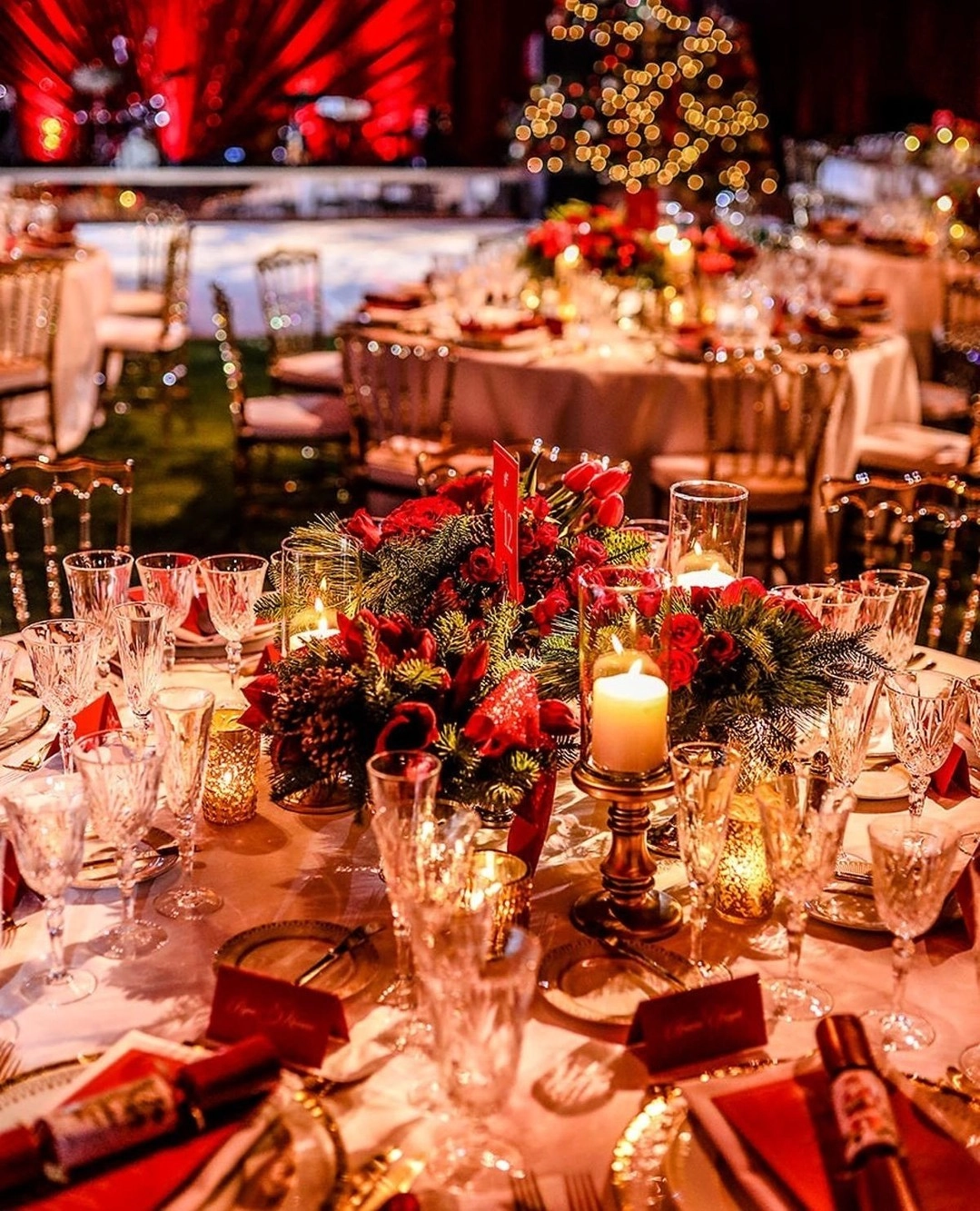
credit: @hiddengardenflowers
Centerpiece colors are taken from the room, the tree, and the tableware they will live among: two colors and a metal, repeated in every element. The china and the linens are photographed with candidate flowers and greenery before anything is bought, store light being a notorious liar about red. A centerpiece that matches nothing on its own table is a guest who arrived at the wrong party in a wonderful outfit.
White and green is the eternal safe harbor, candlelight making it golden for free. One palette per table, the sideboard and mantel taking their cues from it by the house’s thread. This choice, made once with the dishes in hand, turns the shopping list into a yes-or-no quiz.
| Palette Law | Taken From | Harbor |
|---|---|---|
| Two colors + metal | Room, tree, china | Repeated everywhere |
| Safe harbor | White + green | Candlelight gilds it |
| Test | With dishes in hand | Store light lies |
4. Build on a Base: The Tray, Board, or Runner That Lifts Away

credit: @annmdennis
Every centerpiece in this guide stands on a base: a tray, a wooden board, a mirror, a charger row, or a runner that acts as its foundation, sized to Tip 1’s territory. The base is the design’s unit of movement, the whole composition lifting away for serving, for the table’s weekday life, and for building the piece in the kitchen where the mess belongs. Bases are chosen as design elements, their edges part of the composition.
The base is tested loaded, carried from kitchen to table once before the guests’ day. Mirrors double candlelight and must be spotless to do it honestly. This single discipline is the professional’s open secret, and it converts every design that follows from a construction project into a piece of furniture.
| Base Law | Options | Tested |
|---|---|---|
| Foundation | Tray, board, mirror | Loaded carry |
| Movement | Lifts in one motion | Kitchen-built |
| Edge | Part of design | Chosen, not leftover |
5. Set a $500 Budget and Split It by Greenery, Vessels, and Light

credit: @traditionalhome
Centerpiece costs creep through vessels bought before the greenery plan exists. A split budget stops the creep at the first receipt. Greenery and flowers take the crown in the fresh years; vessels take it in the first year only.
Divide $500 into $170 for greenery and flowers, $150 for vessels and bases, $100 for candles and lights, and $80 for ornaments and finishing. Track every receipt against its column the same day. A column that hits its ceiling closes until something returns to the store.
| Line | Ceiling | Main Buys |
|---|---|---|
| Greenery + flowers | $170 | The living material |
| Vessels + bases | $150 | Trays, bowls, stands |
| Candles + light | $100 | Pillars, LEDs, holders |
| Ornaments + finish | $80 | Baubles, ribbon, extras |
Greenery and Floral Builds: The Living Centerpieces
Plants are the centerpiece’s classic voice. This section runs, bowls, and wreaths them. Every build reports to Tip 1’s territory and Tip 2’s law.
6. Run the Garland Runner: The Table’s Green River

credit: @visualcomfort
A garland, fresh cedar and pine or a quality faux, runs the table’s length down Tip 1’s strip, tucked and wired into a river of green, its ends finishing at the table’s edge with intention. Into the river go the design’s citizens: candles in holders, ornaments, pinecones, berries, placed in threes along its banks. The garland is built on its runner or directly on the table where the surface allows, lifted in sections for serving by Tip 4’s discipline.
Fresh garland is misted and built last, its needles the first casualty of a warm room. Faux garland is fluffed branch by branch, the ten minutes that separate the convincing from the catalog. This design is the season’s most requested for a reason: it is generous, low, and forgiving, the river hiding a beginner’s hand.
| Runner Law | Built | Citizens |
|---|---|---|
| Garland | Fresh or faux, fluffed | River down the strip |
| Placed | In threes | Candles, cones, berries |
| Fresh | Misted, built last | Needles first casualty |
7. Float the Bowl: Ornaments, Water, and Flowers in One Vessel

credit: @thehouseonlilac
A wide low bowl becomes the centerpiece entire: filled with ornaments and greenery for the dry version, or with water, floating candles, cranberries, and flower heads for the evening version. The bowl’s material, silver, glass, wood, ceramic, sets the register, its width obeying the strip. Bowls are the fastest builds in the guide, ten minutes from empty to admired, and they store their citizens compactly in January.
Water versions are filled at the table, carried empty, the laws of sloshing being absolute. One bowl centers a round table; two smaller bowls divide a long one with candles between. This design is the host’s friend on the busiest day, beautiful at speed.
| Bowl Law | Versions | Carried |
|---|---|---|
| Dry | Ornaments + greenery | As built |
| Wet | Water, floats, cranberries | Empty, filled at table |
| Round table | One bowl | Two on long tables |
8. Arrange Fresh Flowers Like a Florist: Grid, Frogs, and Odd Numbers

credit: @thesoutherlymagnolia
Fresh arrangements are built with structure: tape grids or floral frogs in the vessel, greenery first as the architecture, flowers in odd numbers placed at varied heights, the tallest obeying Tip 2. Roses, ranunculus, amaryllis, and winter berries carry the season’s palette from Tip 3. Stems are cut at an angle under water, the florist’s small sacraments that double a bouquet’s life.
Scented flowers are dosed carefully, lilies and hyacinths perfuming a meal into a headache at centerpiece distance. Arrangements are built a day ahead and kept cool, opening on schedule for the feast. This build is the guide’s most classical skill, and its grid-and-frog discipline is learnable in one bouquet.
| Florist Law | Structure | Life |
|---|---|---|
| Grid/frog | In the vessel | Architecture first |
| Flowers | Odd numbers | Varied heights |
| Stems | Angled, under water | Life doubled |
9. Plant the Living Centerpiece: Paperwhites, Amaryllis, and Herb Pots

credit: @thelittleflowershopkc
Living plants center the table with a future: paperwhites and amaryllis bulbs in gravel and glass, herb pots in the family’s colors, a miniature conifer in a beautiful pot. They are planted weeks ahead on the file’s calendar, blooming on the feast’s schedule. After the season they move to the garden or the windowsill, the only centerpieces that appreciate.
Bulbs are started in staggered weeks, insurance against a bloom that misses its cue. Pots are saucered and the table protected, water being the living centerpiece’s only vice. This design is the gardener’s signature, and guests ask for its bulbs’ names like they ask for recipes.
| Living Law | Citizens | Schedule |
|---|---|---|
| Bulbs | Paperwhites, amaryllis | Planted weeks ahead |
| Herbs | Potted, saucered | Table protected |
| After | Garden/windowsill | Only appreciating kind |
10. Lay the Wreath Flat: The Circle as a Centerpiece
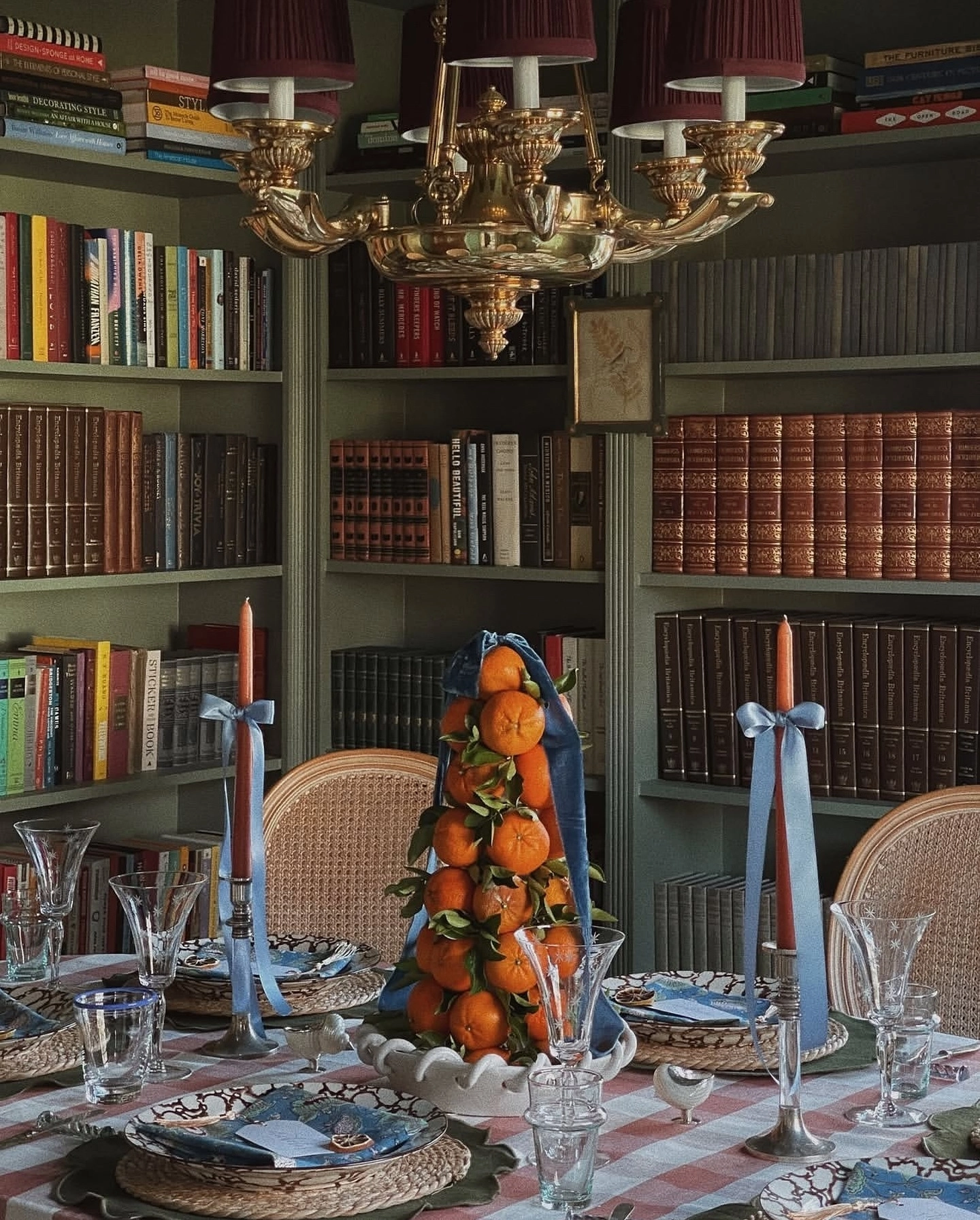
credit: @serenaandlily
A wreath, fresh or faux, lies flat at the table’s center with candles, a bowl, or a lantern in its heart, the circle doing the composition’s whole geometry. On long tables two wreaths overlap like rings with candles at their crossings. The wreath’s diameter obeys the strip, its heart’s citizen chosen by the meal’s hour, candles for evening, the bread’s basket for the feast itself.
Fresh wreaths are misted and their tables protected from resin and moisture. The flat wreath is the fastest classical build in the guide, one purchase and three candles from done. This design’s circle photographs like a halo from the door, which is why hosts love it and why it returns yearly.
11. Scatter the Naturalia: Pinecones, Nuts, Fruit, and the Foraged Row
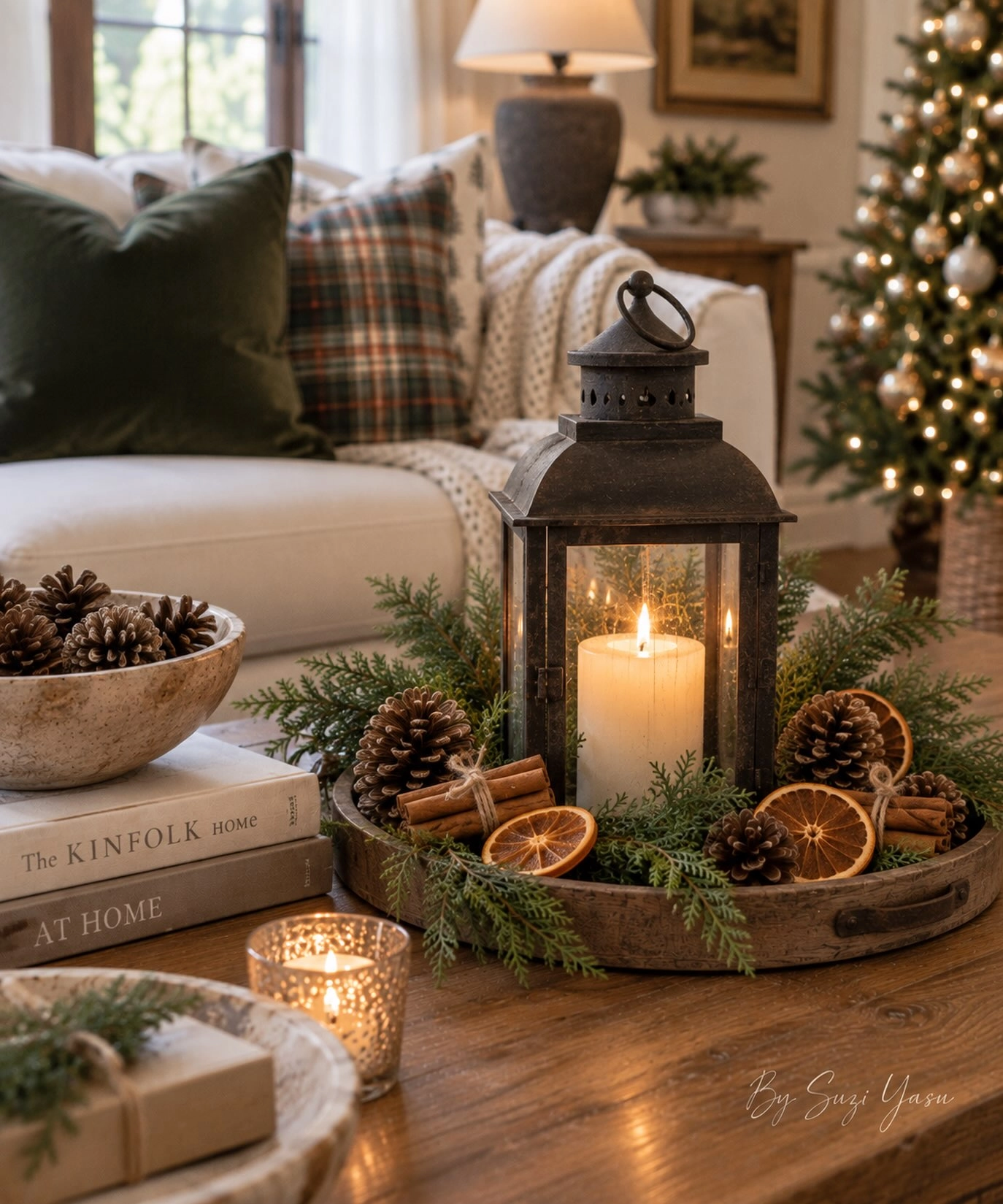
credit: @suzi_yasu
Nature’s own decor runs the strip: pinecones in drifts, walnuts and chestnuts as the scatter, pomegranates, oranges studded with cloves, and artichokes among the greenery, all of it edible, compostable, or firewood by January. The row is composed in clusters, never sprinkled evenly, Tip 22’s grammar applying to fruit as to furniture. Foraged pieces are cleaned and baked or frozen against tiny citizens where the household’s standards require.
Citrus and pomegranate carry color without a single flower bill. The scatter is refreshed as pieces are eaten, the centerpiece participating in the meal’s economy. This design is the budget’s champion and the traditionalist’s favorite, centuries old and still undefeated.
Vessels, Levels, and Structure: The Built Centerpieces
Height and containers give designs their architecture. This section tiers, lanterns, and cages it. Every structure reports to Tip 2’s law and Tip 4’s base.
12. Tier the Tray: Cake Stands and Etageres as Vertical Gardens
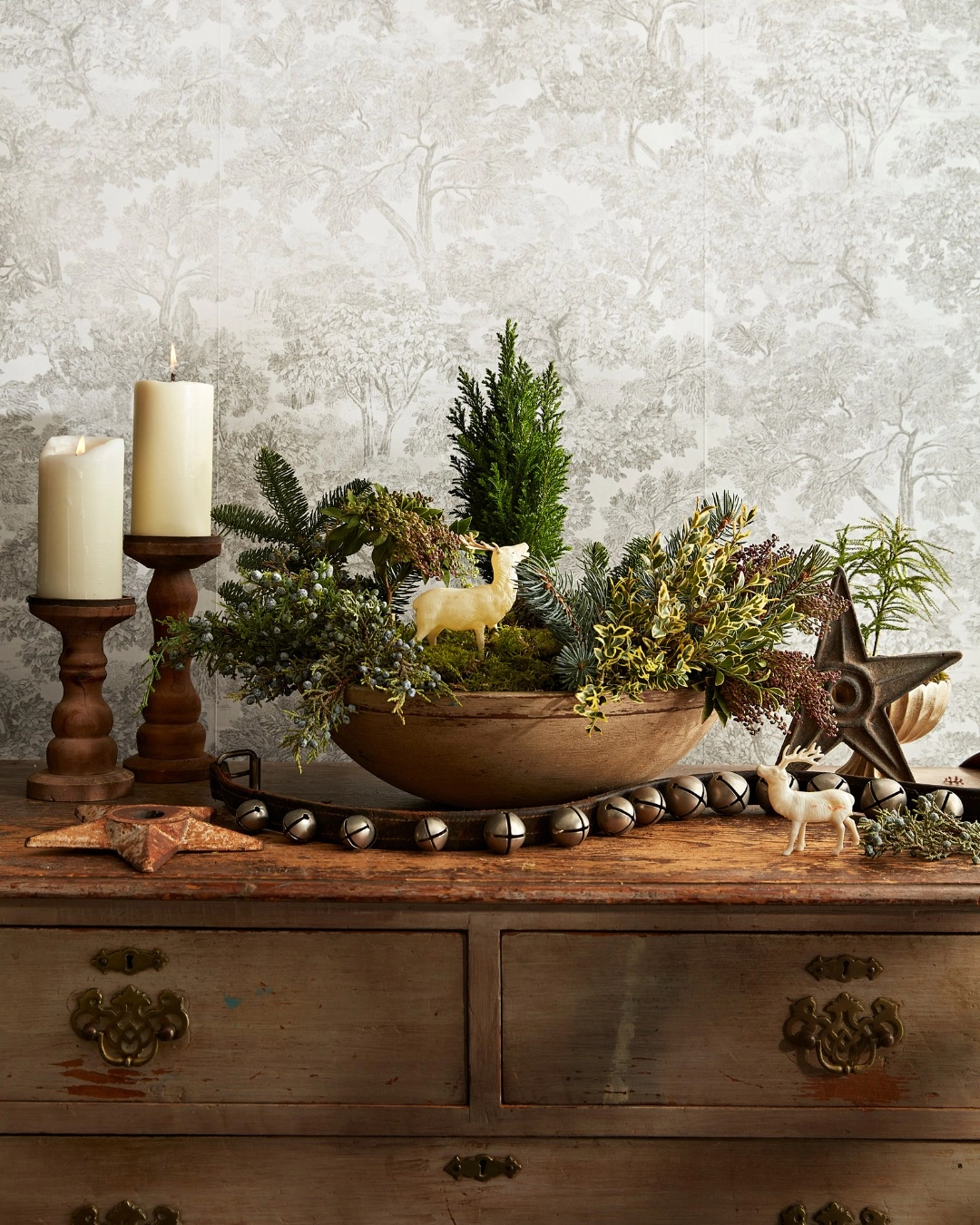
credit: @countryhomemagazine
Cake stands and tiered trays build the centerpiece upward within the law: ornaments, small plants, candles, and sweets stacked on their levels, the top blooming above the conversation where height is wanted, the base narrow at eye level. Tiers suit round tables and buffets especially, their footprint small and their presence tall. Each level is composed as its own small still life, the whole reading as a tower of the season.
The heaviest citizens live on the lowest tier, physics styling every arrangement. A tiered sweets stand turns dessert into the centerpiece for the meal’s second act. This structure is the small table’s salvation, grandeur in a dinner plate’s footprint.
| Tier Law | Levels | Weight |
|---|---|---|
| Stands/etageres | Own still lifes | Heaviest lowest |
| Footprint | Small | Round tables + buffets |
| Second act | Sweets stand | Dessert as decor |
13. Cluster the Lanterns: One Hero or a Village of Light
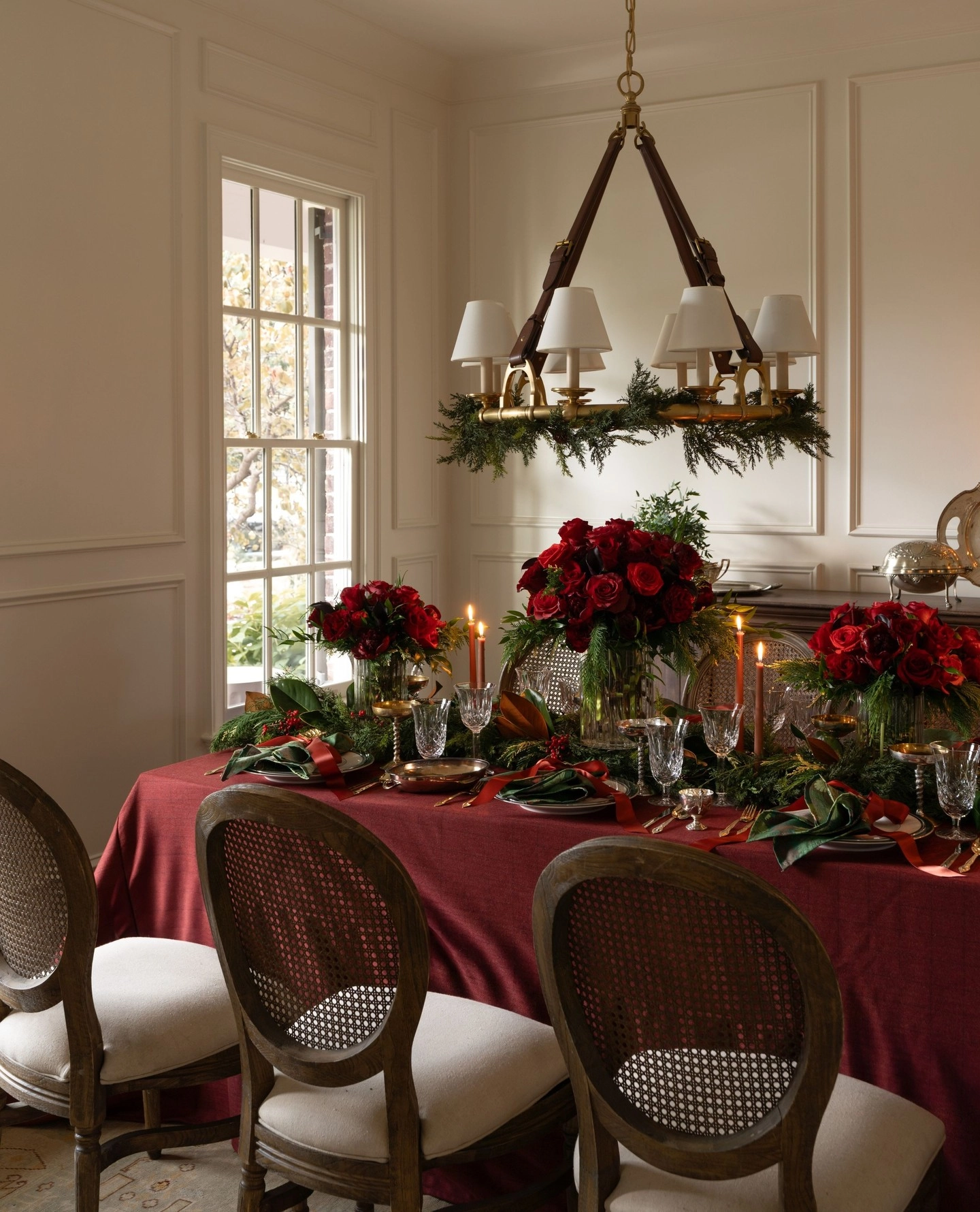
credit: @ellerslieinteriors
Lanterns center the table singly, one great lantern with a pillar and greenery at its feet, or as a village of three sizes down the strip, their flames real or LED by the house’s law. Metal and glass lanterns carry every register from rustic to gala. The village is spaced in a rhythm, tall, low, tall, with greenery stitching their bases into one composition.
Lanterns move to the mantel and the porch after the meal, the hardest-working vessels in the season. Their glass is cleaned for the feast, soot being a stylist’s enemy. This design is the evening’s champion, its light arriving exactly where faces are.
| Lantern Law | Forms | Rhythm |
|---|---|---|
| Hero | One great lantern | Pillar + greenery |
| Village | Three sizes | Tall, low, tall |
| After | Mantel + porch | Hardest-working vessels |
14. Cage and Cloche: Glass Domes Over Tiny Worlds

credit: @williamssonomahome
Glass cloches and cages stage miniature scenes: a tiny tree, a village house, ornaments on moss, a nativity where the household keeps one, each dome a museum of one square foot. Cloches obey the sight-line law by their narrowness, their magic happening above the plates and below the eyes’ meeting. The scenes are built on small plates or wood slices, lifted by Tip 4’s rule like everything else.
Domes fog with real candles inside, LED lights being the cloche’s citizens. A row of three small cloches down a long table is the guide’s most photographed design. This build is the collector’s joy, tiny worlds being habit-forming.
| Cloche Law | Scenes | Light |
|---|---|---|
| Tiny worlds | Tree, village, ornaments | On plates/slices |
| Fog law | No real candles | LED citizens |
| Row | Three small domes | Long tables |
15. Build With Books, Boxes, and Risers: The Hidden Architecture
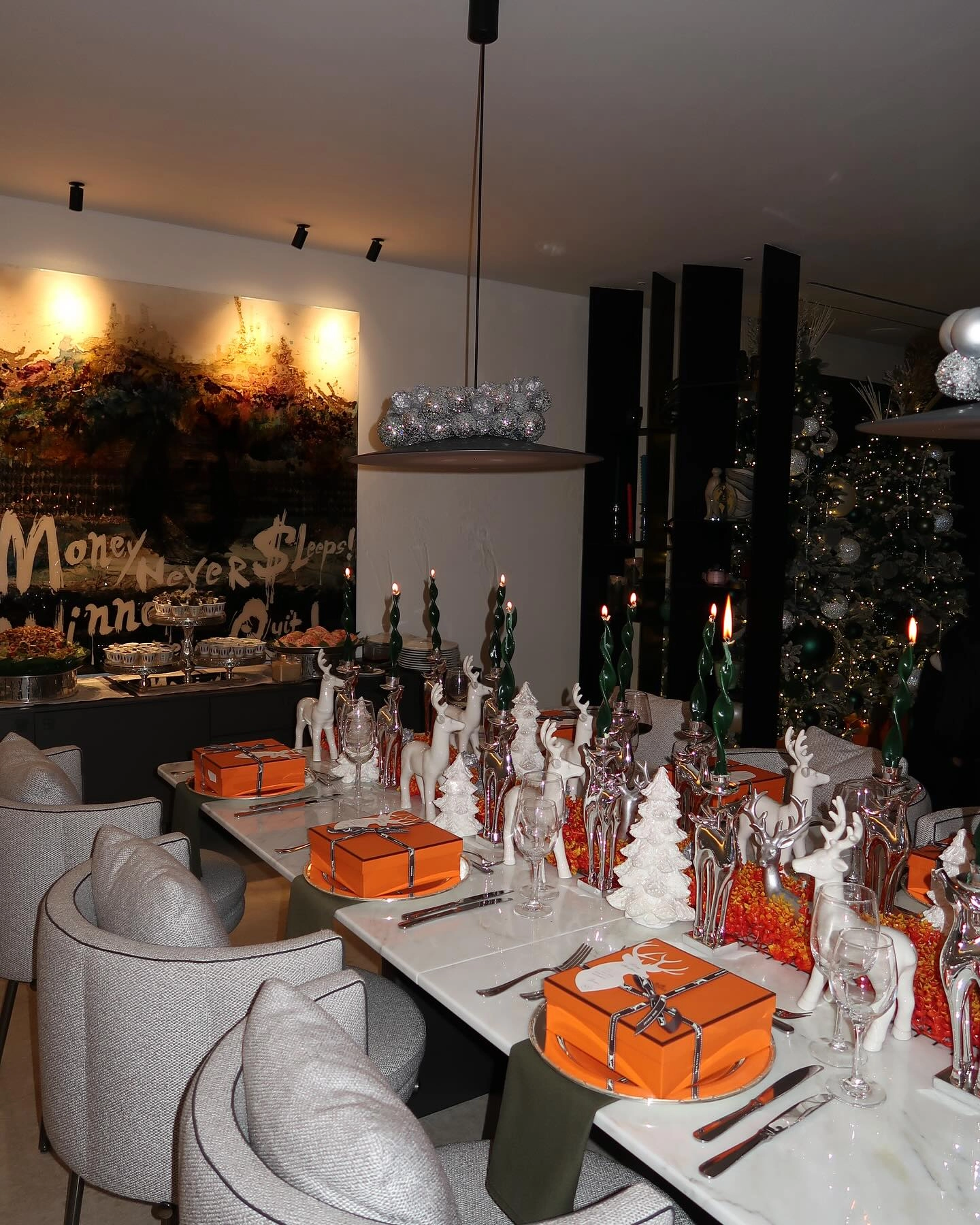
credit: @youmi
Height is engineered invisibly: books in the palette’s colors, wooden boxes, and risers under the runner lift vessels and candles into Tip 2’s two legal zones. The lifts disappear under greenery and cloth, the composition floating at varied heights like a landscape. Every lift is stable and level, tested with a nudge before the candles are lit.
Book spines that show are chosen as design, their titles part of the table’s conversation. Risers are inventoried in the file, the same architecture rebuilt yearly in minutes. This hidden engineering is why some centerpieces look sculpted and others look placed, the landscape effect being carpentry, not luck.
16. Mirror and Metal: Reflective Bases That Double the Light

credit: @gardenandgun
A mirror tray or a silver charger row under the composition doubles every candle flame and ornament sparkle, the table’s light multiplied without a single extra candle. Reflective bases suit the gala register, evening meals, and the white-and-gold palette especially. They are polished before the build and handled by their edges, fingerprints being the mirror’s only enemy.
Scattered crystals or glass gems on the mirror catch the light like ice. The mirror’s size obeys the strip as strictly as any base. This design is the cheapest luxury in the guide, light itself hired at a mirror’s wages.
17. Compose the Village and the Scene: Houses, Trains, and Tiny Citizens

credit: @suzi_yasu
A miniature village runs the strip on a snow of batting or a white runner: houses lit from within, tiny trees, a train where the family keeps one, citizens at their December business. The scene is the children’s table’s glory and the main table’s nostalgia, composed with Tip 22’s clusters and Tip 2’s narrow footprint. Buildings are anchored against elbows and serving dishes, the village zoned like a real town away from the gravy.
Battery lights free the village from cords across the table. One new house a year grows the town by the file’s law, collections being built like cathedrals. This scene is the centerpiece as storytelling, and it empties the room’s adults back into their childhood for one course at least.
Candlelight and Glow: The Evening Register
Light is the centerpiece’s soul after dark. This section pillars, floats, and strings it safely. Every flame reports to the house’s fire law.
18. Place Pillars and Tapers by the Safety Laws
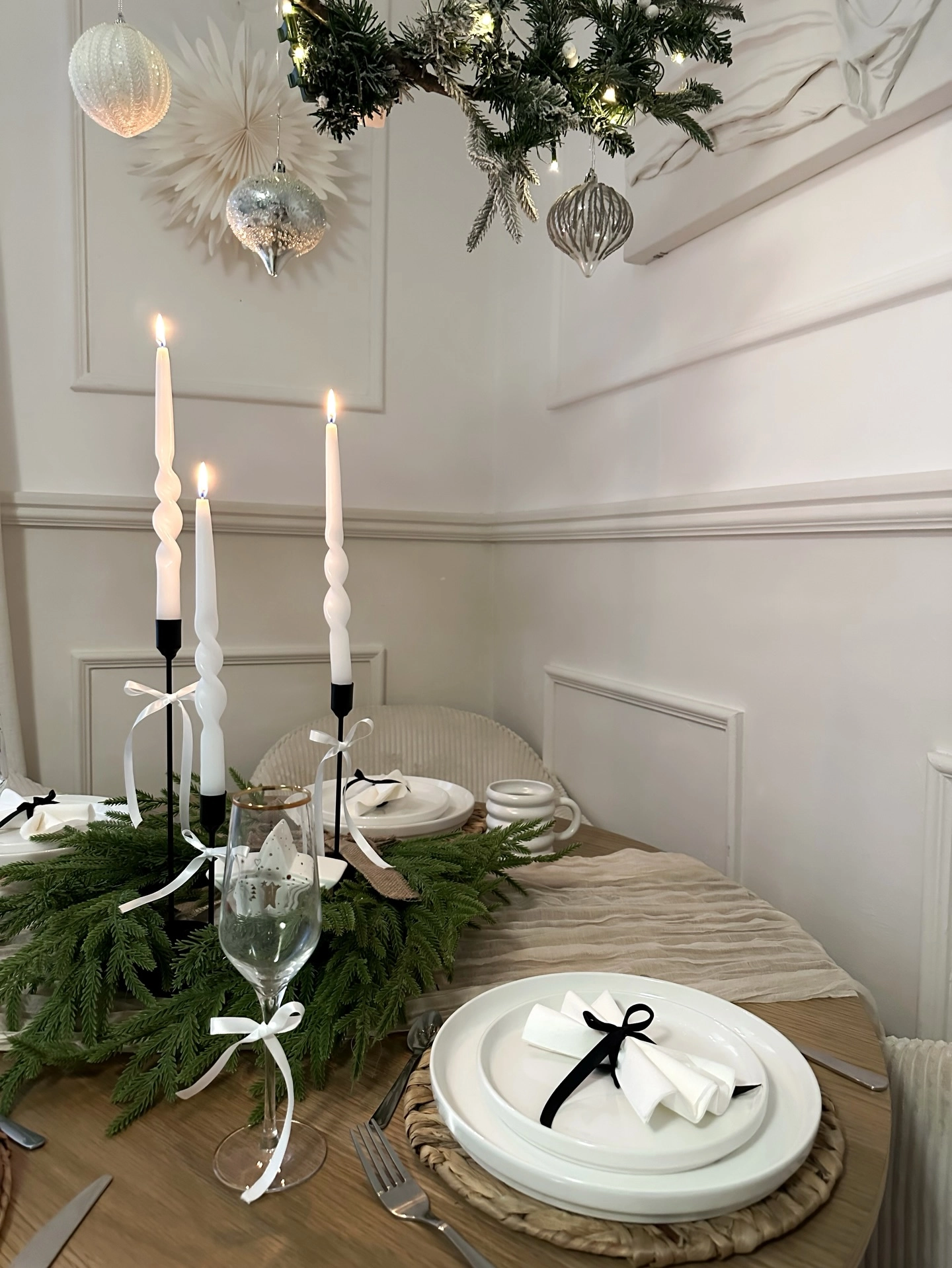
credit: @pa_trishwi
Candles are placed by law: pillars in holders or on plates, tapers in weighted holders that cannot tip, every flame clear of greenery, ribbon, and sleeves by a hand’s breadth and more, and never where a serving arm crosses. LED candles take the dangerous posts, children, pets, and the village’s insides, their modern flames convincing at conversational distance. Real flames are lit as guests sit and extinguished before the host sleeps, without exception in this guide’s houses.
Heights vary by the composition’s rhythm, candlelight flattering faces from below the chin’s level best. Unscented candles serve at the table, the meal providing the perfume. This discipline is what lets a host relax beside an open flame, which is the entire point.
19. Float and Submerge: Water Light for the Modern Table
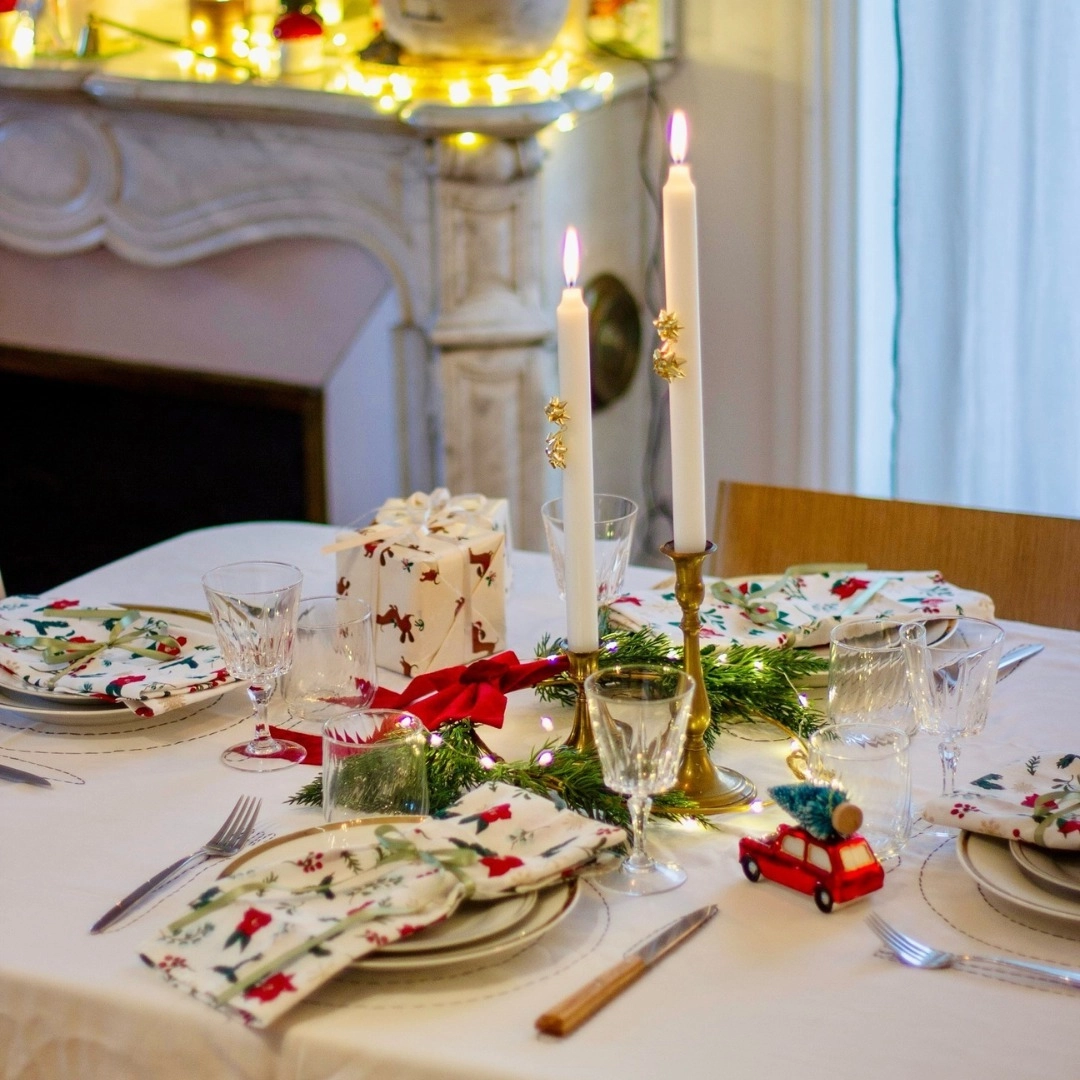
credit: @flyingtiger
Floating candles in the bowl of Tip 7, submerged ornaments and lights in tall cylinders, and votives in water-topped glasses bring the modern register: light moving on water at the table’s heart. Cylinders obey the sight-line law by their narrowness, blooming or glowing above the plates. Water is filled at the table and emptied before the piece is moved, Tip 7’s sloshing law governing all.
Cranberries and greenery float with the candles for the classic version. Battery submersible lights color the water where the palette argues. This design is the quietest luxury in the guide, light behaving like water and water behaving like light.
20. String the Micro-Lights: Fairy Lights in Greenery and Glass

credit: @comfyhome.finds
Micro LED strings weave through garlands, coil in jars and bowls of ornaments, and outline the village, their battery packs hidden under greenery. Warm white is the table’s temperature, colored lights retiring to the children’s table by consent of the governed. Lights are switched on at dusk by the host’s round, the table’s second sunset being a small ceremony.
Spare batteries live in the sideboard, darkness at the table being a preventable sorrow. Strings are stored wound on cards, Tip 28, next year’s untangling being this year’s kindness. This light is the cheapest atmosphere in the guide, a few dollars turning greenery into a constellation.
21. Mix the Light Sources Like a Lighting Designer

credit: @wreath_ae
The finished table layers three lights: the room’s dimmed ambient, the centerpiece’s candles or LEDs at face level, and one accent, the village, the cloche, the mirror’s doubled flames. Each layer is tested from the worst seat, faces lit warmly and food lit honestly. Dimming the room is the host’s final styling act, the centerpiece promoted to the room’s sun at the moment the guests sit.
Overhead glare is the enemy citizen, dimmed or extinguished at the feast. Candlelight at 2700K flatters every face it has ever met, the oldest filter in the world. This layering is the difference between a decorated table and an evening, and it is arranged before the first guest rings.
Christmas Centerpiece Styling and Finishing Touches
The designs are built. This section runs the styling pass: scale, serving choreography, and the other tables. A centerpiece scheme is finished when the whole meal flows around it.
22. Compose in Clusters and Rhythms: Threes Down the Strip

credit: @christmas_gt_ff
Elements are placed in clusters of three, a candle group, an ornament drift, a greenery knot, repeated down the strip in a rhythm the eye rides like music. Even spacing reads as a showroom; rhythm reads as design. The clusters are composed on the base in the kitchen, photographed, and adjusted before the piece ever meets the table.
One hero cluster anchors the center, the others diminishing toward the ends like a phrase resolving. Empty runner between clusters is rest, the greenery breathing. This grammar is the stylist’s whole secret, transferable to every design in the guide.
23. Choreograph the Serving: What Moves, What Stays, Where the Turkey Lands
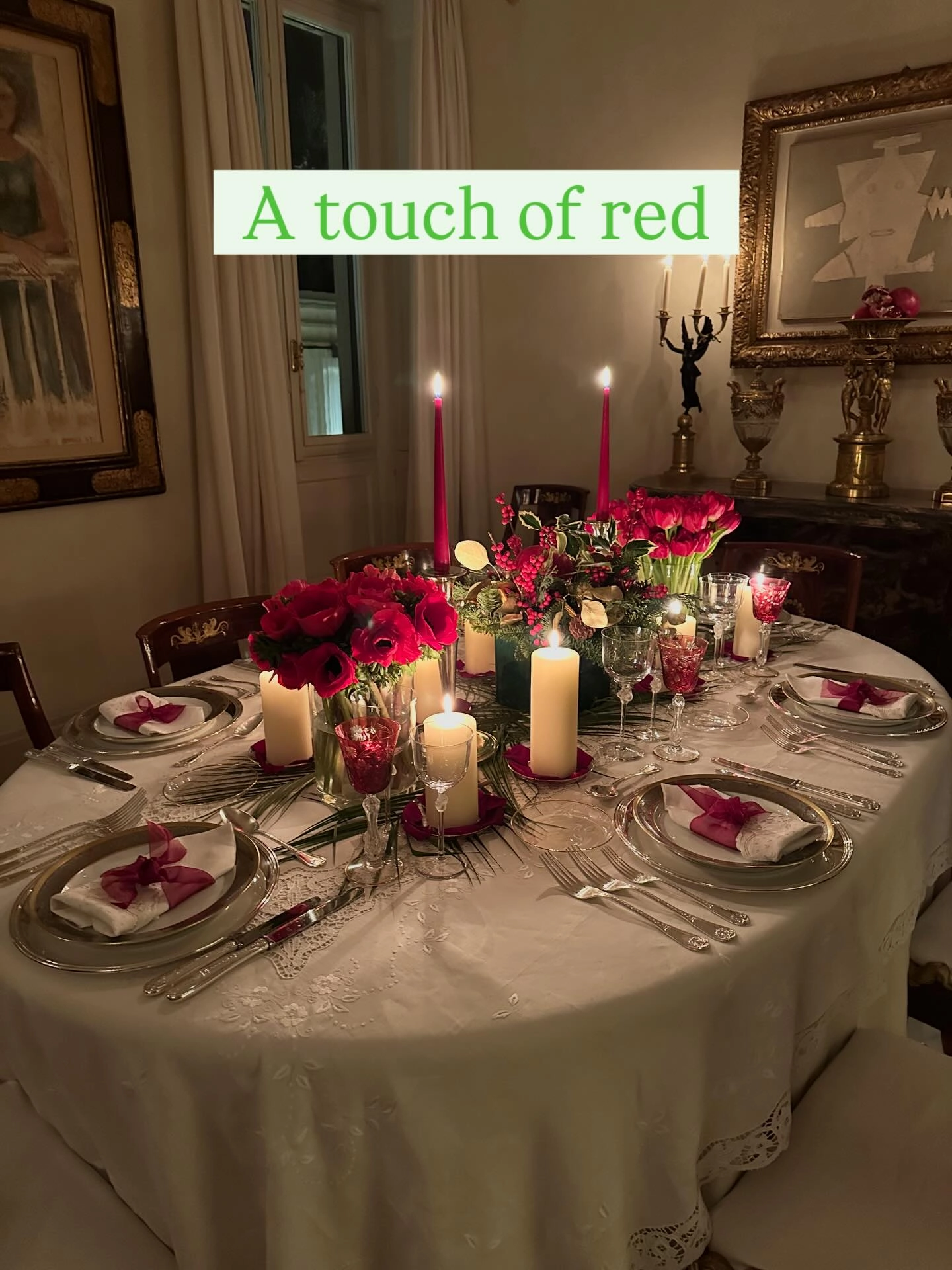
credit: @mercymalabanan
The meal’s logistics are rehearsed with the centerpiece in place: the great dishes’ landing spots marked, the pieces that lift away identified, Tip 4’s bases earning their keep, and the sideboard staged as the centerpiece’s annex for the meal’s second act. A centerpiece that survives the serving without a crisis has passed its final exam. The host walks the route with a platter once, alone, before the day.
Guests are never asked to hold a vase while the turkey lands, hospitality having choreography or chaos, never both. Pieces removed for serving retire to the sideboard in their composed state, returning for dessert like actors for the second act. This rehearsal takes five minutes and saves the meal’s whole dignity.
24. Scale to the Table’s Other Lives: Breakfast, Buffet, and the Children’s Table

credit: @markdsikes
The centerpiece system scales: a single bowl or lantern for the everyday table, the full composition for the feast, a buffet version built tall against a wall where sight lines are free, and the children’s table taking the unbreakable, the low, and the LED, village and naturalia starring. One palette governs all the tables, the house telling one story at every seat.
Buffet centerpieces stand at the back, height blooming against the wall where it blocks nothing. The breakfast version is the feast’s sketch, one vessel and three stems. This scaling is why the budget buys systems, trays, bowls, lanterns, rather than one monument.
25. Add the Edible Centerpiece: Bread, Sweets, and the Cheese Course as Decor
credit: @re_beccamichelle
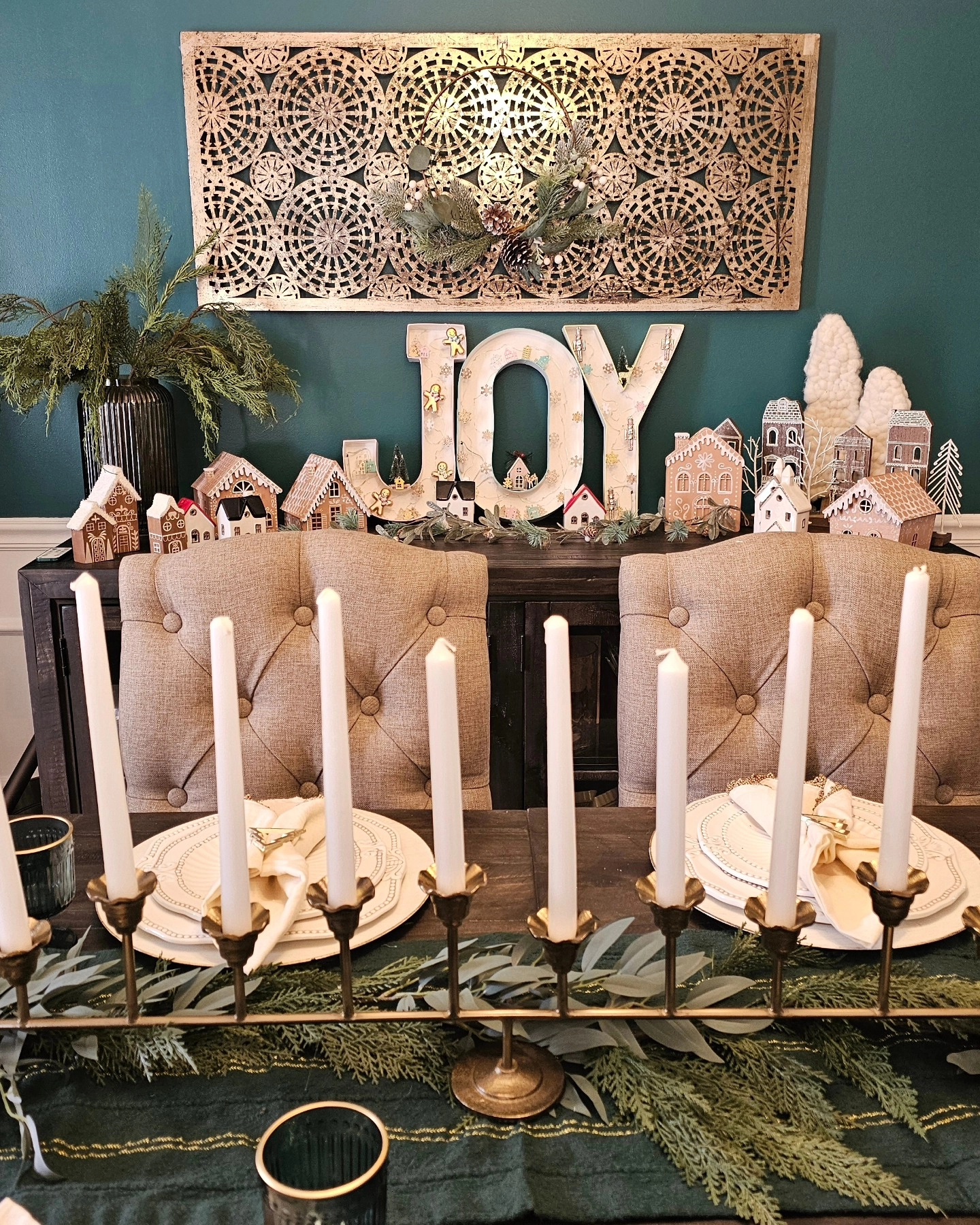
Food itself centers the table in the meal’s later acts: a bread arrangement in a lined basket on a board, a sweets tier from Tip 12, the cheese course composed on a great board with grapes and nuts as the final centerpiece. Edible pieces obey the same composition laws, clusters, heights, palette, their beauty eaten in the correct order. They are staged on the sideboard and promoted to the table as the savory pieces retire.
A gingerbread house where the family builds one is the edible village, Tip 17 with a roof you can eat. Food safety’s hours are respected, beauty never outranking the clock. This is the oldest centerpiece tradition in the world, the feast decorating itself.
26. Photograph the Table and Keep the Centerpiece File

credit: @jrandallpowers
The set table is photographed from the door, from the host’s seat, and from the worst seat, and the file is completed: the territory’s measurements, the palette, each design’s components and base, and the serving choreography that worked. The file is next year’s head start, the winning centerpiece reassembled from its pages in an hour. Photographs catch the cluster that crowds the plates and the candle that glares while fixes are still possible.
Guests’ compliments and complaints are recorded with equal honesty, the file being a critic as well as a diary. Components are inventoried by their bases so storage and rebuilding share one map. A table with a file improves yearly; without one, it is restyled from memory at full price.
27. Refresh Mid-Season: The Second and Third Tables of December

credit: @suzannezinggstyle
December hosts more than one meal, and the centerpiece refreshes between them: fresh greenery swapped into the garland, flowers replaced, candles renewed, one element changed, the mirror for the tray, the village for the wreath, so the season’s tables feel related, not repeated. The refresh is budgeted in Tip 5’s finishing column from the start. Photographs of each edition join the file, the month becoming a small exhibition.
The everyday table between feasts takes Tip 24’s sketch version, the house never fully undressed. A refresh takes twenty minutes with the components stored as systems. This rhythm keeps the host’s joy employed all month, which is the season’s real schedule.
Christmas Centerpiece Care, Storage, and Make-Ahead
Centerpieces are built under time pressure unless they are built ahead. These habits prep, store, and revive them. Each one protects the feast day itself.
28. Store by Base: Trays Loaded, Boxes Labeled, Candles Kept Cool

credit: @justjillbauer
Storage keeps each design together: components boxed by their base and design name, ornaments with the lanterns they accompany, the file’s inventory on every lid. Candles store cool and dark, wrapped, their colors unfaded and their wicks unbent. Greenery citizens, the faux garlands and wreaths, store in their bags, fluffed next year by Tip 6’s ten minutes.
Fragile glass, cloches and cylinders, stores in its original boxes where they survive. The storage map joins the file, January’s packing becoming next November’s unpacking without a hunt. A system stored as a system is a centerpiece that takes an hour to rebuild, which is the whole point.
29. Build Ahead What Can Be Built: The Three-Day Head Start

credit: @mmsull1868
The feast’s centerpiece is assembled in stages: bases and structures built three days out, faux and dried elements placed two days out, fresh greenery and flowers the day before, candles and water on the day. The schedule is written in the file with the menu’s own prep, the table joining the kitchen’s choreography. Nothing fresh is built in the feast’s last hours, the host’s presence being an ingredient too.
Fresh flowers condition in water overnight before arranging, their stems drinking deep. The built piece waits in the coolest room, blooming on schedule. This head start is the difference between the host who styles and the host who scrambles, visible in every photograph of both.
30. Care for the Living and the Lit: Water, Wax, and Freshness Rounds
credit: @your.daily.style.guide
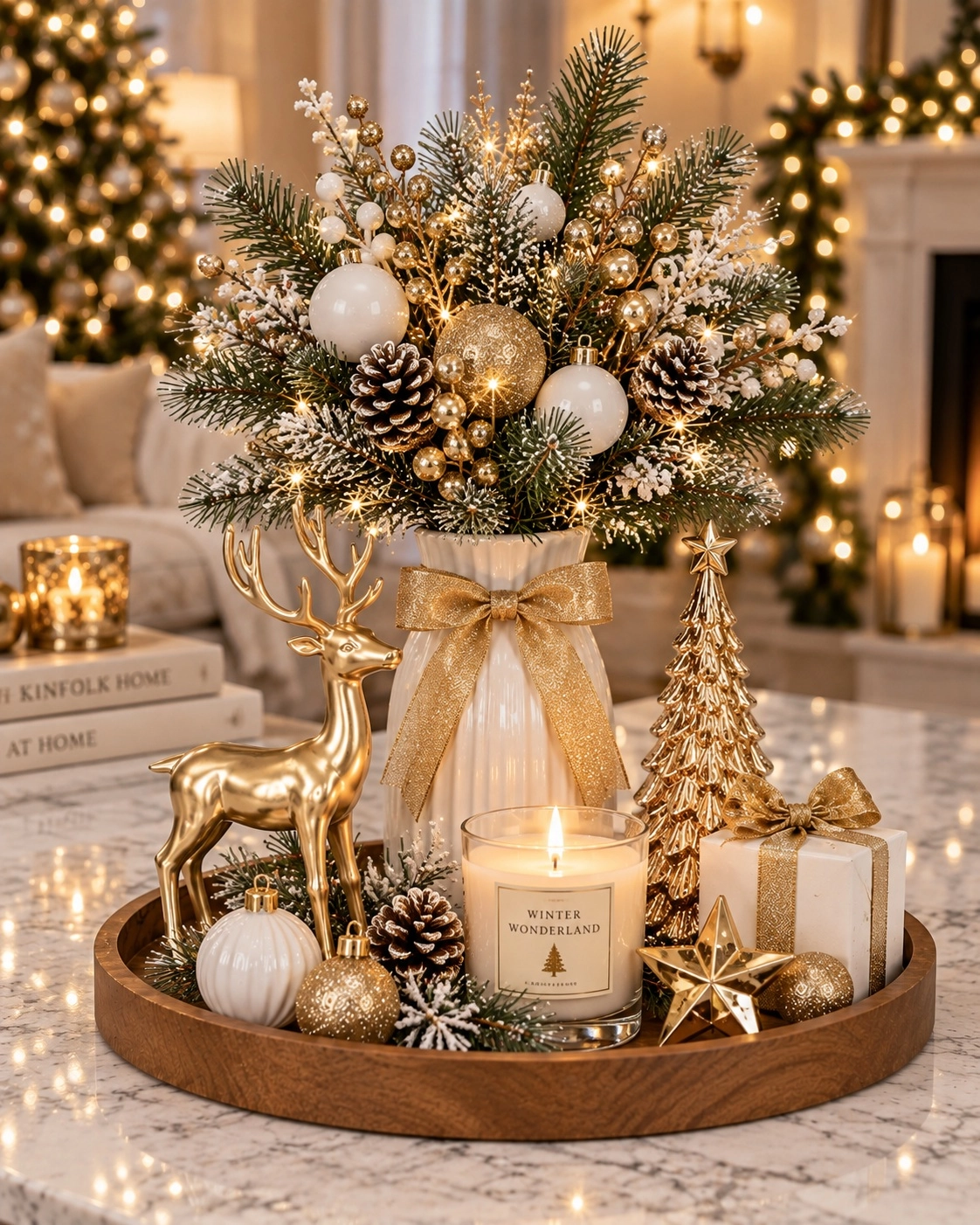
In season, the living citizens are kept: arrangement water topped and changed, garlands misted, bulbs watered by their gravel’s line, and wax drips removed from holders and cloth with ice and patience. A quick round before each meal, five minutes with the file’s checklist, keeps every edition portrait-fresh. Spent flowers are replaced from the market’s bunch, the composition’s structure outliving its first cast.
Candle stubs are retired before they gutter into their holders, wax being a cleaner of tablecloths’ nightmares. Batteries in the LEDs are tested at each refresh, Tip 27. This care is the season’s small print, and it is why some tables look styled on the 28th and others only in their photographs of the 24th.
| Habit | Task | Frequency |
|---|---|---|
| Build ahead | Stages by days | Before each feast |
| Freshness round | Water, mist, wax, batteries | Before each meal |
| Store | By base + design, labeled | January |
| Refresh | One element changed | Each new table |
Common Christmas Centerpiece Mistakes
| Mistake | Why It Hurts | Fix |
|---|---|---|
| Arrangement at eye height | Conversation dies behind it | Under 12 or above 24, Tip 2 |
| Centerpiece eats the serving zone | Turkey has nowhere to land | Territory first, Tip 1 |
| Built directly on the table | Cannot move for serving | Base everything, Tip 4 |
| Flames beside greenery | The season’s oldest fire | Safety distances, Tip 18 |
| Scented candles + lilies at dinner | Perfume wars with food | Unscented, dosed scent, Tips 8, 18 |
| One monument, no system | Every table a new expense | Bases + components, Tip 24 |
Christmas Centerpiece Ideas by Style and Table
Classic Garland and Candlelight Tables
The green river, pillars, naturalia, and the wreath laid flat. These tables win on tradition, centuries of feasts behind every choice. Their discipline is Tip 2’s sight line, generosity kept low so the family can see itself.
Gala Mirror and Floral Tables
Fresh arrangements, mirror bases, tapers, and the tiered tower. These tables win on ceremony, the feast dressed in its evening clothes. Their discipline is Tip 23’s choreography, grandeur that still lets the turkey land.
Modern Water and Light Tables
Floating candles, submerged glow, fairy lights, and the single sculptural bowl. These tables win on calm, light behaving like water at the heart of the noise. Their discipline is Tip 19’s fill-at-the-table law, beauty that never sloshes.
Rustic and Edible Tables
Lantern villages, foraged rows, bread boards, and the cheese course as the finale. These tables win on warmth, the feast decorating itself. Their discipline is Tip 11’s clusters, abundance composed rather than spilled.
Frequently Asked Questions
How tall should a Christmas centerpiece be?
Under 12 inches or above 24 inches on a narrow stem, never in the eye-level zone between, so guests see each other’s faces across the table. Tip 2 states the law; test it by sitting in the worst seat and looking at the host’s chair, because the centerpiece is judged from the diners’ eyes, not the stylist’s.
How do I make a centerpiece without blocking the serving dishes?
Measure the table, subtract 24 inches per place setting and the meal’s serving zone, and build only in the remaining strip, usually 12 to 18 inches wide, on a tray or runner that lifts away in one motion. Tips 1, 4, and 23 run the system; rehearse the serving route with a platter before the day.
What is the easiest Christmas centerpiece to make?
A wreath laid flat with three pillar candles in its heart, or a wide bowl filled with ornaments and greenery, each taking ten minutes and one purchase at most. Tips 7 and 10 build them; both obey the sight-line law naturally and store compactly in January.
How do I use candles safely in a centerpiece?
Pillars in holders, tapers in weighted stands, every flame a hand’s breadth and more from greenery and ribbon, unscented at the table, lit when guests sit and extinguished before the host sleeps. Tip 18 places them; LED candles take the posts near children, pets, and anything enclosed, no exceptions worth making.
What flowers are best for a Christmas centerpiece?
Amaryllis, roses, ranunculus, paperwhites, and winter berries over a greenery architecture, built on a tape grid or frog in odd numbers. Tip 8 arranges them; dose scented varieties carefully, because lilies and hyacinths at centerpiece distance perfume the meal into a headache.
How far ahead can I make a centerpiece?
Structures and bases three days ahead, faux and dried elements two days, fresh greenery and flowers the day before, water and candles on the day itself. Tip 29 schedules the build; fresh arrangements condition overnight in water and wait in the coolest room, blooming on the feast’s schedule.
What can I use instead of flowers for a centerpiece?
Ornaments in a bowl, a lantern village, a miniature scene under a cloche, pinecones and pomegranates in a foraged row, a tiered stand of sweets, or the bread and cheese courses themselves. Tips 7, 11, 13, 14, and 25 build them; the flowerless centerpiece is often the most remembered at the table.
How do I style a centerpiece for a round table?
One centered composition: a bowl, a wreath, a tiered stand, or a lantern cluster on a round base, its diameter 18 to 24 inches and its height by the sight-line law. Tips 7, 10, and 12 center them; long-table runners and villages belong to long tables, round tables taking the portrait format instead.
How do I store centerpiece decorations?
By design and by base: each centerpiece’s components boxed together with the inventory on the lid, candles cool, dark, and wrapped, glass in its boxes, faux greenery bagged. Tip 28 stores the system; a centerpiece stored as a system rebuilds in an hour next November instead of being repurchased.
Conclusion
Christmas centerpieces that host beautifully run on one system. The territory is measured, the sight-line law is applied, and the palette is taken from the table’s own dishes, because a centerpiece is a citizen of the meal, not its landlord; the designs are built on bases in clusters and rhythms, greenery, vessels, and candlelight layered within the law, so the table composes at every seat; and the feast is choreographed and kept, serving rehearsed, pieces stored by design, freshness rounded before every meal, so the season’s third table looks as considered as its first. Tape your table’s true strip this week, set a tray inside it, and take the before photo from the worst seat in the house.