Christmas Crochet: 30 Proven Patterns to Hook and Gift
Your Christmas crochet succeeds or fails on gauge and yarn choice, not on pattern hunting. This guide gives you 30 exact projects, each with a size, a yarn weight, and a result you check with your own eyes. As professional crochet designers consistently find, handmade sets read store-bought when every piece shares one palette, one yarn family, and finished edges. Work the sections in order and your Christmas crochet builds from first swatches to a full coordinated set.
One number guides every purchase in this guide. Your full materials budget lands between $30 and $70, and every project below states its cost before you start.
Before You Begin: Five Foundation Steps for Christmas Crochet
Failed crochet shares one cause: starting projects before the palette, gauge, and yarn stock are set. This foundation section fixes your colors, your tension standard, and your budget before a single chain. Every later project builds on these five steps.
1. Lock a Palette of Cranberry, Cream, Forest, and Gold
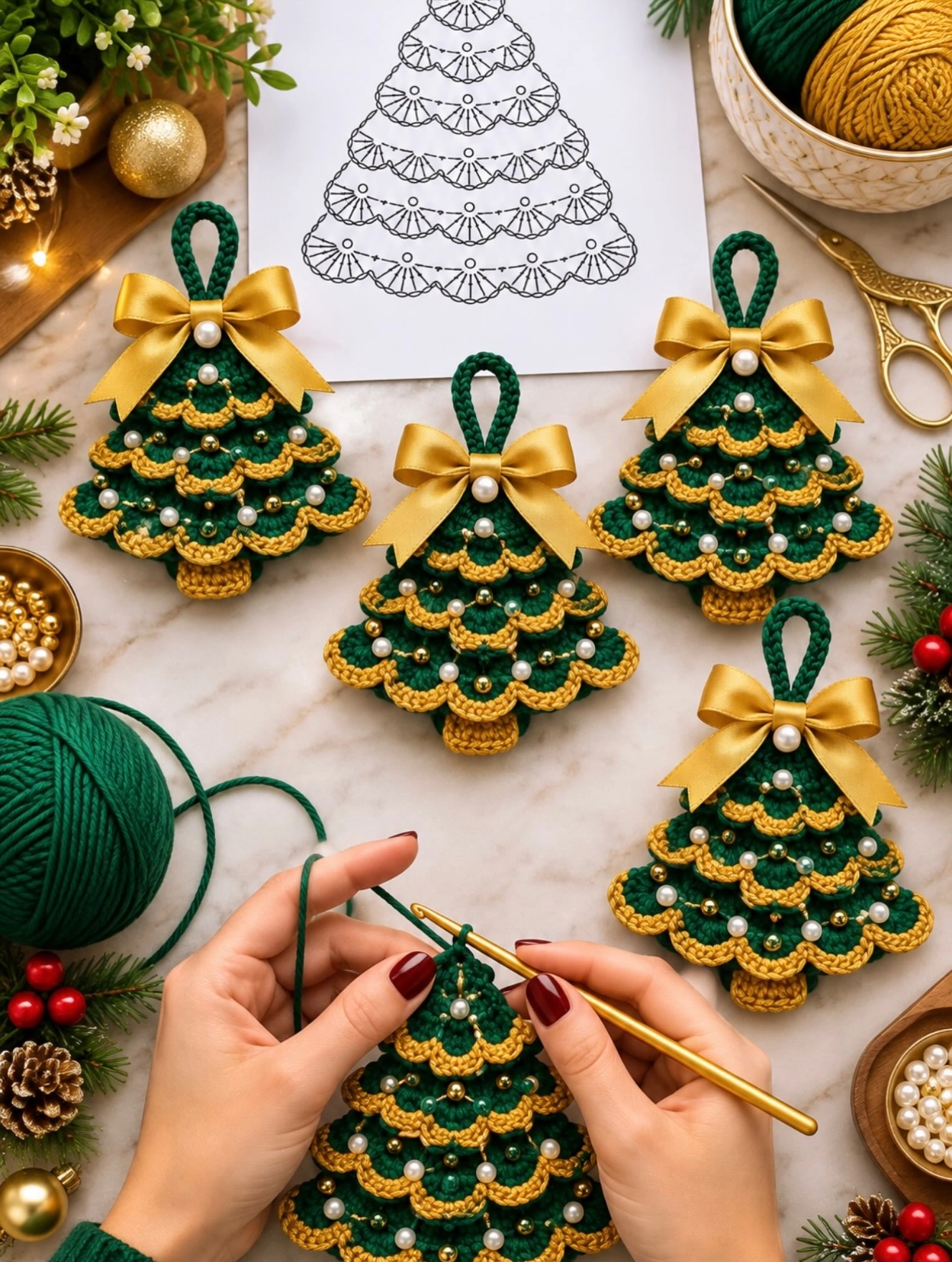
credit: @yarn5985
Random yarn colors fight each other across a tree and mantel. One locked palette makes every project match every other. Cranberry and forest split the leads, cream carries the bases, and gold supplies the small bright accents.
Assign leads to cranberry and forest in equal shares, bases to cream, and accents to gold at one piece in five. Write the four names on one card taped above the craft table. Any skein outside the four names stays at the store, no matter the discount.
| Palette Color | Role | First Buys |
|---|---|---|
| Cranberry | Lead 1 | Stars, stockings |
| Forest | Lead 2 | Stockings, scarf |
| Cream | Base | Flakes, cuffs, joining |
| Gold | Accent 1-in-5 | Centers, edges |
2. Choose Worsted Weight Cotton or Acrylic for Most Projects
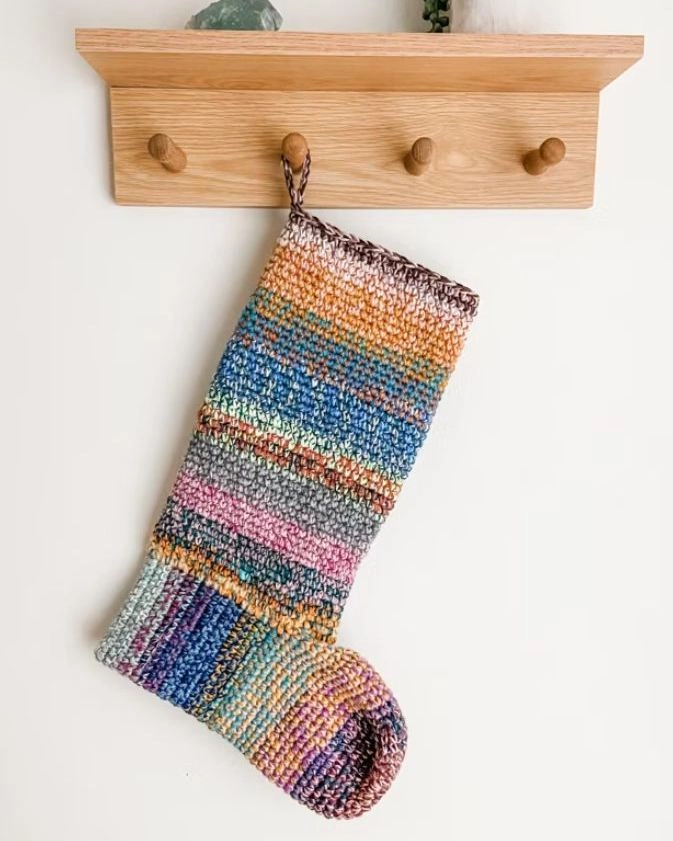
credit: @lovecraftscrochet
Yarn weight decides drape, stitch definition, and wash life. Worsted weight, category 4, balances all three for decor and gifts. Cotton holds crisp shapes; acrylic softens wearables and washes cheap.
Buy worsted weight yarn for every project in this guide unless a tip says otherwise. One 100-gram skein yields about 200 yards, enough for 8 to 10 ornaments or one stocking. Keep fiber consistent inside a project; mixed fibers block unevenly.
| Fiber | Best For | Wash |
|---|---|---|
| Cotton worsted | Flakes, coasters, shells | Cool, flat dry |
| Acrylic worsted | Stockings, throws | Cool, flat dry |
| Wool blend | Scarves | Hand wash |
3. Swatch Gauge at 4 Inches and Write It on the Project Card
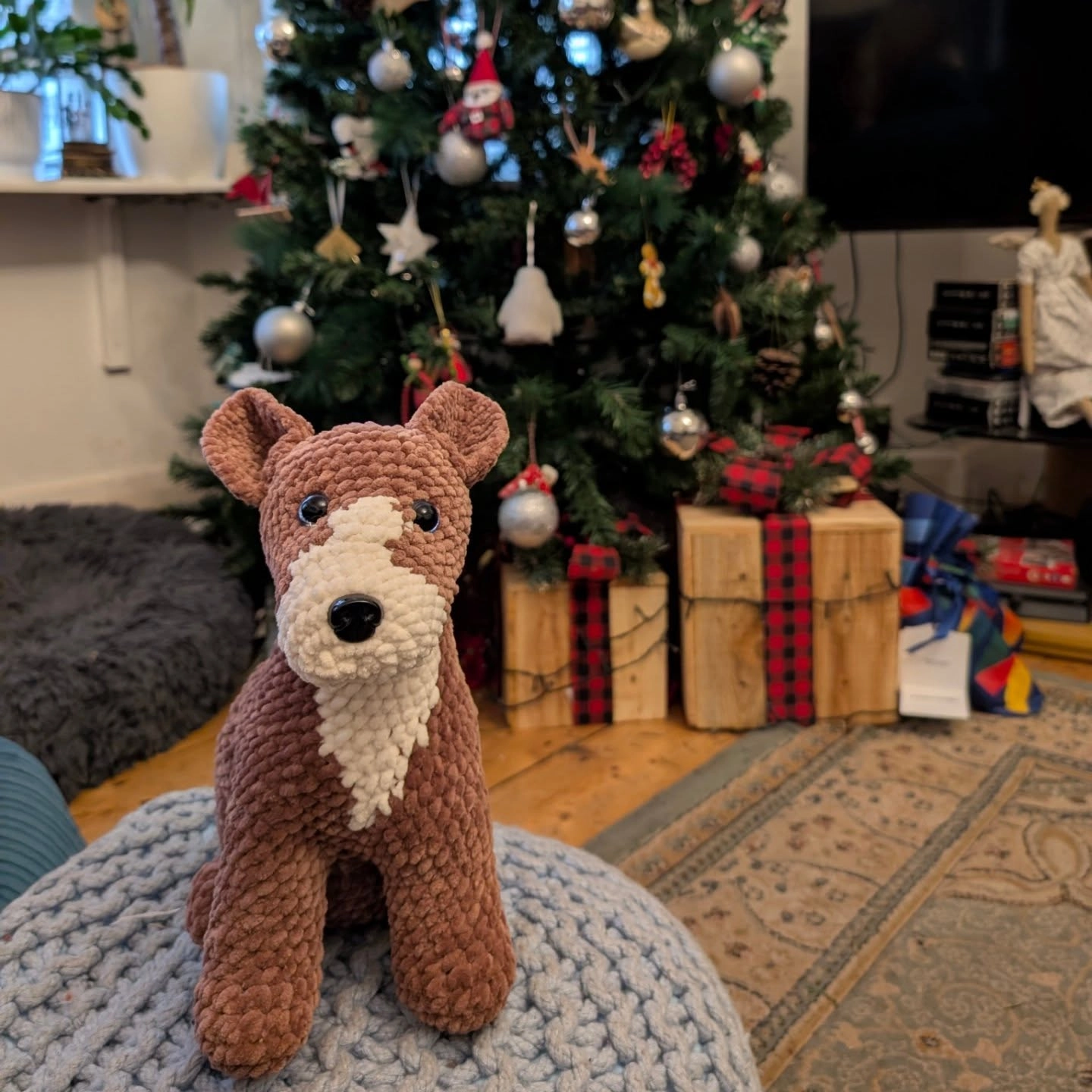
credit: @cltaylorauthor
Gauge drift is why handmade sets mismatch. A 4-inch swatch before every project locks your tension to the pattern’s math. The card travels with the work so mid-project checks take seconds.
Crochet a 4-inch square in the project’s stitch and count its stitches and rows. Adjust hook size up or down until the count matches the pattern. Write the final hook and counts on a card pinned to the project’s bag.
| Stitch | Gauge (per 4 in) | Hook Start |
|---|---|---|
| Single crochet | 16 sts x 18 rows | 5.0 mm (H) |
| Half double | 14 sts x 11 rows | 5.5 mm (I) |
| Double crochet | 12 sts x 8 rows | 6.0 mm (J) |
4. Master Three Stitches: Single, Half Double, and Granny
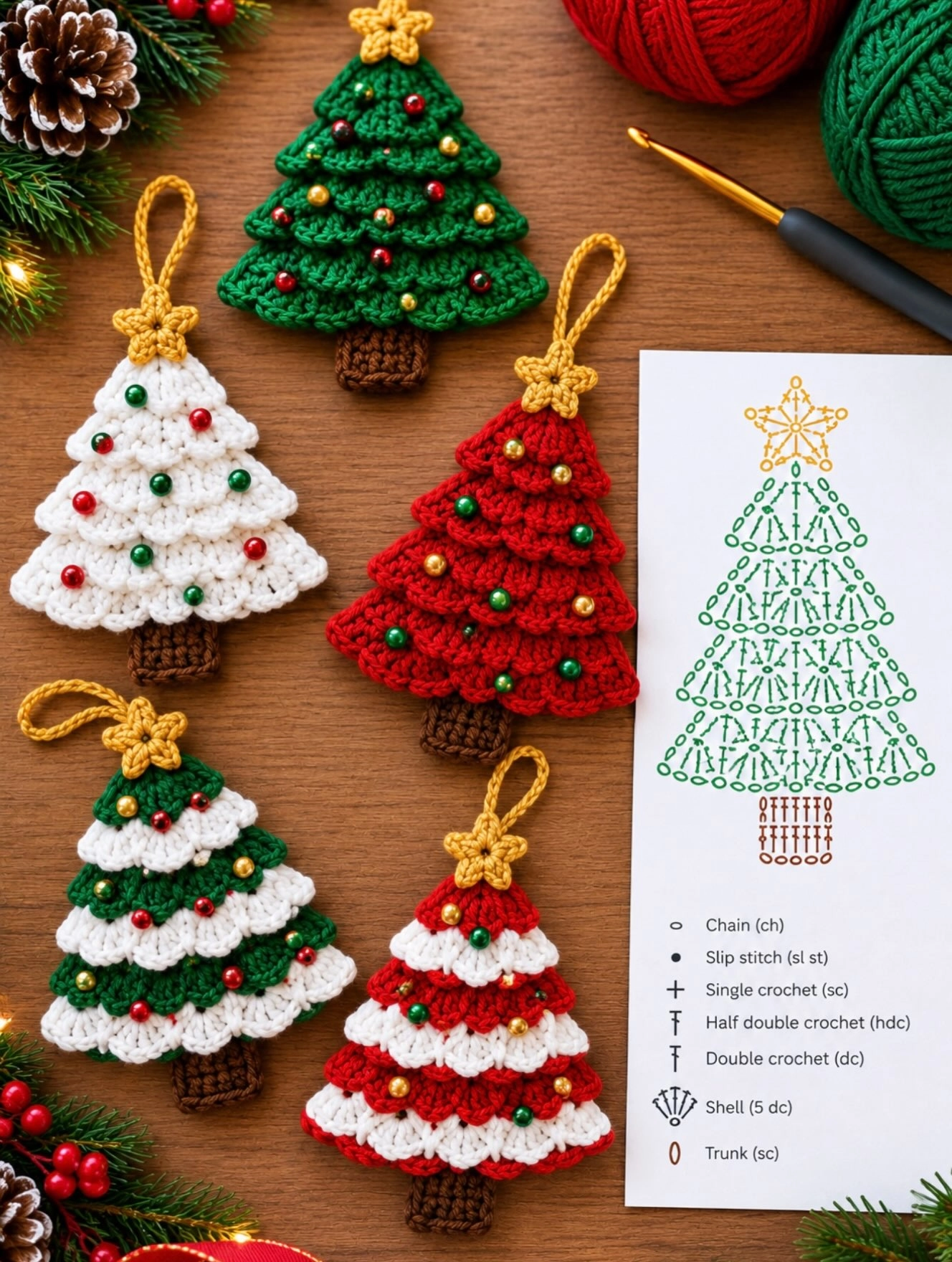
credit: @yarn5985
Thirty projects sound like thirty techniques; they run on three stitches. Single crochet builds firm shapes, half double speeds flat work, and the granny cluster carries blankets. Learn them in this order on scrap yarn first.
Work a 10-row swatch of single crochet until edges run straight. Add half double rows until height stays even across the row. Finish with one granny square worked in the round without twisting the corners.
| Stitch | Builds | First Project |
|---|---|---|
| Single crochet | Firm shapes | Star, balls |
| Half double | Fast flat work | Cozy, scarf |
| Granny cluster | Blankets | Throw, swag |
5. Set a $70 Materials Budget and Split It by Yarn Use
credit: @hugsanstitches
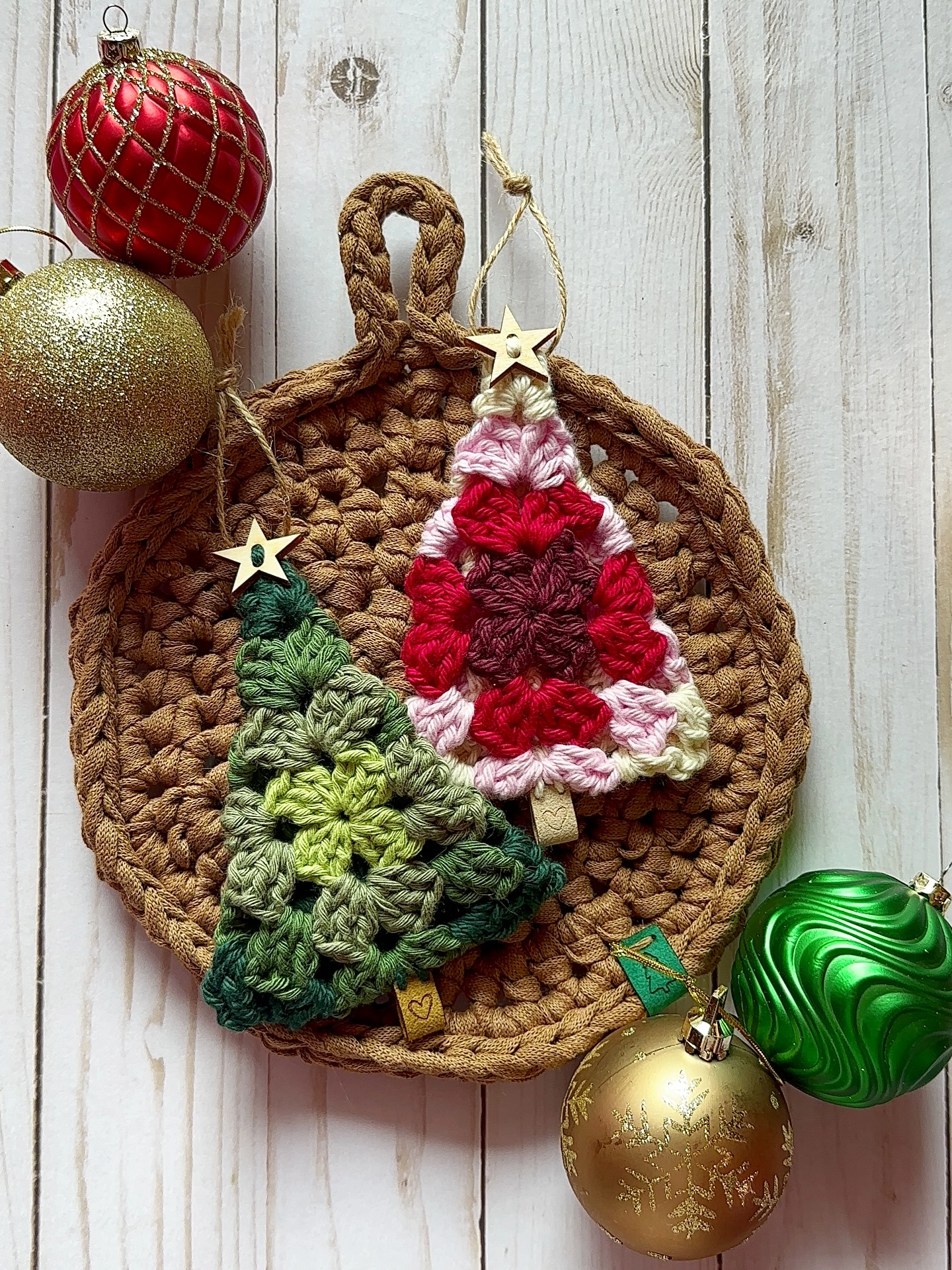
Crochet costs creep through dozens of single-skein trips. A split budget stops the creep at the first store. Ornament yarn takes the largest share because the tree set is the biggest project family.
Divide $70 into $30 for ornament and garland yarn, $20 for stocking and blanket yarn, $10 for hooks and tools, and $10 for stuffing, bells, and finishing. Track every receipt against its column the same day. A column that hits its ceiling closes until something returns to the store.
Christmas Crochet Ornaments and Small Makes
Small makes finish fast and teach every skill the big pieces need. This section hooks stars, snowflakes, mini stockings, bauble covers, and candy canes. Every piece uses the palette and gauge standards from the foundations.
6. Crochet a 4-Inch Star in Cranberry With a Gold Center
credit: @hookhilocrochet
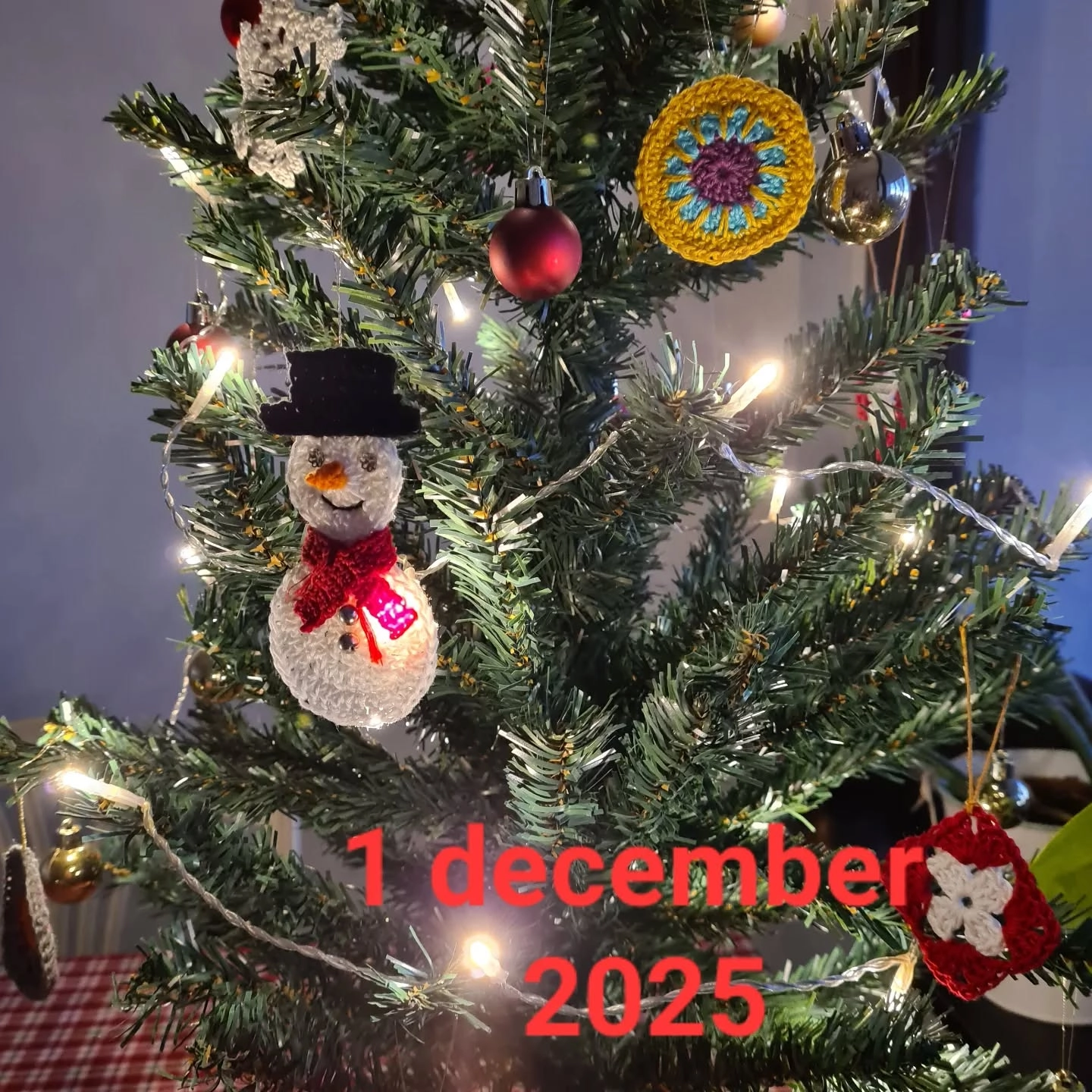
The star is the tree set’s anchor ornament. Four inches reads clearly at 6 feet without crowding branches. A gold center dot ties it to the palette’s accent.
Work a five-point star in worsted cranberry with a 5.0 mm hook, two rounds for the body and one for the points. Stitch a gold French knot or small circle at the center. Block flat for 12 hours and add a cream hanging loop.
| Star Part | Yarn | Hook |
|---|---|---|
| Body + points | Cranberry worsted | 5.0 mm |
| Center | Gold | Knot or circle |
| Loop | Cream | Stitched in |
7. Stiffen a 3.5-Inch Snowflake in Cream With Fabric Stiffener
credit: @thecrochetboss
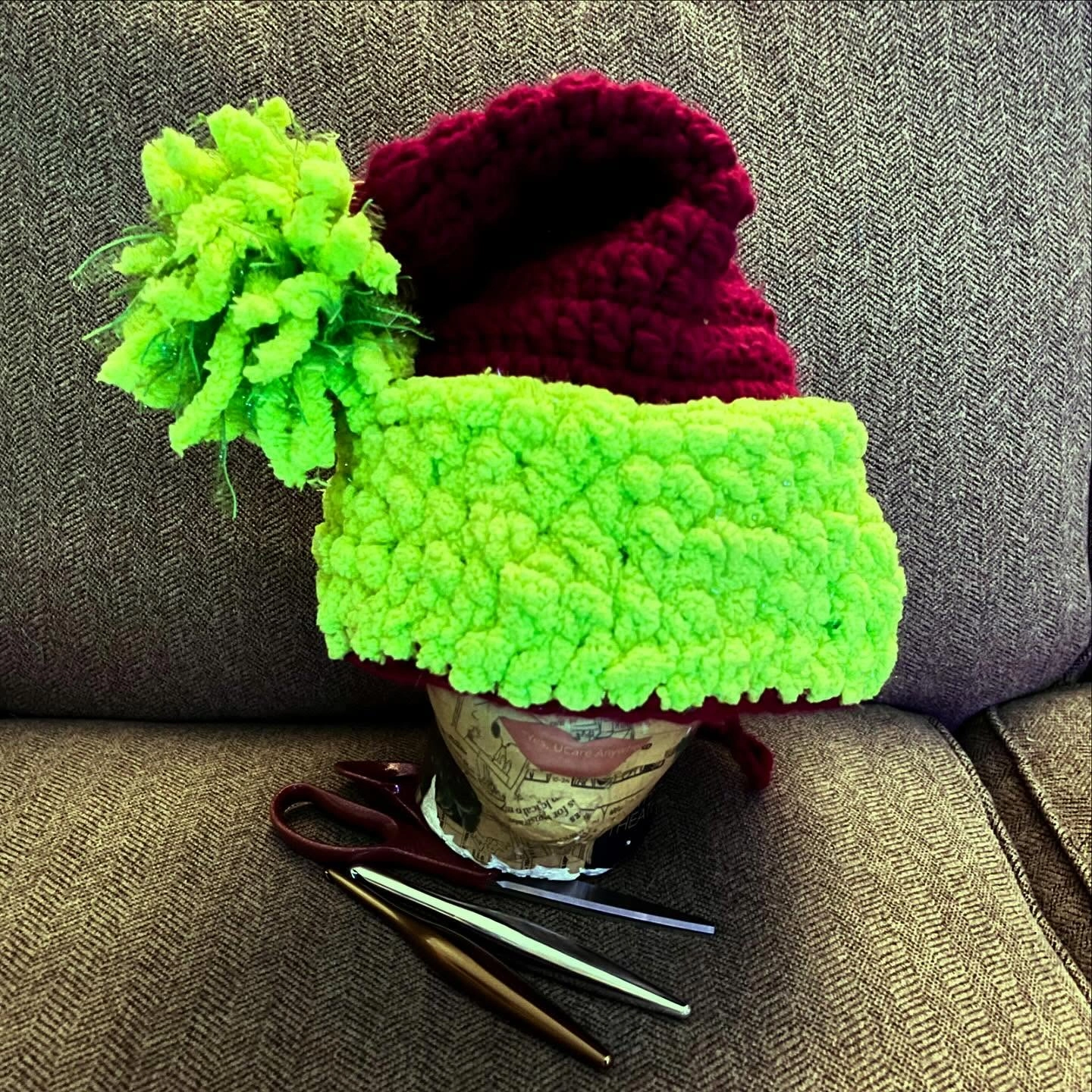
Crocheted snowflakes droop without stiffening; blocked and stiffened ones hold points for years. Cream yarn reads as real snow against dark branches. The 3.5-inch size suits mid-tree gaps.
Crochet the flake in cream cotton with a 4.0 mm hook for tight definition. Pin it point by point on a board and brush with fabric stiffener. Dry 24 hours before hanging on a gold thread loop.
8. Hook a 4-Inch Mini Stocking in Forest With a Cream Cuff
credit: @crochet.bymorgan
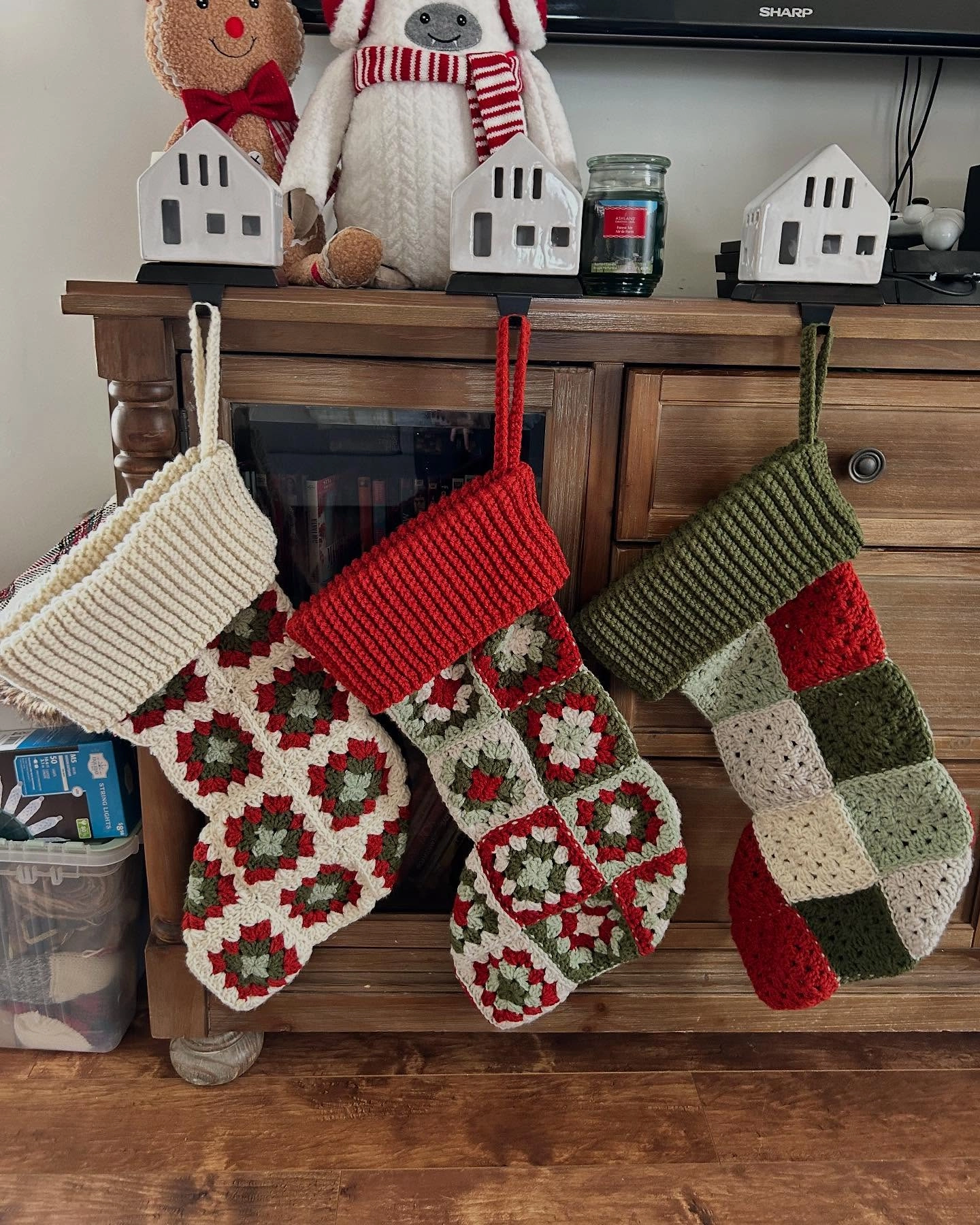
Mini stockings carry candy, money, and tiny gifts on the tree. Forest with a cream cuff repeats both palette leads in 4 inches. The heel turn is the only shaped step.
Work the leg in forest worsted for 8 rounds, turn the heel with short rows, and finish the foot to 4 inches total. Add a cream cuff of 3 rounds at the top. Hang by a loop stitched into the cuff’s back.
| Mini Stocking Part | Rounds | Color |
|---|---|---|
| Leg | 8 rounds | Forest |
| Heel | Short rows | Forest |
| Cuff | 3 rounds | Cream |
9. Cover Baubles With Crochet Shells at 3 Inches

credit: @selena_yardel
Plain baubles become handmade heirlooms under crochet shells. A mesh shell stretches over a standard 3-inch bauble in 20 minutes. Cranberry and cream shells alternate down the tree.
Crochet a chain-mesh shell in the round, increasing to the bauble’s widest point, then decreasing to its cap. Slip it over a matte 3-inch bauble and cinch at the cap with the hanging loop. Work shells in alternating palette colors for rhythm.
| Shell Part | Stitch | Fit |
|---|---|---|
| Mesh body | Chain spaces | 3-in bauble |
| Cinch | Drawn loop | At cap |
| Colors | Alternating | Cranberry/cream |
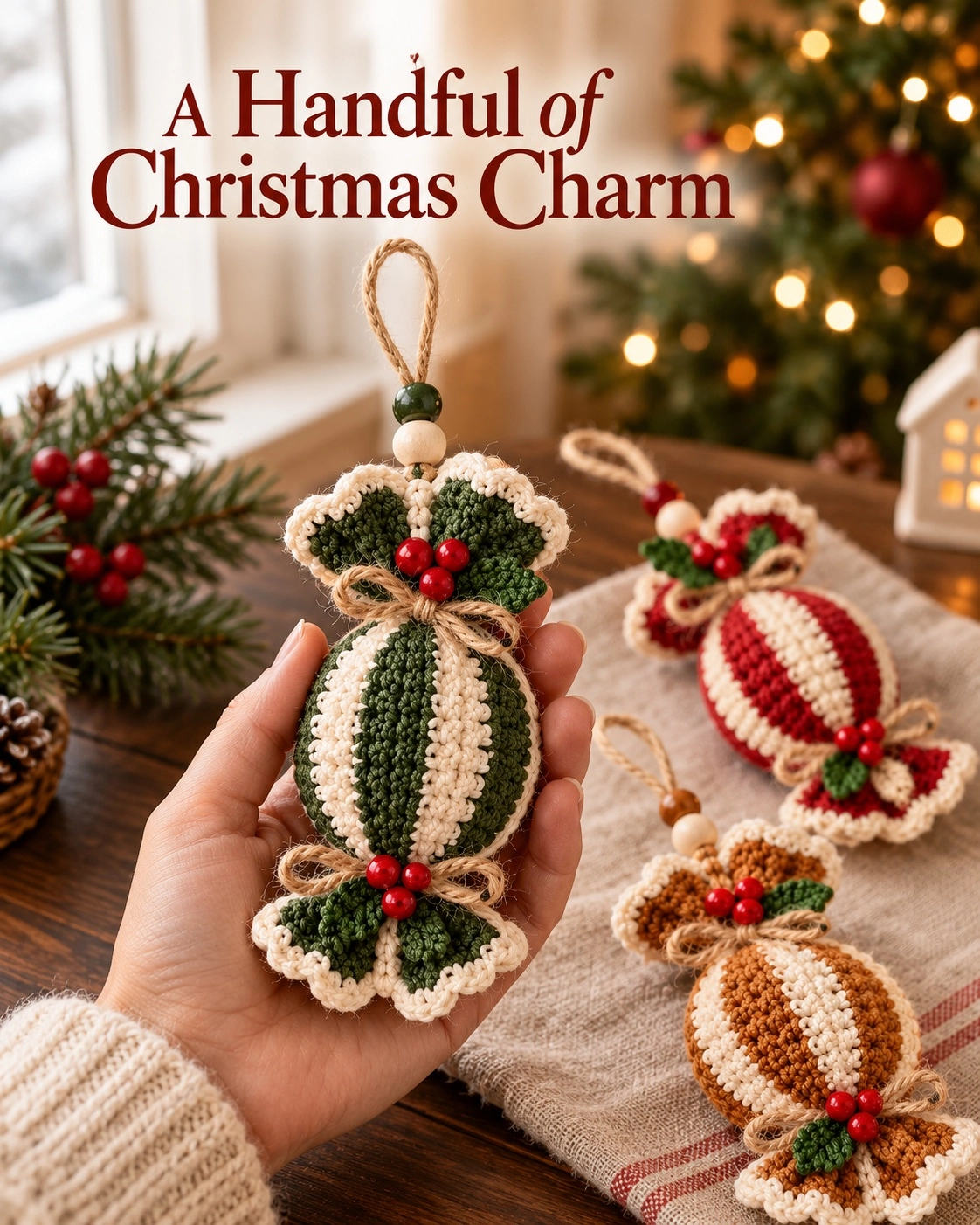
10. Twist a 5-Inch Candy Cane in Cream and Cranberry Stripes
credit: @nadiya.helthon
Candy canes give the tree its classic stripe at crochet scale. Striped rounds worked in a tube beat flat appliqué for shape. A hidden pipe cleaner holds the hook curve.
Work a narrow tube in spiral rounds, changing color every 2 rounds for the stripe. Thread a pipe cleaner through the tube at 5 inches of length. Bend the top third into the cane’s hook and stitch the end closed.
Christmas Crochet Garlands and Wreaths
Garlands and wreaths carry crochet beyond the tree to the whole house. This section chains star garlands, ball garlands, a leaf wreath, and mantel swags. Every piece repeats the palette and finishing standards.
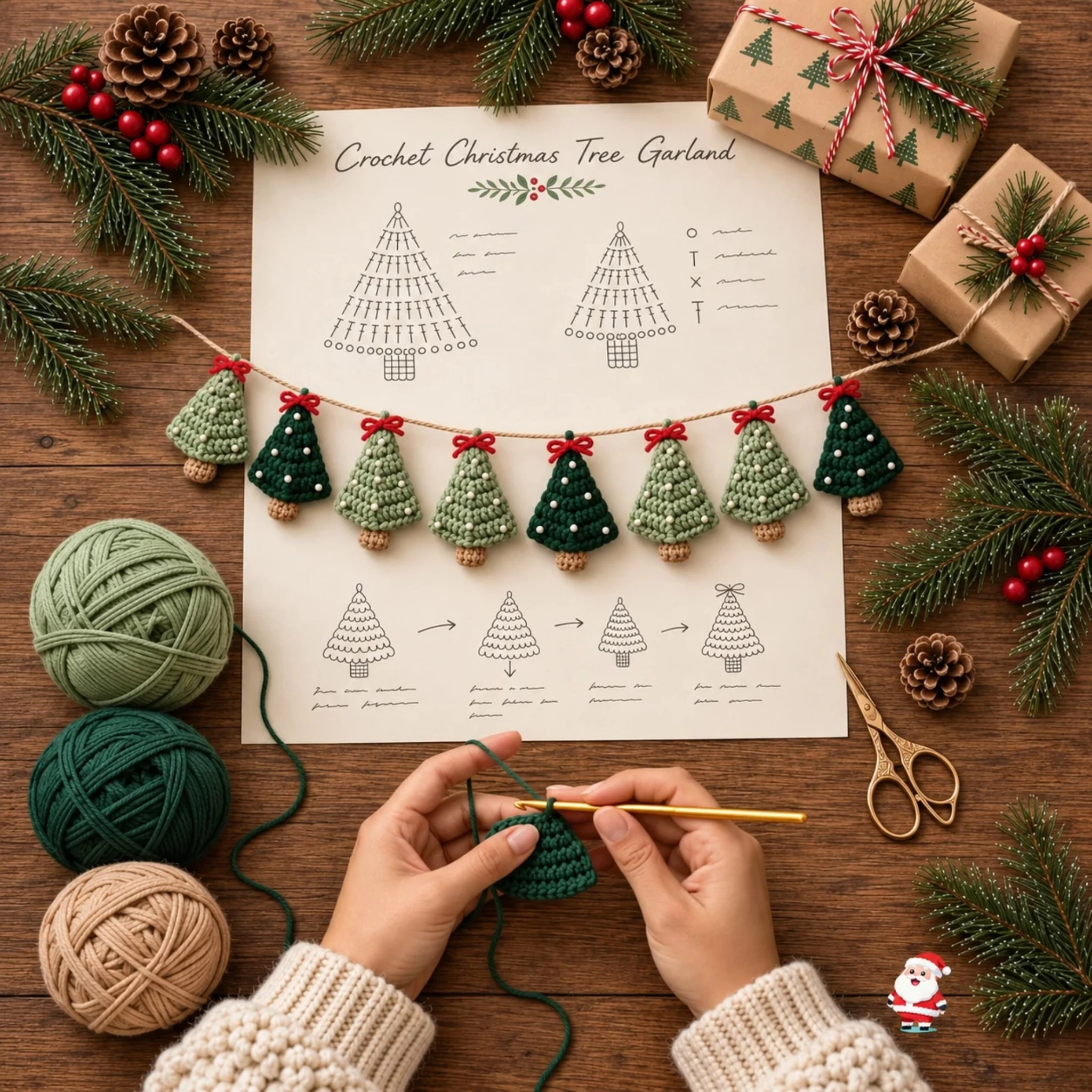
11. String a 6-Foot Garland of Mini Stars at 6-Inch Spacing
credit: @thedailystitchcrochet
Garlands carry crochet to mantels and windows where ornaments cannot hang. Mini stars at even spacing read as one designed line. Six feet dresses a standard mantel fully.
Crochet 2-inch stars in rotating palette colors using Tip 6’s pattern at half scale. Thread them onto twine through their top points at 6-inch spacing. Hang the garland with an 8-inch swag drop, matching the home’s garland rhythm.
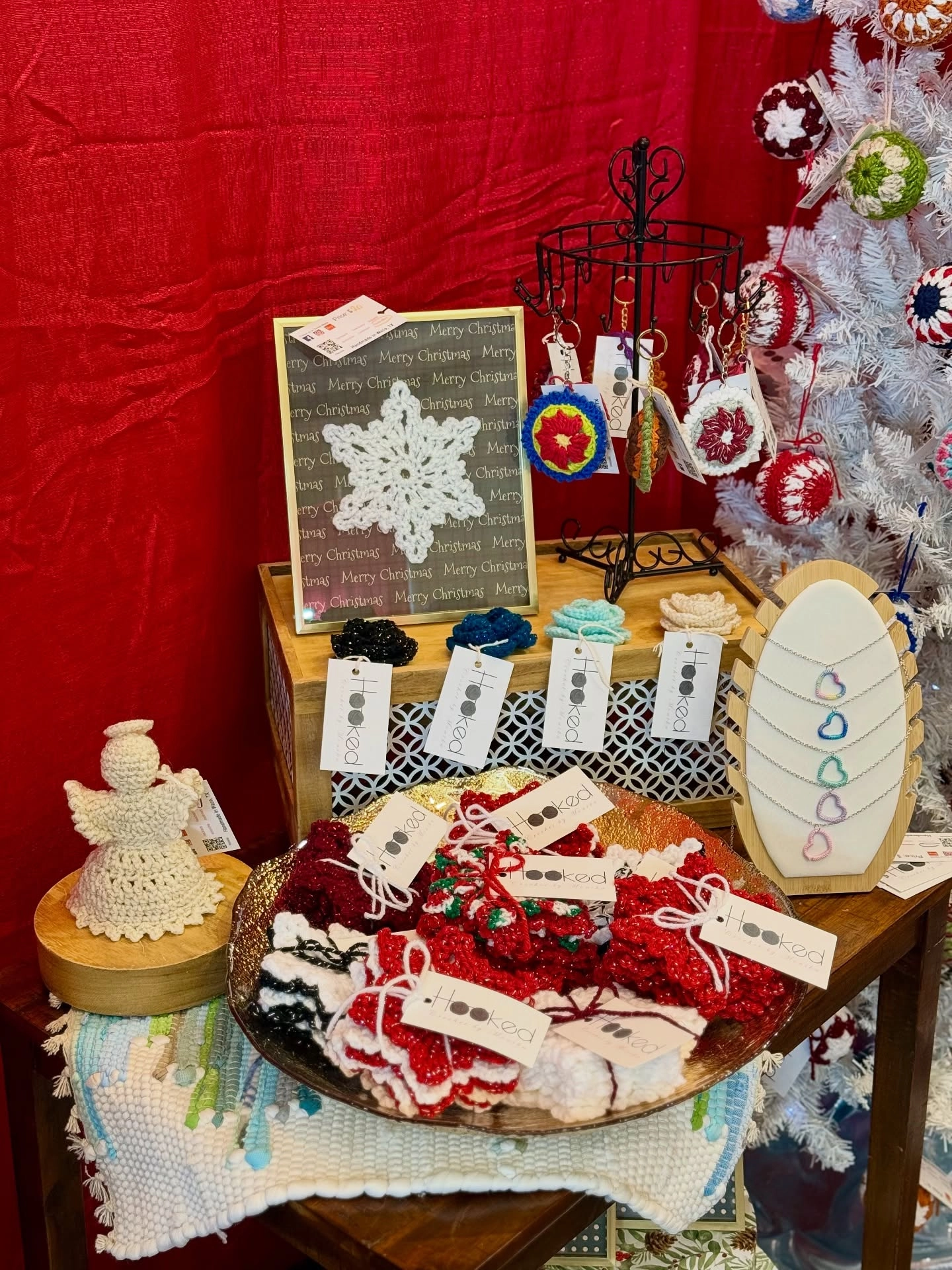
12. Crochet Ball Garland Spheres at 1.5 Inches Over Foam Cores
credit: @hooked.crochet.by.monika
Yarn balls strung as garland add round rhythm stars cannot give. Foam cores keep every sphere identical and feather-light. The garland drapes banisters and tree fronts equally well.
Work single crochet in the round over 1.5-inch foam balls, decreasing to close at the top. Make 18 to 24 balls in rotating palette colors. String them on twine at 4-inch spacing for a full drape.
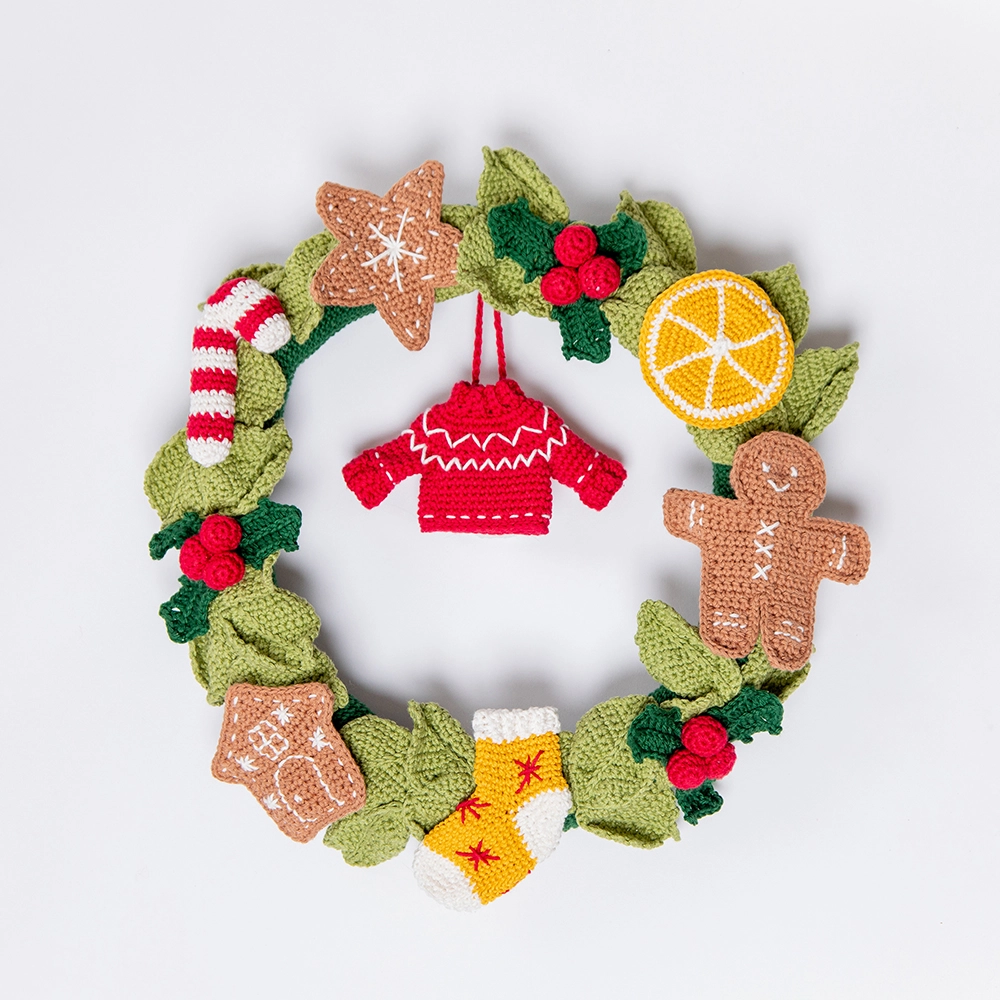
13. Build a 12-Inch Wreath of Crocheted Leaves and Berries
credit: @lovecraftscrochet
A crocheted leaf wreath dresses doors where real greenery dries out. Forty leaves on a foam ring build a full circle across two evenings. The wreath stores flat for years.
Crochet 40 leaves at 2 inches in forest and cream worsted. Pin and stitch them in overlapping rows onto a fabric-wrapped 12-inch ring. Cluster five cranberry crocheted berries at the bottom arc and a gold bow at the top.
| Wreath Part | Count | Color |
|---|---|---|
| Leaves | 40 at 2 in | Forest + cream |
| Berries | 5 clusters | Cranberry |
| Bow | 1 | Gold |
14. Drape a Granny-Square Swag Across the Mantel

credit: @emerald_crochets2
Granny squares are crochet’s most gifted square; strung as a swag they become architecture. Five squares in palette rotation carry the mantel’s center. Tassels finish each point.
Crochet five 5-inch granny squares in rotating palette colors. Join them corner to corner on a crocheted chain at an 8-inch swag drop. Add one tassel at each bottom point in the square’s lead color.
15. Chain a Paper-Chain-Style Garland in Palette Stripes
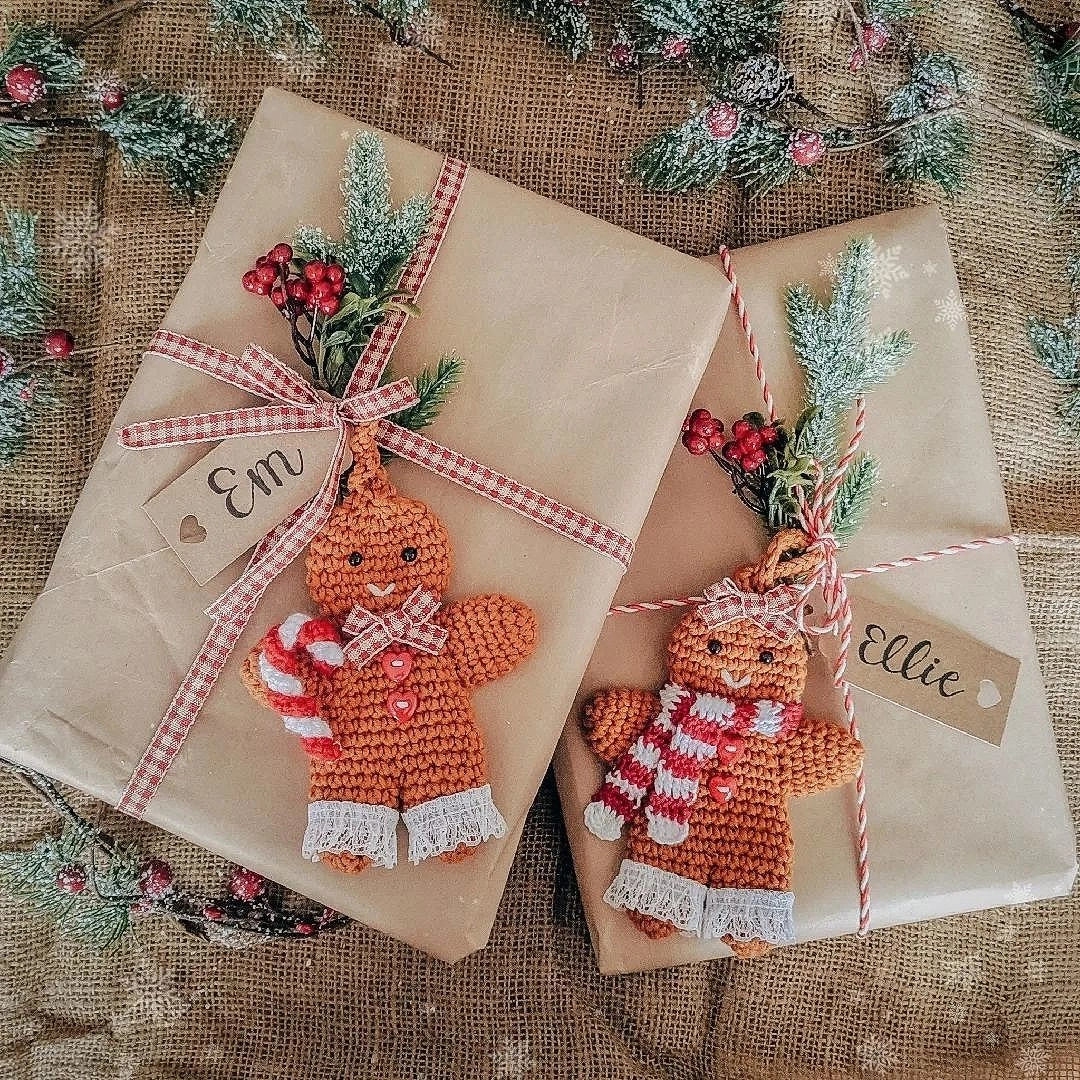
credit: @lionbrandyarn
Yarn chains mimic the childhood paper chain with none of the tearing. Links at 6 inches build a 6-foot garland in one evening of television crochet. Kids join links safely with no hooks near the finished chain.
Crochet strips 1 inch wide and 7 inches long in rotating colors. Join each strip into a loop through the previous one and stitch closed. Twelve links make about 6 feet; add links for trees and door frames.
| Garland | Unit | Spacing |
|---|---|---|
| Mini stars | 2-inch stars | 6 inches apart |
| Balls | 1.5-inch spheres | 4 inches apart |
| Chain links | 6-inch loops | Linked direct |
Christmas Crochet Stockings, Blankets, and Table Pieces
Big pieces carry the season’s gifts and its coziest hours, and table pieces finish the Christmas home. This section hooks full stockings, a granny throw, a tree skirt, and simple wearables, then sets placemats, a runner, and coasters in palette rotation. Every piece uses the gauge card system from Tip 3, and every flat piece blocks before its first use.
16. Hook a Full 18-Inch Stocking With a Name Band
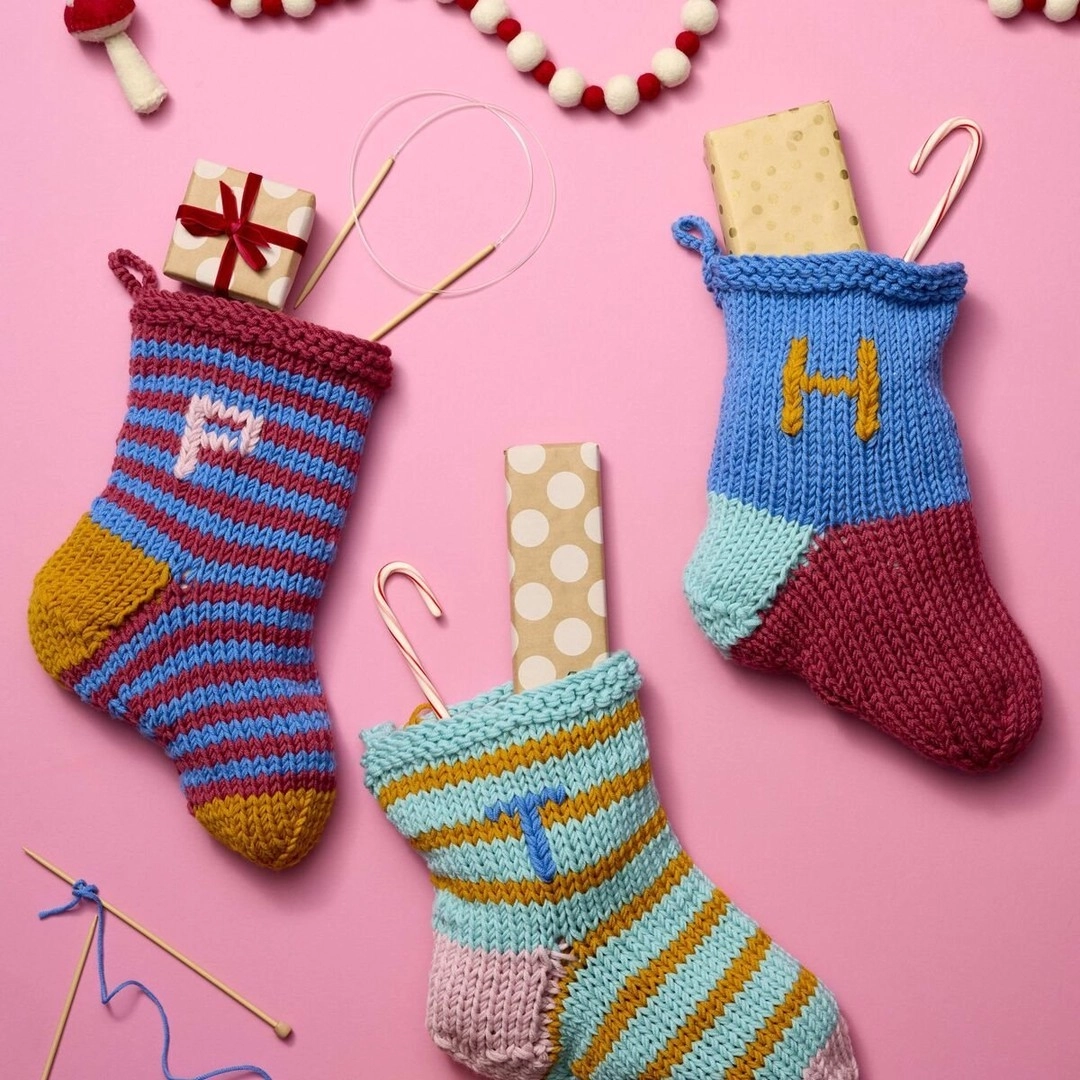
credit: @joann_stores
The mantel stocking is crochet’s Christmas flagship. Eighteen inches holds real gifts without stretching the cuff. A cream name band personalizes it in backstitch or crocheted letters.
Work the stocking in worsted with a 5.5 mm hook: cuff, leg, heel turn, foot, and toe to 18 inches. Crochet or embroider the name on a cream band stitched across the cuff. Line the stocking with fabric if gifts include anything sharp or heavy.
| Stocking Part | Hook | Length |
|---|---|---|
| Cuff + band | 5.5 mm | 3 inches |
| Leg + foot | 5.5 mm | 15 inches |
| Total | – | 18 inches |
17. Build a Granny-Square Throw at 40 by 50 Inches
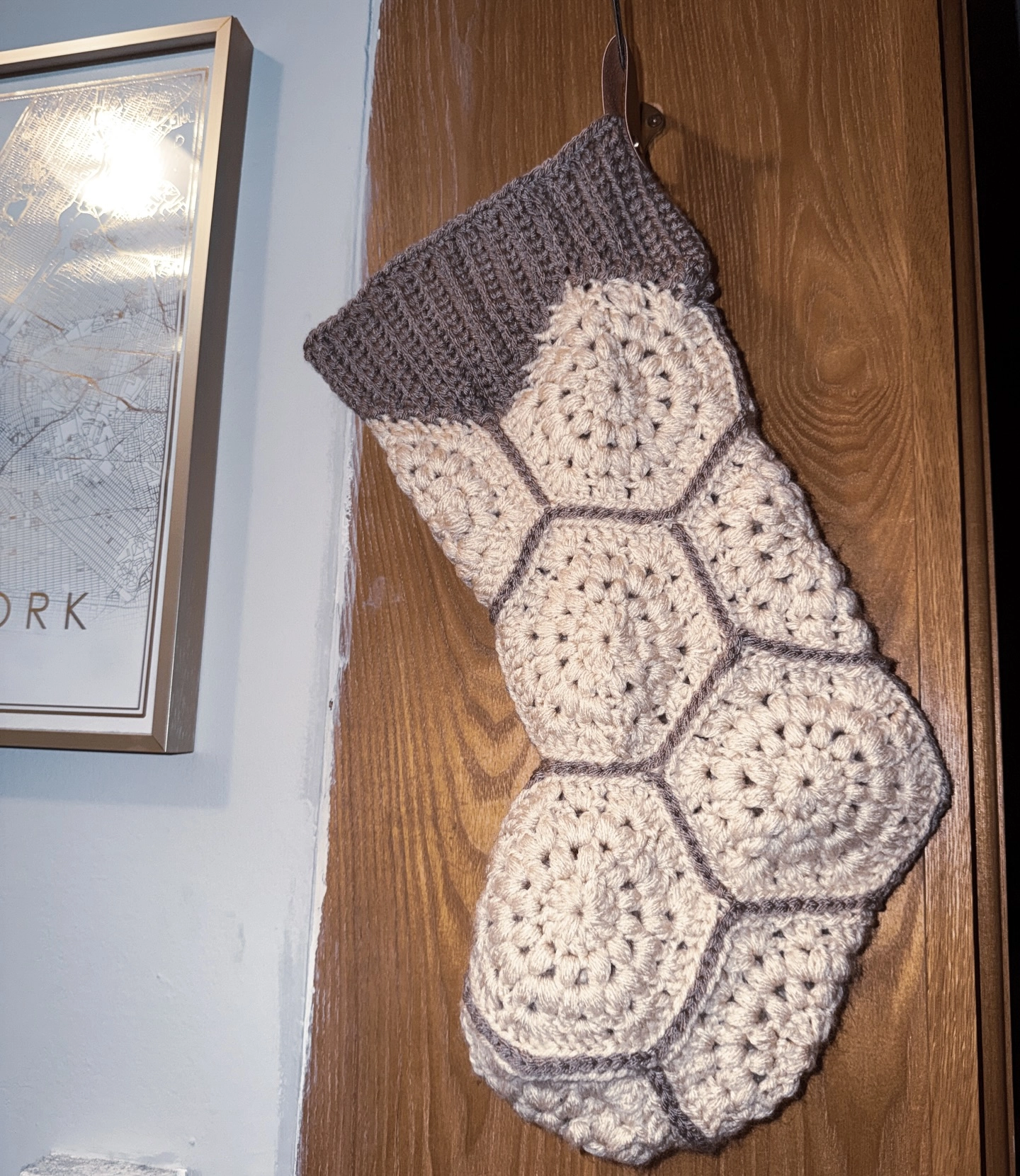
credit: @plane_knits
A Christmas throw in palette squares warms laps and photographs all season. Twenty squares join into the classic 4-by-5 grid. The border round unifies every square’s small gauge differences.
Crochet twenty 10-inch granny squares in rotating palette centers. Join them with cream slip stitches into a 4-by-5 grid. Work two border rounds in cream and one in cranberry to finish at 40 by 50 inches.
| Throw Part | Count | Size |
|---|---|---|
| Granny squares | 20 | 10 in each |
| Grid | 4 x 5 | 40 x 50 in |
| Border | 3 rounds | Cream + cranberry |
18. Crochet a Tree Skirt at 48 Inches in Rotating Wedges
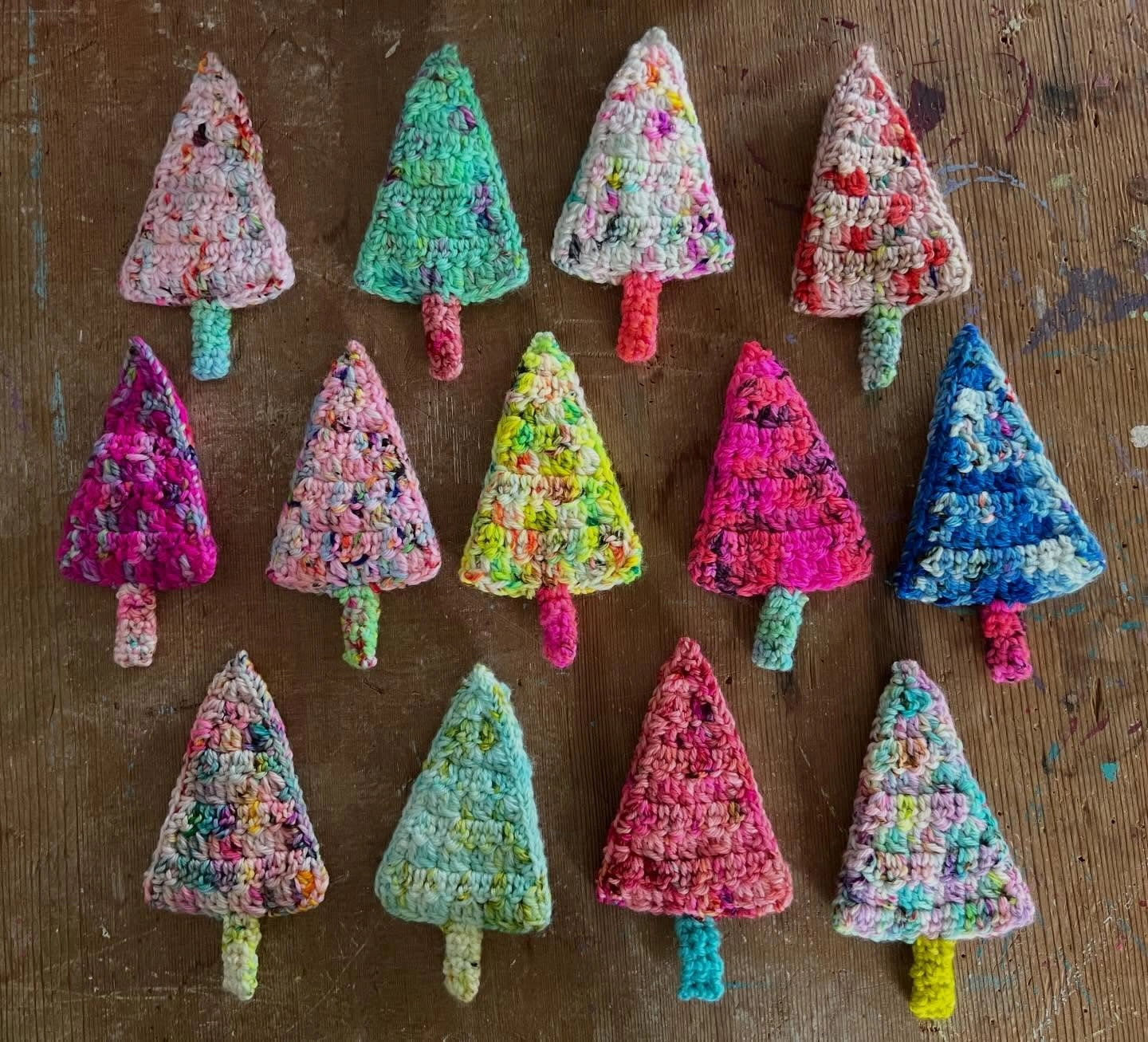
credit: @littlewoollie
A crocheted tree skirt grounds the tree in the palette’s full rotation. Wedge increases build the circle flat without ruffling. The 48-inch diameter suits trees up to 7.5 feet.
Work the skirt in wedge sections from the center, increasing evenly to hold it flat. Alternate wedge colors around the circle in palette order. Finish the outer edge with a gold scallop round and a back opening with three ties.
19. Hook Simple Mug Cozies at 3.5 Inches for Gifts
credit: @cltaylorauthor
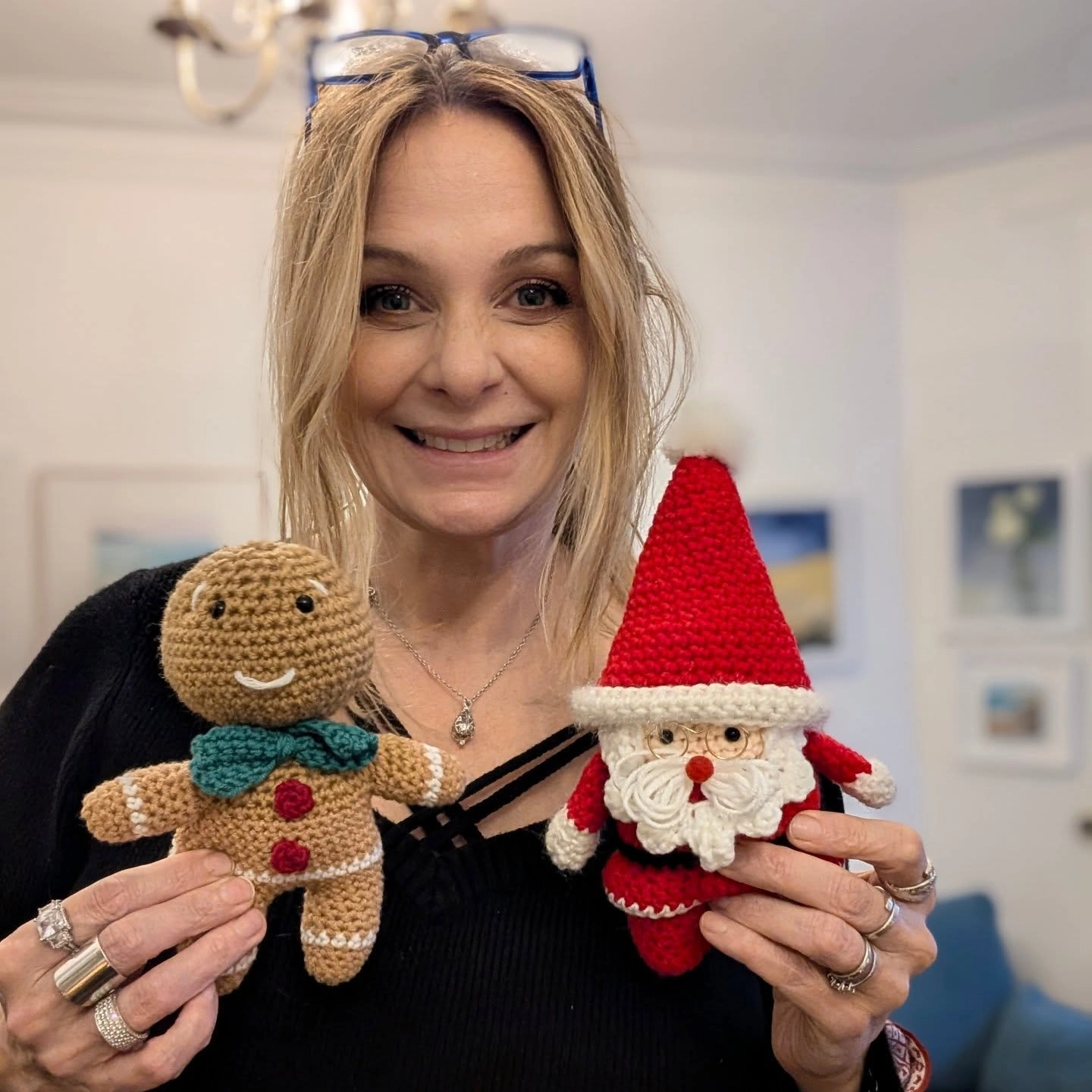
Mug cozies are the fastest giftable crochet in this guide. One cozy takes 30 minutes and a scrap of yarn. A button closure fits every mug in the house.
Crochet a rectangle in half double crochet at 3.5 inches tall and 9 inches long. Add a button loop at one end and sew a cream button at the other. Work cozies in every palette color and gift them in pairs with cocoa packets.
20. Crochet a Scarf in Forest With Cream Fringe
credit: @sweetsmelling.gr
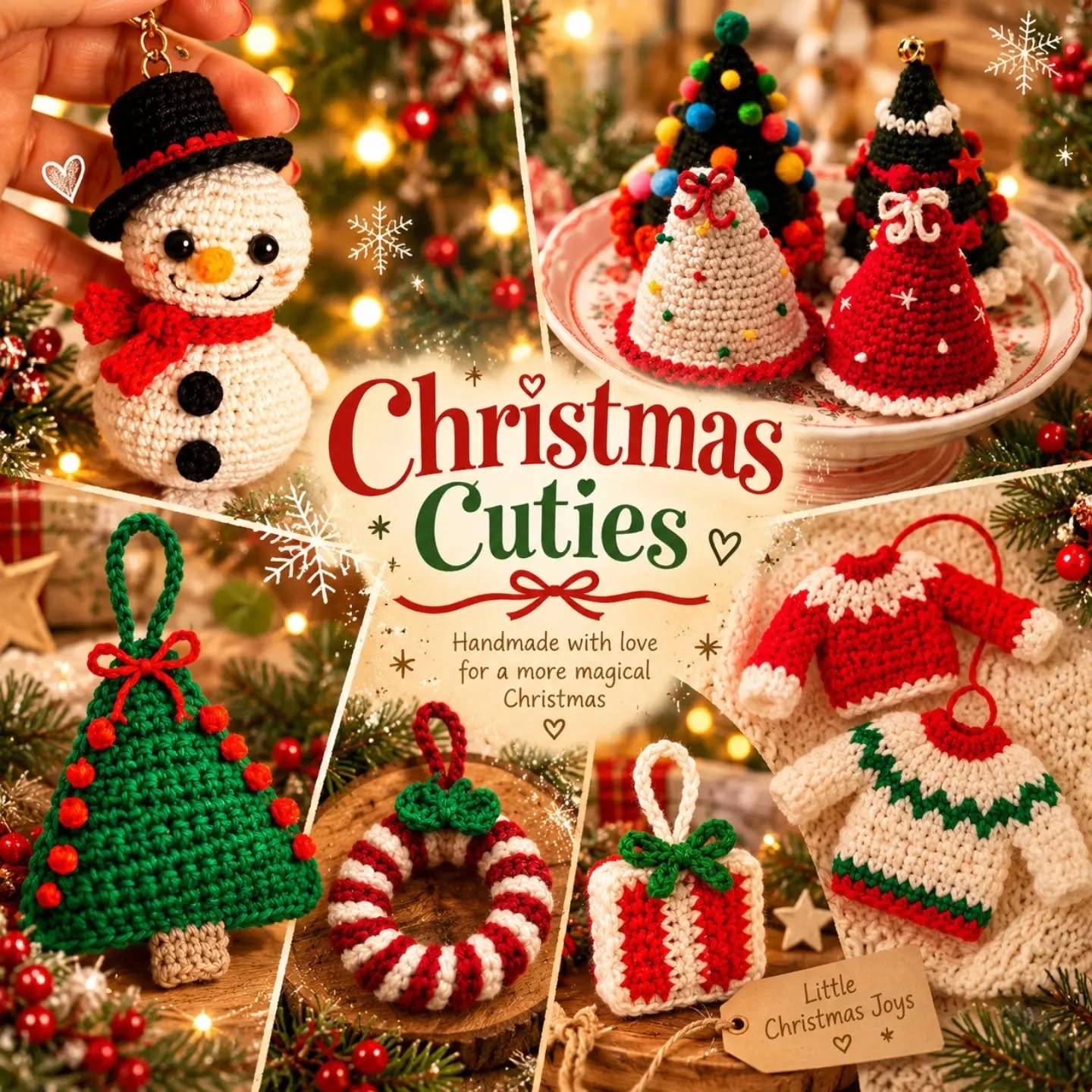
One wearable belongs in every Christmas crochet set. A simple half-double scarf in forest with cream fringe gifts to almost anyone. Its 60-inch length wraps twice or drapes once.
Chain 24 and work half double crochet rows to 60 inches. Keep edges straight by counting stitches every row; the gauge card rule applies. Add 4-inch cream fringe at both ends, 3 strands per inch.
21. Hook Round Placemats at 13 Inches in Cream
credit: @shreehandcraft96
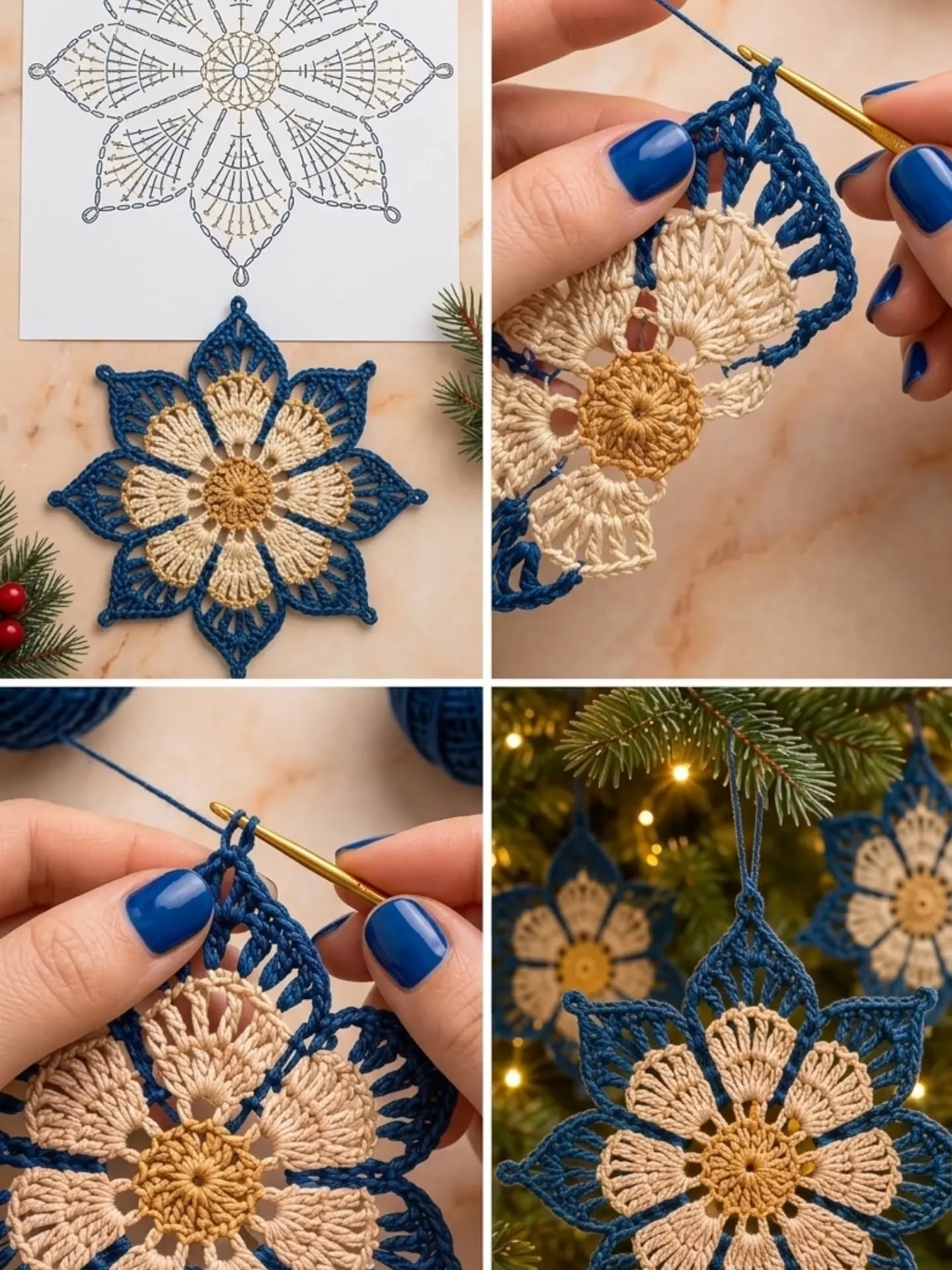
Round placemats soften a rectangular table’s geometry. Cream carries the base palette to every setting. A gold final round ties them to the ornaments’ accent.
Work single crochet in the round, increasing 8 stitches per round to hold the circle flat. Finish at 13 inches with one gold round. Block every placemat flat for 12 hours before its first meal.
22. Crochet a Table Runner at 14 by 60 Inches in Granny Stripes
credit: @yarn5985
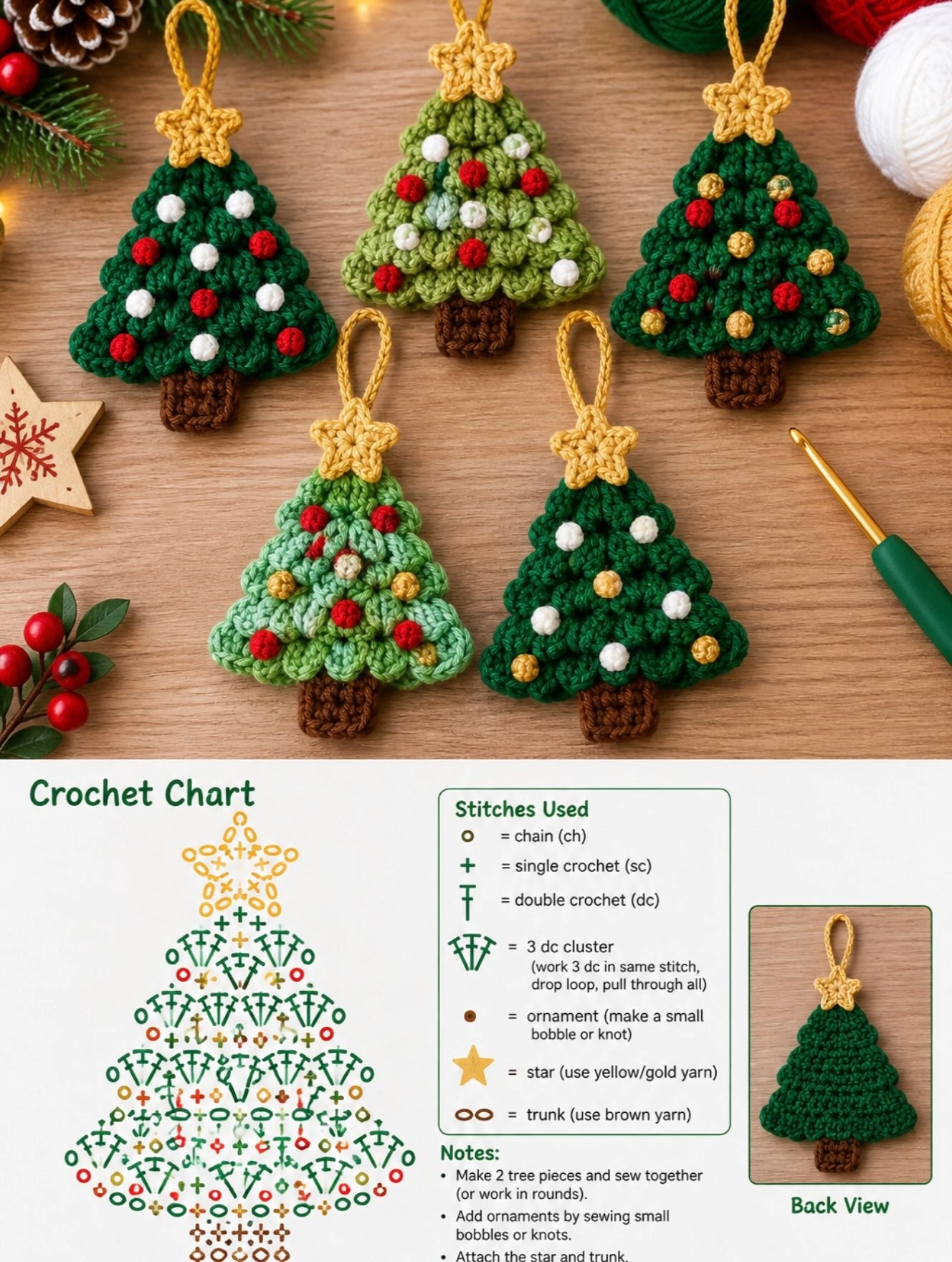
A granny-stripe runner carries the throw’s language to the table. Fourteen inches wide leaves settings clear on both sides. The runner’s ends take tassels or a plain border by table style.
Work granny stripes across a 14-inch width in palette rotation to 60 inches long. Keep stripe order identical at both ends so the runner reads symmetric. Block flat and finish the short ends with one cream border row each.
23. Make Snowflake Coasters at 4.5 Inches in Sets of Six
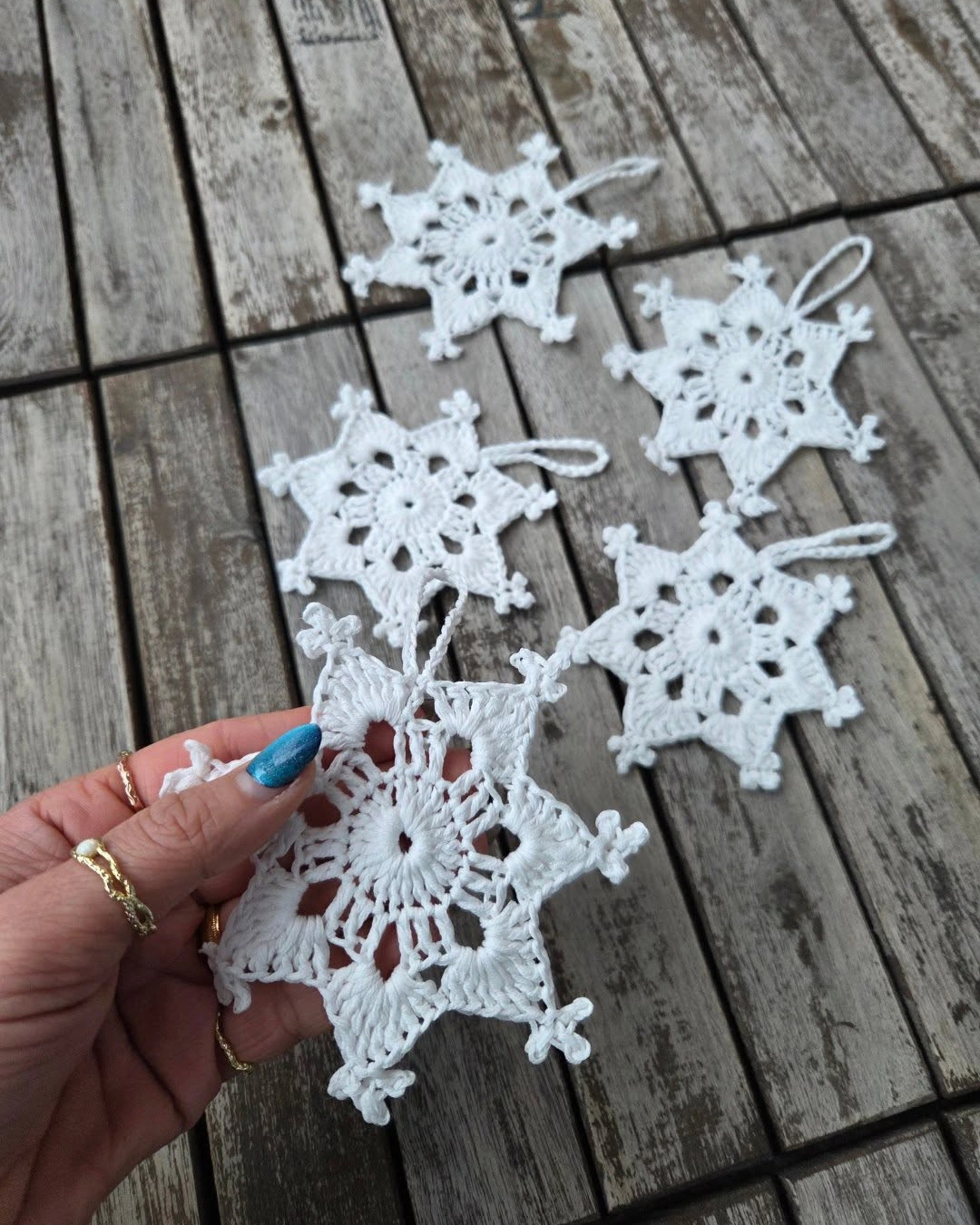
credit: @dropsdesign
Snowflake coasters put Tip 7’s flake to daily work. Cotton yarn and a tighter hook give them absorbency and grip. Sets of six gift as the season’s most useful small make.
Crochet the snowflake pattern in cotton with a 3.5 mm hook to 4.5 inches. Skip the stiffener; coasters block flat and wash soft. Tie each set of six with twine and a gold tag for gifting.
24. Line Every Gift Piece With a Care Card
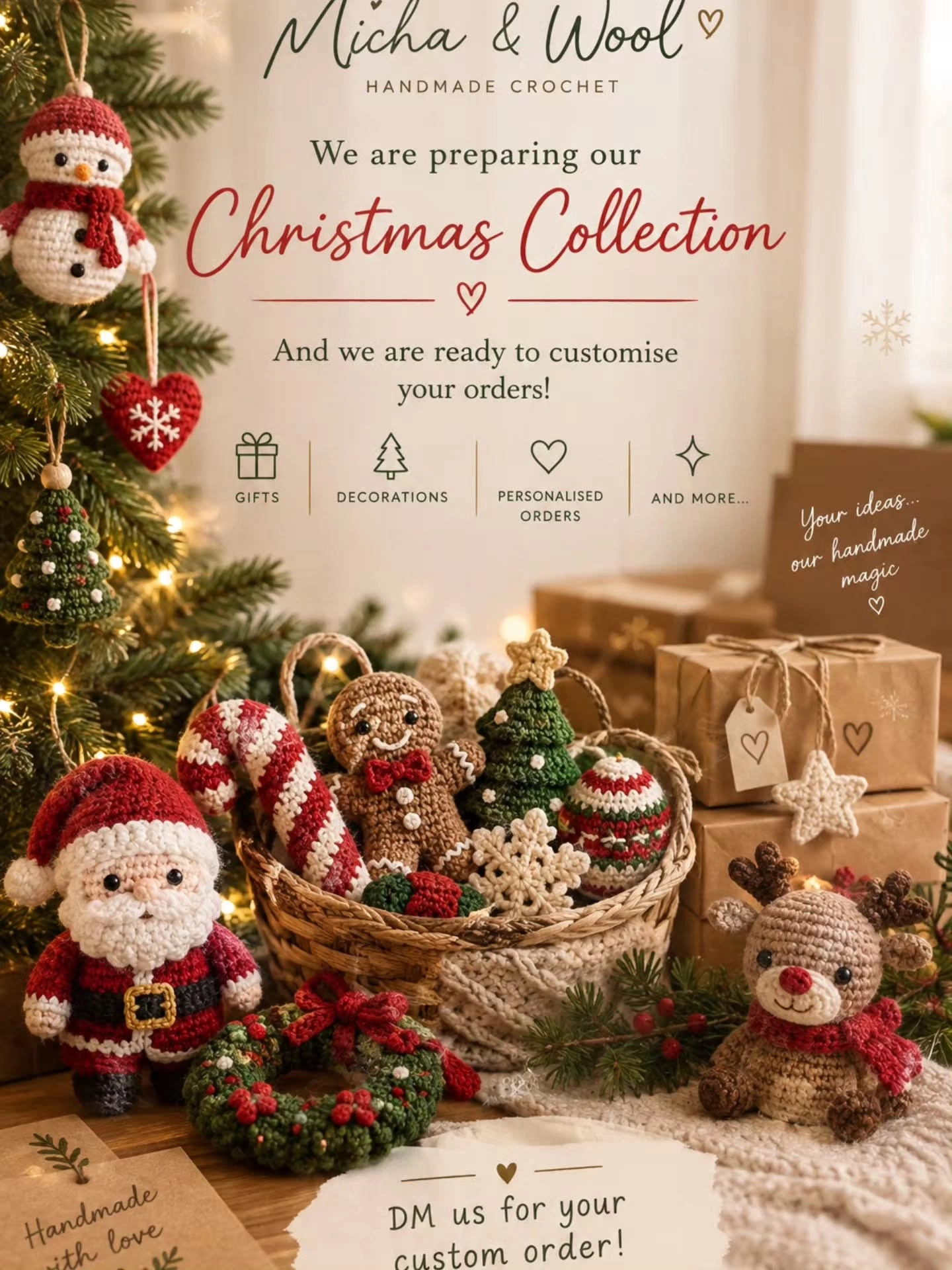
credit: @michandwool
Handmade gifts fail in the wash more than in the making. A care card in every package tells the receiver the fiber, the wash, and the dry in three lines. Cards also carry your maker’s mark.
Write the fiber content, wash temperature, and dry method on a 2-by-3-inch cream card. Tuck one under every gift’s twine before wrapping closes. Receivers keep pieces for years when the first wash goes right.
Christmas Crochet Styling and Finishing Touches
Projects are hooked. This short section handles the final pass: blocking, tree placement, and the photograph that archives the set. Small moves here separate styled sets from craft-bin piles.
25. Block Every Flat Piece for 12 Hours Before Display
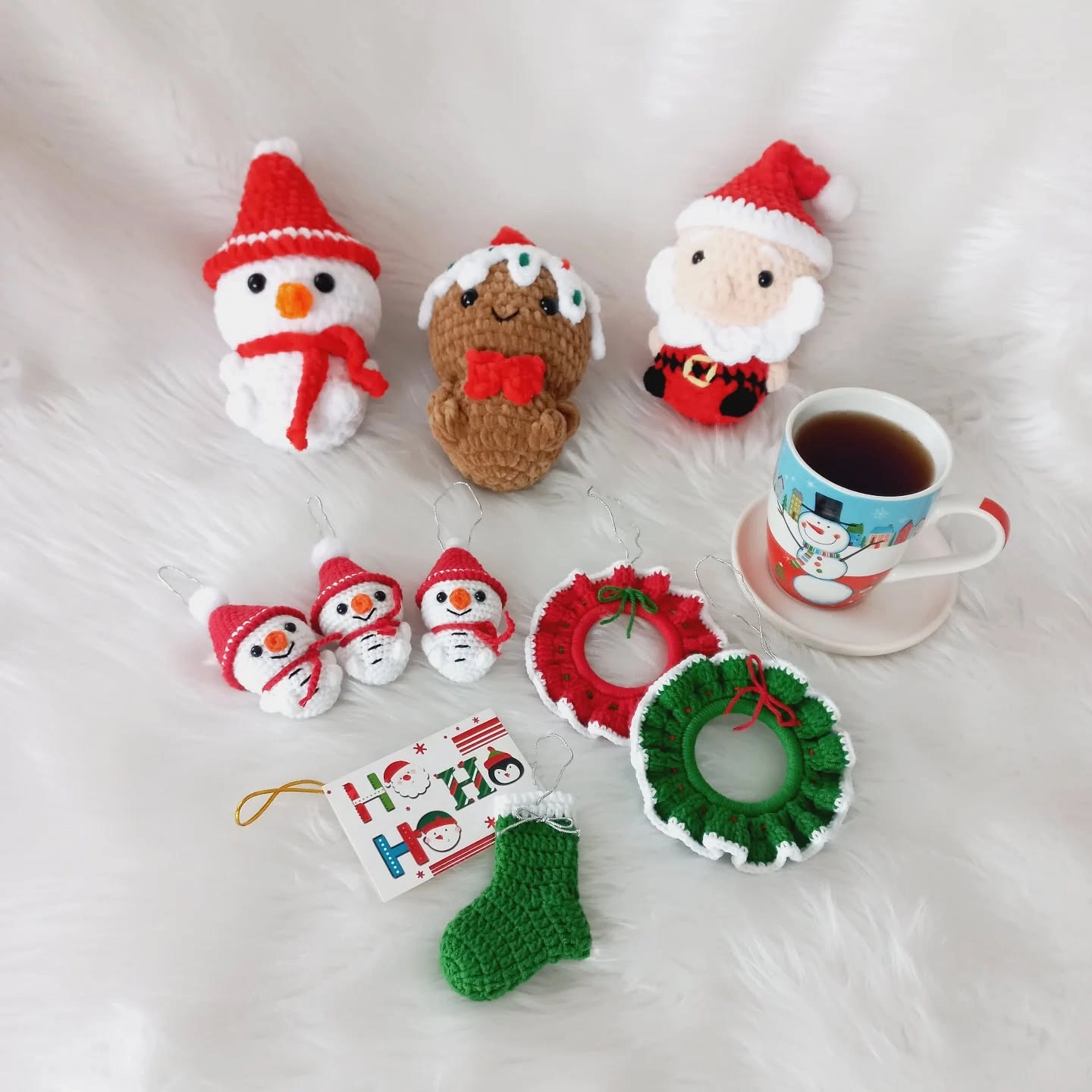
credit: @gulizars_handmade
Unblocked crochet curls at edges and twists on the tree. Twelve hours pinned flat resets every stitch into place. Steam blocking suits acrylic; wet blocking suits cotton.
Pin each flat piece to its pattern measurements on a blocking board. Mist cotton pieces with water or hover steam over acrylic ones. Leave everything pinned a full 12 hours, overnight by default.
26. Place Crochet Pieces in the Tree’s Middle Ring First
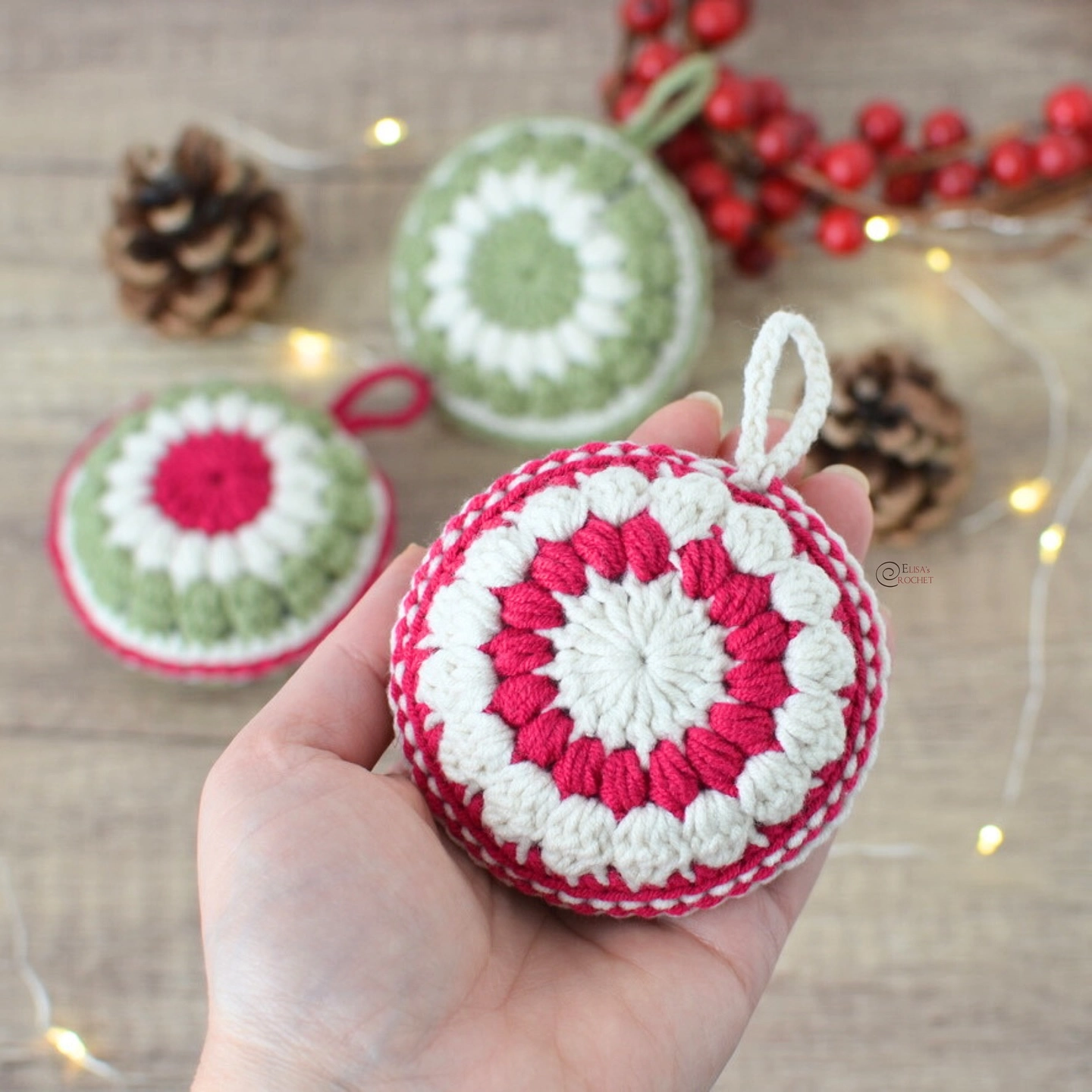
credit: @elisascrochet
Crochet reads best at eye level where its stitching shows. The middle ring takes stars, stockings, and flakes first. Glass and glitter fill the top and outer edges around them.
Hang crochet across the middle third, at 4 to 5.5 feet on a 7-foot tree. Space pieces at least 6 inches apart so each shape reads alone. Fill remaining gaps with bauble shells from Tip 9.
27. Photograph the Full Set Laid Flat Before Hanging
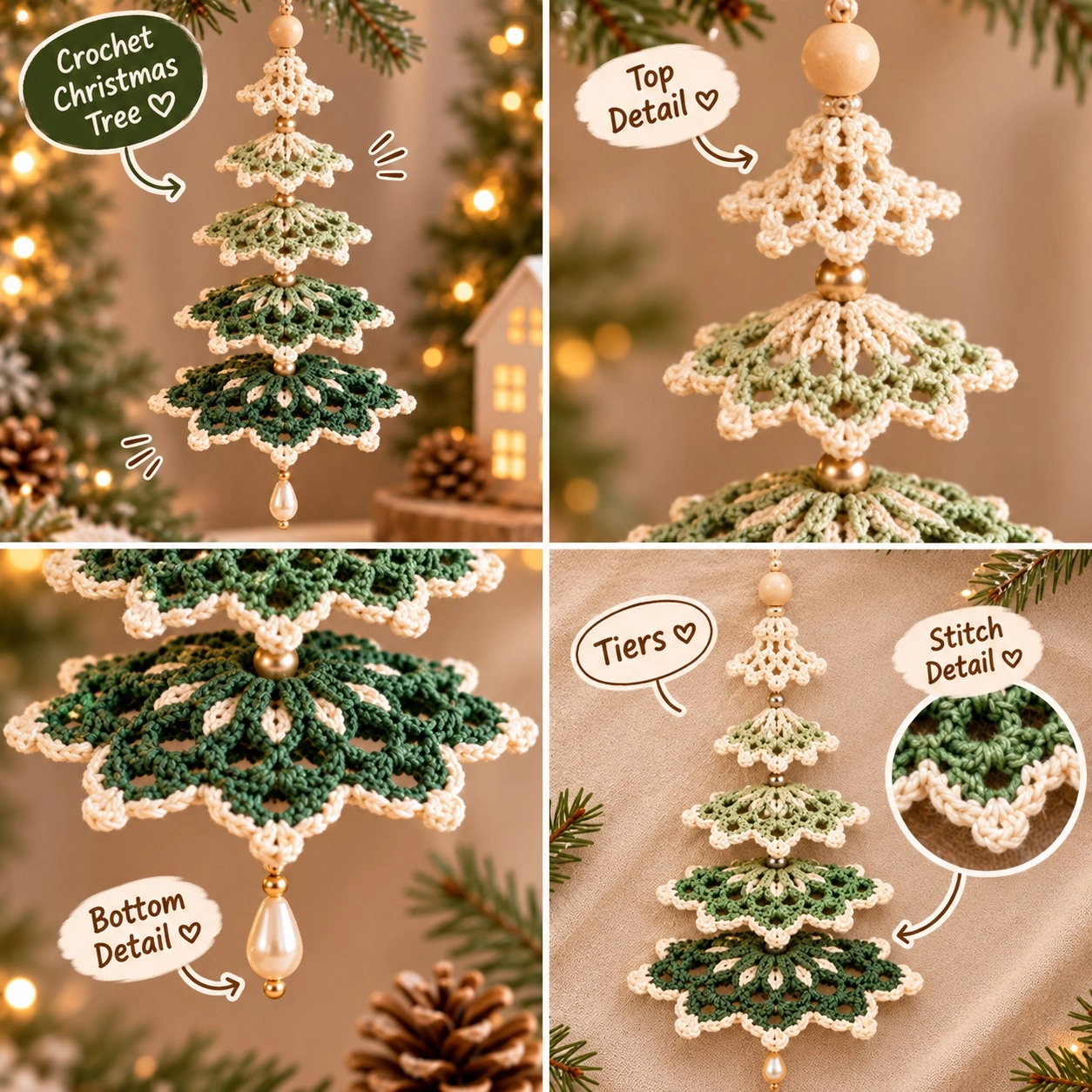
credit: @goldenwool.patterns
Once hung, the set never gathers in one frame again. A flat-lay photo archives every piece, color, and count. The shot becomes next year’s making list and the gift record.
Lay every finished piece on cream linen in rows by family: ornaments, garlands, stockings, table pieces. Take one overhead photo in window light without flash. Save it with the year in one album beside the felt set’s photo.
Christmas Crochet Care, Repair, and Storage Habits
Crochet lasts decades when stored dry, flat, and clean. These habits keep colors true and stitches relaxed between seasons. Each habit takes under ten minutes.
28. Wash Crochet in Cool Water and Dry It Flat
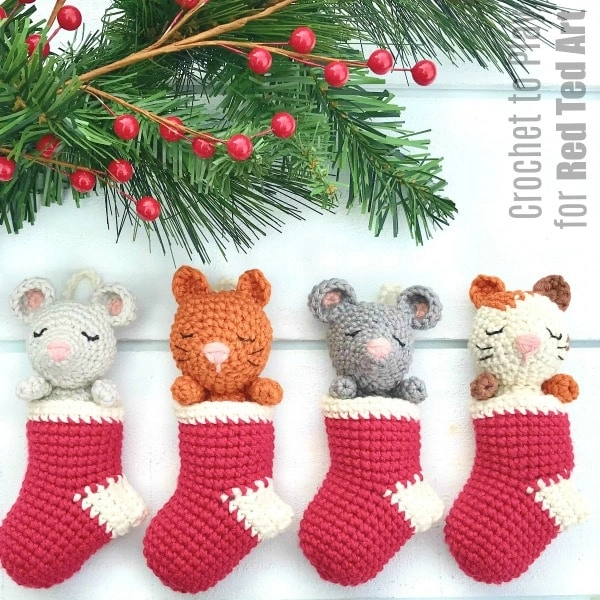
credit: @redtedart
Hot water and hanging dryers stretch crochet out of shape in one wash. Cool water and flat drying keep every measurement true. The care cards from Tip 24 carry these rules to gift receivers.
Soak pieces in cool water with mild detergent for 15 minutes and press, never wring. Roll in a towel to remove water, then pin flat to measurements. Dry fully for 24 hours before storing or gifting.
29. Weave Every End Twice and Check Finished Pieces Monthly
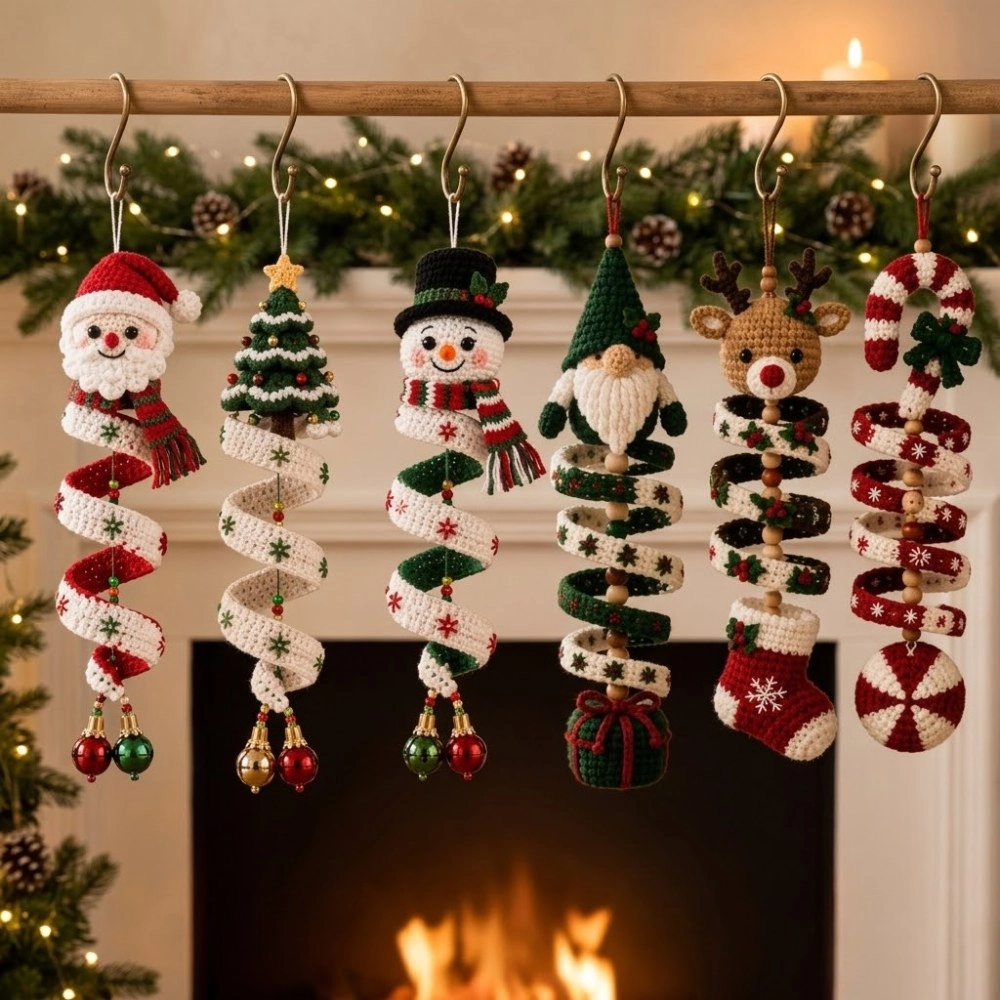
credit: @yarnly.crochet
Loose ends unravel heirlooms one stitch at a time. Weaving every end in two directions locks it permanently. A monthly in-season check catches snags while repairs stay invisible.
Weave every yarn end through at least 1 inch of stitches, then back half an inch in a second direction. Trim flush only after the double weave. Inspect displayed pieces monthly and re-weave any end that surfaces.
| Repair | Tool | Time |
|---|---|---|
| Surfaced end | Yarn needle | 2 minutes |
| Snagged stitch | Small hook | 3 minutes |
| Stretched loop | Steam + pin block | 15 minutes |
30. Store Sets Flat in Tissue With the Pattern Cards
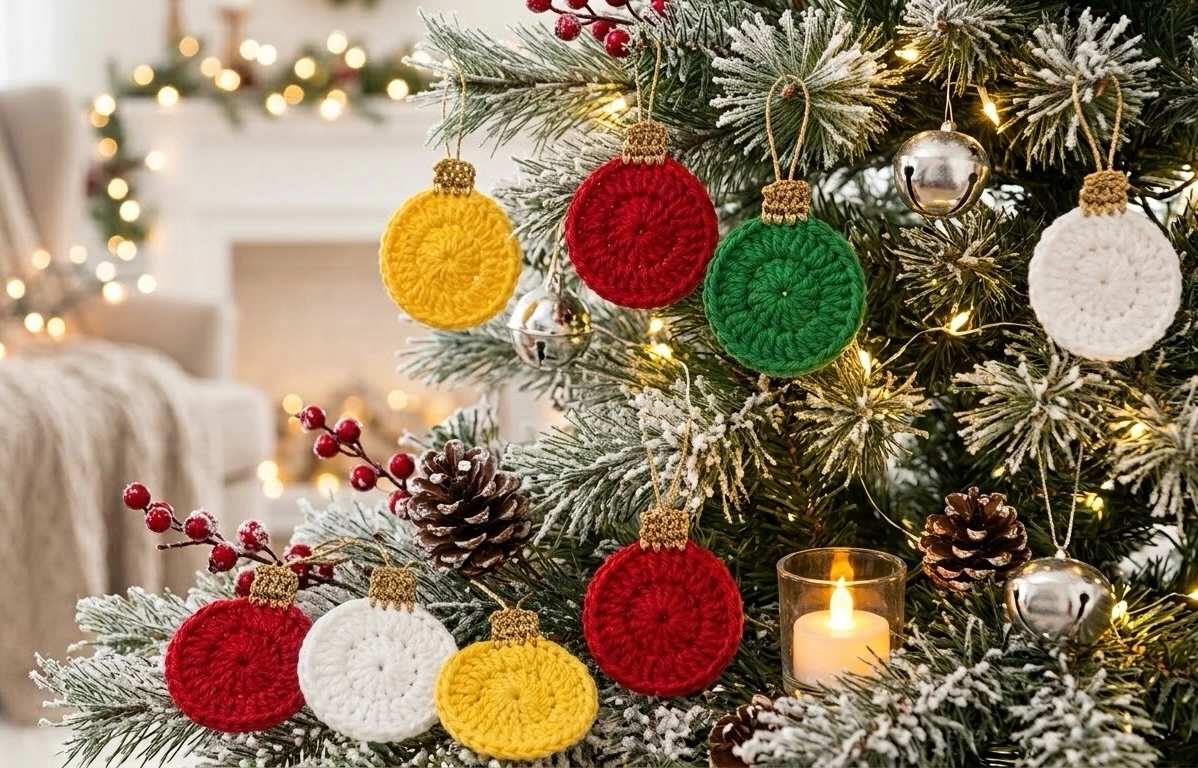
credit: @createbyk1
Crushed crochet creases at folds and loses its block. Flat tissue layers keep every piece true, and pattern cards keep the set reproducible. One bin per set keeps years from mixing.
Lay pieces in single layers with tissue between each layer. Set the pattern and gauge cards on top so the bin opens with its instructions showing. Store the bin in a dry closet with one silica packet against damp.
Common Christmas Crochet Mistakes
| Mistake | Why It Hurts | Fix |
|---|---|---|
| Skipping the gauge swatch | Pieces mismatch across the set | Swatch every project, Tip 3 |
| Mixing fibers in one piece | Blocking warps unevenly | One fiber per project, Tip 2 |
| Skipping blocking | Edges curl and shapes twist | Block 12 hours, Tip 25 |
| Ends woven one direction | They surface and unravel | Weave twice, Tip 29 |
| Hot wash and hang dry | Pieces stretch out of shape | Cool wash, dry flat, Tip 28 |
| Storing pieces crushed | Creases outlast the season | Flat tissue layers, Tip 30 |
Christmas Crochet by Maker and Situation
Beginners
Start with the mug cozy, chain garland, and star; all three run on the foundation stitches only. Cut nothing, count everything, and block from the very first piece. Move to the mini stocking in week two.
Families With Kids
Kids chain the garland links and stuff nothing; crochet needs no stuffing stations. Adults hook the shaped pieces and weave the ends. Every finished piece hangs at the tree’s lower third where its makers see it.
Gift Makers
Lead with cozies, coasters, and the scarf; all three finish in an evening each. Add the care card from Tip 24 to every package. One palette across gifts makes a whole family’s presents read as a set.
Sellers and Craft Fairs
Standardize sizes and gauge exactly as this guide sets them; buyers compare pieces side by side. Photograph sets flat per Tip 27 for listings. The name band becomes your maker’s mark on every stocking.
Frequently Asked Questions
What yarn is best for Christmas crochet?
Worsted weight, category 4, in cotton for crisp decor and acrylic for wearables and easy washing. One fiber per project keeps blocking even. Tip 2 gives the buying standard and yields per skein.
How do I start crochet for Christmas as a beginner?
Learn single crochet, half double, and the granny cluster on scrap yarn first. Then hook the star, cozy, and chain garland in that order. Tips 4, 6, 15, and 19 carry the full starter path.
What hook size do I need for worsted yarn?
Start at 5.0 mm for single crochet, 5.5 for half double, and 6.0 for double crochet, then adjust by your gauge swatch. The table in Tip 3 sets the starting points. Your swatch, not the label, makes the final call.
How long does a crochet stocking take?
A full 18-inch stocking takes about 4 to 6 hours across two evenings. Mini stockings finish in under an hour. Tips 8 and 16 give both patterns’ full steps.
How do I keep crochet ornaments in shape?
Block every flat piece for 12 hours before display and stiffen snowflakes with fabric stiffener. Store everything flat in tissue between seasons. Tips 7, 25, and 30 cover the full system.
How do I wash crochet gifts?
Cool water, mild detergent, 15 minutes of soaking, and flat drying to the original measurements. Never wring and never hang. Tip 28 gives the full method, and Tip 24’s care card passes it to receivers.
How much yarn do I need for a throw?
A 40-by-50-inch granny throw takes about 1,800 yards, roughly nine 100-gram worsted skeins. Cream takes the largest share for joining and borders. Tip 17 breaks the squares and joining down.
Can I crochet a full Christmas set on a budget?
Yes. The split in Tip 5 lands the whole set between $30 and $70. Ornament yarn takes $30, big pieces $20, tools $10, and finishing $10. Scraps from big pieces feed the small makes free.
How do I stop crochet edges from curling?
Block the piece pinned to its measurements for 12 hours, wet for cotton and steam for acrylic. A border round in a contrasting palette color also holds edges flat. Tip 25 sets the full blocking routine.
Conclusion
A lasting Christmas crochet set runs on one system: a locked four-color palette, worsted yarn worked to a swatched gauge, and every flat piece blocked before it displays. The styling pass gathers crochet at eye level on the tree and archives the set in one photograph. The care habits keep every stitch true for decades. Lock the palette tonight, swatch the first star this weekend, and let the tree carry your handwriting.