
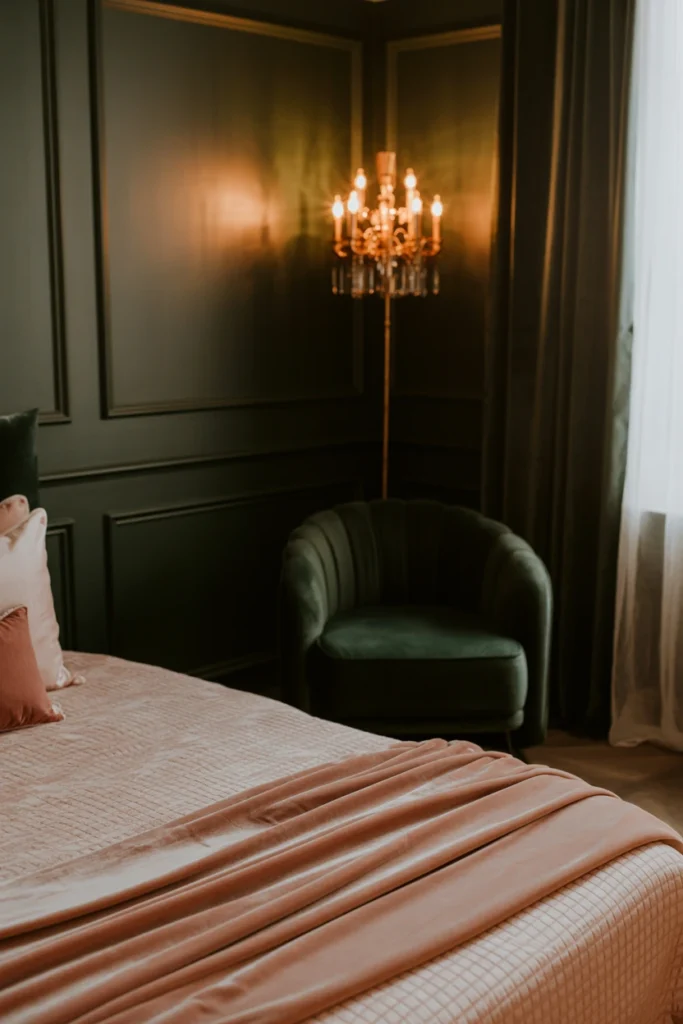
A dark feminine room transforms a flat, ordinary bedroom into a space that reads as intentional, romantic, and expensive. This palette pairs deep, moody color with soft feminine texture to create warmth instead of gloom. This guide delivers 24 specific, actionable changes for color, furniture, lighting, textiles, and styling. Start with your base wall color before touching any other element in the room.
Before You Begin: 4 Foundation Steps for a Dark Feminine Room
Every dark feminine room fails or succeeds based on four decisions made before any shopping happens. These foundation steps prevent the two most common outcomes: a room that reads as gloomy instead of romantic, or a room that never comes together despite an expensive shopping list. Lock these four decisions in first, and every later choice becomes easier.
1. Anchor the room with a base color story before buying anything
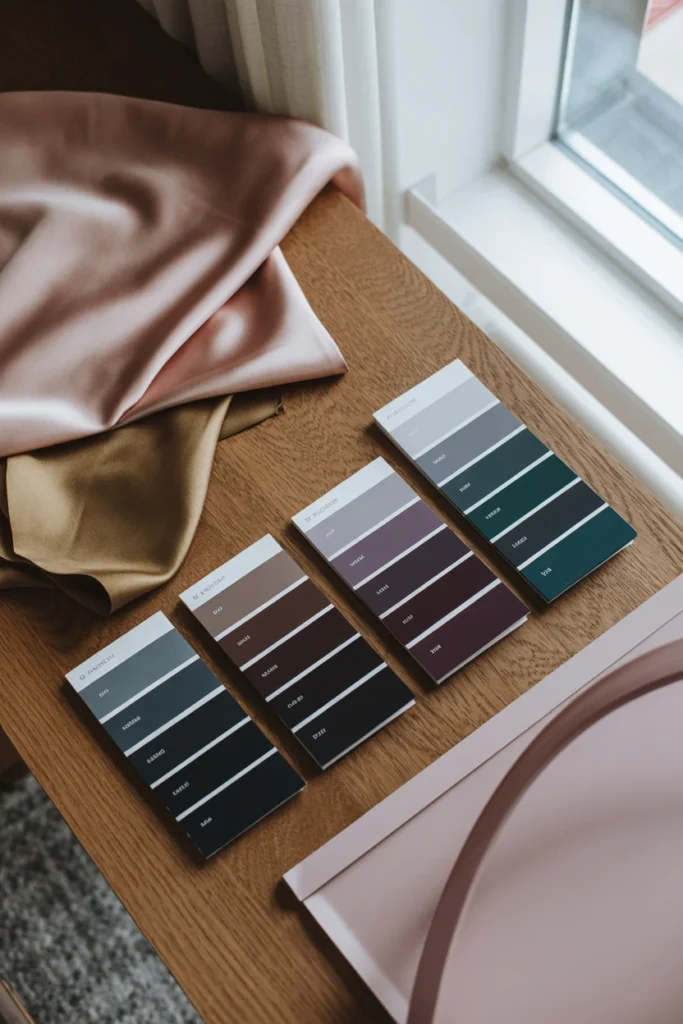
Most dark feminine rooms fail because the wall color gets chosen in isolation. This single mistake forces every future furniture and textile purchase into a mismatched palette that never reads as cohesive.
Start by selecting one base dark tone — charcoal, espresso brown, aubergine, or deep forest green — before buying a single piece of furniture or fabric. Pull three paint swatches in that family and view them in your room’s actual lighting at both 10am and 8pm, since dark tones shift dramatically under artificial light. Locking this base tone first means every future purchase gets tested against one fixed reference point instead of guessed at.
| Base Tone | Undertone to Watch For |
| Charcoal gray | Blue undertone reads cold; choose a warm-gray swatch instead |
| Espresso brown | Red undertone pairs best with brass and blush |
| Aubergine (deep plum) | Test under warm bulbs — cool bulbs shift it toward gray |
| Deep forest green | Pairs best with gold hardware, not silver or chrome |
2. Choose your feminine contrast tone (blush, mauve, or gold)
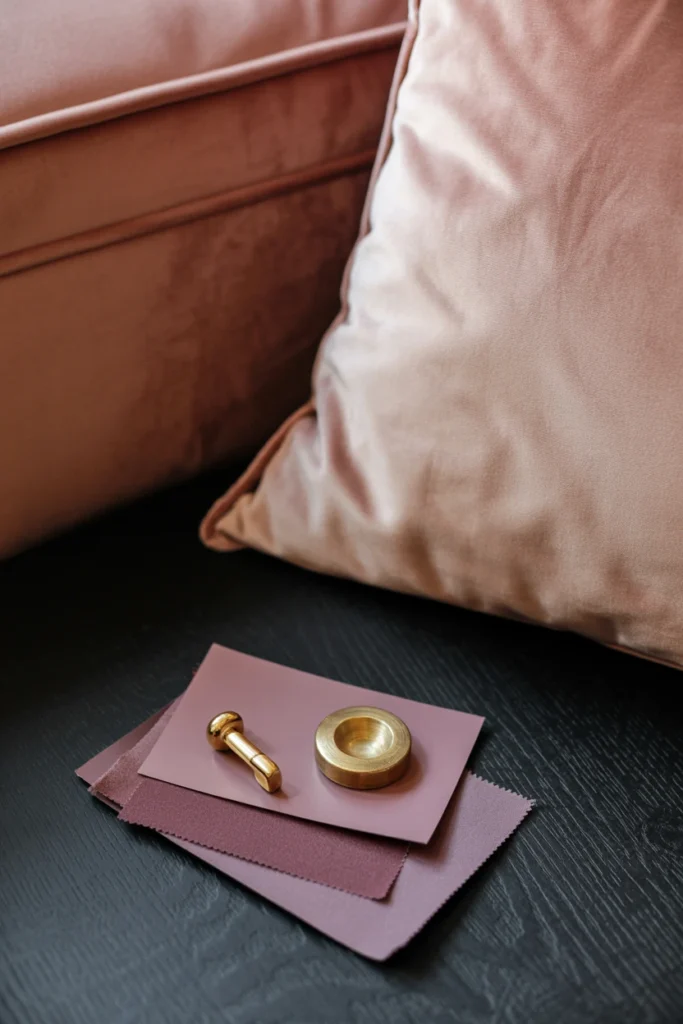
A dark base color alone reads as masculine or gothic rather than feminine. Without a deliberate contrast tone, the room loses the softness that defines the entire aesthetic.
Pick exactly one feminine contrast tone — blush pink, dusty mauve, or warm gold — and commit to using it across at least three separate elements in the room. Apply it through bedding, a single accent chair, and metal hardware finishes rather than scattering five different pastel shades throughout the space. This single-tone discipline creates a cohesive color story instead of a room that looks like several style ideas competing for attention.
| Contrast Tone | Best Paired With |
| Blush pink | Charcoal or black walls, brass hardware |
| Dusty mauve | Espresso brown, matte black finishes |
| Warm gold (fabric tone) | Deep green or aubergine walls |
| Champagne | Any dark neutral base |
3. Map your lighting zones before furniture placement
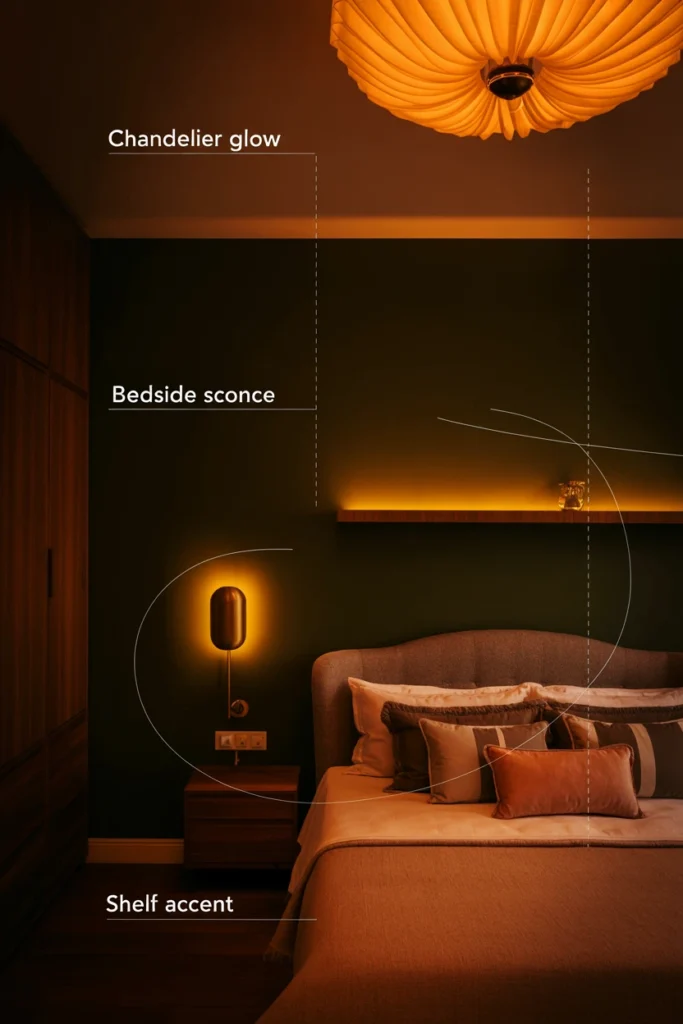
Dark walls absorb significantly more light than pale walls, which means a lighting plan designed for a white room will leave a dark room feeling flat and underlit. Furniture placed before lighting is mapped often ends up blocking the exact spots that need illumination.
Walk the room and mark three lighting zones on paper: an ambient zone (ceiling or wall-mounted), a task zone (nightstand or desk), and an accent zone (a shelf, artwork, or vanity). Place these three marks before a single furniture piece enters the room, since furniture placement should serve the lighting plan rather than the other way around. This sequence prevents the common outcome of buying a beautiful lamp that has no outlet within six feet of where it needs to sit.
| Lighting Zone | Fixture Type | Placement Height |
| Ambient | Flush mount or chandelier | Ceiling center |
| Task | Table or wall-mounted sconce | 24–28 inches above nightstand |
| Accent | Picture light or LED strip | Above artwork or inside shelving |
| Layered (all 3) | Combined dimmer switch | Single wall panel, eye height |
4. Set a texture ratio to avoid a flat, heavy room

Dark, saturated color absorbs light and detail, which means a room built entirely from smooth or matte surfaces reads as flat and heavy rather than rich. This is the single biggest difference between a dark room that feels luxurious and one that feels like a cave.
Establish a texture ratio before shopping: aim for at least four distinct textures in every dark feminine room, split across hard and soft surfaces. Combine velvet, boucle, brushed brass, and a natural material like rattan or linen so light catches each surface differently. This ratio creates visual depth that a single-texture room can never achieve, no matter how well-chosen the color palette is.
| Texture Category | Example Materials | Minimum Count in Room |
| Soft/plush | Velvet, boucle, faux fur | 2 |
| Hard/reflective | Brass, glass, lacquer | 1 |
| Natural/matte | Rattan, linen, raw wood | 1 |
| Total minimum | — | 4 distinct textures |
Choose a Dark Feminine Color Palette That Sets the Mood
Color carries the entire mood of a dark feminine room before any furniture or lighting decision matters. Getting the palette wrong at this stage means fighting an uphill battle in every later section of this guide.
5. Paint walls in a deep charcoal, aubergine, or espresso base
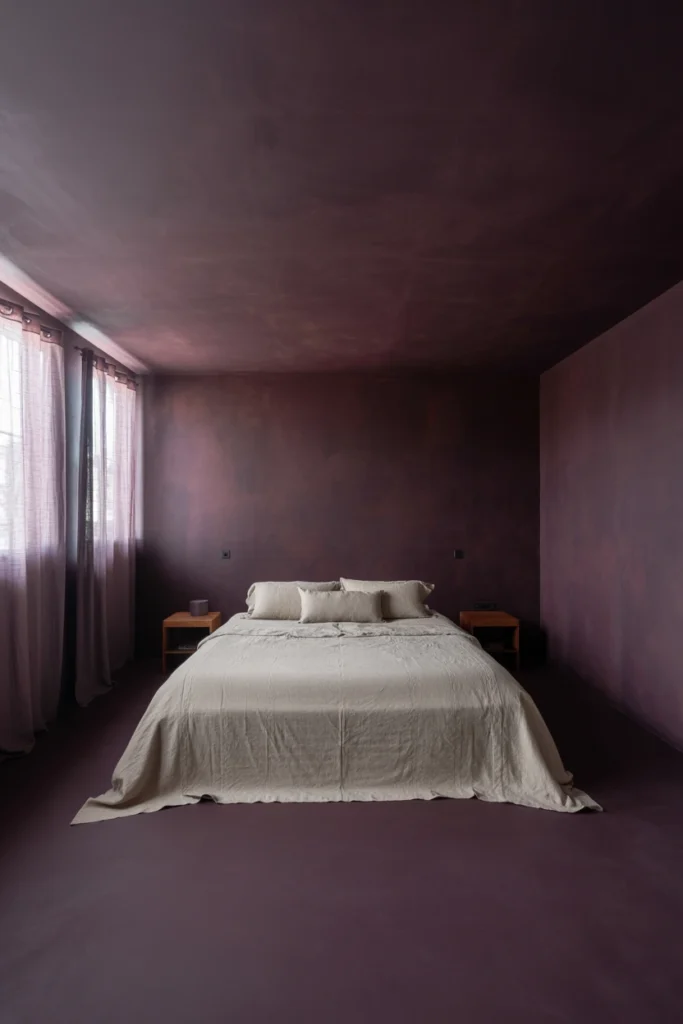
A dark accent wall alone reads as trendy rather than intentional and rarely creates the enveloping, romantic effect this aesthetic depends on. Committing to one wall instead of the full room leaves the space feeling unfinished and disconnected.
Paint all four walls in your chosen dark base — not a single accent wall — using a matte or eggshell finish rather than satin or gloss on the main wall surfaces. In rooms under 120 square feet, this full commitment actually makes the room feel larger by removing the visual break where a light wall meets a dark one. The unexpected result is a room that photographs and feels more spacious than the same room with one dark wall and three white ones.
| Room Size | Recommended Finish | Effect |
| Under 120 sq ft | Matte or eggshell, all 4 walls | Removes visual break, feels larger |
| 120–200 sq ft | Eggshell, all 4 walls | Balanced depth without heaviness |
| Over 200 sq ft | Eggshell or satin trim contrast | Room can support subtle sheen |
| Rental (no paint) | Removable wallpaper in dark tone | Same enveloping effect, no commitment |
6. Layer in one jewel-tone accent color per room
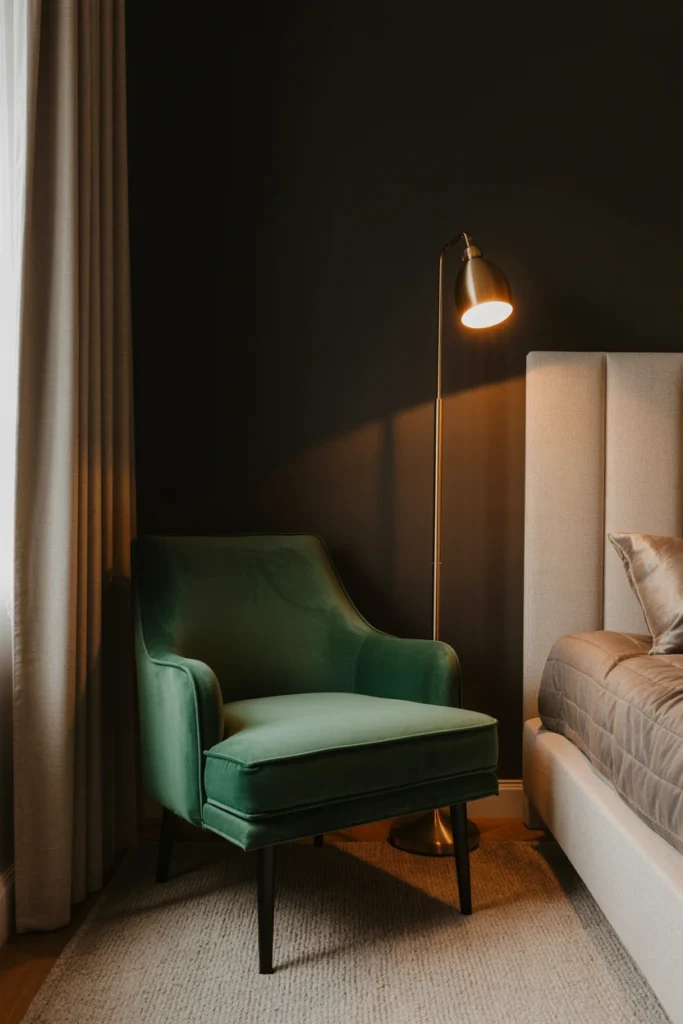
A dark neutral base without a single jewel tone reads as somber rather than romantic. Adding too many jewel tones at once, however, creates visual competition that undercuts the room’s cohesion.
Choose exactly one jewel tone — emerald, sapphire, garnet, or amethyst — and introduce it through no more than two or three items: a velvet chair, a set of drapes, or a single piece of art. Keep every other color in the room within the neutral or metallic family so this one jewel tone reads as a deliberate accent rather than a competing statement. The result is a room where the eye has one clear place to land, which is the visual definition of intentional design.
| Jewel Tone | Best Application | Avoid Pairing With |
| Emerald green | Velvet accent chair or drapes | Sapphire (competes) |
| Sapphire blue | Throw pillows or a single wall panel | Garnet (clashes) |
| Garnet red | Small accent, headboard piping | Emerald |
| Amethyst purple | Art or a single decorative object | Multiple other jewel tones |
7. Add a soft feminine neutral to prevent visual heaviness
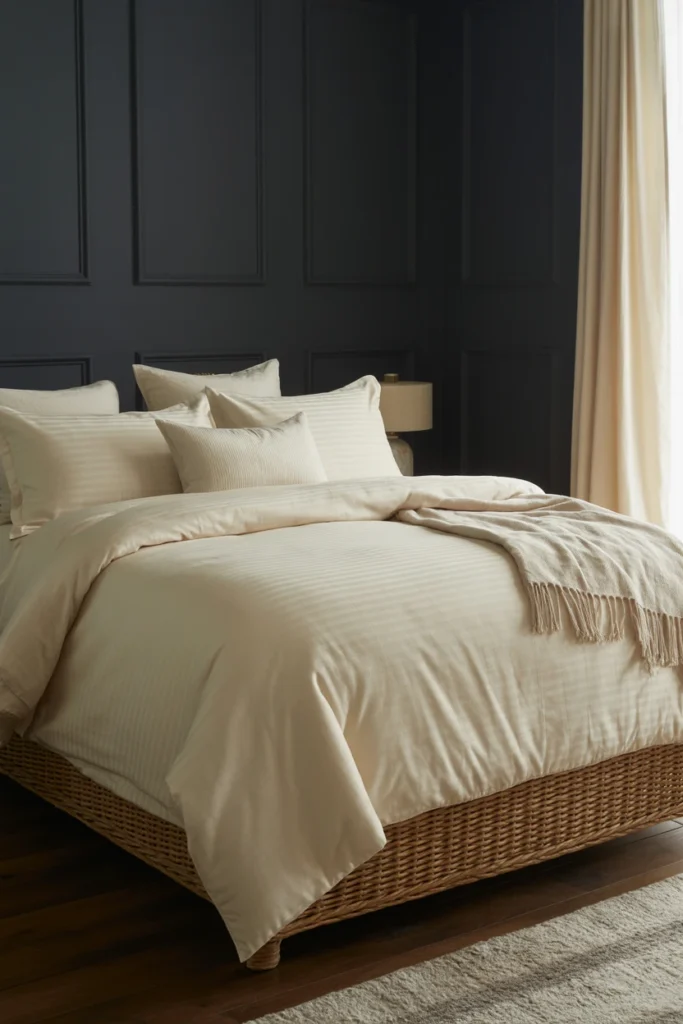
A dark base plus one jewel tone still leaves a room that can feel intense without relief. Skipping a lighter neutral removes the visual breathing room the eye needs to rest.
Add one soft feminine neutral — ivory, cream, or warm gray — covering roughly 15 to 20 percent of the room’s visible surface area, most commonly through bedding, a rug, or curtain lining. This percentage keeps the room from tipping into a color scheme so dark it reads as oppressive rather than moody. Guests entering the room notice the balance immediately, even if they cannot identify exactly why the space feels calm rather than heavy.
| Neutral Tone | Best Surface for It | Target Coverage | <br> | Ivory | Bedding or curtain lining | 15–20% of visible area | | Cream | Area rug | 15–20% of visible area | | Warm gray | Accent chair upholstery | 10–15% of visible area | | Champagne white | Trim or ceiling | 5–10% of visible area |
8. Use the 60-30-10 rule adapted for dark feminine palettes
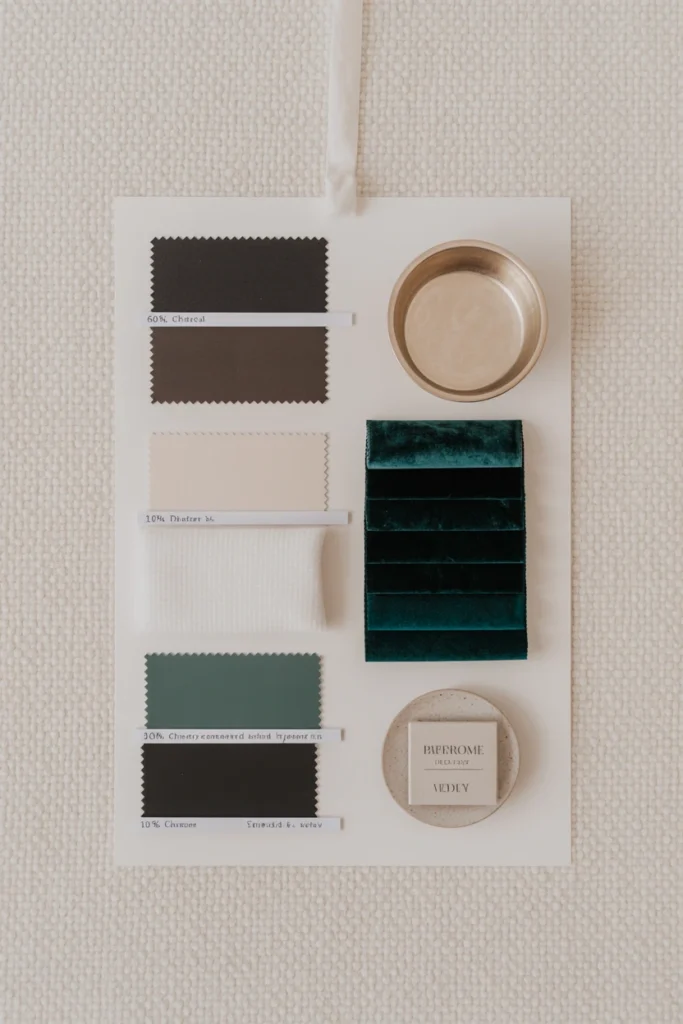
Rooms without a governing color ratio tend to drift as items get added over months, eventually losing the cohesion they started with. This drift is the single most common reason a well-planned room stops looking intentional after six months.
Apply a 60-30-10 split: 60 percent dark base tone (walls, large furniture), 30 percent soft neutral (bedding, rug, curtains), and 10 percent jewel-tone or metallic accent. Measure this roughly by visible surface area rather than by item count, since one large velvet chair can easily exceed the 10 percent ceiling on its own. Keeping this ratio visible in your mind while shopping prevents the single most common cause of a dark feminine room losing cohesion over time.
| Ratio | Element | Example |
| 60% | Dark base | Walls, bed frame, large furniture |
| 30% | Soft neutral | Bedding, rug, curtain fabric |
| 10% | Accent | Jewel-tone chair, gold hardware, art |
| 0% (avoid) | Unplanned additions | Items bought without checking ratio |
Select Furniture and Materials for Dark Feminine Bedroom Ideas
Furniture choices either reinforce the dark feminine palette or fight against it. These four tips cover the frame, finishes, and hardware decisions that carry the most visual weight in the room.
9. Choose a dark wood or black metal bed frame as the anchor piece
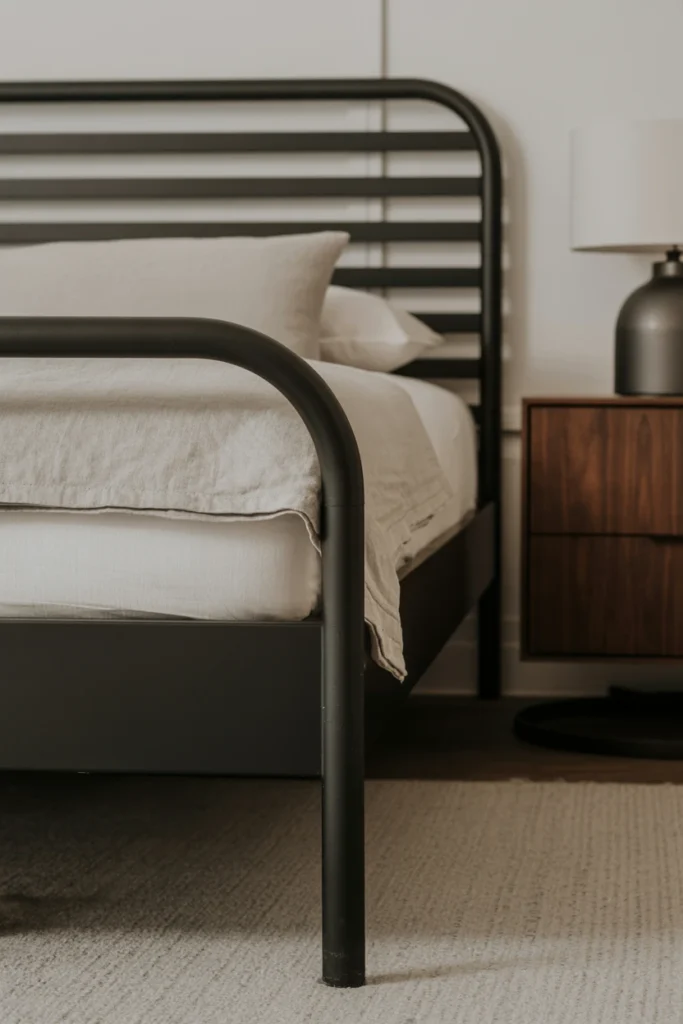
A pale or unfinished wood bed frame breaks the dark palette at the single largest furniture piece in the room. This one mismatch undermines every other correct color decision made elsewhere.
Select a bed frame in dark walnut, espresso wood, or matte black metal, since the bed occupies more visual real estate than any other single object in a bedroom. Choose a frame with a low or slatted headboard if the ceiling is under 9 feet, since a tall dark headboard in a low room reads as heavy rather than elegant. This anchor decision instantly transforms the room’s entire visual weight, because every other piece of furniture is chosen to complement rather than compete with the bed.
| Frame Material | Ceiling Height Fit | Visual Effect |
| Dark walnut wood | 9+ feet | Warm, substantial anchor |
| Matte black metal | Any height | Slim profile, works in small rooms |
| Espresso wood, low headboard | Under 9 feet | Grounded without heaviness |
| Upholstered dark velvet | 9+ feet | Softest, most feminine option |
10. Mix matte and glossy black finishes across furniture
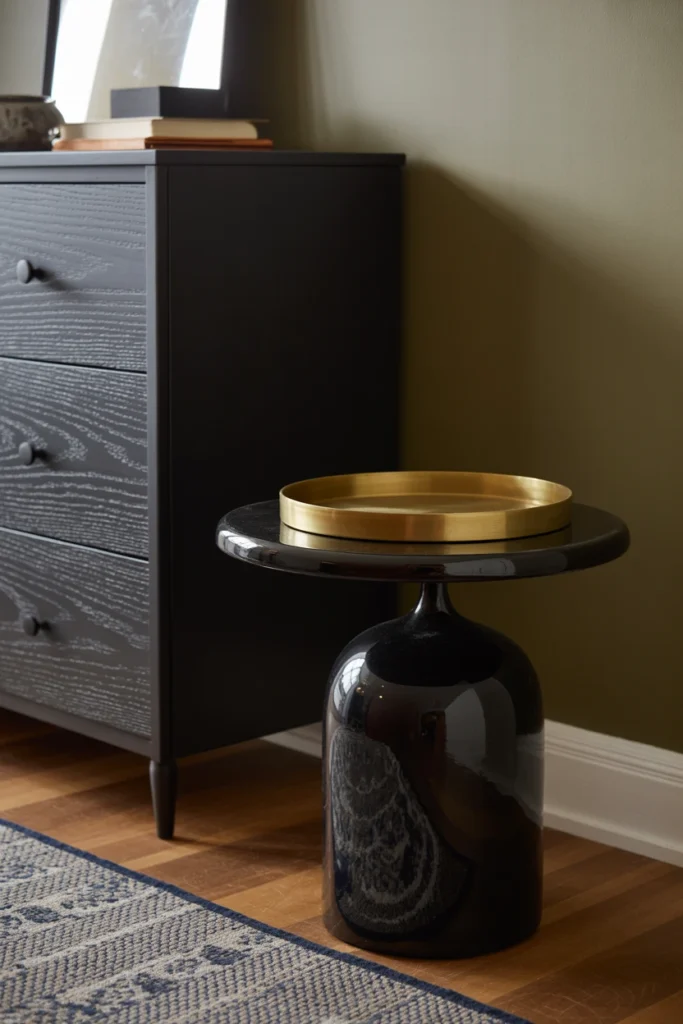
An entire room built from matte black furniture absorbs light and reads as flat, while an entire room built from glossy black furniture reads as cold and showroom-like. Neither extreme creates the warm, layered effect this aesthetic depends on.
Alternate matte and glossy black finishes across at least three furniture pieces, using matte for larger items like the bed frame and dresser while reserving glossy or lacquered black for smaller accents like a side table or tray. This deliberate mix creates the light-catching variation that makes a black-heavy room feel rich instead of one-dimensional. The unexpected bonus is that the glossy pieces reflect ambient light back into the room, effectively brightening a dark space without adding a single new light fixture.
| Furniture Piece | Recommended Finish | Reason |
| Bed frame, dresser | Matte black | Prevents overwhelming shine |
| Nightstand or side table | Glossy or lacquered black | Reflects light, adds contrast |
| Mirror frame | Glossy black or brass | Catches and bounces light |
| Bookshelf or bench | Matte black | Grounds the room visually |
11. Install brass or gold hardware for feminine warmth
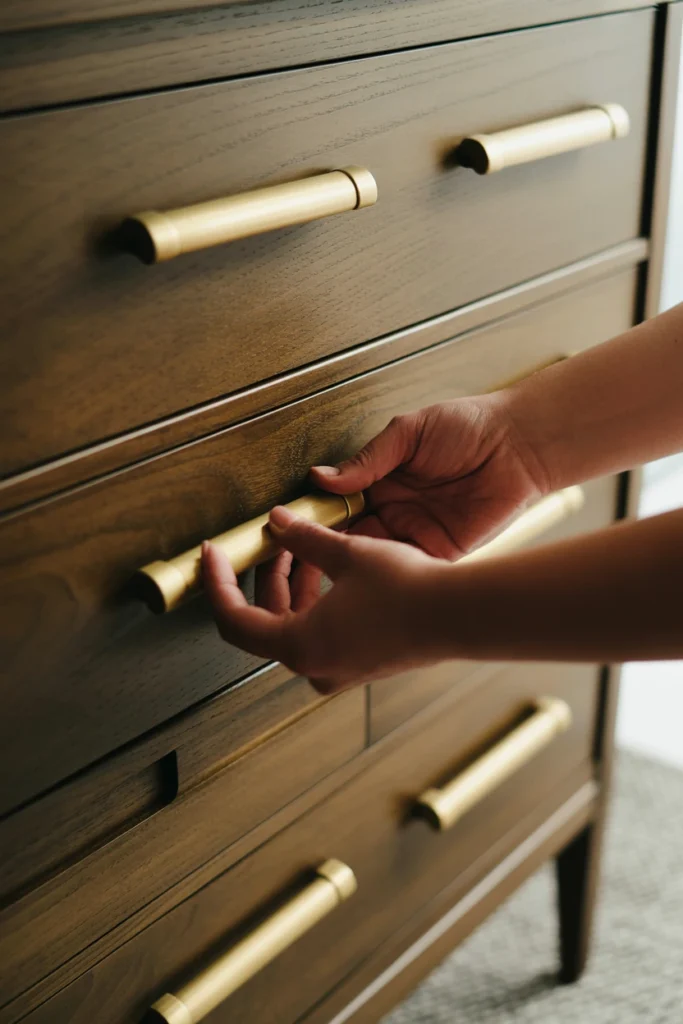
Chrome, nickel, or silver hardware against a dark palette reads as cold and industrial rather than warm and feminine. This single hardware choice can undo the softness built through color and textile decisions elsewhere in the room.
Replace existing chrome or nickel hardware on drawers, cabinets, and light fixtures with brass or warm gold finishes, starting with the three most visible pieces: dresser pulls, closet handles, and any exposed light fixture hardware. Choose an unlacquered or aged brass finish over a bright polished gold if the room’s overall style leans vintage rather than glam. This warm-metal swap costs under $50 in most standard bedrooms and changes the entire temperature of the room’s finishes.
| Hardware Type | Recommended Finish | Approximate Cost to Swap |
| Drawer pulls (per set of 6) | Brushed brass | $25–$45 |
| Closet door handles | Aged or unlacquered brass | $15–$30 per handle |
| Light fixture hardware | Warm gold | $20–$60 depending on fixture |
| Curtain rod and rings | Brass or gold | $30–$50 |
12. Replace stark white trim with warm off-black or bronze
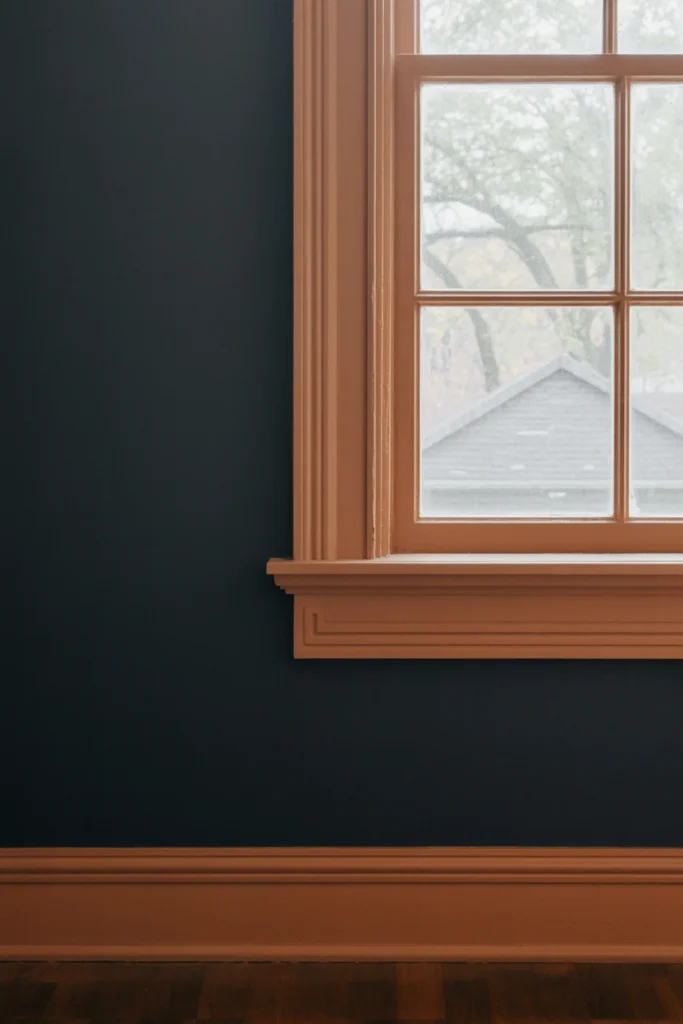
Bright white baseboards and trim against dark walls create a harsh visual break that interrupts the enveloping effect of the palette. This contrast makes the room feel segmented rather than cohesive.
Repaint trim, baseboards, and door frames in a warm off-black, deep bronze, or a color two shades darker than the wall itself, rather than leaving them in the room’s original bright white. In rentals where repainting trim is not permitted, cover visible trim edges with a removable dark trim wrap or focus the dark treatment on window frames only. This change removes the last remaining bright-white element that was pulling the eye away from the room’s intended mood.
| Trim Treatment | Best For | Notes |
| Warm off-black paint | Owned homes | Matches wall tone within 2 shades |
| Deep bronze paint | Owned homes with warm palette | Softer than pure black |
| Removable dark trim wrap | Rentals | No paint required, fully reversible |
| Dark treatment on window frames only | Rentals with trim restrictions | Partial commitment, still effective |
Layer Lighting for a Moody Feminine Bedroom Atmosphere
Lighting determines whether a dark palette reads as romantic or simply dim. These three tips build the layered system that makes a dark feminine room glow rather than disappear at night.
13. Build three lighting layers instead of one overhead source
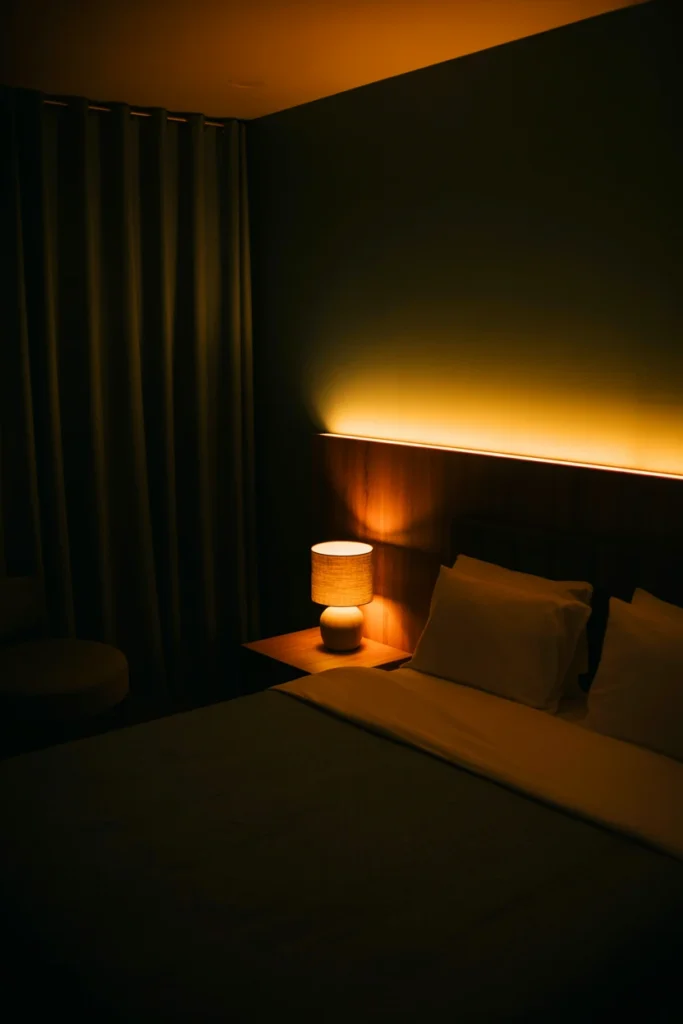
A single overhead fixture creates flat, harsh light that flattens the texture and depth built into the rest of the room. This single-source setup is the most common reason a dark bedroom feels gloomy rather than moody.
Install three separate light sources — ambient, task, and accent — each controlled by its own switch or dimmer rather than one master overhead switch. Turn off the overhead fixture entirely in the evening and rely on the task and accent layers instead, since overhead light is the least flattering source in any dark-walled room. This three-layer system gives you complete control over the room’s mood at any hour, shifting from bright and functional in the morning to dim and romantic at night with the same fixtures.
| Lighting Layer | Purpose | Recommended Wattage |
| Ambient | General illumination | 800–1000 lumens total |
| Task | Reading, dressing, makeup | 400–450 lumens per fixture |
| Accent | Mood, highlighting art or texture | 100–200 lumens per fixture |
| All 3 combined | Full evening ambiance | Overhead off, layers on |
14. Hang a statement chandelier or sculptural pendant
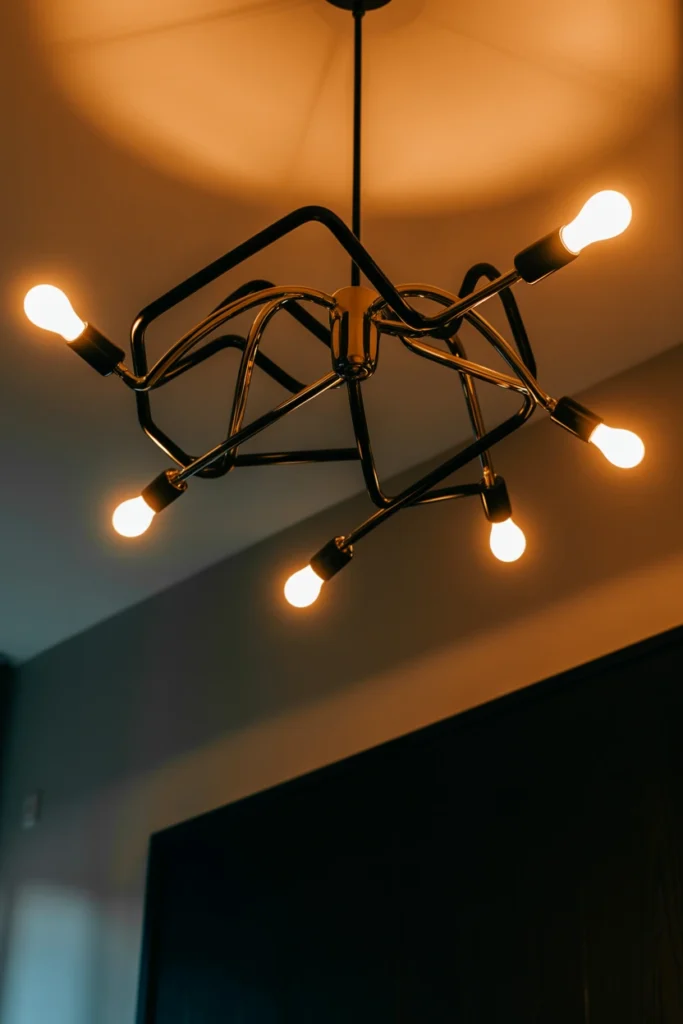
A plain flush-mount ceiling fixture disappears against a dark ceiling and wastes the single highest-impact focal point in the room. This missed opportunity leaves the ceiling as dead visual space.
Hang a sculptural pendant or small chandelier with a black, brass, or smoked-glass finish, positioning it at least 30 inches above the bed frame if it hangs directly over sleeping space. Choose a fixture with exposed bulbs or crystal detailing rather than a fully enclosed shade, since dark ceilings need a light source that creates visible sparkle rather than a diffused glow alone. The unexpected result is that this single fixture becomes the room’s most-photographed element, doing more visual work than any other single purchase in the space.
| Fixture Type | Minimum Clearance Above Bed | Best Finish |
| Small chandelier | 30 inches | Black or aged brass |
| Sculptural pendant | 30 inches | Smoked glass or brass |
| Multi-bulb cluster | 32 inches | Black with exposed bulbs |
| Flush mount (low ceilings) | N/A, mounted flush | Brass with glass diffuser |
15. Place amber-toned bulbs to soften dark surfaces
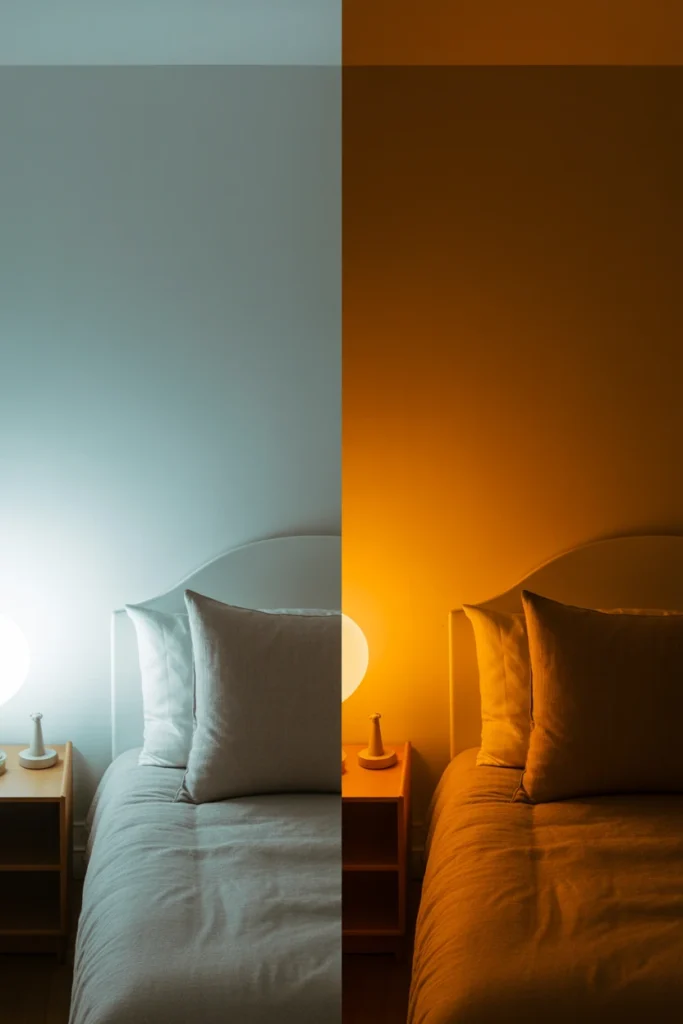
Cool white or daylight bulbs cast a blue-tinted light that makes dark walls read as cold and clinical rather than warm and romantic. This single bulb choice can undo an otherwise perfectly planned color palette.
Replace every bulb in the room with a warm amber tone rated between 2200K and 2700K, avoiding anything above 3000K which shifts noticeably cooler against dark paint. Check this rating on the bulb packaging before purchase, since “soft white” and “warm white” labeling varies inconsistently between manufacturers. This single swap, costing under $20 for a full room’s worth of bulbs, does more to create a romantic atmosphere than any furniture or textile change in this entire guide.
| Bulb Color Temperature | Effect on Dark Walls | Recommended Use |
| 2200K–2400K | Warmest, amber-orange glow | Accent and mood lighting |
| 2500K–2700K | Warm white, still cozy | Task and ambient lighting |
| 2800K–3000K | Neutral warm | Avoid for dark feminine rooms |
| Above 3000K | Cool, blue-tinted | Never use in this palette |
Add Textiles and Soft Furnishings for Dark Romantic Bedroom Decor
Textiles carry the softness and femininity that keep a dark palette from reading as harsh. These four tips build the layered fabric approach that defines a romantic bedroom.
16. Dress the bed in velvet, silk, or satin bedding

Cotton or linen bedding, while practical, lacks the light-catching sheen that makes dark bedding read as luxurious rather than plain. On a dark bed frame, matte cotton bedding can make the entire bed disappear into a flat block of color.
Layer a velvet or faux-fur throw at the foot of the bed over a satin or sateen-weave duvet cover in a deep jewel tone or soft neutral. Choose a duvet with at least a 300-thread-count sateen weave, since lower thread counts lack the subtle sheen that catches light against a dark headboard. This layered approach creates visible texture variation across the bed itself, turning it into the room’s richest single surface rather than a flat rectangle of color.
| Bedding Layer | Recommended Fabric | Minimum Quality Marker |
| Duvet cover | Satin or sateen weave | 300+ thread count |
| Throw blanket | Velvet or faux fur | Full-size, foot-of-bed placement |
| Decorative sham | Silk or velvet | Contrasting texture to duvet |
| Fitted sheet | Sateen cotton blend | 300+ thread count |
17. Layer a plush area rug over dark flooring
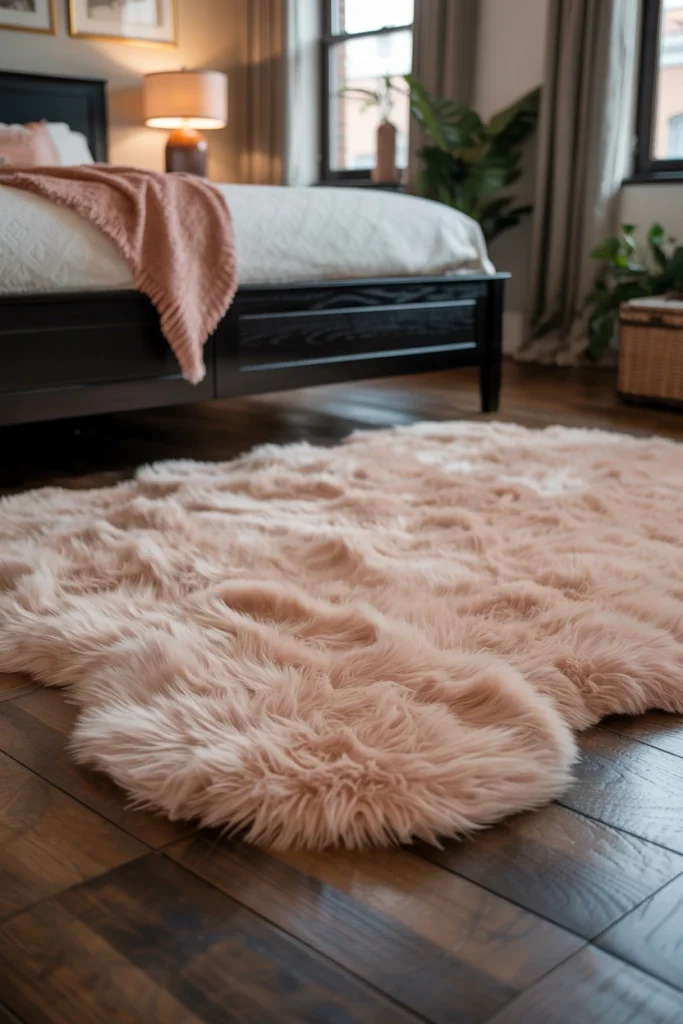
Dark flooring left completely bare absorbs light and makes the lower half of the room feel like a void, especially at night. This absence of texture at floor level is a common gap in otherwise well-planned dark rooms.
Add a plush, high-pile area rug in a soft neutral or blush tone, sized to extend at least 18 inches beyond each side of the bed frame. Choose a rug pile height of at least half an inch, since a low-pile or flat-weave rug on dark flooring provides color contrast but not the textural warmth this palette needs. The unexpected benefit is that a plush rug placed this way also absorbs sound, making the entire room feel quieter and more enclosed in the best possible way.
| Rug Size | Room Fit | Minimum Pile Height |
| 8×10 feet | Standard bedroom, extends past bed | 0.5 inch |
| 5×8 feet | Small bedroom or apartment | 0.5 inch |
| 9×12 feet | Large primary bedroom | 0.75 inch |
| Runner, 2×6 feet | Beside bed only, budget option | 0.5 inch |
18. Hang floor-length curtains in a rich, heavy fabric
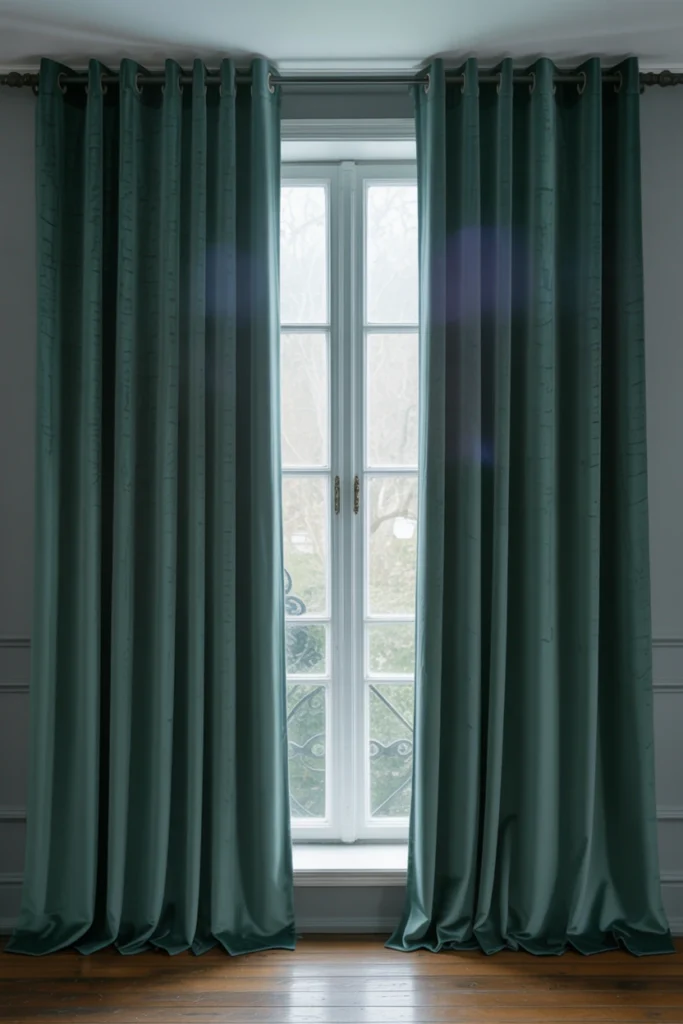
Short curtains or thin, sheer panels let in cool daylight and fail to add the fabric weight this palette depends on for softness. Curtains that stop above the windowsill also visually shorten the entire wall.
Install curtains in a heavy velvet or blackout-lined fabric, mounted at least 4 inches above the window frame and extending fully to the floor or slightly puddling. Choose a curtain rod at least 6 inches wider than the window frame on each side, since curtains that hang directly at the window’s edge block light and read as an afterthought rather than a design feature. This height and width adjustment alone makes ceilings read as taller and windows read as larger, without any structural change to the room.
| Curtain Element | Specification | Effect |
| Fabric | Heavy velvet, blackout-lined | Adds weight and warmth |
| Mounting height | 4+ inches above window frame | Makes ceiling read taller |
| Rod width | 6+ inches wider than frame, each side | Makes window read larger |
| Length | Floor-length or slight puddle | Adds luxury and softness |
19. Group throw pillows in odd-numbered, mixed textures
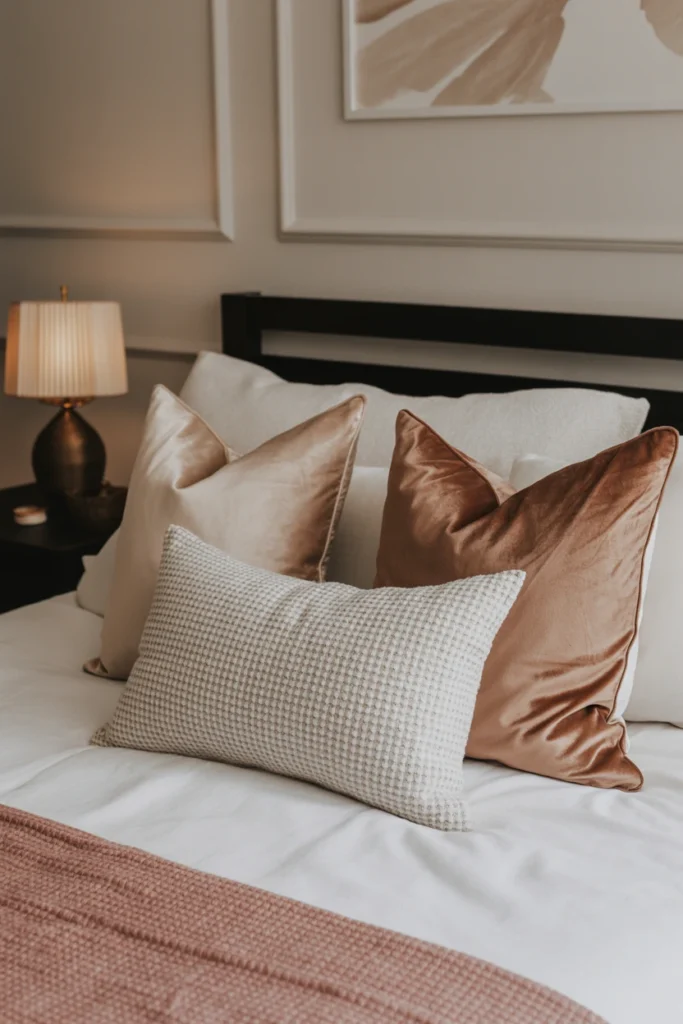
An even number of matching throw pillows reads as staged and generic rather than curated and intentional. This is one of the most common styling shortcuts that flattens an otherwise well-designed bed.
Arrange throw pillows in a group of three or five, mixing at least two textures such as velvet, boucle, and silk rather than matching every pillow in the same fabric. Vary the sizes slightly — one 20-inch square, one 18-inch square, and one lumbar pillow, for example — since uniform sizing reads as a pre-packaged bedding set rather than a personally curated arrangement. This odd-number, mixed-texture approach is the exact technique used in professionally styled rooms to make a bed look collected rather than purchased as a single bundle.
| Pillow Count | Texture Mix | Size Variation |
| 3 pillows | Velvet + silk | 2 sizes minimum |
| 5 pillows | Velvet + boucle + silk | 3 sizes recommended |
| Avoid | 2, 4, or 6 matching pillows | Reads as staged, not curated |
| Lumbar addition | Any texture, contrasting | Adds asymmetry and interest |
Style Finishing Touches for a Dark Feminine Aesthetic Decor
The final styling layer determines whether the room feels finished or simply assembled. These three tips cover the small decisions that separate a curated dark feminine room from one that merely follows the right color rules.
20. Arrange a vignette of 3-5 objects on every flat surface
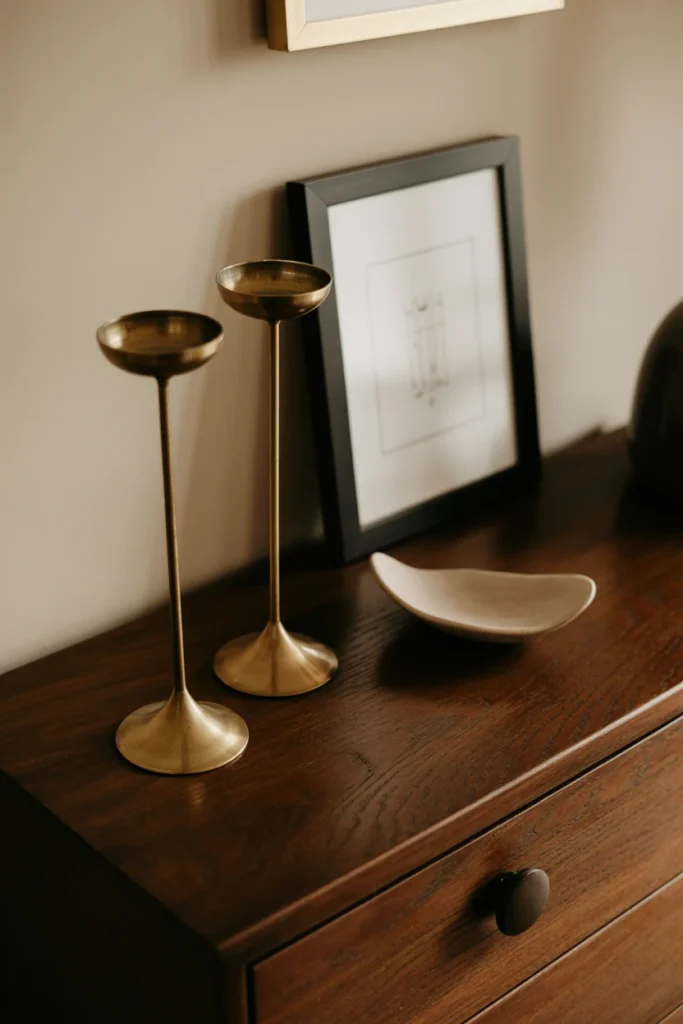
A completely bare surface in a dark feminine room reads as unfinished, while a cluttered surface undercuts the room’s sense of calm. Both extremes work against the intentional, curated look this aesthetic depends on.
Style every dresser top, nightstand, and shelf with a vignette of three to five objects, varying height by including at least one tall item, one medium item, and one low, flat item. Anchor each vignette with a single “hero” object — a sculptural candle holder, a small framed print, or a jewelry dish — rather than spreading five equally-sized objects in a flat row. This height variation creates a small skyline effect on every surface, which reads as intentional styling rather than random placement of decorative objects.
| Surface | Object Count | Height Variation Required |
| Nightstand | 3 objects | Tall, medium, low |
| Dresser top | 5 objects | Tall, 2 medium, 2 low |
| Floating shelf | 3–4 objects | Tall, medium, low |
| Vanity | 3 objects | Medium, low, low |
21. Mount an oversized mirror opposite your main light source
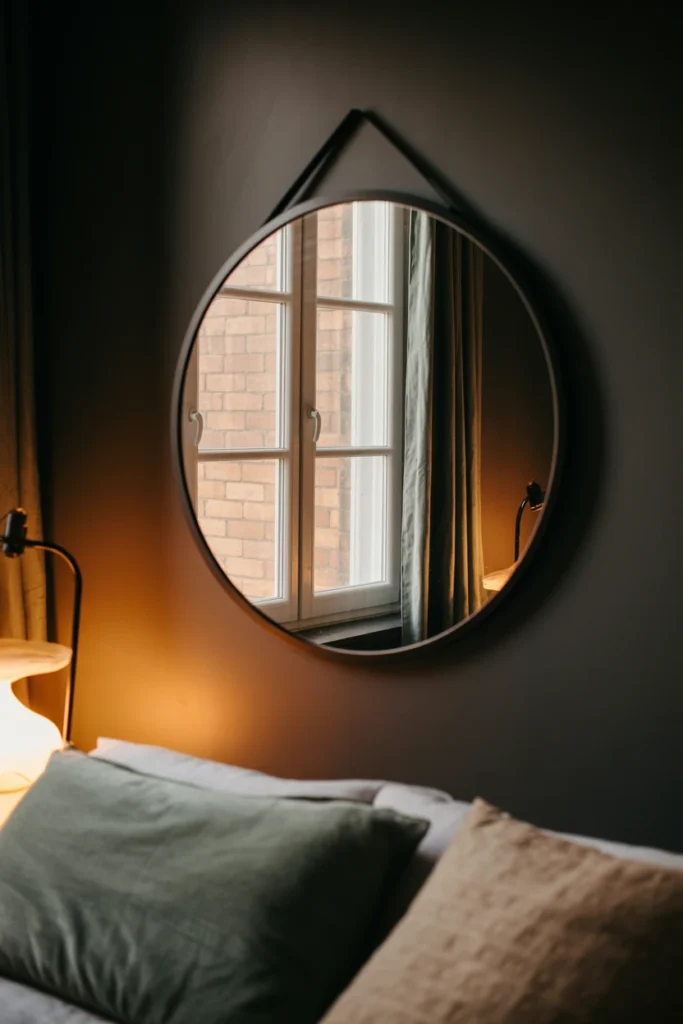
A dark room without a mirror absorbs and traps available light rather than circulating it, making the space feel smaller and dimmer than its actual dimensions. This missed opportunity is especially costly in a room already working with limited natural light.
Mount a mirror at least 30 inches wide directly across from your primary window or main light fixture, choosing a black, brass, or antique gold frame to match the room’s existing metal tones. Position the mirror so it reflects the light source rather than a wall or piece of furniture, since a mirror reflecting a dark surface adds almost no brightness to the room. This single placement decision doubles the perceived depth of the room and bounces warm light back across the space throughout the day.
| Mirror Placement | Frame Finish | Minimum Width |
| Opposite window | Black or brass | 30 inches |
| Opposite chandelier | Antique gold | 24 inches |
| Behind vanity | Brass, unframed edge | 20 inches |
| Leaning floor mirror | Black metal | 30 inches |
22. Introduce one botanical element to soften the palette
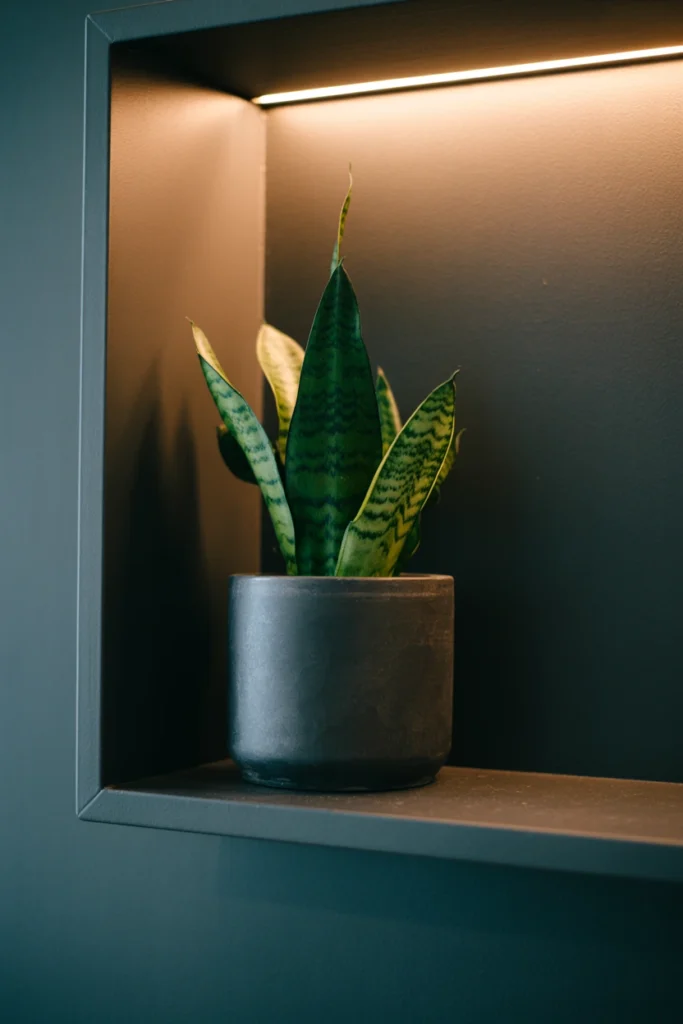
An entirely inanimate, hard-surfaced room reads as static and can tip into feeling cold despite a technically correct color palette. Living elements are the detail most often missing from otherwise well-executed dark feminine rooms.
Add one low-maintenance plant such as a snake plant, pothos, or ZZ plant in a black or brass planter, placing it in the accent lighting zone established earlier in this guide. Choose a plant with dark or deep-green foliage over a pale variegated variety, since high-contrast pale leaves can visually compete with the room’s dark base tone. This single living element introduces the only texture in the room that changes and grows over time, keeping the space from feeling like a static, finished photograph.
| Plant Type | Light Requirement | Planter Finish |
| Snake plant | Low to medium light | Black ceramic |
| Pothos | Low to medium light | Brass or gold |
| ZZ plant | Low light, very tolerant | Black matte |
| Fiddle leaf fig | Bright indirect light | Black or terracotta |
Maintain Your Dark Feminine Room Decor Ideas Long-Term
A dark feminine room requires ongoing habits to stay fresh rather than becoming dated or dusty. These final two tips protect the investment made in every previous section.
23. Establish a seasonal accent-swap habit
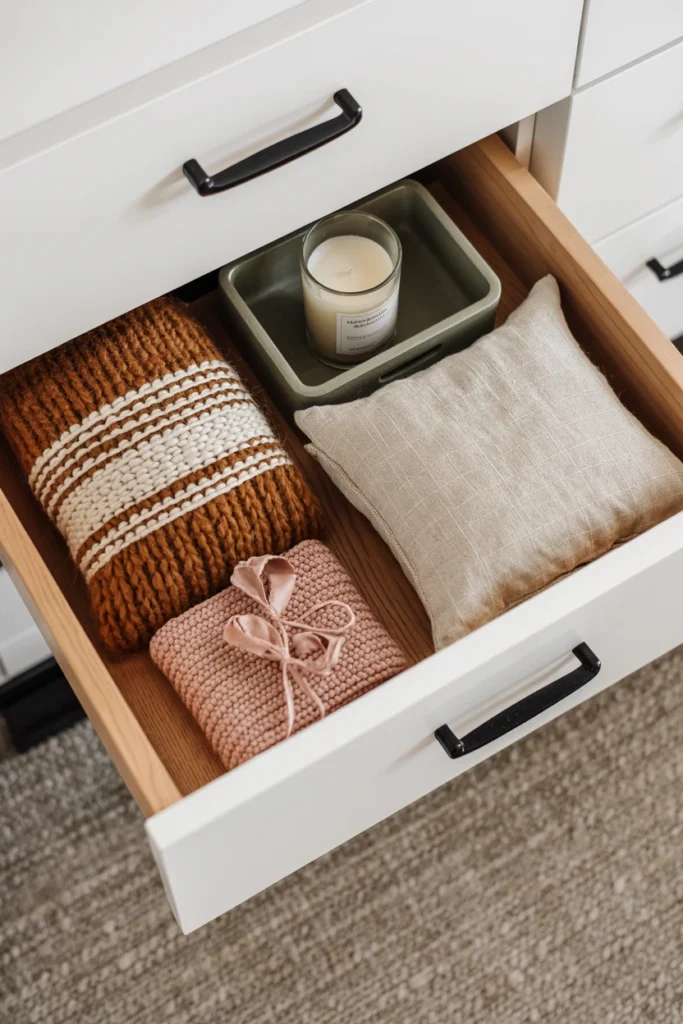
A dark feminine room that never changes eventually reads as static rather than lived-in and curated. Without a refresh habit, even a well-designed room starts to feel forgotten after a year or more.
Swap one or two accent items — a throw pillow cover, a candle scent, or a vignette object — every season rather than overhauling the entire room at once. Keep a small rotating collection of three to four seasonal textile pieces stored in a drawer so this swap takes minutes rather than requiring new purchases each time. This small, consistent habit keeps the room feeling current and personally maintained without the cost or effort of a full redesign.
| Season | Suggested Swap | Cost Range |
| Fall/Winter | Deeper jewel-tone throw, amber candle | $20–$60 |
| Spring | Lighter neutral pillow covers | $20–$40 |
| Summer | Botanical accent, lighter linens | $15–$50 |
| Ongoing | Rotate 3–4 stored textile pieces | One-time $80–$150 |
24. Limit new additions with a one-in-one-out rule
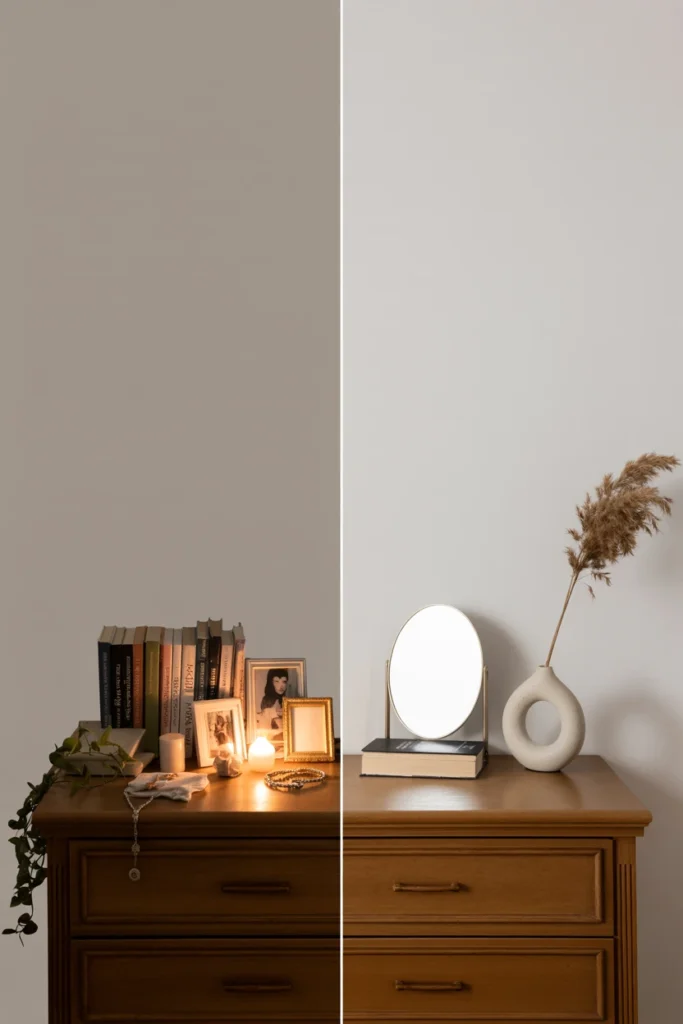
Dark, richly styled rooms accumulate visual clutter faster than pale, minimal rooms because every new object reads as more visually prominent. Unchecked additions are the single most common reason a well-designed room slowly loses its cohesion over 12 to 18 months.
Apply a strict one-in-one-out rule to every surface styled in this guide: for every new decorative object brought into the room, remove one existing object from the same surface. Reassess each vignette against the three-to-five object count established earlier before allowing anything new to stay permanently. This discipline permanently protects the curated, intentional look built throughout this guide, preventing the slow drift into clutter that undoes months of careful styling decisions.
| Surface | Current Object Count | Rule Applied |
| Nightstand | 3 objects | 1 in, 1 out |
| Dresser top | 5 objects | 1 in, 1 out |
| Shelf | 3–4 objects | 1 in, 1 out |
| Any surface exceeding 5 | Over limit | Remove before adding |
Common Dark Feminine Room Mistakes That Kill the Romantic Mood
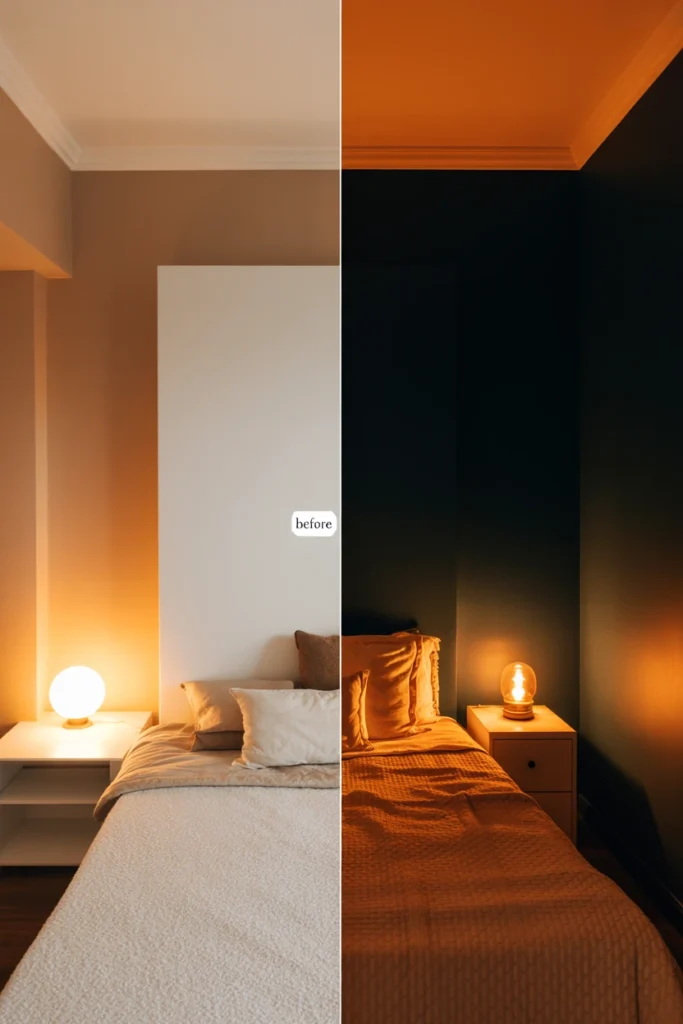
These mistakes appear repeatedly in dark feminine rooms that fail to achieve the intended mood. Correcting each one restores the balance between darkness and warmth this aesthetic depends on.
| Mistake | Why It Hurts the Space | Better Alternative |
| Painting only one accent wall dark | Creates a jarring visual break, feels unfinished | Paint all four walls the same dark base tone |
| Using cool white or daylight bulbs | Makes dark walls read as cold and clinical | Switch to 2200K–2700K amber bulbs |
| Skipping a feminine contrast tone entirely | Room reads as gothic or masculine, not romantic | Add blush, mauve, or gold across 3 elements |
| Matching every throw pillow in one fabric | Looks staged and generic, not curated | Mix 3–5 pillows in odd numbers, varied textures |
| Leaving dark flooring completely bare | Lower half of room feels like a void | Add a plush rug extending past the bed frame |
| Using chrome or silver hardware | Reads cold against a warm dark palette | Swap to brass or warm gold finishes |
| Hanging short curtains at the windowsill | Shortens the wall, blocks light awkwardly | Mount high and wide, extend to floor |
| Overcrowding every surface with objects | Undercuts the room’s sense of calm | Limit to 3–5 objects per surface, varied height |
Dark Feminine Room Ideas by Style and Space
Small bedroom
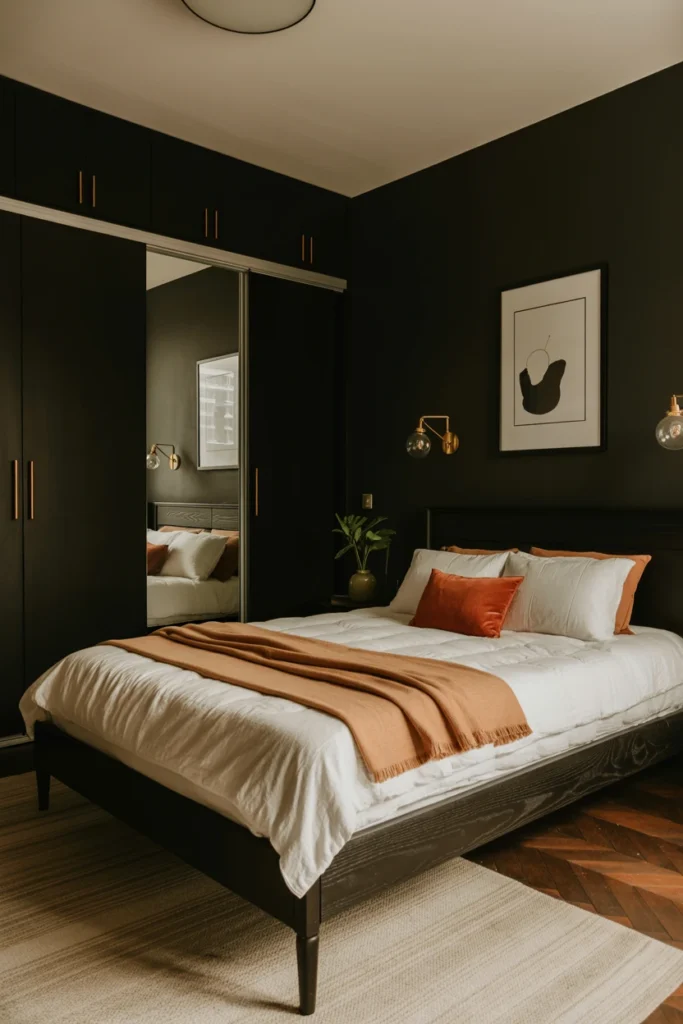
A small bedroom needs every dark feminine element scaled down without losing the palette’s core warmth and depth. The main constraint here is avoiding a room that feels cramped rather than cozy.
Key strategies for small bedrooms:
- Choose a bed frame with a low-profile headboard to keep the room’s tallest object under eye level
- Mount the mirror on a closet door to add reflective depth without using floor space
- Select a rug sized to the room, not the bed, and let it extend to within a few inches of each wall
- Use wall-mounted sconces instead of table lamps to free up nightstand surface area
- Limit the jewel-tone accent to one small item rather than a full accent chair
- Choose vertical storage over wide dressers to preserve floor space for the rug
Rental apartment
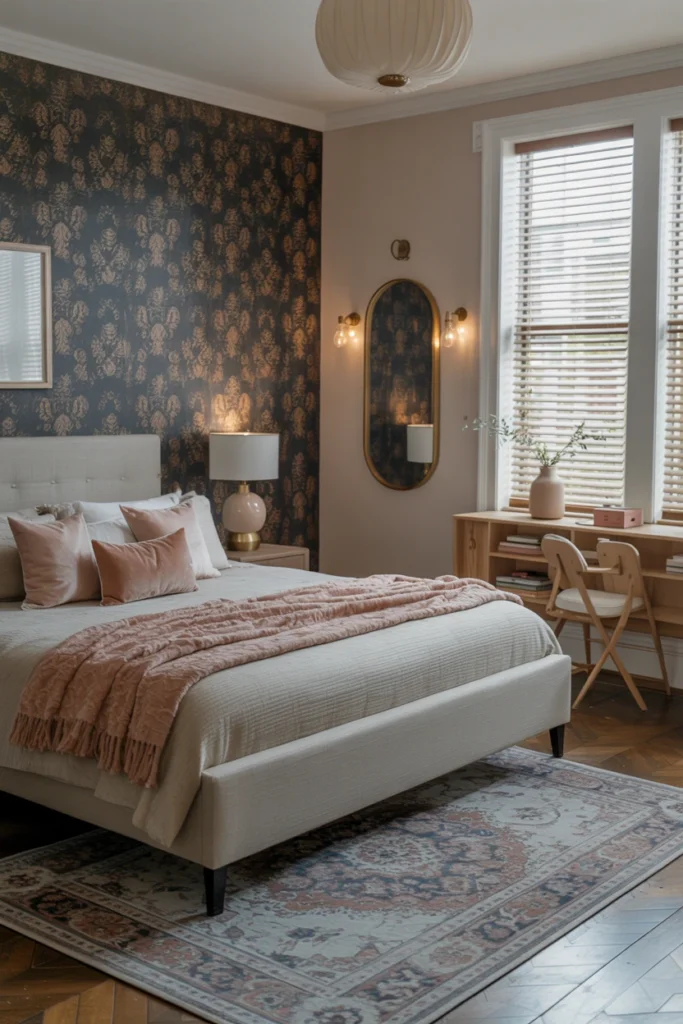
A rental apartment requires every dark feminine change to be fully reversible without damaging walls, trim, or fixtures. The core constraint is achieving the full aesthetic without any permanent alteration.
Key strategies for rental apartments:
- Use removable dark wallpaper instead of paint to cover all four walls
- Bring an area rug large enough to define the space over existing rental flooring
- Swap only the lampshades and bulbs in existing fixtures rather than replacing hardwired fixtures
- Use command-strip mounted mirrors and art instead of drilled hardware
- Bring your own drawer pulls that snap over existing hardware without removing screws
- Pack a portable floor lamp for accent lighting where hardwired fixtures cannot be changed
Dark academia style
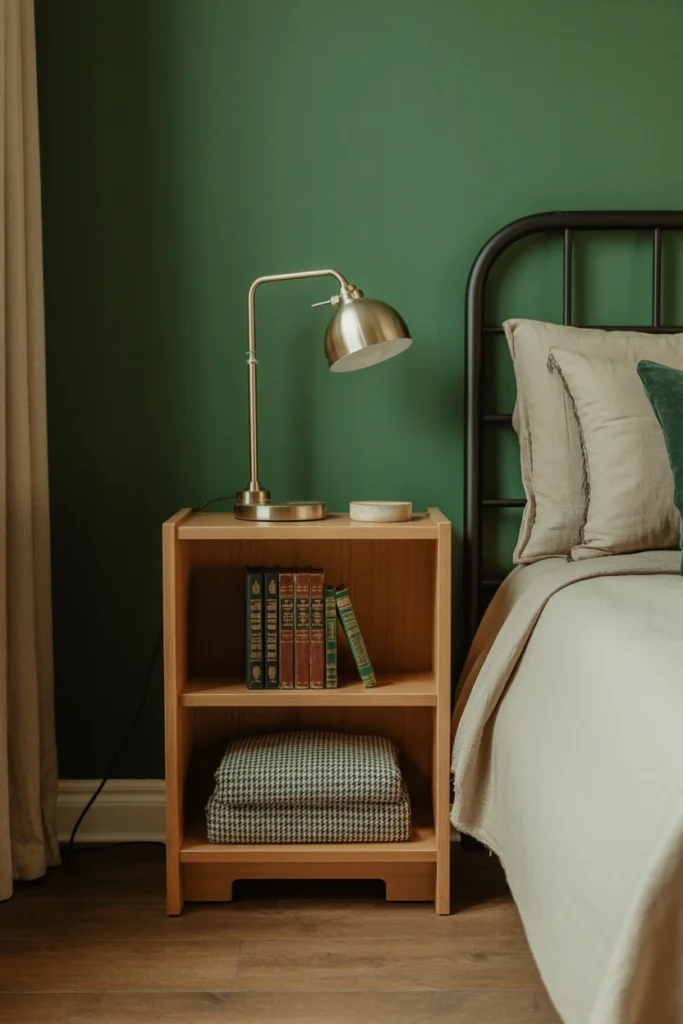
Dark academia style leans into a scholarly, vintage-inspired version of the dark feminine palette. The core constraint is balancing moodiness with a lived-in, intellectual warmth rather than pure glamour.
Key strategies for dark academia style:
- Choose aged brass over polished gold for every hardware and lighting finish
- Add a small bookshelf styled with leather-bound books grouped by color
- Layer a tweed or wool throw blanket alongside the velvet pieces already in the room
- Hang botanical or antique-style prints in dark wood frames instead of modern art
- Use a vintage brass desk lamp as one of the three lighting layers
- Choose forest green or espresso brown over aubergine as the dominant base tone
Black and pink glam style
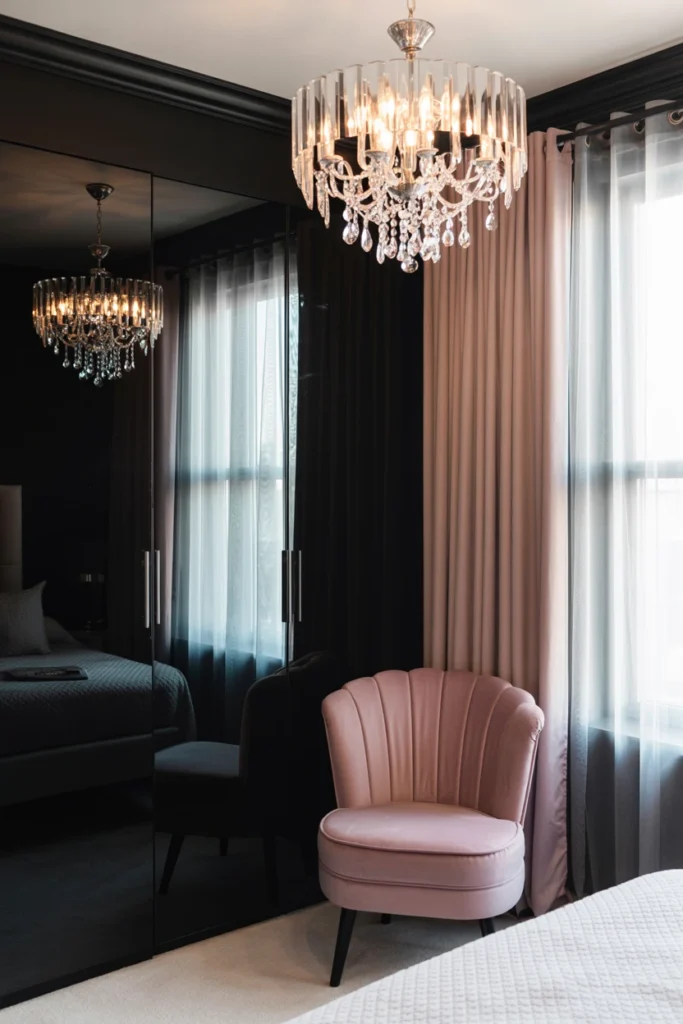
Black and pink glam pushes the feminine contrast tone to the forefront while keeping the dark base for drama. The core constraint is preventing the pink from overwhelming the room’s moodier, more sophisticated base.
Key strategies for black and pink glam style:
- Choose blush or hot pink as the single feminine contrast tone, applied consistently
- Select glossy black furniture finishes over matte to match the style’s polished energy
- Add a pink velvet accent chair as the room’s dedicated 10 percent color accent
- Use crystal or acrylic accessories alongside brass for extra sparkle
- Choose a chandelier with visible crystal detailing over a plain sculptural pendant
- Keep the botanical element minimal, since this style leans glamorous rather than organic
Frequently Asked Questions
how do I make a dark room feel feminine
Add one consistent feminine contrast tone — blush, mauve, or gold — across at least three elements like bedding, hardware, and an accent chair. Combine this with soft textures such as velvet and silk rather than hard, angular materials alone. Warm amber lighting also plays a major role in making a dark feminine room feel soft rather than stark. Skipping either the contrast tone or the warm lighting is the most common reason a dark room reads as gothic instead of feminine.
why does my dark bedroom feel gloomy instead of cozy
Gloomy dark bedrooms are almost always missing layered lighting, relying on a single overhead source instead of three separate light layers. Cool-toned bulbs above 3000K also make dark walls read as cold and flat rather than warm. Adding amber bulbs and at least one accent light source usually resolves this within a single afternoon. Mixed matte and glossy finishes also help by giving light more surfaces to reflect off.
how to decorate a dark feminine room on a budget
Start with paint, since a dark wall color creates the biggest visual shift for the lowest cost in any dark feminine room. Swap bulbs to a warm amber tone and update a few pieces of hardware to brass before buying any new furniture. Thrifted or secondhand velvet and brass pieces work as well as new ones once styled correctly within the room’s color ratio. Prioritize the base color and lighting layers first, then add textiles and accents as budget allows.
what colors go with dark feminine bedroom in a small space
Charcoal, espresso brown, and deep forest green all work well in small dark feminine bedrooms when paired with a soft neutral like ivory or cream on at least 15 percent of visible surfaces. Avoid pairing two competing jewel tones in a small room, since limited space makes color competition more noticeable. A single blush or gold accent alongside the dark base keeps a small room feeling intentional rather than cramped. Mirrors placed opposite the main light source also help small dark rooms feel larger.
black or dark green for a feminine bedroom
Both work, but they create different moods: black reads more dramatic and modern, while dark green reads warmer and more organic. Dark green pairs especially well with brass hardware and dark academia-inspired styling. Black pairs well with glossy finishes and a black-and-pink glam approach. The choice comes down to whether you want the room to feel more editorial and bold or more grounded and natural.
how often should I update dark feminine room decor
Small seasonal swaps every three to four months keep the room feeling current without a full redesign. A full refresh of textiles and accents every 12 to 18 months is typical for most dark feminine bedrooms. Larger furniture pieces like the bed frame and dresser rarely need replacing more often than every five to seven years if finishes are maintained. The one-in-one-out rule for accessories helps extend the life of the room’s original design significantly.
does dark feminine decor work in a rental
Yes, using removable wallpaper, command-strip mirrors, and swappable hardware covers instead of any permanent paint or fixture changes. Rugs, curtains, and lighting layers can all be added without violating most standard lease terms. The bed frame, textiles, and accent styling described in this guide require no permanent alteration at all. Rentals with trim restrictions can focus the dark treatment on window frames or a single removable wallpaper wall instead of full paint coverage.
how much does it cost to do a dark feminine bedroom
A budget refresh using paint, bulbs, and hardware swaps typically costs $200 to $400 for an average bedroom. A mid-range refresh adding a rug, curtains, and a few furniture pieces runs $800 to $1,500. A full room including a new bed frame, chandelier, and custom window treatments typically reaches $2,500 to $5,000. Costs vary significantly based on whether existing furniture can be refinished rather than replaced.
how do I keep a dark feminine room from looking dusty or dated
Dust shows more visibly on matte black and dark velvet surfaces, so a weekly microfiber wipe-down of hardware and glossy surfaces prevents visible buildup. Rotate seasonal accents on the schedule described earlier in this guide to keep the room from feeling static. Vacuum plush rugs and velvet upholstery at least every two weeks to prevent the dulled, flattened texture that reads as dated. Keeping the one-in-one-out rule for decorative objects also prevents the slow clutter buildup that ages a room’s appearance faster than the color palette itself.
Conclusion
A dark feminine room comes together through the combination of a committed base color, layered warm lighting, and consistent soft texture rather than any single dramatic purchase. Start with the wall paint and bulb swap described in the first sections of this guide, since these two changes create the largest visible shift for the smallest investment. Choose your feminine contrast tone today and commit to using it across at least three elements before adding anything else to the room.
Results depend on maintaining the ratios and habits outlined here rather than a single weekend of shopping and decorating. A dark feminine room built on these 24 principles holds its warmth and cohesion for years rather than months.