
A gothic bedroom transforms a flat, ordinary room into a space with genuine visual weight and atmosphere. Dark color, ornate furniture, and layered lighting create a bedroom that feels romantic instead of cold or unfinished. This guide delivers 26 specific, actionable steps for building a gothic bedroom that reads as intentional, not accidental. Start with your color palette before buying a single piece of furniture.
Before You Begin: 4 Foundation Steps to a Cohesive Gothic Bedroom
Every successful gothic bedroom starts with structural decisions, not decorative ones. These four steps prevent the single biggest failure in dark interiors: a room that reads as messy or unplanned instead of dramatic.
1. Choose a Dominant Base Color First
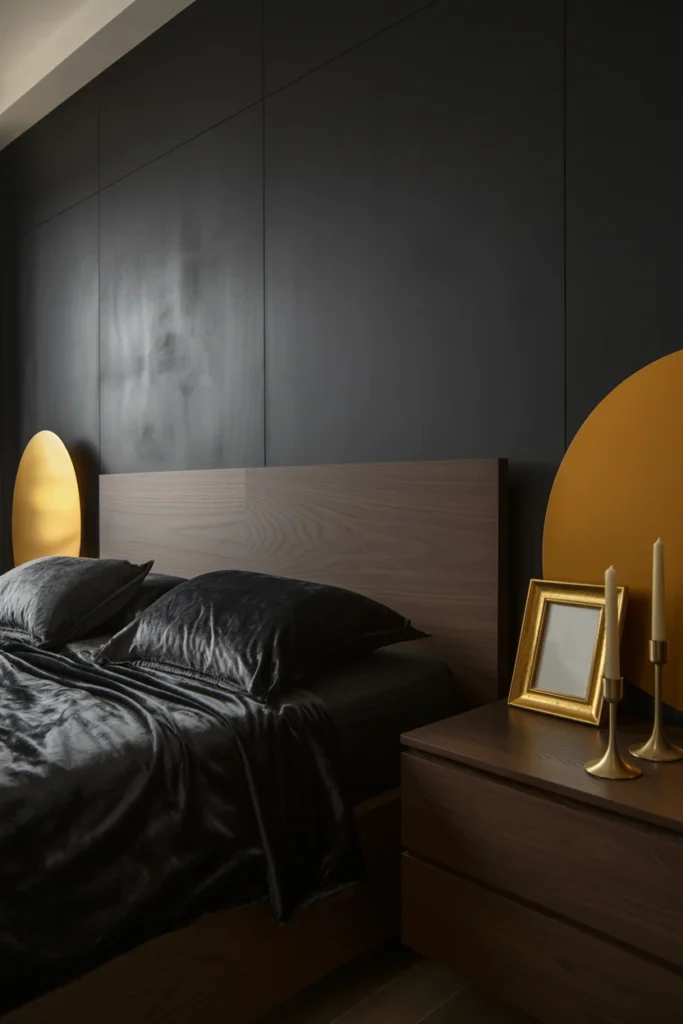
A gothic bedroom without a locked base color reads as random instead of deliberate. Mixing black, charcoal, and deep navy without a clear hierarchy makes the walls compete with the furniture. The result is a room that looks unfinished no matter how many gothic accessories you add.
Start by picking one dominant hue — black, deep burgundy, or charcoal-navy — and commit it to at least 60% of the room’s visible surfaces. Paint the walls in this color using a matte or eggshell finish, since gloss finishes reflect light and break the moody effect. This single decision prevents every future purchase from clashing with the last one.
| Base Color | Best Room Type |
| True black | North-facing room with strong artificial lighting |
| Charcoal grey | South-facing room needing softer contrast |
| Deep burgundy | Rooms wanting warmth alongside drama |
| Navy-black blend | Small rooms needing depth without total darkness |
2. Define Your Gothic Sub-Style Before Buying Anything

Gothic decor splits into distinct sub-styles, and mixing them without intention creates visual confusion. Victorian gothic, romantic gothic, and modern gothic each use different furniture silhouettes and material choices. Buying pieces from three different sub-styles at once produces a room that looks like three separate ideas fighting for space.
Pick one sub-style before your first purchase: Victorian gothic uses ornate wood carving and brass, romantic gothic uses velvet and candlelight tones, modern gothic uses matte black steel and minimal ornamentation. Write this choice down and check every future purchase against it. This single filter eliminates 90% of decor mistakes before they happen.
| Sub-Style | Core Materials | Signature Piece |
| Victorian gothic | Carved wood, brass, velvet | Ornate wood headboard |
| Romantic gothic | Lace, velvet, candle wax tones | Canopy bed curtain |
| Modern gothic | Matte black steel, leather | Wrought iron bed frame |
| Rustic gothic | Reclaimed wood, iron, stone | Exposed beam accents |
3. Set a Realistic Budget by Category

Gothic bedrooms fail financially when every dollar goes toward one dramatic piece and nothing toward lighting or textiles. A single expensive chandelier with no supporting lighting layer leaves the rest of the room flat and underdeveloped. This imbalance costs the room its atmosphere even after a significant purchase.
Split your total budget into four categories before spending anything: 35% furniture, 25% lighting, 25% textiles, 15% accessories. On a $1,500 budget, this means $525 for furniture and $375 for lighting alone. This proportional split guarantees no single category gets neglected and starves the room of atmosphere.
| Budget Total | Furniture (35%) | Lighting (25%) | Textiles (25%) |
| $800 | $280 | $200 | $200 |
| $1,500 | $525 | $375 | $375 |
| $3,000 | $1,050 | $750 | $750 |
| $5,000 | $1,750 | $1,250 | $1,250 |
4. Map Your Room’s Natural Light Before Committing to Black

A gothic bedroom in a room with minimal natural light can tip into feeling cave-like instead of atmospheric. Rooms with fewer than two windows or north-facing exposure absorb dark color without reflecting any of it back. This mistake leaves the room permanently dim even with the lights on.
Track your room’s light for one full day, noting which walls receive direct sun and for how long. If your room gets under 3 hours of direct light, limit true black to one accent wall and use charcoal or deep navy on the remaining three. This adjustment keeps the drama intact while preventing the room from feeling airless.
| Daily Direct Light | Recommended Black Coverage |
| Under 1 hour | Single accent wall only |
| 1–3 hours | Two walls maximum |
| 3–5 hours | Three walls, ceiling optional |
| 5+ hours | Full room, including ceiling |
Building a Gothic Bedroom Color Palette That Reads Intentional
A cohesive gothic color palette relies on ratio and contrast, not just dark paint. This section covers how to layer shades so the room reads as designed rather than simply painted dark.
5. Anchor the Room in a 60-30-10 Dark Color Ratio

A gothic bedroom with equal amounts of every dark shade reads as visually flat and directionless. Without a clear ratio, the eye has no dominant surface to rest on and the room feels chaotic instead of moody. This mistake is the single most common reason dark bedrooms feel unfinished.
Apply the 60-30-10 rule: 60% dominant base color on walls, 30% secondary tone on furniture and large textiles, 10% accent color in small decorative pieces. In a room with charcoal walls, use black furniture for the 30% and a single burgundy or gold accent for the 10%. This ratio permanently eliminates the flat, undefined look most first attempts produce.
| Ratio Portion | Percentage | Typical Application |
| Dominant color | 60% | Walls, ceiling |
| Secondary color | 30% | Furniture, large textiles |
| Accent color | 10% | Pillows, art, small objects |
| Metallic detail | Within 10% | Frames, hardware, candlesticks |
6. Layer Three Shades of Black Instead of One Flat Tone
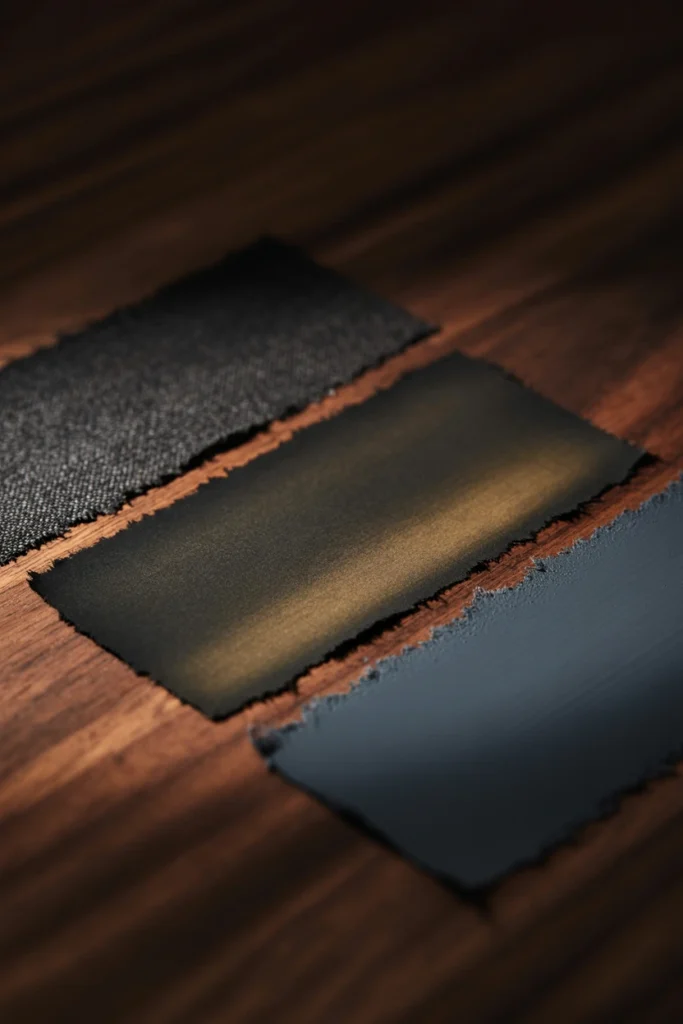
A single shade of black across walls, furniture, and textiles collapses the room into one undefined mass. Without tonal variation, the eye cannot distinguish where one surface ends and another begins. This flattens the entire room and eliminates any sense of depth.
Use matte black on walls, a slightly warmer soft black on upholstered furniture, and a blue-black or green-black undertone on textiles like curtains or a throw. In practice, this means Farrow & Ball’s Off-Black on walls paired with a warm charcoal velvet headboard. This subtle variation creates depth that a single flat black can never achieve.
| Black Shade | Undertone | Best Surface |
| Matte true black | Neutral | Walls, ceiling |
| Warm soft black | Brown-based | Upholstered furniture |
| Blue-black | Cool | Curtains, bedding |
| Green-black | Deep olive | Accent textiles, rugs |
7. Add a Single Jewel-Tone Accent Color
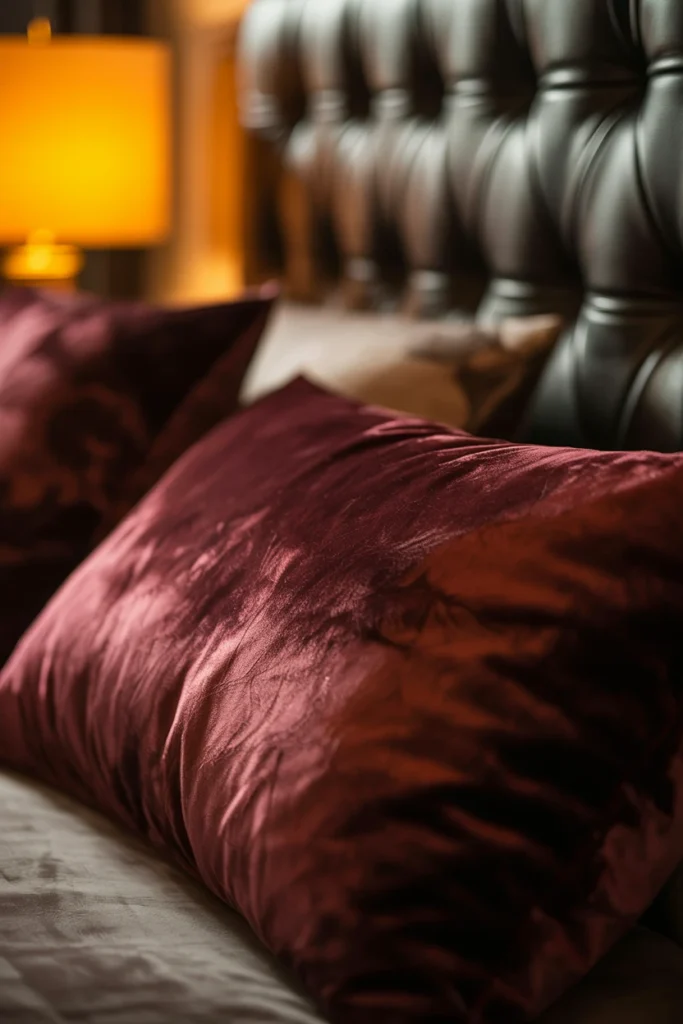
A gothic bedroom built entirely from black, grey, and white reads as somber rather than romantic. Without a single saturated accent, the room loses the emotional warmth that separates gothic decor from generic dark minimalism. This absence is why some all-black rooms feel cold instead of inviting.
Choose one jewel tone — deep burgundy, emerald, or amethyst — and apply it only to soft textiles: a throw pillow, a single accent chair, or curtain trim. Limit this color to under 10% of total visible surface area so it reads as an accent rather than a competing scheme. This single splash of saturated color gives the entire room emotional warmth without diluting the gothic mood.
| Jewel Tone | Emotional Effect | Application |
| Deep burgundy | Warm, romantic | Pillows, curtain trim |
| Emerald green | Rich, grounding | Accent chair, rug |
| Amethyst purple | Mysterious, soft | Throw blanket, lampshade |
| Deep sapphire | Cool, dramatic | Headboard fabric |
8. Use Matte Finishes Over Glossy Black Paint

Glossy black paint reflects overhead light in sharp, uneven patches across the wall. This reflection breaks the smooth, absorbing quality that makes dark rooms feel intentionally moody rather than harsh. The result is a wall that looks unfinished under any direct light source.
Choose a matte or eggshell finish for every wall, and reserve gloss finishes for small trim details like door frames or picture rails only. Matte paint absorbs ambient light instead of bouncing it back, which is what creates the enveloping, cocoon-like effect gothic bedrooms rely on. This finish choice alone changes how the entire room reads under both daylight and lamp light.
| Finish Type | Light Reflection | Best Use |
| Matte | Lowest | Full walls and ceiling |
| Eggshell | Low | Walls in low-light rooms |
| Satin | Medium | Trim, doors |
| Gloss | Highest | Small accent details only |
Layering Gothic Bedroom Furniture and Statement Pieces
Furniture carries the visual weight of a gothic bedroom more than any other category. This section covers which pieces to prioritize and how to avoid overcrowding the room with competing statement items.
9. Anchor the Room With a Dark Wood or Wrought Iron Bed Frame
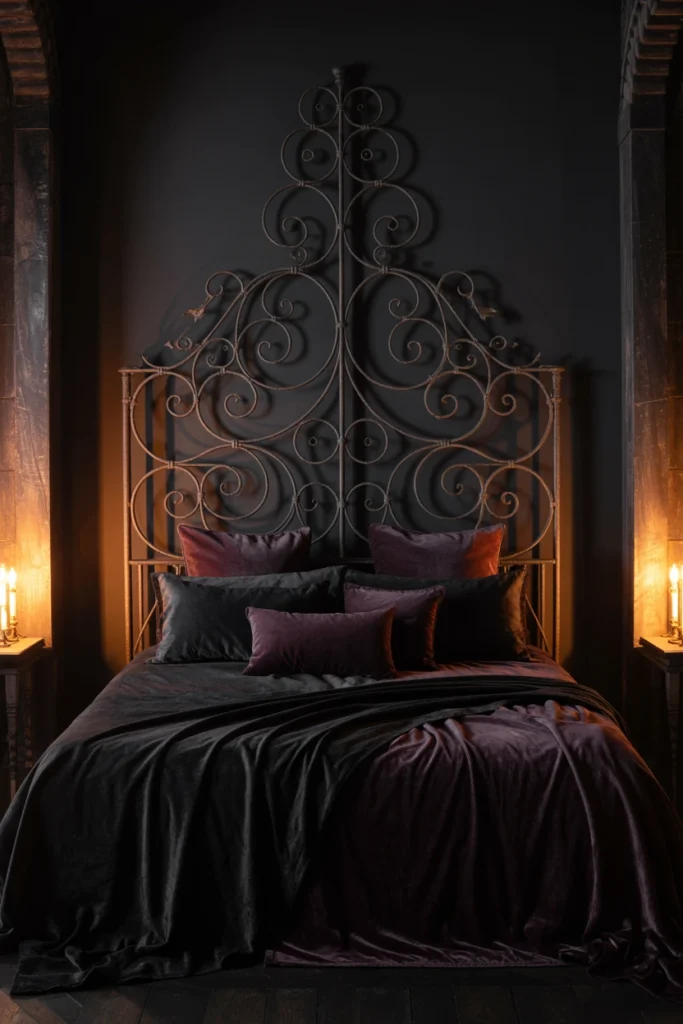
A gothic bedroom without a strong bed frame relies entirely on paint and accessories to create drama. Without an architectural anchor piece, the room’s focal point defaults to whatever furniture happens to be largest. This leaves the space without a clear visual center.
Choose a bed frame with a headboard reaching at least 50 inches tall, in either dark carved wood or wrought iron with scrollwork detailing. Position the bed as the first piece placed in the room, before any other furniture, so every other item is arranged around it. This sequencing guarantees the bed remains the dominant visual anchor rather than competing with a later addition.
| Headboard Height | Visual Effect | Best Room Size |
| Under 40 inches | Minimal drama | Small rooms only |
| 50–60 inches | Strong anchor point | Standard bedrooms |
| 60–75 inches | Maximum drama | Rooms with 9ft+ ceilings |
| 75+ inches | Cathedral effect | Large master suites |
10. Install a Freestanding Mirror With an Ornate Frame
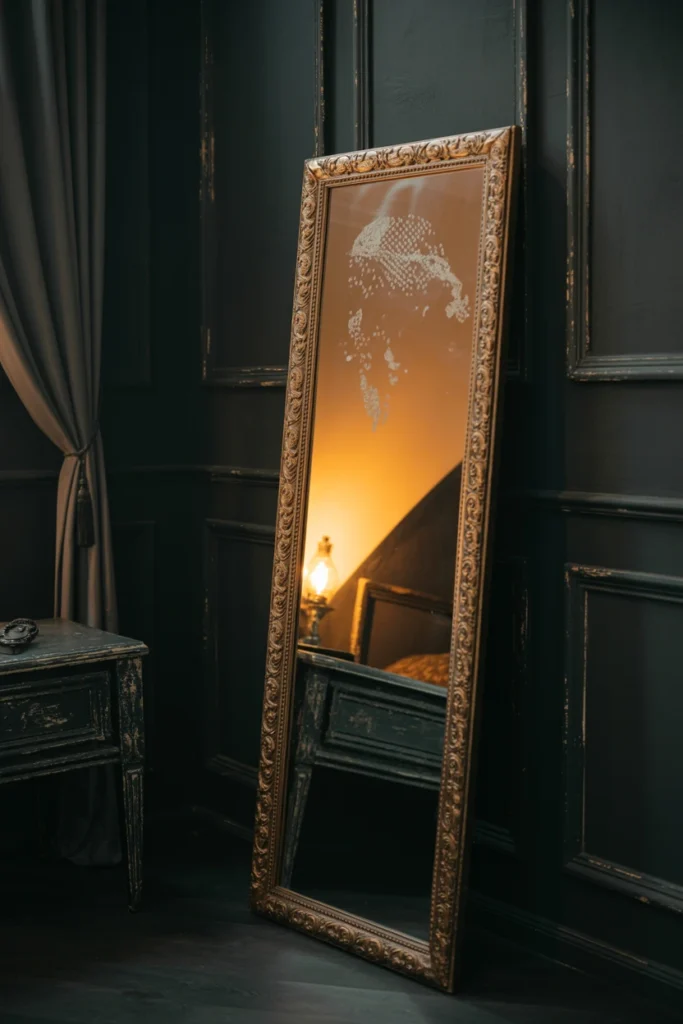
A plain rectangular mirror in a gothic bedroom looks out of place against ornate furniture and dark walls. Without a frame that matches the room’s material language, the mirror reads as an afterthought rather than a design choice. This mismatch breaks the cohesive atmosphere the rest of the room establishes.
Choose a freestanding floor mirror between 60 and 72 inches tall with a carved wood or aged brass frame, and position it opposite the room’s main light source. This placement doubles the perceived depth of the room while reflecting candlelight or lamp light back into the space. The mirror becomes both a functional piece and a light-multiplying design tool.
| Mirror Height | Frame Style | Placement |
| 60–65 inches | Carved wood | Corner, angled toward light |
| 65–72 inches | Aged brass | Opposite main window |
| Round, 30–36 inches | Wrought iron | Above dresser |
| Arched, 70+ inches | Ornate gilt | Leaning against wall |
11. Choose One Oversized Statement Furniture Piece
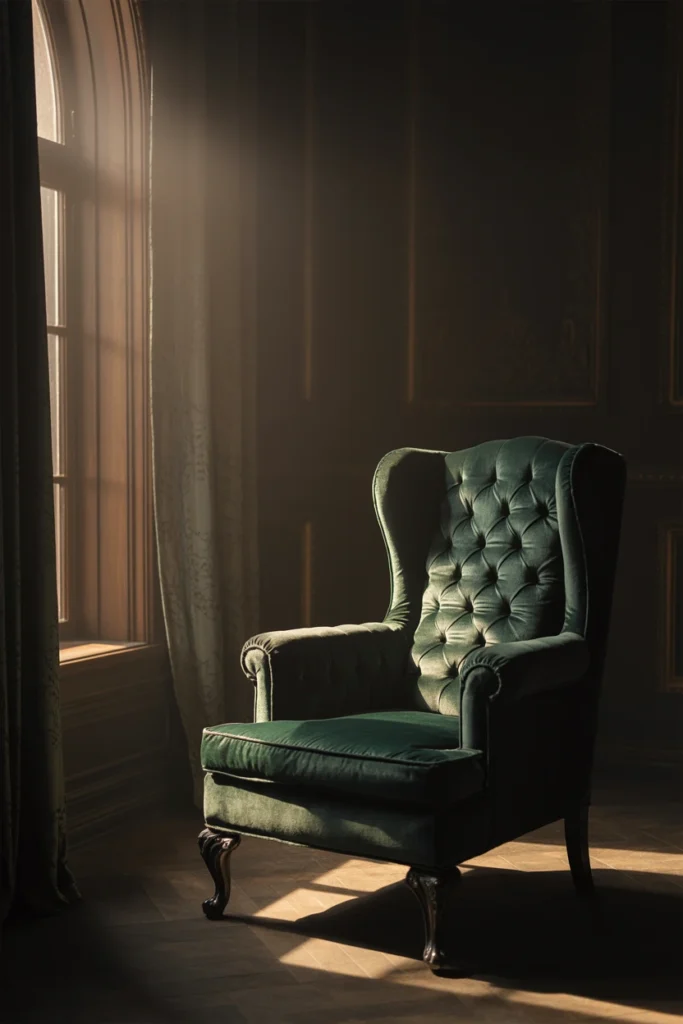
A gothic bedroom with several medium-sized dramatic pieces creates visual competition instead of a single strong focal point. When three or four items all demand attention at once, the eye has nowhere to settle. This scatters the room’s impact instead of concentrating it.
Select exactly one oversized piece — a wingback chair, a chaise lounge, or an armoire — and keep every other furniture item at a smaller, supporting scale. Place this piece in the room’s second-most-visible position, after the bed, typically a corner facing the door. This single hierarchy decision keeps the room’s drama concentrated instead of diluted across too many competing pieces.
| Statement Piece | Ideal Room Position | Scale Rule |
| Wingback chair | Corner facing door | 45+ inches tall |
| Chaise lounge | Foot of bed | 60+ inches long |
| Carved armoire | Opposite bed wall | 70+ inches tall |
| Canopy frame | Around bed | Full bed width |
12. Replace Modern Nightstands With Vintage or Antique Alternatives
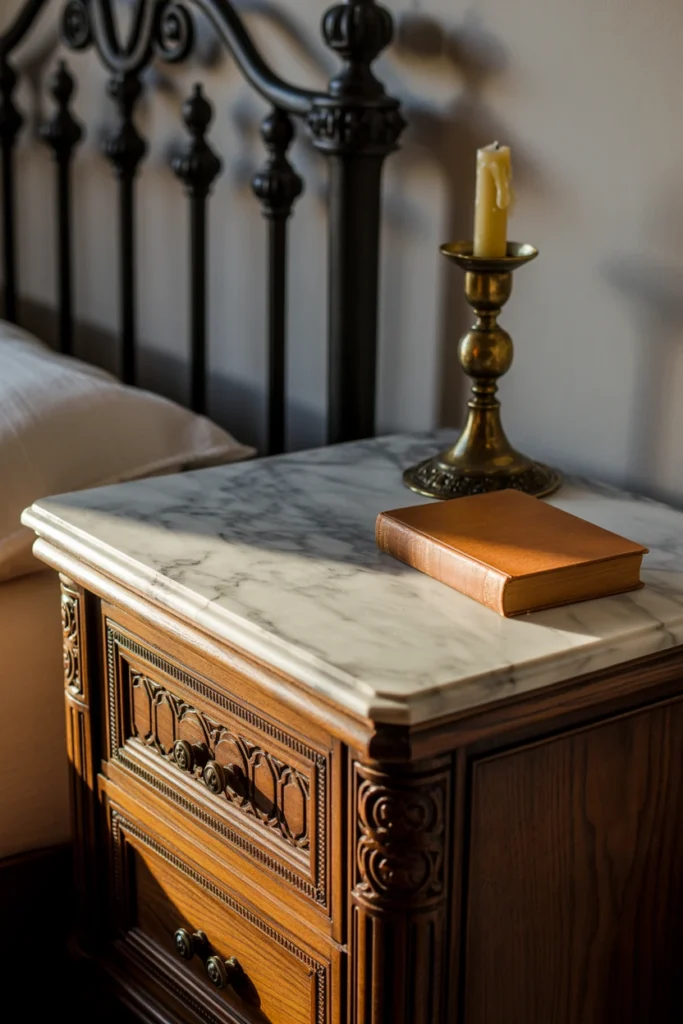
Sleek modern nightstands with clean lines and light wood clash directly against ornate gothic furniture. This material mismatch is one of the fastest ways to undercut an otherwise well-planned room. The eye immediately registers the inconsistency even if the rest of the styling is correct.
Source nightstands with carved wood detailing, marble tops, or aged brass hardware from antique shops, estate sales, or reproduction retailers. Match the wood tone within one or two shades of your bed frame so the pieces read as a set rather than mismatched purchases. This consistency across furniture wood tones is what makes a gothic bedroom feel curated instead of thrown together.
| Nightstand Material | Price Range | Where to Source |
| Solid carved wood | 150–400 | Antique shops, estate sales |
| Marble top wood | 200–500 | Reproduction furniture stores |
| Aged brass metal | 100–300 | Vintage online marketplaces |
| Wrought iron | 120–350 | Specialty gothic retailers |
Gothic Bedroom Lighting and Ambiance
Lighting determines whether a gothic bedroom feels romantic or simply dark. This section covers the layered lighting approach that creates atmosphere without sacrificing usability.
13. Install a Dimmer Switch Before Adding Any Fixtures
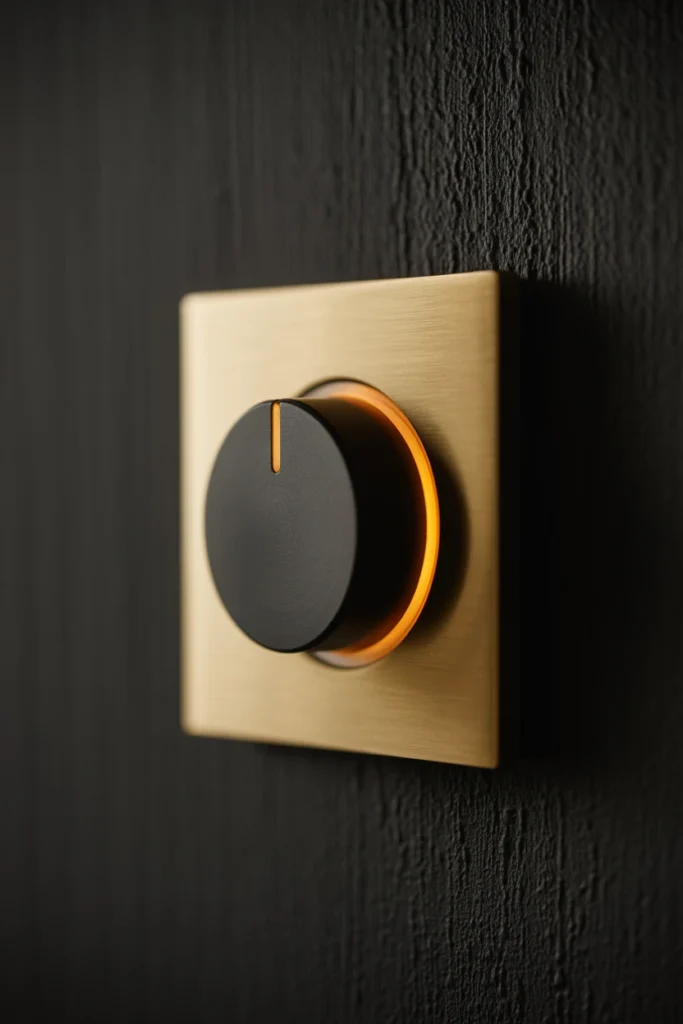
A gothic bedroom controlled by a single bright overhead switch eliminates the ability to shift atmosphere by time of day. Fixed brightness forces the room into one mood permanently, regardless of the hour or activity. This single oversight undermines even the most carefully chosen lighting fixtures.
Install a dimmer switch rated for your fixture type before purchasing any chandelier or lamp, since not all bulbs are dimmer-compatible. Set the dimmer to allow a range from 10% to 100% brightness so the room can shift from bright and functional to low and atmospheric. This single 30–60 upgrade unlocks the full potential of every light fixture added afterward.
| Dimmer Type | Compatible Bulbs | Approx. Cost |
| Standard incandescent | Incandescent, halogen | 15–25 |
| LED-compatible | Dimmable LED only | 25–40 |
| Smart dimmer | Wi-Fi enabled LED | 35–60 |
| Rotary dial | Incandescent only | 10–20 |
14. Hang a Wrought Iron or Candelabra-Style Chandelier
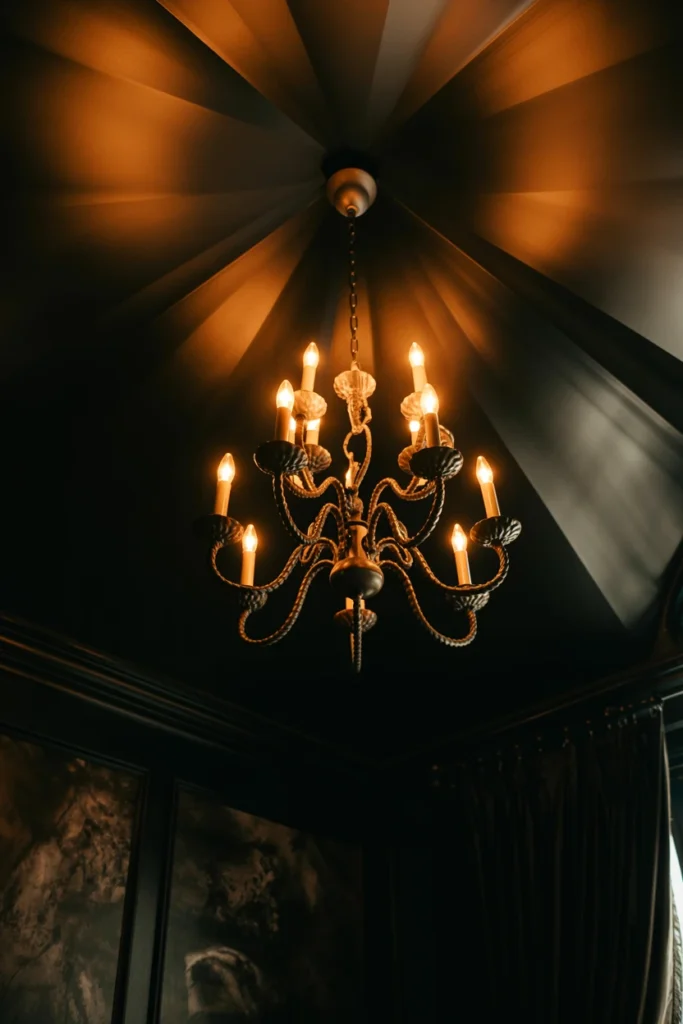
A standard flush-mount ceiling fixture in a gothic bedroom looks generic and undersells the room’s architectural potential. Without a fixture that carries visual weight, the ceiling remains an unused design opportunity. This gap is especially noticeable in rooms with 8-foot or taller ceilings.
Choose a wrought iron or candelabra-style chandelier with a diameter between 24 and 30 inches, hung with at least 30 inches of clearance above the bed. Select warm-toned bulbs rated 2200K to avoid a stark, clinical glow that undercuts the fixture’s ornate design. This single fixture becomes the room’s architectural centerpiece and justifies the visual investment in the ceiling space.
| Chandelier Diameter | Ceiling Height Needed | Bulb Count |
| 18–24 inches | 8 feet | 4–6 bulbs |
| 24–30 inches | 9 feet | 6–8 bulbs |
| 30–36 inches | 10+ feet | 8–10 bulbs |
| Candelabra style | Any, with 30in clearance | 6–12 candles |
15. Layer Three Light Sources at Different Heights
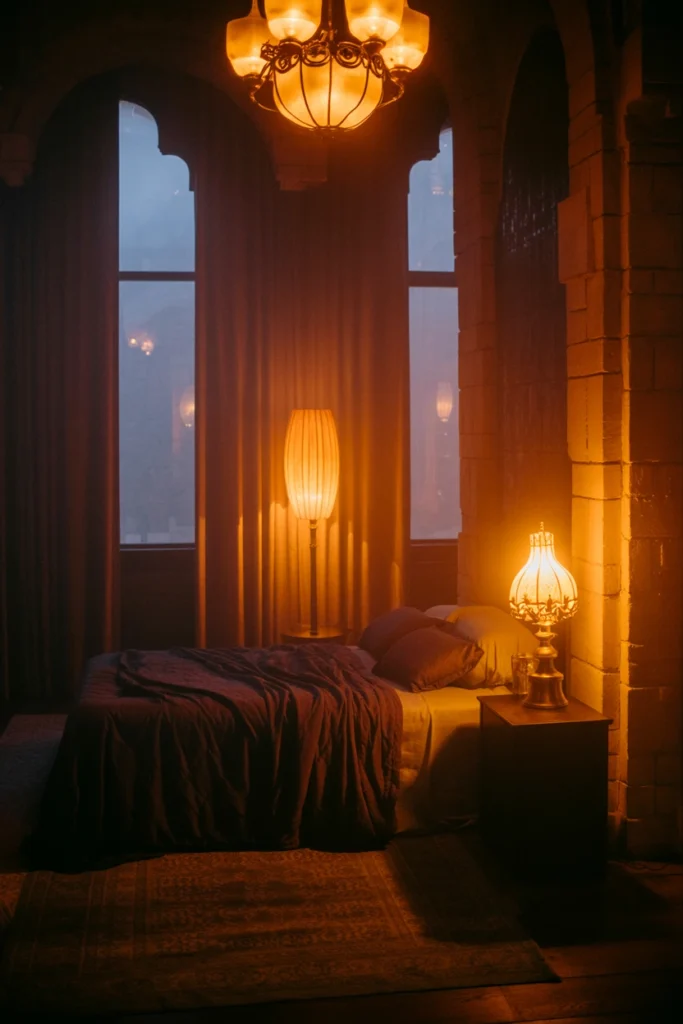
Relying on a single overhead fixture creates flat, uniform lighting that eliminates shadow and depth. Gothic atmosphere depends on contrast between light and shadow, which a single light source cannot produce. This flat lighting is one of the fastest ways to make an otherwise well-styled room feel ordinary.
Combine three light sources at three distinct heights: a ceiling chandelier, a table lamp at nightstand height around 24 inches, and a floor lamp or wall sconce at a lower or mid-wall height. Turn off the overhead chandelier during evening hours and rely on the lower two sources for ambient light. This height variation creates the shadow depth that defines gothic atmosphere after dark.
| Light Source | Typical Height | Time of Use |
| Chandelier | Ceiling, 30in+ above bed | Daytime, entertaining |
| Table lamp | 22–26 inches | Evening reading |
| Floor lamp | 50–60 inches | Ambient evening light |
| Wall sconce | 60–66 inches | Accent, always-on |
16. Use Warm 2200K Bulbs Instead of Cool White

Cool white bulbs rated above 3000K cast a clinical, bluish tone that clashes with dark, warm-toned decor. This lighting temperature mismatch makes even well-chosen furniture and paint look cold and uninviting. The visual warmth of velvet and wood tones disappears entirely under the wrong bulb temperature.
Replace every bulb in the room with warm-toned options rated between 2000K and 2700K, prioritizing 2200K where dimmable options are available. Check bulb packaging for Kelvin rating before purchasing, since “soft white” labeling alone does not guarantee the correct temperature. This single swap makes every dark surface in the room read as rich and warm instead of flat and cold.
| Kelvin Rating | Light Appearance | Recommended Use |
| 2000K–2200K | Warm amber, candlelight | Primary gothic lighting |
| 2700K | Soft warm white | Secondary lamps |
| 3000K | Neutral white | Avoid in gothic rooms |
| 4000K+ | Cool blue-white | Never use in bedroom |
Textiles and Fabrics for a Dark Romantic Bedroom
Fabric choice determines whether a gothic bedroom feels soft and romantic or stiff and staged. This section covers material selection and layering techniques for bedding, curtains, and canopy elements.
17. Choose Velvet or Damask for Your Primary Bedding

Cotton or linen bedding in a gothic bedroom reads as casual and undercuts the room’s formal, romantic atmosphere. These everyday fabrics lack the light-catching texture that makes dark bedding feel luxurious rather than plain. This mismatch is especially visible under warm lamp light, where texture matters most.
Select a velvet or damask duvet cover in a deep tone like burgundy, black, or emerald, and pair it with at least 300-thread-count sateen sheets underneath for comfort. Velvet’s light-catching texture creates subtle sheen variation across the bed that flat cotton cannot replicate. This textural contrast between the sheen of velvet and the matte quality of the walls is what makes the bed read as the room’s centerpiece.
| Fabric Type | Texture Quality | Care Requirement |
| Velvet | High sheen, plush | Dry clean or spot clean |
| Damask | Subtle pattern sheen | Machine wash, gentle |
| Jacquard | Woven texture | Machine wash, cold |
| Sateen (base layer) | Soft sheen | Machine wash, warm |
18. Hang Floor-to-Ceiling Curtains in a Heavy Fabric
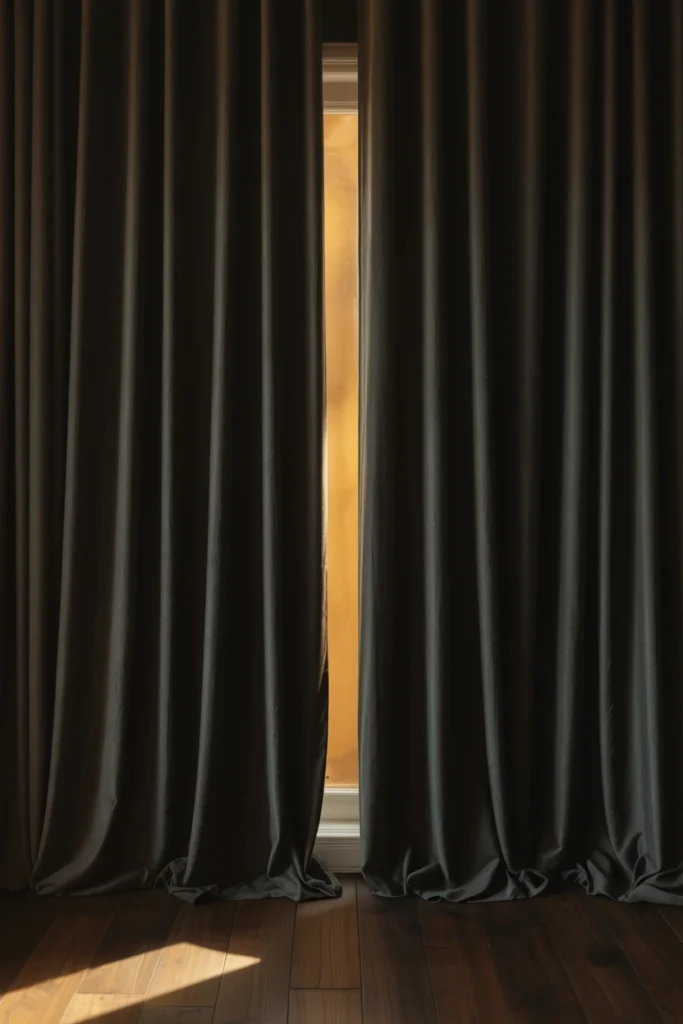
Short curtains that stop above the windowsill make a gothic bedroom’s ceiling height look compressed rather than dramatic. This proportion mistake is one of the most common in dark, formal bedrooms. It shrinks the room’s perceived scale instead of elongating it.
Mount curtain rods 4 to 6 inches above the window frame and choose curtain panels long enough to pool slightly on the floor, roughly 1 to 2 inches of extra length. Select a heavy fabric like velvet or blackout-lined damask in a tone matching or slightly darker than the walls. This floor-to-ceiling proportion visually stretches the room upward and adds the formal drape gothic interiors depend on.
| Curtain Length | Visual Effect | Fabric Weight |
| Sill-length | Casual, shrinks room | Avoid in gothic rooms |
| Floor-length | Neutral, standard | Medium-weight velvet |
| Puddle (1–2in extra) | Formal, dramatic | Heavy velvet or damask |
| Puddle (3in+ extra) | Maximum formality | Heaviest blackout velvet |
19. Add a Canopy or Bed Curtain for Vertical Drama
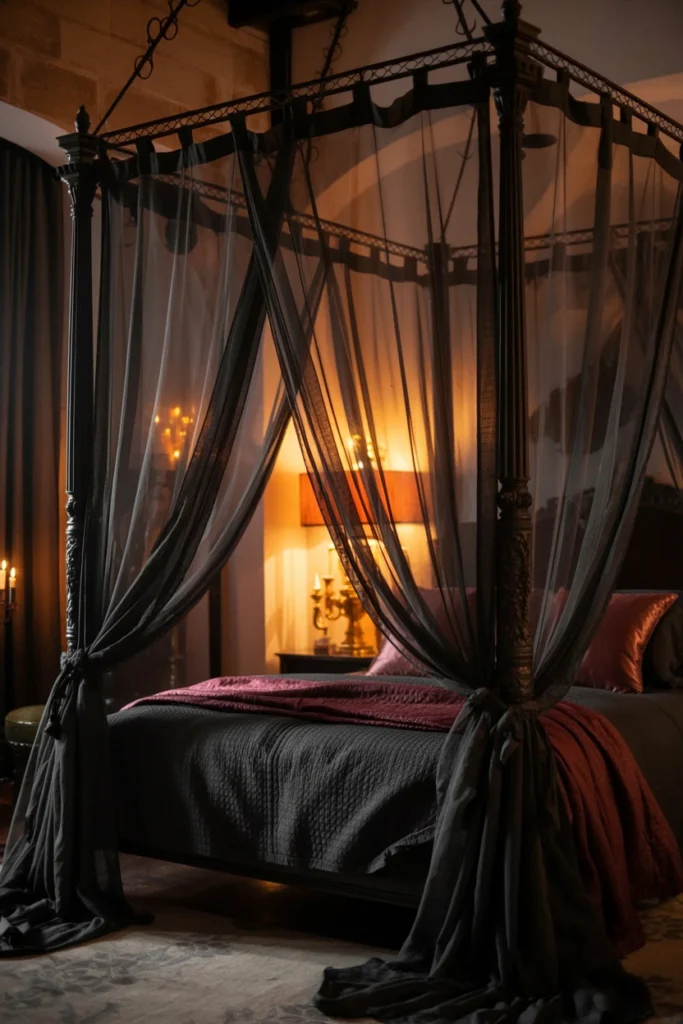
A gothic bedroom without any vertical fabric element relies entirely on wall height for drama, leaving the bed itself visually flat. Without a canopy or curtain framing the bed, the room’s tallest architectural feature goes unused. This wastes the single most dramatic opportunity in the room.
Install a ceiling-mounted canopy frame or crown directly above the bed’s center, hanging sheer or semi-sheer black fabric panels at least 84 inches long on each side. Pull the panels back and tie them at the bedposts during the day, then release them fully at night for both drama and light-blocking function. This vertical fabric element frames the bed as the room’s obvious focal point from every angle.
| Canopy Type | Fabric Length | Mounting Method |
| Ceiling crown | 84–96 inches | Ceiling-mounted hardware |
| Four-poster frame | 90–108 inches | Attached to bed frame |
| Half-canopy | 60–72 inches | Wall-mounted above headboard |
| Sheer draping only | 96+ inches | Ceiling hook, minimal hardware |
20. Mix Two Textures in Every Layer of Bedding
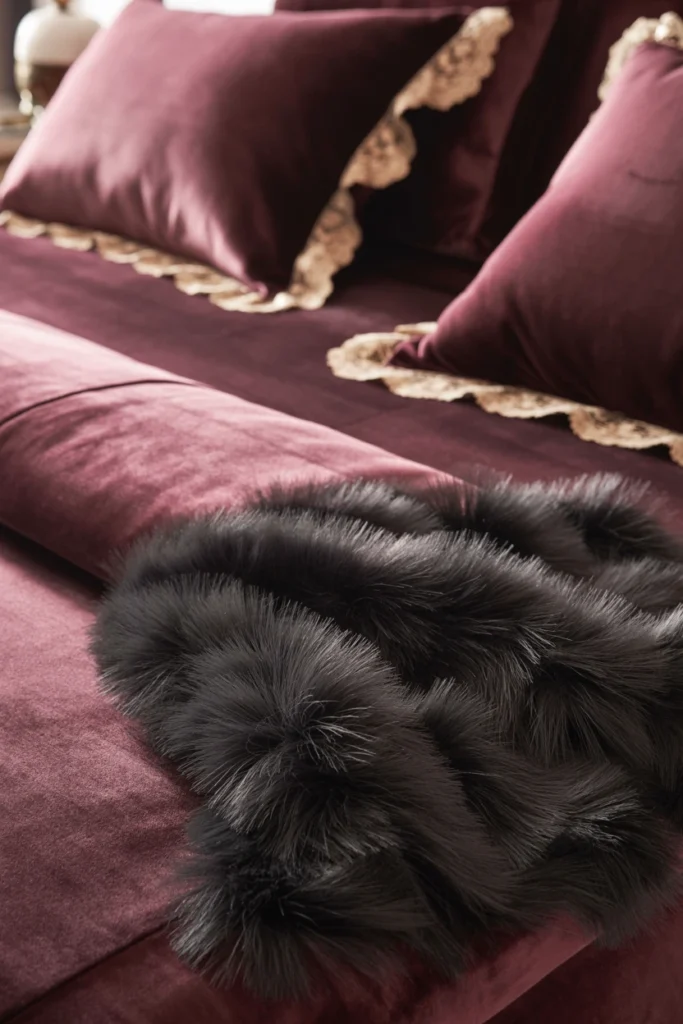
A bed built from a single fabric type across duvet, pillows, and throw reads as flat despite dark, rich coloring. Uniform texture removes the tactile complexity that makes gothic bedding feel layered and collected. This is a subtle mistake that flattens the bed’s visual impact even when the color palette is correct.
Combine at least two distinct textures in every bedding layer: pair a velvet duvet with lace-edged pillow shams, or a damask coverlet with a faux fur throw folded at the foot of the bed. Keep the color palette consistent across textures so contrast comes from texture alone, not competing colors. This texture-only contrast rule keeps the bed looking curated rather than mismatched.
| Texture Pairing | Visual Effect | Placement |
| Velvet + lace | Soft romantic contrast | Duvet + pillow trim |
| Damask + faux fur | Structured meets plush | Coverlet + throw |
| Satin + velvet | High-low sheen contrast | Sheets + duvet |
| Brocade + linen | Formal meets relaxed | Bed skirt + pillow backs |
Styling and Finishing Touches for Gothic Decor
Small decorative details determine whether a gothic bedroom feels genuinely curated or simply dark. This section covers the finishing layer that ties furniture, lighting, and textiles together.
21. Group Wall Art in an Asymmetric Gallery Arrangement
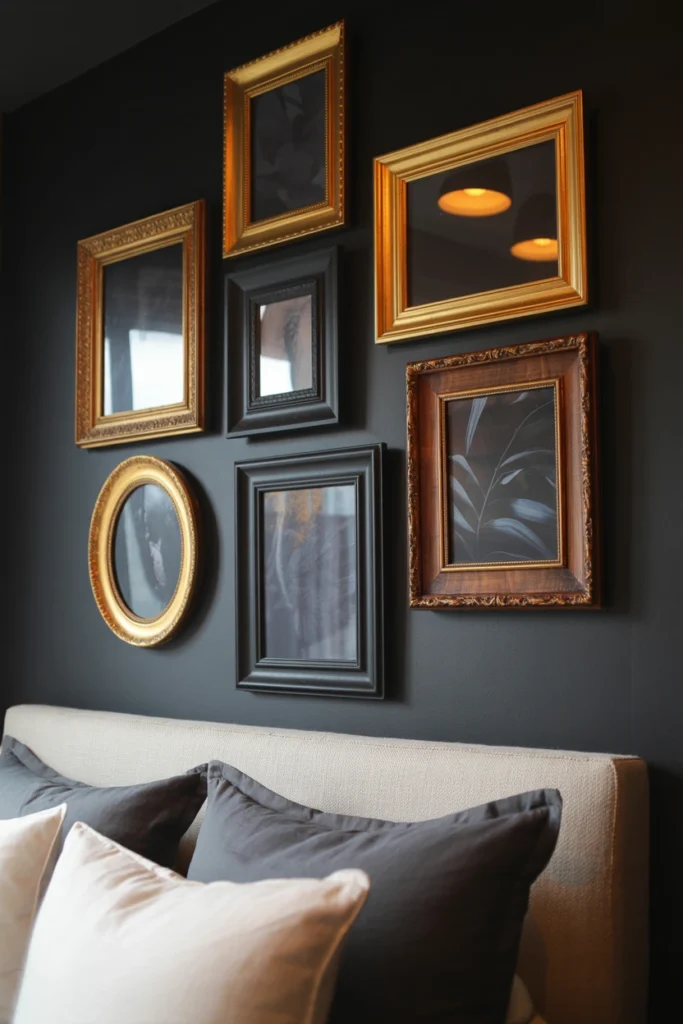
A single centered piece of wall art in a gothic bedroom leaves large stretches of dark wall visually empty. Empty matte walls absorb light without offering any focal interest, which flattens the room’s atmosphere. This gap is most noticeable on the wall directly facing the bed.
Arrange 5 to 7 frames of varying sizes in an asymmetric cluster, keeping 2 to 3 inches of spacing between each frame and anchoring the tallest piece at eye level, roughly 60 inches from the floor. Mix frame finishes between aged gold, black, and dark wood rather than matching every frame identically. This intentional asymmetry reads as a collected display rather than a single mass-produced art set.
| Frame Count | Wall Space Needed | Spacing Between |
| 3–4 frames | 4×3 feet | 2–3 inches |
| 5–7 frames | 6×4 feet | 2–3 inches |
| 8–10 frames | 8×5 feet | 1.5–2 inches |
| Single oversized piece | 3×4 feet minimum | N/A |
22. Add Metallic Accents in Brass, Pewter, or Antique Gold
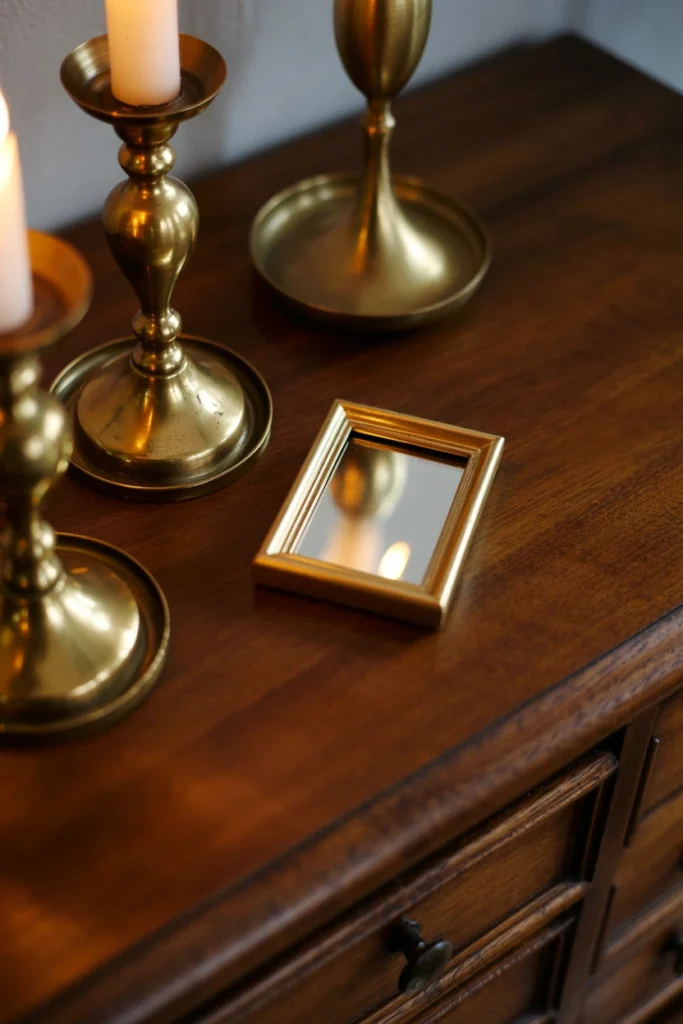
A gothic bedroom without any metallic detail can read as heavy and one-dimensional against so much dark fabric and paint. Metal surfaces catch and reflect light in a way that fabric and matte paint cannot, adding a necessary visual break. Without this contrast, the room’s darkness starts to feel oppressive rather than atmospheric.
Introduce metallic accents through candlesticks, drawer pulls, picture frames, or a mirror frame, choosing one metal tone — brass, pewter, or antique gold — and repeating it in at least three separate objects across the room. Avoid mixing more than one metal finish, since combining brass and chrome in the same space breaks the cohesive material story. This repeated metallic thread ties separate objects into a single intentional palette.
| Metal Tone | Emotional Effect | Where to Use |
| Antique brass | Warm, historic | Hardware, candlesticks |
| Pewter | Cool, subdued | Frames, small trays |
| Antique gold | Luxe, romantic | Mirror frames, lamp bases |
| Aged bronze | Weathered, rustic | Curtain rods, hooks |
23. Style One Shelf as a Curated Curiosity Display
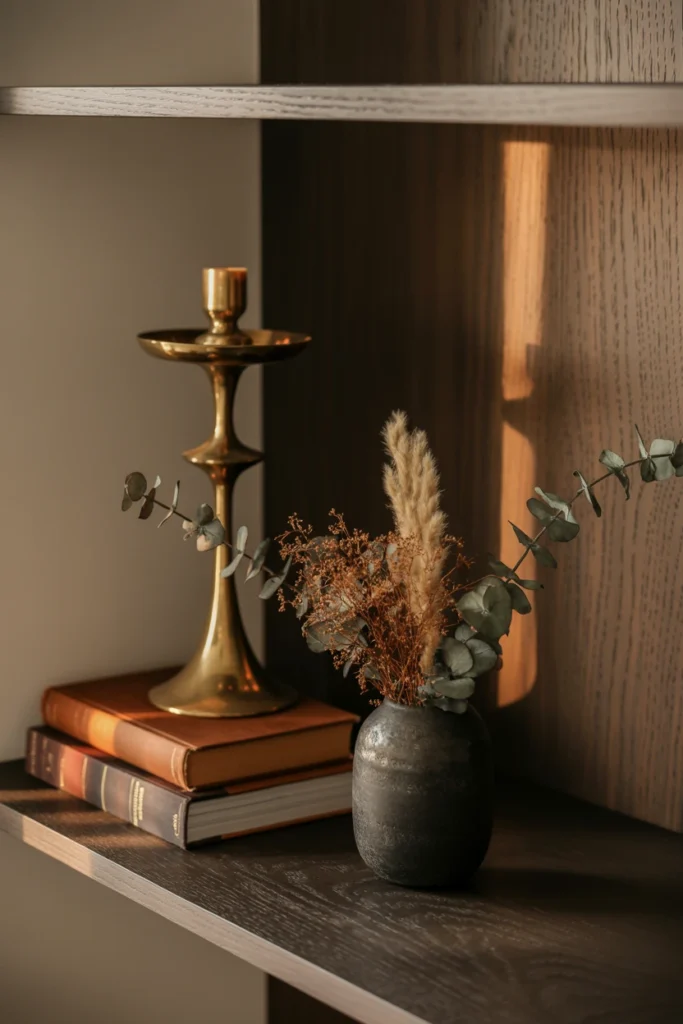
Random decorative objects scattered across a dresser or shelf without grouping logic read as clutter rather than curated styling. Without an organizing principle, even beautiful individual objects lose their visual impact. This scattered approach is one of the fastest ways to undercut an otherwise well-designed room.
Select one shelf or dresser surface and group 5 to 7 objects in odd numbers, mixing height variation — a tall candlestick, a mid-height stack of leather-bound books, and a low dried flower arrangement. Anchor the grouping with one larger object and let smaller pieces cluster around it rather than spreading evenly across the surface. This height-varied, odd-numbered grouping reads as an intentional curiosity display instead of random clutter.
| Object Count | Height Variation | Arrangement Style |
| 3 objects | 2 height levels | Simple triangle grouping |
| 5 objects | 3 height levels | Layered cluster |
| 7 objects | 3–4 height levels | Full curiosity display |
| 9+ objects | Risk of clutter | Split across two shelves |
Long-Term Gothic Bedroom Maintenance Habits
A gothic bedroom requires ongoing upkeep to keep its dark surfaces and ornate details looking intentional rather than neglected. This section covers the recurring habits that preserve the room’s atmosphere over time.
24. Dust Ornate Surfaces on a Weekly Schedule
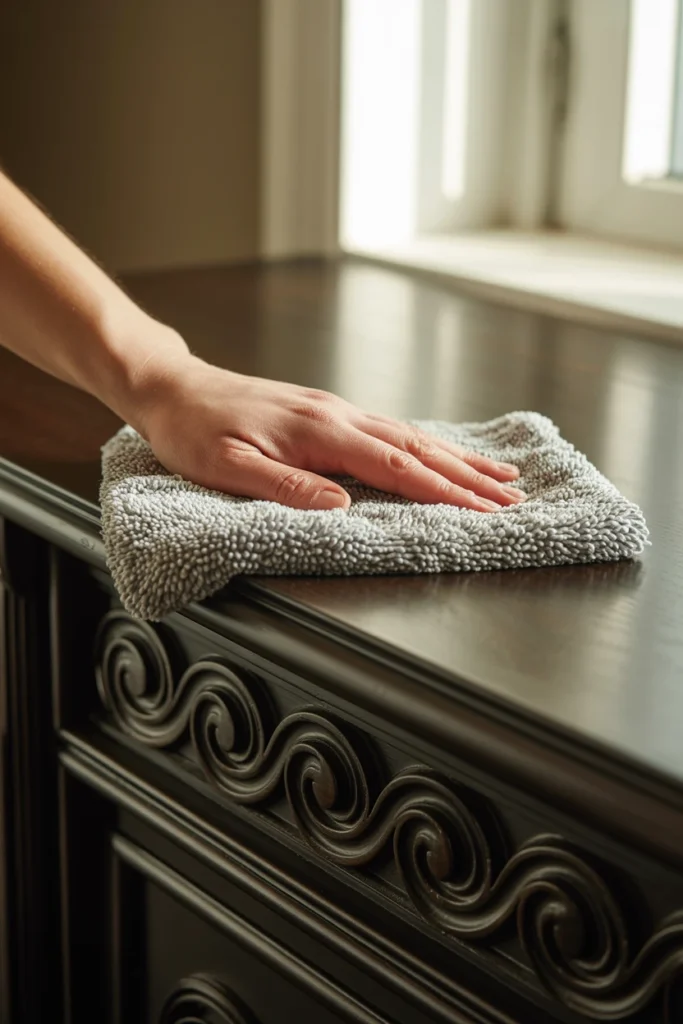
Carved wood and metal detailing collect visible dust far faster than smooth modern furniture surfaces. Dust settles into decorative grooves and quickly makes even expensive antique pieces look neglected. This visible buildup undercuts the luxurious effect the furniture was chosen to create.
Dust every carved or textured surface weekly using a soft microfiber cloth, and use a small soft-bristled brush to reach into deep carving grooves that a cloth alone cannot clean. Focus extra attention on horizontal surfaces like nightstand tops and dresser ledges, which collect dust fastest. This weekly five-minute habit keeps ornate furniture looking polished instead of dulled by accumulated dust.
| Surface Type | Cleaning Frequency | Tool Needed |
| Carved wood detail | Weekly | Soft brush + cloth |
| Flat dark wood | Weekly | Microfiber cloth |
| Metal hardware | Bi-weekly | Dry cloth |
| Velvet upholstery | Monthly | Fabric brush, vacuum attachment |
25. Rotate Seasonal Textiles to Prevent a Stale Look

Keeping identical bedding and curtains year-round makes even a well-designed gothic bedroom start to feel static after several months. Without any seasonal variation, the eye stops registering the room’s details entirely. This staleness sets in gradually, which makes it easy to overlook until the room feels flat.
Swap your primary throw blanket and one accent pillow cover every three months, alternating between heavier velvet in colder months and lighter damask or jacquard in warmer months. Store the off-season textiles in a breathable garment bag rather than plastic to prevent fabric damage. This quarterly rotation keeps the room visually fresh while staying within the same established color palette.
| Season | Recommended Fabric Weight | Rotation Frequency |
| Winter | Heavy velvet, faux fur | Every 3 months |
| Spring | Medium jacquard | Every 3 months |
| Summer | Light damask, linen blend | Every 3 months |
| Fall | Medium velvet | Every 3 months |
26. Reassess Your Color Balance Every Six Months
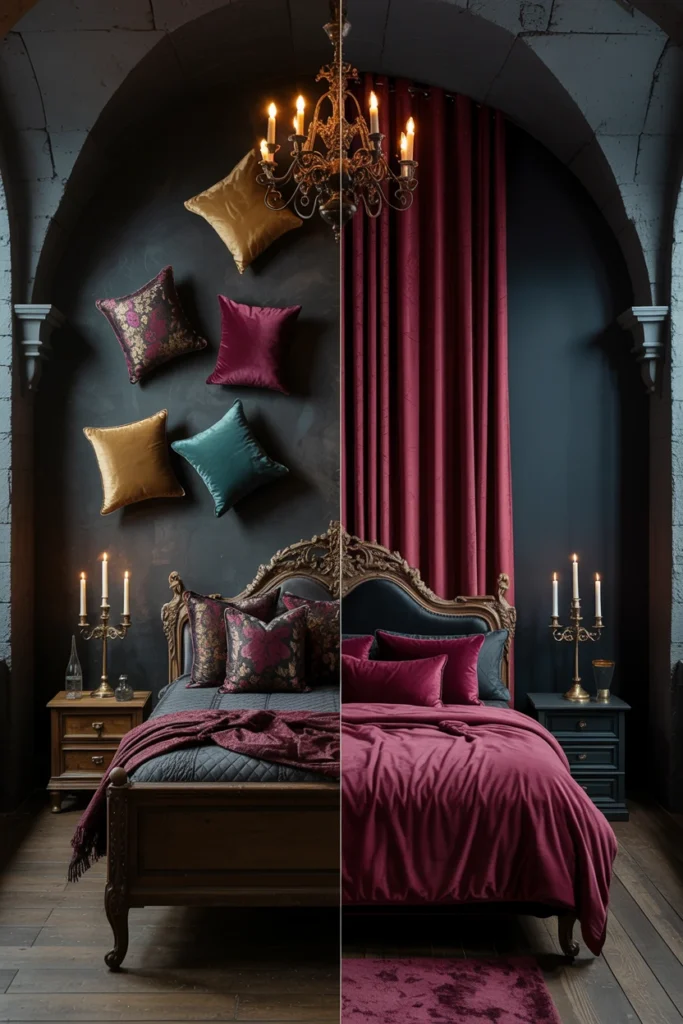
A gothic bedroom’s 60-30-10 color ratio can drift over time as new accessories and gifts accumulate without a deliberate plan. Small additions that ignore the original ratio slowly erode the room’s careful balance. This drift happens gradually enough that most people do not notice until the room feels cluttered.
Every six months, photograph the room and estimate the current percentage of dominant, secondary, and accent colors against the original 60-30-10 target. Remove or relocate any object that has pushed the accent color noticeably above 10% of visible surface area. This biannual check keeps the room’s original color hierarchy intact instead of letting it drift into visual clutter.
| Check Frequency | What to Measure | Action If Off-Balance |
| Every 6 months | Color ratio via photo | Remove excess accent items |
| Every 3 months | Textile rotation | Swap per season |
| Weekly | Dust and surface clutter | Clear and clean |
| Annually | Overall furniture layout | Reassess statement piece placement |
Common Gothic Bedroom Mistakes That Kill the Look
These eight mistakes appear most often in gothic bedrooms that fail to read as intentional. Correcting each one restores the balance a cohesive gothic room depends on.
| Mistake | Why It Hurts the Space | Better Alternative |
| Using pure black on every surface | Flattens the room into one undefined mass with no depth | Layer three shades of black across walls, furniture, and textiles |
| Skipping a dimmer switch | Locks the room into one static, unchangeable mood | Install a dimmer before adding any fixture |
| Mixing gothic sub-styles | Creates visual confusion between competing furniture silhouettes | Commit to one sub-style before any purchase |
| Choosing cool white bulbs | Casts a clinical tone that clashes with warm, dark decor | Use bulbs rated between 2000K and 2700K |
| Overcrowding statement furniture | Splits visual attention across too many focal points | Limit the room to one oversized statement piece |
| Leaving walls empty of art | Wastes matte wall space that could hold visual interest | Build an asymmetric 5–7 frame gallery cluster |
| Mixing multiple metal finishes | Breaks the cohesive material story across the room | Repeat one metal tone across at least three objects |
| Ignoring natural light levels | Turns a moody room into a cave-like, airless space | Limit full-black coverage in rooms with under 3 hours of daylight |
Gothic Bedroom Ideas by Room Type and Situation
Small Bedroom
A small gothic bedroom needs every dark surface to work harder since there is less square footage to distribute color and furniture across. The core constraint here is avoiding a room that feels cramped rather than intimate.
Key strategies for small bedrooms:
- Limit true black to a single accent wall behind the headboard
- Choose a mirror at least 60 inches tall to visually double the room’s depth
- Select a bed frame with an open, non-solid headboard to reduce visual weight
- Skip the canopy frame and use wall-mounted curtain panels instead
- Keep the statement furniture piece under 40 inches wide
Rental Apartment
A rental gothic bedroom must achieve the same atmosphere without any permanent paint or structural changes. The core constraint is creating drama through removable, non-damaging methods only.
Key strategies for rental bedrooms:
- Use removable dark peel-and-stick wallpaper instead of paint
- Hang curtains on a tension rod system that requires no wall drilling
- Choose freestanding furniture and mirrors instead of wall-mounted pieces
- Add a plug-in dimmer adapter instead of rewiring the wall switch
- Rely on a large area rug in dark tones to anchor the room without touching the floor
Shared Bedroom
A shared gothic bedroom must balance one person’s gothic preference against a partner or roommate who may want a lighter aesthetic. The core constraint is finding common ground without diluting the style entirely.
Key strategies for shared bedrooms:
- Concentrate the gothic elements on one half of the room, such as the headboard wall
- Choose a neutral charcoal base color that reads as sophisticated rather than strictly gothic
- Add gothic accents through removable textiles like a throw or pillow set
- Compromise on lighting temperature at a middle ground of 2700K
- Reserve the boldest jewel-tone accent color for one shared decorative object
Master Bedroom
A gothic master bedroom has the square footage to support the full range of statement pieces without overcrowding. The core constraint shifts from space limitation to avoiding an overly staged, showroom-like result.
Key strategies for master bedrooms:
- Add a full four-poster canopy frame since ceiling height typically supports it
- Include both a wingback chair and a chaise lounge in separate zones
- Layer four light sources instead of three, including an accent picture light
- Extend the color palette into an attached sitting area for visual continuity
- Use a larger 8 to 10 frame gallery wall to fill the additional wall space
Frequently Asked Questions
What makes a bedroom look gothic instead of just dark?
A gothic bedroom combines dark color with ornate furniture silhouettes, layered warm lighting, and rich textiles like velvet or damask. A simply dark bedroom often uses flat black paint with modern furniture and cool-toned bulbs, which reads as moody rather than gothic. The gothic look depends on material contrast and historical furniture detailing, not color alone. Without ornate shapes and warm light, a dark room stays generic.
What colors should you avoid in a gothic bedroom?
Avoid pastel tones, bright white, and cool-toned greys, since these colors flatten the contrast a gothic bedroom relies on. Overly saturated primary colors like bright red or royal blue also clash with the muted, jewel-tone palette gothic decor typically uses. Stick to deep, desaturated jewel tones alongside your black or charcoal base. This keeps the palette cohesive instead of visually competing.
How do you start a gothic bedroom on a budget?
Start with paint, since a $40 gallon of dark matte paint creates more visual impact per dollar than any single furniture piece. Add warm-toned bulbs next, since this $15–20 swap changes the entire room’s atmosphere immediately. Source ornate furniture secondhand from estate sales or online marketplaces before buying new. A full gothic bedroom transformation can begin for under $200 using this order of priorities.
How do you do gothic bedroom decor in a rental?
Use removable peel-and-stick dark wallpaper and tension-rod curtains instead of paint and drilled hardware. Choose freestanding furniture and mirrors that require no wall mounting. A plug-in dimmer adapter replaces a wired dimmer switch without any electrical modification. These substitutions achieve the same visual drama without violating a standard rental lease agreement.
How do you choose between black walls and dark furniture?
Choose black walls first if your room receives more than 3 hours of daily direct sunlight, since the light will keep the space from feeling too enclosed. Choose dark furniture against lighter charcoal or navy walls if your room gets under 3 hours of natural light. This decision should follow your room’s light mapping from the foundation steps, not personal preference alone. Rooms with limited light need at least one lighter surface to stay livable.
How often should you update gothic bedroom decor?
Rotate seasonal textiles like throws and pillow covers every three months to keep the room feeling current. Reassess your overall color balance every six months to catch any drift from your original 60-30-10 ratio. Larger elements like furniture and paint typically last 3 to 5 years before needing a refresh. This tiered schedule keeps maintenance manageable rather than requiring a full overhaul at once.
Does gothic bedroom decor work in a small room?
Yes, a small gothic bedroom works well when true black is limited to a single accent wall instead of the full room. A tall mirror and open-frame headboard keep the space from feeling visually heavy despite the dark palette. Oversized statement furniture should be scaled down or skipped entirely in rooms under 100 square feet. The gothic aesthetic scales down through material and lighting choices rather than requiring a large footprint.
How much does it cost to decorate a gothic bedroom?
A basic gothic bedroom refresh using paint, bulbs, and textiles can cost under $300. A mid-range transformation including a new bed frame and lighting fixture typically falls between $1,500 and $3,000. A full room overhaul with antique furniture and a custom canopy can exceed $5,000. Budget allocation across furniture, lighting, and textiles matters more than total spend for achieving a cohesive result.
How do you keep a gothic bedroom from feeling too dark?
Limit true black coverage based on your room’s natural daylight hours, using charcoal or navy as substitutes in low-light rooms. Layer three distinct light sources at different heights to prevent flat, shadowless lighting after dark. Add metallic accents in brass or gold to reflect available light back into the room. These three adjustments keep the room dramatic without tipping into feeling cave-like or oppressive.
Conclusion
A gothic bedroom succeeds through deliberate color ratios, layered lighting, and ornate furniture chosen within a single defined sub-style. Start with the foundation steps: lock your base color, define your sub-style, and map your room’s natural light before any purchase. Paint one wall in matte charcoal or black today and install a warm-toned bulb in your existing lamp to see the immediate shift in atmosphere.
The gothic bedroom aesthetic depends on consistent upkeep, not a single decorating weekend. A room built on these 26 principles maintains its intentional, romantic atmosphere for years rather than fading into visual clutter within months.