
Southern gothic bedroom design transforms an ordinary room into a space with weight, history, and romance. This style combines wrought iron, aged brass, velvet, and antique architectural detail to create a bedroom that feels collected over generations rather than purchased in a single trip. This guide delivers 23 specific, actionable strategies for building this look from the ground up. Start with your color palette before touching a single piece of furniture.
Before You Begin: 3 Foundation Steps for a Southern Gothic Bedroom
These three steps determine whether every later decision reads as cohesive or scattered. Skipping them forces you to backtrack once furniture and textiles are already in the room.
1. Establish a moody southern gothic color palette first
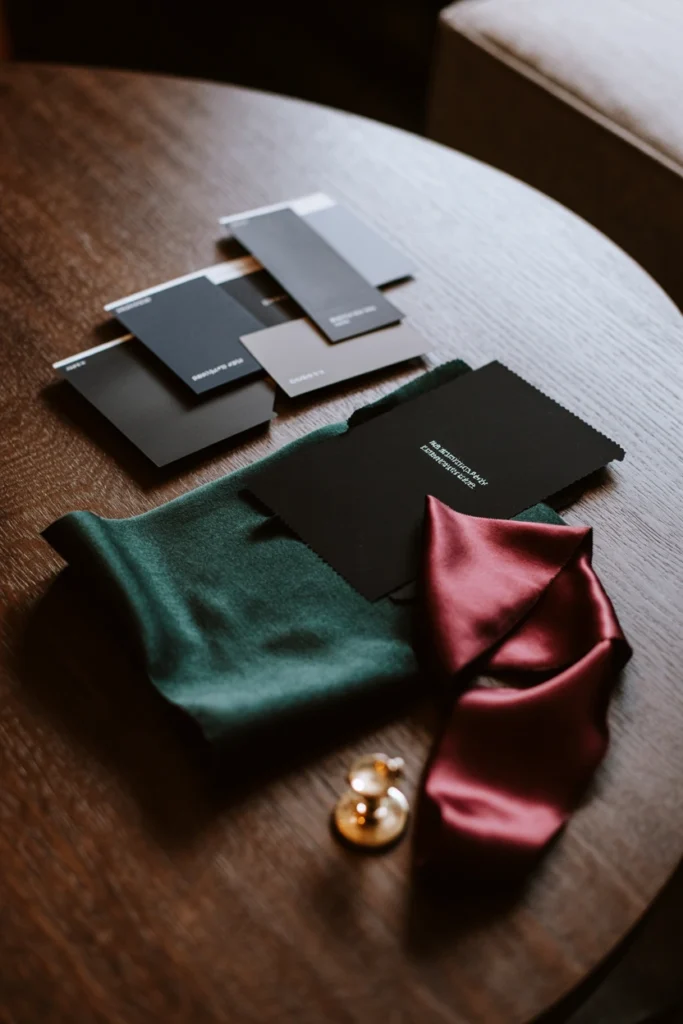
A random mix of dark colors reads as gloomy instead of gothic. Without a defined palette, every furniture and textile purchase becomes a guessing game, and the room ends up looking mismatched instead of intentional. A locked-in palette of three to four colors creates instant cohesion across walls, textiles, and accessories.
Start by selecting one dominant dark neutral — charcoal, aged black, or deep espresso brown — for 60% of the room. Pair it with one jewel tone such as emerald, burgundy, or deep plum for 30%, and reserve the final 10% for aged brass or antique gold accents. This ratio prevents the room from tipping into either flat darkness or overly saturated color.
| Color Role | Percentage of Room |
| Dominant dark neutral | 60% |
| Jewel tone accent | 30% |
| Aged metallic accent | 10% |
| Total palette colors | 3–4 max |
2. Choose one architectural anchor piece for the room
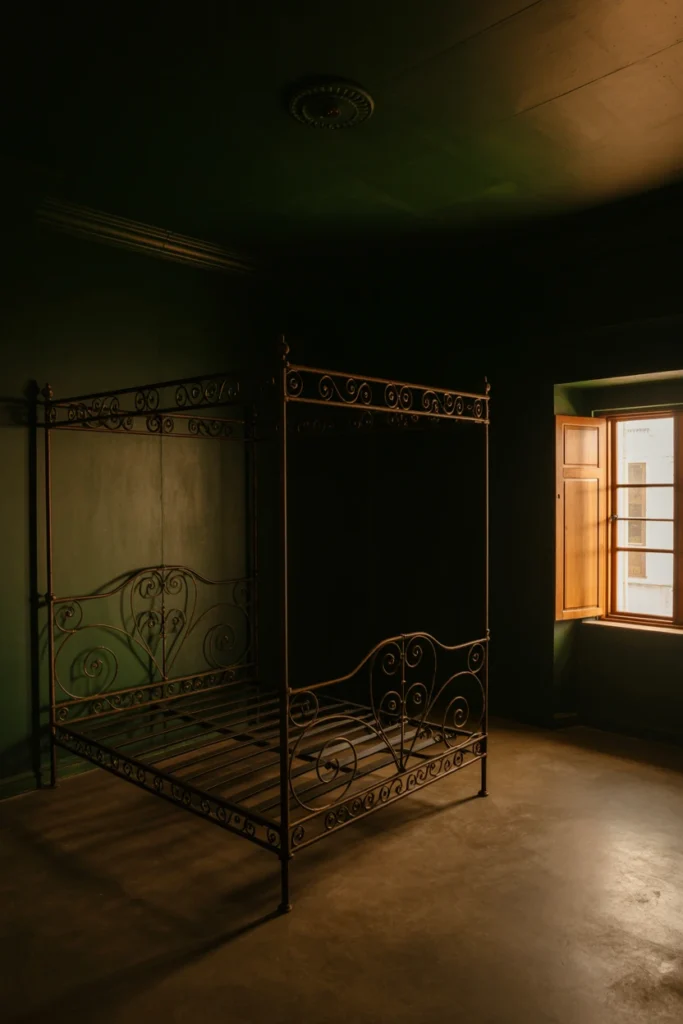
Every southern gothic bedroom needs one piece that structures the entire design around it. Without this anchor, furniture and decor compete for visual dominance instead of supporting a single focal point, and the room reads as cluttered rather than curated. One anchor piece — usually the bed frame, a fireplace mantel, or a floor-to-ceiling mirror — gives every other decision a clear reference point.
Select this anchor piece before buying anything else, and choose one with visible age or craftsmanship — cast iron scrollwork, carved wood, or aged patina finishes. Position it on the wall with the longest uninterrupted sightline from the doorway, typically 8–12 feet away, so it registers immediately on entry. This sequencing also prevents overspending on secondary pieces that end up clashing with the anchor.
| Anchor Option | Best Placement Distance from Door |
| Wrought-iron bed frame | 8–10 feet |
| Carved wood mantel | 10–12 feet |
| Floor-to-ceiling mirror | 6–8 feet |
| Canopy bed frame | 10–14 feet |
3. Limit your gothic elements to three material categories
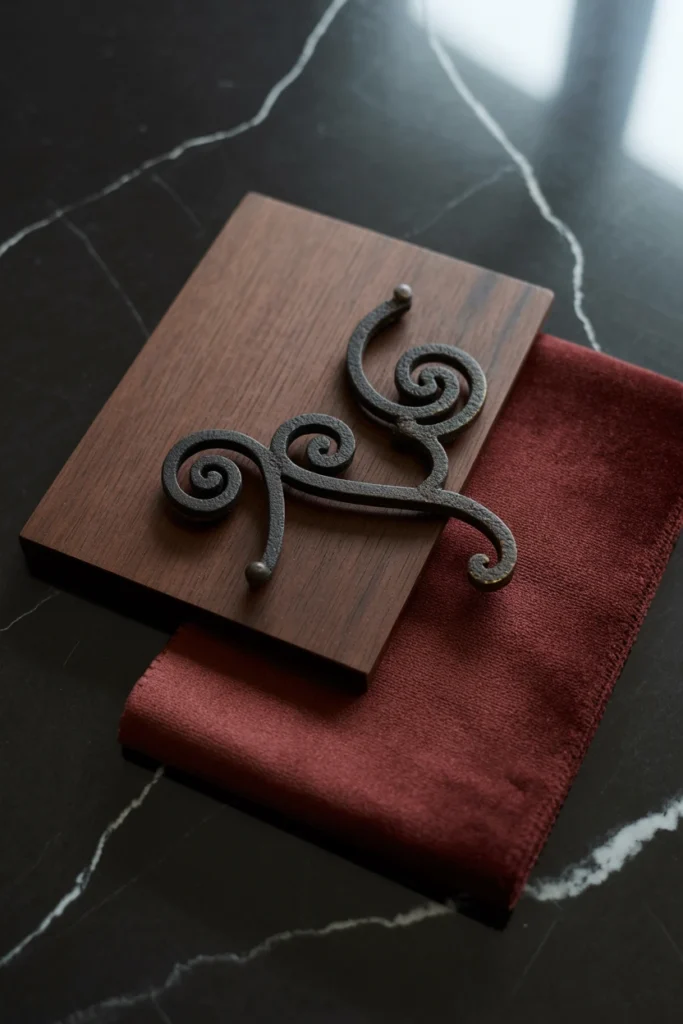
Overloading a room with iron, velvet, lace, marble, and carved wood all at once creates visual noise instead of gothic richness. Too many competing materials prevent the eye from resting anywhere, which makes the room feel chaotic rather than dramatic. Restricting the room to three core materials — typically metal, velvet, and aged wood — creates a repeated visual language that reads as deliberate.
Pick your three materials before shopping, and write them down: for example, wrought iron, velvet, and dark walnut. Every new purchase must fall into one of these three categories, with lace and marble used only as minor 5–10% accents rather than primary materials. This restriction eliminates the single most common gothic-decorating mistake — mixing too many textures until the room loses its focal hierarchy.
| Material Category | Role in Room |
| Metal (iron, brass) | Primary — fixtures, hardware |
| Velvet or heavy textile | Primary — bedding, drapery |
| Aged or dark wood | Primary — furniture frames |
| Lace, marble, glass | Accent only, 5–10% of room |
Choose a Southern Gothic Color Palette and Wall Treatment
Wall treatment sets the backdrop every other gothic bedroom decor choice reads against. These four strategies build depth into flat walls without requiring a full renovation.
4. Paint walls in a deep magnolia-inspired charcoal shade

Standard gray or beige walls flatten every gothic detail placed against them. A pale wall color forces velvet, iron, and brass to fight for attention instead of standing out naturally, which erases the moody effect the rest of the room is working to create. A charcoal wall with warm undertones instantly deepens the entire room and makes metallic and jewel-tone accents visually pop.
Start by choosing a charcoal shade with brown or green undertones rather than blue-black, since blue-toned charcoal reads cold instead of southern gothic. Apply it in a matte or eggshell finish across all four walls, not just one accent wall, at standard two-coat coverage. The unexpected bonus is that a fully painted dark room actually makes ceilings feel higher, since the eye no longer registers where the wall ends and the ceiling begins.
| Undertone | Effect on Room |
| Brown-based charcoal | Warm, southern gothic feel |
| Green-based charcoal | Moody, forest-adjacent feel |
| Blue-based charcoal | Cold, contemporary gothic feel |
| Pure black | High drama, best in large rooms only |
5. Add a damask wallpaper accent behind the headboard
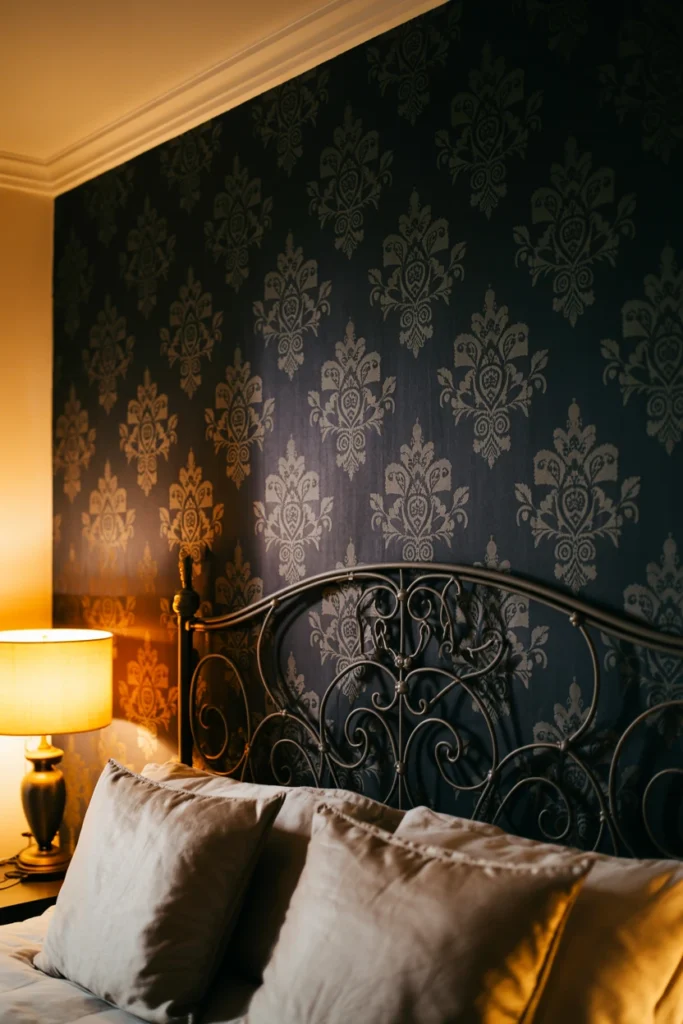
A single flat painted wall behind the bed leaves the room’s anchor point visually empty. Without pattern or texture directly behind the headboard, the bed frame has nothing to contrast against, which weakens its role as the room’s focal piece. A damask wallpaper panel sized to the width of the bed frame instantly adds period-accurate pattern exactly where the eye lands first.
Measure the width of your bed frame and order wallpaper in a tonal damask — dark on dark, not high-contrast — sized 6–12 inches wider than the frame on each side. Apply it as a single panel rather than wall-to-wall coverage, since full-wall damask often overwhelms a bedroom under 200 square feet. This creates a defined headboard zone even before the physical headboard is installed.
| Room Size | Recommended Damask Coverage |
| Under 150 sq ft | Single panel, 6 in past frame edges |
| 150–250 sq ft | Single panel, 12 in past frame edges |
| Over 250 sq ft | Full accent wall |
| Any size, low budget | Peel-and-stick panel version |
6. Install picture-frame moulding for antebellum architectural detail
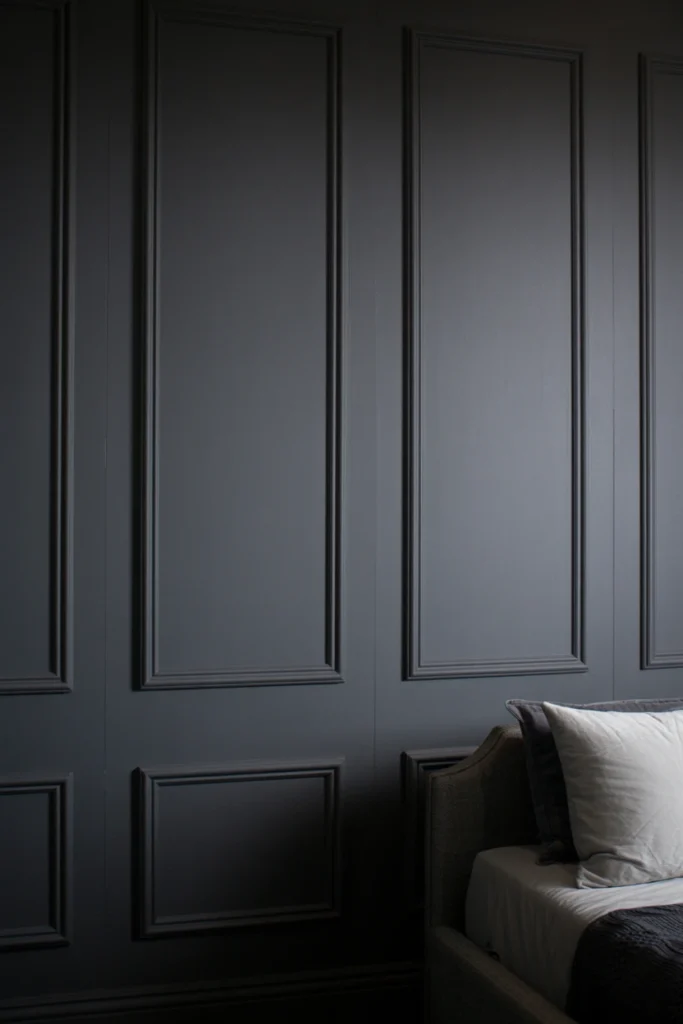
Flat drywall has no architectural language, which is the single most common reason a room fails to read as southern gothic despite the right furniture. Without moulding, walls stay contemporary no matter how much period-style furniture sits in front of them, undercutting the entire aesthetic. Picture-frame moulding applied in rectangular panels adds instant antebellum-era structure for a fraction of the cost of plaster millwork.
Install MDF moulding strips in rectangular frames spaced 4–6 inches apart, sized proportionally to wall height — typically two rows of panels on an 8-foot ceiling, three rows on a 10-foot ceiling. Paint the moulding the same color as the wall rather than white, so the shadow lines do the visual work instead of contrast. This feels counterintuitive until you see how the shadow definition alone changes the entire wall without adding any color.
| Ceiling Height | Recommended Moulding Rows |
| 8 feet | 2 rows |
| 9 feet | 2–3 rows |
| 10 feet | 3 rows |
| 12+ feet | 3–4 rows |
7. Apply a matte finish to avoid glossy modern contrast
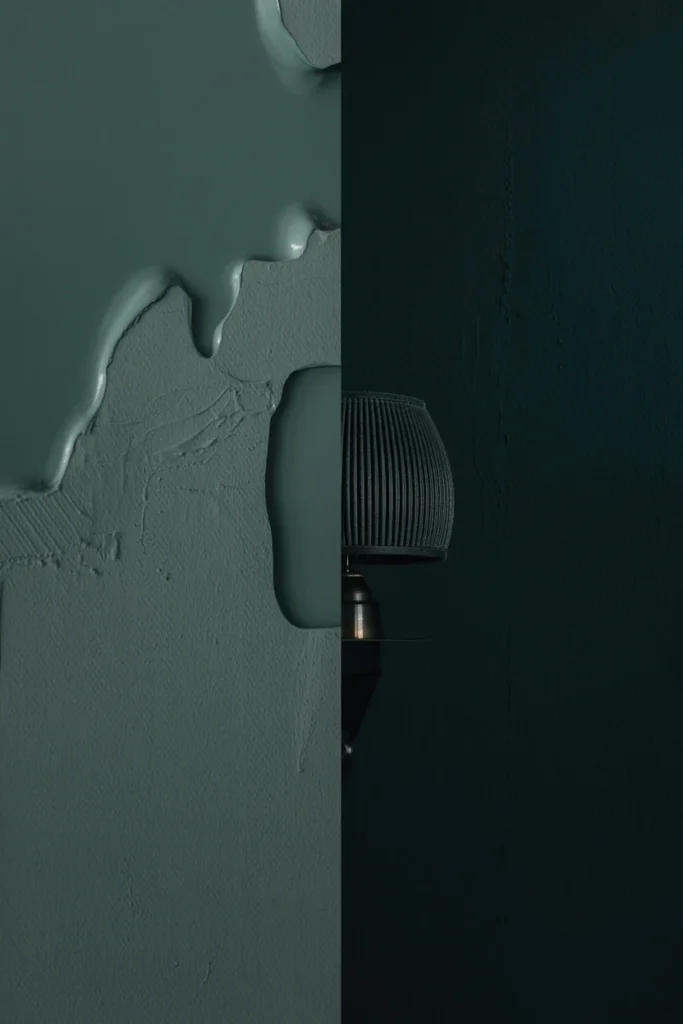
Satin or semi-gloss paint reflects light in a way that reads distinctly modern. Any glossy sheen on walls bounces light unpredictably around dark furniture, breaking the aged, non-reflective quality that defines the entire southern gothic look. A flat matte finish absorbs light instead of bouncing it, which keeps every dark surface in the room reading as intentional rather than accidental.
Choose a matte or dead-flat sheen for walls, and reserve any satin finish strictly for trim and moulding to maintain contrast between wall and detail. Test a sample swatch under your actual room lighting before committing, since matte finishes shift more dramatically under warm bulbs than glossy ones. The pro result is that matte walls also hide minor surface imperfections far better than glossy paint, cutting prep work before painting.
| Paint Sheen | Best Use in Room |
| Flat/matte | Walls |
| Eggshell | Ceiling |
| Satin | Trim, moulding |
| Semi-gloss | Avoid entirely in this style |
Select Antique and Gothic-Inspired Bedroom Furniture
Furniture carries most of the visual weight in this style. These four strategies focus specifically on frame material, hardware, and mirrors rather than general furniture-buying advice.
8. Anchor the room with a wrought-iron or dark wood bed frame
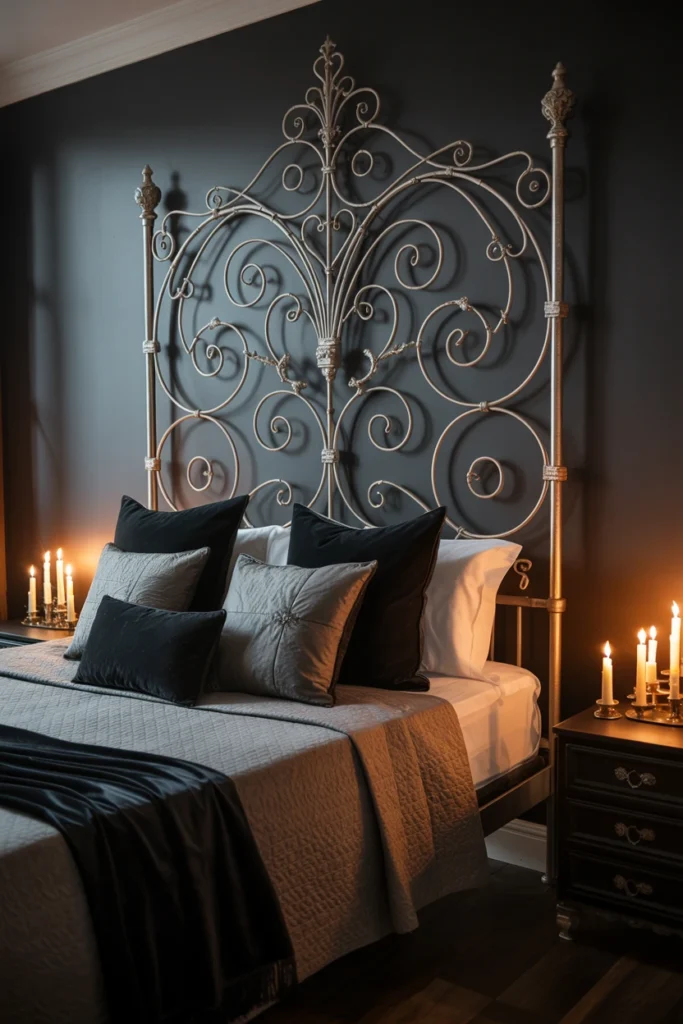
A standard upholstered platform bed reads as contemporary hotel decor, not southern gothic. Without a frame that shows visible ironwork or carved wood detail, the bed cannot function as the room’s architectural anchor no matter how the rest of the room is styled. A wrought-iron or dark carved wood frame with scrollwork or finial detail instantly establishes the room’s entire visual direction.
Choose a frame with a headboard height of at least 54–60 inches, since low headboards under 48 inches lose the dramatic scale this style depends on. Prioritize scrollwork, finials, or carved botanical motifs over plain straight bars, and confirm the frame supports a standard queen or king mattress width before ordering. The bonus result is that a tall, dark headboard also makes ceiling height feel more generous by drawing the eye upward first.
| Headboard Height | Visual Effect |
| Under 48 inches | Reads modern, avoid |
| 54–60 inches | Standard gothic scale |
| 60–72 inches | Dramatic, best in larger rooms |
| Canopy frame | Maximum drama, 8+ ft ceilings |
9. Choose a marble-top nightstand with aged brass hardware
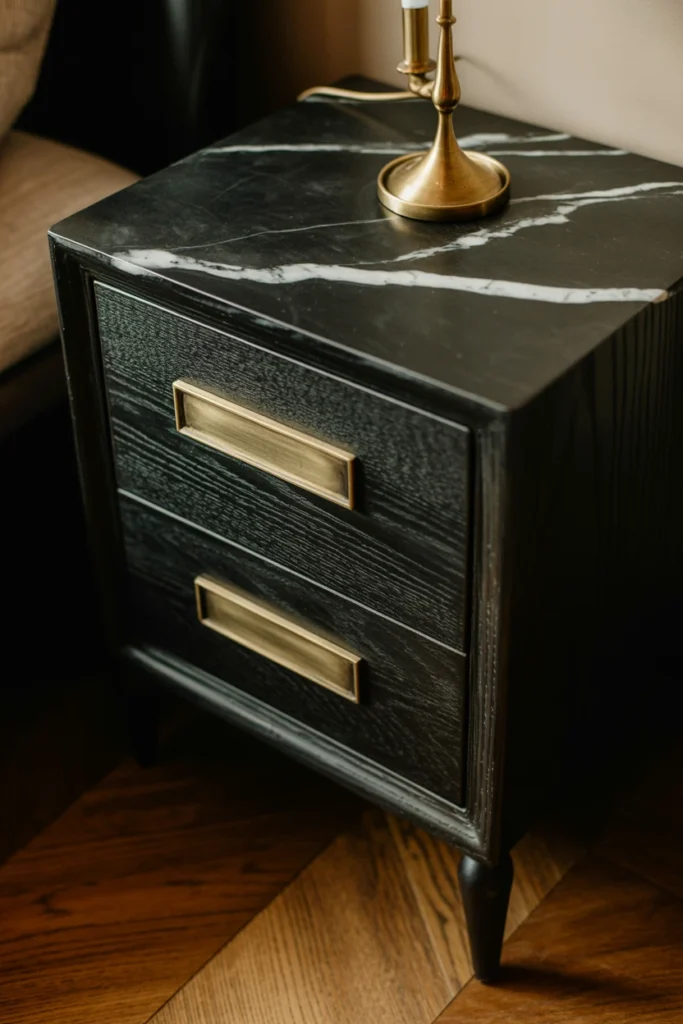
Plain painted or laminate nightstands break the room’s material consistency immediately. A modern nightstand next to an ornate iron bed frame creates a jarring mismatch that signals the room was decorated piecemeal rather than as a cohesive design. A marble-top nightstand with aged brass pulls matches the bed frame’s material language while adding a secondary texture.
Select a nightstand with a dark wood or black-painted base topped in white, gray, or black-veined marble, sized between 24–28 inches tall to align with a 54–60 inch headboard. Replace any factory hardware with aged brass or oil-rubbed bronze pulls before placing it in the room. The unexpected benefit is that marble tops also resist water rings and candle wax far better than painted wood surfaces.
| Nightstand Height | Pairs With Headboard Height |
| 22–24 inches | 48–54 inches |
| 24–28 inches | 54–60 inches |
| 28–30 inches | 60–72 inches |
| Chest-style, 32+ in | Canopy frames |
10. Mount an ornate vintage mirror above the dresser
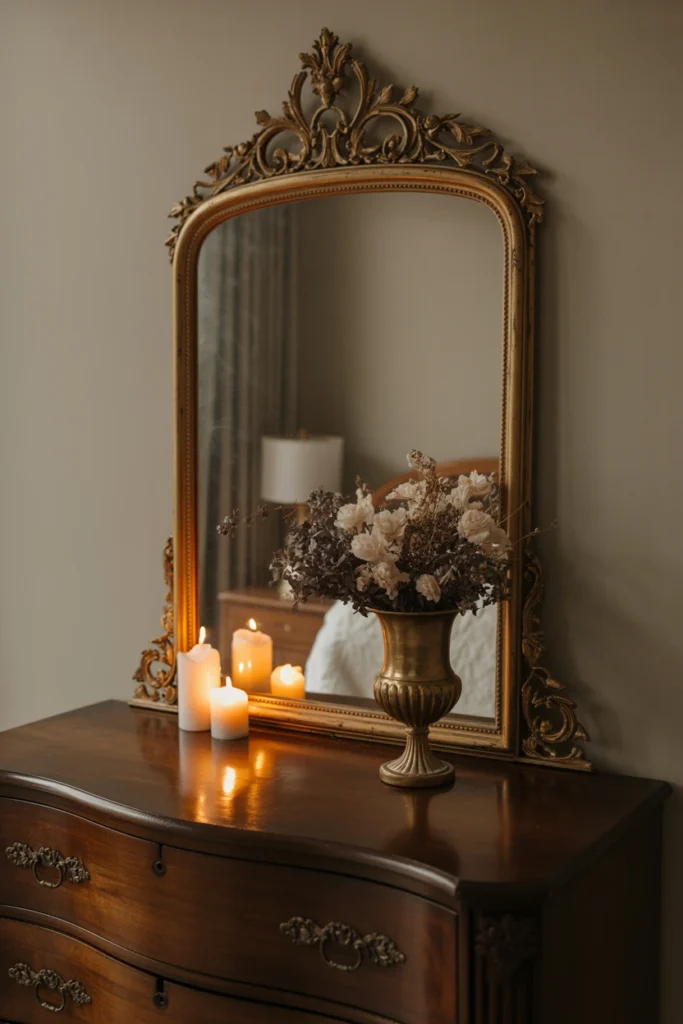
A frameless or thin-frame mirror disappears against a dark charcoal wall instead of adding presence. Without a substantial frame, the mirror fails to contribute any of the ornate detailing this style depends on, leaving the dresser area visually flat compared to the bed. An ornate gilt or dark wood-framed mirror sized to two-thirds the dresser’s width instantly adds architectural presence to a secondary wall.
Measure your dresser’s width and select a mirror frame sized to roughly 65–75% of that measurement, hung so the bottom edge sits 6–8 inches above the dresser surface. Choose an aged gilt, dark wood, or oxidized silver frame with carved or scrolled detail rather than a plain rectangular frame. This creates a secondary focal point that balances the bed frame without competing with it for dominance.
| Dresser Width | Recommended Mirror Width |
| 36 inches | 24–27 inches |
| 48 inches | 31–36 inches |
| 60 inches | 39–45 inches |
| 72 inches | 47–54 inches |
11. Replace modern hardware with antique brass or pewter pulls
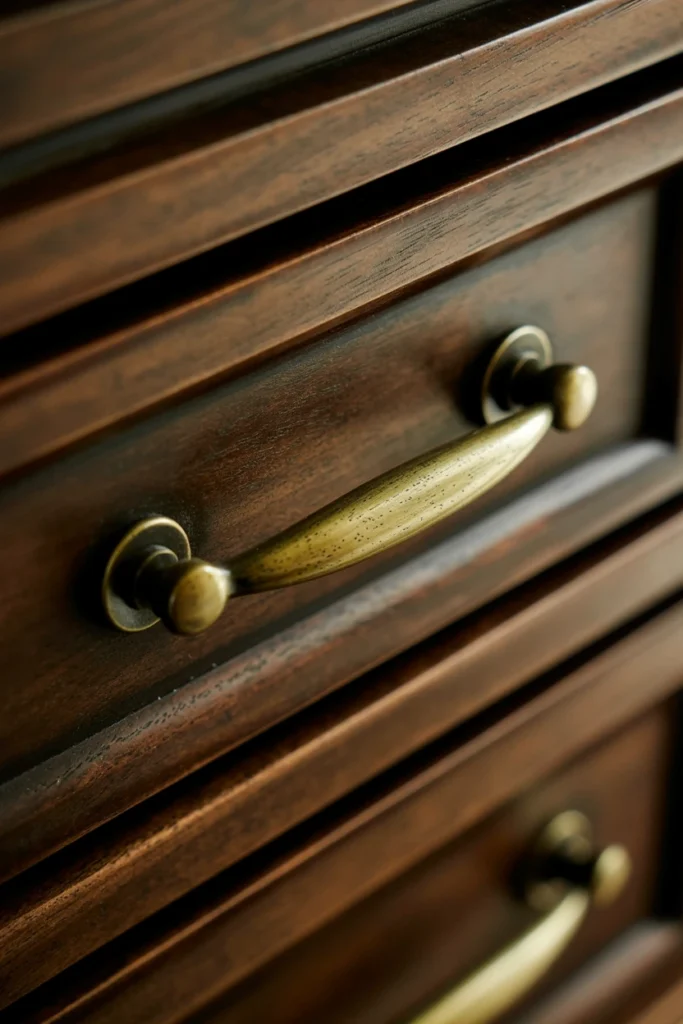
Chrome or brushed nickel hardware on dressers and nightstands directly contradicts every other material choice in the room. Even one piece of shiny modern hardware draws the eye away from the aged materials surrounding it, undermining hours of careful furniture selection. Swapping every visible pull and knob to antique brass or pewter eliminates this contrast permanently for under $50 per piece.
Measure the existing hole spacing on each drawer — typically 3 inches or 96mm center-to-center — before ordering replacement pulls to guarantee a direct swap without redrilling. Choose an aged, unlacquered brass or dark pewter finish over polished brass, since polished finishes read as new rather than antique. The pro result is that unlacquered brass also develops additional natural patina over time, deepening the aged look further without any extra effort.
| Hole Spacing | Common Furniture Type |
| 3 inches (76mm) | Standard dresser drawers |
| 3.75 inches (96mm) | Larger dresser drawers |
| Single hole | Knobs, nightstand doors |
| Custom/no match | Reface or drill new holes |
Layer Southern Gothic Textiles and Bedding
Textiles do more to sell this style than any single furniture piece. These four strategies cover bedding, drapery, and pillow arrangement specifically.
12. Layer velvet and lace bedding for period-accurate texture
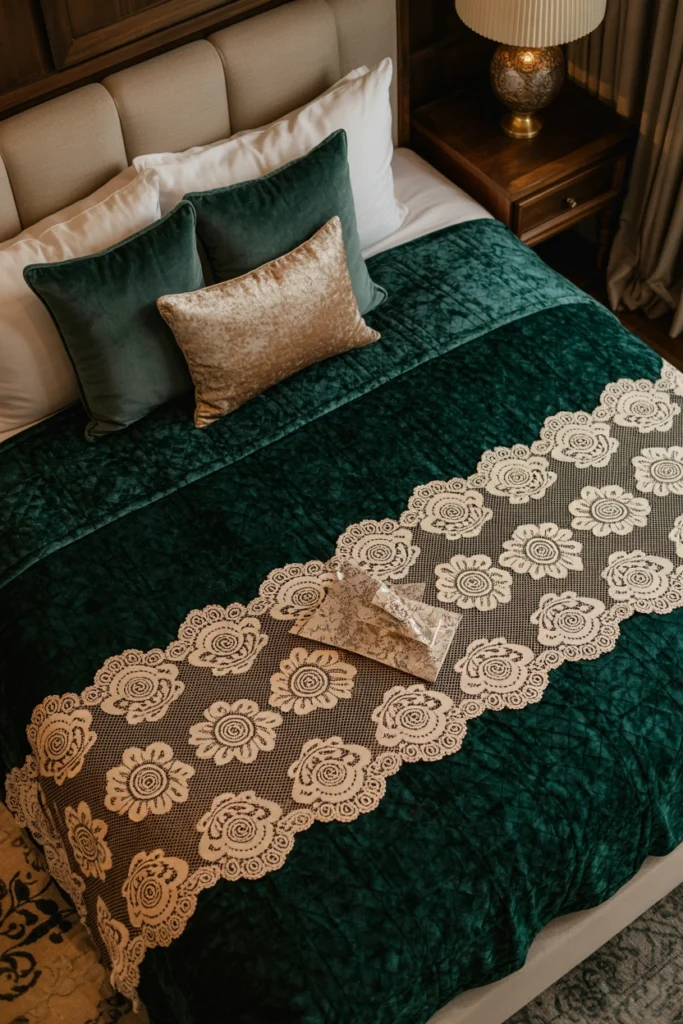
A single flat cotton duvet reads as generic regardless of how ornate the furniture around it is. Bedding is the largest surface area in the room, so a plain modern duvet undercuts every other gothic detail by dominating the visual field with the wrong texture. Layering a velvet coverlet with a lace or crochet overlay instantly transforms the bed into the room’s richest textural moment.
Start with a solid deep jewel-tone velvet coverlet or duvet in emerald, burgundy, or aubergine, then layer a cream or ivory lace runner across the foot third of the bed. Add one or two contrast-piped pillow shams in a coordinating dark tone to bridge the velvet and lace textures together. The unexpected bonus is that this layered approach also hides everyday bedding wrinkles far better than a single flat duvet.
| Layer | Material | Placement |
| Base layer | Velvet coverlet | Full bed |
| Middle accent | Lace runner | Foot third of bed |
| Pillow shams | Contrast-piped velvet | Head of bed |
| Throw | Fringed wool or velvet | Folded at foot |
13. Hang floor-length velvet drapery in a deep jewel tone
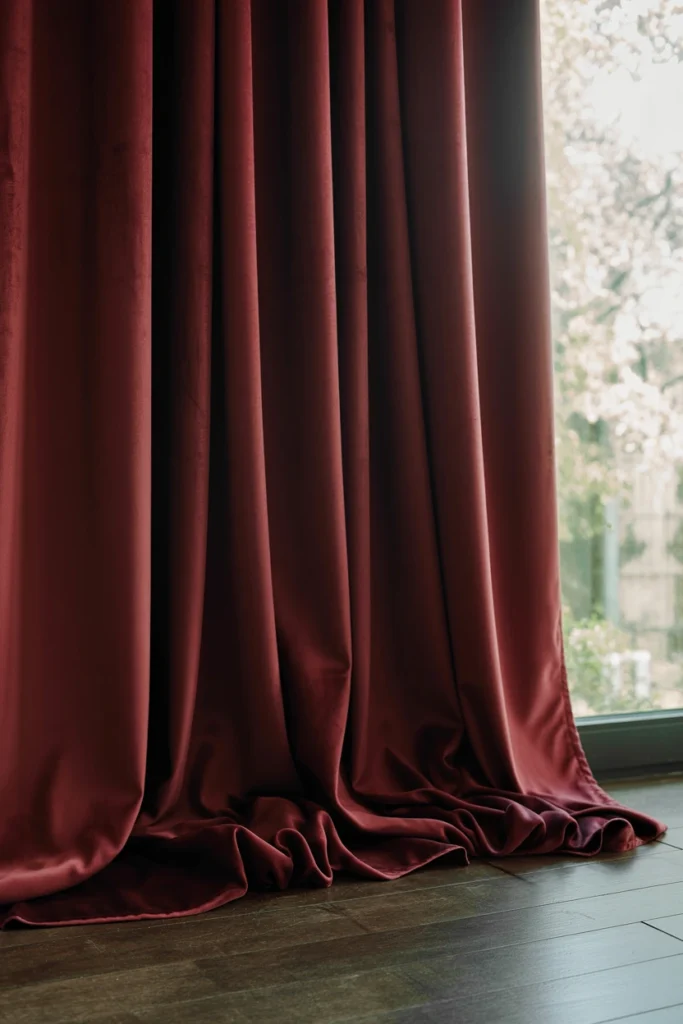
Short curtains or bare windows leave the room’s vertical dimension undeveloped. Windows without full-length drapery break the sense of enclosure this style depends on, letting daylight flatten the moody atmosphere the rest of the room builds. Floor-length velvet panels in a jewel tone instantly add both drama and a controlled, theatrical light quality.
Mount the curtain rod 4–6 inches above the window frame and extend it 8–12 inches beyond each side, then choose panels that puddle 1–2 inches onto the floor rather than hovering above it. Select velvet in emerald, burgundy, or deep navy to match your existing jewel-tone accent color exactly. This creates a contrast pattern where harsh daylight disappears and warm, filtered light emerges in its place.
| Window Width | Rod Extension Needed |
| 24–36 inches | 8 inches each side |
| 36–48 inches | 10 inches each side |
| 48–60 inches | 12 inches each side |
| 60+ inches | 14–16 inches each side |
14. Add a tufted or tasseled bench at the foot of the bed
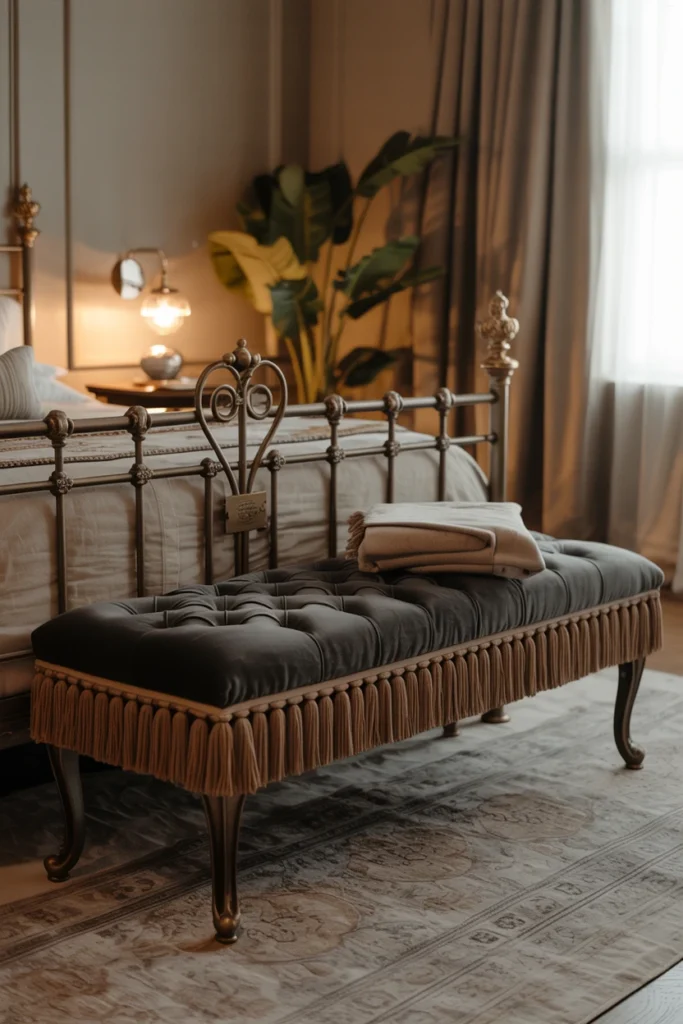
An empty stretch of floor at the foot of the bed leaves a visual gap in an otherwise fully styled room. Without a piece anchoring this zone, the bed frame appears to float mid-room instead of feeling grounded and complete. A tufted velvet bench with tasseled trim fills this gap while adding a functional seating or styling surface.
Choose a bench sized to roughly 75% of your bed’s width — a queen bed pairs with a 42–48 inch bench, a king with a 54–60 inch bench — upholstered in velvet or damask with dark wood or iron legs. Position it 12–18 inches from the foot of the bed frame to leave clearance for bedding to drape naturally. The bonus result is that this bench also becomes the room’s default spot to lay out clothing, removing that job from the bed itself.
| Bed Size | Recommended Bench Width |
| Full | 36–42 inches |
| Queen | 42–48 inches |
| King | 54–60 inches |
| California King | 58–64 inches |
15. Group throw pillows in odd numbers with mixed textures
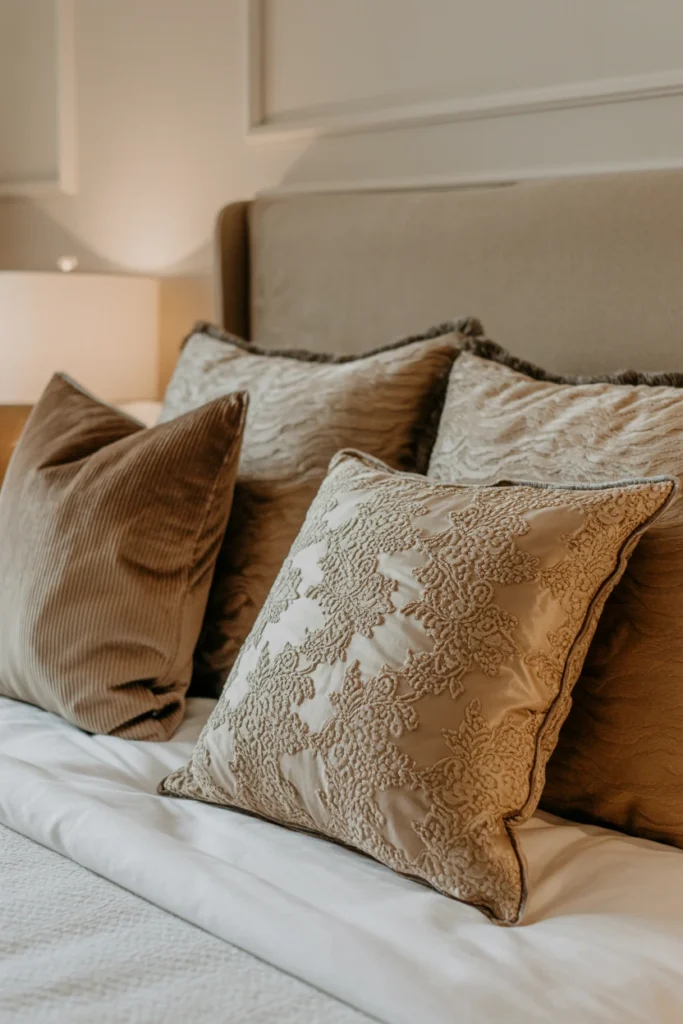
Matching pillow pairs in identical fabric read as staged and generic. An even, matched pillow set signals a big-box furniture set rather than a collected gothic bedroom, undercutting the room’s sense of history. Grouping pillows in odd numbers — three or five — with mixed velvet, lace, and brocade textures reads as intentional and layered instead.
Select one large square velvet pillow, one smaller lumbar pillow in a contrasting jewel tone, and one textured lace or brocade accent pillow, arranged front to back by size. Vary each pillow’s fabric while keeping the color palette limited to your existing three to four room colors, so the mix reads as curated rather than random. This creates layered height across the pillow arrangement that a matched set can never achieve on its own.
| Pillow Count | Recommended Mix |
| 3 pillows | 1 large square, 1 lumbar, 1 accent |
| 5 pillows | 2 large square, 2 lumbar, 1 accent |
| Fabric types | Velvet, lace, brocade minimum |
| Color rule | Stay within 3–4 room colors |
Add Gothic Lighting and Architectural Details
Lighting controls the room’s mood more than any other single element after the color palette. These four strategies address fixture style, placement, and bulb temperature.
16. Install a wrought-iron chandelier as the room’s focal point
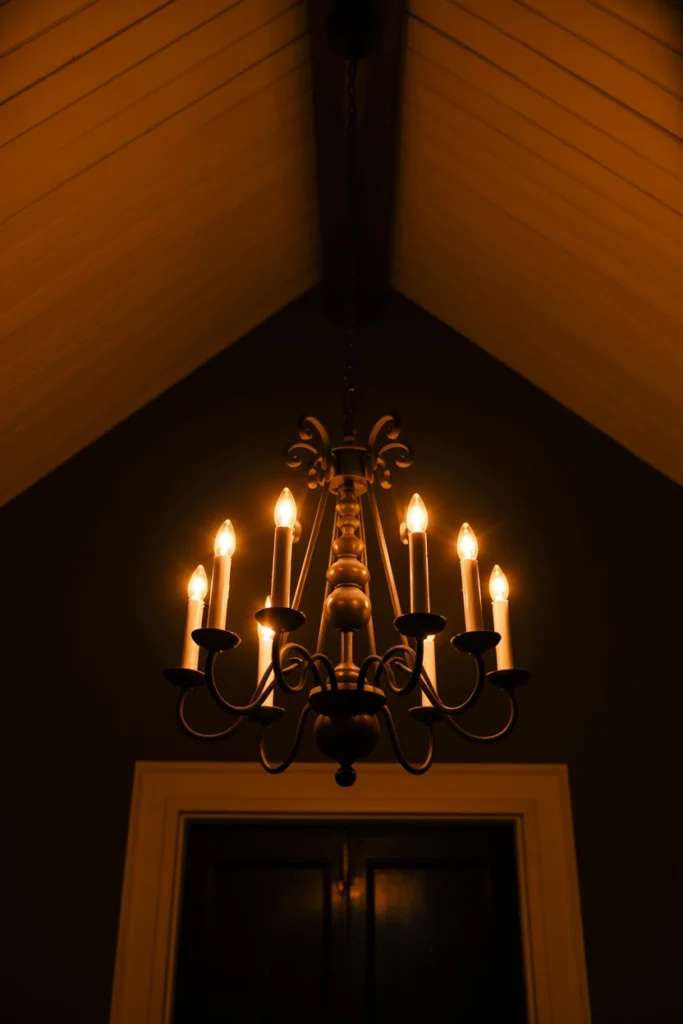
A single flush-mount ceiling fixture provides light without contributing any architectural character. Standard builder-grade lighting leaves the ceiling as the one remaining flat, undeveloped surface in an otherwise fully styled gothic bedroom. A wrought-iron chandelier with candle-style bulbs instantly extends the room’s material language upward and becomes a genuine focal point.
Center the chandelier over the foot of the bed rather than directly above the headboard, and hang it so the bottom of the fixture sits 30–36 inches above where a person’s head would be while seated on the bed. Choose a fixture with a diameter of roughly one-third the room’s width — a 12-foot-wide room pairs with a 28–36 inch chandelier. This positioning avoids the single most common installation mistake, which is hanging the fixture too low directly above the pillows.
| Room Width | Recommended Chandelier Diameter |
| 10 feet | 24–30 inches |
| 12 feet | 28–36 inches |
| 14 feet | 34–42 inches |
| 16+ feet | 40–48 inches |
17. Place flickering-style candle lamps on each nightstand
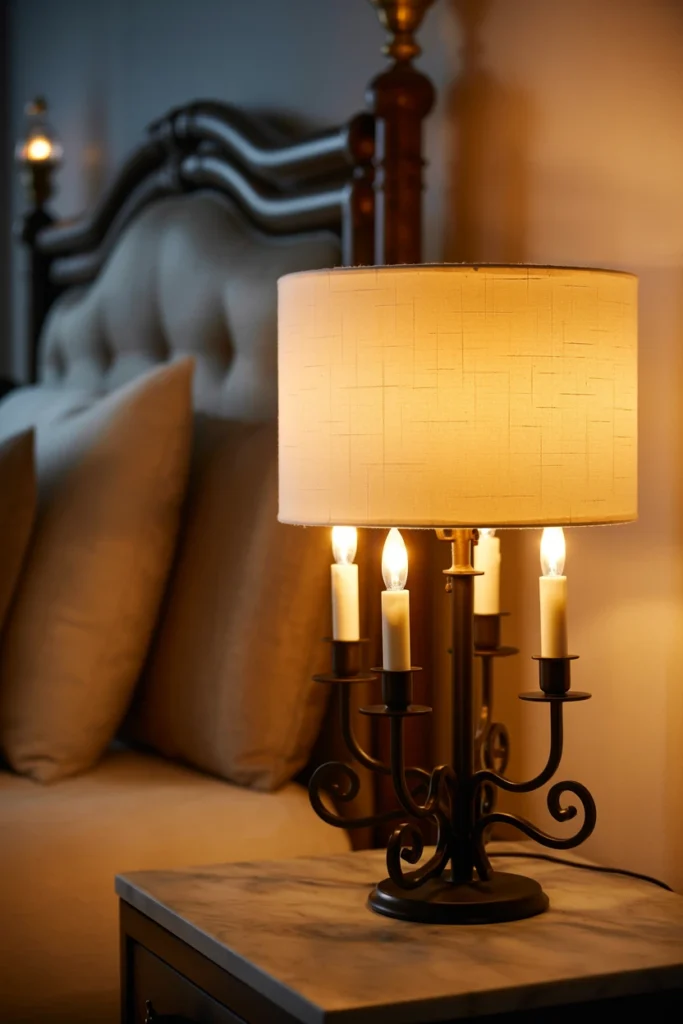
Standard round table lamps with plain shades add light without any period character. Modern lamp silhouettes on an otherwise antique nightstand break the room’s visual consistency at exactly the height most visible when lying in bed. Flickering-style candle lamps with wrought-iron or brass bases replace this weak point with genuine gothic detail.
Choose lamps 18–24 inches tall so the shade sits roughly at eye level when seated upright in bed, with a candelabra-style bulb or a flickering LED candle bulb rated at 2200K color temperature. Select a fabric or mica shade in cream or aged gold rather than white, since white shades read too contemporary against the darker palette. The pro result is that the warmer 2200K temperature also makes skin tones and velvet textures appear richer than standard 2700K bulbs.
| Lamp Height | Best Nightstand Height Match |
| 18–20 inches | 22–24 inch nightstand |
| 20–24 inches | 24–28 inch nightstand |
| 24–28 inches | 28–30 inch nightstand |
| Bulb temperature | 2200K for all fixtures |
18. Anchor a ceiling medallion above the primary light fixture
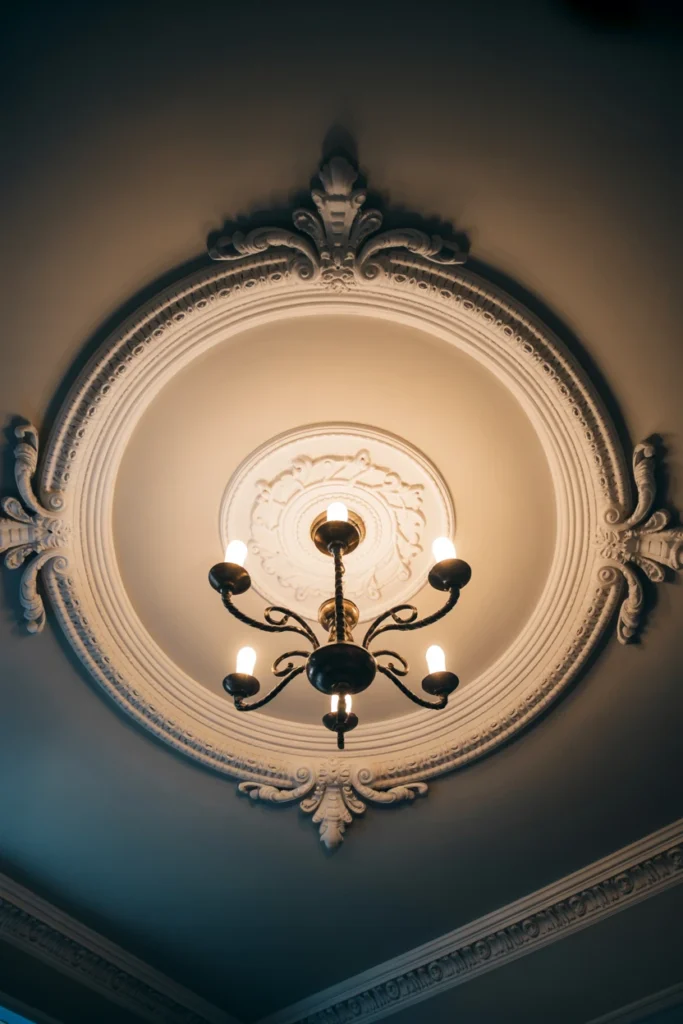
A chandelier mounted directly onto a flat ceiling looks unfinished, as if installation stopped halfway. Without a medallion, the fixture appears to float without architectural support, undercutting the antebellum detailing established elsewhere in the room. A ceiling medallion sized proportionally to the chandelier instantly completes the fixture’s installation and adds another layer of period detail.
Select a medallion with a diameter roughly 1.5 to 2 times the chandelier’s canopy width, in a plaster or polyurethane material that can be painted to match the ceiling color exactly. Install it centered directly behind the chandelier’s mounting point before the fixture goes up, using construction adhesive plus at least two mechanical fasteners. This feels like an unnecessary extra step until you see how it visually anchors the entire fixture to the architecture instead of the drywall.
| Chandelier Canopy Width | Recommended Medallion Diameter |
| 5 inches | 8–10 inches |
| 6 inches | 10–12 inches |
| 8 inches | 14–16 inches |
| 10+ inches | 18–20 inches |
19. Switch bright white bulbs for warm amber-toned lighting
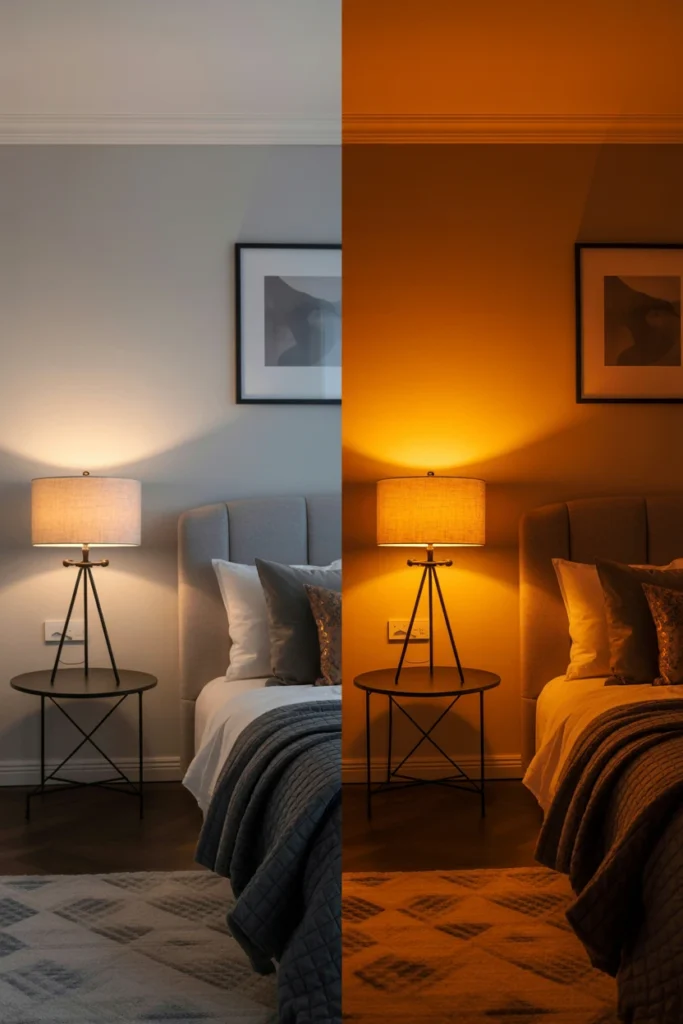
Standard 3000K–5000K white bulbs cast a clinical, contemporary light across dark gothic surfaces. Cool white light flattens velvet texture and washes out the aged brass and iron tones the entire room is built around, undoing the palette work from Tip 1. Switching every bulb in the room to 2200K–2400K amber-toned lighting restores warmth to every dark surface simultaneously.
Replace every bulb in the room — chandelier, lamps, and any recessed lighting — with 2200K to 2400K rated bulbs, and avoid anything above 2700K in this room specifically. Add a dimmer switch to the primary chandelier circuit if one isn’t already installed, targeting a 30–50% brightness level for evening use. This single change makes every velvet and iron surface in the room read noticeably richer without moving a single piece of furniture.
| Color Temperature | Effect on Gothic Palette |
| 2200K–2400K | Correct — warm, flattering |
| 2700K | Acceptable but slightly cool |
| 3000K+ | Too clinical, avoid |
| Dimmer target | 30–50% for evening ambiance |
Style Southern Gothic Decor Accents and Finishing Touches
These accents add the final 20% of detail that separates a good gothic bedroom from a fully finished one.
20. Style a gallery wall with antique portraits and gilt frames

A bare wall opposite the bed leaves unused vertical space that could reinforce the room’s historical character. Without a gallery arrangement, the room misses an easy opportunity to add depth and narrative through framed imagery. A gallery wall of antique-style portraits and botanical prints in mismatched gilt frames instantly adds the sense of inherited history this style depends on.
Select 5–7 frames ranging from 8×10 to 16×20 inches, mixing gilt, dark wood, and oxidized silver finishes, and arrange them with 2–3 inches of spacing between each frame. Center the entire grouping so its midpoint sits at standard eye level, roughly 57–60 inches from the floor. This creates a focal wall that grows more interesting with each additional piece rather than needing to be finished all at once.
| Frame Count | Wall Width Needed |
| 5 frames | 5–6 feet |
| 7 frames | 6–8 feet |
| Spacing between frames | 2–3 inches |
| Grouping center height | 57–60 inches from floor |
21. Arrange dried Spanish moss or dark florals in urns
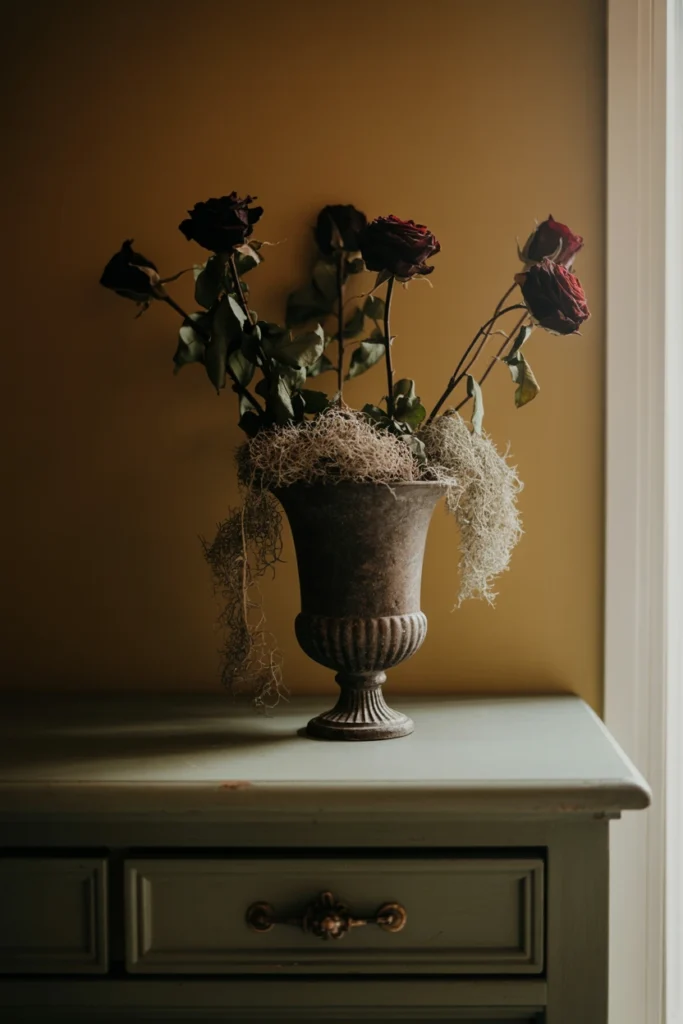
Fresh bright flowers introduce a cheerful tone that clashes with the room’s moody atmosphere. Live florals also require constant replacement, and their bright color temporarily disrupts the dark palette every time they’re added. Dried Spanish moss, dark dried roses, or pampas grass in an aged urn adds organic texture that matches the room’s tone permanently.
Choose a cast-iron, aged bronze, or dark ceramic urn between 10–16 inches tall, and fill it with dried Spanish moss, black-dried roses, or dark pampas grass trimmed to roughly 1.5 times the urn’s height. Place it on the dresser, mantel, or windowsill rather than the nightstand, where it would compete with the lamp for space. The unexpected bonus is that dried arrangements need replacing only once every 6–12 months instead of weekly.
| Urn Height | Recommended Arrangement Height |
| 10 inches | 12–15 inches |
| 12 inches | 15–18 inches |
| 14 inches | 18–21 inches |
| 16 inches | 22–24 inches |
22. Place a vintage trunk or steamer chest as functional decor
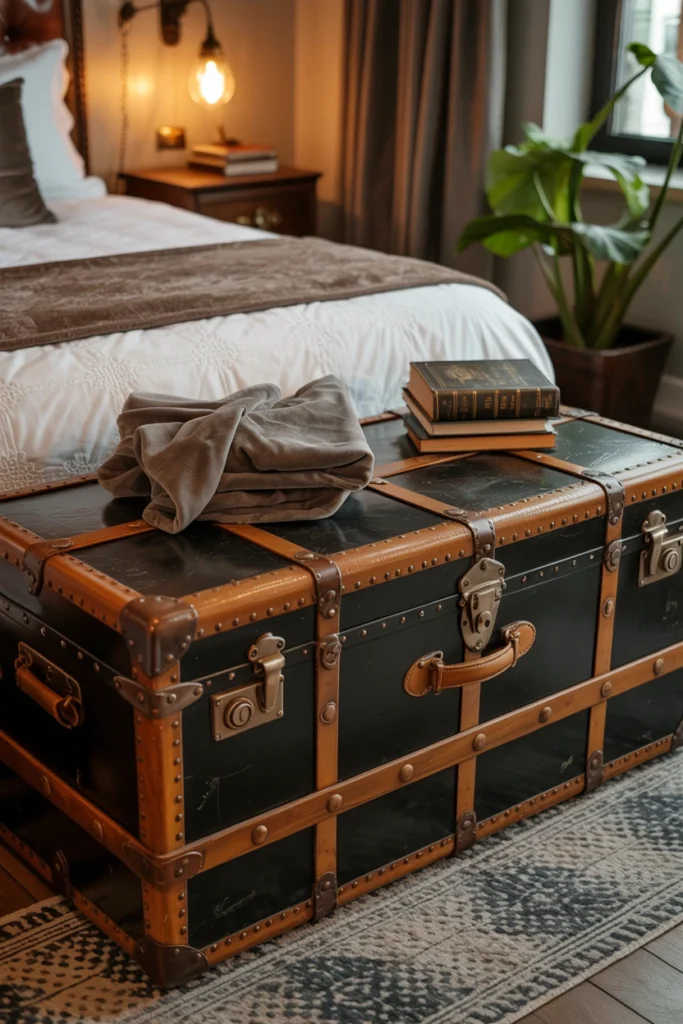
An empty corner or the end of a bench leaves usable floor space undecorated and underutilized. A gap at the foot of the bed or in an empty corner signals an unfinished room, even when every other element has been carefully styled. A vintage steamer trunk doubles as extra storage and blanket display while filling that remaining gap with genuine period character.
Select a trunk with visible aged leather, wood slats, or riveted metal corners, sized between 30–36 inches wide to fit at the foot of the bed or in a corner nook. Top it with one folded wool or velvet throw and a single small stack of leather-bound books to give the surface visual purpose. The pro result is that the trunk also provides concealed storage for extra bedding, solving a practical problem while adding decor.
| Trunk Width | Best Placement |
| 24–30 inches | Corner nook |
| 30–36 inches | Foot of queen bed |
| 36–42 inches | Foot of king bed |
| Styling on top | 1 throw + 2–3 books max |
Maintain Your Southern Gothic Bedroom Long-Term
A gothic bedroom’s aged materials require different upkeep than a standard contemporary room. This section covers the single most important long-term habit.
23. Establish a seasonal routine to preserve aged patina finishes
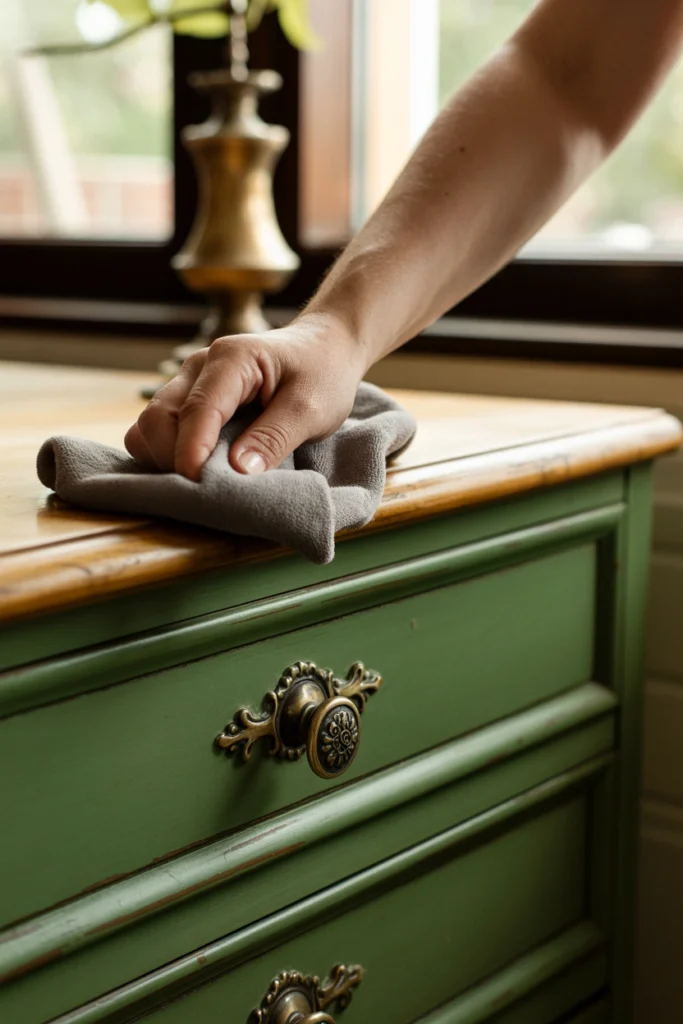
Treating antique brass, iron, and marble with standard modern cleaning products strips away the exact patina that gives them their gothic character. Over-cleaning or using harsh chemicals on aged metal permanently removes the oxidized finish that took years to develop, forcing a full refinishing project. A simple seasonal maintenance routine preserves this patina indefinitely instead of accidentally erasing it.
Dust wrought-iron and brass pieces monthly with a dry microfiber cloth only, and avoid all-purpose cleaning sprays, which strip unlacquered brass within a single use. Reseal marble surfaces with a penetrating stone sealer once every 6–12 months, and treat any velvet upholstery with a fabric brush weekly to maintain its texture. This single habit change prevents the most expensive mistake in this entire style — accidentally polishing away years of accumulated patina in one afternoon.
| Material | Maintenance Frequency |
| Wrought iron / brass | Dry dust monthly |
| Marble surfaces | Reseal every 6–12 months |
| Velvet upholstery | Brush weekly |
| Wood furniture | Wax or condition every 3–4 months |
Southern Gothic Bedroom Mistakes That Kill the Atmosphere
These eight mistakes appear most often in gothic bedrooms that don’t quite land. Each one has a direct, specific correction.
| Mistake | Why It Hurts the Space | Better Alternative |
| Using polished chrome hardware | Reflects cool light, breaks material consistency | Swap to unlacquered antique brass |
| Choosing cool white 5000K bulbs | Flattens velvet and washes out metallic tones | Switch to 2200K–2400K warm bulbs |
| Mixing more than 3 core materials | Creates visual noise, no focal hierarchy | Restrict to metal, velvet, aged wood |
| Leaving windows bare or short-curtained | Breaks sense of enclosure, floods room with daylight | Hang floor-length velvet drapery |
| Matching pillow sets in identical fabric | Reads staged instead of collected | Group 3–5 pillows in mixed textures |
| Skipping a defined color palette | Room reads gloomy instead of moody | Lock in 3–4 colors before shopping |
| Using fresh bright flowers | Clashes with dark palette, needs constant replacing | Use dried Spanish moss or dark florals |
| Over-cleaning brass and iron with sprays | Strips patina permanently, forces refinishing | Dust dry monthly, reseal marble yearly |
Southern Gothic Bedroom Ideas by Room Type
Every reader’s starting space is different. These four segments address the most common constraints.
Small bedroom
A small bedroom under 120 square feet cannot support the same scale of furniture as a larger primary suite. The core constraint here is preserving floor space while still delivering the style’s signature drama.
Key strategies for small bedrooms:
- Choose a bed frame with slim iron scrollwork instead of a bulky carved wood frame
- Mount the vintage mirror on the wall instead of leaning a floor mirror
- Use a wall-mounted sconce pair instead of two full nightstand lamps
- Select a narrow 24–30 inch bench or skip the bench entirely
- Limit the gallery wall to 3–4 frames instead of 5–7
- Choose a single deep wall color rather than adding wallpaper panels
Rental apartment
Rental restrictions typically prohibit painting walls or drilling into ceilings for medallions and chandeliers. The core constraint is achieving the look through removable, non-permanent methods only.
Key strategies for renters:
- Use peel-and-stick damask wallpaper panels instead of painted moulding
- Choose a plug-in wrought-iron pendant instead of a hardwired chandelier
- Add tension rods for velvet drapery instead of drilling curtain brackets
- Bring in a freestanding floor mirror instead of a wall-mounted one
- Use removable picture-hanging strips for the gallery wall frames
- Select furniture pieces that travel with you rather than built-ins
Shared or guest bedroom
A shared or guest bedroom needs to accommodate two people’s preferences or remain broadly appealing to visitors. The core constraint is balancing gothic drama with comfort and neutrality for someone who didn’t choose the style.
Key strategies for shared or guest bedrooms:
- Soften the palette slightly with a charcoal-brown instead of true black
- Choose two matching nightstands rather than one asymmetric antique piece
- Add extra pillows in a neutral cream to balance the darker jewel tones
- Keep the gallery wall to landscape or botanical prints rather than portraits
- Select a dimmer switch so brightness suits multiple people’s preferences
- Add a second bench or ottoman if the room serves two regular occupants
Modern-mix bedroom
Some readers want gothic elements layered into an otherwise contemporary room rather than a full period transformation. The core constraint is integrating drama without a complete style overhaul.
Key strategies for a modern-mix bedroom:
- Keep walls in a lighter modern neutral and concentrate gothic detail in bedding
- Choose one antique or iron accent piece rather than replacing every furniture item
- Add a single ornate mirror as the room’s only period-style element
- Use a modern platform bed frame paired with gothic-style bedding layers
- Limit dried florals and gallery walls to one small dedicated corner
- Select brass hardware only on the nightstand, leaving other furniture untouched
Frequently Asked Questions
what is southern gothic bedroom decor
Southern gothic bedroom decor combines antebellum-era architectural detail with dark, moody colors, wrought iron, and velvet textiles. It draws from historic southern estate interiors, layering aged brass, damask patterns, and candle-style lighting over a deep charcoal or jewel-tone palette. The style favors weight and texture over minimalism, prioritizing pieces that look inherited rather than newly purchased.
southern gothic bedroom decorating mistakes to avoid
The most common southern gothic bedroom decorating mistake is mixing more than three core materials, which creates visual noise instead of intentional richness. Cool white lighting and polished chrome hardware are close behind, since both break the warm, aged material language the style depends on. Skipping a defined color palette before shopping also causes the room to read as simply dark rather than deliberately gothic.
how to start a gothic bedroom on a budget
Start a budget southern gothic bedroom by swapping hardware to antique brass and switching all bulbs to 2200K warm lighting, both under $100 total. Layer in a velvet coverlet and one dried floral arrangement before investing in larger furniture pieces like an iron bed frame. Thrifted or secondhand mirrors and side tables often already have the aged character this style requires, cutting costs significantly versus buying new.
how to do southern gothic decor in a small bedroom
In a small southern gothic bedroom, choose slim wrought-iron furniture over bulky carved wood pieces to preserve floor space. Replace floor lamps and benches with wall-mounted sconces and a smaller 3–4 frame gallery wall instead of a full grouping. A single deep charcoal wall color does more work in a small space than wallpaper panels, which can feel busy in a tighter room.
velvet vs linen bedding for gothic bedroom which is better
Velvet is the better choice for a southern gothic bedroom because it carries the light-absorbing, textured quality the style depends on, while linen reads too casual and contemporary. Reserve linen for a lace-style lightweight overlay layered on top of a velvet base rather than using it as the primary bedding material. This combination gives you velvet’s richness with linen or lace’s contrast texture on top.
how often should you update gothic bedroom decor
A southern gothic bedroom needs almost no seasonal updating beyond swapping dried florals every 6–12 months and refreshing throw pillows annually. The core furniture, drapery, and lighting are designed to age in place, with patina improving rather than dating the look over time. Most maintenance is preservation-focused — dusting brass and resealing marble — rather than replacing or refreshing decor.
does southern gothic decor work in a rental
Southern gothic decor works well in a rental using peel-and-stick wallpaper, plug-in pendant lighting, and tension-rod drapery instead of permanent installations. Freestanding mirrors, removable picture-hanging strips, and furniture-based drama let you achieve the full look without painting walls or drilling into ceilings. Most of the style’s impact comes from furniture, textiles, and lighting, all of which move with you when the lease ends.
how much does it cost to decorate a southern gothic bedroom
A southern gothic bedroom can start under $500 by focusing on hardware swaps, bedding, lighting bulbs, and thrifted accent pieces before larger furniture. A mid-range transformation with a wrought-iron bed frame, marble-top nightstands, and drapery typically runs 1,500–3,000. A full renovation including moulding, a ceiling medallion, and custom wallpaper panels can exceed $5,000 depending on room size.
how to keep antique gothic furniture from looking worn out
Keep antique gothic furniture from looking worn by dusting metal pieces dry monthly and avoiding all-purpose cleaning sprays, which strip patina rather than preserve it. Reseal marble surfaces every 6–12 months and condition wood furniture with wax every 3–4 months to prevent cracking or dulling. Intentional patina reads as aged character, while neglect-driven damage like rust or cracked veneer reads as simply worn out.
Conclusion
A southern gothic bedroom starts with a locked-in color palette and one architectural anchor piece before any furniture gets purchased. Begin with the wall color and lighting temperature, since these two elements affect every other material in the room simultaneously. Swap your bulbs to 2200K warm lighting today — it costs under $50 and changes how every existing piece in the room already reads.
The full transformation depends on consistent material discipline across every purchase, not a single dramatic renovation. A southern gothic bedroom built on three restrained materials and warm, layered lighting will read as intentional for decades rather than dated within a single season.