
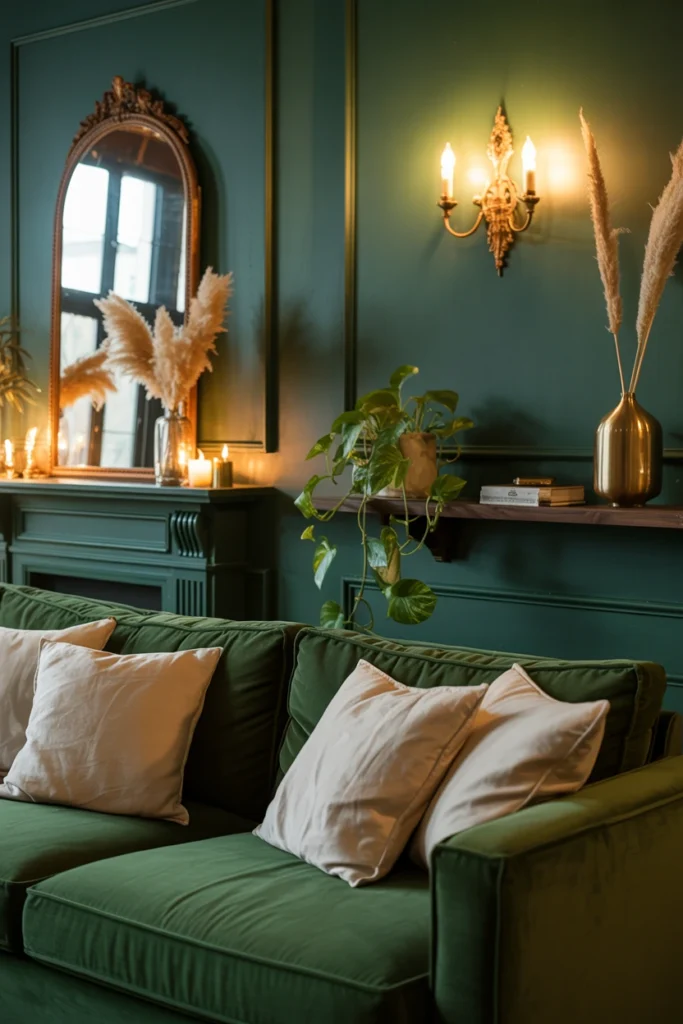
Whimsigoth transforms any room into a moody, romantic space built on jewel tones, aged brass, and layered botanicals. This aesthetic creates a home that feels collected over years, not decorated in a weekend. This guide delivers 20 specific, actionable strategies to build a whimsigoth room from the walls up. Start with your base palette before you buy a single decorative object.
Before You Begin: 3 Foundation Steps for a Whimsigoth Room
These three steps determine whether every future purchase works together or fights for attention. Skipping this stage is the single most common reason whimsigoth rooms end up looking cluttered instead of curated. Complete all three before shopping for a single accent piece.
1. Choose a Moody Base Palette Before Buying Anything
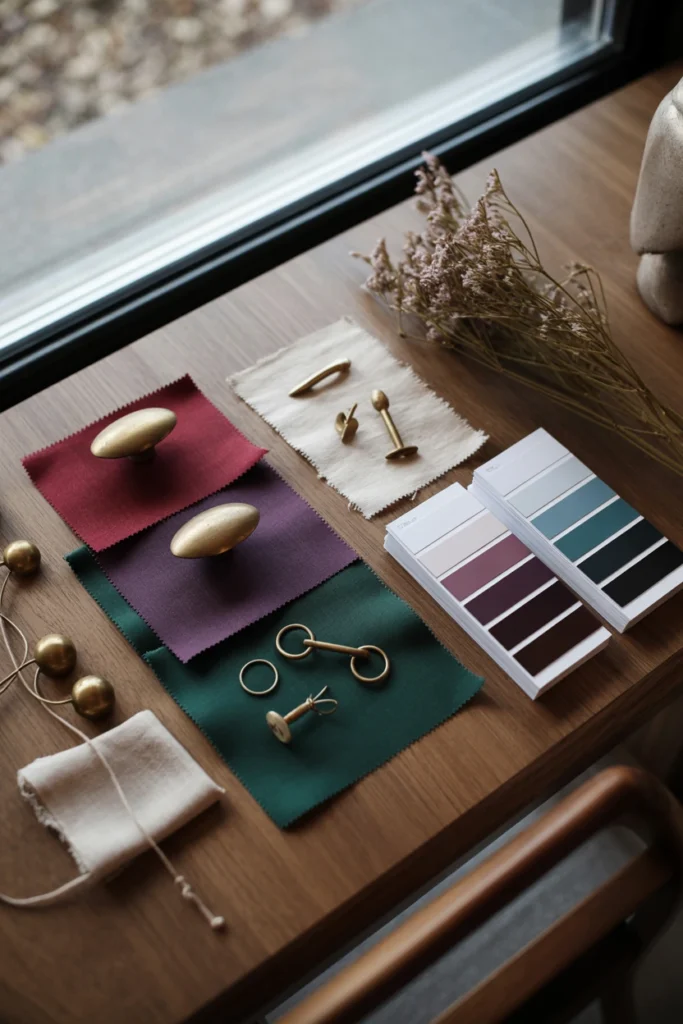
Random accent purchases without a locked palette create visual chaos fast. Every whimsigoth room that reads as cohesive starts from three to four fixed colors, not an evolving guess. Skipping this step forces you to return or repaint later, which costs both time and money.
Start by selecting one dominant dark color, one metallic, and one botanical green. Use a 60-30-10 ratio: 60% dominant dark, 30% secondary neutral, 10% metallic accent. Locking this ratio early prevents the “too many ideas” look that undermines most first attempts at this style.
| Palette Role | Recommended Colors |
| Dominant dark (60%) | Deep forest, aubergine, ink black |
| Secondary neutral (30%) | Cream, bone, warm greige |
| Metallic accent (10%) | Antique brass, oxidized copper |
| Optional fourth note | Dried-rose pink, rust orange |
2. Audit Your Current Lighting Sources First
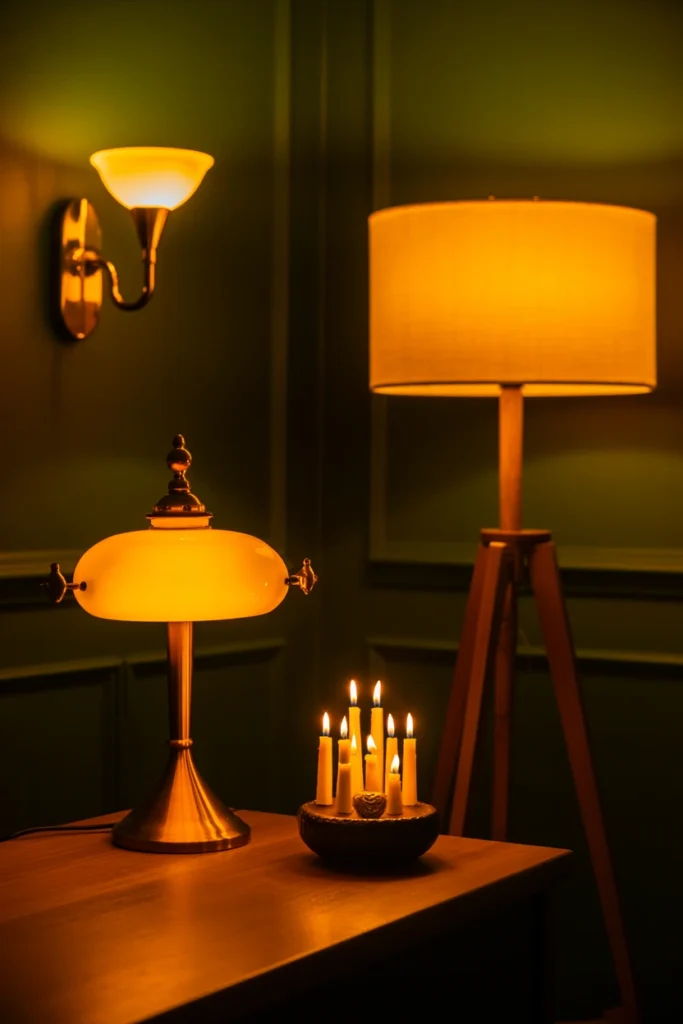
Overhead lighting alone flattens every whimsigoth texture in the room. A single ceiling fixture creates one flat wash of light instead of the layered glow this aesthetic depends on. Rooms lit this way look sparse even when fully furnished.
Walk the room and count your current light sources, aiming for a minimum of five. Add table lamps, wall sconces, and candle clusters until you reach that number, using warm 2700K bulbs only. This single change makes the room read as noticeably richer without adding a single new object.
| Light Source | Recommended Count |
| Overhead fixture | 1, dimmable |
| Table or floor lamps | 2-3, warm bulbs |
| Wall sconces | 1-2, brass or black finish |
| Candle clusters | 3+ pillar or taper groupings |
3. Set a Ratio of Vintage to New Pieces
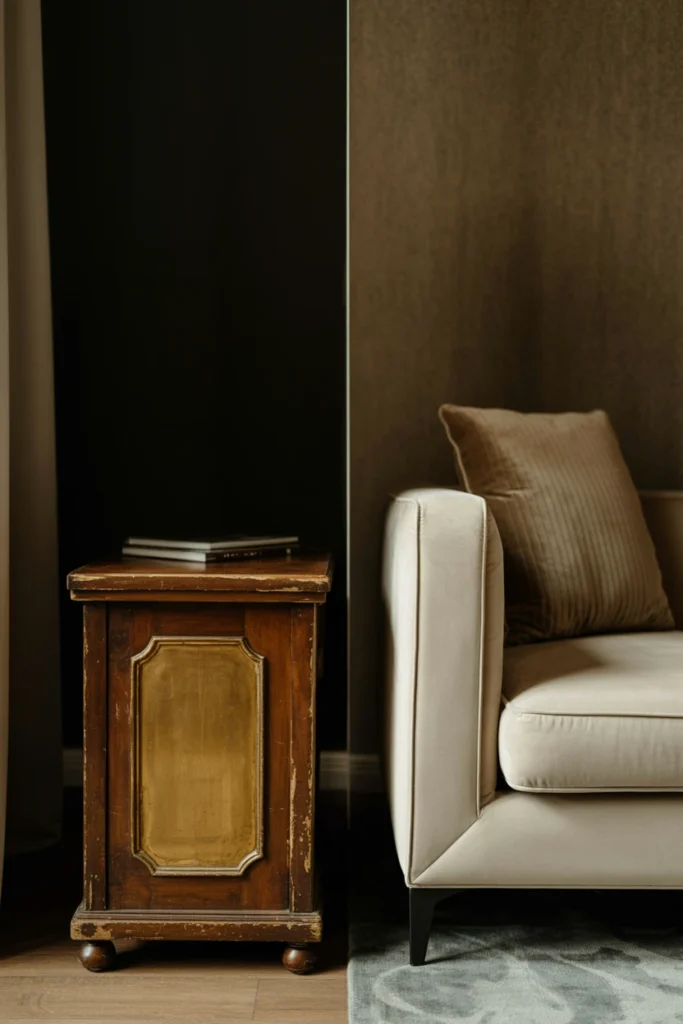
An entirely new-furniture room reads as generic regardless of color choice. Whimsigoth depends on a mix of aged and current pieces to feel collected rather than purchased in one trip. Rooms furnished 100% from a single retailer rarely achieve the intended atmosphere.
Target a 40% vintage or secondhand to 60% new furniture ratio across the room. Source the vintage 40% from estate sales, thrift stores, or antique malls before buying anything new. This mix eliminates the showroom look that instantly signals a room was decorated overnight.
| Piece Type | Vintage or New |
| Mirror, side tables | Vintage preferred |
| Sofa, mattress | New preferred |
| Lighting fixtures | Mix of both |
| Decorative objects | Vintage preferred |
Building a Whimsigoth Color Palette That Feels Intentional
Color carries most of the emotional weight in a whimsigoth room. These four tips define exactly how to apply your locked palette across walls, accents, and secondary tones without creating imbalance.
4. Anchor the Room in Deep Jewel Tones
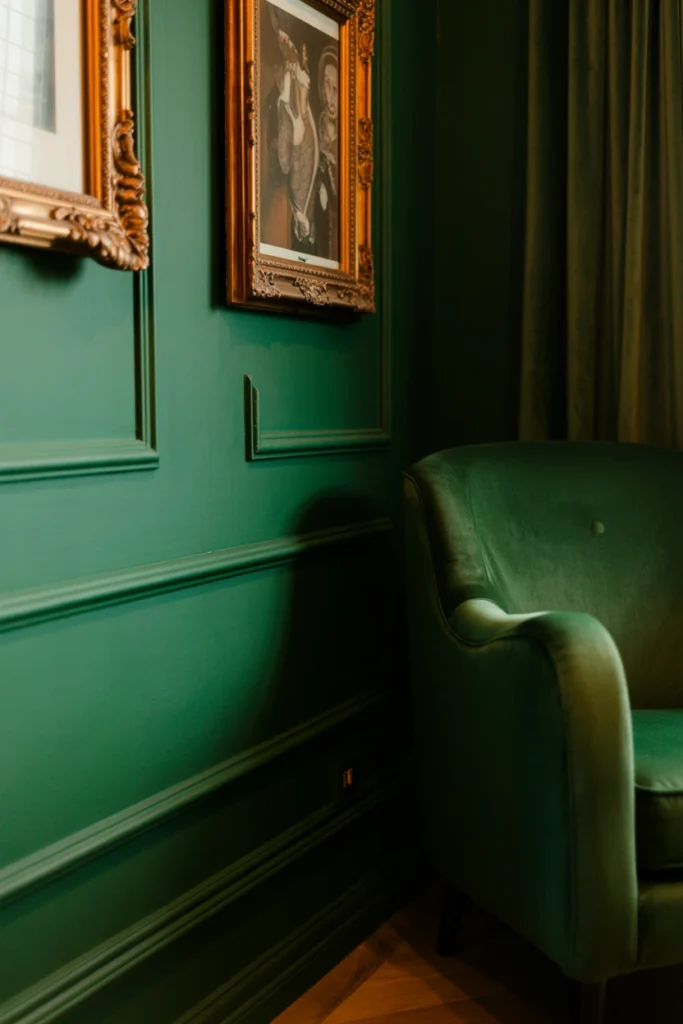
Pastel or neutral walls prevent a whimsigoth room from reading as intentional. This aesthetic depends on saturated jewel tones to create the moody backdrop every other element builds on. A beige or white wall base undercuts every layered texture added afterward.
Start by painting the primary wall or full room in a deep forest green, aubergine, or oxblood red. Use a matte or eggshell finish, never high-gloss, at full saturation rather than a lightened tint. This anchor color makes every brass and botanical accent read as intentional rather than random.
| Jewel Tone | Best Room Type |
| Deep forest green | Living room, bedroom |
| Aubergine (deep purple) | Bedroom, reading nook |
| Oxblood red | Dining room, entryway |
| Ink navy | Home office, study |
5. Add One Metallic Accent in Antique Brass
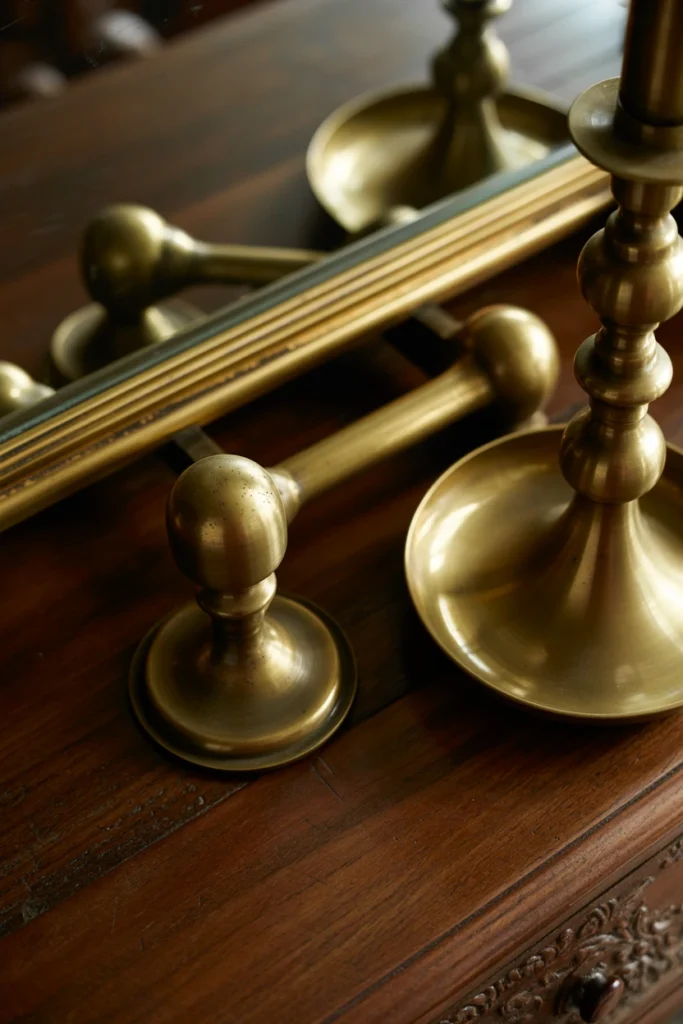
Mixing chrome, gold, silver, and brass in one space flattens the aesthetic instantly. Whimsigoth requires exactly one dominant metallic finish repeated consistently, never several competing tones. A room with four different metal finishes reads as unplanned regardless of other choices.
Start by selecting antique or unlacquered brass as your single metallic across every fixture. Apply it to door hardware, lamp bases, mirror frames, and candlesticks consistently throughout the space. This single-metal rule creates a cohesive visual thread that ties distant corners of the room together.
| Metallic Option | Where to Use It |
| Antique brass | Hardware, frames, lamp bases |
| Oxidized copper | Candlesticks, small trays |
| Aged bronze | Larger furniture legs |
| Avoid: chrome, polished gold | Clashes with aged finishes |
6. Balance Dark Walls With a Single Light Surface
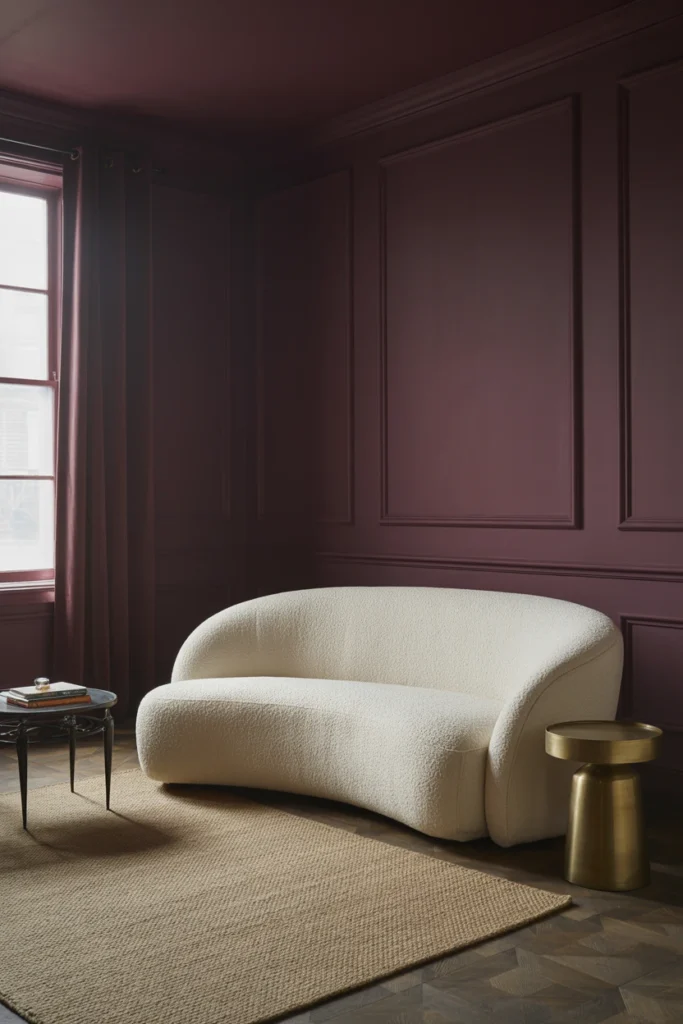
A room painted entirely in dark tones without contrast reads as heavy and closed-in. Whimsigoth depends on one light surface to keep the eye moving and prevent the space from feeling like a cave. Skipping this contrast is the most common reason a dark room feels smaller instead of cozier.
Start by choosing one large light element: a cream sofa, a bone-colored rug, or white ceiling. Keep this single light surface to roughly 30% of total visual area in the room. This contrast prevents the dark, moody depth from tipping into a cramped feeling.
| Light Element Choice | Visual Effect |
| Cream or bone sofa | Anchors seating area |
| Light wool rug | Grounds dark flooring |
| White or plaster ceiling | Opens vertical space |
| Sheer window layer | Softens dark drapery |
7. Introduce Botanical Green as Your Secondary Color
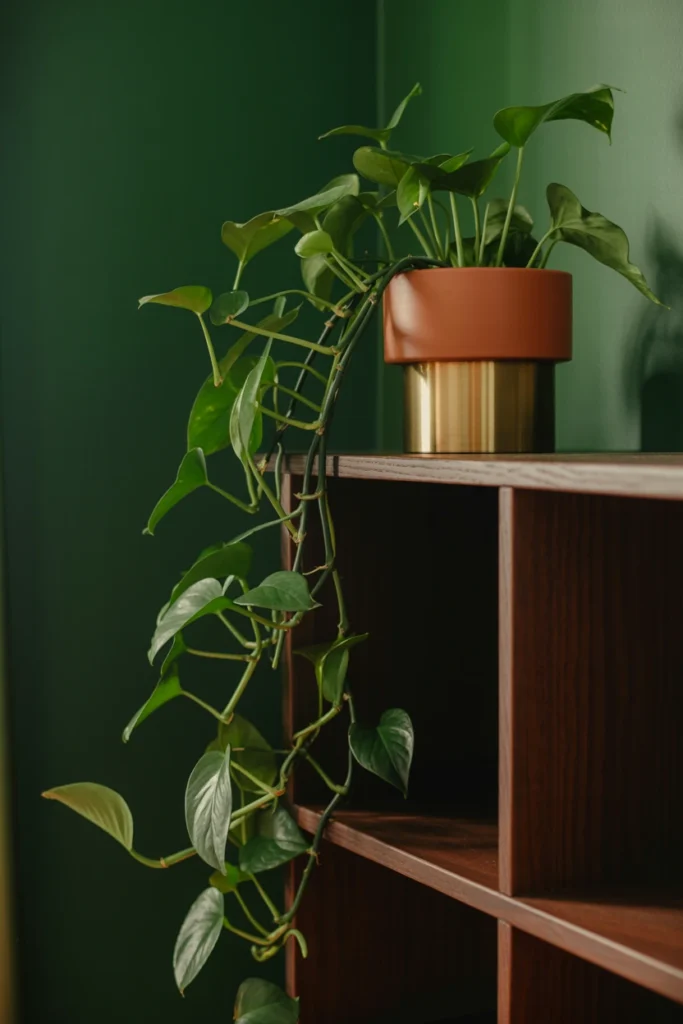
A palette of only dark tones and metal reads as gothic rather than whimsigoth. The “whimsi” half of this aesthetic comes specifically from living, botanical green woven throughout the space. Without it, the room tips fully into dark academia territory instead.
Start by adding trailing plants like pothos or philodendron in at least three separate locations. Use aged terracotta or brass planters rather than plastic nursery pots for every visible plant. This botanical layer softens every hard edge and connects the room to nature.
| Plant Type | Placement |
| Trailing pothos | High shelf, bookcase top |
| Snake plant | Floor corner, low light |
| Dried eucalyptus | Vase, mantel |
| Ferns | Bathroom, low-light corner |
Layering Textiles and Materials for Whimsigoth Texture
Texture is what separates a genuinely whimsigoth room from a room that simply uses the right colors. These four tips build the physical layering that gives the aesthetic its signature depth.
8. Layer Velvet Over Linen on Every Soft Surface
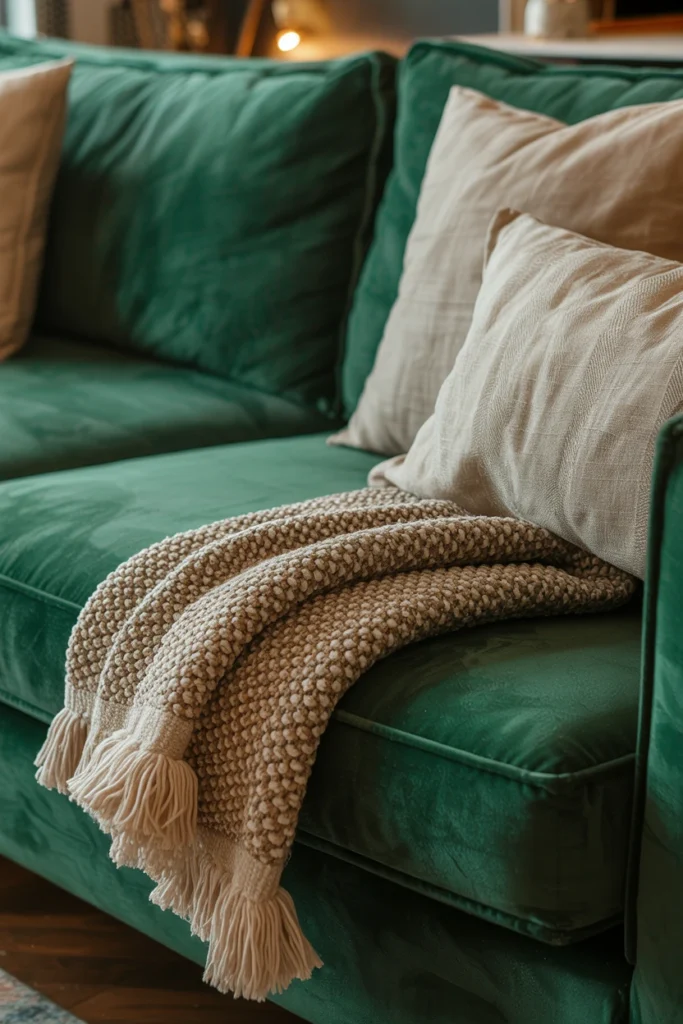
A room with only one fabric texture reads flat under warm lighting. Whimsigoth depends on contrasting textures to catch and hold candlelight across every surface. Single-texture rooms lose the tactile richness this style is known for.
Start by covering your primary seating in velvet, then add linen or cotton throw pillows on top. Mix at least three distinct textures per seating area: velvet, linen, and one knit or boucle. This layering creates visual depth that a single-fabric room can never achieve.
| Fabric | Best Use |
| Velvet | Sofa, accent chair, drapery |
| Linen | Throw pillows, table runner |
| Boucle or knit | Throw blanket, ottoman |
| Silk or satin | Small accent pillow only |
9. Hang Sheer Curtains Beneath Heavier Drapery
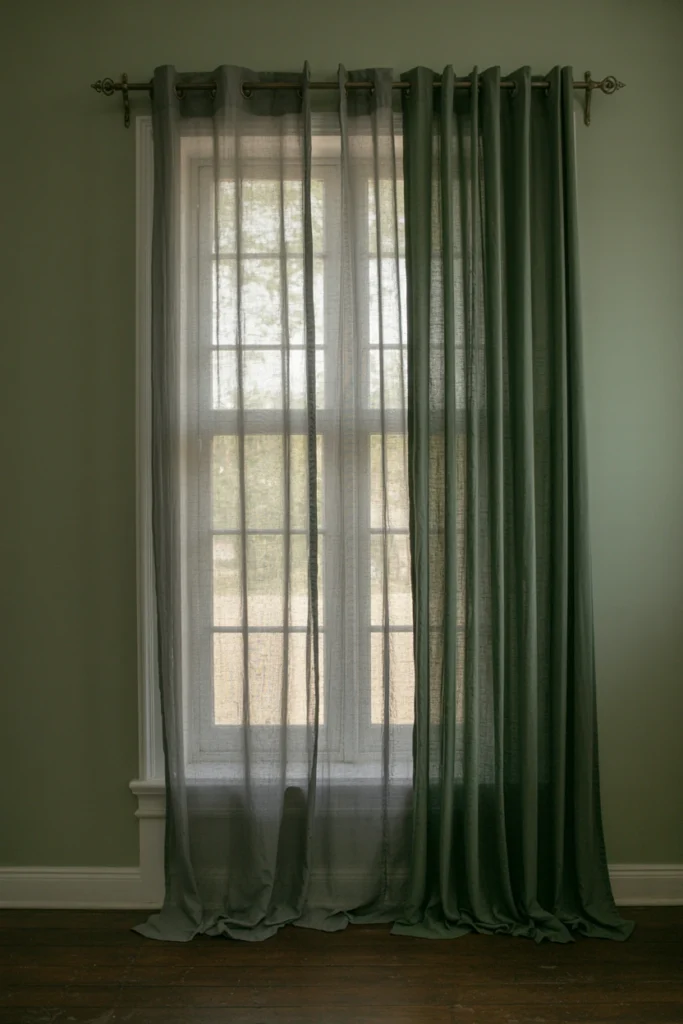
Single-layer curtains block the soft, filtered light whimsigoth rooms depend on. One heavy panel alone either shuts out all light or leaves windows looking bare and unfinished. This gap is a common reason a room feels incomplete despite full furnishing.
Start by mounting a sheer linen or cheesecloth panel directly against the window glass. Layer a heavier velvet or blackout curtain on a second rod 4-6 inches in front of it. This double-layer setup filters light into the soft, diffused glow this aesthetic depends on.
| Curtain Layer | Fabric Type |
| Inner layer | Sheer linen, cheesecloth |
| Outer layer | Velvet, heavy cotton |
| Rod spacing | 4-6 inches apart |
| Hardware finish | Antique brass |
10. Mix Wrought Iron With Warm Wood Tones
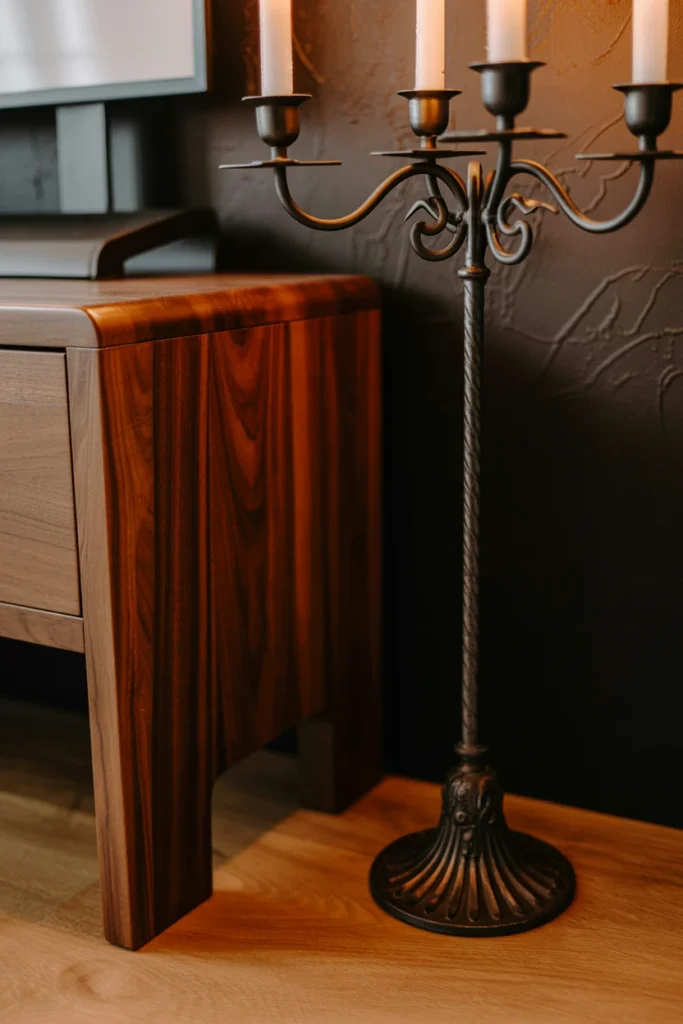
All-wood or all-metal furniture groupings feel one-dimensional in a whimsigoth room. This aesthetic pulls specifically from Victorian and gothic revival furniture, which always mixed dark iron with warm wood. Rooms without this metal-wood mix miss a defining structural detail.
Start by adding one wrought iron piece such as a candelabra, plant stand, or bed frame. Pair it against warm walnut or oak furniture rather than cool-toned ash or pine. This contrast between cold iron and warm wood creates the gothic-romantic tension this style is built on.
| Iron Piece | Wood Pairing |
| Candelabra | Walnut side table |
| Plant stand | Oak bookshelf |
| Bed frame | Warm wood nightstands |
| Wall sconce | Wood-framed mirror |
11. Add a Vintage Rug With Faded, Muted Pattern
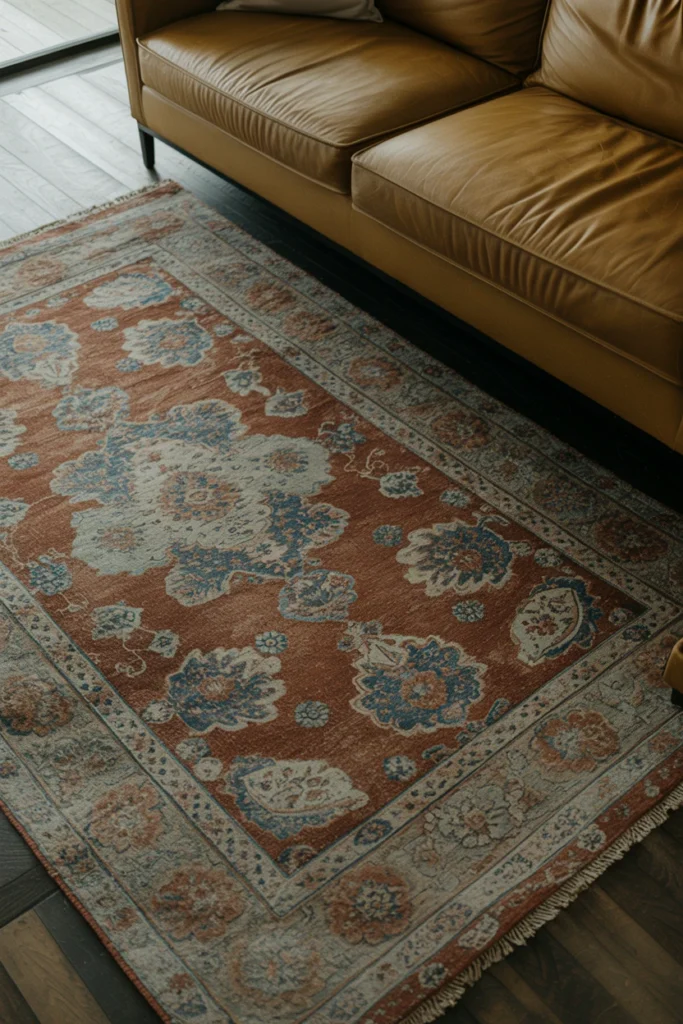
A brand-new, bold-patterned rug looks out of place against aged furniture and dark walls. Whimsigoth rugs need visible wear or a muted palette to match the room’s collected-over-time feeling. A stiff, high-contrast new rug undercuts the whole atmosphere in one step.
Start by sourcing a Persian, Oushak, or antique-style rug with faded reds, blues, or greens. Choose a rug that extends at least 18 inches beyond the edge of your main seating. This sizing rule alone prevents the floating-furniture look that undermines an otherwise strong room.
| Rug Style | Where to Find It |
| Antique Oushak | Estate sales, rug specialists |
| Faded Persian | Thrift, vintage marketplaces |
| Distressed vintage-style | New retailers, aged finish |
| Minimum overhang | 18 inches beyond furniture |
Whimsigoth Furniture and Statement Pieces
Furniture in a whimsigoth room does more than function. These three tips cover the statement pieces that anchor the aesthetic and give it a clear focal point.
12. Install a Vintage or Vintage-Style Mirror as a Focal Point
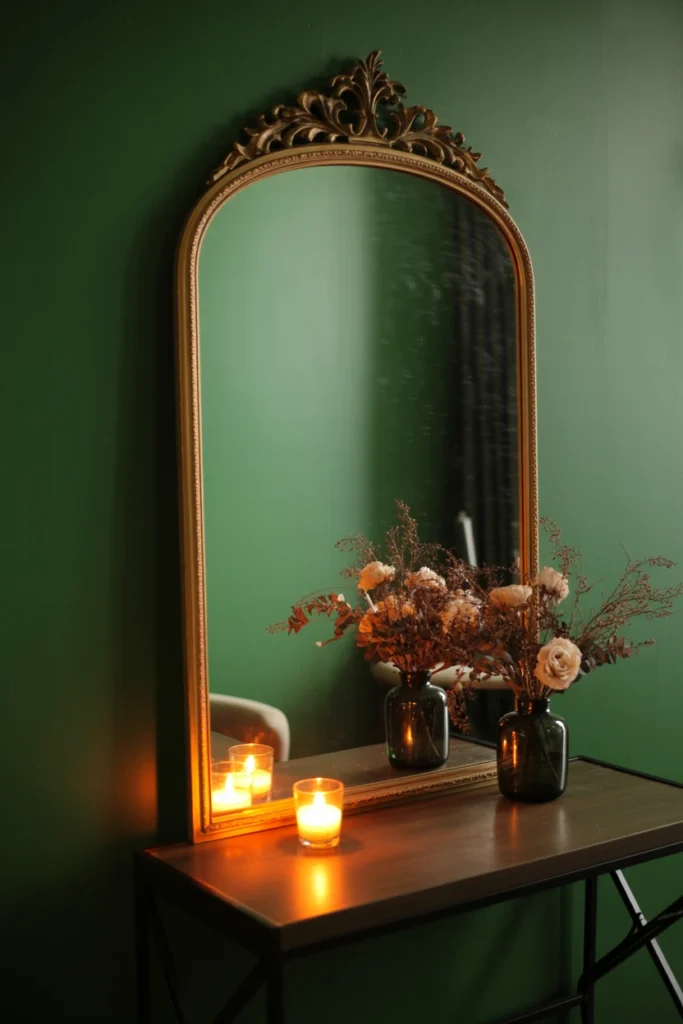
A room without a dominant focal point forces the eye to wander without landing anywhere. Whimsigoth rooms consistently center around one ornate mirror as their visual anchor. Skipping this piece leaves even a well-decorated room feeling directionless.
Start by mounting an oval or arched brass-framed mirror above a mantel, dresser, or console. Choose a mirror at least 30 inches tall to hold visual weight against dark walls. This focal point immediately doubles the perceived depth of the room by reflecting layered light sources.
| Mirror Shape | Best Placement |
| Arched, ornate frame | Above mantel or console |
| Oval, brass frame | Above dresser |
| Sunburst | Above sofa (secondary accent) |
| Minimum height | 30 inches |
13. Choose Curved, Antique-Style Furniture Silhouettes
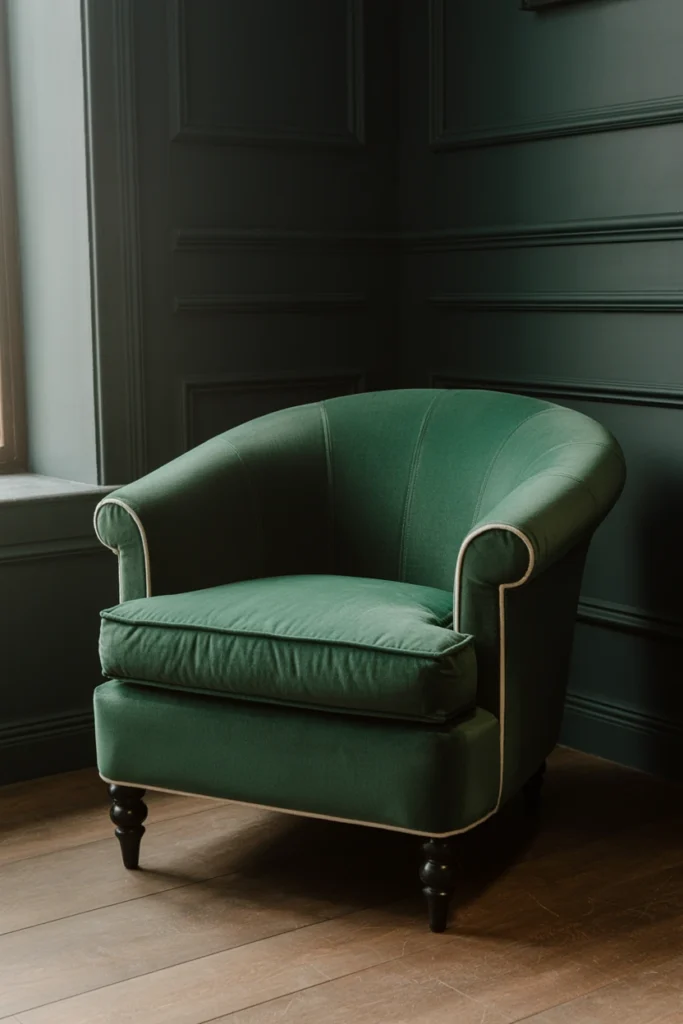
Straight-lined, modern furniture silhouettes clash visually with the ornate whimsigoth aesthetic. Sharp, minimal shapes read as contemporary and undercut the Victorian-inspired softness this style depends on. Mixing too many sharp-edged pieces flattens the room’s romantic character.
Start by prioritizing curved arms, scalloped edges, and turned wood legs on major furniture. Choose at least one rolled-arm sofa or chair as your primary seating anchor. This single silhouette choice signals the era-inspired character that straight modern lines cannot replicate.
| Furniture Feature | Whimsigoth Fit |
| Rolled or curved arms | Strong fit |
| Turned wood legs | Strong fit |
| Sharp, squared edges | Avoid |
| Scalloped skirting | Strong fit |
14. Build an Apothecary-Style Display Shelf
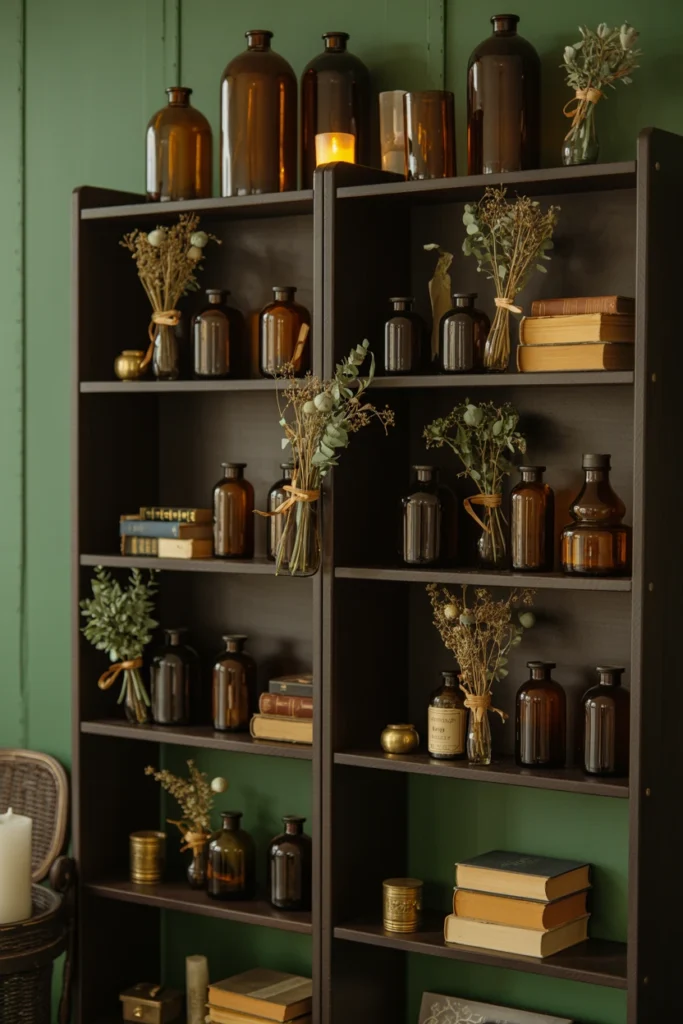
Empty walls or generic floating shelves waste the strongest storytelling opportunity in the room. An apothecary-style display shelf communicates the collected, curious character central to whimsigoth in a single glance. Without it, the room’s personality stays underdeveloped.
Start by installing one wood or iron shelving unit at least 24 inches wide near a reading area. Fill it with amber glass bottles, dried botanicals, and small brass objects in groups of three. This display becomes an unexpected conversation piece that guests consistently ask about.
| Shelf Object | Suggested Quantity |
| Amber or dark glass bottles | 3-5 |
| Dried botanical bundles | 2-3 |
| Small brass objects | 3-4 |
| Old books, stacked | 4-6 |
Styling Finishing Touches for Whimsigoth Charm
The finishing layer is what pushes a room from well-planned to genuinely magical. These four tips cover the small, high-impact details that complete the whimsigoth look.
15. Group Dried Flowers in Odd-Numbered Clusters

A single flower or an even-numbered cluster reads as accidental rather than styled. Odd-numbered groupings consistently photograph and read as more intentional across every design discipline. Even pairs create a symmetry that feels staged instead of collected.
Start by grouping dried pampas, lunaria, or roses in clusters of three or five stems. Vary the height of each stem within the cluster by at least 2-3 inches. This uneven height creates the loose, gathered-from-a-walk look central to whimsigoth styling.
| Cluster Size | Stem Height Variation |
| 3 stems | 2-3 inch variation |
| 5 stems | 3-5 inch variation |
| Avoid | Even numbers, equal heights |
| Best vase | Dark glass or brass |
16. Layer Candlelight at Three Different Heights
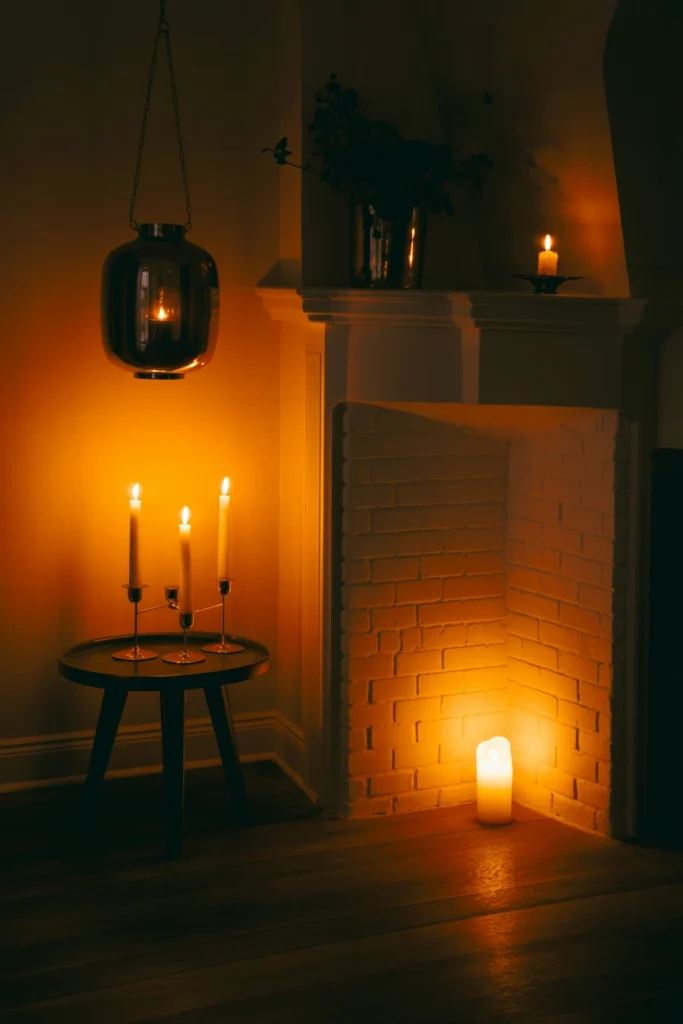
Candles placed only at table height create a flat, single-plane glow. Whimsigoth rooms depend on light sources at multiple elevations to create depth after dark. A room lit at one height alone looks unfinished once the sun sets.
Start by placing pillar candles at floor level, taper candles at table height, and a hanging lantern overhead. Use unscented candles in black, cream, or deep green to match your palette. This three-tier lighting transforms the same room dramatically once evening arrives.
| Candle Placement | Height Tier |
| Pillar candles, hearth or floor | Low |
| Taper candles, table or shelf | Mid |
| Hanging lantern or sconce | High |
| Color match | Black, cream, deep green |
17. Display Botanical Prints in Mismatched Frames
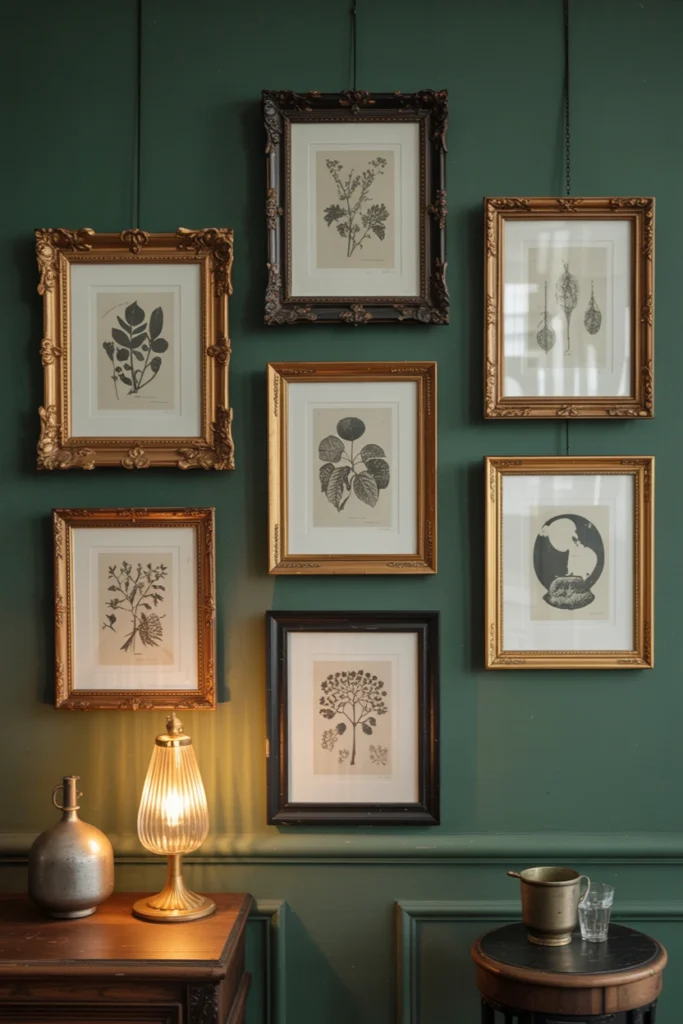
A single large piece of art leaves a whimsigoth wall feeling underdressed. This style depends on layered, gallery-style groupings rather than one dominant frame. A lone artwork misses the collected-over-years feeling central to the aesthetic.
Start by sourcing five to seven botanical or celestial prints in varied vintage frame styles. Hang them in an asymmetrical grid rather than a perfectly aligned grid pattern. This mismatched framing creates the layered, inherited-collection look this style depends on.
| Print Subject | Frame Style |
| Botanical illustrations | Ornate gold or brass |
| Celestial or moon phases | Black wood |
| Vintage anatomy prints | Dark wood, simple |
| Grid style | Asymmetrical, not aligned |
18. Add One Taxidermy-Style or Nature Curiosity Object
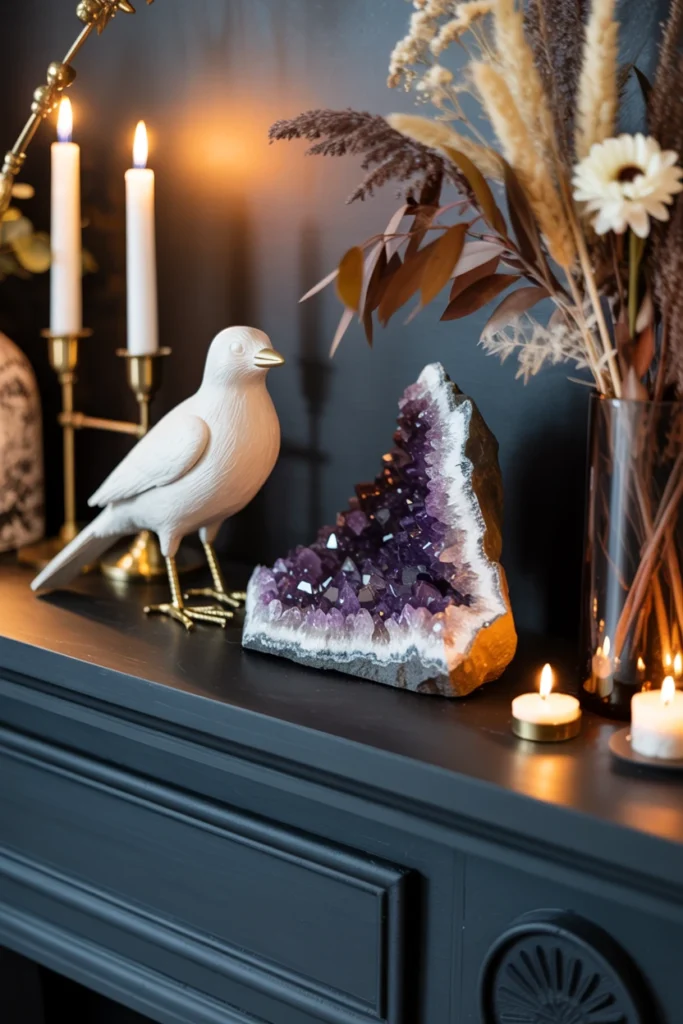
A room without a single unexpected object reads as safe and predictable. Whimsigoth depends on one slightly unusual “curiosity cabinet” piece to create genuine personality. Skipping this element leaves the room technically correct but emotionally flat.
Start by sourcing one faux taxidermy piece, geode, or antler object from a vintage or specialty shop. Place it on your apothecary shelf or mantel as a single standout object. This one unexpected piece consistently becomes the detail visitors remember most.
| Curiosity Object | Placement |
| Faux taxidermy bird | Shelf, mantel |
| Raw geode or crystal cluster | Coffee table, shelf |
| Antler or bone accent | Wall mount, shelf |
| Rule | Choose exactly one, not several |
Whimsigoth Maintenance and Long-Term Habits
A whimsigoth room requires ongoing upkeep, not a one-time setup. These final two tips keep the space looking intentional month after month rather than degrading into clutter.
19. Rotate Seasonal Accents Every 3 Months
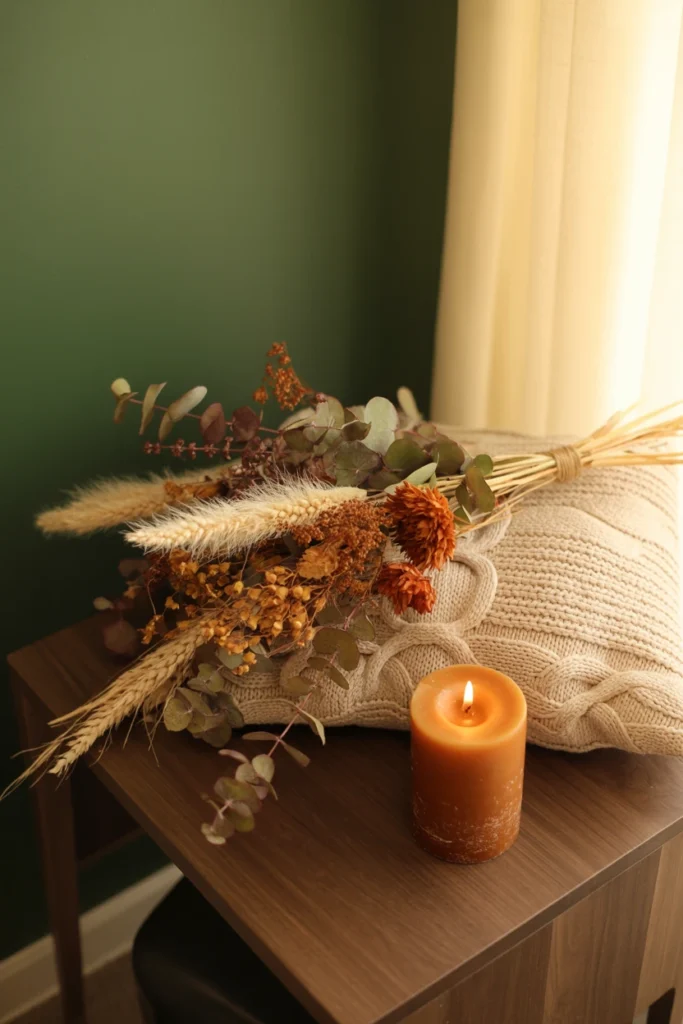
A room that never changes starts to feel static and forgotten after a few months. Whimsigoth rooms stay visually fresh through small seasonal swaps rather than a full redecoration. Skipping rotation is why some rooms feel stale by the second year.
Start by swapping dried florals, candle colors, and throw textiles on a 90-day cycle. Keep your core furniture and wall color fixed, rotating only small, low-cost accents. This habit keeps the room feeling alive without requiring any major reinvestment.
| Rotation Item | Frequency |
| Dried florals | Every 3 months |
| Throw pillow covers | Seasonal (4x/year) |
| Candle scent/color | Seasonal |
| Core furniture | Fixed, no rotation |
20. Establish a Monthly Dusting Routine for Textured Surfaces
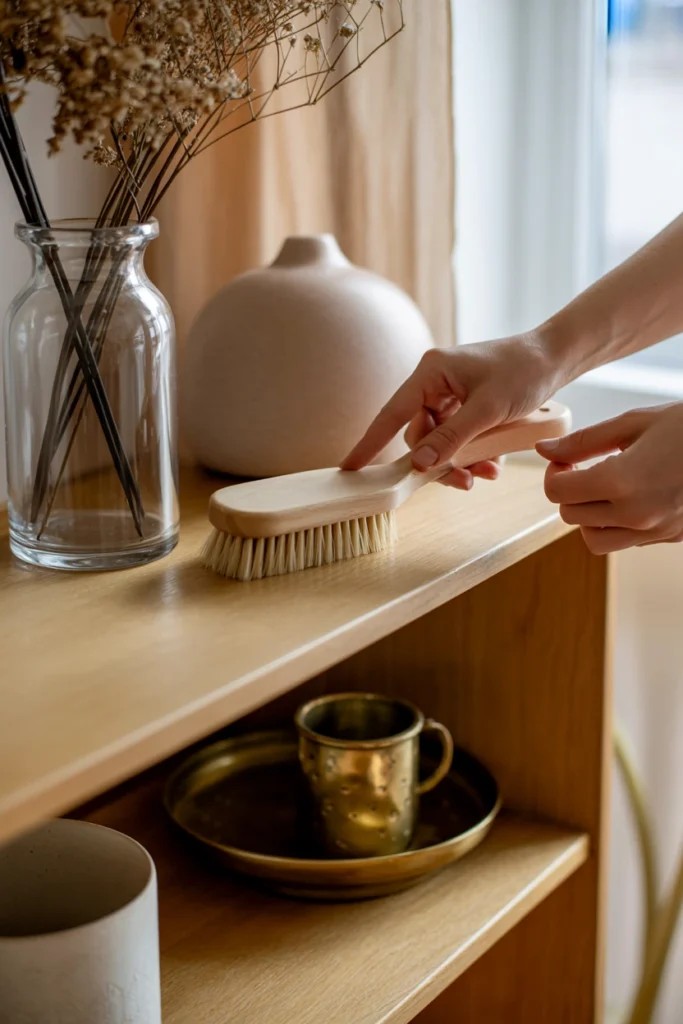
Heavily textured whimsigoth rooms collect visible dust faster than minimalist spaces. Velvet, dried botanicals, and open shelving all trap dust that dulls the room’s intended richness. Without a routine, the space slowly loses the crisp depth it started with.
Start by dusting open shelves, dried florals, and picture frames once every month minimum. Use a soft brush attachment on velvet furniture rather than a standard vacuum head. This single habit permanently protects the visual richness that took effort to build.
| Surface | Cleaning Method |
| Velvet upholstery | Soft brush attachment, monthly |
| Dried florals | Gentle blow dust, or replace |
| Open shelf objects | Microfiber cloth, monthly |
| Brass fixtures | Brass polish, every 2-3 months |
Whimsigoth Decor Mistakes That Flatten the Aesthetic
These eight mistakes consistently pull a whimsigoth room toward generic gothic or cluttered maximalist territory. Avoiding them protects every effort made in the sections above.
| Mistake | Why It Hurts the Space | Better Alternative |
| Using only black and no green | Reads as generic goth, not whimsigoth | Add botanical green as secondary color |
| Mixing four+ metal finishes | Creates visual noise, feels unplanned | Commit to one metal, antique brass |
| All-new furniture from one store | Looks like a showroom, not collected | Mix in 40% vintage or secondhand pieces |
| Single overhead light only | Flattens texture, kills the mood | Layer 5+ light sources at varied heights |
| Bold new rug against aged pieces | Clashes with worn, vintage tone | Choose faded, antique-style rugs |
| Overcrowding every surface | Reads as cluttered, not curated | Group objects in odd numbers, leave gaps |
| Skipping botanical elements | Tips fully into dark academia | Add trailing plants in 3+ locations |
| Perfectly aligned gallery walls | Feels stiff, contradicts the aesthetic | Hang prints in an asymmetrical grid |
Whimsigoth Decor by Room and Situation
Whimsigoth adapts to nearly any space, but the constraints change by room type. These four segments cover the most common situations readers face when applying this style.
Bedroom
Bedrooms carry the most intimate version of whimsigoth, built around softness and layered textiles. The core constraint here is balancing dark, moody tones with a space meant for rest, not overstimulation.
Key strategies for bedroom:
- Anchor the headboard wall in a single deep jewel tone rather than the whole room
- Layer a velvet duvet with linen sheets underneath for contrasting textures
- Hang a canopy of sheer fabric above the bed frame for softness
- Use only warm, dimmable lighting within arm’s reach of the bed
- Place a single botanical print directly above the headboard
- Keep the nightstand surface limited to three objects maximum
Living Room
Living rooms need to support both quiet evenings and social gatherings, so the constraint is balancing drama with function. This is typically the room with the highest furniture investment.
Key strategies for living room:
- Build seating around the apothecary shelf as a secondary focal point
- Choose a sectional or sofa in velvet, reserving pattern for pillows only
- Add a bar cart in brass and dark glass near the seating area
- Keep coffee table styling to a tray, candle, and single stack of books
- Position the ornate mirror to reflect your primary light source
- Reserve one wall for the asymmetrical gallery grouping
Rental
Rentals restrict paint and permanent fixtures, so the constraint is achieving full mood without altering walls. Every strategy here needs to be fully reversible at move-out.
Key strategies for rental:
- Use a large dark tapestry or fabric panel instead of painting walls
- Add peel-and-stick brass-finish hardware over existing cabinet pulls
- Bring in floor lamps and plug-in sconces instead of hardwired fixtures
- Layer rugs over existing flooring to shift the room’s undertone
- Use removable hooks to hang the gallery wall grouping
- Rely on furniture and textiles to carry 90% of the transformation
Small Space
Small spaces risk feeling cramped under dark, saturated color, so the constraint is depth without visual weight. Careful scale choices matter more here than in any other segment.
Key strategies for small space:
- Paint only one accent wall in deep tone, keeping others in a lighter neutral
- Choose a single large mirror instead of multiple smaller decorative pieces
- Use vertical shelving to add display space without consuming floor area
- Select one statement chair rather than a full seating group
- Keep the vintage rug scaled to leave visible floor border around edges
- Limit dried floral arrangements to one large cluster instead of several
Frequently Asked Questions
what is whimsigoth style
Whimsigoth combines dark academia’s moody color palette with cottagecore’s soft, botanical romance. It centers on jewel-toned walls, antique brass, velvet textiles, and dried florals. The style reads as collected and witchy rather than sterile or minimalist. Whimsigoth works in any room where you want atmosphere over stark simplicity.
how do i avoid whimsigoth looking too dark or gothic
Balance every dark wall with roughly 30% light surface area, such as a cream sofa or pale rug. Add botanical green plants in at least three locations to soften the palette. Layer warm 2700K lighting from five or more sources instead of relying on one overhead fixture. These three habits keep the room whimsical rather than purely gothic.
how to start whimsigoth decor on a budget
Start with paint, since one deep-toned accent wall costs far less than full furniture replacement. Source velvet pillow covers and vintage-style frames secondhand before buying new furniture. Add dried florals, which cost under $20 and instantly shift the room’s mood. Layering candles and thrifted brass objects builds the aesthetic gradually without a large upfront cost.
how to do whimsigoth in a small apartment
Limit dark, saturated paint to one accent wall instead of the full room. Choose a single large mirror and one statement chair rather than multiple competing pieces. Vertical apothecary-style shelving adds display space without consuming floor area. These adjustments keep the small-space version of whimsigoth from feeling cramped.
whimsigoth vs cottagecore vs dark academia which is right for me
Cottagecore leans fully into light, airy florals without the dark, moody palette. Dark academia centers on browns and leather with minimal botanical elements. Whimsigoth sits between the two, combining dark jewel tones with living plants and brass accents. Choose whimsigoth if you want both drama and softness in the same room.
how often should i update whimsigoth decor
Rotate small accents like dried florals, candle colors, and throw pillows every three months. Keep your core furniture, wall color, and major pieces fixed rather than changing them seasonally. This 90-day rotation on low-cost items keeps the room feeling current without a major reinvestment. Major furniture typically only needs updating every few years.
does whimsigoth work in a rental
Whimsigoth works well in rentals using tapestries, plug-in lighting, and layered rugs instead of paint or permanent fixtures. Peel-and-stick hardware and removable picture hooks handle the brass and gallery-wall elements. Furniture and textiles carry most of the transformation, since they require no landlord approval. A rental-friendly whimsigoth room can be fully reversed at move-out.
how much does it cost to decorate a room whimsigoth style
A budget approach using thrifted furniture and paint can cost under $500 for a full room. A mid-range room with a mix of new velvet furniture and vintage accents typically runs 1,500-3,000. Full-room transformations with custom mirrors and antique furniture can exceed $5,000. Cost scales primarily with how much furniture you replace versus restyle.
how to keep whimsigoth decor from getting cluttered
Group decorative objects in odd numbers of three or five, never scattered individually. Leave visible negative space on every shelf rather than filling each surface completely. Limit nightstands and side tables to three objects maximum at any time. This discipline keeps the layered look curated instead of crowded.
Conclusion
Whimsigoth decor transforms a room through deep jewel tones, layered brass, and living botanicals working together. Start with your base palette and lighting audit before purchasing a single accent piece. Paint one wall in a deep jewel tone this week and add three trailing plants to begin the transformation immediately.
Results in whimsigoth rooms build through consistent small habits, not a single weekend project. A room styled with intention, layered light, and genuine texture reads as collected for a lifetime.