
A whimsigoth bedroom transforms a flat, generic room into a moody, romantic retreat built on jewel tones, dark wood, and layered candlelight. This aesthetic delivers a space that feels collected over years, not bought in one trip, blending witchy charm with soft, dreamy texture. This guide delivers 18 tested steps for building the look from the ground up, in the exact order that prevents a mismatched, half-finished result. Start with your color palette before buying a single piece of furniture.
Before You Begin: 3 Foundation Steps for a Whimsigoth Bedroom
These three steps determine whether every later purchase works together or fights for attention. Skipping them is the single most common reason a whimsigoth bedroom ends up looking cluttered instead of curated.
1. Choose Your Whimsigoth Color Palette First
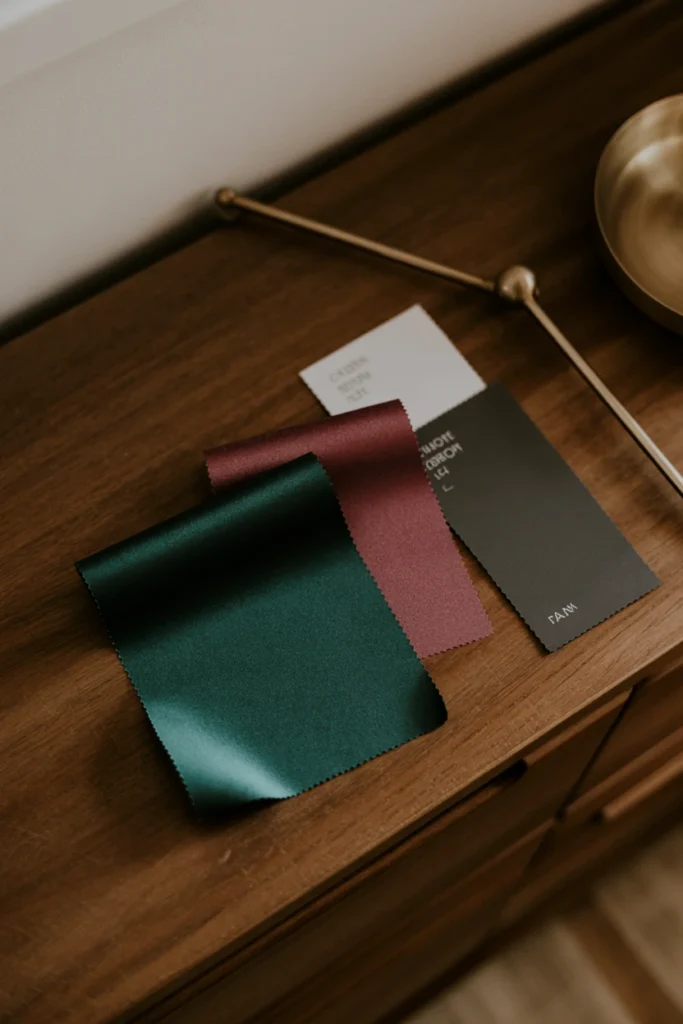
Most bedroom makeovers fail before the first item is purchased. Buying furniture and decor without a locked color palette forces mismatched undertones that clash the moment they sit in the same room. A locked three-color palette prevents this and gives every future purchase a built-in filter for whether it belongs.
Start by selecting one dominant dark neutral, one deep jewel tone, and one metallic accent. Use a 60-30-10 ratio: 60% dark neutral like charcoal or deep brown, 30% jewel tone such as emerald or burgundy, 10% brass or antique gold. This ratio keeps the room from reading as either too flat or too busy, and it makes every future decor decision faster because the filter already exists.
| Palette Role | Recommended Options |
| Dominant neutral (60%) | Charcoal grey, espresso brown, off-black |
| Jewel tone (30%) | Emerald, burgundy, deep plum |
| Metallic accent (10%) | Brass, antique gold, aged bronze |
| Avoid entirely | Cool grey, stark white, chrome |
2. Assess Your Room’s Natural Light Before Committing
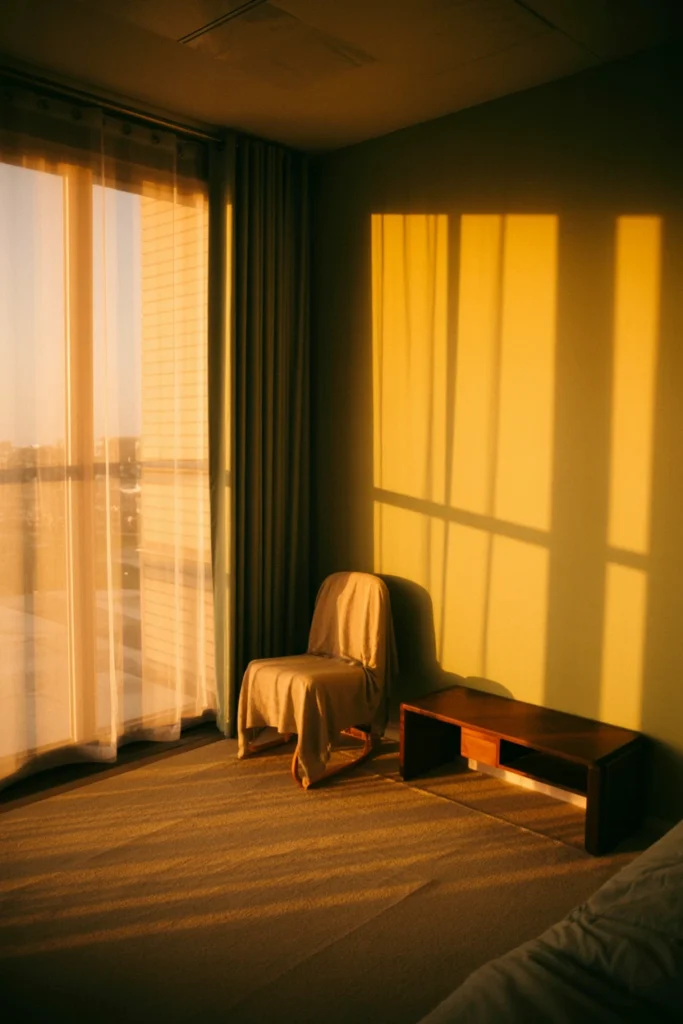
A dark palette in a north-facing room reads as cave-like within a week of moving in. This mistake costs homeowners a full repaint because they picked colors without checking how light hits the walls at different times of day. Testing first prevents wasted paint and wasted money on furniture that looks wrong once installed.
Photograph the room at 9am, 1pm, and 6pm before choosing wall color. Rooms with fewer than 3 hours of direct sun should stay 2-3 shades lighter than a south-facing room using the identical palette. This single check prevents the most expensive mistake in the entire process and saves an average of one full repaint cycle.
| Light Level | Wall Color Adjustment |
| Full sun 4+ hrs | Full-depth charcoal or black works |
| Moderate 2-4 hrs | Lighten base 1-2 shades |
| Low light under 2 hrs | Lighten base 2-3 shades, add mirrors |
| No direct sun | Keep walls light, go dark on textiles only |
3. Set a Budget for Vintage and Statement Pieces
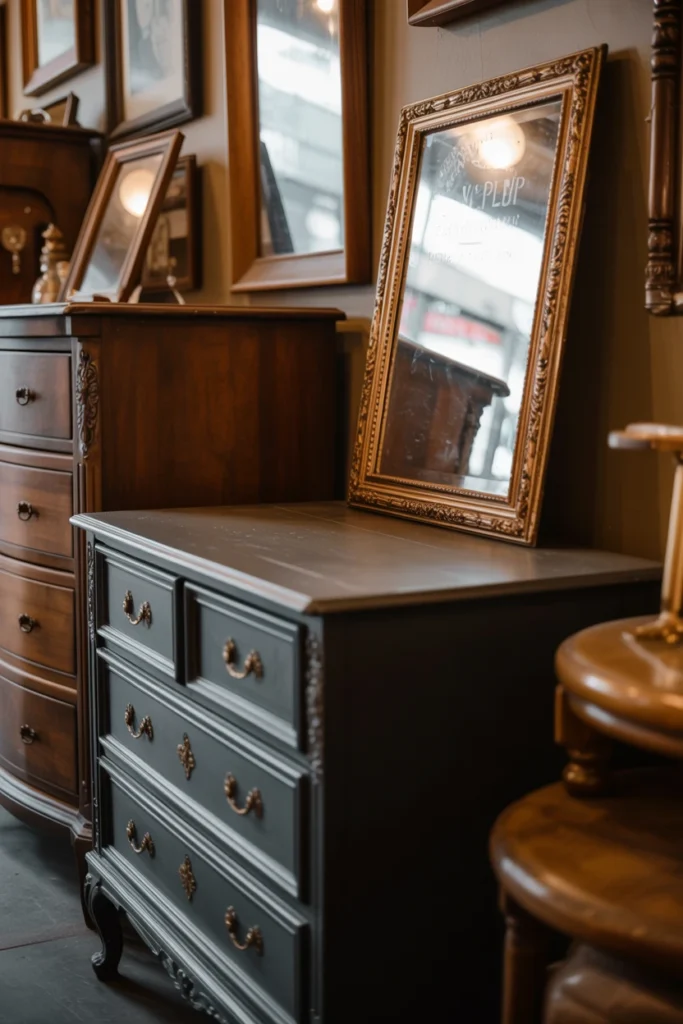
Whimsigoth relies on statement furniture, and buying everything new at retail price makes the full look financially out of reach for most budgets. This mistake pushes people to either abandon the aesthetic or fill the room with mismatched cheap pieces instead. A split budget approach solves both problems at once.
Allocate 40% of your total budget to one statement piece like a bed frame or mirror, and reserve 60% for smaller vintage finds from secondhand shops. This split prevents overspending on small items while still guaranteeing the one piece that anchors the whole room gets funded properly.
| Budget Tier | Total Spend | Statement Piece Allocation |
| Starter | $300-500 | $150-200 bed frame or mirror |
| Mid-range | $800-1200 | $350-450 furniture piece |
| Full room | $2000+ | $800+ antique or custom piece |
| Rental-friendly | $200-400 | $100 mirror + textiles |
Layer a Whimsigoth Color Palette and Textiles
Color and texture do the heaviest lifting in a whimsigoth bedroom before any furniture arrives. This section covers how to apply the palette to walls, bedding, and layered fabric without overwhelming the space.
4. Anchor the Room in Deep Jewel Tones
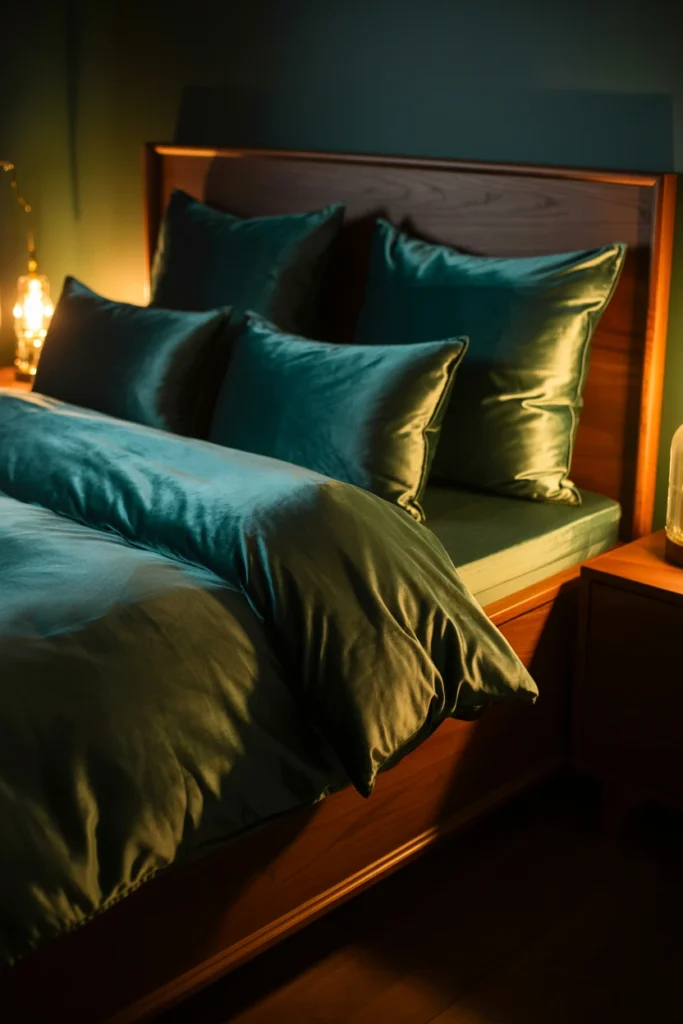
A whimsigoth bedroom without a jewel tone anchor reads as generic gothic instead of romantic and witchy. This gap flattens the entire aesthetic and strips out the warmth that separates whimsigoth from plain dark decor. Adding one dominant jewel tone immediately gives the room its signature depth.
Choose one jewel tone and apply it to the largest soft surface in the room, typically the duvet cover or a full accent wall. Emerald green and deep burgundy are the two most consistently used shades across whimsigoth interiors, both pairing cleanly with black and brass. This single move visually defines the entire room’s mood before anything else is added.
| Jewel Tone | Pairs Best With | Best Applied To |
| Emerald green | Brass, black, cream | Duvet, accent wall, curtains |
| Deep burgundy | Gold, charcoal, dark wood | Headboard, rug, throw pillows |
| Plum purple | Silver, black, blush | Curtains, accent chair |
| Midnight blue | Brass, white, grey | Wallpaper, bedding |
5. Add Black or Charcoal as a Neutral, Not an Accent
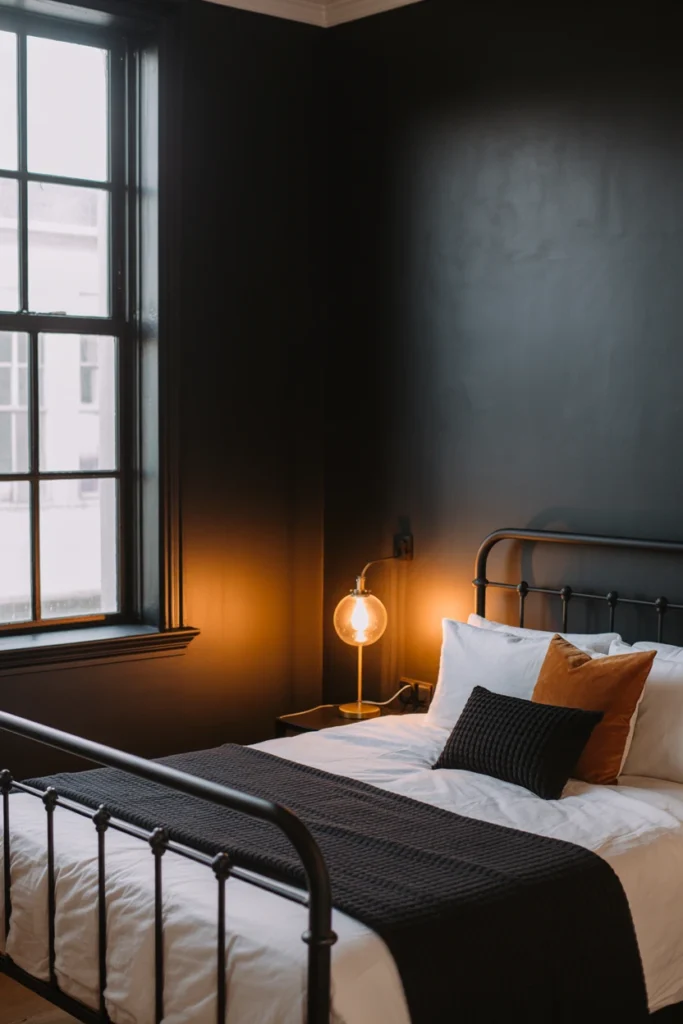
Treating black as a small accent color keeps a bedroom looking timid instead of committed to the aesthetic. This hesitation costs the room its gothic backbone and makes every other jewel tone look disconnected. Using black as a true neutral base solves this by giving the jewel tones something to anchor against.
Apply black or charcoal to at least 40% of visible surfaces, spread across window frames, bed frame, and one wall or the ceiling. This feels counterintuitive until you see how a black-framed window completely changes the perceived depth of a room. The unexpected bonus is that black woodwork makes brass hardware and warm lighting appear noticeably brighter by contrast.
| Surface | Black Treatment Option |
| Window frames | Matte black spray paint |
| Ceiling | Black or charcoal ceiling paint |
| Bed frame | Black iron or ebony-stained wood |
| Door and trim | Satin black enamel |
6. Layer Velvet, Lace, and Fringe Textures
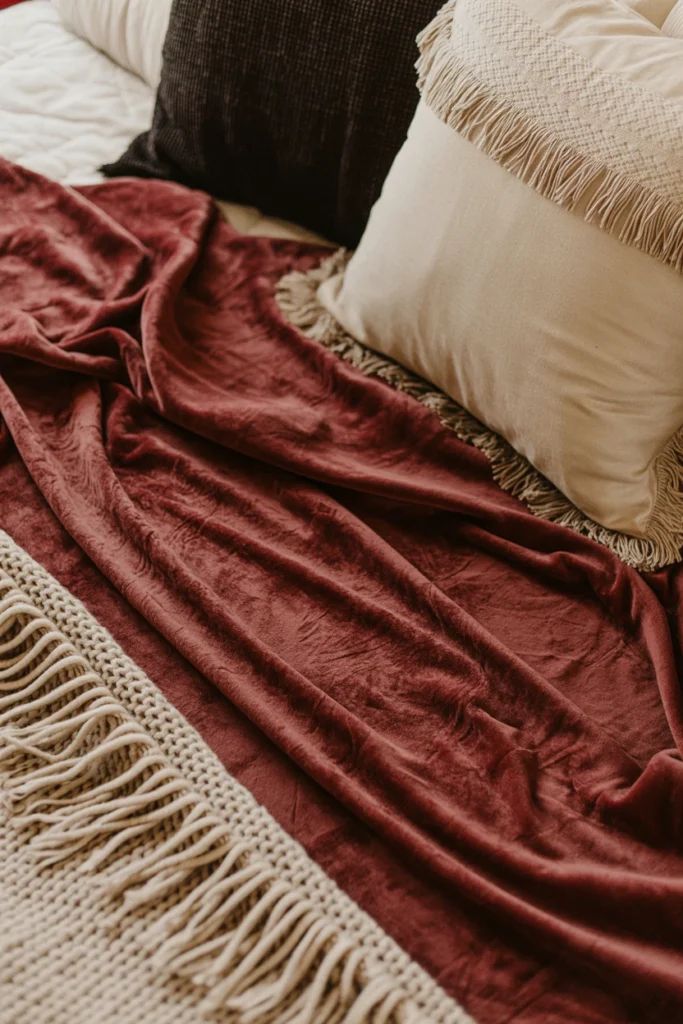
A single flat fabric texture makes even a well-colored bedroom feel unfinished and store-bought. This gap removes the tactile richness that whimsigoth depends on for its dreamy, collected feeling. Layering three distinct textures fixes this in one afternoon without touching paint or furniture.
Start with a velvet duvet or throw as the base texture, add a lace or crochet overlay on one pillow, and finish with a fringed throw blanket at the foot of the bed. Use a minimum of three distinct textures within arm’s reach of the pillows to create visible depth. The unexpected result is that varied texture reads as luxury even when every individual piece is inexpensive.
| Texture | Placement | Budget Source |
| Velvet | Duvet cover, throw pillow | $30-60 duvet |
| Lace or crochet | Pillow overlay, curtain panel | $15-25 secondhand |
| Fringe | Throw blanket, lampshade trim | $20-40 new |
| Faux fur | Accent pillow, bench topper | $25-45 new |
Choose Furniture and Hardware with Gothic Character
Furniture with flat, straight lines undercuts every color choice made so far. This section covers the specific silhouettes and hardware swaps that give a whimsigoth bedroom its shape.
7. Install a Wrought Iron or Carved Wood Bed Frame
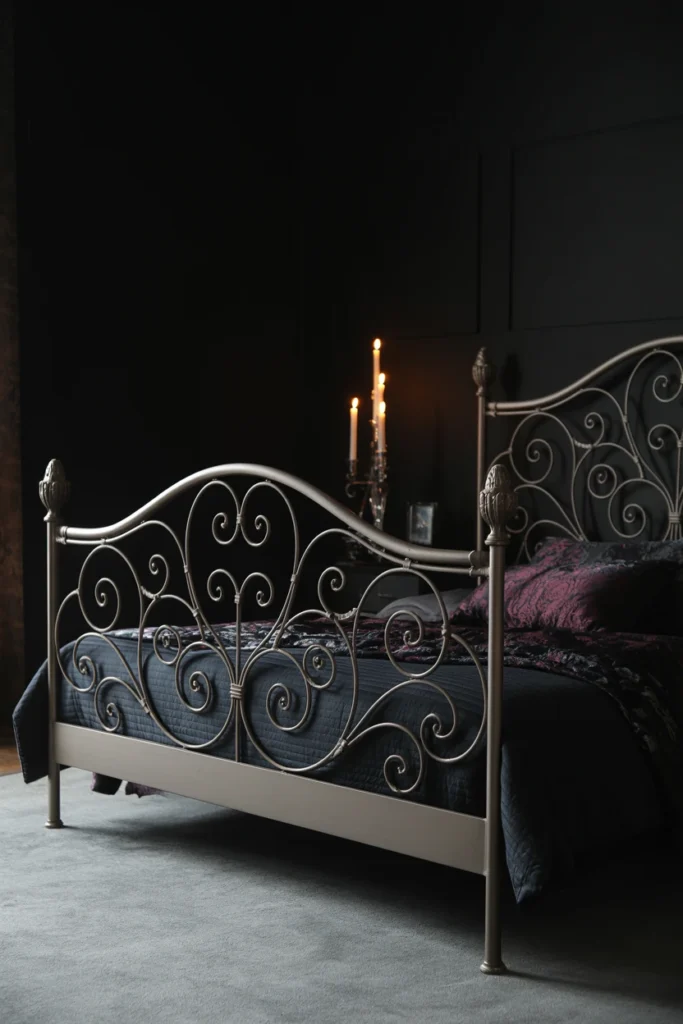
A plain platform bed frame is the single most common reason a whimsigoth bedroom still looks generic after every other change. This one piece sits at the visual center of the room, so its shape defines the entire aesthetic more than any accessory can. Replacing it with an ornate frame solves the problem immediately.
Choose either a wrought iron frame with scrollwork or a dark wood frame with a carved headboard, both widely available secondhand for 40-60% below retail. A frame with visible detail at eye level while lying down does more work than any other single purchase in the room. This one swap eliminates the need for extensive additional headboard styling later.
| Frame Type | Average Secondhand Price | Best Room Style |
| Wrought iron scrollwork | $120-250 | Small to mid-size rooms |
| Carved dark wood | $200-450 | Larger rooms with wall space |
| Upholstered velvet | $150-300 | Softer, romantic layouts |
| Canopy iron frame | $300-600 | Rooms with 9ft+ ceilings |
8. Hunt Secondhand Shops for Antique Wood Furniture
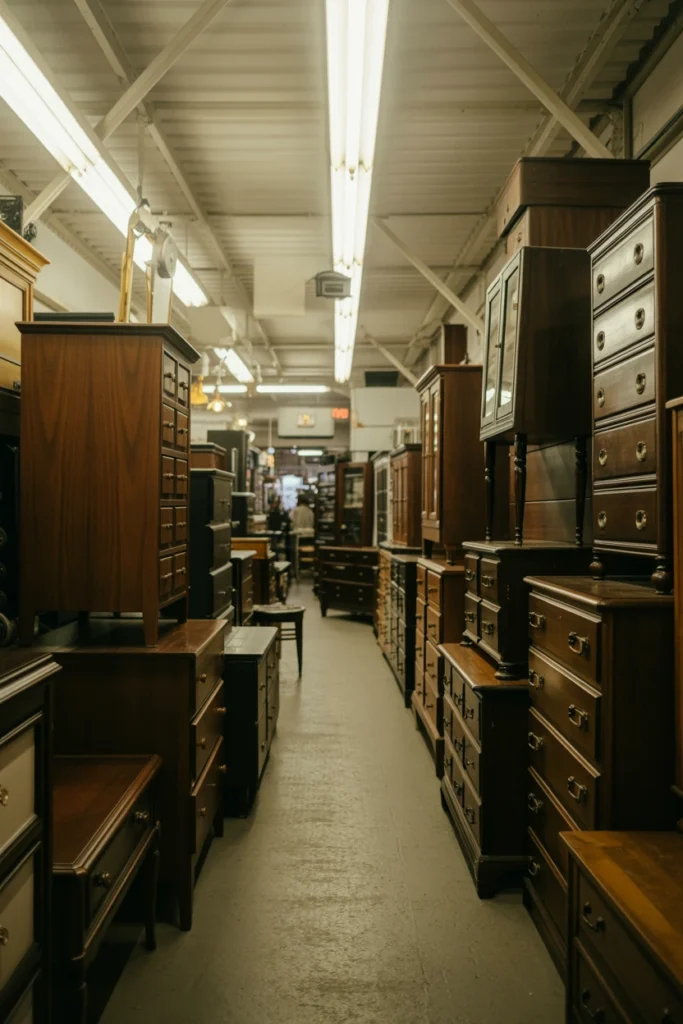
Buying matched new furniture sets removes the collected-over-time feeling that defines whimsigoth interiors. This mismatch makes a room feel staged rather than lived-in, undercutting the entire aesthetic’s core appeal. Sourcing individual antique pieces from different eras fixes this directly.
Visit at least three secondhand or estate sale sources before buying, targeting dark-stained wood nightstands, dressers, or side tables from the 1960s-1980s. Mixing two different wood tones within the same room, rather than matching every piece, is the specific detail that reads as intentional rather than accidental. The unexpected bonus is that mismatched vintage furniture typically costs 50% less than a matched new set.
| Source | Typical Furniture Age | Price Range |
| Estate sales | 1950s-1980s | $20-80 per piece |
| Thrift stores | Mixed eras | $15-50 per piece |
| Antique malls | Pre-1960s | $60-150 per piece |
| Online marketplace | Mixed eras | $25-100 per piece |
9. Replace Modern Hardware with Brass or Aged Metal Pulls
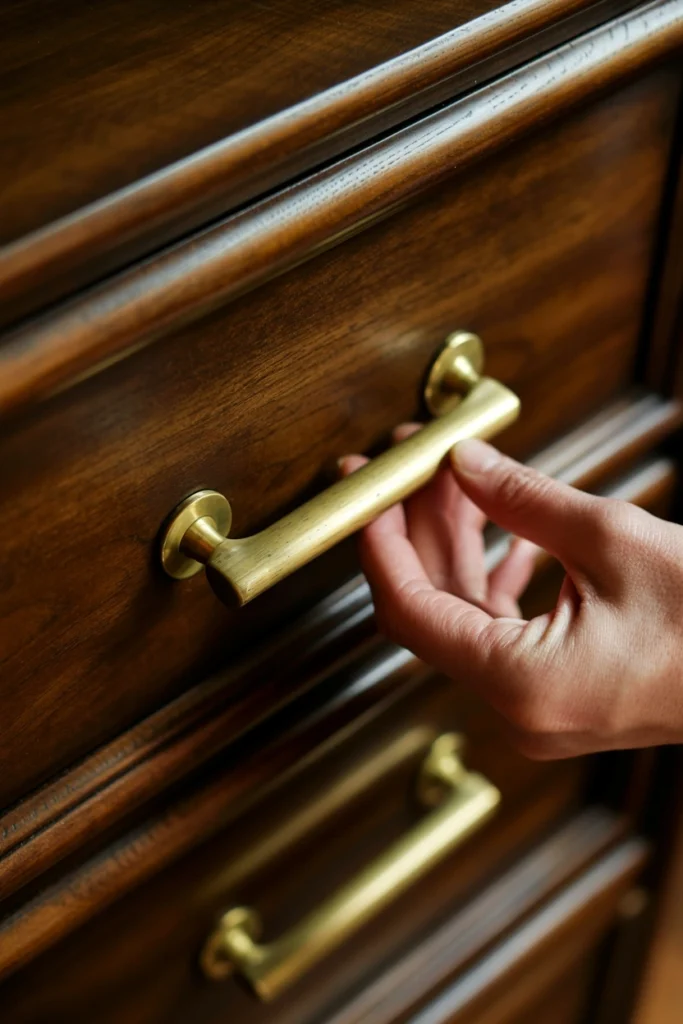
Modern brushed nickel or chrome hardware directly contradicts every other choice on this list. This single detail signals a mismatch that undermines the entire palette even when everything else is executed correctly. Swapping hardware is one of the cheapest fixes on this entire list.
Replace every drawer pull and knob in the room with unlacquered brass or aged bronze hardware, budgeting roughly $3-8 per pull. A dresser with mismatched modern chrome pulls collapses the antique illusion, and swapping to brass restores it in under 20 minutes per drawer. This is consistently the highest-impact, lowest-cost change on the entire list.
| Hardware Finish | Cost Per Pull | Installation Time |
| Unlacquered brass | $4-8 | 5 minutes per pull |
| Aged bronze | $5-9 | 5 minutes per pull |
| Black iron | $3-6 | 5 minutes per pull |
| Antique gold | $6-10 | 5 minutes per pull |
Build Moody, Layered Lighting
Flat overhead lighting eliminates the mood a whimsigoth bedroom depends on. This section covers how to build depth through multiple, layered light sources.
10. Layer Three Light Sources at Different Heights
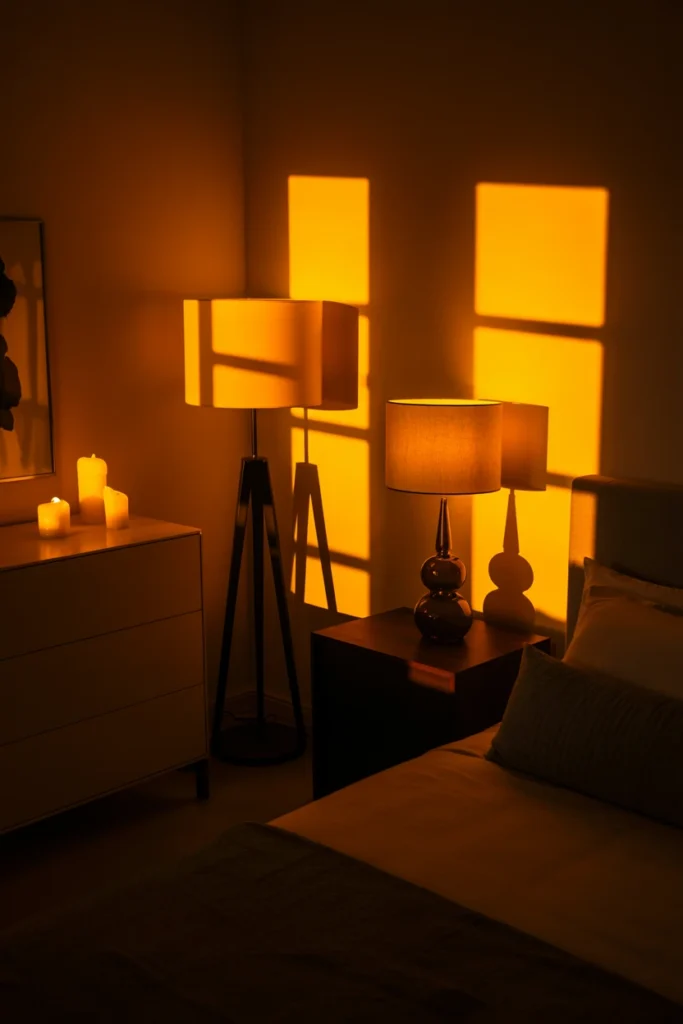
Relying on a single overhead fixture flattens every texture and color choice made in the room. This single light source removes shadow and depth, making even a well-styled room look sterile at night. Layering light at three heights solves this without any electrical work.
Combine a floor lamp, a table or wall-mounted lamp, and candlelight so light sources sit at three different heights around the room. This creates shadow variation across the walls that a single ceiling fixture can never replicate. The result directly eliminates the flat, showroom look that undermines most bedroom lighting setups.
| Light Height | Fixture Type | Placement |
| Low (0-2 ft) | Candles, floor lamp base | Corners, bedside floor |
| Mid (2-4 ft) | Table lamp, sconce | Nightstand, wall beside bed |
| High (4-6 ft) | Floor lamp head, pendant | Reading corner, above dresser |
11. Install Warm, Dimmable Bulbs Instead of Daylight LEDs
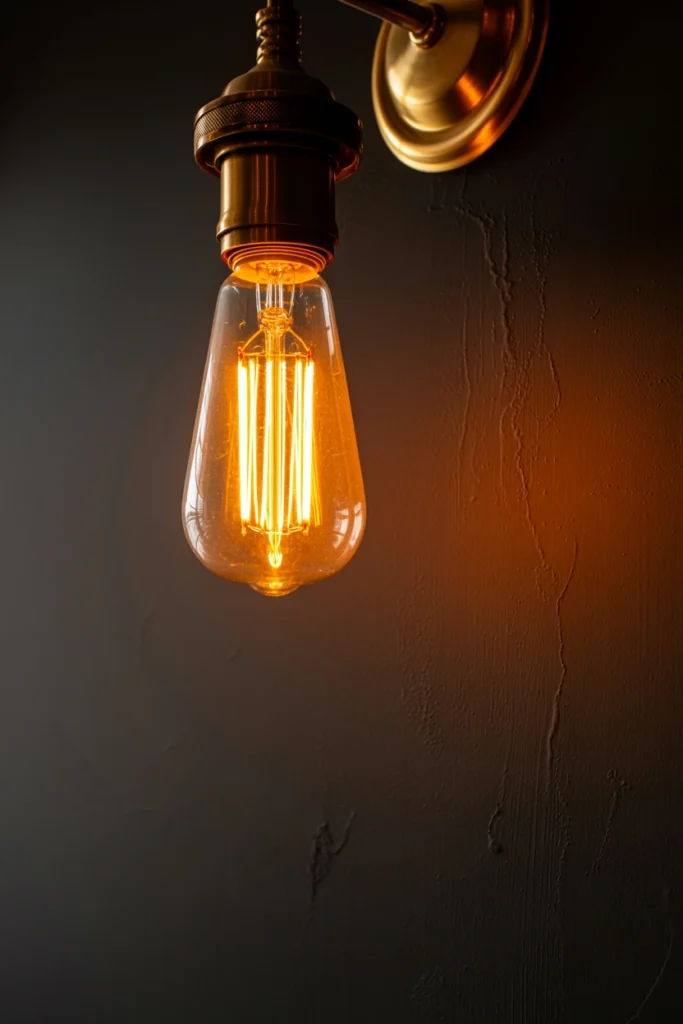
Cool white or daylight bulbs cast a clinical tone that directly conflicts with a whimsigoth color palette. This mismatch washes out jewel tones and makes brass hardware look dull instead of warm. Switching bulb temperature fixes this in under five minu
Replace every bulb in the room with 2200K-2700K warm bulbs on a dimmer, avoiding anything above 3000K. This range renders reds and golds accurately, while daylight bulbs above 4000K desaturate exactly the tones this aesthetic depends on. The unexpected bonus is that dimmable warm bulbs cut visible dust and texture flaws that harsher light exposes.
| Bulb Temperature | Visual Effect | Best Use |
| 2200K | Candlelight-like, amber | Bedside lamps |
| 2700K | Soft warm white | Main room lighting |
| 3000K | Neutral warm | Closet, task areas |
| 4000K+ | Avoid entirely | Not recommended |
12. Group Candles for Ambient, Flickering Light
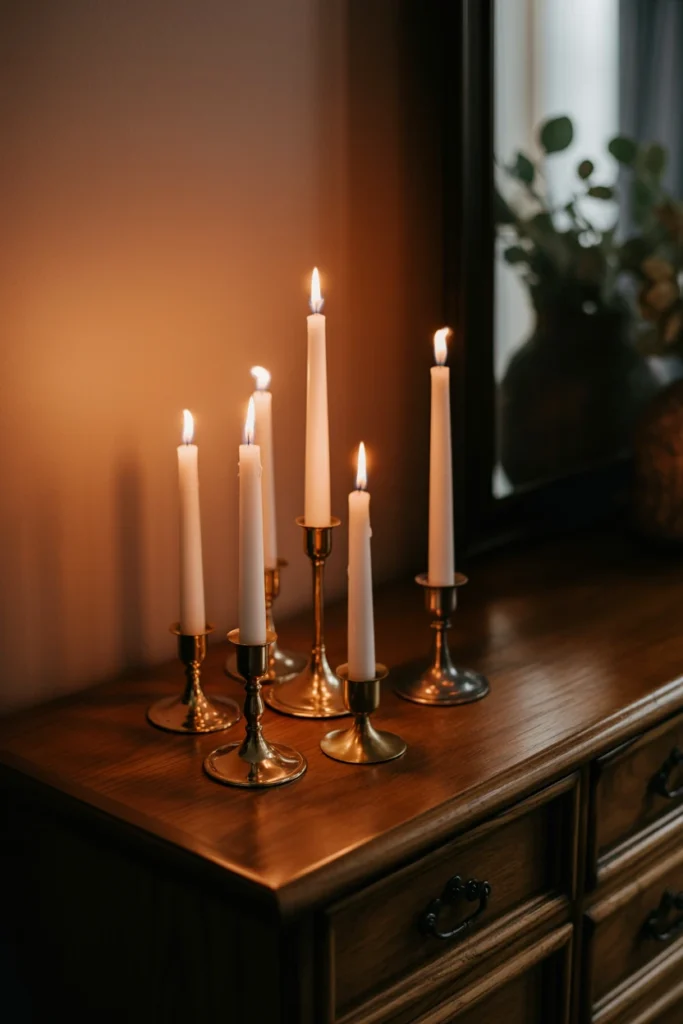
A single candle on a nightstand adds almost no visible ambiance to the room. This underuse wastes one of the most affordable and effective tools in the entire aesthetic. Grouping candles in clusters of three or more solves this immediately.
Place candles in groups of 3-5 at varying heights using inexpensive candlesticks or a tiered tray, positioned on a dresser top or windowsill. Odd-numbered groupings read as intentional and collected, while a single candle reads as an afterthought. This creates the flickering, moody light source that photographs and feels the most distinctly whimsigoth.
| Candle Group Size | Best Placement | Approx. Cost |
| 3 candles | Nightstand, windowsill | $12-20 |
| 5 candles | Dresser top, tiered tray | $20-35 |
| 7+ candles | Fireplace mantle, large shelf | $35-55 |
| Use flameless for | Rentals, near curtains | $15-30 |
Style Witchy Accents and Finishing Touches
The base layers are now in place. This section covers the small, specific accents that push a room from dark bedroom into distinctly whimsigoth territory.
13. Hang a Vintage or Ornate-Framed Mirror
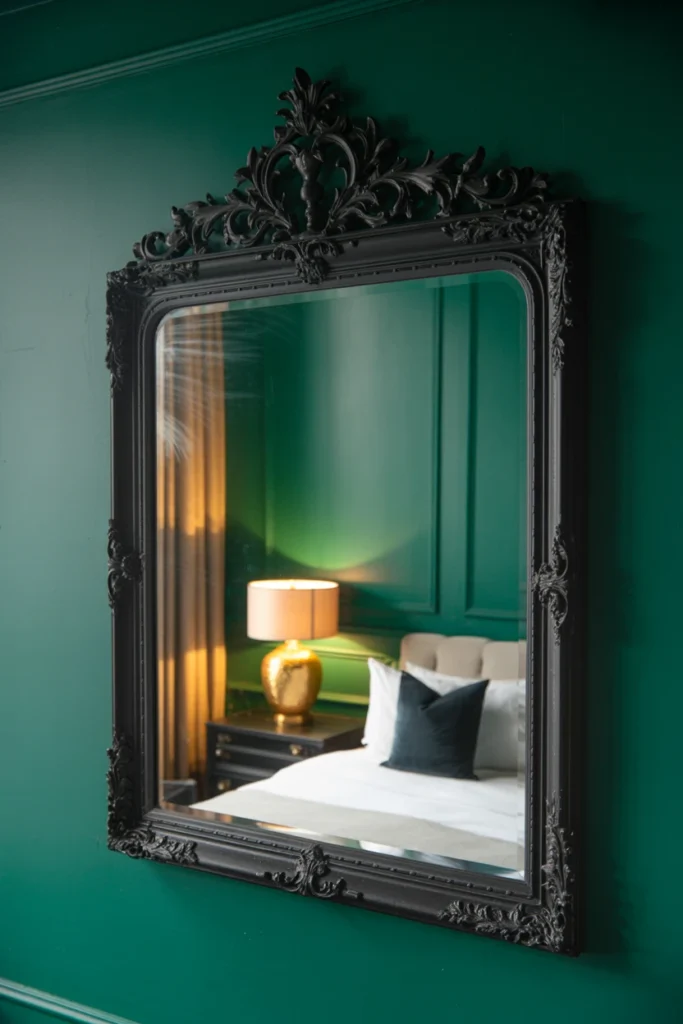
A plain modern mirror does nothing to reinforce the aesthetic and often looks out of place against antique furniture. This mismatch is a small detail, but it breaks the illusion in a room where every surface is otherwise coordinated. An ornate-framed mirror closes that gap immediately.
Choose a mirror with a black, gold, or dark wood ornate frame, sized at minimum 24 inches on its shortest side, and hang it opposite the room’s main light source. This placement doubles the perceived light in the room while reinforcing the vintage aesthetic. A well-placed ornate mirror consistently ranks as one of the most photographed elements in whimsigoth bedrooms.
| Mirror Size | Best Room Size | Frame Style |
| 18-24 inch | Small bedroom, above dresser | Black ornate |
| 24-36 inch | Mid-size bedroom, wall feature | Gold baroque |
| 36-48 inch | Large bedroom, statement piece | Dark wood carved |
| Full-length | Any size, functional + decor | Arched black iron |
14. Create an Apothecary-Style Shelf Vignette
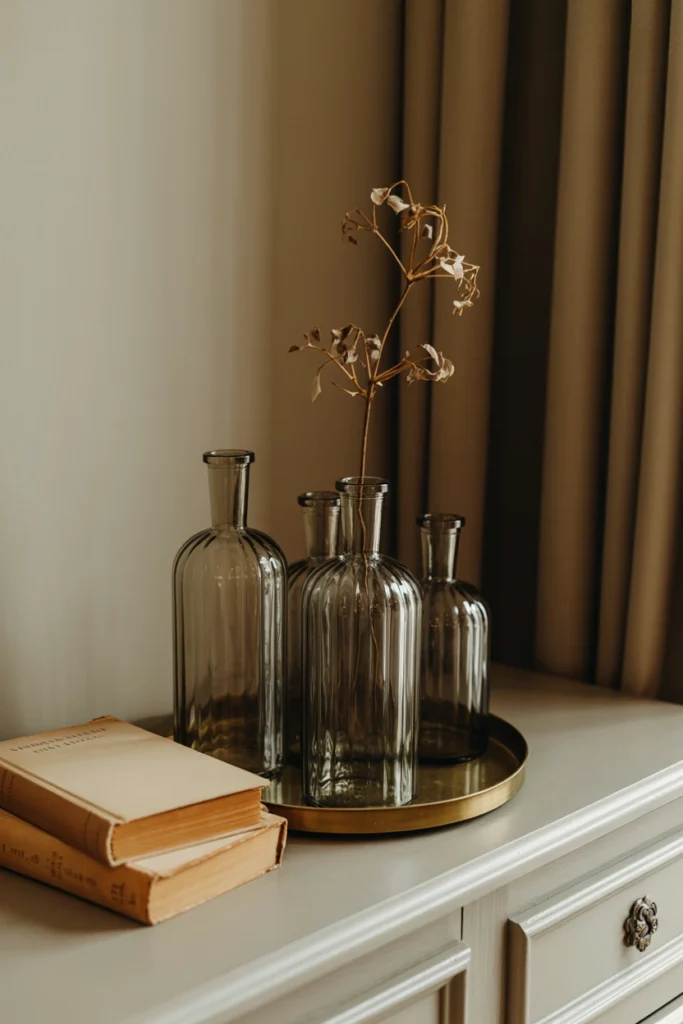
An empty dresser top or shelf leaves the room feeling unfinished even after major furniture and lighting changes. This gap is where most people stop, leaving the room 80% complete instead of fully styled. A small apothecary-style vignette finishes the look in under an hour.
Group 5-7 items on one shelf or dresser top, mixing glass bottles, a small brass tray, a stack of 2-3 books, and one dried botanical element. Vary the height of each item so the tallest piece sits at the back and the shortest at the front. This layered arrangement reads as curated and collected rather than randomly placed decor.
| Vignette Item | Height Role | Source |
| Tall glass apothecary bottle | Back, tallest | Thrift store, $5-15 |
| Stack of 2-3 books | Middle | Secondhand, $2-5 each |
| Small brass tray | Base layer | New or vintage, $10-20 |
| Dried botanical stem | Front, shortest | Craft store, $4-8 |
15. Add Dried Florals Instead of Fresh Arrangements
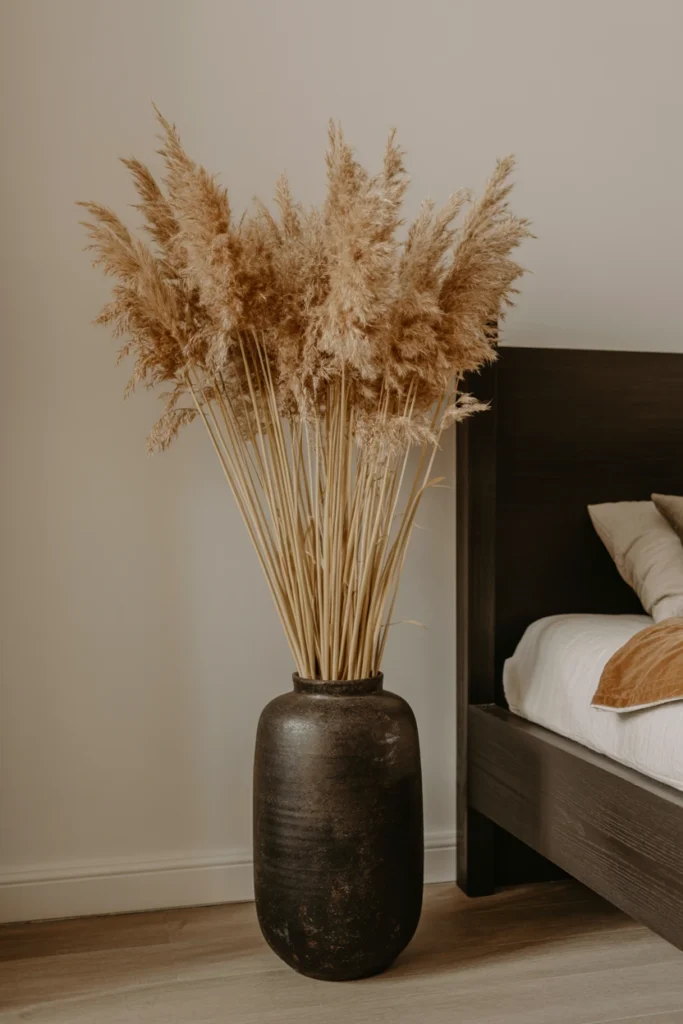
Fresh flowers wilt within a week and require constant replacement, which most people abandon within a month. This upkeep gap leaves vases empty for most of the year, removing a key softening element from the room. Dried florals solve the maintenance problem permanently.
Use dried pampas grass, eucalyptus, or lavender stems in a dark ceramic or glass vase, positioned on the floor beside the bed or on the dresser. Choose stems at least 24 inches tall for floor placement so they add visible height to the room’s negative space. Dried florals last 1-2 years with zero maintenance, compared to fresh arrangements needing weekly replacement.
| Dried Flower | Vase Placement | Lifespan |
| Pampas grass | Floor vase, corner | 2+ years |
| Dried lavender | Nightstand, small vase | 1-2 years |
| Eucalyptus stems | Dresser, mid-height vase | 1 year |
| Dried baby’s breath | Bedside, small bud vase | 1-2 years |
Maintain and Refresh Your Whimsigoth Bedroom
A whimsigoth bedroom loses its impact without ongoing upkeep. These habits keep the room looking intentional long after the initial setup.
16. Rotate Seasonal Accents Every Few Months
A room that never changes starts to feel static and stops registering as a curated space to anyone living in it daily. This staleness is a common reason people abandon a themed bedroom within a year. A simple seasonal rotation schedule prevents this.
Swap one throw pillow color, one candle scent, and the dried floral arrangement every 3-4 months to match seasonal jewel tones. This keeps the core palette intact while refreshing roughly 10-15% of visible decor at a time. The unexpected bonus is that seasonal rotation costs under $40 per swap instead of a full redecoration.
| Season | Swap Focus | Approx. Cost |
| Fall/Winter | Deep burgundy, amber candles | $25-40 |
| Spring | Sage green accents, florals | $20-35 |
| Summer | Lighter linens, fewer layers | $15-30 |
| Year-round base | Black, brass, dark wood stay | $0 |
17. Dust and Condition Dark Wood Furniture Monthly
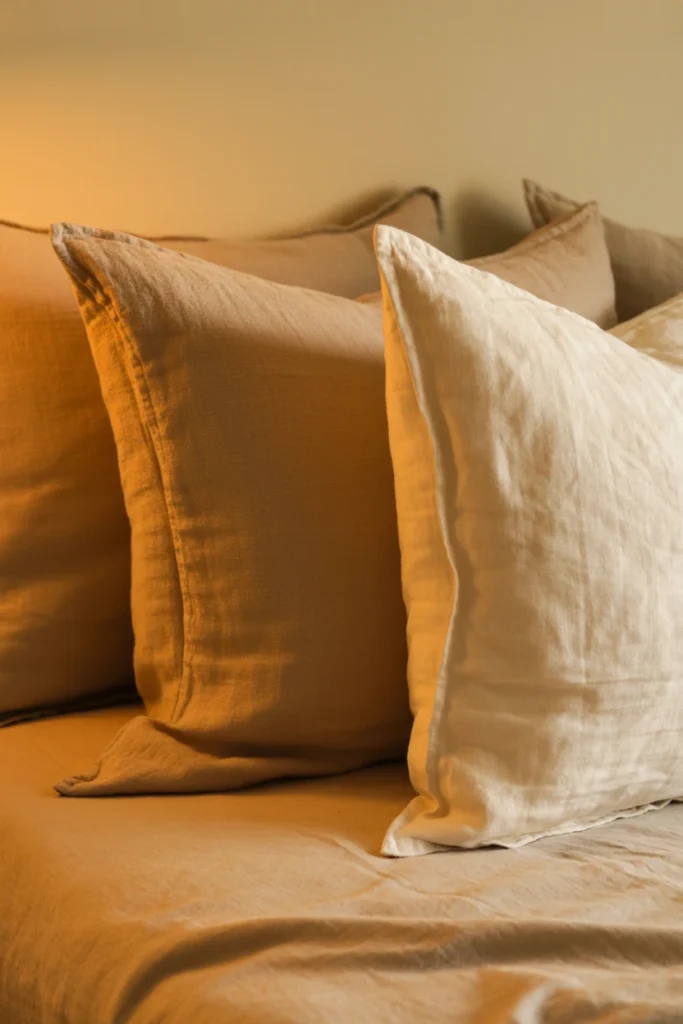
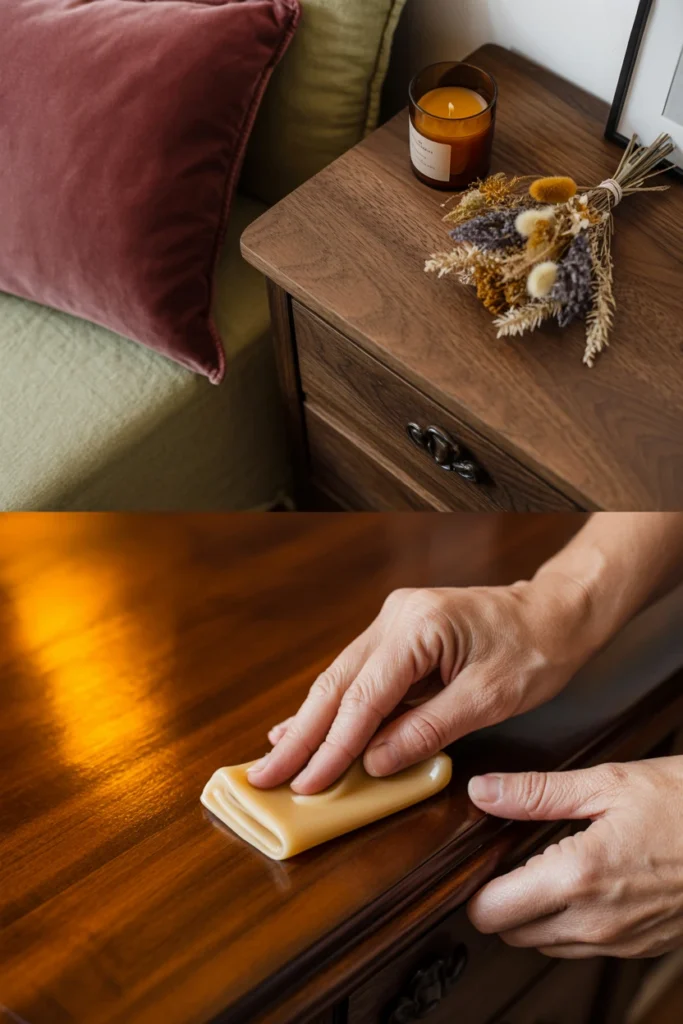
Dark wood furniture shows dust and water rings far more visibly than lighter finishes, and neglect ages the wood prematurely. This visible buildup undercuts the antique, well-kept aesthetic the room is built around. A monthly conditioning routine keeps the furniture looking intentional rather than neglected.
Dust every wood surface weekly with a microfiber cloth and apply a beeswax or lemon oil furniture conditioner once per month. This routine takes under 15 minutes per piece and prevents the dry, dull finish that makes antique furniture look cheap instead of well-maintained. Consistently conditioned wood also resists cracking in low-humidity winter months.
| Task | Frequency | Time Required |
| Dust with microfiber cloth | Weekly | 5 minutes |
| Beeswax conditioning | Monthly | 10-15 minutes |
| Deep clean hardware | Every 3 months | 15 minutes |
| Check for dryness/cracking | Every 6 months | 5 minutes |
18. Edit Clutter Before Adding Anything New
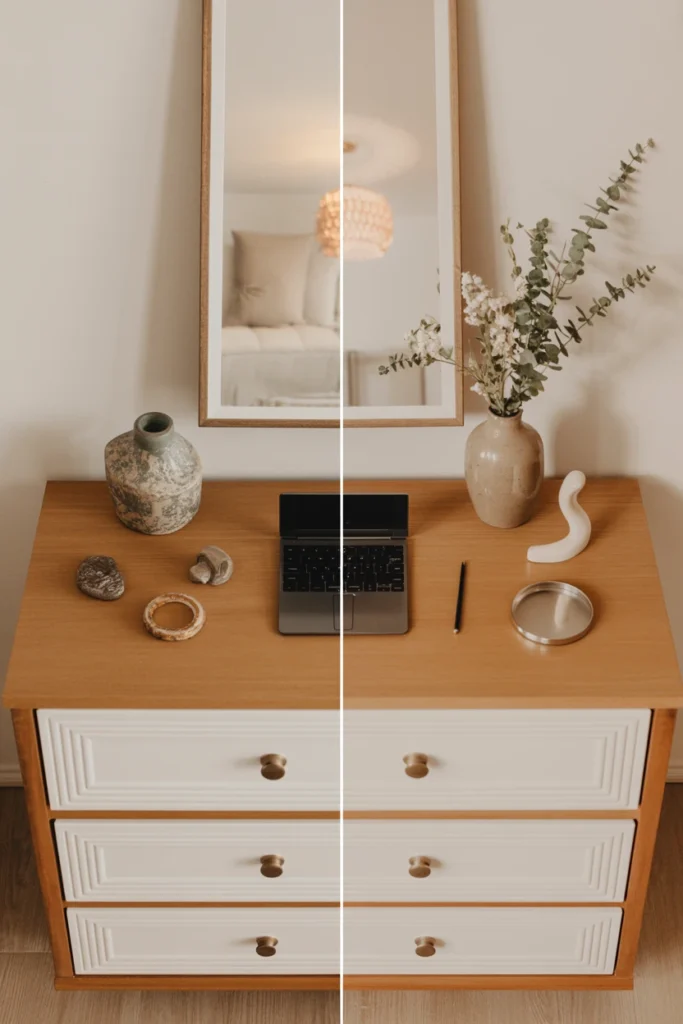
Whimsigoth is frequently confused with maximalism, and unchecked additions eventually tip a curated room into visual chaos. This creep happens gradually, one small purchase at a time, until the room no longer reads as intentional. A simple one-in-one-out rule prevents this permanently.
Before adding any new decor item, remove one existing item from the same surface, keeping every vignette at a maximum of 7 objects. This one-in-one-out rule keeps the collected-not-cluttered balance that separates whimsigoth from generic gothic maximalism. The unexpected result is that editing down often makes existing pieces stand out more than adding new ones ever would.
| Surface | Max Item Count | Edit Trigger |
| Dresser top | 5-7 items | Adding a new piece |
| Nightstand | 3-4 items | Surface feels crowded |
| Shelf | 6-8 items | Items start overlapping |
| Windowsill | 3-5 items | Blocking natural light |
Common Whimsigoth Bedroom Mistakes That Kill the Aesthetic
These eight mistakes are the most frequent reasons a whimsigoth bedroom reads as cluttered gothic instead of romantic and curated.
| Mistake | Why It Hurts the Space | Better Alternative |
| Using cool-white LED bulbs | Washes out jewel tones and brass | Switch to 2200-2700K warm bulbs |
| Buying a matched new furniture set | Removes the collected-over-time feel | Mix 2+ wood tones from secondhand sources |
| Keeping chrome or nickel hardware | Breaks the antique illusion instantly | Swap to unlacquered brass pulls |
| Overcrowding every surface | Tips curated into cluttered maximalism | Cap vignettes at 5-7 items, edit monthly |
| Skipping the light source layering | Leaves the room flat and shadowless | Add floor lamp, table lamp, and candles |
| Using fresh flowers only | Vases sit empty most of the year | Use dried pampas grass or lavender |
| Painting walls dark without testing light | Room reads as a cave, not moody | Photograph light at 3 times of day first |
| Treating black as a small accent | Leaves the room looking timid, unfinished | Apply black to 40%+ of visible surfaces |
Whimsigoth Bedroom Ideas by Situation
Small bedroom or apartment
A small whimsigoth bedroom needs every surface working double duty, since there is no room for purely decorative furniture. The core constraint here is preventing the dark palette from making the space feel smaller than it already is.
Key strategies for small bedroom or apartment:
- Hang a full-length ornate mirror to double perceived floor space
- Use a wall-mounted sconce instead of a floor lamp to save square footage
- Choose a bed frame with under-bed storage built into the base
- Limit the jewel tone accent wall to one wall only, not two
- Group candles on a wall-mounted shelf instead of the floor
- Keep the vignette on the dresser to 5 items maximum
Rental (no paint, no drilling)
Renters face the constraint of achieving the look without permanent wall changes. Removable and freestanding solutions replace every paint or drilling-dependent step on this list.
Key strategies for rental (no paint, no drilling):
- Use removable peel-and-stick wallpaper for the jewel-tone accent wall
- Choose a freestanding floor mirror instead of a wall-mounted one
- Add a tension curtain rod for velvet drapery without drilling
- Use command strips rated for the actual weight of any hung decor
- Swap only the bedding, hardware caps, and lamp shades, not fixed hardware
- Bring furniture with you rather than modifying built-in units
Shared bedroom
A shared bedroom requires balancing one person’s aesthetic preference against a partner’s differing taste. The core constraint is applying whimsigoth without making the room feel one-sided.
Key strategies for shared bedroom:
- Apply the dark palette to shared large surfaces like the bed and rug
- Reserve one nightstand or shelf per person for individual styling
- Choose gender-neutral jewel tones like emerald or midnight blue
- Split the vignette styling so both people select at least one object
- Use dimmable lighting so both preferences for brightness are met
- Avoid overly gendered accents like heavy lace on shared bedding
Budget-conscious
A tight budget means prioritizing which three or four changes deliver the most visible transformation. The constraint here is sequencing, not quality.
Key strategies for budget-conscious:
- Prioritize hardware swaps first since they cost under $10 per drawer
- Buy the bed frame secondhand before any other furniture piece
- Use warm bulb swaps as the second priority after hardware
- Thrift the vignette objects instead of buying them new
- Skip the accent wall paint and use a large textile instead
- Build the candle collection gradually, 2-3 at a time
Frequently Asked Questions
What is a whimsigoth bedroom?
A whimsigoth bedroom blends dark, gothic elements like black hardware and deep jewel tones with soft, witchy, romantic touches like lace, candles, and dried florals. It combines moody color with dreamy texture rather than leaning fully into either style alone. The aesthetic typically features antique furniture, layered lighting, and apothecary-style styling details.
What colors should I avoid in a whimsigoth bedroom?
Stark white, cool grey, and chrome finishes clash with the warm, dark palette a whimsigoth bedroom depends on. These tones read as clinical or modern rather than moody and collected. Sticking to charcoal, jewel tones, and brass keeps the palette cohesive throughout the room.
How do I start a whimsigoth bedroom on a budget?
Start with hardware swaps and warm bulb changes, since both cost under $10 per item and deliver immediate visible impact. Add a secondhand bed frame or mirror as the first larger purchase once the smaller swaps are complete. Building the room in this order keeps early spending low while the aesthetic still takes shape quickly.
How do I do whimsigoth decor in a small bedroom?
Use a full-length ornate mirror to expand the perceived space and limit the accent wall to a single wall rather than multiple surfaces. Wall-mounted lighting and shelving save floor space that a small whimsigoth bedroom cannot spare. Keeping vignettes capped at 5 items also prevents a small room from feeling cluttered.
How do I choose between gothic and boho decor?
Gothic decor leans fully into black, iron, and sharp lines, while whimsigoth softens that with lace, dried florals, and warm brass accents. If the room needs to feel romantic and collected rather than stark, whimsigoth is the better fit than pure gothic. The deciding factor is usually how much texture and warmth the room needs against its dark base.
How often should I refresh a whimsigoth bedroom?
Rotate small accents like pillows, candle scents, and floral arrangements every 3-4 months to keep the room feeling current. The core palette of black, brass, and dark wood should stay consistent year-round. This seasonal approach costs under $40 per rotation instead of a full redecoration.
Does whimsigoth work for a shared bedroom?
Whimsigoth works in a shared bedroom when the dark palette is applied to shared surfaces and each person gets a dedicated area for individual styling. Choosing gender-neutral jewel tones like emerald or midnight blue helps the look feel balanced for both people. Splitting vignette styling duties also prevents the room from feeling one-sided.
How much does it cost to decorate a whimsigoth bedroom?
A starter whimsigoth bedroom using secondhand furniture and small swaps costs roughly $300-500 total. A full room with one antique statement piece typically runs $800-1200, while a fully custom setup can exceed $2000. Hardware and lighting swaps remain the lowest-cost, highest-impact changes at any budget level.
How do I keep dark furniture looking good long term?
Dust dark wood weekly with a microfiber cloth and apply a beeswax or lemon oil conditioner once a month to prevent dullness and cracking. This routine takes under 15 minutes per piece and keeps antique furniture looking well-maintained rather than neglected. Consistent conditioning also protects the wood through low-humidity winter months.
Conclusion
A whimsigoth bedroom comes down to one locked color palette, layered lighting, and furniture with real character instead of flat modern lines. Start with the three foundation steps: lock the palette, test the light, and set a split budget before buying anything else. Swap your hardware to brass and your bulbs to warm white this week, since both changes cost under $50 combined and deliver the most visible shift.
The full transformation depends on consistent small habits, not one large purchase or a single weekend project. A room built on deep color, warm light, and collected antique detail holds its character for years.