
A whimsigoth bedroom transforms a plain room into a moody, romantic retreat built on jewel tones, velvet, and antique detail. This aesthetic blends witchy darkness with boho softness, creating a space that feels curated instead of costume-like. This guide delivers 24 specific, actionable steps for building that look from the ground up. Start with your color palette before buying a single decor piece.
Before You Begin: 4 Foundation Steps for a Whimsigoth Bedroom
Every successful whimsigoth bedroom starts with three decisions made before any shopping happens. Skipping these steps leads to a room that feels random instead of intentional.
1. Choose Your Whimsigoth Color Palette First
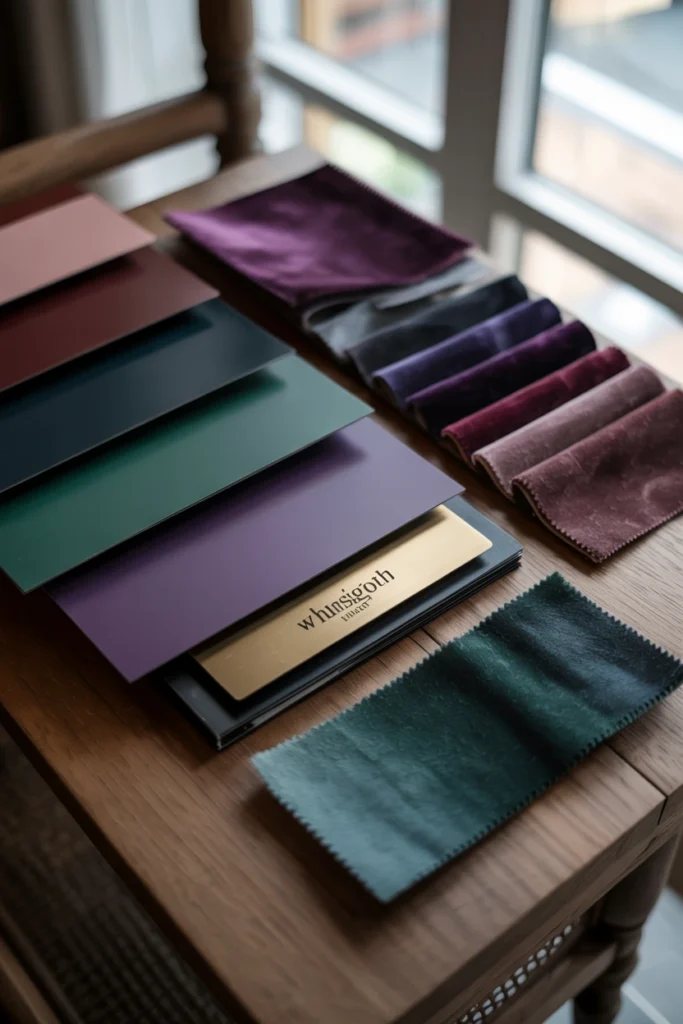
Random color choices are the fastest way to make a whimsigoth room feel chaotic. Without a locked palette, every new piece you buy fights the last one instead of building on it, and the room reads as cluttered rather than curated. A locked three-color palette creates instant visual cohesion across furniture, textiles, and accessories.
Start by picking one dominant dark base color: deep forest green, burgundy, or charcoal plum. Pair it with one jewel accent — amethyst purple or emerald — and one metallic, ideally antique brass or aged gold. This three-color system prevents decision fatigue on every future purchase and keeps thrifted finds cohesive automatically.
| Base Color | Best Accent Pairing |
| Deep forest green | Amethyst purple + antique brass |
| Burgundy | Emerald green + aged gold |
| Charcoal plum | Dusty rose + pewter |
| Black-brown | Deep teal + antique brass |
2. Assess Your Room’s Natural Light Before Committing to Dark Walls
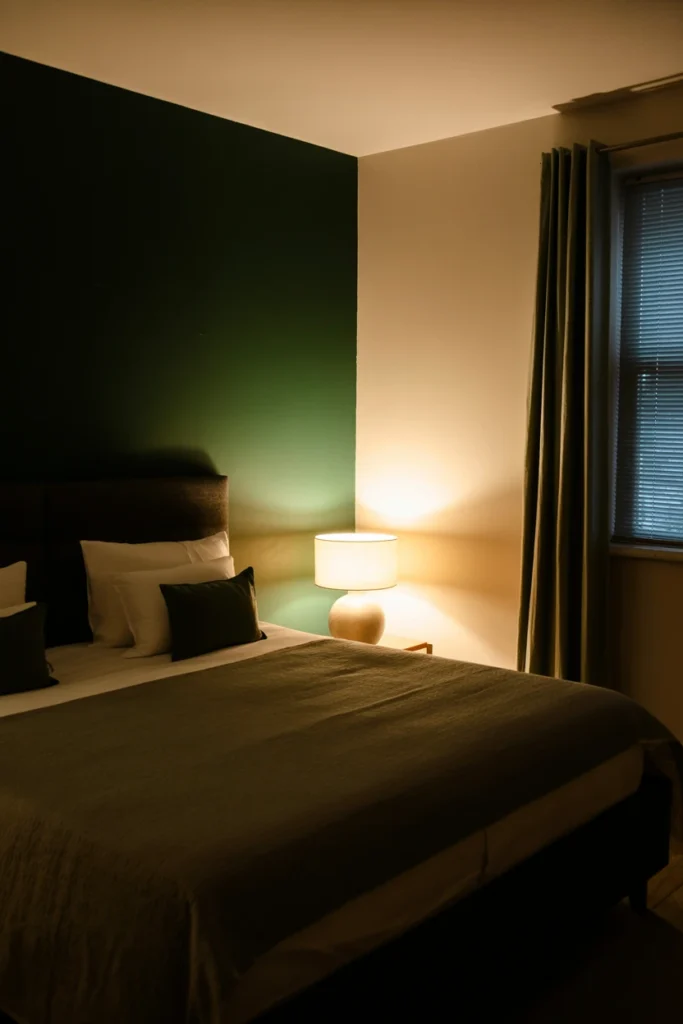
Dark walls in a low-light room can flatten the space instead of making it feel cozy. A north-facing bedroom with limited windows absorbs dark paint differently than a south-facing room, and the wrong call here costs you a full repaint. Matching your wall treatment to your actual light levels protects the moody effect without sacrificing usability.
Check your room’s light exposure at 2 p.m., the hour dark rooms read darkest. If natural light is limited, paint only one accent wall in a deep tone and keep the remaining three walls in a warm off-white or greige instead of full dark saturation. This single adjustment keeps the whimsigoth mood intact while preventing the room from feeling like a cave.
| Light Level | Wall Treatment |
| Full sun, 4+ hours direct | All four walls in dark jewel tone |
| Moderate, 2–4 hours | One accent wall dark, rest warm neutral |
| Low, under 2 hours | Dark trim and ceiling only, walls neutral |
| No direct sun | Dark textiles and furniture, walls light |
3. Map Out a Focal Wall for Your Bed
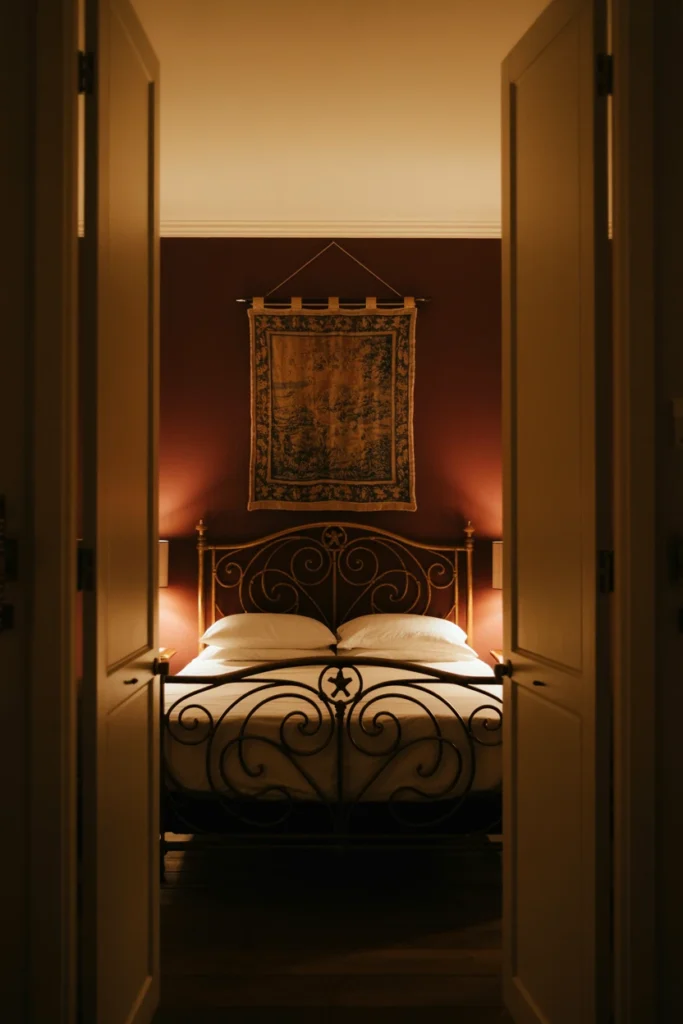
A bedroom without a clear focal point scatters the eye across every surface at once. This forces every other decor choice to compete for attention instead of supporting one central visual anchor, which is what separates a styled room from a decorated one. Designating the bed wall as your single focal point solves this before you place a single object.
[IMAGE ALT: Bed positioned as focal wall with tapestry and layered lighting] [credits: source]
Choose the wall opposite the door for your bed placement, since this wall receives the most visual traffic when someone enters the room. Reserve your darkest paint, tapestry, or largest art piece exclusively for this wall, and keep the remaining three walls visually quieter by comparison. This hierarchy makes the whole room feel more intentional the moment someone walks in.
| Wall Element | Focal Wall Only |
| Darkest paint color | Yes |
| Largest art or tapestry | Yes |
| Statement mirror | No — place on side wall |
| Open shelving | No — place on side wall |
4. Set a Realistic Budget Before Buying Any Decor
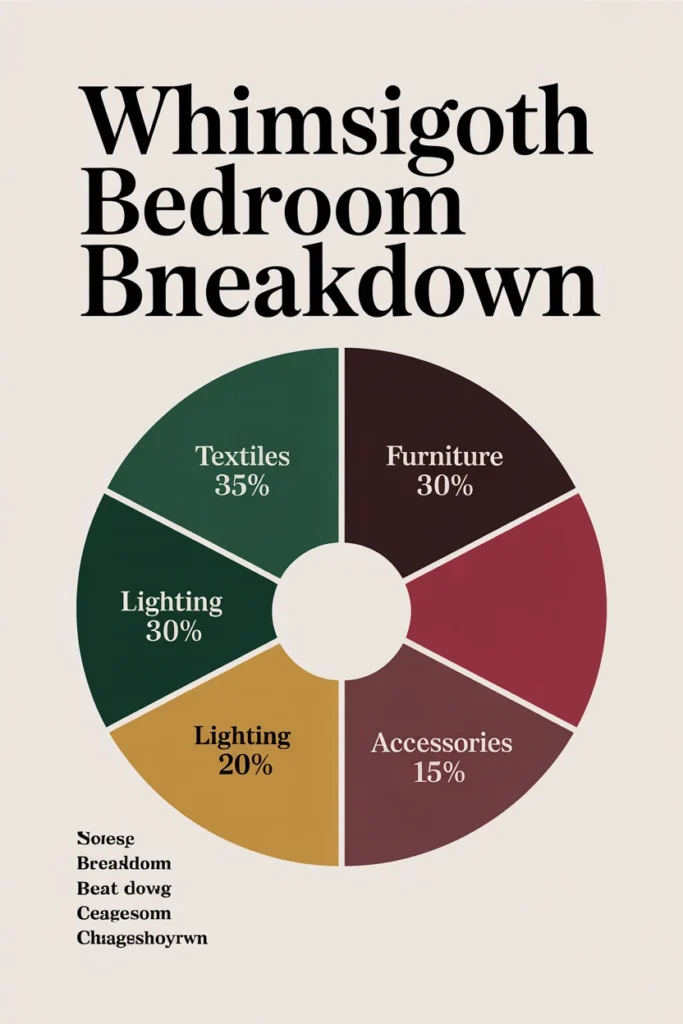
Whimsigoth rooms rely heavily on antique and vintage pieces, which vary wildly in price from thrift stores to specialty dealers. Without a budget split across categories, it’s easy to overspend on one statement piece and have nothing left for lighting or textiles, leaving the room half-finished. A category-based budget keeps every layer of the room funded.
Split your total budget into four categories before shopping: 35% textiles, 30% furniture, 20% lighting, 15% accessories and art. This ratio reflects how much visual weight each category carries in the finished room, with textiles and furniture doing the heaviest lifting. Following this split also stops impulse purchases on accessories before the foundational layers are covered.
| Budget Category | Allocation |
| Textiles (bedding, throws, tapestry) | 35% |
| Furniture (bed frame, nightstand) | 30% |
| Lighting (lamps, string lights, candles) | 20% |
| Accessories and wall art | 15% |
Layering Jewel Tones and Velvet Textiles
Textiles carry most of the whimsigoth mood, since fabric texture and color do more work than any single furniture piece. This section covers the exact layering order that keeps a jewel-toned bedroom feeling rich instead of heavy.
5. Build Your Base Layer with a Deep Jewel-Toned Bedspread
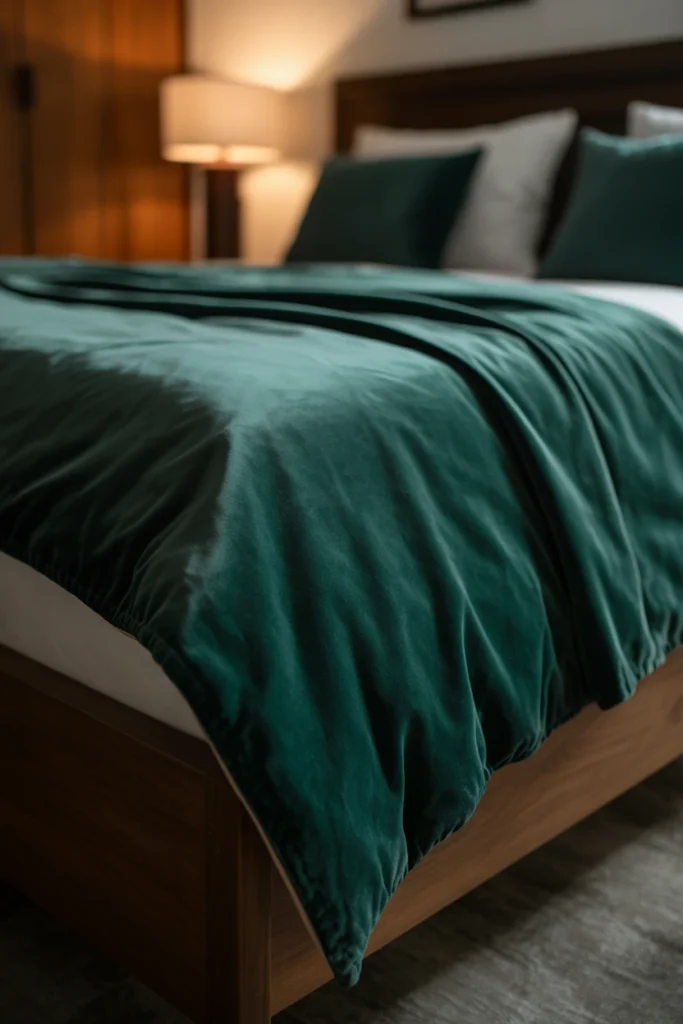
A plain white or gray bedspread instantly cancels out every other whimsigoth element in the room. It forces the eye toward a neutral center point instead of the moody palette you’ve built everywhere else, undercutting the entire aesthetic at its largest surface. Replacing it with a jewel-toned base fixes the room’s biggest visual anchor in one purchase.
Buy a solid bedspread in your chosen accent color — emerald, amethyst, or deep burgundy — in a velvet or velvet-blend fabric. Size it to drape at least 12 inches past the mattress edge on both sides for a fuller, more romantic silhouette. This single swap does more to shift the room’s mood than any wall color change.
| Bedspread Color | Room Mood Created |
| Emerald velvet | Lush, forest-witch mood |
| Amethyst velvet | Mystical, cool-toned mood |
| Burgundy velvet | Warm, romantic-gothic mood |
| Charcoal plum velvet | Moody, understated mood |
6. Layer Three Textures on Every Surface

A bedroom with only one fabric texture reads as flat under lamp light no matter how dark or rich the color is. Whimsigoth relies on texture contrast to create visual depth, and a single-texture room loses that dimension entirely, looking staged rather than collected. Layering three distinct textures per surface fixes this instantly.
On the bed, combine velvet, a sheer or lace overlay, and one knit or fringed throw across the foot of the bed. Repeat this three-texture rule on the nightstand and window treatments so no single surface in the room stays texture-flat. This layering catches candlelight differently across each surface, adding movement to the room after dark.
| Texture Combo | Where to Apply |
| Velvet + lace + knit | Bed |
| Velvet + brocade | Curtains |
| Wood grain + metal + fabric | Nightstand vignette |
| Rattan + velvet cushion | Reading chair |
7. Add a Fringed or Tasseled Throw Blanket

A bedroom without fringe or tassels loses one of the aesthetic’s most identifiable signatures. This detail is what separates whimsigoth from generic dark academia or plain moody decor, and skipping it makes the room read as one style short of complete. One fringed throw solves this in a single low-cost addition.
Drape a fringed or macramé-edged throw diagonally across the foot of the bed or over one corner, letting the fringe hang at least 4 inches past the blanket edge. Choose a contrasting color to your bedspread — a mustard or rust fringe against emerald velvet works especially well. The fringe catches shadow under lamp light, adding texture that a flat-edged blanket never achieves.
| Fringe Length | Visual Effect |
| Under 2 inches | Barely noticeable, skip it |
| 4 inches | Balanced, recommended minimum |
| 6 inches | Bold, statement fringe |
| 8+ inches | Overwhelming on a small throw |
8. Mix Velvet with One Contrasting Rough Texture
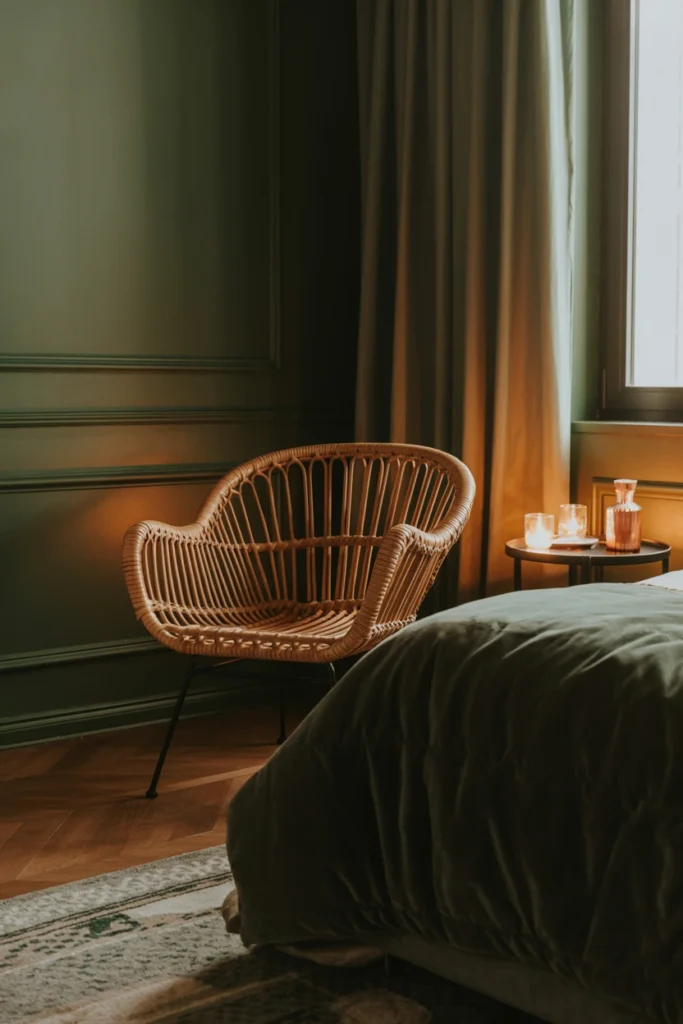
An all-soft room, even with good color, starts to feel one-dimensional after the first week of living in it. Velvet alone lacks the grounding weight that whimsigoth spaces need to avoid feeling like a plush hotel room instead of a lived-in mystical space. Adding one rough or natural texture per room corrects this imbalance.
Introduce one rattan, wicker, or raw wood piece — a chair, basket, or side table — into the room to offset the velvet and lace layers. Position it near the softest textile cluster, such as beside the bed, so the contrast reads immediately at eye level. This single rough element keeps the room from tipping into overly precious or costume-like territory.
| Rough Texture Item | Placement |
| Rattan chair | Beside bed or in corner |
| Wicker basket | Under nightstand |
| Raw wood shelf | Above dresser |
| Woven jute rug | Under bed, partial coverage |
Choosing Whimsigoth Bedroom Furniture
Furniture sets the structural bones of a whimsigoth room, and the wrong shapes undercut even a perfect color palette. This section covers which pieces to prioritize and how to arrange them for maximum mood.
9. Anchor the Room with a Dark Wood or Wrought Iron Bed Frame
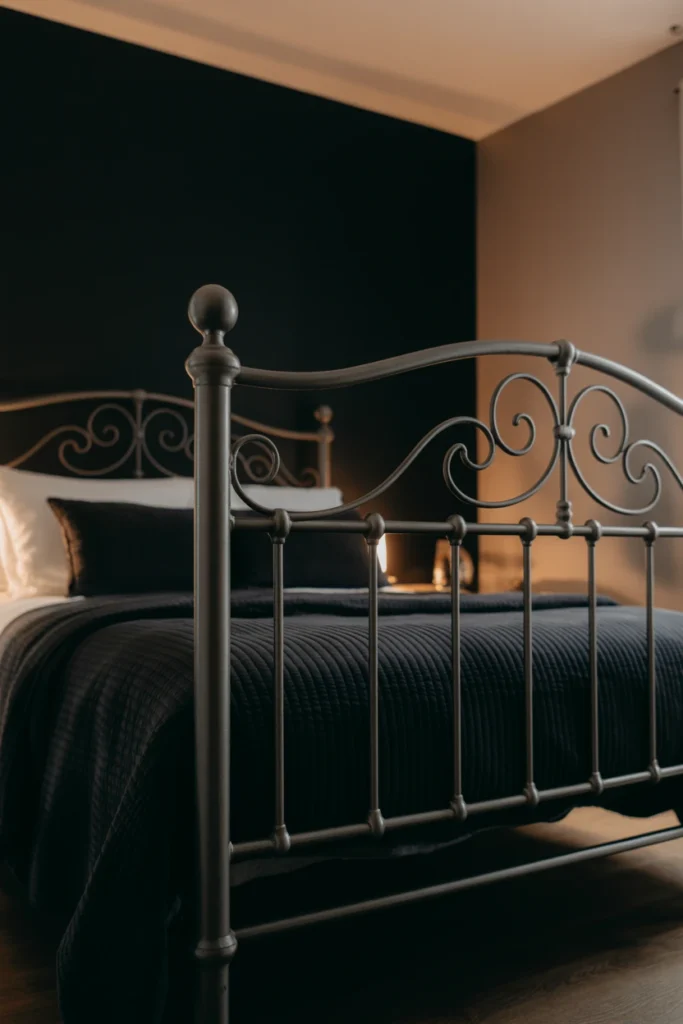
A plain upholstered platform bed lacks the ornate silhouette that whimsigoth rooms depend on for visual interest. Without a distinctive frame, the bed becomes a blank rectangle that no amount of bedding can fully compensate for, leaving the room’s largest object visually forgettable. A dark wood or wrought iron frame fixes this permanently.
Choose a bed frame in dark walnut, mahogany, or black wrought iron with visible scrollwork or turned posts rather than straight, unadorned lines. If buying new isn’t in budget, search secondhand marketplaces for iron frames from the 1980s and 1990s, which are common and inexpensive. This one furniture choice does more to establish the aesthetic than any amount of accessory styling.
| Frame Material | Cost Range (Used) |
| Wrought iron, scrollwork | 80–250 |
| Dark walnut, carved | 150–400 |
| Mahogany, four-poster | 300–700 |
| Black metal, minimal | 60–150 |
10. Install an Antique or Vintage-Style Nightstand
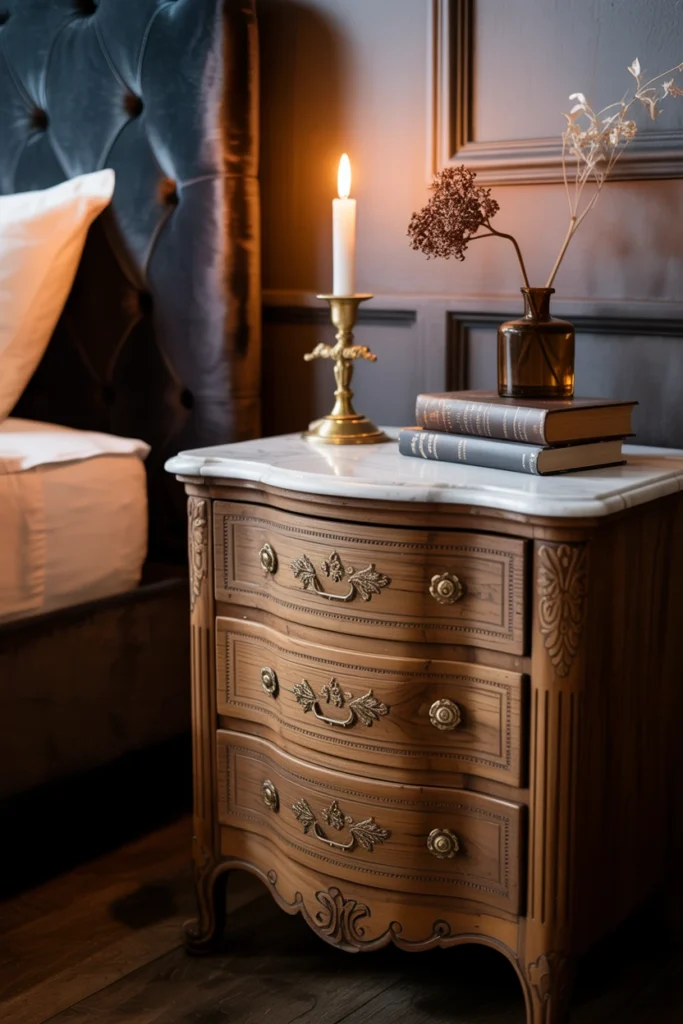
Matching modern nightstands from a big-box furniture set flatten the room’s sense of collected history. Whimsigoth depends on pieces that look gathered over time rather than purchased as a set, and matching nightstands signal the opposite immediately. Swapping in one antique-style piece per side of the bed corrects this.
Replace at least one nightstand with a secondhand or antique-style piece featuring carved details, brass hardware, or a marble top. It does not need to match the other nightstand exactly — mismatched nightstands in a shared dark wood tone read as intentional rather than incomplete. This mismatch is one of the fastest ways to signal an authentically collected room instead of a showroom set.
| Nightstand Detail | Where to Find |
| Carved wood, brass pulls | Estate sales, antique shops |
| Marble-top side table | Vintage furniture stores |
| Trunk or chest as nightstand | Flea markets |
| Wrought iron plant stand | Repurposed, thrift stores |
11. Group Furniture Asymmetrically Instead of in Matching Pairs
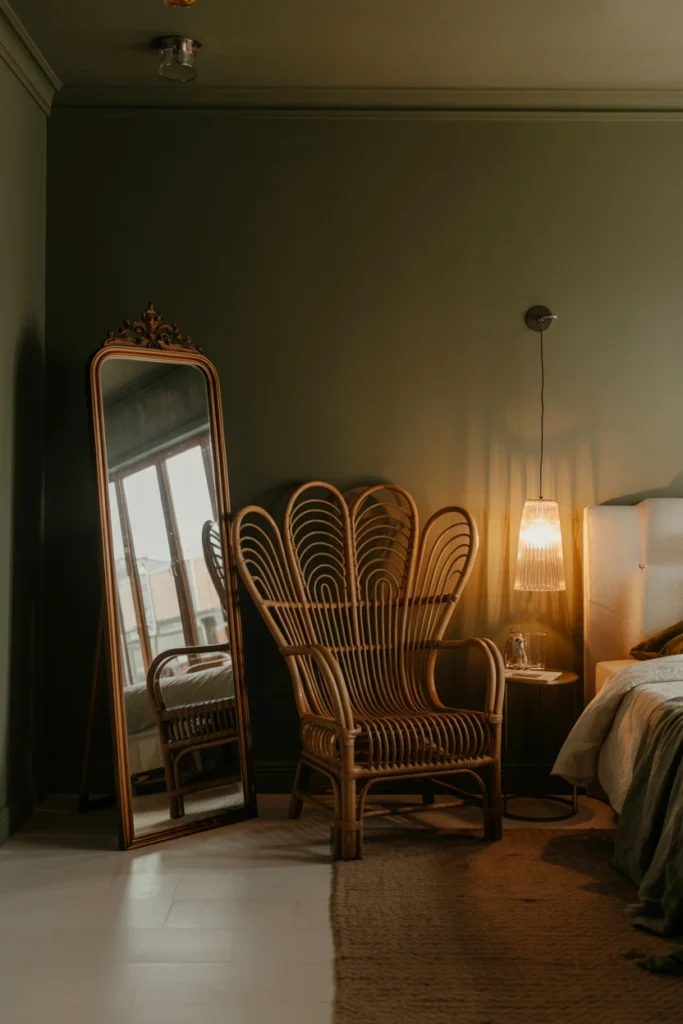
Perfectly symmetrical furniture arrangements read as formal and staged rather than moody and collected. This level of precision works against whimsigoth’s core identity, which relies on the appearance of items gathered over time rather than placed by a showroom designer. Asymmetrical grouping fixes this without buying anything new.
Offset your furniture by height and type instead of mirroring it — pair a tall floor mirror on one side of the room with a lower reading chair and side table cluster on the other. Vary the heights within each grouping by at least 6 inches so the eye moves naturally instead of landing on a flat line. This asymmetry is a hallmark of collected, lived-in gothic interiors.
| Furniture Pairing | Height Variation |
| Tall mirror + low chair | 18+ inches |
| Dresser + floating shelf | 12 inches |
| Nightstand + trunk | 8 inches |
| Bed + reading nook chair | 6+ inches |
12. Replace One Modern Piece with a Thrifted Antique Substitute
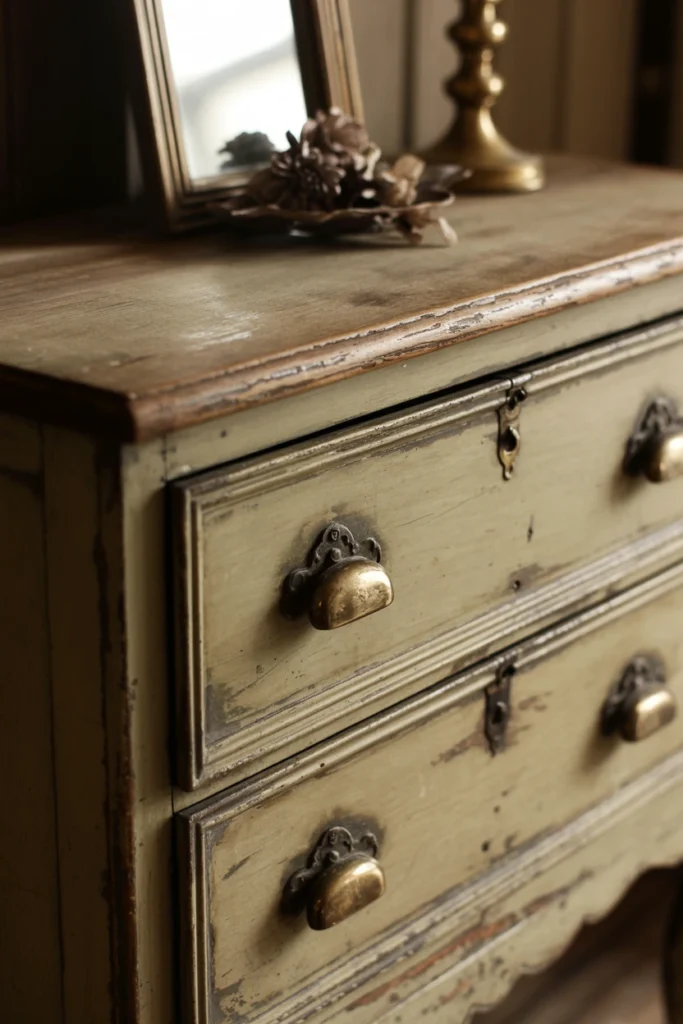
A room built entirely from new furniture, regardless of color, reads as staged rather than authentically whimsigoth. New pieces lack the patina, wear, and irregularity that give the aesthetic its collected-over-decades feeling, and this gap is visible even to casual observers. Swapping just one modern piece for a thrifted equivalent closes this gap.
Pick your least distinctive modern item — often a dresser, side table, or desk chair — and replace it with a secondhand equivalent showing visible age: chipped paint, brass patina, or worn wood grain. One authentically aged piece raises the perceived authenticity of every other item in the room by association. This is the single highest-impact, lowest-cost swap in the entire furniture layer.
| Modern Item to Replace First | Typical Thrift Price |
| Dresser | 40–120 |
| Desk chair | 25–75 |
| Side table | 20–60 |
| Bookshelf | 50–150 |
Lighting for a Moody Whimsigoth Ambiance
Lighting shapes the room’s mood more than any single object, since the same furniture reads completely differently under warm layered light versus a single overhead bulb. This section covers the three-light layering system whimsigoth rooms depend on.
13. Switch Overhead Lighting for Layered Lamp Light
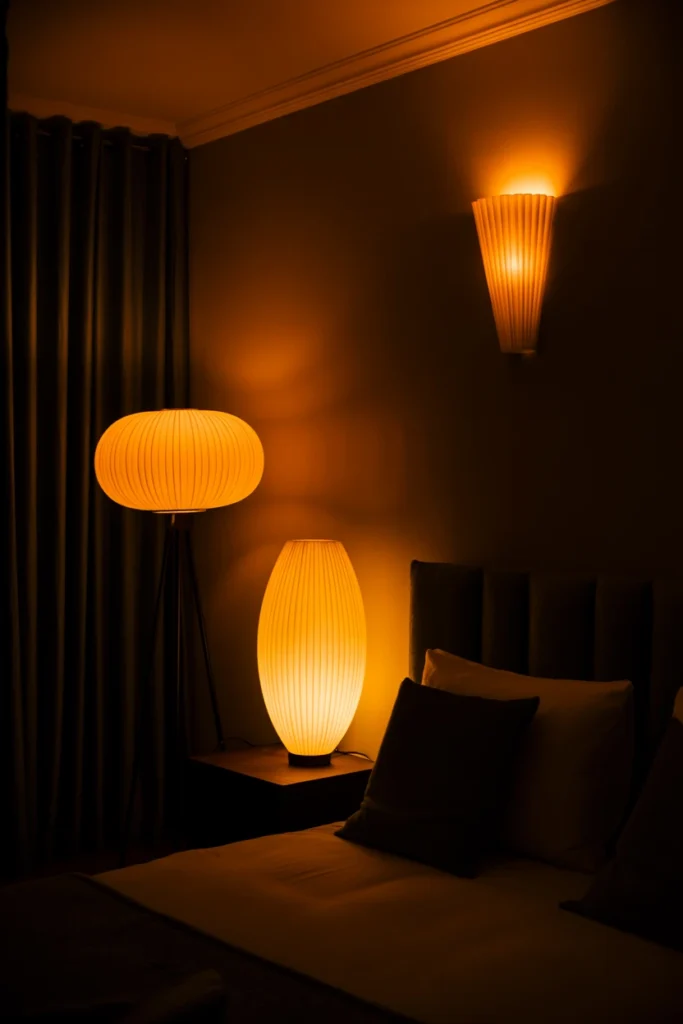
A single overhead fixture flattens shadows and washes out the depth created by dark colors and rich textures. Whimsigoth rooms rely on shadow and warm pooling light to feel mystical, and harsh overhead lighting eliminates that effect entirely, no matter how well the rest of the room is styled. Layering three lower light sources instead solves this.
Turn off or dim the overhead fixture and install at least three separate light sources at different heights: a floor lamp, a table lamp, and a wall sconce or string light. Choose bulbs rated 2200K–2700K, the warm amber range, instead of daylight-toned bulbs above 3000K. This layered, low system creates the pooled shadow effect that defines the aesthetic after sunset.
| Light Source | Recommended Bulb Temp |
| Floor lamp | 2200K–2400K |
| Table lamp | 2400K–2700K |
| Wall sconce | 2200K–2500K |
| String lights | 2000K–2200K |
14. Hang a Warm-Toned String or Fairy Light Canopy
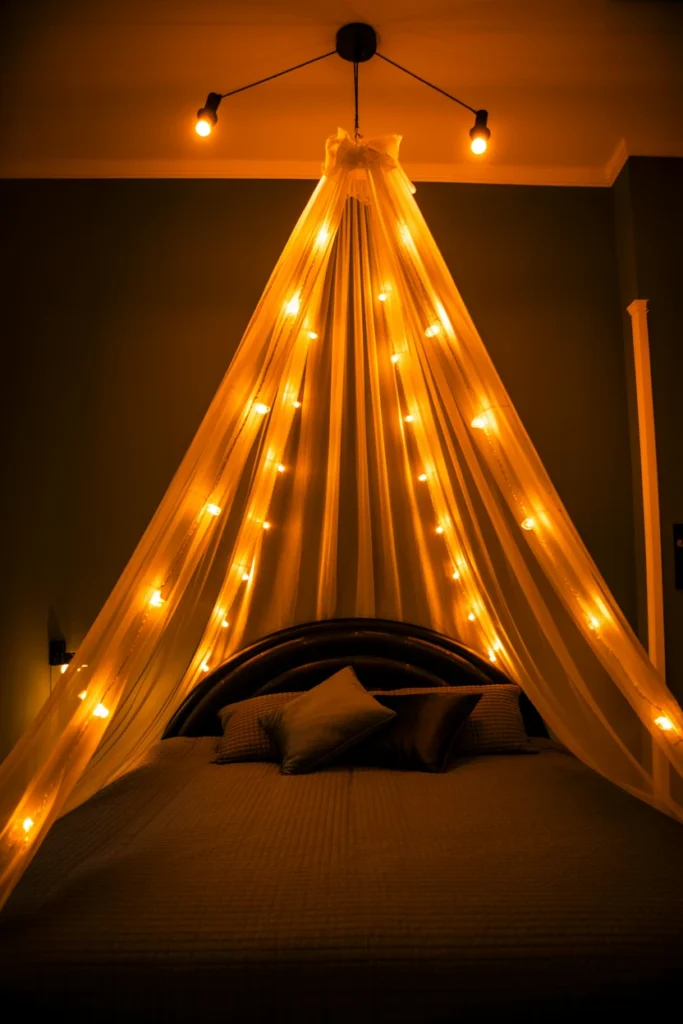
Bare fairy lights strung in a straight line read as generic dorm-room decor rather than whimsigoth ambiance. Without intentional shaping, string lights add brightness without adding the mystical, canopy-like effect the aesthetic depends on for its dreamlike quality. Draping them into a canopy shape corrects this.
Mount string lights at four points above the bed — two upper corners and two lower points near the headboard — and let them sag into a loose canopy shape rather than pulling them taut. Use warm amber or copper-toned lights only, never cool white, since cool white breaks the moody color story instantly. This canopy effect is one of the most recognizable whimsigoth signatures in bedroom photography.
| String Light Color | Effect |
| Warm amber (2200K) | Correct, moody glow |
| Copper-toned | Correct, slightly warmer |
| Cool white (5000K+) | Wrong, breaks the aesthetic |
| Multicolor | Wrong, too playful for the mood |
15. Place Candles or Flameless Candles in Antique Brass Holders
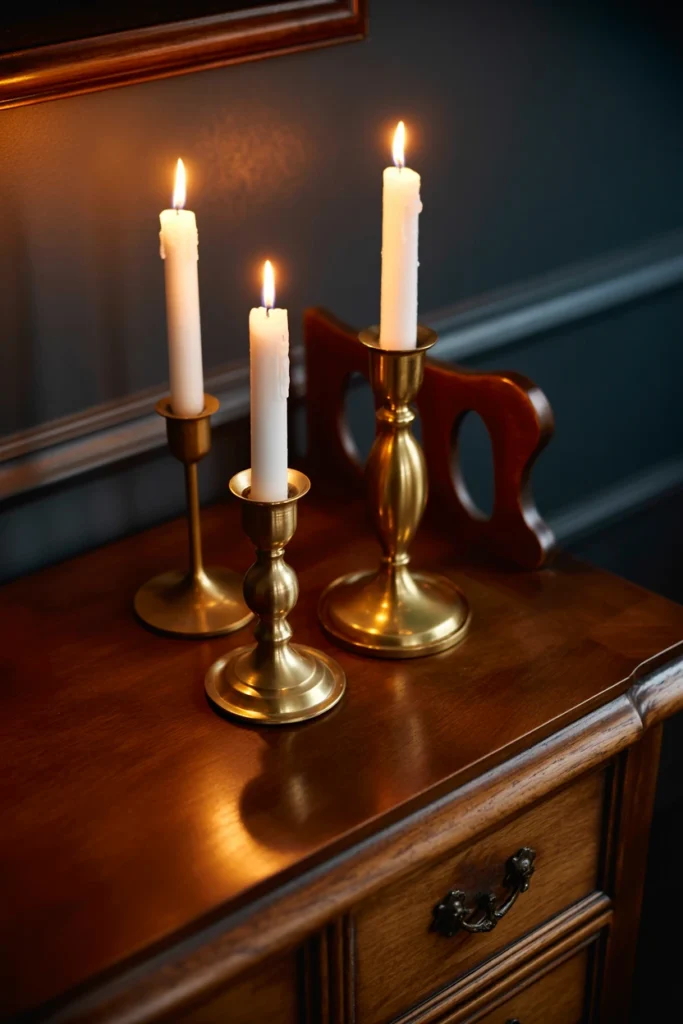
Plastic or modern candle holders undercut an otherwise well-styled surface the moment someone looks closely. Materials matter as much as color in whimsigoth styling, and a mismatched holder material breaks the antique illusion even when everything else on the surface is correct. Antique brass or pewter holders fix this at low cost.
Group two to three candlesticks in aged brass, pewter, or wrought iron on your dresser or nightstand, mixing heights between 4 and 12 inches for visual variety. Use flameless LED candles with a flickering warm-white bulb if burning open flame near fabric layers is a safety concern. The mixed-height grouping reads as an intentional vignette rather than a single decorative afterthought.
| Candle Holder Material | Where to Source |
| Aged brass | Antique shops, estate sales |
| Pewter | Vintage stores |
| Wrought iron | Flea markets |
| Blackened silver | Secondhand marketplaces |
Walls, Mirrors, and Display Pieces
Wall treatments and display surfaces give a whimsigoth room its narrative depth. This section covers how to build a wall story without it turning into visual clutter.
16. Hang an Ornate or Antique-Framed Mirror
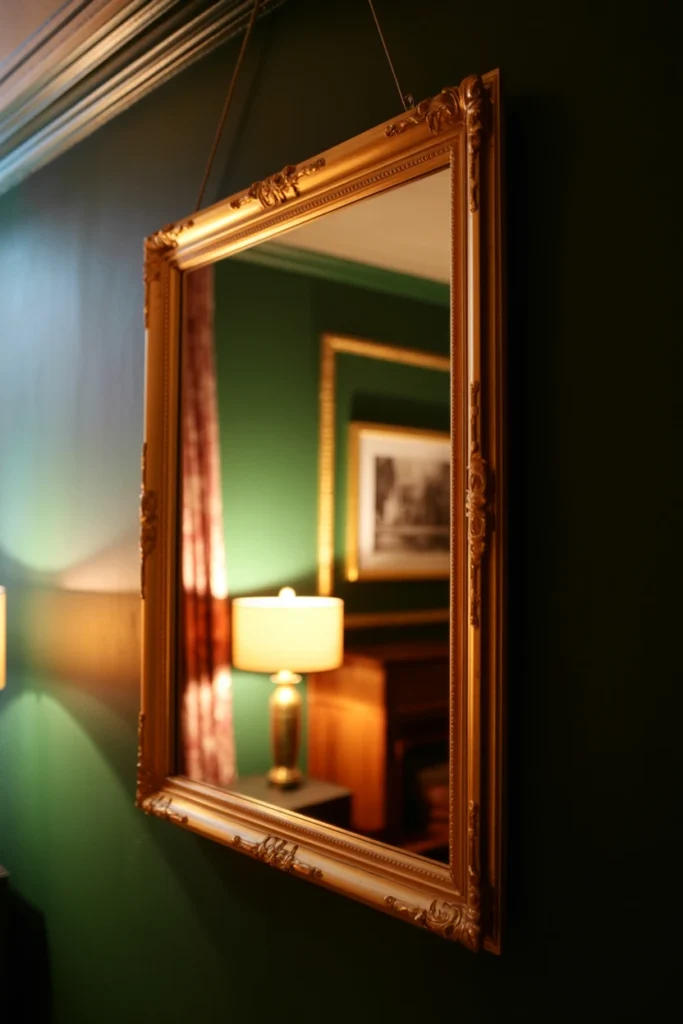
A plain, thin-framed mirror disappears into a dark wall instead of contributing to the room’s mood. Whimsigoth walls need frames with presence, since an unadorned mirror reads as purely functional rather than decorative in a room built around visual richness. An ornate or antique frame solves this in one swap.
Choose a mirror with a carved, gilded, or aged brass frame at least 24 inches in one dimension, and hang it on a side wall rather than the bed’s focal wall. Angle it slightly, if the frame style allows, to catch and reflect your layered lamp light after dark. A well-placed ornate mirror also visually doubles your candlelight and string light glow across the room.
| Mirror Frame Style | Minimum Size |
| Carved gold gilt | 24 inches |
| Aged brass sunburst | 20 inches |
| Black wrought iron | 22 inches |
| Vintage silver-leaf | 24 inches |
17. Create a Gallery Wall with Celestial and Botanical Prints
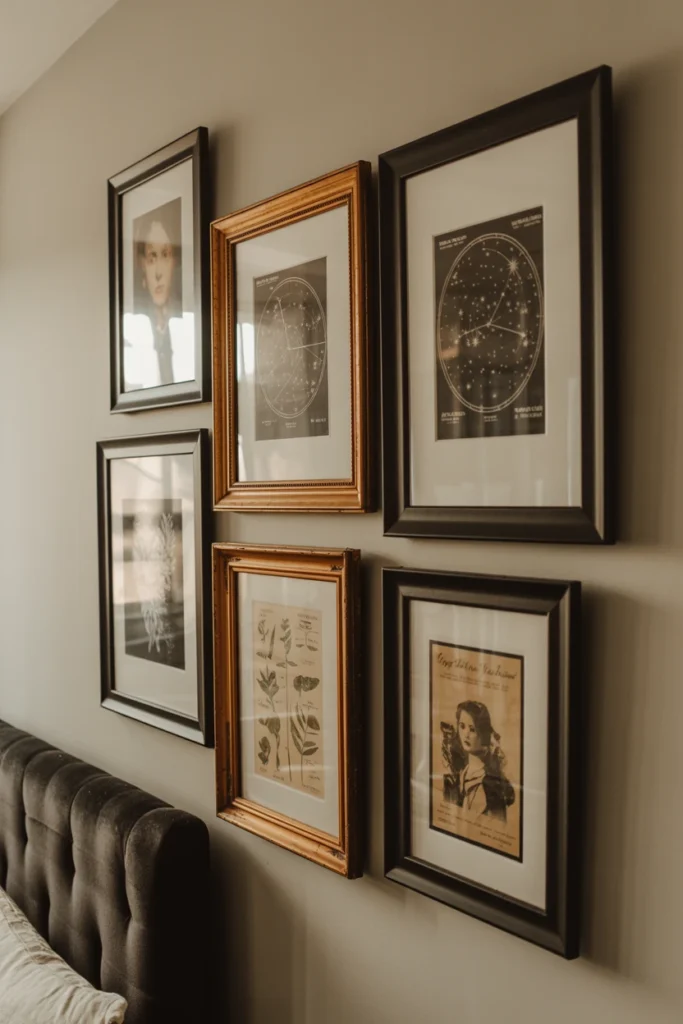
A single piece of art on an otherwise bare wall leaves the room feeling unfinished no matter how strong the rest of the styling is. Whimsigoth walls rely on layered imagery — celestial charts, botanical illustrations, tarot-inspired prints — to build the room’s mystical narrative, and one lone print can’t carry that weight. A grouped gallery wall fixes this.
Group five to seven frames in mixed sizes on the wall beside or across from the bed, mixing celestial charts, pressed botanical prints, and one vintage-style portrait or tarot print. Keep frame colors consistent — black or aged gold only — even though the art inside varies, since frame consistency is what keeps a mixed gallery wall from looking chaotic. This five-to-seven count is the sweet spot between sparse and overwhelming.
| Gallery Wall Element | Recommended Count |
| Celestial or star chart prints | 2 |
| Botanical or pressed florals | 2 |
| Portrait or tarot-style print | 1 |
| Total frames | 5–7 |
18. Mount Open Shelving for Curated Curiosities
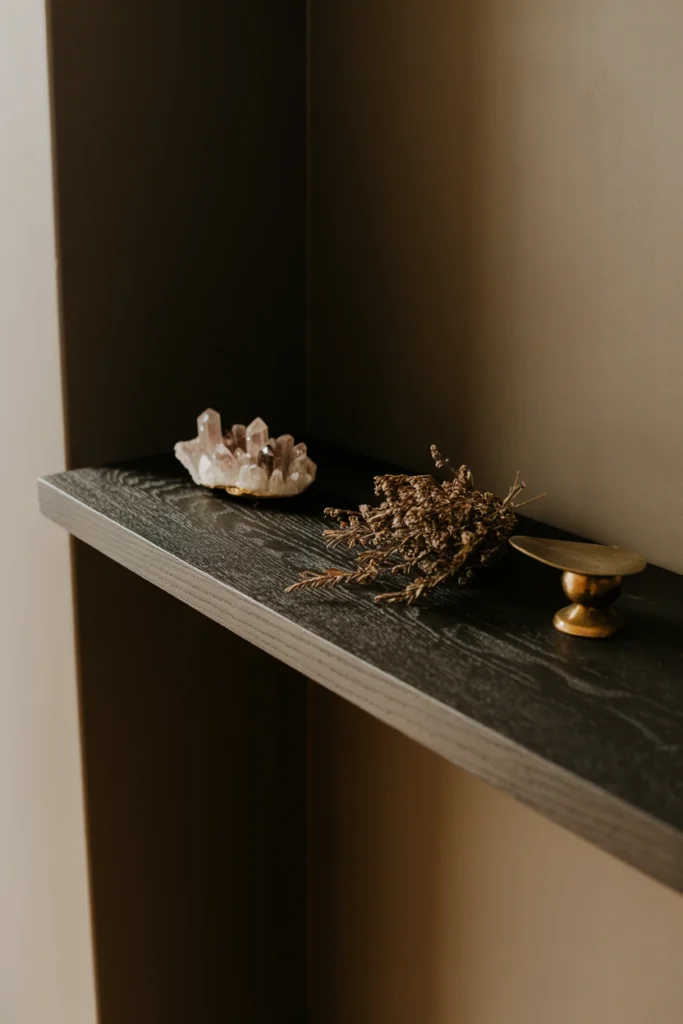
Closed cabinets hide the small collected objects that give a whimsigoth room its storytelling depth. Without visible display space, dried florals, crystals, and small antiques stay packed away instead of contributing to the room’s atmosphere, wasting the aesthetic’s most personal layer. One open shelf solves this.
Install one dark wood or wrought iron floating shelf on a side wall at eye level, roughly 54 to 60 inches from the floor. Style it with three to five small objects — a crystal cluster, a dried floral bundle, and one small antique object — leaving visible negative space between groupings rather than filling the shelf edge to edge. This restraint keeps the shelf looking curated instead of cluttered.
| Shelf Height from Floor | Best Use |
| 54–60 inches | Eye-level display, main shelf |
| 40–48 inches | Secondary shelf, books |
| 72+ inches | High display, less-used items |
| Under 36 inches | Not recommended in bedrooms |
Styling and Finishing Touches
The final styling layer is what makes a whimsigoth room feel finished rather than assembled. This section covers the small, specific details that separate a good room from a great one.
19. Arrange Dried Florals in Odd-Numbered Groupings
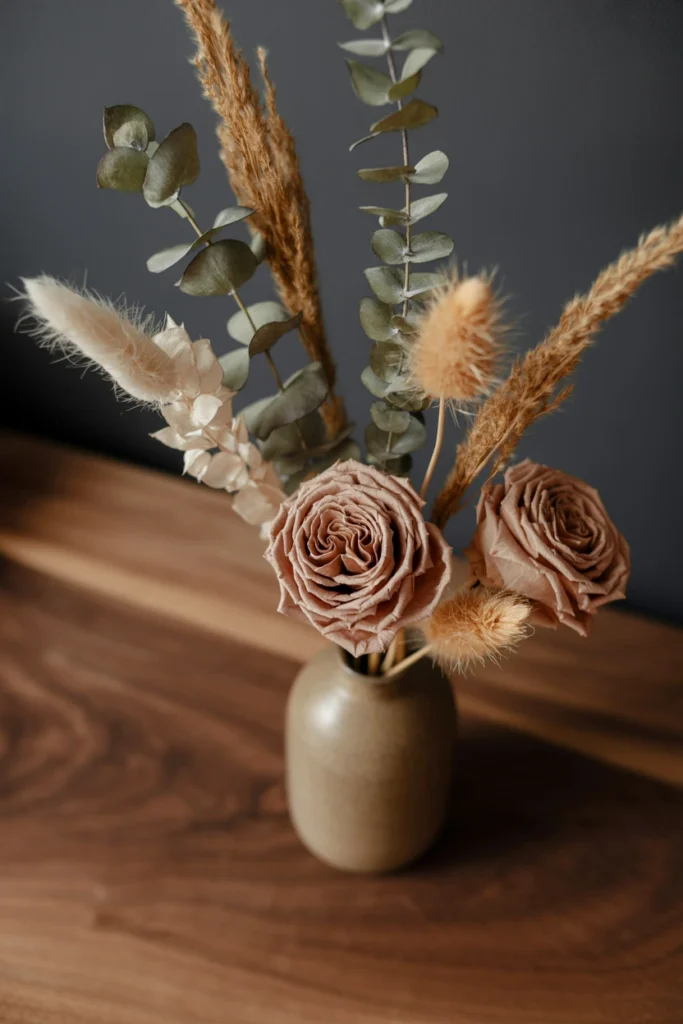
Even-numbered floral groupings — pairs of two vases or four stems — read as symmetrical and staged rather than gathered. Whimsigoth styling depends on the collected, organic feeling that odd numbers create, and even groupings work directly against that impression on every surface they appear. Switching to groups of three or five fixes this instantly.
Place dried florals — pampas grass, eucalyptus, or dried roses — in groups of three or five stems per vase, and repeat this odd-number rule across every floral vignette in the room. Vary stem height within each group by at least 3 inches so the arrangement doesn’t read as a uniform bundle. This single rule applies to every collected object in the room, not just florals.
| Floral Grouping Size | Visual Result |
| 1 stem | Sparse, minimalist accent |
| 3 stems | Balanced, intentional |
| 5 stems | Full, romantic |
| 2 or 4 stems | Avoid — reads as staged |
20. Add One Apothecary-Style Curiosity Display
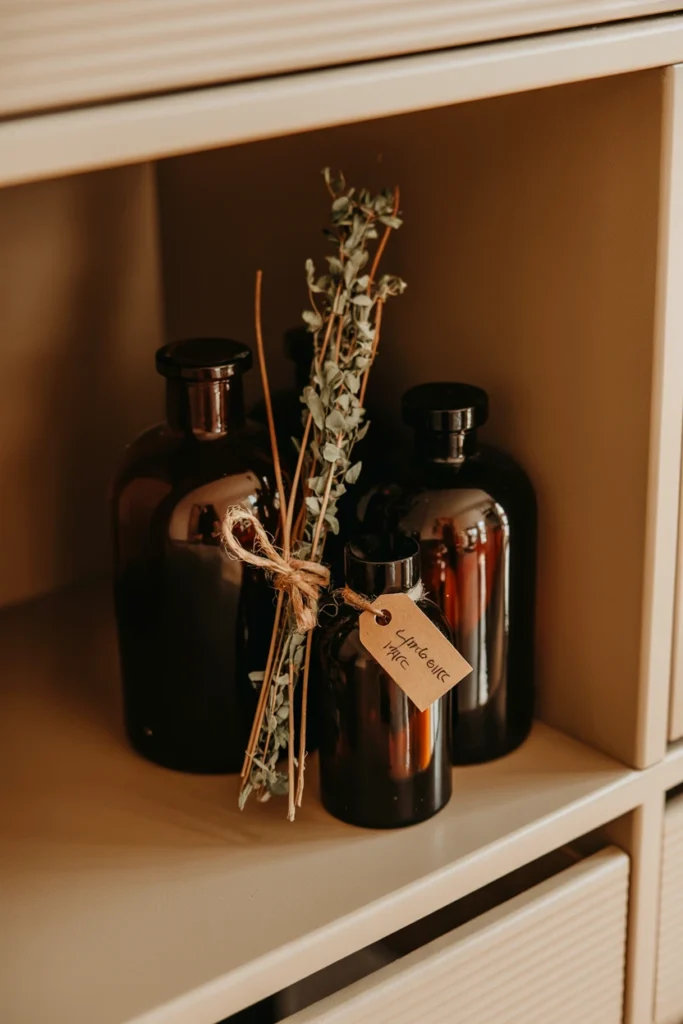
A room without at least one apothecary-style vignette misses one of whimsigoth’s most defining visual signatures. This detail — small glass bottles, dried herbs, or a mini terrarium — is what separates the aesthetic from generic dark boho, and skipping it leaves the styling incomplete. One curated display corrects this.
Cluster three to four small amber or dark glass bottles, a mini terrarium, or a small stack of vintage books on one dresser or shelf corner. Label one bottle with a hand-written tag for added detail, since this small touch reads as intentional rather than accidental clutter. Keep this vignette contained to roughly 12 by 12 inches so it stays a focal detail instead of sprawling across the surface.
| Apothecary Display Item | Source |
| Amber glass bottles | Thrift stores, apothecaries |
| Dried herb bundles | Craft stores, farmers markets |
| Mini terrarium | Garden centers |
| Vintage book stack | Secondhand bookstores |
21. Drape a Tapestry Behind or Beside the Bed
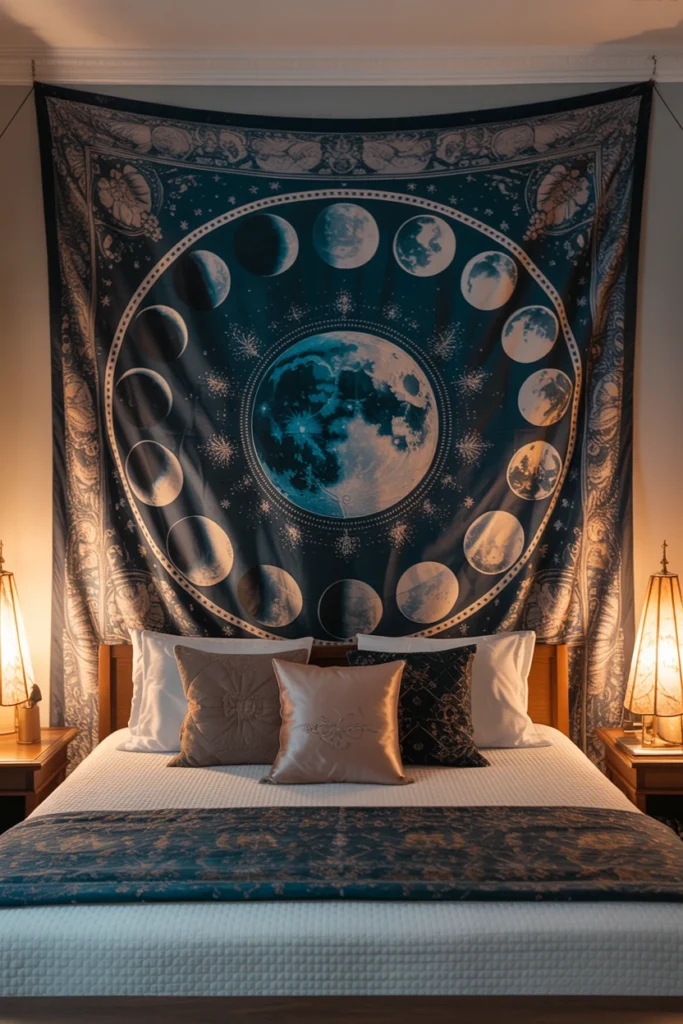
A bare wall behind the headboard leaves the room’s focal point visually incomplete even with strong bedding below it. Tapestries add both color depth and softness to the largest uninterrupted wall space in the room, and skipping this layer leaves an obvious visual gap above the bed. Hanging one solves this in a single purchase.
Choose a tapestry in a celestial, botanical, or medieval-inspired print at least 60 by 80 inches, and hang it centered behind the headboard using discreet wall tacks or a wooden dowel rod. Let the bottom edge fall just above or level with the top of the mattress rather than pooling on the floor. A well-sized tapestry does the visual work of both wall art and a headboard simultaneously.
| Tapestry Size | Best Bed Size |
| 51×59 inches | Twin or full |
| 60×80 inches | Queen |
| 66×96 inches | King |
| 40×60 inches | Accent wall, not headboard |
Maintaining Your Whimsigoth Bedroom Long-Term
A whimsigoth room needs ongoing small maintenance to stay curated instead of drifting into clutter. This section covers the habits that keep the room looking intentional months after the initial styling.
22. Rotate Dried Florals Every Season
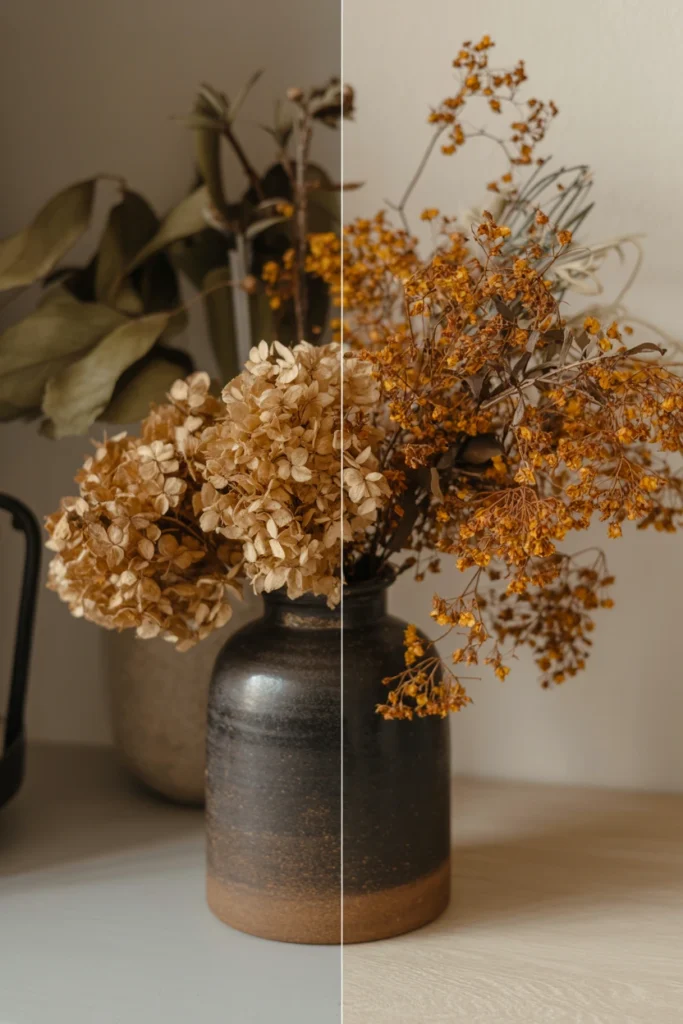
Dried florals fade, collect dust, and eventually crumble if left in place indefinitely, quietly degrading the room’s freshest visual element. A single dusty, browning floral arrangement can make an otherwise well-styled room look neglected rather than moody. A seasonal rotation habit prevents this.
Replace dried floral arrangements every three to four months, timing the swap with each new season so the habit is easy to remember. Dust surviving arrangements weekly with a soft brush rather than shaking them, since shaking accelerates petal loss. This rotation also gives you a built-in, low-cost reason to refresh the room’s color accents seasonally.
| Season | Suggested Floral Swap |
| Winter | Dried eucalyptus, pine sprigs |
| Spring | Dried roses, lavender |
| Summer | Pampas grass, wheat stalks |
| Fall | Dried hydrangea, bittersweet |
23. Limit New Additions to One Piece Per Month
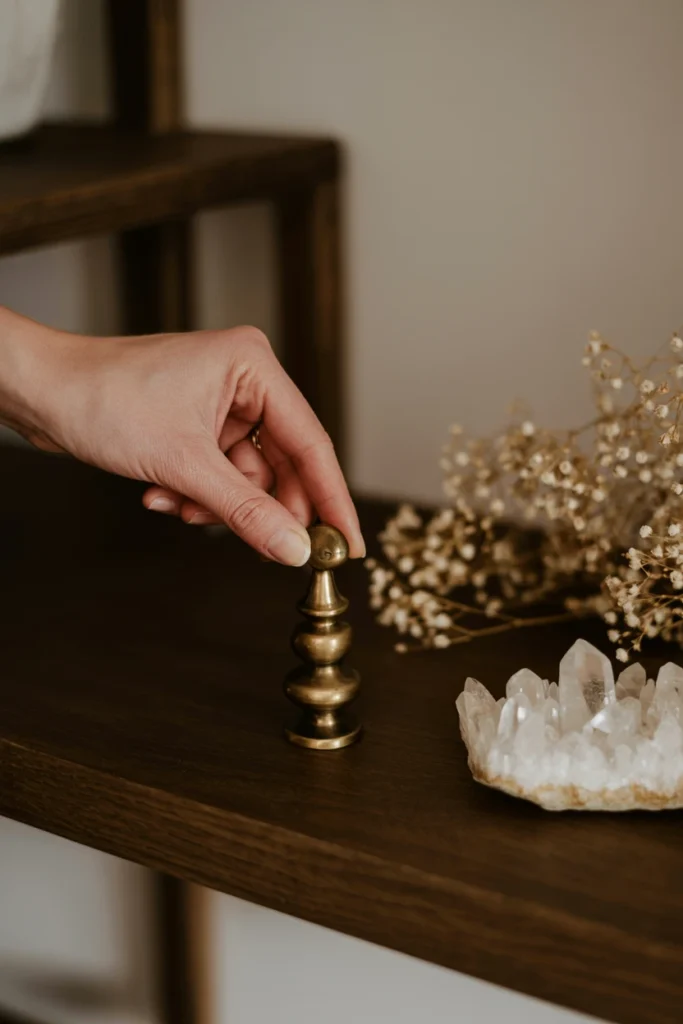
Adding multiple new decor pieces at once, even good ones, disrupts the careful balance a curated whimsigoth room depends on. Without a pacing rule, the room can tip from “collected over time” into “recently purchased all at once,” undoing months of careful layering in a single shopping trip. A one-piece-per-month limit prevents this.
Set a personal rule to add no more than one new decor object per month, and remove or relocate one existing item whenever you introduce something new. This pacing mirrors how real collected-over-years rooms actually accumulate objects, which is part of what makes them feel authentic. Slowing down purchases also protects your budget allocation from the earlier foundation step.
| Addition Pace | Result Over 1 Year |
| 1 item/month | Cohesive, gradually evolving room |
| 3+ items/month | Cluttered, inconsistent room |
| 1 item/week | Overwhelmed surfaces within months |
| No limit | High risk of decor fatigue |
24. Establish a Weekly Surface Reset Habit

Layered, textured rooms show dust and disorder faster than minimalist spaces because there are simply more surfaces and objects to disturb. Without a regular reset habit, candle wax drips, shifted textiles, and dust on dark surfaces accumulate quickly and undercut the room’s polished appearance. A short weekly reset habit prevents this drift.
Spend 10 minutes once a week re-fluffing and re-draping textiles, wiping dust from dark wood and glass surfaces, and scraping wax drips from candle holders. Do this reset on the same day each week, such as Sunday evening, so it becomes an automatic habit rather than an occasional catch-up task. This small weekly investment keeps the room photograph-ready with almost no ongoing effort.
| Reset Task | Frequency |
| Re-drape textiles | Weekly |
| Dust dark wood/glass | Weekly |
| Scrape candle wax | Weekly |
| Deep clean shelving | Monthly |
Common Whimsigoth Bedroom Mistakes That Ruin the Aesthetic
Even a well-planned whimsigoth room can fall apart from a handful of common missteps. The table below covers the eight mistakes that most frequently undercut this aesthetic.
| Mistake | Why It Hurts the Space | Better Alternative |
| Using cool-white string lights | Breaks the warm jewel-toned color story instantly | Switch to 2200K amber-toned lights |
| Buying a matching furniture set | Reads as showroom-new, not collected | Mix at least one thrifted piece per surface |
| Overhead lighting as primary source | Flattens shadow and depth entirely | Layer three low lamp sources instead |
| Even-numbered floral or object groupings | Reads as staged and symmetrical | Use groups of three or five |
| Skipping texture contrast | Room feels one-dimensional and flat | Layer velvet with one rough texture |
| Filling every shelf edge to edge | Looks cluttered instead of curated | Leave visible negative space per shelf |
| Choosing plastic candle holders | Undercuts the antique illusion up close | Use aged brass or pewter holders |
| Adding all decor at once | Loses the “collected over time” effect | Limit additions to one piece per month |
Whimsigoth Bedroom Ideas by Room Type
Small bedroom
A small bedroom limits how many large furniture pieces and dark walls the space can hold without feeling cramped. The core constraint here is preserving enough negative space so the room reads as moody rather than boxed-in.
Key strategies for small bedrooms:
- Paint only the headboard wall dark and keep remaining walls a warm neutral.
- Choose a tapestry over a bulky mirror frame to save wall depth.
- Use a single floating shelf instead of a full bookshelf for display.
- Select a bed frame with slim iron scrollwork rather than a heavy four-poster.
- Layer light with two sources instead of three to avoid visual crowding.
Shared bedroom
A shared bedroom requires balancing one person’s whimsigoth vision with a roommate or partner’s preferences on the same wall space. The core constraint is keeping the aesthetic contained to a zone rather than imposing it on the entire room.
Key strategies for shared bedrooms:
- Contain the aesthetic to your bed wall and one adjacent shelf only.
- Use removable string lights and tapestries that don’t require paint changes.
- Choose a personal nightstand vignette instead of shared surface styling.
- Add a curtain divider in a jewel tone to visually separate your zone.
- Keep floral and candle displays on your side of shared furniture only.
Rental apartment
A rental apartment restricts paint changes and permanent wall mounting, which are two of whimsigoth’s biggest mood-setting tools. The core constraint is achieving the aesthetic through removable, damage-free methods only.
Key strategies for rental apartments:
- Use removable command strips rated for your tapestry and mirror weight.
- Choose a large area rug in a dark jewel tone instead of painting the floor.
- Rent or buy a freestanding canopy frame instead of ceiling-mounted string lights.
- Layer curtains over existing blinds to control light without hardware changes.
- Select furniture over wall treatments as your primary mood-setting layer.
Large primary bedroom
A large primary bedroom risks feeling sparse or empty if styled with the same object count as a smaller room. The core constraint is filling the additional square footage without diluting the room’s moody focal point.
Key strategies for large primary bedrooms:
- Add a secondary seating vignette with a rattan chair and side table.
- Extend the gallery wall to seven or eight frames instead of five.
- Include a freestanding full-length mirror in addition to the wall mirror.
- Use a larger tapestry, at minimum 66 by 96 inches, behind the bed.
- Add a reading nook with its own independent lamp light source.
Frequently Asked Questions
how do you make a bedroom whimsigoth
Start with a locked three-color palette of one dark base, one jewel accent, and one metallic tone, then build furniture and textiles around it. Prioritize velvet textiles, an ornate or antique bed frame, and layered warm lighting over any single accessory. Add dried florals, candles, and one apothecary-style vignette last, once the foundation is set.
what not to do in a whimsigoth bedroom
Avoid cool-white lighting, matching furniture sets, and even-numbered object groupings, since all three break the collected, moody effect the aesthetic depends on. Skipping texture contrast and overfilling shelves are also common mistakes that make a room feel cluttered instead of curated. The mistakes table above covers all eight in detail.
how to start a whimsigoth bedroom on a budget
Split your budget with 35% going to textiles and 30% to furniture, since these two categories carry the most visual weight. Prioritize one dark jewel-toned bedspread and one thrifted antique furniture piece before spending on lighting or accessories. Secondhand marketplaces and estate sales are the most affordable source for antique-style nightstands and mirrors.
how to do a whimsigoth bedroom in a small space
Paint only one accent wall dark instead of the full room, and use a tapestry rather than a bulky mirror to save depth. Choose a slim wrought iron bed frame over a heavy four-poster, and limit display shelving to a single floating shelf. These adjustments keep the mood intact without making a small room feel boxed in.
whimsigoth vs dark academia bedroom, what’s the difference
Whimsigoth centers on jewel tones, celestial and botanical motifs, and a witchy-boho blend, while dark academia leans toward browns, tartan, and scholarly library imagery. Whimsigoth uses more velvet and fringe, while dark academia favors tweed and leather. Both share dark, moody lighting but differ sharply in color palette and object choice.
how often should you refresh a whimsigoth bedroom
Rotate dried florals every three to four months and limit new decor additions to one piece per month for gradual, cohesive evolution. A weekly 10-minute surface reset keeps textiles and dark surfaces looking intentional between larger refreshes. This pacing prevents both visual staleness and sudden clutter from over-purchasing.
does whimsigoth work in a rental apartment
Yes, using removable command strips for tapestries and mirrors, a freestanding string light canopy frame, and a dark area rug instead of paint changes. Furniture and textiles can carry most of the aesthetic’s visual weight when wall treatments are restricted. Layered curtains over existing blinds also help control light without any hardware modifications.
how much does it cost to decorate a whimsigoth bedroom
Costs vary widely depending on how much furniture is thrifted versus bought new, but a full room typically ranges from $400 to $1,200. Thrifted bed frames run $80 to $250, while antique-style nightstands and mirrors add another $150 to $400 combined. Lighting and textiles are the most affordable categories, often completed for under $200 combined.
how do you keep dried florals from getting dusty in a whimsigoth room
Dust dried arrangements weekly using a soft brush rather than shaking or blowing on them, since shaking accelerates petal and stem breakage. Keep arrangements away from direct airflow from vents or open windows to slow dust accumulation. Replacing florals seasonally, every three to four months, also prevents heavy dust buildup before it becomes noticeable.
Conclusion
A whimsigoth bedroom comes down to three layers working together: a locked jewel-toned palette, textured velvet and antique furniture, and warm layered lighting. Start with the color palette from Step 1 before buying anything else, since every other decision in this guide builds on that choice. Replace one modern furniture piece with a thrifted antique substitute this week to begin the transformation immediately.
The room’s mood depends on consistent small habits — seasonal floral rotation, a one-piece-per-month pacing rule, and a weekly surface reset — rather than one large decorating effort. A whimsigoth bedroom built on these layers stays cohesive and intentional for years, not just for the first photograph.