
A whimsigoth room combines dark academia moodiness with witchy, romantic softness in a way no single-note aesthetic can match. This blend of jewel tones, vintage brass, dried botanicals, and candlelit warmth creates a space that feels curated and lived-in rather than themed. This guide delivers 23 specific, actionable strategies to build that look from the ground up. Start with your color anchor before buying a single decor piece.
Before You Begin: 3 Foundation Steps for a Whimsigoth Room
These three steps determine whether your whimsigoth room looks intentional or scattered. Skipping them is the single biggest reason whimsigoth spaces end up looking like a costume rather than a cohesive room.
1. Choose Your Whimsigoth Color Anchor First
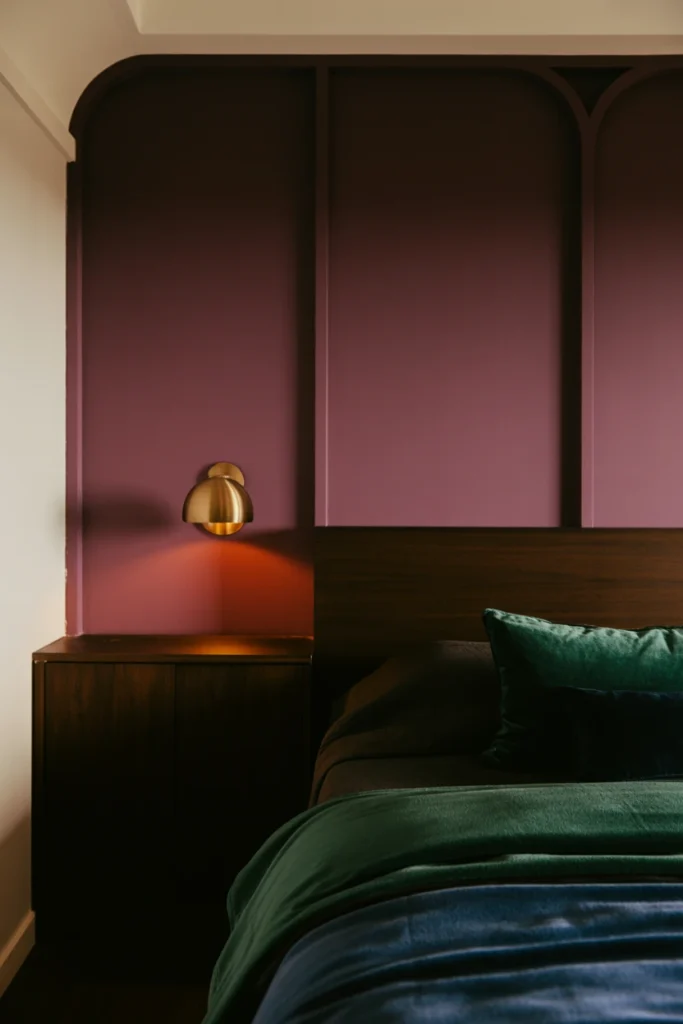
Most whimsigoth rooms fail before a single object gets placed. The mistake happens at the color stage, and it costs the room its entire sense of cohesion later. A single anchor color prevents the jewel-toned, vintage, and botanical elements from competing with each other.
Start by picking one dominant jewel tone — deep plum, forest green, or oxblood — for at least 60% of the room’s surfaces. Paint or fabric the walls, bedding, or largest furniture piece in this color first, before adding any secondary tones. This single decision prevents the “too many colors” problem that makes whimsigoth rooms read as cluttered instead of moody.
| Anchor Color | Best Paired Secondary Tone |
| Deep plum | Mustard yellow, aged brass |
| Forest green | Burgundy, warm gold |
| Oxblood red | Charcoal black, antique bronze |
| Charcoal black | Emerald green, copper |
2. Establish a Lighting Plan Before Decorating
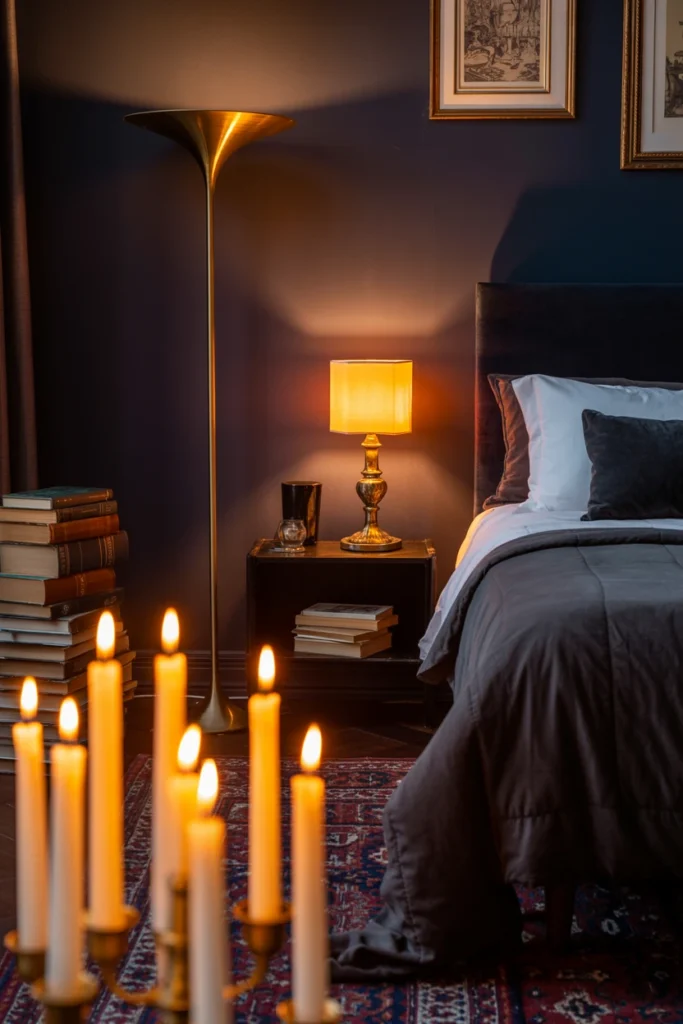
Overhead lighting instantly kills a whimsigoth room’s atmosphere. This single fixture type flattens every jewel tone and washes out the moodiness the entire aesthetic depends on. Planning your light sources before decorating prevents a costly redo once the room feels wrong.
Map out three separate light sources — a floor lamp, a table lamp, and candle or string lighting — before hanging a single piece of art. Each source should sit at a different height, roughly 12, 30, and 60 inches off the floor, to create depth instead of flatness. Getting this layering right means every other decor choice you make afterward reads more expensive than it actually cost.
| Light Source | Ideal Height from Floor |
| Floor lamp | 55–65 inches |
| Table or desk lamp | 24–30 inches |
| Candles or LED tapers | 8–14 inches |
| Wall sconce | 60–66 inches |
3. Define One Focal Wall for Statement Pieces
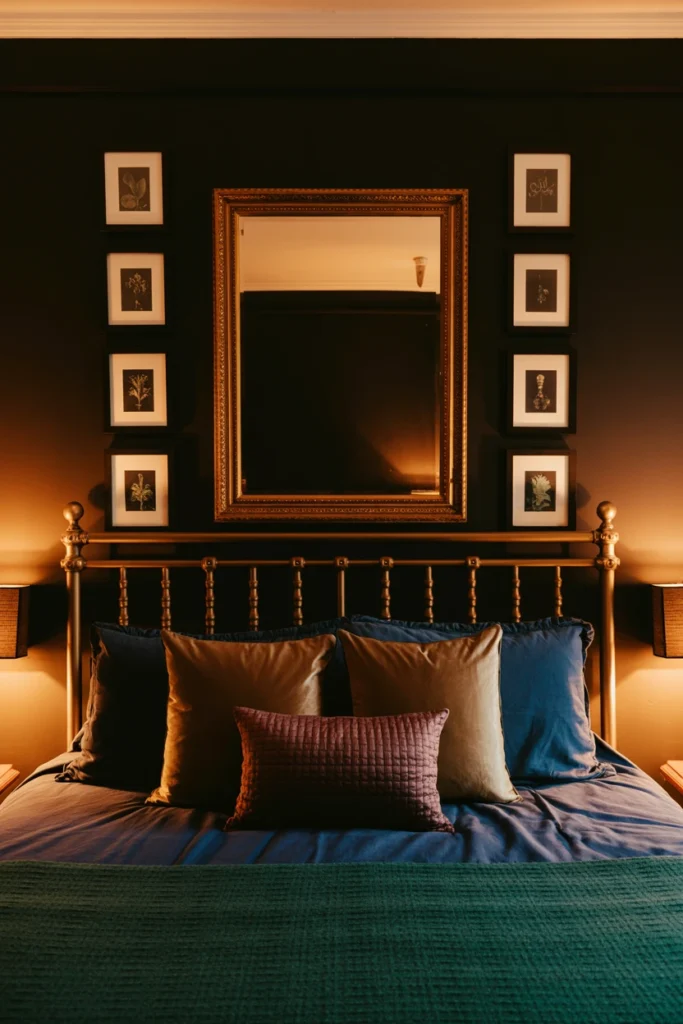
A whimsigoth room without a defined focal point scatters the eye across too many objects at once. This lack of hierarchy costs the room its sense of intention, no matter how good the individual pieces are. Choosing one wall to hold your boldest elements immediately organizes the entire space.
Select the wall directly behind your bed or seating area and reserve it exclusively for your largest mirror, art grouping, or headboard. Limit every other wall in the room to smaller, quieter accents so the eye has one clear place to land first. This hierarchy is what separates a whimsigoth room that photographs well from one that reads as visual noise.
| Wall Role | What Belongs There |
| Focal wall | Large mirror, gallery grouping, bed |
| Secondary wall | Single shelf, small art, one sconce |
| Window wall | Curtains only, minimal decor |
| Entry wall | Hooks, small mirror, low-key accents |
Layer a Moody, Jewel-Toned Color Palette
The color palette is what separates whimsigoth from generic dark decor. This section covers how to layer jewel tones without letting any single hue overpower the room’s balance.
4. Paint Walls in Deep Plum or Forest Green
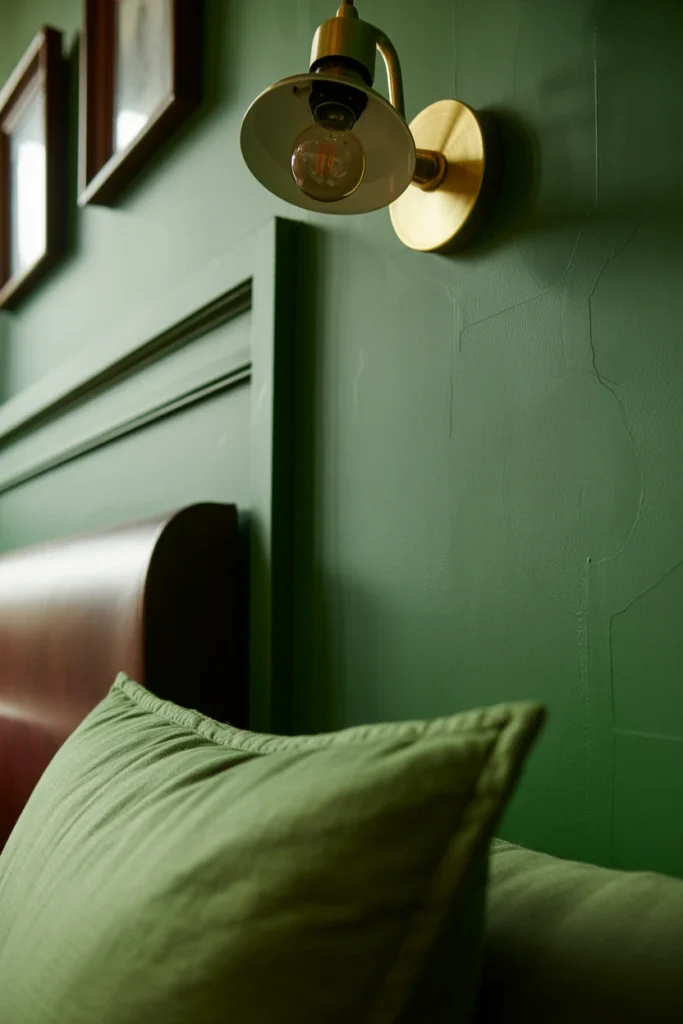
A pure black wall reads as harsh and cold rather than romantic. This flattens the moody warmth whimsigoth depends on and makes the room feel like a basement instead of a sanctuary. Deep plum or forest green delivers the same dramatic depth without the coldness.
Start with a matte or eggshell finish in a color at least three shades darker than a standard “navy” or “hunter green” paint chip. Test the shade against your existing furniture under both daylight and lamp light before committing to a full wall. This extra step prevents the common mistake of choosing a color that looks perfect in the store and purple-gray under your actual bulbs.
| Paint Finish | Best Use in Whimsigoth Rooms |
| Matte | Full accent walls, low-traffic rooms |
| Eggshell | Bedrooms, living rooms |
| Satin | Trim, doors, high-touch surfaces |
| Gloss | Avoid — reflects too much overhead light |
5. Layer Black Accents Without Overdoing It
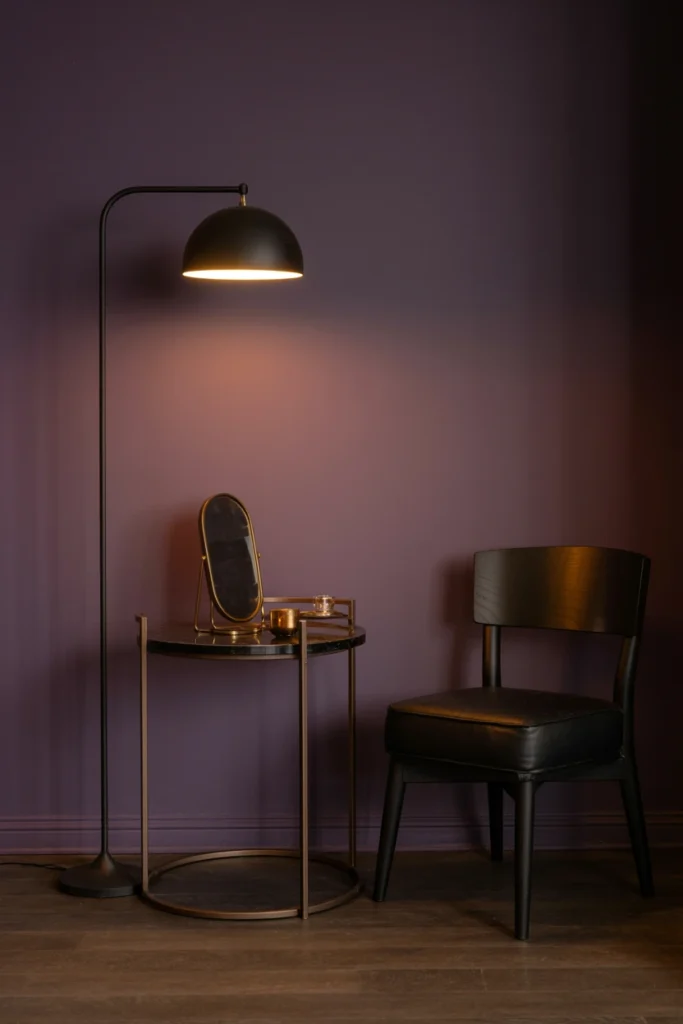
Too much black in one room reads as gothic rather than whimsigoth, and it eliminates the softness the aesthetic depends on. This single overcorrection is the most common reason a whimsigoth room feels heavy instead of romantic. Black works best as an accent, not a base.
Limit black to no more than three material types in the room — for example, iron light fixtures, picture frames, and one furniture piece. Keep black off the largest surfaces like walls or bedding, reserving it instead for smaller structural details. This restraint creates a visual anchor without the room tipping into an all-black gothic look.
| Black Element | Recommended Quantity |
| Iron or metal fixtures | 2–3 pieces per room |
| Picture frames | 3–5 mixed sizes |
| Furniture piece | 1 statement item max |
| Textiles | Avoid large black textiles |
6. Mix Burgundy and Mustard for Warmth
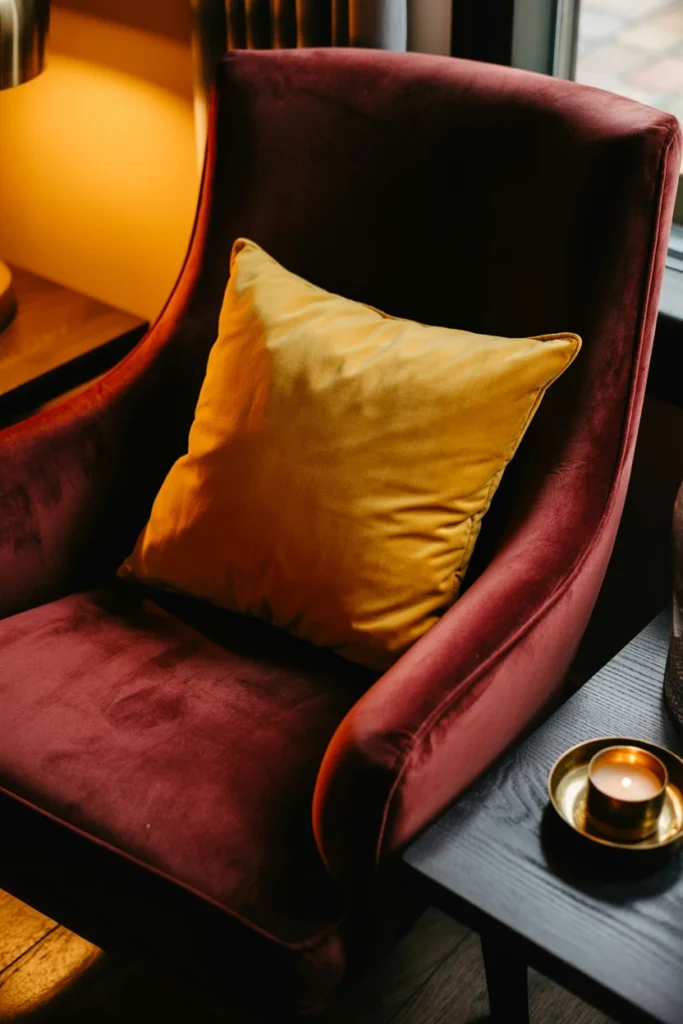
A room built entirely from cool jewel tones — plum, green, navy — reads as cold no matter how much brass you add. This missing warmth is why some whimsigoth rooms feel more gothic than whimsical. Burgundy and mustard solve this by injecting warmth without breaking the palette.
Add burgundy through one textile piece, such as a velvet pillow or throw blanket, and mustard through a single smaller accent like a vase or book spine. Keep the ratio at roughly 70% cool tones to 30% warm tones so the warmth reads as an accent, not a competing palette. This small warm injection is what gives whimsigoth rooms their signature richness instead of a flat, monochrome moodiness.
| Warm Accent | Suggested Placement |
| Burgundy velvet | Throw pillow, armchair |
| Mustard yellow | Vase, single wall art piece |
| Rust orange | Candle holder, small rug accent |
| Terracotta | Planter, ceramic vessel |
7. Add Gold or Brass Metallics for Contrast
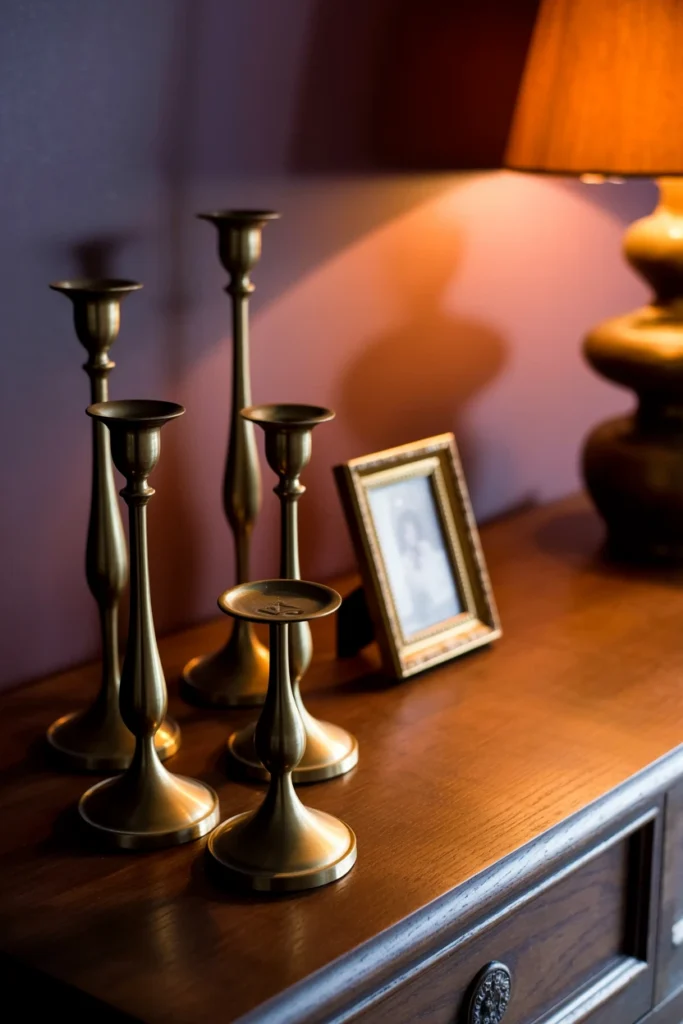
Silver and chrome finishes read as cold and modern, directly clashing with the antique warmth whimsigoth requires. This mismatch is a common reason a room’s individual pieces look good but never come together. Gold and brass solve this instantly.
Replace any silver or chrome hardware — drawer pulls, lamp bases, mirror frames — with brass or aged gold alternatives before adding any new decor. Choose an unlacquered or antiqued brass finish over polished gold, since the dulled tone reads as vintage rather than glossy and new. This single metal-finish swap ties every other jewel-toned element in the room together visually.
| Metal Finish | Whimsigoth Compatibility |
| Antique brass | Excellent — primary choice |
| Aged gold | Excellent |
| Polished chrome | Avoid — reads too modern |
| Silver | Avoid unless heavily tarnished |
Bring in Vintage and Antique Statement Pieces
Vintage furniture is what gives whimsigoth its lived-in, collected-over-time quality. This section covers the specific statement pieces that anchor the aesthetic.
8. Source a Vintage Brass Bed Frame
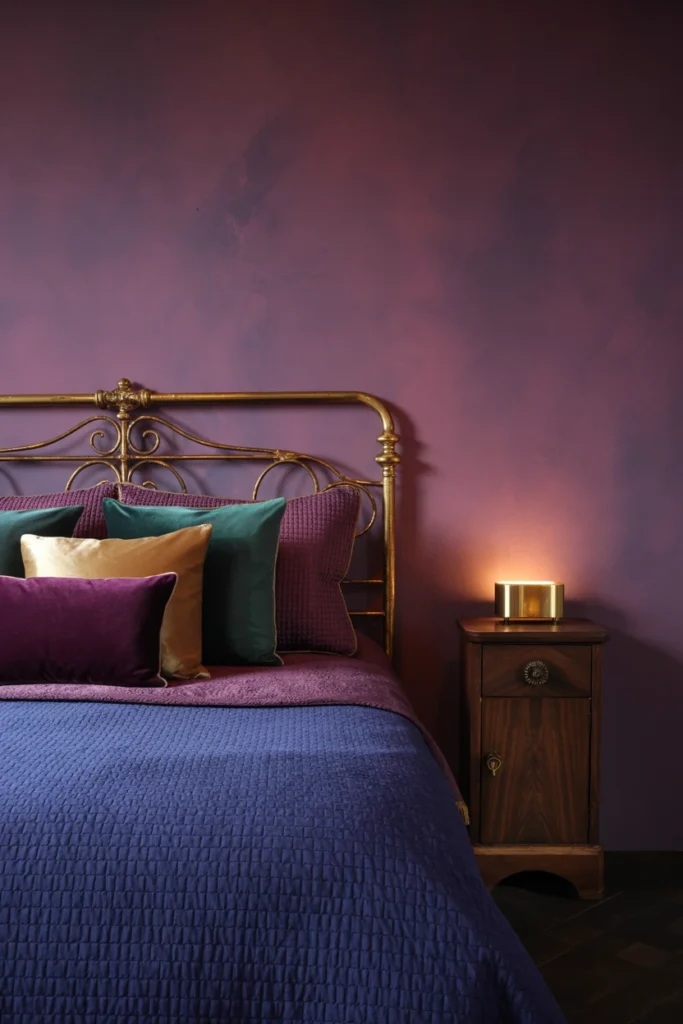
A modern platform bed frame undercuts every other whimsigoth element in a bedroom, no matter how well the rest of the room is styled. This single piece sets the tone for the entire space since it’s the largest object in the room. A vintage brass or iron frame corrects this immediately.
Search local estate sales, secondhand marketplaces, or antique shops for a brass or iron frame with visible patina rather than a reproduction. Budget 150–400 for a genuine vintage frame in good structural condition, checking joints and welds before purchase. This one furniture swap does more to establish whimsigoth authenticity than any smaller accessory in the room.
| Bed Frame Type | Typical Price Range |
| Vintage brass, estate sale | 150–400 |
| Reproduction brass, retail | 300–700 |
| Antique iron, refinished | 200–500 |
| Carved dark wood frame | 250–600 |
9. Hang an Antique Gilded Mirror
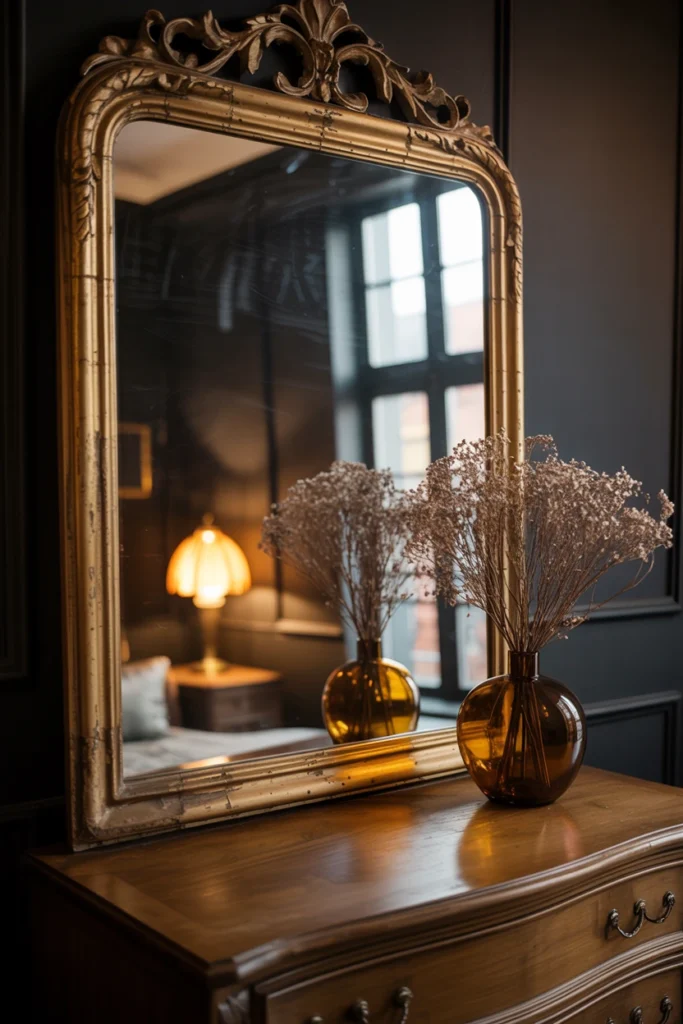
A modern flat-frame mirror reads as sterile against a whimsigoth backdrop and breaks the vintage illusion the rest of the room is building. This mismatch is especially visible because mirrors sit at eye level and draw immediate attention. An ornate gilded frame corrects this instantly.
Hang a mirror with a carved or gilded frame at least 24 inches wide directly above your dresser or on the focal wall identified in Step 3. Position the bottom edge roughly 6 inches above the furniture beneath it so the reflection captures the room’s lighting layers. This placement doubles the perceived depth of the room while reinforcing the antique visual language throughout.
| Mirror Frame Style | Where It Reads Best |
| Ornate gilded gold | Focal wall, above dresser |
| Carved dark wood | Entryway, gallery wall |
| Aged brass sunburst | Living room focal point |
| Distressed silver leaf | Bathroom, secondary wall |
10. Place a Weathered Wooden Trunk

An empty corner or the foot of a bed left bare undercuts the “collected over years” feeling whimsigoth relies on. This gap is one of the most overlooked opportunities in the entire room. A weathered wooden trunk fills it with both function and character.
Place a trunk with visible wood grain, brass corner hardware, or leather strapping at the foot of the bed or in an empty corner. Choose a piece between 30–36 inches wide so it reads as a substantial object rather than a small afterthought. This single addition creates functional storage while reinforcing the sense that every object in the room has history.
| Trunk Style | Ideal Room Placement |
| Brass-cornered wood | Foot of bed |
| Leather-strapped | Living room, beside armchair |
| Carved dark wood | Empty corner, under window |
| Metal steamer trunk | Entryway, home office |
11. Anchor the Room with a Velvet Armchair
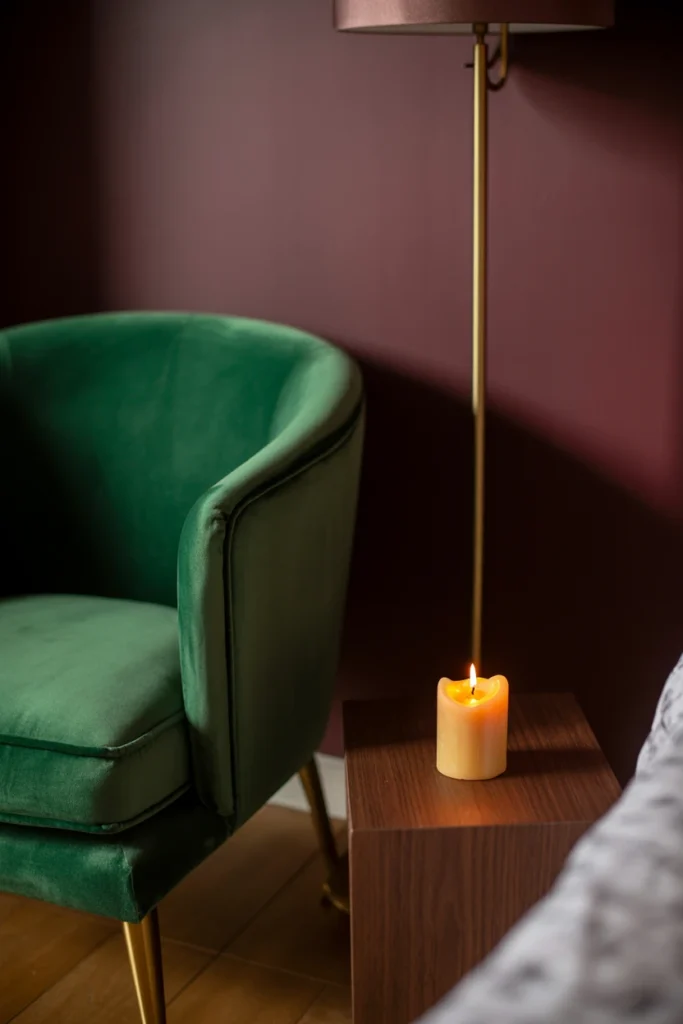
A room without a seating piece feels transactional rather than inviting, no matter how well the walls and shelves are styled. This missing element is what keeps a whimsigoth room from feeling like a place to actually spend time. A velvet armchair fixes this immediately.
Choose a chair in a jewel-toned velvet — emerald, burgundy, or deep plum — with visible wood or brass legs rather than upholstered ones. Position it in a corner near your floor lamp from Step 2, angled slightly toward the room’s focal wall. This single seating piece transforms the room from a styled backdrop into a space someone actually wants to occupy.
| Velvet Color | Complements Which Anchor |
| Emerald green | Plum or oxblood walls |
| Burgundy | Forest green walls |
| Deep plum | Charcoal or black walls |
| Charcoal | Any jewel-toned wall |
Add Botanical, Witchy, and Apothecary Touches
This section covers the organic, collected-object details that give whimsigoth its distinct witchy character beyond standard dark academia decor.
12. Group Dried Florals in Glass Vessels
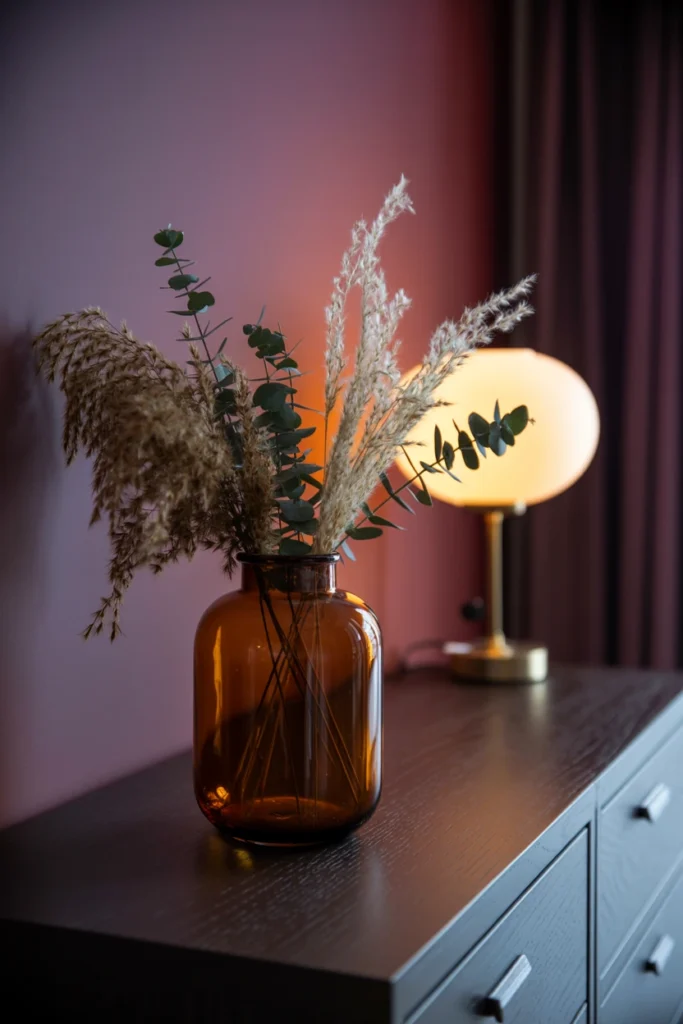
Fresh flowers clash with whimsigoth’s aged, timeless quality and require constant replacement that fresh arrangements demand. This upkeep cost is easy to underestimate until the first bouquet wilts within a week. Dried botanicals solve both problems at once.
Fill an amber or smoked glass vessel with dried pampas grass, eucalyptus, or lunaria stems, using 5–7 stems per arrangement for visual fullness. Place the arrangement on your focal wall’s furniture piece rather than scattering smaller bunches around the room. This concentrated placement creates one strong botanical statement instead of diluted plant clutter across multiple surfaces.
| Dried Botanical | Where to Source |
| Pampas grass | Craft stores, florists |
| Eucalyptus | Farmers markets, online |
| Lunaria (money plant) | Specialty florists |
| Dried baby’s breath | Grocery florist sections |
13. Hang Trailing Pothos from Macrame Hooks
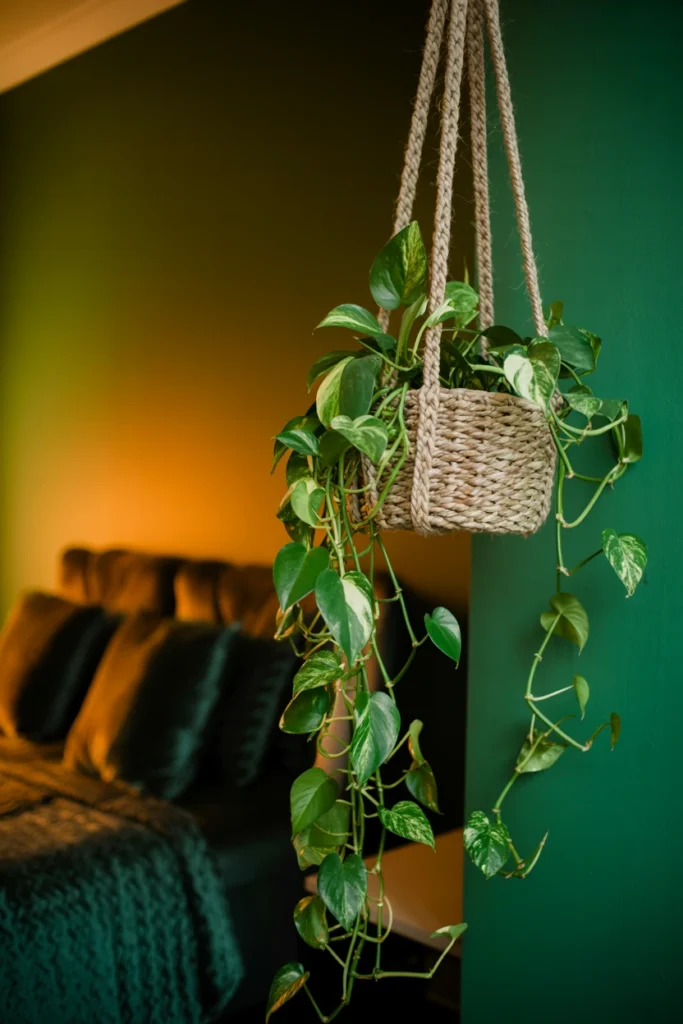
A room with only dried botanicals starts to feel static and lifeless after a few weeks. This absence of living elements is a common gap in otherwise well-styled whimsigoth spaces. A single trailing plant reintroduces movement and life without breaking the palette.
Hang a pothos or philodendron in a macrame hanger from a ceiling hook positioned 12–18 inches from a corner, letting the vines trail down the wall. Choose a jute or cotton macrame in natural or aged brown tones rather than bright white cord. This single living plant softens the room’s darker tones while requiring minimal weekly maintenance.
| Trailing Plant | Light Requirement |
| Pothos | Low to medium indirect |
| Philodendron | Low to medium indirect |
| String of pearls | Bright indirect |
| English ivy | Medium indirect |
14. Style an Apothecary Shelf with Jars
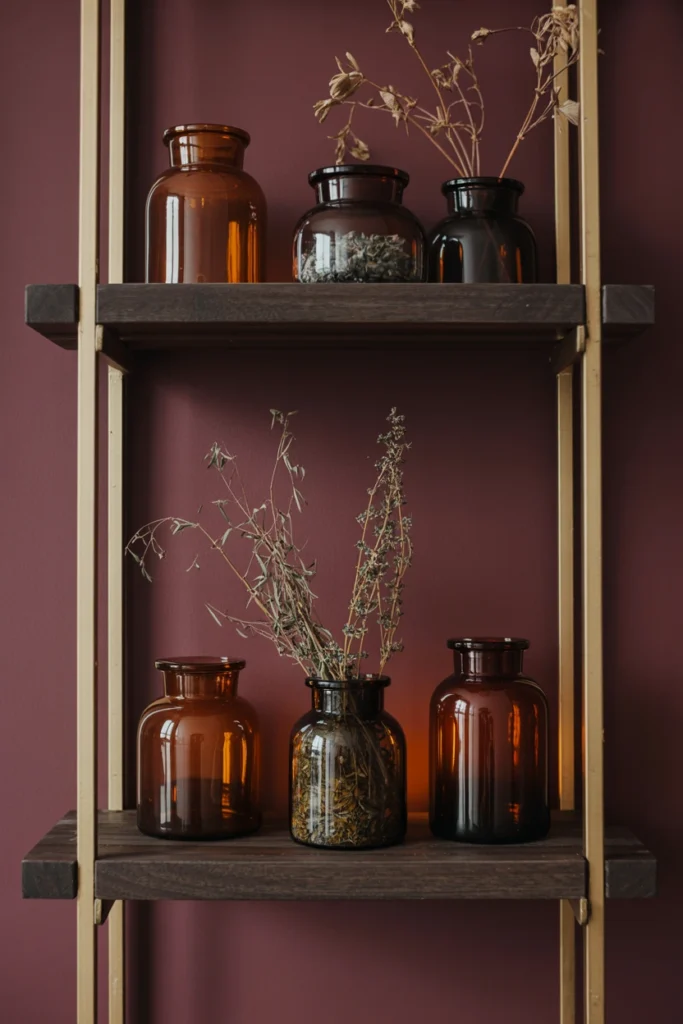
Bare shelves in a whimsigoth room look unfinished no matter how good the wall color or furniture is. This gap is especially noticeable on open shelving, which draws the eye directly to what’s missing. An apothecary-style jar arrangement fills this space with texture and narrative.
Arrange 4–6 amber or dark glass apothecary jars of varying heights on a single floating shelf, filling some with dried herbs and others left empty for visual variety. Group jars in odd numbers with the tallest piece positioned slightly off-center rather than dead-center. This asymmetric grouping reads as collected and intentional rather than staged and matched.
| Jar Fill | Visual Effect |
| Dried lavender | Muted purple texture |
| Dried rosemary sprigs | Deep green texture |
| Empty amber glass | Light-catching accent |
| Loose crystal chunks | Sparkle without color |
15. Display Crystals on a Tarnished Tray
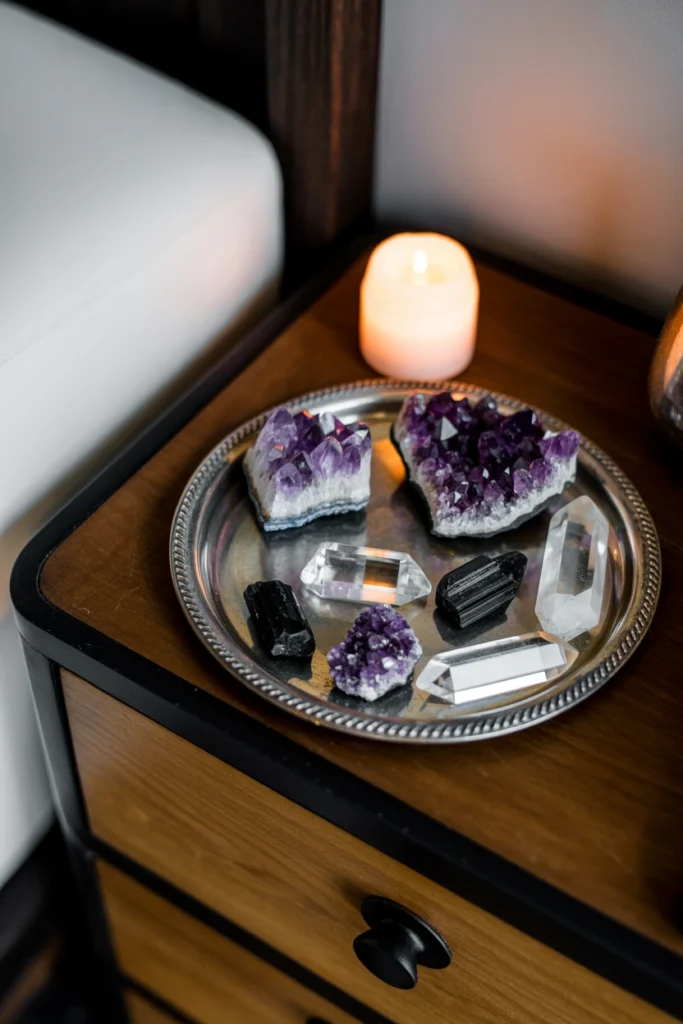
Crystals placed directly on a shelf or dresser surface look scattered and disorganized rather than curated. This lack of containment is a small detail that has an outsized effect on how “finished” the display reads. A tarnished metal tray solves this instantly.
Place 3–5 crystals of varying sizes — amethyst, clear quartz, black tourmaline — on a tarnished silver or brass tray no larger than 10×14 inches. Keep the tray on your nightstand or dresser rather than a high shelf, since crystal displays read best at a closer viewing distance. This contained grouping turns loose objects into a single deliberate vignette instead of visual clutter.
| Crystal Type | Common Size Range |
| Amethyst cluster | 3–5 inches |
| Clear quartz point | 2–4 inches |
| Black tourmaline | 2–3 inches |
| Rose quartz sphere | 1.5–2.5 inches |
Layer Textiles, Lighting, and Candlelight Ambiance
Textiles and light sources do more to establish whimsigoth atmosphere than any single decor object. This section covers how to layer both for maximum warmth and depth.
16. Layer Velvet and Lace Throw Pillows
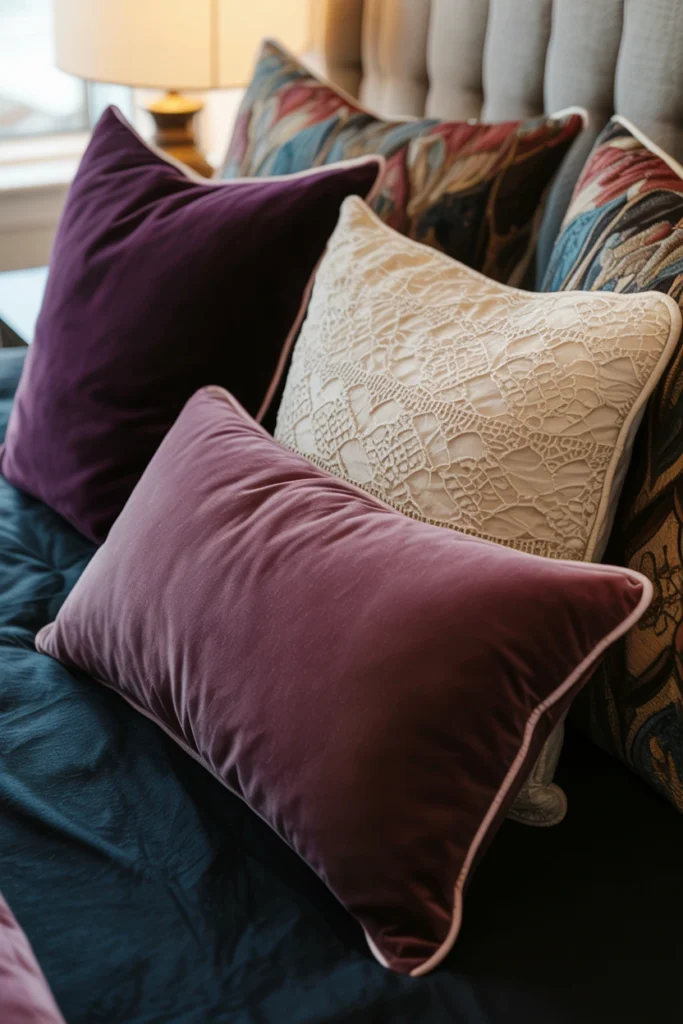
A bed or sofa with matching pillows in a single fabric reads as generic hotel decor rather than collected whimsigoth styling. This uniformity is a fast way to flatten an otherwise well-designed room. Mixing velvet and lace textures fixes this immediately.
Layer 4–5 pillows in mixed textures — two velvet in your anchor color, one lace or crochet accent, and one patterned jewel-toned piece. Vary the sizes between 18-inch and 22-inch squares rather than using a uniform size throughout. This textural mixing creates the collected-over-time look that a single matching pillow set can never achieve.
| Pillow Texture | Suggested Quantity |
| Solid velvet | 2 pieces |
| Lace or crochet | 1 accent piece |
| Patterned jewel-tone | 1 piece |
| Faux fur or boucle | 1 optional piece |
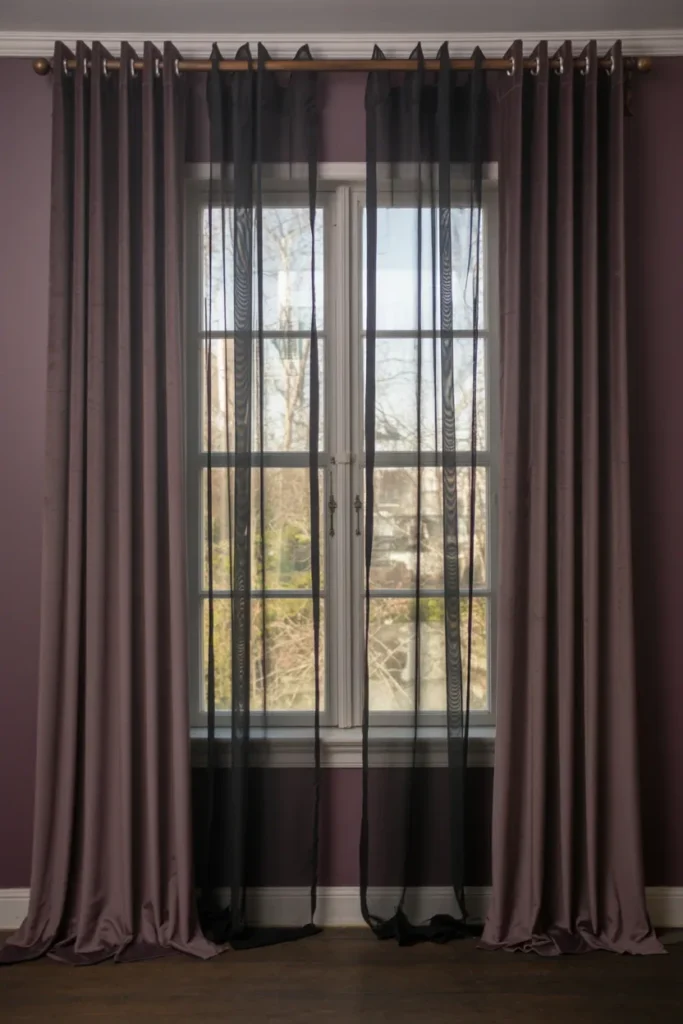
17. Drape Sheer Curtains Over Heavier Panels
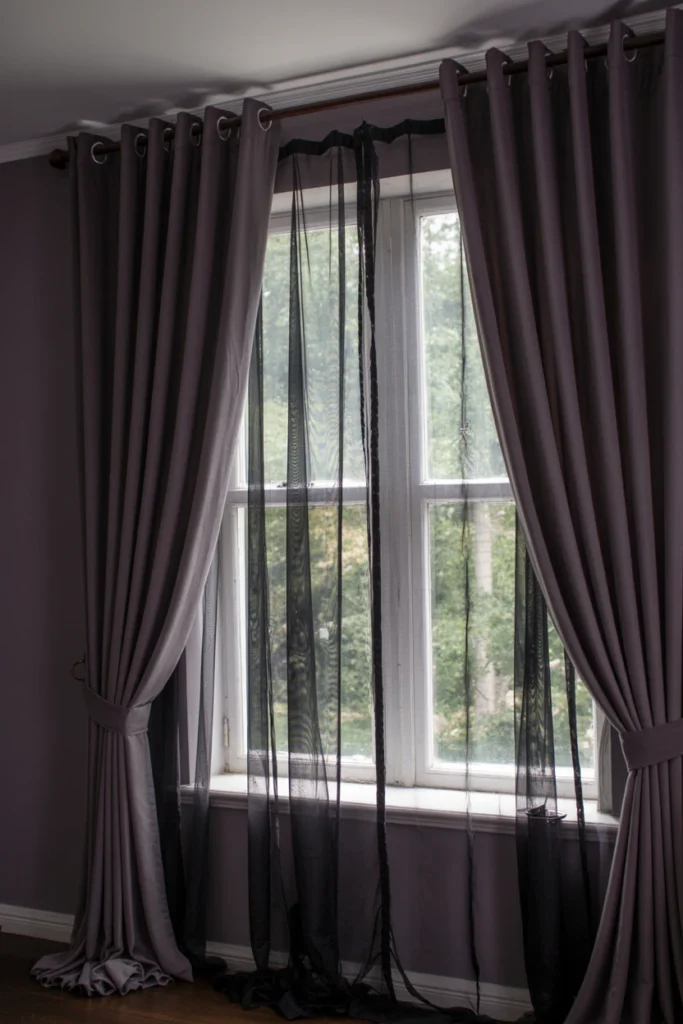
Heavy blackout curtains alone block the soft, filtered light whimsigoth rooms need during the day, leaving the space feeling like a cave rather than romantic. This single-layer curtain mistake affects the room’s mood at every hour except night. Layering sheer and heavy panels solves this.
Hang a sheer black or charcoal panel closest to the window, then layer a heavier velvet curtain in your anchor color on the outer rod. Mount the rod 4–6 inches above the window frame and extend it 3–4 inches beyond each side for fuller coverage. This two-layer system lets you filter daylight softly while still achieving full darkness and drama at night.
| Curtain Layer | Fabric Recommendation |
| Inner sheer panel | Black or charcoal voile |
| Outer heavy panel | Velvet in anchor color |
| Rod height above frame | 4–6 inches |
| Panel width beyond frame | 3–4 inches per side |
18. Switch to Warm Amber Bulbs Only
Cool white or daylight bulbs strip the warmth from every jewel tone in the room, no matter how carefully the palette was chosen. This single lighting mistake undoes hours of color and furniture planning instantly. Switching to warm amber bulbs corrects it in minutes.
Replace every bulb in the room with 2200K–2700K warm amber or Edison-style filament bulbs, avoiding anything labeled “daylight” or above 3000K. Check each lamp and fixture in the room, since even one cool-toned bulb will visibly clash against the rest. This single-hour swap does more to establish whimsigoth atmosphere than most decor purchases combined.
| Bulb Temperature | Effect in Whimsigoth Room |
| 2200K (Edison filament) | Deep amber, most dramatic |
| 2700K (soft white) | Warm, versatile default |
| 3000K (warm white) | Borderline — use sparingly |
| 4000K+ (daylight) | Avoid entirely |
19. Install Wall Sconces for Candlelight Ambiance
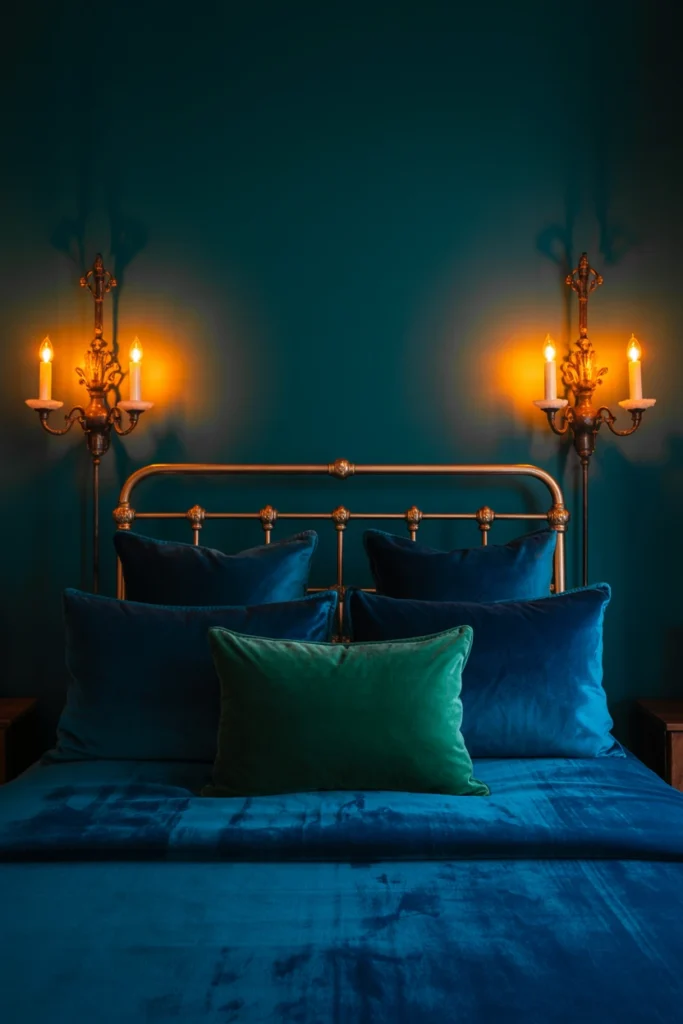
A room lit only by lamps leaves the upper walls dark and flat, missing the layered glow that makes whimsigoth spaces feel enveloping. This gap is especially noticeable in the evening, when the room needs its richest atmosphere. Wall sconces fill that vertical space with light.
Mount a pair of black iron or brass sconces at 60–66 inches from the floor, positioned on either side of your bed or focal wall mirror. Choose fixtures with a candle-style or flame-tip bulb shape rather than a standard rounded bulb. This permanently changes how the room reads after sunset, adding a flickering warmth that floor and table lamps alone cannot replicate.
| Sconce Style | Best Placement |
| Black iron, candle bulb | Either side of bed |
| Brass arm sconce | Beside focal mirror |
| Glass hurricane sconce | Hallway, entry |
| Adjustable swing-arm | Reading nook, armchair |
Style Walls, Shelves, and Finishing Touches
The final visual layer is what elevates a whimsigoth room from good to genuinely photograph-ready. This section covers wall art, shelving, and small object styling.
20. Arrange a Gallery Wall of Dark Art
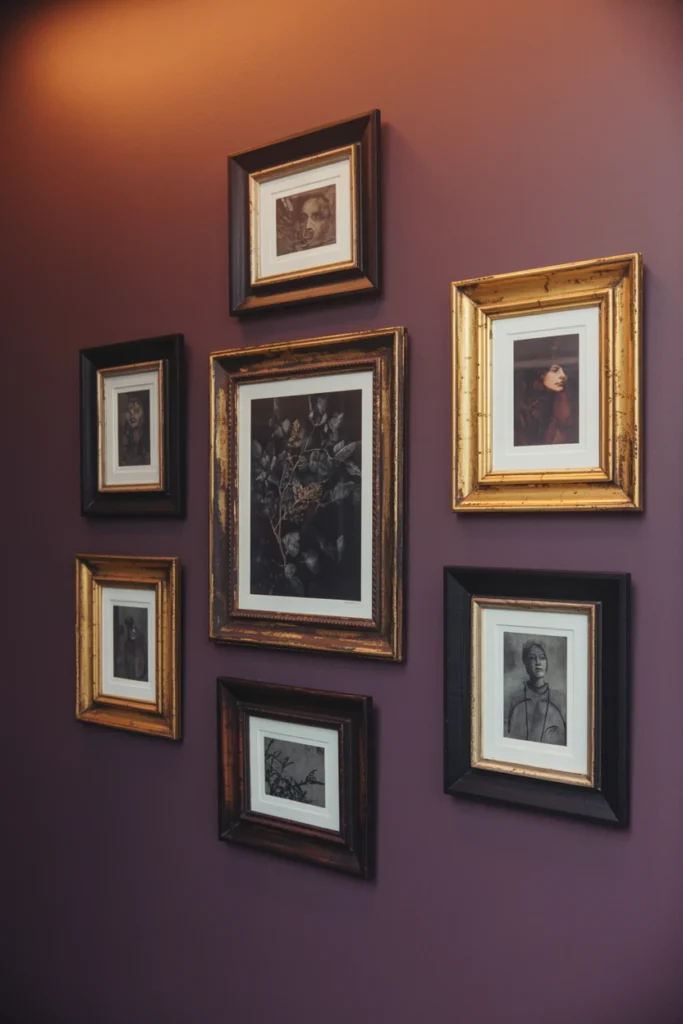
A single piece of art on a large wall leaves too much empty space and undercuts the room’s sense of richness. This gap reads as unfinished even when every other element is in place. A gallery grouping fills the wall with the layered, collected quality whimsigoth depends on.
Arrange 5–7 framed pieces — botanical prints, dark portraiture, celestial imagery — in mixed gold and dark wood frames on your secondary wall. Keep 2–3 inches of spacing between each frame and anchor the grouping around one larger central piece. This mixed-frame approach reads as an art collection built over time rather than a single matched set purchased together.
| Gallery Element | Recommended Count |
| Total framed pieces | 5–7 |
| Frame finishes to mix | 2–3 (gold, dark wood) |
| Spacing between frames | 2–3 inches |
| Anchor/largest piece | 1 central focal piece |
21. Build a Layered Bookshelf Vignette
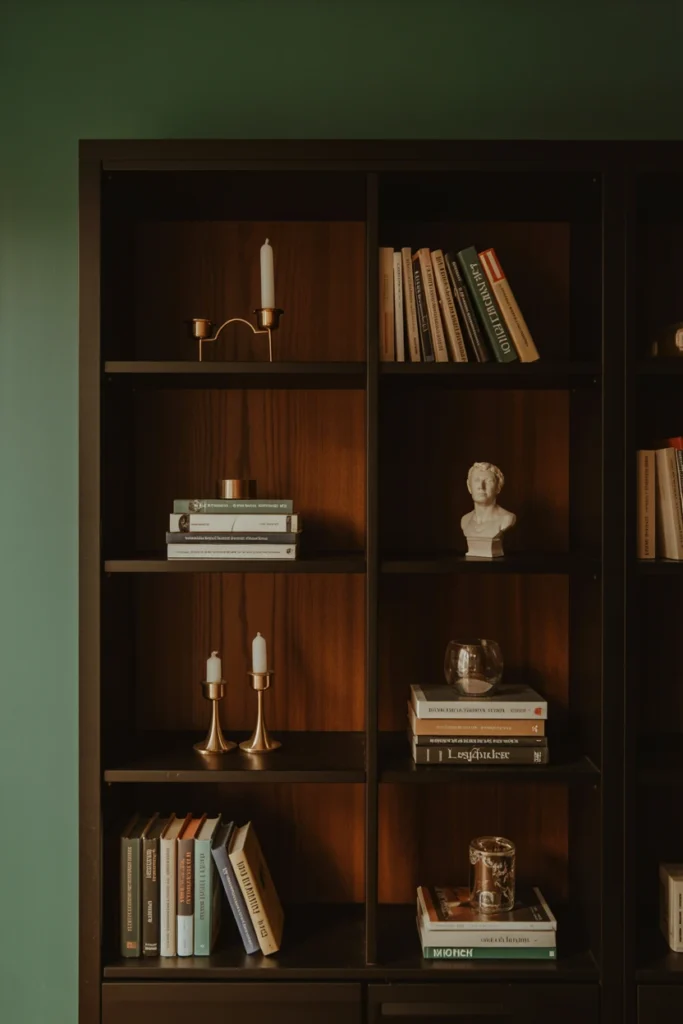
Books shelved upright in a single row read as a library display rather than a styled vignette. This flat presentation wastes the storytelling potential shelving offers in a whimsigoth room. Layering books with objects fixes this.
Stack one-third of your books horizontally and shelve the rest vertically, then place a small object — a candlestick, mini bust, or crystal — on top of every horizontal stack. Limit each shelf to no more than 3–4 objects total so the eye has visual breathing room between groupings. This layering technique turns ordinary bookshelves into one of the room’s most detailed and photograph-worthy areas.
| Shelf Element | Placement Ratio |
| Vertical books | Roughly 65% of shelf |
| Horizontal book stacks | Roughly 35% of shelf |
| Objects per stack | 1 per horizontal stack |
| Max objects per shelf | 3–4 total |
22. Curate Nightstand Objects in Threes
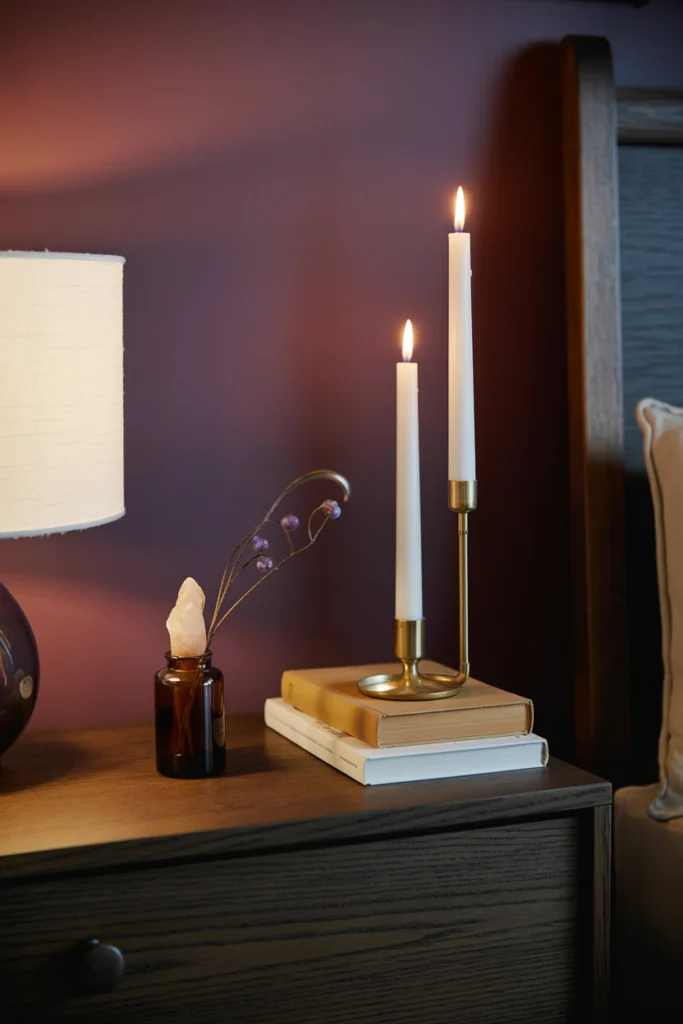
A nightstand cluttered with random daily items undercuts the intentional styling happening everywhere else in the room. This small surface gets overlooked constantly, yet it sits at eye level beside the bed. Curating it in odd-numbered groupings fixes this fast.
Limit your nightstand to exactly three objects — one candle, one small stack of books, and one small vase or crystal — removing everything else to a drawer. Vary the height of the three objects so the tallest and shortest sit on opposite sides. This small, contained styling choice makes even the most overlooked surface in the room feel deliberately composed.
| Nightstand Object | Suggested Height |
| Candle or taper holder | 6–10 inches |
| Small book stack | 4–6 inches |
| Vase or crystal | 3–5 inches |
Maintain and Refresh Your Whimsigoth Room Over Time
A whimsigoth room needs periodic refreshing to stay from feeling stagnant. This section covers the one habit that keeps the space feeling current year-round.
23. Rotate Seasonal Accents Twice a Year
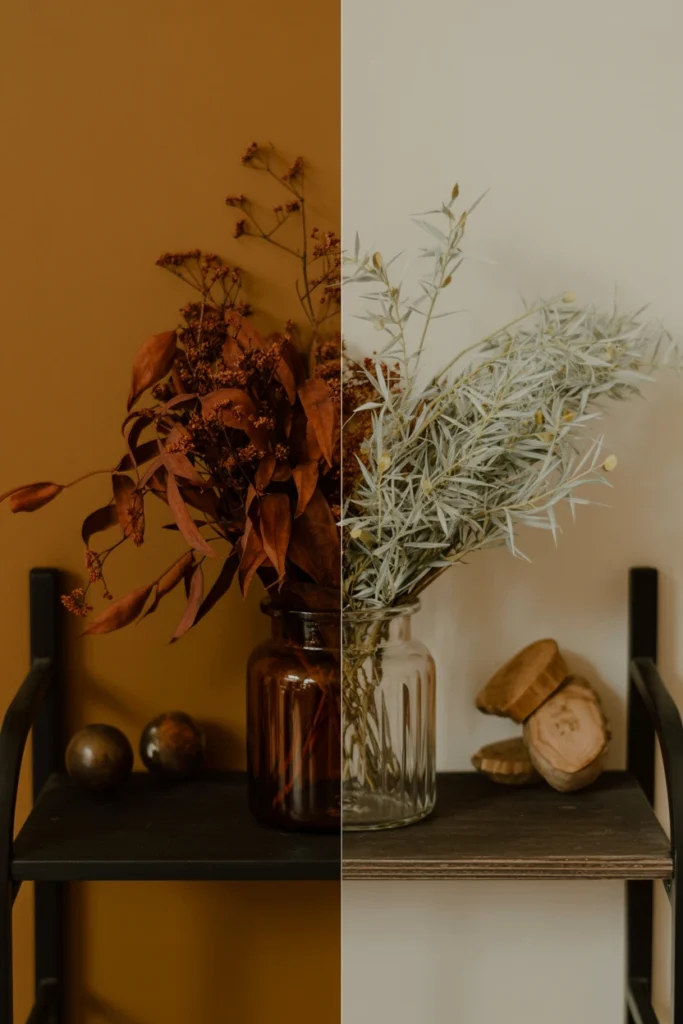
A room styled once and never touched again starts to feel stale after several months, even with a strong original design. This staleness costs the space its sense of being actively cared for and curated. Rotating a handful of accents twice yearly solves this permanently.
Swap 3–4 smaller accents — the dried floral arrangement from Step 12, one throw pillow, and one nightstand object — every six months rather than overhauling the entire room. Schedule this rotation for early fall and early spring, when botanical and textile options naturally shift. This small, low-cost habit keeps the room feeling intentional and current permanently, without the expense of a full redesign.
| Season | Accent to Rotate |
| Early autumn | Dried florals, deeper textiles |
| Early spring | Lighter botanicals, brighter jars |
| Every rotation | One throw pillow swap |
| Every rotation | One nightstand object swap |
Whimsigoth Decor Mistakes That Make a Room Look Costume-y
These eight mistakes are the most common reasons a whimsigoth room reads as a themed costume rather than a genuinely styled space. Correcting even two or three of them significantly changes how the room reads.
| Mistake | Why It Hurts the Space | Better Alternative |
| Painting every wall black | Flattens depth, reads cold | One jewel-toned accent wall |
| Using only cool white bulbs | Strips warmth from jewel tones | Switch to 2200K–2700K bulbs |
| Buying matching decor sets | Reads staged, not collected | Mix vintage and modern pieces |
| Overcrowding every shelf | Eliminates visual breathing room | Limit to 3–4 objects per shelf |
| Skipping any warm accent color | Room feels heavy and gothic | Add burgundy or mustard accents |
| Using fresh flowers only | Requires constant replacement | Mix in dried botanicals |
| Mixing silver and gold randomly | Metals clash and look unplanned | Commit to brass or gold only |
| Hanging art in a perfect grid | Reads sterile, not collected | Cluster gallery pieces organically |
Whimsigoth Room Ideas by Space and Situation
Every space comes with its own constraints. These four segments cover the most common whimsigoth styling situations and how to adapt the strategies above to fit them.
Small Bedroom
A small bedroom limits how many large statement pieces the space can hold without feeling cramped. The core constraint here is prioritizing vertical styling over floor-space-heavy furniture.
Key strategies for small bedrooms:
- Mount floating apothecary shelves instead of a freestanding bookcase.
- Choose a slim brass daybed frame instead of a full four-poster bed.
- Hang the gallery wall vertically above the headboard to use unused height.
- Use wall sconces exclusively instead of floor lamps to save floor space.
- Select a single oversized mirror instead of multiple smaller frames.
Rental Apartment
Rental restrictions on paint and permanent fixtures require a different approach centered on removable and temporary solutions. The core constraint is achieving the same moody depth without altering walls.
Key strategies for rental apartments:
- Use a large tapestry or fabric panel instead of painting an accent wall.
- Choose plug-in sconces with adhesive mounts instead of hardwired fixtures.
- Layer an area rug in your anchor color to ground the room without flooring changes.
- Use removable wallpaper on one wall for texture instead of paint.
- Rely on furniture and textiles to carry the jewel-toned palette instead of walls.
Shared or Studio Space
Shared spaces require boundaries that establish a whimsigoth zone without overwhelming a roommate’s or partner’s separate style preferences. The core constraint is containment.
Key strategies for shared or studio spaces:
- Define your whimsigoth zone with a room divider or curtain panel.
- Concentrate the jewel-toned palette on your bed and immediate surroundings only.
- Use a folding screen to visually separate styles within one room.
- Keep botanical and apothecary displays contained to a single shared shelf.
- Choose furniture on wheels so the zone can be reconfigured easily.
Living Room
Living rooms carry higher foot traffic and multiple functions, requiring the whimsigoth elements to withstand daily use. The core constraint is durability alongside atmosphere.
Key strategies for living rooms:
- Choose a performance velvet fabric for seating instead of delicate upholstery.
- Anchor the coffee table with a tray for candles to keep wax off wood surfaces.
- Layer a darker area rug to hide everyday wear and foot traffic.
- Position floor lamps away from walking paths to prevent tipping.
- Reserve fragile crystal and glass displays for higher shelves, out of high-traffic zones.
Frequently Asked Questions
What is whimsigoth style exactly?
Whimsigoth style blends dark academia moodiness with witchy, romantic softness through jewel tones, vintage brass, and botanical accents. It draws from gothic architecture, 1970s witchy aesthetics, and antique furniture rather than any single decade or trend. The result is a room that feels curated and personal rather than themed around one specific look.
What makes a whimsigoth room look cheap or costume-y?
Matching decor sets and all-black color schemes are the two fastest ways to make a whimsigoth room look staged. Mixing vintage pieces with a single jewel-toned anchor color avoids this problem entirely. Genuine patina and varied textures always read as more authentic than uniform, brand-new pieces.
How do I start a whimsigoth room on a budget?
Start with the lighting and color anchor from Steps 1 and 2, since both cost little but shape the entire room’s mood. Secondhand marketplaces and estate sales are the best source for vintage brass and wood pieces at a fraction of retail price. Add botanical and apothecary touches last, since dried florals and jars are the lowest-cost category in the whole aesthetic.
How do I do whimsigoth in a small bedroom?
Prioritize vertical styling — floating shelves, wall sconces, and a tall gallery wall — over large floor furniture in a small bedroom. A slim daybed frame and a single oversized mirror deliver the same impact as multiple smaller pieces without crowding the floor. Keeping the object count low per surface also prevents a small room from feeling cluttered.
Should I paint my walls dark or use black accents instead?
A deep jewel tone like plum or forest green works better as a wall color than pure black, which reads cold rather than moody. Reserve true black for smaller accents like frames, hardware, and one furniture piece instead of covering entire walls. This combination delivers drama without the flattening effect solid black creates under most lighting.
How often should I update my whimsigoth decor?
Rotating 3–4 smaller accents twice a year, in early fall and early spring, keeps a whimsigoth room feeling current without a full redesign. Larger vintage furniture pieces rarely need replacing and typically improve with age and patina. This seasonal rotation habit is more effective than infrequent, large-scale overhauls.
Does whimsigoth work in a rental apartment?
Whimsigoth adapts well to rentals through removable wallpaper, plug-in sconces, and tapestries instead of permanent paint or hardwired fixtures. Furniture and textiles can carry the entire jewel-toned palette without any wall alterations. Most of the aesthetic’s impact comes from movable pieces rather than built-in changes.
How much does it cost to decorate a whimsigoth room?
A vintage brass bed frame typically runs 150–400, while smaller botanical and apothecary accents cost under $20 each at secondhand or craft stores. A full room can be styled for 500–1,200 depending on how many vintage furniture pieces are purchased new versus secondhand. Prioritizing lighting and color first stretches a smaller budget the furthest.
How do I keep dried florals and plants looking good long term?
Dried florals last 6–12 months before losing their shape and should be replaced during the seasonal rotation from Step 23. Trailing plants like pothos need indirect light and watering only when the top inch of soil feels dry. Rotating both on a consistent schedule keeps the room’s botanical elements from ever looking tired or forgotten.
Conclusion
A whimsigoth room comes together through layered color, vintage character, and warm, intentional lighting rather than any single statement piece. Start with your color anchor and lighting plan before buying a single decor item, since both decisions shape everything that follows. Swap your bulbs to warm amber tones today — it takes under an hour and immediately changes how the entire room feels.
Whimsigoth is a habit of curating and rotating, not a one-time purchase list that finishes the room permanently. A space built on these 23 strategies holds its atmosphere for years, growing richer with every vintage piece added over time.