
Witchy decor turns a plain apartment into a space that feels genuinely mystical, personal, and layered. This style rewards deliberate choices — a single mismatched candle holder or an oversized moon garland does more than a room full of generic “spooky” items ever will. This guide delivers 19 specific, actionable strategies for building an authentic witchy interior, from your altar corner to your bookshelves. Start with your color palette before you buy a single crystal.
Before You Begin: 3 Foundation Steps for Witchy Decor
Witchy decor collapses into clutter fast without a plan. These three steps set the visual language for every choice you make after this point.
1. Choose a Core Witchy Aesthetic Before Buying Anything
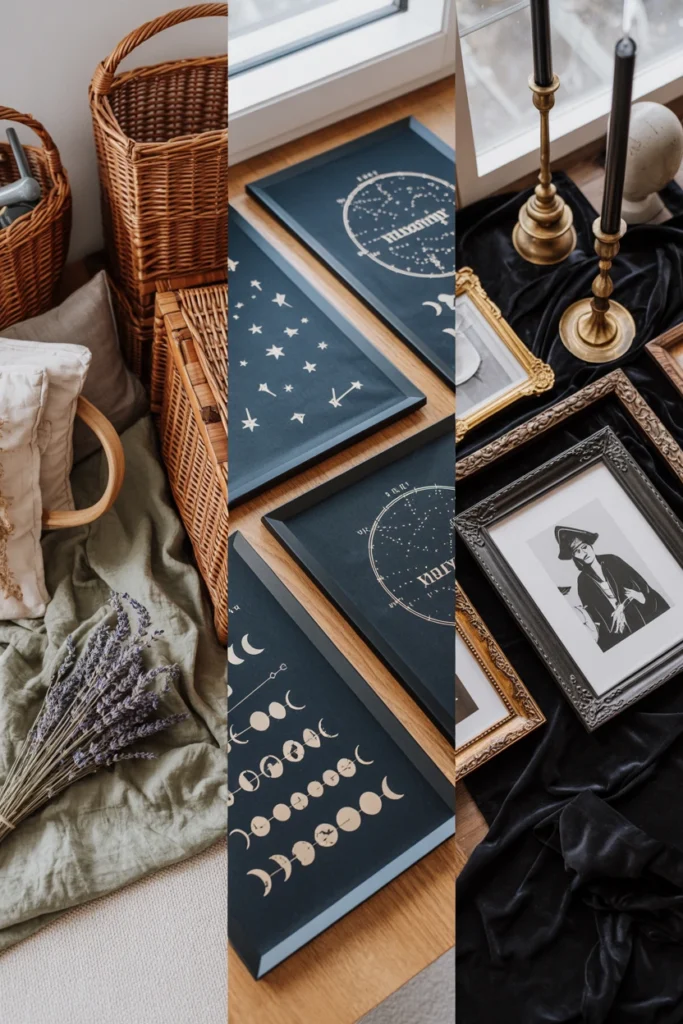
Witchy decor without a defined sub-style reads as random Halloween leftovers. Readers who skip this step end up with a mismatched pile of candles, crystals, and skulls that clash instead of cohere. Choosing one lane first — cottage witch, celestial witch, or gothic witch — gives every future purchase a clear filter.
Start by writing down three words that describe the mood you want on a sticky note. Pin it inside a cabinet door so you check it before every purchase for at least the first two months of decorating. Sticking to one sub-style cuts your decorating budget significantly because you stop buying items that never get used.
| Witchy Sub-Style | Defining Elements |
| Cottage witch | Dried herbs, wicker, muted sage and cream |
| Celestial witch | Moon phases, star charts, deep indigo |
| Gothic witch | Black lacquer, velvet, antique brass |
| Green witch | Live plants, botanical prints, terracotta |
2. Establish a Dominant Color Palette Across Every Room
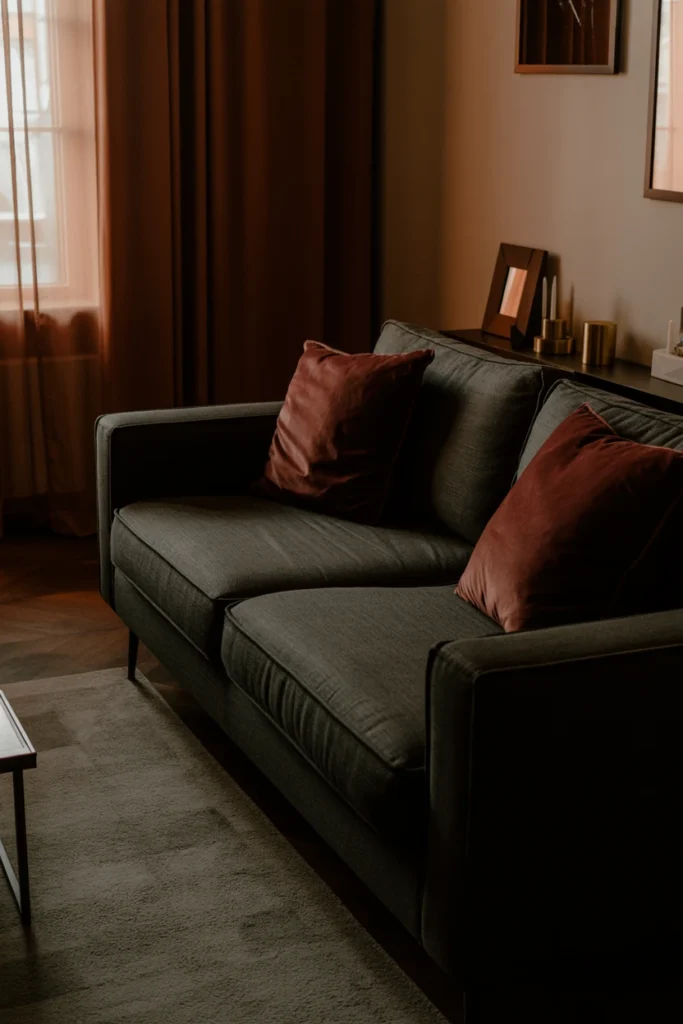
A witchy room with no color discipline reads as chaotic instead of intentional. Random black, purple, and gold items scattered without a ratio compete for attention and flatten the mystical effect you’re after. A disciplined palette makes even a handful of decor pieces look like a cohesive collection.
Start by picking one dominant neutral — charcoal, deep forest, or aged cream — to cover 60% of the room. Layer in a secondary tone at 30%, such as burgundy or indigo, and reserve black or brass as accents at only 10%. This ratio keeps the space feeling curated instead of costume-like, even as you add more pieces over time.
| Ratio | Color Role | Example Elements |
| 60% | Dominant neutral | Walls, rug, sofa |
| 30% | Secondary tone | Curtains, throw pillows |
| 10% | Accent | Candle holders, frames |
| 0% | Avoid | Neon or pastel tones |
3. Map Out Your Light Sources Before Adding Decor
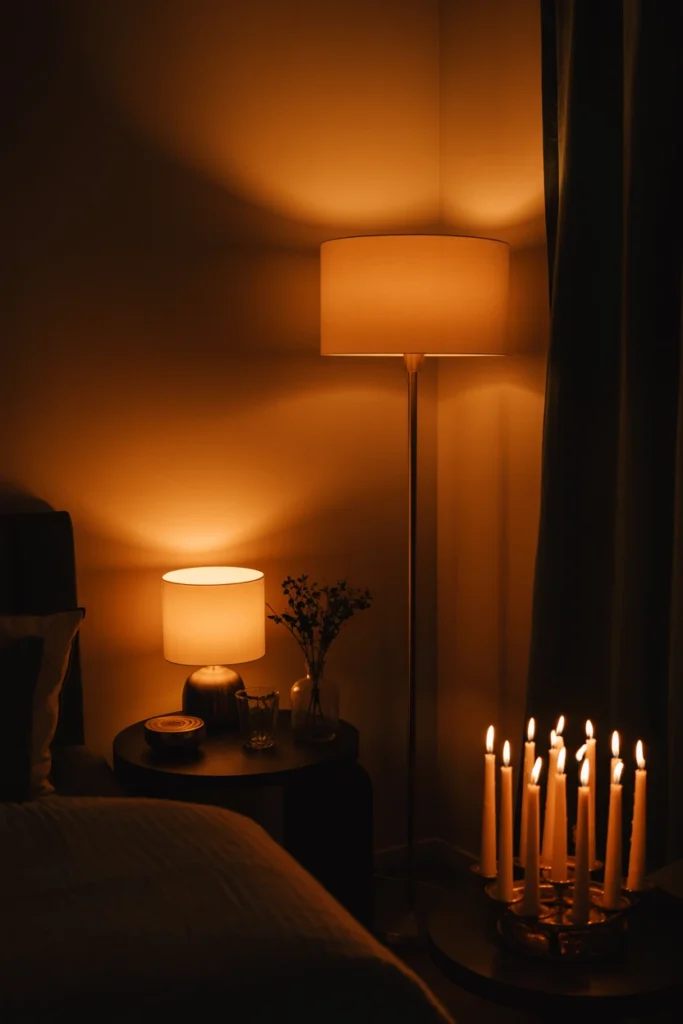
Overhead lighting kills a witchy atmosphere before decor even enters the room. Bright, flat ceiling light erases the shadows and warmth that make candles, lanterns, and dim corners feel intentional rather than accidental. Mapping your light sources first prevents wasted money on decor that photographs well but disappears under harsh light.
Start by turning off every overhead light and walking the room with only a single lamp lit. Add at least three separate light sources per room — a floor lamp, a table lamp, and one open-flame or flameless candle cluster — set at warm 2700K color temperature. This layered lighting setup makes every other decor choice in the room look deliberately atmospheric instead of flat.
| Light Source | Placement | Bulb Temp |
| Floor lamp | Reading corner | 2700K warm |
| Table lamp | Altar or shelf | 2700K warm |
| Taper candles | Mantel or windowsill | Open flame |
| String lights | Behind sheer curtain | 2200K amber |
Altar and Ritual Space Essentials
An altar space anchors the entire witchy aesthetic even in a home with no other overt decor. These four tips build a functional, visually layered altar corner from scratch.
4. Anchor an Altar Corner With a Dedicated Surface
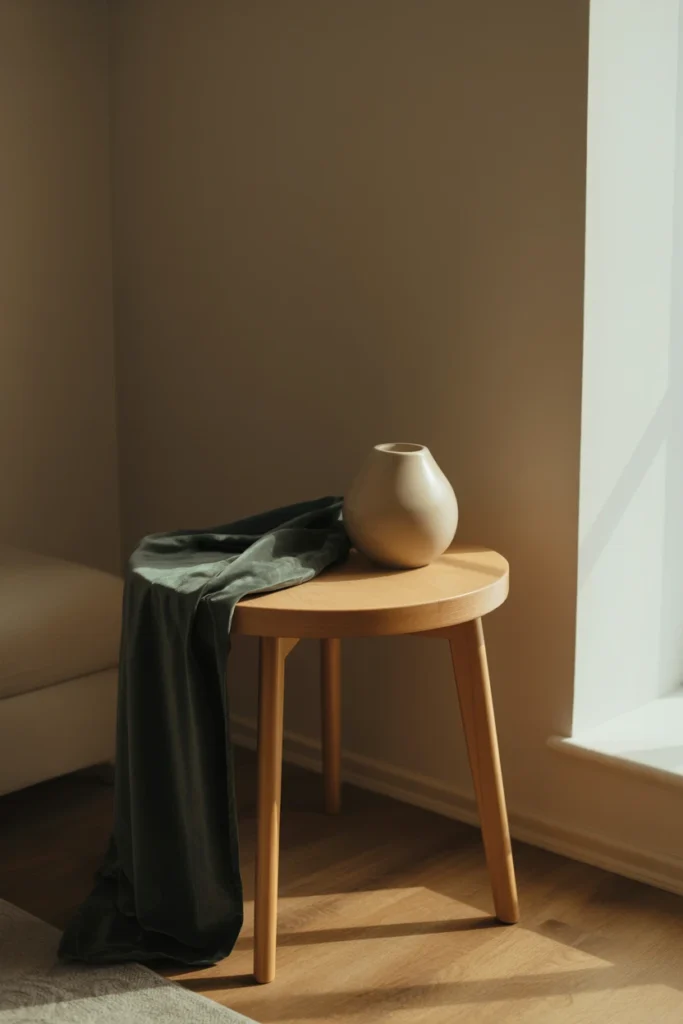
A witchy home without one clear altar surface scatters its mystical items across every shelf, diluting the effect. Visitors and residents alike lose the single focal point that signals intention rather than accumulation. A dedicated altar surface, even a small one, instantly organizes the entire aesthetic around one anchor point.
Start by clearing a surface at least 18 by 24 inches — a small side table, a wide windowsill, or a wall-mounted shelf. Cover it with a single dark cloth in cotton or velvet to unify whatever objects you place on top. This one boundary keeps the altar reading as sacred space rather than a catch-all shelf.
| Surface Type | Minimum Size | Best For |
| Side table | 18×24 in | Bedrooms, small spaces |
| Windowsill | 12×36 in | Apartments, rentals |
| Wall shelf | 24×8 in | Shared living rooms |
| Dresser top | 30×18 in | Combined altar/vanity |
5. Layer Your Altar in Three Distinct Height Tiers
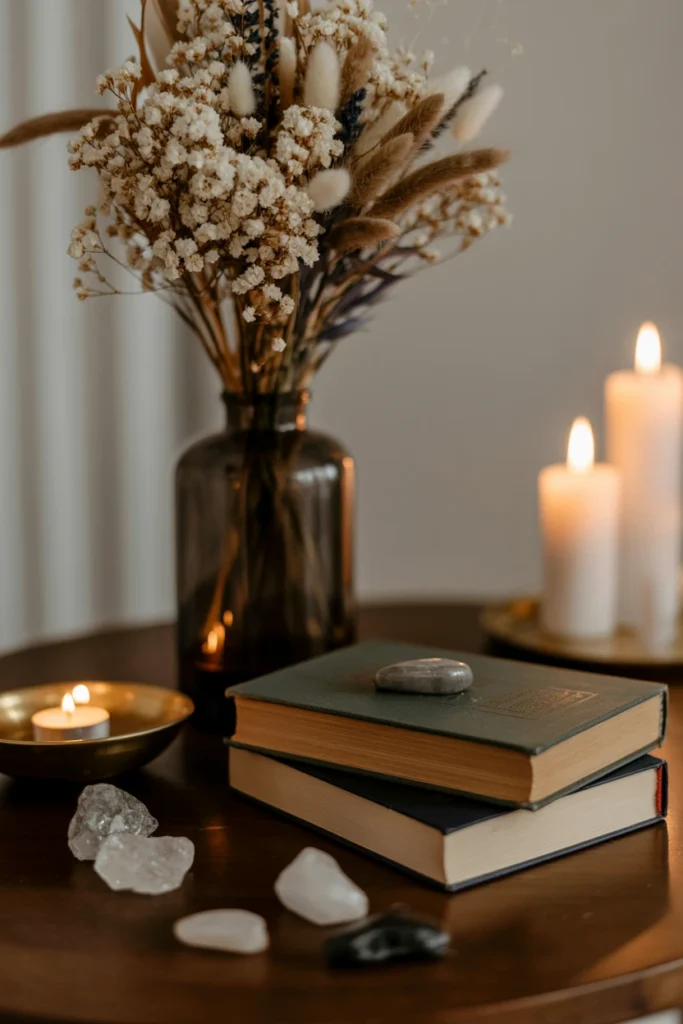
A flat altar with every object at the same height reads as a cluttered tabletop instead of a curated display. Objects competing at one level create visual noise that hides your best pieces instead of showcasing them. Three height tiers give the eye a clear path through the display and make even inexpensive items look intentional.
Start by placing your tallest item — a candlestick or dried botanical bundle — at the back of the surface. Use a stack of two to three books as a riser for your mid-height tier, then let small items like crystals sit directly on the cloth in front. This layering technique instantly adds depth to a flat 18-inch surface without adding a single new object.
| Tier | Height Range | Typical Item |
| Back | 10–16 in | Candlesticks, vases |
| Middle | 4–8 in | Book-stacked objects |
| Front | 0–3 in | Crystals, small bowls |
| Wall behind | Above 16 in | Art, mirror, garland |
6. Group Crystals in Odd-Numbered Clusters

A single crystal placed alone on a shelf reads as an afterthought rather than a design choice. Scattered pairs of crystals create accidental symmetry that looks staged and static instead of naturally collected. Grouping crystals in threes or fives instantly reads as intentional, curated arrangement instead of random placement.
Start by pulling every crystal you own into one pile and sorting by size rather than type or color. Arrange them in a cluster of three, placing the largest piece slightly off-center and the two smaller pieces at varying distances from it. This asymmetrical odd-number grouping makes even three inexpensive tumbled stones look like a designed vignette.
| Cluster Size | Visual Effect | Best Placement |
| 3 stones | Balanced, easy | Altar front tier |
| 5 stones | Fuller, layered | Wide windowsill |
| 1 large piece | Standalone focal | Bookshelf anchor |
| 2 stones | Avoid — reads staged | N/A |
7. Install a Small Shelf for Rotating Seasonal Items
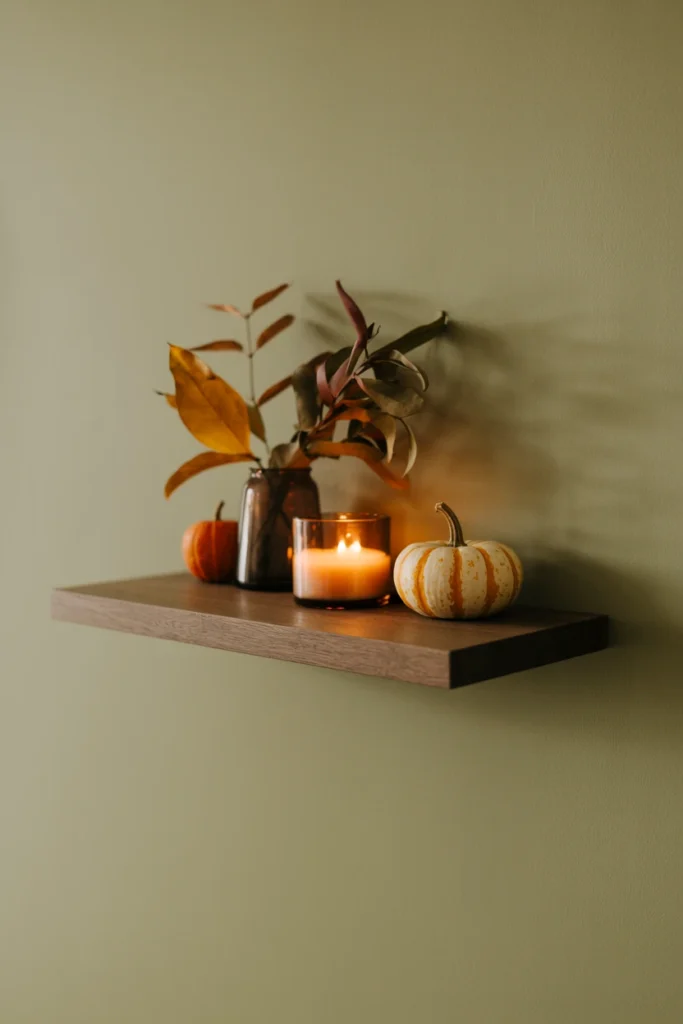
A static altar that never changes starts to feel like generic decor instead of a living practice. Items tied to a specific season sitting out year-round signal neglect rather than intention to anyone who notices the mismatch. A dedicated rotating shelf keeps the entire display feeling current and prevents seasonal clutter from piling onto your main surface.
Start by mounting one small floating shelf, roughly 12 to 18 inches wide, within arm’s reach of your main altar. Reserve this shelf exclusively for seasonal items — dried autumn leaves, spring florals, or solstice candles — and swap the contents every six to eight weeks. This rotation habit keeps your main altar tier permanent while the seasonal shelf carries all the changing detail.
| Season | Shelf Contents | Swap Frequency |
| Spring | Fresh florals, pastel candles | 6–8 weeks |
| Summer | Sun motifs, citrine | 6–8 weeks |
| Autumn | Dried leaves, amber tones | 6–8 weeks |
| Winter | Pine, dark garnet, silver | 6–8 weeks |
Color, Texture and Layered Witchy Textiles
Textiles carry more of the witchy aesthetic than any single object. These four tips build texture and depth through fabric choices alone.
8. Anchor the Room in Deep Jewel-Tone Textiles

A witchy room built only around black textiles quickly reads as flat and one-dimensional under warm lighting. Black-on-black fabric choices remove the depth and richness that jewel tones naturally provide in low light. Deep jewel tones like emerald, burgundy, and indigo photograph and feel far richer than black under candlelight.
Start by replacing one large textile — a sofa throw, curtain panel, or bedspread — with a deep jewel tone in velvet or heavy cotton. Choose a single dominant jewel tone, such as emerald or burgundy, and repeat it in at least two other textiles in the room. This repetition of one jewel tone across multiple textiles reads as curated rather than a random assortment of dark colors.
| Jewel Tone | Fabric Type | Best Room Use | <br>| Emerald | Velvet | Sofa, curtains | | Burgundy | Cotton velvet | Throw pillows | | Indigo | Heavy cotton | Bedspread, rug | | Aubergine | Linen blend | Dining chairs |
9. Layer at Least Three Distinct Fabric Textures
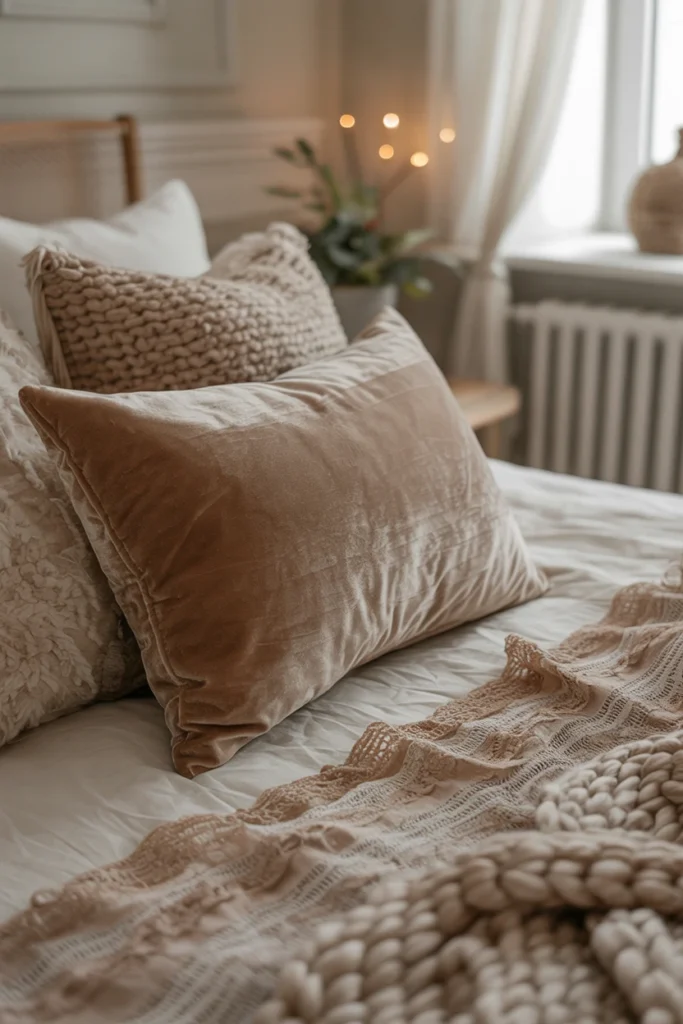
A room built from a single fabric texture, even in the right colors, reads as flat rather than tactile. Matching smooth fabrics throughout a space remove the sensory richness that makes witchy interiors feel worn-in and lived-in. Combining at least three distinct textures instantly adds depth that color alone cannot achieve.
Start by identifying the three textures already in your room, then intentionally add one you’re missing — velvet for softness, wool for weight, or lace for texture contrast. Layer a lace runner over a velvet cushion, or a chunky wool throw over a smooth cotton duvet. This texture layering technique makes a single-color room look considerably richer without adding any new color.
| Texture | Sensory Role | Common Placement |
| Velvet | Soft, light-catching | Pillows, upholstery |
| Wool | Heavy, warm | Throws, rugs |
| Lace | Delicate contrast | Curtains, runners |
| Leather | Structured contrast | Chairs, book covers |
10. Add Black Accents in Controlled 10% Doses
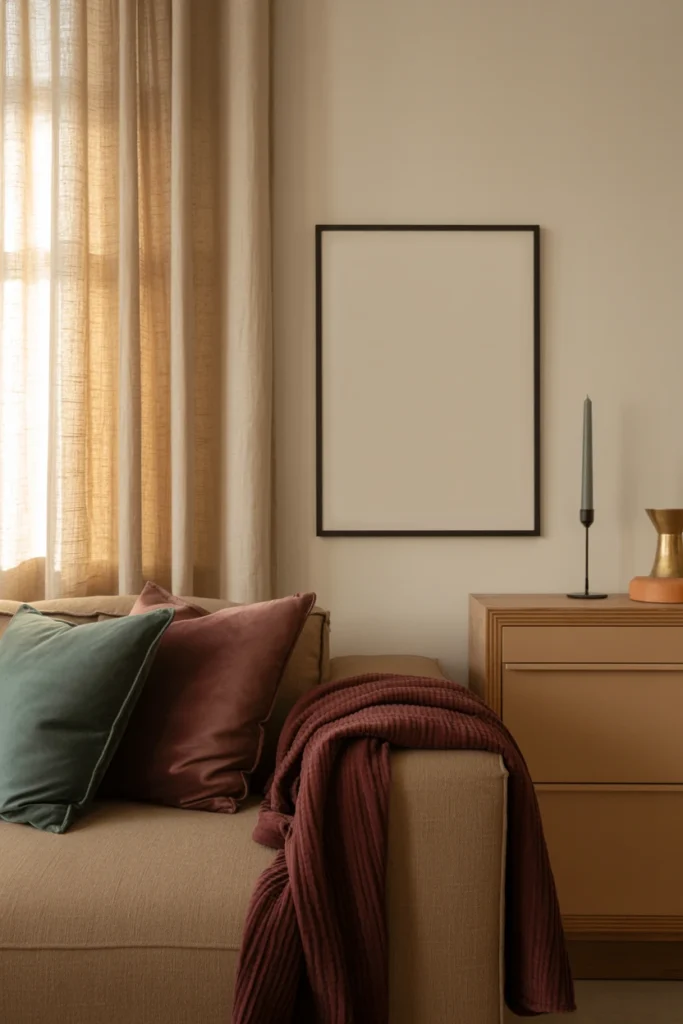
Black used across more than a quarter of a room’s surfaces reads as heavy and closes the space in visually. Overusing black in curtains, walls, and furniture simultaneously removes the contrast that makes black accents feel deliberate. Controlled 10% doses of black keep the color working as a sharp accent instead of an overwhelming backdrop.
Start by auditing every black item currently in the room and removing any that exceed roughly one-tenth of the visible surface area. Concentrate remaining black in small, fixed objects — picture frames, candle holders, or drawer hardware — rather than large furniture pieces. This restraint makes each black accent read as a deliberate punctuation mark instead of visual weight.
| Black Element | Surface Share | Effect |
| Picture frames | Under 2% | Sharp accent |
| Candle holders | Under 2% | Focal punctuation |
| Full black sofa | Over 20% | Avoid — too heavy |
| Black hardware | Under 1% | Subtle detail |
11. Choose Vintage Brass Over Polished Silver Hardware
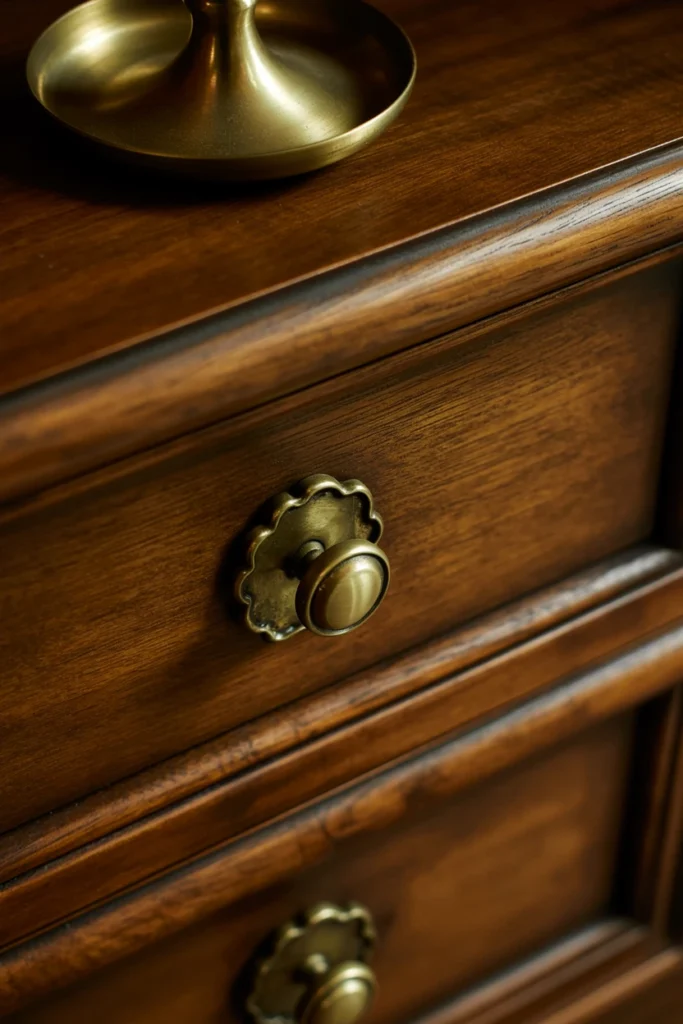
Polished chrome or silver hardware reads as modern and clashes against a witchy room’s aged, layered mood. Bright, reflective metal finishes pull focus away from the muted textiles and dried botanicals that define the aesthetic. Vintage brass or aged bronze hardware blends into the room instead of competing with it.
Start by swapping out any polished silver or chrome hardware — drawer pulls, curtain rods, lamp bases — for an aged brass or bronze finish. Look specifically for hardware labeled “antique brass” or “oil-rubbed bronze” rather than “brushed nickel.” This one hardware swap ties together candle holders, mirror frames, and furniture accents that would otherwise feel mismatched.
| Metal Finish | Visual Effect | Where to Use |
| Antique brass | Warm, aged | Drawer pulls, lamps |
| Oil-rubbed bronze | Dark, matte | Curtain rods |
| Polished chrome | Cold, modern | Avoid |
| Brushed nickel | Neutral, flat | Avoid |
Statement Pieces and Symbolic Decor
A handful of larger symbolic pieces do the heavy lifting in a witchy room. These three tips focus on the statement items worth investing in.
12. Hang a Moon Phase Garland Above a Focal Wall
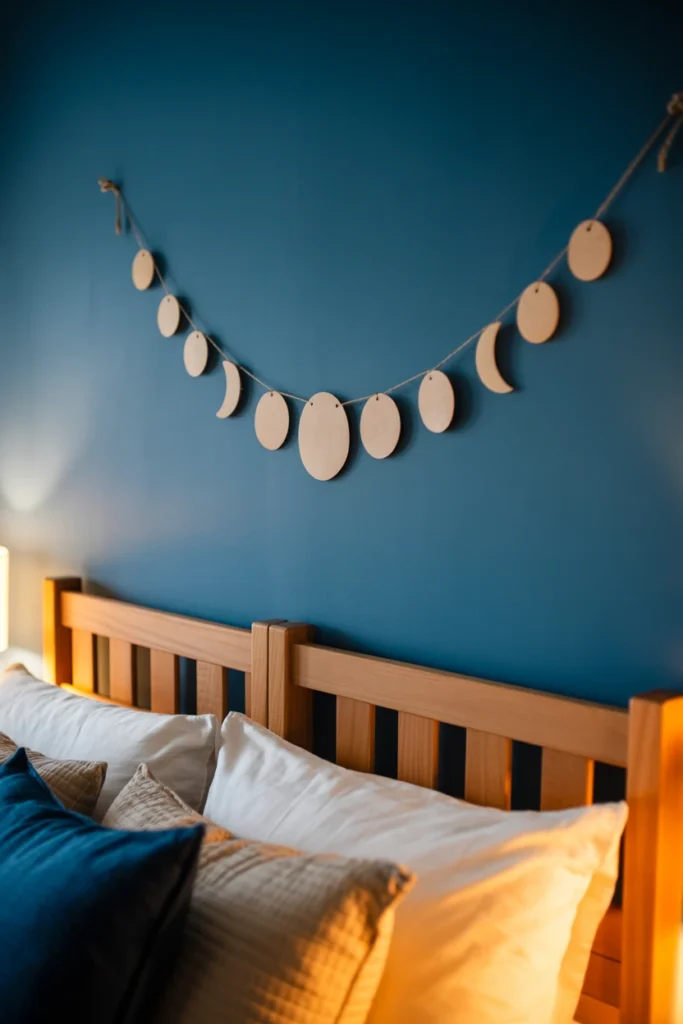
A witchy room without one clear symbolic focal point relies entirely on small objects to carry the theme. Small items alone struggle to read from across a room, leaving the space feeling under-decorated at a glance. A moon phase garland hung above a bed or sofa instantly signals the theme from every angle of the room.
Start by measuring the wall space above your bed or sofa and choosing a garland that spans roughly two-thirds of that width. Hang it 8 to 12 inches above the furniture using small brass hooks rather than adhesive strips, which sag under wood or metal pieces. This single statement piece becomes the room’s visual anchor that every smaller decor choice can build around.
| Wall Width | Garland Length | Hanging Height |
| 60 in | 40 in garland | 8–10 in above |
| 72 in | 48 in garland | 10–12 in above |
| 84 in | 56 in garland | 10–12 in above |
| Under 48 in | Skip — too small | N/A |
13. Display a Curated Grimoire and Book Stack

Random paperbacks with bright modern covers break the witchy mood the moment they’re spotted on a shelf. Mismatched book spines in glossy finishes reflect light and clash against the muted, aged palette of the rest of the room. A curated stack of five to seven dark or leather-bound books instantly reads as an intentional grimoire display.
Start by pulling every book with a dark, matte, or leather-look cover from your existing collection, aiming for five to seven total. Stack three horizontally as a riser and stand two to four vertically beside them, tucking bright spines toward the wall. This curated stack instantly reads as a personal grimoire collection instead of a random home library.
| Book Count | Arrangement | Visual Effect |
| 3 books | Flat stack only | Riser base |
| 5 books | 3 stacked, 2 upright | Balanced display |
| 7 books | Layered mixed stack | Fuller vignette |
| 1–2 books | Avoid — too sparse | N/A |
14. Mount Dried Botanicals in an Asymmetrical Arrangement
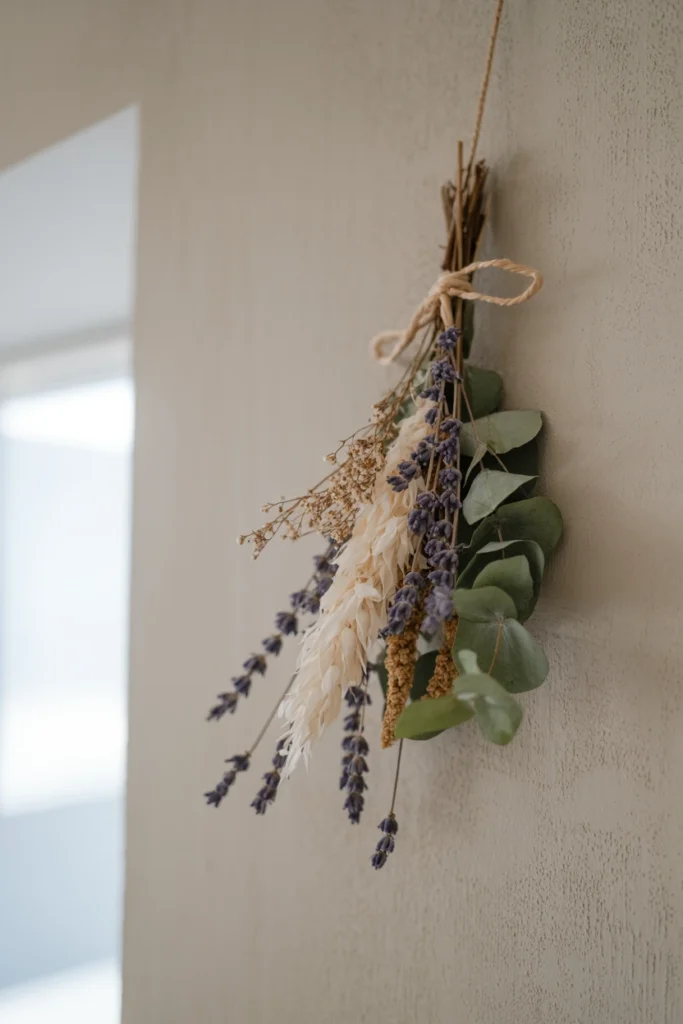
Fresh flowers wilt within a week and pull focus away from the permanent witchy elements in the room. Symmetrical, centered floral arrangements read as generic home decor rather than the collected, foraged look witchy interiors depend on. Dried botanicals mounted asymmetrically last for months and read as intentionally gathered rather than store-bought.
Start by bundling three to five dried botanicals — lavender, eucalyptus, or pampas grass — with natural twine roughly six inches from the stem ends. Mount the bundle off-center on the wall, angled at roughly 20 to 30 degrees rather than perfectly vertical. This asymmetrical mounting technique makes the arrangement look foraged and collected instead of purchased as a matching set.
| Botanical | Dries In | Lasts |
| Lavender | 2–3 weeks | 12+ months |
| Eucalyptus | 1–2 weeks | 6–8 months |
| Pampas grass | Air-dries fresh | 12+ months |
| Baby’s breath | 1 week | 4–6 months |
Styling and Finishing Touches
Once the major pieces are placed, these three tips add the smaller details that make the room feel finished rather than staged.
15. Style Bookshelves With the Rule of Three
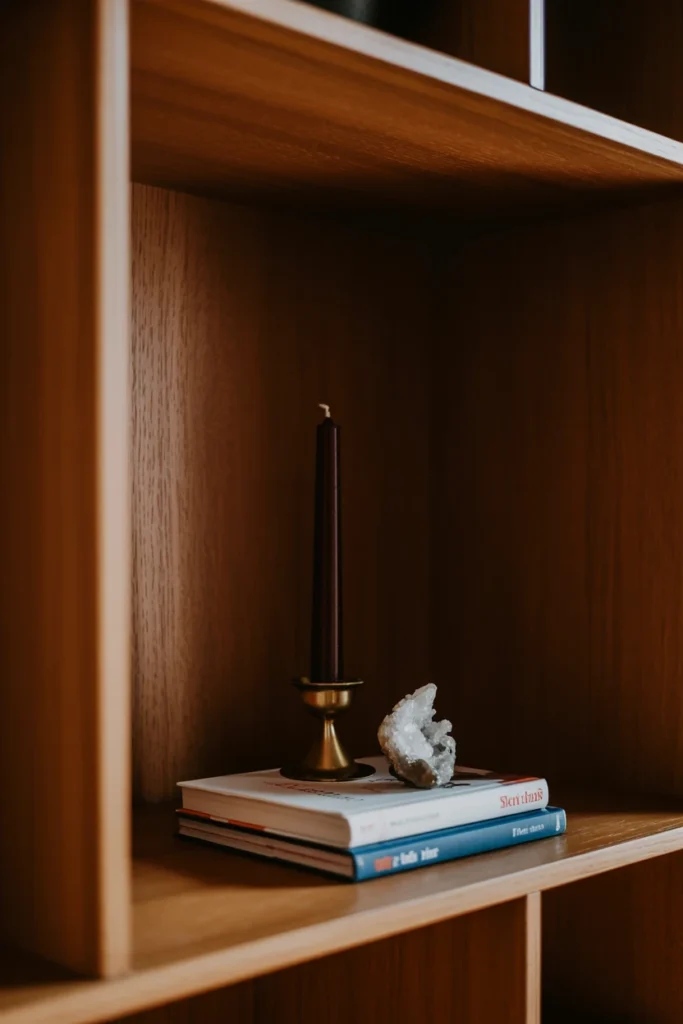
Bookshelves lined edge-to-edge with only books read as a library shelf, not a witchy display. A shelf packed with spines and nothing else leaves no visual breathing room for the eye to rest. Breaking the shelf into groups of three objects per section instantly adds the curated look the rest of the room already has.
Start by removing every object from one shelf and rebuilding it in clusters of three: one book stack, one object with height, and one small item like a crystal or candle. Leave at least 20% of each shelf section empty rather than filling every inch. This negative space makes the remaining objects look chosen rather than accumulated.
| Shelf Section | Object Count | Empty Space |
| 24 in shelf | 3 clusters | 20% minimum |
| 36 in shelf | 4–5 clusters | 20% minimum |
| Fully packed | Avoid | 0% |
| Single object | Too sparse | 60%+ |
16. Place Taper Candles in Mismatched Vintage Holders
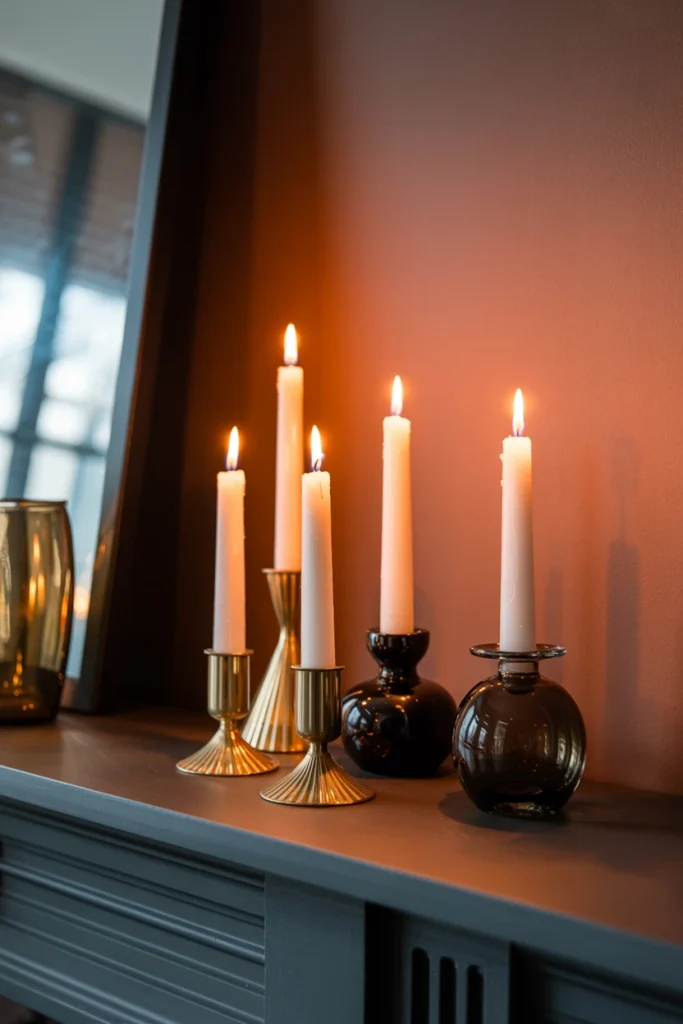
Matching candle holders from a single set read as a purchased display instead of a collected one. Uniform holders in the same finish and height remove the sense of accumulation over time that defines a witchy space. Mismatched vintage-style holders in varying heights instantly look gathered rather than bought as a set.
Start by collecting three to five taper holders in different heights, ranging from 4 to 12 inches, in brass, ceramic, or dark glass. Cluster them together on your altar or mantel rather than spacing them evenly apart. This height variation and material mixing makes even inexpensive thrifted holders look like an intentional, collected set.
| Holder Height | Material | Placement |
| 4–6 in | Ceramic | Front cluster |
| 7–9 in | Dark glass | Middle cluster |
| 10–12 in | Brass | Back cluster |
| Matching set | Avoid | N/A |
17. Arrange a Windowsill Apothecary Display

Empty or under-decorated windowsills waste one of the most naturally lit display spots in the entire room. Bright daylight streaming through an empty sill highlights the absence of decor rather than showcasing anything. An apothecary-style display of small glass bottles turns that same light into a genuine visual feature.
[IMAGE ALT: Windowsill lined with small apothecary glass bottles] [credits: source]
Start by lining up five to eight small glass bottles, 3 to 6 inches tall, filled with dried herbs, colored water, or loose botanicals. Vary the bottle shapes and cap styles rather than using one uniform set. Direct sunlight through the varied glass shapes creates a stained-glass effect on the windowsill that no other placement in the home can replicate.
| Bottle Height | Fill Material | Bottle Count |
| 3–4 in | Dried herbs | 3–4 bottles |
| 4–6 in | Colored liquid | 2–3 bottles |
| 5–6 in | Loose botanicals | 2–3 bottles |
| Uniform set only | Avoid | N/A |
Maintaining Your Witchy Space
A witchy room needs ongoing upkeep to stay visually sharp. These final two tips keep the space from sliding into stale or cluttered territory.
18. Rotate Seasonal Decor Every Solstice and Equinox
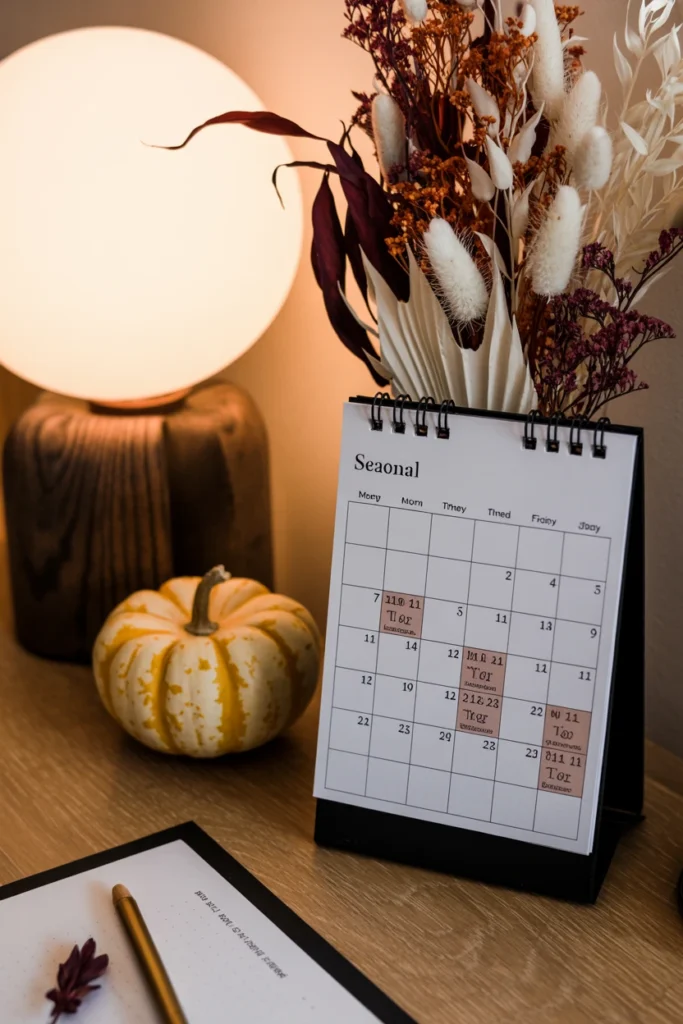
A witchy room that never changes starts to blend into the background after a few months of living with it. Static seasonal items sitting out year-round signal that the space is decorated rather than actively lived in and tended. Rotating decor on the solstices and equinoxes keeps the room feeling active and connected to a natural rhythm.
Start by setting four calendar reminders for the spring equinox, summer solstice, autumn equinox, and winter solstice, roughly every 13 weeks. At each date, swap out botanicals, candle colors, and any seasonal textiles on your altar and shelves. This quarterly rhythm turns routine upkeep into a small ritual that keeps the entire space feeling genuinely tended rather than static.
| Season Marker | Approx. Date | What to Rotate |
| Spring equinox | Mid-March | Florals, pastels |
| Summer solstice | Mid-June | Citrine, sun motifs |
| Autumn equinox | Mid-September | Dried leaves, amber |
| Winter solstice | Mid-December | Pine, dark garnet |
19. Replace Dried Florals Before They Visibly Fade
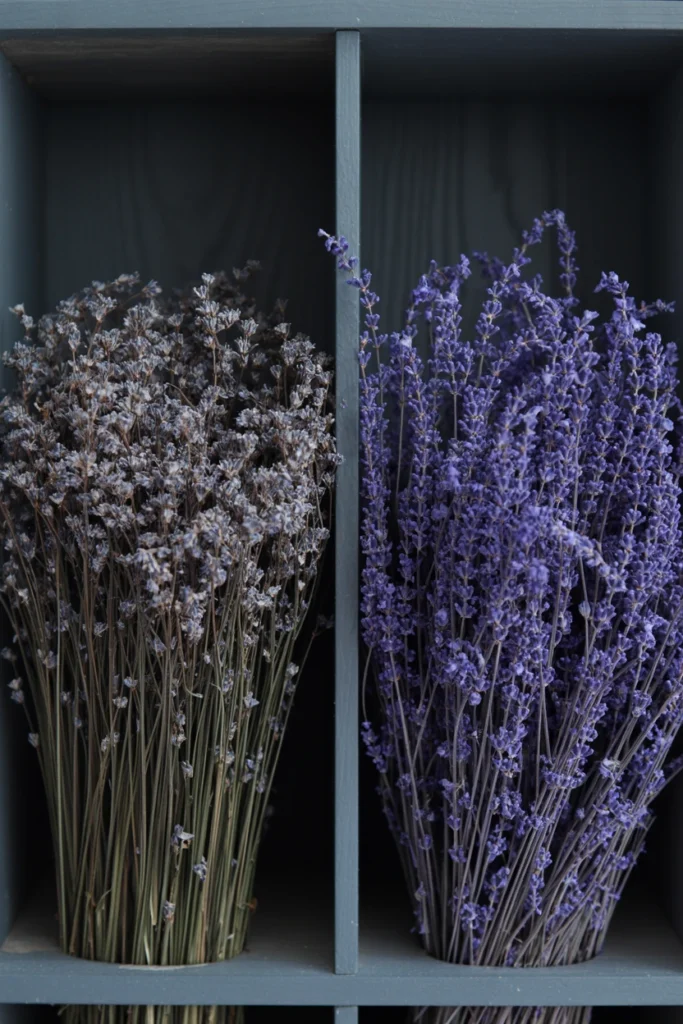
Dried botanicals left in place too long turn brittle, faded, and start shedding leaves across shelves and floors. A visibly deteriorating arrangement reads as neglect and undercuts every other carefully styled element in the room. Replacing dried florals on a set schedule keeps the botanical elements looking intentional rather than forgotten.
Start by checking every dried arrangement in the home for color fading or brittle, shedding stems roughly once every eight weeks. Replace any bundle showing visible fading with a fresh batch rather than waiting until it fully disintegrates. This regular replacement schedule keeps the botanical accents reading as fresh and gathered instead of dusty leftovers.
| Botanical Age | Condition | Action |
| 0–8 weeks | Full color | Keep as is |
| 8–12 weeks | Slight fading | Monitor weekly |
| 12+ weeks | Brittle, shedding | Replace now |
| Any mold/damp | Immediate risk | Discard, replace |
Common Witchy Decor Mistakes That Undercut the Aesthetic
These eight mistakes appear most often in witchy rooms that feel more like a costume shop than a home. Each one has a specific, low-effort correction.
| Mistake | Why It Hurts the Space | Better Alternative |
| Mixing five sub-styles at once | Reads as chaotic, not curated | Pick one core sub-style |
| Overhead lighting left on | Flattens shadows and mood | Layer 3+ warm light sources |
| Matching candle holder sets | Looks purchased, not collected | Mix heights and materials |
| Black covering 30%+ of a room | Feels heavy and closes space in | Limit black to 10% accents |
| Fresh flowers as main florals | Wilts within a week | Use dried botanicals instead |
| Polished chrome hardware | Clashes with aged, muted palette | Swap for antique brass |
| Symmetrical, centered displays | Reads as staged, not gathered | Group items asymmetrically |
| Decor never rotated seasonally | Feels static and undecorated | Rotate on solstice/equinox |
Witchy Decor by Space and Situation
Small Apartment
Small apartments limit how many large statement pieces a witchy aesthetic can fit without feeling cramped. The core constraint here is square footage, not budget or permission to alter the space.
Key strategies for small apartments:
- Concentrate your altar, candles, and botanicals into one dedicated corner instead of spreading them across the room.
- Choose a single moon garland or wall hanging over multiple smaller wall pieces to avoid visual clutter.
- Use a windowsill apothecary display to add decor without consuming any floor space.
- Select multi-height candle holders that stack vertically rather than spreading horizontally across a shelf.
- Limit your color palette to two tones instead of three to keep a small room from feeling busy.
Rental-Friendly
Renters face restrictions on paint, permanent hardware, and wall damage that limit typical witchy decor approaches. The core constraint is avoiding any change that risks a security deposit.
Key strategies for renters:
- Hang garlands and botanicals using removable brass hooks rated for the actual weight of the item.
- Use a large area rug in a jewel tone to add color without touching rental-owned walls.
- Swap out existing cabinet hardware and store the original pieces to reinstall before move-out.
- Layer floor lamps and table lamps instead of installing any hardwired fixture.
- Choose a freestanding shelf or bar cart as a movable altar instead of a wall-mounted option.
Shared Living Room
A shared living room requires the witchy aesthetic to coexist with a roommate or partner’s differing taste. The core constraint is balancing personal style with a space you don’t fully control.
Key strategies for shared living rooms:
- Confine the most overt witchy elements — altar, garland, candles — to one wall or corner rather than the whole room.
- Choose textiles in jewel tones that read as elegant rather than overtly themed to a specific aesthetic.
- Keep shared-use furniture neutral and reserve bold witchy pieces for accent items you can remove easily.
- Discuss lighting changes in advance since dimmer, warmer light affects everyone using the room.
- Rotate bolder seasonal items only during weeks when you have the space to yourself.
Budget-Conscious
A limited budget rules out buying an entire matching decor set or investing in large statement furniture. The core constraint is building the look primarily through low-cost or free materials.
Key strategies for budget decorating:
- Forage and air-dry your own botanicals from a backyard, park, or grocery store bouquet instead of buying dried stems.
- Thrift mismatched candle holders and books instead of buying a coordinated new set.
- Use secondhand glass jars and bottles for a windowsill apothecary display instead of new apothecary bottles.
- Prioritize one statement piece, like a moon garland, over several smaller purchased items.
- Swap hardware finishes with inexpensive spray paint instead of buying new antique brass fixtures.
Frequently Asked Questions
how do I make my room look witchy
Start with a dominant dark or jewel-tone color palette, then add one altar surface and one large symbolic piece like a moon garland. Layer in dried botanicals, mismatched candle holders, and warm layered lighting rather than a single overhead fixture. Choosing one witchy sub-style first keeps every purchase after that consistent and cohesive.
what not to do with witchy decor
Avoid mixing several witchy sub-styles at once, since that combination reads as chaotic rather than curated. Skip matching candle holder sets, fresh flowers as your main floral element, and overhead lighting left on during evening hours. Symmetrical, centered displays also undercut the gathered, collected look the aesthetic depends on.
how do I start witchy decor on a budget
Forage and air-dry your own botanicals instead of purchasing dried stems, and thrift mismatched candle holders and dark-covered books. Prioritize one statement piece, such as a moon phase garland, over several smaller purchased items spread across the room. Secondhand glass jars work well for a windowsill apothecary display at almost no cost.
how do I do witchy decor in a small apartment
Concentrate your altar, candles, and botanicals into one dedicated corner rather than spreading elements across the whole space. Choose a single large wall piece instead of several smaller ones to avoid visual clutter in limited square footage. A windowsill apothecary display adds decor without using any floor space at all.
how do I choose between cottage witch and gothic witch
Cottage witch relies on wicker, dried herbs, and muted sage tones, while gothic witch leans on black lacquer, velvet, and antique brass. Choose cottage witch if your existing furniture is light wood or neutral, since dark gothic pieces will clash. Choose gothic witch if your room already has darker furniture or you want a more dramatic, formal mood.
how often should I refresh witchy decor
Rotate seasonal items on the solstices and equinoxes, roughly every 13 weeks, and check dried botanicals for fading every eight weeks. Replace any dried arrangement showing brittle stems or visible color loss rather than waiting for it to fully deteriorate. This quarterly rhythm keeps the space feeling tended rather than static.
does witchy decor work in a rental
Witchy decor works well in rentals since most of its impact comes from textiles, candles, and freestanding furniture rather than permanent changes. Use removable brass hooks for garlands and botanicals, and choose a freestanding shelf or bar cart as a movable altar. Swappable hardware and area rugs add color and texture without risking a security deposit.
how much does it cost to decorate witchy
A budget witchy corner built from thrifted candle holders, foraged botanicals, and secondhand jars can cost under $50 total. A fuller room with velvet textiles, a moon garland, and antique brass hardware typically runs $200 to $400 depending on textile quality. Prioritizing one statement piece over many small purchases keeps the total cost predictable at any budget level.
how do I maintain witchy decor long term
Set calendar reminders for the four seasonal markers and check dried botanicals for fading roughly every eight weeks. Replace any faded or brittle arrangement immediately rather than letting it visibly deteriorate on a shelf. This consistent rotation habit, not a single decorating effort, is what keeps a witchy room looking intentional over time.
Conclusion
Witchy decor succeeds through deliberate, repeated choices rather than a single large purchase. Start with your altar corner and color palette before adding any statement pieces, since those two decisions filter every choice that follows. Clear one surface today, cover it with a dark cloth, and add three crystals in an odd-numbered cluster to begin.
A witchy room stays visually strong only through consistent seasonal rotation and regular botanical upkeep, not a one-time decorating push. A space built on deliberate color discipline, layered lighting, and curated groupings reads as genuinely mystical rather than costumed.