Beige Kitchen: 30 Proven Ways to Layer Warm Neutrals That Glow
Your beige kitchen succeeds or fails on undertone discipline, texture layering, and warm light, not on finding the one perfect beige. This guide gives you 30 exact ideas, each with a shade, a method, and a result you check with your own eyes. As professional kitchen designers consistently find, beige kitchens that glow share three traits. Every beige shares one undertone family, golden, rosy, or greige, because warring undertones read as mistakes. The neutrals are layered in at least five textures, because one beige in one finish is the definition of flat. And the light is warm and layered at 2700K, because beige under cold light turns grey while warm light turns it to honey. Work the sections in order and your kitchen builds from an undertone audit to the calmest warm room in the house.
One number guides every purchase in this guide. Your full scheme lands between $150 and $30,000, and every tip below states its cost before you buy.
Before You Begin: Five Foundation Steps for a Beige Kitchen
Failed beige kitchens share one cause: shades chosen from different undertone families, in store light, one at a time. This foundation section fixes your family, layers your samples, and plans your light before the first purchase. Every later section builds on these five steps.
1. Fix the Undertone Family: Golden, Rosy, or Greige, One Only
credit: @maisonarchdesign
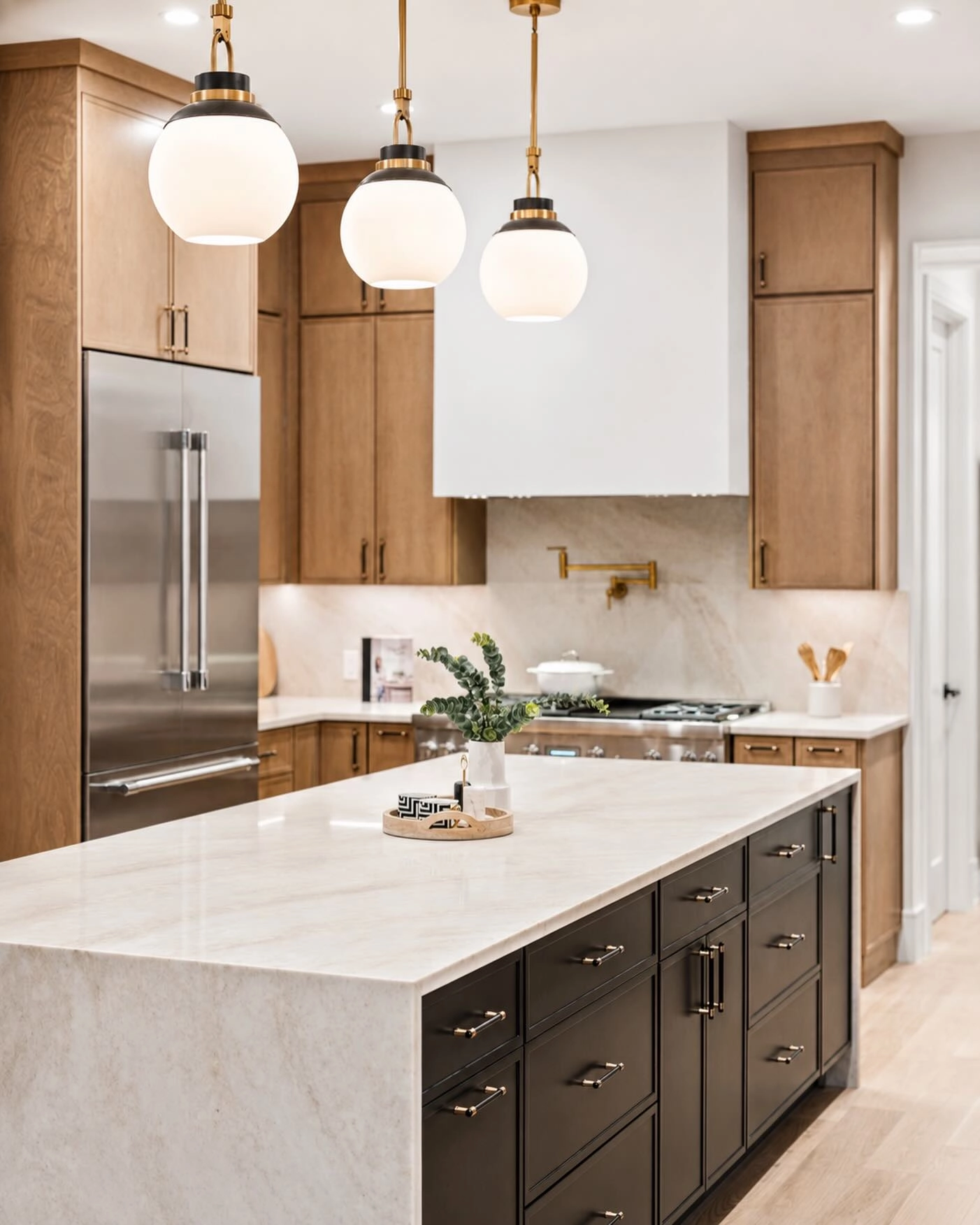
Every beige carries an undertone: golden beiges lean yellow, rosy beiges lean pink, greige leans grey-green. Choose one family for the whole kitchen. Audition every paint, stone, tile, and fabric against it, because two families in one room read as a renovation done in two decades. The family is chosen from the room’s fixed facts, floor tone, light direction, and the adjoining rooms’ palettes.
North-facing rooms take golden warmth as compensation; south-facing rooms may spend greige safely. The family’s name and its sample board are filed, every future purchase auditioned at the board. This single decision prevents ninety percent of beige regret, which is nearly always two families quarreling politely.
| Family Law | Leans | Suits |
|---|---|---|
| Golden | Yellow | North light |
| Rosy | Pink | Blushed warmth |
| Greige | Grey-green | South light, modern |
2. Build the Layer Board: Five Textures Before Any Purchase
credit: @maison.blonde
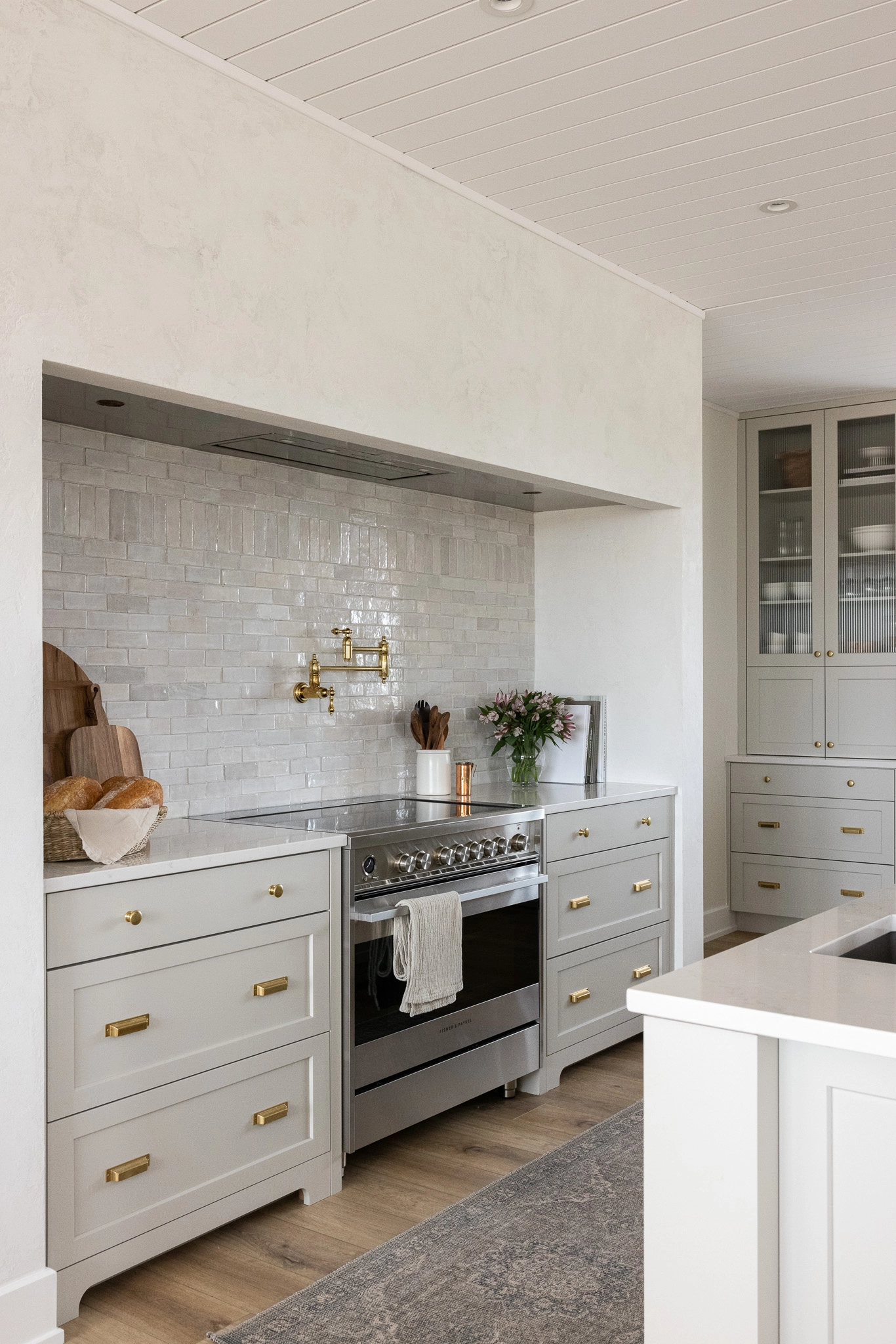
Assemble the room on one board before buying: cabinet color, counter stone, backsplash tile, floor sample, wood tone, metal finish, and two textiles, all in Tip 1’s family, all in different textures. The board is carried to every store and photographed in the kitchen’s own light, morning and evening. A layer that cannot join the board does not join the kitchen, however beautiful its solo performance.
Count the textures on the board: five is the floor, seven is the feast. Matte beside honed beside raw beside brushed is the layering that makes one color read as a symphony. This board is the kitchen’s constitution, and it travels in the car for a season.
| Board Law | Textures | Count |
|---|---|---|
| Matte, honed, raw | Paint, stone, wood | Five minimum |
| Woven, brushed | Fiber, metal | Seven = feast |
| Audition | Every purchase | At the board |
3. Test Paint at Full Scale: Two Walls, Two Days, Three Lights
credit: @kathykuohome
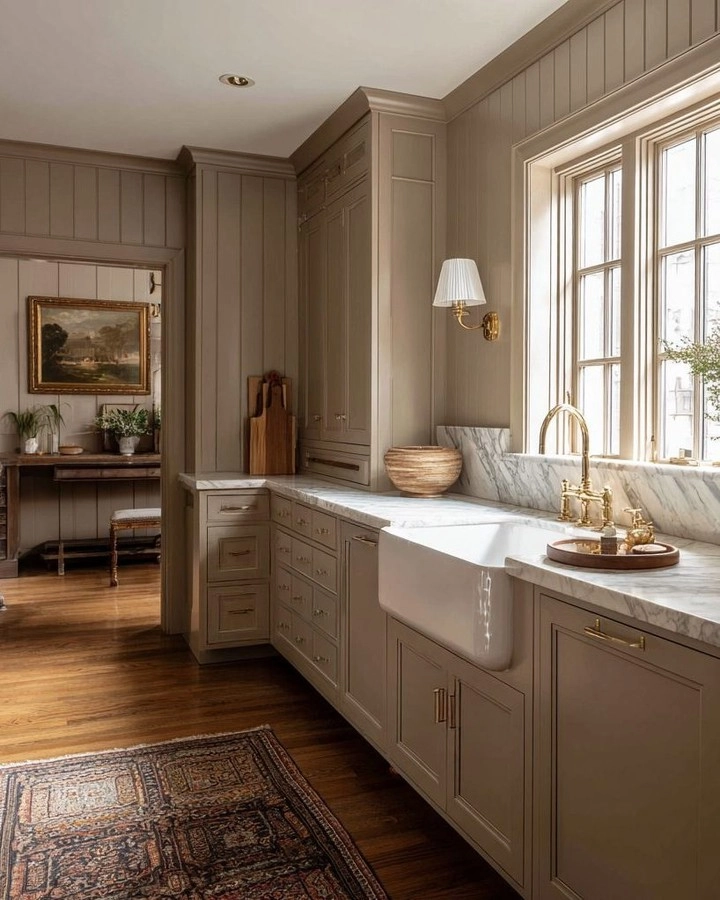
Beige paint is the chameleon of colors, shifting with every hour. Paint two large boards or one full wall section in the final two candidates and live with them through morning, noon, evening, and lamplight before the tin is chosen. The winner is the one that stays in Tip 1’s family at 8 p.m. under the kitchen’s own bulbs, the hour beige kitchens are actually lived in.
Cabinets and walls are tested together, their beiges being a marriage, not two solos. Ceiling white is chosen in the same sitting, a cold ceiling white being the classic assassin of a warm scheme. This patience costs two days and saves the most-repainted room in the house from its usual fate.
| Test Law | Scale | Judged At |
|---|---|---|
| Two candidates | Boards/full wall | 8 p.m. lamplight |
| Cabinets + walls | Together | A marriage |
| Ceiling white | Same sitting | Warm only |
4. Plan the Light Warm and Layered: 2700K, Dimmers, and Task Truth

credit: @vogueliving
The lighting plan is drawn with the palette: warm 2700K sources throughout, dimmers on the main circuits, task light under the cabinets at the counters, and pendants over the island at face-flattering height. Cold bulbs are banned from the room by the file’s law, one 5000K tube undoing a whole renovation at the switch. Bulbs are bought in one batch, color consistency being a bulk purchase.
Natural light is dressed, not fought: sheer or woven shades that warm the daylight rather than blocking it. The evening test of Tip 3 is repeated after installation, the scheme judged at its working hour. This plan is the beige kitchen’s soul, light being the ingredient that turns neutral into golden.
5. Set a $30,000 Budget and Split It by Cabinets, Stone, and Light

credit: @elizabethhalesdesign
Kitchen costs creep through appliances bought before the surfaces are funded. A split budget stops the creep at the first receipt. Cabinets and stone take the crown because they are the room’s largest beige fields.
Divide $30,000 into $11,000 for cabinets, $7,000 for counters and backsplash, $6,000 for appliances and fixtures, and $6,000 for floors, lighting, and finishing. Track every receipt against its column the same day. A column that hits its ceiling closes until something returns to the store.
| Line | Ceiling | Main Buys |
|---|---|---|
| Cabinets | $11,000 | The largest field |
| Stone + tile | $7,000 | Counters, backsplash |
| Appliances | $6,000 | Fixtures included |
| Floors + light | $6,000 | Finishing the glow |
Cabinets and Palette: The Room’s Largest Fields
Cabinets are the beige ocean. This section paints, woods, and two-tones them. Every finish reports to Tip 1’s family and Tip 2’s board.
6. Paint Cabinets in the Family’s Mid-Tone: The Anchor Shade
credit: @oystercreekstudios
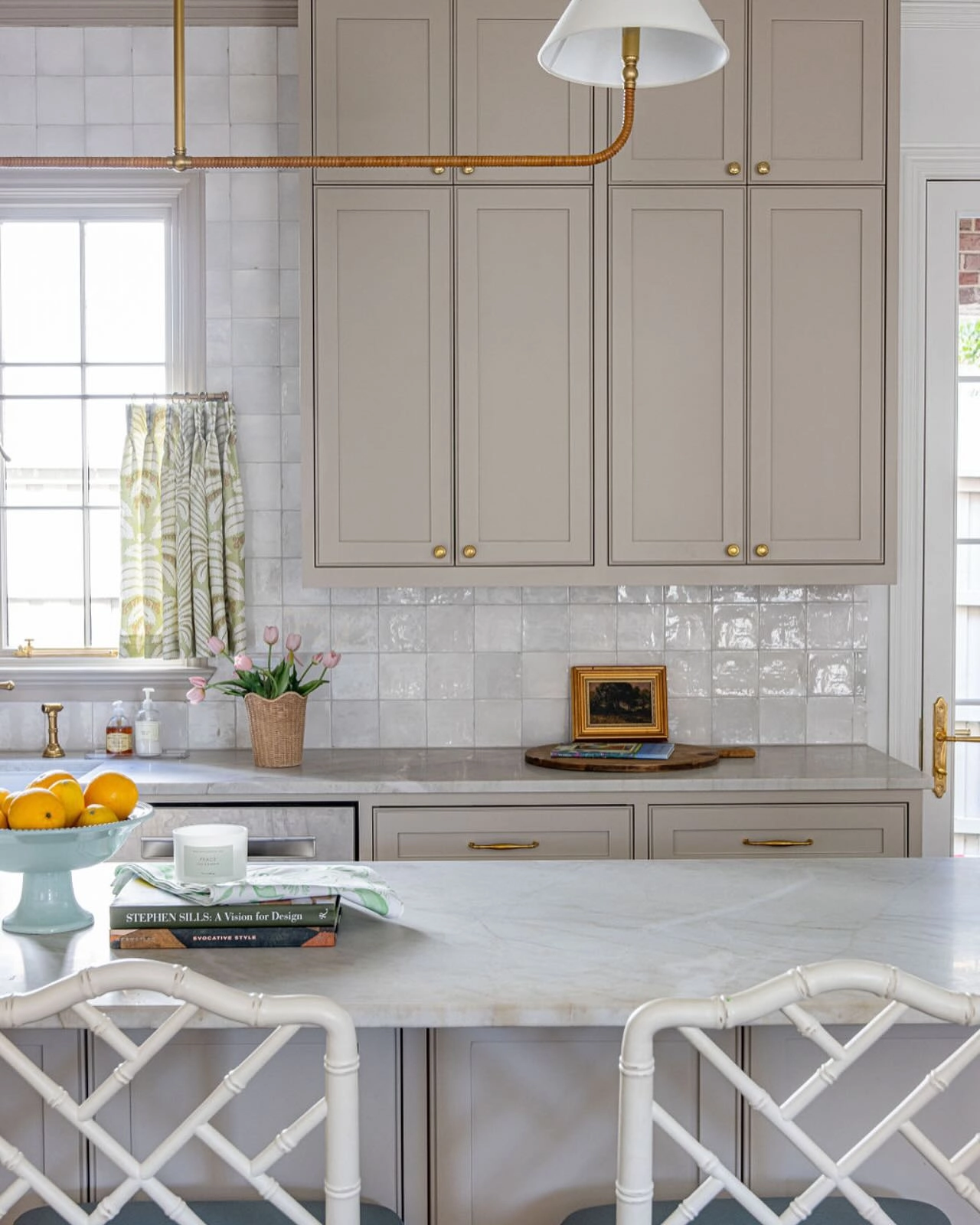
Cabinet color is the scheme’s anchor: a mid-tone beige from Tip 1’s family, deep enough to hold the room against white counters and pale walls, light enough to keep the kitchen airy. The anchor is tested on one door at full scale, Tip 3’s patience applied to the largest purchase. Matte or satin finishes keep the register calm, gloss being a different kitchen’s language.
Walls go two shades lighter in the same family, the room reading as one material in two lights. The island may take the anchor at full strength while perimeters lighten, Tip 9’s two-tone in its gentlest form. This anchor decision is the renovation’s keystone, every other beige tuned to it like instruments to a piano.
| Anchor Law | Tone | Walls |
|---|---|---|
| Cabinets | Family’s mid-tone | Two shades lighter |
| Finish | Matte/satin | Calm register |
| Island | Full strength | Perimeters lighten |
7. Add Warm Wood Cabinets or an Island: Oak, Walnut, and the Grain’s Gift
credit: @make_my_day_home_decor
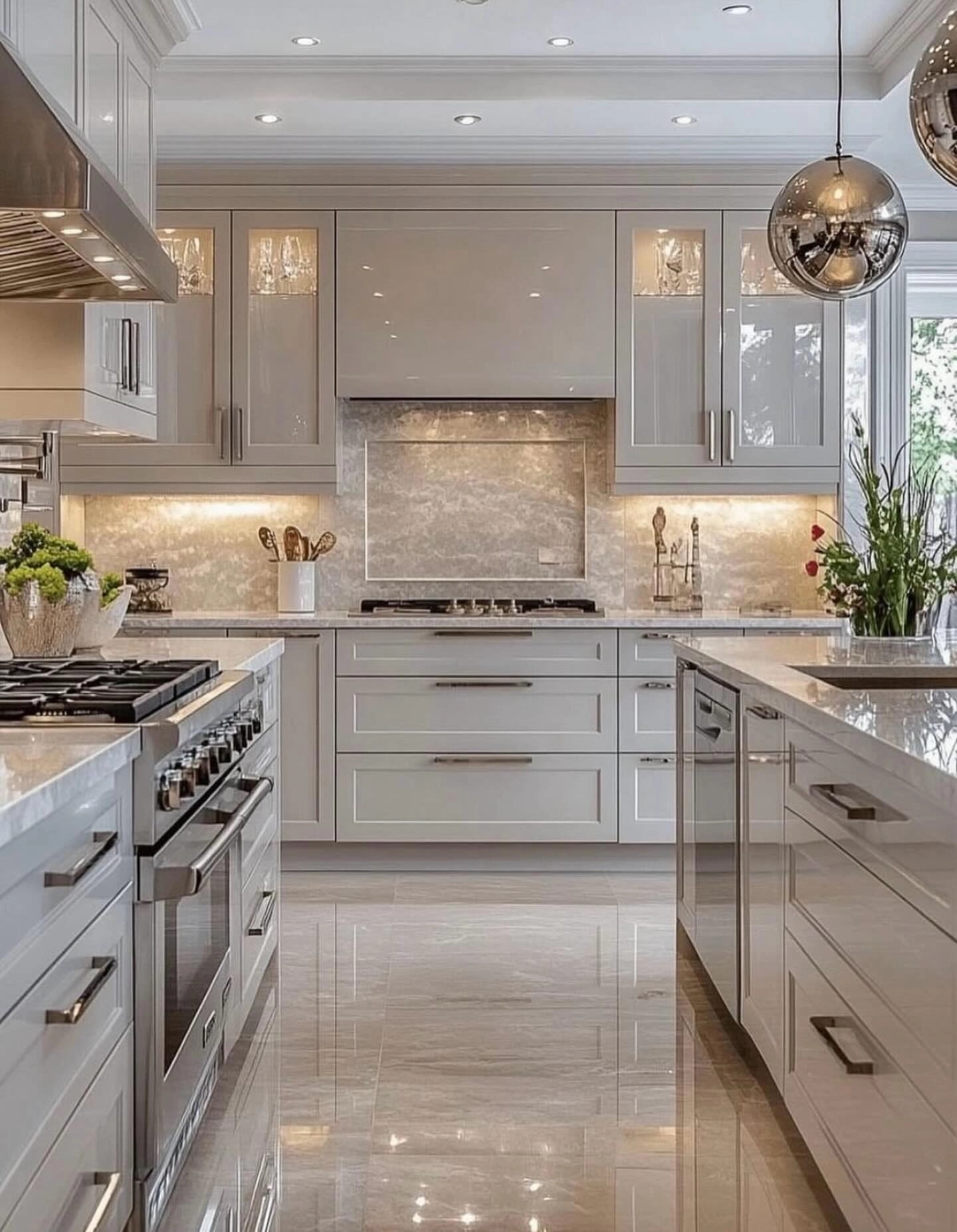
Natural wood brings the texture beige paint cannot: white oak in its honey register, walnut for depth, their grain counting as two textures on Tip 2’s board. A full wood kitchen or a wood island among painted perimeters both serve, the mix being the modern beige kitchen’s signature. Wood tones are auditioned against the floor’s, the two great wood fields never fighting in undertone or value.
Wood is sealed matte, gloss dating faster than any finish in the room. Open shelving in the same wood warms the walls’ upper reaches where cabinets would crowd. This grain is the scheme’s heartbeat, the living material among the minerals.
| Wood Law | Citizens | Finish |
|---|---|---|
| White oak | Honey register | Matte sealed |
| Walnut | Depth | Matte sealed |
| Shelves | Same tone | Story told twice |
8. Choose Hardware as Jewelry: Brass, Bronze, or Black, One Metal Story
credit: @jointhebandd
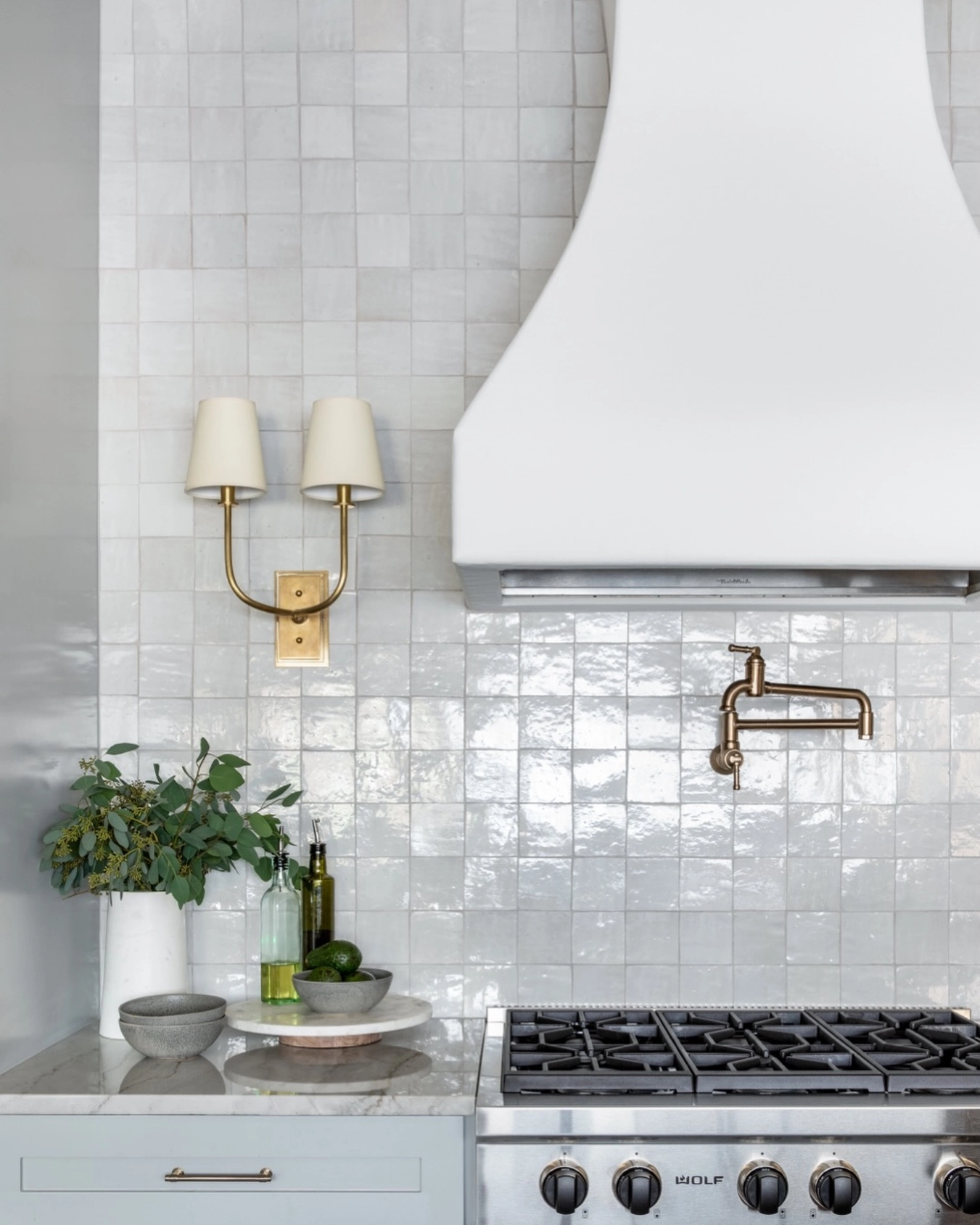
Hardware is the kitchen’s jewelry, chosen in one metal story: unlacquered brass that patinas, warm bronze, or matte black for the modern edge, repeated in the faucet, the pendants’ details, and the appliances’ accents. Mixed metals are allowed one guest only, by the board’s permission. Sizes are generous, pulls at 5 to 7 inches on drawers, hands and eyes both preferring substance.
Unlacquered brass ages with the kitchen, its patina being the scheme’s autobiography. Hardware is installed level and consistent, jewelry crooked being worse than none. This metal thread, repeated quietly, is what makes a beige kitchen read as designed rather than defaulted.
| Metal Law | Stories | Sizes |
|---|---|---|
| Brass/bronze/black | One only | Pulls 5–7 in |
| Repeated | Faucet, pendants | Thread |
| Guest | One, by permission | Board’s law |
9. Two-Tone With Discipline: Darker Lowers, Lighter Uppers, or the Island Apart

credit: @howdensjoinery
Two-tone schemes obey one rule: the darker value grounds the lowers or the island, the lighter lifts the uppers or the perimeters, the two beiges sharing Tip 1’s family absolutely. The split lightens the room’s top half where eyes read spaciousness. Open shelves may take the upper’s role entirely in small kitchens, the lightest register of all.
The two tones are tested side by side at full scale, their family’s peace treaty signed in evening light. A third tone is a guest, never a citizen. This discipline keeps two-tone reading as one kitchen in two lights rather than two kitchens in one room.
| Two-Tone Law | Darker | Lighter |
|---|---|---|
| Split | Lowers/island | Uppers/perimeters |
| Family | Same absolutely | Tested together |
| Third tone | Guest only | Never citizen |
10. Style Open Shelves in Beige Grammar: Ceramics, Wood, and Glass

credit: @flowbylara
Open shelves are styled as the room’s still life: cream ceramics, wooden boards and bowls, glass jars of dry goods, one plant, arranged in threes with air between. Everything on the shelf belongs to the palette or the kitchen’s work, novelty items being stored behind doors. Shelves are edited monthly, Tip 26’s round, dust and drift being their natural enemies.
Shelf wood matches Tip 7’s tone, the room’s wood story told twice. The lowest shelf holds the daily citizens, beauty and breakfast in one reach. This display is the beige kitchen’s personality at eye level, and it is curated like a gallery because it is one.
11. Dress the Windows Softly: Linen, Woven Wood, and Warm Daylight
credit: @kathykuohome
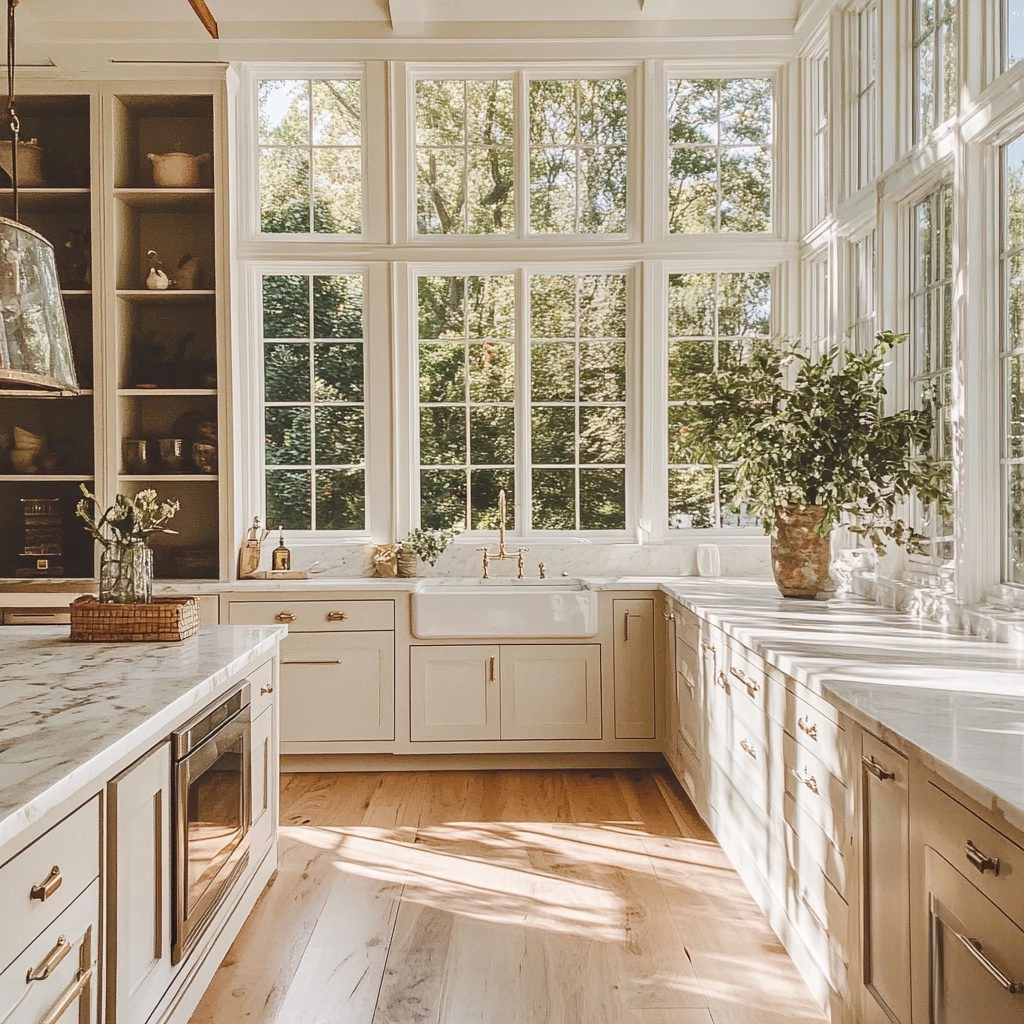
Windows are dressed in the palette’s textiles: linen cafe curtains, woven wood shades, or a simple roman in a natural fiber, filtering light warm rather than blocking it. The dressings’ beige joins the family, tested against the wall’s at noon. Hardware for curtains repeats Tip 8’s metal, the room’s jewelry consistent to the window’s edge.
A bare window is forgiven where the view is the garden and privacy allows, glass being a texture too. Sill herbs in terracotta bring the family’s earthiest citizen to the light. This softness at the glass keeps the beige kitchen from the showroom’s chill, daylight itself upholstered.
Surfaces: Counters, Backsplash, and Floors
Stone and tile carry the scheme’s minerals. This section hones, textures, and grounds them. Every surface reports to Tip 2’s board.
12. Choose Counters With Movement: Warm Veins on a Quiet Field
credit: @ryansaghian
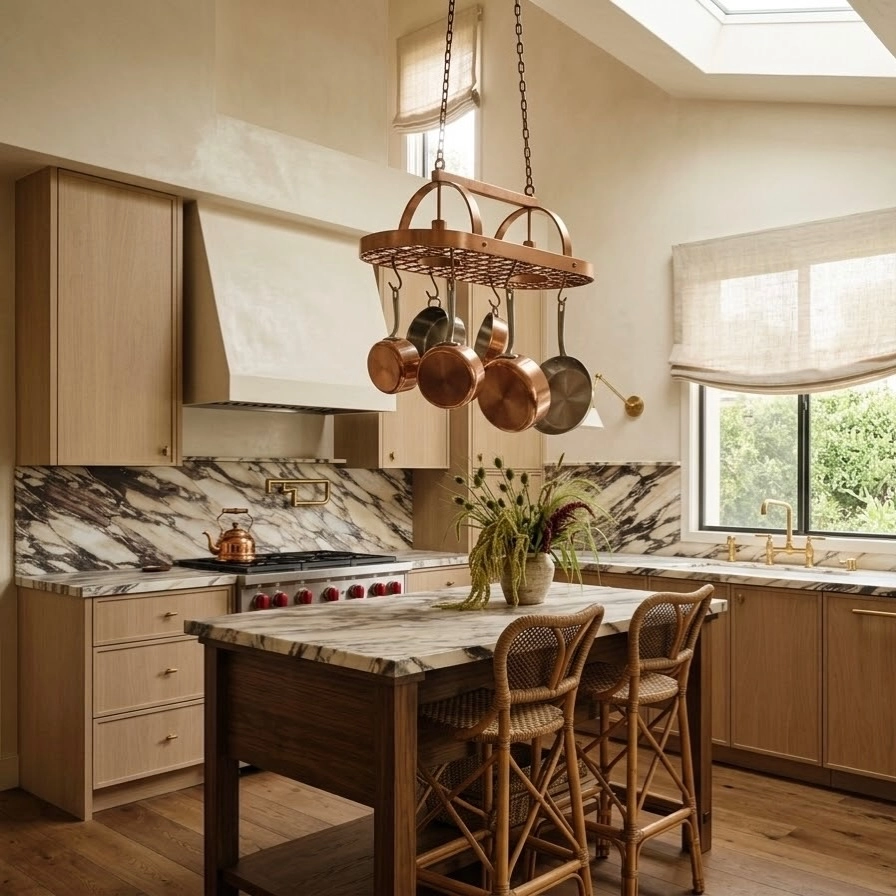
Counters bring the pattern beige paint cannot: quartzite, marble, or quartz with warm veining in gold, taupe, and soft grey on a cream field, honed rather than polished for the calm register. The slab is chosen in person, its veining auditioned against the cabinet anchor, movement dosed to the room’s size, bold in large kitchens, gentle in small. Waterfall ends are the modern option where the island earns a monument.
Honed finishes hide the daily evidence kinder than gloss, etching being marble’s known tax. A butcher-block section at the baking station adds Tip 7’s wood at the counter’s scale. This stone is the room’s landscape, chosen like a view.
| Counter Law | Movement | Finish |
|---|---|---|
| Veining | Warm gold/taupe | Dosed by room size |
| Surface | Honed | Hides daily life |
| Guest | Butcher block section | Baking station |
13. Texture the Backsplash: Zellige, Tumbled Stone, or Handmade Tile

credit: @shannontateinteriors
The backsplash is the beige kitchen’s texture soloist: handmade-look zellige with its wavering gloss, tumbled travertine or limestone, elongated subway in a warm white, laid in stack, herringbone, or vertical patterns for quiet movement. Grout is chosen in a mid beige, never bright white, the lines joining the family. The tile’s variation does the decorating, one material singing in several voices.
A full-height slab backsplash is the serene alternative, the counter’s stone climbing the wall without a grout line. Pattern is dosed by room size, small kitchens taking the quieter lays. This surface catches the under-cabinet light like water, the evening kitchen’s prettiest effect.
| Backsplash Law | Options | Grout |
|---|---|---|
| Zellige/tumbled | Handmade variation | Mid beige |
| Subway | Stack/herringbone | Never bright white |
| Slab | Full height | No grout lines |
14. Floor in Warm Wood or Stone-Look Tile: The Ground’s Big Voice
credit: @houseandhomemag
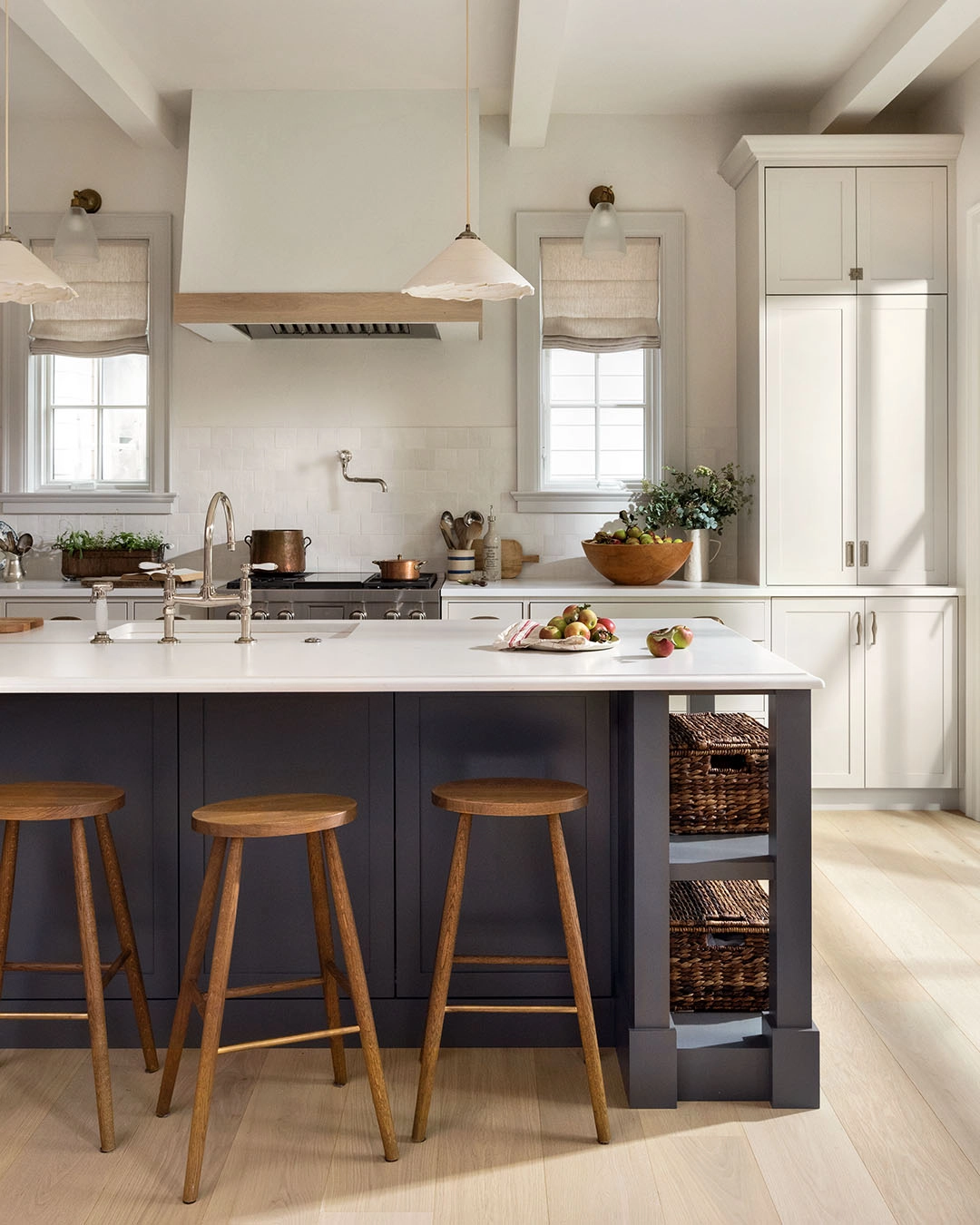
Floors ground the scheme: warm oak planks, wide and matte, or large-format stone-look tile in a warm limestone register, grout in mid beige. The floor’s undertone is Tip 1’s first witness, existing floors often choosing the family before the designer does. Runners in woven natural fibers soften the work lanes, their beiges joining the board.
Wood floors and wood islands are separated by value or by the counter’s interruption, two wood fields never colliding. Tile floors take radiant heat where climate argues, bare feet voting. This ground is the room’s largest single beige, and it is chosen with the gravity that acreage deserves.
| Floor Law | Options | Runners |
|---|---|---|
| Oak planks | Warm, matte, wide | Woven natural fiber |
| Stone-look tile | Limestone register | Mid-beige grout |
| Wood clash | Separated by value | Never colliding |
15. Match the Sink and Faucet to the Story: Fireclay, Stone, and the Metal Thread

credit: @ollin_surfaces
The sink joins the palette: white fireclay or integrated stone in the counter’s own material for the serene register, a hammered metal sink as the jewelry option where the scheme wants a soloist. The faucet repeats Tip 8’s metal exactly, its silhouette clean. Undermount installations keep the counter’s landscape unbroken, the sink a valley rather than an interruption.
A pot filler at the range repeats the metal a third time, the thread becoming a rhythm. Soap and brush live in a ceramic or wooden citizen, the sink’s styling as considered as the shelves’. This wet corner is used a hundred times a day, and it is finished like it matters.
| Sink Law | Choices | Thread |
|---|---|---|
| Fireclay/integrated | Serene register | Undermount |
| Faucet | Metal repeated | Exactly |
| Pot filler | Third repetition | Rhythm made |
16. Choose Appliances That Disappear or Gleam on Purpose

credit: @cambriasurfaces
Appliances take one of two honest roles: panel-ready and paneled in the cabinet’s beige, disappearing into the room’s calm; or stainless and black glass chosen as the scheme’s deliberate contrast, their lines clean and their finishes matte where possible. Fingerprint finishes are a tax paid daily, samples tested with actual hands. The range, as the kitchen’s altar, may take a color, black or cream, as the room’s single dark note.
Small appliances on the counter are edited to the daily two or three, in cream, wood, or the metal thread. The refrigerator’s magnets and the children’s art live on one designated panel, chaos zoned. This discipline keeps the beige calm from becoming a showroom of logos.
17. Build the Island as the Room’s Hearth: Seating, Storage, and the Gathering Edge

credit: @loghomeliving
The island is composed as the hearth: seating on the social side with 15 inches of knee depth and stools in wood, leather, or woven fiber; storage and work on the kitchen side; the counter’s stone wrapping its edges. Pendants hang at 30 to 36 inches above it, their shades in the metal thread or a natural weave. The island’s beige may deepen a shade, Tip 9, the hearth being the room’s warmest address.
One end may take a lower wood table extension, breakfasts and laptops landing softly. The island’s end panels are finished like furniture, the room’s center being seen from everywhere. This piece is where the beige kitchen proves its warmth, people gathering being the final texture.
Accents and Light: Warmth’s Detail Work
Accents keep beige from blandness. This section metals, greens, and glows it. Every accent reports to Tip 2’s board.
18. Add One Dark Note and One Living Green: Contrast in Miniature

credit: @maeandco__
Beige needs its punctuation: one dark note, black hardware, a dark range, espresso stools, or a charcoal frame, placed sparingly to give the eye its anchor; and living green, herbs, a trailing plant, olive branches in a vase, the color beige was born to marry. Each is dosed at a few percent of the room, punctuation being powerful in small type.
The dark note repeats at least twice, a single black object being an accident and two being a decision. Green rotates with the seasons, branches, herbs, and spring bulbs taking turns. This contrast is the difference between a beige kitchen and a beige blur, the photograph’s focus depending on it.
19. Layer the Lighting Fixtures as Decor: Pendants, Sconces, and the Glow’s Sources
credit: @barclaybutera
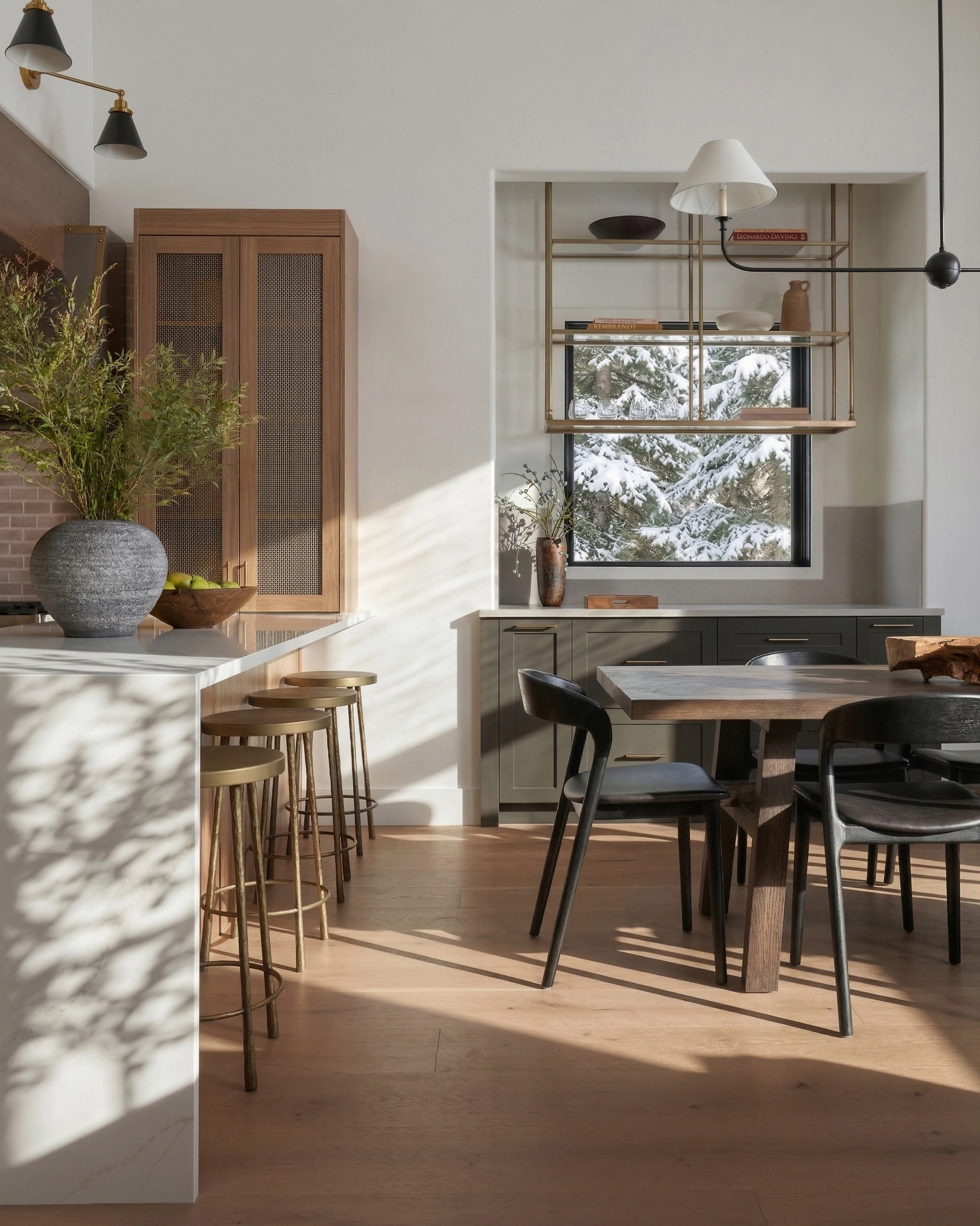
Fixtures are chosen as the room’s visible jewelry: pendants in brass, plaster, woven fiber, or fluted glass over the island; a sconce at the window or the shelves; the range hood’s silhouette treated as sculpture, plastered or wood-clad in the scheme. Every fixture’s light is warm and dimmable by Tip 4, its shade directing glow down at the work and the faces.
Fixture scale is generous, two large pendants out-designing three small ones over most islands. The hood is the room’s most-seen appliance and is dressed accordingly. This layering makes the beige kitchen photograph like evening even at noon, its sources being beautiful in daylight too.
20. Bring Texture to the Seats and Soft Spots: Leather, Bouclé, and Woven Fibers
credit: @visualcomfort
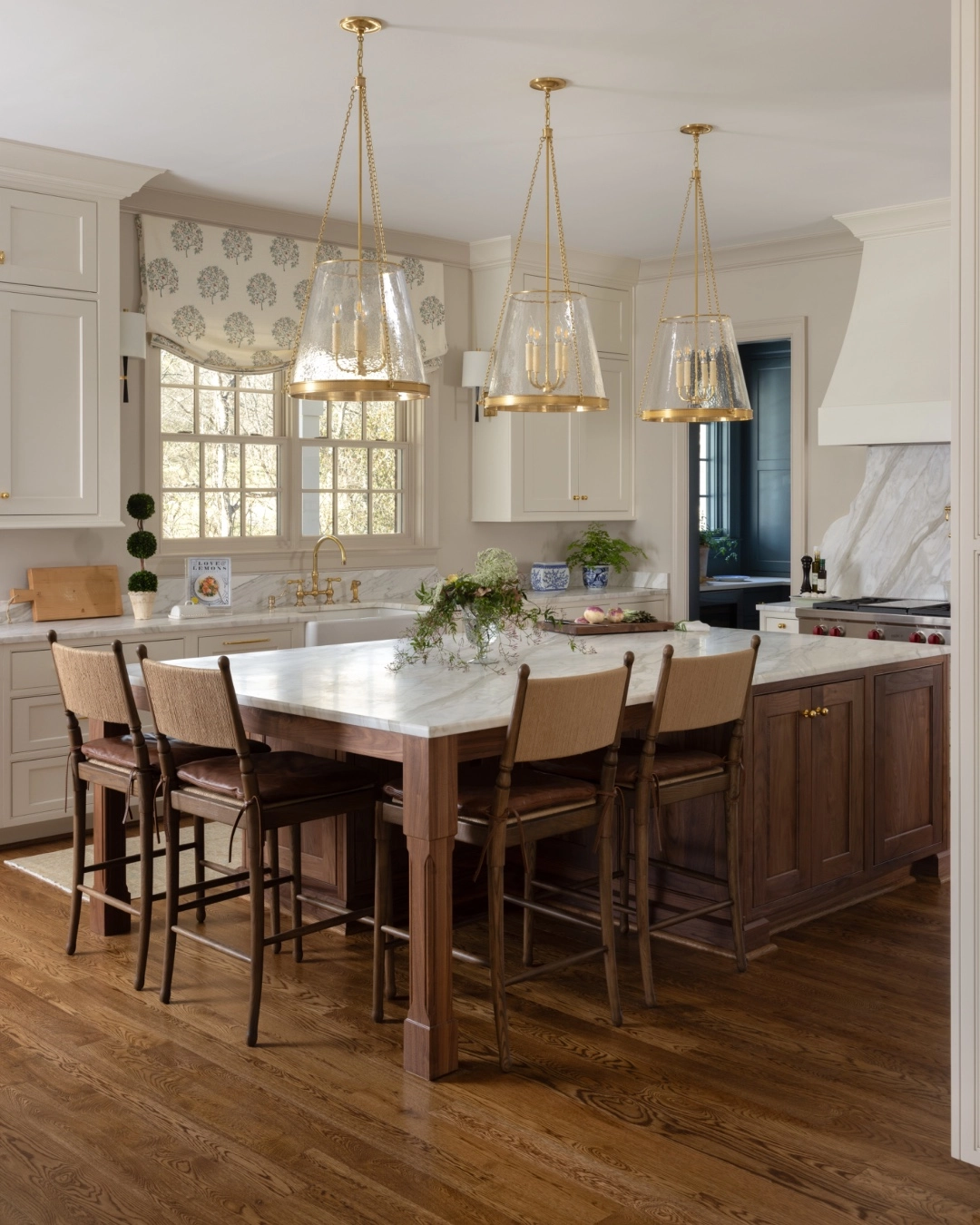
Seating textiles carry the room’s softness: leather or woven stools, a bouclé or linen banquette cushion where a nook exists, woven runners and a linen shade already counted. Each textile is a different beige or a natural fiber, the board’s five textures completed at sitting height. Performance fabrics serve where children and tomato sauce hold citizenship.
A nook’s cushions take one guest pattern, a quiet stripe or a small check in the family, pattern’s only embassy in the room. Throws live over the banquette’s back in winter, the kitchen borrowing the living room‘s manners. This softness is what makes people linger, and lingering is the beige kitchen’s entire social program.
21. Scent and Sound: The Invisible Finishing of a Warm Kitchen

credit: @rollandhill
The warm kitchen is finished invisibly: a simmer pot or good coffee as its daytime scent, candles in the family’s palette at evening, and soft acoustics, runners, textiles, and upholstered seats absorbing the clatter that hard beige rooms amplify. Music has its small speaker in a wooden or fabric citizen. These layers cost almost nothing and register in every memory a guest takes home.
Hard-surface kitchens echo, the soft layers being acoustic treatment wearing decor’s clothes. The evening candle is lit as cooking ends, the room’s register shifting from work to gathering. This invisible styling is the professional’s final ten percent, felt rather than seen.
Beige Kitchen Styling and Finishing Touches
The kitchen glows. This section runs the styling pass: counters, seasons, and the photograph test. A beige kitchen is finished when its calm feels rich rather than empty.
22. Style the Counters in Threes: Boards, Bowls, and One Beautiful Workhorse

credit: @plainenglishdesign
Counters are styled in working clusters of three: a stack of wooden boards, a bowl of citrus or artichokes, the one beautiful workhorse, the stand mixer or the espresso machine in cream. Everything else lives behind doors, clear counters being the beige kitchen’s luxury and its proof of storage. Clusters stand at the counter’s ends and the range’s side, the middle kept as open workspace.
A tray gathers the daily small citizens, oil, salt, the wooden spoons in their crock. Styling is audited weekly, counters accumulating like snowdrifts in every kitchen ever built. This restraint photographs as wealth, because in a kitchen, space is the wealth.
23. Rotate Seasonal Warmth: Autumn’s Copper, Winter’s Evergreen, Spring’s Blossom

credit: @idealhomeuk
The beige base takes seasons like a stage: copper and amber in autumn, evergreen and candlelight in winter, blossom branches and lemons in spring, herbs and linen in summer. Each season changes three things only, the textiles, the bowl’s citizens, and one accent, the room’s bones resting. The rotation is stored in one labeled box, Tip 28, the kitchen’s wardrobe as organized as its pantry.
Guests read the seasons as care, the same calm room wearing the year gracefully. Nothing seasonal is bought that cannot join the board’s family in its own colors. This rotation is the beige kitchen’s answer to boredom, variety without a single repaint.
24. Keep the Palette Honest in Additions: The Board Auditions Everything
credit: @dominomag
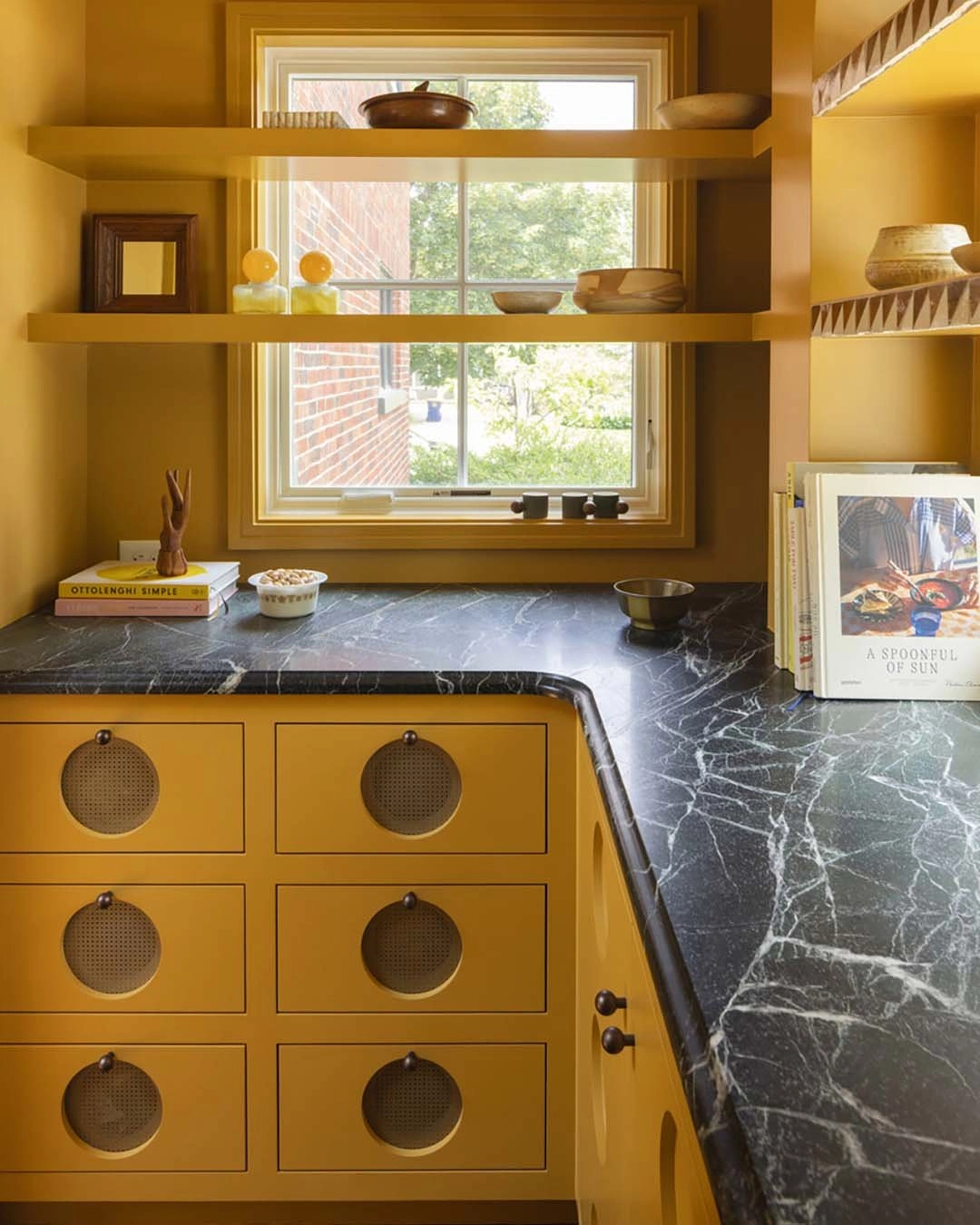
Every later purchase, the kettle, the towels, the new stool, is auditioned against Tip 2’s board in the store, its photograph consulted like a passport. Gifts and bargains that fail the audition are thanked and housed elsewhere, the kitchen’s peace being worth more than any single object. The board itself is updated as layers are finalized, its photograph living in the phone permanently.
Children’s colorful citizens take one drawer and the designated art panel, joy zoned rather than banned. A purchase that passes becomes part of the board’s next photograph. This discipline, maintained for years, is why some beige kitchens deepen in beauty and others drift into beige-and-everything.
25. Photograph the Kitchen and Keep the Beige File
credit: @eggernorthamerica
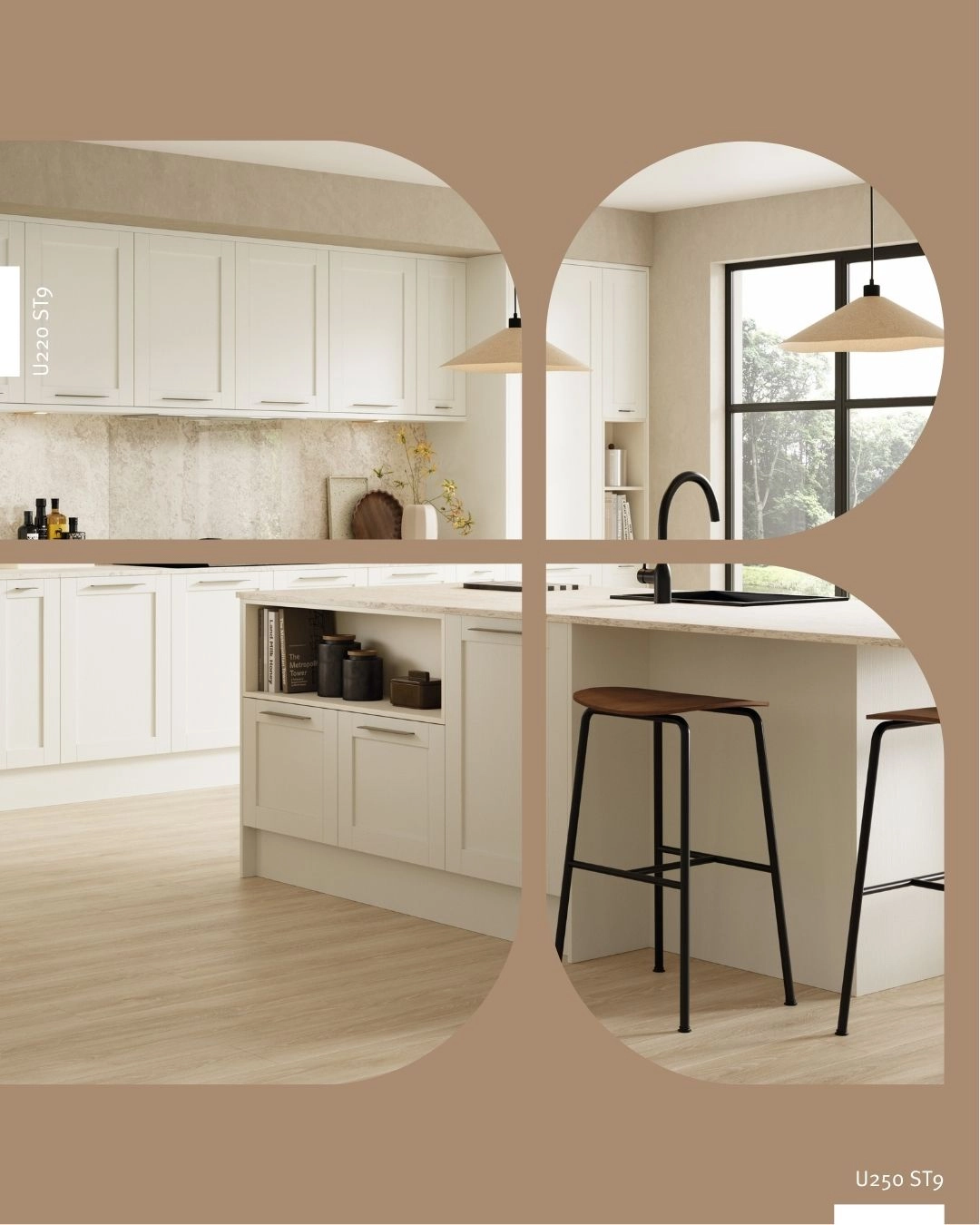
The finished kitchen is photographed at morning, noon, and the evening hour it was designed for, and the file is completed: the family’s name, every paint and material’s exact name and source, the bulb batch’s specification, and the board’s final photograph. The file is the room’s memory, touch-ups and replacements bought true for a decade. Photographs catch the layer that flattens and the undertone that wandered while returns are still possible.
Spare tiles, a paint tin, and the hardware’s extras store labeled with the file’s list. Guests’ compliments are recorded with the layers they praised, evidence for the next room. A kitchen with a file ages gracefully; without one, it is re-matched from memory at full price and half accuracy.
26. Run the Weekly Edit: Counters Cleared, Shelves Dusted, Metals Smiled At

credit: @ourhome_at_19
Weekly, the room is edited: counters returned to Tip 22’s clusters, open shelves dusted and re-composed, brass wiped of its fingerprints, the sink’s citizens refreshed, and the bowl refilled with the season’s fruit. The edit takes twenty minutes and is the difference between a beige kitchen that photographs daily and one that photographed once. Findings, a fading textile, a dying herb, go to the file’s list.
The refrigerator’s art panel is curated on the same round, masterpieces rotating to the file’s folder. Small appliances earn their counter citizenship monthly or retire to a cabinet. This rhythm is the beige calm’s maintenance, serenity being a weekly practice, not a paint color.
27. Avoid the Beige Traps: Blandness, Cold Light, and the Matching Set
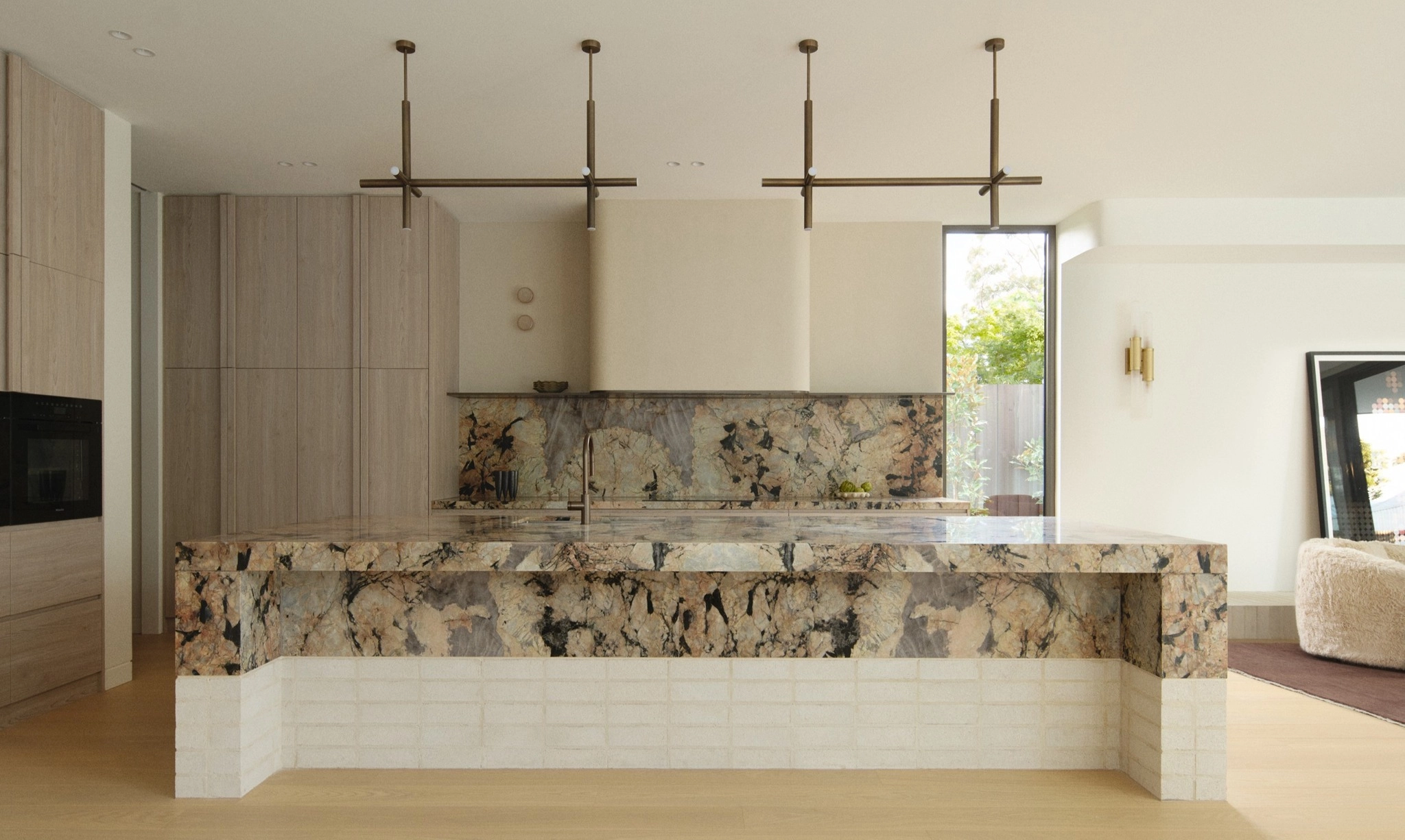
credit: @masonbright__architects
The traps are named so they can be refused: blandness, cured by Tip 2’s five textures and Tip 18’s punctuation; cold light, cured by the 2700K law; and the matching set, every surface the same beige in the same finish, cured by layering values from deep floors to pale ceilings. A beige kitchen should read as a chord, five notes in one family, never as one note held for an entire song.
Value contrast is checked in a black-and-white photograph, the stylist’s trick: a good beige kitchen reads in greys with clear darks, mids, and lights. If the photograph is a fog, the layering needs a deeper or paler citizen. This test, run before the final purchases, has saved more beige kitchens than any other page in the file.
Beige Kitchen Care, Cleaning, and Keeping the Glow
Warm neutrals show life honestly. These habits clean, protect, and refresh them. Each one protects the layers and the light.
28. Store and Label the Spares: Paint, Tile, Bulbs, and the Season Box
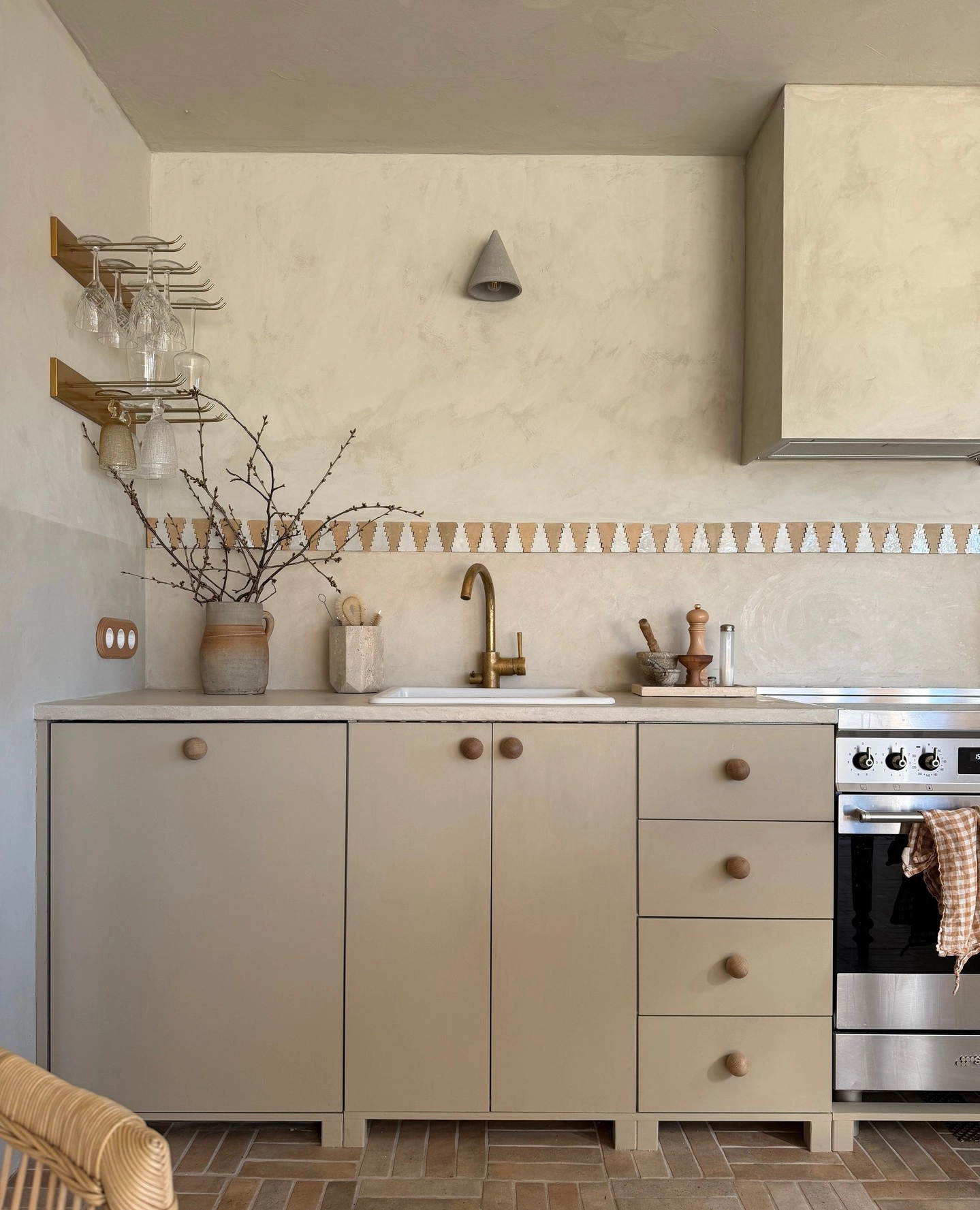
credit: @ottotiles
The kitchen’s spares are stored as a system: labeled paint for touch-ups, a box of each tile, the bulb batch’s spares in their specification, hardware extras, and the season box of Tip 23. Storage is dry and inventoried in the file, a repair never waiting on a discontinued shade. The season box rotates at the calendar’s quarters, last season’s citizens washed before they rest.
Paint is stored sealed and frost-free, its tin labeled with the room and the date. A discontinued stone’s spare slab remnant lives in the garage, counters being repairable only from their own family. This system is the renovation’s insurance, bought at the price of one shelf.
29. Clean by Material: Stone Sealed, Brass Patina’d, Wood Fed
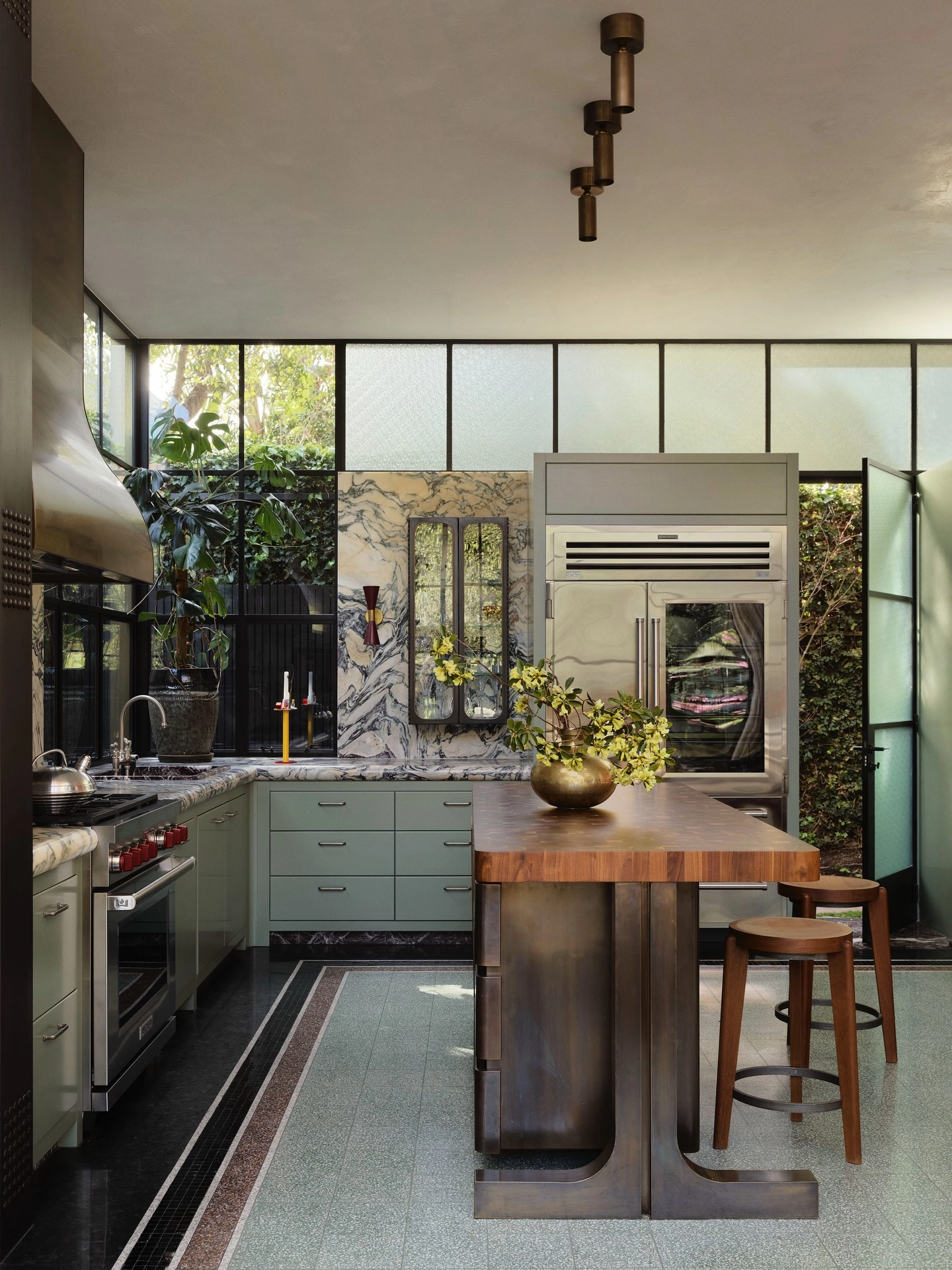
credit: @flackstudio_
Each material is kept by its law: honed stone sealed on its schedule and wiped of acids the hour they land; unlacquered brass left to patina or polished by the house’s chosen register, consistently; wood counters and boards oiled monthly at the work zones; zellige wiped with water and kindness, its glaze crazing being character, not damage.
Grout is refreshed where the splash zone darkens it, a grout pen in the family’s mid beige being the five-minute restoration. Cabinet paint touch-ups happen from Tip 28’s labeled tin at the first chip, small wounds being cheap. This literacy keeps the beige kitchen luminous, dinginess being a cleaning failure, never a color failure.
30. Refresh the Soft Layers Yearly: Textiles, Runners, and the Herb Citizens

credit: @onekingslane
Yearly, the soft layers are renewed: runners washed or replaced, linen shades laundered, banquette cushions inspected and their covers washed, the herb pots refreshed with new citizens. Textiles fade toward each other over a year, the refresh restoring the family’s intended values. One new texture may join by the board’s audition, the chord gaining a note without changing its key.
The refresh is photographed against Tip 25’s editions, drift corrected while it is still a rumor. Bulbs are checked for color drift on the same round, one cold replacement being banished at the file’s law. A beige kitchen maintained this way deepens yearly, its calm compounding like interest.
| Habit | Task | Frequency |
|---|---|---|
| Edit | Counters, shelves, brass | Weekly |
| Material care | Seal, oil, wipe by law | Monthly/seasonal |
| Refresh | Textiles, runners, herbs | Yearly |
| Spares | Labeled + inventoried | Always |
Common Beige Kitchen Mistakes
| Mistake | Why It Hurts | Fix |
|---|---|---|
| Two undertone families | A polite quarrel everywhere | One family only, Tip 1 |
| One beige, one finish | The definition of flat | Five textures, Tip 2 |
| Cold white bulbs | Beige turns grey + sorry | 2700K law, Tip 4 |
| Bright white grout + ceiling | Warm scheme assassinated | Mid beige + warm white, Tips 3, 13 |
| No dark or green note | A beige blur | Punctuation, Tip 18 |
| Matching set syndrome | One note, whole song | Layer values, Tip 27 |
Beige Kitchen Ideas by Budget and Style
Paint-and-Light Transformations
Cabinets repainted in the anchor, walls two shades lighter, warm bulbs and pendants, hardware swapped to brass. These kitchens win on ratio, a glow-up for the price of a holiday. Their discipline is Tip 3’s full-scale testing, paint being cheap and regret being expensive.
Warm Modern Beige Kitchens
Wood islands, honed stone, zellige, black punctuation. These kitchens win on texture, minimalism with a heartbeat. Their discipline is Tip 2’s board, every layer earning its place in a room with few, large gestures.
Classic Cream and Beige Kitchens
Fireclay sinks, brass, marble movement, linen at the windows. These kitchens win on timelessness, the register that never dates because it was never trendy. Their discipline is Tip 8’s metal thread, consistency carrying the classic argument.
Small Beige Kitchens
Light values, open shelves, slab backsplashes, paneled appliances. These kitchens win on air, beige’s lightness doing square footage’s work. Their discipline is Tip 16’s disappearing appliances, calm being a small room’s largest luxury.
Frequently Asked Questions
How do I keep a beige kitchen from looking bland?
Layer at least five textures in one undertone family, matte paint, honed stone, raw wood, woven fiber, brushed metal, then add one dark note and living green as punctuation. Tips 2, 18, and 27 run the system; blandness is never a color problem, it is a texture and contrast problem wearing beige’s clothes.
What undertone should my beige kitchen have?
Choose one family and keep it everywhere: golden for north-facing and cooler rooms, rosy for warmth with a blush, greige where south light and modern lines argue. Tip 1 fixes the family from the room’s fixed facts; two families in one kitchen read as two renovations arguing politely forever.
What colors go with a beige kitchen?
Within the family, deeper and paler beiges, warm whites, and the wood tones; as punctuation, black or espresso in small doses, brass and bronze as the metal thread, and living greens as the eternal partner. Tips 8 and 18 place them; the palette is a chord of values, not a collection of colors.
What is the best countertop for a beige kitchen?
Honed quartzite, marble, or quartz with warm veining, gold, taupe, soft grey, on a cream field, its movement dosed to the room’s size. Tip 12 chooses the slab in person; honed finishes suit the calm register and hide daily life kinder than gloss, with butcher block as the baking station’s warm guest.
What backsplash suits beige cabinets?
Handmade-look zellige, tumbled travertine or limestone, or warm-white elongated subway with mid-beige grout, or the serene full-height slab. Tip 13 textures it; grout is never bright white, and the tile’s own variation does the decorating so the scheme stays calm.
Should kitchen lighting be warm or cool with beige?
Warm, 2700K throughout, dimmable, layered as task, pendant, and ambient, with every bulb bought in one batch for consistency. Tip 4 states the law; cold light turns beige grey and apologetic, while warm light turns the same paint to honey, the whole scheme depending on the switch.
How do I add contrast to an all-beige kitchen?
One dark note repeated at least twice, black hardware, a dark range, espresso stools, plus living green in herbs and branches, each at a few percent of the room. Tip 18 doses them; check the result in a black-and-white photograph, where a good beige kitchen reads as clear darks, mids, and lights rather than fog.
Can a beige kitchen work in a small space?
Beautifully, beige’s lightness being a small room’s ally: pale values, open shelves instead of uppers, a slab backsplash, paneled appliances, and one wood warmth at the island or shelves. Tips 10 and 16 keep it airy; keep the texture count high, because small beige rooms go flat faster than large ones.
How do I choose between beige and white cabinets?
By light and life: beige forgives, warms north light, and hides the week’s evidence kinder; white brightens dark rooms and reads crisper with strong contrast. Tips 3 and 6 test both at full scale in the room’s own evening light; many kitchens land on beige cabinets with warm-white walls, the marriage rather than the duel.
Conclusion
A beige kitchen that glows runs on one system. The undertone family is fixed, the layer board is built, and the paint is tested at full scale in evening light, because beige is a chameleon whose true color appears at 8 p.m.; the fields are layered, anchor cabinets, wood grain, warm-veined stone, textured tile, and the metal thread, so one color reads as five textures; and the room is kept, edited weekly, materials cared for by their laws, soft layers refreshed yearly from labeled spares, so the calm deepens instead of dingying. Paint two boards this week in your final two beiges, live with them until Friday’s dinner hour, and take the before photo at noon and at dusk.