Modern Home Decor: 33 Proven Ways to Build Rooms From Line, Light, and Air
Modern home decor is a discipline, not a shopping category: rooms built from honest materials, clean lines, negative space treated as a material in itself, and every object earning its place by function or by form. The modern look fails in two opposite ways — the sterile gallery, where nothing may be touched and nobody's life fits, and the cluttered compromise, where old habits wear new furniture. The working laws avoid both: plan the room's lines before its objects, choose a restrained palette with one brave note, buy fewer pieces at higher honesty, light in layers that sculpt, and edit relentlessly — modern rooms are finished by removal, not by arrival. This guide builds modern rooms at every budget and every scale, from a rented studio to a family house, each tip giving the decision, the proportion, and the mistake it prevents.
Before You Begin: Line, Palette, Air
1. Plan the Room's Lines Before Its Objects

credit: @studio.ness
Modern rooms read as drawings before they read as furniture: the long horizontal of the sofa, the vertical of the shelving, the sightline from door to window kept clean. Sketch the room's elevations on paper, place the three longest lines first (sofa, storage wall, rug's axis), and let every later purchase answer to the sketch. Rooms bought object-by-object assemble; rooms drawn first compose.
Keep heights in families: low furniture fields with one tall element read modern; everything at the same height reads like a showroom floor. Leave the sketch in the home notebook — it is the standard every future purchase must pass. Negative space is drawn too: mark the empty zones on the sketch and defend them like furniture.
2. Build the Palette From Restraint Plus One Brave Note

credit: @travel.arty
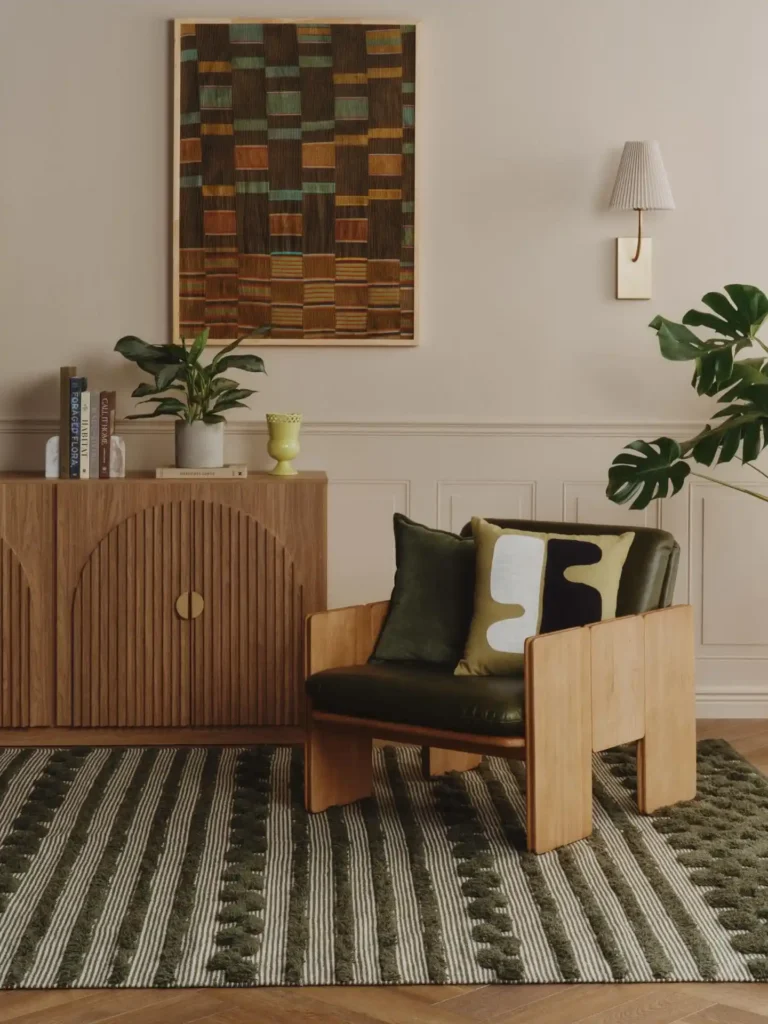
Modern palettes rest on quiet foundations — warm whites, greys with undertone discipline, black as punctuation, natural wood and stone as the texture — then spend bravery in exactly one place per room: a saturated chair, a large art piece, a lacquered cabinet. One brave note reads as confidence; five read as a different style entirely, and it is not modern.
Undertones must agree across the room's whites and greys; clashing undertones are the modern palette's silent killer, visible only as unease. Test brave notes at full room scale with a throw or a board before committing to upholstery. The brave note may move between rooms across years; the foundation should not need to.
| Brave Note Carrier | Scale |
|---|---|
| Chair | One, saturated, full form |
| Art piece | Wall-scale, framed quiet |
| Cabinet | Lacquered, single run |
| Textile | Small rooms only |
3. Treat Negative Space as a Material With a Budget
credit: @designcafe.dc
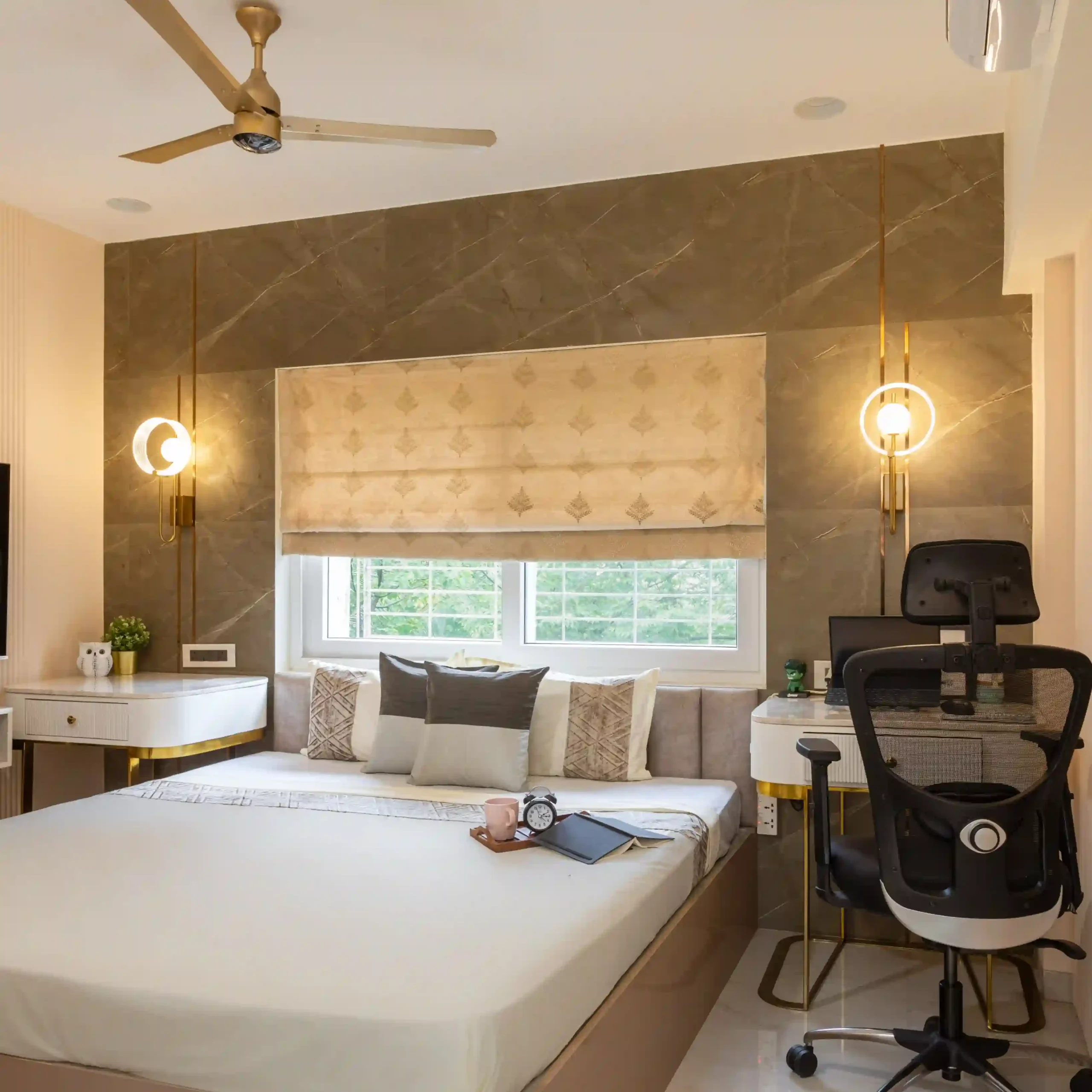
Empty space in modern rooms is doing structural work — it gives lines their length, objects their importance, and eyes their rest. Budget it like money: every wall keeps a bare stretch, every surface keeps a majority empty, every room keeps one corner deliberately unfilled. The discipline is measured in refusals: the gift, the bargain, and the heirloom all audition against the space they would consume.
Guests read negative space as wealth and calm, in that order. Children and life will colonize emptiness temporarily; the reset returns it nightly. When a room feels crowded, remove the newest object first — the space budget was balanced before it arrived.
| Foundation | Role |
|---|---|
| Warm white and grey | The quiet field |
| Black | Punctuation, in doses |
| Wood and stone | Texture without noise |
| One brave note | The room's signature |
Furniture, Form, and Honest Materials
4. Choose Low, Long Furniture and Let Legs Show

credit: @madisonwerner
Modern furniture sits low and stretches long: sofas and credenzas with horizontal emphasis, visible legs lifting mass off the floor, tabletops thin in profile. The effect is architectural — rooms feel larger because the eye travels unbroken across the floor's plane. Blocky, skirted, floor-hugging pieces belong to other styles' grammars and break the sentence when imported.
Measure seat heights against the household's real bodies; low is a proportion, not a punishment. Legs in metal or wood must join the room's material family. One grounded piece (a rug-weighted coffee table, a stone plinth) anchors the float; everything floating reads as a furniture store's levitation act.
5. Buy Fewer Pieces at Higher Honesty

credit: @amberinteriors
Modern decor's economics: the budget divided by fewer objects, each made of what it claims to be — solid wood or honest veneer, real stone or truthful porcelain, metal that is metal. Honest materials age with dignity and need no disguise, which is the style's whole moral engine. A room of five true pieces outperforms fifteen simulations at any price point.
Resale and vintage markets are the modern buyer's allies; the style's classics circulate for decades. Fake materials announce themselves at touch distance and in photographs, which is where modern rooms are most judged. Patience is the procurement strategy: the empty corner waits for the true piece rather than hosting a liar meanwhile.
6. Mix Eras Deliberately: One Vintage Voice Per Room

credit: @therugcollection
Pure period modernity reads as a museum; one vintage voice per room — a mid-century chair, an antique rug under modern lines, a grandmother's brass lamp — gives the composition a past and the residents a story. The vintage piece must be the room's elder, singular and respected, surrounded by the calm that lets it speak.
Two vintage voices start a conversation that drowns the room's lines; three start a shop. Restore the elder properly (upholstery, wiring, finish) — modern rooms show neglect at gallery magnification. The heirloom rule protects families: an inherited piece that cannot be the elder gets honored elsewhere in the house, not forced into modern rooms by guilt.
| Material | Honest Form |
|---|---|
| Wood | Solid or truthful veneer |
| Stone | Real or porcelain that admits it |
| Metal | Metal, finished plainly |
| Textile | Wool, linen, leather |
7. Design Storage as Architecture: The Quiet Wall

credit: @servinistudio
Modern rooms hide their working storage inside architecture: a wall of flush cabinetry, handleless and full-height, swallowing media, toys, files, and the household's necessary chaos. One quiet wall per room is the style's load-bearing secret, because minimalism without storage is a photograph, not a home. Everything visible outside the quiet wall is there by election.
Renters build the quiet wall from a ranked line of identical closed cabinets; owners build it in. Interiors get zoned and labeled or the wall becomes a large, expensive junk drawer. The quiet wall's top line meets the ceiling for the built-in truth; gaps collect dust and doubt.
8. Keep Surfaces at the One-Object Standard
credit: @kerryarmstrongart
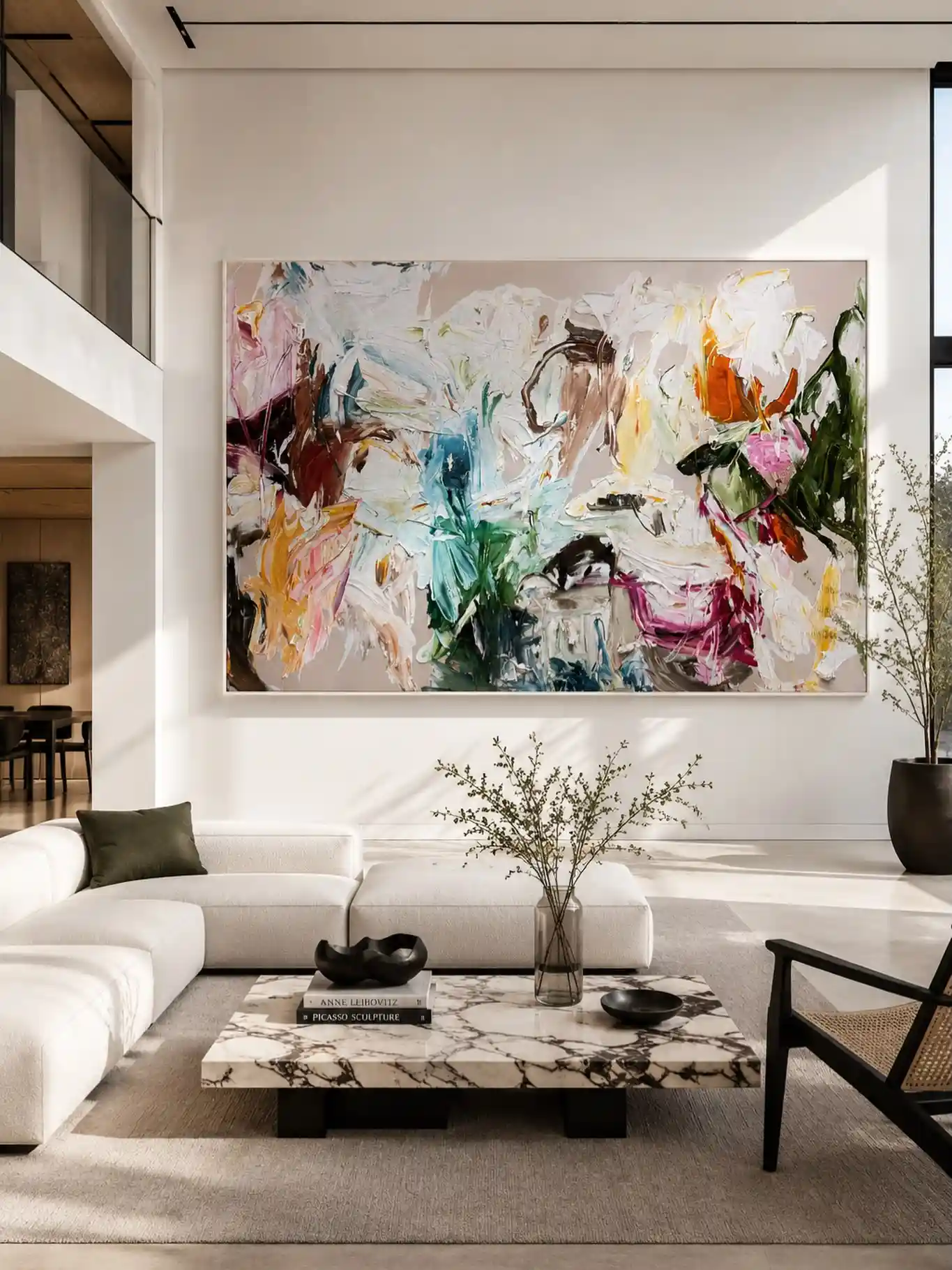
Modern surfaces hold a strict ration: one object, or one composed group of three, per surface — the credenza's vessel, the table's book and bowl, the shelf's single sculpture. The standard makes styling decisions binary (does this earn the surface, yes or no) and gives the room its gallery breathing. Surfaces are the first place modern rooms decay, so the standard defends itself at the nightly reset.
Groups of three obey odd-number rhythm and height variety; single objects must be scaled to command their surface alone. Functional items (the lamp, the speaker) count within the ration. Photograph surfaces monthly; creep is invisible to residents and obvious to cameras.
Another take worth browsing is 20 Living Room Color Ideas over at Homes & Gardens.
Light, Glass, and Open Plans
9. Layer Light to Sculpt: Ambient, Task, Accent, in Dimmer's Order
credit: @yogesh.jangid_007
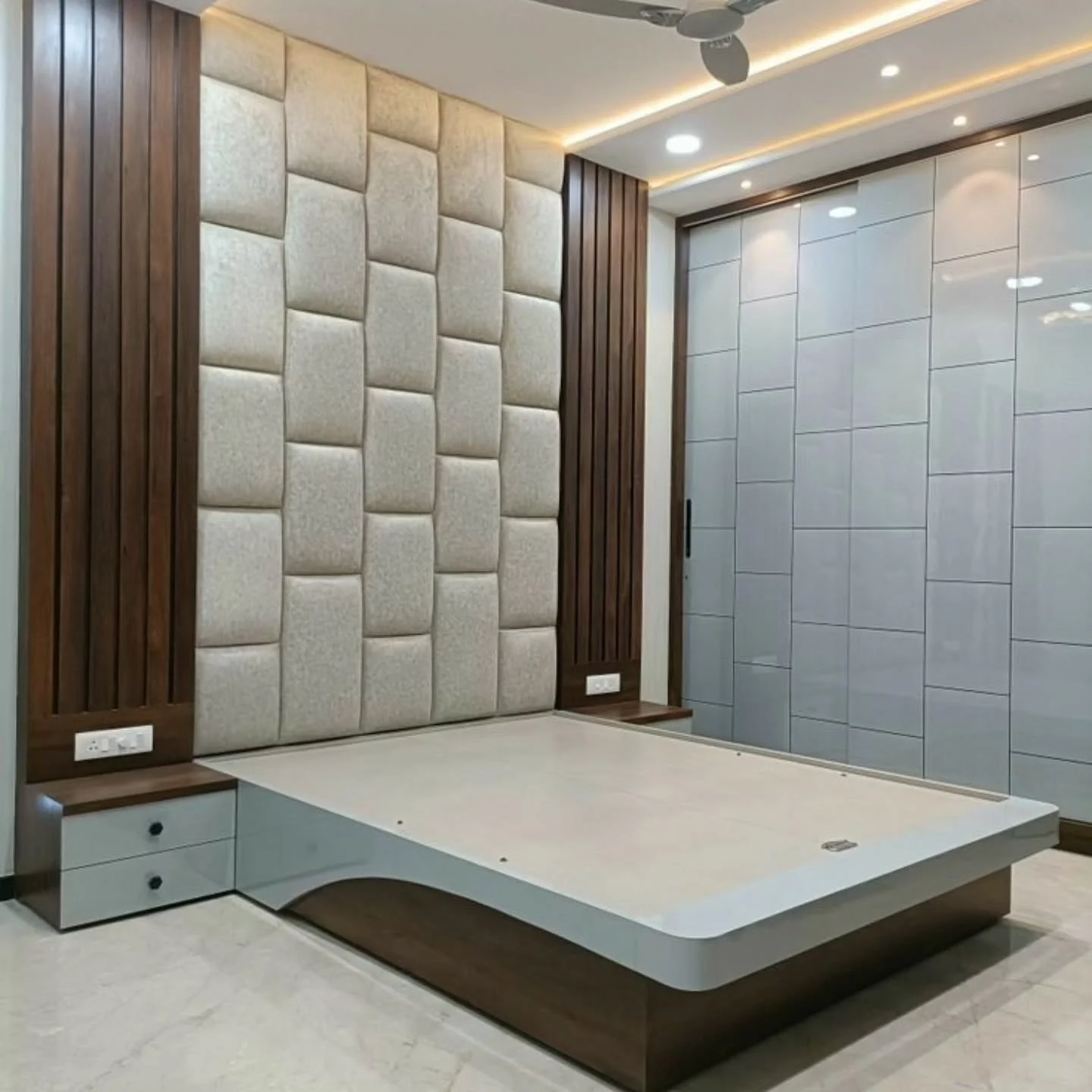
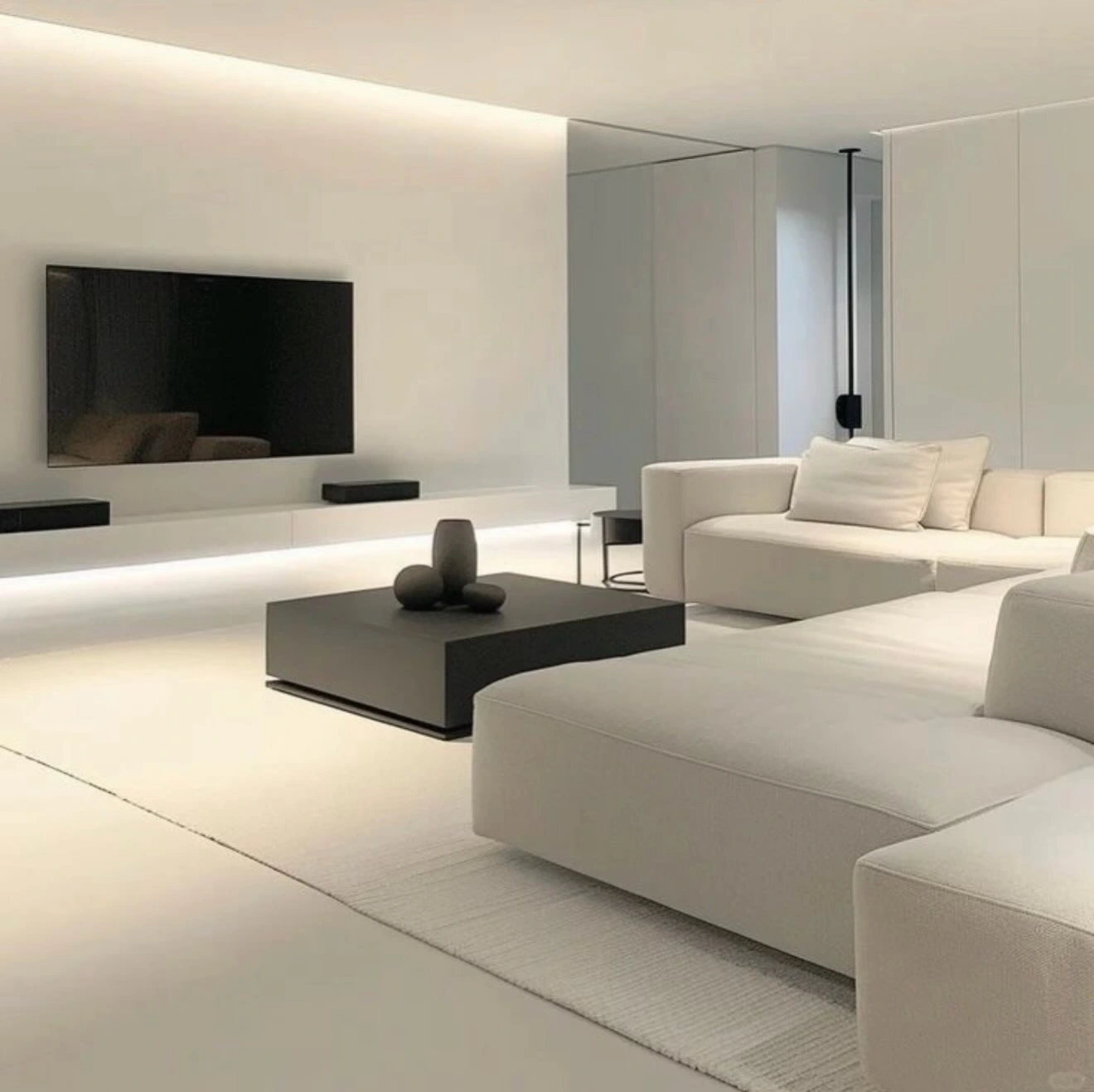
Modern light is sculptural: a quiet ambient wash, task light at the room's working points, and accent light grazing art, texture, and architecture — all dimmable, all warm-leaning, none of it from a single ceiling point. Sculptural light gives minimal rooms their drama without objects, which is why modern rooms at night outperform their daytime photographs.
Fixtures themselves join the composition as line and form (an arc's curve, a pendant's geometry) or disappear into slots and coves. Bulb temperature agrees across the room; a single cool bulb in a warm plan reads as an error light. Scene presets (morning, evening, guests) make the sculpture repeatable rather than nightly improvisation.
| Scene | Layers at Work |
|---|---|
| Morning | Ambient up, accents low |
| Evening | Ambient dim, accent grazing |
| Guests | All three, tuned warm |
| Work | Task at full honesty |
10. Use Large-Scale Art as the Room's Color Event

credit: @craftinghomes.gh
Modern walls take art at architectural scale: one large piece per room doing the color and emotion work that patterns do in other styles. Large art justifies the palette's restraint around it, anchors the furniture's lines, and gives the negative space a worthy opponent. Small pictures sprinkled across modern walls read as hesitation.
Hang large work lower than tradition dictates, in conversation with the furniture's top line. Originals, prints at honest scale, and textiles all serve; the frame stays quiet so the work stays loud. Rotate the color event between rooms across years and the whole house refreshes without a purchase.
11. Let Glass, Steel, and Stone Carry the Shine — Once Each

credit: @poshelldesigns
Modern rooms ration reflective materials like brave notes: one glass surface (the table), one steel voice (the lamp or the legs), one stone moment (the plinth, the tray, the hearth). Reflection multiplies light and space, but every added shine raises the room's visual volume. The ration keeps modern rooms serene instead of showroom-bright.
Fingerprint reality audits glass choices in households with small residents; smoked and fluted glass forgive what clear glass confesses. Stone's moment should be touchable — modern rooms reward the hand as much as the eye. Mirrors count as glass's loudest form and spend accordingly, one per room, placed for light rather than vanity.
12. Open the Plan With Rugs and Ceilings, Not Walls Alone

credit: @nahawids
Open-plan modern homes zone by surface changes rather than partitions: the rug drawing the sitting room, a ceiling treatment (beams, a dropped plane, a pendant field) naming the dining zone, lighting scenes shifting the borders at night. Zones drawn this way keep the plan's air while giving each activity its address — the open plan's whole negotiation.
Rug edges are the zone's legal border; furniture that straddles reads as undecided. Keep a consistent floor and palette across zones so the air stays one room while the addresses multiply. The quiet wall can serve two zones if its interior zoning respects both borders.
| Layer | Sculpting Job |
|---|---|
| Ambient | The quiet wash |
| Task | Work points, honestly lit |
| Accent | Art and texture grazed |
| Dimmers | The whole sculpture, tuned |
13. Green Modern Rooms With Sculptural Plants Only

credit: @ashleytstark
Modern greenery is chosen for form: the fiddle leaf's architecture, the snake plant's verticals, the olive's airy structure, a single branch in a tall vessel. Plants in modern rooms are sculpture that breathes, placed like objects (one commands a corner, one grazes a shelf) and potted in the material family — concrete, ceramic, steel. Jungles belong to the boho treaty next door.
Scale plants to the room's lines (tall with tall, trailing almost never). The plant ration rises only in sunrooms and atria where architecture itself is green. A struggling plant demotes instantly — modern rooms magnify decline like they magnify everything.
14. Dress Windows in Architecture: Sheers, Panels, and Bare Glass

credit: @avenue_home_decor
Modern window dressing respects the glass as architecture: sheer linen softening light without pattern, single panels in the palette drawing like curtains in a gallery, or honest bare glass where privacy and light allow. Hardware disappears (ceiling tracks, recessed rods) so the window reads as a wall of weather and light, which is the modern room's largest artwork.
Sheers earn their place in glare and privacy audits; bare glass wins in private, shaded plots. Blackout needs hide behind the sheer in a double track for bedrooms. Keep hems long and puddle-free; modern textiles fall like water, not like skirts.
Room by Room in the Modern House
15. Build the Modern Kitchen on Handles' Absence and Stone's Presence

credit: @sarahandgeorgeblock
Modern kitchens run on flush fronts, integrated appliances, one stone carried from counter to backsplash, and a strict counter ration (the machine in use, nothing stored). The island becomes the room's long line and its social center. Open shelves appear once at most, styled like the one-object standard demands, or not at all.
Counter discipline is the kitchen's nightly reset and its hardest treaty; the quiet wall's logic applies to drawers with dividers. Hardware-free fronts need touch-latch maintenance in the calendar. Warmth enters through wood's one appearance (stools, a board, the floor) so the kitchen serves dinner rather than surgery.
| Kitchen Law | Execution |
|---|---|
| Fronts | Flush, handleless |
| Stone | One, counter to splash |
| Counters | Rationed nightly |
| Warmth | Wood, once |
16. Make the Modern Bathroom a Wet Room of Planes

credit: @sonicstone_dickson
Modern bathrooms compose in planes: the floating vanity, the frameless glass, large-format tile or stone with minimal grout lines, a mirror at wall scale, and fixtures in one finish. Every plane is washable, every object hides in the vanity's drawers, and the room's single brave note arrives as the stone's veining or one vessel's form.
Large formats shrink grout, and grout is where bathrooms age in public. Heated floors are the modern bathroom's invisible luxury and worth their line in the budget. Open showers need drainage honesty; planes that pool water fail their audit in a week.
17. Run the Modern Bedroom on Restraint and One Textile Luxury

credit: @future_conceptz
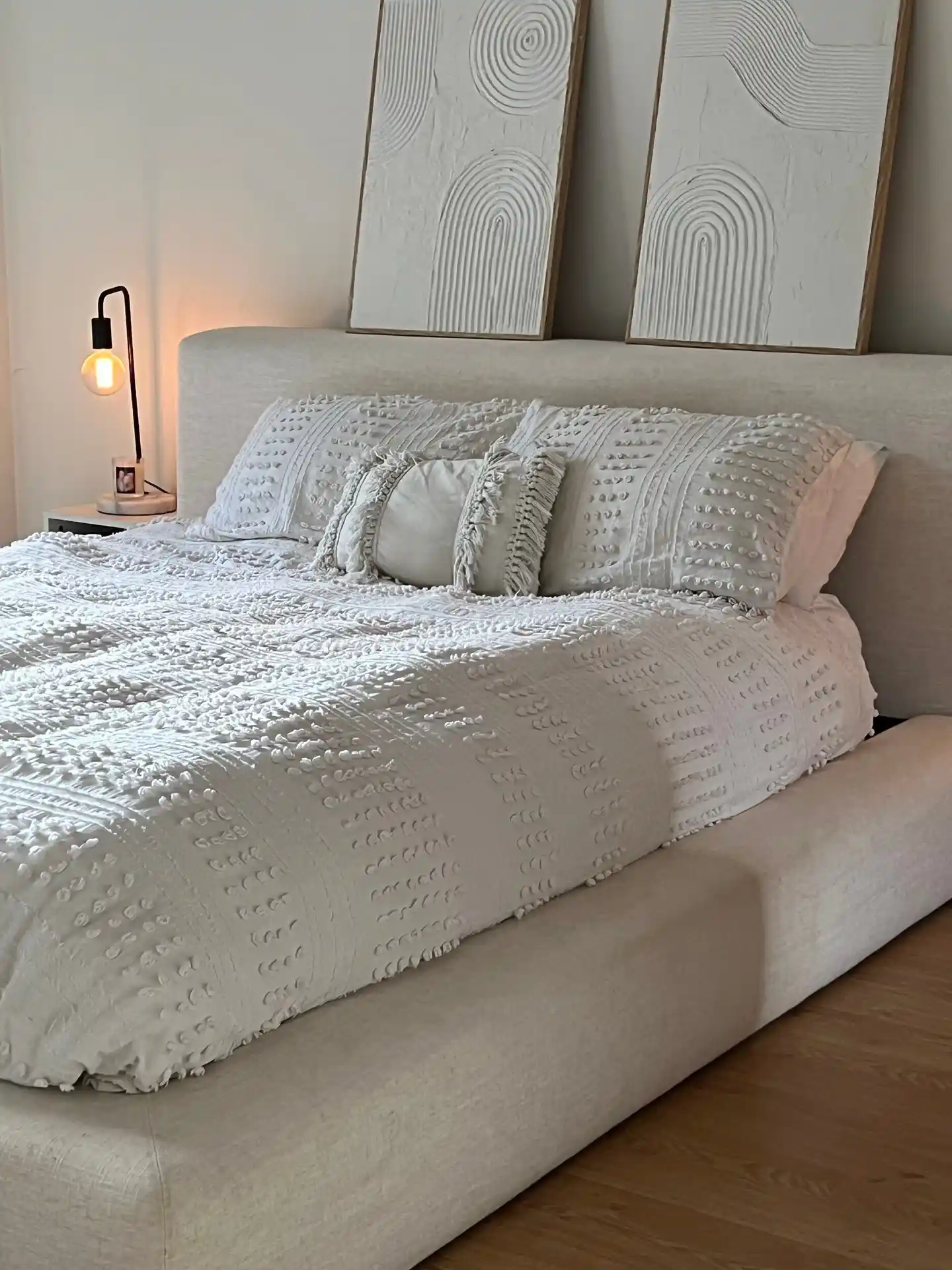
Modern bedrooms strip to the essential lines (low bed, floating or minimal nightstands, the quiet wardrobe wall) and spend their softness budget on one textile luxury: serious linen, a wool throw with weight, curtains that truly darken. Sleep is the room's function and the decor serves it like a lab serves an experiment — quietly, exactly, without chatter.
Nightstand surfaces hold the ration (lamp, book, water) and nothing with a screen that glows. The bedroom's brave note whispers — a headboard's form, the art's single calm piece — because bedrooms spend bravery on rest instead. Wardrobe walls join the quiet-wall family with interiors zoned like the kitchen's drawers.
| Zone | Border Device |
|---|---|
| Sitting | The rug's edge |
| Dining | The pendant field |
| Working | The light scene |
| Sleeping | The palette's hush |
18. Give the Modern Home Office a Gallery's Calm
credit: @alphazon_decor
The modern office pairs the desk's clean plane with the quiet wall's storage, a chair chosen as sculpture that also passes the sitting test, the backdrop composed like the room's art wall, and cable infrastructure vanished entirely. Video calls from modern offices read as broadcasts from design studios, which is a career asset purchased once.
The desk's surface standard is the one-object rule plus the work itself. Plants follow the sculptural ration; the office's plant is its living signature on camera. Keep the office door's close as the shutdown; modern rooms end their days as cleanly as they begin them.
19. Scale Modern Down: Studios and Small Apartments

credit: @knoll
Small modern spaces succeed by the same laws at tighter rations: furniture scaled to the room (apartment sofas, leggy pieces), the quiet wall built from identical cabinets, the palette foundation unbroken across the whole footprint, zones drawn by one rug and one pendant. Smallness is modern's friend — the style was born in compact city flats — provided the storage is honest.
Multi-function pieces must be honest at both jobs or at neither. The brave note in small rooms rides art and textiles, which emigrate easily. Mirrors spend their one shine ration on the studio's darkest wall and double the light they borrow.
For more ideas in this direction, take a look at 7 organic modern living room ideas from Homes & Gardens.
Budgets, Seasons, and the Editing Discipline
20. Spend in Architecture Order: Storage, Light, Anchor, Then Art

credit: @craftinghomes.gh
Modern budgets sequence by permanence: the quiet wall and storage architecture first (it makes the style possible), lighting second (it makes it dramatic), the anchor furniture third (sofa, table, bed — low and long), and art last at the scale the walls now deserve. Decorative objects barely appear in a modern budget, which is the budget's most modern feature.
Renters redirect the storage line into identical cabinets and the lighting line into lamps and dimmers, all portable. Vintage classics absorb the anchor budget gratefully across decades of resale value. Art at scale can be rented, rotated from other rooms, or commissioned slowly — the wall waits with modern patience.
21. Edit Relentlessly: The Removal Ritual That Finishes Rooms
credit: @rakceramicsofficial
Modern rooms finish by subtraction: the monthly edit walk with a box, removing whatever fails the room's current standard (the tired object, the duplicate, the gift that never earned its surface), surfaces re-audited to ration, the quiet wall's interior culled seasonally. Editing is the style's maintenance sacrament; a modern room unedited for a year is a traditional room in denial.
Removed objects get honest destinations (donate, store as rotation stock, rehome within the house) — never the quiet wall's back corners. Photograph rooms before and after edits; the pair teaches the eye what the style costs and pays. Households share the edit's authority or edits become one person's taste imposed as law, which no style survives.
| Edit's Question | Verdict |
|---|---|
| Earns its surface? | Keep or box |
| Duplicate of a better piece? | Box |
| Gift without a job? | Rehome with thanks |
| Fails the fifteen-year test? | Box, kindly |
22. Warm the Modern Room Without Breaking Its Laws

credit: @fresh_oak
Cold modern rooms fail their residents, so warmth enters through the allowed channels: wood's grain at the large surfaces, textiles at the touch points (wool, boucle, linen), light at warm temperatures, curves rationed to one per room (the arc lamp, the round table), and the brave note's warmth in tone. Warmth through clutter is forbidden; warmth through material is the style's mature form.
Test warmth at night in winter, the modern room's honest hour. Radiators and fireplaces dress as architecture (a stone plane, a black line) rather than as appliances. The resident's verdict governs: a room its people avoid at dusk has failed regardless of its photographs.
| Architecture Order | Buys |
|---|---|
| Storage wall | The style's possibility |
| Lighting | Its drama |
| Anchor furniture | Low, long, honest |
| Art at scale | The final event |
23. Handle Modern With Children and Pets by Zoning the Precious
credit: @castleryus
Modern family homes survive by honest zoning: the precious (glass, the brave chair, the art's reach) placed beyond the daily storm lanes, washable honesty in textiles (performance weaves that admit their job, leather that takes a beating beautifully), storage that swallows toys at adult speed, and surfaces' rations enforced at the reset rather than all day. Children raised in modern rooms learn the edit early, which alumni report as a life skill.
Pet stations hide inside the quiet wall with the same flush discipline. The brave note in family years rides high (art, pendants) where small hands and tails cannot spend it. Perfection is not the standard; the reset's nightly return to calm is.
24. Rotate Almost Nothing: Modern's Slow Seasons

credit: @modanifurniture
Modern rooms barely rotate — the style's seasons show in textiles' weight, the plant cast's one change, art moving between rooms, and light scenes retuned at the equinoxes. This slowness is economical and ecological, and it throws the style's freshness burden onto the edit, where it belongs. A modern room in its fifth year should look inevitable rather than dated, because it was built from laws instead of trends.
Trend-proofing is a purchasing test: would this object have looked right fifteen years ago and will it in fifteen more. The notebook keeps the art rotation map so pieces rest and return like actors in repertory. Guests should be unable to date a modern room within a decade; that is the compliment the style collects.
| Season's Move | Changes |
|---|---|
| Textiles | Weight only |
| Plant cast | One change |
| Art | Rooms rotate pieces |
| Light scenes | Retuned at equinox |
25. Rent Modern: The Portable Kit for Temporary Homes

credit: @dezone.official
Rental modern assembles from portable architecture: identical closed cabinets ranked as the quiet wall, lamps as the lighting plan, the rug as the floor's zone, art at scale on rated hooks, sheers on tension or ceiling tracks where allowed. Nothing fixed, everything lawful. The kit emigrates whole, and each new address starts at season five rather than year zero, because the laws travel in the notebook.
Photograph landlords' rooms at move-in and keep fittings bagged, as all portable treaties require. The brave note in rentals rides the chair or the art, both truck-friendly. Deposits and modern rooms coexist easily when every system is furniture rather than construction.
Living Modern Every Day
26. Keep Technology Invisible: Cords, Screens, and Speakers
credit: @kellybehunstudio
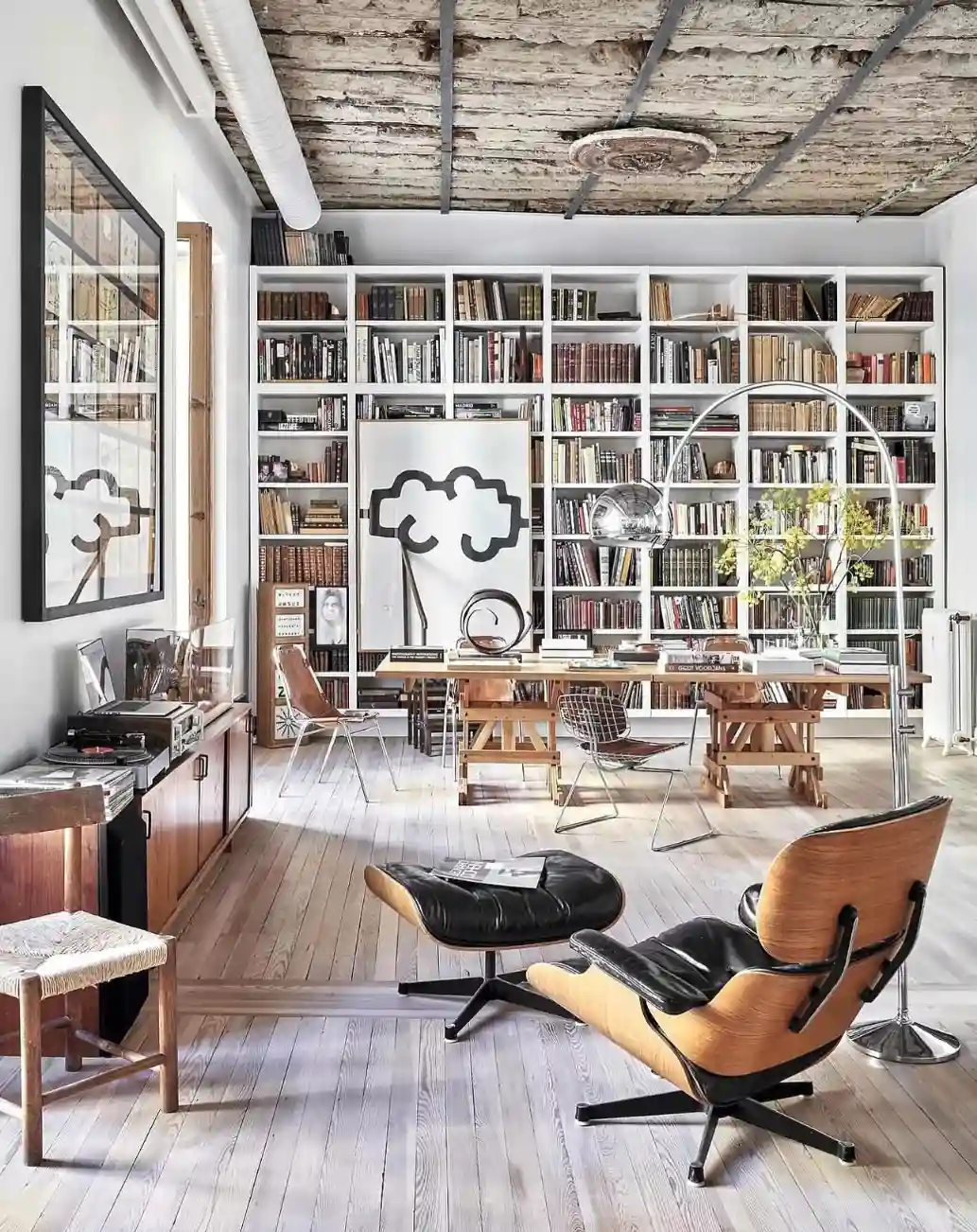
Modern rooms treat technology as plumbing — essential and hidden: cords routed in channels and furniture backs, the television either absent, art-framed, or flush at the room's drawn axis, speakers as architecture or as honest objects in the material family. A modern room's photograph should require a second look to find its century's machinery.
Charging lives inside the quiet wall's one powered bay, doors closed. The screen's size obeys the room's lines, never the showroom's ambitions. Routers and their blinking colonies exile to the storage interior, where their lights bother no one.
27. Style the Modern Table and Shelf With Odd Numbers and Air

credit: @ellisonstudios
Modern styling composes in odd numbers with air between: three objects of varied height on the table (book stack, vessel, small sculpture), shelves holding books in horizontal stacks and vertical runs with deliberate gaps, every group given the negative space that makes it read as chosen. The hand must be able to pass between objects; density is the enemy wearing abundance's clothes.
Books earn shelf space by spine discipline (calm colors forward in modern rooms; the loud spines turn or migrate to the quiet wall's reading bay). Shelf gaps are composed, not leftover. Restyle quarterly at the edit rather than continuously; modern styling is a state, not a hobby.
| Styling Group | Composition |
|---|---|
| Table three | Book, vessel, sculpture |
| Shelf run | Stacks, runs, gaps |
| Credenza one | Single commanding object |
| Between objects | A hand's width of air |
28. Choose Modern Textiles by Touch: Wool, Linen, Boucle, Leather

credit: @shoukhouse
Modern textiles carry the style's sensory life, so choose by hand before eye: wool rugs with density, linen with weight, boucle with resilience, leather that will patina. In rooms of glass and stone, textiles decide whether the room feels like a gallery or a home, and they do it at the exact points bodies touch the architecture.
Natural fibers age inside the palette; synthetics shine their way out of it. Keep textile colors inside the foundation except the one brave cushion that may carry the note in small rooms. The throw in a modern room folds to a line or drapes by design — never the crumple.
| Precious | Zoned How |
|---|---|
| Glass | Beyond the storm lanes |
| Brave chair | Adult territory |
| Art | Above reach and tails |
| Calm | Restored at the reset |
29. Solve Modern's Three Pains: Sterility, Fragility, and Trend Rot
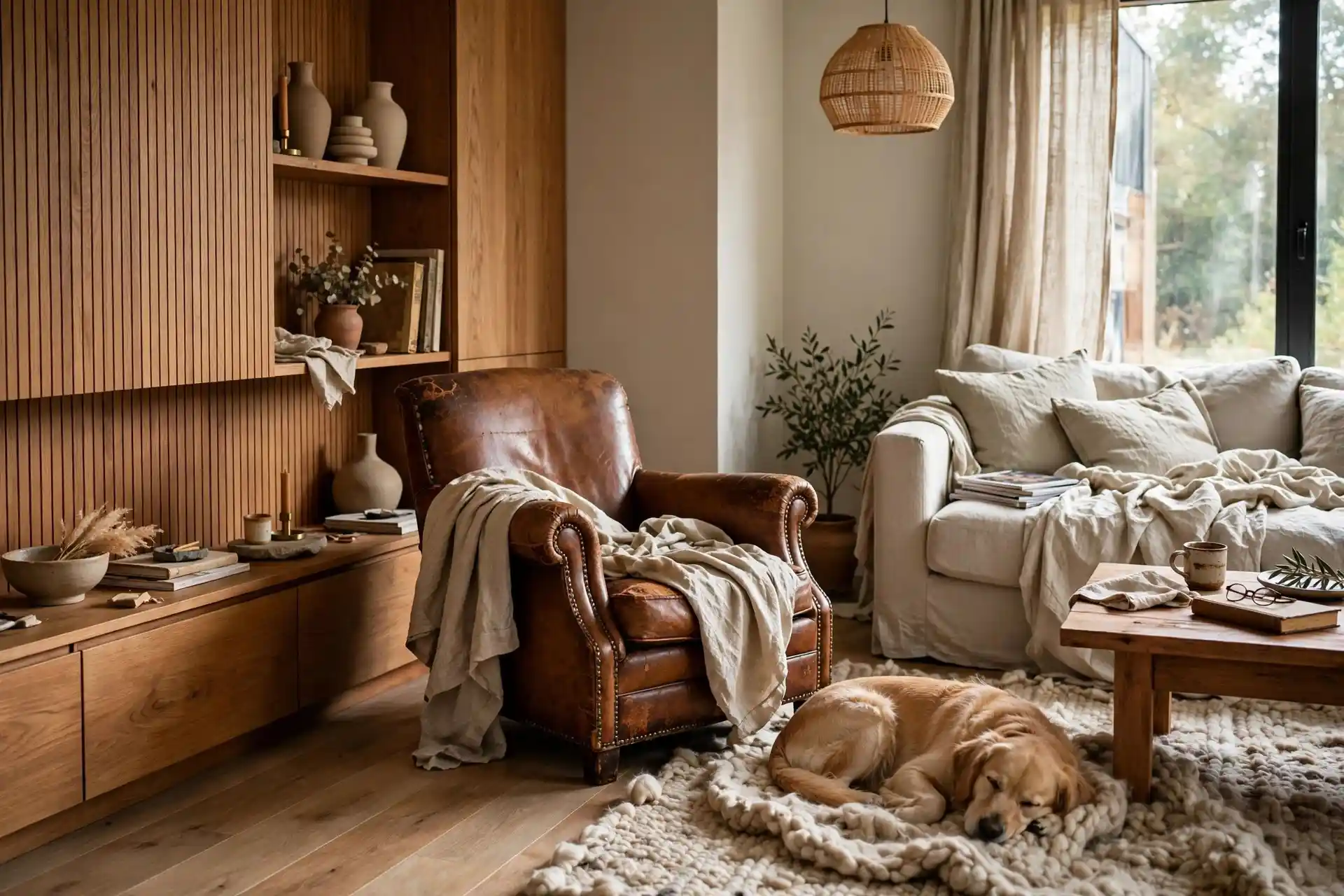
The style's pains are named and treated: sterility (a room nobody touches — treated by warmth channels, the vintage elder, and textiles by touch), fragility (a room life cannot use — treated by honest materials, zoning, and the reset over perfection), and trend rot (a room dated by its purchases — treated by the fifteen-year test and slow seasons). A modern room treating its pains becomes the house's calmest and most-used space, which is the style's actual promise.
Diagnose pains at the quarterly review with the residents' testimony, not the photographs. The cure order matters: use first, warmth second, trends never. Rooms that host real life in modern order are the style's best argument, worth more than any showroom.
30. Photograph Modern Rooms Quarterly: Lines, Surfaces, Air

credit: @hl_inter_
The modern audit is photographic: from each doorway, check the lines (still long, still clean), the surfaces (still at ration), the air (still budgeted), the quiet wall (still quiet outside, still honest inside). Fix one confession per room per quarter, chosen by the photograph that disappoints most. Modern rooms are maintained by looking, because their failures are all visible before they are felt.
Shoot at the same hours each quarter; light consistency makes drift visible. Compare against the elevation sketch from tip 1 — the drawing is the room's constitution. Celebrate quarters where the photograph needs no fix; inevitability is being achieved.
| Audit Check | Standard |
|---|---|
| Lines | Long, clean, unbroken |
| Surfaces | At ration |
| Air | Budgeted corners intact |
| Quiet wall | Quiet out, honest in |
31. Borrow From Modern's Neighbors Without Breaking the Laws
credit: @sophiepatersoninteriors
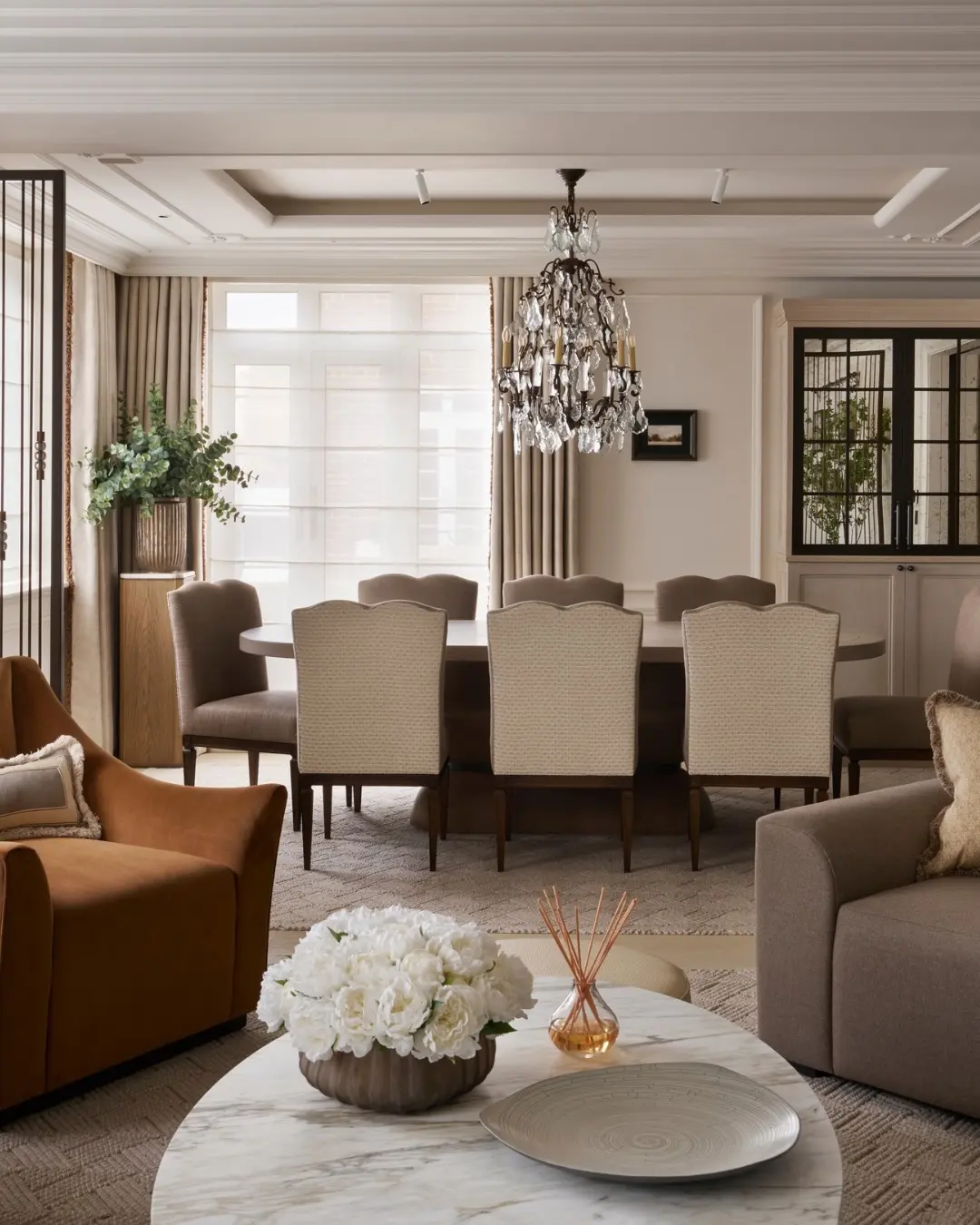
Mature modern rooms borrow gracefully: warmth rituals from cozy styles (the throw, the reading light), craft from boho (one handmade textile), calm from neutral palettes, thrift from the vintage markets. Borrowing obeys the rations — one voice, one note, one curve — and every loan must pass the fifteen-year test and the edit. Styles are neighbors; laws are laws.
Write loans in the notebook with their return dates (the seasonal textile goes back to storage in spring). A loan that survives four quarterly edits has earned citizenship; naturalize it in the sketch. The style stays modern by governing imports, not by fearing them.
32. Keep the Modern Notebook: Sketch, Rations, and the Edit Log

The notebook holds the modern house's constitution: the elevation sketches, the palette's foundation samples, each room's rations (surfaces, shine, brave note), the art rotation map, and the edit log with its dated photographs. Households that keep the notebook keep the style through moves, children, and decades; households that improvise watch modern decay into merely recent.
New purchases audition against the sketch at the shop, by photograph, before money moves. The edit log's honesty (what left, why, where it went) teaches the household its own taste across time. Review the notebook at each quarterly audit, pen in hand.
33. Let the Modern Home Earn Its Calm Every Quarter

credit: @boconcept_official
Close the quarter with the modern review: lines intact, surfaces at ration, storage honest, technology invisible, residents using every room without ceremony, the pains treated and the loans governed. Homes that pass deepen slowly (the better art, the true stone); homes that fail return to the edit before any purchase is entertained. Modern decor's whole argument is in this review: calm is not a purchase but a practice, and rooms built from line, light, and air pay their residents back every single day.
Write the review dated in the notebook, one improvement ordered by evidence, and photograph the portrait the next quarter defends. Thank the rooms that pass by using them fully — modern rooms reward inhabitants, not curators. The practice compounds: year five's calm is year one's laws, kept.
| Quarterly Review | Evidence |
|---|---|
| Lines intact | Doorway photographs |
| Surfaces at ration | The count, honestly |
| Residents using rooms | Testimony, not photos |
| Pains treated | Sterility, fragility, rot |
Common Mistakes With Modern Home Decor
Modern homes fail by buying objects before drawing lines, multiplying brave notes, and hiding nothing — storage is the style's load-bearing secret.
| Mistake | Why It Fails | Do This Instead |
|---|---|---|
| Objects bought before lines drawn | Rooms assemble instead of composing | Sketch elevations, place the long lines first |
| Five brave notes per room | Confidence becomes noise | Restraint plus one note |
| No closed storage | Minimalism becomes a photograph | Build the quiet wall |
| Every surface styled full | The gallery breathing dies | One-object standard, nightly reset |
| Trend purchases | The room dates in a season | The fifteen-year test, slow seasons |
Modern Home Decor by Situation: 4 Ready-Made Plans
If You Have an Open-Plan House and a Real Budget
Draw the elevations, build the quiet wall into the architecture, zone with rugs and pendant fields, buy anchors low and long in honest materials, light in dimmed layers, and let one large art piece per zone carry the color. Spend in architecture order. The plan's air is your largest asset; every decision is audited against it.
If You Rent a Small Apartment
Portable modern: ranked identical cabinets as the quiet wall, leggy apartment-scale furniture, one rug, one pendant or lamp field, sheers on tension, art at scale on rated hooks, and the brave note riding the chair. Photograph the landlord's walls, bag the fittings, and emigrate the whole composition when you move.
If You Have Children, Pets, and a Full Life
Zone the precious beyond the storm lanes, choose washable honesty in textiles and leather that patinas, swallow toys in the quiet wall at adult speed, and enforce rations at the nightly reset instead of all day. Modern family homes prove the style's promise best: calm that survives contact with life, restored nightly in minutes.
If You Love Warmth and Fear the Sterile Label
Build modern through its warmth channels: wood at the large surfaces, textiles chosen by touch, light warm and dimmed, one curve per room, one vintage elder, and the dog on the wool rug in every photograph of your life. Sterility is a purchasing failure, not a style requirement — the laws permit every warmth that materials can honestly carry.
Frequently Asked Questions About Modern Home Decor
What defines modern home decor?
Lines, light, and air: rooms composed along strong horizontal and vertical lines, a restrained palette with one brave note, honest materials, closed architectural storage, layered dimmable light, and negative space treated as a material. Modern rooms are finished by removal — the edit — and maintained by rations on surfaces, shine, and ornament. Function elects every object; form justifies its place.
How do I make a room look modern on a budget?
Sequence by architecture order at rental scale: identical closed cabinets as the quiet wall, lamps and dimmers for layered light, one low long anchor bought vintage, art at scale (a large print outperforms five small ones), and relentless editing, which is free. Restraint costs nothing and reads as the most expensive thing in the room.
What colors work best in modern homes?
Warm whites and greys with disciplined undertones as the foundation, black as punctuation, natural wood and stone as texture, and exactly one brave saturated note per room — carried by a chair, a cabinet, or large art. Undertones must agree across all the room's whites and greys; clashing undertones register as unease even when visitors cannot name the cause.
How is modern different from contemporary decor?
Modern refers to a stable set of laws rooted in twentieth-century design (clean lines, honest materials, functional election, negative space) that does not expire. Contemporary means whatever is current this season, including trends modern's fifteen-year test rejects. A contemporary room may be modern in a given year; a modern room stays itself across decades.
How do I keep a modern home from feeling cold?
Use the warmth channels the laws allow: wood grain at large surfaces, textiles chosen by touch (wool, linen, boucle, leather), warm dimmed light, one curve per room, one vintage elder piece, and the brave note in a warm tone. Test the room at night in winter — if residents avoid it at dusk, add material warmth before adding any object.
Can modern decor work with kids and pets?
Yes, by zoning and honesty: precious pieces beyond the daily storm lanes, washable performance textiles and patina-friendly leather, toy storage inside the quiet wall, and rations enforced at the nightly reset rather than policed all day. Modern rooms restored nightly to calm teach children the edit as a life skill, which families report as the style's surprise dividend.
How much furniture does a modern room need?
Less than habit suggests: the anchors (seat, surface, storage) plus the room's working pieces, each elected by function or form, with negative space budgeted around them. If a piece cannot state its job or its beauty in one sentence, it auditions for the edit box. Small rooms need fewer, better pieces — apartment scale, legs showing, mass lifted off the floor plane.
What window treatments suit modern homes?
Sheer linen diffusing light without pattern, single quiet panels, or honest bare glass where privacy allows — hung from ceiling tracks or recessed hardware so the window reads as a wall of light. Hems fall long and puddle-free. Blackout layers hide behind sheers in bedrooms. The window is the modern room's largest artwork; dress it like architecture, not like furniture.
How do I add personality to a modern home?
Through the governed channels: the one brave note, the single vintage elder with its story, large art chosen personally, one handmade loan, and textiles with touch. Personality in modern rooms is concentrated rather than scattered — fewer signals, each at full strength. The edit log across years becomes the personality's archive, proving taste by what was refused as much as by what was kept.
Conclusion: Line, Light, and Air
Modern home decor is a practice disguised as a look: draw the lines, restrain the palette to one brave note, hide the machinery in a quiet wall, light in layers, and edit like you mean it. Rooms built on those laws stay calm through children, moves, and decades, because nothing in them depends on a season's permission. Start this week with the elevation sketch of your hardest room, and let the first edit be the bravest purchase you make — of space itself.
*Ready to build from line, light, and air? Start with tip 1 and draw the room before you buy for it.*
—