
Bedroom Decor Ideas: 24 Proven Ways to Add Style and Comfort
These bedroom decor ideas turn a plain sleeping space into a calm, finished room. Most bedrooms fail for three fixable reasons: no clear focal point, colors that fight each other, and light from a single ceiling fixture. This guide fixes all three in a set order, starting with measurements and a palette, then walls, furniture, textiles, and layered light. As professional interior designers consistently find, the bed wall decides the entire room, because palette, art, and light all answer to that one surface. Work through the steps in order, and every later choice gets easier because the early decisions rule out the wrong options.
Before You Begin: 3 Foundation Steps for Bedroom Decor Ideas
Foundation work takes one hour and prevents expensive styling mistakes. Start with the headboard against the longest wall and walkways on both sides; every measurement in this section flows from that one fixed position. Complete these three steps before buying, painting, or moving a single piece of furniture.
1. Measure Your Room Before Buying Anything
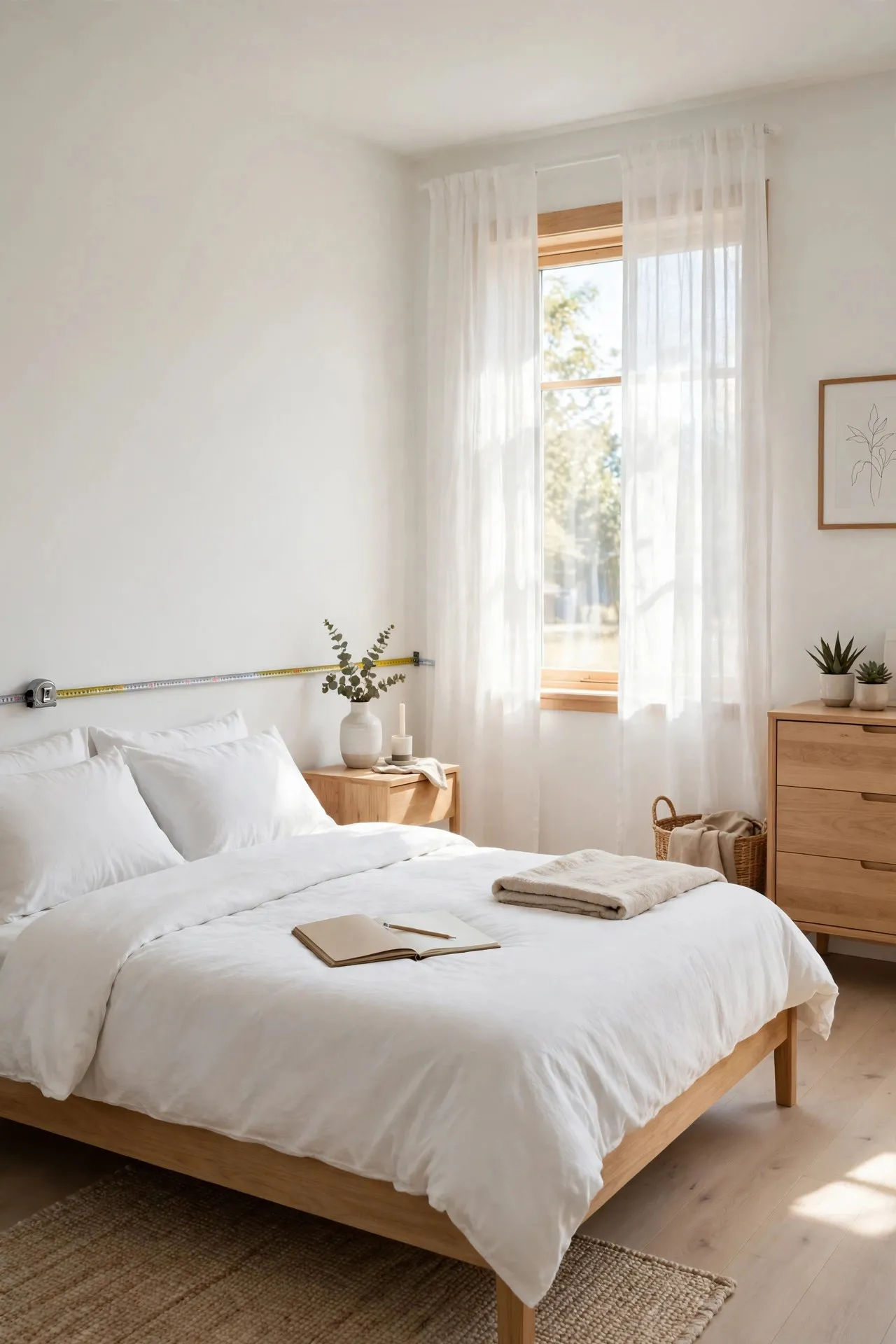
Wrong measurements ruin more decor plans than bad taste. A rug two feet too short or a bench that blocks a drawer wastes money and leaves the room looking accidental instead of designed. One careful measuring session protects every purchase that follows it in this guide.
Measure wall to wall with a metal tape today. Record the ceiling height, window positions, door swing, and every outlet inside one simple floor sketch with inch accuracy. This one sketch helps you avoid wrong orders, return trips, and the hidden cost of furniture that never fits your room.
2. Choose a Three-Color Palette First

Rooms without a palette look collected by accident. Every extra color demands attention, breaks continuity between walls and bedding, and makes the finished room feel restless instead of calm. A fixed three-color palette turns every later purchase into one simple yes-or-no decision.
Pick three colors before you buy anything else. Apply the sixty-thirty-ten rule: sixty percent dominant white or cream, thirty percent mid tone, ten percent one accent. This ratio keeps contrast lively without chaos, and every future purchase filters through one simple decision rule.
Match this palette with bedroom color ideas for combinations that suit north-facing and low-light rooms.
| Palette | Three Colors to Use |
|---|---|
| Scandinavian calm | White, light oak, sage green |
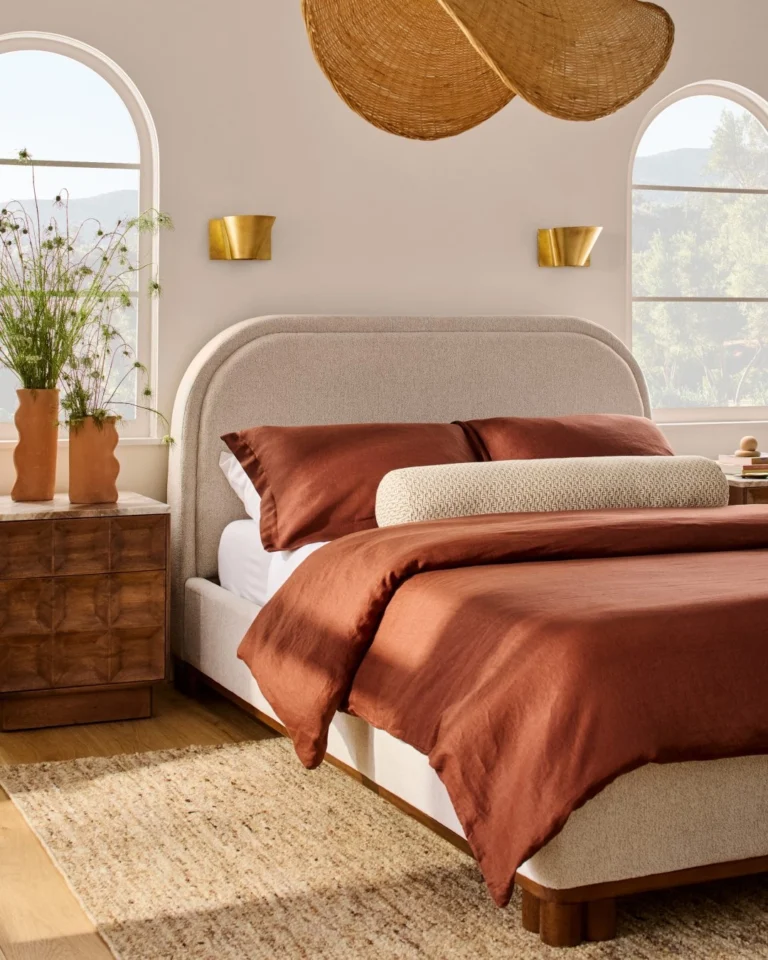
| Warm neutral | Cream, warm taupe, terracotta accent |
| Coastal light | White, pale blue, natural rattan |
| Soft modern | Warm white, greige, matte black accent |
3. Set One Focal Point for the Room

credit: @drewandjonathan
A room without a focal point feels unfinished. Your eye wanders between competing pieces, finds nowhere to land, and reads the whole space as cluttered even when it is tidy. One strong focal point on the bed wall gives every other element a supporting role.
Choose one focal point on the bed wall today. Pick a single large art piece, a statement headboard, an accent wall, or a tight gallery grid, and let everything else stay quieter. This single decision anchors the room, and your styling choices in later sections simply support the star you picked here.
For the gallery option, tape paper templates on the wall first and live with the grid for one full day before drilling.
| Focal Point | Size or Rule |
|---|---|
| Large art above the headboard | Spans two-thirds of the bed width |
| Statement headboard | 42 to 48 inches tall from the floor |
| Accent wall | One wall only, directly behind the bed |
| Gallery grid | Five frames with two-inch gaps between them |
Bedroom Wall Decor Ideas That Set the Tone
Walls carry the palette further than any other surface. These bedroom wall decor ideas finish the bed wall first, because that wall sets the tone for the furniture, textiles, and light that follow it.
4. Apply Paint to One Accent Wall

credit: @lifewithjen_
Four colored walls shrink a bedroom visually. Dark or saturated paint on every wall closes the room in, fights the bedding, and leaves no surface for the eye to rest on. One accent wall behind the bed delivers the same color impact at a quarter of the risk.
Paint the wall behind your bed one deep shade from your palette. One gallon of quality paint runs thirty-five to sixty dollars and covers that single wall with two coats. Keep the other three walls light, and the dark wall gains depth instead of shrinking the whole room.
Give fresh paint four weeks to cure fully before you lean art or furniture against that wall.
| Wall | Paint Finish to Use |
|---|---|
| Bed wall, accent color | Matte, two coats over primer |
| Side walls | Eggshell in the lightest palette color |
| Ceiling | Flat white, always |
| Trim and doors | Satin white for a clean edge |
5. Hang One Large Art Piece Above the Headboard

Tiny art fragments your main wall into noise. Several small frames above a bed scatter focus, demand constant straightening, and visually shrink the wall they decorate. One large piece commands the wall as a single statement and stretches the bed wall wider at a glance.
Hang one framed piece centered above your headboard first. Choose art spanning two-thirds of your bed width, hung six to eight inches above the headboard top edge. Framed pieces in these widths run forty to one hundred twenty dollars. One large piece gives the wall a single clear focal point, and you dust, level, and maintain exactly one frame from now on.
| Bed Width | Art Width to Hang |
|---|---|
| Twin, 38 inches | 24 to 26 inches |
| Full, 54 inches | 36 inches |
| Queen, 60 inches | 40 inches |
| King, 76 inches | 48 to 50 inches |
6. Mount Two Sconces Beside the Bed

Table lamps steal your most useful surface space. Each lamp base claims roughly one square foot beside the bed, exactly where books, water, and chargers compete daily. Wall sconces return that entire surface and aim task light precisely where you read, dress, and unwind nightly.
Mount one sconce on each side of the headboard; plug-in pairs run thirty to ninety dollars and need no electrician. Position sconces fifty-eight to sixty-four inches from the floor, with shades angled downward for glare-free reading light. Freed surfaces also fit a small plant or framed photo, and personal styling finally enters your sleeping zone.
Hide plug-in cords inside a paintable cord cover, and the bed wall keeps its clean, wired-in look.
| Placement Detail | Measurement or Rule |
|---|---|
| Mounting height | 58 to 64 inches from the floor |
| Shade direction | Angled downward for reading light |
| Plug-in pair price | 30 to 90 dollars, no electrician |
| Bulb to fit | 2700K, 450 to 800 lumens |
7. Install Peel-and-Stick Wallpaper on One Wall
credit: @rollandhill
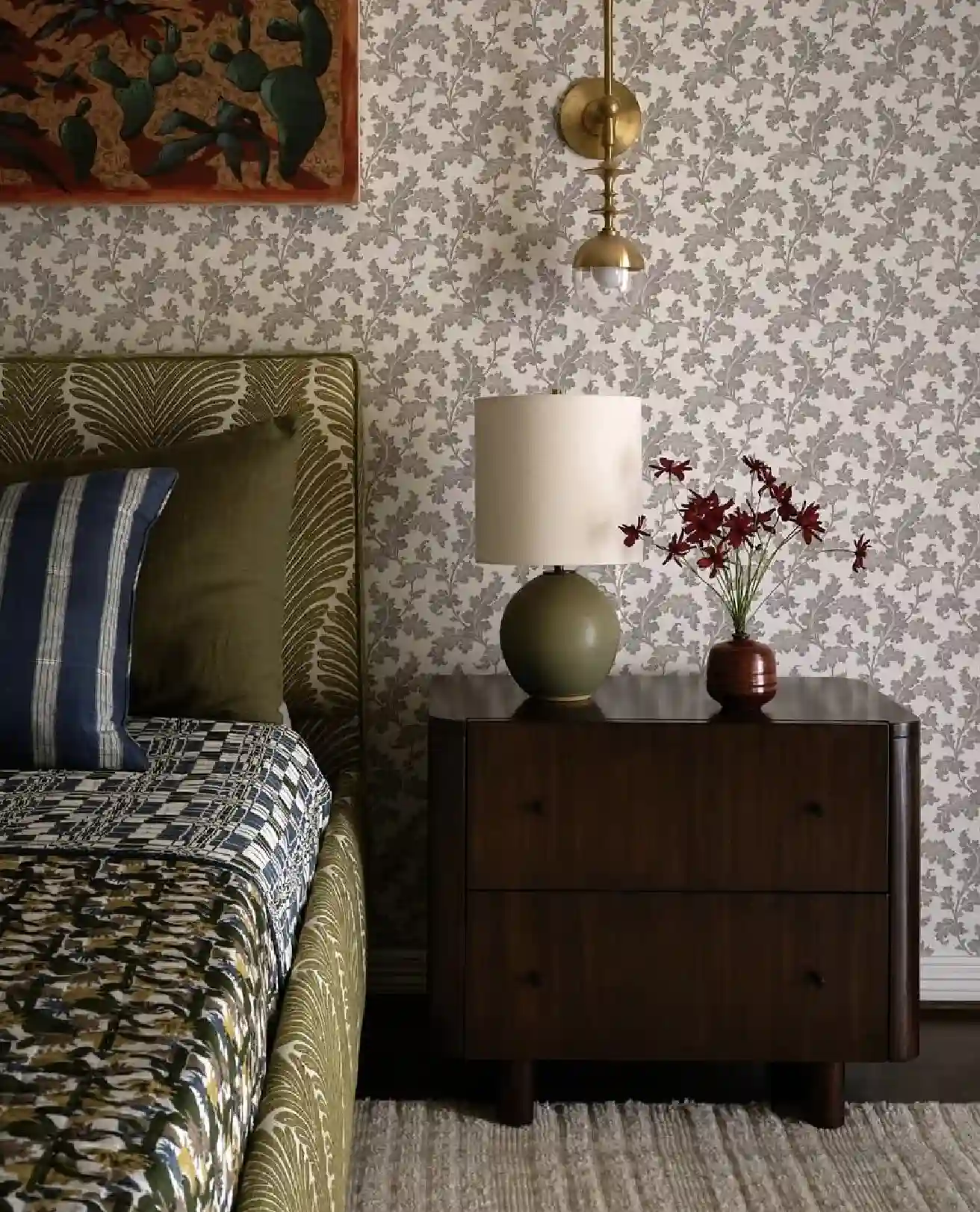
Bare walls waste your largest styling surface. A plain bed wall leaves the palette floating on bedding alone, and the room reads flat from the doorway. Peel-and-stick wallpaper adds pattern and texture to that wall with a fully reversible finish.
Install peel-and-stick wallpaper on the bed wall only, and choose a pattern repeat under twelve inches for easy alignment. Rolls run thirty to sixty dollars each, and renters remove the panels cleanly at move-out in most cases. Test one hidden corner first and leave it overnight, because weak paint can lift when panels come down.
Choose either this finish or the painted accent from Tip 4 for the bed wall. Stacking both splits the focal point and makes the wall compete with itself.
You might also enjoy wall decor ideas, which pairs beautifully with the ideas in this section.
For even more inspiration, explore our guide to small bedroom ideas.
Bedroom Decorating Ideas for Furniture and Layout
Furniture placement decides whether decor reads as designed. These bedroom decorating ideas fix the bed, nightstands, bench, and dresser in balanced positions, so every decorative layer added later lands on a stable plan.
8. Place the Bed on the Longest Wall
credit: @bakerfurniture
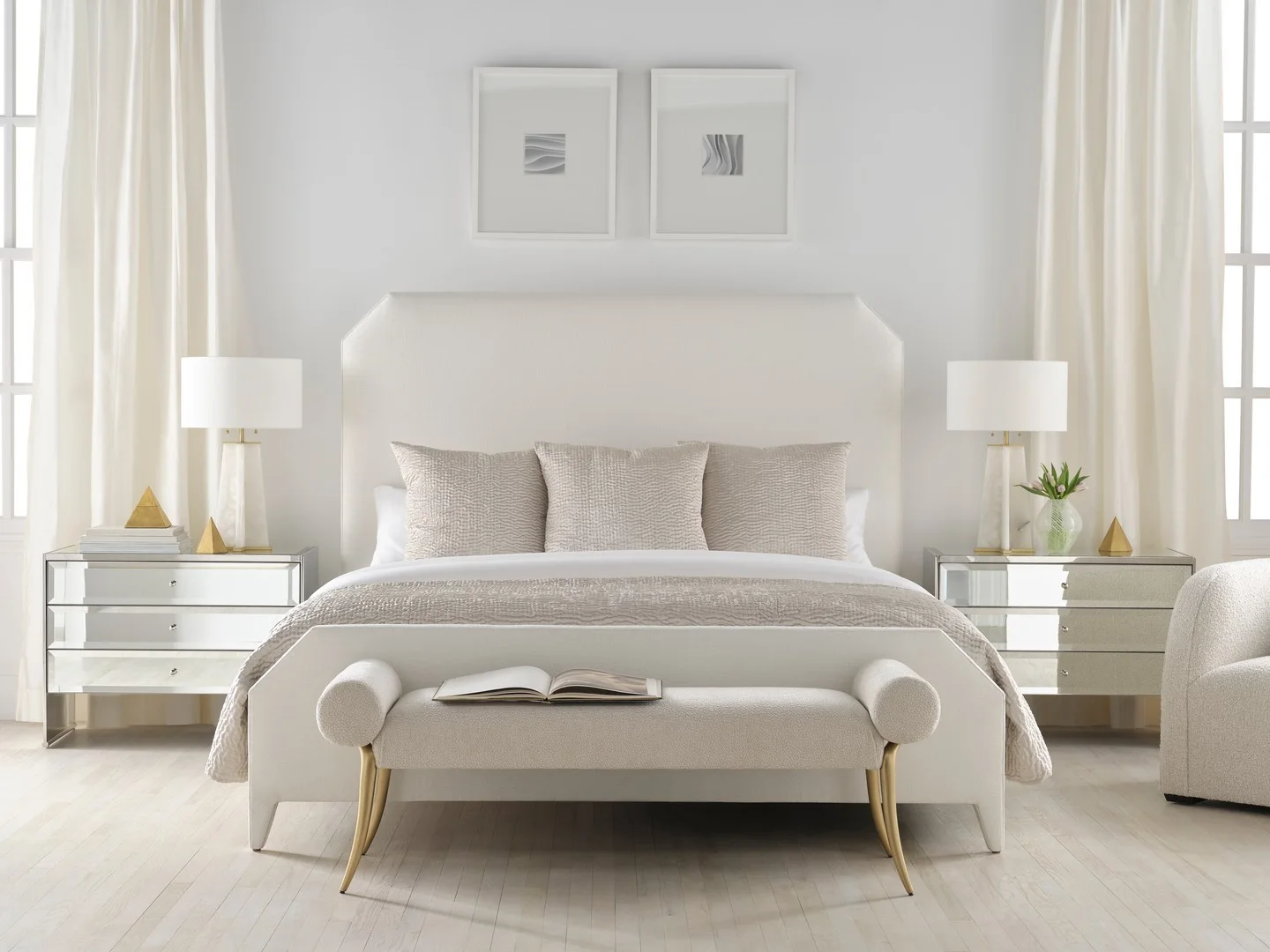
A bed floated off-center unbalances the whole room. Off-axis placement steals walkway from one side, crams the other, and makes even beautiful furniture look temporary. The headboard belongs flat against the longest wall, centered, with equal breathing room on both sides.
Set the headboard against the longest wall first, and center the bed on that wall. Keep one walkway of twenty-four to thirty inches on each side, wide enough for sheet changes and nightly traffic. This fixed route stays clear beside the bed, and every other piece earns its place around the layout you set here.
| Layout Element | Measurement or Rule |
|---|---|
| Headboard position | Centered on the longest wall |
| Side walkways | 24 to 30 inches on each side |
| Nightstands | One per side, inside the walkway edge |
| Door swing | 36-inch arc stays completely clear |
9. Choose Nightstands That Match Your Bed Width
credit: @arhaus
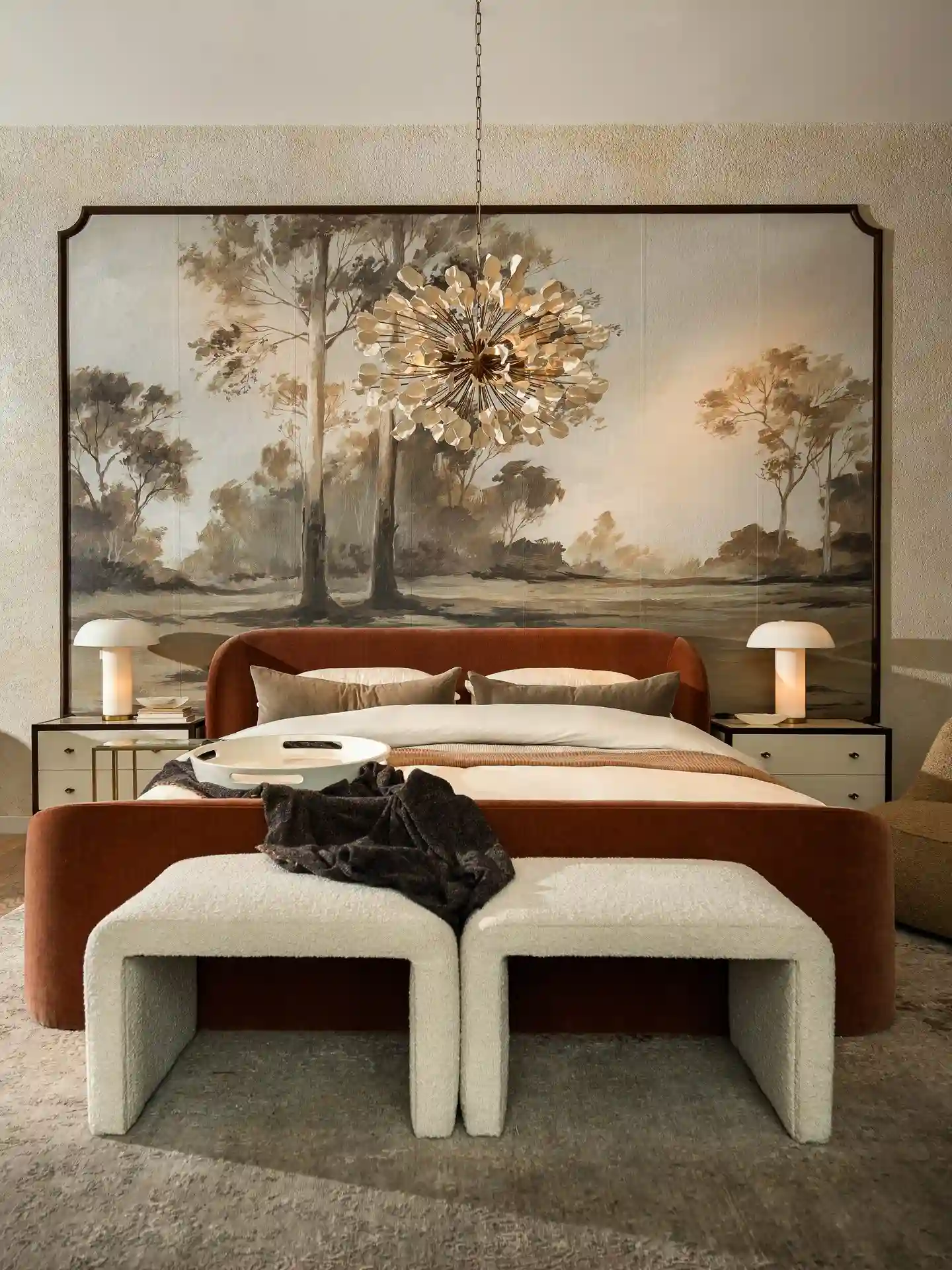
Mismatched nightstands break the bed wall's symmetry. One bulky table and one tiny stool pull the eye sideways, waste surface on one side, and starve the other. A matched pair sized to the bed restores balance and gives both sleepers equal storage.
Choose a matching pair of nightstands sized from the table below. Set each top within two inches of your mattress top, so books, water, and a clock sit at natural reaching height. A drawer plus one open shelf per side holds every nightly essential without crowding the surface you style in Tip 19.
| Bed Size | Nightstand Width to Choose |
|---|---|
| Twin, 38 inches | 16 to 20 inches each |
| Full, 54 inches | 20 to 24 inches each |
| Queen, 60 inches | 24 to 28 inches each |
| King, 76 inches | 28 to 32 inches each |
10. Add a Bench at the Foot of the Bed

credit: @herhavendesign
An empty bed foot leaves the room's center unfinished. The eye stops at the mattress edge, and the bed floats without an anchor between sleep zone and walkway. A bench closes that gap, adds a seat for dressing, and catches throws and tomorrow's outfit.
Add one bench at the foot of your bed. Choose a bench twelve inches narrower than your mattress and about eighteen inches tall, priced from eighty to two hundred fifty dollars. Keep at least twenty-four inches of open floor beyond the bench, so the walkway around the bed stays clear at all times.
| Bed Size | Bench Width to Choose |
|---|---|
| Twin, 38 inches | 26 inches |
| Full, 54 inches | 42 inches |
| Queen, 60 inches | 48 inches |
| King, 76 inches | 64 inches |
11. Arrange the Dresser Opposite the Bed

A dresser crammed beside the bed crowds the sleep zone. Drawers open into walkways, tops collect clutter at pillow height, and the room's storage wall stays empty. The dresser belongs opposite the bed, where its top surface doubles as a second styling stage.
Place the dresser flat against the wall opposite your bed. Keep thirty-six inches between the dresser front and the bed foot or bench, so drawers open fully and you stand comfortably in the gap. Style the dresser top with the grouping rule from Tip 19, and the storage wall earns a decorative role too.
Another helpful next step is our roundup of home decor.
Cozy Bedroom Decor Ideas for Textiles and Soft Layers
Textiles carry the cozy half of every bedroom. These cozy bedroom decor ideas layer bedding, cushions, throws, and curtains in your palette, so the room feels soft and finished instead of hard and echoing.
12. Layer Bedding in Three Textures

Flat bedding makes the bed look like storage. A single smooth duvet with no texture reads as a showroom spare, not a place anyone sleeps in nightly. Three layered textures build the deep, inviting surface that defines every styled bedroom photograph.
Layer your bedding in three textures today. Start with smooth cotton sheets, add a linen or waffle-knit duvet, and finish with one velvet or faux-fur throw across the foot. A full bedding set in your palette runs sixty to one hundred fifty dollars and delivers the strongest visual change per dollar in this guide.
| Layer | Material or Texture to Use |
|---|---|
| Base sheets | Smooth cotton, lightest palette color |
| Duvet or comforter | Linen or waffle knit, mid palette tone |
| Throw | Velvet or faux fur, accent color |
| Cushions | 18-inch squares, one row only |
13. Style the Bed with Two Pillow Rows
credit: @visualcomfort
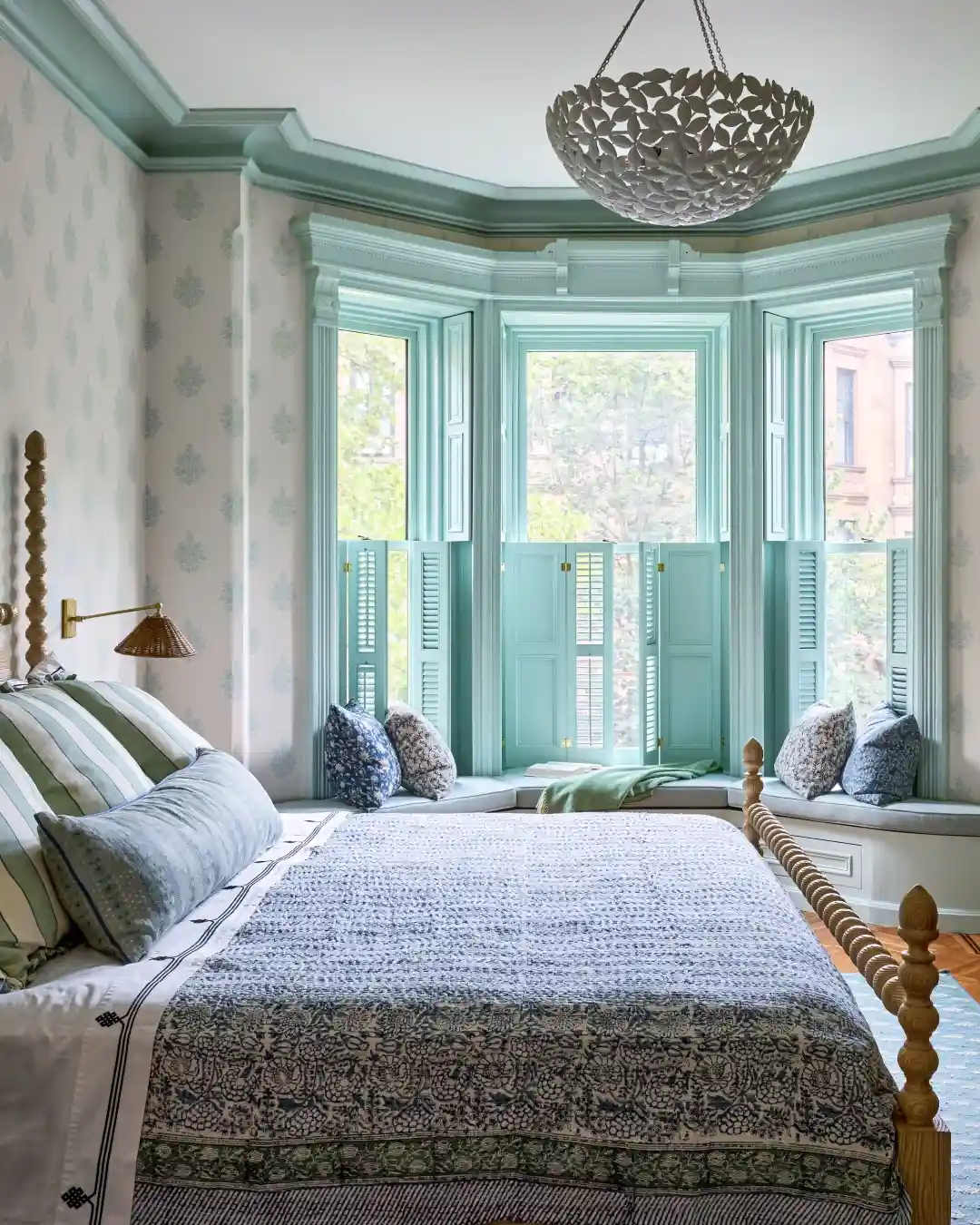
Pillow towers consume the bed they decorate. Three or four rows of cushions eat sleeping space, demand daily rebuilding, and topple into a heap by evening. Two disciplined rows deliver the styled middle ground, giving your bed structure without stealing one inch of sleep surface.
Stand two sleeping pillows upright against the headboard now. Add one front row of eighteen-inch cushions: one on a twin, two on a full or queen, and three on a king. This routine takes two minutes each morning, and the room looks finished before you leave for work.
14. Add a Throw Across the Foot of the Bed

credit: @alyasmiiin
A bare bed foot looks cold and unfinished. Without a final layer, the bedding ends abruptly and the eye slides off the bed onto the floor. One folded throw adds the accent color, a soft texture break, and a pulled-together finish in thirty seconds.
Fold one throw to one-third of its width. Drape it across the foot of the bed, slightly off-center, and let the ends fall evenly on both sides. Use your palette's accent color here, because the throw repeats that ten percent accent at the room's visual center.
15. Hang Curtains Six Inches Above the Frame

Low curtains chop your walls at the wrong height. A rod mounted at the frame top stops the eye early, compressing ceiling height and shrinking the window visually with it. Curtains hung near the ceiling stretch the wall upward and frame your window as a tall, architectural feature instead.
Raise your curtain rod six inches above the frame. Extend the rod six to eight inches beyond each side, let panels end half an inch above the floor, and budget forty to ninety dollars per pair. Open panels now expose full glass, and daylight reaches farther across your bed during the brightest morning hours.
Renters reach the same raised height with adhesive brackets, because a tension rod only fits inside the frame and a ceiling rail needs drilling. Pick brackets rated above the curtain weight, and use lightweight panels so the adhesive holds.
| Rod Position | Visual Result |
|---|---|
| At the frame top | Wall reads at its shortest height |
| 6 inches above the frame | Window gains clear vertical emphasis |
| 2 inches below the ceiling | Maximum perceived wall height |
| Inside the frame | Window shrinks; avoid in bedrooms |
To keep building on this theme, see how home decor ideas handles a similar look in a different way.
Bedroom Lighting Ideas That Layer Ambience
Single-source lighting flattens every bedroom it touches. These bedroom lighting ideas build three layers at three heights, all in warm 2700K light, so the room works for reading, dressing, and winding down.
16. Layer Three Light Sources at Different Heights

credit: @brialem
One ceiling light flattens every bedroom corner. Single overhead light casts harsh shadows under furniture, kills texture on bedding, and leaves your room looking flat and dull. Three layered sources soften those shadows and add depth at every height.
Layer three light sources at three heights. Your ceiling fixture covers the top layer on a standard eight-foot ceiling; sconces sit near sixty inches, and a dresser lamp stays below forty-eight inches. Layered light also removes the need for bright overhead glare at night, and your wind-down routine feels genuinely calmer.
Your sconces from Tip 6 already cover the wall layer. Add only the missing layers instead of replacing lights that already work.
17. Switch Every Bulb to Warm 2700K

credit: @prabha_vilagelife_style
Mixed bulb temperatures make rooms feel unsettled. One cool white lamp beside one warm lamp splits the palette, grays your paint color, and breaks the calm your textiles built. One warm temperature across every fixture unifies the room after dark.
Switch every bulb in the room to warm 2700K. Choose bulbs between four hundred fifty and eight hundred lumens each, bright enough for reading and dressing without glare. Matching temperature stops one lamp from graying your palette while another warms it, so your colors stay close to the swatches you chose.
18. Add a Dimmer for Evening Light Levels
credit: @jeehyun._
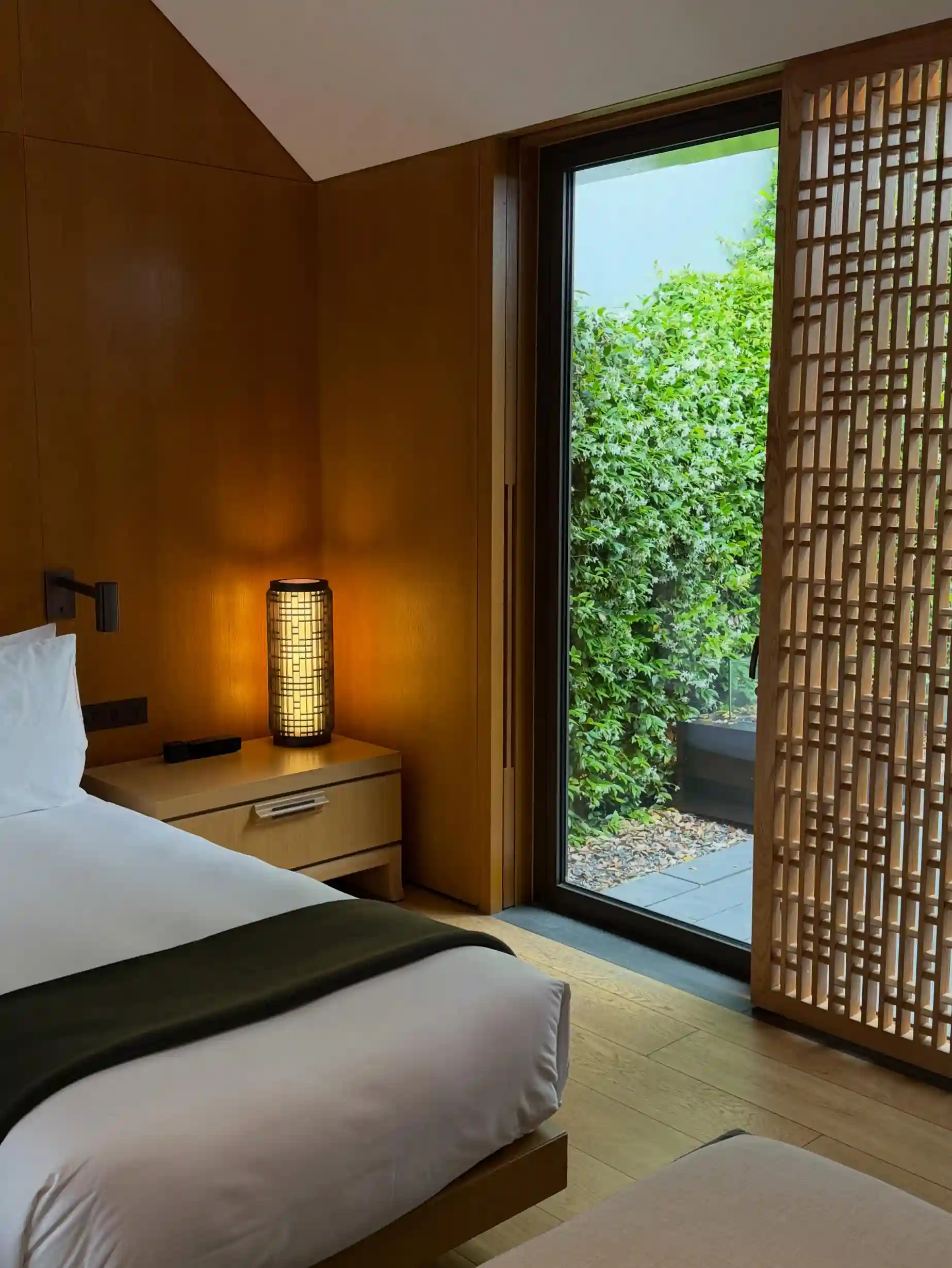
Full-bright light at bedtime fights your sleep. Overhead fixtures stuck at one level blast the room during the exact hour your body prepares to rest. A dimmer hands you a lower gear, and the bedroom shifts from task space to rest space on demand.
Add a dimmer switch or smart bulbs to your main light. Drop the room to its lowest third of brightness after sunset, and keep one low lamp on for reading until lights-out. This one change costs less than a dinner out and pays you back every single night in calmer evenings.
| Time of Day | Light Setting to Use |
|---|---|
| Morning dressing | Ceiling light on full, 450 to 800 lumens |
| Evening reading | Sconces only, shades angled down |
| Wind-down hour | Dimmer at 30 percent, one low lamp |
| Night | All off except one low lamp below 48 inches |
Bedroom Styling Ideas for a Polished, Finished Look
Styling separates decorated rooms from furnished ones. These bedroom styling ideas finish surfaces, greenery, and the floor, using the palette and focal point you fixed in the foundation steps.
19. Group Surface Decor in Threes

credit: @_havensent_
Scattered single objects read as clutter, not decor. A lone candle here and a lone frame there give the eye no pattern, and every surface looks accidentally filled. Groups of three create instant rhythm, and styled surfaces finally look deliberate instead of random.
Group decor in threes on every styled surface. Set one tray as the base, then add one tall item, one mid item, and one low item inside it. Leave at least half of every surface empty, because negative space is what makes the grouped third read as styling.
20. Place One Plant Beside the Window
credit: @alphina_seopa
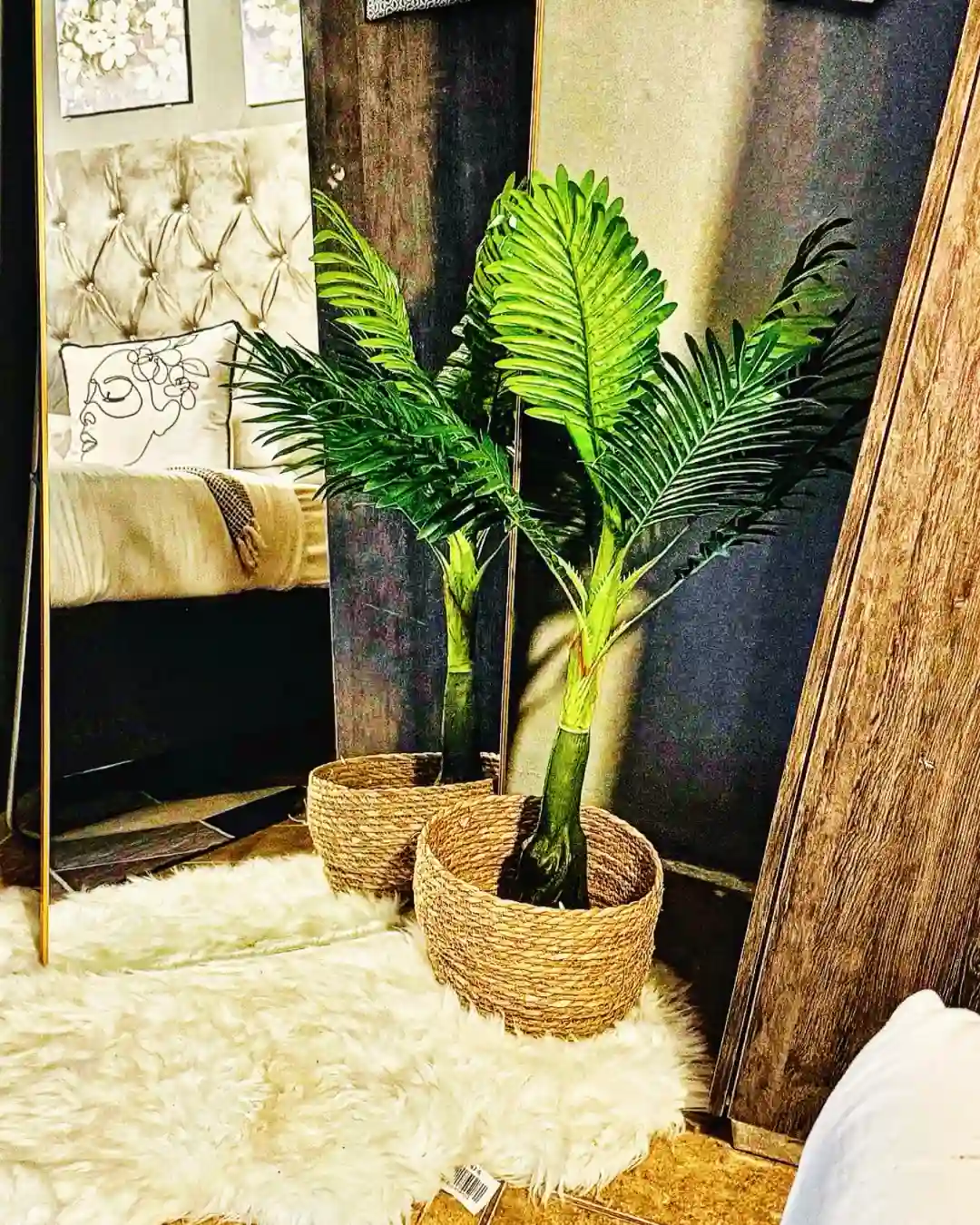
Bedrooms without greenery feel sealed and static. Paint, fabric, and wood all sit still, and the room misses the one living texture that softens hard furniture lines. A single plant beside the window adds that life without turning your sleep space into a greenhouse.
Place one plant beside your window today. Choose a snake plant or pothos for steady growth in bedroom light, and set the pot on a saucer to protect the floor. Keep leaves clear of the bedding, and water a snake plant every two to three weeks, only when the soil dries fully.
Both plants are toxic to pets when eaten, so pet homes keep them on a high shelf or choose a parlor palm instead.
21. Anchor the Bed with One Area Rug
credit: @andrewjhow
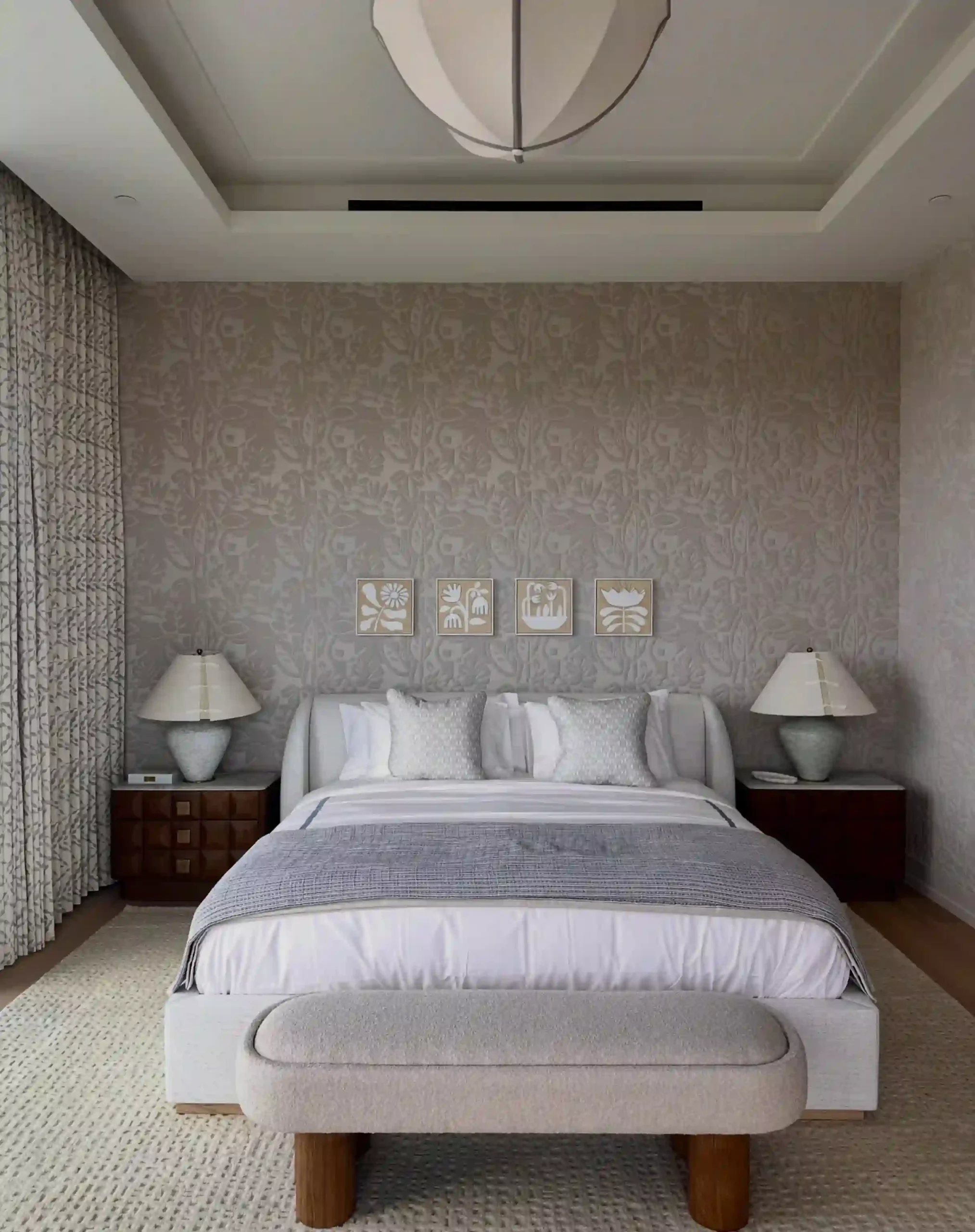
Bare floors leave the bed floating visually. Without a rug, the bed, nightstands, and bench sit as separate islands on one hard surface, and the room echoes. A correctly sized rug ties the sleep zone into one grounded unit and softens every step.
Slide one area rug under the lower two-thirds of your bed today. Center it so a border shows on both sides and past the foot; on a queen, an eight-by-ten rug leaves eighteen inches of border on each side. Rugs in this size run from one hundred twenty to four hundred dollars, and the warmth underfoot greets you every morning.
Size your rug with small bedroom ideas if your room runs under one hundred ten square feet.
| Bed Size | Rug Size to Buy |
|---|---|
| Twin, 38 inches | 5 by 8 feet |
| Full, 54 inches | 6 by 9 feet |
| Queen, 60 inches | 8 by 10 feet |
| King, 76 inches | 9 by 12 feet |
Bedroom Organization Ideas That Keep Decor Beautiful Daily
Decor decays without daily habits behind it. These bedroom organization ideas hold your styling in place with three small routines, so the room you finished this week still looks finished next season.
22. Establish a Five-Minute Nightly Reset Routine

Morning chaos starts the night before. Clothes land on the bench, books spread across the nightstand, and yesterday's clutter greets you before your eyes adjust. A five-minute nightly reset returns every item to its styled position while the effort still feels tiny.
Set a five-minute timer before bed tonight. Return clothes to the closet, books to the nightstand shelf, and chargers to their basket, then smooth the throw across the bed foot. This small loop protects every styling choice in this guide, and you wake inside the finished room you paid for.
23. Remove One Item for Every New Purchase
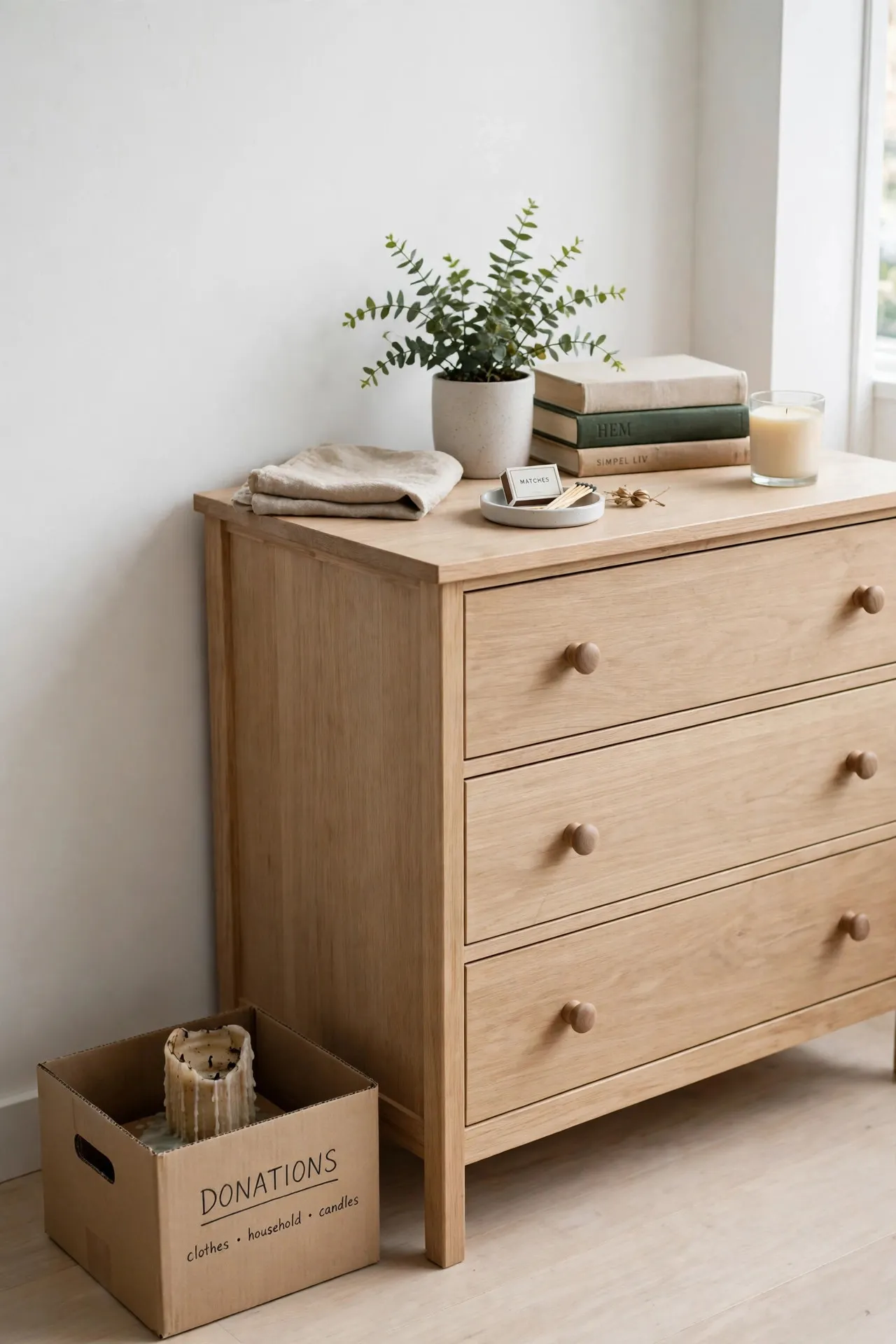
Decor accumulates faster than rooms grow. Every new candle, frame, and cushion sneaks in without removing an old one, until styled surfaces quietly become storage. A strict one-in, one-out rule holds your object count exactly where your styling set it.
Drop one outgoing item into a donation bag today. Match sizes honestly: one new sweater removes one old sweater, and one new lamp removes one old lamp. Your storage stays within its limits, and every purchase decision sharpens because each item must beat the piece it replaces.
24. Switch One Surface Display Every Season
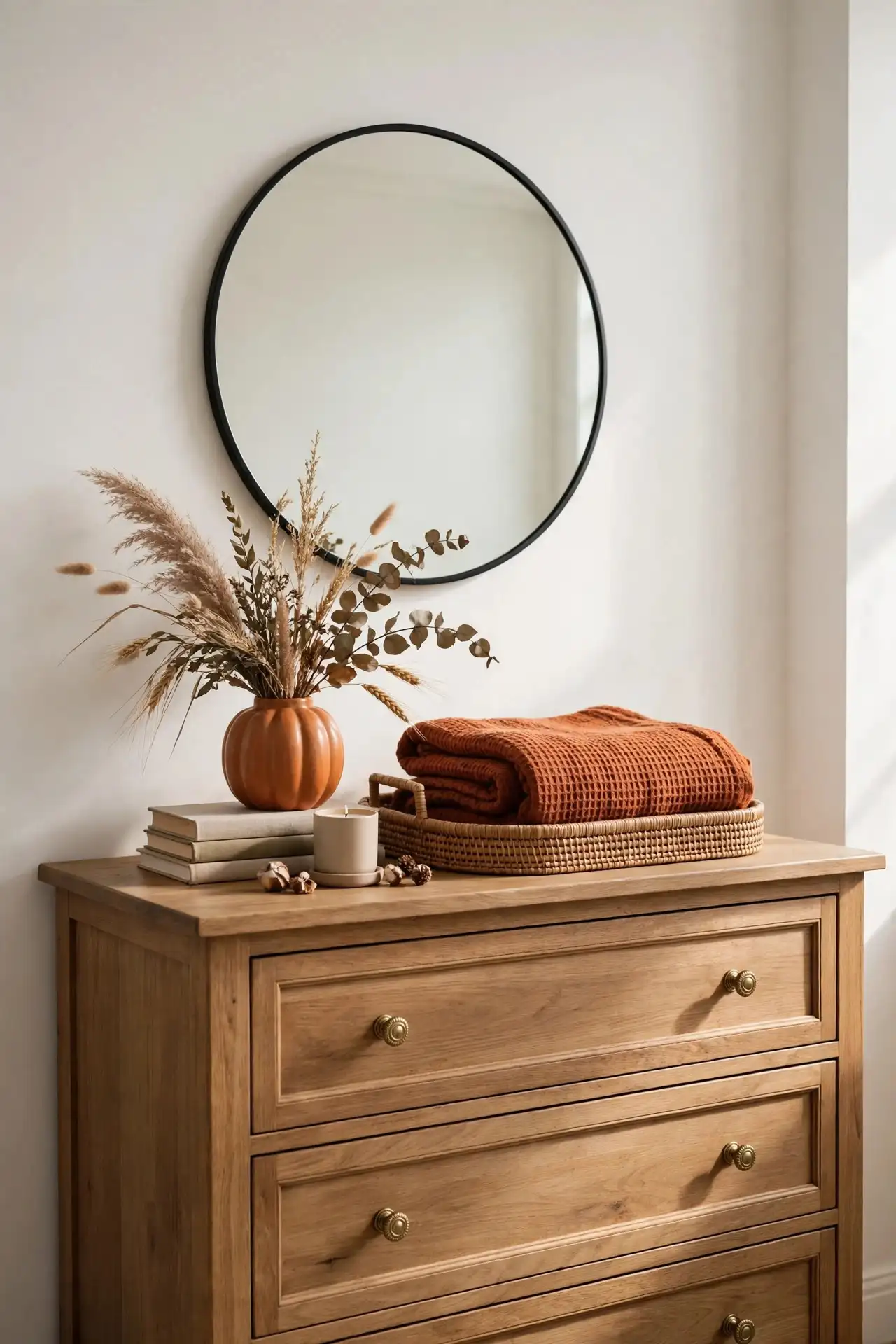
Rooms styled once slowly go invisible to you. The same grouping sits untouched for a year, dust settles into the arrangement, and the decor stops registering as pleasure. One seasonal switch refreshes a single surface and makes the whole room feel newly styled again.
Switch one surface display at the start of each season. Swap the throw color, the plant, or the grouped objects on one dresser or nightstand, and leave every other surface untouched. Four small switches a year keep the room feeling current, and your palette absorbs each accent without a full redecoration.
| Season | One Switch to Make |
|---|---|
| Spring | Light cotton throw in the accent color |
| Summer | Remove one bedding layer, add a green plant |
| Autumn | Warm-toned vase or dried grasses on one surface |
| Winter | Velvet throw and one candle grouping |
Common Bedroom Decor Mistakes That Make Rooms Feel Unfinished
| Mistake | Fix With Numbers |
|---|---|
| Dark paint on all four walls | Limit dark color to the bed wall; keep three walls light |
| One ceiling light for the whole room | Layer three sources at ceiling, wall, and surface height |
| Rug that stops at the bed edges | Buy the next size up; a border must show on both sides and past the foot |
| Buying one full matching furniture set | Mix two wood tones; identical sets read as a showroom floor |
Bedroom Decor Ideas by Room Type and Situation
Your room type changes the order of attack, never the rules. Apply the same palette, measurements, and light principles through the filter that matches your situation below.
Primary Bedroom Decor Ideas for Two People
Two sleepers double the styling load, not the floor space. Split every drawer, shelf, and nightstand surface exactly fifty-fifty, and give each side of the bed its own nightstand and wall sconce. One shared palette and matching bedding keep the room unified, and duplicated zones end the nightly fight over surfaces.
Small Bedroom Decor Ideas for Tight Spaces
Small rooms reward the same rules at tighter measurements. Choose a full bed under one hundred ten square feet and a queen from one hundred ten upward, and protect the twenty-four to thirty inch walkway on both sides. Sconces replace table lamps, the dresser mirror faces the window, and every surface keeps the half-empty rule from Tip 19.
Bedroom Decor Ideas for Renters Without Drilling
Renters gain the full look with zero permanent holes by choosing the renter version of each upgrade. Swap drilled sconces for clip-on lamps or adhesive-mounted plug-in sconces, and hang curtains on adhesive brackets with lightweight panels only. Peel-and-stick wallpaper goes up after the overnight test corner from Tip 7, and photographing each wall before you start protects your deposit.
Guest Bedroom Decor Ideas on a Budget
Guests judge a room by sleep quality and surface space. Spend the refresh budget in this order: one accent wall, a layered bedding set, curtains, and one art piece, all inside two hundred fifty to six hundred dollars. Clear one nightstand surface fully, add the bench for luggage, and your spare room reads as a welcoming guest room instead of storage overflow.
If this style appeals to you, living room decor ideas offers more ways to carry the same look through your home.
For a related look, take a look at bathroom decor ideas and borrow the details that fit your space.
Frequently Asked Questions
How do I decorate a bedroom from start to finish?
Measure the room first, fix a three-color palette, and set one focal point on the bed wall. Then work through walls, furniture, textiles, and layered light in that exact order, because each stage narrows the choices in the next one.
What should you not do when decorating a bedroom?
Never buy furniture before measuring the room, never paint all four walls dark, and never rely on one ceiling light. Each of these three errors shrinks the room visually, blocks light, or locks clutter into your daily routine.
How to decorate a bedroom on a budget?
Start with paint, bedding, curtains, and one art piece, in that exact order. This starter list lands between two hundred fifty and six hundred dollars for most rooms and delivers the strongest visual change for the money in this guide.
How do I decorate a small or rented bedroom?
Choose a full bed under one hundred ten square feet, mount sconces instead of table lamps, and hang curtains on adhesive brackets. Add peel-and-stick wallpaper after a test corner, and the room gains color, height, and light without a single drilled hole.
What colors go best in a bedroom, warm or cool?
Build the base from warm whites and warm neutrals, because warm tones read softer after dark and flatter skin in lamplight. Cool colors work as the ten percent accent inside your palette or across the single accent wall, never across all four walls.
How often should you update bedroom decor?
Switch one surface display at the start of each season, following Tip 24. Repaint only when the finish fades or your palette changes, because the layered pieces carry the refresh work between paint jobs.
Do dark colors work in a bedroom?
Yes, dark color works on exactly one wall behind the bed. Three light walls reflect daylight around it, and the dark wall gains depth instead of shrinking the whole room.
How much does it cost to redecorate a bedroom?
A basic refresh using this guide costs two hundred fifty to six hundred dollars with paint, bedding, curtains, and art bought in that order. With a bench, a rug, and new nightstands added, the total runs eight hundred to fifteen hundred dollars.
How do I keep my bedroom looking styled every day?
Run the five-minute nightly reset and the one-in, one-out purchase rule without exceptions. These two habits hold your object count steady, and steady object counts keep every styled surface clear.
Conclusion
A finished bedroom is a sequence, not a shopping trip. Measure first, lock the palette, crown one focal point, and then let walls, furniture, textiles, and light each do their single job. Start with Tip 1 today, finish one section at a time, and layer the finishing touches from cozy bedroom ideas once your base feels solid. Your room ends calm, balanced, and styled on purpose, every single day you wake up in it.


One Comment