
Thrifted Home Decor: 31 Proven Ways to Furnish With Found Treasure
Thrifted home decor is a skill disguised as shopping: reading bones through bad finishes, spotting real materials under decades of dust, and knowing which flaws are five-minute fixes and which are forever. The thrifted home that looks designed rather than donated runs on the same laws as every home in this series: one palette, one material family, honest materials, and editing with a cold eye. The difference is the supply chain: estate sales, charity shops, flea markets, curbs, and the family's own attics, all feeding a home that costs a fraction of retail and means ten times as much.
As professional interior designers consistently find, second-hand pieces anchor rooms successfully when about 80 percent of them share the home's palette and material discipline, letting the remaining finds be wild cards with stories. Hunt with the palette card in your pocket, judge bones before beauty, and rescue in the ladder's order: clean, repair, refinish, re-cover.
Before You Begin: 3 Foundation Steps for Thrifted Home Decor
1. Carry the Palette and Measurements Everywhere You Hunt

credit: @thedesignfiles
Thrifting rewards the prepared hunter: the house palette card and material list in your phone, the measurements file (wall widths, door swings, the rug islands, ceiling heights, the car's cargo dimensions), and a tape measure on your person. Most thrift regrets are measurement failures wearing the costume of bargains. A piece that cannot enter the house or fit its wall is not a deal at any price.
Photograph your rooms' empty spots with the measurements written on sticky notes in the frame; the phone then holds the wall and its numbers together. Keep a 'wanted' list ranked by the queue so enthusiasm has a supervisor. The car's dimensions are the final law, and veteran hunters know them to the inch.
2. Learn to Read Materials: Solid, Veneer, and Honest Fakes

credit: @natalieanncandace
The thrift skill that pays forever is material literacy: solid wood (weight, grain continuing around edges, joinery), veneer (thin grain sheets over substrate, fine when intact), particleboard in costume (paper-thin printed grain, swollen edges), real brass (heavy, warm, non-magnetic in the classic alloys), silver plate, stoneware, wool. Buy the real at costume prices because the shelf mislabeled it; leave the costume at any price.
Dovetails, mortises, and screws (not staples) announce furniture built to be repaired, which is the thrift hunter's favorite sentence. Smell matters: mildew and smoke price a piece's true cost in cleaning hours. The magnet in your pocket tests 'brass' and 'stainless' claims in one touch.
| Material Signal | Verdict |
|---|---|
| Grain wraps the edge, dovetails | Solid, buy with confidence |
| Veneer intact, heavy carcass | Fine bones, rescue freely |
| Printed grain, swollen edges | Costume, leave it |
| Heavy, warm, magnet shrugs | Real brass family |
3. Set the Rescue Order: Clean, Repair, Refinish, Re-Cover

credit: @kyliekatich
Every find passes the ladder in order: a deep clean first (half of all 'ugly' thrift pieces are dirt in a costume), structural repair second (wobble, veneer lifts, loose joints), refinish third (paint, stain, oil), and re-cover or re-line last. Pieces are re-judged after cleaning, since the ladder's first rung transforms more finds than any other and costs soap.
Quarantine soft finds (upholstery, textiles) for cleaning before they meet the house's furniture; the ladder includes biosecurity. Keep a workshop corner where finds wait their turn in the ladder's queue, photographed on arrival. Pieces that fail repair honestly become parts donors, an honorable second career.
| Ladder Rung | Cost |
|---|---|
| Clean | Soap and an afternoon |
| Repair | Glue, clamps, patience |
| Refinish | Paint or stain money |
| Re-cover | Fabric and staples |
Hunting Grounds and Habits
4. Work the Sources in Order: Estate, Charity, Flea, Curb, Attic

credit: @candycoloredhome
Each source has a character: estate sales for whole-room quality and real wood, charity shops for volume and textiles, flea markets for character pieces and negotiation, curbs and free listings for the brave and the quick, and the family attic for pieces whose stories arrive pre-installed. Hunt each on its rhythm (estate mornings, charity restock days, flea season) and the supply becomes a system rather than luck.
Estate sales list photographs online days ahead; arrive with targets, not hopes. Charity shops near wealthy neighborhoods stock the castoffs of quality, a geography lesson every hunter learns once. The attic's pieces carry the highest story value in the entire supply chain and should be claimed before siblings visit.
5. Hunt by Category Lists, Not by Browsing

Browsing fills carts; lists fill homes. Hunt with the notebook's wanted list (the lamp pair, the entry bench, frames in the family sizes, wool blankets in the palette) and scan shelves by category shapes rather than by wandering attention. The list keeps budgets aimed, cars unfilled with maybes, and the palette law enforced at the only moment it matters, which is before payment.
Shapes scan faster than objects: look for the silhouette (the lamp's curve, the frame's profile) down a whole aisle in seconds. Staff friendships are a supply channel; shops set aside for regulars whose wants are known and whose manners are good. Leave your list with the good shops and the supply starts hunting you.
6. Judge Furniture by Bones: Structure, Scale, and Silhouette

Furniture verdicts in ninety seconds: sit, rock, lift, open. The frame must be square and silent, drawers must run, legs must be sound or plainly repairable, scale must match the measurements file, and the silhouette must earn its room even before refinishing. Upholstery and finish are costumes; bones are the actor. A beautiful silhouette with sound bones is a bargain at twice the ticket.
Photograph candidates beside a known-size object (your shoe, the tape) for scale evidence at home. Wobble from loose joints is glue's work; wobble from broken frames is a pass. The silhouette test: squint until the piece is a shape, and ask whether the shape improves the room's skyline.
| Ninety-Second Test | Pass Mark |
|---|---|
| Sit and rock | Square and silent |
| Drawers and doors | Run true, hang straight |
| Legs and joints | Sound or glue-fixable |
| Silhouette squint | The shape earns the room |
7. Buy Textiles by Fiber and Weight: Wool, Linen, Cotton, Real Leather

credit: @lilswalty
Thrifted textiles are the supply chain's bargains when bought by fiber: wool blankets and rugs (heavy, warm, moth-checked), linen curtains and tablecloths (weight in the hand), cotton quilts with honest stitching, leather in good hides. Synthetics age in dog years; natural fibers age in human ones, which is why the fifty-year-old wool blanket outperforms the five-year-old acrylic on every sofa it meets.
Check textiles against the light for thin spots and hold them for the smell verdict before the fiber celebration. Moth damage in one corner of a large wool piece trims away; in the center it is a pass. Wash or freeze finds by the quarantine rules before they join the house's linen family.
8. Collect Frames, Mirrors, and Lamps as Infrastructure

credit: @smallcountryhome
Certain categories are the thrift economy's infrastructure and should be bought ahead of need whenever the family profile appears: frames in the house's frame family and sizes, mirrors with sound glass, lamp bases in pairs or promising singles, and brass or ceramic vessels. Infrastructure bought cheap in advance turns later finds (art, prints, photographs) into finished walls in minutes.
Mirror glass with edge fog alone can be re-silvered or reframed as art backing; deep scratches are passes. Lamp pairs are rarer than singles, so singles in the family finish get bought with a twin hunt opened in the notebook. Wire and socket condition are a lamp's bones; shades are costumes replaced at leisure.
9. Spot the Sleeper Categories: Brass, Stoneware, Baskets, Books

credit: @loganlists
Four categories hide value in plain sight at thrift prices: solid brass (candlesticks, hooks, hardware) priced as 'gold-tone', stoneware and studio pottery signed on the base, woven baskets in real fibers, and beautiful books whose cloth bindings decorate shelves their contents already dignify. These are the hunter's dividend stocks, bought steadily whenever the palette admits them.
Turn pottery over; the signature lives on the base and so does the value. Baskets in real fiber outlast their plastic imitators by decades and take stains and paints gratefully. Books bought for bindings should also pass the household's conscience: beautiful and unreadable is set dressing, beautiful and beloved is a library.
| Sleeper Category | Tell |
|---|---|
| Solid brass | Heavy, warm, priced as gold-tone |
| Studio pottery | Signed on the base |
| Real-fiber baskets | Weight and weave |
| Clothbound books | Bindings that decorate |
Another take worth browsing is 11 Ways to Spruce Up Thrift Store Holiday Decor over at Bob Vila.
Rescuing and Placing the Finds
10. Clean Finds Like a Conservator: Gentle First, Stronger by Evidence

Cleaning is the ladder's transformative rung and its most dangerous: start with the mildest agent (warm water, a drop of soap, soft cloths), test hidden corners, and escalate only on evidence. Wood drinks oil soaps and wax; metals take their specific polishes; textiles wash by fiber law. Half the finds in any workshop are finished at this rung, gleaming, their 'damage' rinsed down the drain.
Sunlight and air are cleaning agents too: an afternoon outdoors cures many smells that chemicals only mask. Photograph before cleaning; the transformation album is the hunter's portfolio and the household's entertainment. Never sand or strip before the clean verdict, since finishes condemned dirty sometimes turn out to be mahogany.
11. Refinish Wood by Its Rank: Oil, Paint, Stain, or Leave the Patina

credit: @thefliphut
Wood refinishing follows the piece's rank and condition: handsome grain under grime gets cleaned and oiled; sound grain in the wrong color gets stained or gel-stained toward the family; damaged or mismatched wood gets paint in the palette; and true antique patina, earned honestly over decades, gets left alone with respect. The beginner's error is painting everything; the curriculum's law is that grain is wealth and paint is for the pieces whose wealth is elsewhere.
Test finishes on the piece's underside, always, in the room's own light. Paint over failing finish fails again on schedule; preparation is the refinish. Keep a samples board of the house's stains and paints so rescues match the family without new purchases.
12. Re-Cover and Re-Line Soft Finds Safely
credit: @erinmcgregor123
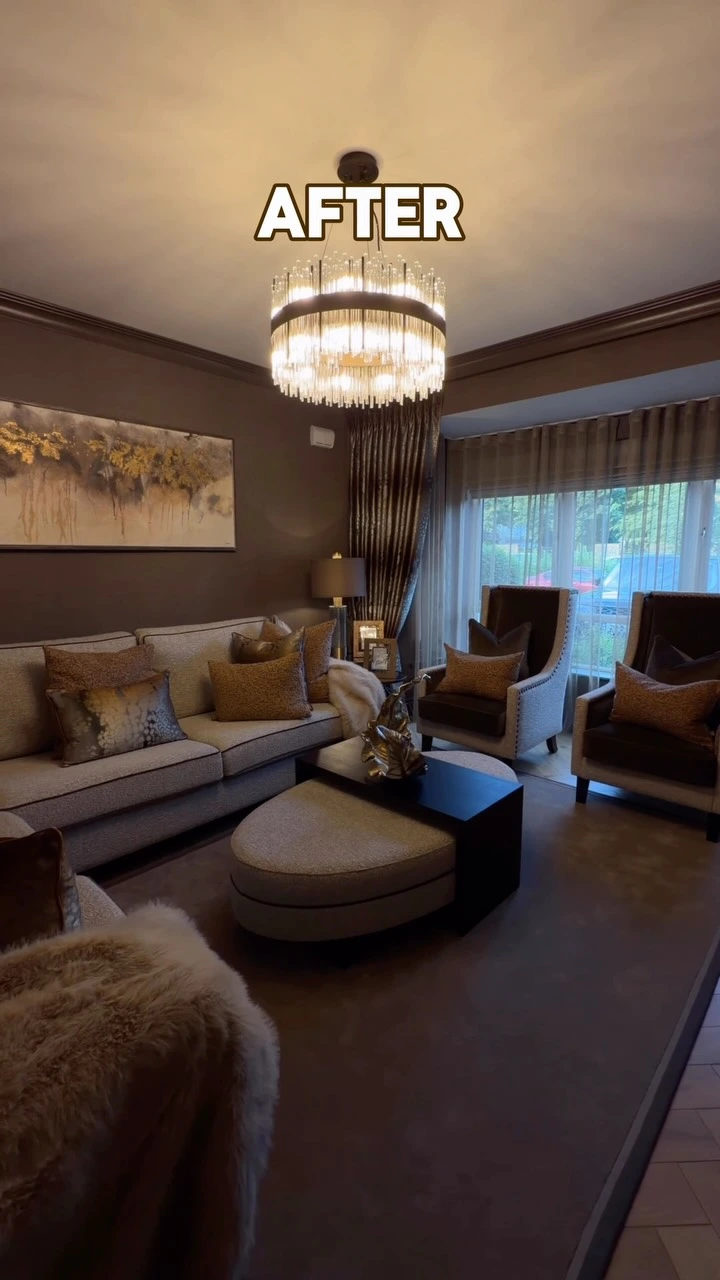
Thrifted upholstery joins the house after quarantine and cleaning, with re-covering as its promotion: dining seats and simple cushions by staple gun, throws and blankets washed into the rotation, quilts aired and mended. Deep upholstery projects (the full armchair) belong to the advanced tier or to a professional whose fee still leaves the piece a bargain.
Foam older than its dignity gets replaced, not re-covered; the new foam is the comfort the fabric advertises. Keep a sample of every covering fabric in the notebook against future repairs. Children's and pets' furniture may take the thrifted route most freely, since their service lives are glorious and short.
| Refinish Rank | Treatment |
|---|---|
| Handsome grain, dirty | Clean and oil |
| Sound grain, wrong color | Stain toward the family |
| Damaged or mismatched | Paint in the palette |
| Honest antique patina | Leave it alone |
13. Place Finds by the Hero Rule: One Star Per Room

credit: @prestonkonrad
Thrifted rooms compose by the same law as maker rooms: one hero per room (the estate sideboard, the flea-market mirror, the attic quilt on the wall) with the other finds and the bought pieces supporting inside the palette. Two heroes argue in any currency. Rotate hero rank seasonally among strong finds to keep the collection alive and the rooms fresh without new hunting.
The hero earns the room's best light and its photograph position. Supporting finds follow the thirds and heights laws on shelves like any decor. A find that cannot stop arguing with the hero demotes to another room or to the rotation store, where its season will come.
14. Mix Eras Deliberately: Old Bones, New Softness

credit: @vchamlee
The thrifted house's signature mixture: old bones (furniture, vessels, frames) with new softness (mattresses, cushions' inners, fresh textiles where skin lives), and old textiles where they shine (quilts, wool) with new where hygiene rules (towels, sheets may be new in the palette). Era mixing succeeds when the palette referees and every era contributes what it does best.
Skin-contact and sleep infrastructure skew new; structure and story skew old. The mixture reads intentional when each category's assignment is consistent house-wide. Guests feel the logic without naming it, which is design working at its proper depth.
15. Style Shelves and Tables With Finds in Working Compositions

credit: @furniturevillage
Finds style like any decor when the laws hold: shelves in thirds (books, vessels, air), tables with a tray corral and a living piece, vignettes built from one hero object plus two supporters in descending heights. Thrifted objects carry texture and patina no new shelf can buy, so compositions should leave them room to be looked at rather than crowding them into flea-market reenactments.
Patina is texture; give it plain neighbors so it reads. Rotate shelf casts from the find store seasonally like the maker's store in the DIY curriculum. Photograph shelves after styling; the camera catches the flea-market drift that love defends.
| Composition | Find's Role |
|---|---|
| Shelf thirds | Books, vessels, air |
| Table tray | Corral plus one living piece |
| Vignette | Hero plus two supporters |
| Rotation | Seasonal casts from the store |
Rooms in Found Treasure
16. Furnish the Living Room From the Estate and Flea Circuit

credit: @allthepeachesplease
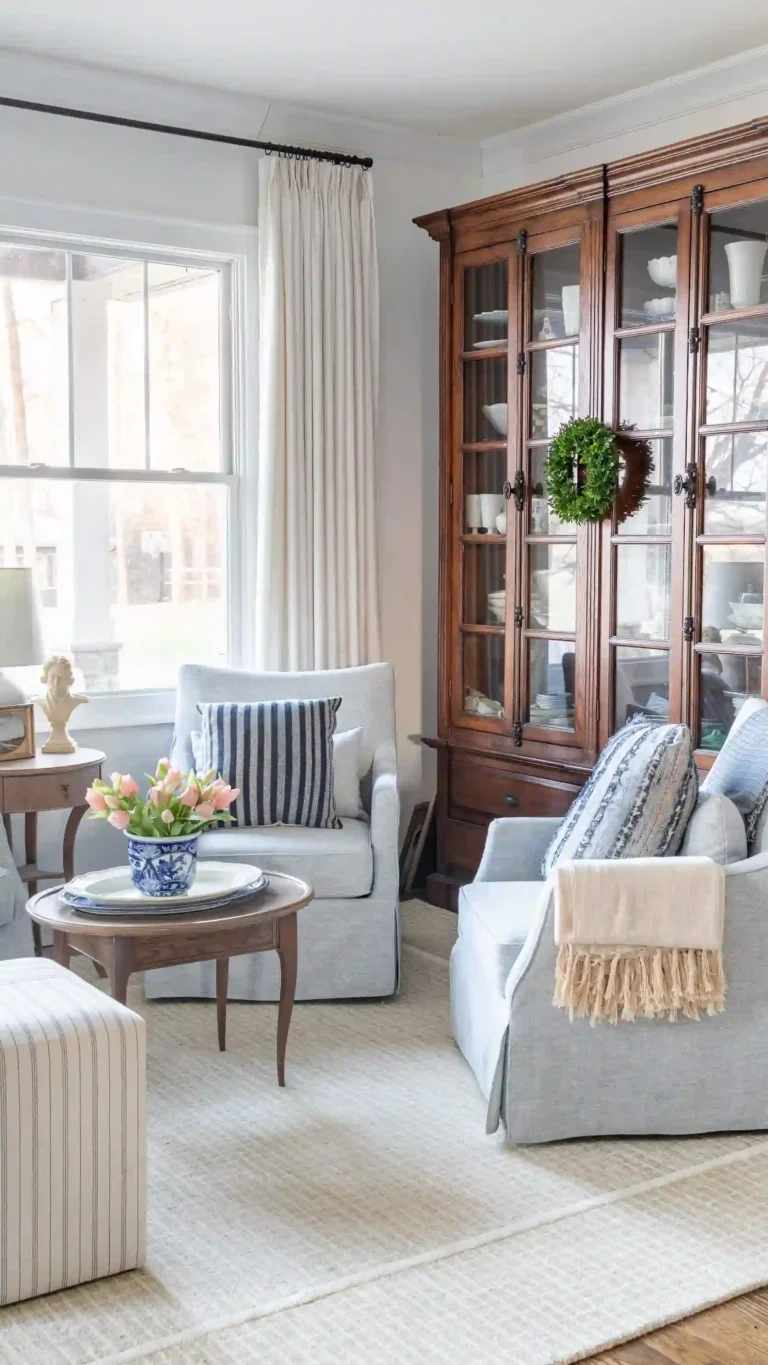
The living room is thrifting's showcase: the sofa may be bought new for comfort while everything around it is found (the sideboard, the coffee table with bones, lamps in pairs, the mirror, frames, the wool rug underfoot). Anchor the composition with the largest find and let the palette discipline make decades of origins read as one gathering.
Rugs are the living room's best thrift category by value per square foot; inspect for wear at the traffic lanes and budget the professional clean. Coffee tables forgive finishes, making them the safest first furniture rescue. The room's photograph should be unable to date itself within forty years, which is the found home's timelessness.
17. Build the Bedroom on an Heirloom Frame and Found Nightstands

credit: @loren
Bedrooms take the antique bed frame (bones that outlast fashion), nightstands rescued as a married pair, a dresser with running drawers, and textiles split by the era law (found quilts and wool, new sheets and pillows). The found bedroom sleeps with more story per dollar than any room in the house, and its pieces appreciate in meaning nightly.
Measure antique frames against modern mattresses before the romance commits; extensions and conversions exist but should be priced into the verdict. Married nightstand pairs (different finds united by paint and lamps) are the hunter's classic solution to the pair shortage. The dresser's drawers, lined with palette paper, become the room's scented order.
18. Dress Kitchen and Dining From Stoneware, Wood, and Linen
credit: @kjrensy
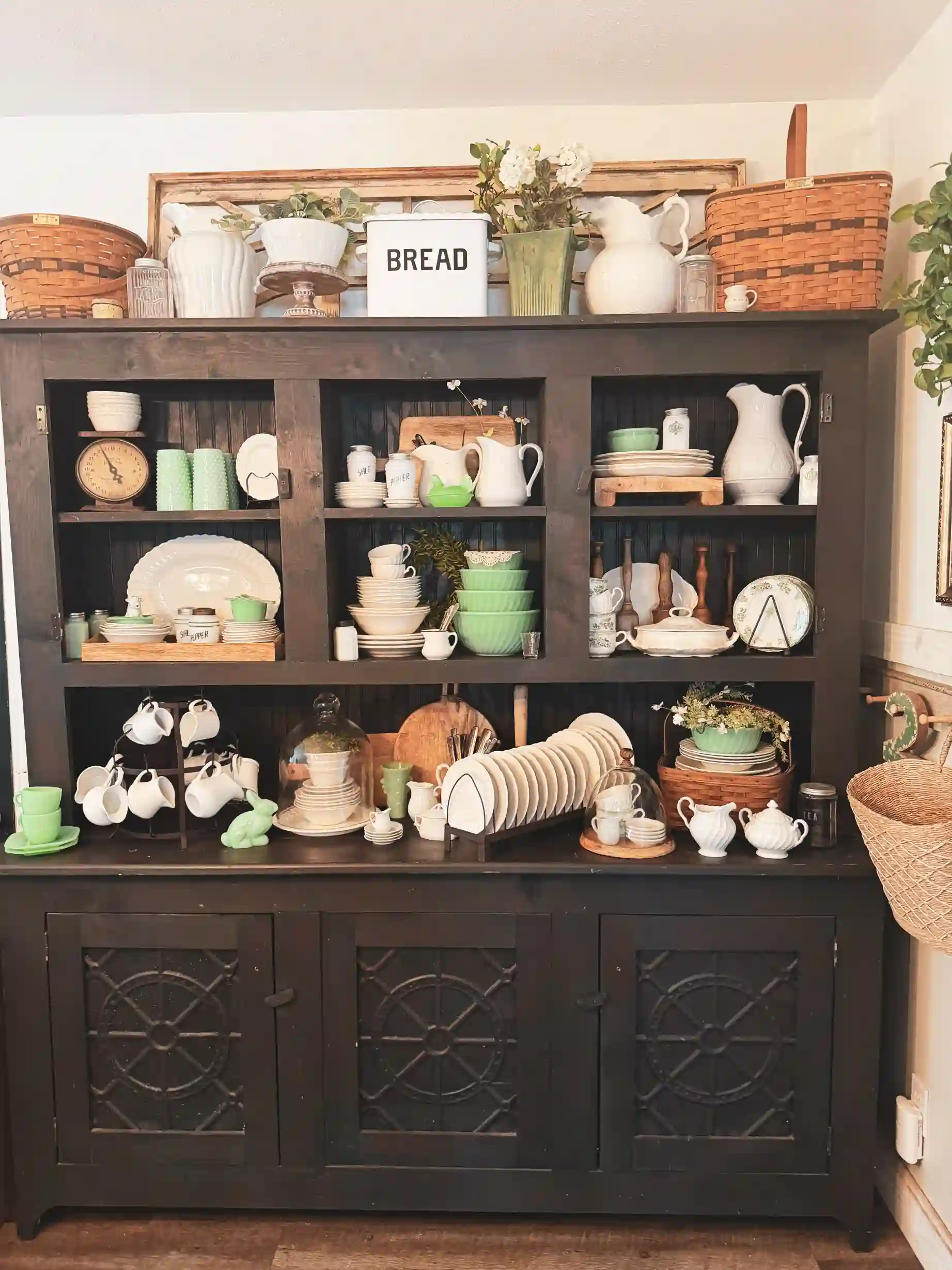
Kitchens and dining rooms are the thrift supply's home ground: stoneware and ironstone dishes, wooden boards and bowls, linen tablecloths and napkins in weights modern stores rarely stock, glass in real heft, and chairs rescued as re-covered sets. A dining table set entirely from finds, unified by palette and fiber, hosts dinners that retail cannot imitate at any budget.
Incomplete sets mix gracefully inside one color family (all white stoneware, all clear glass) in the gathered style's tradition. Chips at rims retire a piece to plant duty; chips at bases are invisible service. The dining chairs re-covered as a set remain the best weekend photograph in the rescue curriculum.
| Room | Best Found Categories |
|---|---|
| Living | Sideboards, lamps, rugs, mirrors |
| Bedroom | Frames, nightstands, quilts |
| Kitchen and dining | Stoneware, linen, wood, glass |
| Entry | Benches, hooks, baskets |
19. Give the Entry and Hallway the Baskets, Benches, and Hooks

credit: @xomacenna
Entries furnish from the utility finds: a bench with bones, hooks and rails in real brass or iron, baskets for the overflow, a mirror for the door's light, and a runner in wool that takes the traffic. Hallways take the frame family's overflow in gallery rows, turning passage into the house's museum of small finds.
Utility finds must pass working tests (the bench sat on hard, the hooks loaded) before their styling interview. Hallway galleries rotate from the frame store, keeping the museum fresh. The entry's finds work daily, so their rescues prioritize strength over beauty at every tie.
For more ideas in this direction, take a look at 6 Trendy Vintage Items Designers Say Will Never Be Outdated from Apartment Therapy.
Budgets, Seasons, and the Long Game
20. Keep a Hunter's Budget: The Wishlist Fund and the Rule of Three Trips

credit: @vchamlee
Thrifting stays economical with two disciplines: a wishlist fund (a monthly amount that rolls over toward the big finds) and the rule of three trips (a wanted piece gets three hunts before any retail fallback is discussed). Impulse categories (the sleeper stocks) buy from the fund's small-change tier only when the palette admits them. The notebook's true ledger, ticket plus rescue costs, keeps the economy honest.
Rollover funds turn patience into purchasing power for the estate-grade pieces. Record rescue costs at true value (materials and your hours at a modest rate) so comparisons with retail stay truthful. The fund's existence converts 'I cannot afford the good one' into 'the fund matures in March', which is the thrift economy's whole psychology.
21. Rotate Finds Seasonally and Rest the Collection

credit: @thriftyandchicdecor
The found home rotates like the maker home: textiles by season and weight, shelf casts recast from the find store, heroes changing rank, the entry's baskets swapping duty. Rotation rests pieces (light and wear are rents) and refreshes rooms at zero cost. Store the off-season cast wrapped and labeled; the store's inventory lives in the notebook beside the hunt lists.
Textiles rest longest and gain the most, since light is their slow enemy. A piece uncast for a full year faces the edit's kind question. Rotation day doubles as inspection day: wobbles, moths, and loosening veneer caught in their cheap season.
| Rotation Rest | Gain |
|---|---|
| Textiles | Light damage pauses |
| Shelf casts | Rooms refresh free |
| Heroes | Rank changes, freshness |
| Inspection | Damage caught cheap |
22. Know When to Buy New: Sleep, Safety, and Sealed Surfaces

credit: @brittanyedwardsfuller_
The thrift law has three new-buy territories: sleep surfaces (mattresses and pillows, hygiene and warranty), safety items (electricals beyond your tier, child gear, anything load-bearing for bodies), and sealed working surfaces where damage hides (some upholstered depths, foam). Everything else is negotiable with the ladder. A home that is 80 percent found and 20 percent wisely new outperforms purity at both ends.
New pieces enter through the same palette law as finds; the border is hygiene and safety, not snobbery. Keep receipts and warranties in the notebook's back section. The exceptions list written down settles household debates at the shop door better than principles argued beside a tempting mattress.
| Buy New | Reason |
|---|---|
| Mattress and pillows | Hygiene, support, warranty |
| Safety and electricals | Bodies and wiring forgive nothing |
| Foam and deep upholstery cores | Age hides inside |
| Everything else | The ladder decides |
23. Edit Ruthlessly: The One-In-One-Out and the Annual Audit

credit: @yours.truly_home
Found homes accumulate by profession, so editing is a load-bearing habit: one in, one out for the crowded categories; an annual audit where every find re-earns its place by use, beauty, or story (needing two of three); and a graceful exit path (regift, donate, sell) that keeps the supply chain circulating through your house rather than damming in it.
Story alone saves one piece per room, not twelve; sentiment has a quota and the audit enforces it kindly. Pieces that leave go photographed into the notebook, their service recorded. The audit's discipline is what separates the collected home from the crowded one across a decade.
24. Hunt Gifts and Guests' Comfort From the Same Supply

credit: @poppies.and.pails
The found home's hospitality and generosity run on its own supply chain: guest textiles from the wool and linen finds (washed to standard), the gift shelf stocked with cleaned and tagged finds (brass, stoneware, books, small frames with the recipient's photograph already in one), and holiday decor from the seasonal bins. Recipients receive objects with pasts, which photographs and receipts cannot confer.
Tag gifts with their find story (where, when, the rescue) on a card; provenance is the present's wrapping. Guest finds meet the house's hygiene standard before their first visitor. The gift shelf audited quarterly never faces December empty.
| Gift Shelf | Stocked From |
|---|---|
| Brass and stoneware | The sleeper categories |
| Books | The clothbound hunts |
| Small frames | With the recipient's photo |
| Tags | The find story, written |
25. Document the Finds: Provenance Cards and the House Ledger
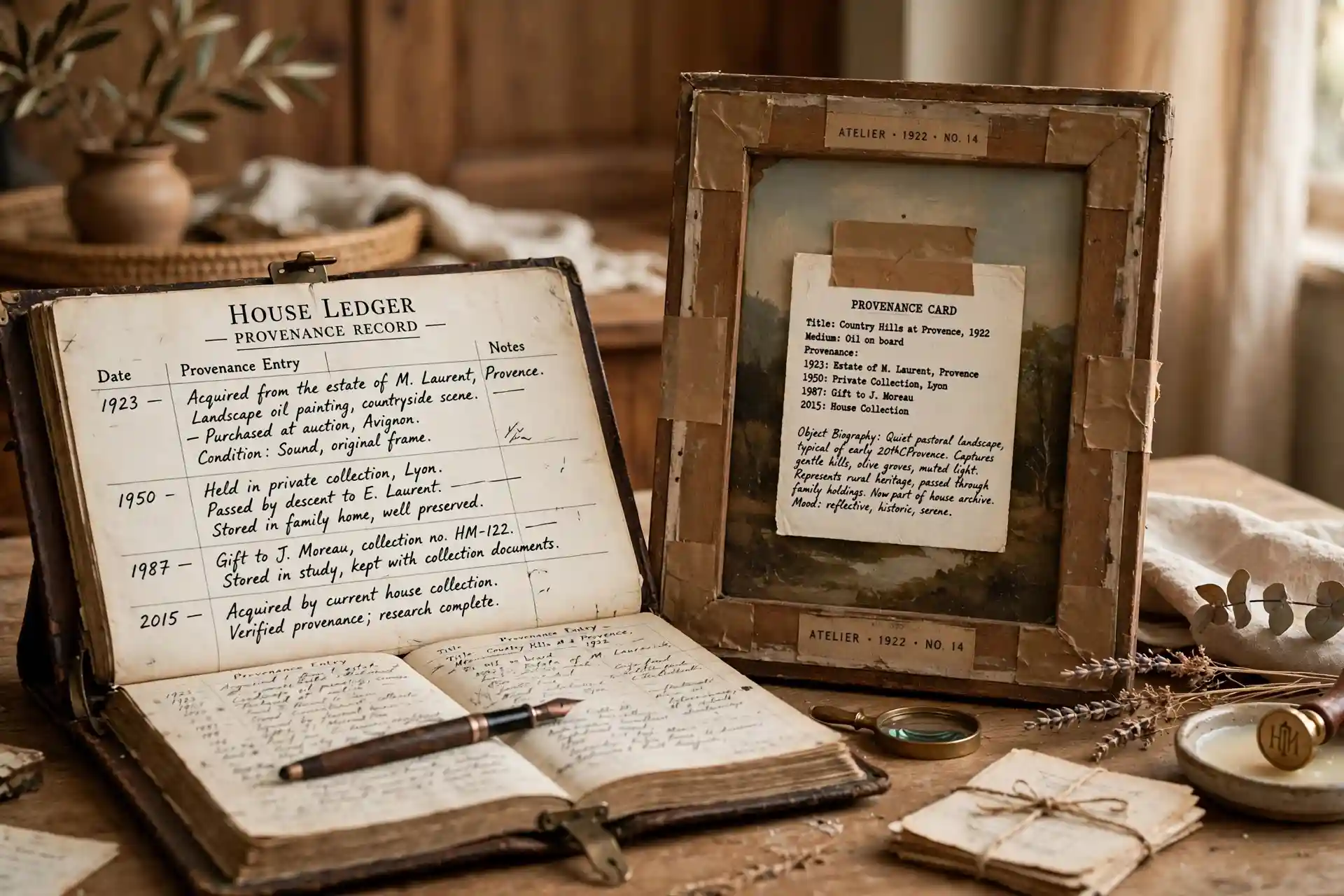
Each significant find earns a provenance note in the house ledger: source, date, price, rescue performed, and the story as known. Cards tuck behind frames and under drawers so objects carry their biographies. The ledger converts shopping into collecting, settles 'where did this come from' across decades, and delights the future inheritors who will otherwise guess everything.
Record stories as 'told by the seller' where they are lore rather than fact; honesty is part of the provenance. Photograph each entry's object for the album. The ledger lives with the notebooks of the house's other curricula, one family's whole domestic archive.
Style Directions in Found Form
26. Lean Vintage and Collected: Let the Eras Show With Discipline

credit: @hamptonsdiaries
The collected thrifted home lets eras stand visibly (the 1930s sideboard, the 1970s lamp, the new sofa) refereed by palette and material until the mixture reads as curation. Its surfaces carry books, vessels, and the ledger's best stories in working compositions. This is thrifting's home style, the one the supply itself suggests.
Era pieces cluster by material across rooms rather than by decade in corners. One wild card per room keeps curation from becoming a museum's stiffness. The style fails only by palette drift, which the audit photographs catch seasonally.
27. Lean Modern With Found Pieces: Clean Lines Exist Used

credit: @zackohq
Modern rooms furnish second-hand successfully because mid-century and contemporary pieces flood the supply: clean-lined case goods, sculptural lamps, stoneware in quiet glazes, wool in solid tones. The palette tightens to near-monochrome, patina is edited to the handsome minimum, and every find passes the silhouette test at double strictness.
Refinishing in modern rooms favors oil and clear finishes over paint, since the era's grain was its pride. One organic vintage piece per room keeps the modern from turning cold. The supply rewards patience here: the perfect credenza appears quarterly, not weekly, and the fund waits for it.
| Modern Find | Strictness |
|---|---|
| Case goods | Silhouette at double standard |
| Lamps | Sculptural or silent |
| Glazes | Quiet, near-monochrome |
| Patina | Edited to the handsome minimum |
28. Lean Cottage and Farmhouse: Thrifting's Native Country

credit: @kansas_farmhouse_decorating
Cottage and farmhouse styles are thrifting's native land, where enamelware, galvanized pieces, worn wood, gingham and ticking, ironstone, and baskets are the supply's daily bread. The style's patina is unforced because its pieces arrive pre-worn by real work, and its budget stretches furthest of all the directions in this guide.
Seal working wood against its new life and keep galvanized metal's cut edges out of the steam zones. The cottage direction curdles into clutter fastest, so its editing audit runs twice a year. Genuine wear is the style's gold; manufactured distress is its fool's gold, and hunters learn the difference by hand.
| Direction | Supply's Strength |
|---|---|
| Collected | Eras in palette discipline |
| Modern | Mid-century clean lines |
| Cottage | Enamel, ironstone, worn wood |
| All | The palette referees |
29. Photograph the Rooms Seasonally and Hunt From the Evidence
credit: @lukeelfrink
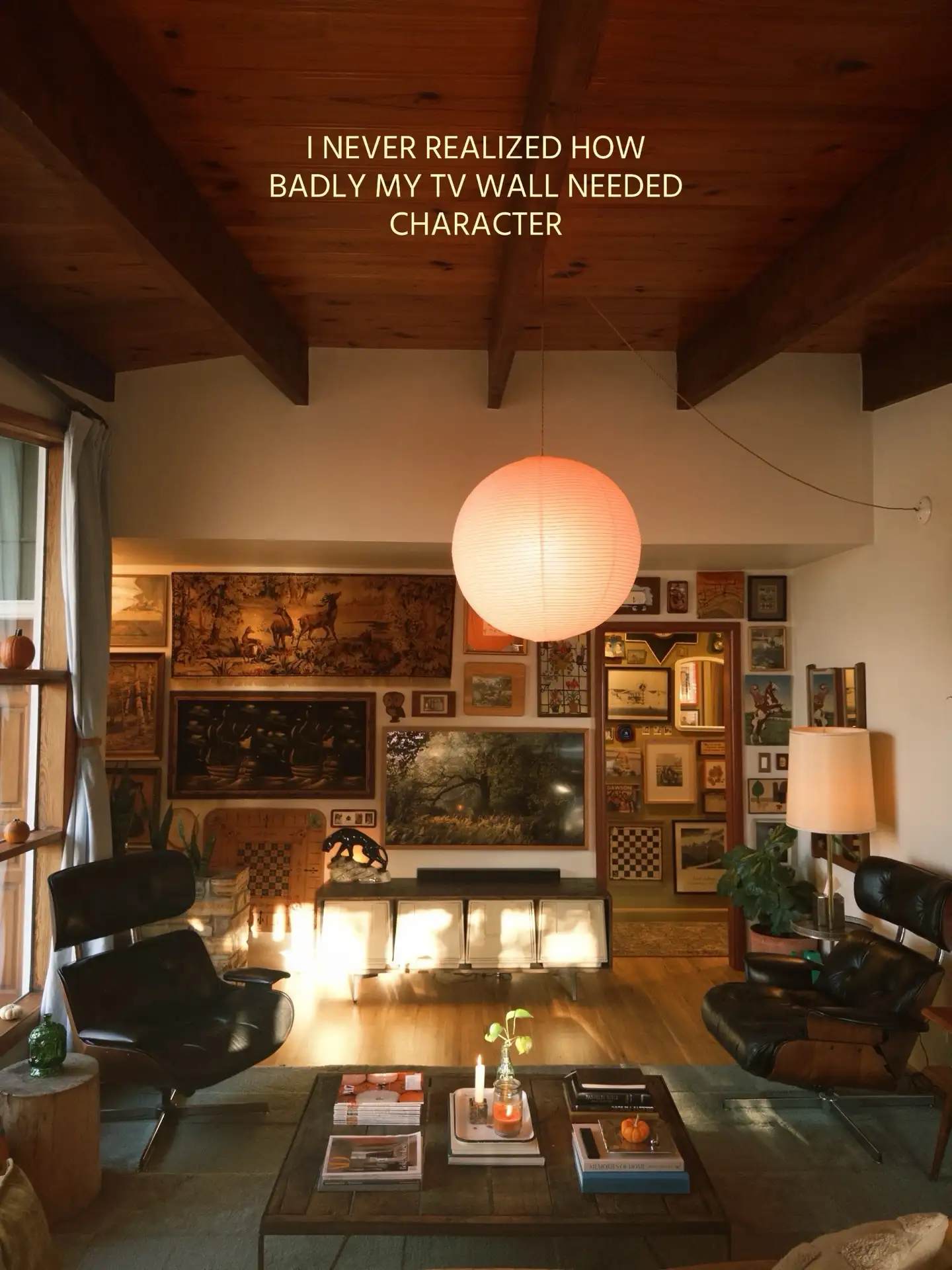
The found home's audit matches the maker home's: seasonal photographs studied away from the rooms, gaps and drifts listed, and the hunt lists rewritten from evidence (the corner needing the lamp, the wall awaiting its frame size, the hero outshone by a supporter). Hunting from photographs turns wandering luck into supply management.
Measure the gaps in the photographs and write the dimensions directly onto the wanted list. Compare each room with its own past seasons, never with a showroom. The camera is the hunter's second tape measure and the audit's honest chair.
30. Pass It On: Resale, Regifting, and the Circulating House

credit: @olivebranchcottage
Finds that fail the audit leave as assets, not as guilt: sold through the same channels that supplied them (your photographs and provenance cards raise their value), regifted from the tagged shelf, or donated back into the stream. The circulating house treats ownership as custody, and its ledger records departures with the same care as arrivals.
Price departures by your true ledger (ticket plus rescue) discounted for your years of use, and they move quickly. The space a departure frees is the audit's real dividend. A house that circulates well never drowns in its own good taste, which is the found home's final discipline.
| Departure Route | When |
|---|---|
| Resale | Ledger-priced, photographed |
| Regift | Tagged with its story |
| Donation | Back to the stream |
| Dividend | The freed space itself |
31. Let the House Become an Heirloom Itself

The thrifted home's long game completes the circle: a house furnished by decades of hunting, documented in its ledger, maintained by the ladder, and edited with love becomes itself a find for the next generation, its pieces carrying two provenances each. Children raised among rescued things learn material literacy, patience, and the economics of care by osmosis, which is the supply chain's true inheritance.
Keep the ledger current; it is the house's title deed of meaning. Teach one young person the ninety-second furniture test each year, as the maker curriculum teaches its projects. The house that began as bargains ends as biography, which no budget line in this guide can price.
| Long Game | Practice |
|---|---|
| Ledger | Arrivals and departures recorded |
| Teaching | One test taught per year |
| Circulation | Custody, not damming |
| Result | A house that is itself a find |
Common Mistakes With Thrifted Home Decor
Found homes fail by hoarding and by costume: bargains accumulated past the palette's law, and printed-grain imitations bought in the excitement of the hunt.
| Mistake | Why It Fails | Do This Instead |
|---|---|---|
| Buying without measurements or palette | Bargains that fit nowhere and match nothing | Cards and the measurements file, always |
| Painting every wood find | Grain wealth destroyed by habit | Refinish by rank, patina respected |
| Skipping quarantine and cleaning | Smells and worse join the household | The ladder, in order, every time |
| Never editing the collection | The collected home becomes the crowded one | One-in-one-out, annual audit, circulation |
| Chasing perfection in old pieces | Honest wear read as failure | Patina is the supply's signature |
Thrifted Home Decor by Situation: 4 Ready-Made Plans
If You Are Furnishing a First Home on Almost Nothing
Hunt in the order of use: bed frame and the new mattress (the exception bought first), a table and chairs with bones, the sofa when the fund matures, lamps and frames as infrastructure, textiles by fiber at every shop. Clean and oil before any refinishing; most first homes are furnished at the ladder's first two rungs. Photograph each room's arrival, since the biography starts now.
If You Inherited a Houseful of Family Pieces
Audit with the two-of-three law (use, beauty, story) and the palette as referee: keep the heroes, marry the supporters into rooms, rescue the ladder's candidates, and release the rest to family first and the stream second, photographed into the ledger. Sentiment has a quota per room; the audit's kindness is its clarity. Nothing leaves until the ledger records it.
If You Love Thrifting But Your Home Is Full
Switch the hobby's gear from acquisition to circulation and craft: hunt only to upgrade (a find must displace its predecessor), run the resale shelf actively, and spend hunt days on the rescue queue instead. The wishlist becomes a replacement list, shorter every season. Full houses hunt best with cameras and lists, leaving treasures for the next hunter with your blessing.
If You Want One Room Transformed This Season
Choose the living room and hunt its list in order: the anchor find (sideboard or rug first), lamps as a pair, frames for the gallery, textiles by fiber, and one hero mirror or artwork. Refinish by rank over two weekends and compose by the hero rule. Photograph before the first hunt and after the last placement; the pair is the season's whole report.
Frequently Asked Questions About Thrifted Home Decor
How do I make thrifted decor look cohesive?
Enforce the same laws as any styled home: one palette carried in your phone, one material family, heroes with supporting casts, and editing by audit. Refinish finds toward the family (stain, paint, re-cover) rather than accepting every origin's original colors. Cohesion is discipline applied at the till and at the ladder, never an accident of taste.
What should I never buy second-hand?
Mattresses and pillows (hygiene and support), safety-critical electricals and child gear beyond your competence to judge, and foam or deep upholstery whose age and history hide inside. Nearly everything structural, wooden, metallic, ceramic, or textile can be cleaned, repaired, and judged by the ladder. When in doubt, the smell and squeeze tests arbitrate.
How do I tell if thrifted furniture is good quality?
Run the ninety-second test: sit and rock for square silence, run the drawers and doors, check legs and joints for glue-fixable soundness, and read the materials (grain wrapping edges, dovetails, weight). Squint at the silhouette and ask whether the shape earns the room. Bones first, costume last, at every price.
Is thrifted decor really cheaper once repairs count?
Yes, when the ledger is honest and the ladder is climbed in order: cleaning transforms half of all finds for soap money, and even full rescues (refinish, re-cover, professional cleaning for rugs) land at a fraction of retail for equal quality. The economy fails in two places only: structural rescues beyond your tier, and accumulation without editing.
Where are the best places to find quality pieces?
Estate sales for solid furniture and whole-room quality, charity shops in prosperous neighborhoods for volume and textiles, flea markets for character and negotiation, and the family attic for story. Each source has a rhythm (estate mornings, restock days, flea season); hunt the rhythms and the supply becomes a system.
How do I clean thrifted items safely?
Quarantine first, then the gentlest effective agent, tested in a hidden corner: soapy water for most hard surfaces, fiber-law washing for textiles, sunlight and air for smells, and specific polishes for metals. Soft finds stay out of the house's furniture until cleaned. Escalate only on evidence, and photograph before you begin.
What if a thrifted piece does not match my home?
Refinish it toward the family (paint, stain, re-cover, new hardware) if its bones earn the work. If it cannot join the palette by any rung, it belongs to the rotation store briefly or to the circulation shelf, not to a room it will argue with. The palette law rules at the till precisely to prevent this dilemma's frequency.
How do I avoid a thrifted home looking like a junk shop?
Edit like a curator: one hero per room, shelves in thirds with air, surfaces holding compositions rather than inventories, and the annual audit enforcing the quota. Junk shops display everything they own; designed homes display a chosen fraction and store or circulate the rest. The difference is rotation and restraint, not the objects.
What rhythm should thrifting trips follow?
On the sources' rhythms and your list's needs: a weekly charity round, estate sales as they list, flea markets in season, with the wishlist fund setting the pace. Hunting without a list or a fund converts a supply system into a hobby that fills garages. When the house is full, hunt for upgrades and photographs only.
Conclusion: Custody, Craft, and the Circulating House
Thrifted home decor succeeds as a discipline: the palette and measurements at the hunt, bones judged in ninety seconds, the ladder climbed in order, heroes placed and audited, and the collection circulated like a library rather than dammed like a reservoir. The house that results costs less, means more, and teaches everyone in it how things are made and kept. Start with the cards and one clean find this weekend, and let the ledger open its first page.
*Ready to furnish with found treasure? Start with tip 1 and pocket the palette card.*
—




One Comment