
Small Bedroom Ideas: 25 Proven Ways to Gain Space and Add Style
Small bedroom ideas work only when you apply them in the right order. Three problems decide the result before decor enters the room: lost floor space, storage that overflows, and light that never reaches the corners. This guide fixes those three problems in sequence. You measure first, set your walkway second, and only then buy furniture sized for the room you actually have. As professional interior designers consistently find, a small bedroom feels larger when every piece earns its footprint and sightlines stay open. Research consistently shows that — which is why getting the foundation steps right makes every other decision in this article easier. Work through the 25 tips in order and your room gains floor space, storage capacity, and calm, one step at a time.
Before You Begin: 3 Foundation Steps for Small Bedroom Layout Ideas
Foundation work takes one hour and prevents expensive sizing mistakes. Start with the headboard against the longest wall and walkways on both sides; every measurement in this section flows from that one fixed position. Complete these three steps before buying, painting, or moving a single piece of furniture.
1. Establish Exact Room Measurements Before Buying Furniture

Guessing measurements shrinks your small bedroom before you start. A bed that runs two inches too wide blocks drawers, pinches walkways, and forces every other piece into a cramped, awkward position. Exact numbers reverse that result, because each purchase fits its wall, clears its door swing, and leaves your floor visibly open.
Measure wall to wall with a metal tape today. Record the ceiling height, window positions, door swing, and every outlet inside one simple floor sketch with inch accuracy. This one sketch helps you avoid wrong orders, return trips, and the hidden cost of furniture that never fits your room.
| Measurement | Rule for a Small Bedroom |
|---|---|
| Walkway width | Keep 24 to 30 inches clear beside the bed |
| Door swing zone | Leave a full 36-inch arc empty |
| Bed-to-wall gap | Keep at least 24 inches on the main side |
| Desk depth zone | Reserve 16 to 20 inches plus 24 inches for a chair |
2. Choose One Clear Walkway Through The Room

A blocked walkway makes any bedroom feel tiny. You cross this path dozens of times daily, and every obstacle on it registers as clutter, friction, and wasted square footage. One open route from door to window opens circulation, stretches sightlines, and makes the whole footprint read larger at first glance.
Stand at the door and trace your daily route physically. Keep that route 24 to 30 inches wide, with zero shoes, baskets, or chair legs crossing its edge at any point. Set the headboard against the longest wall first, and this route stays clear beside it without losing a single stored item.
3. Remove Every Item That Earns No Space

credit: @myfittedbedroom
Dead items steal space from living essentials daily. Every unused chair, spare box, and broken lamp holds floor area that your storage, lighting, and breathing room need far more. Removing dead weight creates floor space the same day, plus cleaner surfaces and a room that supports sleep instead of storage overflow.
Pull every non-daily item into the hallway right now. Apply the ninety-day rule: any item unused for ninety days leaves today, except seasonal items like bedding and winter coats in labeled bins. Empty corners catch more light, reduce visual weight, and make the room feel less crowded.
| Item Type | Removal Rule |
|---|---|
| Unused chair | Remove it; one seat maximum in a small bedroom |
| Spare boxes | Flatten them; store a maximum of two under the bed |
| Broken lamp or fan | Repair within seven days or remove it today |
| Extra decor pieces | Keep three pieces maximum on any one surface |
Space-Saving Small Bedroom Furniture Ideas That Open the Room
Furniture decides your floor plan for years. These small bedroom furniture ideas cut bulk, protect walkways, and return inches to your daily routine.
4. Use A Low-Profile Bed To Open Sightlines

credit: @livetinybuildco
A tall bed frame bullies a small room. High headboards and deep bases block window light, shorten walls visually, and dominate every sightline from the doorway to the closet. A low platform frame reverses the effect, exposing more wall height above the bed.
Replace your frame with a platform base under twelve inches, priced from eighty to two hundred fifty dollars. Pair it with a headboard no taller than forty-eight inches from the floor, and your window light travels across the room without obstruction. This single swap also leaves more open wall above the bed, and the sleeping zone reads calmer from the doorway. If you plan under-bed bins, choose a frame with at least seven inches of clearance under the slats.
Place the rug's long side across the bed's width, under the lower two-thirds. A six-by-nine rug under a queen extends about eighteen inches beyond the foot, and queen rooms start at one hundred ten square feet. A five-by-eight under a full extends about ten inches beyond the foot in smaller rooms.
| Bed Size | Best Room Size |
|---|---|
| Twin, 38 by 75 inches | Rooms under 80 square feet |
| Twin XL, 38 by 80 inches | Rooms from 80 to 90 square feet, for tall sleepers |
| Full, 54 by 75 inches | Rooms from 90 to 109 square feet |
| Queen, 60 by 80 inches | Rooms of 110 square feet or more |
5. Replace Nightstands With Narrow 12-Inch Alternatives
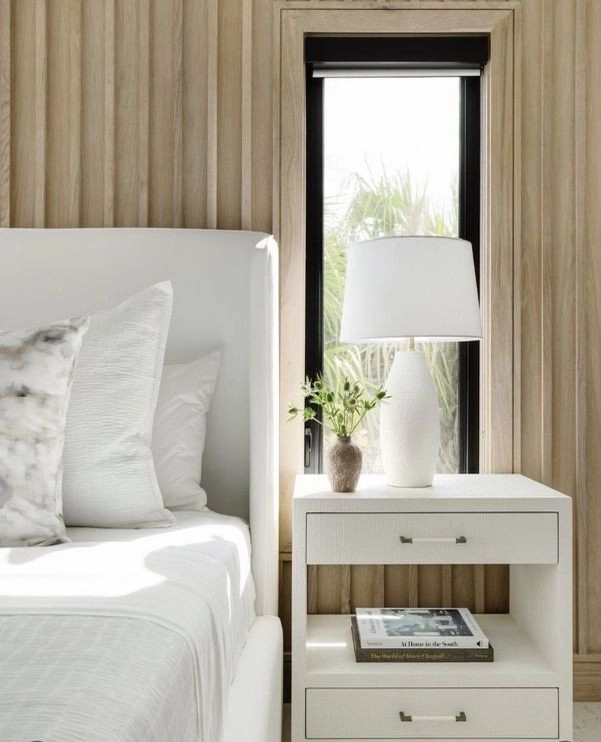
credit: @interludehome
Bulky nightstands eat the most valuable inches daily. The floor beside your bed holds books, chargers, a phone, and water, yet oversized tables waste most of that prime zone. Narrow twelve-inch alternatives hold every essential, free both sides of the bed, and restore clean lines around your sleeping area.
Measure the gap between bed and wall before ordering. Choose a nightstand twelve to fourteen inches wide with one drawer and one open shelf for vertical storage efficiency. Sheet changes get easier too, because the mattress edge stays reachable from both sides.
6. Install A Fold-Down Desk On One Wall

A permanent desk devours small bedroom floor space. Work surfaces collect paper, cables, and chairs all day, and that sprawl turns your rest zone into a stressful second office. A fold-down desk delivers a full worktop on demand, then disappears flat and returns your bedroom to pure rest mode.
Mount a fold-down desk on the second-longest blank wall; wall-mounted models run sixty to one hundred eighty dollars. Set the worktop thirty inches high and sixteen to twenty inches deep, sized for a laptop plus one notebook. Your folding chair hangs flat on two wall hooks after work, and the closed panel doubles as clean wall art backing.
| Desk State | Depth From the Wall |
|---|---|
| Worktop open | 20 inches of usable desk depth |
| Panel closed | 3 inches against the wall |
| Chair hung on wall hooks | 0 inches of floor space |
| Laptop work zone | 30 inches wide by 16 inches deep |
7. Choose Multifunctional Furniture With Hidden Storage Inside
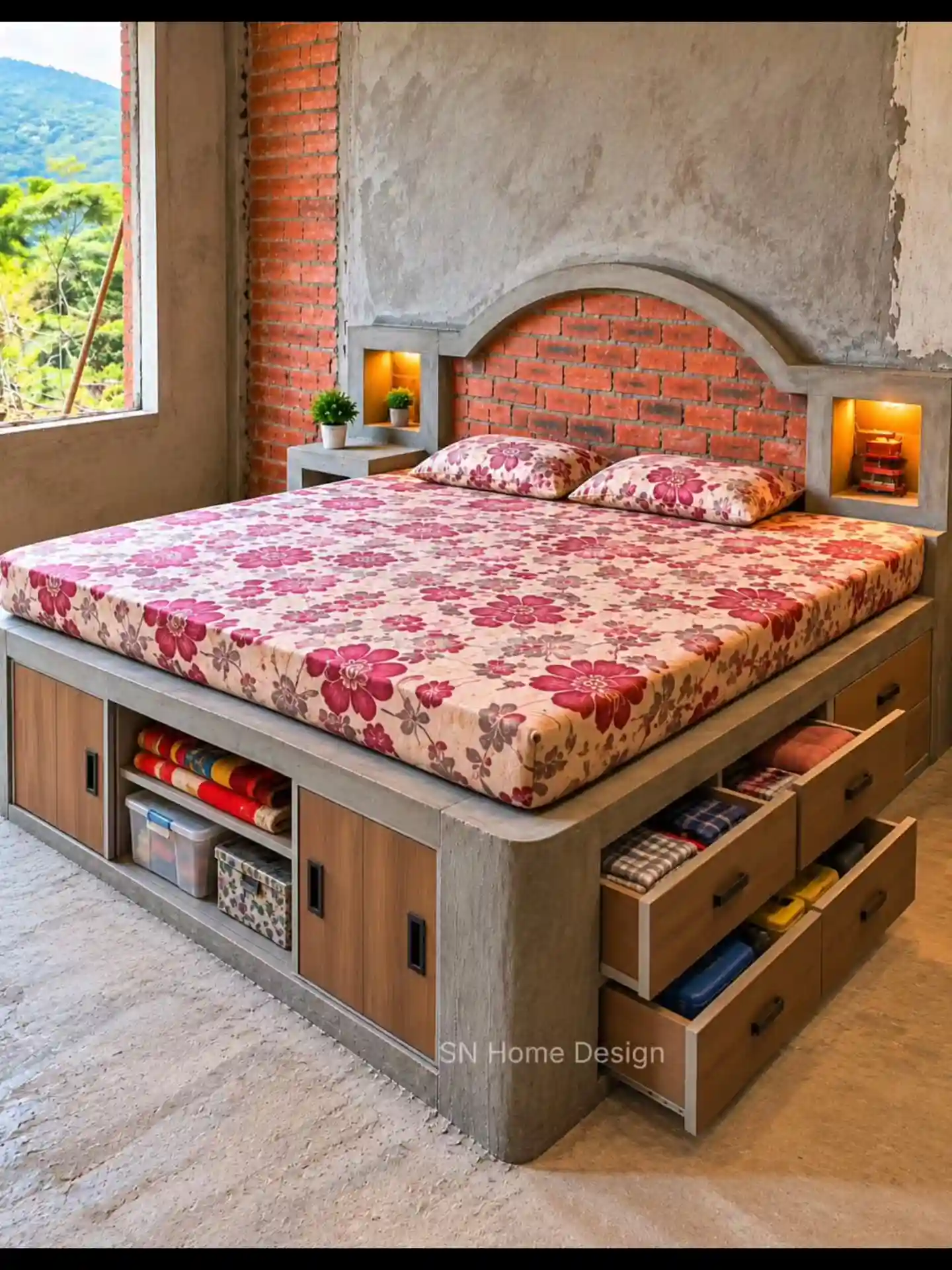
credit: @sn_home_design
Single-purpose furniture wastes floor space in every corner. A plain bench holds nothing, a plain stool stores nothing, and both still consume the footprint of a genuinely useful piece. Multifunctional pieces work twice per square foot, hiding storage inside seats, beds, and tables while your visible surfaces stay clear.
Swap one plain piece for a storage version today. Prioritize a lift-top ottoman, a drawer bed base, or a trunk coffee table in linen, leather, or light oak finishes. Each option adds storage at a clear price: ottomans and trunks run forty to one hundred fifty dollars, and a drawer bed base runs three hundred dollars or more.
| Piece | Double Duty It Performs |
|---|---|
| Storage ottoman | Seat plus storage for two folded blankets |
| Drawer bed base | Sleep surface plus four full storage drawers |
| Trunk table | Table surface plus games and book storage |
| Bookshelf headboard | Headboard plus twelve books on display shelves |
You might also enjoy bedroom decor ideas, which pairs beautifully with the ideas in this section.
For even more inspiration, explore our guide to bedroom ideas.
Small Bedroom Storage Ideas That Eliminate Floor Clutter
Storage failures create visible chaos fast. These small bedroom storage ideas push belongings upward, under furniture, and behind doors, and off your floor entirely.
8. Build Vertical Storage Up To The Ceiling
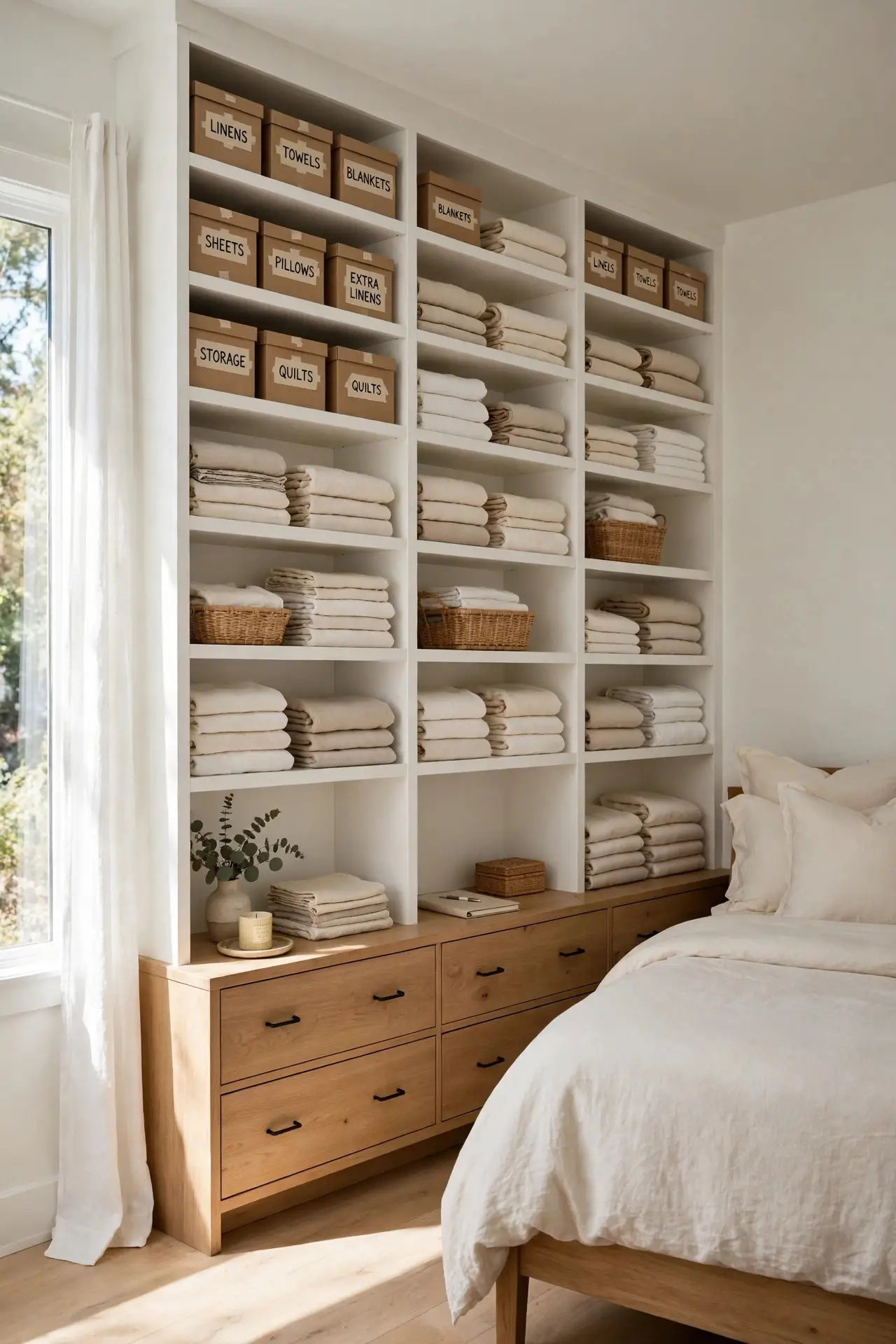
Floor storage ends where wall storage begins winning. The top two feet of your walls sit empty in most bedrooms, while floors below carry boxes, bags, and daily overflow. Shelving that reaches the ceiling line reclaims that dead zone and draws the eye upward, stretching perceived height.
Install one shelf run above your dresser today. Place shelves twelve inches deep, spaced fourteen inches apart, and store low-use items above sixty inches from the floor. Anchor the top shelf run into wall studs with anti-tip brackets, because tall loaded shelving carries a real tip-over risk.
Inside the closet, run a double rod with rails at eighty-two and forty-two inches for two hanging tiers. Mount one shallow shelf high on the closet wall, above the door line, and store seasonal bins in that top twelve inches.
9. Place Rolling Bins Under The Bed Frame

The space under your bed hides real storage. A queen bed conceals up to about nineteen cubic feet of storage volume at seven inches of clearance, exactly where dust gathers and lost items quietly disappear. Rolling bins convert that void into organized storage for bedding, shoes, and off-season clothes, all reachable with one pull.
Slide two low rolling bins beneath your bed frame. Measure frame clearance first, then choose lidded, wheeled bins at least one inch shorter than that gap; the six-inch bins below need seven inches of clearance or more. Labeled bins cost twenty to forty dollars per pair, end the morning search, and free closet rail space for weekly clothes.
Two bins hold roughly three cubic feet of that volume, and the remaining space stays open for access. Rotate seasonal bedding through these bins twice a year; a lift-up storage bed replaces bins entirely when frame clearance drops under seven inches. Keep down duvets in breathable cotton bags instead of vacuum bags, because long compression crushes down loft and warmth.
| Bin Contents | Bin Size to Use |
|---|---|
| Spare bedding set | 28 by 16 by 6 inches |
| Off-season clothes | 28 by 16 by 6 inches, vacuum bag inside |
| Six pairs of shoes | 24 by 14 by 5 inches with dividers |
| Books and files | 16 by 12 by 6 inches, two bins maximum |
10. Add Over-Door Hooks For Bags And Robes

Your door back is free, unused vertical storage. Robes, bags, and tomorrow outfits pile onto chairs and bed corners because most rooms ignore this flat, ready storage surface. One hook rack absorbs that daily pile and restores your chair and bed to their single, intended jobs.
Hang one over-door rack with five hooks today, and leave the fifth hook empty for guests and overflow. Rate the rack at eight pounds per hook, forty pounds across all five hooks. With the fifth hook spare, everyday loads stay near thirty-two pounds, and that margin protects the door hinges. Your morning routine speeds up, because every daily essential hangs in one visible, grab-and-go line.
| Item | Hook Position |
|---|---|
| Robe | Top hook, worn daily |
| Tote or work bag | Second hook, emptied every evening |
| Tomorrow outfit | Middle hook, chosen the night before |
| Gym bag | Bottom hook, off the floor entirely |
11. Group Small Items In Labeled Baskets By Use

credit: @betsywentz
Loose small items multiply into visible chaos overnight. Cables, creams, remotes, and jewelry scatter across surfaces, and each tiny object adds visual noise far beyond its physical size. Labeled baskets group that noise into three calm zones, and every surface reads styled, intentional, and finished.
Sort every loose item into three baskets now. Use one basket per job: charging, grooming, and reading, each under twelve inches deep to match standard shelf depth. Baskets also cut cleaning time, because you lift three containers instead of dusting around every loose object.
Pair this system with closet organization ideas and your wardrobe zone stays equally controlled every single week.
If this style appeals to you, home decor offers more ways to carry the same look through your home.
Small Bedroom Decor Ideas That Make Walls, Light, and Color Work Harder
Walls carry function without touching floor space. These small bedroom decor ideas move light, color, storage, and art upward, where your room has real capacity.
12. Mount Sconces Instead Of Using Table Lamps

credit: @farrowandball
Table lamps steal your most useful surface space. Each lamp base claims roughly one square foot beside the bed, exactly where books, water, and chargers compete daily. Wall sconces return that entire surface and aim task light precisely where you read, dress, and unwind nightly.
Mount one sconce on each side of the headboard; plug-in pairs run thirty to ninety dollars and need no electrician. Position sconces fifty-eight to sixty-four inches from the floor, with shades angled downward for glare-free reading light. Freed surfaces also fit a small plant or framed photo, and personal styling finally enters your sleeping zone.
Pair these sconces with the twelve-inch nightstands from Tip 5, and both sides of the bed stay fully served at once.
| Lamp Type | Surface or Floor Space It Uses |
|---|---|
| Table lamp | About 1 square foot per lamp |
| Wall sconce | 0 square feet of surface |
| Floor lamp | About 1.5 square feet of floor |
| Clip-on lamp | 0 square feet, clamps to the headboard |
13. Hang One Large Mirror Opposite The Window

credit: @studiomellone
One mirror throws window light deep into your room. A mirror facing your window catches incoming daylight and throws it into corners lamps never reach effectively. This reflection creates genuine depth, brightens dark paint, and makes your far wall feel farther away.
Hang a mirror at least thirty inches wide today; large framed mirrors run forty to one hundred twenty dollars. Center it opposite the window at eye level, roughly fifty-seven inches from floor to center, for maximum light spread. Your room also gains a full outfit check in natural light, which shows clothing colors honestly.
14. Create A Gallery Wall With Tight Spacing

Scattered small frames make walls feel busy, not styled. Random gaps break the eye into fragments, and fragmented walls make the whole room feel smaller, louder, and unfinished. One tight gallery grid reads as a single artwork, delivering personality without consuming one inch of floor space.
Arrange five frames on the floor before hanging anything on the entry wall. Keep gaps at two inches, align outer edges into one rectangle, and repeat black, oak, or brass frames consistently. A unified grid turns five separate frames into one calm artwork, and your room gains the polished, finished look of a styled showroom.
15. Use Curtains Hung Six Inches Above Frames

Low curtains chop your walls at the wrong height. A rod mounted at the frame top stops the eye early, compressing ceiling height and shrinking the window visually with it. Curtains hung near the ceiling stretch the wall upward and frame your window as a tall, architectural feature instead.
Raise your curtain rod six inches above the frame. Extend the rod six to eight inches beyond each side, and let panels end half an inch above the floor. Open panels now expose full glass, and daylight reaches farther across your bed during the brightest morning hours.
Renters reach the same raised height with adhesive brackets, because a tension rod only fits inside the frame and a ceiling rail needs drilling. Pick brackets rated above the curtain weight, and use lightweight panels so the adhesive holds.
| Rod Position | Visual Result |
|---|---|
| At the frame top | Wall reads at its shortest height |
| 6 inches above the frame | Window gains clear vertical emphasis |
| 2 inches below the ceiling | Maximum perceived wall height |
| Inside the frame | Window shrinks; avoid in small bedrooms |
16. Choose A Light Palette Of Three Colors

credit: @arcxdesign
Too many colors fracture a small room visually. Every extra shade demands attention, breaks continuity between walls and bedding, and makes limited square footage feel chopped into pieces. A disciplined three-color palette unifies every surface cohesively and lets your eye travel the room in one calm sweep.
Paint walls and ceiling one continuous light color from your palette today, apart from the single accent wall in Tip 18. Apply the sixty-thirty-ten rule: sixty percent dominant white or cream, thirty percent mid tone, ten percent one accent. This ratio keeps contrast lively without chaos, and every future purchase filters through one simple decision rule.
Renters build the same palette with bedding and curtains instead of paint, and the sixty-thirty-ten balance stays identical.
Match this palette with bedroom color ideas for combinations that suit north-facing and low-light rooms.
| Palette | Three Colors to Use |
|---|---|
| Scandinavian calm | White, light oak, sage green |
| Warm neutral | Cream, warm taupe, terracotta accent |
| Coastal light | White, pale blue, natural rattan |
| Soft modern | Warm white, greige, matte black accent |
17. Layer Three Light Sources At Different Heights
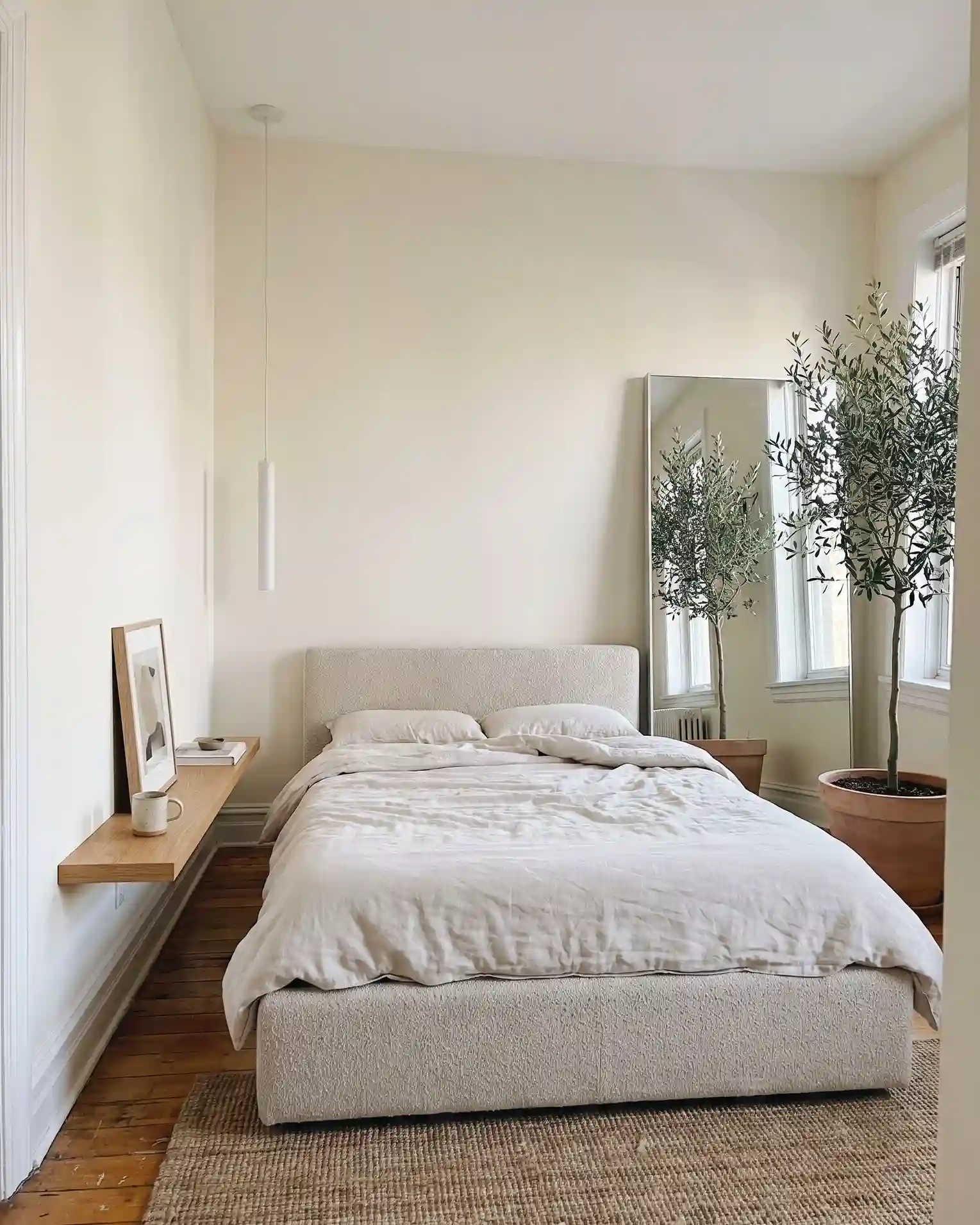
credit: @creativunique
One ceiling light flattens every small bedroom corner. Single overhead light casts harsh shadows under furniture, kills texture on bedding, and leaves your room looking flat and dull. Three layered sources soften those shadows and add depth at every height.
Add one dresser lamp beside your Tip 12 sconces today. Set ceiling light at ninety-six inches, sconces at sixty, and a dresser lamp below forty-eight, on a standard eight-foot ceiling, using warm 2700K bulbs at 450 to 800 lumens each. Layered light also removes the need for bright overhead glare at night, and your wind-down routine feels genuinely calmer.
For a related look, take a look at wall decor ideas and borrow the details that fit your space.
Small Bedroom Decorating Ideas for a Polished, Finished Look
Finishing touches separate decorated rooms from stored rooms. These small bedroom decorating ideas polish your bed, anchor your layout, and complete the picture.
18. Apply Peel-And-Stick Wallpaper To One Wall

credit: @smallspacesdesign
Four patterned walls overwhelm a compact bedroom daily. Pattern on every surface closes the room inward, fights your bedding, and leaves the eye nowhere quiet to rest. One wallpapered headboard wall creates a focal point with depth, while three calm walls keep the room visually open.
Apply peel-and-stick panels behind your bed this weekend. Choose a small-scale pattern with repeats under twelve inches, and order twenty percent extra material; one accent wall typically costs fifty to one hundred twenty dollars in panels. Renters peel this upgrade off later; test one hidden corner first, because weak paint can lift with the panel.
| Pattern Scale | Best Use in a Small Bedroom |
|---|---|
| Small repeat, under 6 inches | Headboard wall, reads calm at distance |
| Medium repeat, 6 to 12 inches | One wall only, pair with plain bedding |
| Large repeat, 12 to 24 inches | Avoid on walls under 10 feet; the pattern overwhelms the room |
| Vertical stripe | Any single wall, adds perceived height |
19. Switch Heavy Bedding To Lightweight White Layers

Heavy dark bedding swallows your bed and room. A queen bed covers about thirty-three square feet, roughly thirty percent of a one-hundred-ten-square-foot room, so its color dominates the visual field daily. Lightweight white layers brighten that dominant surface and make the bed feel lighter, tailored, and airy.
Replace your duvet with a white cotton cover today. Layer one flat-weave blanket at the foot, folded to one-third of the bed length, for texture without extra bulk. White layers also reveal dirt earlier, and your bedding stays fresher because washing happens before stains set in.
20. Anchor The Bed With One Statement Headboard
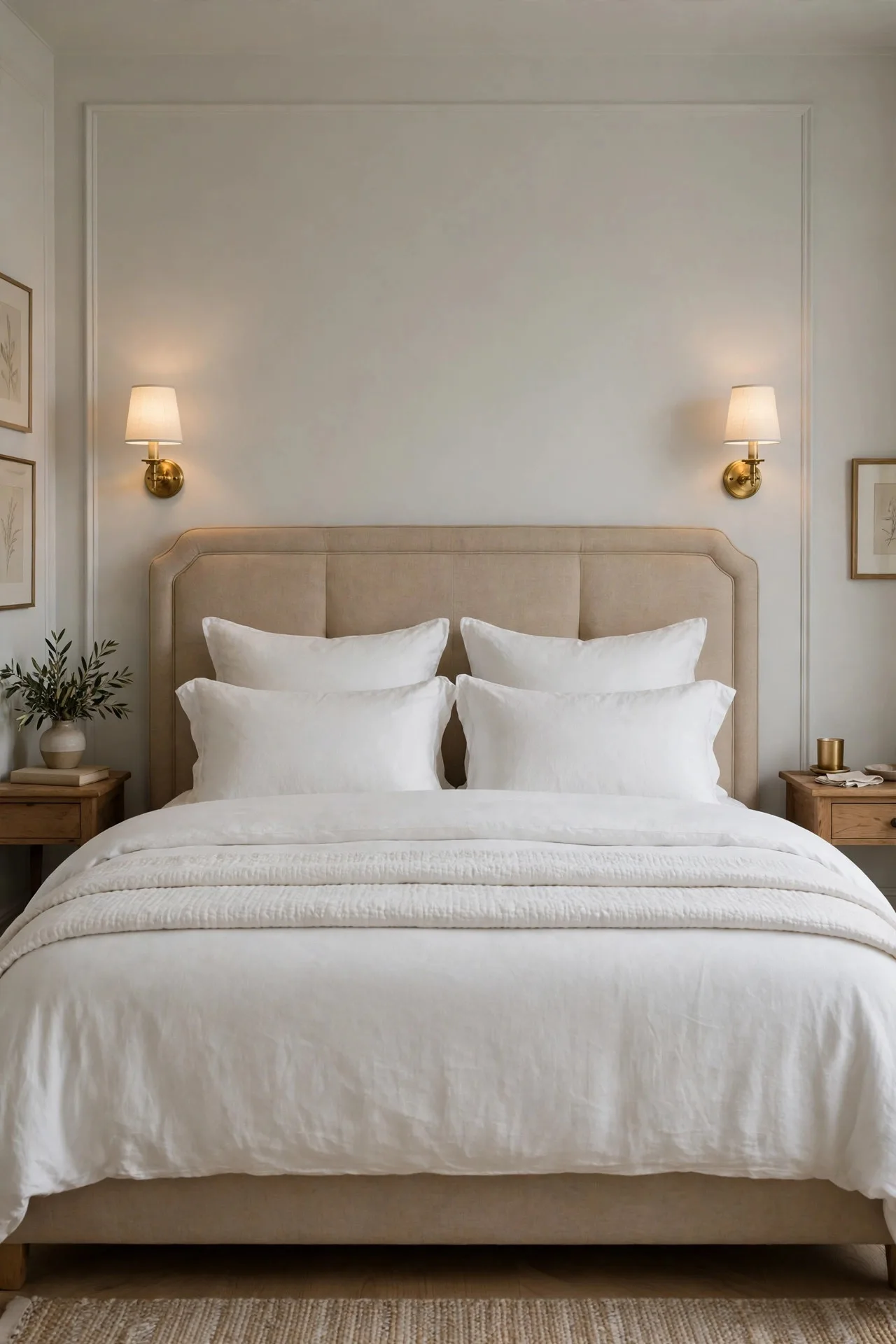
A headboard-free bed floats without a visual anchor. Without one defined focal point, pillows, art, and lamps compete randomly, and the whole sleeping wall reads unfinished every day. One statement headboard anchors the room, organizes every accessory around it, and delivers a deliberate, finished focal point.
Mount one padded headboard directly behind your pillows today. Choose a width matching your mattress exactly and a total height of forty-two to forty-eight inches from the floor; padded panels run seventy to two hundred dollars. Renters choose a freestanding model that stands behind the frame with no wall fixings at all. Upholstered panels also soften headboard knocks and absorb sound at the head of the bed.
21. Style The Bed With Two Pillow Rows

credit: @thelayeredlookinteriors
Flat pillows make your bed look tired, not tailored. One flat row reads as an afterthought, while towers of cushions consume sleeping space and demand daily rebuilding time. Two disciplined rows deliver the styled middle ground, giving your bed structure without stealing one inch of sleep surface.
Stand two sleeping pillows upright against the headboard now. Add one front row of eighteen-inch cushions, two on a full or queen and one on a twin or twin XL; three rows crowd any small-room bed. This routine takes two minutes each morning, and the room looks finished before you leave for work.
| Bed Size | Pillow Formula |
|---|---|
| Twin | 2 sleeping pillows plus 1 cushion |
| Full | 2 sleeping pillows plus 2 cushions |
| Queen | 2 upright pillows plus 2 cushions |
| Twin XL | 2 sleeping pillows plus 1 cushion |
22. Add One Large Art Piece Above Bed

credit: @hannah_naylor_
Tiny art fragments your main wall into noise. Several small frames above a bed scatter focus, demand constant straightening, and visually shrink the wall they decorate. One large piece commands the wall as a single statement and stretches the bed wall wider at a glance.
Hang one framed piece centered above your headboard today. Choose art spanning two-thirds of your bed width, hung six to eight inches above the headboard top edge. One large piece gives the wall a single clear focal point, and you dust, level, and maintain exactly one frame from now on.
| Bed Width | Art Width to Hang |
|---|---|
| Twin, 38 inches | 24 to 26 inches |
| Full, 54 inches | 36 inches |
| Queen, 60 inches | 40 inches |
| King, 76 inches | 48 to 50 inches |
Another helpful next step is our roundup of home decor ideas.
Small Bedroom Organization Ideas That Keep Space Every Day
A small room resets fast or collapses fast. These small bedroom organization ideas keep your gains daily with routines measured in minutes, not hours.
23. Establish A Five-Minute Nightly Reset Routine

Morning clutter is last night's reset skipped entirely. Clothes, chargers, and cups left overnight greet you at waking, and that first visual sets a chaotic tone all morning. A five-minute nightly reset erases the pile, and you wake inside a calm, ordered, genuinely restful room.
Set a five-minute timer before brushing your teeth tonight. Work one fixed loop: clothes to hooks, items to baskets, surfaces wiped, floor path checked clear at thirty inches. This loop also protects your weekends, because disorder never builds past a five-minute fix.
24. Remove One Item For Every New Purchase

Every unchecked purchase shrinks your room by inches. Small rooms hold a fixed object count comfortably, and each addition beyond it pushes storage, surfaces, and walkways into overload. A strict one-in, one-out rule freezes your object count and protects every gain from the previous twenty-three tips.
Drop one outgoing item into a donation bag today. Match sizes honestly: one new sweater removes one old sweater, and one new lamp removes one old lamp directly. Your storage stays within its limits, and every purchase decision sharpens because each item must beat the piece it replaces.
| New Item In | Item That Leaves |
|---|---|
| One sweater | The oldest, least-worn sweater |
| One pair of shoes | The most worn pair in the rack |
| One book | One finished book to the donation bag |
| One decor piece | The least-used piece on any surface |
25. Arrange A Monthly Declutter Of Every Drawer
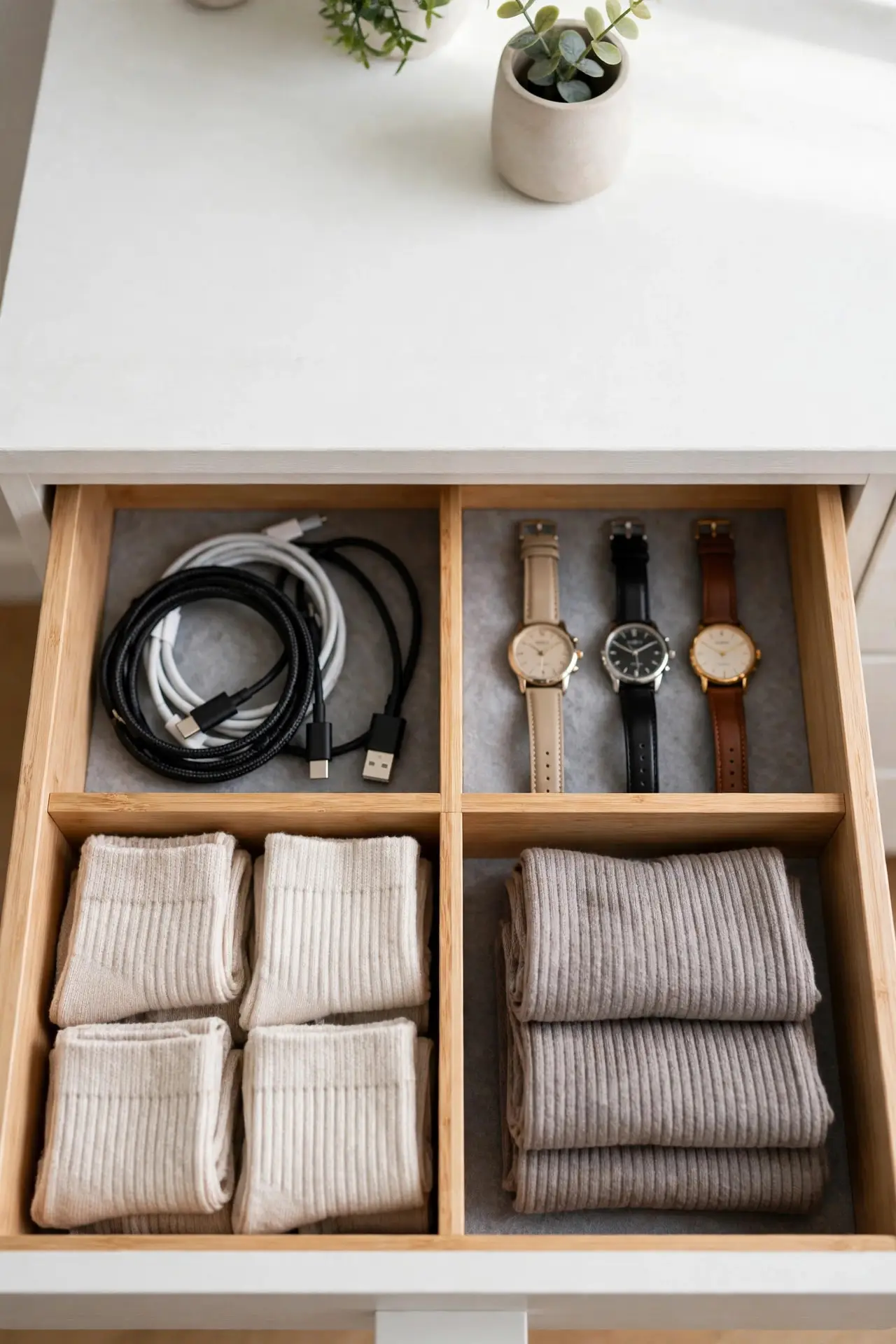
Drawers hide clutter until it bursts into view. Closed drawers conceal expired items, tangled cables, and duplicates, and that hidden volume silently consumes your best storage capacity. One monthly drawer pass reclaims that capacity and keeps your storage system honest, current, and genuinely usable.
Empty one drawer fully onto your bed each month. Sort into four groups only: keep here, relocate, donate, and trash, with a hard limit of fifteen minutes per drawer. After each pass, dividers keep every category in place, and finding any item takes seconds instead of a full excavation.
To keep building on this theme, see how bathroom decor ideas handles a similar look in a different way.
Common Small Bedroom Mistakes That Make Rooms Feel Cramped
| Mistake | Fix With Numbers |
|---|---|
| Queen bed forced into a room under 110 square feet | Drop to a full bed and reclaim about 5 square feet of floor |
| Dark paint on all four walls | Limit dark color to one wall; keep three walls light |
| Floor lamp plus two table lamps | Swap the table lamps for two wall sconces, remove the floor lamp, and use one dresser lamp for the low layer; free about 3.5 square feet of floor and surface space |
| Storage boxes stacked on the floor | Move storage into under-bed bins under 7 inches tall; floor boxes drop to zero |
Small Bedroom Design Ideas by Room Type and Situation
Your room type changes the order of attack, never the rules. Apply the same measurements, storage, and light principles through the filter that matches your situation below.
Small Master Bedroom Ideas for Two People
Two sleepers double the storage load, not the floor space. Split every drawer, shelf, and rail exactly fifty-fifty, and give each side of the bed its own twelve-inch nightstand and wall sconce, with twenty-four inches of clearance on both sides. One shared palette and matching bedding keep the room unified, and duplicated zones end the nightly fight over surfaces.
Tiny Bedroom Ideas for Narrow Rooms and Studio Apartments
A narrow room and a studio share one rule: the bed owns the longest wall. Set the bed on that wall, fold the desk flat against the second wall after work, and separate zones with an eighty-four-inch open shelf on a wide, heavy base. Secure the shelf with a wall or ceiling bracket only where drilling is allowed, because tip-over risk applies in every home. Keep the short walls bare, and light travels the full length.
Small Bedroom Ideas for Renters Without Drilling
Renters gain space with zero permanent holes by choosing the renter version of each upgrade. Swap drilled sconces for clip-on lamps or adhesive-mounted plug-in sconces, wall shelves for a freestanding ladder shelf, and the fold-down desk for a folding table. Anchor a ladder shelf with a safety strap, or weight its bottom shelf, because tall freestanding shelves tip forward. Peel-and-stick wallpaper, over-door hooks, adhesive-bracket curtain rods, and adhesive strips rated for fifteen pounds carry the rest. Photograph each wall before you start, and your deposit stays protected while the room gains storage, color, and height.
Small Kids and Shared Bedroom Ideas on a Tight Budget
Kids and guests sharing one small room need beds that stack, not spread. A bunk or trundle bed sleeps two on one twin footprint of about twenty square feet, freeing floor for play, bags, and a small desk. Keep the upper bunk for children aged six and older only, and fit guardrails on both sides of the top bed. A bunk or trundle frame runs one hundred fifty to four hundred dollars, and bedding, one mirror, and baskets add one hundred to two hundred dollars more.
Frequently Asked Questions
What is the best layout for a small bedroom?
Place the headboard against the longest wall and keep one walkway of 24 to 30 inches from door to window. Push the dresser flat against the opposite wall, and every other piece earns its place around that fixed route.
What should you not do in a small bedroom?
Never block the walkway, never store boxes on the floor, and never buy furniture before measuring the room. Each of these three errors shrinks floor space, blocks light, and locks clutter into your daily routine.
How to decorate a small bedroom on a budget?
Start with paint, white bedding, one mirror, and baskets, in that exact order. This base costs roughly two hundred fifty to five hundred dollars and delivers the strongest visual change for the money in this guide.
How to make a small rental bedroom feel bigger?
Hang curtains six inches above the window frame on adhesive brackets, add peel-and-stick wallpaper to one wall, and mount nothing permanently. These three renter-safe moves add height, a focal point, and light without a single drilled hole.
What bed is best for a small bedroom, queen or full?
A full bed wins in rooms under 110 square feet, freeing about five square feet against a queen. A queen works from 110 square feet upward, provided both walkways stay at least 24 inches wide. Two sleepers need a queen as the minimum; a full bed gives each sleeper only twenty-seven inches of width. For two sleepers in a room under 110 square feet, choose a queen with a tighter walkway or a larger room.
How often should you rearrange a small bedroom?
Rearrange once per season at most, and only after re-measuring the room. Constant moving signals a layout problem, and the fix is furniture scale, not a new arrangement every month.
Do dark colors work in a small bedroom?
Yes, dark color works on exactly one wall behind the bed. Three light walls reflect daylight around it, and the dark wall gains depth instead of shrinking the whole room.
How much does it cost to redo a small bedroom?
A basic refresh using this guide costs 250 to 600 dollars with storage bins, paint, bedding, and lighting bought in that order. With furniture swaps from the tips above, the total runs 800 to 1,500 dollars. Paint plus textiles alone deliver most of the visible change.
How to keep a small bedroom organized every day?
Run the five-minute nightly reset and the one-in, one-out purchase rule without exceptions. These two habits hold your object count steady, and steady object counts keep every surface and walkway clear.
Conclusion
Your small bedroom now works as one complete system. You measured first, protected one clear walkway, pushed storage upward and under the bed, and layered light and color for real visual depth. Every tip in this guide stacks on the previous one, and the order is the strategy itself. Start at tip one today, finish one section at a time, and your room changes without a renovation, a contractor, or a larger apartment. Explore small space living ideas next and apply the same measurement-first system to every compact room in your home.




2 Comments