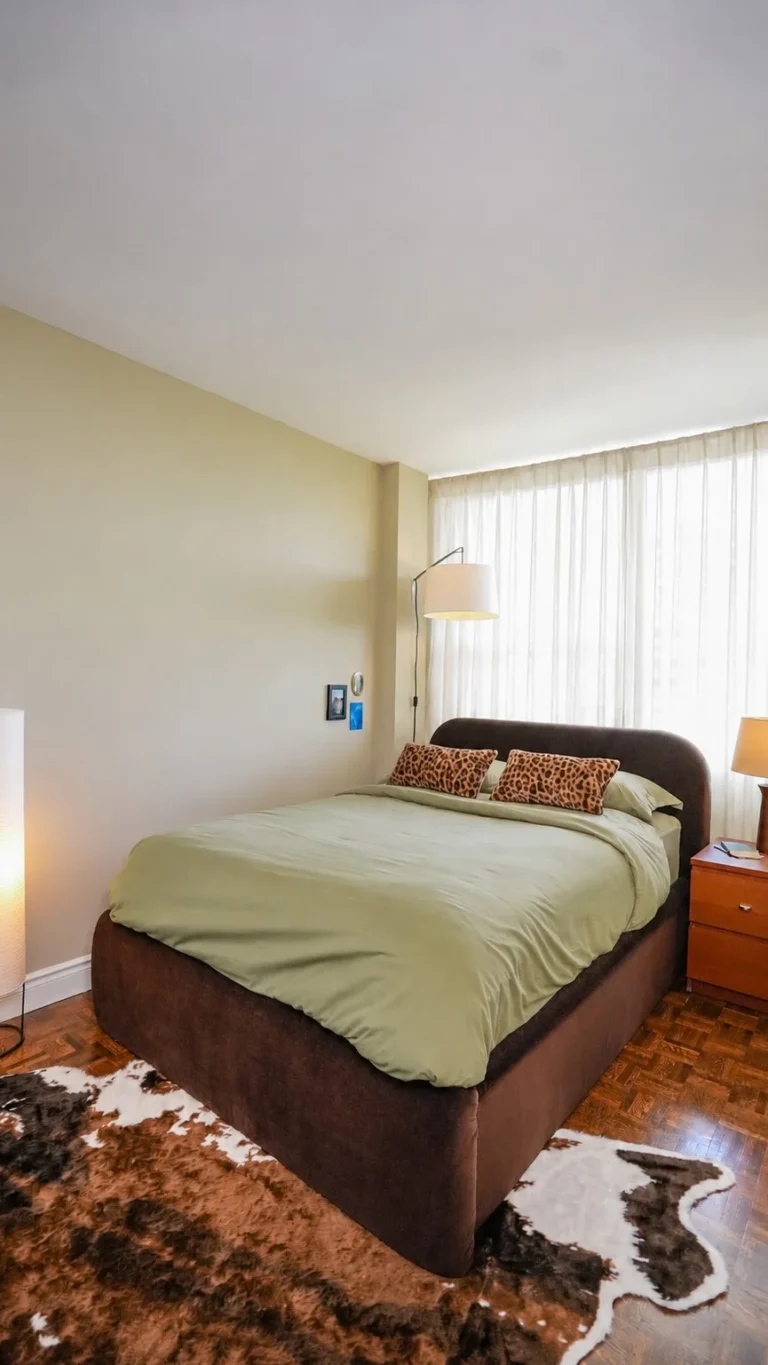
Apartment Decor Ideas: 31 Proven Ways to Make a Rental Feel Like It Chose You
Apartment decor is a negotiation with three landlords at once: the square footage, the lease, and the deposit — and it is won by renters who treat portability as a design style rather than a limitation. The winning systems share a shape: everything hangs without holes or removes without evidence, furniture scales to the floor plan and earns double duty, storage hides inside closed pieces that emigrate whole, and the palette arrives through textiles and art instead of paint cans. Renters who decorate this way live in homes that feel chosen from the first month, while the wait-until-we-buy crowd spends years camping in their own lives. This guide builds apartment decor at every scale, from the first studio to the family rental, each tip giving the decision, the sizing, and the mistake it prevents — with an eye kept on the moving truck from day one, because an apartment system that travels well compounds in value at every address.
Before You Begin: The Renter's Three Laws
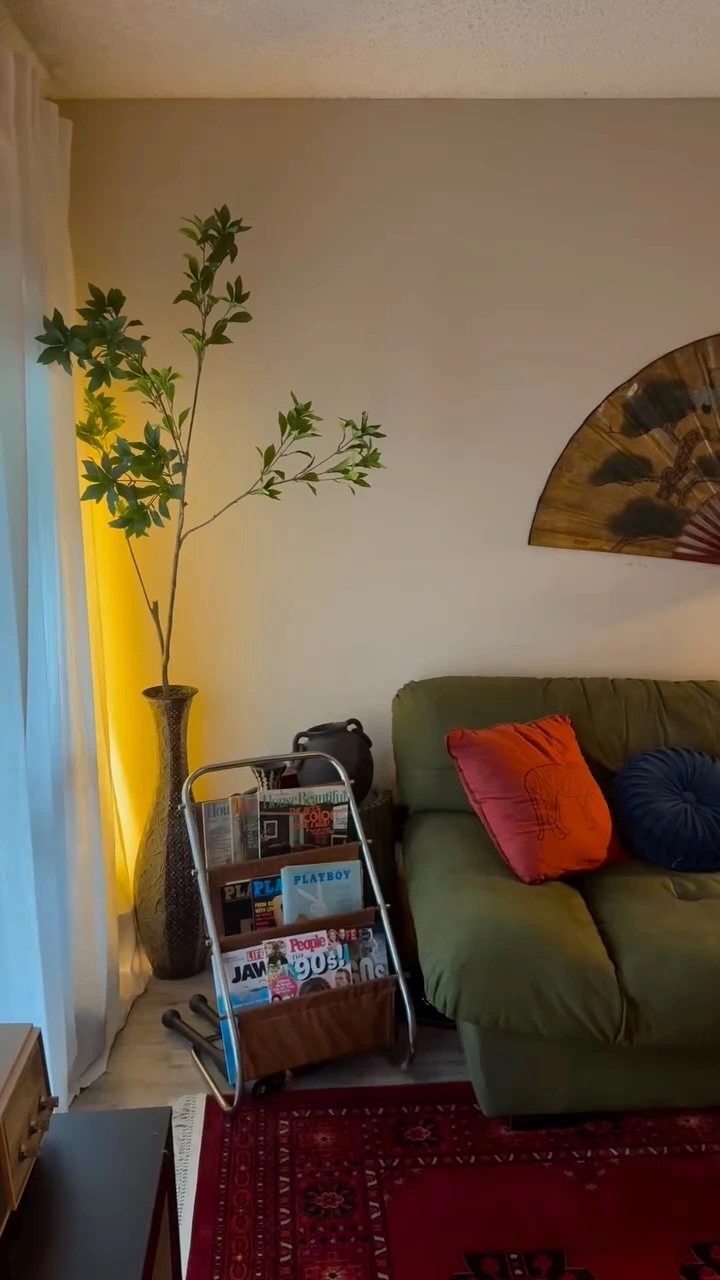
1. Photograph Everything and Read the Lease Like a Contract With Teeth
credit: @eclektif
Before a single purchase, walk the empty apartment with a camera: every wall's existing marks, every floor's scratches, the fixtures you may someday replace. Read the lease's decor clauses the same day — paint permissions, hole policies, fixture rules — and keep both the photographs and the clauses in the home notebook. This fifteen minutes is the deposit's insurance policy and the decorating plan's constitution in one.
Bag and label every original fitting you ever remove (blinds' brackets, the landlord's lamp shades, the shower head) in one fittings box. The notebook records the landlord's written permissions verbatim; verbal yeses evaporate at checkout time. Renters who document move out whole — deposits and dignity both.
2. Measure the True Floor Plan, Including the Doors and the Stairs

credit: @apartmenttherapy
Apartments punish unmeasured furniture at the stairwell, so measure like a mover: room dimensions, door widths, hallway turns, elevator or stair clearances, and the ceilings' true height. Keep the sheet in the notebook and a copy in your phone. Every purchase auditions against the path it must travel, not merely the room it must grace.
The sofa's diagonal decides more apartment fates than color ever will; learn yours before the sale does. Ceiling height governs shelving and curtain lengths — measure twice, hem once. Mark the outlets and radiators on the plan; furniture arranged against an imaginary wall of plugs fails on delivery day.
| Measurement | Decides |
|---|---|
| Sofa's diagonal | The stairwell's verdict |
| Door widths | Every delivery's fate |
| Ceiling height | Shelves and hems |
| Outlet map | Furniture's real wall |
3. Build the Palette From Textiles and Art, Not From Paint

credit: @bilalrehman
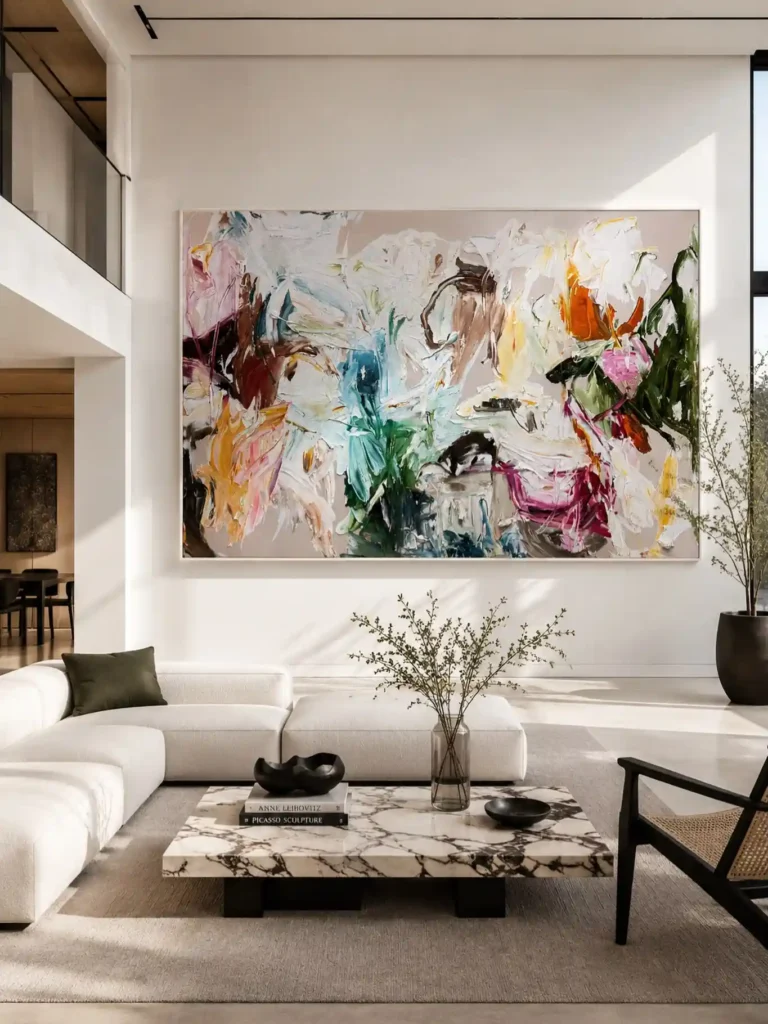
Where paint is forbidden or unwise, the palette moves in with the soft goods: the rug carries the base, curtains carry the walls' warmth, the sofa and bedding carry the mid-tones, art carries the accent, and one brave note rides a chair or a cabinet that travels. This textile palette achieves everything paint does, then folds into boxes on moving day without a single wall to restore.
Where paint IS permitted in writing, one wall or the smallest room spends it — the powder-room principle, maximum effect per hour of restoration. Test textile colors at night under the apartment's actual bulbs; rental lighting forgives nothing. Keep the palette's samples in the notebook so future addresses inherit the system instead of restarting it.
| Law | Instrument |
|---|---|
| Document | Photographs, lease, fittings box |
| Measure | The mover's sheet |
| Color without paint | Textiles, art, the rug |
| Portability | Every system emigrates |
Furniture That Fits and Works Twice
4. Buy Apartment Scale: Leggy, Low, and Honestly Sized
credit: @thedeclutterstylist
Furniture for apartments is scaled to the floor plan, not to the showroom: apartment sofas with shorter runs, leggy pieces that let the floor plane travel, tables with thin profiles and storage inside. Undersized rooms filled with oversized furniture read as storage units; honestly scaled pieces read as a designed home and leave the walking lanes a body actually needs.
The one deliberate exception: the bed and the desk chair size to the body, never to the room. Test sofas by sitting with the notebook's numbers, not the store's staging. Furniture that nests (tables, stools, ottomans that stack into corners) multiplies a small room's floor on demand.
5. Make Every Big Piece Work Twice

credit: @theinspiredroom
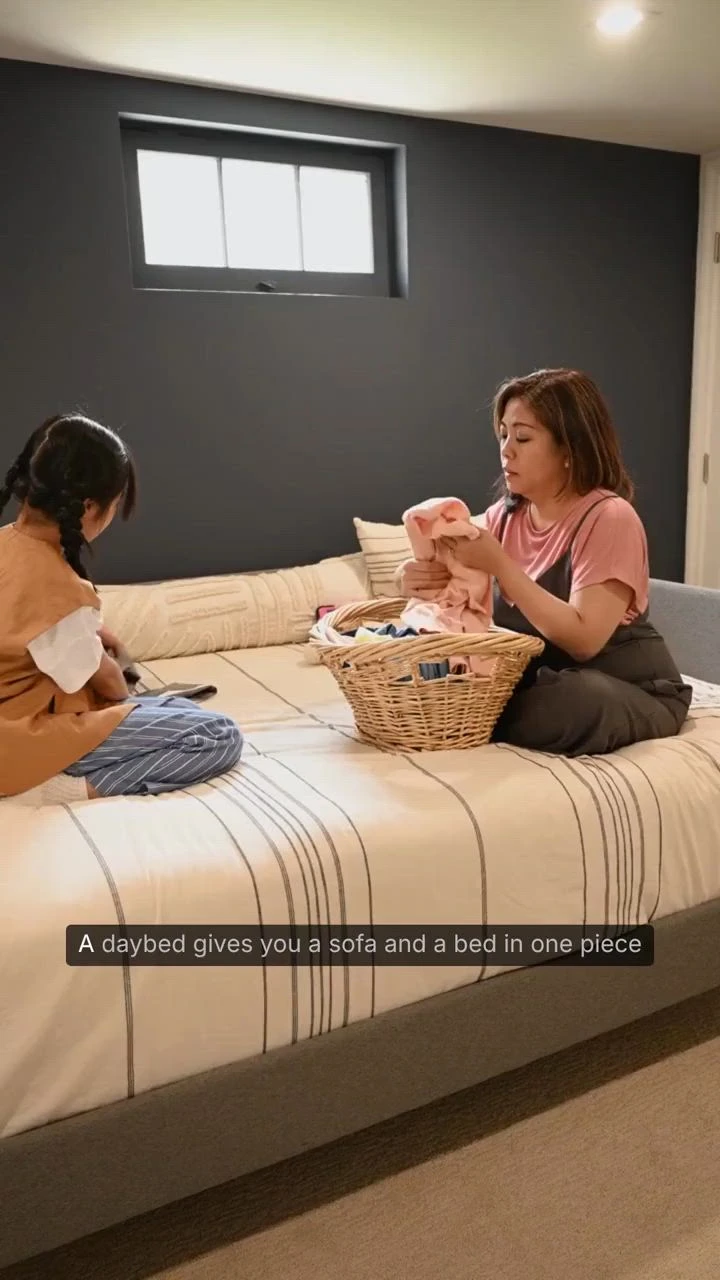
Small homes tax single-duty furniture out of existence: the storage ottoman (seat, table, blanket box), the daybed (sofa, guest bed, reading throne), the drop-leaf table (desk, dining for six, folded console), the bookcase room divider (library, wall). Audit each candidate for its second job before it earns the floor; a piece with one job in a small apartment is a guest who never helps with dishes.
Double-duty mechanisms get tested weekly in real use; a guest bed that fights its owner hosts no guests twice. Keep the conversion kits (the daybed's evening pillows, the leaf's table linens) stored inside the pieces themselves. Furniture that converts in under two minutes gets used daily; furniture that takes twenty becomes sculpture with regrets.
6. Build the Quiet Wall From Ranked, Identical, Closed Cabinets
credit: @the.quirkartforhome
Apartments hide their chaos the modern way: a ranked wall of identical closed cabinets or bookcases with boxes, full of the household's machinery (files, tools, games, the seasonal overflow), calm outside, zoned inside. Identical units read as architecture, emigrate as a set, and expand by one cabinet per address as the household grows.
Label interiors once, on tape, per category. The cabinets' tops take one styled run (plants, art leaning) or stay bare by law. In studios, the quiet wall doubles as the bedroom's border — the most valuable wall in the building, earning its floor twice.
| Cabinet Bay | Zone |
|---|---|
| One | Files and tools |
| Two | Games and media |
| Three | Seasonal overflow |
| Four | The guest and office kits |
7. Claim the Vertical: Shelves, Rails, and the Space Above Doors

credit: @villasmeadowsprings
Apartments grow upward: picture rails and rated-strip shelves carrying books and art, the above-door shelf for the labeled seasonal boxes, tall bookcases anchoring corners, hooks climbing the entry wall in two rails. Vertical claims cost no floor, restore with ease, and give small rooms the storage of larger ones — provided daily things stay below shoulder height and only the seasonal rides high.
Know your strips' and anchors' honest ratings; a fallen shelf teaches the landlord's version of the story. Kitchens and bathrooms climb with tension and rail systems where tiles forbid drilling. The step stool lives inside the quiet wall, not in a lane.
8. Draw Rooms Inside Rooms With Rugs, Light, and Furniture Backs

credit: @arcxdesign
Open apartments need addresses: the rug drawing the sitting zone, the bookcase's back building the office's wall, the pendant or arc lamp naming the dining spot, a curtain on a tension wire closing the sleeping alcove. Zones drawn in furniture and light keep the studio's air while giving every activity a border — and every border removes cleanly at checkout.
Zone borders must be readable at a glance by guests and by the resident's own habits at midnight. Keep one clear lane from door to window through all zones; borrowed light and air travel it. Photograph the zones from the door monthly — drift shows there first.
| Double Duty | Second Job |
|---|---|
| Storage ottoman | Table and blanket box |
| Daybed | Guest bed |
| Drop-leaf table | Desk and dining |
| Bookcase | Room divider |
You will also find plenty of inspiration in 13 Small Living Room Ideas That Make a Big Impact at Bob Vila.
Walls, Windows, and Light Without Holes
9. Hang Art at Scale on Rated Systems and Leaning Lines

credit: @pfashion._
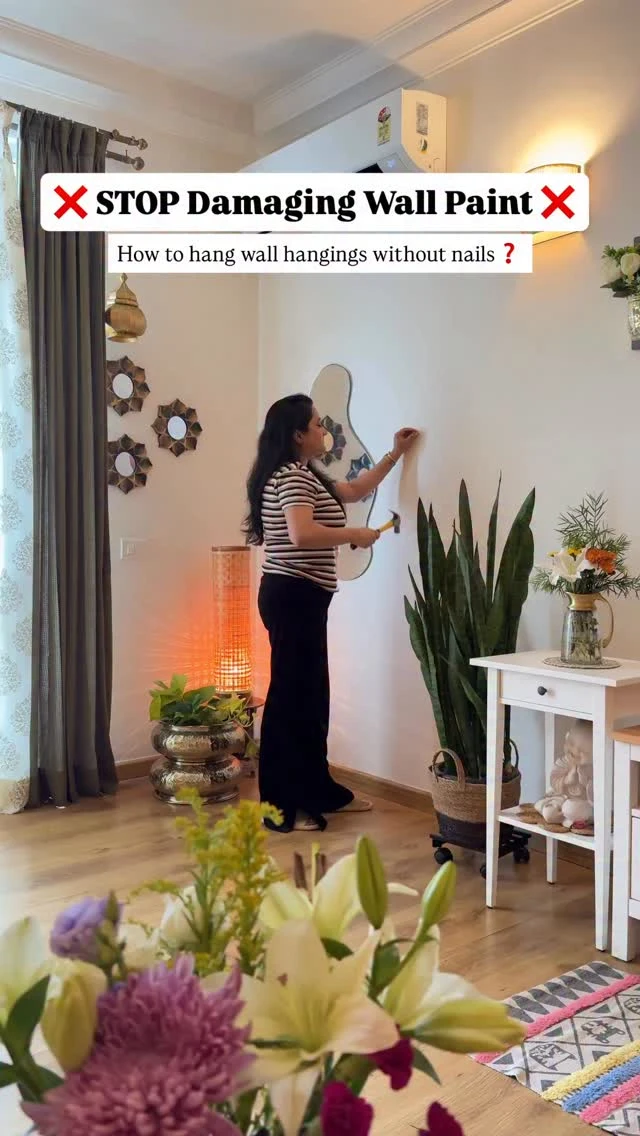
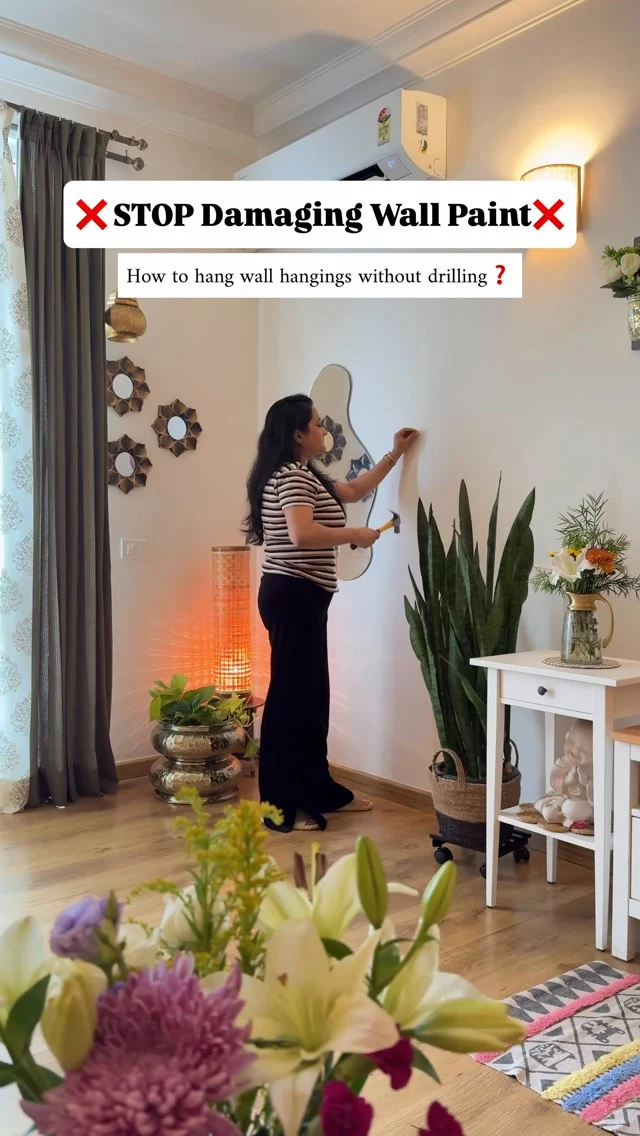
Rental walls take art proudly when the hanging obeys the physics: rated adhesive systems matched honestly to each piece's weight, picture rails where they exist, and the leaning line (large pieces rested on cabinets and floors against the wall) for the heaviest statements. One large piece per room at honest scale beats a nervous gallery of small frames, and it leaves one hook's worth of evidence instead of twelve.
Test strips on the least visible wall first and respect their cure times; impatience is the leading cause of fallen art and lost deposits. Group small works inside one large frame or on one board to borrow scale. The leaning line needs a non-slip pad and a household without toddlers in the blast zone.
| Piece Weight | Legal Route |
|---|---|
| Light | Rated strips, cured fully |
| Medium | Strips doubled, or the rail |
| Heavy | Leaning on a pad |
| Heaviest | Floor against wall, strapped |
10. Dress Windows With Tension, Clips, and Borrowed Architecture

credit: @livingspaces
Rental windows transform without a single screw: tension rods inside the frame carrying sheers and panels, clip rings for instant hems, curtains hung high and wide from rated hooks where rods fail, and the landlord's blinds cleaned and kept as the privacy layer beneath. Dressed windows change a rental's whole register — the room stops apologizing for its glass.
Hang panels as high as the system honestly allows; ceiling-grazing curtains lend apartments the height their floor plans lack. Keep the fittings box updated with the blinds' original wands and cords you replaced. Blackout for bedrooms rides a second tension rod behind the sheer.
11. Layer Light Since You Cannot Rewire: Lamps as the Lighting Plan

credit: @arcxdesign
Apartments light by lamp because the ceiling's one sad fixture answers to the landlord: build three layers from plug-in citizens — the ambient (arc lamp, uplight torchère), the task (desk and reading lamps at their posts), the accent (a small lamp on the quiet wall, a picture light on battery). Warm bulbs throughout, dimmers by smart plug, scenes by habit.
Cord management is the lamp plan's finish work: channels along baseboards, cords behind the quiet wall, zero across lanes. Battery and rechargeable lamps colonize the cordless corners (the entry shelf, the bathroom's ledge). The landlord's fixture gets a kinder bulb and a paper shade upgrade that removes in seconds.
12. Mirror for Light and Depth — Leaning, Rated, or Over-Door

Mirrors double a small apartment's borrowed light and fake its depth, and rentals own three legal routes: the leaning floor mirror (no fixings at all), rated-strip mirrors on doors and walls, and the over-door mirror in the bedroom. Place glass to reflect a window or a lamp, never the quiet wall's one open chaos bay or the television's black stare.
One mirror per room is the shine ration; two in a studio — entry and living — earn their keep. Secure leaning mirrors with a discreet strap where children or earthquakes vote. Clean glass reads as light itself; smeared glass reads as a smaller, sadder apartment.
| Rental Route | Carries |
|---|---|
| Rated strips | Art and mirrors to their honest weight |
| Tension rods | Curtains, alcove borders |
| Leaning | The largest pieces, no fixings |
| Freestanding | Rails, screens, cabinets |
13. Soften the Rental Acoustics and Floors With Textile Mass

credit: @bennelsonwvc
Bare rental boxes echo and clatter, so textiles do acoustic duty: the large rug first, curtains second, upholstered pieces third, bedding and throws as the finishing mass. Soft apartments feel larger because sound stops announcing the walls' true distance, and neighbors below bless the rug's diplomacy at every step.
Rug pads protect the landlord's floors and count as deposit strategy, documented in the move-in photographs. Thin walls gain from the bookcase wall placed against them — mass where it matters, again. Drafty windows seal with removable tape and the curtain's second layer, both gone without trace in spring.
14. Green Small Spaces With a Staged Cast, Not a Jungle

credit: @arcxdesign
Apartment plants stage like art: one tall citizen commanding a corner, one trailing from the quiet wall's top, one small at the desk, all in the material family's pots, all chosen for the apartment's true light. A staged cast reads as design; a windowsill crowd reads as a greenhouse that lost its lease. Rotate a struggling plant to the kindest window without ceremony.
Self-watering pots defend plants against the renter's travel schedule. Herbs at the kitchen window earn double duty like the furniture. Keep the watering in the weekly round, one can, five minutes, whole cast.
The Working Rooms of an Apartment
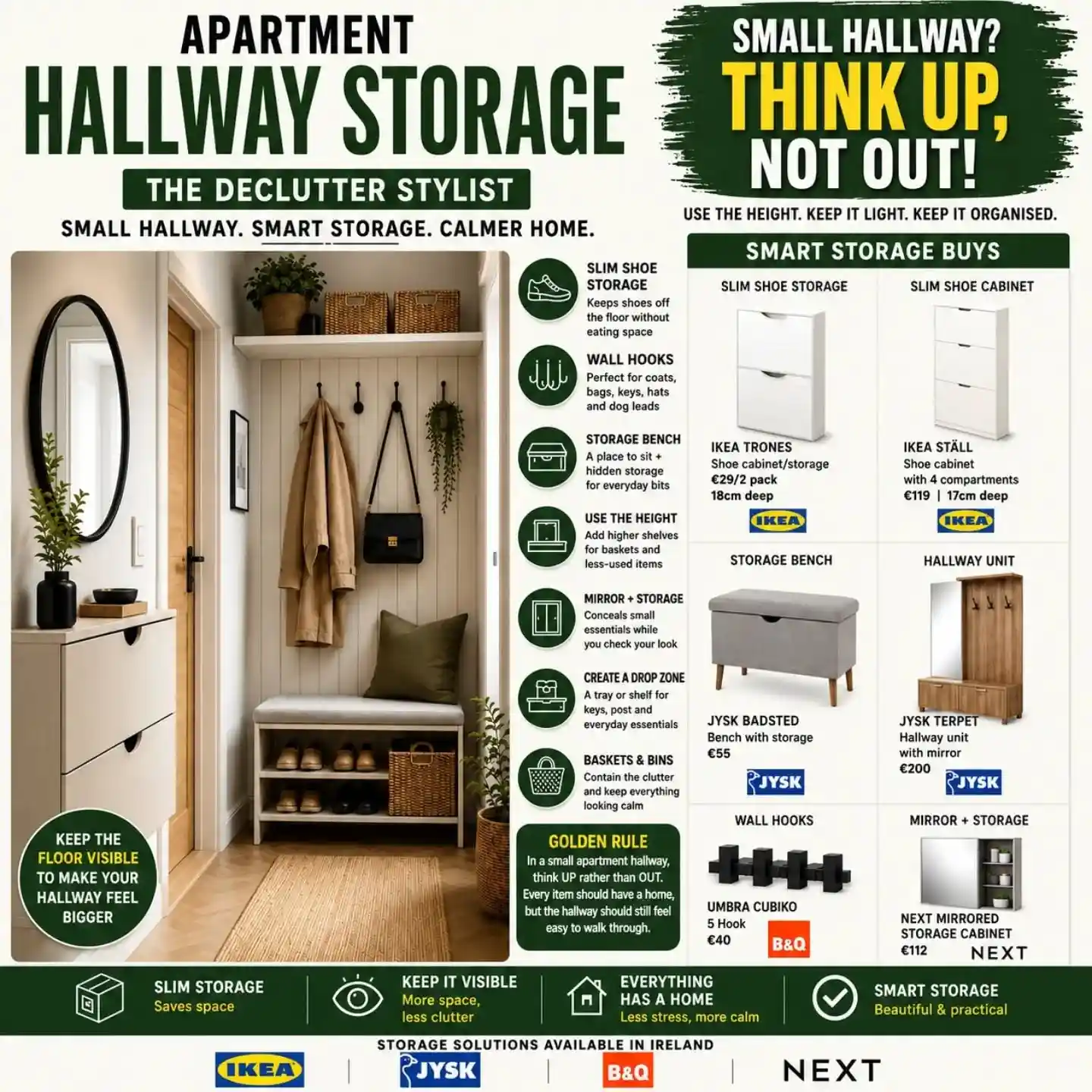
15. Build the Apartment Entry on One Honest Wall
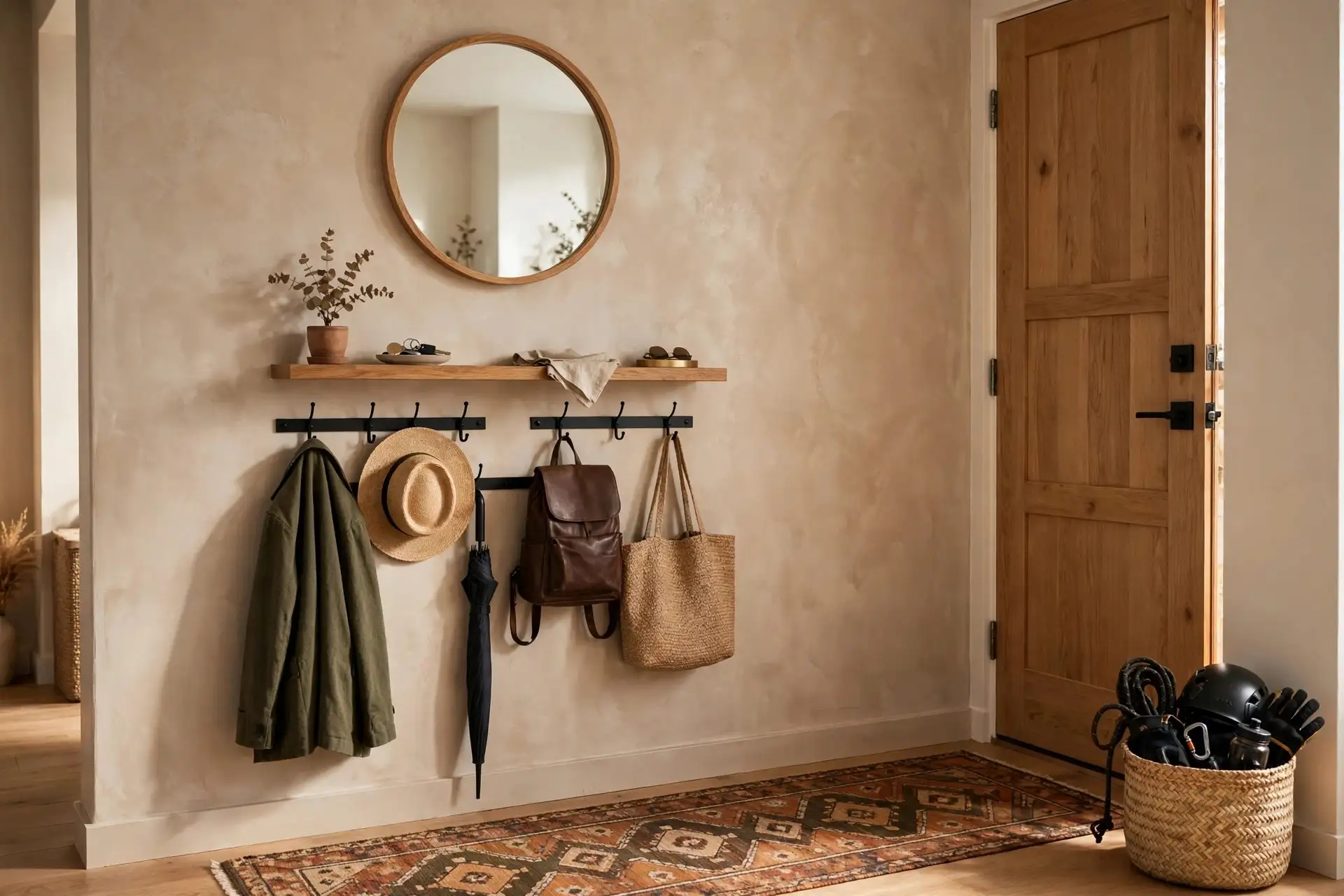
Studio and small-flat entries live on the door's wall: landing shelf, hook rail at two heights, a mirror, a runner drawing the territory, a basket for the season's gear. Complete at small scale beats grand at none — the wall-entry receives arrivals like a foyer if every station exists, and fumbles them like a hallway if one is missing.
The door's swing audits every piece on this wall first. A lidded bench under the hooks adds the sitting station and the shoe system in one footprint. Keep the wall's portrait strict — it is the apartment's handshake and its most photographed corner.
| Entry Station | Apartment Form |
|---|---|
| Landing | Shelf by the door |
| Hanging | Rail at two heights |
| Sitting | Lidded bench |
| Last look | Mirror on the wall's end |
16. Run the Small Kitchen on Rails, Counters, and One Appliance Rule

credit: @yamazakihome
Rental kitchens improve without renovation: rail systems on rated mounts for tools and pans, counter ration enforced (one appliance out, the rest in cabinets), a rolling cart as the island that emigrates, magnetic and tension solutions inside cabinets, and the landlord's cabinets dressed with removable liner and honest light beneath them from battery strips.
The cart island parks against a wall between services and locks its wheels at work. Over-sink and over-stove light transforms rental cooking more than any gadget; battery strips deliver it legally. Keep the fittings box ready with the cabinets' original shelf pins and liners you replaced.
17. Make the Rental Bathroom Spa-Like With Removable Everything

credit: @ltk.home
Bathrooms respond to textiles, tension, and light: a curtain on the existing rod in a fabric with weight, towels in the palette at hotel thickness, a bath mat with real pile, a plant that loves steam, battery light at the mirror, and the fittings upgrades (handheld shower, hooks) that reverse in minutes at checkout from the fittings box's originals.
Tension shelving in the shower's corner ends the bottle crowd on the tub's edge. The toilet's top takes one plant or one folded towel stack, never a colony. Scent enters by reed or candle, tended at the weekly reset, because rental bathrooms confess neglect by nose first.
18. Sleep Seriously in the Studio: The Bed Gets the Best Territory

credit: @dearmodern
Studio law: the bed claims the quietest, darkest territory (farthest from the door and the kitchen's noise), dressed like a bedroom's bed rather than a sofa's apology — real bedding, a headboard effect from a panel or large cushions, nightstand service from a C-table or stool, blackout at its windows. The alcove's curtain border turns lights-out into a room change.
Daybeds and sleep sofas serve guests and singles' studios where the bed must work the day shift too. Keep the bed's day dress (cover, bolsters) a two-minute ritual or the studio lives in a permanent bedroom. The sleeping zone's palette runs calmest in the home, a step deeper than the living zones.
| Room | Rental Upgrade |
|---|---|
| Kitchen | Rails, cart, battery light |
| Bathroom | Textiles, tension, fittings |
| Entry | One complete wall |
| Sleeping alcove | Best territory, curtain |
19. Work From the Apartment Without Losing It to the Office
credit: @the.quirkartforhome
The rental office must vanish on command: a desk in the quiet wall's bay or a drop-leaf at the window, the chair chosen for both desk and dining, kit stored in the cabinet when the shift ends, backdrop composed on the bookcase for calls. The shutdown ritual restores the apartment nightly — the office is a tenant with a curfew, not the landlord of the living room.
Cables route once, behind the cabinet, invisible at rest. Second monitors earn their keep only if they store flat; otherwise the laptop and a riser serve. Guest conversion (desk to dining) rehearsed under five minutes keeps hospitality alive in work-from-home years.
Budgets, Guests, and the Moving Truck
20. Spend in Portability Order: Lamps, Textiles, Storage, Anchors

credit: @karissadumbacher
Apartment budgets favor what travels best: lamps and lighting first (they transform every address), textiles second (palette anywhere), storage third (the quiet wall compounds), anchor furniture last and bought for the next home's likely rooms as much as this one's. Money spent on a rental's fixed features is a gift to the landlord; money spent on portable systems is an inheritance to yourself.
Thrift and resale serve renters richly since apartment scale is the market's most traded size. Keep receipts and the notebook's inventory with values; insurance and moving claims both read it gratefully. The brave note rides the art or the chair, the two most portable citizens in the home.
21. Host Guests in a Small Apartment With Conversions, Not Apologies
credit: @expressmovingstorage
Small hospitality runs on rehearsed conversions: the daybed or sleep sofa made in five minutes, the drop-leaf dining at full extension, the guest basket (towels, sheet set, the spare charger) pulled from the quiet wall, the bathroom's guest layer staged. Guests remember being expected, not being spacious — and expectation is a system, not a square footage.
The host's own night kit (air bed or the daybed's other shift) plans ahead too, without martyrdom. Privacy for guests in studios rides the alcove curtain reversed — the guest gets the border, the host keeps the door side. Breakfast staged on the cart island the night before makes small hosting feel like a hotel that loves you.
| Guest Kit | Stored In |
|---|---|
| Sheet set and towels | Guest basket, quiet wall |
| Spare charger | Landing drawer |
| Host's night kit | The closet's top |
| Breakfast staging | The cart island |
22. Run the Weekly Reset and the Nightly Portrait

credit: @fengshui.dana
Apartments stay designed by ritual, not by size: the nightly portrait (surfaces to ration, zones restored, office shut down, entry wall composed) and the weekly reset (laundry of textiles in rotation, plants watered, the quiet wall's bays audited, floors done wall to wall since wall-to-wall is honestly small). Twenty minutes weekly maintains what chaos would otherwise reclaim by the month.
Small homes show disorder faster and forgive it faster; the reset's speed is the small home's compensation. Photograph the portrait at its best and keep it as the standard on your phone. Roommates and partners share the reset's checklist from the notebook or the rituals become one person's unpaid hotel work.
23. Rotate Lightly: The Renter's Two-Bin Season System

credit: @annex.apartment
Apartment seasons rotate from two bins in the quiet wall: textiles swap weight (linen to wool), the art's two pieces trade walls, the plant cast changes one citizen, the entry's mat and the door's wreath change their announcement. Two bins are the whole warehouse — the system's smallness is its genius, because rotation stock that needs its own room defeats the apartment it serves.
Label bins by season and contents on the outside. The rotation day doubles as the deep clean and the lease-clause check (filters, alarms, the landlord's calendar). Freshness at apartment scale must come from rotation and editing, since acquisition has nowhere to go.
24. Solve the Three Rental Pains: Beige, Echo, and Nowhere to Put It

credit: @dunelmuk
Name the pains and treat them in order: beige (the landlord palette — treated by the textile palette, art at scale, and the brave note), echo (hard small boxes — treated by textile mass, the bookcase wall, and curtains), and nowhere to put it (storage famine — treated by the quiet wall, vertical claims, and double-duty furniture). Every rental suffers the trio; every cure in this guide is portable, legal, and already paid for by the deposit it protects.
Diagnose which pain dominates your unit at the quarterly review; treatments sequence by dominance, not by the shops. Guests' compliments name the cured pain accurately — listen for which one stops being mentioned. The trio's cure is the apartment's whole design brief in one line, taped inside the notebook's cover.
| Portability Order | Travels As |
|---|---|
| Lamps | Instant atmosphere anywhere |
| Textiles | The palette, folded |
| Storage | The quiet wall, ranked |
| Anchors | Bought for two addresses |
25. Plan the Exit From Day One: The Kit, the Boxes, the Reputation

credit: @laneydegrassse
Great renters decorate with the exit in view: the kit list (every system, its parts, its next-address job) in the notebook, moving boxes owned and stored flat, the fittings box complete, walls photographed at the standard the move-in shots set, and a landlord relationship kept courteous enough to earn references worth more than decor. The exit planned early makes the whole tenancy calmer — nothing in the home is a hostage.
Patch and paint restoration, where needed, books into the moving calendar's first week, not its last night. The kit's photographs at this address become the next address's day-one plan. Deposits return to households that leave evidence of care; the move-out clean is the final decor act and deserves its budget line.
The Rental Life, Room by Room and Year by Year
26. Let the Brave Note Ride the Art, the Chair, or the Rug

credit: @mila_sivatskaya
Small rentals concentrate personality the modern way: one brave note per room, carried by the most portable citizens — the large art piece, the saturated chair, the brave rug — while the foundation stays calm in textiles. Concentrated bravery reads as style and emigrates in one trip; scattered bravery reads as a flea market and emigrates as a headache.
Choose the note's carrier by the room's light; saturation dies in dark corners and sings in borrowed window light. The note may change rooms at each address, which keeps a long tenancy fresh on one purchase. Guests should be able to name the room's note in one word; that is the concentration test passed.
27. Keep a Small Home Office Kit That Packs Into One Cabinet

The packable office: laptop, riser, keyboard, lamp, chair cushion, backdrop board or the bookcase angle, all returning to one quiet-wall bay at shutdown. Renters change jobs and addresses too frequently for built workstations; the kit's discipline (everything has a bay, the bay closes) keeps the apartment's rooms plural through every career chapter.
Time the pack-away once; under three minutes is the standard that survives tired evenings. The kit list rides the notebook's moving page, since offices emigrate first at every relocation. A second monitor must justify itself against the bay's volume in writing, in the notebook, like a visa application.
| Kit Piece | Bay Order |
|---|---|
| Laptop and riser | Base layer |
| Keyboard and lamp | Middle |
| Cushion and board | Top |
| Cables | Routed behind, always |
28. Audit the Apartment Quarterly Against the Lease and the Light

Four audits a year keep renters whole: the lease audit (clauses kept, permissions documented, the landlord's maintenance calendar honored), the light audit (lamps and scenes as seasons shift), the storage audit (quiet wall bays honest, season bins labeled), and the portrait audit (doorway photographs against the standard). Findings go in the notebook with one fix per audit, in writing, dated.
Report the landlord's issues (leaks, alarms, wear) in writing as the audits find them; documentation protects deposits both directions. Compare photographs quarter to quarter before buying anything — drift reversed beats decor purchased. The audit is also the tenancy's gratitude practice: name what the apartment sheltered this quarter, in the notebook, briefly.
| Pain | Portable Cure |
|---|---|
| Beige | Textile palette, art, note |
| Echo | Rug, curtains, mass |
| Nowhere to put it | Quiet wall, vertical, double duty |
| All three | The notebook's brief |
29. Grow the Apartment System Across Addresses

credit: @twinklestanly
The system's value compounds: address two inherits the kit, the quiet wall, the palette, the notebook's measurements method, and the mover's sheet discipline — setup takes days instead of months. Keep a post-move review in the notebook (what traveled well, what earned replacement, what the new floor plan changed) and the third address will feel like a home the family has owned for years, because its systems have.
Buy replacements at the review, sized for the new plan, not from the moving week's exhaustion. The notebook's address chapters become a household archive worth more than the furniture. Landlords change; the system is the constant address.
30. Borrow the Landlord's Blessings: Negotiate the Upgrades That Matter

credit: @eyeswoon
Some upgrades are worth a written ask: permission to paint the smallest room, to hang a real rail in the entry, to replace the ceiling fixture with yours (original bagged, restored at exit), to plant the balcony properly. Landlords say yes to documented, reversible, improvement-shaped requests from tenants whose audits and payments gleam. Ask for one blessing at a time, in writing, with the restoration promised in the same paragraph.
A refused ask costs nothing and clarifies the constitution; record it in the notebook beside the clauses. Blessings granted get photographed before and after for both parties' files. The relationship itself is decor infrastructure — a trusted tenant decorates with a longer leash at every renewal.
| Blessing | Ask's Shape |
|---|---|
| Paint the small room | Written, restoration promised |
| Entry rail | Photographs attached |
| Fixture swap | Original bagged, reversible |
| Balcony planting | Care calendar included |
31. Let the Apartment Earn Its Rent Every Quarter

credit: @farahjmerhi
Close the quarter with the renter's review: rooms used fully, guests hosted without apology, deposit safer than at move-in (photographs current), systems ready to emigrate in a week if life calls, and the pains quieter than last quarter. Apartments that pass earn their luxuries slowly (the better art, the true rug); apartments that fail return to the audits before the shops. A rental kept this way stops feeling temporary without pretending to be owned — and that honest in-between, furnished with laws and light, is where a great deal of a good life gets lived.
Write the review in the notebook beside the address's chapter, choose the quarter's one improvement from evidence, and photograph the portrait the next quarter defends. Thank the apartment in the review, briefly and without irony; homes respond to regard. The renter who reviews keeps improving the only square footage that follows them through life — their system.
| Quarterly Review | Evidence |
|---|---|
| Rooms used fully | Zones lived in, all |
| Guests hosted | Conversions run, timed |
| Deposit safer | Photographs current |
| Ready to emigrate | Kit list complete |
If you want to dig deeper into this look, Tour a Brooklyn Rental With Smart Small-Space Storage Ideas from Apartment Therapy is a good next read.
Common Mistakes With Apartment Decor
Apartments fail by decorating against the lease, buying showroom scale, and waiting for ownership to begin living — systems beat square footage every time.
| Mistake | Why It Fails | Do This Instead |
|---|---|---|
| Decorating before reading the lease | The deposit pays for enthusiasm | Photograph, read, then buy |
| Showroom-scale furniture | Rooms become storage units | Apartment scale, legs showing |
| Paint-first palette | Restoration eats the deposit | Textiles and art carry color |
| Single-duty big pieces | Small floors drown in furniture | Every piece works twice |
| Waiting to buy a house to live well | Years spent camping at home | Portable systems, lived now |
Apartment Decor by Situation: 4 Ready-Made Plans
If This Is Your First Studio
Constitution first (photographs, lease, mover's sheet), then zones drawn by one rug and the bookcase's back, the bed in the best territory with its curtain border, the quiet wall from four identical cabinets, lamps in three layers, and the textile palette with one brave note on the art. Live fully from month one; the system is the home.
If You Rent a Family Apartment
Quiet wall scaled up with named bays per person, double-duty furniture everywhere, entry wall complete with the school and gear stations, vertical storage in every room, and the weekly reset shared by roster from the notebook. Negotiate one blessing per year in writing. Family rentals run on systems the children can operate — build accordingly.
If You Move Every Year or Two for Work
Invest in the kit above all: ranked cabinets, lamp plan, textile palette, art at scale, the packable office bay, owned boxes, the notebook's address chapters. Setup measured in days, deposits intact, each new city starting at season five. Buy nothing that cannot justify its truck space in the post-move review.
If You Love the Home You Rent and Stay for Years
Deepen slowly with permission: the painted small room, the entry rail, the better fixture — each blessed in writing and documented. Let the system mature (true rug, better art, the elder chair) since tenure justifies weight. Keep the exit plan current anyway; a lease is a lease, and calm renters keep both the home and the option.
Frequently Asked Questions About Apartment Decor Ideas
How can I decorate an apartment without losing my deposit?
Document first (move-in photographs of every surface), read the lease's decor clauses, and build with removable systems: rated strips and tension rods, leaning and freestanding pieces, textile palettes instead of paint, and every original fitting bagged in a labeled box for restoration. Photograph your systems in place; deposits return to tenants who leave evidence of care in both directions.
What furniture suits a small apartment best?
Apartment scale with double duty: leggy sofas in shorter runs, storage ottomans, daybeds, drop-leaf tables, ranked identical cabinets as the quiet wall, and nesting pieces that multiply floor on demand. Measure the mover's path (doors, stairs, turns) before buying — the sofa's diagonal decides more fates than its color. The bed and desk chair size to the body, never to the room.
How do I add color to a rental without painting?
Carry the palette in textiles and art: the rug as the base, curtains for the walls' warmth, sofa and bedding in the mid-tones, large art for the accent, and one brave note on a portable chair or cabinet. This textile palette folds into boxes on moving day with nothing to restore. Where paint is permitted in writing, spend it on the smallest room for maximum effect per restoration hour.
How do I make a studio apartment feel like separate rooms?
Draw rooms with furniture and light: a rug for the sitting zone, the bookcase's back as the office or bedroom wall, a curtain on a tension wire for the sleeping alcove, lamps naming each zone, and the bed placed in the quietest territory farthest from the door. Keep one clear lane from door to window so light and air still travel the whole home.
How can I add storage in a rental without built-ins?
Build the quiet wall from ranked identical closed cabinets, claim the vertical (rails, tall shelves, above-door boxes), choose double-duty furniture with storage inside, and keep daily things below shoulder height with only the seasonal stored high. Label cabinet interiors once so every hand returns things correctly. Storage that emigrates whole compounds in value at every address.
What lighting works in apartments with poor ceiling fixtures?
A lamp plan in three layers: an arc or uplight for ambient, task lamps at desk and chair, and a small accent lamp on the storage wall or a battery picture light — all warm bulbs, dimmers by smart plug, cords channeled along baseboards. Battery and rechargeable lamps serve the cordless corners. The landlord's fixture improves with a kinder bulb and a removable shade.
How do I hang pictures in a rental safely?
Match the system to the weight honestly: rated adhesive strips for light and medium pieces (respect cure times), picture rails where fitted, and leaning for the largest work — one big piece per room needs one fixing instead of a gallery's dozen holes. Test strips on an unseen wall first. Group small works inside one large frame to borrow scale and cut fixings.
Can I make a rental kitchen feel upgraded without renovating?
Yes: rails for tools and pans on rated mounts, a rolling cart as a movable island, battery light strips under cabinets, a strict one-appliance counter ration, removable liners inside cabinets, and textiles in the palette. Keep original shelf pins and fittings bagged for checkout. The cart and rails emigrate to the next kitchen, so the upgrade is an asset, not a gift to the landlord.
When should I refresh a rental's decor?
Rotate quarterly from two season bins (textile weights, art swap, one plant change), audit quarterly against lease, light, and storage, and edit whenever a piece stops earning its floor. Refresh by rotation and removal, not acquisition — apartment freshness that depends on buying has nowhere to put itself. The portrait photograph is the standard every refresh defends.
Conclusion: The Chosen Rental
Apartment decor is portability practiced as a style: photograph and read before buying, measure like a mover, color with textiles, store in a quiet wall that emigrates, light with lamps, and let every big piece work twice. Kept by resets and audits, a rental stops feeling like a waiting room for a future house and becomes what it should have been from the first month — a home that chose you back. Start this week with the camera walk and the lease; the constitution comes before the cushions.
*Ready to make the rental yours? Start with tip 1 and photograph everything before you buy anything.*
—